Predictions: Which Freelance Skills Will Be Most Valued In 2027?

As we enter Fiscal Year 2027, demand for the expertise, experience, energy and enthusiasm that Freelance professionals bring to for-profit and not-for-profit organizations around the world continues on an upward trend. Hiring rates of Freelance professionals climbed 44% above the average demand predicted by leading Freelance labor platforms. The market is projected to grow from $8.9 billion in 2026 to $21.97 billion by 2031, with a compound annual growth rate (CAGR) of 16.32%.

To state the obvious, the steady growth of Freelance labor has largely been fueled by the digital revolution, that has touched all aspects of how we live and work. Artificial Intelligence is the center of the universe now, generating a big demand for Freelance talent. In fact, there is a shortage of talent that possesses the necessary capability to evaluate AI readiness assessment, has a command of AI development expertise or machine learning engineering, or owns the desired fluency in prompt engineering. Other technology sectors that remain a magnet for Freelance talent are programming, from mobile app to software and web development, plus user experience (UX) and user interface (UI) specialists, cybersecurity and sustainability experts. These lucrative niches are predicted by leading Freelance labor sources to reach a CAGR of 16.32% during 2026 – 2031.

Niche to watch: supply chain and logistics

Another industry that has the potential to provide a strong demand for Freelance talent is the supply chain sector, which is expected to play a prominent role in hiring rates of independent labor in FY 2027. The global supply chain industry is entering a period of growth in FY 2027. After several years of sluggish hiring, companies are again expanding their capabilities across logistics, procurement, planning and manufacturing. Hiring managers are especially interested in Freelance professionals who have strong data analytics proficiency and environmental sustainability skills, along with sustainability and logistics experience that includes cross-functional expertise.45% of supply chain and logistics companies currently work with Freelance talent.

The quick acceptance and implementation of AI powered digital tools have enabled the use of robotics and workflow streamlining, for example, but there is an AI talent gap in the supply chain work force. These urgencies have compelled industry decision-makers to take advantage of the global, scalable, agile workforce available by way of the Freelance talent pool, which also delivers a cost-savings of 30% – 40% vs. full-time employees. The Bureau of Labor Statistics projects 11% growth in supply chain management jobs through 2030 .

Thanks for reading,

Kim

Image: © The New York Times/ Federico Rios Escobar. The container ship ZIM Newark (Germany) sails through the Panama Canal in July 2024

Let Your Data Do Its Job

It is likely that most business owners and other company leaders in America today often describe themselves as “data-driven” decision-makers and strategy builders; data driven is such a self-affirming and empowering term. In Real Time, though, it’s more than likely that rather few business owners and leaders are living the dream. Oh, many, if not most, subscribe to software-as-a-service financial tools, like NetSuite and Microsoft Dynamics 365. They’re also hooked up for customer relations management, thanks to HubSpot and Zoho. It’s almost a given that a growing number of them have waded into Artificial Intelligence, probably starting with an AI-powered chatbot, maybe provided by Ada. Some may have already advanced to an AI digital assistant that will, by human command, expertly perform a variety of routine administrative tasks, such as scheduling meetings, sending standard emails (like vendor onboarding correspondence), or conducting research.

So business owners and leaders are mostly all-in with tech advances—I guess it makes them feel in control and secure. But the real question is, do business owners and leaders—you—understand and trust the data? Are you able to rely on the story your data tells you, the scenario it reveals? If your key performance index (KPI) metrics indicate that all is bubbling along as intended, I’m sure it’s safe to say that you understand which numbers indicate good news. But if one or more KPIs signal an anomaly that could be a warning of developing trouble ahead, would the message communicated by your data push you to take an action of some sort? When a red light is flashing, what will you do and when will you do it?

Do you take advantage of the precious resource of time that your data can give you and use it to take a second look at what may be an unexpected bump in the road? Maybe a KPI metric that’s tracking in the wrong direction will inspire you to check out another KPI to get another perspective on the number that you find rather worrisome? A truly data-driven leader strategy has faith in the scenario that the numbers reveal; those who understand and trust their information have confidence in the story that the info tells them, whether the description is a random shiver, or an obstacle that calls for a strategy and a plan to implement it. In other words, what separates winners from also-rans often comes down to one fact—when its time to make an impactful decision, what’s your usual response? Does your data play a starring role, or does it make only a cameo appearance?

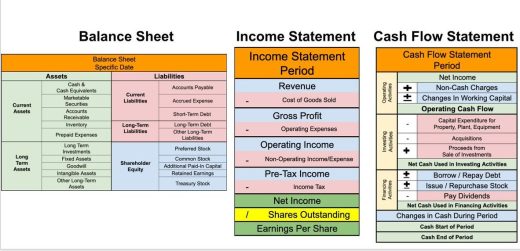
Being data-driven means much more than access to reliable information. How and when you typically engage your info when there’s a potential problem to resolve, or a decision on the table—and even when good fortune allows you to enjoy smooth sailing for a while? So, if your relationship with your data resembles a standing appointment, a special occasion meeting that you faithfully keep once a month, it’s time to join the 21st century? Business owners and leaders who are data-driven IRT know that consistent attention to the data is how you leverage the resource. Identify a small set of meaningful “go-to” metrics—KPIs— to consult because you know they reveal pivotal aspects of company performance. You might choose to follow certain CRM marketing metrics; you’ll definitely refer to your monthly financial statements—Balance Sheet, Cash-flow, P & L—and take a once-a-week peek at, business vital signs that shine a light on basic functioning, such as top line revenue, operating margin, operating cash-flow and the quick ratio calculation. The goal when reviewing your numbers is not to sweat every small fluctuation, but to notice and investigate repeating patterns that could signal the need for a response.

Business owners and leaders who know that the best results are achieved by those who pay attention and act when necessary, avoiding the trap of analysis-paralysis. Verification is a good thing, but refusing to heed the story your KPIs tell you is a waste of your investment in data. It is sometimes wise to wait and see, to confirm the context and avoid a hasty response. But many owners and leaders of also-ran companies tend to hesitate when the picture the data reveals is clear, but perhaps unexpected. Being data-driven is about knowing not only which metrics matter, but also having the discipline and confidence to take action before competitors or other marketplace factors get there first. Winners are able to both interpret the data outcomes and trust the evidence, even when it challenges assumptions. That discipline is what ultimately turns data into a long-term advantage. Companies that consistently outperform others tend to:

  • Monitor KPIs—identify a small set of meaningful metrics to track
  • Look for pattern verification—do two or more metrics indicate that something needs your attention?
  • Make a course correction when necessary
  • Learn quickly from results

Make reviewing reports a weekly activity

The many demands and uncertainties of the 21st century marketplace have expanded the responsibilities required to effectively manage a business. Being data-driven means much more than access to reliable information. How and when you typically engage your info when there’s a potential problem to resolve, or a decision on the table—and even when good fortune allows you to enjoy smooth sailing for a while? So, if your relationship with your data resembles a standing appointment, a special occasion meeting that you faithfully keep once a month, it’s time to join the 21st century. Business owners and leaders who are data-driven IRT know that consistent attention to the data is how you leverage the resource.

Monthly, or even quarterly, reviews of certain reports were once standard—but if you aim to be responsible steward, it will be necessary to be more vigilant. By the time a quarterly report suggests that a certain development could be a problem, the trouble may have been brewing for weeks. Even a monthly review of KPIs can give too much of a head start to a matter that’s about to become urgent. One of the ways that stronger organizations maintain an advantage is to proactively pay close attention to business activity. Smart owners and leaders check their guiding KPIs frequently and, depending on your business, that could be weekly, or even daily (especially if you operate a restaurant). Looking to see whether things are moving in the right direction and thinking about an intervention you can put into motion if they’re not, is standard stuff these days. You want trustworthy forecasting that helps you avoid unfortunate surprises. Hot points might include:

  • Change in customer demand patterns—are certain customers not reordering as often as they once did?
  • Weakening customer engagement—are your usual social media groupies responding to posts less frequently?
  • Early signs of margin pressure—are prospects hesitating and pushing back against your pricing?
  • Is a supply chain obstacle increasing the amount you pay to acquire what you sell, or are you waiting longer to receive orders?

Understand which customers deliver the most growth

Business growth can be misleading and make you surprised to find that what appears to be growth has a shadow side. Meaning, your Profit & Loss Statement can reward you with an increase in quarterly revenue and simultaneously punish you with a shrinking profit margin that’s occurring because the cost of producing or acquiring the products or services you sell have increased. If you decide against raising prices because you fear that customers will not accept an increase— A savvy data-driven leader will turn to the metrics to research questions like:

  • What factors have caused production or acquisition costs to increase?
  • How can your company more efficiently produce the product or service that is sold? If you can make better use of your time, what you gain can be applied to another task and that may save you money. If you acquire what you sell, research the availability of vendors who may offer a lower acquisition cost and attempt a supply chain remedy.
  • Consult your CRM data and learn which customer segments or acquisition channels have a positive impact on growth—bring in the most revenue, profit and your highest Customer Lifetime Value. Also, are there certain customers who generate the most repeat business and referrals?

Treat pricing as an experiment

Pricing strategy is one of the most powerful factors in any business and yet many organizations treat it like a permanent decision — something set once and revisit occasionally. You may find, however, that once you’ve decided whether your company’s market position— high end, mid-market, or economy and identified the optimum profit margin range needed to make the entity viable, you can be more flexible about the prices you set than you may have imagined. Why not approach pricing as a learning process that’s supported by your CRM data? They analyze how different segments respond to price changes or special discounts. It may surprise you to learn that what appears to be business growth has a shadow side.

Your P&L is showing you a nice increase in quarterly revenue but disappointing you with a shrinking profit margin—maybe because of a supply chain issue—you may not be boxed in by a competitor who can afford to price more conservatively. Maybe you can make a modest price increase and make it work?

  • Are certain customer segments more sensitive to price increases while others are resilient?
  • Is there a good strategy to help “sell” customers on your price increase?
  • Will a small price increase change customer behavior?

Experimentation doesn’t need to be complicated. Small controlled tests can reveal a lot about what customers can truly value. Price increases can be passed to new customers only. Long-term customers may be more likely to accept the increase when you contact them personally and explain your now higher production, acquisition costs, or other operating expenses. They will get it. Extending the payment terms to customers who may have difficulty adjusting to an increased price might also be a good solution. Over time, these insights and experiences may lead to smarter pricing decisions and healthier margins.

Thanks for reading,

Kim

Image: © The Corporate Finance Institute

Make 2026 Your Gold Medal Year

Independently employed Freelance professionals remain one of the most robust segments of the global labor market, powered by a still growing number of U.S. workers. The San Francisco, CA based Grandview Market Research projects the 2030 Freelance economy market size will reach $14.39 Billion (USD), up from $7.65 billion in 2025. According to the Upwork Research Institute, currently 28% of skilled knowledge workers operate as Freelancers or independent professionals here in America. In 2024, those Freelance workers generated $1.5 Trillion in earnings.

Freelancers recognize that the outcome of a growing number of talented and ambitious colleagues leads to the inevitable presence of increased competition for work assignments. As a result, Freelance professionals are aware that you’ve gotta hustle on many levels, from consistent marketing that demonstrates thought leadership in tandem with other inbound marketing formats designed to appeal to your most promising prospects. Continual upskilling of your core knowledge base is yet another tactic that can help to strategically position a one-person empire in ways that are sustainable and push you ahead of hungry competitors.

If that’s not enough, savvy Freelancers must always keep eyes and ears open to consider how you might improve the quality or delivery of your services. The five SMART business development goals listed below—-Specific, Measurable, Achievable, Relevant, Timely—should be on every Freelancer’s business strategy list, for they constitute a reliable roadmap that’s capable of taking you to the top and helping you grab your gold medal in 2026.

To further enhance the impact of the goals, think of them collectively as potential focus points in the storytelling narrative you’ll present when in discussion with prospects. Incorporating into those conversations benefits derived from implementing the goals that you know or surmise would be of interest to them bolsters your ability to structure a more compelling in the conversation. You can weave into the story narrative that frames the conversation why and how your capabilities, experience, ability to collaborate and education make you especially well-suited for the role you seek, whether it’s an exciting client project or new W-2 job. Your mastery of the goals presented here will enable you to “paint a picture” that helps search committee members, hiring manager and other influential parties on the prospect’s team to clearly envision how you and the competencies you bring to the table will get the job done, meet or exceed expectations and (best of all!) make them look good to superiors, direct reports and colleagues.

  1. Update your online presence and portfolio

Type your business entity name and your own name into two or three prominent search engines to conduct a review of your online presence. What does the internet reveal about you? Is the information accurate? Does it portray you in ways that highlight your strengths? According to MBO Partners, 42% of Freelance professionals rely on digital platforms for finding clients; that means the sum total of your digital presence, from your website, to your social media presence, to postings of your appearances on podcasts, webinars, magazine articles and notices for your speaking engagements or other public appearances constitute what you might call your digital “storefront.”

Your collective online presence informs interested parties, that is, prospective clients, that your entity is open for business and ready to deliver valuable services. The vault for your professional credentials and capabilities is online in the cloud, so it’s imperative that your bona fides up-to-date and presented in visual and text language that inspires confidence and interest, so that the online story of you, the Freelance professional, works hard and smart to generate leads for your business. Update your portfolio with descriptions or examples of recent project work that makes you proud and will convince clients that you can be trusted to produce the outcomes they need. Convincing client testimonials and case studies will further help you make your case. Don’t forget to review your profiles that appear in Freelancer directories and third-party websites that are viewed and trusted by prospects, as well.

2. Consistent engagement on the right social media platforms

A persuasive LinkedIn profile is a powerful communication channel that will communicate the capabilities of your Freelance business entity to potential prospects; 40% of B2B marketers say LinkedIn is the most effective channel for driving high-quality leads. You now have significant motivation to regularly share your unique thought leadership, valuable insights and opinions on industry news and updates that will heighten your professional visible and enhance your status as a go-to expert in your niche.

In 2026, make a point is to become a consistent LinkedIn participant and more than someone who just gives “likes.” When you feel able to make a relevant contribution to a conversation thread be brave and speak up! Even if your opinion or advice is expressed in a mere sentence or two, remember that succinctly delivered info is always appreciated. Moreover, your participation helps to build a respected reputation on the platform and will increase your LinkedIn Social Selling Index (SSI)— a metric that LinkedIn says pays demonstrable professional benefits on the platform.

Along with LinkedIn, research and follow-up may lead you to discover that Facebook, Instagram and/or TikTok also have significant marketing potential for your venture. What are the norms for your industry? If those who hire for your service or product categories consider certain social media platforms are good hunting grounds for talented professionals, that’s where you hang out your digital shingle.

 3. Increase PR activity

Public relations and media mentions help build name recognition and credibility for your brand and make you and your business entity a known and trusted quantity. Moreover, PR features are posted online, so PR adds to your digital presence. Noteworthy media mentions should be uploaded to your website (you can add a “press” tab to your website and upload media mentions there) for review by interested parties. Freelance professionals should aim to earn valuable media opportunities (that is, unpaid media exposure) and leverage that exposure to grow trust and credibility.

Favorable PR is an important ingredient in a comprehensive inbound marketing strategy—-PR is soft sell leadgen and should not be overlooked. An effective and achievable PR strategy for Freelancers might include two or more of the activities listed below. Be sure to leverage your PR opportunities by sharing them on your website, email list and social media channels. Published articles that you’ve authored will be published online by the media outlets. Videos of your participation in podcasts and webinars will be posted online by the hosts. Sponsors of any awards you’ve received will be delighted when you share news of your victory with members of your email list, post to your online platforms and send a press release to local media outlets—because it also creates good PR for the sponsoring organization and encourages more candidates for the next round of awards (for which the sponsoring organization collects entry fees). Charity organizations will likewise be delighted when you distribute your participation to media outlets as well as your digital platforms and email list.

  • Be a guest on three or four industry-relevant podcasts or webinars
  • Write four or five industry-relevant posts (or guest posts) for blogs, newsletters, or other publications
  • Be a guest speaker, or introduce the guest speaker, at a business association meeting
  • Moderate an industry-relevant panel of experts, or be a panelist yourself
  • Campaign for a local business award and if you win so much as a bronze participation trophy, send a press release to announce your victory to local media and also post to your website, social media platforms and send to your email list (include a photo of you accepting the award with your press release)
  • Become a sponsor of a local charity event, for example, Girl Scouts, Boy Scouts, Little League, or social services organizations. You might have an event-day volunteer presence and be able to take a few photos that document your participation. Feature your volunteerism on all of your digital platforms plus your email list with two or three photos plus information about the role the organization plays in the community and the impact of the event.

 4. Create meaningful client case studies

Use your storyteller’s perspective—a competency that you utilized while polishing your overall online presence and portfolio in the first goal and becoming more strategic and active in your use of PR initiatives in the third goal—to review and decide which of your most successful client projects could make compelling case studies that you can share on your website and social media channels? Case studies are powerful stories that provide irrefutable proof that you can deliver what clients need. They are the ultimate testimonial.

The marketing gurus at HubSpot report that businesses that publish case studies generate +45% more qualified leads than those that don’t. By illustrating a sampling of the real-world work and results you’ve created for clients, you’ll stimulate more trust in your brand and add positive influence to purchase decisions. This year, aim to create and strategically post data-driven case studies that showcase your expertise are housed in your portfolio or on your website.

Hubspot marketing experts go on to recommend that when writing your case study, whose purpose is to showcase your problem-solving expertise, ability to collaborate and the customer experience and support you offer, include the following information:

  • Define the problem you were hired to solve. Furthermore, succinctly explain its relevance to the client and the client’s definition of desirable benefits that will result from its resolution
  • Describe the solution you provided to resolve the problem. Explain why proposed that solution and also your process for delivering the solution and the results produced by implementing that solution.
  • Describe the beneficial collaboration between you and the client. Make clear how the trust and respect between you and the client enabled and supported the choice, implementation and favorable outcomes of the solution you provided.
  • Client testimonial. Invite one or more representatives of the client’s team to describe the problem and explain why an effective solution was a priority. A brief overview of ineffective attempts at resolution that produced unsatisfactory outcomes will shine a flattering light on you. Encourage the client to discuss how members of his/her team initially felt about your proposed solution and what gave them the confidence to hire you, instead of a competitor. Likewise, encourage the client to celebrate the benefits that were derived from the solution that you provided—saving money, saving time, simplifying workflow processes, for example.

5. Explore and implement AI tools to improve your annual earning potential

According to PwC’s 2025 Global AI Jobs Barometer, workers with Artificial Intelligence skills command a +56% wage premium, meaning that Freelancers who add AI-related skills or services to their offerings may increase their earning power. Address this goal in 2026 to both learn new and in-demand AI tools and then use your valuable new competencies to both create operational efficiencies in your own business and offer and offer desirable premium services to clients.

LinkedIn career expert Catherine Fisher attests that candidates who demonstrate their fluency in artificial intelligence are much more likely to pique the interest of hiring managers and I’m sure it’s safe to assume that that her recommendation refers to both Freelance professionals and W-2 employees. Her top tip for job seekers is to emphasize their AI literacy and highlight how they use different AI tools in their day-to-day work. Specifically, Fisher urges job candidates to come to interviews prepared to discuss how AI makes them more productive in completing their work responsibilities. “Make sure you have some examples, because you know you’re probably going to get asked, ‘How have you used AI in your work?'” she said,” but keep in mind that you don’t have to be a computer programmer to demonstrate your competence with AI tools.”

Thanks for reading,

Kim

Image: © Getty Images 2022. Chinese skater Wu Dajing wins the short track speed skating gold medal at the 2022 Beijing Winter Olympics

Implementing AI Is All About Strategy

Despite the frequent pessimistic opinions that dominate the news media, the early 21st century business climate does not appear to be substantially different from the prevailing business climate in the mid to late 20th century. Moreover, numerous global wars caused incalculable economic impact and population disruption in previous centuries, during the 1600s – 1800s (Africa, Europe, North America, South America, Caribbean, South Pacific) and the 1910s – 1970s (Africa, Asia, Europe, North America, South Pacific). History indicates that business conditions have never seen some rational, golden period anywhere on earth for a sustained period of documented human history.

So, figuring out how to access whatever resources that can adequately sustain life in one’s society became a hallmark of life in every century that’s hosted all forms of human life and animals as well. That drive caused men to sometimes travel hundreds of miles to prominent cities that launched what we now call major public works projects, such as the ziggurats in Mesopotamia, the Great Wall in China, the Panama Canal in Central America, the Suez Canal in Egypt and the hydroelectric dam on the Blue Nile that was completed by Ethiopia in 2025 (and has more than twice the electrical capacity of the Hoover Dam in Utah).

Economic volatility, a turbulent political landscape, populations on the move, whether motivated by money or war, are an ongoing theme in history. Technological developments, from the invention of the wheel to the invention of the telephone, the invention of the computer (the room-size originals and the personal computer) and now the rapid rise of Artificial Intelligence powered technology tools are disrupting and reshaping how business operations are carried out, in ways we may simultaneously abhor and appreciate.

Many company leaders are said to be rethinking their staffing needs and betting that AI tools can get the work done more efficiently and less expensively than their employees. The advent of online shopping, most notably since the 2020 pandemic shutdown, has resulted in store closings and sizeable lay-offs at CVS, bankruptcy filings at the august Saks Fifth Avenue and the outright closure of Forever 21, JoAnn Fabrics and Rite Aid. Bed, Bath and Beyond, which has closed nearly all of its retail locations, is attempting a come-back. The number of business leaders willing to embrace AI tools, viewing them as innovative solutions capable of performing core operational tasks more accurately, quickly and considerably less expensively than human labor, is on a steady upward trend.

Yet reality shows a different result produced by the typical outcomes associated with AI-powered tech tools. Recent research has shown that when AI-associated operational outcomes are evaluated, achieving a meaningful positive impact resulting from AI technology use is elusive. For example, research shows that 95% of generative AI pilots fail to produce measurable returns. Furthermore, while most U.S. companies are reported to be using AI, only 39% see any impact on company earnings—and the revenue increases are underwhelming. Just 4% of companies have implemented AI capabilities that consistently create the desired value. According to Gartner, fewer than half of AI-powered digital initiatives meet their business objectives.

AI implementation requires the right strategy

Business analysts say there are a number of obstacles that can undermine the plans of company leaders when they attempt to determine where and how to implement AI. A close look at outcomes data typically reveals that most organizations approach AI tools as technical upgrade solutions—they see AI as a tactical solution to a tactical objective. However, they would be much better served to recognize that AI technology is best optimized when you back up and look at the big-picture view, that is strategic, of what the process means to your company and how an AI-powered tool might enhance that process.

In other words, thinking that merely adding one or more AI tools to your existing business processes is probably not going to work. Reexamining your workflows is your best first step. Proposing ambitious transformation initiatives while critical data is locked in outdated and perhaps unusable formats will result in frustration.

Successful strategy, whether its purpose is to launch a new product line or introduce AI technology to your business operations, depends on four elements working harmoniously together—the right tools, the right internal partnerships and relevant data plus insightful interpretation of the information. Good strategy has always been a process that invites study and learning, decision-making and adjusting in response to changing conditions. Problems you encounter with AI implementation might not indicate a problem with your AI-powered tool, but the lack of a good strategy.

AI tools that create value

So how can you figure out where AI-powered technology can do the most good for your business? That is among the most decisive questions you can address this year. Just always keep at top of mind that any AI tools you plan to introduce must deliver measurable positive impact to core business processes and improve decision-making and long-range planning.

  • Marketing and sales (Lead generation, marketing content creation, audience segmentation, targeted advertising)
  • Customer service (chatbot and virtual assistant-handled queries, service personalization)
  • Data analysis and operations (predictive analysis, inventory management)
  • Finance and accounting (faster closing of monthly books, risk management, budgeting and financial planning)
  • Cybersecurity and fraud detection/prevention

Data that is AI-ready

finally, the accessibility, usability and relevance of your company data is essential to the successful implementation of AI-powered tech tools. Remember that AI is trained by the data you feed it—that’s how it models, reveals insights and drives automation. Good data ensures integrity — the proof that what a company claims also aligns with what it reports and does. Garbage in, garbage out, as you already know.

Frequently, critical data might be housed—trapped—in floppy disks or hard-copy documents that, obviously, no AI-powered tool can access. Incorporating AI tools into your organization—and, really, even if you don’t choose an AI solution at this time—business leaders are advised that connecting financial, risk and sustainability data is vital in so many ways. You may have to do the grunt work of updating your data by formatting in 21st cloud century storage, in Excel or Google Docs. Both systems offer cloud-based storage solutions that allow you to upload and manage their documents and spreadsheets online.

With the right tools, partnerships and data infrastructure, strategy becomes dynamic. The decisions are yours to make, but your AI technology tools will show options and comparisons, warn of risks early on, point out emerging trends and recommend new directions based on real-time insights.

Thanks for reading,

Kim

Image: ©U.S. Army (2024)

2025 Year-End Business Report Card

Reflecting on the waning year is the best way to give yourself an honest and very helpful big picture understanding of what occurred in your business. You will come face2face with planned initiatives, unexpected opportunities and risks that paid off, or at least broke even, and those that, unfortunately, failed to fulfill your hopes. , and what you might adjust to reach your 2026 goals. A year-end review suggests which strategies will likely build on successes, gives insight into what you should eliminate, as least for now, and what might come through for you in the new year, perhaps with some adjustment. A year-end review encourages productivity that brings good results by helping you move forward and build momentum—and ensuring that you avoid reinventing the wheel or repeatedly start from ground zero, which is sure to slow your progress. 

Review the year in business

When reviewing the past 12 months of your business, there are a few questions and metrics that will give you a good baseline of what you would be wise to pursue, adjust, or eliminate during the upcoming year.  After answering these questions, you can more effectively map out your goals for next year. Set attainable, data-driven targets that challenge, but are also within reach. This is also a great time to identify if you might want to outsource certain functions in the next year to help you reach your 2026 goals.

  • How many projects did I work on?
  • What was my total sales revenue?
  • What were the sources for these deals? (e.g., referrals, networking, social media, website marketing funnel)
  • On a scale of 1-10, how would I rate my new client prospecting efforts?
  • How consistent was I with marketing—blogs, newsletters, webinar appearances, social media? Did I create and follow outreach strategies or was it intermittent?
  • What could I have done better in terms of marketing?
  • What did I do exceptionally well that contributed to my success?
  • What area did I struggle with the most? (Hint: this may be an area to either get help with or improve in 2025).

Evaluate performance of lead generation strategies

  • Inbound marketing continues to be an absolute requirement for B2B growth. Creating a consistent stream of leads is very important if you want to build a business that is sustainable and that you can scale and grow. The goal is to invite a steady flow of leads from different sources. Inbound marketing is considered the most practical and method for keeping your pipeline filled with prospects who are curious about your services or products. Inbound marketing is also efficient, with numerous marketing studies confirming that inbound marketing campaigns and activities generate about 54% more leads than outbound marketing. Furthermore, inbound marketing costs up to 62% less per lead than traditional outbound marketing. In 2026, inbound marketing appeals are predicted to remain the primary source of how B2B buyers themselves expect to discover, evaluate and shortlist vendors, as 80 % of all B2B sales interactions will take place across a spectrum of digital channels, from company websites to social media platforms. Think of inbound marketing content and activities as a magnet that pulls in already-curious prospective buyers. The purpose of inbound marketing is to educate, build trust and generate qualified leads by providing valuable, problem-solving, content. Be advised that most of the buyer’s journey unfolds long before a prospect reaches out to a select group of potential vendors to obtain deal-sealing (or deal breaking) information. Those on a serious buyer’s journey already have a list of key questions to ask, to discuss and learn about the particulars of a service, or would like to see a product demonstration. Note that inbound marketing leadgen results in the prospect initiating contact with companies that look promising as they define it. The content you create (or fail to create)—stories, education, testimonials, case studies, conversations—determine whether you’ll be chosen to make the prospective buyer’s vendor shortlist. Review and assess your inbound marketing activity and confirm which campaigns were the most successful and which may benefit from a reworking. Your inbound marketing activity most likely includes some of the following activities.
    • Thought leadership (producing relevant and valuable information—e-book, case study, webinar or podcast appearance, blog, newsletter)
    • Sales/marketing funnel (company website)
    • Social media posts (text or audio/visual formats)
    • Referrals
    • SEO search (company website)

  • Outbound marketing content and activities enable you to broadcast your pitch to everyone in your chosen target demographics. The style is push: you/your brand initiates the contact with prospects whether or not they’re hyper-local in-market as you disseminate your message (“This is who we are and why you want to know us”). Outbound marketing methods are typically promotional—attention-grabbers, such as cold emails and direct mailings (recipients are often taken from membership or other lists), conference or event sponsorships, paid display advertisements/ paid social media ads.
    • Public speaking (guest speaking, teaching, panel/moderator) 
    • Face2face networking events (business groups or social gatherings)
    • Email updates
    • Participating in community charity events 
    • Paid online leadgen (pay-per-click)

Create a content calendar and map out marketing campaigns

Planning and scheduling your content is one of the best things you can do for your business—and your time and creativity. There are a few ways you can look at the year and decide the message of your content. Readers who have been with me for a couple of years or more will, for example, recognize that in late June – early July, I publish an annual Summer Reading List, which consists of 10 business and leadership-themed books that should appeal to those who are independently employed, whether as Freelance consultants or small business owners. Certain books might also appeal to traditionally employed executives in either the for-profit or not-for-profit sectors. In late November, I publish a December holiday client gift suggestions list.

Which events that occur in your industry might serve as focal points for your content? Could it be “back to school,” which could prompt you to present related content in August, or the arrival of a season—wintertime skiing and ice skating, an early spring marathon, an annual national conference that is regularly attended by members of your core target market, or Small Business Saturday in November?

When you develop a plan now, you can expect to emerge with a draft that you can finalize as you get closer to scheduled target dates for your content. Your content calendar draft will support and encourage you to publish relevant marketing content that’s timed to maximize its impact. Planning is so much better than flying by the seat of your pants!

Budgeting

In sum, the year-end review of your business entity can be a catalyst for growth and success. It encourages continuous learning and improvement and inspires you to think and act proactively. Your year-end review is among the most effective processes you have to evaluate the overall performance of your venture and by so doing, give yourself an opportunity to learn from successes and failures, make informed decisions and set challenging, yet realistic, strategic goals for the new year. In your review, you can analyze your 2025 actual spend against your budgeted expenses. You’ll be able to identify spending variances and learn why budget targets were exceeded. Insights from your 2025 budget review will assist in building realistic budget forecasts for 2026.

Keep in mind that forecasting is about anticipating the funding you’ll need to implement marketing campaigns, as well as paying for business operating expenses, from bookkeeping expenses to business association member dues to purchasing customer relations software to enhance your marketing functions. One hand washes the other when your leadgen marketing funnel brings in the revenue that enables you to operate at peak performance (as you define it)!

So—how did your budget and business expenses line up in 2025? Consult your financial statements— Balance Sheet, Profit & Loss (Income) Statement and Cash Flow Statement and conduct a financial health assessment of your entity. These documents provide a snapshot of your company’s assets, liabilities, equity, revenues, expenses and profits throughout the year. It would be a great idea to discuss company financials with your business accountant, to get his/her perspective on how to enhance your company’s sustainability and financial possibilities. Why not send an email now and get a meeting on your January calendar?

Happy New Year and thanks for reading! I look forward to greeting you in 2026.

Kim

Image: © Freepik

Back to Basics: Best Bets for a Robust Year End

When B2B marketing decision-makers were asked to name their most effective B2B marketing best practices, it was discovered that those who followed best practices recommended by their industry peers produced revenue and profit results for their organizations that showcased them and the companies for whom they work as leaders. By contrast, B2B marketers who did not consistently adhere to those highly recommended best practices finished the study period as laggards, who did not achieve desirable revenue and profit targets. B2B marketers who apparently had little faith in the power of those highly recommended marketing best practices produced lackluster revenue and profit results for their companies. B2B marketers whose organizations emerged as revenue and profit leaders not only produced higher revenue and profit growth but also achieved better client retention and growth of the company’s client roster.

Forrester, the global research and advisory company headquartered next door to Boston in Cambridge, MA, revealed in a 2025 marketing survey a sharp divide between B2B leaders and laggards based on responses from 1,060 marketing decision-makers. Forrester researchers compared a cohort of leading marketers, who consistently applied recommended marketing best practices, which ranged from cross-functional in-house collaborations to client-based personalized marketing strategies. Forrester researchers also identified a cohort of lagging marketers, who fell short where leading marketers and their companies excelled. The business outcomes were clear—leading marketers, who closely followed recognized marketing best practices, rewarded their organizations with significantly stronger revenue and profit metrics, plus a robust client list that was augmented by improved client retention.

As marketers and all business leaders and owners struggle to adapt to seismic changes that have rocked the global economy for 20+ years, and especially since the 2020-2022 pandemic era, the necessity of future-proofing their business entities has become obvious. The Forrester survey indicates that applying well-known marketing best practices requires is an essential component of a resilient business entity. Additional marketing best practices that nurture high-growth companies include the use of AI-powered tech solutions that among other key functions can be used to design personalized marketing campaigns and tactics and also facilitate alignment between marketing, sales and operations.

Maximize marketing

Marketing teams will do well to reacquaint themselves with marketing fundamentals to navigate this era of lengthened B2B sales cycles, economic instability marked by cautious spending habits, lay-offs at leading multinationals (e.g. Amazon and Starbucks) and rising B2B buyer expectations. Develop marketing campaigns that emphasize the unique sales proposition of your service or product. Provide opportunities for buyer engagement that answer questions, educate, build community and inspire brand loyalty. Furthermore, synchronize strategic and operational alignment with your sales and marketing activities—not an easy task since prospects are quite comfortable conducting digital research of your services or products (and also your competitors’) before seeking info from your team. The change in power dynamics has caused a disruption in the usual alignment between marketing and sales functions—and for 61% of B2B prospects, that’s how they like it, according to a 2024 survey conducted by Gartner Research.

  • Develop a buyer’s journey that provides appealing responses to the typical prospect’s initial curiosity and questions about your products and services by building a marketing/ sales funnel that anticipates needs. The number of touchpoints in a B2B buyer’s journey that results in a sale varies according to industry; as you build your company’s sales/marketing funnel, information generated by AI-powered client research is your best way to learn the information that prospects desire most, end-to-end.
  • Use AI-powered customer relations management to identify client groups that have a preference for certain of your services and/or products and use the intel to devise marketing campaigns and strategies to purposed to increase your market share.
  • Keep it simple by creating marketing messages that focus on user outcomes; include AI-identified personalization data at every client touchpoint to enhance the customer experience and encourage purchases.

Productivity over market expansion

Discovering a niche market that’s worth a gamble—that is, worth the resources you’d invest to develop it—is no doubt high on the wish-list of nearly all Freelance consultants and business owners. However, Forrester survey marketing leaders did not necessarily think the “grass is greener” and chose not to chase what might be a mirage.

Marketing leaders kept their feet firmly planted on the ground and instead maximized resources and advantages already in hand to deliver their revenue and profit targets. A big plus was that leaders worked for companies that invested in AI-powered tools and applied that resource to strategies they could expect to maximize productivity and drive business growth. Marketing leaders incorporated client insights, never lost sight of brand promises and used those benchmarks to strengthen their marketing messages. Those messages described and emphasized product and service solution outcomes, and went beyond merely listing product or service features, to help prospects envision precisely how the products or services would achieve important objectives (and make purchasing committee members look good).

This strategy can be depended on to encourage buyer engagement and trust, which boosts the likelihood of a purchase and, post-purchase, promotes client retention that grows revenue, profit and client lists. In fact, Forrester data showed that revenue generated by leading companies consisted mostly of existing, rather than new, clients. Market penetration means how well your product or service sells; increasing sales within the existing marketplace is much easier for Freelancers and small business owners than either creating new services or products or entering new markets.

  • Agile business strategies are a competitive advantage that help you adapt to changing business circumstances and maintain, or even grow, your client base, revenue and profit
  • Accurately identify your strongest competitors to learn how to more advantageously position your service or product in the marketplace—confirm your best customers and also refine your messages to obtain more selling opportunities and close gaps that inhibit sales
  • Muti-channel marketing optimizes communication with prospects. Create a presence on platforms that clients and prospects visit and trust to maximize engagement activities, broadcast marketing messages, build brand loyalty and create more purchasing opportunities
  • Collect and utilize first-party data to enhance personalization, engagement, loyalty and sales

AI-powered tech tools to enhance efficiency and outcomes

Employing AI-powered marketing automation can provide numerous operational efficiencies that enable deep-dive research that supports insightful data-driven decision-making that delivers the results you need. AI-powered software is the ticket to obtaining client insights that are timely and trustworthy.

  • AI-powered predictive analysis gives reliable feedback re: client behavior, helping you to devise personalized and effective marketing strategies and campaigns
  • Marketing campaign personalization is maximized and might include, e.g., dynamic email marketing that auto-adjusts in response to real-time client engagement metrics
  • Client segmentation supported by AI marketing allows you to consider an array of client characteristics—demographics, purchase history, industry, or content preferences, for example—to better understand purchase patterns and motivations
  • Chatbots, virtual assistants and/or autonomous AI agents that manage end-to-end client interactions, including problem resolution, order processing and appointment scheduling, can be made available to ensure that your company reliably provides 24/7 customer service that enhances the customer experience and boosts your brand reputation
  • Integrate AI marketing automation with customer relations management to synchronize marketing, sales and customer service functions

Maintain a client-centric focus

You’ve heard this before and apologies for repeating myself! It’s just that basic marketing best practices have demonstrated conclusively that they reliably produce the results B2B marketers need. The vast majority of best practices marketing strategies and tactics, while reconfigured to resonate with current technology and client priorities, concerns and habits, have not been made obsolete. Inbound marketing, outbound marketing, content marketing, guerilla marketing and social media marketing remain effective today, although integrating them with current advanced technology and maintaining a focus that keeps client goals, priorities and pain points at top of mind will yield the best outcomes.

  • Invite client feedback by inviting or initiating personal conversations, consistent and relevant social media posts created to encourage replies and/or creating a short survey that’s sent to clients you’ve worked with over the past four or five years, to learn what they perceive as your company’s strengths and weaknesses. It is instructive to obtain insight into how client needs and expectations evolve over time, so that you can use the info to improve your product-market fit, or also hear their thoughts on what competitors offer, or get the heads-up on shifting concerns or priorities
  • Identify your typical prospect’s most important goals, business drivers and pain points that trigger a need for your category of business solutions
  • Develop a client buyer persona, a profile that represents your ideal buyer. If you have more than one significant target client group, you are encouraged to develop a buyer persona for each. A detailed buyer persona helps you to objectively envision how to personalize your strategies and campaigns by developing timely, relevant and engaging content for each client segment.
  • Provide excellent end-to-end customer service, from onboading to after-sale support

Thanks for reading,

Kim

Image: © Omar/Salaam Times. Afghan women weave a carpet in Injil District, Herat Province, Afghanistan on September 28, 2022.

Two To Tango: Freelance Strategic Partnerships

Tango dancers in Buenos Aires, Argentina

Freelance professionals are survivors by nature—savvy, proactive and ambitious. You are forward-thinking and grasp the big-picture, characteristics that led you to be realistic about current business conditions and respond to the risk-averse spending habits of many B2B prospects. You recognize that a defensive strategy is needed to stabilize the ground beneath your feet and make it possible to at least maintain, and preferably increase, your client roster and bottom-line sales revenue. A perusal of articles in the business press and resourceful brainstorming have led you to consider pursuing a partnership with a Freelance colleague. Owners of business entities large and small have long recognized that a good partnership creates competitive advantages, whether the goal is to help the partners stimulate revenue during periods of marketplace fluctuation, or maximize revenue and profit during a booming economy. Bringing in partner is meant to bring additional value—clients, investment capital, business skills, brand recognition, for example— and strengthen the position of the partners.

Recent research suggests that successful business entities often rely on their relationships—de facto partnerships— with peers whose services or products are complementary to one’s own and whose target customers have data-supported potential to become a promising source of new leads for your entity. In fact, within the Software as a Service community, partnerships and event participation are described as among the highest impact growth channels for warm leads.

The Freelance economy holds numerous sources of potential partnership opportunities— vendors, co-working site colleagues, Freelancing colleagues you meet at conferences, business accountants and attorneys. Even your SCORE mentor could suggest that you meet with a fellow Freelancer who s/he also mentors and discuss the possibility of partnering on certain types of projects. If you find the possibility of introducing a partnership to your Freelance business entity intriguing, here are some things to consider.

1. View the partnership as a strategic asset, not as the cure for a problem.

First, why do you want to form a partnership? What do you hope to gain and what assets can you bring to the table that might persuade a Freelance colleague to engage in a partnership with you? In order for the partnership to be useful and produce the outcomes that you (and the partner) want, you must be honest about your motivations. So, what are you looking for in a partnership? Start the decision-making process by clarifying your partnership wish list. Next, make an inventory of the resources you can offer to a partner and use that list to articulate your Unique Selling Proposition to a Freelance colleague you hope will become your business partner. Keep in mind that a successful partnership is about sharing resources and is not a rescue mission to save a failing enterprise.

  • Do you want occasional collaborators—say, extra help on certain projects—or an ongoing partnership?
  • A partner whose clients are potential prospects for your services and your clients are potential prospects for the partner’s services? Ideally, you and the partner would see a growing client list.
  • A partner whose services are suitable for co-promotion opportunities, such as the McDonald’s and Coca-Cola #Better Together campaign and the Apple Watch Nike+? Co-promotion is meant to introduce your brand to a wider audience and result in enhanced brand awareness and recognition, with the expectation of increased lead generation, sales revenue growth and market share.
  • A partner whose services, when offered in tandem to your own, will result in the capacity to provide solutions that prospects will perceive as delivering more valuable than your current offering.
  • A partner who will share certain business expenses, such as co-promotion advertising costs and/or office space rental.

2. Goals that align and a cultural fit.

In a functioning and mutually beneficial partnership agreement, there are only winners and there are no losers. A partnership is never a zero sum game where only one person wins. Honest, respectfully expressed communication and transparency are demonstrations of respect and the foundation of authenticity. In a recent McKinsey report, alignment on objectives, effective communication and trust were most often present when partnerships and other joint ventures succeeded and most often absent when partnerships failed.

As well, a mutually accepted definition of good work ethic should be agreed-upon and include a shared understanding of how to handle relevant business practices, such as what constitutes timely and appropriate follow-up regarding client referrals, for example. In this way one develops a reputation as a good partner and the partnership can deliver on its intended purpose.

3. Clearly define roles, responsibilities and money.

Establish and clearly define the roles and responsibilities of each partner and that includes money. Discussing payment protocols upfront will prevent ugly misunderstandings. Will the partner who handles the design work on a website project be paid at the same rate as the tech person who perfects SEO and the speed of page loading—or will you each bill at your usual rate? Put everything in writing to avoid conflicts later. Depending on the state in which you operate, your partnership may require a written agreement.

Regarding roles and responsibilities, will there be a quarterly or semi-annual performance quota for client referrals generated, networking events attended, or other work-related activities? A discussion of what constitutes good work ethic and productivity metrics will be helpful.

4. Start small and work out the kinks. 

Where possible, start small and avoid diving into a big project until the partners become familiar with one another’s working style. Instead, rehearse your partnership by taking on a small project. Creating a story board to describe how the partners together will collaborate successfully on a project can be very useful. Remember what Avatar creator James Cameron and others remind us: “A vision without a plan for execution is just an hallucination.”

5. Frequent, honest, feedback.

Misunderstandings and disagreements are best acknowledged and managed in an environment of regular, honest, feedback and discussion. partnership problems are potentially costly. Scheduling regular check-ins for the partners, even if there is little to discuss and the meeting ends quickly, is cheap and easy insurance for dealing with problems the right way and at the right time.

6. Move quickly and collaboratively when partnership problems arise. 

The land of lost partnerships is littered with avoidance, denial, broken promises, unresolved conflict and denial. Especially if the expectations of an important client have not been delivered, immediate action to correct the lapse and protect the relationship must be taken. Remember what Warren Buffett continually tells himself: “It takes 20 years to build a reputation and five minutes to ruin it.”

Thanks for reading,

Kim

2026 Tech Trends Whisper in Your Ear

Freelance professional are not only happily engrossed in performing paid client work; you must simultaneously perform labor that is unpaid—not yet— searching for more work. Ambitious Freelancers are networking to maintain visibility and participating in activities that showcase your professional chops, such as appearing on webinars and podcasts and publishing a blog or newsletter. Your core business development strategy is to convince prospects of your ability to consistently produce the deliverables they need when planning to hire a Freelance worker in your professional category. But in addition to carrying out your revenue producing strategies, the often unspoken role of a Freelance professional is that of small business owner.

As you work both hard and smart to develop and maintain a thriving client roster that generates your preferred number of billable hours and bottom-line revenue, you can never lose sight of the responsibility for managing and optimizing all aspects of business operations. Therefore, it comes as no surprise that staying abreast of major developments in the constantly evolving B2B technology sector is a significant portion of your business management obligations. Dozens of technology tools have been brought to market over the past three or four years and it is certain that one or more potential is capable of creating operational efficiencies in the back-office operations that support your accounting, contract management, lead generation, email marketing, or client onboarding, for example. Time and/or money could be saved, clients will become more satisfied with the after-sales support and other customer service functions you will seamlessly deliver. Even if you are by nature a late adopter, let 2026 be the year that you introduce at least one innovate and undeniably practical technology tools to make a positive impact on your business operations.

Responsible decision-making can only take place when trustworthy information is available; you can keep up with emerging technologies by simply paying attention. Speed read articles and watch videos to learn about new tech products so that you can assess their potential relevance for your organization. You may already be familiar with the sites TechCrunch and Wired and may also find them informative.

While researching, keep this question in mind—does it appear that incorporating this technology will enable you to expand your business success by capitalizing on the outcomes and results it is expected to produce? You already know that most newly released tech products are outside the scope of your needs and budget but as a new year approaches, consider that late adopters often find that they’re leaving money on the table by ignoring technology advancements. Your perspective must always be big-picture and long-term.

Finally, to fully access the intended usefulness of your new technology tool, it must be integrated into your workflow. If you have an employee, develop a strategy to encourage buy-in of the tech tool’s purpose and benefits, so that this new resource will become part of your company culture—how things are done now. Be strategic as you evaluate tech-enabled upgrades you might like to introduce. Below are areas where recently released technology tools could enhance your business operations.

Use emerging tech for leadgen and marketing

The days of cold calling have all but faded away. The gold standard of B2B lead generation in 2026 and beyond is powered by AI-driven tools that enable targeted personalization and feature text, audio and video marketing content, product demos, case studies or testimonials and even live streaming that allows prospects to interact with your company in real time. AI has transformed B2B leadgen to enable marketing campaign activities to deeply engage prospects, a capability that results in higher sales conversion rates.

AI-powered leadgen tools enhance your marketing funnel by analyzing prospect behavior and interaction data to identify to identify and nurture top-quality leads—while complying with current privacy regulations and best practices. By addressing prospects’ specific needs and challenges, you will be able to design marketing campaigns that truly resonate and deliver. As marketplace competition intensifies and customer demands become more exacting, Freelancers in the B2B sector may discover promising benefits in tech innovations.

Account-based marketing has revolutionized the way B2B leadgen by identifying a more narrow swath of high-value prospective client leads rather than reaching out to a less dicrete audience. ABM delivers customized information to key decision-makers, which often leads to better sales conversion rates and smarter use of your resources. ABM uses a precise, data-driven strategy and takes a deep dive into target lead profiles, cross-department priorities and key insights. ABM tactics include:

  • Personalized Outreach: Creating tailored marketing campaigns for individual accounts based on the industry, whose messages will acknowledge client pain points, business goals and other priorities.
  • Custom Content: Developing case studies and presentations that address the challenges of target accounts. Providing relevant educational content, which is one of the most effective ways to attract and nurture B2B leads. Instead of pushing a sales message, content marketing educates by providing useful insights, industry best practices and potential solutions that facilitate informed decisions that yield good results. By addressing typical pain points and offering effective solutions, Freelancers can build trust and position themselves as a partner and go-to resource.
  • AI-powered opportunity identification: Growth leaders in B2B sales are using AI to find new niche, potentially lucrative markets.
  • Value-based AI-enabled pricing: B2B companies are using tech innovations to more comprehensively define value, as they gravitate toward dynamic models that can automate pricing models that are personalized to attract discrete customer segments.
  • Customer Relations Management: Automation software tools will help you analyze customer data, industry trends and competitor behavior to identify accounts that have the most sales potential for you.
  • Search Engine Optimization: SEO is a foundational lead generation strategy that helps B2B companies attract high-quality leads by improving their visibility in search results. When potential customers search for industry solutions, thought leadership content, or service providers, for example, a robust SEO strategy can ensure that your business appears at the right time. By consistently optimizing for search engines and user experience, your Freelance entity can attract a steady flow of organic leads who are actively seeking solutions, thus making SEO one of the most cost-effective B2B leadgen strategies. By optimizing website content, technical website structure and backlink profiles, your business can drive organic traffic and generate leads that convert to paying customers. SEO tactics for B2B lead generation include Keyword Optimization, that is, targeting high-intent search terms that align with buyer needs and search behavior and On-Page and Technical SEO, that is, improving page speed, site structure and mobile usability to enhance search performance.

Use emerging tech to improve the customer experience

Customer experience can be defined as the impression that customers and prospects have of your brand—the company, its products and services and, by extension, you—as they move through your company’s buyer’s journey. Each touchpoint on the journey is an opportunity to create a confidence-building impression that contributes to a satisfying and memorable customer experience. The presentation of an excellent customer experience has for some customers become non-negotiable and in fact, a customer experience that’s perceived as exceptional for some customers outweighs the importance of pricing. B2B customers are responding more like B2C shoppers and adopting many more consumer-like behaviors, e.g., seeking more robust buying experiences.

Include operating with a thoughtful strategy, delivering effective value propositions, optimizing for a wide variety of channels, and sustaining growth. But to stay on the front foot, B2B sales organizations can leverage technology to find the right markets while discovering, retaining, and delighting customers across all channels. Today’s leaders understand the value of embracing innovation and using cutting-edge technology to execute strategies. McKinsey’s latest B2B Pulse Survey reveals a widespread willingness to adopt advanced digital solutions,  yet only 20 % of respondents say they have consistently implemented technologies that fuel outsize growth. 

An exceptionally positive customer experience is a powerful differentiator that can drive revenue and brand loyalty. According to a 2025 Zendesk CX Trends Report, 60% of customers have purchased a service or product from one brand rather than another based on the customer experience they expect to encounter. A 2017 World Economic Forum report predicts that your customers will obtain “more choices and control than ever before” over the next decade thanks to technological advances.

To distinguish your company from competitors in the crowd, Freelancers would be wise to explore and evaluate tech innovations as a way to optimize your operations and appeal to the evolving demands of your clients and prospects. An exceptional customer experience will prioritize:

  • Personalization–Tailor services and communications to respond to individual customer preferences and purchase history
  • Efficiency–streamlined, fast and accurate delivery of service
  • Consistency–Provide a predictable and comforting level of product performance and service
  • Empathy–Show customers that you feel genuine concern for their needs and perspective by actively listening and recommending solutions that your services or products can provide
  • Communication–Provide customers with accurate and timely information
  • Feedback–Provide methods for customers to comment or request assistance and demonstrate that you value their input

Use the new technology to make available a customer experience platform for your company so that you can account for all client and prospect interactions with your company, from the first viewings of your website to advancing through your buyer’s journey to become a qualified lead, to making a purchase and becoming a full-fledged customer and culminating with post-sale support activities. Click here to view options.

Thanks for reading,

Kim

Image: © Gamutstockimagespvtltd

Get It Right: How to Make It While Freelancing

About one in two American workers will participate to some degree in the Freelance labor market by 2027, according to researchers at Statista, the German global business intelligence platform, who project that about 86.5 million workers, more than half of the U.S. workforce, will earn their living as Freelance professionals or other independently employed workers.

That more smart and ambitious professionals are expected to join the Freelance labor market is a powerful vote of confidence, but a growing numbers of professionals will inevitably result in a marketplace crowded with competitors and making it increasingly difficult to stand out and build a thriving, sustainable Freelance business entity.

As a new year approaches and the “fresh start” impulse kicks in, you may be inclined to take up some future-proof thinking; your brainstorming may lead you to remember that the best defense is a good offense. What proactive and assertive strategies can you explore and enact now to strengthen your position in a marketplace that is destined to become more competitive?

A defensive strategy known to augment the power of your brand is to include in all marketing initiatives and collaterals campaign messaging that describes and promotes your brand’s Unique Selling Proposition—those singular benefits that appeal to your ideal clients and distinguish your services or products from competitors. It is imperative that USP attributes are consistently and unambiguously communicated in marketing messages, to ensure that your marketplace offerings are recognizable to those who value them.

Robust marketing is just one vital component needed to build and sustain a successful Freelance venture. Below are a few basic actions that, if enabled by big-picture thinking and working smart, along with a dose of good luck, can help you to climb to the top of the Freelance earnings pyramid. Here you go!

1. Freelancing is sales

Freelancing means that you must work so that you can work—and the work you must do is selling. It’s an unavoidable fact that in order to be hired for client work, Freelancers must persuade prospective clients to become your paying clients. That can occur if your capabilities are superior to any competitors who are also vying for the assignment. Furthermore, you must demonstrate that you are well-organized and efficient, pleasant to work with and that you are good cultural fit for the client’s company and team. Finally, you must have two or three credible references to provide third-party verification of your abilities and good qualities. If the client, which could be represented by a hiring committee, is satisfied with your competencies and credentials, you will be awarded the contract.

Note that the primary ingredient in this process is sales. To make money, Freelance professionals (and all business owners) must become adept at sales and that includes understanding the “pain points” that motivate clients to seek out the type of services or products that you offer. Before client work is obtained, the Freelancer must sell—and that begins with identifying and connecting with viable prospects who may have a project scheduled for which you are qualified. Selling is probably the most important competency a Freelancer must develop, whether you are a software developer or a make-up artist, because you can’t entirely outsource it. The owner of the company must be able to sell the product or service to prospective clients.

Face2face networking is the most effective way to meet those who might hire you, although quite a few Freelancers regularly connect with prospects who become paying clients when working through a Freelance marketplace such as Xolo, Upwork, Freelancer, or Fiverr, which vets the legitimacy of Freelancers and prospective clients. In addition to possessing the necessary skills to satisfactorily complete the project, the Freelancer must also communicate that s/he is trustworthy, dependable and, oftentimes, has done work similar to the project in question, in order to instill sufficient confidence in either online or in-person prospect introductions to extend an invitation to interview for the project and green-light the hire.

2. Identify your market niche

What services will your Freelance consulting business provide and who can you expect to become your clients? Freelancers must acquire expertise in a marketable skill and understand the typical “pain points” of prospective clients. You must learn to articulate the problems can you solve, which goals you can help the prospect achieve. Aspiring Freelance professionals cannot simply decide that you’d like to earn a living as a social media marketer or special events photographer and voila, you will receive offers of work. High-level skills and significant experience are needed before you can go out on your own and expect to make a living.

When pondering the possibility of launching a Freelance business, research the marketplace need in your geography of the current and trending demand for skills that you can demonstrate at expert level. That you are “passionate” about certain activities is not enough. Which trends are emerging and which once-dominant trends are waning?

Finally, research and learn how those who would be your prospective clients getting their needs met now. The answer to this question will reveal your competitors. Research who is making money in your niche. Visit websites and social media accounts to find out the identity of big clients and learn how your prospective competitors sell to clients.

3. Freelancers are business owners

Freelancing calls for more energy, determination, savvy and creativity than social media cheerleaders let on. As detailed above, Freelance professionals do more than provide the contracted services by providing an effective solution that solves a problem or achieves a goal. Freelancing also means you must become adept at managing the business aspects of your entity.

In all likelihood the best way to obtain comprehensive business development skills capable of building a robust and sustainable Freelance venture is to contact SCORE, The Service Corp of Retired Executives, the nation’s largest network of volunteer, expert business mentors who, at no charge in most cases, will help you, a small businesses owner-operator, plan, launch, manage and grow your entity.  SCORE is a not-for-profit organization launched by the Small Business Association in 1964 and is dedicated to developing thriving small business communities through mentoring and educational workshops.

4. Your story Is your power

Storytelling can be an opportunity to share your unique experiences that differentiate you from competitors and help you and your company, services, or products to stand out in the ever more crowded marketplace. Your stories communicate your brand identity and brand persona as they connect you with potential clients in a memorable way. Your stories are one of your most important relationship-building marketing assets.

You can share professional experiences, personal reflections, obstacles you’ve faced and tackled and observations that have taught you powerful lessons. Regardless of the type of story, you should follow a clear structure by ensuring you highlight what exactly happened (the context), the lesson to be taught through the challenge or crisis in the story and conclude with the positive outcome or result—even if it was unexpected. Your stories bolster your relatability, build transparency and trust, demonstrate your resilience and resourcefulness and might also opens doors to opportunities like speaking engagements and co-hosting workshops. A resonating story is all about how you tell it and for that bit of magic, I refer you to champion storyteller Kelly D, Parker.

5. Price like you understand the job

Don’t allow fear to cause you to under-price your services, including all the “extras” that collectively represent the quality of the customer experience your clients have come to associate with your organization. Like the classic L’Oreal tagline for Preference Hair Color said, “Because you’re worth it“. Freelancers who underbid projects, thinking that low project fees result in more work only misinterpret the psychology of sales. Freelancers who don’t ask enough questions to apprise the scope of the work and client expectations, don’t account for revisions and don’t build in a buffer zone of time to mitigate timeline delays caused by unexpected complications that could undermine achieving the preferred project completion date don’t really understand the meaning of cost-effective.

Your project price quote tells a prospect that you understand the scope, you’ve thought things through and that the client can trust you to stay calm and in control, whether in the best-case scenario, when all goes according to plan, or when something goes sideways. If your price is too low, the client may silently worry that you’re missing something important. On the other hand, if your quote is too high as compared to others that were received, the client may suspect that you’re padding the estimate as a way to enrich him/herself.

The pricing sweet spot is a balancing act that must satisfy both the client and you. Your project quote must be not be so low as to raise red flags, nor so expensive as to create anxiety, but realistic and competitive enough to suggest you know exactly what you’re getting into. Price like you understand what it takes to do the job right and clients will trust you to do it.

Thanks for reading,

Kim

Image: ©Edmund Dantes/Pexels for iStock

Contract Management Promotes Business Growth

Congratulations Freelancer colleague, as summer ends and the fourth quarter approaches, you’ve landed a client and have been asked to sign a contract. You are well aware that receiving a contract is the road to revenue but that’s only part of its power. When a contract and the arc of its lifecycle are recognized and utilized, you can initiate a mutually agreeable working relationship with your client and make the possibility of repeat business amenable to the client.

To the best of your ability you, Freelancer friend, should ensure that all contracts you sign advance and protect your interests, as well as the client’s. Keep at top-of-mind that expectations are foundational to contracts. A well-written contract defines and describes what the client expects of you—primarily, to produce the desired outcome or deliverable that also meets the client’s quality control standard and is completed and available by a specified date.

At its core, a contract is a commitment whose purpose is to guarantee that client expectations and your responsibilities are defined and achieved. When you think about it, a contract is potentially more than a method to certify a working agreement. In particular, contracts that pertain to B2B services or products can be considered strategic tools that provide risk management for both you and the client, in addition to revenue generation for you.

Contract management is the process of creating an official document that identifies client expectations and defines the responsibilities of the party that produces the outcome or deliverable and meets the deadlines. Contract management also includes the discussion and negotiation of factors such as payment for work performed and contingencies that, when agreement is reached, are written into the document. Contract management is considered completed after the outcome or deliverable are produced and the document is reviewed and analyzed to assess the execution of the work performed against the terms of the contract. This final step of contract management is of particular interest to B2B service providers, whether the deliverable is a one-off project or an ongoing subscription, as it may reveal where and how you could have utilized your company’s operational processes more efficiently to reduce monetary expenses or time associated with producing the deliverable.

A written agreement

Contracts typically begin with discussion and a verbal agreement, but that process should be viewed as only the first step of new client engagement. It is in the interest of both parties to commit all major business agreements to writing by creating a contract after first discussing client goals and expectations, timeline and budget to attain understanding and mutual agreement and then following-up with the development of a written document that will be signed by the parties involved.

The author of the contract will depend on the client. Corporate and not-for-profit organizations typically have a standard contract that is used for Freelance talent. Small businesses and organizations that engage with few Freelancers may be happy to allow you to author the document. Over time, many Freelancers develop a standard B2B professional services contract template; however, it will be worth your while to investigate contract templates that can streamline and speed up the contract management process, from creating the document, to negotiating terms and facilitating online docu-signing. You will find contract management software available on several platforms.

Regardless of its author, know that you owe it to yourself to carefully review all contracts that you intend to sign, to ensure that both signers will be able to meet the terms. Put questions and answers in writing (email), to provide documentation. When you are not the contract author, diplomatically suggest that you and the prospective client collaborate and negotiate when you find it necessary, to ensure that you can fulfill your responsibilities and please the client. All changes to the agreement should be in the form of written amendments, or at a minimum, an email that documents the changes.

Finally, caveat emptor—a contract is only as good as your ability to enforce it. A written agreement is nearly always useful, but if one of the parties fails to fulfill the agreed-upon terms, the other will be stuck. Even a contract written to anticipate nearly every contingency is only as good as the behavior of the signers. Integrity and trust matter and maintaining complete records is a must.

  • Document changes: If changes are made to the original contract, write them down. Make sure everyone signs off on all changes and attach amendments and signatory approval to the original agreement.
  • Keep original copies: Keep signed copies of all contracts safe and organized, whether they are in hard copy or digital format.
  • Track communications: Keep a record that includes notes and the dates of all contract discussions. This includes emails, letters, meeting notes and phone logs.

Payments

Let your contract specify when, how much and by what payment method you’ll be paid. While W-2 employees receive regular weekly or bi-weekly paychecks, that is not the scenario for Freelance consulting talent. At some organizations, we are the last to get paid and late, sometimes scandalously late, payments can be distressingly common.

Defend yourself by making it clear to the client that you expect to be paid according to the timeline that was discussed and agreed upon. In fact, once you and the client have committed to the amount of your project fee and scheduled the initial payment that you require before commencing work, as well as the milestone or other interim payments, if applicable, plus the timing of the final project payment, be certain to specify the amount and schedule of those payments in the contract. Furthermore, you might also note that all payment amounts and associated dates are non-negotiable. Trust is central to every contract and committing the agreement to writing encourages trustworthy behavior.

Along with a dispute resolution clause in your agreement, also specify how you will handle non-payment. You shouldn’t be expected to continue work if you aren’t getting paid but collecting unpaid debt can be a real challenge. Include a clause about debt collection, either through an agency or a lawyer— and that cost should be on the client, not on you.

Client expectations

Before you enter into a working agreement, you and your client must have similar expectations of one another’s roles. Assume nothing and in particular, ask questions to confirm the project deliverables and timeline—milestones and deadline. Ask also for your client’s description of a successfully achieved milestone and a successfully completed project.

In a Freelance B2B contract for professional services rendered, outline what you agree to do and how it will be done. There must be no ambiguity about the desired outcome or deliverable, or the quality of the work that the client expects. It’s also helpful to make clear what happens if you do not meet the agreed-upon deliverable deadline; usually, it means some portion of your payment is withheld until both parties are satisfied with the progress of the project.

Ensure that the client knows the full spectrum of services you’ll provide to satisfactorily produce the outcome or deliverable and the amount of time you expect will be needed. If there are complicated elements to the project, make sure the client comprehends what is needed to achieve the that vision.

Milestones

Milestones are essential for independent projects, as well as for organizations that hire Freelance talent. By detailing a project’s milestones, you can ensure that you and the client know when to expect key deliverables. If no milestones have been discussed and agreed upon before your hire, you might raise the issue yourself, in order to keep your client apprised of the project’s progress and document your intention and ability to satisfactorily complete all work by the deadline.

Intellectual property

If the assignment you’re hired to complete involves intellectual property of some sort, the contract should describe and define who owns what. Do you exclusively own the intellectual property, or does your client have some rights to it? Be sure that you understand precisely what you’re handing over and what rights you retain to make sure that you identify which party owns what rights and royalties for each product or service made available. It’s a good idea for both parties involved to have their IP attorney review a Freelance contract before signing on. The last thing either of you wants is a misunderstanding over ownership to break out after a project has been completed, especially if a significant amount of money is at stake.

Confidentiality

It is assumed that you will not share any information about your client’s business without written consent. You may be asked to sign a Non Disclosure Agreement and if so, maintain a copy in your records, along with the contract.

Confidentiality includes financial data, proprietary information and other protected details. There should be a clause that prohibits you from releasing any of your client’s personal information without permission. If you feel it necessary to disclose confidential or protected information for legal reasons, make sure that you obtain your client’s explicit permission before doing so.

Support and resources supplied by the client

Identify your client contact either in the contract or in an email and confirm that person’s availability to you and the type of support that will be provided. If on-site access to company resources, equipment, or materials is needed to execute the work you are hired to do, specify in writing what you’ll need to use and document your intention to return it and to whom it will be returned when your work is completed.

An out clause

It can be frustrating if you’ve been led to believe that signing a new client is imminent, only to have the agreement unexpectedly fall apart. In the Freelancing universe, it’s anticipated that some projects might end prematurely, whether the result of an unexpected hire of a W-2 employee or a sudden funding loss. Alternatively, you may face a health crisis or family emergency that will make it extremely difficult to fulfill the contract and forces you to terminate the agreement.

Regardless of the determining factors, a termination for convenience clause allows either party to unilaterally end a B2B contract without cause and without engaging in litigation. The client can simply provide notice that s/he must end the agreement and pay you for any work that’s been done, or you can inform the client in writing, in accordance to a predetermined specific termination notice period (14 to 30 days is common), and agree to certain post-termination obligations.

 Effective communication will be critical to soften negative perceptions and sustain future collaboration. A transparent explanation of the reason for termination is essential to preserving credibility and trust.

Next steps

Once the contract is signed, be certain to send your new client a welcome letter and schedule a face2face or videoconference meeting to begin onboarding and officially inaugurate your new client engagement!

Thanks for reading,

Kim

Image: Treaty of Paris, More Than Meets the Eye, 1783 (Benjamin West, 1738-1820) courtesy of The Winterthur Museum, Garden and Library, Winterthur, DE. The treaty officially ended the American Revolutionary War (1775-1783) and marked England’s acknowledgement of the U.S. as an independent sovereign entity with defined borders.