It is likely that most business owners and other company leaders in America today often describe themselves as “data-driven” decision-makers and strategy builders; data driven is such a self-affirming and empowering term. In Real Time, though, it’s more than likely that rather few business owners and leaders are living the dream. Oh, many, if not most, subscribe to software-as-a-service financial tools, like NetSuite and Microsoft Dynamics 365. They’re also hooked up for customer relations management, thanks to HubSpot and Zoho. It’s almost a given that a growing number of them have waded into Artificial Intelligence, probably starting with an AI-powered chatbot, maybe provided by Ada. Some may have already advanced to an AI digital assistant that will, by human command, expertly perform a variety of routine administrative tasks, such as scheduling meetings, sending standard emails (like vendor onboarding correspondence), or conducting research.
So business owners and leaders are mostly all-in with tech advances—I guess it makes them feel in control and secure. But the real question is, do business owners and leaders—you—understand and trust the data? Are you able to rely on the story your data tells you, the scenario it reveals? If your key performance index (KPI) metrics indicate that all is bubbling along as intended, I’m sure it’s safe to say that you understand which numbers indicate good news. But if one or more KPIs signal an anomaly that could be a warning of developing trouble ahead, would the message communicated by your data push you to take an action of some sort? When a red light is flashing, what will you do and when will you do it?
Do you take advantage of the precious resource of time that your data can give you and use it to take a second look at what may be an unexpected bump in the road? Maybe a KPI metric that’s tracking in the wrong direction will inspire you to check out another KPI to get another perspective on the number that you find rather worrisome? A truly data-driven leader strategy has faith in the scenario that the numbers reveal; those who understand and trust their information have confidence in the story that the info tells them, whether the description is a random shiver, or an obstacle that calls for a strategy and a plan to implement it. In other words, what separates winners from also-rans often comes down to one fact—when its time to make an impactful decision, what’s your usual response? Does your data play a starring role, or does it make only a cameo appearance?
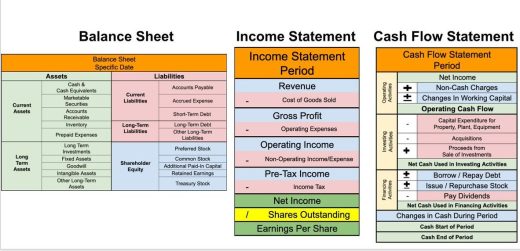
Being data-driven means much more than access to reliable information. How and when you typically engage your info when there’s a potential problem to resolve, or a decision on the table—and even when good fortune allows you to enjoy smooth sailing for a while? So, if your relationship with your data resembles a standing appointment, a special occasion meeting that you faithfully keep once a month, it’s time to join the 21st century? Business owners and leaders who are data-driven IRT know that consistent attention to the data is how you leverage the resource. Identify a small set of meaningful “go-to” metrics—KPIs— to consult because you know they reveal pivotal aspects of company performance. You might choose to follow certain CRM marketing metrics; you’ll definitely refer to your monthly financial statements—Balance Sheet, Cash-flow, P & L—and take a once-a-week peek at, business vital signs that shine a light on basic functioning, such as top line revenue, operating margin, operating cash-flow and the quick ratio calculation. The goal when reviewing your numbers is not to sweat every small fluctuation, but to notice and investigate repeating patterns that could signal the need for a response.
Business owners and leaders who know that the best results are achieved by those who pay attention and act when necessary, avoiding the trap of analysis-paralysis. Verification is a good thing, but refusing to heed the story your KPIs tell you is a waste of your investment in data. It is sometimes wise to wait and see, to confirm the context and avoid a hasty response. But many owners and leaders of also-ran companies tend to hesitate when the picture the data reveals is clear, but perhaps unexpected. Being data-driven is about knowing not only which metrics matter, but also having the discipline and confidence to take action before competitors or other marketplace factors get there first. Winners are able to both interpret the data outcomes and trust the evidence, even when it challenges assumptions. That discipline is what ultimately turns data into a long-term advantage. Companies that consistently outperform others tend to:
- Monitor KPIs—identify a small set of meaningful metrics to track
- Look for pattern verification—do two or more metrics indicate that something needs your attention?
- Make a course correction when necessary
- Learn quickly from results
Make reviewing reports a weekly activity
The many demands and uncertainties of the 21st century marketplace have expanded the responsibilities required to effectively manage a business. Being data-driven means much more than access to reliable information. How and when you typically engage your info when there’s a potential problem to resolve, or a decision on the table—and even when good fortune allows you to enjoy smooth sailing for a while? So, if your relationship with your data resembles a standing appointment, a special occasion meeting that you faithfully keep once a month, it’s time to join the 21st century. Business owners and leaders who are data-driven IRT know that consistent attention to the data is how you leverage the resource.
Monthly, or even quarterly, reviews of certain reports were once standard—but if you aim to be responsible steward, it will be necessary to be more vigilant. By the time a quarterly report suggests that a certain development could be a problem, the trouble may have been brewing for weeks. Even a monthly review of KPIs can give too much of a head start to a matter that’s about to become urgent. One of the ways that stronger organizations maintain an advantage is to proactively pay close attention to business activity. Smart owners and leaders check their guiding KPIs frequently and, depending on your business, that could be weekly, or even daily (especially if you operate a restaurant). Looking to see whether things are moving in the right direction and thinking about an intervention you can put into motion if they’re not, is standard stuff these days. You want trustworthy forecasting that helps you avoid unfortunate surprises. Hot points might include:
- Change in customer demand patterns—are certain customers not reordering as often as they once did?
- Weakening customer engagement—are your usual social media groupies responding to posts less frequently?
- Early signs of margin pressure—are prospects hesitating and pushing back against your pricing?
- Is a supply chain obstacle increasing the amount you pay to acquire what you sell, or are you waiting longer to receive orders?
Understand which customers deliver the most growth
Business growth can be misleading and make you surprised to find that what appears to be growth has a shadow side. Meaning, your Profit & Loss Statement can reward you with an increase in quarterly revenue and simultaneously punish you with a shrinking profit margin that’s occurring because the cost of producing or acquiring the products or services you sell have increased. If you decide against raising prices because you fear that customers will not accept an increase— A savvy data-driven leader will turn to the metrics to research questions like:
- What factors have caused production or acquisition costs to increase?
- How can your company more efficiently produce the product or service that is sold? If you can make better use of your time, what you gain can be applied to another task and that may save you money. If you acquire what you sell, research the availability of vendors who may offer a lower acquisition cost and attempt a supply chain remedy.
- Consult your CRM data and learn which customer segments or acquisition channels have a positive impact on growth—bring in the most revenue, profit and your highest Customer Lifetime Value. Also, are there certain customers who generate the most repeat business and referrals?
Treat pricing as an experiment
Pricing strategy is one of the most powerful factors in any business and yet many organizations treat it like a permanent decision — something set once and revisit occasionally. You may find, however, that once you’ve decided whether your company’s market position— high end, mid-market, or economy and identified the optimum profit margin range needed to make the entity viable, you can be more flexible about the prices you set than you may have imagined. Why not approach pricing as a learning process that’s supported by your CRM data? They analyze how different segments respond to price changes or special discounts. It may surprise you to learn that what appears to be business growth has a shadow side.
Your P&L is showing you a nice increase in quarterly revenue but disappointing you with a shrinking profit margin—maybe because of a supply chain issue—you may not be boxed in by a competitor who can afford to price more conservatively. Maybe you can make a modest price increase and make it work?
- Are certain customer segments more sensitive to price increases while others are resilient?
- Is there a good strategy to help “sell” customers on your price increase?
- Will a small price increase change customer behavior?
Experimentation doesn’t need to be complicated. Small controlled tests can reveal a lot about what customers can truly value. Price increases can be passed to new customers only. Long-term customers may be more likely to accept the increase when you contact them personally and explain your now higher production, acquisition costs, or other operating expenses. They will get it. Extending the payment terms to customers who may have difficulty adjusting to an increased price might also be a good solution. Over time, these insights and experiences may lead to smarter pricing decisions and healthier margins.
Thanks for reading,
Kim
Image: © The Corporate Finance Institute

 Freelancetheconsultantsdiary's Blog