Rainy Day Strategies to Cushion Financial Uncertainty

There’s been lots of talk about the U.S. economy over the past year or two and bad news has dominated the narrative. Rounds of lay-offs continue at enterprise companies: Nike announced plans to shed 1,400 jobs in April; Dell cut 10% of its workforce in March (11,000 employees), for the third year in a row; on May 5, the cryptocurrency exchange platform Coinbase announced a planned lay-off of 14% of its staff, or about 700 employees. Even the popular building contractor rating platform Angie’s List announced in January that 350 jobs would be cut this year.

Your one-person Freelance empire may be holding up despite lay-offs and rising gasoline and grocery prices but even those of you who hold the working capital needed to maintain normal business operations, pay living expenses and continue to fund your retirement account may nevertheless have a gut feeling that warns you to spend cautiously and trim expenses to bolster your savings cushion. An analysis of your financial position is how you begin your resiliency campaign.

Assess business financial condition

The road to financial resilience begins with examining the business’ financial position by conducting a cash-flow analysis. The process will reconfirm the sources of your earnings and how much you pay to keep the business rolling. The cash-flow analysis will illustrate how and when revenue streams bring money into the business (receivables) and the timing and costs of operating and other expenses (payables) that take money out of the business. You’ll take the measure of how and from which sources business revenue is derived, as well as your spend for fixed and variable expenses. You’ll also confront the business top line earnings (gross sales) and bottom line (net) earnings. Your mission is to analyze cash-flow over 12 months, and making note of seasonal variations, so that you’ll obtain a big-picture understanding of your entity’s financial rhythms.

The cash-flow analysis invites your business to “tell” you where you’re making money and where you spend perhaps too much and should consider a less-costly alternative. Identifying areas where spending has you leaking cash is especially helpful if local or national economic conditions make clients inclined to limit the billable hours that feed your revenue. Fewer billable hours will magnify those pesky financial gaps and escalate the impact of a cash crunch crisis, should it occur. Ask your accountant or bookkeeper to run the numbers, or contact your local Small Business Association SCORE to make an appointment and obtain some (probably) free and trustworthy business finance management assistance.

Build a budget that reflects financial reality

Kick-off your fat-trimming budget project by reviewing variable and fixed expenses and verifying how each one contributes to maintaining operations, supporting business growth, supporting customer service and the customer experience, or enabling professional development that reinforces your standing as a thought leader and expert in your field. Whatever expenditures do not at least indirectly support the business or your professional position may need to either be funded at a more modest level or eliminated. Developing your revised budgetary focus does not, however, mean that you must slash as many expenses as possible. Your new budgeting approach should be strategic and guided by business goals and economic reality. Here are useful guide posts:

  • Cut expenses that do not support revenue generation, business operations, or the customer experience.
  • Protect spending on marketing and sales functions to encourage revenue, e.g. client acquisition and retention.
  • Build a cash reserve that can float three to six months of business operating expenses.

Use scenario planning to forecast a worse-case possibility and use that perspective to forecast the next 12 – 18 months of operations. What might your finances look like if revenue drops 10%? Next, consider a more disturbing future and forecast the financial challenges you would likely encounter if, heaven forbid, revenue drops by 25%? It doesn’t feel good, but the scenario planning component of your financial defense plan will force you to anticipate how you might manage and inspire you to think of how to cushion those harsh and stressful circumstances with some savvy advance planning. It’s always easier and more effective when difficult decisions are evaluated and potential remedies are devised when you are calm and not in a panic.

Before any storms arrive, remember that your best defense is a good offense. If at all possible, delay major capital purchases, but remind yourself to avoid severely slashing your marketing budget. You may decide to shrink it, but do not lose sight of the power of consistent marketing and its place as one of the three pillars of a healthy business. Companies that maintain their marketing presence during business downturns consistently outperform businesses that sharply limit marketing activities when the recovery arrives.

In fact, refocused marketing strategies and campaigns could surpass the effectiveness of your current, perhaps more costly, activities. Stepping back from certain paid advertisement and instead doubling down on publishing marketing content—which will cost time, that other valuable resource—could yield excellent results. To the best of your ability, and in accordance with what aligns with your business solutions and customer personae and preferences, consider one or more of the following:

  • Invite a client to participate in a written or video case study. It’s a highly persuasive tool that guides prospects to envision how your solution could resolve their challenge or help a mission-critical goal to be reached.
  • Look for opportunities to portray yourself as a thought leader; that could include moderating or appearing on a panel, speaking at a local business or industry conference or other meeting, teaching a credit or noncredit course in a subject that is aligned with the solutions your company provides, or obtaining an invitation to speak in a webinar or podcast.
  • Look for public relations opportunities that will enhance your visibility and strengthen your brand image. If you are teaching or speaking at a venue that’s open to the public, send a press release to a community newspaper or event listing sites. Also, post your speaking or teaching engagement on your website and social media platforms.

Diversify revenue streams

If your Freelance entity offers just one product or service, you are potentially quite vulnerable to the winds of economic instability. A shift in the competitive landscape, or a new tech product, for instance, can threaten your ability to make a living. Especially in a solo earner household, if revenue earning opportunities become scarce, the outcome could be difficult.

You might not see a quick fix for your problem, but you could create one by asking a question. That is, it could be worth your while to ask clients with whom you are currently engaged if they might be interested in expanding the work you do for them? Frame your proposal in a way that illustrates a desirable and tangible competitive advantage that the client’s company would obtain when your expanded work is implemented. Your clients may help you make lemonade of the lemons and provide you with a new income stream that you hadn’t considered. A complementary service that can be delivered as an add-on or upgrade might also inspire a client to envision how you might bring more value to his/her organization. Similarly, tiered pricing that offers a lower cost basic option as well as a higher-priced premium alternative that provides more extensive service, could bring a new revenue source to your organization.

Then again, it may be more feasible to develop an external revenue stream and explore the possibility of a side hustle. You may have noticed that most mentions of side hustles involve an entrepreneurial angle but that does not have to be the case. Traditionally, a side hustle was an under the radar job that wasn’t discussed with your colleagues. Just 10 years ago, a side hustle could have found you plowing snow in winter, clearing out dead leaves in autumn and performing basic yardwork such as weeding, mowing lawns and pruning forsythia and rose bushes in spring and summer.

BTW, independently or traditionally employed workers who take on a side hustle are for the most part not in financial distress. In fact, those who earn $150K annually are more likely to have a side hustle than those who earn $25K – $50K per year. But regardless of your financial circumstances, a side hustle is a way to future proof your financial position and build a cushion against financial uncertainty.

Leverage external financial resources

Grants, SBA loans and alternative lending programs are created to support business leaders as they plan to scale or aim to increase working capital that’s intended to protect viability during difficult business conditions. If rumors of possible economic uncertainty reach your ears, envisioning what a survival plan for your entity might look like is smart thinking. Sooner rather than later, make it a point to research your options, so that you are apprised of eligibility requirements and timelines that will allow you to prepare and survive.

If your business is carrying significant debt, understanding the landscape of small business debt relief options, including what’s available through programs like those outlined by the Consumer Financial Protection Bureau, can be the difference between survival and losing your beloved business. Also, revisit external financing strategies that match your repayment timeline to your cash-flow cycle.

In closing, be aware that economic instability that periodically occurs in your marketplace is not unusual. Every independently employed professional, traditional business owner and even employees will experience financial challenges at least once. Business leaders who consider financial resilience a given for which they consistently prepare, instead of an emergency response that’s cobbled together in a panic not only survive financial fluctuations, but often emerge stronger once “normal” business conditions return.

Thanks for reading,

Kim

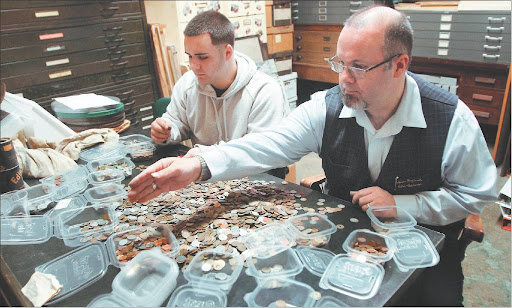
Image: © New England Coin Exchange Cranston, RI

Freelancers Do the Side Hustle

When a local small business owner and acquaintance of mine opened her second venture, a tiny breakfast and lunch place with a retro cool vibe that I love, she soon started “moonlighting” as a dinner service waitress three nights a week at a small artisanal pizza restaurant nearby. She burned the candle at both ends, finishing the waitress shift at midnight and crawling into bed at 1:00 AM, only to wake up at 4:00 AM to make the 45 minute journey to the wholesale restaurant market six days a week, to help her contain food costs and offer menu prices that customers would accept. It was exhausting, but Nicky was determined to pay her share of the debts from the failed first business venture in which she was a partner and also maintain adequate cash-flow in the new one, where she is the principal owner.

About three miles away from Nicky’s restaurant is Anthony’s, another tiny breakfast and lunch place that I love. A few years ago, Anthony told me that his venture’s cash-flow foundation is real estate. Some years ago, Anthony was able to buy the building where his restaurant is housed; upstairs over the restaurant are four apartments that command premium rents for his harbor-facing location.

Cathy, a former client of mine (who, sadly, passed away about three years ago), worked for three or four years as a Lyft driver, to build cash-flow that safeguarded her ability to make the weekly payroll and cover other expenses in her medical billing business (which her children sold). My friend Jackie, a fitness instructor and trainer, launched a boutique gym 20+ years ago, yet she continues to teach classes at a large, prestigious gym where she receives training and certifications in new exercise techniques that she passes along to her gym’s fitness staff so that her team has updated skills. Jackie is also able to now and again observe smart business practices used by her mega-gym employer that she can apply at her operation to improve her performance as fitness center owner and manager. Then there’s my friend Paul who once co-owned four outlets of a popular skin care franchise. To provide health insurance for himself, his wife and their four children, for many years Paul worked 20 hours/week as a FedEx delivery driver.

I also created a side hustle strategy to protect my business cash-flow. Until about three years ago, I periodically taught noncredit skills development workshops to aspiring entrepreneurs—business plan writing, sales skills training, marketing and networking skills—at a local school and at a business incubator that serves aspiring female entreprenurs. Unfortunately, pandemic related shake-ups torpedoed my access to both teaching positions but if an invitation is made, I’ll gladly return—and money is not my only motivation—I enjoy teaching! On the plus side, since 2016, I’ve been a contributing writer at Lioness Magazine, a globally distributed publication that’s targeted to female entrepreneurs.

So where are we going with this? You noticed that the recurring theme of these stories is how Freelancers and small business owners take action to strengthen their business cash-flow. Freelancers and small business owners can be dangerously vulnerable when it comes to financial security. Keeping an entity healthy throughout the inevitable ups and downs of the local or national economy or, in the B2B sector, protecting yourself from cash-flow crunches that can result if a client is late paying your invoice or worse, doesn’t pay at all, is an essential function of your risk management strategy.

The phenomenon once known as “moonlighting,” that is, working in a second (or third, or even fourth) job, and now called a side hustle, burst into the public discourse during the pandemic, when the economy as we knew it suddenly turned upside down and most jobs tumbled into a confusing transition. The shutdown resulted in the swift closure of numerous restaurants and fitness centers and was soon followed by waves of lay-offs and bankruptcies that are ongoing, especially in the tech and retail industries.

Life gradually returned to what’s called “the new normal” and markets rebounded and stabilized, on paper anyway. Contrary to the many glowing reports of a low unemployment rate, subsiding inflation and millions of jobs that are unfilled (and, allegedly, looking to hire qualified candidates), many Americans are experiencing a different reality and the desirability of earning extra income has taken hold. The popularity of the side hustle economy has continued to grow, publicized by rideshare giants Lyft and Uber and fueled by financial pressures felt by both independently and traditionally employed workers.

Recent data confirms that side hustles are on the rise and here to stay, with CBS News reporting that nearly half of America’s workforce has a secondary source of income or their own side hustles. Surprisingly, according to Side Hustle Nation, side hustles aren’t exclusively for the financially challenged—the 2024 Side Hustle nation survey found that more than 40% of participants have household incomes that exceed $100,000 and 78.4% stated that they aren’t struggling to make ends meet.

The changing societal zeitgeist gives today’s Freelancers and SMBs the greenlight to radically reframe their feelings and expectations toward “moonlighting,” with its former connotations of operating in secrecy in order to rustle up money needed to supplement an insufficient income, to a potentially impactful revenue stream that could surpass mere cash-flow support and extend into financing new business ventures or other investment. For today’s Freelance professionals and SMB owners, a side hustle can translate into a unique growth opportunity but to make the strategy work, the side hustle must be managed with intention. Proper structure, planning and assessment are required. If you are Freelance professional or SMB owner considering the enhanced security that can be provided by a good side hustle, here are six steps to take to help make your side hustle worth your time and effort.

  1. What’s in it for you? As you’ve seen, the side hustle economy gets lots of publicity and the noise may get you thinking—is there an opportunity for you? Life continues to get more expensive and also, extra money is an essential resource when one has financial or entrepreneurial goals. You might see a side hustle as a vehicle to pay off debt, finance your retirement, or build capital to launch a start-up. Then again, you could be motivated by a basic need or desire to supplement your Freelance or other business revenue or your W-2 paycheck. There are also those who harbor the goal of building out a promising side hustle that will become a full-time business venture and replace their current employment. Before you focus on what might be your most promising side hustle, however, you would be wise to clearly define your motivation.

2. What are your marketable skills and are they expert-level? Once you’ve made an uncensored examination of your interest in launching a side hustle, make an accounting of your potentially marketable skills and evaluate what customers might be inclined to pay you to do. For example, might your knack for graphic design open doors to projects such as designing wedding invitations, or perhaps creating marketing and sales materials? Talented writers might parlay that competence into a Freelance editing side hustle. If you were born with a green thumb and can keep blooms popping, from crocuses in early spring to chrysanthemums in late autumn, then window box and garden management may be the side hustle for you. Be aware as well that it’s a valuable competitive advantage to invest in your side hustle skill with training that upgrades your expertise. Certifications, degrees and experience (communicated by customer reviews) can be posted on your website and social media accounts to increase the confidence that prospects have for you. Skills training helps you stand out against competitors and can increase customer demand, grow your client list, justify premium pricing for your services and ultimately, position your side hustle to earn more money, faster.

3. What will success look like? It’s important to align your side hustle’s driving purpose with your marketable skills that a critical mass of customers will pay to receive and also fit your definition of financial success. This is about managing expectations—will the side hustle you have the skill set to get paid for earn you enough money to make it worthwhile doing? For example, you may want to become a piano teacher but research of the most respected teaching qualifications, or your access to potential students, may not support either the price you’d like to charge for lessons or the billable hours you’re likely to get. You may be able to tap a new market and improve access to students—maybe retired adults who want to revisit their childhood piano lessons?—but since you can’t charge your preferred price for lessons because you lack a certain qualification, so you’ll have to work harder and give more lessons. Basically, you must be honest about how much time and focus you care to devote to your side hustle venture and define your picture of success.

4. How disciplined are you? The side hustle will not get off the ground and fulfill expectations if you can’t make yourself put in the time and effort to make it successful. This seems obvious, but for some it may not be as easy as it seems. Before you invest significant money into developing your side hustle consider likely the time commitment, along with the necessary tools, equipment, relationships, training and administrative duties (marketing and bookkeeping, for example) it will take to launch and operate your venture and guide it toward your definition of success. Estimate the number of hours per week, with a realistic hourly service rate, it will take to make the thing worthwhile. Be brutally honest about the number of hours per week or month you can (or will) allocate to working a side hustle. BTW, as you calculate your estimated time commitment, do not even think about infringing on the time and focus needed to effectively do your day job.

5. Create milestones with timeline and success metrics. Operating a side hustle means lengthening your to-do list and spreading yourself thin, making it essential to be organized. Keep yourself on track and also alert yourself to what is or isn’t working by creating a simple and revealing tool—a timeline. At periodic intervals—monthly or quarterly will be good—over a 12 month period, it will be very helpful to track and assess Key Performance Indicators that demonstrate side hustle growth, or lack thereof. Look at billable hours worked, number of customers seen, revenue generated and business expenses to get the story of side hustle performance. Pay attention to prospects who don’t work with you to learn of some element you may want to adjust. It’s important to use a timeline to project what you think is achievable so that, as an entrepreneur, you are setting yourself up for success.

6. Course correct when necessary. You’ll quickly know if something is not performing as you’d hoped (like revenue generated), but the above-mentioned timeline will confirm the diagnosis with metrics. Along with defining your KPI timeline is to recognize what’s working and what’s not, so you can make corrections where necessary. The big-picture view is a revealing perspective. Take the time to consider why those who tell you no are declining to work with you—are you falling short somewhere? On the plus side, are existing customers referring new customers and/or writing good online reviews? Once a month or so, hunt for time in your very busy schedule to think about your side hustle for a couple of hours, just as you think about your Freelance consultancy or SMB. Know that it’s okay to periodically reevaluate and change course if necessary.

Thanks for reading,

Kim

Image: © Shutterstock. Working as a fitness instructor or trainer has been a popular side hustle since the 1980s.