7 AI Tools Take Your Freelance Entity To The Top

If striking out on your own to launch a solo Freelance entity has progressed from interesting idea status to a Pinterest goal in development, you may be ready to explore a few specifics that will help you prepare to advance your plan from the Pinterest board to a functioning business entity. It is almost certain that you’ve considered how Artificial Intelligence-powered software and other digital tools can optimize your business operations. You’ll be happy to know that numerous AI-powered technological resources are readily available to help Freelance solopreneurs operate their one-person enterprise with an efficiency and impact that rivals larger organizations.

A 2026 report published by Upwork, the Freelance talent marketplace that serves both companies in search of knowledge economy workers and independent professionals whose business is to provide it and the digital communications provider Zoom, 91% of Freelance single owner business entities say that AI has reduced their routine administrative work and enabled 74% of respondents to scale without hiring full-time employees. In fact, many Freelance business owners view operating a single-person entity as an advantage that bakes in operational flexibility and strategic agility. When necessary, a Freelance solopreneur can turn to software-as-a-service AI agents and/or assistants, or hire a Freelance colleague whose expertise can be contracted on a per-project basis, to expertly manage whatever aspects of the project are outside of his/her wheelhouse. The Rise of the Solopreneur report, which surveyed nearly 3,000 respondents located in 48 states and participating in 12 industries, provides a window into how this entrepreneurial segment is building success and expanding its impact in the global labor force. For workers and companies alike, the rise of Freelance solopreneurs who strategically implement AI-powered tech resources demonstrates that the future of work may no longer be defined by the number of workers a company employs, but rather by the founder’s expertise.

The challenges once inherent in operating a business alone have steadily declined since the advent of tech advances that have become commonplace—cloud computing, e-commerce infrastructure, including secure online payment options, social media platforms and other marketing activities that promote the company and build the brand. Moreover, there are now Freelance marketplace platforms that facilitate the building of a vital client list. That’s all good, but life as a Freelance on-your-own business owner requires significant confidence and discipline, along with expertise in your field.

Being able to manage stress and stay motivated are a couple more must-have characteristics. You’ll also have to be ready to wear many hats, for example marketing, sales, customer service, accounting/finance and operations. Oh, yes, and as CEO, you are the face of the company. There’s no one else to delegate tasks to, so being incredibly resourceful, strategic in managing their time and all-around resilient are other qualities Freelance solopreneurs must live up to.

It can be successfully done if that is the way you want it! Below are a few technological resources that will help you stay on top of things and maintain a positive mindset while you do.

1. Financial Reporting and Analysis: AI-powered financial tools are foundational for sound decision-making that is informed by your company’s key performance metrics. AI powered financial tools can deliver timely, relevant perspectives to financial analysis and give eye-opening insights into what drives revenue and profit. However, AI financial tools are not one-size-fits-all and the service you choose must align with the your reporting and analysis needs. Predictive analytics for financial forecasting might be a priority.

2. Customer Relations Management: CRM integrates your marketing strategies with AI-powered technology and brings highly useful capabilities by using advanced analytics, market research and automation to deliver personalized customer experiences that increase sales conversions, increase customer loyalty, encourage repeat business and reduce churn. AI can enhance customer acquisition by facilitating targeted marketing campaigns, improving conversion through predictive analytics and making recommendations that help you optimize sales strategies. As well, CRM will ensure comprehensive customer service and a pleasantly memorable customer experience, by tracking and managing all customer touch points—for example, purchases and inquiries—to deliver consistent support.

3. Operations and Workflow Management: AI software systems are powerful tools that can, among other capabilities, streamline work processes and improve operational efficiency by mapping, automating and tracking your workflows to monitor your output and progress. An AI agent can also provide actionable recommendations to address critical operational issues and even augment or correct incomplete or inconsistent data, to help you obtain accurate insights and achieve informed decision-making. By training on historical data, AI models can quickly identify unusual patterns and outliers that might signal quality control issues. 

4. Sales/Marketing Funnel & Leadgen: AI-driven leadgen marketing/sales funnels are able to adjust timing, marketing or sales channels and personalized messages that respond to the behavior of prospective buyers In Real Time. Responsiveness is valuable to you because a lost lead is lost revenue. According to research by Mc Kinsey, adaptive AI-powered marketing/sales funnels reduce prospect drop-off and make a sale more likely. AI can manage customer relations management entries, qualify leads and even handle initial sales interactions via your AI-powered chatbot. AI lead qualification can ask the initial questions, score intent, tag high-quality leads and push the most promising prospects into your pipeline automatically.

Be sure to add a Follow-Up Agent, a software tool that automates the process of staying in touch so that promising leads are not lost due to insufficient follow-up. Instead of relying on manual reminders sent by you, the follow-up agent uses AI to “read” ongoing conversations and determine when and how to reach out, adapting the timing of follow-up and conversational tone depending on how the lead interacts. The system is designed to track engagement signals such as email opens, clicks, or unanswered messages. Based on this information, the follow-up agent does exactly that by composing personalized messages that reflect the context of the conversation and even the role of the recipient.

5. Content Strategy and Creation: AI can draft newsletters, blog posts, social media updates, marketing emails for campaigns and advertising copy, all tailored to specific audience segments and optimized for Search Engine Optimization. AI software can also analyze customer data to segment audiences and automate personalized marketing messages. A Content Repurposing Agent– will transform long-form content (blogs, YouTube, newsletters) into short clips that enable you to extract the full value of your strategies and messages and reinforce their impact by recycling it to the other platforms. Now you can produce social media posts, marketing emails—or even videos that feature you discussing key points of your message and what it means to customers—and using a script that’s inspired by the repurposing agent.

6. Graphic Design: AI is revolutionizing the design industry, making it possible for those who are not design professionals to produce credible graphic designs for your marketing materials that enhance personalization and improve engagement that promotes sales conversations. In a recent McKinsey Global Survey, 65% of participants noted their company regularly use generative AI—nearly double the percentage recorded 10 months before and 69% of marketing and other creative professionals believe AI-enhanced tools boost their team’s creativity. AI can generate numerous ideas and variations based on initial inputhelping graphic designers break through creative blocks and explore directions they might not have considered otherwise. AI is also lowering the barrier to entry for non-designers who need to produce visual content. User-friendly design assistants can guide novices through the creative process, offering suggestions and automating complex tasks. Take a look at some highly favored design software.

7. Cybersecurity & Data Privacy: Managing a primarily AI-driven business presents significant cybersecurity precautions. Small and medium-sized businesses, a category that includes Freelance solopreneurs, are more frequent targets of cybercrime than larger companies, industry research shows. The good news is agentic AI and AI agents are beefing up cybersecurity by automating decision-making. Not only will an AI-powered cybersecurity system enable dynamic access management by adjusting user access based on behavior and risk, in that way aligning with zero trust principles, but also agentic AI will continuously monitor activities, and reveal atypical patterns to identify and mitigate insider threats before they escalate.  Furthermore, agentic AI enhances workflow efficiency by automating tasks like alert triage and incident response, with applications in cybersecurity for autonomous threat detection and response (Lisowski, 2024). Organizations adopting agentic AI for security and governance are reporting significant benefits, including faster decision-making and improved risk management (Chiodi, 2025).

Thanks for reading,

Kim

Image: Freepik

Let Your Data Do Its Job

It is likely that most business owners and other company leaders in America today often describe themselves as “data-driven” decision-makers and strategy builders; data driven is such a self-affirming and empowering term. In Real Time, though, it’s more than likely that rather few business owners and leaders are living the dream. Oh, many, if not most, subscribe to software-as-a-service financial tools, like NetSuite and Microsoft Dynamics 365. They’re also hooked up for customer relations management, thanks to HubSpot and Zoho. It’s almost a given that a growing number of them have waded into Artificial Intelligence, probably starting with an AI-powered chatbot, maybe provided by Ada. Some may have already advanced to an AI digital assistant that will, by human command, expertly perform a variety of routine administrative tasks, such as scheduling meetings, sending standard emails (like vendor onboarding correspondence), or conducting research.

So business owners and leaders are mostly all-in with tech advances—I guess it makes them feel in control and secure. But the real question is, do business owners and leaders—you—understand and trust the data? Are you able to rely on the story your data tells you, the scenario it reveals? If your key performance index (KPI) metrics indicate that all is bubbling along as intended, I’m sure it’s safe to say that you understand which numbers indicate good news. But if one or more KPIs signal an anomaly that could be a warning of developing trouble ahead, would the message communicated by your data push you to take an action of some sort? When a red light is flashing, what will you do and when will you do it?

Do you take advantage of the precious resource of time that your data can give you and use it to take a second look at what may be an unexpected bump in the road? Maybe a KPI metric that’s tracking in the wrong direction will inspire you to check out another KPI to get another perspective on the number that you find rather worrisome? A truly data-driven leader strategy has faith in the scenario that the numbers reveal; those who understand and trust their information have confidence in the story that the info tells them, whether the description is a random shiver, or an obstacle that calls for a strategy and a plan to implement it. In other words, what separates winners from also-rans often comes down to one fact—when its time to make an impactful decision, what’s your usual response? Does your data play a starring role, or does it make only a cameo appearance?

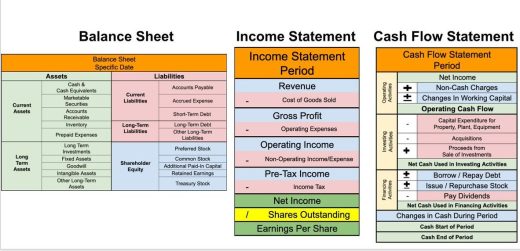
Being data-driven means much more than access to reliable information. How and when you typically engage your info when there’s a potential problem to resolve, or a decision on the table—and even when good fortune allows you to enjoy smooth sailing for a while? So, if your relationship with your data resembles a standing appointment, a special occasion meeting that you faithfully keep once a month, it’s time to join the 21st century? Business owners and leaders who are data-driven IRT know that consistent attention to the data is how you leverage the resource. Identify a small set of meaningful “go-to” metrics—KPIs— to consult because you know they reveal pivotal aspects of company performance. You might choose to follow certain CRM marketing metrics; you’ll definitely refer to your monthly financial statements—Balance Sheet, Cash-flow, P & L—and take a once-a-week peek at, business vital signs that shine a light on basic functioning, such as top line revenue, operating margin, operating cash-flow and the quick ratio calculation. The goal when reviewing your numbers is not to sweat every small fluctuation, but to notice and investigate repeating patterns that could signal the need for a response.

Business owners and leaders who know that the best results are achieved by those who pay attention and act when necessary, avoiding the trap of analysis-paralysis. Verification is a good thing, but refusing to heed the story your KPIs tell you is a waste of your investment in data. It is sometimes wise to wait and see, to confirm the context and avoid a hasty response. But many owners and leaders of also-ran companies tend to hesitate when the picture the data reveals is clear, but perhaps unexpected. Being data-driven is about knowing not only which metrics matter, but also having the discipline and confidence to take action before competitors or other marketplace factors get there first. Winners are able to both interpret the data outcomes and trust the evidence, even when it challenges assumptions. That discipline is what ultimately turns data into a long-term advantage. Companies that consistently outperform others tend to:

  • Monitor KPIs—identify a small set of meaningful metrics to track
  • Look for pattern verification—do two or more metrics indicate that something needs your attention?
  • Make a course correction when necessary
  • Learn quickly from results

Make reviewing reports a weekly activity

The many demands and uncertainties of the 21st century marketplace have expanded the responsibilities required to effectively manage a business. Being data-driven means much more than access to reliable information. How and when you typically engage your info when there’s a potential problem to resolve, or a decision on the table—and even when good fortune allows you to enjoy smooth sailing for a while? So, if your relationship with your data resembles a standing appointment, a special occasion meeting that you faithfully keep once a month, it’s time to join the 21st century. Business owners and leaders who are data-driven IRT know that consistent attention to the data is how you leverage the resource.

Monthly, or even quarterly, reviews of certain reports were once standard—but if you aim to be responsible steward, it will be necessary to be more vigilant. By the time a quarterly report suggests that a certain development could be a problem, the trouble may have been brewing for weeks. Even a monthly review of KPIs can give too much of a head start to a matter that’s about to become urgent. One of the ways that stronger organizations maintain an advantage is to proactively pay close attention to business activity. Smart owners and leaders check their guiding KPIs frequently and, depending on your business, that could be weekly, or even daily (especially if you operate a restaurant). Looking to see whether things are moving in the right direction and thinking about an intervention you can put into motion if they’re not, is standard stuff these days. You want trustworthy forecasting that helps you avoid unfortunate surprises. Hot points might include:

  • Change in customer demand patterns—are certain customers not reordering as often as they once did?
  • Weakening customer engagement—are your usual social media groupies responding to posts less frequently?
  • Early signs of margin pressure—are prospects hesitating and pushing back against your pricing?
  • Is a supply chain obstacle increasing the amount you pay to acquire what you sell, or are you waiting longer to receive orders?

Understand which customers deliver the most growth

Business growth can be misleading and make you surprised to find that what appears to be growth has a shadow side. Meaning, your Profit & Loss Statement can reward you with an increase in quarterly revenue and simultaneously punish you with a shrinking profit margin that’s occurring because the cost of producing or acquiring the products or services you sell have increased. If you decide against raising prices because you fear that customers will not accept an increase— A savvy data-driven leader will turn to the metrics to research questions like:

  • What factors have caused production or acquisition costs to increase?
  • How can your company more efficiently produce the product or service that is sold? If you can make better use of your time, what you gain can be applied to another task and that may save you money. If you acquire what you sell, research the availability of vendors who may offer a lower acquisition cost and attempt a supply chain remedy.
  • Consult your CRM data and learn which customer segments or acquisition channels have a positive impact on growth—bring in the most revenue, profit and your highest Customer Lifetime Value. Also, are there certain customers who generate the most repeat business and referrals?

Treat pricing as an experiment

Pricing strategy is one of the most powerful factors in any business and yet many organizations treat it like a permanent decision — something set once and revisit occasionally. You may find, however, that once you’ve decided whether your company’s market position— high end, mid-market, or economy and identified the optimum profit margin range needed to make the entity viable, you can be more flexible about the prices you set than you may have imagined. Why not approach pricing as a learning process that’s supported by your CRM data? They analyze how different segments respond to price changes or special discounts. It may surprise you to learn that what appears to be business growth has a shadow side.

Your P&L is showing you a nice increase in quarterly revenue but disappointing you with a shrinking profit margin—maybe because of a supply chain issue—you may not be boxed in by a competitor who can afford to price more conservatively. Maybe you can make a modest price increase and make it work?

  • Are certain customer segments more sensitive to price increases while others are resilient?
  • Is there a good strategy to help “sell” customers on your price increase?
  • Will a small price increase change customer behavior?

Experimentation doesn’t need to be complicated. Small controlled tests can reveal a lot about what customers can truly value. Price increases can be passed to new customers only. Long-term customers may be more likely to accept the increase when you contact them personally and explain your now higher production, acquisition costs, or other operating expenses. They will get it. Extending the payment terms to customers who may have difficulty adjusting to an increased price might also be a good solution. Over time, these insights and experiences may lead to smarter pricing decisions and healthier margins.

Thanks for reading,

Kim

Image: © The Corporate Finance Institute

Hit Back and Budget for Cybersecurity

Friends, it’s getting ugly in America. Criminal acts of every sort appear to be multiplying (or maybe the 24 hour news cycle makes it seem so?). Violent crimes are the most frightening and with good reason, but cybercrimes also victimize those who it touches, and create white collar violence for businesses and private citizens. Numerous sources can confirm that it is not my imagination that this pernicious crime is becoming more common and dangerous.

Earlier this month, nearly 280 million students at 8,8oo+ schools, who were in the midst of studying for final exams, were confronted with a ransomware data extortion attack aimed at Canvas learning management system. Students at Georgetown University, University of Pennsylvania, MIT, Harvard University, Duke University and Princeton University, plus Oxford University (UK) and schools in Australia, the EU and other US schools were impacted. Canvas went dark on May 1 and could not function until May 7, stranding students who were unable to submit assignments or study. The cybercrime syndicate threatened to leak student data—names, email addresses and student ID numbers, but not birthdays, government IDs, or passwords, which could not be accessed—unless Canvas made a payment. Instructure, the Canvas parent company, paid an undisclosed amount to the gang on May 12. Other noteworthy recent cybercrimes include a data breach at both booking.com (April 2026) and Dell Technologies (May 2026).

Cybersecurity Ventures estimates that cybercrime lost $10.5 trillion in 2025, making it a voracious, globally and universally impactful expense that continues to escalate Cybercrime To Cost The World $12.2 Trillion Annually By 2031. The average cost of a data breach in 2025 exceeded $4.4 million worldwide, but exceeded $10 million within the US, driven not just by clean-up expenses, but also costs associated with system downtime, legal fees, regulatory fines and diminished brand trust, as noted in Global Data Breach Costs Drop But Lack of AI Risk Mitigation Poses Problems, IBM Report Finds These numbers indicate a fundamental change: company failure now directly correlates with cybersecurity failure. The numerous disturbing reports unequivocally indicate that cyberthreats are not just occasional incidents, but an ongoing menace. Common cybercrimes that often target individuals include:

  • Digital skimming is the set-up for unauthorized use of your credit or debit card information; it is also a potential gateway for identity theft. A skimming scam is often impossible to detect until the fraudsters raid your credit or debit card at an ATM machine or use your money to splurge on an unauthorized shopping spree. Favorite skimming locations are point-of-sale terminals at gas stations and mobile commerce markets. E-commerce websites whose check-out page has loose security measures is another favorite portal for malware that enables the capture of credit or debit account numbers—and maybe other sensitive info as well. For in-person transactions tap your card when the option is available, rather than inserting your chip card into the terminal, to avoid using the magnetic stripe that exposes your name and account expiration date. Regarding online shopping, digital skimming of a website is essentially impossible to detect. An old-school work-around is to phone in your order and speak with a human sales associate (or virtual assistant) to guarantee that your order is legitimately processed. Another option is to ask your bank to generate a virtual credit card for you, a temporary card that’s linked to your card account. If a virtual card number is hacked by a skimmer, the number cannot be reused; also, you can deactivate the stolen virtual card without affecting the real card. You might also use Pay Pal, Google Pay, or Apple Pay for card purchases; they are digital wallets that use tokenized payment data and don’t transmit actual card numbers to the merchant. If an e-commerce site is compromised by a skimmer, the cybercriminal will be unable to obtain your card info. Finally, it’s a good idea to set-up instant notifications for all credit and debit card transactions and receive activity alerts via text message or mobile app. This won’t prevent skimming, but it will help you learn of unauthorized charges immediately so you can call customer service.
  • Phishing attacks are carried out by hackers who send emails that appear to originate from a trusted source. Obtaining usernames and passwords and asking you to download a file—which will contain malware—is the goal. There is a variation of this crime, known as spear phishing, when cybercriminals research targets to learn personal information and use it to craft relevant messages that is sent to targets as a way to build trust and more easily persuade them to drop their guard and enable the scam. The best way to avoid a phishing attack is to pay attention to the sender’s email address. For example, if your city or town appears to be the sender of an email that asks you to reply by sending your payment card number to settle a certain municipal bill, maybe a water or tax bill, remember that the email address will be .gov and not .com, or .biz., for example.
  • Are you a robot? Now there’s a Captcha scam prowling through our digital networks, lying in wait for compliant targets who are just trying to log onto a website. The goal is to introduce a virus to your computer by installing malware that will allow cybercriminals to obtain access to all manner of sensitive information, from your workplace or personal email logins to your financial account credentials, such as crypto-currency wallets and other payment system info. The Captcha cybercrime can even hijack your browser and subject you to an avalanche of pop-up ads and other online annoyances. If Captcha asks you to not only check the box and verify that you are not a robot, but also asks you to press a sequence of keys, open a “run” box, or copy/paste a code, it is a scam. Close the window and disconnect from Wi-Fi immediately.
  • Social engineering is a growing enabler of cybercrime. Basically, the hackers ask you to open the door and let them in. Social engineering is a form of psychological manipulation used to control a targeted individual. It employs universal human traits such as trust, curiosity, fear, politeness and deferring to perceived authority to trick individuals into revealing sensitive information or performing actions that compromise security—because they think they should. Phishing and spear phishing are examples of the con. Cybercriminals have figured out that human beings are the weakest link in the security system; it’s easier to trick someone into providing sensitive information than it is to locate security gaps in computer systems. Attackers use a variety of social platforms and other methods to engage in deceptive behavior that’s devised to hoodwink unsuspecting victims. The hackers encourage, or even coerce, their targets into disclosing restricted credentials and other sensitive data to obtain access to devices, digital information, or company facilities. 

Advances in digital technologies have, unfortunately, facilitated the emergence of increasingly creative cybercrime syndicates. What was once often a “belt + suspenders” strategy implemented by the more prudent business owners, comprehensive cybersecurity measures are now a must-have component of an effective risk management strategy. Today, a robust cybersecurity defense is not only an operational competitive advantage that promotes organizational resilience, but also a strategy that strengthens the brand reputation by protecting both organizational and customer data. Going forward, companies of every size must accept that cybersecurity is now a standard business expense. As per Andrew Rinaldi, co-founder at Defendify, a cybersecurity provider, an overview of common cybercrimes that target organizations are:

Denial-of-Service (DoS) and distributed-denial-of-service (DDoS) attacks

A Denial-of-Service attack overwhelms your device or company network operating ability and prevents legitimate users from accessing the system. The DoS attack bombards the victim with a flood of traffic or information designed to crash the system. Unlike other types of hacking, DoS attacks are usually initiated by an aggressive competitor who uses the attack to disrupt your website and gain an advantage. Another DoS attack motivation could serve as a diversion for an even more damaging cyberattack, such as a ransomware takeover. A DDoS attack is a ratcheted-up DoS attack, intensified by launching the takeover from multiple host computers. This type of attack overwhelms a company’s website or online service and causes it to malfunction and otherwise become inaccessible.

Man-in-the-Middle (MITM) attacks

An MITM attack occurs when hackers literally insert themselves between the user and the services s/he intends to interact with. The MITM cyberattacker intercepts communication between the user and the platform by imitating the website and hijacking online activity—think eavesdropping. In some cases, email conversations can be intercepted and altered, if the attacker decides to control the conversation. Obtaining the ability to make unauthorized purchases by stealing credit and debit card account numbers and other financial credentials that may include identity theft is the usual motive. Unfortunately, no single method can prevent all types of MITM attacks. However, requesting that site users choose strong passwords, requiring multi-factor authentication for user login and using a virtual private network (VPN) to encrypt network traffic and avoiding the use of unsecured public Wi-Fi service.

 Drive-by-download attacks

These attacks have the ability to spread malware throughout a wide geographic area. In this scenario, the cyberattacker digitally tracks insecure websites that are susceptible to hacking and inserts the malicious code into vulnerable sites. When an unsuspecting website visitor accesses the infected site, s/he might unintentionally download and install malicious code or be redirected to a fraudulent site created by the attacker. Unlike other types of cyberthreats, a drive-by download doesn’t require the user to take an action, like clicking a button or opening an email, to be infected. All you have to do is visit a website—yikes!

The best way to prevent this type of attack is to keep their internet browsers and operating systems updated and avoid insecure websites, whenever possible. The drive-by is yet another reason to speak with a website security expert to obtain a vulnerability assessment and discuss what you can do to preserve the functioning of your website, the privacy of your data, the trust of your customers and the integrity of your brand.

Ransomware

Ransomware is the leading cyberthreat in the world. As of 4Q2025, 24% reported a ransomware attack, up from 18.6% in 2024. The rise of ransomware cybercrimes is driven by artificial intelligence and the increasing sophistication of phishing schemes. Phishing is the leading attack vector of ransomware cyberattacks and 46% of the ransomware targets confirmed that a phishing attack led the way. Stolen credentials accounted for another 25% of ransomware attacks.

Ransomware continues to become more user-friendly and sophisticated, most recently with the availability of (are you ready for this?) Ransomware-as-a-Service, which allows less technically gifted criminals to carry out attacks, enabled by deepfake technology that makes it easier to outwit security systems. Furthermore, new and more anonymous cryptocurrencies have made it easier to transfer, launder and spend the ransom money without being traced. To coax targets to pay up, hackers commonly resort to various threat campaigns, such as data theft and public disclosure. See the Canvas ransomware attack that hijacked final exams and papers.

Agentic cyberattack


AI agents help hackers to launch more sophisticated and damaging attacks by making it easier to identify weaknesses in cybersecurity systems. Unlike traditional attacks that rely on humans to make decisions and coordinate the action, agentic cyberattacks use agentic AI systems that mimic human decision‑making—only better. AI agents can operate with limited human supervision and also adapt to changing circumstances in real time. Often, multiple AI agents work together, with each handling different tasks. Meaning, an AI agent can carry out the cyberattack. It can execute complex, multi‑stage attacks faster and more consistently than human teams and its ability to quickly adapt makes detection harder, because the attack strategy can change dynamically IRT, if necessary.

On the defense side, Agentic AI and AI agents are beefing up cybersecurity by automating decision-making and adapting to evolving threats (Columbus, 2025). AI systems enable dynamic access management by adjusting user access based on behavior and risk, aligning with zero trust principles—that is, no social engineering con games. Additionally, agentic AI continuously monitors activities, identifying anomalous patterns to detect and mitigate insider threats before they escalate.  Agentic AI enhances workflow efficiency by automating tasks like alert triage and incident response, with applications in cybersecurity for autonomous threat detection and response (Lisowski, 2024). Organizations adopting agentic AI for security and governance are reporting significant benefits, including faster decision-making and improved risk management (Chiodi, 2025).

Deepfake and synthetic cyberattacks
Attackers increasingly use deepfake audio and video to impersonate trusted individuals to gain access to secure systems—more evidence of social engineering. Deepfake video and Generative AI have introduced new risks by making impersonation and fraud more difficult to recognize. The technological advances have given rise to a growing underground economy that offers Deepfake- as-a-Service to cybercriminals by creating customized audio and/or video clips that impersonate requested high-ranking trusted targets who can “authorize” the crime.

In other words, phishing campaigns are now trending toward workflows. for example, a bank manager wired $35 million after receiving a call from a director at the bank, whose “voice”—which in reality was an AI clone that gained trust by way of forged emails—he thought he recognized. Financial approvals, vendor onboarding, contract renewals, payroll changes and legal sign-offs are especially vulnerable to deepfake attacks. These workflows often assume legitimacy because they are frequent requests and time-sensitive. Instead of sending a single malicious email, deepfake attackers simulate full conversations. They build rapport. They reference previous messages. Over time, they can create a narrative that feels real. These conversations are all-too-often able to position the ultimate request—the crime—as simply doing your job. Deepfake phishing and synthetic cyberattacks succeed because the scam avoids obvious red flags. Content doesn’t read as malicious. Sender email looks legit. Context makes sense. Nothing seems suspicious.

Assess and implement your cybersecurity needs

Small and medium-sized businesses, a category that includes Freelance professionals, are more frequent targets of cybercrime than larger companies, industry research shows. The hackers know that smaller organizations often do not have the funds to install a sophisticated cybersecurity system (per social engineering). Because the devil never sleeps, you must realize that it is time for Freelancers and SMB owners to provide a line item budget for cybersecurity. Finding that budget may be a stretch but compared to the cost incurred if the unthinkable happens, the additional expense will seem quite reasonable. Take a look at your P & L to see where you might be able to trim an expense. Better still, brainstorm how you might be able to increase monthly revenue, if only modestly. Research cybersecurity providers to receive an assessment of your digital system and pricing info. The time to act is now, before the bad guys (and gals) discover your business.

Thanks for reading,

Kim

Image: © Gorodenkoff Productions for iStock