Storytelling Is the New Advertising

Not long ago, advertisements you saw in newspapers and magazines were made to capture attention with style and flare. Whether those advertisements were from back in the day, or 21st century pop-ups that invade the screen on your device as you scroll through websites, ad copy displayed flawless visuals and meticulously phrased text, both carefully crafted to dazzle and persuade a broad swath of the ad’s target market viewers. But that was then and this is now.

In the here and now, tightly scripted advertisements appear to be losing their hold on audiences. The viewing public, some of whom are within your target market, are apparently tiring of what can easily be interpreted as ad agency engineered, focus-group tested and totally corporate. Your future clients, and maybe you, too, value what feels genuine, relatable, believable—authentic. Your future clients are hungering for comfort food served in a favorite neighborhood place, not a four- course banquet served in a grand, Michelin starred restaurant.

What future clients are increasing drawn to is storytelling—personal testimony that comes across as unscripted and communicates a set of values and guiding principles that inform how you conduct your business and and even personal life. The influence and impact of storytelling continues to expand and it seems to already have become the future of adverting in B2B and B2C markets.

Advertising experts call the emerging storytelling phenomenon the trust economy and it is winning loyalty (and wallets) with its apparently unrehearsed, believable, real first-person accounts that are overtaking the glossy ads of days past. For example, brands that feature storytelling by the company founder—maybe showing a clip that illustrates what’s happening behind the scenes or revealing that a percentage of company profit is devoted to a certain philanthropy and also explaining how the recipients benefit— are winning customers, growing their follower and customer communities and surpassing the usual results of traditional advertising. In today’s marketplace, authenticity—which is a defining ingredient of trust— has become real currency. Authentic storytelling is how you can earn it.

Maybe the rise of storytelling is a reaction to all those banner ads and pop-ups that clutter screens and have come to annoy digital audiences? Ad-blocker usage is high, especially among Generation Z (born 1997-2012) and Generation Alpha (born 2010-2025) cohorts, whose members show skepticism toward traditional advertisements. According to marketing researchers and thought leaders, authenticity is now a leading B2B purchasing driver, with prospective buyers more likely to buy from brands they perceive as transparent and real. This generational demand for “truth” means over-engineered marketing campaigns and content may no longer resonate with your target audience. But the apparently candid testimonials that typify storytelling are perceived as believable, authentic and trustworthy.

Powerful stories

On every continent and throughout human history, people with a gift for telling a story have held power in their community. We like hearing a good story that is told well. Stories told by company founders and even employees have a persuasive resonance in today’s marketplace. For example, entrepreneurs who share factors that motivated them to launch their business entity and tell the company origin story—and perhaps bravely admitting their struggles, pivots, or failures — create intimacy and relatability with their audience that neither impossibly glamorous models or bland-looking actors who were once the faces of hundreds of companies, smiling and spouting the official brand messages—cannot match.

Furthermore, traditional ads—TV, radio, print, or digital— are more expensive than ever and their returns are diminishing. By contrast, trust and authenticity-driven advertising (marketing) campaigns often require smaller budgets and deliver outsized impact in viewer engagement and word-of-mouth.

Storytelling, which is an outbound marketing strategy and therefore defined as a push promotional marketing tactic, is fundamentally different from the typical message broadcasting that defines outbound marketing, from television, radio, or print ads to sponsoring the holiday tree lighting in your neighborhood.

Expert storytelling invites the audience into a journey. Stories are a shared experience, personal and intimate and capable of making what is a transactional relationship—selling and buying— into communities of shared values and beliefs and whose participants can develop loyalty. Harvard Business Review notes that brands that present authentic narratives in their advertising and other content marketing activities see measurable improvements in consumer trust and loyalty. As well, Nielsen’s Trust in Advertising Report highlights that recommendations from “people like me” remain the most trusted source of brand information and vastly outperforms paid ads.

Build trust into marketing strategies

The core of storytelling is about developing a narrative that is believable and therefore resonates on an emotional level with audience members. The goal is to create a connection with your audience that inspires trust in and loyalty to your brand. A marketing strategy whose message prioritizes truth and has authenticity as its core delivers story narratives that your current and future clients will believe in. Your brand story, when effectively told, can connect with your current and future clients on a deeper level, providing feelings of belonging and loyalty. This emotional connection is crucial in building a lasting relationship between the brand and its consumers. When developing your storytelling strategy and choosing key elements to incorporate in the narrative, you might include:

  • showcasing not only the company founders, but also employees as storytellers
  • Sharing behind-the-scenes happenings with humility, honesty and maybe a touch of humor as well
  • Participating in social media as well as selected in-person community events or platforms to create opportunities that invite two-way communication with your clients, prospects and other followers
  • To evaluate the impact and outcomes of your storytelling marketing campaigns, measure not just impressions but also viewer sentiment, advocacy and engagement metrics

Develop your brand story

Storytellers may sound unscripted and in the strictest sense of the word, that may be true. However, effective storytellers, whether they are entertainers or entrepreneurs, know their talking points. They know the theme and purpose of the narrative. They know how to present the story to the audience and make it capture attention and flow. In other words, creating an effective brand story requires careful consideration. Here are key elements to keep in mind:

  • Know your audience: Understanding your target audience is always essential in public speaking. Make a list of what you feel represent your values, guiding principles, priorities and purpose and consider how they impact the company. You may also want to include challenges and pain points and a reach-for-the-stars goal or two. Tailor your story narrative to resonate with your audience.
  • Clear message and purpose: You don’t want to rant, you don’t want to humble brag. You must have a purpose, an objective, that can lead you to devise a compelling story. Your story should have a clear and concise message. Avoid overcomplicating the narrative; focus on the core message you want to convey, keeping it simple. You should have a Call to Action—what do you want your audience to do—maybe make a purchase, so that they can feel philanthropic by knowing that a portion of each sale will be used to fund a worthy cause, e.g., a healthcare or educational organization?
  • Authenticity: Authenticity is crucial to storytelling. Your clients can easily detect inauthentic narratives, which can damage a brand’s reputation. Ensure that your story aligns with your brand values, company vision and mission.
  • Emotional appeal: Incorporate elements that evoke emotions. Whether it’s joy, sadness, inspiration or nostalgia, an emotional connection can significantly enhance the impact of your story.
  • Organize the narrative: Your story must have a beginning, middle and end. It must have an intro that intrigues viewers and a conclusion that inspires them. A Call-to-Action will tell them how to direct the emotions your story has built up; it creates a common purpose among audience members and is a bonding and community-building experience.
  • Visual and verbal aspects: Combine visual and verbal elements to create a cohesive and immersive experience. Use imagery, videos and written content to bring your story to life.

Thanks for reading,

Kim

Image: © Alejandra Brun/ Agence France-Presse for Getty Images. Charles Robinson, member of the Choctaw tribe (AL, LA, MS, OK), dances during his storytelling presentation in Lima, Peru, August 2003

How a Social Media Strategy Can Power Up Your Brand

The old saying is still correct—clients (and those who might become clients) do business with those they know and like and do more business with those they know and trust. If you operate in the Freelance B2B consulting sector, you know it’s vital to continually demonstrate your expertise because that’s one of the best ways to win the respect and trust of prospects who might hire you. It’s imperative to make it clear to those motivated to become paying clients that you’ve got the right stuff, that you can be a trusted resource, that you have the capability to resolve their pain points by recommending the right business solution.

Your mission is to get the word out about your insights and abilities and showcase a brand that inspires trust. Bring to audience attention your relevant and timely info that’s delivered in the form of perspectives and insights that resonate. Seeing is believing and becoming a familiar presence in media outlets that your target prospects visit and trust will pay big dividends.

In the B2B sector credibility, relevance and trust are the building blocks of a winning brand reputation and are the foundation of a successful business venture. You access those building blocks by demonstrating value to prospects and peers. One of the most reliable strategies you can enact when your goal is to demonstrate value to prospective clients is to position yourself as a trustworthy thought leader who provides relevant, timely and actionable information. Among the most efficient channels to broadcast information to your target audiences is social media.

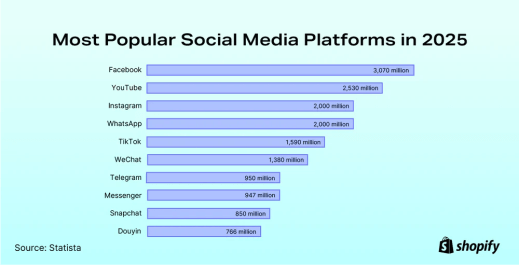
Social media has become a cornerstone of the B2B product and services buying journey. Prospects typically view up to 12 types of content, with 40% of B2B buyers including social media in their purchase research. As your prospects search for info, the right SEO search terms could call up your content and make your thought leadership info available to impact a purchase. Remember also that social media platforms are a two-way street and equally useful for not only broadcasting information, but also for listening and learning by starting and contributing to conversations. By becoming active on LinkedIn, which is the preferred B2B platform, and also X, YouTube and/or Instagram, for example, you’ll not only have a presence on platforms your prospects follow, but you’ll also get confirmation of their topics of interest in the moment, plus a heads-up on what may capture their interest in 2026. Below are four strategies for using social media to enhance your brand and grow your client list.

  1. Provide informative and timely content

By positioning yourself as a go-to source of useful insights and info, you’ll win audience trust—and that is vital. The quality and timeliness of the information you deliver, whether by text, video, or audio, will enhance your value. Distributing your thought leader content on social media platforms favored by your target audience maximize distribution and help you build a following. You’ll benefit from increased name recognition, eventually acquire trust and influence and, ultimately, you’ll create for yourself a solid brand reputation. Insider’s tip: linking your blog and/or newsletter to one or more social media platforms when you publish is a great way to share your compelling content with a wide audience (readers will find my weekly blog at LinkedIn activity/posts.

Video is a growing medium in the B2B sector because social media audiences find it easy to digest and, apparently for that reason, an attractive format. While YouTube is the platform of choice, all major platforms host video/audio content, that runs the gamut from short-form clips to long-form videos and live streams. Posting a webinar in which you took part or the podcast on which you made a guest appearance are excellent video opportunities for B2B Freelance professionals.

Case studies and client testimonials likewise make compelling video content. In fact, it may be easier to recruit your satisfied clients to sing your praises in a video rather than providing a written narrative of the process. Furthermore, if you’d like to present a show-and-tell tutorial that explains the rationale for using your product or service and quickly break down how users can benefit, a video interview in which you take center stage may be easier for prospects to visualize how your solution can be implemented for their needs. BTW, video/audio content, plus any noteworthy information you post to social media platforms, such as a case study, should also be posted on the only platform you own and control—your website.


2. Share client success stories

Nothing succeeds like success and sharing the occasional client success story (maintaining the client’s confidentiality, when requested) helps prospects envision the effective solutions that you might create for them. Examples of your willingness to personalize your solutions by, for example, simplifying your solution or providing an upgrade, or facilitating post-sale training or other supportive services—without violating your competitive advantages—are persuasive and make for memorable brand-building content for your organization.

3. Be authentic and consistent

X and LinkedIn are the usual go-to platforms for serious conversations. When you have something relevant to contribute, whether you make a thoughtful reply to a comment or offer a new perspective that you expect to generate comments from other readers, you demonstrate your authenticity, as well as your expertise and maybe out-of-the-box creativity. Joining one or more LinkedIn professional groups that are related to your industry or subject expertise can introduce you to a good forum, where you can contribute insights and learn new perspectives from thought leader peers.

4. Be transparent about values and culture

A growing number of consumers, B2B and B2C, are interested in the values and culture of companies with whom they do business. Storytelling is a relatable format and social media is an ideal platform for you to demonstrate and express what your company stands for and how your values impact your business practices. Your clients and prospects are not dismissive of a company’s purpose, vision, mission and guiding principles and may be very pleased that you’ve shared this foundational information.

Moreover, don’t hesitate to show behind-the-scenes evidence that shows you immersed in community work, be it a corporate social responsibility initiative, board service, or other volunteer participation. If you participate in a charity event, such as a holiday toy drive for local children, or sponsorship of your neighborhood Christmas tree lighting and party, consider documenting portions of the proceedings and, better still, invite top organizers to contribute a short interview to describe the goals for the event and the constituency it benefits in a video (be sure to respect the privacy of other participants). Clients and prospects like to know that you’re giving back or paying it forward.

Thanks for reading,

Kim

Image: © Statista May 2025

What’s Your LinkedIn SSI Score?

Since its launch in 2003, LinkedIn has become the go-to social media platform for professionals, hosting 900 million members worldwide as of 2024, about half of whom log on at least once a month. Joining and being active on LinkedIn is now a commonplace strategy, used by Freelance and traditionally employed professionals to enhance personal brand and advance business or career ambitions. Establishing connections with peers, potential mentors, prospective clients, or possible employers whom you’ve had the savvy and good fortune to meet and interact with, is the primary benefit of the LinkedIn experience.

Connections are not the only factor that pay dividends to those who actively participate on the platform. Nearly as powerful is the content posted, that usually consists of articles or blog posts you’ve written, announcement of awards you’ve won or professional development seminars you’ve attended, and/or insights you’ve shared when commenting on content posted by others. Content posted on LinkedIn contributes to establishing, and often enhancing, your professional and personal brand and expands your credibility beyond the orbit of first degree and other connections and into the broader LinkedIn community.

So, if you’re not active on LinkedIn, you may risk leaving brand-building and business or career growth opportunities on the table. But beyond receiving likes, the social media equivalent of air kisses, how do you know if your target audience feels your posts and comments are meaningful? Moreover, how do you stack up against industry peers and other connections in your network? Those questions can be answered in a LinkedIn user metric you may not know exists—the Social Selling Index (SSI) Score.

The SSI Score defined

The LinkedIn Social Selling Index Score was developed in 2014, after LinkedIn honchos decided to identify members who seemed to be killing it on the platform and figuring out how they did it. In 2015, SSI became part of LinkedIn Sales Navigator, a paid feature, but SSI is now available to all with a LinkedIn account. The SSI is a formula that evaluates social selling performance and measures mastery of what LinkedIn considers the core competencies of social selling on the platform.

The SSI gauges member success in demonstrating four social selling core competencies: establishing a professional brand, initiating communication with prospective connections and collaborators, engaging in valuable conversations and building high-quality relationships. For each competency, members are awarded between 0 and 25 points; the SSI Score is the sum of the individual scores from each core competency. The sum total of the core competency scores is also compared to the scores of others in your industry—and LinkedIn always assumes you’re in sales. That said, the higher your SSI Score, the more influential your LinkedIn profile becomes.

  • Establishing professional brand. This competency consists of two elements—the completeness of your LinkedIn profile and the quality of your posted content. The more detailed your profile and the more valuable your content, the higher your SSI Score.
    • LinkedIn confirms the presence of a profile photo, detailed job history and educational background, plus the number of recommendations you’ve made and received.
    • LinkedIn calculates the number of posts you publish and how many likes and comments your posts receive.
  • Connecting with the right people. This metric is connected to Sales Navigator and it may be challenging for members of free LinkedIn to obtain a good score in this component. It’s no surprise that LinkedIn prefers members to use the paid tools when searching for new connections.
    • When members connect with or contact the right person—for example, someone with a C-Suite job title that usually indicates a decision-maker—it is assumed that the member is now better positioned to make a sale, win a client, or otherwise make a tangible improvement to one’s business or career.
  • Engaging by sharing insights. Sharing valuable content increases the SSI Score awarded in this category. The more valuable content that’s posted and the more comments and likes that shared content receives, the better the score awarded and the closer a member becomes to earning Thought Leader status.
  • Building relationships. This metric evaluates a member’s motivation to stay in touch with connections. It reflects how often members reach out to connections and other contacts and measures how effective that outreach is—meaning, if the message does not receive a reply, the LinkedIn SSI Score will be negatively impacted.

Benefits of a high SSI Score

The SSI Score is considered to be a comprehensive measure of social selling prowess, meaning that a high score is considered demonstration of a member’s understanding and optimal utilization of the platform. LinkedIn views a high SSI Score in the way airlines view frequent flier miles, as a gateway to desirable perks. A high SSI Score can enhance your online reputation with the gift of increased visibility, a powerful benefit that drives name recognition and brand awareness as it promotes trust and credibility. The halo of credibility can lead to more positive responses to your networking inquiries and, theoretically, result in more and higher-quality opportunities for collaborations or exploring business ventures.

But does the SSI Score actually translate into tangible business results? Maybe—you’d expect LinkedIn to claim that a high SSI Score correlates with business success. LinkedIn reports that the higher your SSI Score, the more likely you are to achieve your sales targets, for example. LinkedIn says that an analysis of platform members who’ve received a high SSI Score will on average receive 45% more sales opportunities than those with lower scores and they’ll win 78% more sales deals than peers who are not active on social media. According to a joint study by LinkedIn and Richard Edelman, CEO of the global communications firm Edelman, 58% of business leaders are willing to buy from an industry expert and/or thought leader and they are willing to pay more, as they feel they’ll receive premium service.

  1. Lead generation. Allegedly, those who’ve earned a high SSI Score are 45% more likely to exceed their sales quota because they are adept at identifying and engaging with, the right contacts. The strategy is known to result in more productive leadgen.
  2. Sales. According to LinkedIn, those with an SSI Score above 70 outperform their peers and achieve 45% more sales opportunities than those with low scores.
  3. Brand awareness. A high SSI Score typically results in the reward of increased visibility for your content, leading to increased brand awareness and recognition in your industry.
  4. Trust-building. A high SSI Score enhances credibility, a trust-building factor that can make a difference for B2B professionals, where relationships and reputations play a significant role in decision-making.
  5. Optimized visibility. LinkedIn’s algorithm favors those who utilize its platform effectively. A higher SSI Score usually results in enhanced visibility for your posted content, opening the door to increased engagement with your connections and other contacts.

Monitoring your SSI Score is likely to motivate you to make the most of platform benefits—seeking strategically savvy connection requests as a way to maximize leadgen or business collaborations, positioning yourself as an industry Thought Leader and building your brand and credibility and working to increase your exposure by verifying that your content is relevant to your target audience. To learn your SSI Score, log onto LinkedIn and then click on this link. If you’re part of Sales Navigator, go to “Admin and click “User Report.”

While you’re logged onto LinkedIn, review your profile and consider what you might add—do you have a profile picture? Have you earned a professional certificate, or taken a skills-building course, that you never acknowledged in your profile? If so, add that accomplishment to the Licenses & Certifications section of your profile; if you received a certificate, scan and upload. Oh, and if you serve on a board or participate in other volunteer work, include your philanthropic and social responsibility commitments as well. Whether or not boosting your SSI Score is meaningful to you, remember that the purpose of joining LinkedIn is to display your professional bona fides.

Also, when’s the last time you made or received a recommendation? You can get the ball rolling by making a recommendation for a colleague and asking for the favor to be returned with a recommendation for yourself. While we’re on the subject of colleagues, take a tour through the extensive list of LinkedIn groups and figure out if there’s a new one you might join; if you’re already listed in a group or two, scroll through the content to get an update on the threads and see where you might be able to make a relevant comment, or ask a question. Giving a boost to your SSI Score is not labor intensive, but it does require some strategic thinking. It’s time to get busy!

Thanks for reading,

Kim

Image: © Susan Walsh/Associated Press. The co-champions of the 2019 Scripps National Spelling Bee.

Artificial Intelligence–Where Do You Begin?

I haven’t used AI much, other than inviting this platform to do a free AI review of the posts I write for you, to make sure that the information is reasonably complete, for example, and my vocabulary choices clearly communicate what I want to share. Sometime soon, though, incorporating AI tools into my modest Freelance operation will be inevitable and as a Freelancer who fares best when operating expenses are reined in, thinking strategically about the business functions that will inaugurate my AI roll-out is a must. So as I work through this decision, I’ve decided to take you with me, because you’ll also need to figure out AI for your business needs in the near future. An AI tool is not an impulse buy. To obtain the results you want, big-picture thinking is needed.

  • Assess your current operations: Before spending money and implementing AI technology, review your business processes and identify where an upgrade would make a difference. For example, how might your productivity benefit if you could generate more extensive and specific data insights, or improve the effectiveness of marketing campaigns, or expedite content generation —blog, newsletter, marketing emails? Where might AI create the most value for your organization?
  • Start small: Choose one or two areas to implement AI tools and learn how to produce the results you want. A website chatbot programmed to answer inbound marketing FAQs might be a good place to start.
  • Let AI provide inspiration: In particular when using AI for content creation, remember that AI gives you a draft, such as suggesting good topics, or personalizing marketing messages for diverse audiences. Avoid directly posting AI-generated content on your website or social media accounts as your final version. Check AI suggested sources for accuracy.

Which AI tools are suitable for Freelancers and SMB?

As we head into 2025, it is understood that AI will become an essential resource to promote business growth, identify how to improve competitive positioning and overall move an organization forward. Whether you use AI to generate data analyses, conduct market research, create a revenue forecasting model, or manage customer relationships, these tools are designed to support companies of every size. Whether you’re a Freelance writer, wedding planner, or bookkeeper, there are AI tools that will improve your business operations in many ways, from project management to image creation, search engine optimization to financial projections. One or more of the four AI tools below may get you off to a good start.

Canva

Canva Magic Design makes it easier to design graphics that reflect your brand when you must create presentations, proposals, marketing emails, or other documents. Magic Design (with a complementary feature called Magic Write) is part of all Canva plans, including the free version. Jumpstart your design with either a text query or photo and Magic Design will auto-generate relevant templates that fit your description. With plain text commands and just a few clicks, you can create customized graphic designs. Just describe your preferred image or upload your media and Magic Design will create social media posts, presentations and even videos. No coding and advance design skills required. Subscription is either free, or from $9.99/month for Magic Design Pro.

  • Ask Canva to produce social media graphics for your marketing campaigns.
  • Update webpage template colors and fonts to match your brand color scheme.
  • Turn AI-generated content into a presentation slide deck.
  • Transform Instagram posts into a series of swipeable images known as a LinkedIn carousel post.
  • Upgrade your Canva plan with Magic Design for Presentations or Magic Design for Video.

Asana Intelligence

Asana Intelligence is an add-on to the Asana project management platform and is especially well-suited for IT, marketing and operations needs. Website developers and others who work with multiple clients might use Asana Intelligence to track client projects and write status updates that keep clients informed. Teams may use Asana Intelligence to aid in making shared project management faster and easier. Customer service virtual assistants can speed up client workflows when the Intelligence feature is activated. Users can also ask questions on any work in Asana to receive insights, identify challenges and set up next steps., keeping the client in the loop. This versatility makes Asana Intelligence a nice choice for those responsible for both creative and administrative work. Premium and Business tier Asana plans include the Intelligence feature at no additional cost. Plans start at $10.99 per user, per month.

  • Create automated workflows that activate when someone new joins your Asana team or project.
  • Sort and label projects with auto-generated fields.
  • Generate summaries and action items for projects.
  • Edit project summaries and team messages for voice, tone and clarity.
  • Find data points and information in a project within an Asana workspace.

ChatGPT

ChatGPT is a generative AI chatbot that users can interact with through conversation threads, making it an excellent tool for projects that require lots of Q & A to drill down into specific market challenges, customer pain points, or competitor strengths, for example. Its conversational interface makes ChatGPT great for narrowing down discussions that help you discover the nuances—that might mean an exploration of your customer journey or understanding your customer’s end-user workflows. ChatGPT can also help build a more powerful go-to-market strategy for new product launches by identifying influential players in your target market and revealing relationships and interactions between those influential players that can influence both product or service sales and the customer experience. This step is very helpful to find people to interview and build relationships with to improve your go-to-market strategy. Buy a Plus subscription is $20/month to access what you’ll probably need.

  • Data collection for market research.
  • Discover and explore untapped market opportunities.
  • Write drafts for project proposals.
  •  Identify growth strategies, find ways to reach new audiences and discover insights that position you as an industry thought leader.
  • Create a revenue forecasting model to assist in predicting future financial performance based on historical data and assumptions. Conduct scenario analysis, a financial model that allows users to test different possibilities and assess their impact on financial outcomes.

Lumen5

Lumen5 is an AI video generation platform for marketers. The platform enables those without training or experience to easily create video content by simplifying the process of converting text into engaging visual content. Its user-friendly drag-and-drop interface and automatic text transformation capabilities make video creation much easier, saving time and effort. Storyboarding and video editing are two key advantages. You can use the service to create two kinds of videos:

  • Auto-captioned talking head videos using footage that you upload.
  • Marketing videos based on written presentations, documents, or blog posts.

When creating marketing videos based on a document, the text is all you need. You don’t have to film any footage yourself—Lumen5 will generate visual content that pairs with your words. Lumen5 plans start at $19 per month and allow you to create both videos and AI-generated voice-overs for your clients.

  • Marketers can use the tool to create content for client marketing campaigns.
  • Sales managers can turn presentations into personalized videos for prospects.
  • Freelancers can turn to Lumen5 for help creating their own social media content.

Disadvantages of AI

While AI has numerous highly valuable benefits, the technology also carries potential downsides. Being circumspect about the big picture consequences of implementing AI is important for you, your customers and your community. Think corporate social responsibility.

  • Job displacement–AI’s abilities to automate processes, generate rapid content and work for long periods of time can mean job displacement for human workers.
  • Data quality–AI models are only as good as the data they are trained with. The model will produce unreliable results if the data is incomplete or inaccurate. If you’ve previously used SAAS tools, always double-check the result of AI generated info.
  • Hallucinations–AI systems may inadvertently “hallucinate” or produce inaccurate outputs when trained on insufficient or biased data, leading to the generation of false information. 
  • Ethical concerns–AI systems may be developed in a manner that isn’t transparent, inclusive or sustainable, resulting in a lack of explanation for potentially harmful AI decisions as well as a negative impact on users and businesses.
  • Privacy concerns–The data collected and stored by AI systems may be done so without user consent or knowledge and may even be accessed by unauthorized individuals in the case of a data breach.
  • Environmental costs–Large-scale AI systems can require a substantial amount of energy to operate and process data, which increases carbon emissions and water consumption.

Thanks for reading,

Kim

Image: © Marciobnws for Shutterstock. The Creation of Artificial Intelligence by Man, an image inspired by The Creation of Adam (1508-1512) by Michelangelo.

SEO 2024 and the Core Update

On April 19, 2024, Google went live with its March 2024 core update, a process the company calls “more complex” than what was done previously and brought changes to numerous core systems. Google also rolled out its spam update, completed on March 20.  An approximately 45% reduction in low quality and spam content was the primary outcome of the updates, as confirmed by a Google spokesperson, “The updates led to larger quality improvements than we originally thought – you’ll now see 45% less low quality, unoriginal content in search results, versus the 40% improvement we expected across this work.”

It is popular in America to say that change is good but unfortunately, the core update has left many small business owners grappling with declining search rankings and softening website traffic and uncertain of how to respond. Google says the remedy is to create higher-quality content, with a company spokesperson explaining, “As the web and spam tactics continue to evolve, we’ll continue to work to reduce low quality, unoriginal content in Search. As always, we appreciate and encourage feedback from users and site owners alike.”

Well, what did you think they’d say? Look at it this way—if you haven’t examined your SEO strategy lately, you now have motivation to take a comprehensive look at how you’ve managed this essential business function so far and decide how you can effectively respond to the search engine update. SEO is about maximizing your company’s online visibility, the gateway to appearing more credible and receiving more website traffic. Below are suggestions of SEO tactics that are mostly DIY and free—and most of all, deliver an effective response to updates made by the search engine that according to StatCounter GlobalStats as of February 2024 controls 91.62 % of the global search queries market.

The purpose of SEO

It’s not an option, but a given and the purpose is straightforward. Effective Search Engine Optimization requires an holistic approach that combines multiple strategies that work in tandem to improve your website’s visibility in search engines, chiefly Bing, Google and Yahoo.

  • Improve online visibility: to power-up your website ranking on search engines and enable more prospective customers to learn about your brand.
  • Drive organic traffic: to attract prospective customers to your website, those genuinely interested in your content, products, or services.
  • Establish authority: through your website and overall online presence—social media, published articles, your published quotes in media outlets—present yourself as a trustworthy and authoritative source of valuable information.

SEO impact is typically organized into segments—on-page SEO, off-page SEO and technical SEO—that describe how the process influences your website to amplify its visibility to search engines. As you contemplate your SEO strategy, which is a component of your inbound marketing success, be certain to develop and implement strategies and action plans designed to address each SEO category.

ON-PAGE STRATEGY

Google and other search engines look for sites that are trustworthy places for visitors and also provide content that’s useful to those in need of information. On-page SEO is the process of tailoring your website to maximize its visibility to search engines by demonstrating the availability of worthwhile content that can be found in a trusted source. Effective on-page SEO positions your website to attract new visitors who are potentially prospective customers. By taking specific actions, such as including certain keywords in your content and by adding internal links and optimizing URLs within your content, you might boost the assigned ranking of your website in the list of search results.

1. Post relevant long-form content

Posting relevant long-form content is a pathway to increased search visibility and Google’s core update has just made the presence of good content still more impactful. The process starts by writing about topics for which there is an audience—discover the topics that people want to learn more about. To enhance the authority of your posts, keep the following in mind:

  • E-E-A-T (Expertise, Experience, Authoritativeness, Trustworthiness): The 2024 core update reinforces Google’s commitment to the E-E-A-T principles introduced in 2018. Websites that feature expertise and experience in the chosen field, authoritative content and trustworthiness will receive higher search ranking
  • Use of credible data, statistics and case studies to support your points and provide evidence for your claims
  • Include your byline in all articles that you’ve authored and also identify your guest posters. Industry experts should be credited with a brief bio, to highlight their credentials, expertise and authority
  • Use headings and subheadings to present content in an organized fashion, to improve readability
  • Include engaging and relevant visual content, including videos, photos, charts and/or graphs
  • Address all aspects of the topic thoroughly to create a comprehensive resource on the subject
  • Regularly update your articles to reflect new research, perspectives and information

2. Keyword research

Keywords are the words or phrases typed or spoken into search engines by visitors looking for information. By using keywords in your content, search engines will include that content or website in a list of sources that include the cited key words, therefore making it possible that you’ll receive a high page rank in results for those search terms. It makes sense to identify as many keywords as possible, including long-tail phrases, so that you’ll maximize your options when creating content that will capture the attention of search engines.

Be aware that simply packing posts with keywords in every sentence is not effective. Search engines seek out content that’s well-written. Place keywords naturally in target areas, including your headers, intro and metadata.

3. Keywords locations

While keyword density is not a viable strategy for improving search ranking, placing keywords strategically throughout your content is important for SEO. The trick is to use keywords organically and in the right places to show search engines that your content is relevant. Drop keywords here:

  • Introduction: to set the context for readers and search engines
  • URL: to help search engines understand the topic
  • Title: to improve your click-through rates and rankings
  • Body: copy to support topical relevance
  • Headers: to structure your content and signal importance to search engines
  • Metadata: description to improve click-through rates

4. Interlink your pages and blogs

Internal linking means creating hyperlinks in your content, so that website and blog readers can click as they read and check out your other posts or website pages. Internal linking supports on-page SEO because the availability of internal links invites readers to other pages within your website, or to other blog posts, and keeps visitors around longer, demonstrating to search engines that your website is valuable and useful. Also, the longer visitors are on your website, the more time search engines have to crawl and index website pages, helping Google et al. to obtain more information about your site and potentially rank it higher in search engine results. If you’ve got the techie gene you may want to take this on as a DIY project. Click to understand how internal linking is done (most may want to contact a professional). https://www.linkedin.com/pulse/best-practices-internal-linking-structure-2024-m-a-mamun-bhk0c

OFF-PAGE SEO STRATEGY

Off-page SEO refers to actions taken to impact your search engine ranking that are outside of your website. In other words, off-page SEO is how you manage external factors, for example, guest posting, social media activity and the presence of online reviews. While off-page activities do not directly involve your website, their effects can potentially increase website traffic and support your inbound marketing in the process.

  1. Social Media Presence

Active engagement: Consistently post relevant content and engage with your audience platforms such as Facebook, X (Twitter), Instagram and LinkedIn. An engaged social media audience that regularly interacts with your brand demonstrates brand authority and trust and therefore gives a vote of confidence to search engines.

2. Content marketing

  • Content: Create and share high-quality, relevant and valuable content that includes backlinks to credible websites
  • Infographics and visuals: Appealing visual content increases viewer engagement and content sharing
  • Document Sharing: Share presentations, webinars, or documents such as white papers, brochures that showcase your products and/or services, or training materials on platforms like SlideShare and Scribd to expand your audience

3. Press releases

When you have a newsworthy announcement to make, e.g., to broadcast a talk you’ll give at a business association or chamber of commerce, or your participation in a popular local charity or community event, write a press release and post it on distribution sites such as EIN Presswire or eReleases . Not only will you take an important step to get your story out to your audience and your local community, online press release distribution is a great way to generate organic backlinks, since many online publications will automatically pick up relevant press releases. Within each press release, be sure to include one to two links to your website.

4. HARO requests

Help a Reporter Out (HARO) is a website that connects journalists and bloggers with expert sources—you!—for articles they’re writing. Journalists submit a query for expert quotes and will choose the top responses to include in their content. Oftentimes, the journalist will provide a backlink to your website as attribution for the quote. To increase the chance of being quoted, respond quickly and provide a complete and soundbite punchy answer.

5. Influencer marketing

Influencer marketing is an effective way to increase brand mentions and social media interactions, both of which are positive off-page ranking signals for search engines. If you can get onto the radar screen of a social media influencer who has a relevant audience for your brand, you can partner with that person to create an influencer marketing campaign that promotes your brand and its value proposition along with providing links to your website or social media profiles where applicable.

6. Backlinks

Building backlinks is important for SEO because it signals to search engines that your content is trustworthy and valuable. The more high-quality backlinks you have, the better your chances of ranking higher in search results.

While backlinks remain crucial for SEO, recent algorithm updates have shifted towards needing fewer but higher-quality backlinks. Earned links, in which editorial publishers or consumers mention your brand organically, are most highly favored. Built links, however, require some effort on your end, such as reaching out to content publishers for link attribution or mention. You can acquire backlinks through these common link-building strategies:

  • Guest posting
  • Link insertions
  • Creating link-worthy content
  • Building relationships with bloggers and website owners
  • Using social media

7. Online Reviews

Online reviews provide a strong signal that’s taken into account when ranking your content online. They can build a lot of credibility and trust since they’re submitted by third parties who’ve interacted with your brand. Focusing on generating positive five-star reviews from legitimate customers can help your off-page SEO tremendously. You can generate these reviews on third-party review sites such as G2 as well as your local Yelp page.

TECHNICAL SEO

Technical SEO refers to how you can best optimize the technical elements of your website—primarily speed, security, user-friendliness and site structure. Technical SEO is about improving your website to make it easier for search engines to find, understand and store your content. Technical SEO focuses on user experience factors, such as making your website faster and fully visible and navigable on mobile devices. Do it right and technical SEO can enhance visibility in search results.

  1. User experience (UX)

The UX provided by your website is a concern to search engines. If your website offers an intuitive browsing experience, quick loading times and is mobile-friendly, you will be positioned to receive higher page rankings. Google now uses mobile-first indexing to determine search rankings. Ensure that every page of your site is mobile optimized, ideally using responsive design, and that all content is the same between the desktop and mobile versions.

2. Site security
Security plays a huge role in how people experience your website. When people feel that your website is secure, they interact more freely (and longer) with it. Google penalizes sites that do not secure their traffic with an SSL certificate and modern browsers mark them with an insecure site warning. SSL certificates are obtained through site your hosting provider. Click here for more information: https://www.linkedin.com/pulse/5-top-ssl-certificate-providers-2024-digital-expert-online-aezde

3. Index site

Indexing means adding a website and its pages to search engine databases so that the site can appear in search results. Indexing is pivotal in how Google and all search engines work. The presence of a “noindex” tag on your website or blog pages will cause search engines to ignore your content and prevent your site from being recognized and ranked—a situation that you want to avoid.

Noindex tags can be removed and this is another DIY project that I relegate to those born with the techie gene; I recommend that everyone else would be wise to consult a professional to do the work. FYI, here are remedies: https://www.linkedin.com/pulse/how-fix-google-indexing-issues-2024-md-belal-hossain-0cszc

Thanks for reading,

Kim

Image: © diki_pt at Freepik

Managing Your Digital Image

Because the internet plays such a dominant role in life, it’s crucial that you take steps to ensure what’s posted about you is both accurate and positive. Information that appears online and is associated with you—your published content and information that identifies you—is collectively known as your digital identity. This information functions as a virtual introduction to you and tells your online story. Your digital identity is the foundation of your digital image and intended to be an asset. Because what appears online is basically immortal, it’s imperative that your digital image, defined by the published content and other information attached to you and your business entity, is presented in a flattering, trust and confidence-building manner.

It is assumed that prospective clients or employers will search your name and business online before making any meaningful contact to discuss your products or services, so it makes sense to periodically monitor and curate your digital identity to ensure that information is current and represents you well. Your primary objective when editing your info is to corroborate your digital narrative and the talking points you commonly share when meeting with prospective clients or employers. The core function of your digital image and the narrative it communicates is to confirm your credibility and build trust.

According to “Assessing Web3’s Building Blocks,” an article recently published by financial services giant J.P. Morgan that explores digital identity, four factors contribute to the digital identity (listed below). It is incumbent upon you to proactively examine the information included in your digital identity so that your online image and narrative will support your professional experience, education, achievements and, by extension, your personal and business brand.

In addition to ensuring that information is accurate, decide how you want prospects to see you. Remove text and images that don’t reflect your goals or brand. If a friend has posted a not-so-flattering image on a social media site and tagged you, ask him/her to kindly delete it.

  1. Identifiers: Your name, email, addresses and social media handles.
  2. Identity Attributes: Information about you, including educational degrees and employment history.
  3. Reputation: Your online persona, contributions, affiliations and followings.
  4. Digital Collectibles & Assets: Anything you own in digital form, commonly non-fungible tokens.

Always professional

Be mindful to consistently adhere to professional standards whenever communicating electronically, ever aware that text and images posted can remain forever, whether intended for public consumption or personal texts and emails. Be vigilant and safeguard your reputation; avoid committing to writing your uncensored thoughts about potentially sensitive political or religious topics. It may, as well, be wise to avoid expressing your positions on current events. You don’t want to worry about being compromised by a leak and ending up being canceled and in need of expensive and rarely completely effective crisis or reputation management services.

Social media listening and digital presence

It’s important to know what appears in an online search of yourself and it’s a smart idea to periodically consult the major search engines—Google, Bing, AOL, Yahoo and also Yelp, Yellow Pages, or other industry-specific ranking sites that would apply to your entity—and search your name and your business entity to examine the results and assess the quality and reach of your digital presence. To avoid or correct misinformation, take control by claiming and updating an existing listing and, if you like, create a listing for your entity if none appears. Furthermore, make it a practice to regularly conduct a social media audit on yourself, so you can remove problematic content before prospects and competitors see it.

You may also be well-served by investing in a social media listening campaign, a marketing strategy that refers to researching whether positive or negative conversations regarding you, your entity, products and/or services currently appear in social media and other online platforms. Social media listening monitors online channels to detect mentions of your brand, competitive brands and related keywords.

The use of (paid) social media listening tools enables you to gain an accurate understanding of how customers and prospects feel about your products, services and company by discovering what they say on social media channels. Through social listening, you can track all mentions of your brand on social media in real-time and get not only valuable insights into how customers feel about your products or services, but also verify what their pain points are and learn what they’d like to see from you in the future. Social media listening is also an excellent source of competitive intel, as it can monitor competitive brands, trending content and sentiment analysis on topics related to your industry to obtain a comprehensive understanding of what customers and prospects think about your competition.

Social media listening has become a major marketing strategy at national and global brands. It was originally thought that marketers at smaller businesses would not benefit from the practice, mostly because the cost wouldn’t justify the ROI. Yet over the past few years, social media listening is now considered essential and an increasing number of mid-size and small business owners and marketers recognize its value. The biggest motivators are likely greater affordability offered by marketing companies and the explosive growth of online customer engagement fueled by the pandemic shutdown. social media listening data can be used to inform everything from marketing and product strategy to customer service and support, helping you make smarter, data-driven decisions that will have a positive impact on your business’s bottom line. To learn more about social media listening services click: https://www.webfx.com/blog/social-media/social-listening-tools/#:~:text=7%20best%20social%20listening%20tools%20in%202024%201,5.%20Mention%206%206.%20BuzzSumo%207%207.%20Keyhole.

Thanks for reading,

Kim

Image: ©The Bettman Archive. Gloria Swanson (center) as Norma Desmond in Sunset Boulevard (1950). Co-written and directed by Billy Wilder, the film received three Academy Awards, including Best Screenplay/Story.

Survey: Freelancing in America 2023

Upwork, the global marketplace that connects businesses in need of capable and reliable Freelance professionals and talented independent workers who are looking to generate billable hours, has just released the results of “Freelance Forward: 2023,” the 10th annual comprehensive study of the U.S. independent workforce. The study found that 64 million Americans participated in Freelance work during the past year, adding 4 million more self-employed workers over 2022. Freelance workers now comprise 38% of the nation’s workforce and contributed nearly $1.27 trillion to the U.S. economy in 2023.

Highly skilled professionals

Most Freelancers perform highly skilled professional work. Nearly half (47%) work in the knowledge economy and provide B2B services such as computer programming, marketing, IT, graphic arts and business consulting. Another 23% of Freelancers create influencer and other marketing content that fuels livestreams, social media videos and images, blogs and newsletters. 

Freelancers are also at the forefront of embracing new technologies. When asked about generative Artificial Intelligence use in the past three months, Freelancers were 2.2 times more than traditionally employed workers to say that they frequently use generative AI tools. In total, 20%, approximately 12.8 million Freelancers, use generative AI tools regularly (multiple times per week), compared to just 9% of traditionally employed professionals. When asked the functions for which Freelancers use generative AI, research (46%), brainstorming and ideation (35%), translation (33%), proposal writing (32%) and coding (28%) ranked at the top. 

Why we Freelance

Results of Freelance Forward studies produced over the the study’s 10 year history show that respondents enter Freelancing for various reasons, but flexibility and control consistently emerge as prime motivators. Beyond earning a living, when asked about reasons for Freelancing, “to have flexibility in my schedule,” “to be in control of my own financial future” and “to work from the location of my choosing” top the list. This is mainly because unlike traditional employees, whose work schedules are largely imposed by the company, Freelancers are our own bosses. We determine when, where and for whom we will work and therefore, we are able to control our schedules and lives.

The evidence of this freedom is apparent in where Freelancers perform our work. Although return-to-office mandates have brought many professionals back to their cubicle, the majority of Freelancers work from home, at a co-working space, or in another location of their choosing. In fact, 60% of Freelancers work remotely, as compared to just 32% of traditionally employed professionals who work remotely. Furthermore, Freelancers also choose the hours and amount of work they’ll do at a given time. While 77% of Freelancers say they work consistently, they do so based on a schedule that best suits their lifestyles.

The future is Freelance

Freelancing continues to grow as a viable career choice for professionals and according to survey participants, the future of Freelancing remains bright. To understand the future of Freelancing, survey respondents were asked to assess their feelings of optimism, or pessimism, ahead of 2024. Overwhelmingly, Freelancers are optimistic about prospects for their professional growth (80%), personal income and revenue increases (76%), opportunities to earn billable hours (74%) and personal development (84%). When asked about the future, 85% of Freelancers say the best days for Freelancing are ahead. Key findings of Freelance Forward 2023 include:

  • Freelancing remains a significant part of the U.S. labor market and economy: Freelancers contributed $1.27 trillion in annual earnings to the U.S. economy in 2023. This was a 78% increase from the estimated $715 billion contributed to the economy in 2014, the first year of Freelance Forward.
  • Freelancing hits a new all-time high: The number of professionals Freelancing increased to 64 million Americans, or 38% of the U.S workforce, an increase of 4 million from 2022.
  • Freelancers are 2.2 times more likely to regularly use generative AI frequently in their work: 20% of Freelancers use generative AI tools on a regular basis (multiple times per week), which compares to just 9% of traditionally employed professionals.
  • Nearly half of Freelancers provide skilled knowledge services: 47% of all Freelancers, or nearly 30 million professionals, provided knowledge services such as computer programming, marketing, IT, and business consulting in 2023.
  • A quarter of Freelancers are creating influencer-style content: 23% of all Freelancers, or 14.7 million professionals, created influencer content including livestream services, social media videos, images or blogs in 2023.
  • Generation Z and Millennials are the most likely to explore Freelancing: In 2023, 52% of all Gen Z professionals and 44% of all Millennial professionals performed Freelance work.
  • Older Americans continue to be part of the Freelance market: In 2023, nearly 8.3 million professionals, or 13% of all U.S. Freelancers, were aged 59 or above.
  • The future is bright, according to Freelancers: Over 85% of Freelancers say the best days are ahead for Freelancing.

Happy New Year and thanks for reading,

Kim

Image: Frontal Lobe Coworking, located in the Nationally Registered historic downtown of Howell, MI, opened in 2013 with the intention of attracting workers to a shared office space while also utilizing empty downtown buildings.

Getting Serious About Social Media

What criteria guide your approach to social media? With few exceptions, your marketing strategy can’t be called comprehensive unless at least one social media platform is in the mix. It’s a highly effective tool and not only that— using social media doesn’t cost money (it does require time) and it has the power to amplify your traditional marketing tactics by re-posting text, audio and image content onto your chosen platforms. But like all marketing initiatives, social media requires thought and planning. To make success possible you must develop a credible strategy, starting with choosing (maybe three or four?) objectives you’d like to achieve.

Along with your objectives, you’ll also want to be mindful that certain audiences have an affinity for certain platforms and certain platforms are more suitable for some types of products or services and not so much for others. Moreover, it makes sense to assess the amount of time you can reasonably expect to devote to your social media updates, because fresh and relevant content are key. It will be much more favorable to establish a presence on one or two platforms and make it all pop with engaging and timely content instead of wading into multiple platforms on which you post only sporadically.

Once you launch your campaign, it’s advisable to continually monitor your performance analytics and watch for feedback. Be certain to respond quickly to customer service needs or comments and second, you want to measure visitor response to your content. Both metrics can inform your content topics, plus encourage customer engagement and feelings of loyalty. Focus your efforts where they’ll reap the greatest return on investment (ROI).

Finally, social media audiences on every platform are viewing content creators with increasing skepticism. Content consumers now demand authenticity from the influencers and brands they follow. Be genuine in your approach to social media (and all) marketing so that you’ll earn the trust, respect, loyalty—and business!— of your target audience. Below are common drivers of B2B social media objectives:

  • Website traffic
  • Brand awareness
  • Lead generation
  • PR mentions

Strategy

Devise an overall strategy that keeps your social media presence on-message and active. Establish your brand on platforms whose audience demographics and content style best showcases the products or services you promote. Every few months, you might want to color outside the lines, maybe with a fun collaboration with a complementary (and never competing) brand, a contest, or a (non-controversial) social or health awareness initiative that can stimulate positive customer engagement and even expand your audience.

Brand identity

A strong brand identity provides a consistent, dependable and ultimately reassuring experience for your social media audience. By establishing a recognizable brand identity, (you and) your business will be positioned to cultivate a loyal following that remains engaged across your selected platforms. Your unique brand voice, image style and relatable, consistent messaging across all social media platforms will enhance your authenticity and build the respect and trust of your audience.

Relevant content

Focus on creating meaningful and high quality content that resonates with your target audience. Authentic and relevant content helps the audience feel connected to your brand, encouraging engagement and promoting brand loyalty. 

Personal communication

Facilitating direct communication between you/ the brand and your target audience is the great advantage of social media. The communication is personal and unfiltered, allowing you to learn a great deal about how those who do business with you feel about doing business with you. Social media helps you learn fast about what works and what doesn’t, giving you the luxury of responding personally and quickly and making a timely course correction if necessary.

Focus On Your Audience/ Build A Community

Social media isn’t just a method that lets you speak to your audience in a monologue that promotes your business. It’s about building a community. When you introduce practices that enable a community—meaningful content, regular updates, responding to questions, complaints and compliments and keeping it authentic (real) you will over time build and sustain an engaged audience that’s truly interested in your brand (and you).

Thanks for reading,

Kim

Image: Jean Arthur in Easy Living, written by Preston Sturges. Paramount Pictures (1937)

Social Media for the B2B Freelancer

As you do your best to navigate through the COVID era, one obvious change has been that life and business are largely conducted on the internet, Step-by-step, especially since Y2K arrived (were you afraid to ride in an elevator on 12/31/1999?), so much of life started moving over to the internet. The coronavirus shutdown of March 2020 acted like a rocket booster and pushed millions of businesses—supermarkets to pharmacies, restaurants to home furnishings stores, classroom instruction from grade school to college level, luxury apparel boutiques to plant stores—to prioritize their online presence. You may have begun to work from home, plunging into video meetings and Slack and other workflow communication tools. This is a permanent inflection point and there can be no going back.

It’s fairly certain that you participated in social media in your personal and/or professional life prior to the COVID era but if you are a Freelancer or other business owner or leader, you recognize that the need for creating a sophisticated social media strategy has been ratcheted up. Officially, your social media presence can no longer be treated as an afterthought. Your chosen platfroms now own a pivotal role in your organization’s sales/marketing funnel, a critical client recruitment tool. Social media is now integral to supporting your brand, often by telling your brand story and building a community of loyal client cheerleaders who enthusiastically sing your praises. Make optimizing sthe use of social media in your organization your first business strategy decision of 2023.

Enhance brand awareness

LinkedIn remains the most popuar platform for those searching for B2B solutions. Complete your regualrly update your profile. When you receive new certificatons, upload them. If becoming (or remaining) a thought leader in your industry is a goal for you, social media provides a path and LinkedIn is considered a trusted source by most. You’ll find this blog post on my LinkedIn profile. If you’ve been a podcast guest or host, post the link, ditto for a webinar.

If you’ll teach a class, deliver a talk, moderate or participate on a panel, post the invitation on your profile. Participate in the still-relevant LinkedIn Groups feature and chat and exchange information with your professional peers. LinkedIn’s new Creator Accelerator Program a 6-week program that shows you engage your audience and grow your target audience. There is an application process involved, Contact the Creator weekly newsletter for more info. Stay up-to-date with your Notifications and receive feedback from followers and those who’ve responded to your content.

Sales/marketing funnel

The benefit of sharing informative content is that you may soon be seen as a trusted surce and expert in your space, making it easier to be seen as a credible resource and not just another salesperson. Social media browsers are known to use their preferred platforms to research products and services. This is a huge opportunity for you to use social media as a platform to add value by sharing informative content. As such, you’ll spend much less effort trying to “convince” target audience members to do business with you once familiarity and trust have been established.

Improve your understanding of what motivates potential buyers in your target audience to turn to social media before posting your content, to ensure that your information aligns with what potential buyers want, and need, to know. In general, a case study or two, your newsletters and your blog posts will answer most questions and demonstrate your organization’s ability to meet client needs.

Leverage the power of client testimonials and give yourself additional credibility by way of a real-time description of the capabilities of your organization. Your approach to delivering the solution, handling of the inevitable obstacles that challenge along the way and your team’s customer service and after-sale support will go a long way in showcasing your venture and building trust.

  • What are aspiring buyers in your category looking for and what do they hope to achieve?
  • What drives potential buyers to use certain keywords, hashtags, or phrases when searching in your category?
  • What products or services are they using now, or previously, to achieve the goal, or attain the solution to resolve the problem now?

Feed your sales/marketing funnel by demonstrating that you and your team can get the job done. Potential buyers will seek for more information and may eventually schedule a video or telephone call to talk things over and get a better sense of you and what it might be like to partner with you and work on the project.

Building community

How does one encourage the engagemet of your customers? Maybe start with a couple of polls and then get a discussion going? Those thriving the most in today’s evolving engagement landscape are able to use their social following and allow users to contribute and interact rather than simply judge and scroll. This can be accomplished in a multitude of ways, including inexpensive swag gift giveaways polls, posting LinkedIn story video or audio testimonials or reviews. If you’re participating in a charity event, video some portion of the proceedings and make that a LinkedIn story, too (you will have already posted it as an event, am I right?)

The key is to execute thoroughly and listen to your community: Simply having a giveaway may create interest, but communicating the rules, perks and actually following through by showing the community how their involvement moves the needle toward something positive is the ideal. This could happen any number of ways, and requires considerable thought from those close to the brand who understand how to best engage its community.

Happy New Year and thanks for joining me,

Kim

Image: Kim Clark. The groom in a wedding party approaches The Park Plaza Hotel in Boston, MA (2019)

Eyes On the Competition

As was noted in three or four recent posts, business data and other forms of business information, which may consist of the observations and predictions of researchers, journalists and other experts, have always been an essential resource for business owners and leaders. As we move through the 21st century, data-driven decision-making, enabled by powerful software programs and artificial intelligence, has become the hallmark of responsible business management.

Chief among the market research that every successful business owner or leader must do is assess the competitive landscape in his/her marketplace. Questions you’ll want to find answers to include:

  • Who sells products and services similar to your own?
  • Who are their customers?
  • What is the estimated size of their market?
  • Who dominates, how and why?
  • How do the marketplace leaders attract and retain customers?
  • What is their price range?
  • How successful are they?
  • Can you launch your venture alongside these competitors and achieve sustainable success?

Mapping your competitive landscape also includes identifying direct competitors, meaning companies whose services and products closely resemble your own and indirect competitors, that is, those whose products and services present an alternative choice within a similar price range that can be sold as a potentially satisfactory solution. Understanding the difference between direct and indirect competitors can be simplified by comparing the process to shopping for a Valentine’s Day gift.

The chocolate shops are all direct competitors, with price as a potential differentiator, because chocolates are more or less interchangeable. The same can be said for florists. But chocolate shops and florists are as well one another’s indirect competitors within a similar price range because for $50.00, you can buy either a nice bouquet or a nice box of chocolates.

Start your investigation with a key word search using terms commonly chosen to describe your company’s products and/ or services to see who appears and how they rank. Whoever makes it into the top 10 are the most successful of your competitors. You can also check out member lists at the business and professional groups you’ve joined (yet another reason why business associations are a good investment). Visit the websites of the top 4 or 5 competitors in your search, along with their social media pages and Yelp reviews.

Make note of speaking engagements made by the principals—-host organization and topic, along with company participation in local charity events and business awards and nominations received. If successful competitors have done any of those things, don’t be ashamed to follow with a me, too.

Popular products and services

Knowing what sort of products and services are best-sellers for your top competitors is tremendously useful intel and will enable you to make smarter decisions about building your solutions and making your prospect’s hot buttons blink.

So try to figure out what competitors sell the most, what sells the least for them and what’s somewhere in the middle. Keep the best sellers in mind as you design your services, perhaps adding a differentiating something extra to create more value in a way that’s affordable for you, or that you can sell at a premium.

Finally, watch for what gets revised and what gets dropped. Notice how products and services are described and positioned and, if possible, priced. Learn from competitors’ mistakes.

Leadgen strategies

Absolutely, spend time analyzing the website landing pages and social media accounts of your major competitors. You want to know how they keep their pipelines filled and how they persuade prospects to remain on the buyer’s journey. What informational goodies and special offers have they sprinkled into their TOFU, MOFU and BOFU ( top, middle and bottom of the funnel)?

You may find the inevitable free-for-the-price-of-your-email-address e-book or highlights of a keynote speech delivered at a popular conference. You’re looking for inspired, desirable content choices that you hadn’t thought of, so you can offer something similar as a way to engage prospects and stimulate lead creation.

Blog and newsletter content

Pay attention to topics that are most often covered and those that are infrequently discussed. Notice also if certain topics are spotlighted during particular months. Observe which types of posts are often shared on social media and note which platforms are most often used (and which ones used the least). Your objective is to help yourself plan a content marketing strategy that features topics of interest to prospective readers and simultaneously support the premise that you are a reliable source of good information and a capable professional.

If you’re feeling more curious, use a traffic analysis tool to search for the blog-related URLs in the Top Pages list. Analyze their unique page views and visits, conversions, traffic sources ⁠— make note of all the data that’s presented. Publishing a respected blog or newsletter could become an integral building block of your success. .

Selling points

What objectives emerge as the core purpose, the main problem-solving motivation, that your competitors speak to when communicating to prospects—on their website and social media platforms, in case studies, and testimonials and in their newsletters and blog posts? What do they aim to help their customers achieve when making the case to do business with them? What descriptive language is used? Also, what benefits do they emphasize to persuade prospects to reach out to them?

Moreover, what competencies do your competitors trumpet as a valuable resource that their clients prize and prospects desire? Is it a specialized academic degree, skills certifications, prior work experience and/ or prestigious client list?

Call-to-Action

What you want to know is how competitors sell their CTA. “Buy now” and “click here” are phrases you can think up on your own. The purpose of this research is to see examples of (presumably effective) CTA pitches, both the give-away info and what is said to create an appetite for it. The information offered should be something that prospects are likely to find useful, or somehow interesting and for some items they’ll be willing to surrender their email address to obtain it.

A free 30-minute phone conversation with you or a team member that will allow serious prospects to get insight and answers about how your products and services might help them achieve a goal or solve a problem should make a tempting offer. Click the link to learn more about effective CTAs (gotcha!):

https://freelancetheconsultantsdiary.wordpress.com/2021/04/06/a-call-to-action/

Thanks for reading,

Kim

Image: Krystle (L, Linda Evans) and Alexis (Joan Collins) were eternal rivals and fierce competitors on the prime time soap opera Dynasty (ABC-TV 1981-1989)