A March 25, 2026 verdict by a CA jury held Google and Meta (Facebook) responsible for the mental health difficulties suffered by a woman who since childhood compulsively used social media. The jury awarded $6M to the plaintiff and Meta is responsible for 70% of that amount. Heavy use of social media can lead to unintended consequences, for sure; nevertheless, most US citizens do not feel that social media is a menace to society. Datareportal found that 73% of US adults were active social media users as of October 2025, a response that verifies the often significant benefits that social media can bring to our personal and/or professional lives when it is used with discretion. All of you reading this post know that social media plays an integral role in the business sector, from lead generation to the buyer’s journey to post-sale customer service, positioning it as foundational to effective B2B and B2C sales and marketing.
Satisfy new algorithms with AEO, GEO and SEO
Artificial intelligence has added more acronyms and abbreviations to the alphabet soup that a Freelance professional must memorize to show that you’re in the game, know what’s up and you’re worthy of receiving a new assignment. To achieve your goal of establishing a robust and respected online presence, you must once again get familiar with new search algorithms and then decide under what circumstances you might be persuaded to introduce new approaches that promise to enhance the search functionality of your sites. The obvious answer is to contact a Freelance colleague to discuss potential benefits for your digital platforms and conduct a cost-benefit analysis. Can you afford to dip into the new technology? Can you afford not to?
- AEO. Answer Engine Optimization. AEO is meant to get your content selected as the prime answer to specific online queries and not just an alternate answer to what’s best-in-class. Incorporating AEO is meant to help your content be chosen as the best answer in our era of AI-powered overviews and voice assistants that are increasingly in the driver’s seat. AEO visibility is determined by how easily machines can read your content. The function of AEO is not to drive clicks as does SEO, but to become the certified best answer that AI agents showcase in all search engines used to post that query.
- GEO. Generative Engine Optimization. GEO goes a step further than AEO and optimizes content so that AI-driven search engines and large language models (LLMs) like Perplexity and ChatGPT can understand the content and cite it in answers the search engines receive and generate. GEO structures content so that it’s easy to locate, access and cite. The function of GEO isn’t just to help your answer become the first on a list of responses, but goes farther to become a strategic approach that boosts your visibility, authority and citations in AI-generated responses.
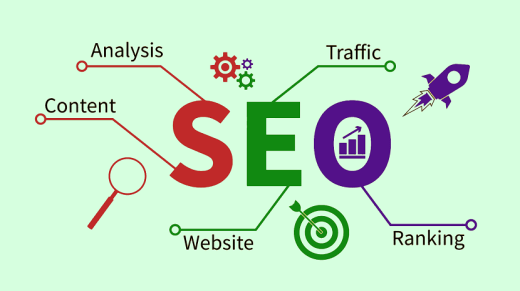
- SEO. Search Engine Optimization. You already know that SEO helps content attain a higher ranking in traditional online search engines like Bing and Google. SEO is driven primarily by keyword targeting, content quality and technical SEO (e.g., page loading time and mobile-friendliness). The function of SEO is to encourage clicks on your content and drive traffic to your website, et al.
- Continue SEO techniques to boost social media content visibility. Keyword research, alt text, subtitles and long-tail keywords—think sentences—can all make your social media content more search-friendly. Why abandon what works?
- Experiment with AEO and GEO. Add to your online content short social posts that directly answer questions known to be frequently asked by prospects and clients. Use question-based as titles for posts and provide clear, plainly stated answers. Maintain a conversational, yet professional voice for your Q & A inspired content (think FAQ frequently asked questions).
Social media is becoming the place for first-party data
As the presence of third-party cookies falls out of favor, brands are turning to social media platforms to access first-party data, which is regarded the most desirable. Additional sources of first-party that can be obtained with clear user consent include opt-in leadgen promotions, newsletter or blog subscriptions, webinar RSVPs and calls-to-action. The appetite for first-party data is driven by the desire brands have for customer information that is provided by the consumer him/herself, thus ensuring that the insights derived from that data are trustworthy and can be confidently used as the foundation of your CRM assumptions, strategies and activities.
Brands are also turning to social media user comments for market and consumer info when trends and other marketplace developments evolve too quickly for traditional research methods to keep up. Social listening tools like Talkwalker use AI to pull specific brand insights from the vast quantities of data available on social media platforms, in real time. Social listening, another manifestation of that practice, tracks online comments made about your brand, industry and competitors across social media platforms. From an analysis of those comments, a the big picture will emerge of the unfiltered perceptions that your customers, prospects and others have about your brand. Social listening can also capture developing trends that are bubbling up and indicate where opportunities (or risks) that impact your entity are hiding. In short, social listening data can impact all areas of your brand.
Best practices for using social media as a first-party data source
- Ramp up your social listening capabilities. Talkwalker can help you uncover valuable insights through a few simple AI-guided queries.
- Add social listening to your marketing activities. Social listening-derived data has a high probability of discovering marketplace perceptions, trends and developments that might yield potential opportunities for your brand and/or shine a light on possible risks that give you a chance to perhaps dodge a disaster. As noted, social listening has the ability to impact all aspects of your brand.
- Test social media DM automation and/or gated content campaigns to push leadgen. You can launch a social post and announce publication of white paper, e-book, case study or other gated content resource as you simultaneously use automated DMs to collect leads and obtain first-party data from those who respond to your outreach.
How can you optimize social media posts for visibility? How can you adapt to updates in search algorithms?
While Bing and Google are still the go-to sites for online search, social media search is making significant headway as users increasingly conduct online searches on their platforms. Overall, 24% of US adults who use social media also use social media for online search as of April 2024, led by Generation Z (46%) and Millennials (35%). The platforms are keeping up and aggressively courting online search and capabilities are not limited to typing in the search bar. Instagram and TikTok support image and video visual searches and Pinterest Lens enables online visual searches for products by searching from a photo. Facebook supports basic voice search—take that Siri and Alexa!—58.6% of US adults have conducted a voice-activated online search at least once as of 2024. These statistics make clear that social media online search is a growing phenomenon that Freelancers cannot ignore. 2Q2026 is calling you to sharpen your social media systems to ensure that your platforms operate efficiently to give your sites visibility that opens the door to content that attracts viable leads and converts prospects into customers.
- Content to address the needs of audience sub-groups. First, there are social media frequent followers and most are already buying your services or products–some are repeat customers and some make referrals. A second group is comprised of those who are on a buyer journey. They’ve recently discovered your brand, or they’ve only begun to learn what your company and solutions are all about. It could be that your company was swept into search results thanks to an algorithm update and your content has piqued a prospective buyer’s curiosity. This last group will appreciate product information and content that conveys how and where your solution works best. Include product/service how-tos in your brand story on your social media platforms to demonstrate how your solution delivers results.
- Customize content for each platform. Because attention spans are short, making it’s more important than ever now. Depending on your business and customers, design content / express your marketing and sales messages to resonate with your audience and have many questions. What speaks to loyal customers and is not the same as what speaks to prospects who are browsing through the site getting to know you better. On all of your social media platforms, include basic information about your product and service because that is the brand story that prospects, especially, would like to see. You need to understand both and create content that speaks to the unique interests and agenda of each group. while both long-term customers and potential customers are interested in your brand story, be aware that those who know your brand well will have a different agenda than those who are learning about your brand and are trying to envision how the experience of working with your company might be.
- Always have a hook. Catch people’s attention within the first three seconds to show your visitors that your content aligns with their needs and interests. A focal point, an exciting announcement, an advance look at something new, or an enticing call-to-action can persuade a site visitor to linger and engage.
How should you manage multiple platform identities?
- Articulate your core identity. Beyond the brand voice developed to resonate with the typical users of each of your platforms, identify the ideal language you’ll use to convey the overall message. Learn to express the core elements of your brand purpose, outcomes and results delivered, as well as the goals and pain points of your prospects. Confirm also how your customers and other followers prefer to engage on each of your platforms. Your LinkedIn and X followers may be more interested in case studies and other data-driven information, while your Facebook and Instagram followers may want to see a video of you discussing why your product or service has helped customers and keeps them coming back. The expression of your brand voice may change across platforms, but be mindful to always stay true to the essence of brand fundamentals.
- Map your platform identities to reflect user intent. Use social listening data to learn what users of each of your platforms want from brands that occupy your market niche and shape your content strategy and focus accordingly:
- On X, you’ll be wise to give a no-nonsense news account using plain language and links to content on your website or other digital sources.
- On TikTok, you can post create a series of brief, appealing, yet informative explainer videos that convey the use-case for your solution by showcasing one important goal or pain point in each video that your solution can resolve.
- It’s time to incorporate visual elements into your LinkedIn content! Brainstorm stories you can tell so that you can shoot a 3-5 minute video. You might make an exciting announcement, or share a clip from your guest appearance on a webinar or podcast. LinkedIn data confirms that those who post videos see a 3X growth in followers.
Thanks for reading,
Kim
Image: Chinnapong for Adobe Stock