Freelancing Future of Work 2026 and Beyond

In case you hadn’t noticed, how and where many Americans work—the work environment—has changed significantly, especially since the 2020-2021 coronavirus pandemic era. Twenty years ago there were employees, most of whom worked within the IT industry at companies such as Cisco Systems, Google, IBM, or Microsoft, who were allowed to telecommute (as it was known) maybe once or twice a week. Co-workers who were based in different parts of the country (and sometimes on different continents) would periodically hold meetings and the proceedings were transmitted by satellite feed, which, while usually shaky, enabled teams to communicate and share information, make plans and agree on execution and desired outcomes.

Back in the day outsourcing arrived, a solution fueled by employee downsizing, a practice that in the aftermath of the 1987 stock market crash and recession became increasingly common. Outsourcing emerged as a strategy to address the need to replenish depleted labor talent pools without incurring costs associated with (re)hiring full-time employees—-better to avoid paying for health insurance, sick and vacation time and retirement funding. So, out with employees and in with the contractors.

In other words, while several alternative working options in America simmered beneath the surface for decades, it wasn’t until the 2020-2021 coronavirus pandemic that the doors blew off as business leaders recognized the necessity to immediately provide practical and effective solutions to keep their organizations alive and profitable. Enter the remote work force and a huge validation for Freelance professionals. Who knows how to do Work From Home better than you?

How we worked before has been transformed into what historians may one day label the most impactful labor movement since the Industrial Revolution. The transformation of how many people work, that is, the future of how we will work, is represented by Freelance professionals. In 2026, Freelance employment can no longer be called a mere trend—it is a phenomenon that impacts all 3.38 billion workers on planet Earth. The number of Freelance professionals continues to expand and justify the way we work now and will likely continue to work well into the 21st century.

The influence of Freelance labor is demonstrated by its strong year-over-year growth in bellwether markets such as Britain, South Africa, India and the U.S. In 2026, the population of independent workers is predicted to reach 1.57 billion worldwide, with 83 million Freelancers engaged in the U.S.Freelancers make a substantial economic impact, contributing an estimated $1.27 trillion to the U.S. economy in 2024.

Most Freelance professionals work in the knowledge economy and perform services that require specialized expertise, education and training that’s obtained by earning undergraduate or advanced post-secondary school degrees and/or specialized certifications. From bookkeepers and accountants who ensure that clients’ financial statements are accurate and able to inform business decisions to special events photographers who memorialize the proceedings of Fortune 500 corporate meetings and other important events, the skills and ambition of independent workers have pushed the Freelance economy to unprecedented growth,

fundamentally reshaping the worldwide labor market and positioning the global business processing sector—finance and accounting, customer service, human resources, marketing and other B2B services– to generate revenue of $407.1 Billion (USD) in 2026.

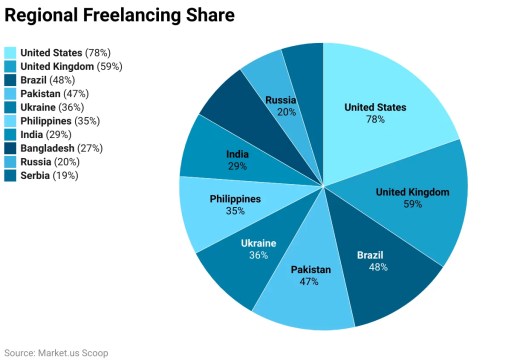
The U.S. has the fastest-growing Freelance economy, with revenue increasing by 78% year-over-year 2023-2024 and a compound annual growth rate (CAGR) of 17% in 2025-2029. The global data-as-a-service giant Statista predicts that by 2027, 86.5 million U.S. workers will Freelance, accounting for 50.9% of the country’s total workforce.


Your inner optimist may interpret this forecast as an opportunity to grow your billable hours; your inner pessimist may see disturbing visions of increased competition in the Freelance hiring landscape. Why not be realistic and take a look at your organization to find where you would be wise to raise the level of your game and enable yourself to be more responsive to clients and prospects in ways that grow your client roster? Make lemonade out of the lemons.

In fact, Freelance professionals are optimistic about the future of Freelance work. Your confidence is fueled by increasing demand for specialized skills and a global pivot toward more flexible work arrangements. According to the Upwork Future of Work Index in April 2025, 82% of Freelancers say their work opportunities have grown since last year, versus just 63% of full-time employees. In that same report, 84% of Freelancers reported that they are excited by how the prospect of Artificial Intelligence tools will reshape their services, offerings and workflows.

Research indicates that Freelance work will continue in growth mode and the data has a high confidence level amongst the experts. You should be able to claim your share of the pie. If the intentions of corporate decision-makers can be taken to the bank (ha!) they support Freelance expertise. A January 2025 Upwork report found that 29% of executives believe that Freelance workers are essential to their business and 48% of CEOs plan to increase their hiring of Freelance workers over the next 12 months.

Still, there are worries that keep you awake at night. A November 2025 survey found that 66% of Freelancers feel that securing enough work is their primary challenge. Other major concerns included managing an irregular income, unpredictable work availability and non-paying clients.

Research also shows that Freelancing in 2026 won’t be all about finding projects; 2026 is shaping up to be about adapting to new skills, technologies and ways of working. Staying informed will help you to prepare and position yourself to keep up as the independent economy continues to grow. The Upwork Future of Work Index found that the most relevant Freelancing strategies to follow in 2026 will be to stay informed about global developments as you remain apprised of relevant shifts that occur in the U.S. B2B Freelance economy.

These are the signals every Freelance consulting specialist should pay attention to. For example, as automation becomes more common, skills that are uniquely human become more valuable. Negotiation, communication, empathy, storytelling, decision-making and leadership will help Freelancers stand out and facilitate building long-term client relationships. These soft skills are now seen as core strengths that technology cannot replace. The Future of Work Index shows that 87% of Freelancers prefer work that helps them improve their current skills or learn new skills, versus work that only allows them to use the skills and proficiency they already have.

 Let’s finish up with some 2025 statistics that examine billable hours and revenue. I’m sure you know that Freelance earnings differ according to the services provided. Generally, the more technical the service, the higher the billable hour. High-demand services such as programming allow Freelancers in the field to bill at $70/hour. Artificial Intelligence and Machine Learning engineering are currently the highest-paid sectors among all Freelancing roles and expertise in one or the other niche allows you to command a billable of $50-$200 per hour. The number of computer and information research scientists is expected to grow by 26% by 2033. (Upwork)

  • Full-time B2B Freelancers on average work approximately 43 hours per week
  • Approximately 54% of Freelancers work five days a week
  • On average, Freelancers earn $99,230 annually; however, the top earners have annual earnings of $200,000. Meanwhile, 25% of Freelancers earn $50,500 annually.
  • The average hourly billable earned by U.S. Freelancers is $47.71, with a range of $132.21 to $14.90 per billable hour. 
  • The average Freelance programmer bills at $60-70/hour and generates annual revenue of about $120,000 
  • The average Freelance writer bills at $30-40/hour and generates annual revenue of about $42,000
  • Online marketers typically earn $50/hour and generate $100,000 annual revenue
  • Freelance graphic artists bill at $40-$45/hour but are known to receive enough billable hours to generate $90,000 in annual revenue

Thanks for reading,

Kim

Image: market.us

How Does Influencer Marketing Work for B2B Freelancers?

Influencer marketing has been white hot for a minute and it’s getting even hotter. A strategy born of user generated content and nurtured by early bloggers soon produced content creators who came to be considered authorities within their niche fields of expertise, developing loyal audiences for their blog content and generating follower communities along the way. Those early pioneers earned reputations and gained recognition for product reviews that showed trustworthy insights and built credibility. The DIY grassroots aura and absence of corporate advertising gave it all the blessing of authenticity. The independent and impartial assessments provided by the bloggers encouraged engagement and audience trust. But this is America so gradually, bloggers with the biggest followings in the scene featured sponsored content on their sites (often disclosed through affiliate links) and next, collaborations with retail outlets and product brands.

The phenomenon was accelerated by the introduction of social media platforms and exploded with the arrival of visually-focused platforms. Images, and especially videos, provided an ideal environment for newly minted marketing influencers to showcase themselves and the brands they represent with exciting visual content. The visually focused platforms caused an inflection point that gave rise to influencer marketing stars who found a lot of work in the B2C sector, in particular fashion, beauty and travel. Bloggers and others who had a flair for creating appealing content plus the ability to connect with and encourage relationships with their audience began to grow significant followings and exert influence over the behavior (aspirations) of prospective and current customers.

The rise of B2B Influencers 

While originally a strategy used by your flashy B2C cousins, competition for billable hours in the B2B sector seems to have stimulated the adoption of influencer marketing in the B2B sector. However, be advised that B2B influencer marketing is not about showcasing services or products. Rather, B2B influencer marketing is about helping you build trust and connect with prospective clients who, if all falls into place, will be more inclined to become your loyal clients. The goal of B2B influencer marketing strategies is to align your organization with recognized and respected industry thought leaders—the influencers— whose industry knowledge, reputation and loyal followers can be leveraged in your target market sectors.

B2B influencers are well-known and respected experts and thought leaders in their field. They’ve acquired impressive knowledge, experience and authority that confers recognized credibility that’s enabled them to build a sizeable, loyal and often activist following. Based on that authority and credibility, effective influencers are able to build trust and enthusiasm for a brand within their community of followers by making endorsements that can stimulate purchases made by decision-makers within the community. Furthermore, a brand endorsement can also result in a significant number of positive reviews posted on social media that creates a word-of-mouth campaign that can spread to the general public and can stimulate still more purchases of the brand’s services or products.

On a national level, you might think of sales training expert Brian Tracy, marketing wizard Neil Patel, professional development guru and author Stephen Covey and leadership and personal development maven Brene Brown as powerful B2B influencers. The best influencers assist brands by providing targeted exposure, building industry credibility, facilitating strategic partnerships and product or service endorsements that, ideally, will substantively enhance brand recognition, reputation and sales. Potential B2B influencer marketing goals for your organization could include:

  • Increased credibility and trust for your brand within your target market
  • Heightened audience engagement with your marketing content
  • Enhanced perceived value of your brand
  • Increased stature and influence of your thought leadership
  • Accelerated rate and quality of leads generated and an enhanced sales conversion rate

Is influencer marketing for you?

Let’s examine how influencer marketing could be useful to B2B Freelance consultants. As usual, your first act will be to assess your client base and refresh your understanding of your target market(s). You must know whom you’d like to influence, what you’d like to achieve and why that achievement will matter. Verifying your target market will enable you to recognize which influencers, marketing tactics and channels can be expected to resonate with your clients and prospects. So that you can begin to recognize the expertise, authority, connections and social media presence your most effective influencer should have, it’s imperative that you clarify the problems and projects that clients and prospects ask you to resolve. As you go through this process, you’ll also get an idea of whether (or not) influencer marketing might be a fit for you.

Identify and investigate influencers in your industry

Take your evaluation process to the next level by investigating the types of content your clients and prospects usually engage with and the platforms that supply it. What types of content do they find relevant, whom do they follow and on which platforms can that content be found? Also, what are the most common questions they’re looking to answer and the problems they want to resolve?

Next, develop a list of influencers you’d like to contact. Your job here is to speak and get to know who you might like to work with. Does this candidate have not only the industry experience and authority that you’d like but does s/he have the connections and clout in your niche to move the needle for you? Essentially, you’ll search for influencers who can help you reach and impact your ideal audience. It’s no help if an influencer has a large community of followers but does not have a prominent presence in your industry and niche. Before you decide who you’d like to follow and follow-up with, verify precisely how your potential influencer can produce what you want, which is probably some combination of upgrading and/or increasing your leadgen, enhancing company brand, encouraging brand loyalty, upgrading and expanding the earned media you receive and, ultimately, impacting purchase decisions that increase your client roster. Keep all that in mind as you look for good potential influencers. Here are common methods you can use to find influencers you can meet and interview.

  • Social media. Many influencers have large followings on social media platforms and it makes sense to start your search there. You’ll want to choose influencers who have a strong presence on the preferred platforms of decision-makers for your service or product. Engage with the content of influencers who seem to have promise for you. You can follow those who look promising and then reach out and initiate contact. This strategy gives you direct access to potential influencers and enables you to build relationships.
    • If Facebook is your preferred platform, use their search function to find influencers. You can also check out industry specific Facebook groups or pages to find B2B potential influencers.
    • Instagram is your gateway to connecting with Millennial generation decision-makers and discovering the influencers they trust. Search the platform for producers of excellent and consistent content and then visit the site profiles of those content producers you find compelling.
    • LinkedIn is the usual suspect for all things B2B, including finding B2B influencers. You can search your industry to find influencers directly. Definitely join and investigate relevant LI groups and watch for influencers within their membership ranks.
  • Networking at industry conferences and events. Attending in-person meetings and conferences provides a unique opportunity to network with professionals and identify potential B2B influencers within your niche. The strategy is effective for discovering and getting to know B2B influencers with whom you can potentially build a mutually beneficial relationship.
    • Attend relevant conferences in your industry.
    • Actively participate in networking sessions.
    • Identify B2B professionals with significant industry influence
    • Establish connections and express interest in collaboration

  • Discover B2B influencers through industry publications, influential blogs and speaking engagements. This strategy lets you evaluate is the credibility of influencers by learning who is featured in respected industry publications, which indicates expertise, authenticity and most likely, influential relationships.
    • Regularly follow industry publications and relevant blogs, with an emphasis on organizations such as chambers of commerce or other well-respected professional societies and business associations. Identify content contributors and speakers who have the industry expertise and reputations that you seek.
    • Familiarize yourself with the content of industry experts that you find promising
    • Reach out to suggest the possibility of collaboration opportunities.

Evaluate B2B influencer industry authority and credibility;

Confirm the authority and credibility of potential B2B influencers within your industry by examining their past collaborations (if possible), content quality, consistency and presence in prestige publications. Your job is to investigate which B2B influencers’ audiences and authority align with your target market and can be useful for you. Refer to your research to develop a candidate shortlist.

Reach out to your follow-up list gauge and request an opportunity to discuss the possibility of an influencer marketing relationship. Enhance your appeal to your intended influencer with a personalized and compelling outreach message that demonstrates your awareness of his/her industry authority, as evidenced by the quality and consistency of his/her published content, speaking engagements and /or professional awards. Express your admiration for their insights and expertise.

If your invitation to talk is accepted, during the conversation inquire about the brands and types of campaigns your would-be influencer has previously collaborated on. If the initial discussion leads to further and more specific talks, request a link to his/her portfolio to verify the success of past collaborations and get a feel for how a collaboration with you might work.

Negotiate terms and collaboration agreements

Clearly define and commit to writing in a signed contract your expectations of the influencer marketing campaigns, the roles and responsibilities of the influencer you’ll partner with and the compensation agreement (monetary amount and due dates) with your selected B2B influencer. Execute this agreement by producing a transparently communicated legal document—a contract.

Keep in mind that a contract is only as good as your ability to enforce it. Help yourself by keeping your wish list and the timeline for its achievement realistic. While discussions and negotiations with your preferred influencer in advance of finalizing the contract, do your best to confirm which items of your wish list outcomes seem possible for your organization as well as the amount of time and other resources that will likely be needed to get you there.

Monitor and measure campaign influencer performance

Monitor the performance of your B2B influencer campaign by tracking the relevant associated key metrics, such as client and prospect engagement, click-through rates and shares, follower growth and expansion, leadgen growth and expansion, brand reach and impressions and sales revenue. In sum, you’ll want to evaluate the campaign ROI outcome and understand the costs associated with your influencer marketing campaign versus the sales revenue that can be attributed to the campaign.

It’s imperative that you obtain an objective and comprehensive assessment of your influencer marketing activities. As with all of your business strategies, obtaining a big-picture performance evaluation is a must-do. Once you learn which strategies and campaigns are effective, and therefore worthy of your investments of money and time, and what failed to live up to your expectations, and might either benefit from an adjustment or maybe should be dropped will, as always, show you the path forward.

Thanks for reading,

Kim

Image: © gstockstudio for Freepik

Revolutionize Your Email Marketing Campaigns

How many times over the past 10 years have B2B marketing experts declared email marketing dead? Oh, well—sometimes experts project their own feelings onto those whose behaviors they’ve been charged to study and predict. The experts, it seems, and not the customers, were ready to move on but like a cat, email marketing has nine lives. B2B email marketing in 2025 continued to earn the trust of customers and prospects and produced a confidence-boosting performance for marketers. The median B2B open rate reached 36.7%–42.35% , an increase from 34.2% in 2024, according to data from VerifiedEmail.

Email marketing continues to deliver exceptional return on investment of $36–$42 per $1 spent as of 2025, as reported by data published by Los Angeles, CA based VerifiedEmail and outperforming all digital marketing channels by 4–5x. Bold text, eye-catching images, interactive content and an irresistible subject line are how email marketers capture the attention of intended readers.

AI tools optimize performance of an evergreen marketing resource

A 2025 Boston Consulting Group survey of 251 marketing professionals concluded that 33% of survey respondents regularly use generative AI tools and 92% of respondents feel optimistic or very optimistic about the creative potential of GenAI over the next two to three years. GenAI tools like ChatGPT, the AI-powered chatbot developed by OpenAI and the AI-powered search engine Perplexity are primarily used to write articles and create images that accompany social media posts. Email marketers are finding inspiration in those capabilities and are off to a good start with AI technology. According to Salesforce research, AI is positioned to greatly enhance the impact of email marketing:

  • Managing campaigns: AI helps marketers understand which elements of an email campaign are effective and which do not resonate.
  • Content creation: GenAI platforms will support the text outline and compose the narrative, as well as edit your copy and also create the images that supply visual context to your marketing message.
  • Brainstorming: Marketers can use AI to jumpstart creativity and elevate the quality of the text you produce and help you to more efficiently produce the irresistible subject lines, eye-catching images and, most importantly, compelling topics that build the audience for marketing emails that deliver your newsletters.
  • Scaling output: AI can speed up completion of the normally time-consuming functions listed above—finding the right subject line, composing newsletter text, producing an image that enhances your text and, icing on the cake, analyzing the performance of your email marketing campaigns.

Getting in, getting noticed, getting opened

The volume of daily emails received by a working adult is often overwhelming and most inboxes are inundated with messages both business and personal. Nevertheless, the response to email marketing remains robust, propelled by the value and trust conveyed in highly targeted, personalized marketing messages that address the needs and priorities of decision-makers.

Still, recipients are inclined to require opt-in permission to control their email deluge. A double opt-in protocol that asks subscribers to both agree to accept your emails and also include another security layer by adding your company email address to his/her trusted contact list, your emails might still be blocked by spam filters. The unintended consequence is that 22% of permissioned email fails to reach subscriber inboxes.

Furthermore, like a determined salmon swimming upstream, reaching subscriber inboxes is only Step One in your marketing email’s journey. Step Two for email marketers is to prepare for how the email will be received and noticed by subscribers. Research indicates that as of 2025, 55% of email is opened on mobile devices, that is, smart phone or tablet. Responsive design is therefore required for your marketing emails. Furthermore, mobile devices allow only a limited view of the email subject line. Just first 40 characters of a subject line are visible on the iPhone email app.

Those 40 characters have a big responsibility. Marketers are advised to be very selective about what those 40 characters communicate to potential readers. Then again, shorter subject lines consistently outperform longer ones. The email marketing experts at Constant Contact point out that that all aspects of your email content—format, text and images—must be considered and optimal email design for different mobile devices may not be uniform.

An intriguing discovery is that including an emoji in the subject line can increase open rate by 56%. Still, a subject line that is considered relevant will likely be the more persuasive strategy for intended readers. Finally, there is the most important ingredient in this recipe and that is email content. The open and click through rates depend on the content delivered in the email. The subscriber has to feel that the subject you’ll cover—whether it’s a special offer, an announcement of some sort, or a hot industry topic—must be relevant and timely.

Email segmentation is the new normal

Email segmentation, along with email marketing automation, has been one of the biggest digital marketing trends over the last few years. Email segmentation has moved from what was considered an “advanced feature” to a capability that basically all email service provider platforms offer because basically all email marketers want to use segmentation in their email marketing campaigns to enhance the ROI.

Recent studies have found that 33% of companies segment their audiences for marketing campaigns and 20% send customer-specific emails. In fact, researchers at VerifiedEmail report a pronounced shift from email volume to email relevance that’s revealed the highest-performing campaigns send fewer emails to more precisely segmented (targeted) audiences and achieve 30% higher open rates and 50% higher click-through rates. These findings suggest that email marketers create customer personae and use data from those profiles to segment audiences and more effectively target the campaign content they will receive. Hyper -personalized marketing content has been shown to produce as much as a six-fold increase in transaction rate. In addition to producing increased sales revenue, the data further suggests that segmentation can boost recipient engagement as well. An industry study by MailChimp found that segmented campaigns lead to an average of 14% greater open rates and 100% greater clickthrough rates. Keep in mind that this happens when fewer, hyper-personalized emails are sent—I’m sure you’ll agree that limiting your marketing emails increases the value of those you do send and works to limit your unsubscribe rate.

Listen up—email marketing experts know that CTR matters more than the email open rate. VerifiedEmail spills the tea and points out that in our privacy-restricted era, CTR represents the most reliable engagement signal—it requires deliberate action rather than passive preview. Top-quartile email campaigns achieve 6%–10% CTR with diligent segmentation and AI- augmented personalization.

Get started by choosing the right email marketing eervice

Many marketers face the same challenge—they want to send marketing emails, grow their customer list and audience, plus automate and segment email campaigns without spending hours on design or technical setup. Furthermore, you may get stuck with the grunt work of performing manual data transfers risk to add list names and profile info if the software you use doesn’t integrate with the software used by your customer relations management service. You might also be limited in the number of marketing emails you can send. Or maybe you’ll eventually become dissatisfied with the generic designs that do not enhance your brand.

In other words, it will be worth your time to investigate and compare ESP software plans to identify the right platform for your needs. The right platform will save time and aggravation. It will simplify your workflow, encourage customer engagement, increase your campaign conversion rate and make your brand memorable in the best ways.

The price range of ESP plans varies significantly, depending on the level of service you’d like to have. There are even free plans that most likely will limit your number of email campaigns per day or month, a low-cost plan that could cost perhaps $5 to $10 per month, with limited campaign sends and size of the contact list, could be a good way for a Freelance professional to get started and access the benefits of email marketing. The average cost of email marketing platforms for up to 500 contacts is around $20 per month. Choosing the best platform won’t be complicated if you focus on the features that matter most. A list of typical services that marketers use is below. Next, you can start your ESP research here with this credible list of recommended email platforms Forbes Magazine in January 2026

1. Send volume. Pick a platform with send limits and pricing that match your current and future email marketing plans. Don’t overpay for features you won’t use or hit limits too soon.

2. Easy platform migration. Make sure it’s easy to migrate your customer data from your old system. The less time you spend moving contacts, the sooner you can get back to marketing.

3. Seamless integrations. Look for software that works with your CRM, online store, and even social media. This makes it easier to retarget leads and keep your marketing efforts connected.

4. User-friendly design tools. Choose a platform with drag-and-drop editors and customizable templates. You shouldn’t need a designer or coder to build beautiful emails.

5. Automation & AI. Advanced platforms let you automate email workflows, like sending follow-ups based on opens or clicks. AI can help predict the best times to send emails, write subject lines, or even suggest content.

6. Customization & branding. Free or cheap plans often include the platform’s logo on your emails. Invest in a plan that lets you add your branding, so your business looks professional.

7. Analytics. Basic reports should track open rates, click-through rates, and conversions. A/B testing tools can show you what’s working and where to improve.

Thanks for reading,

Kim

Image: © Getty Images. Burning Blue Email

Make 2026 Your Gold Medal Year

Independently employed Freelance professionals remain one of the most robust segments of the global labor market, powered by a still growing number of U.S. workers. The San Francisco, CA based Grandview Market Research projects the 2030 Freelance economy market size will reach $14.39 Billion (USD), up from $7.65 billion in 2025. According to the Upwork Research Institute, currently 28% of skilled knowledge workers operate as Freelancers or independent professionals here in America. In 2024, those Freelance workers generated $1.5 Trillion in earnings.

Freelancers recognize that the outcome of a growing number of talented and ambitious colleagues leads to the inevitable presence of increased competition for work assignments. As a result, Freelance professionals are aware that you’ve gotta hustle on many levels, from consistent marketing that demonstrates thought leadership in tandem with other inbound marketing formats designed to appeal to your most promising prospects. Continual upskilling of your core knowledge base is yet another tactic that can help to strategically position a one-person empire in ways that are sustainable and push you ahead of hungry competitors.

If that’s not enough, savvy Freelancers must always keep eyes and ears open to consider how you might improve the quality or delivery of your services. The five SMART business development goals listed below—-Specific, Measurable, Achievable, Relevant, Timely—should be on every Freelancer’s business strategy list, for they constitute a reliable roadmap that’s capable of taking you to the top and helping you grab your gold medal in 2026.

To further enhance the impact of the goals, think of them collectively as potential focus points in the storytelling narrative you’ll present when in discussion with prospects. Incorporating into those conversations benefits derived from implementing the goals that you know or surmise would be of interest to them bolsters your ability to structure a more compelling in the conversation. You can weave into the story narrative that frames the conversation why and how your capabilities, experience, ability to collaborate and education make you especially well-suited for the role you seek, whether it’s an exciting client project or new W-2 job. Your mastery of the goals presented here will enable you to “paint a picture” that helps search committee members, hiring manager and other influential parties on the prospect’s team to clearly envision how you and the competencies you bring to the table will get the job done, meet or exceed expectations and (best of all!) make them look good to superiors, direct reports and colleagues.

  1. Update your online presence and portfolio

Type your business entity name and your own name into two or three prominent search engines to conduct a review of your online presence. What does the internet reveal about you? Is the information accurate? Does it portray you in ways that highlight your strengths? According to MBO Partners, 42% of Freelance professionals rely on digital platforms for finding clients; that means the sum total of your digital presence, from your website, to your social media presence, to postings of your appearances on podcasts, webinars, magazine articles and notices for your speaking engagements or other public appearances constitute what you might call your digital “storefront.”

Your collective online presence informs interested parties, that is, prospective clients, that your entity is open for business and ready to deliver valuable services. The vault for your professional credentials and capabilities is online in the cloud, so it’s imperative that your bona fides up-to-date and presented in visual and text language that inspires confidence and interest, so that the online story of you, the Freelance professional, works hard and smart to generate leads for your business. Update your portfolio with descriptions or examples of recent project work that makes you proud and will convince clients that you can be trusted to produce the outcomes they need. Convincing client testimonials and case studies will further help you make your case. Don’t forget to review your profiles that appear in Freelancer directories and third-party websites that are viewed and trusted by prospects, as well.

2. Consistent engagement on the right social media platforms

A persuasive LinkedIn profile is a powerful communication channel that will communicate the capabilities of your Freelance business entity to potential prospects; 40% of B2B marketers say LinkedIn is the most effective channel for driving high-quality leads. You now have significant motivation to regularly share your unique thought leadership, valuable insights and opinions on industry news and updates that will heighten your professional visible and enhance your status as a go-to expert in your niche.

In 2026, make a point is to become a consistent LinkedIn participant and more than someone who just gives “likes.” When you feel able to make a relevant contribution to a conversation thread be brave and speak up! Even if your opinion or advice is expressed in a mere sentence or two, remember that succinctly delivered info is always appreciated. Moreover, your participation helps to build a respected reputation on the platform and will increase your LinkedIn Social Selling Index (SSI)— a metric that LinkedIn says pays demonstrable professional benefits on the platform.

Along with LinkedIn, research and follow-up may lead you to discover that Facebook, Instagram and/or TikTok also have significant marketing potential for your venture. What are the norms for your industry? If those who hire for your service or product categories consider certain social media platforms are good hunting grounds for talented professionals, that’s where you hang out your digital shingle.

 3. Increase PR activity

Public relations and media mentions help build name recognition and credibility for your brand and make you and your business entity a known and trusted quantity. Moreover, PR features are posted online, so PR adds to your digital presence. Noteworthy media mentions should be uploaded to your website (you can add a “press” tab to your website and upload media mentions there) for review by interested parties. Freelance professionals should aim to earn valuable media opportunities (that is, unpaid media exposure) and leverage that exposure to grow trust and credibility.

Favorable PR is an important ingredient in a comprehensive inbound marketing strategy—-PR is soft sell leadgen and should not be overlooked. An effective and achievable PR strategy for Freelancers might include two or more of the activities listed below. Be sure to leverage your PR opportunities by sharing them on your website, email list and social media channels. Published articles that you’ve authored will be published online by the media outlets. Videos of your participation in podcasts and webinars will be posted online by the hosts. Sponsors of any awards you’ve received will be delighted when you share news of your victory with members of your email list, post to your online platforms and send a press release to local media outlets—because it also creates good PR for the sponsoring organization and encourages more candidates for the next round of awards (for which the sponsoring organization collects entry fees). Charity organizations will likewise be delighted when you distribute your participation to media outlets as well as your digital platforms and email list.

  • Be a guest on three or four industry-relevant podcasts or webinars
  • Write four or five industry-relevant posts (or guest posts) for blogs, newsletters, or other publications
  • Be a guest speaker, or introduce the guest speaker, at a business association meeting
  • Moderate an industry-relevant panel of experts, or be a panelist yourself
  • Campaign for a local business award and if you win so much as a bronze participation trophy, send a press release to announce your victory to local media and also post to your website, social media platforms and send to your email list (include a photo of you accepting the award with your press release)
  • Become a sponsor of a local charity event, for example, Girl Scouts, Boy Scouts, Little League, or social services organizations. You might have an event-day volunteer presence and be able to take a few photos that document your participation. Feature your volunteerism on all of your digital platforms plus your email list with two or three photos plus information about the role the organization plays in the community and the impact of the event.

 4. Create meaningful client case studies

Use your storyteller’s perspective—a competency that you utilized while polishing your overall online presence and portfolio in the first goal and becoming more strategic and active in your use of PR initiatives in the third goal—to review and decide which of your most successful client projects could make compelling case studies that you can share on your website and social media channels? Case studies are powerful stories that provide irrefutable proof that you can deliver what clients need. They are the ultimate testimonial.

The marketing gurus at HubSpot report that businesses that publish case studies generate +45% more qualified leads than those that don’t. By illustrating a sampling of the real-world work and results you’ve created for clients, you’ll stimulate more trust in your brand and add positive influence to purchase decisions. This year, aim to create and strategically post data-driven case studies that showcase your expertise are housed in your portfolio or on your website.

Hubspot marketing experts go on to recommend that when writing your case study, whose purpose is to showcase your problem-solving expertise, ability to collaborate and the customer experience and support you offer, include the following information:

  • Define the problem you were hired to solve. Furthermore, succinctly explain its relevance to the client and the client’s definition of desirable benefits that will result from its resolution
  • Describe the solution you provided to resolve the problem. Explain why proposed that solution and also your process for delivering the solution and the results produced by implementing that solution.
  • Describe the beneficial collaboration between you and the client. Make clear how the trust and respect between you and the client enabled and supported the choice, implementation and favorable outcomes of the solution you provided.
  • Client testimonial. Invite one or more representatives of the client’s team to describe the problem and explain why an effective solution was a priority. A brief overview of ineffective attempts at resolution that produced unsatisfactory outcomes will shine a flattering light on you. Encourage the client to discuss how members of his/her team initially felt about your proposed solution and what gave them the confidence to hire you, instead of a competitor. Likewise, encourage the client to celebrate the benefits that were derived from the solution that you provided—saving money, saving time, simplifying workflow processes, for example.

5. Explore and implement AI tools to improve your annual earning potential

According to PwC’s 2025 Global AI Jobs Barometer, workers with Artificial Intelligence skills command a +56% wage premium, meaning that Freelancers who add AI-related skills or services to their offerings may increase their earning power. Address this goal in 2026 to both learn new and in-demand AI tools and then use your valuable new competencies to both create operational efficiencies in your own business and offer and offer desirable premium services to clients.

LinkedIn career expert Catherine Fisher attests that candidates who demonstrate their fluency in artificial intelligence are much more likely to pique the interest of hiring managers and I’m sure it’s safe to assume that that her recommendation refers to both Freelance professionals and W-2 employees. Her top tip for job seekers is to emphasize their AI literacy and highlight how they use different AI tools in their day-to-day work. Specifically, Fisher urges job candidates to come to interviews prepared to discuss how AI makes them more productive in completing their work responsibilities. “Make sure you have some examples, because you know you’re probably going to get asked, ‘How have you used AI in your work?'” she said,” but keep in mind that you don’t have to be a computer programmer to demonstrate your competence with AI tools.”

Thanks for reading,

Kim

Image: © Getty Images 2022. Chinese skater Wu Dajing wins the short track speed skating gold medal at the 2022 Beijing Winter Olympics