Storytelling Is the New Advertising

Not long ago, advertisements you saw in newspapers and magazines were made to capture attention with style and flare. Whether those advertisements were from back in the day, or 21st century pop-ups that invade the screen on your device as you scroll through websites, ad copy displayed flawless visuals and meticulously phrased text, both carefully crafted to dazzle and persuade a broad swath of the ad’s target market viewers. But that was then and this is now.

In the here and now, tightly scripted advertisements appear to be losing their hold on audiences. The viewing public, some of whom are within your target market, are apparently tiring of what can easily be interpreted as ad agency engineered, focus-group tested and totally corporate. Your future clients, and maybe you, too, value what feels genuine, relatable, believable—authentic. Your future clients are hungering for comfort food served in a favorite neighborhood place, not a four- course banquet served in a grand, Michelin starred restaurant.

What future clients are increasing drawn to is storytelling—personal testimony that comes across as unscripted and communicates a set of values and guiding principles that inform how you conduct your business and and even personal life. The influence and impact of storytelling continues to expand and it seems to already have become the future of adverting in B2B and B2C markets.

Advertising experts call the emerging storytelling phenomenon the trust economy and it is winning loyalty (and wallets) with its apparently unrehearsed, believable, real first-person accounts that are overtaking the glossy ads of days past. For example, brands that feature storytelling by the company founder—maybe showing a clip that illustrates what’s happening behind the scenes or revealing that a percentage of company profit is devoted to a certain philanthropy and also explaining how the recipients benefit— are winning customers, growing their follower and customer communities and surpassing the usual results of traditional advertising. In today’s marketplace, authenticity—which is a defining ingredient of trust— has become real currency. Authentic storytelling is how you can earn it.

Maybe the rise of storytelling is a reaction to all those banner ads and pop-ups that clutter screens and have come to annoy digital audiences? Ad-blocker usage is high, especially among Generation Z (born 1997-2012) and Generation Alpha (born 2010-2025) cohorts, whose members show skepticism toward traditional advertisements. According to marketing researchers and thought leaders, authenticity is now a leading B2B purchasing driver, with prospective buyers more likely to buy from brands they perceive as transparent and real. This generational demand for “truth” means over-engineered marketing campaigns and content may no longer resonate with your target audience. But the apparently candid testimonials that typify storytelling are perceived as believable, authentic and trustworthy.

Powerful stories

On every continent and throughout human history, people with a gift for telling a story have held power in their community. We like hearing a good story that is told well. Stories told by company founders and even employees have a persuasive resonance in today’s marketplace. For example, entrepreneurs who share factors that motivated them to launch their business entity and tell the company origin story—and perhaps bravely admitting their struggles, pivots, or failures — create intimacy and relatability with their audience that neither impossibly glamorous models or bland-looking actors who were once the faces of hundreds of companies, smiling and spouting the official brand messages—cannot match.

Furthermore, traditional ads—TV, radio, print, or digital— are more expensive than ever and their returns are diminishing. By contrast, trust and authenticity-driven advertising (marketing) campaigns often require smaller budgets and deliver outsized impact in viewer engagement and word-of-mouth.

Storytelling, which is an outbound marketing strategy and therefore defined as a push promotional marketing tactic, is fundamentally different from the typical message broadcasting that defines outbound marketing, from television, radio, or print ads to sponsoring the holiday tree lighting in your neighborhood.

Expert storytelling invites the audience into a journey. Stories are a shared experience, personal and intimate and capable of making what is a transactional relationship—selling and buying— into communities of shared values and beliefs and whose participants can develop loyalty. Harvard Business Review notes that brands that present authentic narratives in their advertising and other content marketing activities see measurable improvements in consumer trust and loyalty. As well, Nielsen’s Trust in Advertising Report highlights that recommendations from “people like me” remain the most trusted source of brand information and vastly outperforms paid ads.

Build trust into marketing strategies

The core of storytelling is about developing a narrative that is believable and therefore resonates on an emotional level with audience members. The goal is to create a connection with your audience that inspires trust in and loyalty to your brand. A marketing strategy whose message prioritizes truth and has authenticity as its core delivers story narratives that your current and future clients will believe in. Your brand story, when effectively told, can connect with your current and future clients on a deeper level, providing feelings of belonging and loyalty. This emotional connection is crucial in building a lasting relationship between the brand and its consumers. When developing your storytelling strategy and choosing key elements to incorporate in the narrative, you might include:

  • showcasing not only the company founders, but also employees as storytellers
  • Sharing behind-the-scenes happenings with humility, honesty and maybe a touch of humor as well
  • Participating in social media as well as selected in-person community events or platforms to create opportunities that invite two-way communication with your clients, prospects and other followers
  • To evaluate the impact and outcomes of your storytelling marketing campaigns, measure not just impressions but also viewer sentiment, advocacy and engagement metrics

Develop your brand story

Storytellers may sound unscripted and in the strictest sense of the word, that may be true. However, effective storytellers, whether they are entertainers or entrepreneurs, know their talking points. They know the theme and purpose of the narrative. They know how to present the story to the audience and make it capture attention and flow. In other words, creating an effective brand story requires careful consideration. Here are key elements to keep in mind:

  • Know your audience: Understanding your target audience is always essential in public speaking. Make a list of what you feel represent your values, guiding principles, priorities and purpose and consider how they impact the company. You may also want to include challenges and pain points and a reach-for-the-stars goal or two. Tailor your story narrative to resonate with your audience.
  • Clear message and purpose: You don’t want to rant, you don’t want to humble brag. You must have a purpose, an objective, that can lead you to devise a compelling story. Your story should have a clear and concise message. Avoid overcomplicating the narrative; focus on the core message you want to convey, keeping it simple. You should have a Call to Action—what do you want your audience to do—maybe make a purchase, so that they can feel philanthropic by knowing that a portion of each sale will be used to fund a worthy cause, e.g., a healthcare or educational organization?
  • Authenticity: Authenticity is crucial to storytelling. Your clients can easily detect inauthentic narratives, which can damage a brand’s reputation. Ensure that your story aligns with your brand values, company vision and mission.
  • Emotional appeal: Incorporate elements that evoke emotions. Whether it’s joy, sadness, inspiration or nostalgia, an emotional connection can significantly enhance the impact of your story.
  • Organize the narrative: Your story must have a beginning, middle and end. It must have an intro that intrigues viewers and a conclusion that inspires them. A Call-to-Action will tell them how to direct the emotions your story has built up; it creates a common purpose among audience members and is a bonding and community-building experience.
  • Visual and verbal aspects: Combine visual and verbal elements to create a cohesive and immersive experience. Use imagery, videos and written content to bring your story to life.

Thanks for reading,

Kim

Image: © Alejandra Brun/ Agence France-Presse for Getty Images. Charles Robinson, member of the Choctaw tribe (AL, LA, MS, OK), dances during his storytelling presentation in Lima, Peru, August 2003

Level Up Your Thought Leader Cred

Being a thought leader is a vital ingredient in a Freelancer’s recipe for a B2B content marketing strategy that moves the needle. In fact, establishing yourself as a credible thought leader is foundational to building a thriving Freelance client list. Freelancers must recognize that business acumen, lived experience and data you share with content followers, some of whom are prospects and clients, is a valuable strategic asset. What you know and how you express your knowledge is the core of your Unique Selling Proposition and the engine that drives your ability to deliver solutions that produce results and convert prospects into paying clients.

Many independently employed professionals label themselves an “expert in the field and thought leader,” but few do so with a carefully considered sense of purpose that leads to an actionable outcome—like persuading a hesitant prospect to become a client. In today’s hyper-competitive marketplace that’s populated with cautious prospects who’ve lengthened B2B sales cycles and pushed your next paid invoice farther into the future, it is imperative to distinguish yourself from those whose “thought leadership” amounts to checking the box and calling it done.

Tickling a handful of marketing metrics doesn’t prove that you’re a credible thought leader, either; click bait posts and articles are only eye wash and audiences recognize it. True connaisseurs of thought leader content track business impact (vs. 63% overall) and 51% track brand authority (vs. 38% overall) to assess how audiences really feel about their content. They measure the relevance of their thought leadership with insightful metrics:

  • Audience engagement — views, downloads, shares (80%)
  • Business impact — lead generation, pipeline influence (63%)
  • Audience feedback — client/prospect feedback, sentiment analysis (40%)
  • Brand authority — speaking/media opportunities, publication citations (38%)

Furthermore, connaisseurs publish their thought leadership on marketing channels that provide an audience of B2B prospects who are serious about obtaining useful information. If you are not currently publishing on these channels, as well as getting out in front of a live audience every once in a while, add these items to your thought leadership promotional activities.

  • LinkedIn (76%)
  • Email newsletters (54%)
  • Speaking events, webinars (52%)

Those who “get” the power of thought leadership know that the information they present may be used by audience members who are either familiar with or contending with a particular challenge. The insights and info you present as a thought leader is used to support responsible decision-making, whether in the moment or in the near future. Therefore, the goal of savvy Freelancers is to produce credible, possibly innovative and reliably useful thought leadership content that followers and other readers or viewers will notice and remember. Below are thought leadership ingredients you can use to develop your recipe for success.

1. Solve a problem readers will recognize

Effective thought leadership is born of a vexing problem that is urgent—an emerging risk, a stubborn and mysterious challenge or failing, or even a misunderstood opportunity. The most perceptive and confident thought leaders will dare to step outside the usual narrative or practice and provide a perspective the audience hasn’t heard before and use it as a launchpad for potentially effective solutions. Does your thought leadership content inspire your audience make smarter, braver, decisions, or help them to avoid a potentially costly error, or problem they may not have considered?

Thought-leadership content that presents insights and information that helps decision-makers perform not as mere functionaries but as leaders who know how to keep the mission-driven goals of their organization in the forefront builds trust and separates you from competitors. To achieve that, thought-leaders must be aware of what audience members need to know now—before a competitor tells them first.

2. Present thought leadership content with an out-of-the-box idea

Defining the problem is where thought leadership starts and proposing an innovative way to perceive and address it is what gets thought leader content noticed. A true thought leader is provocative, one who reveals an “aha” moment that makes a new way of looking at things both credible and memorable. Create thought leadership content that challenges conventional wisdom or reframes a common problem in an unexpected way—and show your audience that you understand the problem and how it can be solved.

To stimulate your creative spirit, you may want to employ an Artificial Intelligence tool to rev up your brainstorming. You’ll have to experiment to find the right prompts that help you discover intriguing, but credible, possibilities for topics that answer questions for readers and reveal what they consider to be an emerging concern. AI can also help you frame your approach to the topic and provide suggestions as to which narrative threads might be included in your content. Also, use storytelling to shape your content, as it is usually the most relatable way to communicate with your audience—and they’re more likely to retain the info you deliver.

A concise overview of a case study or references to insights gleaned from user generated content that’s appeared on your company’s social media accounts are excellent sources of lived experiences that are provided by your very own followers. You can also discover topics to explore as well. Let AI help you start the brainstorming process by showing you topics that your audience are likely to find relevant and then build your case with real time source material that might reflect both your own experiences and that of your clients.

3. The best thought leadership content is in the trenches

When scouting for source material, keep in mind that residents of the C-Suite may not give you boots-on-the-ground perspectives or stories that reveal out-of-the-box perspectives or possible solutions that bring “street cred” to your thought leader content. Clients and colleagues who have a customer-facing role are better positioned to provide you with the most interesting topics, experiences and insights that bring authenticity to your narratives. You want reports from those who notice shifting customer behavior, for example, and other grass-roots experiences that bring a rawness and depth to your thought leader content and makes it relevant to a wide audience.

4. Thought leader content is considered useful

Good thought-leader content earns attention by delivering relevant information. That doesn’t mean checklists or how-tos—but it does mean clarity and ideas that make a subject that is complex feel as if it can be navigated and understood. When your followers and other readers finish your article and let the information you provided and hit the save and/or the forward button, that will verify your status as a thought leader. Useful content helps readers do things like:

  • See a risk they hadn’t considered
  • Argue for a decision internally
  • Convince the audience to take action
  • Shift the mental model audience members were using

Thanks for reading,

Kim

Image: ©nobelprize.org (L-R) Daron Acemoglu of the Massachusetts Institute of Technology in Cambridge, MA, Simon Johnson of MIT and James Robinson of University of Chicago in Chicago, IL

Milestones Are Your Reason for A Reset

Certain dates on the yearly calendar are noteworthy—birthdays, holidays and anniversaries, a new year or a new season, as well. The dates have meaning; they mark special occasions and hold a certain power. You might call them milestone dates. Some milestones merely mark the passage of time, but others suggest growth and development, an inflection point and the possibility of making a positive change. Those milestones beckon you to consider new options, new experiences, or a new perspective.

A particular milestone date or occasion may motivate you to do better and give yourself an upgrade. You might feel it’s time to press the reset button on some aspect of your life. You’re primed to open the door to new options and opportunities. You recognize that you’ve reached a psychological milestone and life is telling you to reassess and redesign, reinvent, or recharge some part of your life or some part of your business enterprise or career. Think New Year’s Resolutions.

This spark of inspiration is called the “fresh start effect.” It’s a psychological phenomenon that explains why milestones—the arrival of a new year, a birthday, or the first day of a new season—make you inclined to self-reflection. You feel the urge to take on beneficial new habits and drop an old habit that’s outlived its usefulness. You’re ready to attach jumper cables to your personal or professional life, start the ignition and make things come alive.

Because the fresh start effect is universal, your clients are likewise inclined to experience a restless feeling that creates a longing for something new and different. For that reason, milestones are an excellent time to make use of the prevailing zeitgeist and shake up a client-facing sector of your business. The strategy is powerful because you’ll align your company and its solutions with your customers’ existing expectations, rituals and rhythms.

Your mission is to position your brand to align with customs or expectations that your clients and prospects will likely experience when they think of your target milestone occasion. How might your service or product be perceived as part of their fresh start? Your goal is to not only meet their needs and wants, but also portray your brand as a timely, trusted partner during noteworthy moments in their lives. Milestone dates are the right time to stir the pot and offer up—what? An activity or information that aligns with your company and its services or products and simultaneously resonates with your clients and prospects to show them why they trust, relate to and value your brand.

Your potential milestone occasions could be the beginning of a new school year, the arrival of spring or fall, the anniversary of your business launch or getting your first paying client, or even Black Friday (U.S. readers know that’s the fourth Friday in November). This post was inspired by the arrival of the fourth quarter on October 1. 4Q is powerful because it closes on December 31, the end of the calendar year, and business owners and leaders are anxious to have a strong finish to the year.

Commemorate your milestones

The fresh start effect is a golden opportunity you don’t want to miss. Your clients and prospects can be positively influenced by milestone dates, even if the occasion is linked to your business and not a national holiday or change of seasons. It’s not a stretch to persuade your audience to take on a mindset that opens them up to change and new beginnings that happen to align with your company, products or services. In other words, don’t shy away from celebrating the anniversary of your company’s launch as your Founder’s Day and build a promotional campaign to celebrate it—and bring in revenue as you do!

Make your marketing message about a restart and transformation

Marketing messages that include a theme of renewal and transformation often resonate with audiences during fresh start milestone periods because your audience is already in a self-assessment and growth-oriented mindset. For example, presenting a new angle to your brand story to refresh client enthusiasm and promote engagement is among the milestone-themed campaigns you might choose to develop. To tap into this power, invite a client to give a testimonial—audio, video, or written—that describes how your product or service sparked meaningful change in the client’s business operations, whether it’s a small but powerful effect or a game-changer.  

You can get the ball rolling on client testimonials by creating a survey that asks questions such as, “How has our product or service made a difference in how you do business? Can you share a specific example?” These questions will focus testimonial responses on the tangible benefits and transformational power of your products rather than generic praise like, “Your product or service is awesome!” Often, you’ll even uncover surprising ways your product made a difference.

Alternatively, you (and your team, if that applies) can present a backstage story by creating a video of you on your way to give a presentation at a local business association, or to do volunteer work. Your clients may enjoy getting to witness an uncensored, up-close and person look that nevertheless illustrates your business acumen and, if philanthropy is the focus, your values and the importance of corporate social responsibility and giving back to your community.

Good stories are always about transformation. You want to position your service or product as a catalyst for your clients’ positive evolution and so that you can connect with them on a deeper, emotional level so that you will take on the role of guide in their journey. By presenting useful, or fun and always compelling information about your brand you’ll capture the attention and imagination of your audience and strengthen their bond with you.

Thanks for reading,

Kim

Image: A “Sweet 16” birthday party at The Crystal Ballroom in Daytona Beach, FL

Mix Master: Balance Branding, Marketing and PR

When operating a business, whether that means a boutique, one person Freelance entity or an enterprise company that employs thousands of workers in dozens of locations, encouraging sales of products and services is most often the purpose of information that company leaders share with the public. Sharing specific types of information about the company and its services and products with those that research indicates have significant potential to become customers plays a vital role in building and maintaining a thriving business. The ability of said company’s services and products to capture the attention and inspire the loyalty and trust of prospective customers is reflected in name recognition, feelings of credibility and loyalty among target customers and customer evangelism for the company and its services and products.

The information created to be seen by prospective customers is without question a company’s most important communication initiative and it’s known as the marketing strategy—a comprehensive road map that defines how the company will reach out and appeal to prospective customers and convince them to become paying customers. The public facing components of the marketing strategy are advertising, branding and publicity/public relations, along with campaign-specific marketing activities. Ideally, all the aspects of marketing information will function in tandem and create competitive advantages against the company’s marketplace competitors. To most efficiently and effectively implement a big-picture marketing strategy, it is advantageous to follow a certain “order of operations,” a road map that enables each component to support the others. You may be surprised to learn that the road to a high-functioning marketing campaign begins with public relations and publicity.

The goal of marketing—whether the big-picture marketing strategy that includes branding, advertising and PR/publicity, as well as the campaign-specific activities of marketing initiatives that typically include email marketing, networking, social media and content marketing—is to introduce and create an appetite for your service or product. Many marketers (and that would include me) have been tempted to begin implementation of the big-picture marketing strategy with branding. We tend to assume that presenting an identity, a brand persona, for the company and its services and products will most immediately resonate with prospective customers. We’ve been taught that prospects will more readily understand and value the service or product by getting familiar with the brand, which would make that function the first step in cultivating loyal customers who, we hope, will give good word-of-mouth by making referrals and becoming advocates.

However, in the 2020s era to begin a major marketing campaign with branding is very cart-before-the-horse. Today, PR/publicity exacts considerable influence on the perception of product or service credibility. Maybe it’s the inevitable result of Instagram and TikTok? In the here and now, start-up founders and marketers for existing businesses must acknowledge the power of PR in their arsenal of promotional communication resources. Strategic and consistent PR/publicity is now recognized as the way to encourage visibility and instill credibility that distinguishes your company and its services and products in the marketplace. Marketing, and its advertising component, will drive awareness but the PR spotlight can make your services and products seem trendy and trustworthy and create an aura that drives sales.

PR is visibility and credibility

Publicity is born of look-at-me attention and buzz. PR means press releases, blogs, podcasts, special events and influencer shout-outs that echo through the digital metaverse and put your company’s name on the lips of target customers. PR expands marketplace awareness that sparks name recognition but it is not a direct method of generating leads or driving sales. Instead, PR works in the background, cultivating and elevating your brand’s reputation.

So make yourself visible on behalf of your business; you might start by exploring how to become a podcast or webinar guest or participate in a panel as a speaker or moderator. You could also research local events that resonate with your values, and the values of your target customers, and engineer another opportunity to receive visibility as you simultaneously verify your belief in corporate social responsibility.

Incidentally, be aware that CSR is sometimes a decisive factor in B2B and B2C purchasing decisions —today’s consumers increasingly prioritize ethics. B2B services company BusinessDasher explains that 84% of customers evaluate a companies’ ethics and values when considering a purchase, and 63% say they would prefer companies with whom they do business to adopt ethical business and social practices.

As noted, promotional communications are under the marketing umbrella and there is a degree of overlap between all marketing functions, but Public Relations/publicity and marketing have their differences. PR/publicity is focused on establishing and expanding the company name and reputation of its services and products by being seen in the right places. PR can encourage positive word of mouth so that prospective customers will realize that your entity is open for business.

After you’ve developed and implemented successful PR/publicity initiatives over several months or even a year, consult your marketing data to check on metrics that indicate when it could be advantageous to launch a boots-on-the-ground marketing activities that include implementing a sales/marketing funnel, publishing a newsletter or blog, setting up email campaigns, or stepping up social media presence, all to continue and further solidify customer engagement. Step Two in your marketing strategy is about shifting gears and bringing in high-quality leads you can convert into sales.

Marketing attracts customers

Marketing refers to everything that brings information and images that represent your company and its products and services directly to potential customers, to capture attention, educate them about your services and products, inspire trust and loyalty and promote sales—it’s Step Two in your promotional campaign. Great marketing doesn’t so much sell your product or service—rather, it creates a desire for your product or service. Effective marketing generates actions that are measurable, whether that’s clicks, email sign-ups, subscribing to your blog or newsletter and eventually, sales. If publicity is about awareness, marketing is about attraction. Now is the time to leverage the visibility that was generated by PR/publicity and use it to reach out to prospects and cultivate relationships, now that you’ve achieved name recognition and familiarity that are the seeds of trust.

As you know, a key component of marketing is content marketing, which is information that educates prospects about your product or service; particularly in B2B, content marketing has become the new advertising. In fact, the Content Marketing Institute found that 80% of corporate decision-makers prefer to review information about products or services that’s presented as objective research, rather than advertisements, which are considered to be biased. One study has put the number of prospects and customers who believe advertisers have integrity at 4%.

Customer trust in traditional advertising has tanked, especially for Millenials and GenZ.  Wharton Magazine reports that 84% of Millennials not only dislike traditional ads, but also distrust them. For companies that would like to expand their market reach, these statistics send a clear signal. Investing only in advertising and marketing campaigns is unlikely to move the needle. To develop a good reputation for your brand, it’s recommended to start with PR/publicity and then move into marketing activities that include content marketing, networking, podcast or webinar appearances and publishing a blog or newsletter.

Brand is identity

The impact of brand identity is revealed in the sum total of how customers experience and perceive your business and its services and products, from product packaging to tag line, price structure to social media presence. A brand encompasses all the touch points that shape how customers feel about interacting with the brand. The interpretation of those touch points belongs only to the customer because engaging with a brand involves emotion—what people feel when they see your company name, logo, service, or product. It’s your company’s identity and reputation and it expresses and represents what it means to customers.

Your brand will be nurtured by ongoing PR/publicity, from CSR inspired events to your active involvement in professional associations or business organizations. along with content marketing activities, from case studies to email marketing. Associating your company with respected business organizations and community events can only elevate its visibility and brand reputation—characteristics known to encourage brand loyalty and sales.

Identify what motivates customers to buy

To understand the motives behind your customers’ purchases, tap into information that’s provided by the inward-facing aspect of marketing—market research. After all, the best decisions are data-driven. Yelp’s Trend Tracker can give a big boost to the ROI of your marketing activities with analytic insights that are available to you free of charge—join the mailing list and you’ll receive data that is relevant and updated monthly and enables those who pay attention to access boots-on-the-ground marketing info that can steer the effective promotion your products and services. Supported by Trend Tracker data, you’ll be positioned to detect and quickly respond to customer preferences, adjust marketing strategies and/or tactics to better align with shifting customer priorities and maybe even tweak your service or product line to reflect a significant shift in customer tastes.

Thanks for reading,

Kim

Image: David created by Michelangelo di Lodovico Buonarroti Simoni (1475-1564, Republic of Florence) and unveiled in 1504, the statue has been housed at Galleria dell’Accademia in Florence, Italy since 1873.

Create Content That Delivers

You will agree that the internet is the leading source of information and entertainment for everyone on Earth who has connectivity. The global data and business intelligence platform Statista reports that in 2025 5.56 billion, approximately 65% of the world’s population, has internet access. To nearly every business entity on the planet, that means about 5.34 billion potential customers—many of whom are too young to launch a buyer’s journey, but some of whom might influence purchases their parents make—are available to receive online marketing information.

While the vast majority of the world’s internet users will become the customers of only a select few brands, the wide acceptance of digital communications gives marketers everywhere the green light to create and post a vast amount of marketing information and the digital space is now awash in content of every type—audio, video, images and text. Audience appetite for content, whether information or entertainment, shows no signs of abating. The number of digital content websites and platforms continues to proliferate and invite contributors to produce still more content, all of which beckons viewers, listeners and readers to show some love and click here, please!

Content saturation of the internet is an inevitable phenomenon. According to the nationally known content marketing expert Neil Patel, nearly 40 % of enterprise companies plan to increase their content marketing budgets this year. Freelance solopreneurs and smaller business entities will likewise continue, or perhaps increase, their content marketing activity as well, but the dominance of content presented by the multinationals can easily cause the comparatively modest content produced by small entities to be overwhelmed as if by a riptide. Freelancers are understandably frustrated with this occurrence. How can you become more visible when your content must swim with the whales—and sharks?

It’s a vexing problem for sure but there is a commonsense strategy, one that plays to your strengths and demonstrates resourcefulness and creativity. The best response to content saturation is to activate your problem-solving ability and devise a strategy that guides you to create content that not only resonates with your audience, but also positions you to gain and maintain the attention and loyalty of your target audience. Whether your information is intended for social media posts, or focuses on developing and promoting content featured in your webinars, weekly blogs, or monthly newsletters, be reassured that content perceived as valuable will be acknowledged and followed by your target audience. It’s just about guaranteed that content featuring information that is specific, practical and actionable will result in a loyal and thriving audience who will regard you as a trusted expert. So, your mission as a content producer is to learn what is meaningful to your readers, listeners and/or viewers and let their priorities guide your content development and distribution strategies.

Educate yourself by reading articles that discuss from local and national perspectives developing trends, pending legislation, competition, opportunities and other updates in your field. Producers of relevant content must also be consumers of relevant content! If producing content figures prominently in your marketing strategies (and I know that it does), you may find one or more of the following five suggestions able to enhance the value of your marketing content and also position your content to bring in a healthy ROI—which might include establishing you as a thought leader.

Relevant, realistic and relatable information

Content that your audience considers to be relevant and practical is more likely to be valued, implemented and shared. Gaining a reputation as a reliable and respected source of content by your audience will incline them to become your followers or subscribers. Content that your viewers, listeners, or readers consider potentially actionable and known to be trustworthy can also encourage loyalty to you, your content and your organization and may persuade some to become your customers. To create content that’s considered useful and trustworthy, and resonates with your audience, you must stay ahead of emerging trends in your industry and be aware of and responsive to the evolving preferences, priorities and concerns of your customers.

Actions are easy to implement and afford

Your audience should be able to envision the usefulness of the actions or strategies your content recommends, even if only a minority of them is prepared to implement your ideas now or in the near future. Individual circumstances will dictate what audience members decide to do, but any advice put forth in your content must inspire confidence.

Furthermore, your content should not recommend actions or strategies that involve implementation costs that many would consider expensive. I’ll go so far as to say that the average B2B content viewer is looking for ideas that can, with a minimum of time and fuss, be used to grow their customer list, streamline business operations and either save or make money—practical advice that can be implemented at no cost or low cost. While business expenses are inescapable, content creators win more fans by recommending actions that demonstrate recognizable value and are accessible and affordable to the majority of the audience.

Your content is your own creation

Rather than doing a copy/paste of another’s work, content creators should value their lived experience—victories won and battles lost, resilience found, the worries of sleepless nights and sudden inspirations—and share those stories with your audience in ways that will be interesting and useful to them. Producing content is usually time-consuming, but that is the price of authenticity and it is worth it. To give yourself a starting point for your creative process, search for trending topics in your field, or comment on an aspect of the most frequent internet search questions related to your marketplace sector that were made over the past week.

Links to expert 3rd party support

In this post I’ve referenced marketing expert Neil Patel and the global business information platform Statista. Demonstrating to your readers/listeners/viewers that key points of your content are supported by recognized nationally or globally respected thought leaders gives them reasons to trust and value the recommendations and insights offered in your content.

Avoid confirmation bias

Content that is valued and popular is shaped not by the creator’s preferences, but by the readers/viewers/listeners in the audience. A common tactic used to help creators avoid confirmation bias is to simply ask audience members what they want to see and hear now, so that you can ensure the relevance of your content. Every few months, you might create a short survey that encourages content viewers to express what matters to them. In a four or five question survey, you can also slip in one or two audience demographic questions—Are you self-employed or an employee? What is your main area of expertise?—and begin to build an audience persona, which will enable you to heighten your responsiveness to your audience.

  • Social media polls Your preferred platforms provide a convenient means to create and send a survey that will help you learn more about your audience. Social media platforms make it easy for you to engage and more effectively communicate with audience members by providing fully customizable forms that help you expand your reach and even grow your base of followers. Polls are equipped with analytical tools that will give you information on your audience’s age group, location, profession and more.
  • Online and email surveys. The most important part of conducting online surveys is knowing what you want to learn from each question, and to keep questions short and easy to answer. You can also create email campaigns to survey your existing client base and gain valuable insight about them. For a very basic customer survey, ClickInsights sets up a one-question, one-click email survey; create a more extensive survey at Survey Monkey.

Thanks for reading,

Kim

Image: © A Tokyo soba noodle delivery in 1956. Bettmann Archive/ Getty Images

Email Marketing is Evergreen

Still known for the impressive return on investment (ROI) it delivers to users, evidenced by its ability to deliver personalized content that’s tailored to customer preferences as well as the ability to drive conversions, including customer purchases, more effectively than just about any other marketing channel, including social media. The evergreen marketing tool that is email marketing is the gift that keeps on giving. The strategy is a multi-purpose marketing tool that business owners and marketing managers are known to rely on when the goal is to develop and nurture customer relationships and initiate engagement that promotes brand loyalty, repeat business and customer referrals.

Email marketing is expressed in more formats than may immediately come to mind—it can be more than the basic email letter that clutters an inbox and is often deleted. Email marketing also refers to blogs and newsletters that recipients opt-in to receive, plus a range of other communications intended to deliver all manner of business information, such as service or product updates or special offers and personalized greetings, from holidays to customer birthdays. Not only that, marketing emails are also a convenient and effective way to invite customer feedback that gives business owners and marketers insights into what they’d like to see more of, or less of, in your products, services and operational practices. So—how does your company use emailing to carry out your marketing strategies?

Email is a familiar and well-accepted method of communication—in fact, your customers compose and send emails themselves. To maximize the effect of email marketing campaigns, marketers are recommended to create emails that amplify the message and persuade recipients to open, read and in some instances, save your emails—but never delete without reading. Because most people receive many emails every day, the first order of business is to make your emails stand out in a crowded inbox.

To grab customer attention and entice recipients to open and read your email, attach a subject line that recipients will find irresistible. You can also decide to shock or amuse recipients by crafting a provocative or unexpected subject line that promises to deliver surprising information. Subject lines that contain a relevant statistic, whether predictable or shocking, also make particularly alluring email subject lines.

Ideally, the email subject line functions as a “hook” that causes the recipient to linger for a few brief seconds and wonder—Is reading this email worth my time? Smart marketers have discovered that they can further enhance the perceived value of their emails by including a follow-up line of preview text that can further arouse curiosity or confirm that the topic is a priority for the recipient. Below are four components that build an outline for your emails and organizes the presentation of your content in a way that helps recipients quickly understand the purpose and relevance of your information:

  1.  The subject line is crafted to grab recipient attention. The right subject line substantially improves the success of email open rates. Research shows that recipients open emails featuring a subject line perceived as relevant. Almost half of all email opens rely on that first impression.
  2. Hold your recipient’s attention with a preview text teaser that contains approximately 10 words. Subject lines matter when you want your email recipients to notice, value and read your message. The The second line preview text will appear immediately beneath the main subject line in the email inbox. Do not ignore the importance of the preview text; it is an extra hook, especially for users checking email on mobile devices (and about 50% will do exactly that).
  3. The message content should maintain the recipient’s enthusiasm. Compose your information to communicate relevance and trust as it guides the recipient through your content’s message. Be sure to compose message content to convey your marketing strategy by aligning the themes presented in your blogs, newsletters, informational and relationship building emails.
  4. CTAs are crafted to persuade email recipients to take action on an offer by responding to your call to action. The CTA literally shows readers of your content what they should do next. In return, the reader will receive a benefit, which might be a free 30-minute consultation with you or one of your team members to clarify how your products or services can provide solutions they need, or maybe an opt-in to subscribe to your blog or newsletter, or maybe to receive a free e-book. Whatever the purpose of your CTA, make the benefit that recipients will receive one that is likely to be considered worthwhile. BTW, you will grow your mailing list when there is a response to your CTA because responding entails providing contact info, at minimum, recipient name and email.

Now—in addition to the marketing emails that you currently send, what other kinds of emails might you send to communicate marketing messages that can make your marketing campaigns more effective? Below are email strategies that might enhance your marketing goals.

A/B testing

How can you learn which subject line works best with your customers? Or do certain subsets of your target audience respond differently depending on how your subject line or other aspects of your message are phrased? You can find out who’s who by sending out two variations of an email to different segments of your audience to see which performs better. By testing elements such as subject lines, email layouts and call-to-action buttons, you can continually refine your approach to improve response and results.
Test two different subject lines to see which one yields a higher open rate and/or compare the response generated by two different email layouts in terms of click-through rates.

Automated campaigns

Marketing automation ensures that your marketing emails are actually sent at your preferred time. For certain messages, notably blogs and emails, you want recipients to look forward to hearing you at a certain time (like Tuesdays at 11:00 AM Eastern!). Further, a marketing automation system will ensure, for example, that welcome emails are sent in a timely fashion to new or returning customers. You also want to guarantee that emails sent as part of customer onboarding, special occasion or holiday greetings are likewise sent within your preferred timeframe—and you don’t necessarily want to rely on your memory to manually perform these functions yourself. Instead, setting up automated marketing campaigns to ensure that you maintain a consistent communication with subscribers, nurture leadgen and customer relationships without manual effort as you reinforce the dependability and professionalism of your brand.

Drip campaigns

Drip campaigns involve sending a series of emails automatically, based on pre-determined timelines of your choosing or they are triggered by certain user actions. Have you ever searched a certain business or category and then received an email a few minutes later from the very business you searched, or from a local business within that search category? If so, you’ve experienced a drip marketing campaign. Drip marketing campaigns are excellent for encouraging leads because they respond to your immediate need or inquiry with the siren song of instant gratification.

Interactive emails

Incorporating interactive elements such as polls, surveys, or clickable content can increase user engagement. Interactive emails are more likely to captivate subscribers, encouraging them to interact with your content and brand—for a minute or two. for example, you might a three or four question survey to learn of or confirm what your customers find most appealing about your organization, or learn what they’d like to see more, or less, of to gauge customer satisfaction and preferences.

Integrating with social media

Enhance your email marketing by integrating it with your social media strategy. Encourage your email subscribers to follow you on one or more of your social media platforms, and vice versa, to create a cohesive brand experience. This strategy can expand your reach and strengthen your online presence.
Foe example, you might include in social media posts a line or two of an upcoming blog or newsletter post, as a teaser.

Re-engagement campaigns

Aimed at lapsed subscribers, that is, previously active subsrcibers who are now inactive, these campaigns are designed to recapture their interest and where possible, to also learn the cause of the disengagement. This could involve sending special offers, updates about new services and/ or products, or simply asking for feedback on why they are no longer active customers. Their responses can offer valuable insights for future improvements. Devising a concise survey email that asks open-ended questions that give lapsed customers or subscribers the opportunity to give feedback that expresses what for them what was lacking or unsatisfactory, whether content to which they subscribed, as in a newsletter or blog, or an aspect of doing business with your organization.

User-Generated Content: reviews and testimonials

Showcasing content created by your customers, for example, reviews or testimonials, can significantly enhance the credibility of your brand. When you include UGC in certain of your promotional marketing emails, that can not only engage readers, but also provide social proof that encourages them to try your products or services and as well, enhance your brand’s authenticity.

Thanks for reading,

Kim

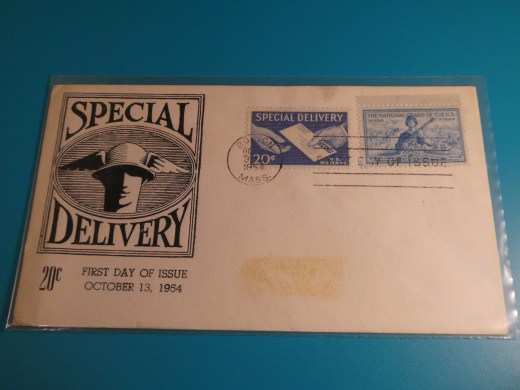
Image: Winged Mercury special delivery stamp issued in 1954.

Is Your Social Media Strategy Delivering?

Half the money I spend on advertising is wasted; the trouble is I don’t know which half.”

Possibly apocryphal quote often credited to 19th century Philadelphia department store magnate John Wanamaker.

Accurately measuring the impact of the marketing activities you create to promote your company’s services and/or products and, furthermore, analyzing the impact of your marketing to verify that the activities were worth the time and money invested in them can be somewhat of a puzzle for a marketing manager. In particular, the return on investment of social media activity can be nebulous, given that much of its focus is often devoted to relationship-building that stimulates one or more aspects of brand-building, for example, brand loyalty and brand reputation. Determining which of your go-to social media platforms is your top performer might be difficult to confirm, there is not always an obvious path to follow as you track and document your customer’s behavior or buyer’s journey from first contact through purchase; and then there are those who jump ship somewhere between those points and the debrief on that scenario is yet another drama to unravel.

Social media remains a hugely popular marketing tactic that for the most part has earned its accolades in both free and paid options. So, it comes as somewhat of a surprise that recent marketing research shows that at a representative group of enterprise companies, the social media marketing spend is softening. According to the Spring 2024 edition of the CMO Survey, which surveyed 292 marketers employed by leading U.S. companies, social media investments declined from 17% in Spring 2023 to 11% in Spring 2024, reaching its lowest level in seven years.

The CMO Survey found further confirmation of this occurrence in participant responses to the question “Which best describes how you show the impact of social media on your business?” and one-third, all of whom are marketing leaders, reported “we haven’t been able to show the impact yet.” The remaining participants were evenly split on whether they’ve “proven the impact quantitatively,” with some stating that they have a “good qualitative sense of the impact, but not a quantitative impact.”

Maybe you’ll soon decide to pull back on social media paid ads, too, and rely more heavily on the “free” option (free except for the time spent to choose and post content that interests followers, that is) since it remains an effective method of customer outreach and enables you to build and sustain relationships with customers, convert prospects into customers and boost brand visibility. Your social media spend may decrease, but that adjustment could motivate you to make the most of a reconfigured, but still valuable, marketing investment.

Multi-channel is most effective

According to an analysis of performance data associated with social media marketing campaigns, the format produces greater results when used in combination with other marketing tactics, e.g. monthly newsletters and/or case studies, e-books, podcasts, or webinars. Furthermore, when researchers examined 10 years of CMO Survey retrospective data, below-average performance of social media marketing campaigns was reported by participants whose answer to “How effectively does your company integrate customer information across purchasing, communication and social media channels?” revealed weak scores describing the use of that data during the period 2011 – 2023. The performance ranking scale measuring customer data sharing ranged from “not at all” to “very highly.”

In light of the findings of the 10-year retrospective, survey researchers recommend that marketers consult with a Customer Relations Management (CRM) company, e.g., Sprout Social, HubSpot, BuzzSumo, or SalesForce, to ensure accurate interpretations and beneficial integration of their social media marketing performance data to enhance the success of future marketing campaigns. Correctly interpreting and utilizing social media marketing performance data ensures that you’ll have a holistic understanding of customer behavior that’ ‘s inclined to positively impact the buyer’s journey your company provides.

Use social media to grow your customer list

The CMO Survey also found that nearly half of companies use social media platforms to sell their services and products. However, survey data reveals that fewer than 20% of those companies leverage their social media engagement to invite customer feedback that might improve aspects of the customer experience or even suggest new product or service opportunities that the company could explore and possibly launch. Companies that exploit this easily accessible customer feedback opportunity are able to develop a customer experience that responds to and retains customers, encourages referrals and increases sales revenues and profitability.

Improvise to stay timely and relevant

Finally, enhancing your ability to provide a timely response to breaking news that matters to your customers and prospects right now is just about guaranteed to enhance both the relevance and visibility of your brand—and using social media makes this possible. Still, marketing managers often neglect opportunities that are easy to address, as evidenced by the self-reported survey participant score of “average” when describing behavior associated with the statement “Responding quickly to opportunities and challenges when managing your most engaged customers.”

CMO Survey findings convincingly show that adopting a flexible, even improvised, approach to your social media engagement is the most effective aspect of your strategy and that your awareness of breaking news and developing events is most urgent and beneficial when providing a timely response is desirable. Communicating with your customers and prospects by acknowledging the unfolding event or unexpected (surprise) development, with a humorous or witty remark demonstrates your authenticity. In short, building in processes designed to make you ready for and prepared to quickly respond to various types of communication opportunities is able to improve the ROI of your company’s social media marketing and engagement.

Thanks for reading,

Kim

Image: © Simon Smith. Bunhill for Getty Images

LeadGen and Customer Acquisition in 2025

LocaliQ, a digital marketing platform that specializes in lead generation and multichannel marketing campaign management, and is a subsidiary of Gannett Publishing, surveyed more than 730 small business owners and marketers worldwide to get boots-on-the-ground perspectives on leadgen and customer acquisition marketing tactics SMB owners are using now and uncensored feedback on what’s producing the best results. The survey is a rich source of benchmarking and actionable insights that have the potential to inform your approach to leadgen and customer acquisition strategies and tactics this year.

In its first Small Business Marketing Trends Report, LocaliQ shares the results of a deep data dive that’s intended to help Freelance consultants and SMB owners successfully navigate the business landscape they can expect to encounter in 2025 by learning how their peers energize sales revenue by identifying leadgen tactics that promote customer acquisition.

The relevance of LocaliQ data is for many of you validated by the survey demographics—15% of respondents are soloprenuers; 31% have 2-10 full-time employees; 24% have a marketing budget that’s less than $500/ year (5% have no marketing budget); and 74% are based in Canada and the U.S. (all six inhabited continents plus New Zealand are represented). The survey was published in October 2024. How does the average Freelancer or SMB owner attract prospects?

Survey respondents do what you’d expect and it’s safe to assume that they use more than one leadgen tactic to implement their marketing /sales strategy. Social media marketing (free) is used by 52% of respondents; 47% of respondents use (paid) social media advertising; and 40% of respondents use search advertising, i.e., pay-per-click sponsored ads that appear in search engine inquiries. Other popular leadgen tactics are email marketing, used by 39% of respondents and content marketing, used by 33% of respondents. Online listings and directories (28%), display ads (24%) and traditional media (23%) are 20th century tactics and that gives them a similarity (IMHO); when combined, 75% of survey respondents use one or more of these older leadgen tactics.

As for the social media platforms used, it’s no surprise that Facebook dominates—76% of respondents use the platform for leadgen, promoting products and services and otherwise engaging with current customers and prospects. Instagram is used by 63% of survey respondents and LinkedIn, tailored as it is to B2B customers, is used by 43% of respondents. The data also showed that 29% of respondents use video marketing, a feature that is available on the above three platforms and also YouTube, which is used by 38% of respondents and recently rescued TikTok, which is used by 34% of respondents. Surprisingly X, a platform intended for Instant Messaging and other text communications, is used by 41% of respondents for social media marketing (X also hosts video sharing).

Now let’s talk turkey—when asked about their satisfaction (or disappointment) with the results of leadgen tactics, social media marketing and online listings/business directory users are satisfied with results—66% of social media marketing users and 61% of online listings/business directory users are pleased with their leadgen marketing results—still, each group also has a dissatisfaction rate of 15%. Furthermore, there is a rather large group of “neither satisfied nor dissatisfied” —meaning lukewarm?—users associated with those leadgen marketing tactics and 24% of online listing/ business directory users and 19% of social media marketing users joined the lukewarm group. Maybe it’s too difficult to measure leadgen results directly from social media marketing activity, whose conversation threads remain visible for years and likewise for presence on a business listing site or directory that a prospect might see many months after publication?

More clarity is derived from search advertising and it topped the list as the leadgen tactic most respondents are happy with, as evidenced by its 76% satisfaction rate (with 12% dissatisfied and 12% neither satisfied nor dissatisfied). A close second in popularity is video marketing, a leadgen tactic that has a growing user rate on every platform; in this survey, 74% of users are pleased with their video marketing outcomes and just 8% are unhappy (and 17% are neither satisfied nor dissatisfied). Short-form videos, like those on TikTok and Instagram Reels, continue to surge and 58% of respondents have either recently tried or would like to try the format.

Search advertising succeeds because it kicks in precisely when the purchasing motive is strongest and prospects are actively looking to buy a product or service that’s similar to yours. Readily available alternative options are waiting for them, as shown in search ads you’ve seen. Survey respondents also indicate satisfaction with results they’re finding with content marketing (75%) and advertising on social media platforms (73%).

The best source of leadgen is (drum roll) customer referrals! Almost 65% of survey respondents reported that customer referrals are the best leadgen sources. The influence of customer referrals is greatest (75%) for SMBs that have 10 or fewer full-time employees and have less influence in larger organizations—just 46% of businesses with 50 or more employees report that customer referrals are the best source of new customer leads.

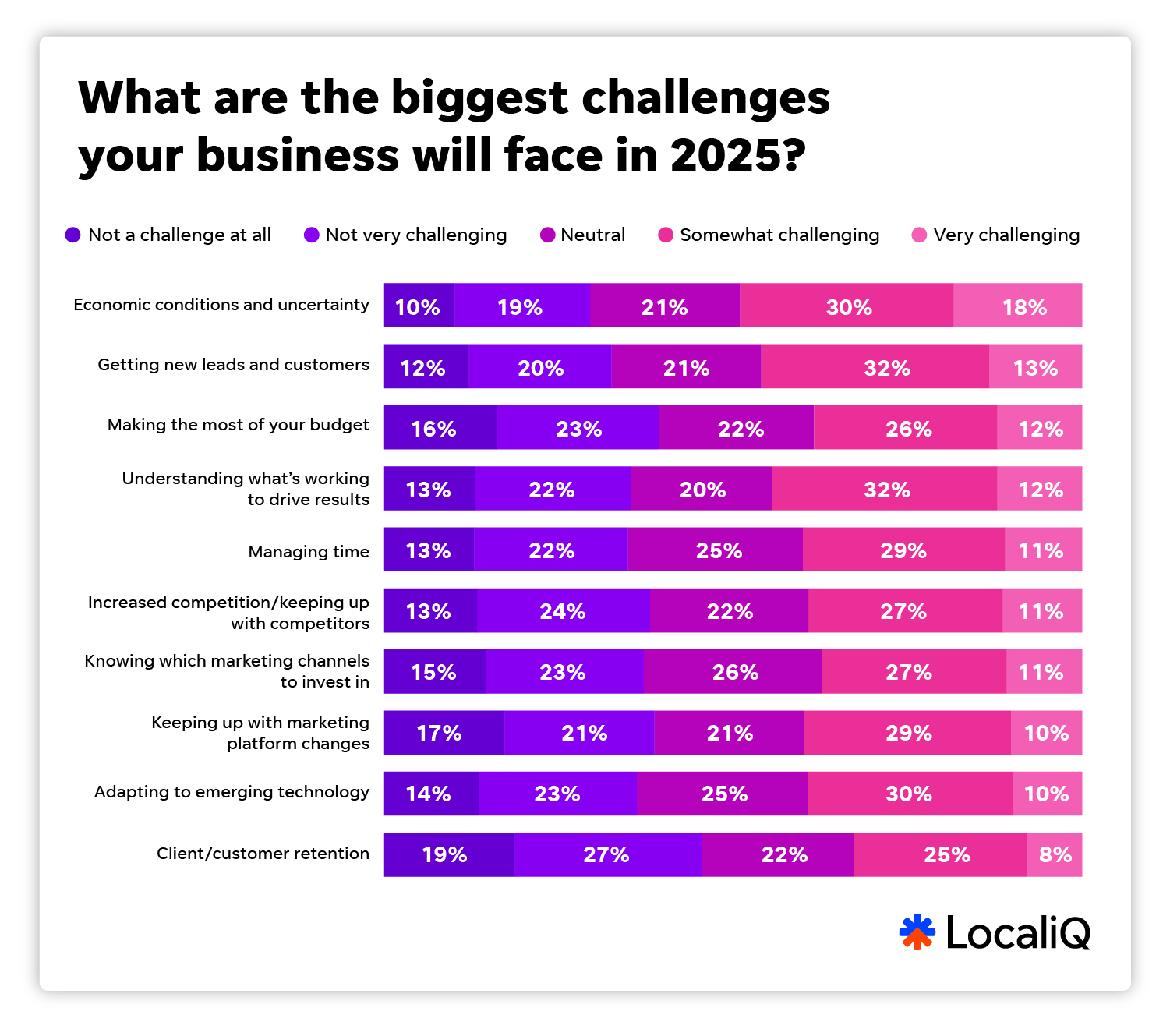
Major challenges anticipated in 2025

Freelance consultants and SMB owners know that in order to survive and thrive, a clear-eyed view of their economic landscape is necessary. Economic uncertainty, leadgen tactics that stimulate new customer acquisition and optimizing an (often modest) marketing budget are by necessity at top-of-mind. The ability to predict which marketing tactics can be relied on to produce the strongest return on investment is viewed as somewhat or very challenging for nearly half of survey respondents—44% are somewhat or very concerned about the capability of their chosen leadgen tactics to drive results. Adapting to new technology is a concern for 40% of respondents, who indicate they are somewhat or very concerned about keeping up. Furthermore, 45% of respondents are somewhat or very concerned about their leadgen tactics bringing in enough new customers and 48% are somewhat or very worried about economic conditions and uncertainty.

So, what are the recommendations for driving Freelancer and SMB success in 2025? There are no definitive answers and the suggestions offered below are not new and not rocket science. Your goal is to make money, but you could meet with headwinds for any number of reasons. Outcomes produced by your business strategies and tactics cannot be predicted but appropriate design, execution and performance monitoring on your part can be expected to yield at least modest success. Marketing and sales have a direct effect on customer acquisition and generating revenue, making these two closely related functions the money-making engine of a business venture and deserving of your intense focus. Just do it.

It’s helpful to monitor the performance metrics of marketing tactics and for that process, Google Analytics generates relevant and insightful data that enables you to evaluate your campaigns—at no charge. Sign up now! Along with leadgen/customer acquisition, make a point to promote customer referrals by asking your current customers if any of their colleagues or customers have the potential to become one of your customers. Also, create customer experience protocols that at every touchpoint anticipate and respond to customer needs end-to-end, from new or returning customer onboarding to after-sale training or other services. Finally, invite customer feedback by directly speaking with those who do business with you when possible. It’s good business to send out an email survey (maybe once a year), or chat with customers by way of social media; it’s important to learn what customers would like to see you do (or not do), so that you can optimize the experience of doing business with your company.

  • Be prepared to manage both the opportunities and challenges you encounter by being aware, being agile, being resourceful and being resilient.
  • Develop comprehensive marketing/sales strategies and implement with tactics you can expect to be effective. Regularly consult your website (and social media) performance metrics and make adjustments where necessary, to maximize performance.
  • Identify one or two local business associations and aim to attend one program per quarter as a way to obtain professional development and/or enhance your business acumen skills as you meet colleagues and engage in face2face networking that builds mutually beneficial relationships.
  • As soon as your budget allows hire an (outsourced) business accountant or bookkeeper to not only maintain the integrity and timeliness of your business financials and tax filings, but also to discuss and guide the potential business growth and expansion of your venture.

Thanks for reading,

Kim

Image: © kali9/ iStock

Content That Captivates

It is said that content is king—agree? I’ll bet you do. But are you aware that not all content is equally able to move viewers to respond to its verbal or visual messages? Most content does its job, which is to increase awareness of the brand within the target audience. But certain marketing content has a heightened impact on viewers; that content is perceived as uniquely relatable, credible, or even inspiring— it captivates. Captivating content has been known to persuade some who experience it to step into the buyer’s journey of the product or service it promotes. Content that captivates can motivate your prospects to actively explore the possibility of doing business with you.

Content strategy

Are you motivated to actively explore how to create content that captivates your customers and prospects? Then devise a content strategy, a plan that functions as a road map to guide the creation, delivery and management of marketing content that promotes your company’s sales and branding goals. A content strategy is the most important element of your content marketing campaigns. Without a strategy, you’re vulnerable to losing your way and becoming overwhelmed by the dizzying array of content possibilities that are available. While almost any form of content may be persuasive and also captivating, but not every format will effectively advance your sales and branding goals.

A content strategy is essential to the process of defining basic who, what, when, where and why questions that refine your understanding of marketing activities and distribution channels that your customers and prospects will gravitate toward. A well thought-out strategy will provide focus and direction to your content marketing activities and how and where you deliver your message. The questions below will help you identify content that will resonate with your target audience.

  • Who will view your content?
  • What solutions do content readers/viewers need, what goals must they achieve?
  • What types of content and which channels can be expected to attract readers/viewers?
  • What brand voice (tone and personality) can be expected to facilitate communication with your audience?
  • What goals do you want to achieve with your content?

Email marketing

Email marketing continues its reign as one of the most effective marketing tools available to transmit marketing messages and build trust in your products, services and brand. Moreover, email marketing campaigns are excellent generators of qualified leads and enable ongoing communication with customers, existing and lapsed, allowing you to nurture relationships and encourage repeat business.

Marketing emails are more likely to be read than other types of content and their average return on investment triumphs over other types of content. According to the Cambridge, MA inbound marketing giant HubSpot, email marketing communications are more likely to be read than all other types of content and have an average open rate of 46-50% and click-through rate of 2.6-3% — metrics that surpass the appeal of social media and all other forms of digital content.

Furthermore, because email marketing lists are opt-in and consist of those who want to hear from you, the email list itself is a valuable marketing tool that you can use to distribute additional communications, such as your blog or newsletter. For that reason, email list-building is an ongoing activity practiced by savvy marketers. Make a plan to grow your email list with these tactics:

  • Create a premium library: Promote your expertise and build your email list with a special offer that’s available only to those who sign up to receive a link—to a webinar or podcast you’ve participated in, a case study or e-book you’ve written, for example—sent in exchange for a name and email address.
  • Online subscriber forms: Your blog, website and social media accounts have a mechanism for visitors to add contact info and receive your published content or follow you.
  • Invite subscribers in-person: Whether you are on a sales call or, as discussed in the previous post, you attend a trade show or other in-person event, as you meet and greet you may find colleagues who would appreciate being added to your email list—subject to an opt-in, because you want their permission. If you teach or speak somewhere, make an attendee sign-up sheet available so that you can collect more contact info to grow your list.
  • Call-to-action: Invite those on your inbound marketing buyer’s journey to receive a free 30-minute consultation with you, to discuss their needs and goals and your company’s solutions. Invite those who would like to attend a workshop you’re scheduled to teach or panel you’ll moderate to RSVP by way of your CTA. When you decide to hold your own MeetUp, also discussed in the previous post, ask those who plan to attend to sign-up. All CTA responses can deliver contact info.

Webinars and podcasts

More than simply marketing content, these formats can be classified as professional development. With an engaging topic and a skilled presenter or host, these formats can generate a substantial audience. When the webinar or podcast topic relates to solutions your company offers, you can create a seamless transition into how viewers/listeners can solve their most pressing problems.

Webinars and podcasts can be even more effective when cross-promoted with other content, such as an e-book. Furthermore, webinar registrations are an excellent method of collecting email addresses and other information from qualified leads who are genuinely interested in not only the topic, but potentially your category of products or services. Webinars continue to be a popular digital content option and when promoted to the right audience, they can become far more engaging and attractive to qualified leads than a blog post covering the same topic would be.

Social media

By adding relevant, authoritative content, including videos, surveys, blogs and user-generated content such as customer reviews and testimonials to this very personalized content resource, you can effectively leverage social media to attract qualified leads.

According to a March 2024 report released by Forbes Magazine Advisor, 78% of prospects and customers research social media platforms first when seeking information about brands, a trend that demonstrates social media’s pivotal role as a leading source of brand-related content. Social media’s interactive nature allows prospective customers to get behind the scenes and learn backstories that provide an informative and intimate experience that can foster a deep connection with a brand.

Social media promotes community-building, a bonding among customer peer groups whose members participate in discussions, post product reviews and happily share their brand experiences. Social media platforms are where brands can interact with customers in real time, to foster a sense of community around their products or services with a goal of building and nurturing relationships.

Marketers join in and participate in groups and conversations, responding to comments and messages they receive and facilitating meaningful communication with their target audience. By enhancing the influence of this highly personalized format by posting content that engages and captivates, you can leverage your brand’s social media presence to deliver qualified leads.

Video

Video has emerged as a leader among content marketing formats. The power of video marketing reflects a growing customer preference for visual and auditory storytelling that gives the format great influence in capturing audience engagement. When marketing video is used in tandem with other digital marketing formats—marketing emails and social media posts, for example—their sales conversion rate is substantively enhanced. Product demos and explainer videos, case studios, testimonials and videos of your previous podcasts and webinars provide opportunities to enhance the inbound marketing power of your company website.

Video marketing has proven to be highly effective and 95% of marketers observed an increase in brand awareness when using the format. As a result, 90% of marketers credit their successful lead generation campaigns to video content and 87% link the format to sales revenue growth. The viewer engagement rate for marketing videos posted to YouTube in 2024 is 5.91%.

In particular, short-form video content is especially adept at gaining audience attention—attention spans are brief and viewers don’t always have the time or patience needed to watch longer videos. It’s been shown that marketers have 2.7 seconds to capture audience attention with your video. While engagement is valued and viewers want to learn about your company, they want to learn fast. BTW, 75% of video views occur on mobile devices, so optimizing for mobile viewing is crucial.

Within its abbreviated time frame, video content can deliver enticing visual options that captivate your audience and keep them coming back for more. You can record yourself in an explainer video or product demo discussing how your solution solves problems and supports the achievement of customer objectives. Or you may want to record customer testimonials or even record a case study, podcast or webinar—content you can upload to your website and social media accounts or invite browsers to request in exchange for contact info that builds your email list. You can also film a live event.

Live videos are in-the-moment exciting and authentic and especially well-suited for generating engagement in the viewing audience, creating relationships and building the brand. You can use the live video tool available on your social media apps to announce a new product or service or show viewers new items from your product line. Because there is little to no editing done, live videos often have a raw and edgy look; however, you’ll need a space that you can keep quiet and private as you record your live video. Furthermore, if live streaming is your intention, you’ll also need the right technology.

Now here’s a surprise—the arrival of silent videos. When you think about it, you’ll realize that many people watch videos in public spaces: waiting in line at the bank or grocery store, taking public transportation, or even while in a company meeting. Earbuds may not be handy or politically correct; it’s been reported that 92% of users watch videos with the sound off. Silent videos solve the problem so you can communicate your message without audio and make the visual component of the video the main focus. Close caption text (subtitles) allows you to make the most of the visuals and incorporate on-screen captions for necessary text info.

If your budget allows, speak with a marketing company to discuss your goals and the type of video that can be expected to deliver your desired ROI. Remember that your video can be posted to multiple platforms, from your website to email marketing communications, your newsletter, blog and social media accounts. If budget is an issue, or if you’re confident of your creativity, by all means grab your smartphone or tablet and experiment with making a video in-house. Taking an online tutorial is sure to be helpful and there are dozens to choose from. Here’s one you might like.

Thanks for reading,

Kim

Image: © The Richard Avedon Foundation. Model Stephanie Seymour wears Chanel in a 1990 photo by Richard Avedon (1923-2004)