Crisis Communications: Monitor and Defend Your Online Presence

Managing the online presence and reputation of a brand, whether personal or company, is no longer considered mere vanity or over-reaching micromanagement. Regular tracking and review of all content that pertains to your organization and shows up in searches—its services and products, the company itself and its leaders—including AI-powered searches, is now recognized as a necessity. Vigilant and consistent monitoring of information that appears online about your company and you, as the principal of your Freelance consulting practice or fractional executive, owner/leader of a traditional business, small or large, or not-for-profit organization executive, can be viewed as an aspect of risk management strategy.

It is imperative for all business owners and leaders to carefully shape and defend their brand’s online image and ensure that all information presented is accurate and leaves viewers of your content with a positive impression, meaning, a portrayal that encourages credibility and trust.

Unflattering or outright negative content associated with your brand, as well as inaccurate info, has the potential to undermine or damage your organization’s credibility. It is therefore highly recommended that Freelancers and other business owners and leaders regularly assess all AI-generated and online mentions of their company and personal brand and verify the accuracy of the information found.

Take control of your online presence

Integral to a comprehensive marketing campaign is building a digital presence that illustrates the competence and credibility of the organization. Online reputation management is essential to defending that carefully curated image, whether you maintain a solopreneur consulting practice, operate a small company, or lead a national or multi–national conglomerate. Failing to take defensive action and waiting until negative content has become an embarrassing crisis may cause an unfortunate outcome that stains your own or your company’s reputation.

Inspection tours are the how you’ll discover inaccurate information and/or negative content. Inspecting the search engines is Step One of your mission to defend and, if necessary, correct online information pertaining to you and your organization. Learning where and how to locate, edit, or suppress content that is untrue or unflattering is the most important step of restorative crisis communications activity. Proactive monitoring and strategic content creation will be central to maintaining control of your online image. The presence of negative content, which may include customer reviews and other user-generated content, can have a direct effect on company reputation and sales revenue: Approximately 94% of customers report that a negative merchant review on a review site persuaded them to avoid doing business with that merchant.

Step Two of your brand defense is the actual defensive action, where you may simply update information to correct what appears sites like Yelp or Google. More thought and time will be necessary if you discover content that is inaccurate and perhaps also misleading; in these cases, you may decide that a substantive reset of your brand narrative is in order. Your best defensive action will be to create and publish relevant, high-quality content that is capable of enhancing your online authority and burying the harmful content by pushing it further down in search rankings.

Google search operators

Re: your search engine inspection tours in most cases, a Google or Bing search of the brand will surface a comprehensive list of brand mentions. However, a more thorough search might locate additional content that you can review and if you discover incorrect information or harmful material on less popular search engines or on online communities, you can explore how to make corrections and/or counteract negative content with a post or two that displays your authority and integrity.

To take a deeper dive and search for potentially harmful content that might otherwise go unnoticed., you’ll be pleased to find that Google’s search capabilities extend far beyond entering a name into the search bar to see what appears. Dipping into advanced search operators will broaden your scope and, if it exists, may help you to locate negative content that does not appear in a traditional search.

To find what may be hiding in the shadows, launch an exact match search by placing your name in quotation marks (e.g., “John Smith” or “The Best Company”) to specify search results to that unique name and eliminate unwanted mentions. To further refine search results, you can exclude irrelevant pages using the minus sign. for example, searching for “The Best Company” -Instagram removes Instagram results and help your mission to dig up potentially damaging content pertaining to your brand that may be posted on less visible sites.

Furthermore, a site-specific search can help when you suspect that a particular domain features negative information about your brand. Typing the site domain address, followed by a colon and your company name will produce only results from that chosen site. It is also useful to search variations of your name, for example, “J. Smith” or “Best Company;” — subtle changes could possibly bring up mentions that do not appear in the traditional searches.

Set-up Google Alerts for ongoing monitoring

It is wise to be vigilant and regularly monitor your name online, to prevent damage before it spreads. Google Alerts is a free tool that notifies you whenever new content is indexed and includes your name. To get started, visit Google Alerts and enter your full name and company name along with relevant variations (e.g. “Jane Smith” or “Jane K. Smith”). Use quotation marks to ensure your alert captures the exact phrase. Then click “show options” to select how frequently you’d like to receive alerts —the “as-it-happens” option is best for reputation management. Set alerts to receive notification of name mentions and be sure to correct inaccuracies and gratuitously negative content. Counteract what is negative with relevant and compelling content that can potentially suppress unflattering narratives.

You can also filter alerts by geographic location and type of content, such as blogs, news articles, or discussions. Finally, enter your email address to start receiving updates. These alerts act as a digital early warning system. You’ll know immediately if a new piece of content starts gaining traction — giving you time to prepare a response or counter-strategy. Staying visible online requires more than awareness — it demands consistency and strategy.

  • Monitoring social mentions and online discussions

Negative content is known to more frequently begin on nontraditional search engines. Social media platforms, forums and blog comments can amplify by way of the metaverse effect and damage to your brand image can spread quickly—even as it never appears in traditional search results.

To really scrutinize your online presence, investing in the services of a social listening site such as EmbedSocial or AgoraPulse will detect online conversations that mention your name and your company name across blogs, Twitter, Facebook, YouTube, media outlets and more. Social listening platforms also provide sentiment analysis, an excellent feature that distinguishes between harmless chatter and attacks on your brand reputation. Most social listening platforms are a paid service but if a free solution will be more appropriate for you at this time, consider Talkwalker Alerts (by HootSuite). Incidentally, Talkwalker provides more extensive web and social listening coverage than Google Alerts and is easy to integrate into your workflow.

Finally, make a point to investigate online communities like Reddit and Quora. These platforms typically feature informal discussions and some have been known to quickly go viral. Get your investigation started with a targeted search— reddit.com:The Best Company to uncover mentions that might not appear on Bing or Google. Knowing what’s being said about you when you’re not in the room lets you know who your friends are and also gives you the opportunity to respond with a brand image defensive strategy.

Thanks for reading,

Kim

Image: © Behnaz Farahi. Gaze to the Stars, an installation created by Behnaz Farahi, Assistant Professor at the MIT Media Lab at the Massachusetts Institute of Technology in Cambridge, MA. Gaze to the Stars was displayed on the MIT Great Dome December 2024-March 2025.

Trend Tracker Is Free Help from Yelp

Launched in 2014 at the platform’s 10th anniversary, Yelp’s Trend Tracker is receiving so much flattering business press of late that it feels like a relaunch (and I’m sure it is)! If you operate a small business and maintain an active Yelp account, whether or not you subscribe to Trend Tracker, Yelp is talking to you. If you’re a Freelance solopreneur who’s claimed your free Yelp listing and then dropped the subject, Yelp is talking to you, too. Or maybe you’re a self-employed professional, a Freelancer or SMB owner, who does not have an active Yelp account? Whatever the case, Yelp and Yelp’s Trend Tracker beckon with insightful and potentially actionable data that pertains to your industry and can support your mission to build a profitable and sustainable business entity.

What is Yelp’s Trend Tracker?

Trend Tracker is an AI-powered, cloud-based tool that monitors customer searches, reviews and interactions to identify trending topics in real time. Trend Tracker reveals and reports customer search patterns, behavior and emerging customer preferences across a broad array of industries. Trend Tracker harvests data from unique searches the Yelp platform receives each month (178 million in January 2025) and measures the frequency of specific phrases and topics used in those searches. This data sheds light on what you want to know, from customer purchasing trends to popular B2B and B2C services. Furthermore, Trend Tracker goes beyond search terms and also analyzes the text of customer reviews, to further clarify the picture.

It can literally pay to know this stuff because from time to time it may be worthwhile to respond to certain information. You may decide, for example, to update the key words in your content marketing material if Trend Tracker data indicates that target customers have begun to use certain terms when searching your product or service category.

Free market research for Freelancers and SMBs

Trend Tracker analytic insights are available free of charge—join the mailing list and you’ll receive data that is relevant and updated monthly and enables those who pay attention to access boots-on-the-ground marketing insights that can potentially help to promote your products and services more effectively. Supported by Trend Tracker, you’ll be positioned to detect and quickly respond to customer preferences, adjust marketing strategies and/or tactics to better align with shifting customer priorities and maybe even tweak your service or product line to reflect a significant shift in customer tastes.

When business decisions are guided by relevant, reliable data, decision-makers are more likely to achieve their intended outcomes. Decisions and actions that are guided by what matters to prospects and customers IRT will be immensely helpful to business owners. One of the biggest advantages of Trend Tracker is its ability to give you the heads-up on developing trends before they go mainstream and giving you time to update your position and be among the first providers to capitalize on emerging customer demand. Trend Tracker enables you to:

  • Identify emerging customer interests before they become mainstream
  • Adjust marketing strategies and tactics to respond to customer interests in a timely fashion
  • Create events and promotions that reflect developing trends
  • Improve your brand’s online visibility and search engine optimization with trending keywords
  • Stay ahead of competitors (who may not have access to reliable data-driven insights)

What else can Trend Tracker do for you?

So what’s trending that applies to you? Trustworthy intel is what’s trending and it applies to your entity in many ways. Trend Tracker data can even be a resource when you must conduct market research to evaluate your business planning, from the feasibility of scaling or expanding your venture to clarifying your decision-making as you verify, or rethink, a side hustle you hope to launch. News flash! Re: business planning, can we acknowledge that Freelancing does not exclusively pertain to B2B services such as marketing, website development, graphic arts and shooting and editing videos? Can we recognize that Freelance expertise can also be applied to a B2C service entity? In other words, could it be that upgrading home interiors is a more satisfying expression of your entrepreneurial talent than cybersecurity? That seems to be the case for the Property Brothers.

You may be interested to know that the Trend Tracker September 2024 issue reported that in 2024, home services produced record growth for business owners in that industry across the U.S. and drove an all-time revenue bonanza for the category. Trend Tracker data indicated that in 2024, home services were the fastest-growing segment of B2C services in every U.S. state plus Washington D.C. and was the top category for new business launches among all industry categories on Yelp as well. This still trending growth cycle is fueled by renter-friendly home upgrade projects. As many citizens come to recognize that attaining home ownership or trading up from starter house to a more spacious (and grand) residence is unaffordable, remaining in the current home for a longer period of time has become yet another New Normal reality.

As a way to make home feel more comfortable or look more stylish, people are investing in improvements that upgrade living spaces without upsetting the landlord. Another home services industry hot spot, this one pertaining to homeowners, is weatherproofing services that make homes more resilient to what seems like increasingly frequent extreme weather events. Trend Tracker data shows that Yelp users have increased searches for both renter-friendly and homeowner services—could responding to the growing demand become your side hustle or even your full-time Freelance or SMB enterprise? Aspiring business owners have set up shop as Freelance solopreneurs and SMBs to address those priorities, which resulted in big increases in Yelp searches in 2024 vs. 2023:

  • home organization (+362%),
  • peel and stick tile (+73%),
  • wallpapering (+41%),
  • snow removal (+36%)
  • home automation (+27%),
  • drapery installation (+11%)
  • waterproofing (+23%)

In sum, Trend Tracker can be a game-changer that might potentially have a direct impact on your ability to gain or maintain competitive advantage and monitor customer priorities—and maybe even launch a successful business or side hustle. Tara Lewis, who spent 15 years at Yelp helping businesses connect with their target customers and also served as its trend expert, advises that the best way to get started with Yelp’s Trend Tracker is to check out the latest trends noted in the monthly newsletter and pick one insight to test in your business this month. Lewis says that even a small adjustment can lead to noticeable improvements in brand visibility and sales revenue generated. She recommends the following:

  • Practice authenticity in trend-chasing. Don’t just follow trends; make them your own to help your business stand out.
  • Connect with valued customers through shared trending interests. Form meaningful connections with your community by creating events and social spaces that appeal to those who matter most.
  • Use Yelp Trend Tracker data to highlight what you already offer. Your business may be in tune with rising trends — adapt your marketing strategy to make these products or services more visible to customers.
  • Position your business for long-term trends, not just momentary fads. Some trends are fleeting; others reflect larger shifts in consumer behavior. Identify trends with staying power and incorporate them into your business vision.
  • Your brand’s unique personality is your trendiest asset. Lean into what makes your business distinctive to set yourself apart and keep customers coming back.

Thanks for reading,

Kim

Image: © Freepik

SEO 2024 and the Core Update

On April 19, 2024, Google went live with its March 2024 core update, a process the company calls “more complex” than what was done previously and brought changes to numerous core systems. Google also rolled out its spam update, completed on March 20.  An approximately 45% reduction in low quality and spam content was the primary outcome of the updates, as confirmed by a Google spokesperson, “The updates led to larger quality improvements than we originally thought – you’ll now see 45% less low quality, unoriginal content in search results, versus the 40% improvement we expected across this work.”

It is popular in America to say that change is good but unfortunately, the core update has left many small business owners grappling with declining search rankings and softening website traffic and uncertain of how to respond. Google says the remedy is to create higher-quality content, with a company spokesperson explaining, “As the web and spam tactics continue to evolve, we’ll continue to work to reduce low quality, unoriginal content in Search. As always, we appreciate and encourage feedback from users and site owners alike.”

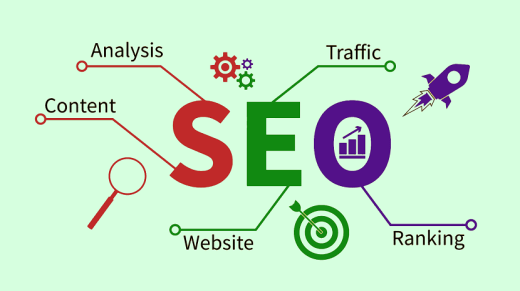
Well, what did you think they’d say? Look at it this way—if you haven’t examined your SEO strategy lately, you now have motivation to take a comprehensive look at how you’ve managed this essential business function so far and decide how you can effectively respond to the search engine update. SEO is about maximizing your company’s online visibility, the gateway to appearing more credible and receiving more website traffic. Below are suggestions of SEO tactics that are mostly DIY and free—and most of all, deliver an effective response to updates made by the search engine that according to StatCounter GlobalStats as of February 2024 controls 91.62 % of the global search queries market.

The purpose of SEO

It’s not an option, but a given and the purpose is straightforward. Effective Search Engine Optimization requires an holistic approach that combines multiple strategies that work in tandem to improve your website’s visibility in search engines, chiefly Bing, Google and Yahoo.

  • Improve online visibility: to power-up your website ranking on search engines and enable more prospective customers to learn about your brand.
  • Drive organic traffic: to attract prospective customers to your website, those genuinely interested in your content, products, or services.
  • Establish authority: through your website and overall online presence—social media, published articles, your published quotes in media outlets—present yourself as a trustworthy and authoritative source of valuable information.

SEO impact is typically organized into segments—on-page SEO, off-page SEO and technical SEO—that describe how the process influences your website to amplify its visibility to search engines. As you contemplate your SEO strategy, which is a component of your inbound marketing success, be certain to develop and implement strategies and action plans designed to address each SEO category.

ON-PAGE STRATEGY

Google and other search engines look for sites that are trustworthy places for visitors and also provide content that’s useful to those in need of information. On-page SEO is the process of tailoring your website to maximize its visibility to search engines by demonstrating the availability of worthwhile content that can be found in a trusted source. Effective on-page SEO positions your website to attract new visitors who are potentially prospective customers. By taking specific actions, such as including certain keywords in your content and by adding internal links and optimizing URLs within your content, you might boost the assigned ranking of your website in the list of search results.

1. Post relevant long-form content

Posting relevant long-form content is a pathway to increased search visibility and Google’s core update has just made the presence of good content still more impactful. The process starts by writing about topics for which there is an audience—discover the topics that people want to learn more about. To enhance the authority of your posts, keep the following in mind:

  • E-E-A-T (Expertise, Experience, Authoritativeness, Trustworthiness): The 2024 core update reinforces Google’s commitment to the E-E-A-T principles introduced in 2018. Websites that feature expertise and experience in the chosen field, authoritative content and trustworthiness will receive higher search ranking
  • Use of credible data, statistics and case studies to support your points and provide evidence for your claims
  • Include your byline in all articles that you’ve authored and also identify your guest posters. Industry experts should be credited with a brief bio, to highlight their credentials, expertise and authority
  • Use headings and subheadings to present content in an organized fashion, to improve readability
  • Include engaging and relevant visual content, including videos, photos, charts and/or graphs
  • Address all aspects of the topic thoroughly to create a comprehensive resource on the subject
  • Regularly update your articles to reflect new research, perspectives and information

2. Keyword research

Keywords are the words or phrases typed or spoken into search engines by visitors looking for information. By using keywords in your content, search engines will include that content or website in a list of sources that include the cited key words, therefore making it possible that you’ll receive a high page rank in results for those search terms. It makes sense to identify as many keywords as possible, including long-tail phrases, so that you’ll maximize your options when creating content that will capture the attention of search engines.

Be aware that simply packing posts with keywords in every sentence is not effective. Search engines seek out content that’s well-written. Place keywords naturally in target areas, including your headers, intro and metadata.

3. Keywords locations

While keyword density is not a viable strategy for improving search ranking, placing keywords strategically throughout your content is important for SEO. The trick is to use keywords organically and in the right places to show search engines that your content is relevant. Drop keywords here:

  • Introduction: to set the context for readers and search engines
  • URL: to help search engines understand the topic
  • Title: to improve your click-through rates and rankings
  • Body: copy to support topical relevance
  • Headers: to structure your content and signal importance to search engines
  • Metadata: description to improve click-through rates

4. Interlink your pages and blogs

Internal linking means creating hyperlinks in your content, so that website and blog readers can click as they read and check out your other posts or website pages. Internal linking supports on-page SEO because the availability of internal links invites readers to other pages within your website, or to other blog posts, and keeps visitors around longer, demonstrating to search engines that your website is valuable and useful. Also, the longer visitors are on your website, the more time search engines have to crawl and index website pages, helping Google et al. to obtain more information about your site and potentially rank it higher in search engine results. If you’ve got the techie gene you may want to take this on as a DIY project. Click to understand how internal linking is done (most may want to contact a professional). https://www.linkedin.com/pulse/best-practices-internal-linking-structure-2024-m-a-mamun-bhk0c

OFF-PAGE SEO STRATEGY

Off-page SEO refers to actions taken to impact your search engine ranking that are outside of your website. In other words, off-page SEO is how you manage external factors, for example, guest posting, social media activity and the presence of online reviews. While off-page activities do not directly involve your website, their effects can potentially increase website traffic and support your inbound marketing in the process.

  1. Social Media Presence

Active engagement: Consistently post relevant content and engage with your audience platforms such as Facebook, X (Twitter), Instagram and LinkedIn. An engaged social media audience that regularly interacts with your brand demonstrates brand authority and trust and therefore gives a vote of confidence to search engines.

2. Content marketing

  • Content: Create and share high-quality, relevant and valuable content that includes backlinks to credible websites
  • Infographics and visuals: Appealing visual content increases viewer engagement and content sharing
  • Document Sharing: Share presentations, webinars, or documents such as white papers, brochures that showcase your products and/or services, or training materials on platforms like SlideShare and Scribd to expand your audience

3. Press releases

When you have a newsworthy announcement to make, e.g., to broadcast a talk you’ll give at a business association or chamber of commerce, or your participation in a popular local charity or community event, write a press release and post it on distribution sites such as EIN Presswire or eReleases . Not only will you take an important step to get your story out to your audience and your local community, online press release distribution is a great way to generate organic backlinks, since many online publications will automatically pick up relevant press releases. Within each press release, be sure to include one to two links to your website.

4. HARO requests

Help a Reporter Out (HARO) is a website that connects journalists and bloggers with expert sources—you!—for articles they’re writing. Journalists submit a query for expert quotes and will choose the top responses to include in their content. Oftentimes, the journalist will provide a backlink to your website as attribution for the quote. To increase the chance of being quoted, respond quickly and provide a complete and soundbite punchy answer.

5. Influencer marketing

Influencer marketing is an effective way to increase brand mentions and social media interactions, both of which are positive off-page ranking signals for search engines. If you can get onto the radar screen of a social media influencer who has a relevant audience for your brand, you can partner with that person to create an influencer marketing campaign that promotes your brand and its value proposition along with providing links to your website or social media profiles where applicable.

6. Backlinks

Building backlinks is important for SEO because it signals to search engines that your content is trustworthy and valuable. The more high-quality backlinks you have, the better your chances of ranking higher in search results.

While backlinks remain crucial for SEO, recent algorithm updates have shifted towards needing fewer but higher-quality backlinks. Earned links, in which editorial publishers or consumers mention your brand organically, are most highly favored. Built links, however, require some effort on your end, such as reaching out to content publishers for link attribution or mention. You can acquire backlinks through these common link-building strategies:

  • Guest posting
  • Link insertions
  • Creating link-worthy content
  • Building relationships with bloggers and website owners
  • Using social media

7. Online Reviews

Online reviews provide a strong signal that’s taken into account when ranking your content online. They can build a lot of credibility and trust since they’re submitted by third parties who’ve interacted with your brand. Focusing on generating positive five-star reviews from legitimate customers can help your off-page SEO tremendously. You can generate these reviews on third-party review sites such as G2 as well as your local Yelp page.

TECHNICAL SEO

Technical SEO refers to how you can best optimize the technical elements of your website—primarily speed, security, user-friendliness and site structure. Technical SEO is about improving your website to make it easier for search engines to find, understand and store your content. Technical SEO focuses on user experience factors, such as making your website faster and fully visible and navigable on mobile devices. Do it right and technical SEO can enhance visibility in search results.

  1. User experience (UX)

The UX provided by your website is a concern to search engines. If your website offers an intuitive browsing experience, quick loading times and is mobile-friendly, you will be positioned to receive higher page rankings. Google now uses mobile-first indexing to determine search rankings. Ensure that every page of your site is mobile optimized, ideally using responsive design, and that all content is the same between the desktop and mobile versions.

2. Site security
Security plays a huge role in how people experience your website. When people feel that your website is secure, they interact more freely (and longer) with it. Google penalizes sites that do not secure their traffic with an SSL certificate and modern browsers mark them with an insecure site warning. SSL certificates are obtained through site your hosting provider. Click here for more information: https://www.linkedin.com/pulse/5-top-ssl-certificate-providers-2024-digital-expert-online-aezde

3. Index site

Indexing means adding a website and its pages to search engine databases so that the site can appear in search results. Indexing is pivotal in how Google and all search engines work. The presence of a “noindex” tag on your website or blog pages will cause search engines to ignore your content and prevent your site from being recognized and ranked—a situation that you want to avoid.

Noindex tags can be removed and this is another DIY project that I relegate to those born with the techie gene; I recommend that everyone else would be wise to consult a professional to do the work. FYI, here are remedies: https://www.linkedin.com/pulse/how-fix-google-indexing-issues-2024-md-belal-hossain-0cszc

Thanks for reading,

Kim

Image: © diki_pt at Freepik

Managing Your Digital Image

Because the internet plays such a dominant role in life, it’s crucial that you take steps to ensure what’s posted about you is both accurate and positive. Information that appears online and is associated with you—your published content and information that identifies you—is collectively known as your digital identity. This information functions as a virtual introduction to you and tells your online story. Your digital identity is the foundation of your digital image and intended to be an asset. Because what appears online is basically immortal, it’s imperative that your digital image, defined by the published content and other information attached to you and your business entity, is presented in a flattering, trust and confidence-building manner.

It is assumed that prospective clients or employers will search your name and business online before making any meaningful contact to discuss your products or services, so it makes sense to periodically monitor and curate your digital identity to ensure that information is current and represents you well. Your primary objective when editing your info is to corroborate your digital narrative and the talking points you commonly share when meeting with prospective clients or employers. The core function of your digital image and the narrative it communicates is to confirm your credibility and build trust.

According to “Assessing Web3’s Building Blocks,” an article recently published by financial services giant J.P. Morgan that explores digital identity, four factors contribute to the digital identity (listed below). It is incumbent upon you to proactively examine the information included in your digital identity so that your online image and narrative will support your professional experience, education, achievements and, by extension, your personal and business brand.

In addition to ensuring that information is accurate, decide how you want prospects to see you. Remove text and images that don’t reflect your goals or brand. If a friend has posted a not-so-flattering image on a social media site and tagged you, ask him/her to kindly delete it.

  1. Identifiers: Your name, email, addresses and social media handles.
  2. Identity Attributes: Information about you, including educational degrees and employment history.
  3. Reputation: Your online persona, contributions, affiliations and followings.
  4. Digital Collectibles & Assets: Anything you own in digital form, commonly non-fungible tokens.

Always professional

Be mindful to consistently adhere to professional standards whenever communicating electronically, ever aware that text and images posted can remain forever, whether intended for public consumption or personal texts and emails. Be vigilant and safeguard your reputation; avoid committing to writing your uncensored thoughts about potentially sensitive political or religious topics. It may, as well, be wise to avoid expressing your positions on current events. You don’t want to worry about being compromised by a leak and ending up being canceled and in need of expensive and rarely completely effective crisis or reputation management services.

Social media listening and digital presence

It’s important to know what appears in an online search of yourself and it’s a smart idea to periodically consult the major search engines—Google, Bing, AOL, Yahoo and also Yelp, Yellow Pages, or other industry-specific ranking sites that would apply to your entity—and search your name and your business entity to examine the results and assess the quality and reach of your digital presence. To avoid or correct misinformation, take control by claiming and updating an existing listing and, if you like, create a listing for your entity if none appears. Furthermore, make it a practice to regularly conduct a social media audit on yourself, so you can remove problematic content before prospects and competitors see it.

You may also be well-served by investing in a social media listening campaign, a marketing strategy that refers to researching whether positive or negative conversations regarding you, your entity, products and/or services currently appear in social media and other online platforms. Social media listening monitors online channels to detect mentions of your brand, competitive brands and related keywords.

The use of (paid) social media listening tools enables you to gain an accurate understanding of how customers and prospects feel about your products, services and company by discovering what they say on social media channels. Through social listening, you can track all mentions of your brand on social media in real-time and get not only valuable insights into how customers feel about your products or services, but also verify what their pain points are and learn what they’d like to see from you in the future. Social media listening is also an excellent source of competitive intel, as it can monitor competitive brands, trending content and sentiment analysis on topics related to your industry to obtain a comprehensive understanding of what customers and prospects think about your competition.

Social media listening has become a major marketing strategy at national and global brands. It was originally thought that marketers at smaller businesses would not benefit from the practice, mostly because the cost wouldn’t justify the ROI. Yet over the past few years, social media listening is now considered essential and an increasing number of mid-size and small business owners and marketers recognize its value. The biggest motivators are likely greater affordability offered by marketing companies and the explosive growth of online customer engagement fueled by the pandemic shutdown. social media listening data can be used to inform everything from marketing and product strategy to customer service and support, helping you make smarter, data-driven decisions that will have a positive impact on your business’s bottom line. To learn more about social media listening services click: https://www.webfx.com/blog/social-media/social-listening-tools/#:~:text=7%20best%20social%20listening%20tools%20in%202024%201,5.%20Mention%206%206.%20BuzzSumo%207%207.%20Keyhole.

Thanks for reading,

Kim

Image: ©The Bettman Archive. Gloria Swanson (center) as Norma Desmond in Sunset Boulevard (1950). Co-written and directed by Billy Wilder, the film received three Academy Awards, including Best Screenplay/Story.

Mine Your Search Engine Data

What are interested parties interested in when they visit your website?  That very critical marketing intelligence is often not quite obvious when we plan and contract to build our website. We know to include a description of the products and/or services we sell.  Those who sell products on their site know to include an e-commerce function.  Those who schedule on-line appointments know to include a booking function and perhaps also a pay online feature.

But what information,  surveys,  videos,  white papers or whatever grab attention and keep visitors on a certain website page and convey details that prospective customers need to make a decision about doing business with you,  helping to convert prospects into customers?  Well,  you have to build the thing before you figure out the nuances of what information and features best serve your prospects and business,  but once you’ve done that Google Analytics can help in a big way and as of September 29,  even more than before.  Let’s take a look at Site Search Analysis (SSA) and two new Google offerings,  Real-Time Analytics and Analytics Premium.

SSA functions as  Search Engine Optimization  (SEO)  for your website,  extracting  and reporting valuable data about  site visitors that will provide clues on how to effectively fine-tune the sales tool that is your website.  This is not inbound lead generation  (nor is it actual SEO).  SSA analyzes data generated by your website’s own search engine.  Analytics Premium and Real-Time Analytics will make the information more timely and comprehensive.

The big advantage of Real-Time Analytics is that it will produce a set of reports that show what’s happening on your website as it happens.  You will receive instant insight into the visit count and much other valuable information about what resonates with visitors directly from the search engine of your website.  Real-Time will also measure the activity of social media linked to your website and it will allow you to monitor the impact of new content and marketing campaigns.  Once you’re registered with Google Analytics,  you must enable the Real-Time feature by clicking “new version.”

The more traffic your website receives and the more search queries occur,  the more extensive and revealing the story.  The data from this internal search process will identify what prospective customers want from your website and your business.  What are they curious about?  What information do they seek?  SSA internal search data lets you know the ways your website does and does not deliver information and answer visitor’s questions.

You will be able to evaluate website content—do you provide enough of the right information,  do you tell the right story in the way that prospective customers can understand?  Or you may have the right content,  but analyzing search data can tell you if visitors to your site somehow become frustrated and wind up exiting the site,  perhaps because the desired information is hard to find because it’s buried somewhere that prospects don’t expect to find it,  meaning you need to re-arrange and re-configure pages.  Maybe your information needs to be presented in a more eye-catching fashion or the text and terms used should be clarified,  expressed in language that your clients use and will better understand?

Analytics Premium is a paid service that reportedly will produce more specific website traffic data than the free service.  Premium will offer more customizable variables and downloadable reports.   There will also be guaranteed service level agreements for data collection,  processing and reporting,  plus  24/7  customer service reps available to assist with installing the program.

In closing,  I offer you a caveat:  SSA provides much intriguing data about how prospective customers respond to your website,  but you have to interpret the meaning of it all and decide what smart thing to do with the information.

Thanks for reading,

Kim