
2026 Tech Trends Whisper in Your Ear

Freelance professional are not only happily engrossed in performing paid client work; you must simultaneously perform labor that is unpaid—not yet— searching for more work. Ambitious Freelancers are networking to maintain visibility and participating in activities that showcase your professional chops, such as appearing on webinars and podcasts and publishing a blog or newsletter. Your core business development strategy is to convince prospects of your ability to consistently produce the deliverables they need when planning to hire a Freelance worker in your professional category. But in addition to carrying out your revenue producing strategies, the often unspoken role of a Freelance professional is that of small business owner.

As you work both hard and smart to develop and maintain a thriving client roster that generates your preferred number of billable hours and bottom-line revenue, you can never lose sight of the responsibility for managing and optimizing all aspects of business operations. Therefore, it comes as no surprise that staying abreast of major developments in the constantly evolving B2B technology sector is a significant portion of your business management obligations. Dozens of technology tools have been brought to market over the past three or four years and it is certain that one or more potential is capable of creating operational efficiencies in the back-office operations that support your accounting, contract management, lead generation, email marketing, or client onboarding, for example. Time and/or money could be saved, clients will become more satisfied with the after-sales support and other customer service functions you will seamlessly deliver. Even if you are by nature a late adopter, let 2026 be the year that you introduce at least one innovate and undeniably practical technology tools to make a positive impact on your business operations.

Responsible decision-making can only take place when trustworthy information is available; you can keep up with emerging technologies by simply paying attention. Speed read articles and watch videos to learn about new tech products so that you can assess their potential relevance for your organization. You may already be familiar with the sites TechCrunch and Wired and may also find them informative.

While researching, keep this question in mind—does it appear that incorporating this technology will enable you to expand your business success by capitalizing on the outcomes and results it is expected to produce? You already know that most newly released tech products are outside the scope of your needs and budget but as a new year approaches, consider that late adopters often find that they’re leaving money on the table by ignoring technology advancements. Your perspective must always be big-picture and long-term.

Finally, to fully access the intended usefulness of your new technology tool, it must be integrated into your workflow. If you have an employee, develop a strategy to encourage buy-in of the tech tool’s purpose and benefits, so that this new resource will become part of your company culture—how things are done now. Be strategic as you evaluate tech-enabled upgrades you might like to introduce. Below are areas where recently released technology tools could enhance your business operations.

Use emerging tech for leadgen and marketing

The days of cold calling have all but faded away. The gold standard of B2B lead generation in 2026 and beyond is powered by AI-driven tools that enable targeted personalization and feature text, audio and video marketing content, product demos, case studies or testimonials and even live streaming that allows prospects to interact with your company in real time. AI has transformed B2B leadgen to enable marketing campaign activities to deeply engage prospects, a capability that results in higher sales conversion rates.

AI-powered leadgen tools enhance your marketing funnel by analyzing prospect behavior and interaction data to identify to identify and nurture top-quality leads—while complying with current privacy regulations and best practices. By addressing prospects’ specific needs and challenges, you will be able to design marketing campaigns that truly resonate and deliver. As marketplace competition intensifies and customer demands become more exacting, Freelancers in the B2B sector may discover promising benefits in tech innovations.

Account-based marketing has revolutionized the way B2B leadgen by identifying a more narrow swath of high-value prospective client leads rather than reaching out to a less dicrete audience. ABM delivers customized information to key decision-makers, which often leads to better sales conversion rates and smarter use of your resources. ABM uses a precise, data-driven strategy and takes a deep dive into target lead profiles, cross-department priorities and key insights. ABM tactics include:

  • Personalized Outreach: Creating tailored marketing campaigns for individual accounts based on the industry, whose messages will acknowledge client pain points, business goals and other priorities.
  • Custom Content: Developing case studies and presentations that address the challenges of target accounts. Providing relevant educational content, which is one of the most effective ways to attract and nurture B2B leads. Instead of pushing a sales message, content marketing educates by providing useful insights, industry best practices and potential solutions that facilitate informed decisions that yield good results. By addressing typical pain points and offering effective solutions, Freelancers can build trust and position themselves as a partner and go-to resource.
  • AI-powered opportunity identification: Growth leaders in B2B sales are using AI to find new niche, potentially lucrative markets.
  • Value-based AI-enabled pricing: B2B companies are using tech innovations to more comprehensively define value, as they gravitate toward dynamic models that can automate pricing models that are personalized to attract discrete customer segments.
  • Customer Relations Management: Automation software tools will help you analyze customer data, industry trends and competitor behavior to identify accounts that have the most sales potential for you.
  • Search Engine Optimization: SEO is a foundational lead generation strategy that helps B2B companies attract high-quality leads by improving their visibility in search results. When potential customers search for industry solutions, thought leadership content, or service providers, for example, a robust SEO strategy can ensure that your business appears at the right time. By consistently optimizing for search engines and user experience, your Freelance entity can attract a steady flow of organic leads who are actively seeking solutions, thus making SEO one of the most cost-effective B2B leadgen strategies. By optimizing website content, technical website structure and backlink profiles, your business can drive organic traffic and generate leads that convert to paying customers. SEO tactics for B2B lead generation include Keyword Optimization, that is, targeting high-intent search terms that align with buyer needs and search behavior and On-Page and Technical SEO, that is, improving page speed, site structure and mobile usability to enhance search performance.

Use emerging tech to improve the customer experience

Customer experience can be defined as the impression that customers and prospects have of your brand—the company, its products and services and, by extension, you—as they move through your company’s buyer’s journey. Each touchpoint on the journey is an opportunity to create a confidence-building impression that contributes to a satisfying and memorable customer experience. The presentation of an excellent customer experience has for some customers become non-negotiable and in fact, a customer experience that’s perceived as exceptional for some customers outweighs the importance of pricing. B2B customers are responding more like B2C shoppers and adopting many more consumer-like behaviors, e.g., seeking more robust buying experiences.

Include operating with a thoughtful strategy, delivering effective value propositions, optimizing for a wide variety of channels, and sustaining growth. But to stay on the front foot, B2B sales organizations can leverage technology to find the right markets while discovering, retaining, and delighting customers across all channels. Today’s leaders understand the value of embracing innovation and using cutting-edge technology to execute strategies. McKinsey’s latest B2B Pulse Survey reveals a widespread willingness to adopt advanced digital solutions,  yet only 20 % of respondents say they have consistently implemented technologies that fuel outsize growth. 

An exceptionally positive customer experience is a powerful differentiator that can drive revenue and brand loyalty. According to a 2025 Zendesk CX Trends Report, 60% of customers have purchased a service or product from one brand rather than another based on the customer experience they expect to encounter. A 2017 World Economic Forum report predicts that your customers will obtain “more choices and control than ever before” over the next decade thanks to technological advances.

To distinguish your company from competitors in the crowd, Freelancers would be wise to explore and evaluate tech innovations as a way to optimize your operations and appeal to the evolving demands of your clients and prospects. An exceptional customer experience will prioritize:

  • Personalization–Tailor services and communications to respond to individual customer preferences and purchase history
  • Efficiency–streamlined, fast and accurate delivery of service
  • Consistency–Provide a predictable and comforting level of product performance and service
  • Empathy–Show customers that you feel genuine concern for their needs and perspective by actively listening and recommending solutions that your services or products can provide
  • Communication–Provide customers with accurate and timely information
  • Feedback–Provide methods for customers to comment or request assistance and demonstrate that you value their input

Use the new technology to make available a customer experience platform for your company so that you can account for all client and prospect interactions with your company, from the first viewings of your website to advancing through your buyer’s journey to become a qualified lead, to making a purchase and becoming a full-fledged customer and culminating with post-sale support activities. Click here to view options.

Thanks for reading,

Kim

Image: © Gamutstockimagespvtltd
Email Marketing is Evergreen

Still known for the impressive return on investment (ROI) it delivers to users, evidenced by its ability to deliver personalized content that’s tailored to customer preferences as well as the ability to drive conversions, including customer purchases, more effectively than just about any other marketing channel, including social media. The evergreen marketing tool that is email marketing is the gift that keeps on giving. The strategy is a multi-purpose marketing tool that business owners and marketing managers are known to rely on when the goal is to develop and nurture customer relationships and initiate engagement that promotes brand loyalty, repeat business and customer referrals.

Email marketing is expressed in more formats than may immediately come to mind—it can be more than the basic email letter that clutters an inbox and is often deleted. Email marketing also refers to blogs and newsletters that recipients opt-in to receive, plus a range of other communications intended to deliver all manner of business information, such as service or product updates or special offers and personalized greetings, from holidays to customer birthdays. Not only that, marketing emails are also a convenient and effective way to invite customer feedback that gives business owners and marketers insights into what they’d like to see more of, or less of, in your products, services and operational practices. So—how does your company use emailing to carry out your marketing strategies?

Email is a familiar and well-accepted method of communication—in fact, your customers compose and send emails themselves. To maximize the effect of email marketing campaigns, marketers are recommended to create emails that amplify the message and persuade recipients to open, read and in some instances, save your emails—but never delete without reading. Because most people receive many emails every day, the first order of business is to make your emails stand out in a crowded inbox.

To grab customer attention and entice recipients to open and read your email, attach a subject line that recipients will find irresistible. You can also decide to shock or amuse recipients by crafting a provocative or unexpected subject line that promises to deliver surprising information. Subject lines that contain a relevant statistic, whether predictable or shocking, also make particularly alluring email subject lines.

Ideally, the email subject line functions as a “hook” that causes the recipient to linger for a few brief seconds and wonder—Is reading this email worth my time? Smart marketers have discovered that they can further enhance the perceived value of their emails by including a follow-up line of preview text that can further arouse curiosity or confirm that the topic is a priority for the recipient. Below are four components that build an outline for your emails and organizes the presentation of your content in a way that helps recipients quickly understand the purpose and relevance of your information:

  1.  The subject line is crafted to grab recipient attention. The right subject line substantially improves the success of email open rates. Research shows that recipients open emails featuring a subject line perceived as relevant. Almost half of all email opens rely on that first impression.
  2. Hold your recipient’s attention with a preview text teaser that contains approximately 10 words. Subject lines matter when you want your email recipients to notice, value and read your message. The The second line preview text will appear immediately beneath the main subject line in the email inbox. Do not ignore the importance of the preview text; it is an extra hook, especially for users checking email on mobile devices (and about 50% will do exactly that).
  3. The message content should maintain the recipient’s enthusiasm. Compose your information to communicate relevance and trust as it guides the recipient through your content’s message. Be sure to compose message content to convey your marketing strategy by aligning the themes presented in your blogs, newsletters, informational and relationship building emails.
  4. CTAs are crafted to persuade email recipients to take action on an offer by responding to your call to action. The CTA literally shows readers of your content what they should do next. In return, the reader will receive a benefit, which might be a free 30-minute consultation with you or one of your team members to clarify how your products or services can provide solutions they need, or maybe an opt-in to subscribe to your blog or newsletter, or maybe to receive a free e-book. Whatever the purpose of your CTA, make the benefit that recipients will receive one that is likely to be considered worthwhile. BTW, you will grow your mailing list when there is a response to your CTA because responding entails providing contact info, at minimum, recipient name and email.

Now—in addition to the marketing emails that you currently send, what other kinds of emails might you send to communicate marketing messages that can make your marketing campaigns more effective? Below are email strategies that might enhance your marketing goals.

A/B testing

How can you learn which subject line works best with your customers? Or do certain subsets of your target audience respond differently depending on how your subject line or other aspects of your message are phrased? You can find out who’s who by sending out two variations of an email to different segments of your audience to see which performs better. By testing elements such as subject lines, email layouts and call-to-action buttons, you can continually refine your approach to improve response and results.
Test two different subject lines to see which one yields a higher open rate and/or compare the response generated by two different email layouts in terms of click-through rates.

Automated campaigns

Marketing automation ensures that your marketing emails are actually sent at your preferred time. For certain messages, notably blogs and emails, you want recipients to look forward to hearing you at a certain time (like Tuesdays at 11:00 AM Eastern!). Further, a marketing automation system will ensure, for example, that welcome emails are sent in a timely fashion to new or returning customers. You also want to guarantee that emails sent as part of customer onboarding, special occasion or holiday greetings are likewise sent within your preferred timeframe—and you don’t necessarily want to rely on your memory to manually perform these functions yourself. Instead, setting up automated marketing campaigns to ensure that you maintain a consistent communication with subscribers, nurture leadgen and customer relationships without manual effort as you reinforce the dependability and professionalism of your brand.

Drip campaigns

Drip campaigns involve sending a series of emails automatically, based on pre-determined timelines of your choosing or they are triggered by certain user actions. Have you ever searched a certain business or category and then received an email a few minutes later from the very business you searched, or from a local business within that search category? If so, you’ve experienced a drip marketing campaign. Drip marketing campaigns are excellent for encouraging leads because they respond to your immediate need or inquiry with the siren song of instant gratification.

Interactive emails

Incorporating interactive elements such as polls, surveys, or clickable content can increase user engagement. Interactive emails are more likely to captivate subscribers, encouraging them to interact with your content and brand—for a minute or two. for example, you might a three or four question survey to learn of or confirm what your customers find most appealing about your organization, or learn what they’d like to see more, or less, of to gauge customer satisfaction and preferences.

Integrating with social media

Enhance your email marketing by integrating it with your social media strategy. Encourage your email subscribers to follow you on one or more of your social media platforms, and vice versa, to create a cohesive brand experience. This strategy can expand your reach and strengthen your online presence.
Foe example, you might include in social media posts a line or two of an upcoming blog or newsletter post, as a teaser.

Re-engagement campaigns

Aimed at lapsed subscribers, that is, previously active subsrcibers who are now inactive, these campaigns are designed to recapture their interest and where possible, to also learn the cause of the disengagement. This could involve sending special offers, updates about new services and/ or products, or simply asking for feedback on why they are no longer active customers. Their responses can offer valuable insights for future improvements. Devising a concise survey email that asks open-ended questions that give lapsed customers or subscribers the opportunity to give feedback that expresses what for them what was lacking or unsatisfactory, whether content to which they subscribed, as in a newsletter or blog, or an aspect of doing business with your organization.

User-Generated Content: reviews and testimonials

Showcasing content created by your customers, for example, reviews or testimonials, can significantly enhance the credibility of your brand. When you include UGC in certain of your promotional marketing emails, that can not only engage readers, but also provide social proof that encourages them to try your products or services and as well, enhance your brand’s authenticity.

Thanks for reading,

Kim

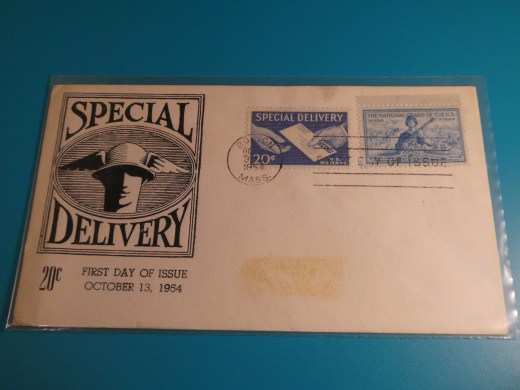
Image: Winged Mercury special delivery stamp issued in 1954.

Getting Things Done: 10 Tasks to Outsource in 2025

Outsourcing is the practice of delegating certain business functions to an external agency with the goal of enabling the business to focus on primary tasks and responsibilities. Outsourcing enables Freelance consultants and other business owners to devote time and talent to the organization’s core functions by selectively delegating certain tasks to a highly skilled external expert.

The importance of outsourcing in today’s business world cannot be overstated. It is a valuable resource that, when implemented wisely, has the potential to offer significant benefits to businesses of every size, in particular cost savings that would be associated with hiring one or more employees to do work that is instead outsourced and obtaining access to specialized skills that are not available within the organization. Outsourcing promotes effective time and resource management.

Devoting time to functions that are core to your business and gaining useful professional expertise that can upgrade how your business functions are the most persuasive motivations for introducing outsourcing to your entity. Accessing specialized professional skills that would otherwise be unavailable to your organization can be a game-changer that has the potential to enhance productivity, efficiency and even the current or future profitability of your venture. Increased operational efficiency, positioning the business to grow, expand, or scale and promoting risk management practices are additional benefits that can be derived from strategic outsourcing. As businesses strive to become agile and remain competitive in a rapidly evolving market, outsourcing has become an integral part of business strategy.

In addition to choosing the right business functions to outsource, it’s also important to know what you want outsourcing to enable you to achieve. Keep goals in mind—do you want to improve productivity and operational efficiencies, save money, protect your IT network security, or increase profit margins? Set goals and record their starting metrics; continue to follow and measure the impact that outsourcing has on your entity.

Oh, and let’s not confuse outsourcing with off-shoring. Outsourcing is a way to get work off your desk and an opportunity to access special skills that you don’t have in-house and enables you to concentrate on business functions that are best performed by you. The purpose of off-shoring is to find cheap labor, typically located in a developing economy, and paying laborers there to work at an hourly rate that is considerably lower than what is paid in a developed nation. Off-shoring is about minimizing costs by transferring certain business functions to locations outside of the U.S., taking advantage of international currency values and slashing business expenses (payroll, for example) as a way to increase profitability.

Below are 10 tasks you may want to consider outsourcing in 2025, perhaps by hiring a fellow Freelancer.

  1. Accounting and Finance Delegating your entity’s accounting, bookkeeping, or other financial functions to a trustworthy external provider can include tasks such as cash-flow management, tax preparation, payroll management, financial reporting and auditing. Staying compliant with tax laws and regulatory requirements is crucial for every business and an experienced outsourced accountant will have deep knowledge of current laws and ensure that you’ll avoid fines, penalties and legal problems. Additionally, accounting firms typically have in-house expertise in risk management and are able to identify potential financial lapses before they escalate. Freelancers and small business owners can further benefit from the guidance of an outsourced financial expert who has detailed knowledge of the company’s financial position should they inquire about the feasibility of scaling, growth or expansion, or where money can be saved. When interviewing prospective accounting/finance outsourcing experts, consider asking these questions:
  • What’s the biggest financial challenge for a company like this in today’s business landscape?
  • What specific accounting/finance services do you provide?
  • Can I expect monthly, quarterly and annual reporting? Will recommendations be made where necessary, based on the numbers?
  • Will you help me set realistic goals for business growth?

2. Customer Service tasks can range from answering customer queries and handling complaints to providing technical support and managing social media interactions. Your outsourced customer service specialist can provide these services through various channels such as phone calls, emails, live chat and social media platforms and allow your business to provide support 24/7 and otherwise enhance customer satisfaction and the customer service experience that impacts your brand. Your external providers will likely have a team of trained professionals who can handle a wide range of issues and ensure high-quality service. You can help the experience by using automation tools to integrate FAQs and chatbots, complementing human support. When investigating customer service outsourcing, the questions below should be helpful:

  • Does the outsourced customer service candidate possess superior communication skills and highly evolved Emotional Intelligence and excels at clear and empathetic communication?
  • How familiar is the candidate familiar with your preferred support platforms, like Zendesk or Intercom? Multichannel experience is crucial.
  • Define clear and reasonable guidelines for response times to customer questions and tone of voice, in order to maintain consistency and meet customer expectations.

3. Human Resources Under the HR umbrella are numerous subspecialties, such as talent acquisition, payroll processing, benefits administration, training and development, compensation strategy, onboarding and background checks. Delegating HR tasks to a specialized HR outsourced service provider is proactive risk management that will ensure your company’s compliance with labor laws, for example.

HR experts are responding to the evolving business environment that calls upon those in the field to meet the special circumstances of Freelance workers and fast-paced agile business practices. There is now Freelancer Management System (FMS) software that allows HR companies to efficiently manage hundreds or even thousands of Freelance worker, who could be located anywhere in the world, and seamlessly implement their onboard, store documents, manage projects, send invoices and make payments.

As noted above, there are many HR subspecialties and no one is equally adept in all aspects. When addressing this suite of critical business functions, it’s imperative that you work with an outsourcing HR partner that best suits your needs. Insightful questions to ask when considering an outsourced HR talent for your entity will likely include:

  • What services are you most qualified and comfortable supporting? N.B,. it’s important to consider both current and future needs, such as the possibility of scaling or otherwise expanding your entity, which could necessitate talent recruitment.
  • How long will it take to implement the services you need? Also ask about the software or cloud computing required to support those services.
  • Which metrics and reports will be provided? Your HR expert should discuss the reports you’ll receive and how often you’ll receive them.

4. Information Technology Needless to say, your business entity cannot function without the right technologies and they must function reliably and seamlessly. Freelancers and SMBs frequently seek out outsourced IT expertise for essential services such as network management, cloud computing, cybersecurity and website maintenance that ensure your IT infrastructure operations are seamless and secure. Your preferred outsourced IT expert will have invested in state-of-the-art infrastructure and technology that enables business clients (you) to access cutting-edge technology that can maximize productivity and even give your company an advantage over competitors. The following questions will give you useful info:

  • Do you operate 24/7?
  • What services do you provide?
  • What is your approach to security issues?
  • Do you (and possibly also colleagues) work from home, in an office, or as a hybrid?
  • How do you manage power outages?

5. Market Research Is there something you need to learn about your customers or your industry as a whole? Whether you’re thinking about launching a new product or considering expanding into a new market, proper research is integral to the process. In the world of business, knowledge is power—competitive intel, analyzing market trends, identifying target audiences and discovering niche markets directly impact the profitability of your venture.

A diligent market research maven who knows where to look for the relevant data and how to analyze the information can be a game-changing resource for supporting informed decision-making. Those insights can shape product development, marketing strategies and even overall business direction.

In most businesses, data and market research are integral to business success, but data deep dives are known to be rather too time consuming for single person entities maintained by Freelance professionals or skeleton crew sized SMBs. Actually, in nearly every organization, workers should direct their focus to implementing data rather than finding it. Interviews with market research outsourcing candidates can include the following questions:

  • Describe a market research project where you identified a significant trend or insight that impacted business strategy?
  • How have you used quantitative and qualitative research methods?
  • How do you stay updated on the latest market research techniques and technologies?
  • What steps do you take to avoid bias and ensure that the data you collect accurately reflects the market you’re studying?

6. Design and creative Very few people have artistic talent, making outsourced design and creative work a common request. Many professionals accept the limits of their creative ability and delegate design to the artists, who can produce a professional, brand-building appearance for a website, social media pages, logo or business card, December holiday and thank you cards and even branded swag items to send to your most loyal customers when special occasions arise. You might explore the following topics and questions when discussing outsourcing a design project:

  • Review candidate portfolios to ensure their style matches your brand’s aesthetic.
  • What experience do you have with video editing and animation?
  • What is your experience using Artificial Intelligence and how does it fit into your creative process?
  • Discuss and agree on the number of design revisions are included in the project fee.

7. Search Engine Optimization SEO is essential for driving traffic to your website. Freelancers specializing in SEO can audit your site, optimize content and improve your search rankings for competitive keywords. To ensure that your website does what you want it to do, that is, function as your inbound marketing engine and hub for many marketing functions, you should regularly update site content with fresh, optimized info to maintain visibility. You will do well to explore the following topics and questions when seeking to outsource SEO:

  • Ask to see case studies or client testimonials that verify tangible results.
  • Discuss and agree upon the SEO strategy, that is, a clear plan that will prioritize keyword research and backlink-building tactics.
  • Ensure that regular progress reports will be received and that performance results will be incorporated into data-driven strategy and/or tactical adjustments.
  • At what point can you expect to see the SEO needle move in a positive direction?

8. Data Analysis Data-driven insights may need translation and interpretation, so that you can be confident about the story your numbers tell. A data analyst can help you make sense of your business metrics and therefore enable better decision-making. Your business data guru can identify trends, predict customer behavior and provide actionable insights that will guide marketing campaigns and strategies, or even new products or services you might launch. To find the right analyst, ask the following questions:

  • Choose an analyst who’s familiar with your sector to ensure that you’ll receive relevant, timely, actionable insights. How familiar is the candidate with your industry?
  • Review case studies to see examples of past projects so that you can assess candidate ability to make actionable recommendations that drive results.
  • Ensure the candidate is proficient in the use of analytical tools, such as Google Analytics, Microsoft Excel and Power BI, SAS and also the role of AI in data analysis.

9. LeadGen One of your smartest and potentially most successful outsourcing moves can be to stimulate the all-important leadgen process by using marketing automation that’s supported by the Artificial Intelligence capability known as AI-powered Intelligent Virtual Assistance. Time is money and Freelancers who want to drive results would be wise to investigate IVA outsourcing options to streamline their marketing/sales funnel operations. Smart forms, your AI “Agent,” will engage potential clients through interactive conversations, social media, or even direct telephone calls, to efficiently capture leads and qualify them in order to enhance customer acquisition. You’ll also receive regular updates of relevant metrics, most notably your campaigns’ cost per lead and the number of leads that originate from specific professional audience segments. Then, all you’ll have to do is nurture those leads and persuade them to convert. Reach out to your leads across multiple channels, conduct targeted email campaigns, or even host webinars—whatever you need to convert to customers. When meeting with a leadgen outsourcing expert, explore the following questions:

  • How do you create leadgen campaigns that you can expect will produce the desired results?
  • By what standards do you identify robust leads?
  • How do you measure and adjust leadgen campaign results?
  • Please give an example of a challenging leadgen situation you encountered and how you overcame it?
  •  How you have handled objections and rejections in leadgen?

10. Public Relations Freelance consultants often don’t have time to pitch themselves to editors of business publications, speakers bureaus, podcasts and webinar hosts, or business organization liaisons who can schedule them to speak of make an appearance on a webinar or podcast. But everyone knows that PR is an important component of brand-building and positioning oneself as an expert in the field. Authoring a blog or newsletter and social media activity also matter, but face2face interaction has a special impact. To make sure that you don’t allow this important marketing function get lost in the shuffle, consider outsourcing.

While most PR specialists want to design a strategy and use it to shape their client work, it’s usually possible to have your own goals and hire the PR expert to make them happen. Still, understand that an external PR agency can bring a fresh perspective to your business. Your outsourced PR expert can offer unbiased insights and innovative ideas that may not be apparent to you. This outside viewpoint can be invaluable for identifying new opportunities, addressing potential challenges and crafting messages that distinguish you in a crowded marketplace. Another set of eyes can see your brand from a different angle and recognize creative and impactful PR strategies that you did not anticipate.

Furthermore, PR agencies have established relationships with journalists, media outlets, influeners and others in the promotional communications sector. These connections are routinely leveraged to obtain media coverage for clients and amplify your brand’s message. By outsourcing your PR activities, you gain access to this extensive network, which is a resource you would be unlikely to build and maintain on your own. A well-connected PR agency can open doors to new opportunities and ensure that your brand is heard by the right people. The following questions will be insightful when meeting with potential candidates for outsourced PR:

  • How do you develop PR strategies for clients?
  • How do you obtain media placements and coverage for clients?
  • Can you share examples of how you’ve improved a client’s brand visibility or reputation?
  • Do you have case studies that showcase your work and results in our field?

Thanks for reading,

Kim

Image: ©ARTpok/ Shutterstock

Marketing Automation—Give It A Try

Can you afford to invest $50 or so each month in marketing for your business? Can you afford not to? Marketing is a hugely important business function—how else can your future customers know what you do and know where to find you? You may struggle to keep up with your marketing aspirations—it’s a common problem. Small businesses owners and Freelancers are often too busy to fully implement the marketing campaigns that they devise. Today, let’s talk about how marketing automation can create a great leap forward for your LeadGen strategy and deliver a nice increase to your sales revenue.

The most successful marketers know that automating routine marketing functions will enhance your ability to provide the most effective marketing campaign outreach and as well the best possible buyer’s journey experience for prospective customers. When marketing automation software is in place, all prospect requests for information about your products or services will receive timely follow-up. You, your team and your company will look good as a result —professional, responsive, trustworthy and reliable, all brand enhancing qualities.

As you know, marketing automation is the process of using technology and software to automate your company’s marketing activities across all of your digital channels—website and social media platforms. By using automation, you can target prospective customers easily and efficiently and launch special outreach campaigns by using automated email messaging that is peronalized to reflect the customer’s buying history or interest. BTW, according to a recent survey, 80% of prospects reported that they were more likely to do business with companies that offer a personalized buyer’s journey experience. Data from consulting giant McKinsey revealed that personalized emails sent to prospects can reduce customer acquisition costs by as much as 50 % and increase sales revenues by 5–15 %.

Consider trying these four digital marketing automation strategies. Doing so can potentially free up 10 hours/week of your valuable time and allow you to focus on other aspects of your business. Marketing automation service packages and pricing vary widely, but a basic plan offered by most companies is unlikely to take a big bite from an inflation impacted budget. Plugs, there is reason to be optimistic about adding to top line sales revenue. Spend a little money, make more back.

Build targeted email campaign lists

Despite the obituaries that have been written over the years, email marketing has shown us all that like a cat, it has nine lives. Email marketing automation is very useful for LeadGen, helping to generate sales from prospects in your sales funnel. Marketing is all about providing the right information at the right time in the buyer’s journey. Automating email outreach enables you to send that correct message to the right person at the right time and simultaneously save time and increase efficiency as you communicate with prospects.

Nurture warm leads

Encourage the process of converting prospects into clients by personalization—from correct names to accurate buying history data — and enhance prospect engagement. Help yourself and your team to respond quickly to contact forms that prospects submit when they’d like to schedule a call or meeting with you or someone from your team. Follow-up fast on calls-to-action from prospects who’d like to receive your newsletters or attend a talk that you’ll give. Marketing automation will guarantee that you’ll avoid the embarrassing occurrence of leads that get lost in the shuffle and drop off your radar screen.

Your goal is to move prospective customers through the buyer’s journey, AKA the sales funnel, to become a paying customer, Your marketing automation system can monitor consumer activity and assist you in determining where in the sales funnel your prospects are. You can select the info that your leads will receive and the frequency of emailing at each step of the buyer’s journey to help you execute an effective lead-generating strategy.

Automate social media posting

At the beginning of each month, help yourself and create a calendar by planning 30 days worth of social media content ideas. For example, every week, vary your content by type (i.e., educational, entertaining, inspiring, tips and tricks, behind-the-scenes, etc.). This will help keep your social media audiences engaged and interested in your posts while making it easier for you and your team to create the content.

Furthermore, when filming videos or taking photos for social media accounts, aim to capture a variety of content that can be reused and repurposed for various posts. This will cut down on the content creation time, as you’ll utilize one shoot for multiple pieces of content.

Analyze campaign performance

Measuring the success (or not-so-much) of marketing campaigns is often guess work. Especially for Freelancers, following the rate of client acquisition, that is, the bottom line represented by the clients you bring in or bring back, is what many of you do. More ambitious types, or those responsible for marketing in larger organizations, most likely work with spreadsheets to monitor the performance of marketing initiatives. I’ve done it before and I find spreadsheets to be very time-consuming. Plus, not everyone on the team who should regularly post updates will do that without prompting fom the team leader, which takes time.

The beauty of marketing automation is that when you program the software to perform certain functions, the results will always be accurately reported. Once you’ve categorized your leads and customers according to where they are in the buyer’s journey, you can email targeted content that’s specific to each lead, increasing your marketing and sales effectiveness. Next, the lead tracking function will automatically update the system if that lead becomes a customer or makes an important action that might signal a movement toward becoming a customer, such as downloading a price sheet or requesting a copy of a case study.

Once you customize your system, all you’ll have to do is log in, view the results and evaluate what the information tells you. Appropriate follow-up and other trust-building actions can take place every time. Potential customers do not get lost in the shuffle. You make more money!

See the best marketing automation options for 2023 here: https://www.g2.com/categories/marketing-automation

Thanks for reading,

Kim

Image: © Walter Nurnberg/Getty Images. 1960s computer technology

Back to Basics: Content Marketing 2023

The inbound marketing strategy known as content marketing has the power to bring paying customers into your business. The results you see might happen quickly or over a somewhat longer period of time but if you put a content marketing strategy in motion, it’s close to a guarantee that customers will arrive, checkbooks in hand.

What will it do for you?

As you must do for all business initiatives, you need goals, tangible or intangible—your wish list!—and a recipe to make them happen. If you’re like many Freelancers and small business owners, however, you may be a little flummoxed by how to get content marketing going, of deciding what it makes sense to do. so FYI, the focus of a content marketing strategy is simple and straight forward:

  • Encouraging brand awareness, trust and loyalty
  • Generating leads within your target market
  • Converting leads into customers (sales)
  • Inspiring good word of mouth, repeat business (customer retention) and referrals

A content marketing plan is a journey. You’ll want to keep your destination in mind (goals) as you map the easiest and most effective path (strategies and actions) to get you there. Think of a 12-18 month campaign time frame. Develop the content narrative , perhaps quickly summarized by bullet points, to persuade the target audience. Moreover, choose relevant Key Performance Indicators (KPIs) that will document your progress—or give a red flag to let you know that a course correction is needed. B2B marketers primarily use website traffic to measure success (60%).

Demand Metric, a content marketing firm headquartered in Ontario, Canada, recently reported that 91% of B2B companies engage in content marketing, spending 25+ % of marketing budget on the format. Demand Metric research also found that 68% of people read about brands that interest them and 60% will follow-up on a product or service after reading content marketing info. 70% of potential buyers prefer to read an article about your product or service than see an advertisement. 82% feel more positive about a company after reading content and 90% feel that such content is useful. High quality, interesting content inspires potential buyers to follow your content on social media and makes them more likely to do business–become a customer.

So what do potential buyers consider appealing content? Demand Metric research points to blogs, finding that 59% of B2B marketers produce more leads with blog posts. FYI, I don’t want to ruin your day, but Demand Metric research also found that 91% of email marketing recipients opt-out (hint—develop a good list and keep in mind that a small yet robust list still has value).

Remember your audience

Your content is for your target buyers. Therefore, you have to know who your target buyers are so you can decide the best way to sell your content to them. tailor your content marketing strategy to accommodate your ideal buyer’s content preferences and behavior. Your content is meant to push your brand as a trustworthy expert in your industry. This means you have to set yourself apart from competitors in the industry. To do this, you have to let your audience know what makes you unique through your content while showing them you are trustworthy by solving their problems. Most users look at the content to find solutions. Therefore, your content should indicate that you understand their pain point and you are able to solve it because you have the solution. Content that portrays such confidence is instrumental to generating conversions for your products.

Depending on your target audience, your content format can come as infographics, videos, podcasts or more. This also goes for the platforms you choose to deliver your content. For example, TikTok is predominantly used by young people, which means it could be the ideal delivery channel for your content if your audience falls within that demographic of users. In addition, it means your content has to be predominantly videos.

Monitor and fine-tune

Finally, you’ll want to make decisions about what success or missing the mark looks like. You can choose to follow whatever metrics are available to you but I suggest you keep in mind the most common goals of content marketing campaigns and choose metrics that reveal their performance. Depending on what you learn each month about your campaign’s ability to deliver, or not, gives you the flexibility to make adjustments along the way.

You can track the progress of your content marketing campaign by using your website and social media platform traffic data, as well as making note of the leads you’ve received and deals closed by way of leads generated.

If budget allows, do yourself a favor and invest in marketing services company such as HubSpot or Buzz Sumo. Among the metrics you’ll follow will be:

  • Social media shares
  • Website traffic
  • Click-through rate
  • Content engagement—- comments , shares, likes of your content
  • Backlinks— which high- traffic sites link to yours and increase the activity and credibility of your website and social platforms? Google E.A.T. (expertise, authority, trust) remains an influential
  • Time spent on time, another demonstration of engagement with your content. Pay attention to the topics that readers prefer, based on the time spent reading certain posts.
  • Bounce rate (tidy up your email list)

Thanks for reading,

Kim

Image: Jane Wyman (L) 1917 – 2007 won the 1948 Academy Award for Best Actress in the title role of Johnny Belinda. Wyman was married to Ronald Reagan 1940-1949, they are the parents of Maureen and Michael. Superstar Hollywood costume designer Edith Head and Wyman review designs for Lucy Gallant (1955). Head (1897-1981) was the recipient of eight Academy Awards for Best Costume Design, including All About Eve (1950) and The Sting (1973).

Shorten Your Sales Cycle

We’re at the halfway point of the 4th Quarter, that time of year when many businesses expect to bring in the lion’s share of their revenue. You have only a few short weeks to motivate prospects and current customers to do business with you before the calendar year ends. Best case scenario, you’ll have until Wednesday December 22 seal your deals. But time is only one obstacle in your path. A much more formidable adversary you face this year is inflation and its noticeable impact on the price of everything is fueling nervous talk of impending recession. The recent lay-off of 11,000 workers announced by Meta (Facebook) can only rev up the recession drumbeat and its a tune reflexive clamping down on budgets.

There’s been plenty of debate about whether or not we’re in a recession now, but whether we are technically in a recession or not, many Freelancers are worried and with good reason. Difficult economic times do not make it difficult to generate sales. Businesses cut spending and conserve cash. The threat of a recession, in particular, one that could be prolonged, can make it very difficult to fill your sales pipeline.


That said, businesses are still doing business. Decision-makers are just being cautious about spending and that makes sense during times of economic uncertainty. Your best defense to combat any anticipated or actual tough slogging is to take an active role in increasing your revenue potential by optimizing your lead generation activities. Step One is to figure out what really motivates customers to buy from you and relentlessly appeal to that motivation in every communication channel that your prospects follow and trust—print media, newsletters, webinars, marketing emails, social media and your website.

Next, do yourself a favor and revisit / follow-up any promising prospects you tried to reel in earlier in the year. They are warm lead prospects because they’ve already dipped into your sales funnel. For whatever reason those leads did not convert, but reaching back to hit the restart button is a sensible tactic when your goal is to wring the most out of your sales pipeline and shorten your sales cycle as you do.

Implisit, a San Francisco, CA based company that uses predictive analytics to boost sales organizations’ performance and revenue, analyzed the sales pipelines of hundreds of companies and found the average length from Lead to Opportunity (otherwise known as Marketing Qualified Lead (MQL) to Sales Qualified Lead [SQL]) was 84 days and the average length from Opportunity to Close (otherwise known as Sales Qualified Lead (SQL) to Deal) was 18 days. So the average Lead to Close length is 102 days. However, this varies hugely based on what the source of the opportunity was. Whatever you can do to speed up the timeline is money in the bank. Here are four steps to ensure you set your 4th Quarter leadGen strategy up for success.

  1. Create a proper sales system: First, make sure you have a proper system in place to track and follow up with prospects. This could mean using a simple Customer Relations Management or sales pipeline tool. Click https://sellingsignals.com/best-sales-pipeline-software/ to explore six sales pipeline options that will help you to generate revenue faster and more efficiently.
  2. Engage with leads quickly: Once your sales pipeline system is in place, begin following up with your leads as soon as they express any interest and return to those that were promising but for some reason did not convert. The sooner you reach out, the better, but taking a second look as you close out the fourth quarter can yield a pleasant surprise or two. You have a short window of opportunity to close a sale after you’ve made initial contact with a prospect.
  3. Personalize your messages: When you contact prospects by way of marketing emails, always address them by name and tailor your offer as specifically to their needs or priorities, as possible. One-size-fits-all emails that make a generic offer are destined for either the spam or trash file. When you’re returning to a previously worked lead you’ll have the advantage of history, to which you can refer to customize your message and make yourself more credible, trustworthy and, perhaps, better positioned to make a sale this time.
  4. Continue warm leads follow- up: Finally, don’t walk away after a single follow-up. According to research by RAIN Sales Training, a global sales training headquartered in Boston, MA, an average of eight touch point interactions are required to convert a lead to a sale. Stay the course, but be sure that you don’t come across as too pushy, or you may risk turning off a potential client entirely.

Remember, other marketers might be packing it in for the 4th Quarter due to limited budgets and the holidays on their minds. But this is your perfect opportunity to double down on your lead generation efforts to finish the year off on top.

Thanks for reading,

Kim

Image :© Joao Souza. Fish market in Salvador de Bahia, Brazil February 12, 2021

Eyes On the Competition

As was noted in three or four recent posts, business data and other forms of business information, which may consist of the observations and predictions of researchers, journalists and other experts, have always been an essential resource for business owners and leaders. As we move through the 21st century, data-driven decision-making, enabled by powerful software programs and artificial intelligence, has become the hallmark of responsible business management.

Chief among the market research that every successful business owner or leader must do is assess the competitive landscape in his/her marketplace. Questions you’ll want to find answers to include:

  • Who sells products and services similar to your own?
  • Who are their customers?
  • What is the estimated size of their market?
  • Who dominates, how and why?
  • How do the marketplace leaders attract and retain customers?
  • What is their price range?
  • How successful are they?
  • Can you launch your venture alongside these competitors and achieve sustainable success?

Mapping your competitive landscape also includes identifying direct competitors, meaning companies whose services and products closely resemble your own and indirect competitors, that is, those whose products and services present an alternative choice within a similar price range that can be sold as a potentially satisfactory solution. Understanding the difference between direct and indirect competitors can be simplified by comparing the process to shopping for a Valentine’s Day gift.

The chocolate shops are all direct competitors, with price as a potential differentiator, because chocolates are more or less interchangeable. The same can be said for florists. But chocolate shops and florists are as well one another’s indirect competitors within a similar price range because for $50.00, you can buy either a nice bouquet or a nice box of chocolates.

Start your investigation with a key word search using terms commonly chosen to describe your company’s products and/ or services to see who appears and how they rank. Whoever makes it into the top 10 are the most successful of your competitors. You can also check out member lists at the business and professional groups you’ve joined (yet another reason why business associations are a good investment). Visit the websites of the top 4 or 5 competitors in your search, along with their social media pages and Yelp reviews.

Make note of speaking engagements made by the principals—-host organization and topic, along with company participation in local charity events and business awards and nominations received. If successful competitors have done any of those things, don’t be ashamed to follow with a me, too.

Popular products and services

Knowing what sort of products and services are best-sellers for your top competitors is tremendously useful intel and will enable you to make smarter decisions about building your solutions and making your prospect’s hot buttons blink.

So try to figure out what competitors sell the most, what sells the least for them and what’s somewhere in the middle. Keep the best sellers in mind as you design your services, perhaps adding a differentiating something extra to create more value in a way that’s affordable for you, or that you can sell at a premium.

Finally, watch for what gets revised and what gets dropped. Notice how products and services are described and positioned and, if possible, priced. Learn from competitors’ mistakes.

Leadgen strategies

Absolutely, spend time analyzing the website landing pages and social media accounts of your major competitors. You want to know how they keep their pipelines filled and how they persuade prospects to remain on the buyer’s journey. What informational goodies and special offers have they sprinkled into their TOFU, MOFU and BOFU ( top, middle and bottom of the funnel)?

You may find the inevitable free-for-the-price-of-your-email-address e-book or highlights of a keynote speech delivered at a popular conference. You’re looking for inspired, desirable content choices that you hadn’t thought of, so you can offer something similar as a way to engage prospects and stimulate lead creation.

Blog and newsletter content

Pay attention to topics that are most often covered and those that are infrequently discussed. Notice also if certain topics are spotlighted during particular months. Observe which types of posts are often shared on social media and note which platforms are most often used (and which ones used the least). Your objective is to help yourself plan a content marketing strategy that features topics of interest to prospective readers and simultaneously support the premise that you are a reliable source of good information and a capable professional.

If you’re feeling more curious, use a traffic analysis tool to search for the blog-related URLs in the Top Pages list. Analyze their unique page views and visits, conversions, traffic sources ⁠— make note of all the data that’s presented. Publishing a respected blog or newsletter could become an integral building block of your success. .

Selling points

What objectives emerge as the core purpose, the main problem-solving motivation, that your competitors speak to when communicating to prospects—on their website and social media platforms, in case studies, and testimonials and in their newsletters and blog posts? What do they aim to help their customers achieve when making the case to do business with them? What descriptive language is used? Also, what benefits do they emphasize to persuade prospects to reach out to them?

Moreover, what competencies do your competitors trumpet as a valuable resource that their clients prize and prospects desire? Is it a specialized academic degree, skills certifications, prior work experience and/ or prestigious client list?

Call-to-Action

What you want to know is how competitors sell their CTA. “Buy now” and “click here” are phrases you can think up on your own. The purpose of this research is to see examples of (presumably effective) CTA pitches, both the give-away info and what is said to create an appetite for it. The information offered should be something that prospects are likely to find useful, or somehow interesting and for some items they’ll be willing to surrender their email address to obtain it.

A free 30-minute phone conversation with you or a team member that will allow serious prospects to get insight and answers about how your products and services might help them achieve a goal or solve a problem should make a tempting offer. Click the link to learn more about effective CTAs (gotcha!):

https://freelancetheconsultantsdiary.wordpress.com/2021/04/06/a-call-to-action/

Thanks for reading,

Kim

Image: Krystle (L, Linda Evans) and Alexis (Joan Collins) were eternal rivals and fierce competitors on the prime time soap opera Dynasty (ABC-TV 1981-1989)

3 Easy Hacks to Grow Organic Searches

In the lazy waning days of summer, ambitious Freelancers (and we are all ambitious) can implement a few quick hacks to ramp up leadgen and bring fresh possibilities to our sales pipelines. Now is the time to energize your marketing tactics and push to bring in potential clients who have both motive and money to do business. Setting up for a healthy fourth quarter is everyone’s goal, whether your target clients will return to the office soon or delay until January. Freelance consultants would be wise to encourage local organic traffic to their website, that is, site visits that are not prompted by pay-per-click campaigns by way of Google adwords or some other paid advertising service and are made by bricks and mortar businesses in your geographic location. Enhancing your company’s presence in local organic searches is a potentially game-changing inbound marketing strategy for any company and it’s within your reach.

Let’s pause here for a minute and discuss what is known as referral traffic—- it has significant impact. When a visitor clicks a link to move from one website to another, the original site is considered the referrer. The referring site can be a search engine, a social media platform, a blog, or any website that contains links to other websites. So—-the more you post in digital publications, social media sites and whatever online forums, the more your company name and URL will appear in direct searches. A potential client who has your company on a short list for follow-up will probably visit a big search engine and type in your company name to see what comes up. You’ll want to have several impressive postings available.Organic local site traffic is sent from search engines, most often Bing, Google and Yahoo, and is influenced by Search Engine Optimization.

The better your website ranks for descriptive keywords common in your product or service category, the more readily will your business appear in local organic searches. Big businesses have the advantage, but small and mid-size companies should nevertheless strive to be found. Your digital presence, bolstered by relevant keywords, including long-tail keyword phrases that impact the increasingly important voice searches, will eventually produce an increase in your website’s local organic search traffic and improve your positioning in search results. Here are three free actions that you can take now.

I. Frequent posts

Blogging, writing articles that appear in digital publications and getting quoted in online media outlets will enhance both your credibility and visibility. Frequency is a big plus. If you can keep up and publish a blog or other article or get quoted about once a month, in a few weeks or months your company may show in organic searches, even if not in the coveted top 10 (first page). In 2018, we learned that powerhouse Google follows the E.A.T. algorithm—-Expertise, Authoritativeness, Trustworthiness. In other words, quality content counts.

Your use of key words and long-tail phrases should not be heavy-handed. Sprinkle them into your content where they fit, so when prospects type those words into a search box, or speak them into Alexa or Siri, you’ll increase the chance that your business name will appear in local searches, at least in the top 20 names for your locale.

II. Social media presence

Being active on social media is one of the best ways to communicate and engage with current and potential clients, as you become familiar with their priorities and also drive traffic back to your website. The website hosting service Go Daddy found that 61 % of its high-traffic sites had an attached Facebook page.

While having a Facebook page and Twitter account is more or less considered a requirement for most businesses, establish your company presence on platforms that your clients and prospects follow and trust. B2B likes LinkedIn and Alignable is growing, as is Clubhouse.

III. Search engine sign-up

Register your company on Google My Business and Bing’s Places for Business, free services that will give your organization a boost in local SEO. For best results, provide lots of descriptive info about your business, including optional categories.

Treat your Bing and Google listings like social media platforms. Update them at least quarterly by adding educational info, text. or video and discuss some aspect of a company product or service is a reliable and efficient solution for goals that users want to achieve (but not a sales pitch). If it will be politically correct, ask a couple of clients to write a (positive!) review. Rumor has it that both search engines ignore reviews and other content that is more than six months old.

Thanks reading and Happy Labor Day,

Kim

Image: Traffic gets heavy in a Venice canal, August 2013