Adopt an Adaptability Attitude

In a business environment experiencing constant turbulence—from both the advantages and downsides associated with the growing use of Artificial Intelligence powered software tools, to political struggles both domestic and international, to marketplace volatility—adaptability has become a prized leadership attribute. Leaders who can exhibit agility, resilience and foresight when yet another upheaval approaches, showing they can lead, and will not be derailed, by the slings and arrows of instability and uncertainty, stand out among their peers and competitors. Adaptability and its pillars—agility, forethought and resilience— have become the foundation for business transformation, innovation and leadership.

Do you consider yourself able to own the fundamentals of adaptability when the ground beneath your feet starts quaking and you’re wondering what your next move should be? Are you are able to steer the ship when big waves are crashing and causing your Freelance entity to rock and roll? Are you able to decipher when you should stay the course and when a pivot seems the better option? The practical definition of adaptability in a business sense may need some clarification. According to Marlo Lyons, an executive, team and career coach who hosts the Work Unscripted podcast, recommends that leaders prepare for 2026 and beyond should:

1) Model change-ready leadership. Among the many disruptive events that have occurred since the mid-20th century, unexpected shifts in national and global business conditions or new technology may appear and gain traction—like mobile phones (Nokia) and music (Walkman)—that impact the way we live and work. The adaptable leader will display behavior that transforms panic into calm as s/he interprets change and unpredictability as manageable challenges rather than a business threat. The adaptable leader shifts into crisis management mode and is prepared to make sound, data-driven decisions that support responsive strategy development while sharing information and rallying team spirit to maintain trust and productivity. Lyons guides her coaching and leadership development clients to “look through the lenses of growth, transformation and risk and align with that perspective and show that you’re thinking like a leader, shift your language from protecting the past to shaping the future.” She points out that responses such as “This is how we’ve always done it” demonstrate a lack of adaptability; it’s a weak excuse and should be avoided by those who aspire to function as an adaptable, effective leader. Try some version of these inquiries—“What might we gain if we reimagine this?” or “What would this look like if we started from scratch today?” Leadership is demonstrated by asking questions that encourage resourcefulness, creativity, strategic thinking, future-proofing and adaptability.

2) Take data-driven risks, be accountable for outcomes.  The adaptable leader possess the emotional intelligence to balance risk-taking, accountability and empathy when the team is struggling from change fatigue and maybe fear as well. Demonstrating empathy means helping people process the discomfort of change and the unknown while maintaining momentum and keeping both hands on the wheel. A leader who doesn’t attempt to gaslight the team and models transparency by acknowledging that change is often unsettling but reassures team members that s/he is there to help everyone maintain equilibrium while traveling through the unknown, able to meet important deadlines and deliver on mission-critical projects—is the prototype of an adaptable leader. Adaptable leaders create psychological safety and encourage performance consistency. The mission of an adaptable leader is to support your people through uncertainty while continuing to hold them to expectations—high-quality work and timely delivery. Empathy keeps stakeholders and team members engaged and accountability keeps everyone moving forward. Leaders who can demonstrate both will earn trust, model EQ and show the team, clients and competitors that you operate as an adaptable leader.

3) Listen, learn and grow. With the rise of AI, leadgen automation and the powerful algorithms of quantum computing, especially when paired with AI, continuous learning in the form of professional development, self-directed and expert-led, is no longer optional. Leaders aspiring to maintain their skill set understand how emerging technologies will impact their teams and the overall organization.

Adaptability and learning agility have become the foundation for business transformation, innovation, and leadership—in a word, excellence. Strengthening and consistently demonstrating your adaptability is an ongoing professional development seminar—and a required course for those who’d like to function as successful leaders in 2026 and beyond. Lyons says that adaptability is linked to the following:

  • Agility

Agility is the ability to not only pivot quickly when priorities shift, but to also bring others along with you—like your team and other stakeholders. It is not always necessary to blindly agree with every suggestion made by superiors or key stakeholders. Agile thinking is a core component of being forward-thinking and viewing change as an opportunity for innovation.

  • Resilience

Resilience means that you’re able to maintain your composure under pressure. Resilience is a characteristic that supports objective thinking, creativity and your personal best performance—while you’re in the midst of an unexpected turbulent event. Leaders who find a calm focus are prepared to manage the situation, starting with the ability to direct their composure to creating psychological safety for those on their team. Subduing fear and panic, as you know, brings both short and long-term benefits, most notably the ability to contribute and work at their personal best along with you, and thus enhancing productivity and loyalty to both you individually and the company. It will pay to be transparent and acknowledge, rather than attempt to deny, the difficulty of the market and the company’s financial challenges and directed team members to focus on whatever it is they can control. A leader’s continuing steadiness will provide clarity and consistency that allowed their team to keep delivering results amid constant disruption.

  • Foresight

Foresight separates reactive, seat-of-the-pants managers from visionary leaders. A prime differentiator between the two is the willingness to recognize that looking beyond whatever performance metrics are observed in the present to anticipate what tomorrow’s challenges could be. More than staying on top of current company performance and studying market data, as well as paying attention to what key competitors are up to—are there any noticeable pivots?—detecting and studying early signs of instability, or significant change, is how to avoid being blindsided. You always want to be positioned to assess potential remedies (or opportunity) and develop the right strategy in response.

But foresight that pertains to market shifts is just part of the equation. Leaders also need to have foresight in technologies innovation and understand the benefits and outcomes that explain the why and wherefor of leveraging them. Leaders who continuously research and map future capability needs, and upskill their teams to understand how and when to use emerging technologies, will demonstrate the strategic foresight and enterprise readiness that illustrate adaptable leadership.

Thanks for reading,

Kim

Image: © Spencer Platt/Getty Images. Midtown Manhattan July 29, 2025.

10 Titles: Business Reads Summer 2024

Summer is the perfect time to dive into books you may have learned about earlier in the year, but were too busy to read. During the typically less hectic days of summer, you might also be inclined to browse a bestseller list or two, in search of authors and topics that are new to you and seem like a good fit in the here and now. Reading is always an adventure!

I am happy to continue my summer reading list tradition, started in these posts in 2011 as a way to encourage professional development (yours and mine). I hope you’ll find one or more books here that not only enlighten, inform and inspire you as you live your entrepreneurial journey but also, I hope you discover books you’ll enjoy.

1. Build a Better Business Book: How to Plan, Write and Promote a Book that Matters (Josh Bernoff, June 2023)

Acquiring a reputation as a thought leader confers great status In the business world, delivering to the holders of that position a highly respected brand reputation and considerable influence and renown. In addition to building a lucrative business, perhaps one that services A-list clients, entrepreneurs have also discovered that a business book is a powerful brand-enhancing tool that can elevate you to the position of thought leader.

A well-written business book will establish your authority in your field, can grow your customer list and bolster business revenue, is likely to attract good PR and may even open doors to unexpected opportunities. “Business books are a way to propel thinkers to prominence,” author Josh Bernoff shared. The power of a well-written business books is that it can become a catalyst that elevates the author to new heights of recognition.

https://www.barnesandnoble.com/w/build-a-better-business-book-josh-bernoff/1143149280

2. Clear Thinking (Shane Parrish, October 2023)

While it is not possible to directly teach anyone how to think logically, exercise sound judgment, or make good decisions, author Shane Parrish provides in his book actionable tactics that will encourage the development of those skills, so that you can use them effectively when confronting what matters most in your life. Parrish has written a guide to recognizing life’s pivotal moments and learning how to take the best path forward. He also discusses how to avoid cognitive biases, behavioral default modes that he calls instinctive thinking—reflexive thinking patterns woven into human nature. If you fall back into default mode thinking when embroiled in a high-stakes situation, instinctive thinking will undermine your ability to make wise decisions.

https://www.barnesandnoble.com/w/clear-thinking-shane-parrish/1142907883

3. Big Bets: How Large-Scale Change Really Happens (Rajiv Shah, October 2023)

Shah is president of the Rockefeller Foundation and was administrator of the U. S. Agency for International Development (USAID) during the Obama administration. Here he presents an innovative blueprint for creating large scale change that’s been inspired by his involvements with some of the largest humanitarian projects of our time, from helping to vaccinate 900 million children at the Bill & Melinda Gates Foundation to the race to stop the spread of the deadly Ebola virus in West Africa. As we witness a world that’s embroiled in many vexing crises, it is easy to become cynical about the ability to find and implement practical remedies that are capable of bringing about substantive, positive change; in frustration, many throw up their hands in defeat.

Shah eloquently and passionately argues against such cynicism.  He distills his real-world strategies for positive creating change, pointing out that big bets have a surprising advantage over cautious ones: a bold vision can attract support, collaborations and fresh ideas from key players who might otherwise be resistant.  Shah presents the playbook and thus the power to fight, work and innovate our way to a better, more just future. This awesome read will make you more hopeful about the world and your own capacity to change it in big ways.

https://www.barnesandnoble.com/w/big-bets-rajiv-shah/1143030232

4. The Daily Entrepreneur: 33 Success Habits for SMBs and Freelancers (S.J. Scott and Rebecca Livermore, October 2014)

Entrepreneurship can be exciting; it can also be stressful, frustrating and filled with challenges. Most aspiring business owners and Freelancers are motivated by a strong desire to achieve financial freedom, but reality may not live up to the expectation. Even highly successful entrepreneurs encounter challenges that are not entirely dissimilar from those that you face. The difference is that successful entrepreneurs have found ways to defeat their challenges. Their secret? They’ve cultivated specific daily habits that give them the wherewithal to overcome and prevail. 

Scott and Livermore attest that the power of developing beneficial habits is an indispensable ingredient of creating success. The authors claim that if you study the lives of highly successful business leaders the problems they’ve faced are common to most – if not all – entrepreneurs.

While successful business owners often have the same fears and limitations as you, they’re able to take consistent action because they’ve trained themselves to do so. You can give yourself an advantage by developing the habits used by entrepreneurial super-stars–-Entrepreneur Success Habits—and make them part of your routine. Scott and Livermore offer 33 examples of beneficial habits designed to position you to conquer your obstacles and achieve meaningful goals.

5. Virtual Freedom: How to Work With Virtual Staff (Chris Ducker, April 2014)

Entrepreneurs typically assume that they must do everything themselves—they are the boss and also the sales rep, HR manager, marketing copywriter, operations manager, data analyst and so on. Author Chris Ducker, an outsourcing expert, knows how Freelancers and small business owners can obtain much-needed help and also manage the costs of doing so. Entrepreneurs holding modest financial reserves will discover that virtual employees can enable them to create high-functioning teams to help support, sustain and grow their enterprise.

Ducker presents a step-by-step guide that every entrepreneur needs to build his or her business with the asset of working with virtual employees. Focusing on business growth, the author explains every detail you need to grasp, from figuring out which jobs you should outsource to finding, hiring, training, motivating and managing virtual assistants. This book is the ultimate resource of the knowledge and tools necessary to build your dream business with the help of virtual staff.

https://www.barnesandnoble.com/w/virtual-freedom-chris-c-ducker/1116852690

6. Build the Damn Thing: How to Build a Successful Business (Kathryn Finney, June 2022)

Here’s a book for aspiring entrepreneurs striving to create an enterprise in a world that has overlooked and underestimated them, the essential guide to knowing, breaking, remaking and building your own rules of entrepreneurship in a start-up and investing world designed for and by the “Entitleds.” Visionary venture capitalist and pioneering entrepreneur Kathryn Finney has written a battle-tested guide for entrepreneurs who the establishment has left out.

Finney, an investor and start-up champion, explains how to build a business from the ground up, from developing a business plan to finding investors, growing a team and refining a product. Leaving no stone un-turned, she not only empowers entrepreneurs to take advantage of their unique networks and resources, but also arms readers with responses to investors who say, “great pitch but…”

https://www.barnesandnoble.com/w/build-the-damn-thing-kathryn-finney/1140221664

7. Trust Me, I’m Lying: Confessions of a Media Manipulator (Ryan Holiday, July 2013)

A revealing look into the 21st century media ecosystem that exposes how the practices and incentives of online media and the 24-hour news cycle work to polarize their audiences by stirring up controversy, fear and anger. Author Ryan Holiday is a veteran marketer and publicist whose media manipulation tactics centered on maneuvering blogs in service of his PR clients. He exposes the inner workings of a modern media machine in which financial incentives make it impossible for the version of reality depicted in the media to come close to resembling the truth.

The tactics Holiday confesses to might make your skin crawl. They involve deliberate provocation, bribery, impersonation and complete fabrication. If you are an author yourself, or a marketer, entrepreneur, or entertainer, for example, you are on a mission to get your message out to your audience; be advised that your fellow competitors for media attention are using the unsavory tactics Holiday describes. Understanding the process is a good way to understand the mechanics of media. You can use this knowledge to consider telling your story in less nefarious ways.

https://www.barnesandnoble.com/w/trust-me-im-lying-ryan-holiday/1111395738

8. How to Make Money: An Honest Guide to Starting and Building a 6-Figure Successful Business (Nafisa Bakkar, February 2023)

How do I start a business on a budget? How do I find my first 100 customers and make my first $100,000?How do I build a network and get my business noticed? Whether you want to transform a fledgling side-hustle into a full-time endeavor or simply have an idea that’s keeping you up at night, this is the ultimate blueprint for building a successful enterprise.

With no network, no capital and no previous experience, author Nafissa Bakkar created her business from scratch and then went on to help hundreds of aspiring founders to do the same. In her book Bakkar shares honest, inspiring and game-changing entrepreneurial advice. From how to nail your sales strategy and branding message to learning how to build a network, the author spills the tea on business culture and questions everything you think you know about the business world.

https://www.barnesandnoble.com/w/how-to-make-money-nafisa-bakkar/1144513521

9. 100 Proven Ways to Acquire and Keep Clients for Life (C. Richard Weylman, March 2024)

Every successful business can credit its success to long-lasting client relationships, but what secret sauce persuades clients keep returning to your company? Freelance consultant C. Richard Weylman addresses the question in his client success management book. In it, the author that maps out how to optimize the client experience your company provides as it reveals best practices that ensure clients will feel valued. Each chapter examines effective ways to utilize empathy, thoughtfulness and assurance to deliver a satisfying and memorable client experience that encourages repeat business and a favorable brand reputation.

Embarking on a B2B consulting agreement with a Freelance expert or multi-person company can be stressful for many clients; communication may not be clear and the client may feel that his/her needs are not being heard. Freelance consultants can neutralize client doubts or anxieties by continually demonstrating to your clients that you are the right provider for them.

https://www.target.com/p/100-proven-ways-to-acquire-and-keep-clients-for-life-by-c-richard-weylman-hardcover/-/A-90005323

10. Grit: The Power of Passion and Perseverance (Angela Duckworth, August 2018)

Why do some people succeed while others fail? Psychologist Angela Duckworth informs those who strive to succeed, be they ambitious entrepreneurs, determined athletes and others, that the secret to outstanding achievement is not always talent or intelligence, but rather a blend of passion and persistence that she calls grit. Duckworth identifies grit as a personality trait that motivates and sustains perseverance, hard work and goal-setting and she maintains that grit can surpass talent and intelligence when working to achieve success.

Duckworth sees present-day culture as entirely too enthralled by the allure of talent and intelligence. Her observations show that an obsession with talent pushes other valuable characteristics and behaviors to the wayside and causes us to inadvertently send the message that those often unacknowledged characteristics and other factors don’t matter as much as they do. In the book, the author explores the elements of grit, where it comes from, how it drives success and how you can develop it.

https://www.barnesandnoble.com/w/grit-angela-duckworth/1122569881

Happy 4th of July to my American readers and thanks to everyone for reading!

Kim

Image: ⓒ Ekua Holmes Precarious (2018)

Your Business: Get the View From 30,000 Feet

If you operate a business, you know all too well that your work is never done. There is always a problem to solve, reports to run and statistics to analyze, emails to send, a customer to speak with (remember to take a break every now and again!). Along with the hands-on, task oriented items on your to-do list, there is another responsibility that business owners have, one that’s seldom discussed but is nevertheless a must-do—to think about the business entity and figure out how to make it grow and thrive.

Thinking about your company—where it is now, where it was a year go and where you’d like it to be in 12-24 months—demonstrates the difference between being a leader, who embodies the vision of the entity and a manager, who implements goals that enable the vision to be realized. Freelance solopreneurs must wear both hats—the manager, who prioritizes efficiency and gets things done and the forward-thinking leader, who engages in big picture thinking to contemplate the state of the business and looks to connect the dots between problems and their impact, recognize potential opportunities and plan for the future.

Ulyses Osuna, founder of the sizzling hot PR and personal branding firm Influencer Press https://influencerpress.com/ and protégé of marketing rock star Neil Patel, founder of both Kissmetrics and Crazy Egg https://www.crazyegg.com/ , recommends that business owners/leaders regularly examine your organization to assess what’s happening now and what might happen in the future. To effectively steward your business entity, it is critical that business leaders regularly devote time to think about your organization and observe how it functions in real time. Factors you may examine to supply relevant insights may include:

  • marketplace conditions, including the competitive landscape
  • how the company delivers its products and services
  • perceptions of the customer experience, including customer service, that the company presents
  • top-line and bottom-line sales revenues
  • the inbound marketing conversion rate
  • plans for growth and expansion

For companies large and small, including Freelance Consultants, Osuna feels that devoting an hour or two each week to studying the organization is needed to see and interpret the big picture view from 30,000 feet. Business leaders must do more than grind it out just to stay on top of (admittedly important) day-to-day responsibilities and keep things in motion. Remember what inspired you to create your entity; you want it to be all it can be. To maximize your organization’s potential, first get a warts-and-all understanding of where it is now, so you can recognize growth and expansion opportunities and decide how to prepare the company to pursue those opportunities. Neglect your business leader due diligence and fail to conduct frequent check-ins with the organization you created and you’ll eventually find yourself at the helm of a rudderless ship, tangled in the weeds, as you work hard but remain stuck and unable to achieve worthy goals that were once attainable.

Osuna says he gives his clients thought-provoking, sometimes edgy, questions to answer and you (and your team, if applicable) can do the same. It’s OK to address just a question or two in your brainstorming sessions, so long as you take a deep dive and keep it real. Osuna urges you to move forward and execute quickly when you have an ah-ha moment and discover something that might move the needle—do research thoroughly and plan carefully—because good ideas deserve immediate follow-up.

BTW, Freelance solopreneurs who doubt the wisdom of asking themselves questions and then answering themselves can refer to Consulting Drucker: Principles and Lessons from the World’s Leading Consultant, written by William Cohen, PhD (September 2018), to confirm that Osuna’s brainstorming method can produce useful results. Cohen’s book examines the influence that business consultant, educator and author Peter Drucker (1909-2005), who is known as the father of modern business management, has had on business practices. Cohen and his research team found that asking yourself questions and responding to them as if you are a separate entity, can produce credible answers. Your brain will supply answers, or attempt to, making the practice beneficial for a single individual to contemplate questions that require objective and big picture thinking.

Cohen at al. theorize that the primary reason for this phenomenon is that oftentimes, the facts needed to answer questions and resolve problems are already stored in your memory, even if some information cannot be easily accessed. Asking yourself questions, treating your brain as a separate entity and allowing it to find potentially useful answers, can eliminate many of the biases that may otherwise block you from identifying effective solutions. There is a limit to the phenomenon, however— if you are under a great deal of stress, or the problem is either too big or the situation is too demanding, the brain may not function well enough to identify a workable solution to the question or problem, even when you frame the query as if addressing someone other than yourself.

The list of questions below are written to help you successfully launch weekly or monthly business brainstorming sessions for your entity by focusing on three business functions that Drucker identified as vital: attraction of prospects, customer conversation rate and delivery of products or services. You can choose other questions to ponder, depending on your circumstances, and address them at your own pace. You may take on only two or three per week/month but devote an hour or two in each session to think about your business entity, it’s challenges and potential.

  1. Which systems improvements will make doing business easier, more efficient and/or less expensive?
  2. Which media outlets would best showcase the company and brand and has the company/or I been featured in one or more in the past 12 months?
  3. If I was able to hire one (or more) employees whose salary would be paid by a grant and cost me nothing, in what capacity would it make sense for the person(s) to work and would s/he work?
  4. Do my products/ services optimally fulfill the needs and aspirations of my customers? Should I add an upgrade or a simplified version or should I develop a new service or offer a new product?
  5. If I was given a no-strings gift of $300,000 to exclusively spend on the business, what would I spend it on?
  6. What do customers value most about the company? Where do customers feel the company falls short?
  7. Does the content produced for the company showcase me as a thought leader? In what categories have I (or can I) establish authority? This could involve guest articles, interviews, or speaking engagements.
  8. What do you want the company to look like in one year, two years, or five years?
  9. How do I provide solutions that solve client problems or achieve client goals?
  10. If I could do it over again, would I create this business in the way I have done—what, if anything, might change?
  11. What are the most common objection that prospects give to your sales pitch and what might be the best response?
  12. What is the biggest priority that the company faces now?

Thanks for reading,

Kim

Image: The Thinker created in 1904 by Auguste Rodin (1840-1917) on display at the Peabody Essex Museum, Salem, MA 2016 exhibit, “Rodin: Transforming Sculpture.” 

One Sentence Team Building

The ability to harness the energy, creativity and productivity derived from group collaboration—-teamwork—-is a defining characteristic of good leadership. The best leaders have learned how to guide and inspire their teams, learned how to both challenge and support them. They know how to rally the team to deliver exceptional results and achieve mission critical goals that move organizations to greatness.

Effective leaders know that becoming a trusted and supportive resource for their teams is fundamental to achieving excellence. The best leaders demonstrate their commitment to the team by enabling the group to deliver results that meet or exceed expectations.. In their interactions with team members, the best leaders may make a simple but profound appeal to their team members with the question , “What can I do to help?”

This innocuous and disarming question is surprisingly powerful. When a leader asks this question, s/he opens the door to a teamwork culture that introduces a mentoring aspect to team building. With this question, the leader offers opportunities for confidence, trust and relationship-building that are often overlooked benefits of team building and often unacknowledged ingredients of a team’s success.

Unfortunately, the trite statements typically made by team leaders to express a willingness to advise team members who may be, at some point during the project assignment, uncertain about how best to proceed, often do not motivate team members to step forward with questions. How many times have you heard leaders insist that their “door is always open?” While no doubt spoken with good intentions, this statement often fails to encourage requests for help. Neither does it invite team member suggestions that may increase productivity or enhance results. Leaders who understand and fully inhabit their responsibility to the team know to be more emphatic in their outreach. They ask how they can help.

Communicate value, drive results

Ask the question during one2one meetings or project update check-ins. You’ll soon realize that knowing they are supported and valued greatly reassures your team members. You’ll be pleased to discover that members of your team will not only be comfortable discussing their questions, but might also share their thoughts on how to improve the results of project deliverables.

“Just ask” statements don’t feel real. A more direct and specific offer of assistance breaks down barriers and creates a safe space where team members can drop their guard. Team leaders may eventually realize that the silence that resulted when a general “just ask” offer didn’t mean that team members would not have welcomed opportunities to talk; it’s more likely that they weren’t sure how to ask for it, or worried that they might look less than smart if they did.

Asking “What can I do to help?” not only benefits team members lucky enough to be asked the question; leaders who are insightful enough to ask also benefit. Choose to extend yourself to your team and you’ll be rewarded with the recognition of the value you bring to your team and, by extension, your client. How powerfully affirming it is when the members of the client teams you expertly lead spread the word about how rewarding it was to work with you. Exceeding expectations and creating a satisfying project experience is everything you aspire to achieve.

Reward initiative

Be aware that more frequently than some realize, there may also be team member or two looking to receive support for contributing an outside-the-box idea to the project. Smart leaders are always willing to hear the ideas that team members would like to share. Some novel ideas may be feasible and others may not, but it’s important to welcome initiative and creativity.

Leaders who habitually refuse to consider unexpected methods or perspectives, who don’t reward a team member’s passion for giving the best of him/herself to the work, will eventually see that suggestions of useful ideas, along with the commitment and focus that created them, will cease. Team members who have no incentive to bring the best of themselves eventually pull back. They resign themselves to operate as mere functionaries, a waste of precious human capital.

By welcoming creativity, curiosity, diligence, attention to detail and basic pride in one’s work, high-functioning team leaders nurture an environment where useful ideas, perhaps unexpected, are allowed to surface and impact productivity and performance for the good.

Thanks for reading,

Kim

Image: The Bad News Bears (1976) starring Walter Matthau (center left) and Tatum O’Neal (#11)

Got Power? 6 Types You Should Recognize

“Nearly all men can stand adversity but if you want to test a man’s character, give him power.” Robert G. Ingersoll (1833 – 1899, NY), orator and author of Some Mistakes of Moses (1879) and known as The Great Agnostic

“Power tends to get to people’s heads. We’re not really trained to handle power well.” Nicole Lipkin, Ph.D., psychologist and author of What Keeps Leaders Up At Night (2013)

Power is sexy, seductive and sometimes addictive. Power is heady, power is magnetic, power brings perks—money and sex, fast cars and prime real estate, fame, prestige and respect. Perhaps it is evolutionary imperatives that drive certain personality types to seek out power more than others: males, alpha personalities and extroverts.

Powerful people, whether they obtained power through achievement, birthright, marriage, or fortunate friendships are favorably positioned to acquire leadership positions, through which they acquire still more power. Yet not everyone knows what to do with power once they have it. In 1959, psychologists John R.P. French and Bertram Raven identified sources of power that leaders commonly gain.

Formal Power

This power is derived from holding a leadership position in a hierarchical organization, e.g., Admiral or General in the military, Mayor or Senator in the political sector, CEO, Executive Director, or President in for-profit or not-for-profit sectors. Individuals who wield Formal Power have considerable control over the lives of others.

However, Formal Power is in reality transferred to the individual. Formal Power resides in the title and such power will be lost when the title is relinquished, whether by choice or by force. Only the organization’s founder(s) truly hold power (of the Expertise variety) because they’ve earned it by inventing or launching a significant, long-lasting product, service, or organization that has impact and influence. Earned power cannot be completely taken away by force, even if the organization ceases operations or is the target of a hostile takeover. The founder(s) will forever own the achievement.

Kingmaker Power

Powerful people who desire to prolong or amplify their power by installing allies into positions of power are known as Kingmakers. These individuals are power brokers who sponsor and groom favored candidates for leadership positions, through which they will ascend to Formal Power. Kingmakers arrange for their protoges to receive training, high-profile assignments and other types of support that enable the chosen ones to receive credientials, experience, visibility and ultimately, inevitability.

The Kingmaker’s goal is to persuade both key influencers and rank-and-file members of the organization that their preferred candidate is deserving of a top leadership position. Developing trust and confidence in the candidate is essential, so that decision-makers will accept and nominate him/her for leadership and power.

Oftentimes, Kingmakers are themselves unable to ascend to the highest rungs of leadership, but they wield enough power and respect to influence decision-makers when future leaders are chosen.

Expert Power

In the 1970s, western societies entered the Information Age and in the 1990s entered the Knowledge Economy, both fueled by expertise and information. Expert Power is derived from the belief that others, especially thought leaders and powerful people, have about the superiority of a person’s capabilities. If enough of the right people feel that an individual has clearly superior knowledge and proficiency in a subject that society has decided is high-value, that person is considered an expert and s/he earns power.

Expert Power is held by architect Frank Gehry, whose talent for creating distinctive designs, in particular museum designs, has enabled institutions to become world-renowned attractions that have had game-changing impact on the communities, local and regional, in which they were built (see the Guggenheim Museum in Bilbao, Spain). Bill Gates and the late Paul Allen, co-founders of Microsoft, are another example of Expert Power. Their development of Windows software helped spark the microcomputer revolution and Microsoft became the largest personal computer software company in the world.

Expert Power is the easiest power to acquire and because it is earned, it cannot be taken away. Study hard and it may be yours! However, its holders must continually study, do research, make process improvements, or operational efficiencies in order to stay ahead of the curve and maintain their power.

Charismatic Power

Here we have the cult of personality, rock star appeal. Their supporters are sometimes more akin to fans, if not disciples. Integrity, discipline, talent, trust and likability are its pillars. “People with high Referent (Charismatic) Power can highly influence anyone who admires and respects them,” Lipkin says.

Their associates/ followers are very loyal and happy to do their bidding. People believe in those with Charismatic Power and will strive, and sometimes compete, to please them, in order to win favor and approval. Charismatic Power holders are tremendously persuasive and they excel at rallying supporters around a cause. Mohandas K. Gandhi, Nelson Mandela, Martin Luther King and Ho Chi Minh used their Charismatic Power to launch successful civil rights movements on behalf of those who were systematically disenfranchised and abused (by those who held Formal Power that descended into Coercive Power).

Charismatic Power is self-generated and cannot be given, but the discovery of unethical behavior will break the spell and power will be lost forever.

Relationship Power

This person derives power from whom s/he knows and to whom s/he has access. Relationship Power can be acquired from the powerful family into which one was born, marriage, or a fortunate friendship. Those with Relationship Power are wise to carefully nurture the relationship, to ensure that the gravy train continues.

The holders of Relationship Power are positioned to receive many benefits through their relationship(s). They glide through doors that lead to coveted business or employment opportunities. Proprietary information helps them find the house of their dreams or make the right investments. Introductions to still more powerful people amplify their benefits. They may use their Relationship Power to leapfrog into a position that gives them Formal Power.

Coercive Power

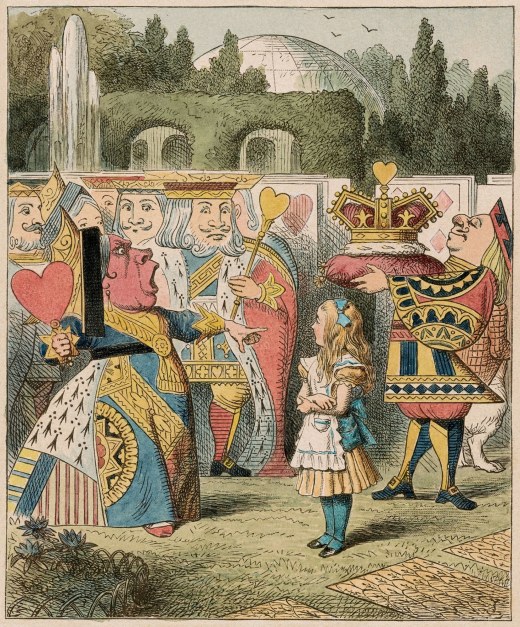
This individual may have acquired power by any means, but s/he abuses that power. Unfortunately, we’ve all witnessed this type of scenario and it is enormously stressful for those who must live or labor in proximity to its toxic presence. Coercive power is harmful according to any metric. Abusive parenting is the most tragic example of Coercive Power.

This power is enforced and maintained with threats, intimidation, lies, manipulation and sometimes actual physical or sexual violence. Shockingly, those who elect to wield power in this fashion can become enormously successful and even admired by their peers (who sometimes know of their transgressions but find it convenient to ignore the problem).

A recent example of the long-term and highly rewarding use of Coercive Power can be found in reports about the now-disgraced and unemployed co-founder of Miramax Entertainment Harvey Weinstein, who became the prime focus of the #metoo movement. For 20 years Weinstein basked in the fawning favor of two U.S. Presidents, dozens of members of Congress, Hollywood and television stars and leaders of Fortune 500 companies, the result of sky-high box office grosses and robust profits earned by films and television programs produced by Miramax.

It’s all over now, though. Dr.Lipkin cautions, “There is not a time of day when you should use it. Ultimately, you can’t build credibility with coercive influence—you can think of it like bullying in the workplace.”

Happy Halloween and thanks for reading,

Kim

Image: “Off with her head!” The Queen of Hearts, here confronting Alice, embodies Coercive Power. Illustration by Sir John Tenniel (1820 – 1914, UK) for Alice’s Adventures in Wonderland (Lewis Carroll, 1865)

LEAD With Conviction

Those who misinterpret the role of leader often feel that exerting power over others is its purpose but that hypothesis has been revealed to be false. The most effective leaders recognize that the quality of leadership is greatly enhanced when they are liked and respected by those in the organization and/or on their team.

Bill George, Senior Fellow at the Harvard Business School and author of Discover Your True North (2007), encourages leaders to empower those whom they lead.  He asserts that the most empowering condition is when organization members align around a goal or mission and team member passions and purposes are complementary and synchronized.

Leadership Development expert Travis Bradberry, co-author of Emotional Intelligence 2.0  (with Jean Greaves, 2009), says that leadership is about emotional intelligence and that it is a flexible skill that can be improved with effort. Here are the behaviors and attributes that successful leaders develop and cultivate.

Form personal connections

The best leaders know that a successful life is built on good, mutually beneficial relationships. A true leader is not afraid to extend him/herself and get to know the people whom s/he leads, as well as others. Good leaders may be introverts or extroverts,  but they nevertheless enjoy connecting with people. They focus on the person/people with whom they are speaking and have personal conversations. They care and those they lead know this to be true.

Be approachable

Good leaders know how to maintain boundaries and still make it possible for others to reach out and talk with them. They believe that those whom they lead are valuable and worth their time.
Have integrity

Good leaders keep their word, to the very best of their ability. They do not say one thing and then do another. They respect those whom they lead.

Have substance

Leaders understand that expertise is necessary, the foundation of their stepping into the leadership role. They rose to the top because they possess superior knowledge and expertise and they are masters at leveraging it.

Be positive

Leaders encourage those on their team to be the best they can be. They believe in the abilities of those on their team or in the organization. They have faith in the vision and mission of the organization and communicate their enthusiasm for achieving the goals that express and promote them.

Be generous

Leaders share.  A superior leader gives those on the team the tools they need to achieve success. They support and encourage people.   Leaders empower, they do not micromanage.

Recognize and appreciate potential

Leaders are able to spot talent and they are willing to help you to develop and leverage yours.  A leader aspires to recommend you to a position where your strongest talents and competencies can be utilized and rewarded, so that you will operate at your best and derive satisfaction as you do.

Be humble

Arrogance and braggadocio are not signs of leadership and that includes the “humble brag”.  Leaders are usually quite happy to lead, but they are aware that leadership is about accountability and responsibility and not an excuse to boss others around.

Communicate well

Whether standing before a large group or chatting over coffee with one or two team members, leaders both have something to say and listen well. They are well-spoken and fluent writers, as well. They are usually good story tellers. Many leaders have a background in sales.

Good judgment

As the song says, you’ve got to know when to hold and know when to fold. Judgment entails many competencies, including the ability to prioritize.  Leaders are good decision-makers and they are guided by their personal integrity; respect for their team and the organization; expertise in their field; and understanding of human nature and motivations.

Former political adviser and CNN political commentator and currently a professor at the Kennedy School of Government at Harvard University David Gergen, author of Eyewitness to Power (2000) writes, “At the heart of leadership is the leader’s relationship with followers. People will entrust their hopes and dreams to another person only if they think the other person is a reliable vessel”.

Thanks for reading,

Kim

The Classic 6 Leadership Styles

The effective leader is flexible.  S/he is possessed of self-awareness and knows that the style of leadership must fit the demands of the circumstances. What methods can a leader use to persuade team members to give their best performance? How can a leader inspire trust and confidence, obtain buy-in on a vision and goals, encourage bonding and build a cohesive team, build skills where necessary, acknowledge and respect skills where present, create loyalty and produce extraordinary results? The leader must assess the staff with whom s/he will work and employ the most effective leadership style.

I.      Directive

No-questions-asked coercive style that demands compliance. “Do as I say” and controlling.  Motivation is “encouraged” via threats and discipline. Are you looking for a way to kill motivation, persuade the staff to lose commitment and enthusiasm and squelch any respect the staff may have had for you? Look no further.

Most effective:       In a crisis when decisive action must be taken ASAP and there is no room for deviation from a tightly prescribed rescue strategy.

Least effective:       With highly skilled team members, who will quickly resent micro-management and the disrespect of an authoritarian culture.

II.    Visionary 

Inspires the team. Employees come to feel that they are a team and understand how and why their work contributes to the realization of the vision. Moves people toward shared goals/outcomes through empathy and clarity.  This leader states the vision clearly and compellingly, gets buy-in and then steps back and allows the team to work, stepping in from time to time to reiterate the vision and reinforce commitment and enthusiasm.

Most effective:     When seeking to help the team create and achieve goals for the long-term.

Least effective:    The leader is not credible and employees do not trust the vision and goals proposed.

III.   Affiliative 

Creates harmony that boosts morale and resolves conflict.  Builds trust between the leader/manager and employees. People first, task second. The focus is on helping the team to bond, but there may be hesitation when it’s time to take charge and get down to business.

Most effective:     When stepping into an environment where conflict has damaged commitment and morale.

Least effective:     When producing results is imperative and where clear direction, strategies and action plans are needed.

IV.   Participative 

Superb listener, team builder, collaborator and influencer.  A primary objective is to build commitment through consensus. Employees know that their input is valued and this generates commitment.  However, constantly seeking consensus can impede progress toward completing projects.

Most effective:     The staff are highly competent and mutually respectful. Turnover is low and the team is cohesive.

Least effective:     Close supervision is required for the inexperienced. There is no time to build commitment and consensus.

V.    Pacesetter  

Leads through example, has great initiative and a strong drive to achieve through his/her own efforts.  This leader has high personals standards and high energy,  but little patience and can become a micro-manager.  The team is a meritocracy and only A + results are acceptable.  Anything less and the under-performing employee will be pulled off the project.  Nevertheless, team members are inspired and remain engaged and motivated by a leader who “walks the talk”.

Most effective:    Managing highly motivated experts.

Least effective:   When skills development,  coordination and coaching are necessary.

VI.  Coaching 

Good listener who helps employees identify their strengths and weaknesses.  Knows how to delegate,  which provides skills training for staff members.  Encourages peak performance by providing opportunities for professional development and building the employee’s long-term capabilities.

Most effective:     When professional development is needed and employees are motivated to achieve.

Least effective:    The leader lacks expertise and/or the ability to teach or coach. Results produced by highly skilled employees are immediately needed.

Thanks for reading,

Kim

A Politically Correct Skill Set

Besides the whims of fortune (and luck is an enormous force in the universe),  what differentiates a successful person from an unsuccessful person? What defines a successful leader?  According to Samuel Bacharach,  co-founder of the Bacharach Leadership Group,  successful leadership is defined by the ability to rally support for an idea and inspire others to collaborate with you and help bring that idea to fruition.  Regardless of the quality of the initiatives that you’d like to advance,   you cannot lead without possessing highly developed political skills.  In the absence of good political skills,  the most brilliant plans will die on the vine.  A good agenda will never be realized and a legacy will be greatly diminished.

Bacharach says that the essence of political competence is the ability to understand what you can and cannot control.  One must identify who will support the initiative,  who will oppose and when the time will be right to go public and move forward.  Those who possess political skills get things done because they take the time to think things through.  The politically skilled will not naively or arrogantly move forward alone,  but will instead win over the right people and build a coalition to take on the project. “Anticipating the obstacles your idea might face when you present it is a political skill that can help you get across the finish line”,  says Bacharach.  Politically skilled leaders will consult with a trusted ally or two to reality test their concept,  create a list of potential allies and detractors,  decide who to recruit for the launch team,  calculate the best time to move forward and create a roll-out strategy.

Political skill means knowing how to map out the battlefield terrain,  convince people to join your team and lead a coalition.   The best ideas do not always win out,  but the best launched ideas always have a good chance of seeing the light of day.  The highly respected movers and shakers in life are yes,  the luckiest,  but also they have political skills.

Some are born with a highly developed political skill gene,  but it is possible to improve your skill level.  As noted above,  taking the time to think through the arc of the initiative’s development and roll-out is a good place to start.  Who is likely to support you?  In whose interest might it be to see the project realized?  What can you do to make potential allies see that it will benefit them to support the project? Which of your allies has enough power to make things happen and bring other high-ranking players to your team?

Now who are likely to be detractors,  active or passive—who will feel threatened by a perceived  (or actual)  loss of power and influence if your plan is adopted?  Who might be able to withhold resources  (funding)  or start a whisper campaign to undermine you?  Can your team overcome these matters? Are there cultural,  historical or other barriers that you might face?

Assembling your winning coalition is the next step.  Work only with those whom you trust and respect and know that the feeling is mutual.  Be certain to compile a list of compelling benefits that will help you sell the merits of your idea to those with the power to make it a reality.

You may want to approach the mapping of the political terrain as strategic planning and conduct a SWOT Analysis (Strengths,  Weaknesses,  Opportunities and Threats),  to help you visualize the resources you hold,  any gaps in your war chest,  obstacles that you will likely face and opportunities that may strengthen your position along the way.  Anticipate the arguments that will be made against you.  Sell the benefits that will overcome those arguments and convince  (powerful)  allies to support your position.  Collaborate with supporters to bring your initiative to life.  Be an effective leader.

Merry Christmas,

Kim

Eight Leadership Styles. Which One Is Yours?

When assuming a leadership role,   one does what is required in that position at the time.   There is no road-map because leaders must respond to events as they occur,   as they simultaneously champion projects developed by members of their team,   push through selected personal initiatives and follow through with worthy projects that started before their regime.   Most of all a leader must be versatile,   possessed of good judgment and more than a little lucky.

Nevertheless,  we all have our strengths.   Some of us are super strategists,  or change agents.  Others are great with process and operations,  we intuitively know how to get things done efficiently.  Still others are master communicators: deal-makers,  negotiators or coaches.

How does one rise to leadership,  take the reins and succeed when certain key projects call for talents outside of the natural skill set? Good judgment will encourage the leader to recognize what is beyond his/her expertise and delegate such tasks to better qualified team members.   Further,  the leader is advised to acknowledge team members who step up,  because recognition builds loyalty and the productive can-do spirit of a high-functioning team.

Leadership development specialist Manfred F.R. Kets de Vries,   author of “The Hedgehog Effect: The Secrets of Building High Performance Teams” (2011),   has identified eight leadership competency archetypes for us to ponder.   Do you recognize yourself in one?

The BUILDER approaches leadership as an entrepreneurial activity.  This leader longs to create a tangible legacy.

The CHANGE AGENT loves to ride in on a white horse and clean up a mess.   Re-engineering is the preferred activity.

The COACH derives great personal satisfaction from talent development and knows how to recognize the strengths of team members and get the best out them.

The COMMUNICATOR,  like former presidents Bill Clinton and Ronald Reagan,  loves being on stage and knows how to influence people.

The INNOVATOR is able to sort through difficult problems and devise creative,  yet practical solutions.

The NEGOTIATOR is highly gifted at recognizing,  selling and bringing to the organization lucrative new business opportunities.

The PROCESSOR is an operations expert who will make the organization run like a well-oiled machine.  This leader will institute systems that support the organization’s objectives.

The STRATEGIST has the vision to recognize which goals and strategies the organization would be wise to pursue to ensure its future growth and sustainability.

Merry Christmas and thanks for reading,

Kim

Leadership Starter Kit

Christmas Season notwithstanding,  I am busy this December and it feels so good! Catch my act on Wednesday December 4,  when Dalya Massachi of  “Writing Wednesdays” and I talk about the benefits derived when nonprofit leaders write a business plan for their organization.  3:00 PM EST,  2:00 PM CST,  1:00 PM MST,  12:00 PST. FREE! Register at http://www.writingtomakeadifference.com/writing-wednesdays

Readers in the Boston area may want to direct clients who are leaders at nonprofit organizations to get essential how-to information on business plan writing at my popular workshop “Become Your Own Boss: Effective Business Plan Writing”.  We’ll meet on three consecutive Wednesdays,  December 4, 11 & 18  5:30 PM – 7:30 PM at Boston Center for Adult Education 122 Arlington Street Boston 02116. Register at  http://bit.ly/1bP4uw9  or call 617.267.4430 class ID# 10190.

Congratulations,  you have been named project leader of a prestigious assignment.  You are thrilled to the gills,  but also apprehensive.  You have practical experience,  creativity and enthusiasm,  but you are not quite accustomed to such a front-and-center role.

You’ve scheduled a meeting to bring everyone together for the project kick-off,  where roles and responsibilities will be discussed,  timelines established,  milestones identified and important success factors and potential stumbling blocks will be acknowledged.  You know this is where you establish your bona fides and stake out your claim as the leader.  You are in charge and ideally you will project good natured authority and not arrogance or insecurity.  You are 20 years younger than several project team members.  How do you get this right ?

Introduce yourself

Welcome the team and thank them for participating on the project.  Express that you are very happy to work with such a talented and experienced group of professionals.  Without bragging,  state your professional experience as it relates to the project,  to let the group know that you are qualified and that they have every reason to trust your judgment and expertise.

Team introductions

Invite team members to participate in the standard round robin of introductions.

Confirm the project deliverables and due dates

Establish the expectations and begin to assign roles and responsibilities,  milestones and timelines.  Encourage team members to have a say in this process,  as they know more than you about how departments interact,  unspoken protocols and overall how to get things done.  Be secure enough to accept their suggestions,  as it will promote your credibility and earn you respect.

Ask questions

Pose questions that allow team members to contribute to the decision-making process and telegraph that you value their expertise.  Let team members share their knowledge.  Avoid being a know-it-all.

Listen carefully

Make team members feel heard and you will earn their confidence,  respect and loyalty.

Be humble

Team members must believe that you are qualified to lead the project,  but take care to portray yourself as a team player and a leader who wants to make everyone involved look successful.

Be empowering

Champion good ideas that are presented by team members,  and not just your own perspectives,  and you will build the team’s enthusiasm for and commitment to the project.  Respect and value the perspectives and recommendations that deep experience and long tenure bring.  Some ideas may fall by the wayside when explored in detail and others may turn out to be brilliant. Your tenured team members have the ability to make the project successful. Whatever happens,  empowering team members builds respect and loyalty and makes you look like (and be) a good leader. Remember also to be publicly generous with compliments.

Thanks for reading and Happy Thanksgiving,

Kim

Intermediate Expert  Ezine Articles

Ezine Articles Intermediate Expert