How a Social Media Strategy Can Power Up Your Brand

The old saying is still correct—clients (and those who might become clients) do business with those they know and like and do more business with those they know and trust. If you operate in the Freelance B2B consulting sector, you know it’s vital to continually demonstrate your expertise because that’s one of the best ways to win the respect and trust of prospects who might hire you. It’s imperative to make it clear to those motivated to become paying clients that you’ve got the right stuff, that you can be a trusted resource, that you have the capability to resolve their pain points by recommending the right business solution.

Your mission is to get the word out about your insights and abilities and showcase a brand that inspires trust. Bring to audience attention your relevant and timely info that’s delivered in the form of perspectives and insights that resonate. Seeing is believing and becoming a familiar presence in media outlets that your target prospects visit and trust will pay big dividends.

In the B2B sector credibility, relevance and trust are the building blocks of a winning brand reputation and are the foundation of a successful business venture. You access those building blocks by demonstrating value to prospects and peers. One of the most reliable strategies you can enact when your goal is to demonstrate value to prospective clients is to position yourself as a trustworthy thought leader who provides relevant, timely and actionable information. Among the most efficient channels to broadcast information to your target audiences is social media.

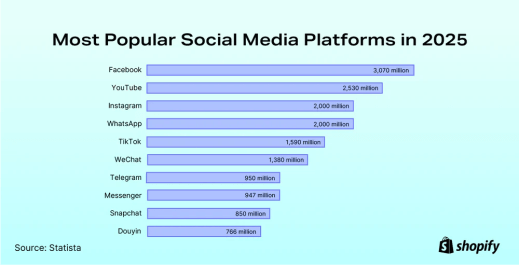
Social media has become a cornerstone of the B2B product and services buying journey. Prospects typically view up to 12 types of content, with 40% of B2B buyers including social media in their purchase research. As your prospects search for info, the right SEO search terms could call up your content and make your thought leadership info available to impact a purchase. Remember also that social media platforms are a two-way street and equally useful for not only broadcasting information, but also for listening and learning by starting and contributing to conversations. By becoming active on LinkedIn, which is the preferred B2B platform, and also X, YouTube and/or Instagram, for example, you’ll not only have a presence on platforms your prospects follow, but you’ll also get confirmation of their topics of interest in the moment, plus a heads-up on what may capture their interest in 2026. Below are four strategies for using social media to enhance your brand and grow your client list.

  1. Provide informative and timely content

By positioning yourself as a go-to source of useful insights and info, you’ll win audience trust—and that is vital. The quality and timeliness of the information you deliver, whether by text, video, or audio, will enhance your value. Distributing your thought leader content on social media platforms favored by your target audience maximize distribution and help you build a following. You’ll benefit from increased name recognition, eventually acquire trust and influence and, ultimately, you’ll create for yourself a solid brand reputation. Insider’s tip: linking your blog and/or newsletter to one or more social media platforms when you publish is a great way to share your compelling content with a wide audience (readers will find my weekly blog at LinkedIn activity/posts.

Video is a growing medium in the B2B sector because social media audiences find it easy to digest and, apparently for that reason, an attractive format. While YouTube is the platform of choice, all major platforms host video/audio content, that runs the gamut from short-form clips to long-form videos and live streams. Posting a webinar in which you took part or the podcast on which you made a guest appearance are excellent video opportunities for B2B Freelance professionals.

Case studies and client testimonials likewise make compelling video content. In fact, it may be easier to recruit your satisfied clients to sing your praises in a video rather than providing a written narrative of the process. Furthermore, if you’d like to present a show-and-tell tutorial that explains the rationale for using your product or service and quickly break down how users can benefit, a video interview in which you take center stage may be easier for prospects to visualize how your solution can be implemented for their needs. BTW, video/audio content, plus any noteworthy information you post to social media platforms, such as a case study, should also be posted on the only platform you own and control—your website.


2. Share client success stories

Nothing succeeds like success and sharing the occasional client success story (maintaining the client’s confidentiality, when requested) helps prospects envision the effective solutions that you might create for them. Examples of your willingness to personalize your solutions by, for example, simplifying your solution or providing an upgrade, or facilitating post-sale training or other supportive services—without violating your competitive advantages—are persuasive and make for memorable brand-building content for your organization.

3. Be authentic and consistent

X and LinkedIn are the usual go-to platforms for serious conversations. When you have something relevant to contribute, whether you make a thoughtful reply to a comment or offer a new perspective that you expect to generate comments from other readers, you demonstrate your authenticity, as well as your expertise and maybe out-of-the-box creativity. Joining one or more LinkedIn professional groups that are related to your industry or subject expertise can introduce you to a good forum, where you can contribute insights and learn new perspectives from thought leader peers.

4. Be transparent about values and culture

A growing number of consumers, B2B and B2C, are interested in the values and culture of companies with whom they do business. Storytelling is a relatable format and social media is an ideal platform for you to demonstrate and express what your company stands for and how your values impact your business practices. Your clients and prospects are not dismissive of a company’s purpose, vision, mission and guiding principles and may be very pleased that you’ve shared this foundational information.

Moreover, don’t hesitate to show behind-the-scenes evidence that shows you immersed in community work, be it a corporate social responsibility initiative, board service, or other volunteer participation. If you participate in a charity event, such as a holiday toy drive for local children, or sponsorship of your neighborhood Christmas tree lighting and party, consider documenting portions of the proceedings and, better still, invite top organizers to contribute a short interview to describe the goals for the event and the constituency it benefits in a video (be sure to respect the privacy of other participants). Clients and prospects like to know that you’re giving back or paying it forward.

Thanks for reading,

Kim

Image: © Statista May 2025

Mix Master: Balance Branding, Marketing and PR

When operating a business, whether that means a boutique, one person Freelance entity or an enterprise company that employs thousands of workers in dozens of locations, encouraging sales of products and services is most often the purpose of information that company leaders share with the public. Sharing specific types of information about the company and its services and products with those that research indicates have significant potential to become customers plays a vital role in building and maintaining a thriving business. The ability of said company’s services and products to capture the attention and inspire the loyalty and trust of prospective customers is reflected in name recognition, feelings of credibility and loyalty among target customers and customer evangelism for the company and its services and products.

The information created to be seen by prospective customers is without question a company’s most important communication initiative and it’s known as the marketing strategy—a comprehensive road map that defines how the company will reach out and appeal to prospective customers and convince them to become paying customers. The public facing components of the marketing strategy are advertising, branding and publicity/public relations, along with campaign-specific marketing activities. Ideally, all the aspects of marketing information will function in tandem and create competitive advantages against the company’s marketplace competitors. To most efficiently and effectively implement a big-picture marketing strategy, it is advantageous to follow a certain “order of operations,” a road map that enables each component to support the others. You may be surprised to learn that the road to a high-functioning marketing campaign begins with public relations and publicity.

The goal of marketing—whether the big-picture marketing strategy that includes branding, advertising and PR/publicity, as well as the campaign-specific activities of marketing initiatives that typically include email marketing, networking, social media and content marketing—is to introduce and create an appetite for your service or product. Many marketers (and that would include me) have been tempted to begin implementation of the big-picture marketing strategy with branding. We tend to assume that presenting an identity, a brand persona, for the company and its services and products will most immediately resonate with prospective customers. We’ve been taught that prospects will more readily understand and value the service or product by getting familiar with the brand, which would make that function the first step in cultivating loyal customers who, we hope, will give good word-of-mouth by making referrals and becoming advocates.

However, in the 2020s era to begin a major marketing campaign with branding is very cart-before-the-horse. Today, PR/publicity exacts considerable influence on the perception of product or service credibility. Maybe it’s the inevitable result of Instagram and TikTok? In the here and now, start-up founders and marketers for existing businesses must acknowledge the power of PR in their arsenal of promotional communication resources. Strategic and consistent PR/publicity is now recognized as the way to encourage visibility and instill credibility that distinguishes your company and its services and products in the marketplace. Marketing, and its advertising component, will drive awareness but the PR spotlight can make your services and products seem trendy and trustworthy and create an aura that drives sales.

PR is visibility and credibility

Publicity is born of look-at-me attention and buzz. PR means press releases, blogs, podcasts, special events and influencer shout-outs that echo through the digital metaverse and put your company’s name on the lips of target customers. PR expands marketplace awareness that sparks name recognition but it is not a direct method of generating leads or driving sales. Instead, PR works in the background, cultivating and elevating your brand’s reputation.

So make yourself visible on behalf of your business; you might start by exploring how to become a podcast or webinar guest or participate in a panel as a speaker or moderator. You could also research local events that resonate with your values, and the values of your target customers, and engineer another opportunity to receive visibility as you simultaneously verify your belief in corporate social responsibility.

Incidentally, be aware that CSR is sometimes a decisive factor in B2B and B2C purchasing decisions —today’s consumers increasingly prioritize ethics. B2B services company BusinessDasher explains that 84% of customers evaluate a companies’ ethics and values when considering a purchase, and 63% say they would prefer companies with whom they do business to adopt ethical business and social practices.

As noted, promotional communications are under the marketing umbrella and there is a degree of overlap between all marketing functions, but Public Relations/publicity and marketing have their differences. PR/publicity is focused on establishing and expanding the company name and reputation of its services and products by being seen in the right places. PR can encourage positive word of mouth so that prospective customers will realize that your entity is open for business.

After you’ve developed and implemented successful PR/publicity initiatives over several months or even a year, consult your marketing data to check on metrics that indicate when it could be advantageous to launch a boots-on-the-ground marketing activities that include implementing a sales/marketing funnel, publishing a newsletter or blog, setting up email campaigns, or stepping up social media presence, all to continue and further solidify customer engagement. Step Two in your marketing strategy is about shifting gears and bringing in high-quality leads you can convert into sales.

Marketing attracts customers

Marketing refers to everything that brings information and images that represent your company and its products and services directly to potential customers, to capture attention, educate them about your services and products, inspire trust and loyalty and promote sales—it’s Step Two in your promotional campaign. Great marketing doesn’t so much sell your product or service—rather, it creates a desire for your product or service. Effective marketing generates actions that are measurable, whether that’s clicks, email sign-ups, subscribing to your blog or newsletter and eventually, sales. If publicity is about awareness, marketing is about attraction. Now is the time to leverage the visibility that was generated by PR/publicity and use it to reach out to prospects and cultivate relationships, now that you’ve achieved name recognition and familiarity that are the seeds of trust.

As you know, a key component of marketing is content marketing, which is information that educates prospects about your product or service; particularly in B2B, content marketing has become the new advertising. In fact, the Content Marketing Institute found that 80% of corporate decision-makers prefer to review information about products or services that’s presented as objective research, rather than advertisements, which are considered to be biased. One study has put the number of prospects and customers who believe advertisers have integrity at 4%.

Customer trust in traditional advertising has tanked, especially for Millenials and GenZ.  Wharton Magazine reports that 84% of Millennials not only dislike traditional ads, but also distrust them. For companies that would like to expand their market reach, these statistics send a clear signal. Investing only in advertising and marketing campaigns is unlikely to move the needle. To develop a good reputation for your brand, it’s recommended to start with PR/publicity and then move into marketing activities that include content marketing, networking, podcast or webinar appearances and publishing a blog or newsletter.

Brand is identity

The impact of brand identity is revealed in the sum total of how customers experience and perceive your business and its services and products, from product packaging to tag line, price structure to social media presence. A brand encompasses all the touch points that shape how customers feel about interacting with the brand. The interpretation of those touch points belongs only to the customer because engaging with a brand involves emotion—what people feel when they see your company name, logo, service, or product. It’s your company’s identity and reputation and it expresses and represents what it means to customers.

Your brand will be nurtured by ongoing PR/publicity, from CSR inspired events to your active involvement in professional associations or business organizations. along with content marketing activities, from case studies to email marketing. Associating your company with respected business organizations and community events can only elevate its visibility and brand reputation—characteristics known to encourage brand loyalty and sales.

Identify what motivates customers to buy

To understand the motives behind your customers’ purchases, tap into information that’s provided by the inward-facing aspect of marketing—market research. After all, the best decisions are data-driven. Yelp’s Trend Tracker can give a big boost to the ROI of your marketing activities with analytic insights that are available to you free of charge—join the mailing list and you’ll receive data that is relevant and updated monthly and enables those who pay attention to access boots-on-the-ground marketing info that can steer the effective promotion your products and services. Supported by Trend Tracker data, you’ll be positioned to detect and quickly respond to customer preferences, adjust marketing strategies and/or tactics to better align with shifting customer priorities and maybe even tweak your service or product line to reflect a significant shift in customer tastes.

Thanks for reading,

Kim

Image: David created by Michelangelo di Lodovico Buonarroti Simoni (1475-1564, Republic of Florence) and unveiled in 1504, the statue has been housed at Galleria dell’Accademia in Florence, Italy since 1873.

Crisis Communications: Monitor and Defend Your Online Presence

Managing the online presence and reputation of a brand, whether personal or company, is no longer considered mere vanity or over-reaching micromanagement. Regular tracking and review of all content that pertains to your organization and shows up in searches—its services and products, the company itself and its leaders—including AI-powered searches, is now recognized as a necessity. Vigilant and consistent monitoring of information that appears online about your company and you, as the principal of your Freelance consulting practice or fractional executive, owner/leader of a traditional business, small or large, or not-for-profit organization executive, can be viewed as an aspect of risk management strategy.

It is imperative for all business owners and leaders to carefully shape and defend their brand’s online image and ensure that all information presented is accurate and leaves viewers of your content with a positive impression, meaning, a portrayal that encourages credibility and trust.

Unflattering or outright negative content associated with your brand, as well as inaccurate info, has the potential to undermine or damage your organization’s credibility. It is therefore highly recommended that Freelancers and other business owners and leaders regularly assess all AI-generated and online mentions of their company and personal brand and verify the accuracy of the information found.

Take control of your online presence

Integral to a comprehensive marketing campaign is building a digital presence that illustrates the competence and credibility of the organization. Online reputation management is essential to defending that carefully curated image, whether you maintain a solopreneur consulting practice, operate a small company, or lead a national or multi–national conglomerate. Failing to take defensive action and waiting until negative content has become an embarrassing crisis may cause an unfortunate outcome that stains your own or your company’s reputation.

Inspection tours are the how you’ll discover inaccurate information and/or negative content. Inspecting the search engines is Step One of your mission to defend and, if necessary, correct online information pertaining to you and your organization. Learning where and how to locate, edit, or suppress content that is untrue or unflattering is the most important step of restorative crisis communications activity. Proactive monitoring and strategic content creation will be central to maintaining control of your online image. The presence of negative content, which may include customer reviews and other user-generated content, can have a direct effect on company reputation and sales revenue: Approximately 94% of customers report that a negative merchant review on a review site persuaded them to avoid doing business with that merchant.

Step Two of your brand defense is the actual defensive action, where you may simply update information to correct what appears sites like Yelp or Google. More thought and time will be necessary if you discover content that is inaccurate and perhaps also misleading; in these cases, you may decide that a substantive reset of your brand narrative is in order. Your best defensive action will be to create and publish relevant, high-quality content that is capable of enhancing your online authority and burying the harmful content by pushing it further down in search rankings.

Google search operators

Re: your search engine inspection tours in most cases, a Google or Bing search of the brand will surface a comprehensive list of brand mentions. However, a more thorough search might locate additional content that you can review and if you discover incorrect information or harmful material on less popular search engines or on online communities, you can explore how to make corrections and/or counteract negative content with a post or two that displays your authority and integrity.

To take a deeper dive and search for potentially harmful content that might otherwise go unnoticed., you’ll be pleased to find that Google’s search capabilities extend far beyond entering a name into the search bar to see what appears. Dipping into advanced search operators will broaden your scope and, if it exists, may help you to locate negative content that does not appear in a traditional search.

To find what may be hiding in the shadows, launch an exact match search by placing your name in quotation marks (e.g., “John Smith” or “The Best Company”) to specify search results to that unique name and eliminate unwanted mentions. To further refine search results, you can exclude irrelevant pages using the minus sign. for example, searching for “The Best Company” -Instagram removes Instagram results and help your mission to dig up potentially damaging content pertaining to your brand that may be posted on less visible sites.

Furthermore, a site-specific search can help when you suspect that a particular domain features negative information about your brand. Typing the site domain address, followed by a colon and your company name will produce only results from that chosen site. It is also useful to search variations of your name, for example, “J. Smith” or “Best Company;” — subtle changes could possibly bring up mentions that do not appear in the traditional searches.

Set-up Google Alerts for ongoing monitoring

It is wise to be vigilant and regularly monitor your name online, to prevent damage before it spreads. Google Alerts is a free tool that notifies you whenever new content is indexed and includes your name. To get started, visit Google Alerts and enter your full name and company name along with relevant variations (e.g. “Jane Smith” or “Jane K. Smith”). Use quotation marks to ensure your alert captures the exact phrase. Then click “show options” to select how frequently you’d like to receive alerts —the “as-it-happens” option is best for reputation management. Set alerts to receive notification of name mentions and be sure to correct inaccuracies and gratuitously negative content. Counteract what is negative with relevant and compelling content that can potentially suppress unflattering narratives.

You can also filter alerts by geographic location and type of content, such as blogs, news articles, or discussions. Finally, enter your email address to start receiving updates. These alerts act as a digital early warning system. You’ll know immediately if a new piece of content starts gaining traction — giving you time to prepare a response or counter-strategy. Staying visible online requires more than awareness — it demands consistency and strategy.

  • Monitoring social mentions and online discussions

Negative content is known to more frequently begin on nontraditional search engines. Social media platforms, forums and blog comments can amplify by way of the metaverse effect and damage to your brand image can spread quickly—even as it never appears in traditional search results.

To really scrutinize your online presence, investing in the services of a social listening site such as EmbedSocial or AgoraPulse will detect online conversations that mention your name and your company name across blogs, Twitter, Facebook, YouTube, media outlets and more. Social listening platforms also provide sentiment analysis, an excellent feature that distinguishes between harmless chatter and attacks on your brand reputation. Most social listening platforms are a paid service but if a free solution will be more appropriate for you at this time, consider Talkwalker Alerts (by HootSuite). Incidentally, Talkwalker provides more extensive web and social listening coverage than Google Alerts and is easy to integrate into your workflow.

Finally, make a point to investigate online communities like Reddit and Quora. These platforms typically feature informal discussions and some have been known to quickly go viral. Get your investigation started with a targeted search— reddit.com:The Best Company to uncover mentions that might not appear on Bing or Google. Knowing what’s being said about you when you’re not in the room lets you know who your friends are and also gives you the opportunity to respond with a brand image defensive strategy.

Thanks for reading,

Kim

Image: © Behnaz Farahi. Gaze to the Stars, an installation created by Behnaz Farahi, Assistant Professor at the MIT Media Lab at the Massachusetts Institute of Technology in Cambridge, MA. Gaze to the Stars was displayed on the MIT Great Dome December 2024-March 2025.

What’s Your LinkedIn SSI Score?

Since its launch in 2003, LinkedIn has become the go-to social media platform for professionals, hosting 900 million members worldwide as of 2024, about half of whom log on at least once a month. Joining and being active on LinkedIn is now a commonplace strategy, used by Freelance and traditionally employed professionals to enhance personal brand and advance business or career ambitions. Establishing connections with peers, potential mentors, prospective clients, or possible employers whom you’ve had the savvy and good fortune to meet and interact with, is the primary benefit of the LinkedIn experience.

Connections are not the only factor that pay dividends to those who actively participate on the platform. Nearly as powerful is the content posted, that usually consists of articles or blog posts you’ve written, announcement of awards you’ve won or professional development seminars you’ve attended, and/or insights you’ve shared when commenting on content posted by others. Content posted on LinkedIn contributes to establishing, and often enhancing, your professional and personal brand and expands your credibility beyond the orbit of first degree and other connections and into the broader LinkedIn community.

So, if you’re not active on LinkedIn, you may risk leaving brand-building and business or career growth opportunities on the table. But beyond receiving likes, the social media equivalent of air kisses, how do you know if your target audience feels your posts and comments are meaningful? Moreover, how do you stack up against industry peers and other connections in your network? Those questions can be answered in a LinkedIn user metric you may not know exists—the Social Selling Index (SSI) Score.

The SSI Score defined

The LinkedIn Social Selling Index Score was developed in 2014, after LinkedIn honchos decided to identify members who seemed to be killing it on the platform and figuring out how they did it. In 2015, SSI became part of LinkedIn Sales Navigator, a paid feature, but SSI is now available to all with a LinkedIn account. The SSI is a formula that evaluates social selling performance and measures mastery of what LinkedIn considers the core competencies of social selling on the platform.

The SSI gauges member success in demonstrating four social selling core competencies: establishing a professional brand, initiating communication with prospective connections and collaborators, engaging in valuable conversations and building high-quality relationships. For each competency, members are awarded between 0 and 25 points; the SSI Score is the sum of the individual scores from each core competency. The sum total of the core competency scores is also compared to the scores of others in your industry—and LinkedIn always assumes you’re in sales. That said, the higher your SSI Score, the more influential your LinkedIn profile becomes.

  • Establishing professional brand. This competency consists of two elements—the completeness of your LinkedIn profile and the quality of your posted content. The more detailed your profile and the more valuable your content, the higher your SSI Score.
    • LinkedIn confirms the presence of a profile photo, detailed job history and educational background, plus the number of recommendations you’ve made and received.
    • LinkedIn calculates the number of posts you publish and how many likes and comments your posts receive.
  • Connecting with the right people. This metric is connected to Sales Navigator and it may be challenging for members of free LinkedIn to obtain a good score in this component. It’s no surprise that LinkedIn prefers members to use the paid tools when searching for new connections.
    • When members connect with or contact the right person—for example, someone with a C-Suite job title that usually indicates a decision-maker—it is assumed that the member is now better positioned to make a sale, win a client, or otherwise make a tangible improvement to one’s business or career.
  • Engaging by sharing insights. Sharing valuable content increases the SSI Score awarded in this category. The more valuable content that’s posted and the more comments and likes that shared content receives, the better the score awarded and the closer a member becomes to earning Thought Leader status.
  • Building relationships. This metric evaluates a member’s motivation to stay in touch with connections. It reflects how often members reach out to connections and other contacts and measures how effective that outreach is—meaning, if the message does not receive a reply, the LinkedIn SSI Score will be negatively impacted.

Benefits of a high SSI Score

The SSI Score is considered to be a comprehensive measure of social selling prowess, meaning that a high score is considered demonstration of a member’s understanding and optimal utilization of the platform. LinkedIn views a high SSI Score in the way airlines view frequent flier miles, as a gateway to desirable perks. A high SSI Score can enhance your online reputation with the gift of increased visibility, a powerful benefit that drives name recognition and brand awareness as it promotes trust and credibility. The halo of credibility can lead to more positive responses to your networking inquiries and, theoretically, result in more and higher-quality opportunities for collaborations or exploring business ventures.

But does the SSI Score actually translate into tangible business results? Maybe—you’d expect LinkedIn to claim that a high SSI Score correlates with business success. LinkedIn reports that the higher your SSI Score, the more likely you are to achieve your sales targets, for example. LinkedIn says that an analysis of platform members who’ve received a high SSI Score will on average receive 45% more sales opportunities than those with lower scores and they’ll win 78% more sales deals than peers who are not active on social media. According to a joint study by LinkedIn and Richard Edelman, CEO of the global communications firm Edelman, 58% of business leaders are willing to buy from an industry expert and/or thought leader and they are willing to pay more, as they feel they’ll receive premium service.

  1. Lead generation. Allegedly, those who’ve earned a high SSI Score are 45% more likely to exceed their sales quota because they are adept at identifying and engaging with, the right contacts. The strategy is known to result in more productive leadgen.
  2. Sales. According to LinkedIn, those with an SSI Score above 70 outperform their peers and achieve 45% more sales opportunities than those with low scores.
  3. Brand awareness. A high SSI Score typically results in the reward of increased visibility for your content, leading to increased brand awareness and recognition in your industry.
  4. Trust-building. A high SSI Score enhances credibility, a trust-building factor that can make a difference for B2B professionals, where relationships and reputations play a significant role in decision-making.
  5. Optimized visibility. LinkedIn’s algorithm favors those who utilize its platform effectively. A higher SSI Score usually results in enhanced visibility for your posted content, opening the door to increased engagement with your connections and other contacts.

Monitoring your SSI Score is likely to motivate you to make the most of platform benefits—seeking strategically savvy connection requests as a way to maximize leadgen or business collaborations, positioning yourself as an industry Thought Leader and building your brand and credibility and working to increase your exposure by verifying that your content is relevant to your target audience. To learn your SSI Score, log onto LinkedIn and then click on this link. If you’re part of Sales Navigator, go to “Admin and click “User Report.”

While you’re logged onto LinkedIn, review your profile and consider what you might add—do you have a profile picture? Have you earned a professional certificate, or taken a skills-building course, that you never acknowledged in your profile? If so, add that accomplishment to the Licenses & Certifications section of your profile; if you received a certificate, scan and upload. Oh, and if you serve on a board or participate in other volunteer work, include your philanthropic and social responsibility commitments as well. Whether or not boosting your SSI Score is meaningful to you, remember that the purpose of joining LinkedIn is to display your professional bona fides.

Also, when’s the last time you made or received a recommendation? You can get the ball rolling by making a recommendation for a colleague and asking for the favor to be returned with a recommendation for yourself. While we’re on the subject of colleagues, take a tour through the extensive list of LinkedIn groups and figure out if there’s a new one you might join; if you’re already listed in a group or two, scroll through the content to get an update on the threads and see where you might be able to make a relevant comment, or ask a question. Giving a boost to your SSI Score is not labor intensive, but it does require some strategic thinking. It’s time to get busy!

Thanks for reading,

Kim

Image: © Susan Walsh/Associated Press. The co-champions of the 2019 Scripps National Spelling Bee.

Client Testimonials: Cheerleaders for Your Business

As you ambitiously devise and implement leadgen campaigns and branding strategies designed to keep your sales pipeline filled with prospects that you hope to convert into a few sales, it is easy to lose sight of a basic fact of marketing—your clients are the best promotional resource you’ll ever have. Satisfied clients can become your cheerleading squad and they have more credibility with prospects than any marketing tactic you could ever devise.

Today, there is so much sensory overload noise in the marketplace that Freelancers and other business owners are often best served by peer-2-peer testimonials to persuade prospects that doing business with your company is a safe bet. Unless you can afford to buy an ad during the Super Bowl, nothing has more credibility than from the trenches client testimonials, referrals, or case studies.

So how can you recruit a client to publicly recommend your products or services without seeming to overstep a boundary? Basically, you ask the right clients, you make it easy to say yes, you make the ask at the right time and you make sure that the end result makes the client and his/her organization look good.

Ask the right client

Obviously, your first job is to know which of your clients would make a good recruit for a testimonial ask. Recall clients with whom you worked over the past 2-3 years and for whom you’ve done an exceptional job in terms of beginning to end customer experience, delivering the solution and meeting, if not exceeding, all expectations. Most of all, the client has to recognize and value what you did on his/her behalf. In other words, ask clients who have plenty of good things to say about your company and the work you do or the products you sell.

Timing

Timing takes more than one form. One factor is, how far into the past can you reach to make an ask? Will it be awkward to ask a client with whom you worked, say, four years ago? The answer, I think, is that it depends. If you maintain contact with past clients, e.g., sending December holiday cards and perhaps also sending announcements about your appearances on webinars or podcasts, it will be easier to reach out and ask for a testimonial.

Another timing issue is to avoid the client’s busy season, or the end of the fiscal year, when the client may have deadlines to meet. To the best of your ability, avoid making the ask when your client faces time-sensitive, pressing work responsibilities.

The ask

The window between your last interaction with the client and when you plan to ask for a testimonial will impact your choice of communication. If it seems right to approach a client soon after the work is completed or the product purchased, including your testimonial ask in a post-sale client satisfaction survey will be perceived as a natural progression. Email the survey and encourage your client to share feelings about working with your organization, the products that were purchased, or the services provided.

Invite the client to provide more specific, detailed comments in the Testimonial Template that you embed in the survey. Note that comments may appear on your company website and social media sites.

To approach a client with whom you worked a year or more ago, it may be more appropriate to first call and discuss the testimonial ask and then follow-up with an email to confirm, with your Testimonial Template attached.

If your client prefers to make a video testimonial and you have the skills to record and edit the video, which should probably be no longer than 6-8 minutes, arrange to meet for the shoot. Alternatively, you might set up a videoconference call and record an interview with the client as s/he discusses the positive experience and great results obtained from working with you. Audio-only testimonials can also be recorded and they are likewise compelling. When using the audio or video options, send the Testimonial Template a week in advance and send it again 48 hours ahead of the recording session.

Questions and quotes

Help clients to endorse your products and services by including a few open-ended questions in your Testimonial Template to get the ball rolling. Devise simple, direct questions that put the client in story-telling mode and will yield good quotes.

Ask the client to briefly detail the goal that had to be achieved or problem solved and why there was a need for the products or services that were purchased. Also ask the client to divulge if s/he previously used another company to obtain similar products or services and to provide insight into what motivated him/her to explore your company. Remember to ask the client to share reasons why your organization was chosen and not another. Finally, urge the client to discuss the experience of working with your organization, with an emphasis on expectations and benefits derived.

Client benefit

Your testimonial will be posted on your company website and on one or more social media channels—-remember to link the text, audio, or video back to your client’s website. Let the client know that you’ve provided these valuable back links by sending links to all platforms on which the testimonial appears. Informing clients whom you approach for a testimonial that you’ll provide this sort of publicity may yield a “yes” for your ask and put your venture on the road to obtaining the best endorsements available.

Thanks for reading,

Kim

Image: Cheerleaders in 1920s America

8 Skills Everybody Needs

Whatever work one does, from start -up founder to pastry chef, automotive mechanic to chief financial officer, it is interesting that we all need the same short list of skills to become successful.

Consultants are often advised to hone and promote fluency in the skills listed here but everyone who works—-business owner, Freelancer, or employee—-taps into these skills on a regular basis. Your hair stylist and the guys who do your yard work use the same skills as your bookkeeper and your periodontist and if they didn’t, you wouldn’t have hired them. Let’s remind ourselves of what we really need to know in life.

Adaptability

Because when we wake up in the morning, we never know what the day will bring. One may learn, for example, that a potentially lethal and highly contagious virus, for which there is no reliable antidote, has entered our country by way of a meeting of executives employed by a prestigious biotechnology company.

When those who attended the meeting returned home and went about their daily lives, some of them infected people with whom they interacted. Very quickly first hundreds, then thousands, of citizens contracted the virus and many died. In an attempt to block the spread of the virus, governors in all 50 states ordered nearly half of commercial enterprises, plus all schools, government offices, libraries, museums and other public spaces, closed. So what did we citizens do?

We adapted as much as possible, that’s what. Grocery stores, the post office and other entities deemed essential were allowed to remain open. Many business owners and leaders found ways to keep their ventures functioning, with revisions.

Millions of knowledge economy workers used their personal computers to work from home, as department heads kept their teams united with videoconference meetings. Schools quickly switched from classroom to online learning (many colleges long ago added online courses).

Retail stores sold merchandise through their already robust e-commerce websites. Personal trainers and fitness instructors contacted their clients and followers and invited them to participate in outdoor workouts. We did what we had to do and we got by.

Creative thinking

Whether or not an out-of- the-box solution is needed, every once in a while it’s fun to bring innovative flair to a plain vanilla task. Whatever the motivation, resourcefulness and creative thinking are appreciated, because the need for an end run or a work-around can be part of daily life. Sometimes, one needs all of that just to get through the morning commute!

Creative thinking is often associated with the arts or architectural design. But during the COVID shutdown wedding planners, who were watching the ground give way beneath their feet, flexed their creative genius to reimagine weddings for panicked brides and grooms. That often meant broadcasting the ceremony virtually and rescheduling the reception for the following year.

Creative thinking can also reach back into the past for an innovative solution. This year, the New York Film Festival, barred from using shuttered movie theaters, will debut its contenders at drive-in theaters in the Brooklyn and Queens boroughs.

Credibility

Dependability, judgment and expertise are the three pillars of professional credibility. These attributes add up to trust and trust is what gets one hired and motivates customers to give referrals. People do business with people they like. They do more business with people they trust.

Communication

As it is often said, it’s not necessarily what you say, but how you say it. You’ve got to know how to talk to people.

One of the best ways to communicate with someone is to not talk (much), but tlisten. Use nonverbal cues to demonstrate that you are following the narrative. Ask questions to clarify or confirm what you think you’ve heard. Pay attention and let others know that you value them and their opinions (even when you see things differently).

Decision-making

Here’s the reality—-when a big decision is on the table, we seldom have access to as much information as we feel would be helpful as we weigh the possibilities. It is frustrating, to be sure, and we’ve all been there. The thought of taking the wrong path makes the stomach queasy.

But at some point, one must make a move and travel to the left or right, say yes or no, or leave well enough alone. Or, one can elect to put the matter aside and revisit it within a certain period of time.

If a decision carries impact, it cannot be ignored. The fear inspired tactic known as analysis- paralysis, where information is considered and reconsidered ad nauseum, is counterproductive. The best way to improve the quality of information to use as a guide for wise decision-making is to ask the right questions.

Problem-solving

Nearly every purchase one makes is intended to solve a problem, from a bottle of juice (thirst) to calling Lyft (door2door, on-time transportation). Whether the items your company sells are products or services, you’ll make more money when you 1.) understand the business you are really in, by thinking through the underlying motive for the purchase, beyond the obvious, and 2.) design your marketing strategies and sales pitch to reflect item #1.

Teamwork

Many hands make for light work. Too many cooks spoil the broth. Teamwork and collaboration lie between those warring poles and a real professional will persuade others to join him/her in the sweet spot.

Someone must step up and take the lead on a project of any magnitude. Those responsible can draw up an action plan, complete with due dates. Milestones or a mid-point check-in will help to keep everyone on schedule and ensure that mistakes have not been made.

If everyone holds up their end and the project is completed on time, you’ve got a team. If a mistake is discovered and corrected in a timely fashion with the help of your colleagues then congratulations, you’ve got a high-functioning team.

Time management

The ability to prioritize and organize, enabled by an action plan that includes target completion dates, are the three pillars of time management. Understand and get agreement from stakeholders and decision-makers regarding mission- critical tasks. Confirm that team members and other collaborators have the time to produce what has been asked of them within the desired time frame.

Thanks for reading,

Kim

Photograph: Kim Clark, February 2019. Choreographic Objects, installation at the Institute of Contemporary Art/ Boston by William Forsythe (a choreographer who works with world- class ballet companies)

New Normal Marketing Strategies

We are all painfully aware that business and life are different now that the ambitious coronavirus has burst into the scene and shows no inclination to leave center stage. Adaptions and workarounds are our new normal; creativity, resilience and perseverance have been shifted into overdrive.

What Freelancers and business owners who are determined to win are doing is continually surveying and assessing their business conditions so that they might reasonably predict what things might look like in 6-12 months and prepare accordingly. These folks have set aside for now any products or services that are no longer viable and have honed in on how they can best accommodate the needs of clients now and into the next year or two.

Virtual communication looks as though it will be with us for a while, regardless of when a coronavirus vaccine is approved in the U.S. or other countries. Our clients have transitioned to virtual quite comfortably and until the appetite for face2face interaction reappears (prediction: 3 years), smart Freelancers and business owners are ramping up their online capabilities in every way.

Website

Update your company website to showcase those products and services that can be sold with a new normal message. What have you provided that can be sold online or reconfigured and carried out virtually? If you can add text that communicates your company’s response to your clients’ potential concerns, do so. If you can communicate how your company can help clients better serve their clients, be sure to include those reassurances.

Do you have Call to Action buttons on your website? If you’ve ever needed a way to encourage clients to ask questions and engage and build a relationship with your organization, it is now. On your website landing page and on any pages that describe products or services, a Call to Action come-on should be available to bring visitors to an online chat, telephone number that allows a click to dial, or a pre-addressed email that encourages website visitors to type a question and hit send.

Good Call to Action phrases include “Click here for more information,“ “Click here to speak with a customer service rep “ “Click here to receive our monthly newsletter,” “Click here to register for our free training course,” or “Click here to place your order.”

Content marketing

Show your empathy and understanding of the predicament that many of your clients find themselves in through the topics you address in your content marketing posts—-like what I’ve been doing in this column since the shutdown. My goal is to help you stay motivated, stay resilient, get creative and remain in business. How am I doing?

Social media

Social media is micro, it’s personal. designed for you to promote interactive communication with clients and build a community. Social media is visual and tailor-made for behind-the-scenes looks at your organization.

Draw in your clients and other followers with a few still photos or a 5-minute video of you and your team preparing for a podcast guest spot or an online course that you’ll deliver. Do you have some new, or newly reconfigured, product or service to announce? Speak to the camera and tell your fans personally.

Your clients can even get to know one another as they get to know you and your business. Demonstrating that you understand their new concerns and responsibilities gives your company credibility and that equals trust.

Marketing and more marketing

Just keep promoting yourself and your business capabilities. Can you get an article published in a business newspaper or magazine? Can you get a quote in an article? Can you be a guest on a podcast? Are you sharing and reposting your content marketing posts—-newsletter, blog, case studies, white papers—-on LinkedIn, Twitter, Facebook or other outlets?

Marketing will help you get to know your clients and prospects, allow them to get to know you and gives your organization the something extra that gets you ahead of the competition. Marketing always pays off. Make the effort, reap the rewards.

Thanks for reading,

Kim

Photograph: Kim Clark. Social Justice Warriors deliver a message that promotes their cause in a live taping at the steps of the MA State House in Boston on August 11, 2020.

Getting Clients: The Reboot 2020

For us freelancers to find reliable, long-term clients is a job unto itself and not an easy one. We have no choice but to invest thought and time into showing prospective clients and those who might refer us to prospective clients why we could be the best choice for providing the solution(s) for their problem.

To get ourselves inspired and off to a running start in the New Year, let’s review how we might best package and promote ourselves and our services to prospects, potential strategic partners and referral sources and update how to stand out and appear highly competent, trustworthy and an overall good hire for the Next Big Project.

KNOW YOUR NICHE

It can be so tempting to not want to limit ourselves to a specific niche, but the truth is, “If you’re talkin’ to everybody, you’re talkin’ to nobody.”
The biggest mistake that Freelancers make when going out on our own is that we try to be all things to all people. But when we create a niche, we can more effectively express what we do for our clients and how those clients benefit. That helps those who know and trust us to make referrals on our behalf. A clearly defined and easily described niche service or product is also easier to market to potential clients, because the message is easy to articulate and understand.

GETTING CLEAR ON CLIENTS

Getting clear on your niche and how we serve our clients is only step one. The real magic happens when we learn to consistently communicate in a way that resonates with target client groups. Speaking their language makes all the difference. Do you want to stand out to prospects? Know your ideal client!

It is to our advantage to be clear and concise about whom we can help and why. Tell (don’t sell) the story and talk just like you’d talk to a colleague. Embody the tone and attitude of one who cares, who understands their pain and can help them. Paint the “after” picture, i.e., the picture of their future after working with you. Offer credentials and tell client success stories that speak to their unique needs and concerns. In short, be all about your client.

INSIDE THE CLIENT VIEWPOINT
Christy Geiger, founder of Synergy Strategies Coaching and Training in Austin, TX https://synergystrategies.com/, says that one of the most difficult challenges in marketing is to identify and articulate one’s unique value and then sell that value to prospective clients.

Christy recommends that we flip the message and describe our service fromthe client’s perspective. Rather than presenting a list of self-promoting attributes that paint you as Mr. or Ms. Wonderful, discuss instead how your expertise ensures that clients are able do what they need to do and achieve goals and objectives.

MARKETING CREDIBILITY

As a Freelancer, the best way to stand out from competitors is to build your marketing around our credibility. Content marketing is very useful for this mission. Produce content that will help both bring visibility to your products and services and it help to establish you as an expert in your industry.

KNOW YOUR COMPETITION

Research others who provide products and/or services similar to your organization. What do they offer, what do they charge (if you can determine that)and how do they differentiate themselves in the marketplace? Then, ask yourself what could be realistically portrayed as valuable differences between your operation and those of your closest competitors? How might you be able to successfully distinguish yourself, your business practices, your qualifications, your products and/or your services and how might you persuade clients that these attributes make you the preferred provider?

CASE STUDIES

When clients hire us Freelancers, we expect that there will be a “discovery phase,” when they check us out—visiting our LinkedIn profile and social media presence, finding and reading articles we may have written and media quotes or features, for example. They’ll visit our websites and peruse our client list to find out who (else) they know who’s worked with us. To verify our work ethic, they may have a good talk with the referring party, if that was how the parties were introduced, or they may just call one (or more) of the clients on our list and discuss the quality of the results of the deliverable.

Freelancers can help both ourselves and our prospective clients reduce by sharing two or three well-written and descriptive case studies that demonstrate what we do, how we do it and the (exceptional!) results that we produce.

EASY TO DO BUSINESS

We Freelancers wear many hats. We’re the Chief Marketing Officer, the Vice President of Product Development, the Director of Sales, the Comptroller and company President. Our products and services may be excellent, but we would be advised to employ business practices and customer service protocols that make it is easy for customers to access what we have to offer. Setting up online purchasing or appointment booking, returning inquiries promptly and following-up as promised make a big difference. If customers have to jump through hoops to work with us, they will go elsewhere.

Thanks for reading,

Kim

Photograph: Steve McQueen (1930 – 1980), the “King of Cool,” in The Thomas Crown Affair (1968).

Client Retention Means Exceeding Expectations

Client retention and referrals are the best ways to build a good client list. Earlier in the year,  one of my clients referred to me a colleague who is in a closely related business.  I was so happy!  While working with clients new and long-term,  my mission is to do an excellent job and exceed expectations, so that I will create the conditions for a long relationship and the receipt of referrals.

The two clients are friends,  yet very different in working style.  The first is laid back and easy to deal with.  The new client, to be honest, has not yet developed trust in my abilities. There is a tendency to be more hands-on than I would expect and to assume that things may not have been done correctly on my part.  I’m not sure of the source of the client’s anxiety, but I’ve decided to view the matter as a learning opportunity that will keep me in top form.  I will be pushed to do my best work and have the opportunity to go into trust and credibility building mode.

I started on the client retention path by first learning who had referred me and then sending a thank you email.  Prior to that,  the client had received December holiday cards, as it is my custom is to send holiday cards to all clients I’ve worked with in the previous five years.

Regarding the new client,  my objective is to help that individual relax and know that I’m in control and will make him/her look smart and capable in the eyes of superiors and peers.  I’ve written previously about how to establish a good relationship with difficult and demanding clients. https://freelancetheconsultantsdiary.wordpress.com/2015/12/08/how-to-manage-a-difficult-client/

Other tips include:

Be prepared

If you know that you’ll be asked to address a certain problem that the client must resolve, or you must make make recommendations about how the client might capitalize on an expected opportunity, do your homework and come to the meeting brimming with practical ideas and insightful questions.

Listen to the client

Listen and learn how the client views matters from his/her perspective, whether it’s how to implement the solution for the project you’re working on,  how to resolve a customer service glitch, or any other matter that is presented.  Show that you value the client’s opinions.

Respect the client’s ideas and suggestions

You may not have all the answers. The client’s lived experience matters.  Be open to incorporating the client’s ideas into your proposed solution.  Always agree with the client and validate his/her choices. Subtly adapt his/her suggested strategy into something that you know will be more effective, when necessary.  If the client mentions that another consultant has handled a similar project in a different way,  listen up and learn. You may receive valuable information on how to improve your business practices.

Communicate constantly

Misunderstandings cause relationships to fray and misunderstandings occur when communication is unclear and insufficient.  Meetings may be infrequent, but emails are a way to report on (in writing!) your many successes toward achieving the objectives and goals of the project.  I keep my clients apprised of what I’m doing.  This custom also helps when it’s time to send an invoice and billable hours must be justified.  What I don’t want is a client who questions why I’m claiming so many hours.  Moreover, if the client feels that some aspect of the project scope should be expanded or diminished,  adjustments can be made in a timely fashion.

Get it in writing

Take meeting notes and within 48 hours post-meeting, send an email to confirm what has been discussed and agreed-upon. Include project specs, the fee structure, the payment schedule, project milestones, the deliverables and the due dates.

Client retention is the foundation of every business.  It takes less time and effort to retain a client than to pursue and acquire a new one. Furthermore,  long-term clients are much more likely to bestow on you that ultimate affirmation, a referral.

Thanks for reading,

Kim