How a Social Media Strategy Can Power Up Your Brand

The old saying is still correct—clients (and those who might become clients) do business with those they know and like and do more business with those they know and trust. If you operate in the Freelance B2B consulting sector, you know it’s vital to continually demonstrate your expertise because that’s one of the best ways to win the respect and trust of prospects who might hire you. It’s imperative to make it clear to those motivated to become paying clients that you’ve got the right stuff, that you can be a trusted resource, that you have the capability to resolve their pain points by recommending the right business solution.

Your mission is to get the word out about your insights and abilities and showcase a brand that inspires trust. Bring to audience attention your relevant and timely info that’s delivered in the form of perspectives and insights that resonate. Seeing is believing and becoming a familiar presence in media outlets that your target prospects visit and trust will pay big dividends.

In the B2B sector credibility, relevance and trust are the building blocks of a winning brand reputation and are the foundation of a successful business venture. You access those building blocks by demonstrating value to prospects and peers. One of the most reliable strategies you can enact when your goal is to demonstrate value to prospective clients is to position yourself as a trustworthy thought leader who provides relevant, timely and actionable information. Among the most efficient channels to broadcast information to your target audiences is social media.

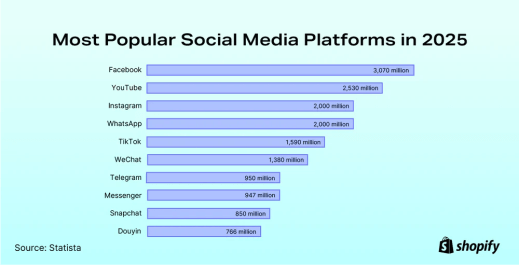
Social media has become a cornerstone of the B2B product and services buying journey. Prospects typically view up to 12 types of content, with 40% of B2B buyers including social media in their purchase research. As your prospects search for info, the right SEO search terms could call up your content and make your thought leadership info available to impact a purchase. Remember also that social media platforms are a two-way street and equally useful for not only broadcasting information, but also for listening and learning by starting and contributing to conversations. By becoming active on LinkedIn, which is the preferred B2B platform, and also X, YouTube and/or Instagram, for example, you’ll not only have a presence on platforms your prospects follow, but you’ll also get confirmation of their topics of interest in the moment, plus a heads-up on what may capture their interest in 2026. Below are four strategies for using social media to enhance your brand and grow your client list.

  1. Provide informative and timely content

By positioning yourself as a go-to source of useful insights and info, you’ll win audience trust—and that is vital. The quality and timeliness of the information you deliver, whether by text, video, or audio, will enhance your value. Distributing your thought leader content on social media platforms favored by your target audience maximize distribution and help you build a following. You’ll benefit from increased name recognition, eventually acquire trust and influence and, ultimately, you’ll create for yourself a solid brand reputation. Insider’s tip: linking your blog and/or newsletter to one or more social media platforms when you publish is a great way to share your compelling content with a wide audience (readers will find my weekly blog at LinkedIn activity/posts.

Video is a growing medium in the B2B sector because social media audiences find it easy to digest and, apparently for that reason, an attractive format. While YouTube is the platform of choice, all major platforms host video/audio content, that runs the gamut from short-form clips to long-form videos and live streams. Posting a webinar in which you took part or the podcast on which you made a guest appearance are excellent video opportunities for B2B Freelance professionals.

Case studies and client testimonials likewise make compelling video content. In fact, it may be easier to recruit your satisfied clients to sing your praises in a video rather than providing a written narrative of the process. Furthermore, if you’d like to present a show-and-tell tutorial that explains the rationale for using your product or service and quickly break down how users can benefit, a video interview in which you take center stage may be easier for prospects to visualize how your solution can be implemented for their needs. BTW, video/audio content, plus any noteworthy information you post to social media platforms, such as a case study, should also be posted on the only platform you own and control—your website.


2. Share client success stories

Nothing succeeds like success and sharing the occasional client success story (maintaining the client’s confidentiality, when requested) helps prospects envision the effective solutions that you might create for them. Examples of your willingness to personalize your solutions by, for example, simplifying your solution or providing an upgrade, or facilitating post-sale training or other supportive services—without violating your competitive advantages—are persuasive and make for memorable brand-building content for your organization.

3. Be authentic and consistent

X and LinkedIn are the usual go-to platforms for serious conversations. When you have something relevant to contribute, whether you make a thoughtful reply to a comment or offer a new perspective that you expect to generate comments from other readers, you demonstrate your authenticity, as well as your expertise and maybe out-of-the-box creativity. Joining one or more LinkedIn professional groups that are related to your industry or subject expertise can introduce you to a good forum, where you can contribute insights and learn new perspectives from thought leader peers.

4. Be transparent about values and culture

A growing number of consumers, B2B and B2C, are interested in the values and culture of companies with whom they do business. Storytelling is a relatable format and social media is an ideal platform for you to demonstrate and express what your company stands for and how your values impact your business practices. Your clients and prospects are not dismissive of a company’s purpose, vision, mission and guiding principles and may be very pleased that you’ve shared this foundational information.

Moreover, don’t hesitate to show behind-the-scenes evidence that shows you immersed in community work, be it a corporate social responsibility initiative, board service, or other volunteer participation. If you participate in a charity event, such as a holiday toy drive for local children, or sponsorship of your neighborhood Christmas tree lighting and party, consider documenting portions of the proceedings and, better still, invite top organizers to contribute a short interview to describe the goals for the event and the constituency it benefits in a video (be sure to respect the privacy of other participants). Clients and prospects like to know that you’re giving back or paying it forward.

Thanks for reading,

Kim

Image: © Statista May 2025

B2B Sales Best Practices

In our last post we examined a few B2B marketing best practices, basic strategies and activities that have earned a reputation for dependably producing successful outcomes; marketing strategies and activities augmented by AI-powered technology have proven to be especially effective. Marketing best practices are routinely followed by those who are considered leading marketers—a savvy and practical lot who avoid the miscalculations of strategies that are, unfortunately, associated with marketing laggards. Marketing leaders know that strategies and activities grounded in best practices are capable of not only producing your organization’s personal best year-end revenue and profit, but also generate business momentum that can propel you into a very happy 2026.

Now that we’ve taken a dive into marketing and learned what’s likely to inspire prospects to ask that you schedule a sales conversation, we can next examine what can be said to represent B2B sales best practices, in particular as they apply to Freelance professionals and small business owners. As always, the goal is to produce healthy revenue and profit results and avoid being seduced by strategies that make sense for, perhaps, an enterprise national or multinational corporation but are probably unattainable for smaller entities. In our continually evolving B2B marketplace, it’s necessary to recognize when to follow traditional B2B basic business practices and when (and which) of the dizzying array of new technologies are capable of facilitating your revenue and other business goals.

Navigating the complexity of B2B purchase decision-making 

B2B sales cycles are typically much longer than their B2C counterparts. The purchasing approval process often requires input from influential stakeholders and it is standard for multiple decision-makers to be involved. Complicated negotiations may be needed to reach agreement on pricing, payment terms and logistics before a sale can be approved. As a result, it is common to meet not just with the project team leader, but with a decision committee when you are invited into a sales conversation.

So—let’s figure out how to survive the lion’s den and earn a chance to rack up as much sales revenue as possible before the 2025 finish line. As usual, the best sales techniques follow a “work smart and keep it simple” philosophy. An effective sales process focuses on more than a financial transaction—the necessity of relationship building, the customer experience and also repeat business and referrals that grow the client list remind you that your sales strategies and skills are building blocks of long-term business growth and are integral to future-proofing your organization. The five steps detailed below are sure to help you improve your sales performance:

  1. Whenever possible, schedule face2face sales meetings to facilitate relationship building opportunities. Teleconferences are useful and very convenient but when possible, especially for the first meeting, find a time and place that will enable all participants to attend in person. Furthermore, it will also benefit you to schedule a face2face meeting at what you anticipate will be the meeting during which you expect to clinch the sale. Facilitating good communication and encouraging transparency and collaboration are easier to achieve in face2face interactions and make it easier to both encourage the sale and plant the seeds of a good client relationship.
  2. In-person meetings provide a forum for you and the decision team to get to get comfortable enough to share relevant information and build trust. The intimacy of in-person interactions are the fastest way to learn what really motivated the prospect’s team to seek out and evaluate your company’s solution. It’s much easier to bring this type of info to the surface when all players are in a room together. Face2face meetings encourage the development of communication and trust whose depth will surpass a merely transactional agenda. Like marketing leaders, sales leaders want to add to their roster clients who are willing to bring repeat business and make referrals to your company. BTW, you can also make referrals for your clients, an action that is certain to strengthen your business relationships.
  3. Sales meetings are typically the setting in which you receive previously undisclosed info that reveals why your prospect is willing to resolve a certain pain point by seeking a solution (that you hope to provide). The prospect’s team might divulge false starts, frustrations and failures that were the outcomes of other solutions. You can move the discovery forward by developing a list of open-ended questions that may encourage decision team members to talk, so that you can actively listen and take notes. Obtaining a clear understanding of client motives, goals, past experiences and concerns will allow you to personalize a solution that addresses what matters to the prospect.
  4. Prospective clients in most cases are concerned with maximizing value for the spend. Therefore, you are advised to focus on the dependable benefits of your solution’s outcomes and results, rather than reciting a list of features that are associated with the service or product.
  5. It is often said that half of life is about showing up; the other half is about the right kind of follow-up. If you’re waiting anxiously for an answer that concerns the proceedings of a recent sales conversation, by all means reach out and make contact. Your job is to add value to the communication and not bring pressure. Good meeting notes will help you to diplomatically present information that addresses client needs and priorities and moves the sale toward a successful conclusion. Maybe you can send a case study that was not previously discussed, or there is an add-on or upgrade that is not costly in terms of time and/or money for you to provide, but will bring value to the client and make your solution more attractive?

Sales skills are critical for B2B sector Freelancers and SMB owners. Those who sell are the revenue engine, making periodic professional sales skills training a must-do. If you’re the company’s one-person sales team, you’ll be much more successful when you sharpen your ability to persuasively and clearly articulate your product or service value proposition/unique sales proposition, refine your responses to prospect questions and objections so that you instill confidence—and close deals in a way that builds client relationships. Keep in mind that utilizing sales best practices tactics alone will not ensure success in the hypercompetitive B2B sector. Producing sales revenue and profit that achieves your targets will also require that you stay abreast of the evolving expectations of your clients and prospects and updated on industry developments and trends.

  1. Instituting an efficient sales system is essential for B2B sector Freelancers and SMBs. A CRM (customer relationship management) system that helps you to monitor leads, sales offers being considered and prospective client interactions should be a part of your sales system. You should establish an inbound sales pipeline that helps you visualize your sales process and identify areas where you can improve. Refer to your marketing buyer persona and use that profile as a snapshot of the client(s) you’re selling to, so that you can tailor and personalize your sales process to fit their needs and expectations. 
  2. Freelance consultants and SMBs operating in the B2B sector must develop a sales strategy.  Your sales strategy will guide you to identify reasonable and attainable sales revenue goals and identify potentially useful sales distribution strategies. Might facilitating website online ordering of certain of your products or services be attractive to your clients and persuade them to do more business with you? Your sales strategy will also guide you to identify principle competitors and learn how to persuasively articulate your unique sales proposition.
  3. Make your sales pitch simple and easy for the client to envision how your solution can be incorporated into the workflow and operate in the real world. Provide information about how your solution can meet the prospect’s specific needs—that is, benefits and outcomes— rather than the ins and outs of service or product features.
  4. Recognize and introduce opportunities to up-sell to premium level service or cross-sell add-on services or accessories. If your service or product line does not currently feature options to “trade-up” or ‘add-on,” consider how you can include such options. For example, designing an “economy” level service may attract interested prospects who are on a budget but are motivated to become buyers. On the other hand, those who have more expansive needs and a budget to match may be ideal candidates for up-selling to premium service/product options, or add-ons.
  5. In 2025-2026, the payment options you offer to prospects can be presented as a competitive advantage. As fintech expands what’s possible, know that buyer expectations are shifting toward flexible, personalized payment terms. Furthermore, cybersecurity and other risk-mitigating considerations are at top of mind. Confirm that your current payment options meet buyer expectations of payment transaction security and give yourself another pathway to encouraging sales and developing good business relationships.

Thanks for reading,

Kim

Image: © Rido/Dreamstime

Two To Tango: Freelance Strategic Partnerships

Tango dancers in Buenos Aires, Argentina

Freelance professionals are survivors by nature—savvy, proactive and ambitious. You are forward-thinking and grasp the big-picture, characteristics that led you to be realistic about current business conditions and respond to the risk-averse spending habits of many B2B prospects. You recognize that a defensive strategy is needed to stabilize the ground beneath your feet and make it possible to at least maintain, and preferably increase, your client roster and bottom-line sales revenue. A perusal of articles in the business press and resourceful brainstorming have led you to consider pursuing a partnership with a Freelance colleague. Owners of business entities large and small have long recognized that a good partnership creates competitive advantages, whether the goal is to help the partners stimulate revenue during periods of marketplace fluctuation, or maximize revenue and profit during a booming economy. Bringing in partner is meant to bring additional value—clients, investment capital, business skills, brand recognition, for example— and strengthen the position of the partners.

Recent research suggests that successful business entities often rely on their relationships—de facto partnerships— with peers whose services or products are complementary to one’s own and whose target customers have data-supported potential to become a promising source of new leads for your entity. In fact, within the Software as a Service community, partnerships and event participation are described as among the highest impact growth channels for warm leads.

The Freelance economy holds numerous sources of potential partnership opportunities— vendors, co-working site colleagues, Freelancing colleagues you meet at conferences, business accountants and attorneys. Even your SCORE mentor could suggest that you meet with a fellow Freelancer who s/he also mentors and discuss the possibility of partnering on certain types of projects. If you find the possibility of introducing a partnership to your Freelance business entity intriguing, here are some things to consider.

1. View the partnership as a strategic asset, not as the cure for a problem.

First, why do you want to form a partnership? What do you hope to gain and what assets can you bring to the table that might persuade a Freelance colleague to engage in a partnership with you? In order for the partnership to be useful and produce the outcomes that you (and the partner) want, you must be honest about your motivations. So, what are you looking for in a partnership? Start the decision-making process by clarifying your partnership wish list. Next, make an inventory of the resources you can offer to a partner and use that list to articulate your Unique Selling Proposition to a Freelance colleague you hope will become your business partner. Keep in mind that a successful partnership is about sharing resources and is not a rescue mission to save a failing enterprise.

  • Do you want occasional collaborators—say, extra help on certain projects—or an ongoing partnership?
  • A partner whose clients are potential prospects for your services and your clients are potential prospects for the partner’s services? Ideally, you and the partner would see a growing client list.
  • A partner whose services are suitable for co-promotion opportunities, such as the McDonald’s and Coca-Cola #Better Together campaign and the Apple Watch Nike+? Co-promotion is meant to introduce your brand to a wider audience and result in enhanced brand awareness and recognition, with the expectation of increased lead generation, sales revenue growth and market share.
  • A partner whose services, when offered in tandem to your own, will result in the capacity to provide solutions that prospects will perceive as delivering more valuable than your current offering.
  • A partner who will share certain business expenses, such as co-promotion advertising costs and/or office space rental.

2. Goals that align and a cultural fit.

In a functioning and mutually beneficial partnership agreement, there are only winners and there are no losers. A partnership is never a zero sum game where only one person wins. Honest, respectfully expressed communication and transparency are demonstrations of respect and the foundation of authenticity. In a recent McKinsey report, alignment on objectives, effective communication and trust were most often present when partnerships and other joint ventures succeeded and most often absent when partnerships failed.

As well, a mutually accepted definition of good work ethic should be agreed-upon and include a shared understanding of how to handle relevant business practices, such as what constitutes timely and appropriate follow-up regarding client referrals, for example. In this way one develops a reputation as a good partner and the partnership can deliver on its intended purpose.

3. Clearly define roles, responsibilities and money.

Establish and clearly define the roles and responsibilities of each partner and that includes money. Discussing payment protocols upfront will prevent ugly misunderstandings. Will the partner who handles the design work on a website project be paid at the same rate as the tech person who perfects SEO and the speed of page loading—or will you each bill at your usual rate? Put everything in writing to avoid conflicts later. Depending on the state in which you operate, your partnership may require a written agreement.

Regarding roles and responsibilities, will there be a quarterly or semi-annual performance quota for client referrals generated, networking events attended, or other work-related activities? A discussion of what constitutes good work ethic and productivity metrics will be helpful.

4. Start small and work out the kinks. 

Where possible, start small and avoid diving into a big project until the partners become familiar with one another’s working style. Instead, rehearse your partnership by taking on a small project. Creating a story board to describe how the partners together will collaborate successfully on a project can be very useful. Remember what Avatar creator James Cameron and others remind us: “A vision without a plan for execution is just an hallucination.”

5. Frequent, honest, feedback.

Misunderstandings and disagreements are best acknowledged and managed in an environment of regular, honest, feedback and discussion. partnership problems are potentially costly. Scheduling regular check-ins for the partners, even if there is little to discuss and the meeting ends quickly, is cheap and easy insurance for dealing with problems the right way and at the right time.

6. Move quickly and collaboratively when partnership problems arise. 

The land of lost partnerships is littered with avoidance, denial, broken promises, unresolved conflict and denial. Especially if the expectations of an important client have not been delivered, immediate action to correct the lapse and protect the relationship must be taken. Remember what Warren Buffett continually tells himself: “It takes 20 years to build a reputation and five minutes to ruin it.”

Thanks for reading,

Kim

Summer Reading 2025

Professional development is like getting regular exercise and maintaining a balanced diet—a gift you give to yourself as you strive to become a successful business owner. When thinking of professional development, conferences sponsored by professional associations or skills building courses held at a college may come to mind but think again—professional development is available in a variety formats. Among the most accessible and affordable methods to obtain professional development can be found in books.

Reading has traditionally played an important role in the development of successful business owners and leaders. When you open a book, a world of ideas, information and insights will be there to enlighten you. You’ll find lessons and experiences that can be critical to your growth as a business owner and leader, shared by authors who give first-person accounts of how they overcame challenges and found success. The books you read can teach you how to sharpen your business acumen and use your newfound proficiency to propel your business forward. The practical knowledge contained in a typical business-themed book can result in your discovery of actionable insights that can become competitive advantages, from refining your decision-making prowess to bolstering your effectiveness when working with teams.

In today’s fast-paced and endlessly-evolving business landscape, continuous education is not only beneficial, it’s essential; but in the age of information overload, it may be difficult to find time to read when you devote the majority of your time to operating your business. Furthermore, you may feel too overwhelmed by the process of researching and identifying topics that will be most useful or interesting to you—the business books genre is a wide field. With those realities in mind, I am happy to share with you a selection of books curated to appeal to Freelance consulting professionals and also business owners or leaders. I hope that one or more titles will interest you. First, here are suggestions that may help you find time to read this summer (and beyond!).

  • Schedule. Like scheduling time for any important task, specifying your reading time will help you choose a convenient time and make it easier to honor your commitment to professional development. Consider reading after dinner, to lend a “relax and unwind” vibe to your reading. You may find the 8:00 – 11:00 PM time slot, three or four nights a week, a great way to wrap up your day.
  • Formats. Especially if your commute is 45 minutes or longer, or your fitness routine is self-directed and not in a class format, consider listening to audio books and/or podcasts as your method to obtain professional development. When in transit or working out, insert your headphones and tune in to an interesting book or program that expands your knowledge, builds skills and enhances your performance as a business owner or leader.
  • Topics. There are many business-themed titles published each year, but it is inevitable that only a select few will appeal to you. Reading book reviews of titles that grab your attention—in the business section of your local newspaper, in the Wall Street Journal or other nationally known newspaper, in Kirkus Reviews , or Goodreads—to winnow potential reading choices as you discover and evaluate titles and authors that may appeal to you and maintain your motivation to read and learn. Below are 10 books to cue up on your Summer 2025 reading playlist.

Company of One: Why Staying Small Is the Next Big Thing for Business (2019) Paul Jarvis

Online-tech veteran Paul Jarvis, whose A-list clients include Microsoft and Mercedes Benz, describes the advantages of running a “company of one,” whether as an independent Freelance professional or as an autonomous, corporate employee. Jarvis has most emphatically not bought into the “grow or die” ethos and prefers instead to operate as a “lean and agile” entity. Jarvis explains how running your one-person shop enables you to both achieve a work-life balance that works for you and, just as importantly, enables you to avoid the need to navigate a potentially suffocating corporate hierarchy and sometimes poisonous office politics. In your little empire, you can work efficiently. Jarvis has learned that smart entrepreneurship isn’t about size—it’s about building a better business that works for you.

 Company of One details a refreshingly original business strategy that’s focused on a commitment to being better instead of bigger. Jarvis has discovered that staying small results in maintaining the freedom to pursue more meaningful pleasures in life as you avoid the headaches and complications that are inherent in traditional growth-oriented business. With this groundbreaking guide, you’ll learn how to set up your shop, determine your desired revenues, manage unexpected crises, keep your key clients happy and find self-fulfillment as you do.

Competing in the Age of AI (2020) Marco Iansiti and Karim R. Lakhani

Here’s a book that is an excellent resource for business owners and leaders whose organizations currently use, or are considering, Artificial Intelligence powered tools in their operations. The authors have produced a useful guide to the realities of doing business in today’s digital landscape and present actionable insights into how introducing AI-driven operating models can enable businesses to achieve scale and scope at an unprecedented rate.

Iansiti and Lakhani show how reinventing a business entity around data, analytics and AI removes centuries-old constraints on scale, scope and machine learning advantages that have traditionally restricted business growth. Recent examples of companies such as Amazon and Google demonstrate how AI-driven processes vastly improve the ability to scale, when compared to traditional data analytical processes, and allow massive scope increase, enabling companies to straddle industry boundaries and create powerful opportunities for machine learning—to drive ever more accurate, complex and sophisticated predictions that make business strategy becomes a new game.

The authors also outline the inherent risks associated with AI and offer recommendations for rethinking current operating models; they also examine the responsibilities that the introduction of AI requires of its users. Finally, Iansiti and Lakhani are transparent about the potential societal impact of AI and point out the potential for algorithmic bias, privacy concerns and cybersecurity threats, along with the need for responsible AI development and governance.

How To Talk To Anyone About Anything (2021) James W. Williams

James W. Williams has written a refreshingly honest, easy-to-follow guide to meeting and greeting and initiating conversations that’s tailor-made for an era when many meetings and even networking opportunities are regularly held in virtual format. As a result, the only avenue to connect with colleagues and attempt to parlay fleeting interactions into deeper connections is hobbled by a computer monitor. Engaging communication skills are increasingly recognized as a powerful and influential competency. 

While some are born with a silver-tongued gift of gab for many, communication aptitude must be developed and nurtured. Williams’ advice is likely to bolster the social acumen of even the most shy and introverted among us, the wallflowers who feel overwhelmed or uncomfortable when attempting to navigate business-slash-social gatherings. If you’ve ever felt awkward in the midst of a meet & greet, or unsure of what to say after an introduction has taken place, this book will show you how to access your communication potential and learn to become a confident conversationalist.

How to Talk to Anyone About Anything provides a user-friendly roadmap that will enable you to practice, grow and eventually shine in social and professional situations. Active listening, small talk and storytelling are situations that the author discusses, as is how to develop the fine art of appearing approachable to your fellow guests when you’re standing alone and wondering if you’ll talk with anyone. Readers will appreciate the many good examples that provide teachable moments and make this book ideal for professionals and social learners alike. Williams’ book is a great soft-skills business resource, that will be a great help to those who struggle with small talk, pitching to clients, or relationship-building within your team. The insights are perfect for occasions where first impressions and informal conversations can open the door to business-enhancing or career-building opportunities.

10X Is Easier Than 2X (2023) Dan Sullivan with Dr. Benjamin Hardy

Call this book a must-read for ambitious business leaders. When the mission is to level up business growth, here are insights that give an eye-opening perspective on how to achieve exponential, rather than incremental, growth. This no-nonsense read can give business leaders and owners actionable insights into scaling their businesses rapidly, leveraging technology and resources more effectively and positioning their entity to stay ahead—of the competition and customer tastes—in a rapidly evolving marketplace.

Businesses leaders often aim to achieve progress, for example, and may focus on doubling their results year over year. However, Sullivan and Hardy argue convincingly that aiming for tenfold growth is not only feasible but also more practical and rewarding. As they see it, going for 10x requires letting go of 80% of your current life and going all-in on the crucial 20% that’s relevant and high-impact.

Readers will find practical strategies and mindset shifts that inspire you to break through limitations and achieve exponential growth. The authors emphasize the power of thinking bigger, setting audacious goals and taking massive action. For business owners and leaders, this approach is invaluable as it encourages innovation, pushes boundaries and fosters a culture of continuous improvement.

Acting Up: Winning in Business and Life Using Down-Home Wisdom (2019) Janice Bryant Howroyd

“Never compromise who you are personally to become who you wish to be professionally” is the core message offered by author Janice Bryant Howroyd, who grew up in a family of 11 children. Here she discusses the principles and techniques that she used to build a multinational staffing agency. The author guides readers through questions of leadership, risk-taking, developing confidence and networking, among other topics.

Howroyd also emphasizes the significance of data-driven and strategic business decisions as she simultaneously encourages readers to take a holistic approach to making the most of both their professional and personal lives. The author addresses as well the topic of diversity from the perspective of a black female entrepreneur and urges readers not to define her by demographics. In sum, Howroyd shares in her book the values she lives by and continues to represent: that of a leader who works for good, for growth and for innovation, for her family values and for the same ideals upon which she founded her company—that success is transferrable.

The 1-Page Marketing Plan (2018) by Allan Dib

“The most common way small business owners decide on this (marketing and advertising) is by looking at large, successful competitors in their industry and mimicking what they’re doing. In reality, this is the fastest way to fail and I’m certain it’s responsible for the bulk of small business failures.” Now you know why this book is included in the reading list!

In The 1-Page Marketing Plan, serial entrepreneur and marketer Allan Dib reveals a marketing implementation revolution that makes creating a marketing plan uncomplicated and fast—it’s literally just a single page! By creating and implementing that one-page wonder, you’ll have an effective marketing plan that you can put into motion. Dib understands that small business owners (and Freelance professionals as well) trying to jumpstart their marketing often don’t have adequate resources—money, time, or expertise—provided by employees or Freelance consultants—that big businesses do. The author has devised a credible alternate path that shows how you can create a basic marketing plan to help steer your business in the right direction and, as Dib himself says, puts you on “the fastest path to money”.

Reset: How to Change What’s Not Working (2025) Dan Heath

Reset offers a guide to fixing what’s not working in your business operations—in systems and processes, organizations and companies and even in our daily lives. Author Dan Heath provides real-world stories and actionable insights that can empower you to create lasting change in your organization—and maybe in your life, as well.

What if you could somehow learn to unlock forward movement and achieve the progress that matters most to you, without the need for more resources—like money and connections? Heath shows how, with the same relationships you have and the same financial resources you can access, it is possible to reconfigure the circumstances and bring dramatically better outcomes to your life. Yesterday, you were stuck. Today, you can reset.

The author explores a framework for getting unstuck and making beneficial changes that matter. Heath says that the secret of success is to find the leverage points—places where a bit of effort can yield a disproportionate return. Do that and you can rearrange your resources and activate those pivotal points. Heath also points out that to even experience the feeling of progress can be a leverage point that can accelerate the arrival of the positive change you desire.

The 48 Hour Start-Up: From Idea to Launch in One Weekend (2016) Fraser Doherty

This can’t be done, you say? Well, author and serial entrepreneur and Scottish citizen Fraser Doherty MBE (who was awarded the honorific title Member of the Order of the British Empire for his achievements) begs to differ. In his book, Doherty provides actionable advice on how to identify and shape a viable business idea that is ready to launch in only two days. Doherty’s reasoning behind the 48-hour deadline is simple—he argues that prospective entrepreneurs (aka wantrepreneurs) spend too much time and energy obsessing over the “perfect idea”. The time they waste waiting for the “perfect idea” to appear is time that could be used refining and adapting that business idea for customers who could actually use it.

The book is helpful with the initial decisions that aspiring entrepreneurs must consider when starting a business. In his considerable experience, Doherty has found that launching a business does not have to involve complicated financial projections, elaborate presentations, or extraordinary innovation. A simple, well-executed idea is what it takes to launch and sustain a successful enterprise and Doherty has done it more than once—the first time while still in his teens. 

Doherty also emphasizes that before you invest significant time and resources, quickly reality-test your idea with potential customers and conduct basic market research. The process will help you gauge market demand for your product or service, assess your main competitors, identify and address potential problems early on and, in general, refine your product or service based on the uncensored feedback received from potential customers.

Good Strategy Bad Strategy (2011) Richard Rumelt

It is a given that developing and implementing strategy is the primary task of a leader—whether military leader, business leader, baseball manager, or tennis coach. The definition of a good strategy could be expressed as a specific and coherent response to—and approach for—overcoming the obstacles to progress. A good strategy works by harnessing and applying power where it will have the greatest effect. Yet, author Richard Rumelt asserts that there has been a growing and unfortunate tendency to equate Mom-and-apple-pie values, fluffy buzzwords, motivational slogans and financial goals with “strategy.”

Rumelt displays an astonishing grasp and integration of economics, finance, technology and history to expose and clarify the often-muddled thinking that is the foundation of too many so-called strategies and his book details a clear way to create and implement a powerful action-oriented strategies that will be effective in the real world.

The book helps readers to recognize and avoid the trap of bad strategy and guides them to adopt good, credible, action-oriented strategy that honestly acknowledges and responds to the challenges that businesses encounter. Rumelt cautions readers that strategy should not be equated with ambition, leadership, vision, or planning; rather, strategy is a coherent, action-backed plan supported by a rational argument.

Rumelt emphasizes that strategies are often confused with goals and visions and points out that a plan is what sets strategies apart from goals and gives you a clear idea of what is necessary to succeed. To evaluate and decide which strategies are suitable for your organization, the author says it is necessary to confirm whether you have the resources to implement your strategy and, in addition, ensure that your strategy fits with your current situation. The actions need to fit with your present circumstances and work together to give you the best possible advantage. After this, you’re well on your way to a faultless strategy implementation.

The Courage To Be Disliked (2018) Ichiro Kishimi and Fumitake Koga

Strictly speaking, this book is not a business book. One might consider it as an accelerator that gives the determination to push forward with a desire to launch a business entity or achieve other important goals. Kishimi and Koga present their book as a dialogue between an older philosopher and a young man. Over the course of five enlightening and thought-provoking conversations the philosopher, who happens to draw from the theories of Alfred Adler, a late 19th- and early 20th- century psychologist and thought leader in that discipline (along with Sigmund Freud, Carl Jung and B. Fred Skinner), explains to his pupil how each of us is able to determine our own life, free from the shackles of past experiences, doubts and the expectations of others. The wisdom that the philosopher reveals is deeply liberating and enables his pupil to develop the courage to change and to ignore the limitations that others, or even the pupil himself, may use to control him.

The result is a book that is both highly accessible and profound in its importance, yet it is not without controversy; certain of authors’ premises you may find shocking or, at least, unrealistic. Still, the book is, at its core, about reclaiming your power and using it to shape the life that is meaningful to you.

Thanks for reading,

Kim

Image: ©Beli_photos

Find Your PR Sweet Spot

Establishing the image of your business entity as a valuable and noteworthy presence in its marketplace, and also the community in which it operates, is a worthwhile goal for every business owner. Bringing attention to the distinctive qualities and contributions of your business entity confers respect and confidence and portrays your organization as deserving of your business. The actions that an organization takes to disseminate and manage strategically selected information about an organization (or individual) that is intended to achieve that goal is the function of public relations, and it is part of a company’s marketing strategy.

Marketing, along with its subspecialties, advertising and branding, are discrete methods of communicating with a company’s target customers; business owners typically create specific strategies to activate these segments. All of these processes will, ideally, work in tandem to deliver your company’s message to your target audience—define and establish the desired company image, promote company name recognition, generate and maintain the trust of current and prospective customers that distinguish your organization from its competitors—and encourage sales.

PR vs. marketing, branding, advertising

Communication is the core of marketing and all of its subspecialties. The role of marketing is to build awareness and encourage sales of the company’s products and services by using one or more promotional strategies—for example, email marketing, social media marketing, or content marketing. The role of public relations is to generate media exposure and promote name recognition for the company, with the intention of encouraging (positive) interactions with current and prospective customers and, ultimately, to amplify the renown and respect of the brand. 

The brand is the foundation of the company’s reputation and represents its essence. The role of the brand is to establish and maintain a compelling and memorable image for the company and its services and products; the brand reflects the attributes that differentiate your company from competitors. The brand is often supported by a story that articulates the business vision, mission and core values. The branding process typically entails the creation of a brand identity, a personality and a perception, for your company and its services and products that will define how you would like current and prospective customers to feel about the company when they encounter or interact with its name and/or logo.

The role of advertising is to promote the sale of company services and products by using images, audio, and/or text promotions that a company pays to have featured in print or (audio or visual) digital media outlets that are followed and trusted by the company’s current and prospective customers, with the intention of increasing awareness and encouraging sales.

Media exposure and name recognition

As noted above, the function of public relations is to advance company name recognition and media exposure by facilitating mentions in selected media outlets, for the purpose of cultivating and maintaining a positive image. PR is meant to amplify the brand image by providing exposure (publicity) that presents positive and compelling information about the company that is intended to encourage engagement, customer loyalty and, ultimately, sales.

PR is utilized to give the brand a flattering shout-out that is featured in media channels and outlets familiar to and respected by target customers, professional peers and the community in which the company operates. PR is about creating buzz for your business, to pique the curiosity of current and potential customers and motivate them to experience a positive reaction toward your company.

PR’s principal strategy is storytelling and it’s up to you to shape your PR topic, images, text and narrative to tell your story in a way that achieves your goal. To maximize its effectiveness, design your PR to grab attention and capture the interest of the audiences you want to know about your company (and you). Those who encounter your company’s PR might even become interested enough to visit your website or social media platforms to learn more, or get an update, about your company.

So what does PR mean in real time?

There are about a half dozen subspecialties of PR that businesses commonly use, for example public affairs and crisis communications, but Freelancers and owners of small businesses are mostly interested in media relations as a way to obtain third-party credibility for their company when target customers, along with your professional peers and also the general public, might find positive news about the company supplied by an unbiased source.

Freelancers and SMB owners might consider launching a media relations PR strategy by leveraging your professional knowledge and experience to propose yourself to media outlets as an expert source. An expert source is a knowledgeable source who is invited to provide a quote that is included in an article or segment featured in a print, visual, or audio medium. Serving as an expert source is a desirable opportunity and is usually accessed by way of a relationship with a journalist or editor.

You might be able to initiate media relationship by simply telephoning or emailing business editors or authors of business articles at your preferred outlets. Be advised that Freelancers or SMB owners will be more likely to find success by approaching smaller media outlets. Perhaps an even better tactic can be used by those who place paid advertisements in those media outlets. A savvy and proactive move would be to reach out to your contact in the advertising department and ask for a referral to the business editor or the right journalist. The gatekeepers of most media outlets are likely to look favorably on an advertiser who also has the credentials to serve as an expert source on business topics.

Now when you have a potential story, meaning an announcement or other information that the media outlet’s readers may be interested in, the standard practice is to create and send a press release to initiate contact with your targeted media outlets. Your press release has two functions—first, to clearly and succinctly detail the who, what, when, where and why of your info and second, to initiate the process of cultivating media relationships.

Before you send your press release, confirm the media outlets to approach by telephoning or emailing the business editor and asking if there may be an interest in your story. No editor or journalist is interested in a story unless they feel the story will resonate with their readers or viewers. If you get the greenlight, then quickly follow-up by sending your press release. In a day or two, reach out to confirm receipt of your press release and ask again how the editor/journalist feels about the relevance of your information or announcement.

Yet another PR strategy, albeit one that will entail an investment of several hundred to several thousand dollars, is to campaign for a local, or national, business award. Organizations typically have many categories that provide multiple pathways to winning award. As is demonstrated by the music industry Grammy Awards and the movie industry’s Academy Awards, receiving an award is nearly always considered newsworthy by media outlets. If you’ve got a great client list and/or your sales revenue is solid, you may want to consider this option.

Access your PR sweet spot

  • Earned (unpaid) media PR exposure can be obtained by giving a quote to a media outlet that covers your area of expertise. Register with Help A Reporter Out (HARO), a service that connects journalists with expert sources has resumed operations after a brief closure. Invitations to give a noteworthy quote that addresses the requested subject are selected on a first-come, first-served basis can set you onto your path to amplifying your credibility and could open the door to additional PR opportunities. Stay close to your email.
  • If your budget allows, consider paid media exposure, perhaps by campaigning for a business or industry award that can be utilized to launch a PR campaign. If you win any level of recognition, you’ll be able to include the good news on your website and social media platforms, along with sending press releases to media outlets and channels that your current and prospective customers, as well as your professional peers, follow. From your local chamber of commerce to the Stevie Awards for business, nearly every award, local or global, is a reliable pathway to good PR.

Thanks for reading,

Kim

Image: ©Carl Mydans/Life Magazine. Actress Carole Lombard (1908-1942) and her husband, the actor Clark Gable (1901-1960), attend a movie premiere in Hollywood, CA (1936).

How Freelancers Manage Up

Despite the benefits that the vast majority of Freelance professionals routinely deliver to clients with whom they work, supplying expertise, creativity, problem-solving ability and can-do work ethic to ensure that mission-critical projects and other important initiatives are successfully implemented, from time to time a client may be disappointed with the outcome of his/her experience with Freelance workers. Unfortunately, some clients feel that the Freelancer hired to produce their project deliverables was somehow lacking; these clients may even feel that the Freelancer failed to deliver the desired vision of the project outcome.

While there are any number of factors that might sour the working relationship between client and Freelancer, an objective post-project analysis of what went wrong is almost guaranteed to reveal poor communication between the parties. Because clients initiate the hiring of Freelance professionals, they are responsible for managing the process from Freelancer recruitment to charting the progress and quality of project work, from acknowledging successful project completion to concluding with timely payment for Freelance services rendered. In a perfect world, clients understand their responsibility for creating a positive working environment for their Freelance talent, because they are aware that it’s a smart way to facilitate and encourage his/her best work.

In reality, however, it is not unusual that clients find themselves in uncharted waters when taking on the responsibility of recruiting, hiring and managing Freelance workers. It is therefore a useful practice for Freelance professionals to encourage best practices by diplomatically suggesting a course correction when some vital component is either omitted or is in need of an upgrade. Fortunately, an experienced Freelance professional (like yourself!) can teach clients who may have scant experience working with Freelance professionals how to make their forays into the Freelance workforce a win-win.

Stepping up to “lead from behind” when necessary and encouraging practices that facilitate a collaborative and productive work environment is yet another way to demonstrate your value to clients. Politely asking questions and/or making suggestions that can potentially contribute to successful project outcomes and also the customer experience that the client seeks—but on his/her own, may not always be able to find—is a useful practice. Here are a few tips that might enhance your experiences as a Freelance professional.

Defining the project and expected deliverables

Surprisingly, there are prospective clients who intend to hire a Freelance professional without sufficiently defining the project specifications. If the project specs your client presents appear vague or open-ended, ask for more details that unambiguously detail what is needed (and by what date). What you want to avoid is being judged as unqualified by a client who is unable to describe what s/he wants. The New York Times notes that vague job descriptions cause unqualified candidates to apply for those positions and qualified candidates to avoid them— and that applies to Freelancers as well.

Forward-thinking Freelancers speak up and request clarification of project specs, project deliverables and deadlines and key expectations if there are questions, during the interview and will furthermore confirm project deliverables and deadlines, as well as other key expectations. From your interview meeting notes, reiterate the list of most vital project responsibilities as described by the hiring manager/search committee in the interview thank-you letter that you’ll send. Demonstrate both your professionalism and commitment to the project’s success as you show the hiring manager/search committee that it is most helpful to confirm pivotal elements of the project that the Freelancer who is hired will be expected to do—and also position yourself as the ideal candidate to hire for the assignment.

Onboarding process

To maximize the potential for delivering your client’s vision of a successful project outcome, your ability to meet (or exceed) those expectations will likely be enhanced when you receive some level of onboarding. Onboarding is a “getting to know you” process, a mutual introduction that enables organizations to ensure that employees, and also Freelance workers, will understand its purpose and guiding principles. A concise overview of basic company history and culture can inform your understanding of how the project you’ve been hired to work on fits into the business mission. You can self-start onboarding with a visit to the “About us” page on the company website.

Furthermore, while interviewing to win the assignment, know that you would not be out of place to ask questions about the project—for example, how the project supports or expresses the organization vision and mission, or the history of the project if it’s an ongoing event. Showing the client that you are interested in the values and principles of the organization positions you as more than someone who is primarily interested in satisfying your own agenda, whether it’s working on a certain type of project or simply getting paid. Those are worthwhile, and necessary, motivations, but prospective clients will see you as someone who is genuinely interested in their organization when you ask questions that focus on its history and culture. Your initiative can show clients that it is in their interest to treat Freelancers with as much regard as any member of their team.

Transparency and communication

As you execute the project work, be certain to routinely engage in communication and transparency. Progress reports, possibly in the format of project milestones, are an excellent format for updates that reassure the client that your work meets expectations and is on schedule—and if there are problems or changes, there will be time to fix things.

In addition to project milestones, when you feel it will be helpful, do not hesitate to ask your client for clarification of any aspect of the project work that you’d like to confirm. Successful client relationships work best when there is a transparency that’s supported by ongoing communication. Make time to discuss the work to ensure you and your client are on the same page, discussing ideas, identifying what may be an obstacle, or deserving of some rethinking, and overall keeping the project work on track. Follow a communication style that is comfortable and reassuring for the client as it portrays you in a favorable light and enhances your value as a successful hire.

Invite client feedback

Facilitate for your clients the opportunity to give you constructive feedback, throughout the project and especially at its conclusion. Receiving feedback is important for Freelancers so you’ll understand what it takes to deliver 5-star work and customer experience. Constructive, relevant client feedback helps you learn how to please clients. You want to know what generally makes the working experience stress-free, efficient and pleasant. Happy clients encourage repeat business and referrals—and that makes Freelancers happy!

Thanks for reading,

Kim

Image: © Vlada Karpovich for Prexels

Lasting Client Relationships Help Your Business Thrive

Freelance professionals and all business owners and leaders understand that they must periodically calibrate (and re-calibrate) their business entity so that it will be positioned to survive and thrive. While evaluating the potential success of growth strategies that appear to be capable of building a client list that enables you to achieve your revenue goals, do not overlook this basic business growth strategy—establishing good client relationships.

Good client relationships are foundational to the development of a healthy business and typically result in a potent client list, robust repeat business, consistent referrals and a low client churn rate. Implementing inbound and outbound marketing strategies in order to energize revenue is always necessary, but the process is usually time-consuming and by that metric alone, is expensive.

Recognize that you can enhance the value of your client list quantitatively, by adding more names, and simultaneously follow a qualitative approach to building the roster, when you prioritize the development of good client relationships. Establishing positive relationships with clients is a savvy marketing strategy that can play a supporting role in growing the number and quality of your active clients. Client relationships can support conditions that encourage client loyalty, repeat business and referrals, while simultaneously discouraging client churn. That the process of retaining clients and persuading them to continue doing business with your organization can be influenced by good relationships is so fundamental it is sometimes overlooked.

Beneficial client relationships are built on trust that’s born of the fulfillment of expectations (e.g., excellent project work and timely invoice payments), as well as transparency, communication and collaboration. More like partnerships than the usual transactional agreements between clients and vendors, clients with whom you’ve established a good relationship provide stability, inspire creativity and drive innovation that results in project outcomes that often exceed expectations. Below are qualities and practices that promote the development of beneficial client relationships that will pay dividends to both you and your clients.

1. Agreements, specifications and contract

It is a given that good client relationships begin with ethical and transparent business practices that are introduced during the initial project or product discussions between yourself and the client. Project specs or desired product solutions govern work agreements and performance milestones. Project contracts or sales agreements are intended to facilitate a smooth and productive collaboration and ensure that both the client’s interests and your interests are fulfilled. The quality of these discussions is integral to the establishment of creating good client relationships and transparency is key.

2. The customer experience

The quality and consistency of the customer experience your organization delivers is another building block of beneficial client relationships. The fact is, when your organization delivers an end-to-end efficient and satisfying customer experience, those with whom you do business will be happy to see more of you. When you (and your team) make it possible for clients to trust your expertise, professionalism, integrity and ability to meet or exceed expectations, you’ll be on your way to establishing mutually rewarding client relationships that can bring both tangible and intangible rewards to your organization (and the client’s).

As you shape the customer experience your company presents, be aware that “thank you” is a powerful word in every language. Saying “thank you” to your client for doing business with you shows appreciation and everyone likes someone who appreciates them. “Thank you” has the power to nurture and sustain positive relationships.

3. Communication and collaboration

You can build lasting, mutually beneficial relationships by facilitating good communication with your clients. Regular communication is integral to supporting collaboration, enabling innovation and producing outcomes that will likely meet, and may exceed, the client expectations. Honest and ongoing communication is crucial to gaining client confidence; be certain to keep your clients fully apprised of the project’s progress, challenges, or changes. Regular updates and transparent reporting demonstrate accountability, promote cooperation and enable proactive problem-solving that drives successful results.

As well, keep in mind that while technology enables communication at any time or any place, it cannot replace the value of face2face communication. When scheduling client meetings, suggest in-person chats whenever possible, as a way to encourage a good relationship. The Harvard Business Review reports that 95% of business leaders believe in-person meetings are essential for building stronger, more meaningful relationships. Alternating meetings between the client’s preferred location and your own shows consideration and empathy, attributes that are also integral to relationship-building. Keep in mind that business decisions are often influenced by personal relationships.

4. Listening and empathy

Effective listening is a cornerstone of relationship-building and good relationships are the foundation of business and diplomacy. Active listening is a demonstration of empathy and respect, and it builds trust. The ability to listen effectively is a valuable leadership skill and despite appearances, listening is active, not passive, and requires the listener to be fully present. When you invite your client to share information ask questions and perhaps brainstorm ideas, you validate his/her priorities and concerns and demonstrate your commitment to the development of a positive, long-lasting relationship.

Empathy allows you to see the world through the eyes of others and listening is a crucial enabler of the process.  Empathy helps you to effectively comprehend your client’s feelings, aspirations and challenges. Clients who feel as if they are understood will also feel that they are valued, making them more likely to become and remain loyal to your organization and more likely to reward you with repeat business and referrals. 

5. Flexibility and patience

Beneficial relationships rely on flexibility and patience. For example, there may be times when your client must grapple with unexpected challenges, such as time line changes or budget constraints. In these situations, your willingness to be adaptable and propose alternative approaches to meet revised client needs will demonstrate your commitment to the project and his/her organization, promotes trust and is likely to significantly strengthen the relationship.

Thanks for reading,

Kim

Image: © Skynesher for Getty Images.

Marketing Enters the Echoverse

In the 21st century, savvy business owners and leaders must be aware of developing trends and determine which behave like a passing fad and which seem capable of delivering value that make it worthwhile to get on board. One such trend— that looks more like an inflection point than a trend—was documented in 2016 by researchers from the University of Maryland Robert H. Smith School of Business, the University of Tennessee and the University of New Zealand and it’s a must-do. It’s been impacting your business for five years or more, but you may not have figured out the big picture and didn’t know that it has a name.

Introducing the echoverse, a communications phenomenon that describes where digital communication is now and will be for the yet-to-be-determined future. The echoverse was born of cross-channel marketing messages that are initiated by brands, customers, influencers, media outlets, investors and anyone else with a keyboard and bounce and reverberate in feedback loops. These simultaneously independent and co-dependent parties continually add their responses to posted content, chattering on as they follow and listen to each other across all available digital platforms. The outcome of the call and response is the echoverse, a communications environment that enables content to circulate, amplify, morph and echo.

Understanding the echoverse

As you continue adjusting to early 21st century marketing communication practices, keep in mind that the echoverse is controlled by a hyperconnected, 24/7 environment that’s touched by many players—brands, customers, media, AI-powered artificial agents—who contribute to and echo each other’s messages, as summarized below:

  • Communication is omnidirectional. Messages flow in all directions, they may originate from any source and they are subject to reinterpretation through interaction with multiple participants.
  • Influence is communal. Traditional roles of message sender and receiver are waning. Any interested party may initiate conversations and modify, contradict, or reinforce whatever messages are sent in response. Every participant is both a creator and a consumer of content and empowered to impact, contradict, or verify fellow participants.
  • Messages evolve. Messages are impacted, influenced, or amplified by feedback loops and participants whose participation is continually and simultaneously changing.
  • Value creation is shared. What is considered valuable is not necessarily created by a single, all-powerful taste-making source. What’s accepted as worthwhile is co-created and co-owned by all participants, with each one adding unique context, interpretation and/or resources.

Marketing in the echoverse

In traditional marketing communication, the brand drove the bus—defined marketing goals, created all content and chose how messages were sent to customers and prospects. Echoverse marketing has introduced a new playbook. The influence once held by brands has diminished because that entity is now just one agent in a cast of characters who develop and disseminate their own spin as they follow, listen and act upon the official brand messages. Meaning, successful navigation of the echoverse requires brands to pivot from leading to guiding, persuading and encouraging self-appointed and vocal stakeholders through (ideally) well thought-out and presented opportunities to contribute to a process of value co-creation and strategies for promotional communications.

  • Echoverse marketing for Freelancers and SMB

No doubt you understand that both challenges and opportunities are associated with the echoverse. To develop effective and responsive marketing strategies and tactics, marketing managers in companies of every size must embrace its omnidirectional, feedback loop reverberations and prepare for the possible influence of self-appointed stakeholders who thrive in the echoverse.

Like their counterparts in enterprise companies, Freelancers and SMB owners must adopt big-picture thinking and manage all marketing communication channels as an integrated, holistic, interdependent system—a compartmentalized, silo approach will not achieve goals. A cohesive strategy that considers the interactions between various media is essential—an integration of traditional media outlets, social media, your company website, email marketing and other brand promotional activities to create a unified brand message that is consistent and compelling at every touch point.

  • Proactive Customer Engagement

Social media is ideal for allowing brands to engage with customers and curious prospects in a personal and immediate manner. Engaging with customers on social media allows you to hear and quickly respond to compliments, comments, suggestions and complaints. It is the best defense against negative talk that may be expressed by competitors and haters whose agenda is to attack and subject your brand to reverberating echoverse slander.  Brands should focus on consistent, authentic communication that addresses customer concerns and other feedback promptly and effectively.

  • Leveraging Predictive Analytics

If you can budget the expense, investing in social media listening can provide valuable insights into emerging trends and potential problem (or helpful) issues or developments. Being proactive enables brands to anticipate and respond to changes in customer priorities, preferences, or concerns before things get ugly. Tools that analyze data generated by various platforms can help brands identify patterns and adjust their marketing /branding strategies accordingly.

  • Utilizing AI and Internet Technologies

AI tools and other internet based technologies are transforming marketing communications within our complex, interactive communication landscape. In this environment, a diverse network of human and nonhuman participants—including customers, brands, AI agents, traditional and digital media outlets and platforms—continually interact, influence and reshape messages across platforms. Traditional one-way and two-way communication models have given way to omnidirectional communication for the foreseeable future.

Thanks for reading,

Kim

Image: © Swiss Yodeling Association. Alpshorn players create echoes in the Swiss Alps.

The Case for Face2Face

Whether the topic is business or personal, most studies show that between 60 % – 90 % of communication is nonverbal and furthermore, nonverbal communication techniques, for example, tone of voice and physical distance between yourself and the person with whom you are speaking, are intuitively used by all humans. Moreover, within the first few minutes of meeting and speaking with someone, we begin to make decisions about what the other person’s intentions are and figure out if that person is trustworthy and safe to do business or socialize with.

Those study findings throw cold water on the 318.66 million U.S. citizens who in 2023, according to the German data research firm Statista, used the internet to send email and SMS (text) messages, follow social media and join videoconferences to communicate with colleagues, family and friends. Electronic communication platforms are quite convenient but numerous reliable studies show that nonverbal communication signals are challenged to cross the digital divide, causing unspoken but nevertheless relevant nuance to slip through the cracks.

Can any of us know how much of a story may have been lost when told through a digital method? If that’s not enough of a lapse, is a digitally transmitted story more vulnerable to misinterpretation? Nonverbal communication—facial expressions, posture, physical gestures and tone of voice, for example—is a vital component of human communication that can signal how you really feel, despite what you put into words. An awareness and ability to recognize and read the nonverbal communication signals transmitted to you and by you will greatly enhance your communication skills and relationships. In conversations both casual and critical, you want to understand the impact of verbal and nonverbal messages, what you send and what you receive. In their 1972 book Effective Business Communication, Herta A. Murphy, Herbert W. Hildebrandt and Jane P. Thomas noted, “Sometimes nonverbal messages contradict the verbal; often they express true feelings more accurately than the spoken or written language”.

There are three principal elements of nonverbal communication: facial expressions, body language and overall appearance. When speaking with someone it’s important that you are alert to his/her nonverbal gestures, because the story is being told on more than just the verbal channel. In fact, people are more likely to engage you in future conversations and consider having a social or business relationship with you when you recognize and act upon their nonverbal cues. Below are 12 nonverbal communication signals that you may observe, decode and respond to in your next conversation.

Cheerful face and voice

1. With appropriately displayed smiles and nods, you’ll communicate to your conversation counterpart that you are listening to his/her opinions and that you understand and agree with his/her story. Communication experts unanimously agree that listening is the most important communication skill; everyone wants to be heard.

2. Pulitzer Prize winning journalist Charles Duhigg, author of Supercommunicators: The Power of Conversation and the Hidden Language of Connection (February 2024), notes that talking and laughing together is a bonding experience that contributes to relationship-building. Laughing with (but not at) someone promotes a happy mood and is another way to signal that you’re listening to the story.

3. Maintain good eye contact by looking your conversation counterpart(s) in the eye as the two of you talk to, again, display your interest in their story. However, you must periodically pull back the eye contact by taking brief breaks, perhaps to contemplate your next answer, for example. You don’t want your eye contact to be perceived as staring (that is, aggressive).

4. Regulate your voice so that you speak in a pleasant and confident tone that is authoritative yet not intimidating and matches the purpose and topic of the conversation. Speak clearly, enunciate well and pace your speech so that it’s neither too fast nor too slow for the occasion. Avoid raising the pitch of your voice as you end a sentence, as if you are asking a question rather than making a statement.

5. Mirror the other person’s facial expressions to demonstrate that you agree with and like the other person. Mirroring validates the opinions, wants and needs of the person you’re speaking with.

Body talk

6. Align your posture by gently lifting your chest, lifting up from your lower back and straightening your spine. Then, pull your shoulders back but keep them relaxed, so that you don’t look (and feel) tense. Activate your core muscles to support your midsection and comfortably maintain posture. In other words, don’t slouch; instead, communicate that you are cognitively present and ready to communicate and connect.

7. Place your legs hip distance apart when sitting or standing. When sitting, cross your ankles, rather than your legs, to demonstrate that you are relaxed and listening.

8. Leaning in gently is yet another body language gesture that indicates you are listening. As noted above, listening is the most powerful confirmation that signals to the other person that you hear and respect him/her.

9. Mirror the body language that you observe in your counterpart, to signal that you relate to him/her and that you agree with his/her point of view. Smile when s/he smiles; become serious when his/her facial expressions and vocal tone reflects that emotion. You want to communicate that you are on the same wavelength and understand his/her opinion or purpose.

Arms and hands

10. When, for example, the conversation takes place with participants standing—maybe you’re attending an industry expo or maybe you’re at a party—keep arms relaxed at your sides as the other person speaks, to show that you are listening and open to hearing what s/he has to say. It’s often best to keep your arms uncrossed, so that you don’t appear confrontational or intimidating.

Whether sitting or standing, use your hands to gesture while you speak, to enhance your credibility and confirm your engagement with the listener and topic. There is also evidence that using hand gestures while speaking improves your thinking processes. However, take care that hand and arm movements are not overly expansive and distracting.

11. Greet others with a firm handshake–but not too firm. A firm handshake is one of the most important body language moves, because it sets the tone for the entire conversation. Who wants to shake hands and have a conversation with a wet noodle?

12. Be aware and respectful of different cultural greeting and departure practices prior to your meeting. For example, when you greet the person with whom you’ll speak, will you shake hands, bow, or air kiss both cheeks? End the meeting with a firm handshake (or bow, or air kiss on alternate cheeks) and eye contact, to signal that you enjoyed your time and hope to meet again.

Thanks for reading,

Kim

Image: © Erik Arazas. Meeting and greeting with a traditional handshake and nose kiss at the Zayed Grand Mosque in Abu Dhabi during Eid Al Fitr 2012, the festival that celebrates the conclusion of the month-long observance of Ramadan (Ramadan 2024 begins March 10, Eid Al Fitr 2024 is April 9).

You Can Own the Change

The ability to envision future growth opportunities for your company and devise credible strategies to enable their realization can sometimes seem daunting to Freelancers and small business owners. Chances are, you do not have the financial resources to ride out unforeseen obstacles or changes in your marketplace that can derail your progress. That observation is especially true during extended periods of economic instability. How can you position your entity to thrive when even the present is a moving target? Attempting to devise reasonable strategies to guide your enterprise through the next 6-12 months may feel as if you’re mapping a course through a minefield, instead of merely figuring out how to dodge the usual slings and arrows of marketplace competition.

As business, political and environmental conditions continue to fluctuate, you may find it helpful to adopt a new frame of reference, a new approach that is in tune with the times, a mindset that can help you adapt to the inevitability of change. The zeitgeist of the moment seems to recommend three must-have leadership qualities—agility, innovation and communication. These characteristics enable you to have an open mind, let go of the past and encourage you to recognize where and how elements of unavoidable change might work in your favor.

Forward-thinking leaders have always found opportunity hidden by uncertainty. Hard work and determination alone have never guaranteed success. You must face up to the inevitability of change and own it. Hall of Fame hockey player Wayne Gretzky said it best— “I skate to where the puck is going to be, not where it has been.”

Communication

As is frequently noted in these posts, cultivating mutually rewarding relationships with clients is the foundation of a good business. Good relationships are built on trust. You open the door by ensuring that your company’s solutions deliver results that exceed client expectations, by going the extra mile to provide superior customer service, including after-sale service and/ or training and when you invite client feedback.

Make it possible for clients to feel that you and your organization are dependable, demonstrate that you value their business and they will be happy to share with you honest feedback that keeps you updated re: any number of changes—how their organizations operate now, shifts in focus and priorities, regulatory updates in their industry, or technological innovations—-factors that may change how your solutions fit their needs.

Communicating regularly with clients represents a competitive advantage because the information you receive can be used to get you out in front of impactful changes. Time and information are money. Conversations with your clients can inspire you to evaluate the feasibility of launching innovations, large scale or incremental, upgrades, or modifications that can position your products and services to more effectively meet client needs and enhance your revenues and long- term viability.

Agility

Let’s step into the agile mindset noted above and acknowledge that fluctuations in the business climate present an opportunity to re-imagine your enterprise and find new ways to deliver value to clients! It has always been true that uncertainty is the only certainty. Your agile mindset will guide you to incorporate a collaborative, cross-functional and communicative workflow style that keeps your organization nimble and responsive to the evolving needs of your clients. In the world of business, the clock never moves backward. You can’t afford to be left behind as the world moves on.

Innovative

Changing circumstances are known to result in new or reimagined products and services coming to market. The most reliable source you can tap into to get ideas about new products, services, or adjustments you can make to your current line is your clients. Be advised, however, that what a client suggests may not be the best change to make—remember that you see the big picture of your business in a way that no one else can.

But from time to time a great idea will surface, perhaps just a small, uncomplicated tweak, that makes your clients more satisfied with how your products and services address their needs. Invite your clients to share the backstory of what they’re facing now and brainstorm how your organization might you make their job easier and less stressful. That’s the real meaning of innovation.

By thoughtfully considering potential product or service modifications you might make, new technological tools you might introduce, or how you can update your delivery model (for example) on a case-by-case basis, you can support innovation, agile practices and beneficial communication with your clients. Best of all, you’ll ensure that your company stays ahead of the curve as you integrate what works to deliver value to your clients now.

Thanks for reading,

Kim

Image: Master’s degree students in the Medical Device Design Program at Duke University March 2021