Is Your Content Shareable?

Whatever format you use to create content intended to promote your business, your mission is to communicate the essence of your brand: the solution, purpose, value and benefits that persuade clients and prospects to trust your product or service and motivate them to take a positive action in response—give a like, comment, share or make a purchase. When content viewers demonstrate their approval by taking one or more positive actions, they become brand cheerleaders who amplify its power and influence. Needless to say, instilling a deep connection to your brand is highly desirable and it’s very much in your interest to produce marketing content that generates strong positive responses in your target audience viewers.

Effective marketing content is a carefully calibrated mix of text, still images and/or video, often presented in digital format but occasionally appearing in print, that collectively tell a story about your service or product. Your number one goal is to make the story compelling, memorable and also shareable—you want content that builds enthusiasm for your brand and the story and persuades viewers to become cheerleaders. When viewers feel that the story told in your content is so compelling and memorable that they feel they must send it to others, you’ll know that you’ve done your job. The content might even go viral, or at least greatly exceed the usual number of viewers, likes, comments, or shares. The question is, how can you hit a home run like this a lot more often? Well, like becoming a reliable home run hitter, good results are produced by discovering the right technique and getting lots of practice.

The best marketing and branding campaigns have as their foundation an essential human quality that inspires a connection with viewers. That behavior is familiar and relatable; it can be comforting or exciting. Its effect promotes engagement that can lead viewers to take an affirming action, such as responding with a like, share, or comment, and/ or purchasing the service or product. Producing content that contains text and images that reflect your brand promise and perceived value is foundational to motivating viewers to take one or more of those positive actions.

“How do I love thee, let me count the ways”

As poet Elizabeth Barrett Browning (1806-1861) wrote in Sonnet 43, it helps to understand the emotion that fuels your action. When building marketing content, it’s imperative that text and images used work hand in hand to address the client’s point of view—pain point or goal, possible solutions and outcomes. It’s also important to acknowledge the feelings that clients can expect to experience when doing business with you, such as relief and satisfaction, in contrast to doing business with a competitor.

This analysis supports development of a highly persuasive story that references the right behaviors and emotions and ensures that your content convincingly resonates with target viewers. By understanding the brand position occupied by your services and products, you can effectively differentiate from primary competitors by highlighting the strengths and other advantages that are highly valued by your audience. Your story is certain to stand out thanks to its emotional connection with viewers. Effective marketing is all about communicating unique differentiators that leave a meaningful, lasting impression that rises above the noise of a crowded market. Addressing the questions below should give a good start to your content creation:

  • What emotions do prospects experience before they use your product or service? What pain point drives them to consider your service or product?
  • How do clients feel after they’ve used your service or product?
  • How do you want prospects or referrers to feel after experiencing your marketing content?
  • Which values and behaviors most closely correspond with your brand promise and unique selling proposition?
  • How do behaviors associated with your brand compare with competitors’ brand positioning? (expressing differentiation is essential).

End with positive emotions

The final impressions expressed in the text and images of your content must leave viewers with a positive feeling toward your services, products and company.  That your product or service delivers an excellent solution can be considered a given; it’s the human connection that leads viewers to perceive your content as a compelling and memorable experience. When content resonates with the audience on a human level, it taps into feelings, values, or aspirations that often surpass the functional aspects of products and services.  

A truly successful branding campaign needs more than clever text and eye-candy images. Effective marketing is about presenting messages and a story that resonates with viewers and generates an emotional connection with them. While many brands obsess about going viral, sustainable success comes from creating stories that are worth sharing because they tap into human behavior and stir viewer emotions. The best content becomes memorable and inspires the viewer to take action. When you present content that accurately represents human behavior, viewers cannot help but identify with your story. Then, you go beyond merely selling a product or service; you create an experience and a valuable, long-lasting connection.

Thanks for reading,

Kim

Image: © Philadelphia Museum of Art. Mary Cassatt Maternal Caress (1896)

Perfecting Your Pivot

If the quintessential American motto is “change is good,” then in the business sector change finds its ultimate expression in the pivot. You have no doubt noticed that business publications often feature reports of a pivot executed by one entrepreneur or another. The pivot is the new American myth, a swashbuckling action-adventure narrative that stars a Luke Skywalker archetype who launches a start-up. If sales start tanking, our brave and brilliant entrepreneur-hero correctly diagnoses the problem, intuits the marketplace zeitgeist and engineers a flawless pivot that not only saves the company from bankruptcy, but carries it to phenomenal success.

These heroes’ journeys are exciting and tremendously appealing but as you know, reality does not unfold like scenes in a movie. What’s lost in the fawning admiration is the cold fact that a pivot is a complex process. Getting it right demands a deep dive into both your data and that of your marketplace. The ability to recognize the story that the data tells and the good judgment to know what to do about it is another requirement. A dose of good luck is the third resource you’ll need.

It may take a couple of disappointing quarterly financial reports to convince you that a change must be made, and soon, to avoid getting trapped in a permanent downward spiral. Once it becomes obvious that corrective action is necessary, your first challenge is to identify which aspects of the business need to change and what might be left in place.

Resist the temptation to assume that major surgery, i.e., a pivot, is the best remedy. Choose the course of action that data indicates is the most specific and least disruptive solution and should have the best chance of successfully turning the company around. The purpose of your research is to discover and confirm growth opportunities and how to either successfully enter a new market or hit the restart button on the market you’re in, by refining your methods. Carefully research the size of potential new target markets, your access to those customers and the competitive landscape.

For example, as you analyze the efficacy of your marketing strategy, you may realize that some combination of ramping up your inbound marketing activities to increase outreach to target customers, reassessing your pricing strategy and/or upgrading pre- and post- sale customer services provided could make a substantial positive impact.

Once you’ve analyzed your business and marketplace data, you would as well be wise to review your company mission and vision statements. Before making any big changes to the purpose or mission of your enterprise, make sure that the new direction of your company will align with your values and guiding principles. Or will your pivot necessitate a rewrite of your vision and/ or mission statements?

Pivot to solve a problem

Analyze your KPIs, with special emphasis on marketing data and revenue streams. Get input from your customer-facing team members and feedback from high-volume customers—both groups have wisdom to share. Every pivot is different, but every pivot must solve a problem. Following your analysis, you can develop your pivot strategy, the roadmap that defines the aspects of your business that you’ll pivot and the aspects that will support the new direction and can remain in place.

Your pivot plan will outline the steps you’ll take to execute the pivot. It should include timelines, resource allocation and key performance indicators (KPIs) to measure its success.

As well, encourage yourself to be confident once your decision is made. A pivot is a significant challenge but it is nevertheless a sign of robust strategic thinking and problem solving, essential qualities that support the long-term viability of your enterprise. Signs that a pivot might be necessary include:

  • Insufficient customer base
  • Weak brand equity
  • Unsatisfactory revenue and profit
  • Negative customer feedback
  • Overwhelming competition

Types of Pivot Strategies

Pivots offer customizable options—-there is no one-size-fits-all template. Your company’s pivot may involve a group of small changes that together result in a significant positive impact. Conversely, your pivot may be based on a very visible alteration in your signature product or service that precipitates a re-calibration of your brand and all the ways you market and sell it. Below are five of the most common pivot strategies:

Marketing Pivot: Signals a big change in your company’s core marketing strategy. Pivoting in this instance may include targeting a different audience, using more appropriate outreach channels, re-calibrating your use of inbound and outbound marketing techniques, or adjusting the company’s brand voice and messaging tactics.

Product Pivot: Describes a change of the company’s product or service offerings. Pivoting a product may include altering the product’s ingredients, features, or packaging. In a more dramatic approach, the defining characteristic of your pivot may be the introduction of new product or service lines to provide solutions that are more responsive to customer needs and priorities.

Brand Pivot: A branding pivot strategy entails one or more adjustments to a company’s characteristic image and philosophy. Pivoting a brand may include renaming the company (see Facebook to Meta), editing its mission to serve a new target market, updating the company tagline, or refreshing the visuals, e.g., the logo and/or color scheme used.

Pricing Pivot: In this choice, a company may change the pricing tier in which it has previously operated. For example, a retailer that originally priced in the mid-market tier may conclude that economy pricing will better reflect the perceived value of its products. The expected outcome is a broader customer base that generates greater revenues and increased profits.

Distribution Pivot: Closing all or most of a business’s physical locations in favor of operating in the e-commerce sector is a bold example of a distribution pivot. The strategy involves changing how a company delivers its products and services to consumers. Pivoting your distribution model could include expanding into new geographic markets, adding or discontinuing retailer partners, or introducing the franchise model.

Communicate and monitor

In advance of your venture’s pivot, encourage support by explaining the upcoming changes to stakeholders—employees, customers, investors. Outline the changes you plan to make and clearly articulate how those changes will benefit their relationship with the organization. Schedule videoconference meetings with each key constituency to discuss the pivot and make the case for why it is necessary.

Be certain that your explanation adequately answers the anticipated questions and potential concerns of each group. Consider creating a Frequently Asked Questions (FAQ) sheet for each stakeholder constituency. Finally, closely monitor the pivot’s progress as reflected in the KPIs you’ve chosen, as well as feedback from key members of your constituencies.

Thanks for reading,

Kim

Image: The Academy Drum and Bugle Corps of Tempe, AZ

Semiotics Storytelling

Semiotics is the study of signs and symbols in verbal and nonverbal communication— language, gestures, or clothing and images. Semiotics explains meaning and reveals how we instinctively interpret the messages we receive, wherever we encounter them. The field of semiotics has plenty of lofty academic associations (maybe that’s why I never considered becoming a semiotics major), but I’ve discovered that the field has boots on the ground implications for marketers, too.

Your typical marketing professional is unlikely to realize it, but semiotics is the foundation of everything we do, from creating marketing messages to logo design, encompassing calls to action and all sorts of customer persuasion campaigns that are intended to influence buying decisions.

Laura Oswald, author of of Marketing Semiotics: Signs, Strategies and Brand Value (2011) and Founder/ President of Marketing Semiotics, a boutique brand strategy and research firm in Chicago, IL says, “Semiotic theories and methods can be used to identify trends in popular culture, to understand how consumer attitudes and behavior are formed in relation to popular culture, including brands, and how marketing and advertising programs can best meet the needs of consumers by improving communication with the end user.”

The decisions we make are often influenced by our emotions and those emotions are often guided by our subconscious interpretations of words and images. Semiotics can help decode those subconscious messages and marketers can use that awareness to create messages and branding that draw in the target audience.

You tap into semiotics as you articulate the brand identity, brand communication style and also your brand ethos, i.e., your company’s reputation and how customers (current and potential) perceive your brand. The quality of the products you sell or services you provide, along with the customer service and customer experience your company delivers, are the essence of brand ethos.

You rely on semiotics to create or select all of the marketing sytories and symbols that represent and promote your business—the behavioral, verbal and visual identities. To ramp up the power and broaden the reach of your brand, with a goal to inspire or strenghten customer loyalty to your brand, marketers are also advised to incorporate selected preferences and values that are popular with your target audience into your brand symbols.

So let your ads, social media posts, website and marketing emails echo the terminology or slang, images and colors most meaningful to your target audience loves. In addition to the colors that represent your company’s visual packaging and brand identity, even shapes carry meaning.

In particular, the shape of your logo communicates more than you may have thought about your company. Circles communicate friendship, unity, inclusion, safety and warmth (but you knew that!). Squares symbolize power and professionalism; those straight lines telegraph strength, dependability and also tranquillity.

So tap into the resources that semiotics provides to marketers and discover the secrets of how your audience may interpret what you communicate and learn the best ways to appeal to those you want to persuade.

Thanks for reading,

Kim

Photograph: Kim Clark October 2021

Optimize Social Media Campaigns

When you’re on a mission to reach the target audience for your products and or services, develop and strengthen relationships with clients, make your case with prospects, or build and promote your brand, the most powerful tool at your disposal is, overall, social media. By using one (or more) of the several free platforms, Freelancers and others with a product or service to sell, or reputation to enhance, can easily broadcast relevant information and persuasive messages to those who might buy, or buy- in.

Utilizers of social media will also receive credible feedback from those who engage with your company (or you), delivered in unfiltered first-person comments (user-generated content) and the platform’s user activity metrics. That means you’ll get timely and accurate insights—-actionable intel—-that reveals what clients and prospects respond to or reject. That’s tremendously valuable information that can guides your marketing strategy and even the development of your product or service. Use social media to reach deep into your preferred client demographic to expand the reach and influence of a company, product or service launch or rebranding campaign, or support the pivot you’ve decided to execute.

However, for best results, you must consider the capabilities and user demographics of the platforms on which you post. To which platforms do your clients and prospects gravitate? Their age range is a reliable indicator.

Choose the platform

There are several options available and each has a particular style. The age range of your target market is a primary determinant of your chosen platform, as is the category of product or service that you’ll promote. Below is an overview of the most popular and how each might enable the marketing outreach that you need.

  • Facebook has 2+ billion active users and 79% of Americans age 18 – 49 are regular users. 58% of Americans age 50 – 64 are regular users. Ecommerce integretion allows you to sell your products and services directly from the platform which supports your do-it-now Call- to-Action. Moreover, the advertising feature is a reliable way to brings in more potential buyers.
  • Instagram has 1+ billion users and especially if your target audience skews younger and visuals are an important communication tool, this platform is where you want to be. 67% of young adults <30 years are regular users and nearly 50% of adults age 50 or younger are regular users. Tell your brand story, chock full of videos and photos, on this platform.
  • LinkedIn is B2B county. 37% of its 300+ million regular users are age 30-49 and 50% of those who earn $75,000/ year or more are regular users. Plus, 51% of regualr users have earned at least a bachelor’s degree. The platform provides your best opportunity to connect with business decision-makers who might green light the sale of your B2B products or services. Furthermore, LinkedIn features hundreds of industry-specific networking groups that members can join and trade information with colleagues based on their industry, job function or career interests.
  • Twitter is a real-time social media platform that functions like a global text messaging service. Come here to make big announcements on this platform—- your new venture, new service, the workshop you’ll teach, the panel you’ll moderate. Tweets can be maximum 280 characters, which will inspire you to craft a short, sharp , concise message that gets your point across. With about 330 million users worldwide, Twitter is much more about text than images. It’s biggest demographic consists of people between the ages of 18-29, with 38% of people in this cohort actively using the platform.
  • TikTok quickly became a social media juggernaut and its eye-candy 60 second videos became all the rage. Just walking down the street can cause you to witness a teen with a smartphone, recording a dance clip to upload to the platform. TikTok is a darling of B2C marketers, but B2B is figuring out the terrain. If your clients and prospects skew to age 35 or younger, TikTok videos are a useful way to run your brand awareness campaigns. The platform is also effective for building and solidifying a community of brand fans. The platform is too big to ignore. Globally, there are 1+ billion users monthly.
  • YouTube is arguably the best social media platform that exists. For one, 1.9 + billion people use YouTube on a regular basis and it is also the 2nd largest search engine, after Google. There is a downside, however— you’ll have to learn how to create videos and production can be costly if you want to make a video that stands out. You may want a more polished product than your point & shoot TikTok videos. So not only will you need good content, but you’ll also need an entire video setup with a camera, lighting, microphones and editing software. Option 2 is to hire a professional but, again, it will cost you. On the plus side, the video content can also be uploaded to your website and/or shared on other social media platforms and that will increase your reach. Whatever story you’d like to tell, podcast or webinar you host or guest on, or (recorded) online interview that you give should be posted here.

Brand is the focus

In your posts, write about your business and things that relate to it. Social media is a relatable and personal way to make you and your company visible to your target audience. Limit your posts, text and images, to your products and services and avoid personal and polite opinions (which can haunt you).

Original content

Every day, companies upload new content, trying to outdo their competitors and bring more attraction to their business. This can be anything from a picture to a (short) video to a podcast. There are countless ways to produce appealing content that’s relevant to your business. Making sure your page is filled with original writing and images will make you and your organization more recognizable and memorable.

Organic growth

It is far better to slowly gain an audience of visitors, followers and subscribers for your social media audience, instead of chasing hits and likes from those who have no interest whatsoever in doing business with you. Building a real community of loyal fans takes work and takes time (and I know from personal experience!). You will get discouraged when the numbers climb oh-so-slowly, but the more genuine your presence is online, the more attractive it is for real users to engage. With social media, slow and steady wins the race.

Thanks for reading,

Kim

Notes on Branding

Hello there. It’s been quite a while since we’ve explored the topic of branding. Establishing and maintaining a reputable brand for your company has the power to generate significant financial rewards even for single owner Freelance entities. Let’s dive in.

What it is

A brand is the characteristics and attributes associated with a company. The company brand consists of the qualities for which the company and its products and services are best known, by its customers and by the public. The company brand defines and communicates the experience it provides for its customers. Especially for larger companies, the company brand is powerfully and memorably communicated by its logo symbol. Brand = Reputation.

Branding

The process of creating and communicating the benefits, characteristics and trustworthy reputation that company owners and leaders envision for the products and services that the company sells. The objective of branding is to persuade customers and prospects to associate those benefits, characteristics and positive reputation with the company, as demonstrated by its products and services, because it will resonate with, inspire trust in and appeal to current and potential customers. Branding gives a business an identity and distinguishes the company from its competitors.

Create and discover your brand

Brand development is a two- way street. Company leaders must understand what the most likely (that is, target) customers for the products and services will be. The brand within is what company leaders determine the brand should be, as represented by the market position, pricing, sales distribution and product placement sections, advertising and social media strategies, packaging and so on. But customers also have a say in a company brand. The brand without consists of how current and prospective customers perceive and respond to the company brand.

Building a brand starts with knowing the customer and the customer’s expectations for your company’s products and services, which are shaped and influenced by what competitors, those who’ve come before you, have done.

Nourish and promote the brand identity and voice

Believe it or not, a brand has a life of its own and a personality to go with it. Company owners and leaders must build a brand whose voice and identity convey trust, reliability and good value for the money spent to acquire the company’s products or services.

The brand identity may be cutting edge, solidly dependable, luxurious, user-friendly, inexpensive and practical, or any number of other qualities. The brand voice will convey brand identity attributes through the style of the website, the company logo, colors used for the website, email marketing templates, company business cards, product packaging and other marketing materials, social media platforms used and marketing messages. Increasingly, company values and guiding principles, from environmentalism to current interpretations of social justice, influence the the brand voice.

What impression do you want customers and prospects to come away with when encountering and interacting with your company? Who are the primary customers? What do they aspire to communicate about themselves when they use your products or services? Those are the guide posts used to create and sustain the brand identity and voice.

Manage the brand

Company leaders must vigorously and continually monitor the tangible and intangible elements of the brand and ensure their relevance to customers and prospective customers.

Advertising and sponsorship choices, marketing and PR campaigns, content marketing topics, social media posts, the company website, product packaging, or the verbal “packaging” of a service, i.e., its defining message and, ultimately, the customer experience, from the Top of the Funnel buying cycle through to actual usage of the product or service, must communicate all that is valuable and memorable about the brand.

Getting started

As always, everything begins with knowing your customer. What motivates them to seek out products or services like yours? How do they use those products or services? Where do they expect to buy your products or services and how much do they expect to pay to for them?

Define the qualities and benefits that customers and prospects value your products and services for. To make the most of that information, the Marketing 4 P’s could be helpful—-Product, Price, Place and Promotion. I like to add four more P’s: Position (luxury or low-cost?), Process (the customer experience, from visiting the website to making the purchase to speaking with customer support); People (all interactions with customer-facing staff, including the company owner, manifests the brand); and Packaging (especially for a tangible product, the style and quality of its packaging, its customer eye-appeal, conveys the brand).

Thanks for reading,

Kim

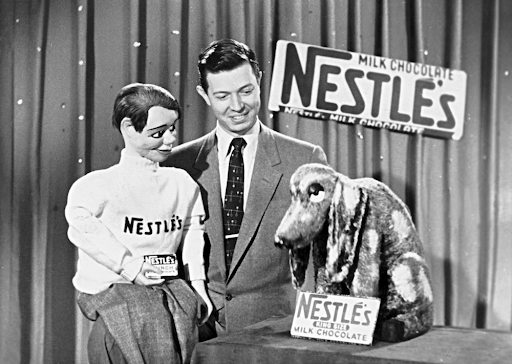
Image: Brand identity 1950s style as presented by still powerful Nestle. The character “Danny O’Day (L), ventriloquist Jimmy Nelson and the much loved Farfel

A 360 Degree View of Your Brand

I recently gave a talk on branding, a term that we know gets used quite a bit, but I wonder if Freelance consultants and business owners fully understand what a brand means and how the brand can be put to work in service of the business? It is vitally important to first, recognize certain identifying characteristics of the business, which need not be complex or unique, and then spin those characteristics into a mythology or a story, a brand narrative or creation story, that is then packaged and marketed as a brand, destined to become a powerful selling tool.

Depending on your business, you might even build a brand around your location. Maybe you own a restaurant, or a hardware store, in Idaho. Common impressions that Idaho natives and Americans in general have about Idaho—rugged, outdoorsy, resilient, folksy, friendly, mountainous, beautiful—can be used to build a distinctive and compelling brand narrative. The essence of Idaho can become a defining characteristic of the brand.

Other branding possibilities are grandmas recipes (restaurants), the size of the establishment (large and comprehensive or small and curated), the longevity of the business, the number of generations that the same family has owned and operated the business, prestige clientele, expertise in a niche market, or superb customer service.

The function of a brand is to communicate. The brand is the reputation of the business. What a business leader must decide is the primary message that should be communicated and how to articulate that message.

What can the brand tell current and prospective customers? The brand tells them what to expect when doing business with you and your company—the available products and services, that the business can be trusted to deliver what they expect it to deliver, for starters. Branding is about reassuring. Branding is about consistency, predictability, trust, dependability, familiarity, the customer experience and comfort.

If the business owner or leader does it right, the brand will become habit-forming and the list of repeat customers will grow. Customers will be motivated to refer their friends, family and colleagues to the business. They will endorse the business on rating sites like Angie’s List, Yelp and Trip Advisor.

When examining and/or refreshing the brand, remember that the brand is two-sided. There is the internal brand and the (better-known) external brand. The internal brand represents what the business owner and leaders feel describes the brand. The external brand is how the business is perceived by the public, i.e., customers. The internal brand is self-image and the external brand is reputation.

It’s easier to start the brand examination internally—what do you, business owner or leader, want your organization to be known for? What do you interpret as its competitive advantages? What do you see as the value proposition or distinguishing characteristics?

The external view can be assessed by talking to customers, whether the best customers or occasional users of the products or services. In both cases, it’s important to ascertain what has persuaded them to do business with you. What brought them to your establishment, how do they feel about the experience and was the problem solved or objective achieved? Who is motivated to do business with you again and why? Who will not do business again with you and why?

In this way, business owners and leaders can determine what customers and prospects consider to be the defining competitive advantages and selling points. Conversations, face-2-face or by social media, and customer surveys are among the useful ways to learn what makes a difference and keeps customers coming back—or drives them away. If something can be summed up in a clever tagline, so much the better. Most of all, the business must promote what customers value most and express that message in language and symbols that will resonate.

When the value proposition, i.e., the value that the products or services will deliver to customers, perceived competitive advantages and selling points have been recognized and articulated, the business owner and leaders can confidently spread the word by way of promotional channels that customers and prospects trust and put the brand to work for the business.

Thanks for reading,

Kim

Photograph: Dwayne Johnson, aka “The Rock,” whose approach to branding has both a physical and professional dimension.

Figuring Out Your Brand

Recently, I presented a branding workshop for an SBA-affiliated business development organization that primarily assists women entrepreneurs to launch and build companies (of any size) that are groomed to succeed.  Identifying and communicating a company’s brand, that is reputation, is of critical importance because that is how customers current and potential connect with the company and its products and services.

But really, how do company founders figure out the brand? How much is determined by the company founder and how much by the customers? Consider the case of Timberland.

Timberland is the originator of those ubiquitous mustard pyellow boots that have been worn by men in the construction industry since about 1970.  But 20 years later, New York City hip-hop style icons became obsessed with the boots.

Well known rap music stars regularly appeared on stage and in videos  wearing a pair of humble, utilitarian Timberlands. The boots are the antithesis of chic and so they became chic.  A hip-hop performer named himself “Timbaland” and became one of the biggest names of the art form. Timberland boots now symbolized authentic urban cool.  Its brand identity changed forever.  The company recently launched a “Brooklyn Collection.”

I am writing this post just a week after the branding workshop that I presented and I regret that I didn’t have access to the information I share with you today.  Stephen Greyser, Professor Emeritus at the Harvard Business School and Matts Urde, Associate Professor at Lund University School of Economics and Management in Sweden, created what they named a Corporate Brand Identity Matrix, shown here, to help us identify and communicate our brand:

VALUE PROPOSITION
What are our key offerings, and how do we want them to appeal to customers and other stakeholders?
RELATIONSHIPS
What should be the nature of our relationships with key customers and other stakeholders?
POSITION
What is our intended position in the market and in the hearts and minds of key customers and other stakeholders?
EXPRESSION
What is distinctive about the way we communicate and express ourselves and makes it possible to recognize us at a distance?
BRAND CORE
What do we promise, and what are the core values that sum up what our brand stands for?
PERSONALITY
What combination of human characteristics or qualities forms our corporate character?
MISSION AND VISION
What engages us (mission)? What is our direction and inspiration (vision)?
CULTURE
What are our attitudes, and how do we work and behave?
COMPETENCES
What are we particularly good at, and what makes us better than the competition?

In addition, Greyser and Urde recommend five (5) guidelines as you conduct your brand identity process:

  1. Be concise

Use short phrases in your answers that can become headings, where you will later write more detailed descriptions that flesh out your brand identity and narrative.

2.  Be straightforward

Keep your answers clear and uncomplicated. Avoid jargon and industry-speak. Adopt a down-to-earth style that tells the story in just a few simple, well-chosen, words.

3.  Seek what is representative or characteristic

Use language or concepts that say “this is us.” Describe the essence of you, your products/ services, your company.

4.  Stay authentic

Be honest in your ownership and expression of the aspects of your company, products and/or services that are already firmly rooted in the minds of your customers and community in which your company operates.  In other words, if the company has always been known for traditional values and a conservative approach, don’t try to appear cutting edge.

5.  Seek what is timeless

Brand identity should be long-lasting. Despite validation by the hip-hop crowd, Timberland boots are still humble, practical footwear that can be worn in any weather.

Thanks for reading,

Kim

Photograph: Hip-hop legend Biggie Smalls (1972 – 1997) circa 1995

What Kind of Consultant Are You?

According to Winford E. Holland, co-founder and partner of the Houston, TX consulting firm Holland & Davis, Inc. (now Endeavor Management) and author of Change Is the Rule (2000),  there are four types of consultants—Expert, Process, Coach and Temporary.  When deciding whether to enter the realm of Freelance consulting, or when you reassess the business model and branding strategies for your existing  consulting practice, think objectively about the type of services that you are qualified to offer, the type you like to perform and what you have the skills and relationships to sustain.

Your consulting category should be reflected in the elevator pitch you use to meet and greet colleagues and potential clients, in your marketing strategy and talking points/messages and your sales strategy, even if you don’t necessarily use the words “expert” or “process” or “temporary” (if you’re a coach, you’ll describe yourself as such).   Communicate to prospective clients what you’re best at doing and succinctly articulate what they’ll gain or solve when they bring you in.  Make your value proposition known straight away.

Your consulting category will become the core of your branding strategy.  There are so many consultants hunting for projects—you must differentiate.  Furthermore, when you communicate your brand, you will attract your ideal buyers, your target market.

Expert: These consultants have advanced knowledge and a deep skill-set in a certain industry or discipline, based on the individual’s education, training and work experience.  Their unique value proposition resides in content.

Process: These consultants excel in methods of process improvement.  For example, they don’t contribute content to the strategic plan, but they can facilitate the meeting at which company goals, objectives and strategies are discussed and prioritized and they may also guide clients through the plan’s implementation.  Their unique value proposition resides in methodology.

Coach: Helping clients recognize, manage and resolve their business (and sometimes also personal) challenges, decision-making questions, or professional development plan is the specialty of Executive Coaches.  Their unique value proposition resides in process, i.e., methods.

Temporary: These consultants might serve as short-term helpers on project teams.  Others may evaluate and install IT solutions such as computers, or smart home or office systems.  Their unique value proposition resides in content, in know-how.

“Successful consultants are problem solvers,” Holland says, “They’re passionate about what they’re doing and able to market their skills—and the latter is often their biggest challenge.”

The most successful Freelance consultants are invariably those who once worked for a consulting firm (I know one such person ant she is very successful).  Experience in the corporate world is almost as helpful, particularly if one reached the level of Chief, Vice President, or Director.  Veterans of senior positions are at an advantage when it comes to building a client list, because they’ve had opportunities to create relationships with their employers’ customers, who may be positioned to green-light projects and become their first clients.

The value that consultants bring to businesses is either content (Experts and Temporary) or process (Process and Coaches) and the most successful consultants are of the Process category.  Why? Because Process consultants aren’t limited by their highly specific training, education, or experience to a particular discipline or industry.  They don’t supply content (advanced knowledge), but they can apply their expertise in certain processes and methods to many industries.

Process consulting expertise is more flexible and valuable to a consultant’s money-making potential because it can be applied to many environments.  That flexibility can make up for the lack of content expertise.  That’s something to remember as you consider the type of consulting you should practice.

Thanks for reading,

Kim

Image: Portrait of Benjamin Franklin, founding father of the American Republic, statesman, inventor and polymath, conducting his kite experiment in Drawing Electricity from the Sky by Benjamin West (circa 1816) courtesy of the Philadelphia Museum of Art

The Art of the Sale: How Marketing, Branding and Advertising Help Revenues

Today, I respectfully offer you a tutorial. Our inquiry will focus on the essence of doing business: selling. The purpose of starting a business is to generate sales, produce revenues and earn a profit.  If a business cannot generate a certain threshold of sales, business expenses cannot be paid and the owner’s investment will be negatively impacted. To curtail mounting debts, the business must close.

Over the past 10 years or so I’ve noticed, sometimes with amusement and other times with dismay,  that the word selling seems to make people feel uncomfortable.  I noticed that frequently, aspiring business owners and Freelance solopreneurs, who must find customers and earn money that is derived from the exchange of money for the products or services that their ventures would produce and provide, avoided the word sell. Instead, the word market was substituted.

Many self-employed professionals are uncomfortable with the process of selling, so they’ve decided to banish the very word. It’s as if selling is now perceived as crass or pushy. That is a shame.  The sales profession is one of the oldest on earth and honorable. Selling is one of the foundations of civilization and selling skills are among the most useful anyone can have; it is the ultimate transferable skill.  Selling makes the world go round, because we wouldn’t have much of a world without it. The ability to sell is far more valuable than the ability to code (yes, really!).

So we can agree that the success of a business is dependent upon sales?  Now, let’s go back to the process of marketing.  The American Marketing Association defines marketing as:

The activities and processes for creating, communicating and delivering information about products and services that have value for customers. Marketing is a set of processes that are interconnected and interdependent with other business functions aimed at achieving the interest of (prospective) customers.

Marketing consists of using information, in words or pictures, to promote products and services and persuade potential customers to make purchases.  Customers have an array of motives that drive their purchases.  Marketing campaigns are designed to appeal to the motives of selected customer groups (e.g., parents, young professionals, adolescent males) that research has shown are potential customers for the product or service in question.  The purpose of marketing is to communicate with and appeal to targeted customer groups and persuade them that (your) products and services will satisfy one or more of their needs or desires.

So we can agree that generating sales is dependent upon marketing campaign promotion that is directed at the most promising customers for your products and services? I hope we can also agree that marketing and sales, while on the same continuum, are not one and the same.  Let’s move forward on the path and consider branding.

Branding campaigns are designed to enhance and expand marketing messages by differentiating and distinguishing the reputation of products and services available in the marketplace.  Products, services and individuals can, through an effective branding campaign, acquire a powerful reputation, recognition and loyalty among customers, fans and the general public.  That reputation is known as the brand.

A company logo is usually associated with products that have acquired sufficient popularity and sales to be considered a brand. That logo is instantly recognized and conveys the essence of the brand to its loyal fans, as well as those who may not use the product.  The product name itself will come to symbolize a powerful brand, as does Coca-Cola.

Now let’s take your marketing and branding messages to the public and that brings us to the next stop along the marketing continuum, advertising.  There are more ways to advertise than ever before, thanks to the digital age,  but do not underestimate the value of traditional methods.  The century-old medium that is radio remains a highly effective advertising tool, as do billboards.  Taxi cabs and city buses (and bus stops) announce local events, such as the circus coming to town.  Newspapers and magazines continue to be packed with eye-catching ads.

Content marketing, which many call the new advertising, continues to grow in influence.  It’s approach is indirect and it is presented as relevant information.  Content marketing is stealth advertising that uses primarily written information conveyed in blogs and newsletters to provide information about topics that would be of interest to prospective users of the products or services sold by the company.  The purpose of content marketing is to build an audience of regular readers who trust the source (you) and would feel confident enough to do business with you.

Then there are the social media platforms that are now in the mix. Regardless of the name social media marketing, when used for business purposes it is advertising: the Instagram photos of your wedding venue, the video clip of you accepting an award at the Rotary Club, the webinar posted to your website and LinkedIn profile.

If your marketing strategy and campaigns have been effective and enabled the development of a trustworthy brand and memorable advertising campaigns, your business will attract paying customers. Your business venture will generate sales and you can declare yourself a winner.  Let’s sum up our tutorial:

MARKETING:  How you envision and describe your company. The verbal, voice and visual messages used to promote your products or services. The business owner identifies the market positioning strategy for the company, based on populations predicted to  become customers: mid-market, luxury, or bargain, hipsters, seniors, adventure travelers.  Product positioning impacts all marketing campaigns and messages, the branding strategy and advertising choices.

BRAND:  The company reputation, what it is known for. How others perceive your company.

ADVERTISING:  How and where you portray and describe your company to the public: in print or digital, visual or audio formats placed in Popular Mechanics, Harper’s Bazaar, subway stations, flyers tucked onto car windshields, or Twitter.  Advertising usually costs money.

SALE:  The ultimate goal and final step of the marketing process.  The exchange of money (or another valuable item or service) for the purchase of a product or service.

Thanks for reading,

Kim

Photograph of Cher by Richard Avedon (1986)                                                                 Courtesy of the Ogden Museum of Southern Art in New Orleans, LA