How Does Influencer Marketing Work for B2B Freelancers?

Influencer marketing has been white hot for a minute and it’s getting even hotter. A strategy born of user generated content and nurtured by early bloggers soon produced content creators who came to be considered authorities within their niche fields of expertise, developing loyal audiences for their blog content and generating follower communities along the way. Those early pioneers earned reputations and gained recognition for product reviews that showed trustworthy insights and built credibility. The DIY grassroots aura and absence of corporate advertising gave it all the blessing of authenticity. The independent and impartial assessments provided by the bloggers encouraged engagement and audience trust. But this is America so gradually, bloggers with the biggest followings in the scene featured sponsored content on their sites (often disclosed through affiliate links) and next, collaborations with retail outlets and product brands.

The phenomenon was accelerated by the introduction of social media platforms and exploded with the arrival of visually-focused platforms. Images, and especially videos, provided an ideal environment for newly minted marketing influencers to showcase themselves and the brands they represent with exciting visual content. The visually focused platforms caused an inflection point that gave rise to influencer marketing stars who found a lot of work in the B2C sector, in particular fashion, beauty and travel. Bloggers and others who had a flair for creating appealing content plus the ability to connect with and encourage relationships with their audience began to grow significant followings and exert influence over the behavior (aspirations) of prospective and current customers.

The rise of B2B Influencers 

While originally a strategy used by your flashy B2C cousins, competition for billable hours in the B2B sector seems to have stimulated the adoption of influencer marketing in the B2B sector. However, be advised that B2B influencer marketing is not about showcasing services or products. Rather, B2B influencer marketing is about helping you build trust and connect with prospective clients who, if all falls into place, will be more inclined to become your loyal clients. The goal of B2B influencer marketing strategies is to align your organization with recognized and respected industry thought leaders—the influencers— whose industry knowledge, reputation and loyal followers can be leveraged in your target market sectors.

B2B influencers are well-known and respected experts and thought leaders in their field. They’ve acquired impressive knowledge, experience and authority that confers recognized credibility that’s enabled them to build a sizeable, loyal and often activist following. Based on that authority and credibility, effective influencers are able to build trust and enthusiasm for a brand within their community of followers by making endorsements that can stimulate purchases made by decision-makers within the community. Furthermore, a brand endorsement can also result in a significant number of positive reviews posted on social media that creates a word-of-mouth campaign that can spread to the general public and can stimulate still more purchases of the brand’s services or products.

On a national level, you might think of sales training expert Brian Tracy, marketing wizard Neil Patel, professional development guru and author Stephen Covey and leadership and personal development maven Brene Brown as powerful B2B influencers. The best influencers assist brands by providing targeted exposure, building industry credibility, facilitating strategic partnerships and product or service endorsements that, ideally, will substantively enhance brand recognition, reputation and sales. Potential B2B influencer marketing goals for your organization could include:

  • Increased credibility and trust for your brand within your target market
  • Heightened audience engagement with your marketing content
  • Enhanced perceived value of your brand
  • Increased stature and influence of your thought leadership
  • Accelerated rate and quality of leads generated and an enhanced sales conversion rate

Is influencer marketing for you?

Let’s examine how influencer marketing could be useful to B2B Freelance consultants. As usual, your first act will be to assess your client base and refresh your understanding of your target market(s). You must know whom you’d like to influence, what you’d like to achieve and why that achievement will matter. Verifying your target market will enable you to recognize which influencers, marketing tactics and channels can be expected to resonate with your clients and prospects. So that you can begin to recognize the expertise, authority, connections and social media presence your most effective influencer should have, it’s imperative that you clarify the problems and projects that clients and prospects ask you to resolve. As you go through this process, you’ll also get an idea of whether (or not) influencer marketing might be a fit for you.

Identify and investigate influencers in your industry

Take your evaluation process to the next level by investigating the types of content your clients and prospects usually engage with and the platforms that supply it. What types of content do they find relevant, whom do they follow and on which platforms can that content be found? Also, what are the most common questions they’re looking to answer and the problems they want to resolve?

Next, develop a list of influencers you’d like to contact. Your job here is to speak and get to know who you might like to work with. Does this candidate have not only the industry experience and authority that you’d like but does s/he have the connections and clout in your niche to move the needle for you? Essentially, you’ll search for influencers who can help you reach and impact your ideal audience. It’s no help if an influencer has a large community of followers but does not have a prominent presence in your industry and niche. Before you decide who you’d like to follow and follow-up with, verify precisely how your potential influencer can produce what you want, which is probably some combination of upgrading and/or increasing your leadgen, enhancing company brand, encouraging brand loyalty, upgrading and expanding the earned media you receive and, ultimately, impacting purchase decisions that increase your client roster. Keep all that in mind as you look for good potential influencers. Here are common methods you can use to find influencers you can meet and interview.

  • Social media. Many influencers have large followings on social media platforms and it makes sense to start your search there. You’ll want to choose influencers who have a strong presence on the preferred platforms of decision-makers for your service or product. Engage with the content of influencers who seem to have promise for you. You can follow those who look promising and then reach out and initiate contact. This strategy gives you direct access to potential influencers and enables you to build relationships.
    • If Facebook is your preferred platform, use their search function to find influencers. You can also check out industry specific Facebook groups or pages to find B2B potential influencers.
    • Instagram is your gateway to connecting with Millennial generation decision-makers and discovering the influencers they trust. Search the platform for producers of excellent and consistent content and then visit the site profiles of those content producers you find compelling.
    • LinkedIn is the usual suspect for all things B2B, including finding B2B influencers. You can search your industry to find influencers directly. Definitely join and investigate relevant LI groups and watch for influencers within their membership ranks.
  • Networking at industry conferences and events. Attending in-person meetings and conferences provides a unique opportunity to network with professionals and identify potential B2B influencers within your niche. The strategy is effective for discovering and getting to know B2B influencers with whom you can potentially build a mutually beneficial relationship.
    • Attend relevant conferences in your industry.
    • Actively participate in networking sessions.
    • Identify B2B professionals with significant industry influence
    • Establish connections and express interest in collaboration

  • Discover B2B influencers through industry publications, influential blogs and speaking engagements. This strategy lets you evaluate is the credibility of influencers by learning who is featured in respected industry publications, which indicates expertise, authenticity and most likely, influential relationships.
    • Regularly follow industry publications and relevant blogs, with an emphasis on organizations such as chambers of commerce or other well-respected professional societies and business associations. Identify content contributors and speakers who have the industry expertise and reputations that you seek.
    • Familiarize yourself with the content of industry experts that you find promising
    • Reach out to suggest the possibility of collaboration opportunities.

Evaluate B2B influencer industry authority and credibility;

Confirm the authority and credibility of potential B2B influencers within your industry by examining their past collaborations (if possible), content quality, consistency and presence in prestige publications. Your job is to investigate which B2B influencers’ audiences and authority align with your target market and can be useful for you. Refer to your research to develop a candidate shortlist.

Reach out to your follow-up list gauge and request an opportunity to discuss the possibility of an influencer marketing relationship. Enhance your appeal to your intended influencer with a personalized and compelling outreach message that demonstrates your awareness of his/her industry authority, as evidenced by the quality and consistency of his/her published content, speaking engagements and /or professional awards. Express your admiration for their insights and expertise.

If your invitation to talk is accepted, during the conversation inquire about the brands and types of campaigns your would-be influencer has previously collaborated on. If the initial discussion leads to further and more specific talks, request a link to his/her portfolio to verify the success of past collaborations and get a feel for how a collaboration with you might work.

Negotiate terms and collaboration agreements

Clearly define and commit to writing in a signed contract your expectations of the influencer marketing campaigns, the roles and responsibilities of the influencer you’ll partner with and the compensation agreement (monetary amount and due dates) with your selected B2B influencer. Execute this agreement by producing a transparently communicated legal document—a contract.

Keep in mind that a contract is only as good as your ability to enforce it. Help yourself by keeping your wish list and the timeline for its achievement realistic. While discussions and negotiations with your preferred influencer in advance of finalizing the contract, do your best to confirm which items of your wish list outcomes seem possible for your organization as well as the amount of time and other resources that will likely be needed to get you there.

Monitor and measure campaign influencer performance

Monitor the performance of your B2B influencer campaign by tracking the relevant associated key metrics, such as client and prospect engagement, click-through rates and shares, follower growth and expansion, leadgen growth and expansion, brand reach and impressions and sales revenue. In sum, you’ll want to evaluate the campaign ROI outcome and understand the costs associated with your influencer marketing campaign versus the sales revenue that can be attributed to the campaign.

It’s imperative that you obtain an objective and comprehensive assessment of your influencer marketing activities. As with all of your business strategies, obtaining a big-picture performance evaluation is a must-do. Once you learn which strategies and campaigns are effective, and therefore worthy of your investments of money and time, and what failed to live up to your expectations, and might either benefit from an adjustment or maybe should be dropped will, as always, show you the path forward.

Thanks for reading,

Kim

Image: © gstockstudio for Freepik

Motivation to Climb Your Customer Loyalty Ladder

You know that customer loyalty is a powerful resource, one that directly impacts business growth by reducing customer acquisition costs and customer churn by generating referrals and increasing your company’s average customer lifetime value (CLV) to grow your customer list and company revenue. Jeffrey Gitomer, a recognized authority on sales and customer loyalty and author of 15 books, has a blunt observation to share with Freelancers and business owners. In his book Customer Satisfaction Is Worthless, Customer Loyalty Is Priceless (1998), Gitomer shares an outrageous truth—if you disappoint a customer even once, s/he will tell 10 people about your faults. On the other hand, when you (merely) satisfy customer needs and expectations, it’s likely that your customer will tell no one—you did your job and so what.

The good news is, when you show some enthusiasm and exceed the customer’s expectations, s/he will usually tell others how wonderful you are. Here’s the lesson—Freelance professionals and other business owners cannot expect to maximize the potential of their business venture by simply showing up to do the job; that won’t move the needle and make a positive impact on reputation (brand) or revenue. You’ve gotta hit the ball out of the park every time, because acting like an order taker, making sure the fries and everything else are in the bag, is not enough.

In his book, Gitomer identifies critical moments in the buyer’s journey that influence whether customers will become your devoted brand advocates, make a one-off purchase and disappear, or remain indifferent and ignore you. By using what Gitomer describes as the customer loyalty ladder, you’ll refine the timing of the marketing and sales messages that you create to persuade prospects to become customers and eventually become repeat customers.The customer loyalty ladder takes it further and shows how to cultivate loyal customers and even brand advocates who become cheerleaders and make referrals, give testimonials in your favor and play a decisive role in the vitality of your customer list. It’s powerful stuff.

Each rung in the ladder represents a different stage in customer loyalty to your brand. It’s no secret that customer loyalty can make or break your company’s long-term success. You may be aware of customer retention statistics that indicate the probability of selling to an existing customer is 60-70%, while the probability of selling to a new customer is only 5-20%. Gitomer labels the process of moving up the ladder as the customer acquisition journey  Identifying where each customer stands on your customer loyalty ladder enables you to deliver a marketing message tailored to move that customer toward the top.

As you probably guessed, the customer loyalty ladder starts at the bottom with those the author calls suspects; they are not yet, and may never become, an actual prospect. Suspects barely know that you and your enterprise exist. The top rung of the ladder is where your most loyal and valuable customers reside: they’re the highly coveted brand advocates. Gitomer also cautions that in the nebulous middle are those with whom you’ve done business but unfortunately feel that you (or your team) did only what was necessary—nothing more, nothing less—causing this cohort to feel no attachment to your product, service, or organization. These folks may or may not do business with you again.

Stage 1: Suspects

These people know your brand exists and might have some level of awareness as to what you offer, but they’re not ready to make a purchase. They might have seen an ad, visited your website, or checked out your social media—but they have hesitations still. Suspects may potentially have use for your service product, but it’s not a front-burner issue. They are the largest group and they are ruled by inertia or indifference.

Stage 2: Prospects

Members of this cohort have demonstrate interest in your service or product and may have asked for more information. They know your brand exists, they have some awareness of your service or product, but they’re not ready, or able, to make a purchase yet. They’ve most likely have seen an ad, visited your website, or engaged with your social media but they hesitate to proceed. Prospects are weighing their options, and your organization is just one of perhaps several choices in our increasingly competitive B2B marketplace. You may be able to motivate prospects by tempting them with discounts for first-time buyers, free trials, or free access to gated content that they covet. Whatever the case, your goal here is conversion – turning prospects into first-time customers. Look at website traffic, ad engagement and email sign-ups to gauge brand awareness.

Stage 3: First-Time Customers

Needless to say, a customer has done business with you, made at least one purchase. You finally got the customer to take a chance on your brand and it is a relief and validation. But you can’t exhale yet—to be truly successful you’ll need repeat business—that is, customers who return to do more business with you. Over the years, make it a point to calculate the customer lifetime value vs customer acquisition cost of those on your customer list. 

There are a lot of one-off purchases made in the world. Every business owner is delighted to receive that first purchase a welcome a new customer, but there can be no misunderstanding that a viable customer list is not created through a series of one-offs. The first purchase is a critical juncture, when you would be wise to take steps to turn a one-time buyer into one who becomes a loyal advocate over the long term. Your job is to start the process with immediate post- purchase contact. A follow-up email thanking the user, providing value with how-tos while the customer anticipates delivery, or a quick survey to ask the customer to evaluate customer service are all a good first step. 

Examine conversion rates and purchase behavior – how many return for a second order? Make it a permanent part of your post-sale follow-up to touch base with them to see if you missed the mark in any way or if there’s anything you can do to help them make the most of their product. 96% of consumers say customer service influences brand loyalty.

You can also start sending personalized follow-ups with complementary product suggestions, or even go as far as offering incentives for the next purchase (discounts, loyalty program enrollment, etc.).The key takeaway is that a positive first experience can make or break your customer retention efforts. If you fail to act, or if your approach is wrong, you’ll have a much lower chance of encouraging repeat business.

Stage 3: Repeat Customers

A repeat customer is anyone who has done business with your company more than once. These customer see value in your service or product, but it will nevertheless be helpful to remind these customers why they should continue to do business with your organization. This is where you can implement a well-structured loyalty program. Tiered loyalty programs allow customers to earn points or exclusive perks over time.

You can also use data to send personalized recommendations that align with their purchase history. Whatever you do, keep up the attentive customer service. It’s been reported that 61% of customers will jump ship and defect to a competitor after a single poor customer service experience.

Stage 4: Loyal Customers

Loyal customers are deeply connected to your brand and choose you because of you and not just because of the products and services you sell. They have an emotional attachment that guides their purchase habits and they are among your most valuable customers. Don’t just take my word for it—one study found that loyal customers can drive up to 65% of a brand’s revenue, even though they typically make up only a small percentage of total customers.

Without question, it is in your interest to go above and beyond when considering how to reward and thank these customers with ultra-exclusive benefits. Your rewards should free shipping or discounts, for example. Instead, think early access to new services or products that you introduce, behind-the-scenes content, invitation to a launch event and unexpected surprises like handwritten notes all go a long way. Use customer lifetime value (LTV) and engagement metrics to see who keeps coming back. You can even poll them and let them tell you why they come back again and again. Give these customers opportunities to interact with your brand beyond purchases with events or opportunities to offer feedback on new product releases. The priority is to make them feel as if they’re not just another customer, but very special people who are part of the movement.

Stage 5: Brand Advocates

Eventually, your most loyal customers may become motivated to become brand advocates. This top rung in the customer loyalty ladder represents your most powerful customers, those who serve as an organic marketing channel for your brand. These customers actively promote your brand to their friends, family, colleagues, even random people they come across on a daily basis. They leave glowing reviews and share your products on social media, too.

Brand advocates are your most valuable customers not only because their testimonials and cheerleading bring interest, excitement and trust to your service or product that results in customer referrals and maybe some PR too. the enthusiasm of brand advocates also lowers your cost of customer acquisition and drive customer growth naturally.

So, how do you move people up the ladder of customer loyalty into this stage? Continue taking other steps to make customers, especially repeat and loyal customers, feel like VIP insiders. Seek their insights from your brand advocates when making decisions about your service or product; involve them in beta testing new features or entry into a new market, invite them to exclusive VIP-only events. A customer who feels involved and part of your business, while also receiving consistent value, can be an influential promoter of your brand, giving referrals and singing your praises.

Assess your customer list

First, examine your customer list to figure out where you’re struggling the most. Maybe you have a hard time getting customers to take a chance on your brand but once they do, they stick around. You have an acquisition problem. Or, perhaps you get customers to buy once but they never come back to make another purchase. You have a customer retention problem and problem with customer churn. Gitomer recommends that you focus on the following questions:

Analyze your customer retention KPIs and figure out where you have the need to level up your performance. You now know what to look for at each rung of the very useful customer loyalty ladder and understand how the customer acquisition journey along with the customer loyalty ladder can improve your ability to improve the CLV in your customer list. To get you started, Gitomer recommends that you focus on the following questions:

  • How can you convert one-time buyers into repeat customers?
  • What’s the best way to incentivize loyal customers to become brand advocates?
  • Where do you see prospects abandoning the customer acquisition journey and how might you correct, or limit, the problem? fix them?

Thanks for reading,

Kim

Image: Depositphotos free image

Storytelling Is the New Advertising

Not long ago, advertisements you saw in newspapers and magazines were made to capture attention with style and flare. Whether those advertisements were from back in the day, or 21st century pop-ups that invade the screen on your device as you scroll through websites, ad copy displayed flawless visuals and meticulously phrased text, both carefully crafted to dazzle and persuade a broad swath of the ad’s target market viewers. But that was then and this is now.

In the here and now, tightly scripted advertisements appear to be losing their hold on audiences. The viewing public, some of whom are within your target market, are apparently tiring of what can easily be interpreted as ad agency engineered, focus-group tested and totally corporate. Your future clients, and maybe you, too, value what feels genuine, relatable, believable—authentic. Your future clients are hungering for comfort food served in a favorite neighborhood place, not a four- course banquet served in a grand, Michelin starred restaurant.

What future clients are increasing drawn to is storytelling—personal testimony that comes across as unscripted and communicates a set of values and guiding principles that inform how you conduct your business and and even personal life. The influence and impact of storytelling continues to expand and it seems to already have become the future of adverting in B2B and B2C markets.

Advertising experts call the emerging storytelling phenomenon the trust economy and it is winning loyalty (and wallets) with its apparently unrehearsed, believable, real first-person accounts that are overtaking the glossy ads of days past. For example, brands that feature storytelling by the company founder—maybe showing a clip that illustrates what’s happening behind the scenes or revealing that a percentage of company profit is devoted to a certain philanthropy and also explaining how the recipients benefit— are winning customers, growing their follower and customer communities and surpassing the usual results of traditional advertising. In today’s marketplace, authenticity—which is a defining ingredient of trust— has become real currency. Authentic storytelling is how you can earn it.

Maybe the rise of storytelling is a reaction to all those banner ads and pop-ups that clutter screens and have come to annoy digital audiences? Ad-blocker usage is high, especially among Generation Z (born 1997-2012) and Generation Alpha (born 2010-2025) cohorts, whose members show skepticism toward traditional advertisements. According to marketing researchers and thought leaders, authenticity is now a leading B2B purchasing driver, with prospective buyers more likely to buy from brands they perceive as transparent and real. This generational demand for “truth” means over-engineered marketing campaigns and content may no longer resonate with your target audience. But the apparently candid testimonials that typify storytelling are perceived as believable, authentic and trustworthy.

Powerful stories

On every continent and throughout human history, people with a gift for telling a story have held power in their community. We like hearing a good story that is told well. Stories told by company founders and even employees have a persuasive resonance in today’s marketplace. For example, entrepreneurs who share factors that motivated them to launch their business entity and tell the company origin story—and perhaps bravely admitting their struggles, pivots, or failures — create intimacy and relatability with their audience that neither impossibly glamorous models or bland-looking actors who were once the faces of hundreds of companies, smiling and spouting the official brand messages—cannot match.

Furthermore, traditional ads—TV, radio, print, or digital— are more expensive than ever and their returns are diminishing. By contrast, trust and authenticity-driven advertising (marketing) campaigns often require smaller budgets and deliver outsized impact in viewer engagement and word-of-mouth.

Storytelling, which is an outbound marketing strategy and therefore defined as a push promotional marketing tactic, is fundamentally different from the typical message broadcasting that defines outbound marketing, from television, radio, or print ads to sponsoring the holiday tree lighting in your neighborhood.

Expert storytelling invites the audience into a journey. Stories are a shared experience, personal and intimate and capable of making what is a transactional relationship—selling and buying— into communities of shared values and beliefs and whose participants can develop loyalty. Harvard Business Review notes that brands that present authentic narratives in their advertising and other content marketing activities see measurable improvements in consumer trust and loyalty. As well, Nielsen’s Trust in Advertising Report highlights that recommendations from “people like me” remain the most trusted source of brand information and vastly outperforms paid ads.

Build trust into marketing strategies

The core of storytelling is about developing a narrative that is believable and therefore resonates on an emotional level with audience members. The goal is to create a connection with your audience that inspires trust in and loyalty to your brand. A marketing strategy whose message prioritizes truth and has authenticity as its core delivers story narratives that your current and future clients will believe in. Your brand story, when effectively told, can connect with your current and future clients on a deeper level, providing feelings of belonging and loyalty. This emotional connection is crucial in building a lasting relationship between the brand and its consumers. When developing your storytelling strategy and choosing key elements to incorporate in the narrative, you might include:

  • showcasing not only the company founders, but also employees as storytellers
  • Sharing behind-the-scenes happenings with humility, honesty and maybe a touch of humor as well
  • Participating in social media as well as selected in-person community events or platforms to create opportunities that invite two-way communication with your clients, prospects and other followers
  • To evaluate the impact and outcomes of your storytelling marketing campaigns, measure not just impressions but also viewer sentiment, advocacy and engagement metrics

Develop your brand story

Storytellers may sound unscripted and in the strictest sense of the word, that may be true. However, effective storytellers, whether they are entertainers or entrepreneurs, know their talking points. They know the theme and purpose of the narrative. They know how to present the story to the audience and make it capture attention and flow. In other words, creating an effective brand story requires careful consideration. Here are key elements to keep in mind:

  • Know your audience: Understanding your target audience is always essential in public speaking. Make a list of what you feel represent your values, guiding principles, priorities and purpose and consider how they impact the company. You may also want to include challenges and pain points and a reach-for-the-stars goal or two. Tailor your story narrative to resonate with your audience.
  • Clear message and purpose: You don’t want to rant, you don’t want to humble brag. You must have a purpose, an objective, that can lead you to devise a compelling story. Your story should have a clear and concise message. Avoid overcomplicating the narrative; focus on the core message you want to convey, keeping it simple. You should have a Call to Action—what do you want your audience to do—maybe make a purchase, so that they can feel philanthropic by knowing that a portion of each sale will be used to fund a worthy cause, e.g., a healthcare or educational organization?
  • Authenticity: Authenticity is crucial to storytelling. Your clients can easily detect inauthentic narratives, which can damage a brand’s reputation. Ensure that your story aligns with your brand values, company vision and mission.
  • Emotional appeal: Incorporate elements that evoke emotions. Whether it’s joy, sadness, inspiration or nostalgia, an emotional connection can significantly enhance the impact of your story.
  • Organize the narrative: Your story must have a beginning, middle and end. It must have an intro that intrigues viewers and a conclusion that inspires them. A Call-to-Action will tell them how to direct the emotions your story has built up; it creates a common purpose among audience members and is a bonding and community-building experience.
  • Visual and verbal aspects: Combine visual and verbal elements to create a cohesive and immersive experience. Use imagery, videos and written content to bring your story to life.

Thanks for reading,

Kim

Image: © Alejandra Brun/ Agence France-Presse for Getty Images. Charles Robinson, member of the Choctaw tribe (AL, LA, MS, OK), dances during his storytelling presentation in Lima, Peru, August 2003

How a Social Media Strategy Can Power Up Your Brand

The old saying is still correct—clients (and those who might become clients) do business with those they know and like and do more business with those they know and trust. If you operate in the Freelance B2B consulting sector, you know it’s vital to continually demonstrate your expertise because that’s one of the best ways to win the respect and trust of prospects who might hire you. It’s imperative to make it clear to those motivated to become paying clients that you’ve got the right stuff, that you can be a trusted resource, that you have the capability to resolve their pain points by recommending the right business solution.

Your mission is to get the word out about your insights and abilities and showcase a brand that inspires trust. Bring to audience attention your relevant and timely info that’s delivered in the form of perspectives and insights that resonate. Seeing is believing and becoming a familiar presence in media outlets that your target prospects visit and trust will pay big dividends.

In the B2B sector credibility, relevance and trust are the building blocks of a winning brand reputation and are the foundation of a successful business venture. You access those building blocks by demonstrating value to prospects and peers. One of the most reliable strategies you can enact when your goal is to demonstrate value to prospective clients is to position yourself as a trustworthy thought leader who provides relevant, timely and actionable information. Among the most efficient channels to broadcast information to your target audiences is social media.

Social media has become a cornerstone of the B2B product and services buying journey. Prospects typically view up to 12 types of content, with 40% of B2B buyers including social media in their purchase research. As your prospects search for info, the right SEO search terms could call up your content and make your thought leadership info available to impact a purchase. Remember also that social media platforms are a two-way street and equally useful for not only broadcasting information, but also for listening and learning by starting and contributing to conversations. By becoming active on LinkedIn, which is the preferred B2B platform, and also X, YouTube and/or Instagram, for example, you’ll not only have a presence on platforms your prospects follow, but you’ll also get confirmation of their topics of interest in the moment, plus a heads-up on what may capture their interest in 2026. Below are four strategies for using social media to enhance your brand and grow your client list.

  1. Provide informative and timely content

By positioning yourself as a go-to source of useful insights and info, you’ll win audience trust—and that is vital. The quality and timeliness of the information you deliver, whether by text, video, or audio, will enhance your value. Distributing your thought leader content on social media platforms favored by your target audience maximize distribution and help you build a following. You’ll benefit from increased name recognition, eventually acquire trust and influence and, ultimately, you’ll create for yourself a solid brand reputation. Insider’s tip: linking your blog and/or newsletter to one or more social media platforms when you publish is a great way to share your compelling content with a wide audience (readers will find my weekly blog at LinkedIn activity/posts.

Video is a growing medium in the B2B sector because social media audiences find it easy to digest and, apparently for that reason, an attractive format. While YouTube is the platform of choice, all major platforms host video/audio content, that runs the gamut from short-form clips to long-form videos and live streams. Posting a webinar in which you took part or the podcast on which you made a guest appearance are excellent video opportunities for B2B Freelance professionals.

Case studies and client testimonials likewise make compelling video content. In fact, it may be easier to recruit your satisfied clients to sing your praises in a video rather than providing a written narrative of the process. Furthermore, if you’d like to present a show-and-tell tutorial that explains the rationale for using your product or service and quickly break down how users can benefit, a video interview in which you take center stage may be easier for prospects to visualize how your solution can be implemented for their needs. BTW, video/audio content, plus any noteworthy information you post to social media platforms, such as a case study, should also be posted on the only platform you own and control—your website.


2. Share client success stories

Nothing succeeds like success and sharing the occasional client success story (maintaining the client’s confidentiality, when requested) helps prospects envision the effective solutions that you might create for them. Examples of your willingness to personalize your solutions by, for example, simplifying your solution or providing an upgrade, or facilitating post-sale training or other supportive services—without violating your competitive advantages—are persuasive and make for memorable brand-building content for your organization.

3. Be authentic and consistent

X and LinkedIn are the usual go-to platforms for serious conversations. When you have something relevant to contribute, whether you make a thoughtful reply to a comment or offer a new perspective that you expect to generate comments from other readers, you demonstrate your authenticity, as well as your expertise and maybe out-of-the-box creativity. Joining one or more LinkedIn professional groups that are related to your industry or subject expertise can introduce you to a good forum, where you can contribute insights and learn new perspectives from thought leader peers.

4. Be transparent about values and culture

A growing number of consumers, B2B and B2C, are interested in the values and culture of companies with whom they do business. Storytelling is a relatable format and social media is an ideal platform for you to demonstrate and express what your company stands for and how your values impact your business practices. Your clients and prospects are not dismissive of a company’s purpose, vision, mission and guiding principles and may be very pleased that you’ve shared this foundational information.

Moreover, don’t hesitate to show behind-the-scenes evidence that shows you immersed in community work, be it a corporate social responsibility initiative, board service, or other volunteer participation. If you participate in a charity event, such as a holiday toy drive for local children, or sponsorship of your neighborhood Christmas tree lighting and party, consider documenting portions of the proceedings and, better still, invite top organizers to contribute a short interview to describe the goals for the event and the constituency it benefits in a video (be sure to respect the privacy of other participants). Clients and prospects like to know that you’re giving back or paying it forward.

Thanks for reading,

Kim

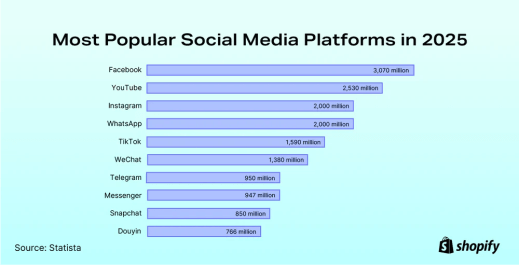
Image: © Statista May 2025

Milestones Are Your Reason for A Reset

Certain dates on the yearly calendar are noteworthy—birthdays, holidays and anniversaries, a new year or a new season, as well. The dates have meaning; they mark special occasions and hold a certain power. You might call them milestone dates. Some milestones merely mark the passage of time, but others suggest growth and development, an inflection point and the possibility of making a positive change. Those milestones beckon you to consider new options, new experiences, or a new perspective.

A particular milestone date or occasion may motivate you to do better and give yourself an upgrade. You might feel it’s time to press the reset button on some aspect of your life. You’re primed to open the door to new options and opportunities. You recognize that you’ve reached a psychological milestone and life is telling you to reassess and redesign, reinvent, or recharge some part of your life or some part of your business enterprise or career. Think New Year’s Resolutions.

This spark of inspiration is called the “fresh start effect.” It’s a psychological phenomenon that explains why milestones—the arrival of a new year, a birthday, or the first day of a new season—make you inclined to self-reflection. You feel the urge to take on beneficial new habits and drop an old habit that’s outlived its usefulness. You’re ready to attach jumper cables to your personal or professional life, start the ignition and make things come alive.

Because the fresh start effect is universal, your clients are likewise inclined to experience a restless feeling that creates a longing for something new and different. For that reason, milestones are an excellent time to make use of the prevailing zeitgeist and shake up a client-facing sector of your business. The strategy is powerful because you’ll align your company and its solutions with your customers’ existing expectations, rituals and rhythms.

Your mission is to position your brand to align with customs or expectations that your clients and prospects will likely experience when they think of your target milestone occasion. How might your service or product be perceived as part of their fresh start? Your goal is to not only meet their needs and wants, but also portray your brand as a timely, trusted partner during noteworthy moments in their lives. Milestone dates are the right time to stir the pot and offer up—what? An activity or information that aligns with your company and its services or products and simultaneously resonates with your clients and prospects to show them why they trust, relate to and value your brand.

Your potential milestone occasions could be the beginning of a new school year, the arrival of spring or fall, the anniversary of your business launch or getting your first paying client, or even Black Friday (U.S. readers know that’s the fourth Friday in November). This post was inspired by the arrival of the fourth quarter on October 1. 4Q is powerful because it closes on December 31, the end of the calendar year, and business owners and leaders are anxious to have a strong finish to the year.

Commemorate your milestones

The fresh start effect is a golden opportunity you don’t want to miss. Your clients and prospects can be positively influenced by milestone dates, even if the occasion is linked to your business and not a national holiday or change of seasons. It’s not a stretch to persuade your audience to take on a mindset that opens them up to change and new beginnings that happen to align with your company, products or services. In other words, don’t shy away from celebrating the anniversary of your company’s launch as your Founder’s Day and build a promotional campaign to celebrate it—and bring in revenue as you do!

Make your marketing message about a restart and transformation

Marketing messages that include a theme of renewal and transformation often resonate with audiences during fresh start milestone periods because your audience is already in a self-assessment and growth-oriented mindset. For example, presenting a new angle to your brand story to refresh client enthusiasm and promote engagement is among the milestone-themed campaigns you might choose to develop. To tap into this power, invite a client to give a testimonial—audio, video, or written—that describes how your product or service sparked meaningful change in the client’s business operations, whether it’s a small but powerful effect or a game-changer.  

You can get the ball rolling on client testimonials by creating a survey that asks questions such as, “How has our product or service made a difference in how you do business? Can you share a specific example?” These questions will focus testimonial responses on the tangible benefits and transformational power of your products rather than generic praise like, “Your product or service is awesome!” Often, you’ll even uncover surprising ways your product made a difference.

Alternatively, you (and your team, if that applies) can present a backstage story by creating a video of you on your way to give a presentation at a local business association, or to do volunteer work. Your clients may enjoy getting to witness an uncensored, up-close and person look that nevertheless illustrates your business acumen and, if philanthropy is the focus, your values and the importance of corporate social responsibility and giving back to your community.

Good stories are always about transformation. You want to position your service or product as a catalyst for your clients’ positive evolution and so that you can connect with them on a deeper, emotional level so that you will take on the role of guide in their journey. By presenting useful, or fun and always compelling information about your brand you’ll capture the attention and imagination of your audience and strengthen their bond with you.

Thanks for reading,

Kim

Image: A “Sweet 16” birthday party at The Crystal Ballroom in Daytona Beach, FL

Crisis Communications: Monitor and Defend Your Online Presence

Managing the online presence and reputation of a brand, whether personal or company, is no longer considered mere vanity or over-reaching micromanagement. Regular tracking and review of all content that pertains to your organization and shows up in searches—its services and products, the company itself and its leaders—including AI-powered searches, is now recognized as a necessity. Vigilant and consistent monitoring of information that appears online about your company and you, as the principal of your Freelance consulting practice or fractional executive, owner/leader of a traditional business, small or large, or not-for-profit organization executive, can be viewed as an aspect of risk management strategy.

It is imperative for all business owners and leaders to carefully shape and defend their brand’s online image and ensure that all information presented is accurate and leaves viewers of your content with a positive impression, meaning, a portrayal that encourages credibility and trust.

Unflattering or outright negative content associated with your brand, as well as inaccurate info, has the potential to undermine or damage your organization’s credibility. It is therefore highly recommended that Freelancers and other business owners and leaders regularly assess all AI-generated and online mentions of their company and personal brand and verify the accuracy of the information found.

Take control of your online presence

Integral to a comprehensive marketing campaign is building a digital presence that illustrates the competence and credibility of the organization. Online reputation management is essential to defending that carefully curated image, whether you maintain a solopreneur consulting practice, operate a small company, or lead a national or multi–national conglomerate. Failing to take defensive action and waiting until negative content has become an embarrassing crisis may cause an unfortunate outcome that stains your own or your company’s reputation.

Inspection tours are the how you’ll discover inaccurate information and/or negative content. Inspecting the search engines is Step One of your mission to defend and, if necessary, correct online information pertaining to you and your organization. Learning where and how to locate, edit, or suppress content that is untrue or unflattering is the most important step of restorative crisis communications activity. Proactive monitoring and strategic content creation will be central to maintaining control of your online image. The presence of negative content, which may include customer reviews and other user-generated content, can have a direct effect on company reputation and sales revenue: Approximately 94% of customers report that a negative merchant review on a review site persuaded them to avoid doing business with that merchant.

Step Two of your brand defense is the actual defensive action, where you may simply update information to correct what appears sites like Yelp or Google. More thought and time will be necessary if you discover content that is inaccurate and perhaps also misleading; in these cases, you may decide that a substantive reset of your brand narrative is in order. Your best defensive action will be to create and publish relevant, high-quality content that is capable of enhancing your online authority and burying the harmful content by pushing it further down in search rankings.

Google search operators

Re: your search engine inspection tours in most cases, a Google or Bing search of the brand will surface a comprehensive list of brand mentions. However, a more thorough search might locate additional content that you can review and if you discover incorrect information or harmful material on less popular search engines or on online communities, you can explore how to make corrections and/or counteract negative content with a post or two that displays your authority and integrity.

To take a deeper dive and search for potentially harmful content that might otherwise go unnoticed., you’ll be pleased to find that Google’s search capabilities extend far beyond entering a name into the search bar to see what appears. Dipping into advanced search operators will broaden your scope and, if it exists, may help you to locate negative content that does not appear in a traditional search.

To find what may be hiding in the shadows, launch an exact match search by placing your name in quotation marks (e.g., “John Smith” or “The Best Company”) to specify search results to that unique name and eliminate unwanted mentions. To further refine search results, you can exclude irrelevant pages using the minus sign. for example, searching for “The Best Company” -Instagram removes Instagram results and help your mission to dig up potentially damaging content pertaining to your brand that may be posted on less visible sites.

Furthermore, a site-specific search can help when you suspect that a particular domain features negative information about your brand. Typing the site domain address, followed by a colon and your company name will produce only results from that chosen site. It is also useful to search variations of your name, for example, “J. Smith” or “Best Company;” — subtle changes could possibly bring up mentions that do not appear in the traditional searches.

Set-up Google Alerts for ongoing monitoring

It is wise to be vigilant and regularly monitor your name online, to prevent damage before it spreads. Google Alerts is a free tool that notifies you whenever new content is indexed and includes your name. To get started, visit Google Alerts and enter your full name and company name along with relevant variations (e.g. “Jane Smith” or “Jane K. Smith”). Use quotation marks to ensure your alert captures the exact phrase. Then click “show options” to select how frequently you’d like to receive alerts —the “as-it-happens” option is best for reputation management. Set alerts to receive notification of name mentions and be sure to correct inaccuracies and gratuitously negative content. Counteract what is negative with relevant and compelling content that can potentially suppress unflattering narratives.

You can also filter alerts by geographic location and type of content, such as blogs, news articles, or discussions. Finally, enter your email address to start receiving updates. These alerts act as a digital early warning system. You’ll know immediately if a new piece of content starts gaining traction — giving you time to prepare a response or counter-strategy. Staying visible online requires more than awareness — it demands consistency and strategy.

  • Monitoring social mentions and online discussions

Negative content is known to more frequently begin on nontraditional search engines. Social media platforms, forums and blog comments can amplify by way of the metaverse effect and damage to your brand image can spread quickly—even as it never appears in traditional search results.

To really scrutinize your online presence, investing in the services of a social listening site such as EmbedSocial or AgoraPulse will detect online conversations that mention your name and your company name across blogs, Twitter, Facebook, YouTube, media outlets and more. Social listening platforms also provide sentiment analysis, an excellent feature that distinguishes between harmless chatter and attacks on your brand reputation. Most social listening platforms are a paid service but if a free solution will be more appropriate for you at this time, consider Talkwalker Alerts (by HootSuite). Incidentally, Talkwalker provides more extensive web and social listening coverage than Google Alerts and is easy to integrate into your workflow.

Finally, make a point to investigate online communities like Reddit and Quora. These platforms typically feature informal discussions and some have been known to quickly go viral. Get your investigation started with a targeted search— reddit.com:The Best Company to uncover mentions that might not appear on Bing or Google. Knowing what’s being said about you when you’re not in the room lets you know who your friends are and also gives you the opportunity to respond with a brand image defensive strategy.

Thanks for reading,

Kim

Image: © Behnaz Farahi. Gaze to the Stars, an installation created by Behnaz Farahi, Assistant Professor at the MIT Media Lab at the Massachusetts Institute of Technology in Cambridge, MA. Gaze to the Stars was displayed on the MIT Great Dome December 2024-March 2025.

What Can You Do to Cultivate Customer Loyalty?

Recruiting a new customer is a victory, the goal of every business owner and Freelance professional—but you can’t exhale yet. When it comes to making money it’s not only what you make, it’s what you keep, and that folk wisdom applies not only to sales revenue, but also to customers. The real genius of being in business is learning how to retain customers.

Building a thriving community of customers is foundational to sustaining a business entity; strategies dedicated to nurturing customer loyalty by persuading them to continually do business with you is an important part of a comprehensive marketing plan. Loyal customers are repeat customers; they also refer new customers and that makes it imperative to develop strategies that generate and encourage customer loyalty. Neglecting this function can easily result in customers you worked so hard to attract eventually moving on, perhaps to do business with a competitor.

Unfortunately, many businesses struggle to retain customers, a consequence that can diminish sales revenue and weaken the ability to survive. It has long been known that implementing strategies designed to retain customers is fundamental; customer acquisition cost has increased by nearly 50% since 2013, making it so much more expensive to acquire a new customer, as compared to the cost associated with retaining an existing one, further proving the value of repeat customers and promoting the loyalty that stimulates repeat business.

Customer loyalty is the happy result of the relationship between satisfied customers and the businesses they know and trust. Building a loyal customer base for your entity brings benefits in at least two ways—it discourages customer churn and therefore limits the marketing dollars you’d need to spend trying to retain them and second, loyalty helps you grow and preserve your current group of customers. Not only that, promoting loyalty can also convince customers to become cheerleading advocates for your brand.

In other words, encouraging customer loyalty can do wonders for your business, like enhancing sales revenue, strengthening customer relationships and brand building. You just need to work at it consistently! Below is a list of customer loyalty strategies, one or more that’s sure to be useful for you.

Exceed expectations

Customer expectations are feelings, actions and outcomes that customers anticipate will result from their experience with your brand, from first impressions to final purchase and on to using the service or product that was purchased. You’ve probably heard the oft-repeated advice that urges businesses should “under promise and over deliver”—you do that by exceeding customer expectations. So, if you promise a customer that you’ll follow-up to answer a question or resolve a problem within 24 hours and you contact the customer within six hours, you’ve exceeded customer expectations and planted the seeds of loyalty. Common customer expectations include:

  • Quality product. Product quality is at the top of most customer checklists. They want a product that meets their needs and delivers on the promises of its description, photos and reviews. 
  • Great customer service. Customers expect businesses to provide friendly and knowledgeable customer service before, during and after they make their purchases.
  • Value for price. Value is represented by the satisfaction customers feel when the price of the product or service seems appropriate (or like a good deal). Perceived value for money spent is subjective, but customers want a price they believe is justified.
  • Personalized interactions. Customers want to feel like the company values them by providing an efficient, pleasant and personalized buyer’s experience.  

Exceptional customer experience

Promoting customer loyalty involves more than offering products and services that satisfy the needs, goals, or problems of customers. To truly win over a customer and create loyalty, you must persuade them to become your cheerleaders. An exceptional customer experience is the true foundation of customer loyalty. Superior service is integral to encouraging customer loyalty and promoting positive word-of-mouth that differentiates you from competitors.

Customers who are pleased with the experience your brand provides, and also trust the reliability and quality of your products and services, are positioned to become loyal customers. They’ll usually be happy to share their favorable experiences with friends, family and colleagues and give your brand enthusiastic endorsements that commonly result in referrals of new customers and repeat business. These demonstrations of customer loyalty are a powerful, and inexpensive, way to reach new customers and build your customer base, sales revenue and brand.

  • Surprise and delight. To create a positive, memorable experience for your customers, remember that it’s the small and unexpected things that keep them coming back.

Expertise

Because your goal is to attract and retain customers, generate referrals and recruit brand cheerleaders, know that you’ll promote those aims by demonstrating that you are a reputable and trustworthy expert in your field. You’ll build credibility and customer loyalty by sharing your professional know-how with customers and prospects.

  • Educate customers. Content marketing is all about educating customers and it is now the marketing strategy that most customers prefer. The purpose of marketing is to persuade prospects to do business with you. For example, if you are a Freelance gardening and landscape specialist, you would do well to create videos, and/or publish a monthly newsletter or blog that focuses on helping plants survive winter and how to prepare a garden for spring plantings. Throughout the seasons, new posts will address how your readers can create a beautiful garden. Distribute your customer/ follower education info to your email list and encourage list members to subscribe to regularly receive the info.

Reliable

Conscientiously build a reputation for being consistent and dependable to further support customer loyalty for your brand. For example, if you promise that a product will be delivered within 48 hours after purchase, take steps to ensure delivery occurs within that time frame. Or if the graphics for the marketing campaign brochure you’re creating for a client must be ready for a 10:00 AM meeting that your client has scheduled with his client, be prepared to work as long as it takes to produce a perfectly designed and edited deliverable at the agreed-upon time and place, to make both your client and yourself look good.

Flexible

While it’s important to have policy and procedure guidelines in place, it is smart to remember that customers have circumstances and problems they grapple with. So, if you’ve established a 14-day return policy, but a customer wasn’t able to return the product within that window, perhaps because of a business or family emergency, graciously accepting the return and offering either the usual refund or store credit may be the best course of action. It’s likely that you’ll gain much more than you’ll lose and it will be an effective way to encourage customer loyalty.

Communicate

One of the easiest ways to keep in touch with customers is through email. Ask for customer email contact info after completing purchases, or while they explore your sales/marketing funnel during the buyer’s journey, so you can send information that a prospect would like to see, or keep existing customers updated on new products, or perhaps follow-up with them after a sale to inquire about their perception of their customer experience. This information can be used to improve customer satisfaction.

Studies have proven that personalized emails have a transaction rate 6 times higher than impersonal emails. Addressing recipients of your marketing emails by name, sending birthday or holiday greetings to existing customers, or thanking a customer for a recent purchase are the types of outreach that customers appreciate. Personalized messages can help create an emotional bond between your brand and your customers that promotes customer loyalty.

Social media platforms will help to bring your customers into a community. Communities are an effective way to start conversations with your customers and also encourage user-generated content. You might start by inviting customers to share pictures of themselves using your product for posting on Facebook, Instagram, or Pinterest, for example.

Feedback

Whenever a customer makes a purchase, request their feedback with an email questionnaire or online survey link sent to their email (you can also place that link on your company website). It’s important that you know what customers like or dislike about your products and/or services and how they feel about your customer service and experience. If you aren’t aware of this information, you will be unable to make changes that will make your customers happy. Always be ready to listen to customers and address their concerns a timely manner. Make it easy for them to get in touch with your company by clearly displaying the email address, phone number and social media links on your website and in emails.

  • Make it easy to communicate with a real person. While technology has made it easy for customers to find information regarding your product or service, it’s a mistake for business owners to hide behind a wall of tech. There’s going to be an event that causes a customer to feel the need to speak with a real-life person. Make sure that your contact information is easily located on your website and in your emails and follow-up on inquiries in a timely fashion.
  • Spend time with customers. Speaking with customers is good business—they’ll immediately recognize that you care about them as individuals and want to provide a pleasing customer experience for them. It’s Relationship Building 101. Furthermore, you can learn a few things, such as what motivates them become, and remain, your customers. What you learn in conversations with customers is invaluable—the intel can be used to generate more specifically useful content and support the development of more effective marketing campaigns. Moreover, you might even be able to recruit customers who are especially happy with your brand to share their experiences in testimonials or case studies.

Transparency and integrity

There will be days when things fall apart. Rather than retreating into excuses and denial, put your big boy/big girl pants on and be honest with customers about the bad news. Mistakes happen; customers know this and when you face up to the problem, customers will respect and appreciate your honesty. Don’t get defensive or over-sensitive if you get called out on something that was your fault. Instead, use emails and social platforms to take responsibility and resolve the issue.

Train employees

Employees are part of your team and they are capable of generating customer loyalty—or destroying it. Employees who buy into your brand promise and culture are more likely to themselves feel loyal toward your company and inclined to share their enthusiasm with friends, family and the customers they assist. Make sure your employees have the proper training and tools to enhance the customer experience and keep them updated about company developments that will support their work. Always treat employees with respect and listen to insights and suggestions they have to streamline procedures, sharpen your marketing campaigns and pay special attention to any rumblings of customer discontent.

Incentives

You want to give customers reasons to keep coming back and that’s when incentives can be helpful. Your give-away could be as simple as a 10% discount on their next purchase that is at least $50 or giving them a free (relatively inexpensive) branded item after their tenth purchase. Instituting a loyalty program might include the following.

  • Points System – Customers earn points which can be used for a reward.
  • Tier system – Provide a small reward and increase the reward over time.
  • Support programs around your customer’s values – Customers aren’t just concerned with monetary rewards, show your support for programs that they support.
  • Coalition programs – Team up with a related company for deals outside of your company

Happy New Year!

Kim

Image: © The Next Crossing. Marrakesh, Morocco 2017

10 Under $40: Holiday Client Gifts in 2024

The December holidays are the Number One relationship-building bonanza of the year for the B2B sector. Whether you lead a multi-national enterprise company, operate a small business, or maintain a Freelance consultancy, December is the time to show appreciation for the opportunity to do business with your clients. Nurturing relationships is a crucial element of your strategy to cultivate repeat business by staying on the radar screens of those who can offer still more billable hours.

If you’ve been lax about reaching out to current and lapsed clients, now is the time to redeem yourself. Start by sending a (secular) holiday card to all clients you’ve worked with over the past five years. Current clients, in particular those you’ve billed $1000 or more, deserve a business-appropriate gift. FYI, Christmas falls on the fourth Wednesday of December this year and Hanukkah begins at sunset on the same day and will be observed until sunset on January 2, 2025.

In acknowledgement of inflation, I’ve raised the price threshold this year from $35 to $40, to maintain the quality of gift selections. My goal is to identify modestly priced, business-appropriate gifts that reflect well on your brand. To ensure that your card and/or gift arrives on time, I recommend that you mail or ship no later than December 10. Also, be aware that some offices, particularly in the not-for-profit sector, may close on the Friday before Christmas, to reopen on January 2, while Work From Home employees could be Missing in Action after December 13 until January 2. In no particular order, my list of gift choices is respectfully submitted.

  1. Clippable Card Pouch (Lulu Lemon) Zip, clip, go. Just clip to attach this stylish and durable little pouch onto your key chain, belt loop, or bag to have a hands-free and convenient way to keep IDs, cards and cash handy and secure. The zippered main compartment has interior slots that make it easy to organize and access what you need to carry. $34.00 USD

2. Winter Bloom Wreath (Uncommon Goods) Graceful grapevine 6″ diameter mini-wreath will brighten a desk, window, or door. The wreath is hand made and decorated with colorful live succulents, redwood and cedar foliage, sphagnum moss and fresh botanicals. This lovely wreath will stay vibrant throughout the holiday season and well beyond, with no misting needed. $35.00 USD

https://www.uncommongoods.com/product/winter-bloom-live-succulent-cedar-wreath/606280000001

3. ChargeCard (Aquavault Inc.) Featured on Shark Tank (ABC-TV) and backed by Daymond John, ChargeCard’s innovative design includes durable stainless steel construction and fast charging technology, making it a reliable source of power for your devices. ChargeCard comes with built-in cables for both iPhones and Android devices, including USB-C, Lightning and Micro USB. Visit the official website link to obtain more information and click here to order. ChargeCard | Order $39.99 USD

https://theaquavault.com/pages/pre-v1

4. Travel Mug (Zojirushi) Advanced engineering and superior materials result in a streamlined design and superior performance for this 20-ounce stainless steel, easy-to-carry container. Vacuum insulation makes sure that the hot soup or cold beverage you pour in and carry will stay that way. Microwavable inner bowl design ensures convenient use. The mug is crafted from quality 18/8 stainless steel and BPA free plastics and are designed for easy use and cleanup. $34.74 USD

https://www.homedepot.com/p/Zojirushi-SM-SHE60BZ-Matte-Black-Stainless-Steel-20-oz-Steel-Mug-SM-SHE60BZ/315359230


5. Winter Forest Guest Essentials Gift Set (Williams Sonoma) Includes 8-oz. bottles of hand soap and hand lotion, plus a votive candle in a reusable glass holder that features a festive winter fragrance that combines the uplifting aroma of freshly cut pine with subtle notes of cedar wood, citrus and sweet spice. The hand soap contains soothing olive oil, aloe vera and glycerin; the hand lotion nourishes skin with natural shea butter and vitamin-rich botanical oils. The eco-friendly candle is a beeswax and vegetable wax blend and is scented with natural essential oils. All products made without parabens and have not been tested on animals. $34.95 USD

Williams Sonoma Winter Forest Guest Essentials Gift Set | Williams Sonoma

6. Travel Bag/ Personals & Toiletries (L.L. Bean) A lightweight and sturdy hanging travel organizer is designed to hold all of your basic trip essentials. All travel organizers are not equal—this one is made with extra-tough fabric and technical details and has been extensively tested by L.L. Bean to prove it can hold up for the long haul. With over 9,000 5-star reviews, it’s no wonder customers rave about its unmatched quality. $34.95 USD

7. Dark Chocolate Sea Salt Caramels Gift Box (Crate & Barrel) Bite-size couture caramel candies are dipped in dark chocolate and sprinkled with sea salt. Ready for gift giving, the tin is tied with a festive bow. Sea salt caramels are a Crate & Barrel exclusive and made by Long Grove Confectionery since 1977. $29.95 USD

Dark Chocolate Sea Salt Caramels with Gift Box + Reviews | Crate & Barrel

8. Silver Chrome Rollerball Pen (Scriveiner) Beautifully crafted of brass and a silver chrome finish, with 24 karat gold appointments. The quality of craftsmanship and materials is usually found only in pens costing many times more. Scriveiner pens use the Schmidt liquid ink system that is superior to gel ink pens and combines the convenience of a ballpoint with the ink feel of a fountain pen. The client who receives this elegant gift will appreciate its smooth writing style. $32.99 USD

9. Oh Mega Earband (The North Face) Practical and stylish, this cozy ear band makes a gift that runners, bike riders and anyone who doesn’t love wearing hats during the winter will appreciate. Available in six colors, the earband has a soft fleece lining that keeps those who wear it toasty, plus a recycled polyester body. $35.00 USD

10. Burt’s Bees Essentials Kit Give your clients a cold weather skin survival solution with this collection of natural essentials. These five travel-size products are designed to gently and thoroughly cleanse, moisturize, soothe and smooth face, lips, body, hands or feet. The Burt’s Bees self-care set is a perfect go-to holiday, birthday, or other special occasion gift.

https://www.burtsbees.com/product/essential-burts-bees-kit/ $9.99 USD

Happy shopping and thanks for reading,

Kim

Image: © Aberdeen Art Gallery & Museums Collections, Scotland. Penelope and the Suitors, John William Waterhouse, 1912. 

Marketing Enters the Echoverse

In the 21st century, savvy business owners and leaders must be aware of developing trends and determine which behave like a passing fad and which seem capable of delivering value that make it worthwhile to get on board. One such trend— that looks more like an inflection point than a trend—was documented in 2016 by researchers from the University of Maryland Robert H. Smith School of Business, the University of Tennessee and the University of New Zealand and it’s a must-do. It’s been impacting your business for five years or more, but you may not have figured out the big picture and didn’t know that it has a name.

Introducing the echoverse, a communications phenomenon that describes where digital communication is now and will be for the yet-to-be-determined future. The echoverse was born of cross-channel marketing messages that are initiated by brands, customers, influencers, media outlets, investors and anyone else with a keyboard and bounce and reverberate in feedback loops. These simultaneously independent and co-dependent parties continually add their responses to posted content, chattering on as they follow and listen to each other across all available digital platforms. The outcome of the call and response is the echoverse, a communications environment that enables content to circulate, amplify, morph and echo.

Understanding the echoverse

As you continue adjusting to early 21st century marketing communication practices, keep in mind that the echoverse is controlled by a hyperconnected, 24/7 environment that’s touched by many players—brands, customers, media, AI-powered artificial agents—who contribute to and echo each other’s messages, as summarized below:

  • Communication is omnidirectional. Messages flow in all directions, they may originate from any source and they are subject to reinterpretation through interaction with multiple participants.
  • Influence is communal. Traditional roles of message sender and receiver are waning. Any interested party may initiate conversations and modify, contradict, or reinforce whatever messages are sent in response. Every participant is both a creator and a consumer of content and empowered to impact, contradict, or verify fellow participants.
  • Messages evolve. Messages are impacted, influenced, or amplified by feedback loops and participants whose participation is continually and simultaneously changing.
  • Value creation is shared. What is considered valuable is not necessarily created by a single, all-powerful taste-making source. What’s accepted as worthwhile is co-created and co-owned by all participants, with each one adding unique context, interpretation and/or resources.

Marketing in the echoverse

In traditional marketing communication, the brand drove the bus—defined marketing goals, created all content and chose how messages were sent to customers and prospects. Echoverse marketing has introduced a new playbook. The influence once held by brands has diminished because that entity is now just one agent in a cast of characters who develop and disseminate their own spin as they follow, listen and act upon the official brand messages. Meaning, successful navigation of the echoverse requires brands to pivot from leading to guiding, persuading and encouraging self-appointed and vocal stakeholders through (ideally) well thought-out and presented opportunities to contribute to a process of value co-creation and strategies for promotional communications.

  • Echoverse marketing for Freelancers and SMB

No doubt you understand that both challenges and opportunities are associated with the echoverse. To develop effective and responsive marketing strategies and tactics, marketing managers in companies of every size must embrace its omnidirectional, feedback loop reverberations and prepare for the possible influence of self-appointed stakeholders who thrive in the echoverse.

Like their counterparts in enterprise companies, Freelancers and SMB owners must adopt big-picture thinking and manage all marketing communication channels as an integrated, holistic, interdependent system—a compartmentalized, silo approach will not achieve goals. A cohesive strategy that considers the interactions between various media is essential—an integration of traditional media outlets, social media, your company website, email marketing and other brand promotional activities to create a unified brand message that is consistent and compelling at every touch point.

  • Proactive Customer Engagement

Social media is ideal for allowing brands to engage with customers and curious prospects in a personal and immediate manner. Engaging with customers on social media allows you to hear and quickly respond to compliments, comments, suggestions and complaints. It is the best defense against negative talk that may be expressed by competitors and haters whose agenda is to attack and subject your brand to reverberating echoverse slander.  Brands should focus on consistent, authentic communication that addresses customer concerns and other feedback promptly and effectively.

  • Leveraging Predictive Analytics

If you can budget the expense, investing in social media listening can provide valuable insights into emerging trends and potential problem (or helpful) issues or developments. Being proactive enables brands to anticipate and respond to changes in customer priorities, preferences, or concerns before things get ugly. Tools that analyze data generated by various platforms can help brands identify patterns and adjust their marketing /branding strategies accordingly.

  • Utilizing AI and Internet Technologies

AI tools and other internet based technologies are transforming marketing communications within our complex, interactive communication landscape. In this environment, a diverse network of human and nonhuman participants—including customers, brands, AI agents, traditional and digital media outlets and platforms—continually interact, influence and reshape messages across platforms. Traditional one-way and two-way communication models have given way to omnidirectional communication for the foreseeable future.

Thanks for reading,

Kim

Image: © Swiss Yodeling Association. Alpshorn players create echoes in the Swiss Alps.

Thoughts on B2B Pricing

The prices assigned to a company’s products and services are an important element of the company’s marketing strategy. Pricing strategy plays a key role in determining a company’s revenue and overall financial picture and cannot be treated as an afterthought. Those of you operating in the B2B sector especially will note the codependent relationship between product and service pricing and the ability to attract and retain customers. B2B purchases are complex, involving multiple stakeholders, an extended sales cycle and high-value contracts. According to Marketing Chart, 63% of B2B buying committees consist of at least three decision-makers.

Identifying the optimal price range is critical business intel. If prices are too low, it becomes difficult to attain the sales revenue goal; there will be extra work and worry caused by the need to fill the sales pipeline with evermore prospects and hope to convert enough of them into paying customers. Price at a level that prospects find excessive may alienate them and possibly drive them instead to do business with a lower priced competitor. So your mission here is to find a sweet spot price range that prospects will tolerate and become your loyal paying customers.

Evaluate your industry and competition

As you contemplate pricing you will benefit by first identifying benchmarks by investigating pricing norms, in particular, standard mark-ups and the typical profit margin range in your industry. Next, check out the prices of a few competitors. Evaluating these numbers will also reveal whether or not your product and/or service production or acquisition costs are reasonable relative to the typical selling price range found in your industry and used by competitors.

Be advised that while knowledge of competitive pricing will help you determine an acceptable price range for your products and services, it would be ill-advised to merely apply a competitors’ prices for similar items to your line. Let factors that are unique to your situation guide your finalized pricing strategy.

Determine your pricing potential

It’s critical to identify a price range for your products and/or services that aligns with your brand and market position and is also accepted by your target customers. Knowing where on the value spectrum customers classify your products and services is essential information for every business and that knowledge is particularly important for pricing. You’ll confirm pricing potential when you understand customer perceptions of your company value and brand position. You may decide against pricing at either the upper or lower extremes of customer price tolerance but by considering key factors, including acquisition or production costs, competitive pricing intel and knowing the price tolerance of target customers, you can determine which end of the pricing spectrum will be most advantageous for your line.

Remember also that Freelancers and business owners in nearly every industry continue to grapple with the unfortunate effects of depressed wages, which for many have not kept pace with inflated prices that were declared “over” in 2022 but that we can’t seem to outrun. Customers remain cautious with their spending and most companies realize that pricing competitively to attract and retain customers is a must. Here are some common B2B pricing strategies that may help you find your sweet spot.

Cost-plus pricing

This strategy employs an uncomplicated mark-up formula. The business owner calculates the acquisition or production costs of the product or service, adds a certain sum for overhead expenses such as rent, payroll and utilities and arrives, tacks on the desired profit margin and arrives at a price that will cover all costs and deliver the margin. Also called mark-up pricing, this strategy focuses on internal factors like production or acquisition costs rather than external factors like brand reputation and competitive prices. 

Premium pricing

A premium pricing strategy aims for the maximum amount a customer is willing to pay for a product or service, rather than focusing on production/acquisition costs, competitive pricing, or other factors. Selling your product or service at a premium can mean deliberately pricing higher than competitors, as a way of demonstrating to your target market that your product or service is of a higher quality and more desirable than what’s sold by competitors and is therefore worth the additional cost. If marketing and branding activities convey high-end status and particularly when customers and influencers provide good word of mouth, a premium pricing strategy will be a brand-building asset and fulfill customer expectations.

Loss leader pricing

AKA penetration pricing, this strategy is enacted when a business assigns an irresistibly low price to a high-volume product or service with the intent of enticing customers to abandon competitors who sell a similar product or service at a noticeably higher price. The hope is that customers drawn to the loss leader will be motivated by the availability of other desirable items, and already happy with their bargain-priced item, will purchase those products or services that bring in a higher profit margin and make up for the low, or nonexistent, profit margin of the loss leader. Some B2B companies use a “freemium” version of loss leader pricing and allow new users to access a limited version of a product or service at no cost in the hope they’ll convert to paying customers. The strategy can also be effective for lead generation.

Trader Joe’s customers will be familiar with the chain’s quite successful use of loss leader pricing. For 20+ years, bananas at Trader Joe’s were priced at 19 cents each (increased in March 2024 to 23 cents each, as a result of rising transportation and farming expenses). The price of an organic banana was returned to 29 cents each, after being priced at 25 cents each for a few years. Trader Joe’s Markets is a privately held company and does not publicly report income, but it is believed that annual earnings are about 13 billion annually—so loss leader pricing appears to work for them.

Competitive pricing

Monitoring competitive pricing is time-honored business strategy. When the pricing strategy is influenced by a close competitor, prices are set relative to rivals and follow the going market rate for similar products and services. Prices may be set slightly lower or higher depending on factors such as product quality, target market and the marketing strategy. Proprietors of relatively new B2B companies often benefit from using this strategy because existing brands have already determined what customers will pay for similar products and services.

Tiered pricing

Most businesses serve a wide range of customers who have different business needs and operate under different financial conditions. Tiered pricing addresses the diversity of customers by offering price points for products and services that reflect the addition of features included at each level. Lowest cost versions include only basic features and highest price versions offer the most, and most desirable, features. Tiered pricing can increase revenue by enabling the business to sell to a wider range of customers.

Tiered pricing can also support the pricing strategy known as price anchoring. By offering three or more pricing tiers, the business can position its premium option as a psychological reference point as the best value for the money and use this story to encourage customers to accept up-sells.

Subscription pricing

With a product or service that requires repeated sales, e.g., access to software as a service (SaaS) or attending a monthly networking meeting, Freelancers and other business owners will turn to the subscription pricing model. Subscription pricing is usually a win-win for both customer and business owner because monthly costs are locked in with (typically) an annual contract. Both parties know the amount of money that will be paid or received each month or quarter. Subscription pricing delivers the advantage of expense (the customer) and revenue (the business) predictability that will encompass a predetermined length of time that also supports business planning for both the customer and the Freelancer or business owner.

Thanks for reading,

Kim

Image: ©TK Kurikawa for Shutterstock 1457812421