
Be A One-Person Powerhouse

Freelancers continue to refine our business practices as we observe and respond to the mega-trends that impact the global and national economies and, to some degree, affect the way nearly everyone on the planet lives and works. As we move through the mid-point of the 2020s, Freelance professionals are redefining success. We never intended to be builders of corporate empires that employee thousands, but we do intend to build and sustain a profitable business entity.

We believe that we can thrive as leader of a single-person business entity, a one-person empire, where we demonstrate our appeal to a discrete segment of the marketplace. We demonstrate also our grasp of customer needs within that market segment and we deliver services and/or products that our customers value. While aware of the time and cost saving advantages of turnkey processes and operational efficiencies, we reject the notion that one size fits all and we’re happy to build in a degree of flexibility that makes available personalized solutions tailored to address customer needs and concerns.

Niche is the new big box

The Freelance solopreneurs whom I’ve come to know over the years are too smart to try to be all things to all people. Instead, smart, successful Freelancers like you rely on market research to discover customer segments that are most interested in your category of services or products and then learn how to position your company to win business within those marketplace segments. Freelance solopreneurs will be interested to know that leading U.S. market researchers have validated this strategy and now forecast that in 2025 and beyond, start-up entrepreneurs who focus on a niche market will prosper while those who attempt the “all things to all people” big box approach will be on the wrong path.

Globalization is driving this emerging trend, as are AI-powered marketing communications tactics. Together, these powerful forces have made it both uncomplicated and cost-effective for even a business entity headed by a Freelance solopreneur to attract prospective customers in any geo-location that has internet access and invite them into your company’s buyer’s journey and community of followers. The possibility of developing a thriving niche market for your services or products that consists of people from around the world is real and is expected to become the norm for one-person shops as it is for multi-national conglomerates.

While the multi-nationals, however, pursue millions of prospective customers and compete in markets that are often saturated. Standing out in those marketplaces is a challenge that only big fish can afford, sometimes by advertising during the Super Bowl, for example. In stark contrast, those who dwell in micro-niche markets will devote most of their marketing resources to creating trust and legitimacy, demonstrating expertise and authority and building relationships and loyalty. Establishing a presence in a micro niche market, as would a Freelance solopreneur, isn’t just about selling products or services—it’s nearly as much about creating a community where customers feel a sense of belonging.

Because Freelance solopreneurs occupy a unique, personalized, space, customers are inclined to perceive you as an expert who understands their needs on a granular level and capable of solving their unique goals and challenges. In 2025 and beyond, Freelance solopreneur entities will use niche targeting combined with AI-powered analytics, marketing and customer service tools to fuel smart and sustained growth that supports a personalized boutique approach to their B2B or B2C venture. You can promote a brand-enhancing perception by showcasing the following:

  • Communicate capability, quality and consistency

Big business has the financial wherewithal to invest millions in branding, while Freelancers and other small business owners can effectively build and promote their brand, goods and services by adopting a niche market focus to achieve a similar effect by being consistent and integrating personalization and polish across all forms of communication and at every customer or prospect touchpoint. Get the ball rolling with a comprehensively cohesive brand visual identity that begins with an intuitively designed, fast-downloading, sleek, professional-looking website; you can carry that ethos into high-quality marketing materials that create an image that reflects capability, trust and legitimacy.

  • Be a thought leader

A solopreneur Freelance consultant can appear to be a nationally recognized authority if s/he is featured in respected industry media outlets. Establishing yourself as a thought leader confers respect and credibility that makes your business entity appear substantial and established. People tend to assume that everyone who is presented in the media as an “expert” of some sort who presides over a large business that generates an annual income that’s well into six figures and maybe more.

You can use that perception to your advantage: it is well worth your while to seek opportunities to publish your own insightful articles in reputable magazines or journals. Furthermore, you will do well by searching for opportunities to take on speaking roles at conferences, even if that means moderating a panel and appearing on podcasts and webinars whose reputation, while perhaps not blue chip, are nevertheless positioned to create for you the impression of authority and influence.

  • Show social proof at every opportunity

Incorporate social proof into your branding strategy by inviting happy customers to give online or print testimonials that describe how your service or product has solved their business challenge or helped them to achieve an important goal. Alternatively, you can ask customers if s/he would mind if you wrote up a case study that details how your product or service enabled that customer’s goal to be achieved or challenge to be overcome.

Customer success stories, which are brought to life by testimonials and case studies, are highly effective marketing tools and they deserve to be spotlighted on your website and social media platforms. You will provide still more examples of customer success stories when you encourage happy customers to post user-generated content (which includes testimonials), and also reviews on platforms such as Yelp, Google and LinkedIn. You might also request permission from certain customers (more prestigious, that is) to display their company logo on your website.

Another highly effective demonstration of the social proof of your brand reputation among your business community peers and colleagues is to display on your website the business and/or community awards that you’ve either won or for which you’ve been nominated. Seeing the names of recognizable authorities associated with your brand makes you look well-respected and trustworthy—because we are judged by the company we keep.

Inform local media outlets when you’ve got something great to crow about by sending a press release to announce your newsworthy achievements (e.g., a nomination for a business award) or your participation in a well-known charity or community event, such as helping to sell Girl Scout Cookies, supporting the Little League team, or sponsoring a marathon runner who is raising funds for a local hospital or other charity.

  • Expand your online presence

A business that is favorably mentioned in multiple media outlets more than once a year looks much more influential than a business that is mentioned on a single platform—infrequently. Maintaining an active presence on LinkedIn and other social media sites, contributing your insights to industry forums and getting your articles included in relevant publications reinforces the credibility of both you and your business entity.  Occasional press coverage in online or print media outlets, guest blog posts and other articles and social media activity, especially when taken together, can readily give your Freelance solopreneur consulting entity the impression of a capable and respected, if not locally powerful, enterprise. Being cited by industry sources, contributing to discussions and publishing original insights give the impression that you’re a major player, even if you’re running a small operation.

  • Deliver white-glove service

Freelance consultants and SMBs would be wise to develop exceptional customer experiences, including after-sales support services where necessary. B2B customers will greatly appreciate a seamless onboarding process, as well as automated follow-ups and structured client communications—all of which create the impression of a well-oiled machine, whether your company is a team of 20 or a solopreneur entity. Modern tools allow small businesses to operate with the efficiency of much larger organizations. A website and social media chatbot, AI-powered customer service and cloud-based collaboration tools make it possible to efficiently serve customers on every continent. When you create a strong digital infrastructure for your business entity, regardless of the number of workers on your team, you can operate at a level that is as capable and trustworthy as any enterprise-level competitor. You can become a one-person powerhouse!

Thanks for reading,

Kim

Image: © Keerthana Kunnath. In Kerala, India female bodybuilder Chitra Purushotham shows that she is a powerhouse.

Trending: Traditional Media Outlets

Freelancers and all business owners and leaders are well aware that promoting and enhancing their entity’s products, services and the company brand is a prime and ongoing responsibility. To accomplish that important objective, you’re always on the lookout for marketing opportunities and channels that are a good fit for your brand and also allow you to effectively broadcast your marketing message and/or brand story. As you consider which marketing channels are most appropriate, it would be no surprise that in addition to your company’s website social media, whose active users number in the billions, likely take precedence in your hierarchy of preferred marketing options.

But think for a minute. Facebook et al. do not completely dominate all influential marketing channels; your hometown newspapers and magazines still wield influence in the communities where you operate. Although their number and reach have probably diminished over the years and have never attained audience numbers that rival social media, you may nevertheless find it beneficial to periodically reach out to certain local media to share a newsworthy update about you and your business. Local media outlets and the stories they feature continue to get noticed and command respect. Their readers and listeners could easily include your customers and prospects. Getting yourself and your company featured (positively!) in traditional media outlets, however modest the audience reach, is a marketing win. Consider outreach to local media as part of your personalized marketing strategy.

Getting started

The various social media platforms, as you know, have made it possible for nearly anyone to build an audience if the topic is attractive to readers or viewers and they’re willing to create and post content. There’s no need for today’s aspiring Influencers to work toward a degree in journalism or media communications as a steppingstone to earning credibility and acceptance as a thought leader or style setter.

In stark contrast, traditional media outlets—print, radio, television—have gatekeepers, that is, publishers, editors, or reporters, who control all content that is featured. So, just because you call yourself an expert in your professional field, it will take some convincing to persuade the gatekeepers to quote or feature you in their publication, especially if you lack examples of previous media coverage to validate the expert status you claim. However, if you create an effective pitch in your press release https://freelancetheconsultantsdiary.wordpress.com/2020/02/25/press-release-to-send-or-not-to-send/ that concisely and enticingly explains how your topic (story) is relevant to the outlet’s audience and describe your professional experience and educational background in language that supports your position as an expert on the subject, you could receive a positive response to your media outreach and be on your way to being quoted as an expert source, if not a spotlighted subject of a feature article.

Build your media list

Before you can send a press release, you’ll need a current list of media contacts. Sending a well-crafted pitch that’s tailored to a small but select group of gatekeepers who may be interested in your story and have the power to green light it will always yield better results than sending a pitch to every email address you can find.

Begin building your media list with a visit to the mastheads or websites of media outlets you feel will be appropriate for your story; in many cases, the name and contact info of the editor who manages your story’s category, and/or reporters who cover your topic, will be listed there. You might also search back issues of your preferred publications to find and skim articles by reporters who cover topics relevant to your story and/or your business.

If there is insufficient info listed on the outlet’s website or masthead, search for reporters on X (Twitter), Facebook, or LinkedIn. You can direct message on those platforms, but it may be better to make your media pitch via email; it can be more effective to first telephone the reporter or editor and verify potential interest in your story before blindly sending a press release. Initiating a conversation with an editor or reporter is a better way to build a relationship. Be sure to mention that you’ve read one or two of that reporter’s articles if you get him/her on the phone.

Eye-catching subject line

Regardless of how you make initial contact, if you receive an invitation to provide some details in writing, the quality of your email subject line is the starting point of your media pitch. Whether you DM or chat on the phone, the email subject line will be the first (official) info the reporter or editor sees and even if interest in your story was expressed while on the phone, a riveting subject line will remind the journalist of your story’s relevance. Your subject line may determine whether or not your email gets opened. The viability of your story is at stake.

Devise an eye-catching subject line that contains maximum seven to nine words, if possible. Incorporating relevant current events, using an unexpected statistic or statement, or promising a unique solution to a common problem have been known to capture a journalist’s attention.

Surprisingly, it may be easier to create a good subject line after you’ve written the body of your pitch email. Reversing the usual custom will allow you to see your entire message and the big picture perspective may lead you to create a more powerful subject line. Finally, create a draft version of your pitch and open it on your mobile devices, to confirm that your subject line will always display fully.

An intriguing intro

Because you more than likely have had no previous contact with the journalist, there is no need for friendly overtures. Politely get down to business. If your subject line has held your journalist’s attention, you have just a second or two to keep that attention and a compelling intro is how you do it. You might repeat your subject line and add two or three additional sentences or bullet points to strengthen your case. The examples below may be helpful:

  • The Chief Information Officer at workwear manufacturer Carhartt reported that the company currently utilizes 121 software-as-a-service subscriptions, up from 59 subscriptions five years ago. The number of SaaS subscriptions now exceeds the number of IT employees at the company. “We don’t have enough resources to manage the administrative aspects of the platforms,” says company Chief Information Officer Katrina Agusti.
  • In response to a suit brought by the National Small Business Association against the Treasury Department, the U.S. Federal District Court for the District of Alabama ruled on March 1, 2024 that the Corporate Transparency Act is unconstitutional. More than 32 million U.S. business entities are estimated to be affected by CTA and were required to comply and submit company documentation. While it is likely that litigation will continue to play out in the federal court system, the initial victory has gone to small business and that means compliance with this now unconstitutional regulatory regime can be set aside for the time being.

Identify the problem and its impact on their audience

If the journalist is still reading at this point, congratulations, you’ve captured his/her interest in what you have to say, so it’s up to you to keep them interested with the pitch itself. Most stories in the media are based on some type of conflict—a problem that affects their audience in some significant way.

Succinctly describe the event or challenge and concisely explain how it impacts the media outlet’s audience. Avoid using technical jargon unless you’re pitching to an industry publication and you’re in the field. Your pitch will resonate with the journalist only if s/he feels it will resonate with the audience, so keep readers and/or viewers in mind as you craft your pitch. Keep it simple and clear, expressed in a few brief sentences or better yet, a few bullet points. Statistics and quantifiable data are especially powerful.

What makes you an expert

Compose a simple one or two sentence statement that establishes your expertise and authority to understand and address the topic, for example CPA, CFA, MD, or PhD. Trust and credibility are important to your clients and prospects and also important to journalists and editors. Even if the media outlets you approach are small and local, they must be confident that anyone interviewed is reputable and knowledgeable.

  • (you) are a serial entrepreneur turned investor in start-ups launched by retired professionals
  • (you) own the largest bridal shop in your state and have operated the business for 30 years
  • (you) are a Freelance cybersecurity expert who’s received extensive training in private industry and at government agencies including the U.S. Air Force

What makes you and your story of special interest?

Arbiters of the media are perpetually in search of what will stand out and grab the attention of their audience. Audiences are sometimes interested in what they feel is “better”, but they more often give their attention to what is different. Keep that truism in mind as you create your media pitch because you must possess one or more attributes that make you stand out and capture the interest of a media gatekeeper. Otherwise, journalists will just cite the already well-recognized experts instead of you. You may have a unique perspective on, or solution for, a particular challenge but what is it about you that gives you a special authority to present yourself as a thought leader or expert?

Sell you story by highlighting how you do things differently and why your approach is better for their audience. If you and your 11-year-old daughter have figured out how to sell 5,000 boxes a week of Girl Scout cookies, by all means send a press release to your local newspaper!

Close with a call-to-action

A well-worded call-to-action will serve as a bridge or a well-lit path that encourages the recipient of your media pitch to take action and contact you to learn more about you and your story. For that reason, it is in your interest to conclude your media pitch email by telling its recipient what you’d like him/her to do next—contact you by phone or email as soon as possible to discuss how your quote or story might be featured in his/her media outlet.

A polite, yet unambiguous call-to-action works best. A statement as simple as, “If this sounds like a story you may be interested in covering, please email or contact me directly at (your preferred phone number and email address). It’s been said that failing to request follow-up action on a press release decreases the likelihood of the story being featured.

Thanks for reading,

Kim

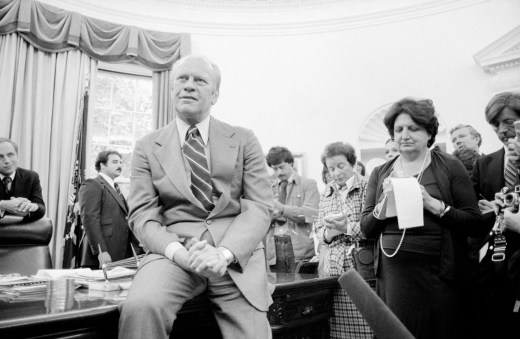
Image: Photo by Marion S. Trikosko (public domain). White House correspondent Helen Thomas (R) with President Gerald Ford and White House Chief of Staff Dick Cheney (far left) during a 1976 White House press conference.

Recipe For A Winning 4th Quarter Finish

Ready, set, win! In business and in life, it’s not where you start it’s where you finish. When the bell rings at the end of the game—the end of the year—with all your heart, you want to be a winner. Whatever you’ve experienced this year, whether you struggled to close deals or were touched by an angel, your performance in the fourth quarter is going to be impactful. I think it’s safe to say that you’re motivated to leave no stone unturned as you aim to close out 2023 with a victory.

The 4th quarter officially begins on October 1 and summer ends on September 22, but you’re about ready to kick-off your year-end sprint now that September has arrived. It’s time to go full speed ahead; optimizing your visibility to potential customers and referral sources can be the wind at your at your back. Start your campaign by identifying organizations and venues that sponsor programs that align with your brand and will bring you and your company to the attention of the right decision-makers. Your objective is to position yourself as an expert, thought leader and trustworthy professional who, BTW, can deliver solutions to a certain target market and make those who hire you look good. Here are a few strategies that when implemented will propel you out of the starting gate and toward the year-end finish line.

Elevator pitch

You’ll have two or three versions of varying lengths that correspond to the person you meet but in general your elevator pitch , which is an introduction to you, your company and your product or service, should be 20-40 seconds long. Your name and the company name, what you do, for whom you do it (i.e., your typical client) and the primary benefit (outcomes) delivered are what you want to communicate. Hone your pitch until you can define your venture in just a couple of punchy sentences.  An effective elevator pitch will grab the interest of the listener, showcase your mission and get people hooked on your vision, all in less than one minute.

Personal brand

It’s not unusual to confuse reputation with the personal brand, but the two are not interchangeable. Reputation is earned and acquired, influenced by how you behave and communicate. It is external and reflects how others see you.  

Your personal brand, on the other hand, is internal and intentional. It’s also aspirational and is based on how you’d like others to see you. It’s your preferred identity, your unique selling proposition and what sets you apart from competitors.

 Personal branding involves creating and communicating a compelling story about yourself, maintaining a professional demeanor and nurturing a reputation that positions you as trustworthy and dependable. Remember that your brand reflects your core values and purpose, it should resonate with your target audience and inspire their loyalty and respect.

Networking

Networking is the process of meeting and greeting, having conversations and getting to know colleagues and competitors so that you can exchange information, find common ground and develop professional or social contacts. Once in a while, you might be lucky enough to meet someone who becomes a real friend.

You’ll find opportunities to network wherever you meet people. The essence of successful networking isn’t about what someone can do for you; it’s about what you can do for them. Ideally, the experience of networking results in win-win outcomes. The best networking agenda is to create value, be a resource and forge genuine relationships, so that you and your network will support one another.

Social media

Whether your preferred platform is LinkedIn, Facebook, Instagram, Twitter or TikTok, establishing a consistent presence on social media will be a key element in your strategy to maintain visibility in your professional sector. Keep your audience engaged with promotional content, industry insights, interesting company updates and behind-the-scenes peeks, leavened with a dash of your charismatic personality. Because your customers and prospects feel more comfortable doing business with those they feel they know, make your content relatable.

Content marketing

Content is king, but not just anything will do. The content that you produce—text, visual, audio—must give the information and tell the stories that your clients and prospects find meaningful. Your content must also be high-quality, engaging and impactful to tell a memorable story , communicate your expertise and nurture your community. As well, remember that content marketing sidesteps a hard sell.

The format is about providing valuable insights, stimulating conversation and showcasing your genius to the audience. Publishing a blog and/or newsletter that explores topics that interest your target audience, producing or taking a guest spot on webinars and/or podcasts that allow you to personally speak to subjects you explore in your blog and/or newsletter posts are standard B2B content that you’ll post on your website and social media sites or send to your email marketing list. Creating video clips that show you engaged in a local charity event, receiving an award that honors your volunteer work, or even a clip of you decorating your office for the holidays are among the visual content possibilities you might use to present a less formal and more relatable aspect of yourself.

Public speaking

Public speaking opportunities are plentiful these days; your task is to identify venues that deliver your target audience. Panels, webinars, workshops, podcasts, rotary clubs or the chamber of commerce provide great venues for speakers.

If the very idea of public speaking gives you butterflies in the belly, start small and build your speaking skills. Practice in front of a mirror, practice and record yourself on your smartphone. Joining a panel or being a guest on a webinar or podcast are good ways to gain experience and build your confidence, as you get exposure to an audience that might bring you a customer or a referral. Soon, you’ll be commanding the room and leading the conversation in your industry. Public speaking is an investment with dividends in credibility, authority and a wider audience reach.

Press releases and media spotlight

While self-promotion is vital, third-party validation is perceived as impartial and objective and for those reasons, articles that appear in the media have the most credibility. Earned media is the term; to approach media outlets and invite them to in some way include you and your company in a feature, you must make contact with journalists or editors with press releases.

Journalists traffic in stories that they feel will interest their readers (or viewers), so your objective to obtain earned media must be based on a story that the media outlet’s audience will value. Write a press release when you win a business award, when you’re scheduled to appear on a local (or national!) television program, or when you’ll participate in a visible way in a noteworthy charitable event in your community. The story you’d like to share must be enticing and relevant to the publication’s audience. If done consistently and with viable story angles, media features can provide immense visibility and position you as a thought leader in your field.

Guest posts, podcasts, webinars

Engaging with your audience in virtual real-time has become standard practice in the digital era. There are now hundreds of podcasts and webinars broadcast nearly every day. More than just a knowledge-sharing medium, webinars and live sessions nurture a sense of community and belonging. They facilitate connection between you and your audience, fostering a dialogue that’s both dynamic and personal. The topic of your podcast or webinar session and information shared must deliver value to the audience.

Expand your writing credits and your reach by guest posting on popular industry blogs. Be sure to return the favor and occasionally invite a guest blogger to write for you and gain new readers as you do. Guest posting gives you exposure to a broader audience and solidifies your position as an industry expert. Whether you are the host or a guest, podcasts are a fantastic platform for showcasing your insights, opinions and your unique perspectives.

Thanks for reading,

Kim

Image: West Aurora, IL High School’s Victoria “Tori” Spagnola, left, wins the 300-meter hurdles race. Alexandra Johnson, right. (June 2021)

Rinse and Repeat: Your Content is Evergreen

What’s the purpose of your marketing campaign? Is it about branding, to make your company name, primary product, or service, memorable in the minds of clients and prospects? Or are you going head-to-head with a competitor and looking to gain or retain market share? Maybe your goal is to expand into a niche market, where you’ve discovered that your product or service is gaining traction and could have potential for more sales?

For every marketing tool that you use—display ad, social media, press release, newsletter, podcast, white paper, webinar—-you create content that costs time, bandwidth and money to produce. Why limit its use to just one platform? Your content is a versatile asset that can be recycled through multiple formats. It is evergreen.

Like a big holiday feast, when many dishes are served and preparation time is longer than the usual weeknight supper, don’t waste the leftovers. Instead, make note of what’s popular and serve it up again in another setting. You’ll not only deliver powerful content to new groups of fans and followers, growing your audience, you’ll save time as you do. Let’s talk possibilities.

White paper slice and dice

Can we start by defining the document? A white paper is written to promote a certain product, service, technology, or methodology and persuade current and prospective clients to believe that it’s useful and beneficial. White papers are stealth sales/ marketing documents written to entice potential clients to learn more about and eventually buy the product, service, technology, or whatever. They are designed to be used as a marketing tool in advance of a sale, to inspire curiosity, trust and demand.

White papers are typically 2000+ words in length and that makes them ideal candidates for content recycling. Selected paragraphs of your white paper can be edited and reused as (one or more) blog posts or newsletters. Your white paper can also become the core of an e-book that you can use in a call-to-action appeal on your website and social media outlets, helping to move prospects through your sales/ marketing funnel and grow your email list as you do.

If contacting media outlets is part of your campaign, a paragraph or two of your white paper might be used as the key message in your press release. If you can schedule yourself into a webinar or podcast, your white paper can provide your talking points.

Blog or newsletter recycle

If you’ve received lots of likes or comments on a post that you’ve written, you might extract a few sentences to create interesting social media posts that you can drop into one or more platforms. Your evergreen blog or newsletter content might result in two or more good social media posts that bring new and relevant info to your fans and followers. Or, you can repost an entire blog or newsletter in one or more of your social media accounts.

You might also be able to recycle a blog topic on a blogging platform, e.g., Medium. You’ll find a few of my posts in Lioness Magazine https://lionessmagazine.com/, a digital publication whose target audience is women entrepreneurs. I’m paid (very modestly) for published articles.

Consider diving into your blog and newsletter archive and updating a topic. Last December, I did exactly that when I realized that a 2019 post on writing a press release is evergreen. I updated with current info and expanded the topic to discuss creating an up-to-date press kit. I sent the article to Lioness Magazine and thank goodness my editor was pleased and agreed to publish it.

You can also turn your newsletter or blog post into a video. You wouldn’t just read it, but rather go on camera and discuss how what you’ve written is useful and actionable and will help viewers make money or operate their business more efficiently. Upload the video to your website, YouTube, Twitter, or other social media accounts.

Finally, you can reconfigure your blog or newsletter, or white paper, into a Power Point presentation and upload it to LinkedIn, Instagram, Facebook, or your website.

Webinar and podcast encore

If the program host will agree to send you the link and you have editing skills, this feast will yield high-end leftovers. For the price of an email address (that grows your list), visitors to your website, YouTube account and other social media can be greeted with an enticing call-to-action, an invitation-only rebroadcast of the entire podcast or webinar. You might also edit a tempting 3 or 4 minute audio or video clip to upload and make your CTA even more appealing.

Thanks for reading,

Kim

Image: Patty Duke (1946 – 2016) starred as both Patty and her identical cousin Cathy in The Patty Duke Show (ABC-TV September 1963 – April 1966).

Quick Tips: Increase Traffic to Your Website in 30 Days

“I know I could bring in lots more business if only I could get people to my website!” Do you hear the sound of your own voice in this lament? There may be more than a grain of truth in that statement. I’ll wager that at least 20% of those who visit a B2B website are doing research in advance of making a buying decision (according to the 80/20 Rule, that says on average a bus gets 80% of its sales from 20% of its customers).

When you greet site visitors with compelling content that supports decision-making, along with a respectable number of site visitors, a typical B2B Freelance service provider should be able convert window shoppers into paying customers about once or twice a year. That would be a victory for many Freelancers and small business B2B entities. But first, you’ve got to persuade prospects to come and look at the display window that is your website.

The first quick and overall most effective website enhancement strategy to put in motion is to create a compelling landing page that attracts and holds the attention of, in particular, self-identified prospects who are looking to buy what your company sells. Links to content marketing posts, videos and relevant updates are how your intriguing and persuasive content is brought to site visitors’ attention.

When site visitors are greeted with content that entices them to read posts and page through the site, the behavior nurtures the buying process. On your landing page, provide links to your blog, newsletter, case studies and/ or white papers. If you have video testimonials from happy clients, include a landing page link. If you have speaking engagements, list those as well on the landing page.

Your next fast-acting and free site traffic enhancement strategy is to maximize the visibility of the content you’ve posted there. If you know that your target clients trust and visit certain social media platforms, then establish a presence on those platforms. From time to time, do join conversations on trending topics to which you can speak intelligently (say, the PPP loans) but primarily, you’ll cross-promote selected content marketing posts and videos from your website onto social media and extend your reach.

Facebook, Instagram, LinkedIn, Twitter and YouTube are the usual suspects but if some of your content seems appropriate for the ephemeral, one day only lifespan featured on SnapChat (and your target clients include Millennials/ Gen Z), then upload and monitor the results.

If readers and viewers appreciate your content, they’ll visit your website at some point. This is a great way to continually fill the top of your sales funnel (TOFU) and ease a few into the middle (MOFU) as well.

Serious shoppers do online searches from their keyboard and voice searches on mobile phones through Siri and Alexa. While single keywords get all the attention in SEO, descriptive phrases used by those looking for information about your business category, known as long- tail keywords, are far more effective in putting your company into search results than single keywords.

The goal is to get your company into the top 10 (page 1) of search results and increase the chance that a prospect will see your website and click. It’s worth a try, but be advised that smaller companies rarely get page 1 placement.

Start by brainstorming possible search phrases that a prospect might use when looking for your service and make a list. Next, go to Google and type those long- tail keywords into the search box and examine the search results. Which phrases are relevant for your business? Try also your long- tail keywords on http://Soovle.com and http://ubersuggest.org which open the door to search engine results other than Google.

When you discover which phrases bring up companies that match with yours, ease them into your content (three long- tail keywords in one 1000 word post max). Overuse of keyword phrases will help neither your content nor your credibility.

Finally, installing an AI-powered chat bot is another great website enhancement that you can use to increase website traffic, indirectly. Chat bots encourage and enable website visitors to ask questions and almost immediately receive answers through Natural Language Processing, that simulates a Live (but limited) conversation. Chat bots help visitors save time, so benefit derived is that bots combat website abandonment as they assist the decision-making process.

A web developer can install your chat bot but you can DIY if so inclined. Omnichat, The WordPress chat bot is a plug-in option available for owners of WordPress websites. Chat bot analytics will tell you who has used the bot and delivers a second ROI by allowing you to harvest emails to build your contact list. You’ll also learn the most frequently asked questions that will guide you to expand or refine the answers provided.

Thanks for reading,

Kim

Image:

Press Release: To Send or Not to Send?

I’m impressed! You have news that you’d like to share with the world, with a particular emphasis on those who are potential clients and referral sources for your business venture, and you are sophisticated enough to think outside the box in an old-school way and consider sending—-ah ha!!—a press release. Yes, a press release remains a relevant tool, the standard route to media outreach.

While most everyone else chooses to make big announcements by way of social media you, sophisticated Freelancer friend, understand the reach and power of traditional media outlets, be it radio, neighborhood newspapers, or digital-format regional business magazines. Social media is great outreach but there are times when you want to get beyond your followers and obtain third-party support that implies objectivity and real world legitimacy.

Be aware that a press release is a marketing and sales tool. The idea is to communicate a message to customers and prospects through the vehicle of a print or online article, adding the authority and credibility of the publication to the message.

Before you go online and remind yourself how to write a press release—Who, What, When, Where, Why and How—first ask yourself these two questions and follow a couple of pointers. These may sound stringent but they’ll help you make a rational decision regarding media outreach for your organization.

  1. Am I newsworthy? Do you or your company that regularly receive media attention? If so, then you are newsworthy. Press releases by larger, established, household-name companies receive more attention than smaller companies and startups. Have you or your enterprise received any media attention at all? If so, that puts you at an advantage. Or, have you served on the board of your local chamber of commerce, library, or neighborhood business association? Are you a long-term and active member of a neighborhood group, school, Rotary Club, or place of worship? In other words, are you well-known in your community and can you leverage your renown to persuade an editor or reporter that you have sufficient name recognition among the media outlet’s readers or listeners that would motivate them to learn more about you?
  2. Is my story/announcement news? To get your message communicated through the publication, you’ll need to convince a reporter or editor that your message (or the story surrounding it) is newsworthy. Your story must have the potential to appeal to the readership of the publication, or listening audience if podcast or radio. So if your goal is to fill seats at a conference, don’t send a press release. The most important element of a press release is that it’s helpful to reporters, by offering them news of interest to their audience. Journalists don’t care to help fill seats at your conference.                                                                                                3. Write like a reporter   If your press release looks and feels like a real article, reporters will often just file it as a story with minimal editing. Therefore, it’s up to you to make sure that your press release looks and feels like a real news item. Avoid using business jargon.                                                     4. Call media outlets to confirm interest in your story Before sending a press release, call all media outlets on your wish list and ask to speak to the (business) appropriate editor or reporter. Do yourself a favor and read 3 – 4 issues to familiarize yourself with the types of stories that are carried and the names of reporters who cover your topic. Then, contact the reporters that you really want to cover the story. Mention that you’ve read their stories and name at least two. If you reach an editor, still make it known that you are familiar with other stories in your category.

Thanks for reading,

Kim

Photograph: (circa 1988) Phil Donahue (L) and candidate for president George H.W. Bush on The Phil Donahue Show.

Optimize Your Press Release For Social Media

The social media tsunami shows no sign of abating. According to 2018 data supplied by Statista, 68% of US adults have a Facebook profile and 75% of that group logs on daily. According to data supplied by the social media management platform Hootsuite, 21 % of US residents are active users of Twitter in 2018; 22 % are age 30 – 49 years and 18 % are age 50 – 64 years.

Instagram claims the loyalty of 20 % of the US population, 38 % of users are women and 26 % are men. Thirty-three percent of Instagram active users are age 30 – 49 years and 18 % are age 50 – 64 years. Sprout Social, the social media management platform, reports that 71 % of US businesses have an Instagram account.  Instagram data shows that 80 % of its users follow at least one business and 60 % of users have learned about a business through the platform.

I think you’ll agree that we  may reasonably conclude that exploiting social media’s hold on the population is a wise business decision.  Social media platforms are widely accepted in both the business and personal sectors and as indicated by the statics above, its influence continues to rapidly expand as innovators and thought leaders continually pioneer creative uses for it.

The tried-and-true press release has recently been pulled into the social media orbit.  Why not make your company’s next press release stand out to journalists and bloggers and kick it up a notch with social media tools? A press release optimized with the right social media platforms can be a savvy promotional add-on that complements the standard format you’ll send to media outlets.

Step One is to create a traditional press release that concisely and dynamically describes the who, what, when, where and why of your announcement and communicates why readers of your target media outlets, as well as your clients and social media followers, will appreciate the information.

Step Two is to customize your press release with social media that make your story pop and hook your target audience.  Let’s review the building blocks of a well-written press release:

Headline
Devise an attention-grabbing hook for your headline. Use SEO key words, wherever practical.

Sub-Headline (if needed)
There may be a second, follow-up headline that enhances or clarifies the primary headline. Use SEO key words here.

Contact
Who do interested parties contact for follow-up or more information? Include the name, title and preferred method of contact specifics.

Summary
A two or three sentence overview of the key message(s) of the press release may be appreciated, especially if it is longer than one page.

Body
Place the selling points of your media pitch here, in language that resonates with readers.  Incorporate key words for those who may be searching the topic.

Company info
Include a brief company bio with links to the company website and social media.

Social media links
Optimize your press release with social media links that enhance its storytelling power and go beyond the traditional text format. Include a brief video, two or three still photos and links to additional text that will support your story and resonate with your intended readers.

Media kit links
A soft-sell promotion of your company will be achieved when you dip into the media kit and include links to previous press releases, whether social media optimized or not. If your company has been favorably mentioned in the press, especially in articles that support the purpose of your press release, provide links.

Tags
Share your social media optimized press release on your company’s Facebook Fan page, Twitter hashtags and social bookmarking sites.

Thanks for reading,
Kim

Image: A poem for “The Pavilion with Various Views,” attributed to Mi Fu (1051 – 1107) Northern Song Dynasty, China

Headline Hooks That Reel In Readers

Whether you’ve written an email,  blog post,  newsletter,  white paper or press release,  your primary job is to persuade your intended readers to read what you’ve written.  Anyone worth writing for is buried in potential reading material.  Prioritizing and skimming are the norm.  Use yourself as an example.  When sorting through business or personal reading material,  what persuades you to stop and read?  The headline!

The headline is the hook that reels in readers.  Dull headlines do not grab attention.  They do not resonate with or intrigue your intended readers.  They do not communicate the value of the content that you’ve spent time to research and write.  Package and sell your content with a headline that makes your intended readers know that your content,  email or press release contains valuable information.

Headlines alert intended readers to subjects of interest.  Attention-grabbing headlines cause us to read even articles that we may conclude are a waste of time and which we may abandon,  but the subject line was like a siren song to our eyes.  Consider what would be most appealing,  or alarming,  to your intended readers and also descriptive of the content.  The perspective from which you must create your subject line / title is from the intended reader’s ultimate vetting question,  “What’s in it for me”?

The right headline gets you more attention,  more readers,  more buzz and more results.  Keep these headline categories in mind as you create the headline for your next important communication:

I.     How-to headline

Content that instructs and informs will benefit from a headline that motivates intended readers to take action

  • Cold Calling Dos and Don’ts
  • Five Tactics Guaranteed To Make You A Better Networker
  • Headline Hooks That Reel In Readers

II.    Challenge headline

Headlines that pose a question that intended readers are presumed to want answered,  because they likely grapple with the predicament that the content addresses

  • Is Your Business Model Still Relevant?
  • Will Producing Content Take Over Your Life?
  • Would You Like To Scoop Your Biggest Competitor’s Biggest Client?

III.  Targeted headline

Needless to say,  targeting is the basis of marketing and customer outreach and the more specific the headline is to the interests of the intended readers,  the greater the probability that the content will be read

  • Financial Management Tips for the Finance Phobic
  • PR Strategies for Cash-Strapped Start-Ups
  • Teaching Brings Cash and Credibility to Freelance Consultants

IV.   Warning headline 

“Shock and awe”  headlines put intended readers in a head lock and drag them in,  often times even if they would rather not.  Many newspapers and magazines specialize in such headlines

  • What Your Clients Won’t Tell You About Your Sales Pitch
  • Why Your Advertising Budget is Only Money Down the Drain
  • You Can’t Retire On Less Than $2 Million

V.      Story headline

Entice intended readers with a headline hook that communicates the theme of your compelling narrative

  • A Back Bay Grande Dame Celebrates Her 125th Birthday
  • The Client Wore Black
  • From Living in a Car to Living at the Taj: An Uncensored Story of the Entrepreneurial Life

Thanks for reading,

Kim

Press Kit Recipe

Public Relations experts say that creating a good press kit is as essential as creating a good website.  Both items reflect your brand and are important marketing tools for your business.  Make your press kit one-stop shopping for a busy journalist,  prospective customer or potential referral source who would like information about you and the products and services that your business provides.  PR pros say that a useful press kit contains the following ingredients:

Company overview    AKA the “one sheet” gives a thumbnail sketch of your business: company name,  year formed,  contact info,  name and contact info of the company’s media spokesperson if the business is not a single person entity,  a succinct description of the products and services provided and two or three key benefits,  value addeds or outcomes derived.

FAQs    Differentiate your company from the competition and provide helpful information with a Frequently Asked Questions page,  if you desire.  Use as a guide questions that prospective clients ask when you meet to discuss doing business.

Bio   The founders,  principals,  C-level executives and major investors should submit a one page bio for the press kit.  The qualifications of the leadership team should be made known.  Lou Hammond,  of the public relations firm Hammond and Associates,  recommends that three paragraphs is the ideal length of a bio.

Testimonials    Customer testimonials allow those who have done business with you to sing your praises and add loads of credibility to your professional capability.  Invite your three best customers to write a sentence or two and extol your virtues.  Again,  keep the testimonial segment to one page.

Press releases    Include three or four recent press releases,  so that the press kit recipient will know what you are saying about your business activity: new product or service launches,  business partnership,  speaking engagements,  webinar presentations or participation in a local charity event,  for example.

Article links     Formerly known as press clippings,  include links to articles in which your business has been mentioned to let interested parties know that you’ve garnered press coverage.

Photos    Invest in a session with a professional photographer and get an attractive head shot of yourself and each leadership team member.

Audiovisuals    A link to a short video clip of you or a leadership team member speaking at a prestige event,  accepting an award and/or demonstrating a product can be included.  Customer testimonials can also be presented in this format.

Press kits are usually compiled and distributed electronically.  Nevertheless,  there can be reasons to have ready hard copy to present to select individuals on the spot.   A physical press kit represents another opportunity to communicate good things about your brand.  Create an attractive and informative package.  Enclose the information in a portfolio folder in your company’s signature color.  Attach a pre-printed label that contains your company name and logo.  Print documents on good quality paper stock.  Remember to include your business card.

Despite the rise of social media,  the relevance of traditional media outlets,  whether print or online,  has not diminished.  No matter how many social media followers you may have,  mention of your name in the business section of a legitimate publication gives real credibility to you and your business.  Invest the time and money necessary to create an informative and attractive press kit and update its contents each year.

Thanks for reading,

Kim

Getting Good PR

Every Freelance consultant and business owner has an eye open for good publicity opportunities.  Articles written about one’s business are far more effective than paid advertisements,  because they are considered objective opinions.  Other than word of mouth by satisfied clients who sing your praises,  there is nothing better than good PR to help build the buzz that makes you look credible and successful and worthy of still more business.  So what are the best ways to get good publicity?

If you have the kind of business that can potentially attract more than sporadic media attention,  then building relationships with editors and writers whose publications and stories focus on your category of business is a good use of your time.  Once you’ve identified good media prospects by reading their articles,  send a press release that details an event that would interest.  In your email,  reference an article or two of theirs that you’ve read.  Follow up with a telephone call.  Offer to take that person to lunch or coffee.  Even if your press release doesn’t get you any editorial space,   you may be called to provide comments as an expert when other stories are written.  Check in periodically,  to maintain the relationship.  Meeting for coffee every once in a while can pay off.

Bloggers have lots of influence and it is sometimes a challenge to reach them.  Blog Dash is a site I recently found that helps you connect with bloggers whom you can hire to spread the good word about your business.  Fifteen categories of business are represented,  from arts to travel,  and numerous bloggers within each category can be reached.  There is a free option,  which will give you no real access to bloggers  (but they will see your business and may comment),  or you can pay up to $50.00/month and be able to pitch bloggers directly and build relationships.  http://blogdash.com

Write a good press release  (see my post Press Release Primer,  3.1.11)  to encourage traditional journalists and bloggers to give your story some editorial space.   They are considered old school in some quarters,  but a press release is still the way to get the word out to journalists and bloggers,  whether or not they know you.   But you have to provide good content and 95%  of the time what a Freelancer or other business person has to say is not considered relevant.  Hint:  when one advertises,  one generally receives editorial space.

Solicitations to provide expert opinion or commentary showcase you to look like the go-to in your field.   Help a Reporter Out HARO  http://helpareporter.com and Seek or Shout  http://sos.cision.com  allow you to respond to requests for quotes on any subject,  from big data to the medical device industry.  Three or four years ago I signed up with HARO but I quickly shut this free service off.  I was nearly buried in emails and I couldn’t take it.

It is obvious that the adage  “There’s no such thing as bad publicity”  was created before the dawn of social media.  Social media can cause a minor PR hiccup,  or negative customer review made by a spiteful customer (or maybe a competitor),  to blow up out of proportion and do you some damage.  Resist the temptation to hand over your social media functions to some 22 year old.  In theory,  social media updates ought to be a great responsibility for a young person who lives this stuff anyway, understands how to get the word out and works cheap.   The problem is,  that young person may not have the wherewithal to give the right answer when something challenging is written.

Creating good buzz about your business is part of the Freelance consultant or business owner’s job.  How to get that done in the most effective manner requires a strategic approach,  like all of your other business activities.  If sporadic PR is what your business attracts,  it is best to engage in a variety of activities to ensure that you appear viable and relevant to clients and colleagues.  You may not get written up,  but you will build a good reputation.   If your business is the type that would attract more press,  then spend the time and money to advertise in the relevant publications and build relationships with journalists who cover your kind of business.   Subscribe to have the ability to reach out to bloggers and see what that does for you.  Budget for a year and then evaluate.  Learn to write a good press release  (see my post  FOR IMMEDIATE RELEASE,  3.19.13).

Thanks for reading,

Kim