Freelancers Do the Side Hustle

When a local small business owner and acquaintance of mine opened her second venture, a tiny breakfast and lunch place with a retro cool vibe that I love, she soon started “moonlighting” as a dinner service waitress three nights a week at a small artisanal pizza restaurant nearby. She burned the candle at both ends, finishing the waitress shift at midnight and crawling into bed at 1:00 AM, only to wake up at 4:00 AM to make the 45 minute journey to the wholesale restaurant market six days a week, to help her contain food costs and offer menu prices that customers would accept. It was exhausting, but Nicky was determined to pay her share of the debts from the failed first business venture in which she was a partner and also maintain adequate cash-flow in the new one, where she is the principal owner.

About three miles away from Nicky’s restaurant is Anthony’s, another tiny breakfast and lunch place that I love. A few years ago, Anthony told me that his venture’s cash-flow foundation is real estate. Some years ago, Anthony was able to buy the building where his restaurant is housed; upstairs over the restaurant are four apartments that command premium rents for his harbor-facing location.

Cathy, a former client of mine (who, sadly, passed away about three years ago), worked for three or four years as a Lyft driver, to build cash-flow that safeguarded her ability to make the weekly payroll and cover other expenses in her medical billing business (which her children sold). My friend Jackie, a fitness instructor and trainer, launched a boutique gym 20+ years ago, yet she continues to teach classes at a large, prestigious gym where she receives training and certifications in new exercise techniques that she passes along to her gym’s fitness staff so that her team has updated skills. Jackie is also able to now and again observe smart business practices used by her mega-gym employer that she can apply at her operation to improve her performance as fitness center owner and manager. Then there’s my friend Paul who once co-owned four outlets of a popular skin care franchise. To provide health insurance for himself, his wife and their four children, for many years Paul worked 20 hours/week as a FedEx delivery driver.

I also created a side hustle strategy to protect my business cash-flow. Until about three years ago, I periodically taught noncredit skills development workshops to aspiring entrepreneurs—business plan writing, sales skills training, marketing and networking skills—at a local school and at a business incubator that serves aspiring female entreprenurs. Unfortunately, pandemic related shake-ups torpedoed my access to both teaching positions but if an invitation is made, I’ll gladly return—and money is not my only motivation—I enjoy teaching! On the plus side, since 2016, I’ve been a contributing writer at Lioness Magazine, a globally distributed publication that’s targeted to female entrepreneurs.

So where are we going with this? You noticed that the recurring theme of these stories is how Freelancers and small business owners take action to strengthen their business cash-flow. Freelancers and small business owners can be dangerously vulnerable when it comes to financial security. Keeping an entity healthy throughout the inevitable ups and downs of the local or national economy or, in the B2B sector, protecting yourself from cash-flow crunches that can result if a client is late paying your invoice or worse, doesn’t pay at all, is an essential function of your risk management strategy.

The phenomenon once known as “moonlighting,” that is, working in a second (or third, or even fourth) job, and now called a side hustle, burst into the public discourse during the pandemic, when the economy as we knew it suddenly turned upside down and most jobs tumbled into a confusing transition. The shutdown resulted in the swift closure of numerous restaurants and fitness centers and was soon followed by waves of lay-offs and bankruptcies that are ongoing, especially in the tech and retail industries.

Life gradually returned to what’s called “the new normal” and markets rebounded and stabilized, on paper anyway. Contrary to the many glowing reports of a low unemployment rate, subsiding inflation and millions of jobs that are unfilled (and, allegedly, looking to hire qualified candidates), many Americans are experiencing a different reality and the desirability of earning extra income has taken hold. The popularity of the side hustle economy has continued to grow, publicized by rideshare giants Lyft and Uber and fueled by financial pressures felt by both independently and traditionally employed workers.

Recent data confirms that side hustles are on the rise and here to stay, with CBS News reporting that nearly half of America’s workforce has a secondary source of income or their own side hustles. Surprisingly, according to Side Hustle Nation, side hustles aren’t exclusively for the financially challenged—the 2024 Side Hustle nation survey found that more than 40% of participants have household incomes that exceed $100,000 and 78.4% stated that they aren’t struggling to make ends meet.

The changing societal zeitgeist gives today’s Freelancers and SMBs the greenlight to radically reframe their feelings and expectations toward “moonlighting,” with its former connotations of operating in secrecy in order to rustle up money needed to supplement an insufficient income, to a potentially impactful revenue stream that could surpass mere cash-flow support and extend into financing new business ventures or other investment. For today’s Freelance professionals and SMB owners, a side hustle can translate into a unique growth opportunity but to make the strategy work, the side hustle must be managed with intention. Proper structure, planning and assessment are required. If you are Freelance professional or SMB owner considering the enhanced security that can be provided by a good side hustle, here are six steps to take to help make your side hustle worth your time and effort.

  1. What’s in it for you? As you’ve seen, the side hustle economy gets lots of publicity and the noise may get you thinking—is there an opportunity for you? Life continues to get more expensive and also, extra money is an essential resource when one has financial or entrepreneurial goals. You might see a side hustle as a vehicle to pay off debt, finance your retirement, or build capital to launch a start-up. Then again, you could be motivated by a basic need or desire to supplement your Freelance or other business revenue or your W-2 paycheck. There are also those who harbor the goal of building out a promising side hustle that will become a full-time business venture and replace their current employment. Before you focus on what might be your most promising side hustle, however, you would be wise to clearly define your motivation.

2. What are your marketable skills and are they expert-level? Once you’ve made an uncensored examination of your interest in launching a side hustle, make an accounting of your potentially marketable skills and evaluate what customers might be inclined to pay you to do. For example, might your knack for graphic design open doors to projects such as designing wedding invitations, or perhaps creating marketing and sales materials? Talented writers might parlay that competence into a Freelance editing side hustle. If you were born with a green thumb and can keep blooms popping, from crocuses in early spring to chrysanthemums in late autumn, then window box and garden management may be the side hustle for you. Be aware as well that it’s a valuable competitive advantage to invest in your side hustle skill with training that upgrades your expertise. Certifications, degrees and experience (communicated by customer reviews) can be posted on your website and social media accounts to increase the confidence that prospects have for you. Skills training helps you stand out against competitors and can increase customer demand, grow your client list, justify premium pricing for your services and ultimately, position your side hustle to earn more money, faster.

3. What will success look like? It’s important to align your side hustle’s driving purpose with your marketable skills that a critical mass of customers will pay to receive and also fit your definition of financial success. This is about managing expectations—will the side hustle you have the skill set to get paid for earn you enough money to make it worthwhile doing? For example, you may want to become a piano teacher but research of the most respected teaching qualifications, or your access to potential students, may not support either the price you’d like to charge for lessons or the billable hours you’re likely to get. You may be able to tap a new market and improve access to students—maybe retired adults who want to revisit their childhood piano lessons?—but since you can’t charge your preferred price for lessons because you lack a certain qualification, so you’ll have to work harder and give more lessons. Basically, you must be honest about how much time and focus you care to devote to your side hustle venture and define your picture of success.

4. How disciplined are you? The side hustle will not get off the ground and fulfill expectations if you can’t make yourself put in the time and effort to make it successful. This seems obvious, but for some it may not be as easy as it seems. Before you invest significant money into developing your side hustle consider likely the time commitment, along with the necessary tools, equipment, relationships, training and administrative duties (marketing and bookkeeping, for example) it will take to launch and operate your venture and guide it toward your definition of success. Estimate the number of hours per week, with a realistic hourly service rate, it will take to make the thing worthwhile. Be brutally honest about the number of hours per week or month you can (or will) allocate to working a side hustle. BTW, as you calculate your estimated time commitment, do not even think about infringing on the time and focus needed to effectively do your day job.

5. Create milestones with timeline and success metrics. Operating a side hustle means lengthening your to-do list and spreading yourself thin, making it essential to be organized. Keep yourself on track and also alert yourself to what is or isn’t working by creating a simple and revealing tool—a timeline. At periodic intervals—monthly or quarterly will be good—over a 12 month period, it will be very helpful to track and assess Key Performance Indicators that demonstrate side hustle growth, or lack thereof. Look at billable hours worked, number of customers seen, revenue generated and business expenses to get the story of side hustle performance. Pay attention to prospects who don’t work with you to learn of some element you may want to adjust. It’s important to use a timeline to project what you think is achievable so that, as an entrepreneur, you are setting yourself up for success.

6. Course correct when necessary. You’ll quickly know if something is not performing as you’d hoped (like revenue generated), but the above-mentioned timeline will confirm the diagnosis with metrics. Along with defining your KPI timeline is to recognize what’s working and what’s not, so you can make corrections where necessary. The big-picture view is a revealing perspective. Take the time to consider why those who tell you no are declining to work with you—are you falling short somewhere? On the plus side, are existing customers referring new customers and/or writing good online reviews? Once a month or so, hunt for time in your very busy schedule to think about your side hustle for a couple of hours, just as you think about your Freelance consultancy or SMB. Know that it’s okay to periodically reevaluate and change course if necessary.

Thanks for reading,

Kim

Image: © Shutterstock. Working as a fitness instructor or trainer has been a popular side hustle since the 1980s.

Build A Budget, Build A Business

Fact of life—if you run a company, even as a Freelance solopreneur, you’re going to have to suck it up and put together a business budget every year. If you fall into avoidance behavior and tell yourself that you’ll do it “next month,” it is almost certain that 1) you won’t do the budget anytime soon; and 2) your business could eventually slide into financial chaos, taking with it the money and time you invested. Failure to mind business finances is business sabotage.

For many people the mere thought of budgeting brings a sour feeling to their stomach, but the fact remains—budgeting supports business success and your organization is unlikely to thrive, and may not survive, unless you do it. You may find budgeting to be an onerous task, but there is a silver lining—a budget is empowering!

Budgeting is integral to effective financial management and allows you to make informed decisions and take calculated risks that can move your company into a stronger position. Budgeting brings to light the reality of your company’s fiscal health and performance. Problem areas will be recognized and you’ll be able to propose and implement remedies designed to rectify the lapse. You will be positioned to develop reasonable, reachable, goals.

The budget is your buddy

While budgeting often brings to mind thoughts of scarcity and sacrifice, saying no when you want to say yes, you’ll feel much better when you reframe your thinking about budgets; budgeting need not always result in cutbacks. Instead of focusing on limitations, why not flip the script and think about growth? It is reasonable to view budgeting as a pathway to business success, a tactic that enables your entrepreneurial ambitions. Rather than obsessing over cutting expenses, utilize your budget as an element of your strategy to manage expenses and drive growth and profitability.

In fact, only when finances are in order can you operate from a position of strength and make good decisions. When the cash-flow and business reserve fund are healthy, you can demonstrate business savvy—you might hire one or more employees, whose productivity will positively impact sales revenue; you might move the company into a larger space; you might upgrade office or manufacturing equipment that introduce operational efficiencies that benefit anything from your marketing campaigns to the customer service and customer experience your company offers, enhancements that reward your business with loyalty, good word of mouth and returning customers.

Build the budget

Your primary goal will be to ensure that there will be enough money to operate the business, from covering selling and marketing expenses that generate revenue to meeting fixed expenses such as payroll, rent, utilities and insurance. Among the projected expenses you’ll calculate will be those specific to acquiring or creating your product or service, that is, the cost of materials or the time involved in crafting what you sell. You’ll budget for the year, so it will be necessary to make reasonable projections of future expenses and sales revenue. You also want to set aside funds you can invest in business growth, whether to carry out specific initiatives or maybe take advantage of an unexpected opportunity as well.

You will be wise to structure your budget to predict somewhat modest sales revenue and anticipate expenses that are somewhat higher than the previous year. Planning for a less than rosy scenario is the safest strategy, giving budgetary wiggle room by encouraging you to trim expenses where possible to help you build up the business growth fund.

Once you make revenue and expense projections, you can run different potential scenarios and refine your estimates of likely cash-flow and sales revenue income, to enhance your trust in your estimate of how much will be available to finance marketing and business growth.

Create a spreadsheet

A spreadsheet is one of the most powerful tools available to create a budget, not only to make it easy to view and analyze your data, but also to make it easy to change your projected data and evaluate different business scenarios. You can do the same when reviewing projected costs and sales revenue associated with carrying out a proposed business goal.

Get comfortable with the Microsoft Excel spreadsheet and learn to call up different combinations of projected revenues and fixed and variable expenses that will enable prudent decisions in every aspect of your business, from pricing to hiring additional employees. Take a Microsoft Excel for Beginners tutorial .

Monthly budget reviews

Your budget will be useful only if you review it regularly, to assess your company’s performance. Get ready for the big reveal when you discover whether (or not) actual spending aligns with the amount budgeted. If certain expenses are consistently higher than anticipated, you may need to revise the budget to reflect reality, or find ways to reduce those costs. Likewise, your budget will also reveal if sales revenue projections are either too optimistic or too conservative.

Responding to changes in your business environment ensures that your budget functions as a useful tool for financial planning. Finally, the budgeting process will, over time, become a repository of company performance data and provide an important historical overview that could be useful when anticipating seasonal fluctuations or other patterns that support your projections of future business performance.

Thanks for reading,

Kim

Image: © Mee Ko Dong for Shutterstock

Find Opportunity in Adversity: Surviving Inflation and Slowdowns

It appears that Freelancers are having another moment although, as usual, it could be a mixed blessing. As we discovered when the coronavirus shutdown was waning and business began to slowly pick up, there are both roses and thorns to contend with. Still, economic fluctuations are nothing you haven’t seen before and you probably survived (but maybe not without suffering a few sleepless nights).

What distinguishes Freelancers and other independent business owners from employees is your plucky resilience and wily resourcefulness. Those traits are in your DNA and that’s why you struck out and created your own venture. However, you’re also a realist and well aware that neither boom times nor tough times last forever (although—surprise!—recessions and other economic downturns linger nearly twice as long as upswings).

Because a Freelancer’s income is often unpredictable you know that planning ahead with careful budgeting, sensible spending and, in flush times, building up savings to cushion cash-flow interruptions are absolute necessities. When either unexpected adversity or opportunity arises, you also know when it’s time to:

  • Assess what appears to be an opportunity or obstacle
  • Prepare to pivot, if it makes sense, to either expand into a new market or customer group or tweak a product or service to make it more appealing to what customers want now

Forward-thinking Freelancers also work hard to bring in multiple clients and develop additional revenue streams, so that there will be a way to cushion the shock of a lost client.

It is interesting that Inflation and the threat of recession have the potential to simultaneously add and delete clients on your roster. According to a June 2022 Wall Street Journal article big companies, including Twitter, real-estate brokerage firm Redfin and the cryptocurrency exchange Coinbase have in recent weeks rescinded job offers made to candidates —-now that’s ugly. Google, Meta (Facebook), Oracle and Tesla have imposed hiring freezes that will be in effect through calendar year 2022.

Bloomberg News brings good news to Freelancers in its report of a survey conducted by gig work clearing house Fiverr. The survey showed that 78% of business leaders said they are more likely to hire Freelancers, rather than full-time employees, as long as economic conditions remain uncertain. Furthermore, economic uncertainty has motivated 85% of US companies to implement a hiring freeze during the current downturn and 78% plan to lay workers off, according to the Fiverr survey.

The current economic climate has Freelancers working in more than 80% of the companies represented by survey respondents, more than 1,000 owners of medium to large businesses. Those companies are currently hiring Freelance experts like you to get the work done and Fiverr reports that it has seen an increase in demand on its platform, especially from large businesses.

Thanks for reading,

Kim

Image: Gas pump prices in Hingham, MA (cheaper than Boston!)

Form 1099 Changes for Tax Year 2020

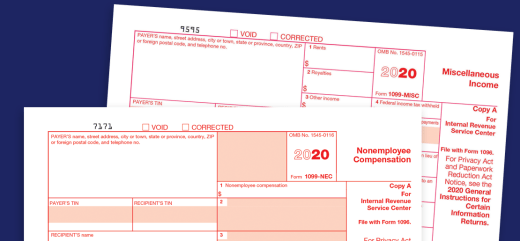
Freelance Consultants will soon receive from clients who were billed $600 or more in tax year 2020 the IRS Form 1099 and as many of you may have heard, changes were made. The general rules concerning who must file the form remain the same, but there are now two versions —-the 1099–NEC and a recalibrated 1099–MISC. Freelancers must receive their appropriate Form 1099 no later than February 1, 2021. The 1099–NEC cannot be downloaded online, but must be ordered from the IRS website.

1099–NEC (non-employee compensation) will be filed by Freelancers and that includes attorneys. Clients must send out this version of the 1099 when:

1. Payments of at least $600 were made during tax year 2020 to an individual (or company) who provided services to the client company but who is not formally employed by the client company.

2. Payment was made for services rendered and not for products or merchandise.

3. Payment was made to an individual, partnership, or other unincorporated entity. With the exception of attorneys or law firms, payments to either C or S corporations are not recorded on Form 1099–NEC or 1099–MISC.

Freelancers who file 1099–NEC will report their income on IRS Schedule C (Profit or Loss from Business), a supporting document of Form 1040. Your client should ask you to complete IRS Form W-9 if you bill, or expect to bill, $600 or more in the year.

Clients would traditionally mail to the Freelancer a hard copy of 1099-NEC (copy B), but the client may ask, or Freelancers can request, that an electronic copy be sent instead. Email correspondence between client and Freelancer, in which the Freelancer consents to receiving an electronic 1099–NEC from the client, is all that’s required to authorize the electronic format.

1099–MISC will be filed by recipients, including Limited Liability Companies (LLC), of $600 or more in rent payments (landlords), plus prize and award winners who receive $600 or more and recipients of royalties in excess of $10.

Other types of 1099–MISC income includes payments to an attorney or law firm for fees other than legal services, payment received from a legal settlement, fishing boat proceeds and non-qualified deferred compensation.

Freelancers and merchants who accept credit and debit card payments (maybe on Square, Stripe, or PayPal) will receive Form 1099–K from payment processors if those payments amounted to $20,000 or more and 200 or more transactions took place during calendar year 2020.

The card transaction income reported on 1099–K confirms for both the business and the IRS that income reported on 1099–K and Schedule C aligns. However, the business may also receive checks or even cash, so Schedule C income may be greater than 1099–K income.

The 1099 is part of federal taxes, but 39 states also require it to be filed with annual taxes. States that do not require the 1099 to be filed at that time are: Alaska, Florida, Illinois, Nevada, New Hampshire, New York, South Dakota, Tennessee, Texas, Washington and Wyoming.

Did I mention that 4Q2020 taxes are due on Friday January 15? Just saying.

Thanks for reading,

Kim

Passive Income? Well…

Ah, passive income. It has become the romanticized ideal of how to make money, the American dream redefined. “I can be on the golf course or sailing on my 38 foot boat because I don’t sweat to be rich. I’ve created a lucrative passive income stream. I am smarter and richer than you.” Sigh…

I’m not here to criticize the aspiration of creating a passive income stream. I wish I had one (or two)! My goal today is to tell the passive income backstory because in reality, creating a passive income stream is not as easy as it may look. Furthermore, a passive income stream usually will not make it possible to quit your day job and retire early. Most of all, be aware that creating a passive income stream is an active process. To make it happen, you may have to work harder, smarter and maybe for a longer period of time than you might have imagined.

Even if you’re able to create a passive income stream (and that is not guaranteed), the ROI might be underwhelming. The passive income stream that you have the wherewithal to create may only be enough to pay your cell phone and Wi-Fi bills, not a mortgage and car note. Still, even a modest passive income stream is nothing to sneeze at. It’s just that everyone daydreams of it being so much more.

Passive income defined

Before diving in, let’s clarify the term. Passive income is a reliable, long-term revenue stream that you receive but do not work full-time to generate. Passive income is sort of like a no-show job—work 8 hours and get paid for 40 (or work 20 hours; more about that later).

The ultimate passive income stream is a trust fund. To become a beneficiary, the only work that must be done is arrange to be born into the right family and after that, you’re golden. Heck, you might be able to live off the interest (the ne plus ultra). But alas, not all trust funds are generous; most pay in the low five figures annually. Still, even a trust fund that pays $1000/ month provides a nifty little cushion that no one would refuse, not even Bezos.

Dividend-paying stocks, bonds, or mutual funds are another source of passive income. Selling advertising space on a blog or newsletter is yet another method of generating passive income. Rent received from an investment in commercial or residential property is the most popular form of passive income because it is the most profitable.

Passive income starts with active work

If generating a passive income stream is the goal, accept the fact that time, effort, a particular skill set and (often) start-up capital will be required. Those who are now collecting a reliable passive income stream had to work for it, unless they are lucky trustafarians.

A fair amount of research, the ability to interpret and apply the data, plus good luck, good timing and good investment advice are needed to reliably earn quarterly dividends on Wall Street investments that will make even a modest positive impact. Following your investments and getting a sense of when to put in a buy or sell order, or having the courage to hold when your fund is down for the third week in a row, takes a strong stomach. Even if you have a better-than-average proficiency in investing, you’ll be very lucky to regularly earn $500/ quarter in dividends and in fact, most people lose money in the stock market. Earning an extra $2000/ year is nice but does not make much difference, especially when balanced against the work required to generate it. But then again, maybe you like the adrenaline rush?

Rental property brings in a much better ROI, but getting into the game is expensive. A two-family house in many areas will cost north of $500,000 and a 10 % down payment plus closing and other costs push the price of entry beyond the reach of many. Couples and other partner groups make the business more approachable and while profits (and expenses and losses) must be split in proportion to one’s investment stake, group buying power allows for more properties to be purchased and the potential to generate a more sizeable revenue stream.

Most rental income investors start by purchasing a multi-unit building and moving into one of the apartments as they collect rents from the others. The rent received is expected to fund the property’s mortgage, taxes and estimated building maintenance budget and that is usually possible. Aspiring owners must research the rental occupancy rate and average rental price of similar buildings in their locale and balance that figure against projected expenses.

Bloggers and newsletter writers must be highly knowledgeable in their selected subject and have boots-on-the-ground experience that gives credibility and earns the trust and respect of readers. Skillful writing that informs and entertains readers is another primary must-do.

Mommy bloggers must be mothers. Food bloggers must be excellent cooks, or at least imaginative and entertaining cooks or alternatively, have the funds to regularly dine in high-end or very trendy restaurants (getting comped may be possible but to maintain credibility, it’s best to pay).

Having expertise in a topic that has better-than-average potential to draw the six-figure audience that advertisers demand makes the climb much easier. Mommy blogs, foodie blogs, travel and fashion blogs are among the most popular in the writing sector. Publishers of business blogs or newsletters trail far behind that flashy crew, I’m sorry to say. Writing a popular business book, usually in conjunction with a VIP client list, a regular column in The Wall Street Journal or some other lofty publication, or a TED Talk, gives much-needed traction.

Travel blogs are not quite a thing in the COVID era but when they were hot, the capital to fund trips to destinations that are either lavish or modest is necessary. Available time to travel is another requirement. Unless one is a flight attendant, who can take a vacation every month?

Fashion blogs require a big wardrobe investment in addition to taking a deep dive into the collections of numerous designers who are based on three continents. In the pre-pandemic era, having the connections or savvy to sneak into the season shows in New York, Paris, Tokyo, or Milan is a big plus for readership and acquiring ads.

Passive income, active maintenance

Time, effort, or money will likewise be required to sustain a passive income stream once it’s launched. Continuing to sell ad space on a blog or newsletter is predicated on maintaining, if not expanding, a big readership or ads will be pulled and passive income lost. Compelling topics must continually be presented. Three or more audience-grabbing social media accounts that are designed and continually tested for maximum audience appeal must be maintained, to promote the publication and deliver the readers to advertisers.

Investors must study the mutual funds, bonds, precious metals, commodities, or stocks that have historically produced results that beat the market (such as Index Funds). Researching companies to learn about potentially market rocking products and services that are due to be released and can be expected to have a positive impact on the company stock price is an ongoing responsibility of successful investors. At least weekly monitoring the performance of one’s portfolio goes without saying.

Rental income, while it usually produces a very good ROI, can be a real headache because one must deal with people, the tenants. Their lives and problems can become your drama. The pandemic affiliated job losses have caused millions of Americans to be unable to pay their rent on time and in full. This outcome has put thousands of small investor property owners in jeopardy regarding the big mortgage they may owe on their recently purchased property. If that weren’t enough, taxes are only going up and maintenance costs are never-ending. The real estate market, while still lucrative and reliable, is more risky of late.

Going forward

If you have a certain skill set, time and capital resources to create a passive income stream by way of a potentially lucrative activity or business proposition, do yourself a favor and develop a comprehensive strategy, in fact a business plan, to improve your chance of success. Identifying, launching and sustaining a reliable passive income stream is essentially starting a business. Considerable up-front effort and capital may be required and there are no guarantees, only management of risks.

Thanks for reading,

Kim

Photograph: Kim Clark. At the Prudential Mall in the Back Bay of Boston, someone who might be working on creating a passive income empire.

How to Monetize Your Brand

In the internet age, there are numerous Freelancers who gain significant notoriety through social media platforms, mainly Instagram, Facebook, YouTube, Twitter or their blogs.  Their accounts have thousands of subscribers and followers.  Paid advertising deals have come to about all of them and provide a revenue stream.  However, advertising deals are not all equal and advertising rates received can be too low to substantively impact one’s financial status.  Often, the achievement of notoriety earns these Freelancers little money.

Among the primary differences in earning a living in the 20th and 21st centuries is that in the former, one made money by doing a particular activity, such as law, medicine, secretarial, writing, or being a musical entertainer.  In this century, there are proportionately far fewer traditionally employed full-time workers and many more of the self-employed.

A 2017 study by Intuit (maker of QuickBooks) reports that 34% of U.S. workers are self-employed, swelled by Lyft and Uber drivers who join the usual plumbers, electricians, website developers and event planners.  The path to money for Freelancers is to skillfully parlay the achievement of notoriety into a series of revenue streams that create a sustainable income.

For example, Freelance writers of magazine articles were formerly paid $1.00 per word or more and many publications would regularly hire writers to produce 500 – 1500 word articles. The writing life was good.  Even those who wrote for a mid-level daily newspaper and occasionally submitted a story to a middle-brow magazine could be financially comfortable.

Then the internet age arrived and turned the world on its head, in more ways than one.   Online ads may sometimes be clever but they are apparently perceived as less compelling than the full-page ads that once fattened your Sunday newspaper and as a result, online ads command a lower price.  Advertising revenue is tanking and has caused publishers to cut back on editors’ salaries and perks.  Compensation for writers at online magazines is a mere pittance.  In the literary world, advances to writers have become smaller and less frequent.  Book tours are for big-name authors only.  Publishers and editors-in-chief have much smaller budgets and the chauffeured town car to take them to the office is about to disappear.  The Vanity Fair and Rolling Stone editors-in-chief recently announced their retirements.

Musical entertainers of every level made money from record sales, singles and albums, plus touring.  But in the late 1990s that began to change when Napster brought about peer-to-peer sharing of music files. Today, music is downloaded and performers from Nicki Minaj, who is the face of MAC cosmetics, to Lady Gaga for Tiffany & Company, use their famous brands to generate millions of dollars for the corporation and themselves by appearing in ads.  Touring remains relevant but music sales, for decades the very reason for being for a musical entertainer, are greatly diminished.

In the 21st century, one must learn to generate a livable and sustainable income as a result of one’s writing, or other expertise.  This is an unprecedented shift in the way an economy works.  The big challenge for those of us who are self-employed and following the playbook as regards developing a strong online presence, teaching at the university level, speaking at business and professional associations will not appear in an auto advertisement any time soon monetize their comparatively modest brand and perhaps superior expertise?  For those who no longer find an open door to full-time, benefits paying employment, making a living only becomes more difficult as time goes on.

So what does one do? Suggestions on how to make money by building on your brand will be featured in next week’s post.

Thanks for reading,

Kim

Academy Award winning actress Joan Crawford (Best Actress 1945, Mildred Pierce), who was the Pepsi Cola brand ambassador, in Frankfurt, Germany (1963).  Photograph: Tony Evanoski/Stars and Stripes (publication that has served military personnel since 1936)

Ready To Fly Freelance!

According to the Freelancers Union, 53 million Americans, 34% of the workforce, engaged in some level of Freelance work in 2014 (that includes workers like Uber drivers, who are classified as private contractors). Of that number, 45% were Freelancers who consider themselves self-employed professionals; 27% were moonlighters, doing Freelance projects in addition to their primary employment; and 18% were considered “diversified” workers, who cobbled together three or more revenue raising activities to support themselves.

Businesses large and small continue to eliminate traditional full-time employment and push American workers into figuring out how to support themselves independently. Some workers have an entrepreneurial mindset and an independent spirit and would strike out on their own regardless. Maybe that is you? Whatever the circumstances, the time may be right for you to plan to work for yourself. Here are some signifiers:

You are confident You’ve honed a set of skills over the years that you are certain others will pay you to provide to them. You have access to potential clients who are familiar with you and your work and you are fairly certain that you can build a successful organization that will yield an income that will allow you to pay your bills and maybe even exceed your current salary.

You have a very good professional network and colleagues who will make referrals for you (and you will be able to return the favors and make referrals as well). You believe in yourself and your abilities and you are not afraid to step out and go it alone.

You are self-motivated You want to be independently employed, the captain of your own ship. You are a self-disciplined leader who is comfortable working alone or in a team. You are able to meet deadlines and enjoy meeting and especially exceeding expectations.

You cannot get a better job The new economy is unkind to so many. Middle-class jobs have been disappearing since the late 1980s as a result of computer technology, globalization, the off-shoring of labor and most of all, unprecedented corporate greed that has driven down wages, restricted merit raises for the vast majority and made billionaires of the 1%.

Age, race and gender discrimination are real and well-documented. The pervasive use of “search committees” that control the hire of even administrative assistants, whose members apparently aim to hire minimally competent functionaries who are incapable of out-shining the committee members, effectively block the employment of many talented workers.

Regardless of your skill set and experience, work ethic and track record of working collaboratively, you may not be able to get either a promotion or a new job anywhere. Breaking into a new field with “transferable” skills is usually limited to either the enormously well-connected or the very fortunate.

You’re a good salesperson  Freelancers and business owners are salespeople, first and foremost. Devising and implementing a marketing plan (and financial and operations plans as well) requires that you promote your venture in ways that will put you on the radar screens of potential clients and referral sources. Whether you are an introvert or extrovert, you must effectively talk up your business, in particular to those with money and motive to do business with you.

You have money saved You’ve been able to save 6 months + wages that will float you as you bring in projects and rack up billable hours. To further cushion your Freelance experience, you would be wise to identify and pursue other revenue streams, better known as flexible part-time employment. Teaching is a popular sideline for consultants, but do not be embarrassed to consider taking a low-level job that will not bring you into contact with potential clients. You just want to discreetly make money and also have time to pursue your real work.

Flexibility matters You may have aging parents who need your help; you are the parent of school-age children; or you prefer to work intermittently (or all three). Being saddled with the ongoing requirements of a 40 hour + job may not blend well with your personal obligations.

If you think that you have a marketable skill, arrange to let potential customers know and try to get hired for a few projects while you still have traditional employment. The strategy also applies to those who are retired or about to retire. Join the 27% of Freelancers who moonlight and beta test your business concept. You could be pleasantly surprised by how much you enjoy running your own empire!

Thanks for reading,

Kim