Freelancers and the Vacation Dilemma

HoneyBook, an online business and financial management platform that serves entrepreneurs and Freelancers, conducted a survey of self-employed Americans and the results were depressing, yet not entirely surprising. The survey polled 800 + independent U.S. workers in May and June 2019 and found that while the Freelance economy provides flexibility, a factor routinely prized by the self-employed, 92% of Freelancers work on vacation and 60% of that cohort do so because they feel they must.

According to Freelance Forward 2023, an annual survey of Freelancers and other independent workers conducted since 2013 by Upwork, the online talent marketplace that connects Freelance talent with companies in need of their expertise, there are now approximately 64 million U.S. workers participating in the Freelance economy and they’re well aware that taking time off results in lost income, as reported in the five-year-old Honeybook survey. 1099NEC workers do not qualify for paid time off, whether for illness, holidays, inclement weather, or vacations. The 92% who feel compelled to work while officially off- line stand as irrefutable evidence that either fear of disappointing clients or fear of economic difficulty caused by lost revenue drives the practice of working during vacation. While 85% of Freelance Forward 2023 participants reported that the future of Freelancing is bright, caution reigns.

Furthermore, the Honeybook survey also found that 43% of Freelancers who vacation do not divulge their plans with clients; moreover, 41% of Freelancers hide from their intimate partner or vacation companions the client work they feel obligated to do while vacationing. Also, the data revealed a gender gap: 65% of female Freelance consultants reported they have felt the need to hide work they do while vacationing from their significant other and/or family, compared to only 41% of men — highlighting the fact that women feel more pressure than men to deprioritize their careers so that they can be fully available for their families.

Former Upwork CEO Stephane Kasriel, who is now head of Commerce and Financial Technologies at Meta, recognized that hesitancy to take time off for vacations is widespread and not limited to Freelance consultants and other independent workers. He pointed out that many American workers, whether full-time W2 employees or full-time or part-time Freelancers, often do not take the vacation time that they deserve (and W2 employees will be paid to take). Mental health professionals and leadership development coaches have long publicized the need for workers to physically and psychologically refresh themselves by stepping away from work to relax and/or take part in enjoyable activities with family or friends.

“Truly logging off is a common challenge for most professionals today, ” Kasriel said. “The Honeybook study surveyed self-employed respondents; other research, including data produced by Glassdoor, shows that the average employee who receives paid time off will have only used about 54% of available PTO in the past 12 months and of those who do take PTO, the majority don’t log off completely,” he went on to say. To remedy the dilemma, Kasriel suggested a few easy to implement vacation planning strategies that Freelance professionals can adopt to help themselves occasionally step away from work to relax and enjoy themselves for a few days.

7 steps to enjoying a relaxing and stress-free vacation

1. Know that it’s good to take vacations. Time off provides many health and productivity benefits, including improved energy, creativity, focus and decision-making ability, along with limiting the possibility of burnout. Putting aside work responsibilities every so often helps you become a more effective worker.

2. Create a vacation fund. Treat vacation time as an investment in you and plan for it in your business budget by earmarking what you consider a manageable amount to set aside each month to fund your annual vacation. Consider saving $100 a month for 12 months to finance a modest one week vacation. Do that and when the time comes to put down client work for a week, you’ll enjoy your vacation without worrying about taking on debt to pay for it.

3. Schedule vacations strategically. If there is a seasonal rhythm that influences your business cycle, or if you know of an important project that’s on the horizon, schedule your vacation in a way that enhances your ability to meet all milestones and the target completion date and enable yourself to completely avoid work responsibilities while you are officially out-of-office. Remember also that your vacation does not have to happen in July or August—every season has a unique appeal!

4. Roll in anticipated time off when calculating your project rate. Since Freelancers have no paid time off, consider this strategy—throughout the year, discreetly insert into project proposals additional hours that gradually allow you to accrue paid time off, via your project fees. An annual total of two to three weeks (10 – 15 business days per year) can function as your paid time off, buried in billable hours.

5. Give clients an early heads-up and firmly set expectations and boundaries. If it makes sense to let clients know that you’ll be off-line for a week or two, communicate that info immediately after confirming your vacation dates. In all communications — phone, email, text, in-person or video meetings — share upfront that you won’t be available or checking email while vacationing and remind clients again one week before your departure. Schedule meeting time to discuss the status of your projects so that everyone is on the same page and you won’t need to discuss work while vacationing.

6. Create an out-of-office auto-reply and turn off alerts. While you’re away, use technology to confirm that you are unavailable during specified dates. Remember also to turn off message notifications so that you can enjoy your vacation without constant interruptions.

7. Hire a virtual assistant. Virtual assistants aren’t as costly as you think. The going rate is about $8 an hour and many services do not entail lengthy contracts, hourly minimum amounts, or set-up fees. Delegating administrative tasks to someone else will allow you to focus instead on having a good time with your friends or family.

Thanks for reading,

Kim

Image: Dreamstime

Survey: Freelancing in America 2023

Freelance Forward, the annual survey conducted by Upwork, the largest Freelancing marketplace in the world, was released in December 2022. The survey of 3,000 American workers age 18 and above was conducted online September 21, 2022 – October 7, 2022. The survey demographics consisted of 1,164 Freelancers and 1,836 of the traditionally employed. Results of the landmark annual survey of Freelance workers continues to demonstrate the pronounced impact the cohort has on the American and global economies.

Year-over-year the number of Freelancers grows nationally (and internationally). According to the Upwork survey, there are 60 million part-time and full-time Freelancers in the country, comprising 39% of the U.S. labor force and in 2022, we contributed $1.35+ trillion to the U.S. economy. It is predicted that by 2027, Freelancers will comprise at least 51% of the American workforce.

In 2022, 51% of Freelancers, nearly 31 million, provided knowledge economy services, including., computer programming, software development, social media marketing, graphic arts, website development, IT, finance and business consulting. 23% of Freelancers hold a bachelor’s degree and 26% have earned a postgraduate degree.

The high tech and fintech sectors employ the largest number of Freelancers and they are also the highest earners. On average, men in those sectors earn up to four times more than their female counterparts.

68% of Freelancers have more than one employer or contract project (think more than one client). The diversified income streams make you are less vulnerable to the whims and fortunes of a single employer, unlike those who hold a traditional job. Freelancing, at least for some, is less risky than W2 employment. As was documented in the Upwork survey, most Freelancers see more opportunities available in the post-pandemic economy, with 76% concluding that they have more contracts available today than were available before the coronavirus shutdown.

The perceived increase in opportunities to work probably explains why Freelancers have a positive outlook regarding their income potential and contract opportunities. 77% of Freelancers feel optimistic about their anticipated 2023 earnings and 80% are optimistic about this year’s contract assignment opportunities. Moreover, 61% said that they make as much as or more money than they would if working for a traditional employer. 43% of Freelancers have increased their hourly rates or project fees over the last year, in response to increased demand or economic conditions.

Freelancers pivotal for small business

You may be happy to know that Freelancers are a great resource for small businesses. We provide on demand, only when needed, cost-effective expertise and assistance that helps small business owners to operate more efficiently and maximize revenue and profitability.

Survey results verify that small business owners and leaders are pleased with their experiences working with Freelance professionals and many plan to continue or increase their hiring of Freelancers in the future. In fact, 48% of U.S. businesses of every size hired at least one Freelancer in 2018.

  • 70% of SMBs in the U.S. have worked with freelancers at least once
  • 81% of these companies plan to hire freelancers again
  • 83% agree that freelancers have greatly helped their business

Major Global Freelancing Platforms

Below see a list of popular Freelancing platforms that are a conduit for your hard work, expertise and resourcefulness, wherever a good internet signal exists. Check out the full report https://www.upwork.com/research/freelance-forward-2022 .

  • Flexiple
  • Upwork
  • Turing.com
  • Freelancer.com
  • PeoplePerHour
  • SimplyHired
  • Toptal
  • TaskRabbit
  • 99Designs
  • Fiverr
  • LinkedIn
  • Designhill

Thanks for reading and Happy Easter,

Kim

Pulling Out of A Slump

It can be argued that periodic downturns are endemic to the business cycle. Companies large and small will eventually suffer through a downturn, a slump, in sales revenues and profit. A slump is always worrisome but some are seasonable and therefore predictable. That means you can prepare.

Landscaping services expect the demand for lawn and garden maintenance to drop during the winter months. To supplement cash-flow and position the company for year-round customer value, owners of landscaping concerns are known to retool for snow removal when gardens are dormant.

But for most businesses, unfortunately, a slump will occur unexpectedly and for no immediately obvious reason, such as the appearance of a competitor or a difficult economy. If the struggling business is to survive, corrective action must be taken soon. Reversing a sales trend that’s negative or flat is a formidable challenge, a high-stakes test of the resoucefulness and strategic vision of the company leadership. A turnaound, rather a bigger deal than a pivot, may be needed to turn the tide. Or not.

Freelancers typically do not have the financial wherewithal to bring in a management consultant to diagnose the problem and recommend solutions. Freelance consultants need a Do It Yourself remedy and that’s what we’ll talk about today. As usual, the solution you seek will probably be found in data and knowledge you already own and have access to. Your company’s Key Performance Indicators (determine which ones tell the story) and revelations shared by your customers will most likely steer you to both the correct diagnosis plus cost-effective strategies to halt the slump and stimulate revenue.

When to respond

A slump may be a sudden or gradual phenomenon and caused by any number of factors, including a national or regional economic downturn, the introduction of a compelling new technology, a large-scale health crisis, even a vote in your state legislature. If your top line gross revenues show a decline of 10 % or more (or flatline) for three consecutive months and you are unable to understand why revenue is dropping, recognize that your business is in a slump and you cannot ignore the problem.

The cause

If you’re in a slump, it’s important to identify the cause (single or plural). Did something happen in the industry, or in the local or national economy (like a widespread or a war)? Has business been adversely impacted by the shift to Work From Home, because your customers are no longer in the office five days a week and connecting with them has become difficult? Whatever the cause may be, it’s important to know what went wrong and decide if a work-around would make sense, or if a fundamental change should be made. In some cases, it will be necessary to assess your entire operation. It will be wise to consider the following possibilities:

  • Evolving customer tastes or priorities
  • Business model weakness
  • Powerful competitor
  • Economic factors

The cure

You will likely find that customer feedback is essential to the discovery process. Seeking out the wisdom that your customers can provide will guarantee that you’ll develop a more nuanced and sophisticated understanding of the marketplace and that understanding will lead to an effective solution. A more nuanced understanding of the marketplace can also help you to develop products and services that customers actually want and need.

When preparing to reach out to your customers, make contact through various channels—emails, call-outs in your blog or newsletter, calls-to-action posted to your website and social media platforms. Customer surveys and invitations to join (30-60 minute) conference or video calls can yield a wealth of boots-on-the-ground insights and you’ll be almost certain to obtain actionable information. Reddit, Twitter, Facebook and LinkedIn are ideal venues for this type of research. For example, Twitter Spaces is a feature that allows users to create a chatroom-like environment with a group of people.

Keep in mind, however, that while customer feedback can be very helpful as you search for the cause of your business slump and can as well be very useful as you engineer a pivot or a turnaround for the business, blindly following customer suggestions is not recommended. The customers’ money is not on the line and neither do they see the big picture of the business and its challenges-—you do. Have the confidence to use your own judgment and expertise to make what you interpret as the best decisions for your entity.

In sum, good KPI data and customer feedback should be essential components of any business’s intention to understand and resolve a significant business challenge. An assessment of business conditions, industry trends and customer feedback re: their priorities, goals and preferences can inform any tweaking of products or services you might undertake, the pivot or turnaround you may follow to pull the business back from the brink and position your venture for the greatest success its ever experienced.

Thanks for reading,

Kim

Image: © AF Archive/Alamy. John Dimech (as Daud) struggles to escape quicksand in Lawrence of Arabia (1962).

Overcoming Income Inequality

Happy Halloween! Today, we’ll take a look at one of the ultimate Trick or Treat scenarios, the business model known as the Global Economy (the most recent version, that is—trade has been global at least since the glory days of Timbuktu) as well as other factors that will impact your income.  The Global Economy as we know it began about 20 years ago, midwifed by the internet.  There is plenty of evidence to show that the vast majority of the world’s 7.6  billion souls have received only a global Trick, while a fortunate “1% of the 1%” has received a nearly endless supply of economic Treats.  Most of the candy is in the goody bags of the 2,043 billionaires in the world, 233 more than there were in 2016.  In aggregate, they are worth $7.7 trillion USD. (Forbes Magazine, October 2017)

Earning a living isn’t getting any easier for the 99.99%.  In the October 8 and 15, 2017 issues of The New York Times, lengthy articles appeared and told sad tales about blue-collar workers.

From Indiana came the story of skilled factory workers who until recently earned $25/hour.  Those workers have now joined the growing ranks of low-wage and  underemployed workers, in the aftermath of the ball bearing factory’s move to Monterrey, Mexico.

Factory leaders appealed to the Indiana workers to train their Mexican replacements.  Despite significant peer pressure from most of their colleagues a few agreed to do so, primarily to receive the $5000 bonus that was promised to those who cooperated with the transition.  But once the replacements were trained,  factory leaders reneged on the $5000 bonuses.

Workers south of the border are paid less than $6/hour for their skilled labor.  Most of the former ball bearing factory workers in Indiana have secured other employment, but nearly all have seen their wages cut in half.  Financing their housing costs is an issue for many.

From Oslo, Norway, came the story of construction workers whose labor has remade the skyline of that city, capital of a nation that has become wealthy on profits from North Sea oil that was discovered in the 1960s.  Pay for construction workers remains generous, thanks to a strong union, but workers haven’t seen a pay raise in five years or more.  Further, workers from eastern and southern Europe are now being hired by local construction companies and factories at considerably lower wages than Norwegian citizens receive, so that the companies can compete successfully for projects that are put out to bid by national or global firms.

The global economy has caused workers everywhere to get low-balled on wages and benefits, whether we are blue-collar skilled labor or white-collar professionals.  Most companies fear losing a contract to a competitor; their strategy has become to keep internal expenses low, so that project proposals can include not only lower prices for the prospective customer, but also more in-house profit.  To minimize the heft of payroll, which is usually the biggest expense on the P & L statement, companies send jobs off-shore, recruit and hire foreign-born workers who desire a residency visa and are willing to accept a lower salary to obtain one , or clandestinely hire illegal aliens at bargain-basement pay.

Meanwhile, citizens who are employed at well-paying, full-time, benefits paying jobs are loath to complain or quit, because what are the chances of doing better financially at another company? For most, it’s smarter to grin and bear it.  Maybe you can rent out a spare bedroom on Airbnb or drive for Lyft or Uber to make extra money?

Another factor that depresses wages and impedes hiring is what appears to be lingering discrimination against 50% of the population.  Honeybook, a company that provides administrative support to the various specialties that service the special events and conference planning industry, in a 2017 report on the gender pay gap reported that on average, women earn 24% less than men and in the finance and insurance industries, women earn 29% less than their male counterparts.

Female Freelancers in the events and conference planning industry fare even worse. Honeybook analyzed 200,000 of the client invoices they prepare for affiliates from October 2016 – October 2017 and found that women who Freelance earn 32% less than men in the industry.  Female photographers make 40% less than their male counterparts and female event planners make 24% less than their male peers earn.  Regarding annual earnings, 42% of men earn more than $50,000 per year, while only 20% of women are paid at that rate; 20% of men earn at least $80,000 annually, while only 8% of women are able to do so.

Things are even more dismal for women at the top of the self-employment food chain, the venture capital funded start-ups.  The start-up database Crunchbase confirmed that globally, 43,008 venture capital-backed start-up enterprises were founded from 2009 – 1Q2017 and 6,791 (15.8%) of those companies had one or more female founders.

Crunchbase reports that in 2016, start-ups founded by men received a total of $94 billion in seed (angel) investment fundraising, while start-ups that had even one female founder received a total of only $10 billion.  Start-ups with one or more female founders raised 19% of all seed investment rounds, 14% of early-stage venture rounds, 8% of late-stage venture rounds.

Yeah, OK, so do we continue to cry into the champagne, or maybe do something substantive? The Honeybook crew strongly suggests that women (and men) who are Freelancing to negotiate rates and in fact, to come in with a project fee or hourly rate that reflects the quality and value of your work in the marketplace.  This is not exactly easy, however, and requires some courage. No one wants to lose a contract to a competitor, or to be challenged by a prospect.

Regarding negotiation, Freelancers have an advantage over the traditionally employed because fee negotiation is not unusual.  To succeed in a negotiation, it’s necessary to do a bit of research in advance to learn more about the project.  The process is quite simple—talk to your prospect and ask a few basic questions.  If you learn that your work will bring the client a significant ROI, or if a deadline looms, let that be reflected in your project fee or hourly rate.

If the client balks at your pricing, do not lower your fee.  Instead, adjust the scope of the work you’ll do.  If at all possible, avoid allowing a prospect to dictate your pricing terms.  Ask how much has been budgeted for the project and then decide how much work you can afford to perform for the money available.  Address the client’s most urgent needs and make him/her feel good about the value s/he will receive when your superior expertise and work ethic are applied.

Regarding female entrepreneurs, Crunchbase notes that there are now several angel investor networks funded by female investors who welcome women who lead venture capital backed enterprises.  Access to capital when it’s needed is crucial to a start-up venture’s success.  Women helping women is how we can climb the mountain.

Thanks for reading,

Kim

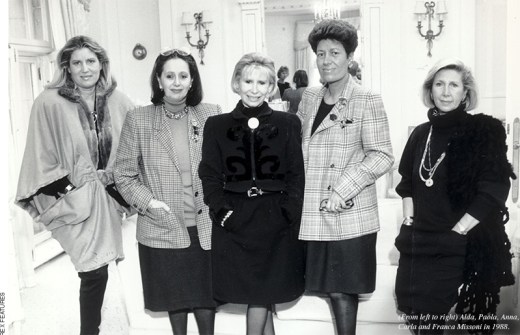
The Fendi sisters (l-r) Alda, Paola, Anna, Carla (who passed in June 2017) and Franca took over the business founded in Rome by their parents Adele and Edoardo in 1925.  Led by Carla, they transformed Fendi into an international brand that is now owned by LVMH.   Photograph: REX (1988)

Guerilla Market Guru

We’ve made it through a very competitive presidential election and we witnessed quite a battle.  The President remains in office because he was the more strategic.  He ran the better campaign,  he had the better ground game,  his get out the vote initiative was superb.  In sum,  President Obama had the better marketing plan.

He didn’t execute as ruthlessly as political strategist Dorie Clark recommends (see the October 30 post),  but he took full advantage of a few key situations,   most notably the well-timed  (for him, anyway)  Hurricane Sandy.  He hopped onto Air Force One,  landed in hard-hit New Jersey (what an entrance!),  reassured numerous devastated and frightened residents and in the process,  managed to have sworn nemesis Governor Chris Christie eating out of his hand,  all with the TV cameras rolling.  New York City mayor Michael Bloomberg,  officially an Independent but really a Republican,  went so far as to endorse the President for re-election.  Talk about fortune smiling.

So the 2012 presidential campaign provides a blueprint for Freelance consultants who are trying to survive and thrive as the economic assault on the middle and working classes continues.  The only possible way to keep your business alive is to survey your unique set of circumstances and leverage all resources to strengthen your position.

One major factor in competing strong in a weak economy is remaining visible.  Longer lapses between assignments,  especially when combined with the insult of smaller projects and fewer billable hours,  are a dynamic that slashes your available money.  Yet one must do all that is possible to preserve the marketing budget,  for that is when we need it more than ever.

When marketing on a limited budget,  be very objective.  Review your marketing strategy and make sure that activities align with current conditions in your business environment.  Contact media outlets that have been just beyond your reach and inquire as to what your budget will support now.  I’m willing to bet that there are deals to be had.  Also,  advertisers can expect to receive some editorial space,  so when you purchase an ad,  expect at some point to be asked to give quotes or even write an article that will showcase your expertise.

Evaluate your core message and verify that it addresses what clients are most interested in when they consider hiring for your service category.  Be aware that client budgets and priorities may have shifted along with the economy.  Examine your website and print collaterals.  Sometimes a client will check you out before calling,  so make sure to communicate a message that will optimize every potential opportunity.

To both improve your reach and save on your marketing budget,   review your social media strategy.  Perhaps this is the time to explore Google + and figure out how it can help you engage clients and prospects,  or at least keep you visible in the best ways.  Google + invites client interaction,  making your marketing a two-way conversation that can enhance your brand by showcasing you as a trusted adviser and authority.

On the traditional media front,  write and distribute press releases to announce your participation in any business-related public event.  Oh yes,  and do make sure that you schedule yourself to speak at conferences whenever possible and conduct workshops and take on teaching opportunities.  Call your local adult learning center,  community college and neighborhood business association to figure out how to get on teaching and speaking calendars.

It is also very important to maintain good relations with current,  or previous clients.  Just last week,  as I finished up with a client meeting,  one of the principals asked if I’d mind if her daughter called me.  The daughter is a dancer with a mid-sized company that needs marketing strategy and PR work.  That meeting itself was the result of up-selling services that expanded billable hours with the client.

Superior service and excellent relationships matter more than ever in a highly competitive business environment.  Christmas and Chanukkah are coming.  Plan to send holiday cards to all clients you’ve worked with in the past five years.

Devise marketing moves to position your consultancy to win as much available business as possible.  Be a fierce competitor not by spending more,  but by being shrewd and recognizing opportunities.   Make every marketing move strategic and create good luck.  Only the strong and the lucky will survive and thrive.

Happy Thanksgiving,

Kim

Ask and You Might Receive

Nearly all Freelancers are feeling the pain of the long slog through the sluggish economy.  Merely treading water is now considered a victory.  Even those fortunate  enough to have maintained robust billings are sensitive to the cash flow problems of their customers and fellow business owners.  Consequently,  the time is ripe to ask for a better deal,  for everything.  You may be pleasantly surprised at what people will do to keep your business.  To get the ball rolling,  all you’ll need are some creativity and moxie.

You’ll also need to remember that your goal is to both save money and build mutually beneficial business relationships,  especially when approaching fellow Freelancers or other small business owners.  Be assertive,  but considerate and respectful.  Don’t try to squeeze someone whose business may be hurting.  Think of benefits that will accrue to the other party and communicate that as you present your proposition.

The other party will appreciate that you’ve thought of their interests as well as you own,  so no matter what,  you’re likely to be seen in a positive light.  Even if you are unable to get what you want,  you’ll never lose by asking.  As they say,  it’s just business.

  • Think about bartering products or services.  What do you sell or do that suppliers and service providers might value for their businesses?  HR or IT services?  Graphics or PR or landscaping?  You’ll never know until you ask the question and get the dialogue started.  Make sure the exchange is of equivalent perceived value,  so that no one feels short-changed.
  • If you rent an office,  begin preparations now to campaign for a rent roll-back.  Commercial space is plentiful and most landlords want to keep a good tenant.  Be sure to pay your rent on time and otherwise cast yourself in a favorable light.  Get information on rents for comparable spaces in your area and determine what would be reasonable to pay for yours in the current economic climate.  Are their problems in the building?  If so,  make a list so that you can more effectively negotiate with your landlord at lease renewal time. 
  • When it’s time to advertise,  ask for a discount (try 10 %).  You’ll be more successful if the ad is larger and/or if you place multiple ads with that publication.  Ask also if you can be notified when remnant space is available,  which will save even more money.  You must be flexible and prepared to act quickly when taking remnant advertising space.  You might even spend more than you anticipated.  In exchange,  you just might get an eye-popping half page ad for the price of a quarter page.
  • Think about the products and services that you use all the time when doing business.  Do you ship items on a regular basis?  Do you travel frequently and stay at the same hotel?  If so,  then it’s time to ask for a loyalty or volume discount.  Have information about how often you use the service/product and how much you spend at the ready,  to support your case.
  • To preserve your cash flow,  request more flexible payment terms from suppliers and service providers.  Ask for 45-60 day terms,  or ask to pay half of the balance in 30 days and the remainder at 60 days.  The other party may not love it,  but the terms may nevertheless be extended in an effort to keep you as a customer.

Thanks for reading,

Kim

To Be, or Not To Be

I was surprised to learn that the number of Freelancers in the US has dropped to the lowest level in eight years,  down 13%  from a record high of 9.98 million in 2006.  The Department of Labor recently reported that as of August 2010,  there are now 8.68 million of us.

Because full time employment is not materializing for many citizens,  I assumed that the survival instinct would kick in and induce laid off salary men/women to assess their skill sets and figure out a way to package and promote their acts.  That’s what brought me to Freelance Nation.  But the stats have proved me wrong.

It is true that self-employment typically increases in the aftermath of a recession,  when laid off workers are unable to get rehired and thus venture out on their own.  But in this recession,  a variety of factors have weakened the demand for Freelance services,  causing many to choose alternate paths.

Some are maxing out their unemployment benefits as they sign up for temp work or settle for low end hourly wage jobs,  seeing those roads as their best,  albeit unsatisfactory,  survival options.  They don’t see much financial potential in either Freelancing or setting up a small business.

Diminished credit and poor sales are stifling the growth of small businesses.  A recent report issued by the National Federation of Independent Business Owners shows that 31%  of small business owners say that poor sales is their company’s single most important problem.

This news is interpreted by economists and labor experts as a sign that economic recovery is not just around the bend.  There is evidently not enough money being spent by consumers to sustain the survival of many small businesses.

However,  easier lending terms could encourage small business owners to make capital improvements and staff additions that will help to improve competitive positioning and perhaps attract more customers.  The Federal Reserve recently confirmed that about 20%  of banks are making commercial and industrial loans more available to small businesses for the first time since 2006.

Unfortunately,  large and mid-size companies prefer to play the wait and see game.  They are waiting for the outcome of the mid-term elections,  wonder what the newly reconfigured Congress will do about economic  initiatives (will the Stimulus Bill be extended?),  they wonder about taxes and wonder what the new health insurance regulations will mean to their bottom line. 

The big boys do have money to spend.  They slashed payrolls by laying off workers whether or not that strategy was necessary for the organization’s survival.  They limited hours worked per week,  limited or eliminated raises and off-shored as many functions as possible.  Paradoxically,  productivity remains high and continues to increase,  as businesses get more work out of their leaner and meaner staff.

There is precious little incentive to hire under these conditions.  Why bother? Those at the top of the pyramid are free to put still more money into their bulging wallets.  That explains why the only healthy segment of the real estate market consists of 7 figure properties.

These practices have left many current and aspiring Freelancers in the lurch.  Although the Fed states that lending to mid-sized and larger firms has over the past six months begun to ease,  there remains a marked resistance to green lighting the projects that Freelancers depend on.  A hard freeze is in full effect and it shows no sign of abating.

According to Scott Shane,  professor of economics at Case Western Reserve University in Cleveland,  the failure rate of self-employment is significant during this recession and economic  indicators do not point toward a quick recovery.  Only when larger companies,  those considered bell weathers and thought leaders,  begin to hire again will demand for Freelancers increase.

That said,  not all Freelancers are suffering.  A fortunate few are having their best year ever.  Recently,  I was chatting with a friend who makes and restores fine string instruments.  He does not lack for work.  I am also aquainted with a market researcher, with  someone who arranges and supervises the relocation of scientific laboratories and with someone who helps manufacturing facilities comply with environmental regualtions.  All of them are enjoying very healthy billable hours.

It just goes to show you,  in every kind of economy, there are always those who make money.  I just wonder when it will be my turn?

Thanks for reading,

Kim

Attention Shoppers! It’s Time to Invest in the Business

Our  “new normal”  economy has regrettably resulted in sluggish business for most Freelancers and we are forced to watch our pennies.  The financial squeeze may tempt many to cease spending on all expenditures deemed nonessential,  but it’s wise to be strategic about what gets relegated to that category.

In fact,  judicious expenditures for the right business upgrades will help us to fight back against the recession and demonstrate to clients that our business remains viable.  If your credit line can handle it,  this is an ideal time to invest in your business by purchasing almost any type of equipment or promotional service.   Fourth quarter purchases are sweetened by the knowledge that the tax deductions will flow back to you a little faster.

So let’s go shopping!  There’s plenty of inventory in the stores,  despite diminished wholesale purchases,  and prices have never been better.  Now is an excellent time to replace or upgrade  computers and other IT equipment,  office furniture or even a company vehicle.  Commercial real estate is likewise more plentiful and hence affordable,  so if trading up has been on your wish list,  investigate options now.   Plus,  if a build-out is necessary,  those in the trades are ready and willing to provide quality work at competitive prices. 

Advertising space is likewise more plentiful and hence more affordable.  Discounts are available and payment terms are gentle.  Revisit publications and online sites that were previously out of your reach and ask what can be done for you now.  Do not be afraid to negotiate.  The buyer’s market is in full effect.

Now,  take a look at your website.  Does it look a little dull?  Maybe the text could use some sharpening?  Or perhaps you’d finally like to have a logo?  What might help your website to communicate your brand and core services more effectively,  or provide a compelling  “call to action”  to potential clients?  Web developers,  graphic artists and copywriters continue to be busy,  but not so much that they won’t take on smaller  jobs and do good work at a reasonable price.

The  “new normal”  economy also makes this an excellent time to hire,  if you can make the case that an extra body or two will increase revenue.  There are so many highly qualified professionals searching desperately for cash-generating projects that you will be able to hire someone (maybe part time?) to write your monthly newsletter,  manage social media,  cold call prospects and set appointments for your follow-up,  manage the books and accounts payable and receivable or just about anything else you need taken off your plate.

Finally,  our professional skills are our most valuable asset and also deserve investment.  I’ve seen more generous than expected early-bird registration discounts offered for numerous seminars,  since organizers are anxious to fill rooms.  Take advantage of this trend and sign up for training that perhaps you previously could not afford.  You may also want to have a few sessions with a business coach,  who may now offer money-saving incentives to stimulate business,  and work on other ways you can find competitive advantages for your business venture.

Thanks for reading,

Kim

Trends in 2010: Freelance Nation

Trendspotters report that the Freelance work force will continue to grow as full time employment continues to disappear.   Sole proprietorships grew twice as fast as the overall economy during the decade 1999 – 2009 and our numbers now exceed 22 million (source:  SBA).

Employers are expected to continue practices begun in the late 1980s,  laying off  full time, benefits receiving employees and replacing them with part time workers and outsourced services wherever possible.  In other words,  Freelancers will be hired because we are perceived as being less expensive.

Unfortunately,  income generated will most likely be less than satisfactory.  Freelance writers,  for example,  have on average taken a huge wage reduction.  Receiving $2-$3/word for a 500 word article is nearly a thing of the past.   Many writers are now forced to accept 50 cents/word.

You know,  besides a university degree,  there’s not a whole lot that separates Freelancers from Cesar Chavez and the grape pickers.  A day laborer is a day laborer, whether working in an office or out of doors.  Meanwhile,  the videographers continue to make lots of money,  adding little vignettes to the websites of businesses and social service agencies in need of customers and donors, respectively.

Obviously,  it’s also been predicted that most Freelance professionals will continue to work from home,  because most can operate effectively and cheaply from a home office. Well,  you can’t beat the commute!  Technological advancements have made home offices a practical and efficient choice.  Email plays a pivotal role in all of business,  along with electronic  transfer of all types of documents—attach and hit the send button.   The once revolutionary practice of faxing has been much diminished.

If we need to obtain data on nearly any aspect of our business,  we are almost guaranteed to find our answers on line, often at no charge.  Market research has become lots more convenient.  It’s much easier to compile the data needed for business plans and strategic plans,  from within our company databases or from outside sources.

There are analytical tools whose cost once confined their usage to big budget companies now available at prices that a small business operator can afford. That has given a tremendous boost to our decision making capabilities.

On a more mundane level,  when we want to keep tabs on our competitors,  a visit to their website,  LinkedIn or FaceBook profile can give some clues.   A Google search may also be useful.  We check out our clients and prospects in the same way, to augment personal referrals or warm up a cold call.

The internet delivery system known as the cloud gives low cost access to advanced computer capabilities and reduces the need for IT support by providing back-ups and security.  The cloud is what allows us to use mobile computers like iPhones.

Of course,  those of us who knew life without computer proliferation know that technology giveth and also taketh away.  Millions of good paying,  steady jobs have been lost because of these and other technological advancements and they will never return.

Remember graphic artists? These days,  those who perform that function are mere computer technicians.  The old timers who graduated from art school and studied composition,  color theory and free hand drawing have nearly all been replaced.

Yes,  a few million IT jobs have been created,  but specialized qualifications are required.  Re-engineering a career is often not possible when one is 45 years old.  Besides, those jobs are disappearing, too.  They are being off-shored,  or collapsed down and handed off to one Freelance contractor who must do the work of 3 former full time employees.  Ask yourself:  is a flat screen TV and an iPhone worth more than an $80,000 a year job with health insurance,  paid vacations and sick days?

I would be remiss if I did not include the creative arts in our discussion.  Painters,  sculptors,  dancers,  singers,  musicians,  photographers,  actors  and  artisans  (e.g. jewelry designers)  are the original Freelancers.  In troubled economic times,  their numbers usually increase.

An opera singer friend,  who is part time faculty at The Longy School of Music,  told me recently that enrollment there has soared.  She also has more requests for private lessons.  Opera companies and orchestras are struggling and sometimes closing as a result of shrinking donations and ticket sales,  but nevertheless quite a few people have looked to the arts for a career or to reinvent themselves.  Damn the torpedoes,  I guess.

So where does all this Freelance ferment leave us?  More fulfilled in many ways,  I will say.  For lots of us,  going out on our own was the realization of a long held dream.  Your Diarist was disappointed with the corporate world a dozen years before the  exit.  I think most of us  enjoy being the captain of our own ship.

Alas  money,  or a shortfall thereof,  remains the sticking point.  Billable hours are thin,  sales are weak.  The answer to the riddle of how to survive and thrive remains elusive.  In this blog I will continue to put forth suggestions that may lead you to that answer.  I want to help  you—and myself!—make it successfully through the year.

Thanks for reading,

Kim

2010 Outlook

Happy New Year! We made it out of 2009–whew! We’re battered and bruised perhaps,  but there is a pulse.  The post mortems on the past decade are already rolling in and as we suspected,  the 00s really were zeros for lots of us when it came to making money.

Not surprisingly, the data show that this past decade was the worst for the US economy since the 1930s.  In fact,  net job growth was zero from 1999 – 2009.   Full time employment at a professional level wage evaporated for so many (like your Diarist).   Maybe that explains why you, too, became a Freelancer? Already, that period has been named the Lost Decade for American workers.  Downward mobility has become all too common.

In the January 3  NY Times,  there is a front page story that tells the sad tale of a woman in Florida who had been a successful real estate agent,  regularly generating an income of $100,000 + per year.  Now her income is, literally, zero.   She and her two children are living only on a few hundred dollars of food stamps each month.

Long term economic  instability appears to be what we will face for several years into the future.  Maintaining a comfortable middle class life has become much more difficult,  if not impossible.  What can a Freelancer do to improve financial prospects?

Primarily,  we must recognize how the new economic  conditions have impacted our clients—financially and psychologically—and devise marketing strategies and business practices that integrate the realities of this  altered environment.   Every quarter may be a new adventure, as client priorities continue to shift.  Keep eyes and ears open,  connect the dots and become flexible and resourceful if you expect to survive.

No one knows when the purse strings will loosen.   However, business will be done, meaning that money will be spent.  Here are a few suggestions that may help you to remain solvent:

Keep it simple

Information overload is in full effect.  Many people feel overwhelmed and are too hassled and harried to pick through a plethora of choices,  or a complicated and/or grandiose marketing message.

Bring it back down to earth.  Have you noticed what has been going on in the restaurant business over the last few years? White table cloth restaurants with ultra formal service have been on the wane since the early 2000s.  Comfort food,  less glamorous cuts of meat and dining at the bar are in.  Take this as a cue for your business.

Distill your services down to what customers will desire, understand, value and pay for. Pay attention to their current spending patterns—they are likely to continue for the next 2 – 3 quarters.   Sell your services in easy to understand terms that tell clients what is in it for them.  Also,  make sure the price is right.

Green and sustainable

Clients have been willing to pay a premium for environmentally friendly,  fair trade,  local, organic and  sustainable everything.  For some products at least, this trend looks to continue.

Remain visible, appear viable

The ad budget may be smaller, but continue to promote your business in cost-effective ways that reach your target customers.  If that means taking out print or web ads,  try your best to fit those into your budget.   Radical cuts in advertising and promotions can cause you to miss the boat on opportunities.   We all need even the small contracts in order to make it through the month.  Ask to stretch out the ad payments and the answer will probably be yes.  They want your business more than ever!

You will also be wise to continue membership in the chamber of commerce and other networking organizations where prospects and referral sources can be found. You may make fewer visits, but don’t disappear.   Do not cede ground to your competition.

Project hope and confidence

Everybody likes a winner and everyone gravitates to (realistic) optimists.   Don’t whine and moan about business to clients and prospects! That will be a turnoff.  So chin up and portray a reasonable level of self-confidence.  Remember that it is possible to make significant money in a recession:  Kraft introduced Miracle Whip in 1933;   Apple launched the iPod in 2001.

Good luck and thanks for reading,
Kim