Client Relationship Building 2025: 10 Holiday Gifts @ $40 or Less

The December holiday season presents an excellent opportunity to demonstrate to your clients that you appreciate the value they bring to your business. In fact, it can be argued successfully that your clients are your business—what would you have without them? Not billable hours and revenue, that’s for sure! Can we agree that in the waning days of November, Freelance professionals have some shopping to do, no matter how modest your budget? No Freelancer can let this occasion pass without showing gratitude for the business clients have done with you—and subtly encourage them to contact you in the new year and make a referral or two, as well.

In our hypercompetitive B2B marketplace, where buyer expectations continue to rise, it was found that78% of companies reported that thoughtful December holiday gifts given to clients improve their retention rates and promote stronger business relationships. It was also found that approximately 62% of business owners feel that the quality of gifts given is important and that holiday gifts can increase client lifetime value (by promoting client loyalty and retention).

Boxing up some generic “gift” will not suffice in our hypercompetitive B2B marketplace, where buyer expectations continue to rise. Today’s B2B clients expect a holiday gift that demonstrates thoughtfulness, relevance and quality. They want to know you’ve considered their preferences, industry and company culture. Consider your December holiday gift and card as an integral component of your marketing strategy.

When putting together your marketing budget for the new year, you may even want to make holiday gifting a line item, to ensure that you’ll have the funding to make an impression that aligns with the customer experience your company provides and its brand reputation. Your holiday gift needn’t be extravagant— over-doing it will likely leave the wrong impression. You want to find the sweet spot between professional and personal, memorable and appropriate, impressive and budget-friendly. You also want to present your clients with a gift they want to use. To that end, I’ve combed through numerous websites and discovered 10 items that should help you express this important element of your marketing strategy.

  1. Expandable Packing Cube Set – Medium/Large $34.95

Organization is integral to travel preparation and the REI Co-op Medium/Large Expandable Packing Cube Set makes it easy to pack—and find—items in your luggage. The set includes one medium and one large packing cube that can expand or compress by three inches to adjust packing volume as needed. Mesh on top lets you see what’s inside and there’s a handle to allow for easy carrying. FYI, the REI Co-op brand is certified to The Climate Label. The company funds efforts to reduce carbon emissions across its business and supports climate projects around the world.

2. Stay Cool Adjustable Laptop Desk $39.00

Clients who work from home or travel for business will appreciate this practical and attractive bamboo portable workstation desk. Its adjustable height and tilt settings accommodate laptops from 11 to 16 inches. There’s enough workspace to keep a notebook, mobile phone, or drink within reach and the anti-slip surface with cup holder indent keeps drinks and devices in place. A built-in side drawer keeps office essentials like pens and earbuds organized. The Stay Cool Adjustable Laptop Desk is also designed with ventilation holes and a pair of built-in USB-powered fans to help maintain your laptop’s temperature and prevent its hot surface from disrupting the workflow (USB to USB-C adaptor required.)

3. Stonewall Kitchen Holiday Sampler $34.95

Perfect for pleasing all sorts of palates and elegantly packaged in a white-and-green gift box that features a festive winter design, the Stonewall Kitchen Holiday Sampler gift set contains mini-sized versions of six Stonewall best-sellers: Wild Maine Blueberry Jam, Raspberry Peach Champagne Jam, Holiday Jam, Red Pepper Jelly, Maine Maple Champagne Mustard and Caramelized Onion Mustard. This ready-to-give gift box is a perfect holiday gift.

4. Mongolian Cashmere Gloves $29.90

Your clients will be happy that you’ve taken a hands-on approach when you gift them with lovely and practical Mongolian Cashmere Gloves. The gloves have a long cuff that make wearers feel extra cozy on a cold winter day. They are made of good quality cashmere that is incredibly soft, long-lasting and three times as warm as wool. They are also sourced sustainably and ethically.

5. Holiday Hygge Gift Box $40.00

Made by BeyondGiftsCo. and sold on Etsy, the Boho Mini Holiday Hygge Gift Box is a warm and wonderful winter care package that will sustain the recipient when the snow piles high and the cold wind blows. The Boho Mini contains items that make those fortunate enough to receive one feel good on a cold and wind-swept day: a nice mug, tea (inside a burlap bag), a gold tea spoon, cozy socks, salted caramels and a holiday-themed wood ornament.


6. Ice bucket $39.20

Elevate entertaining with the timeless elegance of the Asti Ice Bucket. Designed in 1972 by Sergio Asti and crafted from 100% recycled plastic and fully compostable, this sustainable design is a true work of art. Its versatile use as an ice bucket, storage container, or even a vase makes it a must-have for any occasion. Works by the late Sergio Asti, Italian-born industrial designer and architect, can be found in the permanent collections of the Museum of Modern Art and the Cooper Hewitt Museum in New York City, the Philadelphia Museum of Art and the RI School of Design Museum in Providence, RI.

7. Tabletop Dwarf Lemon Cypress (Cupressus macrocarpa Wilma Goldcrest) $28.95

The Tabletop Dwarf Lemon Cypress adds a festive touch of nature’s elegance that illuminates holiday decor. The narrow, bright green foliage has a subtle lemon scent and its compact size make it perfect decoration for small spaces, such as tabletops, mantels, buffet tables, or a centerpiece. The pre-wrapped, gift-ready Tabletop Dwarf Lemon Cypress is a memorable client gift that keeps on giving.

With proper care, the plant can retain its vibrant color and health throughout the season and beyond, bringing good cheer to your client’s home or office. Designed to require minimal maintenance, your client can enjoy the Dwarf Lemon Cypress indoors during the holidays and then move it to a patio or plant it outdoors when spring arrives. Your client will be delighted with this gift for years to come—and experience a happy feeling about your brand time and again!

8. Blanket Scarf $14.97

This luxuriously oversized Italian-made Blanket Scarf is true to its name: it’s part scarf, part blanket and made in Florence, Italy from warm and super-soft woven fabric. Including its 4 inch fringe, the Blanket Scarf is 30″ w x 90″ h, made of 100% acrylic and makes a stellar festive statement when the weather turns chilly. You may add your business name and logo, beautifully embroidered monogram for a personal touch by emailing WSIB2BGift@wsgc.com.

9. Cheery Umbrella $22.99

Classy coverage through wind and rain, your clients will be happy to be protected from the elements by the wide, waterproof and wind resistant shield of a Cheery Umbrella. Drawing inspiration from the timeless wooden cane umbrellas but with a modern flair, this rain gear is will add comfort and style to dreary wet weather days.

10. Scout Soft Tote Cooler $39

Pleasure Chest is the perfect size for small family outings, road trips, or a 12-hour work shift—this tall, square cooler is a great shape for stacking containers. Stash napkins, utensils, or chocolate bars (no judgement!) in the outside pockets for quick access. Remember to take ice packs! Because it squishes flat in a suitcase, your client will love the Pleasure Chest for travel—and it makes a great leave-behind hostess gift. Please note that an additional 5-7 days of processing time will be added to your order due to personalization, regardless of shipping method.

  • 9″ W x 12.5″ H x 9″ D
  • Weight: 0.8 lbs
  • Handle drop: 12.5 “
  • Holds up to 30 lbs.
  • Foam insulation layer helps to keep contents cool (ice packs recommended)
  • Fits: 12-oz cans: 15 | skinny cans: 18 | 16.9-oz. water bottles: 8 | wine bottles: 4-5
  • Two exterior pockets: one zip (front) and one slip (back)
  • Heat-sealed, food-safe liner
  • Reinforced straps with velcro fabric handle wrap
  • Zips closed

Happy Thanksgiving to those of you who celebrate. To everyone, thanks for reading!

Kim

Image: Filene’s Department Store (Boston, MA) toy department, 1938

First-Person Data: Collect and Protect

Compliance takes a leading role in marketing strategy

The accelerating use of Generative AI that’s occurring in business entities large and small has sparked privacy concerns in data management and IT security teams, marketing C-Suites and the offices of corporate governance/compliance attorneys. Whether the leadership at your organization calls itself progressive or conservative, it’s absolutely necessary to develop data implementation and risk management protocols, and create a crisis management public relations strategy while you’re at it, when integrating artificial intelligence backed software tools into your business operations.

Protecting client relationships and brand reputation has persuaded many organizations to bake compliance regulations into their marketing strategies, in particular those supported by GenAI. International Data Corporation (IDC), a global market intelligence and data provider for the IT, telecommunications and consumer technology markets headquartered near Boston, MA, cautions that stringent data compliance protocols are no longer merely optional, but are necessary, to avoid financial and reputational harm.

We’re all personally impacted by the increasingly pervasive use of AI and you are well aware that data privacy is high-priority to your client (and you). Regular reports of cyberattacks and data breaches intensify concern. While the the expansion of AI-powered software systems result in a more efficient, responsive and personalized experience that clients value and now expect, it’s usage simultaneously makes clients wonder about the security of their data. Research by Publishers Clearing House found that 86% of Americans are more concerned about their privacy and data security than the state of the US economy. However, 62% either don’t know or are misinformed about how their data is being used.

Sigh. There is an upside, however. Advanced risk monitoring tools, automated reporting and responsible AI frameworks can act as gatekeepers and companies achieve regulatory requirements. Businesses that integrate transparency and ethical AI practices into their governance policies and procedures can reduce the possibility of data breaches and other AI-related risks and simultaneously enhance client trust and strengthen the company’s brand reputation.

There is also legislation designed to reassure consumers that protecting their personal data is serious business and is, in some municipalities, the law. Protective measures meant to safeguard the processing of personal data is demonstrated by the change of privacy features at Google, the implementation of the General Data Protection Regulation (GDPR), whose purpose is to protect the privacy and personal data of individuals in the European Union and European Common Market and the adoption of the California Consumer Privacy Act (CCPA).

What is first-party data?

First-party data is information your company has collected directly from clients and prospects, site visitors, or social media followers. First-party data comes directly to you and the more touchpoints you provide, the more opportunities you will have to collect this information. It is an extremely valuable type of data for businesses. In comparison, second-party data is shared by a trusted source, while third-party data is data aggregated from other sources, which can include social media platforms and public records.

Marketers recognize that personalization is the cornerstone of a pleasing and potentially memorable customer experience and that collecting, implementing and storing client data —first-party data—is integral to personalization. Marketers enter first-party data into customer relations management (CRM) systems to enhance personalization, use CRM predictive analytics to get insight into client behaviors and preferences, recognize client segments and then target marketing campaigns accordingly. Sources of first-party data include:

  • Client demographic info
  • Client buying history
  • Leadgen campaigns
  • Client or prospect interactions with your website or app
  • Surveys and other online feedback that clients may participate in
  • Client, prospect or other visitors user-generated content or social media conversation transcripts
  • Blog, email and newsletter subscribers
  • Program registration lists, e.g. webinar, workshop, or meeting sign-ups

Why do you want first-party data?

First-party data helps you to paint a picture of your client and develop a reliable buyer persona. It is enormously useful because it delivers accurate client and prospect information—user info from all the touchpoints—that enables you to target the right buyers for your services or products. You’ll also be able to make better informed decisions when figuring out what personalization looks like to your clients.

First-party data enables marketers to build a customer experience that reflects user purchase history, if applicable, or other known preferences and behaviors that enrich and enhance the customer experience. Personalization is like the bartender who knows your drink or the waiter who shows you to your favorite table. Now you’ll have an accurate blueprint to follow when figuring out how to nurture a brand community of long-term clients who are happy to buy your products or services, make personal referrals and generate good word-of-mouth on social media.

Transcribe first-party data into your Customer Relationship Management (CRM) platform to create a database of everyone who’s visited your website and social media platforms. But before you start using your first-party data, think about what you want to achieve, to ensure that you’ll maximize its many benefits. You may want to do one or more of the following:

  • Building brand awareness 
  • Expanding leadgen activities
  • Encouraging repeat business and discouraging client churn 
  • Re-engaging lapsed clients and non-converting prospects
  • Growing your thought leadership content audience—blog, newsletter, podcast, webinars, speaking engagements

When you get enough first-person data to have confidence in the size of your sample, begin to implement your strategy—segment your audience and use your first-party data insights to maximize conversions on your website by optimizing user experience, targeted marketing messages, the buyer personas to understand your customers and create customized emails or (email) newsletters that will be relevant to the primary sectors (e.g., hospitals, schools, for-profit, not-for-profit, small business, global enterprise).

As well, Freelance consulting specialists and other B2B entities can follow the highly aligned and targeted account-based marketing format to produce relevant and personalized content to your market segments across the digital channels you occupy— posting tailored content in a various formats (e.g. blogs, videos, e-books, case studies) that resonate with those audience segments.

The ability to personalize marketing outreach activities cannot be overestimated—96% of shoppers say they’re “likely to purchase when brands send personalized messages.” Meanwhile, a 2025 consumer trends report generated by Businesswire found that “three out of four surveyed shoppers have already abandoned brands they once loved in favor of those offering more personalized experiences, while 81% say they routinely ignore marketing messages that don’t feel relevant”. When you throw in the harsh realities that client acquisition costs are increasing, client lifetime value is decreasing and the competitive landscape is intensifying, making the most of first-party client data becomes imperative. But the catch-22 is that possession of client personal data, which often includes contact info and credit card numbers, is a risky proposition.

Collect data, protect data

The widespread restrictions on third-party cookies by leading web browsers presents real challenges to the collection of first-party data, even when enabled by data collection by sites you control (e.g., your website). With Google putting the brakes on third-party cookies, plus Edge, Firefox and Safari shutting off cookies, first-party data is more valuable than ever.

How can businesses safely collect this essential marketing/ sales resource and simultaneously navigate obstacles around data security and client privacy expectations? The implementation of advanced security measures to protect against fraud and data breaches is a must-do. Ensuring compliance throughout the transition is also crucial, especially with evolving data privacy regulations.

In addition to conducting regular security audits to ensure data is secure, businesses should go beyond standard encryption practices and adopt advanced security measures such as tokenization for sensitive data fields, which minimizes the risk of exposing real data should a breach occur. It is recommended that companies should leverage automated tools for continuous security monitoring and compliance checks that can provide real-time alerts on suspicious activities that help to preempt potential security incidents. 

Maintain client trust

In Freelance consulting, trust and expertise are foundational. Clients entrust their sensitive data, strategic plans and proprietary work flow processes to you and expect their information to be kept private and secure. That is an ingredient in your recipe to win confidence, build strong, lasting relationships and establish and maintain your image as a reliable partner. You, Freelance friend, must institute all reasonable measures to protect client sensitive information, but as you know, the growing cybersecurity security threats can make that task feel like an ongoing battle. Here are effective defensive, low or no-cost, tactics you can take:

  • Read up on cybersecurity best practices that have SMBs and Freelance consultants in mind on the Small Business Association SCORE website.
  • Multi-Factor Authentication adds a layer of security by requiring users to verify their identity with both a password and a confirmation phone call or email.
  • Secure file permissions ensure that only authorized individuals can create, edit, or share sensitive documents. Encrypt sensitive documents and store them in the cloud to add another layer of security by instituting more stringently controlled access.
  • Hard-copy documents that contain sensitive information should be stored securely in a locked cabinet or safe when not in use.  
  • When possible, conduct meetings during which confidential topics will be discussed in person rather than on videoconference calls.
  • Devise an incident response/crisis communication PR strategy that provides explicit instructions, defines responsibilities and details your data recovery strategy in the event of a security incident. Your organization must respond quickly and in a calm and professional manner that demonstrates your control over matters and ability to resolve the incident and inform and reassure clients as you do.

Thanks for reading,

Kim

Image: AI-generated image courtesy of StockCake


10 Under $40: Holiday Client Gifts in 2024

The December holidays are the Number One relationship-building bonanza of the year for the B2B sector. Whether you lead a multi-national enterprise company, operate a small business, or maintain a Freelance consultancy, December is the time to show appreciation for the opportunity to do business with your clients. Nurturing relationships is a crucial element of your strategy to cultivate repeat business by staying on the radar screens of those who can offer still more billable hours.

If you’ve been lax about reaching out to current and lapsed clients, now is the time to redeem yourself. Start by sending a (secular) holiday card to all clients you’ve worked with over the past five years. Current clients, in particular those you’ve billed $1000 or more, deserve a business-appropriate gift. FYI, Christmas falls on the fourth Wednesday of December this year and Hanukkah begins at sunset on the same day and will be observed until sunset on January 2, 2025.

In acknowledgement of inflation, I’ve raised the price threshold this year from $35 to $40, to maintain the quality of gift selections. My goal is to identify modestly priced, business-appropriate gifts that reflect well on your brand. To ensure that your card and/or gift arrives on time, I recommend that you mail or ship no later than December 10. Also, be aware that some offices, particularly in the not-for-profit sector, may close on the Friday before Christmas, to reopen on January 2, while Work From Home employees could be Missing in Action after December 13 until January 2. In no particular order, my list of gift choices is respectfully submitted.

  1. Clippable Card Pouch (Lulu Lemon) Zip, clip, go. Just clip to attach this stylish and durable little pouch onto your key chain, belt loop, or bag to have a hands-free and convenient way to keep IDs, cards and cash handy and secure. The zippered main compartment has interior slots that make it easy to organize and access what you need to carry. $34.00 USD

2. Winter Bloom Wreath (Uncommon Goods) Graceful grapevine 6″ diameter mini-wreath will brighten a desk, window, or door. The wreath is hand made and decorated with colorful live succulents, redwood and cedar foliage, sphagnum moss and fresh botanicals. This lovely wreath will stay vibrant throughout the holiday season and well beyond, with no misting needed. $35.00 USD

https://www.uncommongoods.com/product/winter-bloom-live-succulent-cedar-wreath/606280000001

3. ChargeCard (Aquavault Inc.) Featured on Shark Tank (ABC-TV) and backed by Daymond John, ChargeCard’s innovative design includes durable stainless steel construction and fast charging technology, making it a reliable source of power for your devices. ChargeCard comes with built-in cables for both iPhones and Android devices, including USB-C, Lightning and Micro USB. Visit the official website link to obtain more information and click here to order. ChargeCard | Order $39.99 USD

https://theaquavault.com/pages/pre-v1

4. Travel Mug (Zojirushi) Advanced engineering and superior materials result in a streamlined design and superior performance for this 20-ounce stainless steel, easy-to-carry container. Vacuum insulation makes sure that the hot soup or cold beverage you pour in and carry will stay that way. Microwavable inner bowl design ensures convenient use. The mug is crafted from quality 18/8 stainless steel and BPA free plastics and are designed for easy use and cleanup. $34.74 USD

https://www.homedepot.com/p/Zojirushi-SM-SHE60BZ-Matte-Black-Stainless-Steel-20-oz-Steel-Mug-SM-SHE60BZ/315359230


5. Winter Forest Guest Essentials Gift Set (Williams Sonoma) Includes 8-oz. bottles of hand soap and hand lotion, plus a votive candle in a reusable glass holder that features a festive winter fragrance that combines the uplifting aroma of freshly cut pine with subtle notes of cedar wood, citrus and sweet spice. The hand soap contains soothing olive oil, aloe vera and glycerin; the hand lotion nourishes skin with natural shea butter and vitamin-rich botanical oils. The eco-friendly candle is a beeswax and vegetable wax blend and is scented with natural essential oils. All products made without parabens and have not been tested on animals. $34.95 USD

Williams Sonoma Winter Forest Guest Essentials Gift Set | Williams Sonoma

6. Travel Bag/ Personals & Toiletries (L.L. Bean) A lightweight and sturdy hanging travel organizer is designed to hold all of your basic trip essentials. All travel organizers are not equal—this one is made with extra-tough fabric and technical details and has been extensively tested by L.L. Bean to prove it can hold up for the long haul. With over 9,000 5-star reviews, it’s no wonder customers rave about its unmatched quality. $34.95 USD

7. Dark Chocolate Sea Salt Caramels Gift Box (Crate & Barrel) Bite-size couture caramel candies are dipped in dark chocolate and sprinkled with sea salt. Ready for gift giving, the tin is tied with a festive bow. Sea salt caramels are a Crate & Barrel exclusive and made by Long Grove Confectionery since 1977. $29.95 USD

Dark Chocolate Sea Salt Caramels with Gift Box + Reviews | Crate & Barrel

8. Silver Chrome Rollerball Pen (Scriveiner) Beautifully crafted of brass and a silver chrome finish, with 24 karat gold appointments. The quality of craftsmanship and materials is usually found only in pens costing many times more. Scriveiner pens use the Schmidt liquid ink system that is superior to gel ink pens and combines the convenience of a ballpoint with the ink feel of a fountain pen. The client who receives this elegant gift will appreciate its smooth writing style. $32.99 USD

9. Oh Mega Earband (The North Face) Practical and stylish, this cozy ear band makes a gift that runners, bike riders and anyone who doesn’t love wearing hats during the winter will appreciate. Available in six colors, the earband has a soft fleece lining that keeps those who wear it toasty, plus a recycled polyester body. $35.00 USD

10. Burt’s Bees Essentials Kit Give your clients a cold weather skin survival solution with this collection of natural essentials. These five travel-size products are designed to gently and thoroughly cleanse, moisturize, soothe and smooth face, lips, body, hands or feet. The Burt’s Bees self-care set is a perfect go-to holiday, birthday, or other special occasion gift.

https://www.burtsbees.com/product/essential-burts-bees-kit/ $9.99 USD

Happy shopping and thanks for reading,

Kim

Image: © Aberdeen Art Gallery & Museums Collections, Scotland. Penelope and the Suitors, John William Waterhouse, 1912. 

Freelancers and the Vacation Dilemma

HoneyBook, an online business and financial management platform that serves entrepreneurs and Freelancers, conducted a survey of self-employed Americans and the results were depressing, yet not entirely surprising. The survey polled 800 + independent U.S. workers in May and June 2019 and found that while the Freelance economy provides flexibility, a factor routinely prized by the self-employed, 92% of Freelancers work on vacation and 60% of that cohort do so because they feel they must.

According to Freelance Forward 2023, an annual survey of Freelancers and other independent workers conducted since 2013 by Upwork, the online talent marketplace that connects Freelance talent with companies in need of their expertise, there are now approximately 64 million U.S. workers participating in the Freelance economy and they’re well aware that taking time off results in lost income, as reported in the five-year-old Honeybook survey. 1099NEC workers do not qualify for paid time off, whether for illness, holidays, inclement weather, or vacations. The 92% who feel compelled to work while officially off- line stand as irrefutable evidence that either fear of disappointing clients or fear of economic difficulty caused by lost revenue drives the practice of working during vacation. While 85% of Freelance Forward 2023 participants reported that the future of Freelancing is bright, caution reigns.

Furthermore, the Honeybook survey also found that 43% of Freelancers who vacation do not divulge their plans with clients; moreover, 41% of Freelancers hide from their intimate partner or vacation companions the client work they feel obligated to do while vacationing. Also, the data revealed a gender gap: 65% of female Freelance consultants reported they have felt the need to hide work they do while vacationing from their significant other and/or family, compared to only 41% of men — highlighting the fact that women feel more pressure than men to deprioritize their careers so that they can be fully available for their families.

Former Upwork CEO Stephane Kasriel, who is now head of Commerce and Financial Technologies at Meta, recognized that hesitancy to take time off for vacations is widespread and not limited to Freelance consultants and other independent workers. He pointed out that many American workers, whether full-time W2 employees or full-time or part-time Freelancers, often do not take the vacation time that they deserve (and W2 employees will be paid to take). Mental health professionals and leadership development coaches have long publicized the need for workers to physically and psychologically refresh themselves by stepping away from work to relax and/or take part in enjoyable activities with family or friends.

“Truly logging off is a common challenge for most professionals today, ” Kasriel said. “The Honeybook study surveyed self-employed respondents; other research, including data produced by Glassdoor, shows that the average employee who receives paid time off will have only used about 54% of available PTO in the past 12 months and of those who do take PTO, the majority don’t log off completely,” he went on to say. To remedy the dilemma, Kasriel suggested a few easy to implement vacation planning strategies that Freelance professionals can adopt to help themselves occasionally step away from work to relax and enjoy themselves for a few days.

7 steps to enjoying a relaxing and stress-free vacation

1. Know that it’s good to take vacations. Time off provides many health and productivity benefits, including improved energy, creativity, focus and decision-making ability, along with limiting the possibility of burnout. Putting aside work responsibilities every so often helps you become a more effective worker.

2. Create a vacation fund. Treat vacation time as an investment in you and plan for it in your business budget by earmarking what you consider a manageable amount to set aside each month to fund your annual vacation. Consider saving $100 a month for 12 months to finance a modest one week vacation. Do that and when the time comes to put down client work for a week, you’ll enjoy your vacation without worrying about taking on debt to pay for it.

3. Schedule vacations strategically. If there is a seasonal rhythm that influences your business cycle, or if you know of an important project that’s on the horizon, schedule your vacation in a way that enhances your ability to meet all milestones and the target completion date and enable yourself to completely avoid work responsibilities while you are officially out-of-office. Remember also that your vacation does not have to happen in July or August—every season has a unique appeal!

4. Roll in anticipated time off when calculating your project rate. Since Freelancers have no paid time off, consider this strategy—throughout the year, discreetly insert into project proposals additional hours that gradually allow you to accrue paid time off, via your project fees. An annual total of two to three weeks (10 – 15 business days per year) can function as your paid time off, buried in billable hours.

5. Give clients an early heads-up and firmly set expectations and boundaries. If it makes sense to let clients know that you’ll be off-line for a week or two, communicate that info immediately after confirming your vacation dates. In all communications — phone, email, text, in-person or video meetings — share upfront that you won’t be available or checking email while vacationing and remind clients again one week before your departure. Schedule meeting time to discuss the status of your projects so that everyone is on the same page and you won’t need to discuss work while vacationing.

6. Create an out-of-office auto-reply and turn off alerts. While you’re away, use technology to confirm that you are unavailable during specified dates. Remember also to turn off message notifications so that you can enjoy your vacation without constant interruptions.

7. Hire a virtual assistant. Virtual assistants aren’t as costly as you think. The going rate is about $8 an hour and many services do not entail lengthy contracts, hourly minimum amounts, or set-up fees. Delegating administrative tasks to someone else will allow you to focus instead on having a good time with your friends or family.

Thanks for reading,

Kim

Image: Dreamstime

Bouncing Back

Can we at last peek out from under the covers and think about ending the shutdown and getting on with life and business? I certainly hope so! A few businesses are beginning to reopen, depending on local regulations, Apple, Microsoft and Panera Restaurants among them. The definition of reopening may be limited but a few small steps are being taken and more will join in soon.

In reality, Freelance consultants did not so much close down but either ceased or continued operations according to what clients were doing. Some of my clients temporarily closed because they could no longer function, as was the case with a well-known arts organization. Their twice-a-month live events abruptly ended and were last held in February.

Might local officials allow the group to reopen in September? When will their audience feel comfortable to return? Might the organization regain full capacity by Spring 2021?

Most of us intuitively know that a “new normal” is ahead of us and we don’t yet know what it will mean for business, whether our clients’ or our own. Resilience will be among the most valuable resources we Freelancers can bring to bear and we must call it up from within ourselves and learn how to apply it.

Honor your feelings

Are you frightened by the potential outcome of the shutdown, which is unprecedented in the history of the U.S. if not the world? Do you wonder if your Freelance entity will survive and how you’ll be able to support yourself if it collapses?

Being deeply concerned about the future viability of what you’ve built and its ability to sustain you in even the near term is only natural in light of what the national economy has been through. Whatever you’re feeling is normal for you. Acknowledge and own your emotions.

The only thing we cannot do is become paralyzed by fear. We are compelled to move forward because life demands it and our clients expect it. Constructive action is required and to fulfill expectations—-remember that meeting or exceeding expectations is the core of consulting—-Freelancers must tap into and magnify our ability to recover from setbacks.

Share your feelings with peers and mentors

Selectively share your worries and doubts, questions and potential answers, with those whom you trust and respect. Fear is a widely experienced emotion these days and you will find yourself in good company. Talking with others will make you feel supported and will give you the confidence to recognize and act on solutions and opportunities that will help you get back on your feet.

Get perspective

I grew up hearing my parents, aunts and uncles tell moving stories about the 50 year long polio epidemic which took a devastating toll on many countries. I heard about children being confined to the iron lung. I saw polio survivors, and be aware that the fatality rate far exceeded that of COVID-19 no matter how much the media plays it up, and the outcome was not pretty.

Polio nearly always severely crippled those that it did not kill. BTW, everyone went to work or school and the only social distancing that occurred was when my grandparents every so often would not allow my (eventual) parents and their siblings go to the movies or otherwise be in crowds.

I was myself in business during the 2009 Great Recession and I suffered. But failure was not an option. I found an under the radar, low wage part time job to help cash-flow and stayed on a rebuilding course.

I continued to post these columns weekly and found another site to post them on as well. In two years, my posts were featured on a national (and now international) digital publication whose target readers are female entrepreneurs and that gave me a nice title and a little money. I was resilient and you can do the same.

Prioritize

As I think about it, the most important thing that Freelancers can do to rebuild is to reestablish the trust, dependability and empathy that our clients need to know are present before they’re comfortable doing business with us again.

When a client who has recently reopened reaches out to you, rather than just trading emails why not suggest a meeting over lunch or morning coffee to set the stage for a real connection? Offer to meet them at a convenient restaurant, or arrange to bring in some food and drink (you’ll pick up the tab, of course).

Now you can discuss what it appears the new normal could mean for your client and his/ her relationship with their clients and how recalibrated expectations will impact what will be needed from you. Articulate your awareness of the fact that so much has changed thanks to the shutdown and your willingness to be creative, flexible and resourceful in formulating solutions that will position your client to regain, if not improve, market position.

Model resiliency in your thoughts and actions

Yesterday evening, I received an email from a woman who was born to a prosperous family, has a part-time grant sponsored job at an influential global not-for-profit organization and a good and talented husband. Yet, she sought me out for some apparently much-needed encouragement. What is so funny is that I’m just a Freelancer, unmarried and not well-connected, who’s trying to maintain middle class solvency in America. Still, this very affluent woman, who I love talking to BTW, calls me when she needs a little hand-holding.

In other words, I do what I can to bring resilience into my life and I’m willing to share the resource with friends and colleagues to help them sort things out when they need. On a regular basis I also practice self- replenishing rituals to keep my physical strength and positive mental energy flowing because burnout will make it all come crashing down. I encourage you to think about your own resilience, how you can strengthen and expand it and share it when necessary.

Thanks for reading,

Kim

Photograph: Panera restaurants are reopening for takeout only. This one is on Huntington Avenue near Symphony Hall.

How Freelancers Scale Up

According to the Small Business Association in 2018, there were 30.2 million small businesses (< 500 employees) in the US and 80%, 24.3 million, were one-person ventures, i.e., Solopreneurs. Although just under 6 million small businesses have paid employees, those businesses nevertheless employ 47.6% of private sector workers, 59 million of 124 million employed Americans (factoring out government and not-for-profit organizations—schools, hospitals, social welfare agencies, the arts, religious institutions). BTW, there are fewer than 20,000 large businesses in the country—19, 464 in 2018. 2017/08/04125711/Frequently-Asked-Questions-Small-Business-2018.pdf

I suppose it can be said that in American business small is beautiful, or perhaps more accurately, small is the reality. Many of those 24.3 million Solopreneurs attempt to turn what could easily be called a Weakness in the SWOT (Strengths, Weaknesses, Opportunities, Threats) strategic planning matrix into a Strength (me!) and use terms such as “boutique” to describe our business, along with marketing-spin phrases such as “personalized service” to communicate to prospective customers that the experience of doing business with us will be very positive and that no one is treated as a commodity.

Operating a boutique business is all well and good, however “boutique” can easily turn into “broke” if the proprietor continues to just scrape along, trying to bring in enough customers to pay the rent and keep the lights on. In order to make a go of being a business owner/ operator, it is necessary to scale the business. A business has successfully scaled when it can deliver its products and services to a significantly larger customer base while maintaining or improving operational efficiency and quality control. Good strategy and execution are needed to scale, but it’s often do-able. Read on and learn tactics and inspiration that will help you decide how to scale your venture.

Scale the Brand

The process for scaling your Freelance business starts with knowing, articulating and communicating your Brand. To attract more clients so that you can double or even triple your roster over a 3-year period, for example, you must communicate in various ways—client testimonials, case studies, LinkedIn recommendations, social media, company website, your newsletter or blog and other marketing channels—that you are highly competent, trustworthy and dependable. You deliver every time and you meet and often exceed client expectations. You bring value. Invent a Branding tagline to help yourself stand out from the 24 + million Freelancers in America and add it to your email signature block.

Be advised that Branding doesn’t simply refer to the colors you use for your business card or logo. Branding encompasses all client touch points during which your client encounters or interacts with you and your company, from the initial contact with you, interaction with employees, the tone of emails, visiting and navigating your website, your payment and billing systems, social media posts, advertising and everything in between. Articulating and communicating your Brand not only enhances the perception of your know-how as a Freelancer, but also makes it easier to scale your business in the future.

Scale client acquisition

Freelancers tend to get stuck in a rut of competing for projects in the same way over and over. We find a tactic that works, whether it’s cold emailing potential clients or applying for jobs posted on sites like Upwork.com and Guru.com. One will eventually figure out how to get hired on those sites, but you’ll still leave a lot of work on the table. It’s been reported that 27% of Freelancers find assignments via referrals made by friends, family and clients; 24% find projects through online job boards, email marketing and social media platforms like LinkedIn ProFinder. How can you make the most of these sources?

You don’t have to chase down all possibilities but do get into the habit of exploring alternative client acquisition methods, to get your name and expertise in front of a wider audience. Your current clients are also a potential source of referrals (I’ve been lucky enough to have that happen). Get the ball rolling by making a referral for your client first, so that you will come to mind if one of the client’s colleagues could use your services. BTW, unless you’re in IT, job boards attract clients who low-ball the money. Not only that, but Upwork now requires Freelancers to pay to submit a proposal and then pay again 20% of the fee when one is hired. I will not pay to apply for a job and that service is off my list.

Scale your network

Networking can potentially deliver significant benefits that accrue from the relationships you build. Networking helps us meet new friends, find a future spouse, get invited to join a board, learn of a house for sale when we’re looking to move, or get a job referral. Networking will also bring to you potential collaborators, for those times that you need to bring in a Freelancer colleague in order to take on a bigger project, or the gift of community support when it would be helpful (and when is it not?).

Start building your professional network ASAP, compiling connections who are Freelancers themselves and maybe also potential clients. Try connecting with fellow Freelancers in the comment section of industry blogs and industry-related LinkedIn and Facebook groups and participating in relevant Twitter discussions.

Scale your skills

Whatever one does for a living there is always training and development involved, that is, if one is lucky, because professional development is an investment in you and no one can take it away once you have it. In order to find work, the Freelancer must be considered a trusted expert. To be considered an expert, one must be better than the rest and that means your knowledge and skills must be bleeding edge current.

When preparing to scale your business you have to grow as a person and a professional and that means learning new skills, keeping up with the newest trends and learning to use applicable tech tools. This can be challenging, as well as time consuming, but what you learn can perhaps lead to new business ideas, smarter planning for the future and implementing new systems and approaches. Online education sites like Coursera, Udemy and Codecademy are a good place to start. Serving on a board, teaching and even judging a business award (I’ve judged the Stevie Awards/ Women in Business category https://stevieawards.com/women for 6 years) are other ways to keep skills current and learn new competencies (and network as you do).

Scale your creativity

To effectively scale your Freelance gig and transform it into an enterprise, you need to break out of your service-based mentality and the best way to do that is to create a product to sell. Think about it—once you’ve created your e-book, course, or physical product, you can sell it over and over, whereas you’re limited to providing a certain amount of services per week to clients.

Not only does a product give you the ability to reach many more people, but creating a product also provides you with passive income, giving you more time to work on other areas of your business. Put on your thinking cap and see what you can dream up. An e-book or online courses are probably the most accessible products for B2B service providers to produce. I don’t have an online course to sell (yet), but I’ve been teaching business-related subjects for more than a dozen years.

Scale your systems

In order to grow, one needs the tools to keep revenue consistently coming in at a steady and abundant pace. To support opportunities for that business growth, it pays to systematize certain business functions and responsibilities. Outsourcing gives you the pleasure of employing a fellow Freelancer as you devote more time to the pursuit of lucrative clients or identifying another product to sell.

Invoicing, bookkeeping, newsletter or blog editing and social media account management are popular outsourcing functions because they do not require a deep knowledge of your business. Outsourcing (or automating) routine tasks gives you the time you need to work on your business, not in your business and that will enable you to scale.

Thanks for reading,

Kim

Photograph: (Reuters) Master Baker Bartolo “Buddy” Valastro, owner of Carlo’s Bakery in Hoboken, NJ and star of the reality television show Cake Boss (TLC)

10 Steps to Fortify Your Business

Here come the lazy, hazy days of summer. The sun is warm and days are long, but billable hours can be short, the result of vacation schedules at client workplaces. For that reason, Freelancers may often find it convenient to vacation in July or August. But those who prefer a winter vacation, whether on ski slopes or in warm surf, might long for a worthy assignment to get their arms around. I’ll suggest that Freelancers, as well as small business owners, look no further than our own organization for a project that can generate billable hours.

During the summer slowdown, ambitious Freelancers and business owners will use the available time to build a more efficiently run and profitable business. We’ll reconfirm our customer knowledge, examine our product and service lines, analyze our financial statements, review operations processes, evaluate customer service protocols, update competitive intelligence and refine marketing tactics.

Smart Freelancers will look inward to shore up our businesses internally. We’ll also look outward, ready to pounce on intriguing opportunities that become available. If you’re not doing so already, here are 10 smart business planning steps you should take this season.

  1. Analyze your financials

Examine your Profit & Loss and Cash-flow Statements and make note of the top line, that is, Gross Sales on the Cash-flow statement and Gross Revenue on the P & L Statement. That number (they are the same) reflects the amount of all billable hours and other income you generated in a particular month (or quarter, or year). In a potential business slow-down, it’s essential to confirm that you’ll have the funds to cover all accounts payable, including payroll, if you have employees or outsourced help.

Next, take a look at your Balance Sheet and make note of the total Accounts Payable figure. that number represents monthly business debts (e.g. office space rent and insurance premiums). If a shortfall looks like a possibility, you’ll need to find a way to either negotiate with creditors to ask for an extension, or find a way to generate money quickly. Maybe you can find a part-time under-the-radar job?

  1. Conduct SWOT Analysis

The acronym known as SWOT you may know stands for Strengths, Weaknesses, Opportunities and Threats. Strengths and Weaknesses are internal (personal) attributes and can be impacted by you. Your strengths may include an exceptional client list, fortunate business and personal relationships that you can leverage, relevant educational or professional qualifications, and/or a product or service line that clients value and support. Brainstorm new ways to capitalize your company strengths. Acknowledge also company Weaknesses and find ways to eliminate, minimize and/or camouflage.

Research happenings that may potentially impact your organization to manage the external factors of Opportunities and Threats. Approach all potential Opportunities with forethought, so that you will remember to apply the most appropriate of your Strengths to effectively laying claim to the good. Take steps to sidestep or soften the blow of potential Threats.

  1. Rank clients

Determine who’s profitable, and who’s not. If some clients are a drain on resources, perhaps because they give few billable hours and the rate is low, either raise the price or “fire” them. You can’t afford to carry unprofitable clients.  Aim to work lean and mean. right now.

  1. Network

There will be a handful of conferences held in July and August and some may be worthwhile. If you become aware of a conference where the topics will be relevant to you, the speakers interesting and the attendees people who you may want to meet, try to find the money to attend. You may find your next client or referral partner (and remember to reciprocate).

  1. Streamline work processes

Time is the resource that those who work in the Knowledge Economy, i.e., the intangible services business, value most.  How can you provide your services faster and still maintain the high quality of deliverables for your clients? The objective is to create time to pursue more clients, analyze your business and clients, network, or simply rest and recharge your batteries.

  1. Create strategic alliances

Forming simple partnerships can make or save you money.  One of your clients could be an excellent referral source for your business and you may be able to return the favor for your client’s organization.

  1. Reduce expenses

Do you rent office space? If so and especially if your lease will expire in less than a year, why not call your landlord and suggest that the two of you negotiate a longer-term lease in return for cost concessions?  Or, if you’ve been able to pay all insurance policies on time for the past 12 – 18 months, inquire about a lower annual premium? Do the same for your credit cards regarding interest rates.

  1. Refine marketing strategies

Assess the impact and ROI of your marketing efforts and then ensure that your marketing goals make sense for your business.  What exactly do you want your content marketing, marketing and advertising and social media postings to accomplish?

  1. Target competitors’ clients

If learn that a competitor is struggling, reach out to any of his/her clients whom you know or feel comfortable approaching to discuss the advantages of doing business with your organization. If your competitor’s clients sense a possible decline in quality or fear a service disruption, they may be receptive to your pitch.

  1. Eyes and ears open

Be on the lookout for fresh ideas and opportunities. Stay abreast of news and trends in your industry and also in your clients’ industries. Interact with other Freelancers and business owners to see what they’re doing. Learn from them what’s going on around you and be prepared to explore promising opportunities that come your way.

Thanks for reading,

Kim

Image: The Second Crop (Le Regain), 1880  Julien Dupre (France, 1851 – 1910)

Market Research: Social Media Sleuthing

How many articles have you seen that counseled business owners to “deliver value”,  “know the client’s pain points”, or “create a marketable business model”?  It’s great advice, but no one tells you how to do it.  How can a Freelancer or small business owner who is not armed with a 5-figure marketing budget unearth such information quickly and inexpensively?

You already know that it’s essential to communicate to clients, in a number of ways, that you understand their needs, the results they’re trying to achieve and that you’ve got the know-how to get the job done.  When invited to speak with a decision-maker about a potential role in a project, I recommend that you turn to the company’s social media feeds, ranking sites such as Yelp or Trip Advisor and the website and take notes on what you find—and you will find! Social media platforms and websites contain posts, newsletters, case studies, videos and/or audio reels that provide a treasure chest of information that you can use:

  • Marketing messages promoted to current and prospective customers
  • News about upcoming product and service launches
  • Indication of the products and services their customers prefer
  • Customer service complaints and compliments
  • Special promotional events
  • How the company positions itself against key competitors
  • Insights into whether customers skew male or female
  • The age range of customers
  • Job titles of customers if the company is B2B

Once you understand the prospect’s customers more completely, you can identify discussion topics and questions that will make you shine when you and the prospect meet. You’ll develop a winning sales pitch that speaks directly to the prospect’s needs, including perhaps matters that were not fully articulated when you first spoke with the prospect.

  • You’ll portray yourself as a highly competent, capable, trustworthy problem-solving professional who has the expertise to not only get the job done, but also to exceed expectations.
  • Your asking price will reflect the above conditions, meaning you’ll be able to command a premium price for your product or service (as determined by the client’s budget).

Now what if you are in the midst of writing a business plan to launch a new company, or conducting a business model refresh, perhaps in response to some inevitable disruption in the market place? Once again, social media sleuthing will reveal information that will ensure your business model will appeal to the evolving tastes and expectations of your target customers. You’ll be positioned to predict what factors will resonate for target customers, from their preferences regarding product or service features in your category, to the best way to express the perceived benefits and designing the ideal customer experience.

Social media postings will bring to light the big picture of your target customers and help you understand what makes them unique. You can then explore how your products and services can appeal to those distinctive attributes and conditions, in particular those needs and preferences that are either not fulfilled or are insufficiently served by competitors. Your product or service line, marketing materials, advertising and marketing campaigns, packaging, hours of operation, pricing and payment options will be structured to accommodate the distinguishing needs of your target customers.  You will capture your target market and your business will thrive as a result.

Thanks for reading,

Kim

Photograph: Peter Sellers in The Return of the Pink Panther (1975)


Trick or Treat! Bring Back Your Lapsed Clients

Halloween will soon arrive and ghosts and goblins are on our minds—and candy, too. All Hallows Eve (October 31), along with the Christian feast days of All Saints (November 1) and All Souls (November 2) have got me thinking about bringing lapsed clients back from the great beyond and gently returning them to active status. While some clients give us only a one-off project, others are worth a steady, even if sometimes modest, stream of billable hours and as such, they are worth the comparatively small effort it takes to try and lure them back. Here are some statistics you’ll find persuasive:

1. It costs 5 times more to acquire a new client than it does to retain an existing one.
2. You have a 60% – 70% chance of selling to an existing client and only a 5% – 20% chance of selling to a prospect who has never done business with you.
3. Existing clients are 50% more likely to try your new product or service.
4. Existing clients on average spend 31% more than your newest clients.

So you see that we save time and money, as well as make more money, when we return to our lapsed clients. Surprisingly, only 18% of businesses have a defined client retention strategy, according to a recent marketing survey, but you now know that means money is being left on the table, something you cannot afford to do. Begin your client retention strategy as soon as you’re hired for a project. Shift your perspective—you haven’t just closed a sale, you’ve opened the door to a relationship.

Because marketing experts report that 89% of companies recognize that the client experience is a key factor in driving loyalty and retention, do your business a favor and devise a quick client satisfaction survey, maybe five or six questions, and get some post-project feedback. Clients always appreciate that you value their insights on how your organization does business. You might receive information that will make your business more competitive and therefore more favorably positioned to both win back and acquire clients.

The December holidays are approaching and that gives you the most golden opportunity for client outreach, the holiday card. Start thinking about your cards NOW. Would you like to have your local Sir Speedy or Kinko design a card for your clients? That will take some time and you want to be ready to mail in the first week of December. Remember that holiday cards intended for clients have a “Happy Holidays” message and not a religious message.

If you publish a newsletter or blog, clients past and present are ideal candidates for your mailing list. Clients have willingly shared their contact information and that gives you permission to send each a courtesy copy. Your content is an effective way to demonstrate the depth and breadth of your business acumen, making it similar to an ongoing audition for future assignments. Your newsletter or blog are effective ways to keep your organization at top of mind. Nevertheless, include an opt-out feature for those who prefer to discontinue.

Finally, you can offer a 20 % discount to any client who has not worked with you for the past three or more years. You might include the notice in two successive issues of your blog or newsletter, or send a separate email announcement, or both. However you get the word out, I suggest that you honor the discount for any client who requests it, even if it’s a year after the announcement appeared and you just competed a project with that client last month.

Thanks for reading,
Kim

Photograph: Jonathan Frid as vampire Barnabas Collins in the ABC-TV gothic horror soap opera “Dark Shadows” (1966-1971)

Holiday Gifts for Your Top Clients

OK procrastinators, it’s time to finally bust a move and get busy with the holiday cards and maybe gifts, too, that Freelance consultants MUST send to every client you’ve worked with over the past five years.  Relationships are everything in life and it’s up to the Freelancer to cultivate and sustain business relationships that help you grow your client list.  It’s important to periodically communicate with clients past and present and the good news is that at holiday time, there’s no need to invent a reason to reach out.  The December holidays are an important element of every Freelancer’s client retention strategy.

I’m happy to report that my business holiday cards were mailed on December 12.  So far, I haven’t felt the need to give client gifts.  BTW regarding cards, the vast majority of your clients are Christian and they’ll celebrate Christmas to some extent.  However, 2014 data shows that 30% of adults in the U.S. do not practice Christianity and it is for that reason your holiday cards should avoid a specific religious theme and instead refer to “the holiday season.” Because you know your clients, the brief message that you’ll write in each card (whether or not you order them pre-printed) can reference Christmas, Ramadan (which can occur in December), or Hanukkah.

If you feel that presenting selected clients with a gift (to acknowledge your gratitude for generous billable hours), take action and order today.  Corporate gifts are mailed, as are cards, so you must allow for shipping time.  Start with a call to the client’s HR department to inquire about corporate gift restrictions.  There may be a cap on the amount, or alcoholic beverages may be prohibited.  Once you’ve confirmed the policy, decide what you feel is appropriate to spend, consider your gift options and choose the company you should order from.

When you’ve identified two or three companies that seem to be good possibilities, do an online search to find out if there have been problems with customer service, delivery times, or the quality of the merchandise.  The company should track the delivery of the gifts you’ve ordered from them and let you know when they’ve been received by your clients.  Alternatively, the company should make it possible for you to track your gifts and confirm receipt.

Furthermore, the company you order from should not include its promotional material in the gift box.  Not even your company promotional material will be in the gift box.  Your purpose is to thank your clients for the business relationship.  The company can include a sticker or business card so that it can be identified as the source of the gift.

Every corporate gift company will allow you to include a personal note, so be sure to draft one before you place your order.  A note expressed in your words will communicate your thoughtfulness and respect to the recipient.

Finally, look for a company that will guarantee the gifts with a refund policy for missed delivery times or damaged goods.  Here are a few corporate gift suggestions at various prices:

  1. Texting gloves —keep hands warm on frosty winter days and give fingers touch screen conductivity    $10.00 – $80
  2. Uber or Lyft gift card— sure to be appreciated and quickly used    $20 minimum
  3. Plant—scientific research shows that adding greenery to the environment boosts a person’s mood and energizes the overall ambience of the space. Choose a plant that’s easy to care for and not fussy about the light required.  A geranium could work and they flower year round.  Call a local greenhouse to order.    $20 – $50
  4. Docking station—You may want to oder one for your home office! It’s a sleek charging station for your mobile devices.    $20 – $100
  5. Spiral notebook and mobile charging station from Time Traveler USA    $65  http://timetravelerusa.com/notebook-powerbank-corporate/

Thanks for reading,

Kim

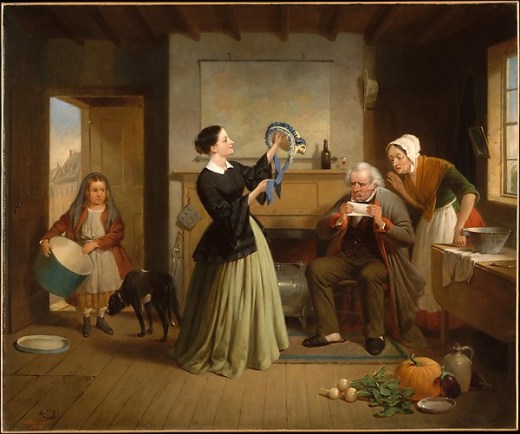
Image: The New Bonnet (1858)  Francis William Edmonds                                            Courtesy of The Metropolitan Museum of Art   New York, NY