
Intelligent. Trustworthy. Successful.

When advising Freelancers and other self-employed business professionals on how to increase their customer list and sales revenues, the usual recommendations are repeatedly trotted out: Exceed expectations. Network. Get referrals.  Price well.

Yet there is another way to continually, subtly, position yourself and your business enterprise as dependable and competent and that is to be well-spoken.  Whether you are in conversation with friends and colleagues, clients and referral sources, a good vocabulary is always noticed by the listener on some level.  Well-spoken people get more respect in life.  They are listened to and trusted. Expand your vocabulary and your client list may follow.

How can you add more words to your long-term memory? Read! Read for business and read for pleasure.  Read new books and explore old classics.  When you encounter an unfamiliar word, look it up and claim it as your own.  Eventually, you’ll sprinkle those words into your written and verbal communications, without sounding like a show-off. Below is a list of words that you might want to get to know and use in your life and work.

Adept

Definition: being highly skilled or well-trained in a particular discipline; an expert  Synonyms: capable, accomplished

Example: Grace is very adept at financial analysis and as a result, she was recruited by several regional and national banks.

Aplomb

Definition: self-confidence or assurance, especially when in a demanding situation  Synonyms: composure, poise

Example: Michael chaired what could have been a difficult meeting with a potentially hostile audience with aplomb.

Byzantine

Definition: devious and surreptitious operation                                                          Synonyms: complicated, troublesome

Example: Robert’s high personal ethics made it difficult for him to work for a company with such a Byzantine culture, so he tendered his resignation.

Cogent

Definition: well-reasoned, logical and compelling                                                      Synonyms: convincing, valid

Example: Yvonne and her study co-authors made three cogent arguments in favor of the proposed changes to the zoning laws.

Conundrum

Definition: a difficult problem                                                                                          Synonyms: problem, puzzlement

Example: Edward was charged with solving the shipping conundrum before the company lost money.

Cronyism

Definition: the appointment of friends and associates to jobs or other desirable posts, often evidenced by awarding promotions that are not deserved because the candidates are unqualified                                                                                                                           Synonyms: favoritism, preference

Example: It has long been said that jobs within city and state governments are obtained primarily through cronyism.

Delineate

Definition: to precisely describe or outline                                                                   Synonyms: describe, outline

Example: To ensure that things ran smoothly, the team moved to the conference room to delineate their plan on the whiteboard before beginning the project.

Deviate

Definition: to stray or depart (from a standard, course of action or the norm)    Synonyms: differ, stray

Example: If you deviate from your customer’s expectations, they may buy from competitors who offer a more consistent experience.

Dichotomy

Definition: a division into two parts, often contradictory or mutually exclusive  Synonyms: contrast, split

Example: By attempting to work half an hour on the production line, the president only further illustrated the dichotomy that exists between executives and factory workers in our company.

Disseminate

Definition: to spread or disperse                                                                                     Synonyms: announce, broadcast

Example: A downside of being a celebrity these days is that the internet makes it easy and fast to disseminate rumors about their alleged misdeeds.

Esoteric

Definition: difficult to understand except by a chosen few; a rare and special interest                                                                                                                                 Synonyms: unusual, sophisticated

Example: When speaking with prospective clients, it is recommended that you avoid using esoteric, industry-specific terms.

Fiasco

Definition: a total failure; a complicated situation that ends in failure                  Synonyms: calamity, disaster,

Example: My suit was wrinkled, my business cards got soaked in the rain and when I left, I found a huge piece of spinach in my teeth.  The whole thing was a total fiasco!

Galvanize

Definition: to propel a person or people into activity or inspiration                       Synonyms: inspire, motivate

Example: Leila gave a rousing victory speech, galvanizing her campaign volunteers to stay active on social media long after the election was over.

Incisive

Definition: penetrating, biting or remarkably clear (tone, words, etc.)                  Synonyms: clever, sharp

Example: Dan tried to counter the damaging points made by the defense attorney, but in the end, her points were too incisive and the jury sided with the defendant.

Juxtapose

Definition: place two items close together and side by side (often referring to objects that may at first seem to be in opposition or contrast)                                                       Synonyms: compare, differentiate

Example: To illustrate her point about how far the company had come, Mariam juxtaposed the image of the company’s original product with the modern version.

Leverage

Definition: to exert influence on to gain the desired effect (in business)                Synonyms: advantage, influence

Example: A buyer can limit the leverage of the seller if that buyer doesn’t seem overly anxious to acquire the product.

Litany

Definition: a long list or reciting of excuses, reasons, etc.                                            Synonyms: list, chant

Example: Jocelyn had a litany of excuses for her miscalculation — many were valid, some were not.

Mercurial

Definition: volatile or erratic; fickle; flighty, or lively and often quick-witted       Synonyms: changeable, impulsive

Example: The lead singer’s mercurial nature was well-loved by fans and the media, but brought lots of stress to his band mates.

Prudent

Definition:  wise and sensible in action and thought                                                   Synonyms: careful, shrewd

Example: Cate felt that it would be prudent to use 30% of the revenue from the sale to pay the organization’s debt and to deposit 30% into the endowment fund.

Quid pro quo

Definition: something given for something taken (you scratch my back, I’ll scratch yours) Synonyms: trade-off, equal exchange

Example: Heidi and Larry had a quid pro quo arrangement — they swapped desks, so that she could sit near her friend and he could sit near the girl he has a crush on.

Sanguine

Definition: accepting even negative circumstances with a positive attitude         Synonyms: unflappable, composed

Example: While it would make his job more difficult, Omar was sanguine when he was told he’d have to complete the project a week earlier than expected.

Untenable

Definition: indefensible, usually in relation to a difficult or impossible situation  Synonyms: illogical, unwarranted

Example: Naomi was in an untenable position; she couldn’t continue to tell her  employees to cut costs while she stayed in five-star hotels when on business trips.

Wunderkind

Definition: a young person who succeeds, usually in business                                   Synonyms: genius, mastermind

Example: The late musician Prince was a wunderkind, a highly talented guitar player, song writer and recording producer who signed his first record contract at age eighteen, with Warner Brothers.

Zeitgeist

Definition: spirit of the times                                                                                            Synonyms: outlook, trend

Example:  Ideas of world peace, happiness and rock’n’roll music defined the Zeitgeist of the 1960s in the U.S. and Western Europe.

Thanks for reading,

Kim

Photograph: Marie Curie, winner of the 1911 Nobel Prize in chemistry (for her work with radium and polonium). In 1903, she was one of three who shared the Nobel Prize in Physics. She is pictured in her laboratory, circa 1900.

The Subtle Art of Managing Up

“Managing the boss is the way to have a win-win situation where everyone, including the organization and the project, wins.”   Wayne Turk, management consultant and author of CommonSense Management  (expected publication 2018)

Management is about listening and observing, planning and training, encouraging teamwork, developing talent and communicating, all in service of consistently producing excellent results.  The exceptionally effective manager is astute enough to realize the benefits of managing both up and down the organization chart.

Freelance consultants, organization outsiders who must swiftly and expertly put together a plan for successful project management, are advised to learn to manage up as a way to understand the stated and perhaps also unstated expectations of your client.  Manage up and learn what to say and whom to say it to when you must get results that get you noticed by the right people for the right reasons.  Managing up helps you develop the insight and relationships to become an admired, trusted and respected professional who reliably produces the project deliverables and obtains referrals from satisfied clients.

There is also the process of managing down, which could be implemented when you hire Freelance subcontractors to assist with aspects of a project.  In your role as hiring manager, manage down to ensure that your subcontractors receive the information, tools and support to do their best work.  Describe the project mission in writing, along with the subcontractor project specs,  give them what they need to get the job done and then get out of their way and let them show their talent.

Never micromanage, praise and reward excellent performance, be an advocate and communicate always. Don’t keep them in the dark about what is going on at the organization.  Do this and you will be rewarded with a high-achieving and loyal team that makes you look good to your client.

Communication is the heart of managing up or down and when you manage up, be mindful that the client has more power than you and they can use that power to either help you or crush you.  Note the preferred communication style of your client contact and present information (and requests) accordingly.  What seems to make him/her most comfortable when communicating, or how can you make information, questions or requests seem clear to him/her?

If face-to-face talks are preferred, then ask to sit down over coffee or lunch and talk things through.  If your client is more of a reader than a listener, communicate by email.  If s/he is visual, use charts, graphs and/or photographs to tell your story.  Sell your client in the way that s/he likes to be sold and make it easy for you to obtain information and get approval for requests you may have along the way.  I cannot overstate this element of managing up, for it is a key element in relationship building and access to many oh-so-important benefits that can be awarded to those who can communicate effectively with the higher-ups.  You’ll gain their trust and confidence and doors could be opened for you.

Understanding your client’s perspective and his/her agenda.  You may not always agree with the point of view, but you are obliged to understand it and work within its parameters.  You will be unable to communicate effectively until you know where s/he is coming from, until you know what resonates or repels.

Packaging and presenting problems and solutions may be a necessary tactic for clients who only want to hear good news.  Part of managing up involves guiding the client to face reality and resolve an issue before it gets out of hand.  it will be to your credit if you are able to suggest one or two reasonable solutions to your client should a problem be discovered.

Don’t go over your client contact’s head. Speak to the client first if you feel that something is amiss, or change would be helpful.  If there is a serious problem with the project and your requests to confront and resolve the matter are continually rebuffed, then you may need to go around your primary client contact, discreetly and confidentially.  If there is illegal behavior happening, such as harassment or inappropriate handling of project financing, would also signal the need to go over your client contact’s head.

Ask for feedback and don’t get defensive if the brutal truth is delivered.  It could be the greatest thing your client does for you.  Listen, learn, incorporate.  The client will be thrilled to see his/her suggestions implemented in your working style and that will make you look responsible and dependable.

Be loyal and trustworthy.  Do not talk behind your client’s back and never betray a confidence.  Always do an exceptionally good job and if you don’t understand how to make that happen, then ask for help.  You want to be seen as dependable and highly competent.

Thanks for reading,

Kim

Photograph: Mary Tyler Moore as Mary Richards and Ed Asner as her boss, Lou Grant The Mary Tyler Moore Show CBS-TV (1970 – 1977)

The Right Way to Give Feedback

Even for those who are self-employed, everything in life is team work, am I right or what? When you’re working with others, at some point giving or receiving a quick progress report is a good thing and usually appreciated.  There is an art to giving feedback and if you want to reach and sustain a high level of productivity, to say nothing of preserving important relationships both business and personal, you may be interested in the recommendations that guide the process of giving effect feedback offered by Gwen Moran, author of The Complete Idiot’s Guide to Business Plans (2010).

Integrate

When you are in the position to assess the quality of the project work, you have an obligation to speak up should you discover that something is amiss or the work is behind schedule.  Feedback should be instructive, timely and accepted as a normal part of management’s responsibilities.  Especially if assistance is needed, it is important that  the feedback is delivered in a way that is affirming of the worker, does not denigrate his/her skills or intelligence and effectively promotes appropriate actions.  Waiting to address insufficient work in a performance review is ineffective—-too late to help the worker understand and quickly make modifications that will produce what is expected.

Calibrate

Responses to feedback are individual and sometimes unpredictable.  The less secure are prone to becoming defensive and occasionally, combative.  A diplomatic approach is recommended, so that feelings are not hurt. Nevertheless, the manager or project overseer must alert workers whose performance is sub par and the sooner the better.

To promote a positive team spirit and sense of inclusion, it will be helpful to allow team members who are not performing well to “save face” and if that means you, the project overseer or department manager, must blame yourself because mistakes have been made, then so be it.  Avoid being labeled as either unsupportive and harsh, or a micromanager.

Educate

If ad hoc feedback is not bringing about the desired improvements, then invite into a meeting all who are working on the project.  Explain how the project is critical to the achievement of interdependent  company objectives and goals and why it is imperative that the work must be done in a certain way and completed within a certain time frame.  Team members will be able to ask questions in a nonjudgmental environment that will clear up misinterpretations and help them to understand the purpose of the project and their value as professionals.

Motivate

Strive to communicate positive observations about the team members’ work, because feedback is always necessary.  Do not fall into the habit of speaking up only when there is something negative to say.  Thanks and encouragement go a long way in motivating enthusiasm and excellent quality work.  Feedback contributes to the development of cohesive and high-performing teams. It is the responsibility of those in management positions to promote and support this outcome.

Thanks for reading,

Kim

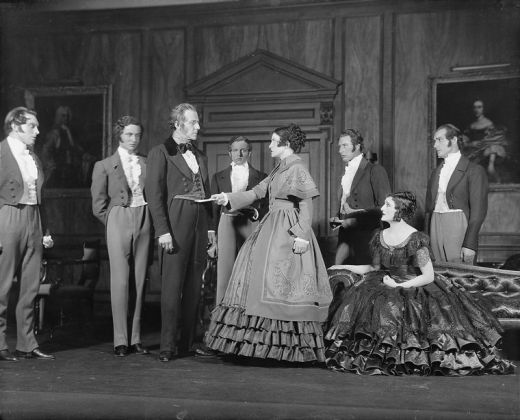
Photograph courtesy of the New York Public Library                                                  Vandamm Theatrical Photographs Collection 1900 – 1957

On Conducting an Interview

Because you are an ambitious Freelance consultant, you regularly provide content marketing that showcases your expertise and reinforces your brand with current and potential clients and, when good fortune intervenes, motivates them to give you some much-needed billable hours.  As you plan your activities, you may at some point reach out to a fellow Freelancer, a good client, or another expert and ask to include that individual in your content marketing by way of an interview.  Featuring another perspective every once in a while keeps your marketing content fresh and more interesting to the audience.  I’m thinking of doing exactly that sometime soon, if my target interview guest is willing to speak with me on the record.  Stay tuned.

At some point in your professional life it is likely that you may decide, or be asked, to interview someone, so you would be wise to learn the process.  Successfully conducted interviews hinge on good preparation.  While some of us may feel that interviewing is an intuitive skill and that we should be able to manage the process spontaneously, that will not be the case.  You could probably muddle through, but why not take a couple of hours and learn how to get it right?

Think first of an interview guest to invite.  Who do you know who might tell a good story, or share some useful information that will be appreciated by your audience and does it seem possible that you’ll be able to convince that person to speak with you? 

Second, consider the basic interview format. Will your guest agree to a face-to-face Q & A that will be required for a video, or will it be a phone interview that is suitable for your podcast, blog, or newsletter? Email interviews often do not produce the best results according to many journalists. 

Third, brainstorm questions or topics that might be interesting to your audience and play to your guests’ strengths. You may want to write up a list of potential questions, or make note of possible topics. Visit the Twitter feed, Facebook page, LinkedIn profile and conduct an internet search to find out what may have been written by or about your proposed guest.

Invite your potential interview guests in a phone call. Some requests require a more personal approach than email.  Immediately upon reaching an agreement with your guest, send a confirmation email.  Two or three days in advance of the interview, send a second email to confirm the interview time and place and specify whether a phone call or in-person meeting will take place.

In all formats, introduce the guest to your audience and give a brief bio. If your interview will be video or podcast (audio), welcome your guest warmly and thank him/her for agreeing to appear. Your audience needs to hear, and see, this greeting. If the interview will appear in text you will still give a warm welcome and thanks and that exchange will appear in print.  

As you ask questions be friendly and upbeat, to help your guest to feel comfortable and safe.  Avoid “gotcha” questions designed to make the guest feel judged. Keep your mouth shut and practice active listening as you take notes as the guest speaks  (you can record as well and if you plan to do that, ask permission).  If you hear a particular word, phrase, or aspect of the topic that piques your curiosity or seems to give unexpected insight into the question, enter it into your notes and then ask a follow-up question. In this way, your interview will become a conversation, rather than a stilted Q & A session.  The best interviews are what seem to be a relaxed and intelligent conversation between the host and guest.

FYI, it is sometimes necessary to ask the same question two or even three times, in different ways, to persuade your guest to give a complete answer. It’s important to build rapport throughout the interview to make the subject feel comfortable sharing information.

You may need to nudge the interview back on track if your subject goes off on a tangent, in particular if this is a video or podcast conversation.  A useful phrase could be, “How does that relate to the big picture”? Conversely, you might draw out more information from a reticent guest when you ask, “Do you have a story that will illustrate your point”? At the end of the interview, thank your guest for participating and enlightening the audience.

If the interview will appear as a podcast or video, your guest may appear for 15 – 20 minutes, unless his/her topic is especially compelling.  If you are interviewing for your blog or newsletter, 15-20 minutes is probably still a good time limit for the conversation. Overwhelming your guest or audience is to be avoided.

Interviewing a guest for your chosen content marketing platform will build your audience and enhance the brand of your guest as well.  Create a win-win situation for you and the guest by carefully considering the benefits that will accrue to each of you through the proposed interview and be sensitive also to the interests of the audience.

Thanks for reading,

Kim


The Power of Listening

Recently, I attended a reception at the women’s club where I’m a member.  When I attend programs, I make it a point to circulate and talk, usually joining three or four tables over the course of an event.  I’ve been fortunate to participate in dozens of conversations, meaningful and superficial, and I’ve formed some good relationships.  When in conversation, ideally, I listen more than I talk. That ebb and flow is the subtle dance of communication.

While in conversation, learning to keep one’s mouth shut and ears open, so that you can focus attention on the person who is speaking, requires mindfulness and discipline.  So often we do not really listen, we only pause, to formulate an answer that will help us win a debate or demonstrate expertise in the topic.  Conversation can become a game of one-upmanship, when we’re more interested in being clever, or seeming to be very wise or au courant.

When you take the time to listen, the ego must be set aside as you signal the unique value of the other person by allowing him/her to express thoughts and feelings, insights and knowledge.  You may appear to be passive but in reality, listening well is quite active.  When we listen with intention, most of our senses are activated.

We watch facial expressions and detect happiness, distress, interest, or boredom in the eyes and mouth and even the posture.  We hear the cadence of speech, the choice of words used and the tone of voice.  In this way, we take in the story as it is told and we begin to understand the other person’s values, worries, joys, competencies and humor.  Listening with conviction is the highest compliment that one can pay to another human being.  When we listen, we get to know people and build relationships.

Careful listening also allows you to grasp what a person does not say and that could be very revealing.  Hone your listening skills and learn to “listen between the lines,” so that you can more fully understand the motivations and perhaps hidden agendas of those with whom you interact.  Listen and get a sense of who is telling the truth and who is hiding behind a facade.  Whether you are in a negotiation with a client, interviewing a job candidate, or at dinner with someone you wonder if you should see again, listening well will guide your next steps.

Listening skills are a key ingredient of selling skills.  Listen carefully to your prospect and learn what is most important to him/her and then describe how your product or service will resolve the need and eliminate difficulties.  If you are a Freelance consultant who is interviewing with the hope of winning an assignment Dave Mattson, CEO and president of Sandler Training, the sales training firm, recommends that you get straight to the point and ask what three criteria define success for the project and then listen, and truly hear, the answer.  You will quickly discover whether you are a good fit for the project and what you must say and do to win it.

Finally, listening will allow you to adjust your style of communication to align with the person you are speaking with and that is a very important part of building trust, demonstrating proficiencies, telegraphing empathy and being persuasive, the building blocks of both good relationships and effective selling.  Essentially, your heightened listening will allow the two of you to speak the same language and that is the heart of effective communication.

Thanks for reading,

Kim

Consulting: This Is How We Do It

There are millions of Freelance consultants in the U.S. and our numbers continue to climb on a steep upward slope, fueled both by the reluctance of employers to offer stable full-time, benefits-paying jobs and the desire of workers to have more flexible schedules, whether single and childless or married with children.  There are different levels of Freelance consulting, from the one-off hourly paid short-term project to ongoing client relationships that may endure for several years.

Some Freelance consulting projects are very limited in scope: you are hired to design a brochure, build a website, facilitate a meeting, provide special event PR, or redecorate a living room. Other projects might start with a change management process that would benefit from the perspective and expertise of an external  professional and segues into implementation and training for impacted staff.

It is useful to break down the components of the consulting function because it will encourage us, its practitioners, to think about the sum total of what we do— the value that each component brings will remind us that the whole is greater than the sum of the parts.

Further, when we speak with clients or generate our content marketing information or traditional advertising copy, having the components of our work and good sound-bites at the ready will keep marketing messages and elevator pitches fresh and relevant and help us to communicate to clients that we understand their needs and priorities and we would make a good hire for their mission critical project.  Below is a list  of a consultant’s core duties.

  1. Provide information.
  2. Diagnose (and maybe redefine) the client’s problem.
  3. Provide recommendations for the short and long-term based on the diagnosis.
  4. Propose one or more effective solutions that will resolve the client’s problem.
  5. Assist with the implementation of the chosen solution to the problem.
  6. Suggest how the client can encourage and sustain internal support for the solution.
  7. Facilitate training or learning, to allow impacted staff to resolve similar problems in the future.

When we Freelance consultants are called in to discuss a possible assignment with a client, we may want to ask a few questions of the project team or leader, to allow us to gain insight and context; to help reveal one or more potentially useful solutions; and to make it more likely that the client will accept and approve your recommendations:

  1. What solutions have been implemented or proposed in the past and what was the outcome?
  2. Which untried steps toward a solution does the client have in mind?
  3. Which, if any, related aspects of the client’s business operation are not going well?
  4. When a reasonable solution is recommended, how and when will it be implemented?
  5. What steps can be taken to encourage buy-in for the solution, to assist its successful implementation?

Thanks for reading,

Kim

A Superb Speaker Introduction

Excellent public speaking makes those who have it appear both credible and smart and those who wish to obtain or maintain the appearance of authority and expertise are advised to cultivate the art.  Public speaking not only refers to s/he who makes a featured presentation—keynote speakers, guest lecturers, panelists, moderators, or the toastmaster at a social function—but also includes s/he who introduces a speaker.

An invitation to introduce a speaker is an honor and a vote of confidence and you would be wise to prepare for the occasion.  The introducer bears the responsibility of preparing the audience to respect the speaker and trust his/her information or story line.  If you receive an opportunity to introduce a speaker, keep the following suggestions in mind:

Show that you have the credentials to make the introduction

S/he who introduces a speaker must earn the confidence of the audience.  The leader or some other high-ranking member of the sponsoring organization usually introduces speakers, and earns that confidence by way of the authority vested in his/her position. Alternatively, a VIP speaker may be introduced by a similarly ranked colleague or guest VIP, who earns the confidence of the audience and as well conveys the importance of the speaker.  The guest VIP who introduces the high profile featured speaker will merit his/her own introduction and that will be given by a member of the sponsoring group.

Direct audience attention to the speaker

A speaker introduction is in reality a sales presentation and obtaining audience buy-in for the speaker and topic is your mission.  Your first order of business is to persuade the audience to be fully present in the moment. Typically, audience members are engaged in other activities in the intervening moments between speaker presentations, or as they await for the program to begin.

Some will be in conversation with those nearby, perhaps discussing the previous speaker or the program agenda.  Others will be focused on electronic devices, checking email, sending texts, or posting social media updates.  Your introduction must provide a bridge that transports the audience away from distractions and leads them to the subject of your introduction, the speaker.

A clever way to gain audience attention is to capture their imaginations with a rhetorical question related to the topic.  Consider opening your introduction with “What if…?“, “What is it about…?“,  or “Have you ever wondered how…?” The question will allow you to segue into the topic, which ideally will be perceived as compelling, to validate the audience member’s decision to attend.

Endorse the speaker

Now that you have the audience’s attention and confidence, it’s time to portray the speaker as an expert who is deserving of the audience’s time, attention and money (if admission was paid).  Put them in the mood to hear the talk by saying something like… “I first heard (the speaker) about three years ago, at a reading s/he gave soon after his/her book (title) was published.  I’ve been anticipating the release of this new book (title).” “I’ve heard more than one expert address our topic this afternoon, but I believe that (the speaker) gives the most comprehensive and clear representation of the facts…”

You may in addition give a build-up that precedes the above by listing awards and honors that the speaker has received, if applicable, or reading quotes about the speaker that have appeared in important publications.

Create intrigue and excitement about the topic

Tempt the audience with a smidgen of how the speaker will meet or surpass their expectations for the talk.  Read a sentence or two of an early review of the book that will be discussed.  Describe a useful piece of information that audience members will receive as they listen to the presentation.  Make them know that a worthwhile pay-off awaits.

The introduction

Continue to demonstrate that you make excellent speaker introductions by weaving the sense of anticipation into your actual introduction, perhaps in this way… “Let’s all welcome (the speaker) and let him/her give us the real story about what’s going on.” “Let’s invite (the speaker) to tell us what happens next in the ongoing saga of this character. Please join me and give him/her a warm welcome.

Thanks for reading,

Kim


Build Your Referral Network With Board Service

Volunteering has for many decades been a way for aspiring socialites, self-made millionaires, traditionally employed professionals climbing the ladder and Freelance consultants looking to meet future clients to expand their networks, build strategic relationships, obtain social credibility, learn new skills and sometimes even support a worthy cause. Volunteering is the best way to do well by doing good and the money you donate is tax-deductible.

The Machiavellian among us may choose an organization that appears to have either the best business networking or most social-climbing potential (or both!), but I recommend that those in search of a good volunteer opportunity start with a review of causes that are important to you.  Some prefer social service agencies, others are inspired by arts organizations and still others gravitate to religious or healthcare institutions. If you’re not sure where to start, try lending your services to your alma mater, your children’s school, or your local Rotary Club.  Rotary Club

Board service is at the top of the volunteer pyramid and not everyone is invited to participate at that level.  However, most not-for-profit organizations plan a big annual fundraising event and extra day-of-event volunteer help is sometimes needed. That could be your opportunity to see a snap shot of the organization, as well as the event committee, up close, in action and celebrating the vision and mission.

Joining a day-of-event subcommittee is often a good place to start your volunteer journey, so that you can meet and work with one or two board members, meet the executive director and learn about the qualifications and possibility of joining the board.  Be advised that many boards come with an expected level of financial support that can stretch into four-figure sums (and beyond).  Visit the organization’s website and speak with the administrative assistant about short-term volunteer opportunities.

There are also corporate boards on which one may serve, but those groups are for the very well-connected and influential.  A path to corporate board service might begin with relationships developed during volunteer board service, but one still must have very formidable professional credentials and superior job titles.  Here are a few pointers to keep in mind as you contemplate your role as a volunteer:

Choose the right organization

You will feel much happier donating skills and money to an organization whose mission you strongly support and that should guide your choice.  Your work on the board should be for you a pleasure and a privilege and not a chore.

Be outstanding

Take your commitment to the board or committee seriously if you expect to be taken seriously by the influencers you hope to impress.  Be qualified to do the work.  Make the time to complete your pro bono work on time.  Be enthusiastic, if not passionate, and a good team player.  If you are sufficiently fortunate to be asked to chair a committee, graciously share credit for a job well done with your committee members.

Add value

While your volunteering may have at its core your professional or social agenda, you must nonetheless approach your volunteer service as someone who wants to contribute and make a positive difference.  Keep the organization’s mission and goals in mind, along with your own.  Raise your hand when leadership opportunities present themselves. Demonstrate how your unique skill set brings benefits to the organization.

Be a passionate visionary

As a board member, it will be your responsibility to prepare the organization to realize long-term goals that accurately reflect and enable the vision and mission.  Suggest that strategic planning be done, so that key staff members can join with the board and map out possible strategies for the future.  In any case, bring your creative energy and practical insights to every board meeting.

Be a team player

Make yourself look good and create the conditions wherein your fellow board and committee members will find satisfaction in their board service and find more success for yourself as you do.  Inspire fellow board and committee members to do their best work by modeling that behavior yourself.  Always acknowledge the good work and dedication of others on your committee and the board.

When you follow the guidelines detailed above, you will distinguish yourself as a superior board member who is a real asset to the organization.  Influencers who are in a position to refer those with your specialty will no doubt be eager to refer a colleague whose work they can personally endorse and your Freelance consultancy will reap the rewards.

Thanks for reading,

Kim

Fixing Your Epic Fail

You’ve got to know when to hold’em, know when to fold’em. Know when to walk away, and know when to run.   “The Gambler”, written by Don Schlitz and made famous by singer Kenny Rogers

The Horatio Alger story remains the ultimate creation myth of the United States. Start out penniless.  Be clever, ambitious and ready to work very hard.  Recognize opportunities that others ignore.  Have the courage to take risks.  Summon the self-confidence and determination to stay the course in the face of disappointment.  Succeed wildly.  Make millions of dollars.

The most admired American heroes are the success stories, the big money makers. Paul Allen and Bill Gates, college drop-outs who pulled all-nighters to build Microsoft.  Madam C.J. Walker, a widowed young mother and one-time laundress who in 1906 created a hair care product in one of her wash tubs, out-maneuvered endemic sexism and racism, and became America’s first female and first non-white self-made millionaire (her line is now at Sephora).  Madam Builds an Empire

Striving is the template for life in this country.  Never give up.  Just do it.   However, quiet as it’s kept, certain dreams simply will not pan out because they cannot.  Some ventures are ill-conceived.  Some are very good, but the resources to launch them are not available.  For others, the timing is wrong and one either misses the market, or is too far ahead of the curve and prospective customers do not yet have the desire for the product (or service).  In these instances the smartest action is, sadly, to scrap the dream and walk away.  It is so painful, humiliating, even un-American.  Success is our brand and the whole world knows it.

One of the biggest questions we will encounter as we build a life is, when do you hold on tight to your dream and keep pushing forward through rejection and disappointment and continue to invest time, passion and money into an idea that might be doomed (or not) and when do you give up?

Failure, at some point, is inevitable.  It is demoralizing and damaging, if only to the ego.  It undermines self-confidence.  Repeated failure unravels and destroys a life.

According to behavioral psychologist James Clear, who studies and writes about performance and creativity, failure can be classified in three categories:

  1. Failure of tactics
  2. Failure of strategy
  3. Failure of vision

Clear categorizes Failure of Tactics as Stage 1 and identifies it as HOW mistakes are made.  According to Clear, Stage 1 Failure occurs as a result of poor planning, preparation, or execution.  The Vision may be sound and the chosen Stategy reasonable, but operations issues bring it all crashing down.  His remedy for Stage 1 Failure is to:

  • Examine the process of product and service delivery (service packages, sales distribution, quality control and customer service, usually)
  • Identify system failures in the sales process/ buying process as articulated by customers and employees.
  • Adjust systems and practices that impede an efficient and desirable customer experience and employee efficacy and morale

Stage 2 Failure results from a Failure of Strategy and Clear calls these WHAT mistakes. Stage 2 Failure occurs when the chosen strategy is unable to deliver the desired results.  Since there is no way to know in advance which of your presumed reasonable products, services, or proposals will succeed until there is a beta test, Clear recommends that after due diligence has been done, roll it out and monitor the progress.  His remedy for Stage 2 Failure is:

  • Launch the beta test quickly
  • Do it cheaply
  • Revise rapidly

Throw it up against the wall and see what sticks. If your strategy isn’t doing the job, have Plan B ready and give your concept another try.  Keep costs low to minimize the financial strain of do-overs.  Ideas are meant to be tested, it’s all about trail and error.

Failure of Vision constitutes Stage 3 Failure and it reveals the most basic reasons of WHY the plan failed. In this scenario, the purpose for taking the action was poorly understood.  Was there no measurement of demand for the product, service, or action taken? Did you overestimate access to target customers? Did you not acknowledge that you’d rather not commit the time and money necessary to build the business or carry out the initiative?

Some of us fail because we get pressured into taking certain actions by those whose motive is to continue a tradition or to exert control.  In these scenarios,  actions are taken to follow the expectations of others, rather than one’s own priorities and preferences.

For example, the brother of a good friend, because he was the only son, was expected to take over his father’s highly successful business.  But according to my friend, her brother was not cut out to run a large and complex business.  He lacked the necessary drive. Unsurprisingly, her brother eventually crashed the business.  Their father spent more than a million dollars trying to bail out his son, but the business went bankrupt.

If you’ve done your homework and can be reasonably confident that your vision is sound and you’re willing to invest your time and money testing Stage 2 issues (launch strategy) and perfecting any Stage 1 challenges (operational glitches), then ignore those who would dissuade you to abandon your vision.  Maybe you’ll never be wildly successful, but if you feel compelled to do what you can to realize your dream, then carry on! Avoid Stage 3 Failure in this way:

  • Determine your priorities and purpose and be clear about what you’re willing to do to make it a reality
  • Identify and stand by those parts of your dream that are non-negotiable
  • Accept that there may be naysayers

Thanks for reading,

Kim

Those Who Can, Teach

What’s a proven way for Freelance consulting service providers to demonstrate expertise, distinguish yourself from the many “me, too” competitors; position yourself as a thought leader; and work against being perceived as a commodity? Teaching! The old proverb, “Those who can, do and those who can’t, teach” doesn’t hold up in the 21st century marketplace.

Teaching is the smartest-ever marketing activity.  You get paid to do it, so along with being an effective marketing activity, teaching simultaneously benefits your cash-flow.  If that’s not enough, through teaching you will become a better speaker and better able to promote yourself as a keynote or a panel moderator.  In horse racing, they call that a trifecta!

First, let’s consider what you might teach.  Ideally,  you’ll teach a subject related to your business.  Artists since Michelangelo (at least) have taught art classes.  Authors of best-selling books are usually able to join a university faculty, where they earn steady money teaching creative writing classes.  Prize-winning journalists often teach journalism at colleges and universities, which is a superb addition to their CV.

In 2006,  I created five 90 minute sales skills workshops that I presented at an adult learning center (the nation’s oldest adult learning center, BTW) and two years after that, based on my teaching experience and curriculum development skills,  I was invited to teach an 18 week business plan writing course at a Small Business Association-affiliated women’s business development center.

When that assignment ended two years later, I developed a six-hour business plan writing workshop that I continue to present two or three times a year at the adult learning center where my teaching career began.  I’ve also developed a 90 minute networking skills workshop and a six-hour strategic planning how-to workshop that are occasionally presented.

Second, you may need to acquire or improve your teaching skills.  My recommendation is that you learn both curriculum development and gain or improve your teaching skills by writing a proposal to teach some aspect of your professional expertise at an adult learning center, library, or some other organization that offers workshops to the public for free or at a modest cost.  The proposals I’ve written for workshops became my lesson plans.

Third, identify a place to teach.  As noted, adult learning centers and libraries are good possibilities.  Explore the requirements of teaching and peruse the types of courses that are scheduled.  Read the instructor bios—I’ll bet most are Freelancers.  If you’ve earned a master’s degree and you have a minimum of five years of teaching experience, you may be able to teach at a local university.  Adjunct (that is, part-time, non-tenure track) teaching is great if you can get it,  but the market has become quite competitive.  I’ve taught a couple of semesters at a special seminar series, but I’ve been unable to secure any more adjunct work in the past five years, I’m sorry to say.

Once you’ve developed a workshop and learned how to successfully present it,  consider taking it online in a YouTube video.  E-learning is a growing field and becoming proficient in presenting an online course is to your benefit.  Schools are transferring ever more courses to an online format and if you have the know-how, you will be a more attractive candidate for those disappearing adjunct opportunities.

Web developers are able to teach students how to build a website.  Freelance bookkeepers can teach other Freelancers how to use Quickbooks.  Marketers can teach the basics of social media marketing.  Landscape artists can teach homeowners how to choose shrubbery and flowering plants for their yards,  or how to create and maintain a window box filled with lovely plants.  Developing proficiency in the ancient and noble art of teaching delivers numerous tangible and intangible benefits to Freelancers and their students.

Thanks for reading,

Kim