On Being Persuasive

According to Carmine Gallo, Instructor at the Harvard University Graduate School of Design’s Executive Education Department and author Five Stars: Communication Secrets to Get from Good to Great (2018), the ability to persuade, to change hearts and minds, is perhaps the one skill that can be depended on to confer a competitive edge in the knowledge economy. Successful people in nearly every profession are typically those capable of convincing others to take action on plans and ideas. If you want to achieve anything of substance in life, learn to be persuasive.

Aspiring entrepreneurs persuade venture capitalists to provide financial backing for their new ventures.  Salespeople persuade customers to buy products. Freelance consultants persuade clients to hire them to provide professional services. In short, persuasion is no longer considered merely a “soft skill,” but rather a leadership skill, that enables those who’ve mastered it to attract investors, sell products, build brands, inspire teams and activate social or political movements.

More than 2,000 years ago, the Greek philosopher Aristotle outlined a formula on how to master the art of persuasion in his work Rhetoric.  Throughout history, statesmen and salesmen have used Aristotle’s guidelines when preparing speeches or talking points that brought history-shaping ideas and ground-breaking products to the world.

Your words and ideas have the potential to make you a star in your field, if you can persuade others to join you and act on them. To become a master of persuasion and successfully sell your ideas, use these five rhetorical devices (as interpreted by Mr. Gallo) that Aristotle identified in your next client meeting or sales presentation:

ETHOS (Character)

Gallo feels that ethos represents that part of a speech or presentation where listeners take the measure of the speaker’s credibility. Aristotle believed that if a speaker’s actions don’t reflect his/her words, that speaker would lose credibility and ultimately weaken the argument.  As humans, we are hardwired to search for reasons to trust another person. A simple statement that you are committed to the welfare of others before you introduce your argument or selling points will enhance your credibility.  Show your prospect that you understand and appreciate his/her situation.

LOGOS (Reason)

Once ethos is established, it’s time to make a logical appeal to reason. Why should your listener care about your product or idea? If it will save the listener money, for example, s/he will want to know how much it will save them and how the savings will be accomplished. The same reasoning applies to making money. How will your idea help the listener earn a profit? What steps must s/he take next?  These are all logical appeals that will help you gain support. Use data, evidence and facts to form a rational argument.

PATHOS (Emotion)

According to Aristotle, persuasion cannot occur in the absence of emotion. People are moved to action by how a speaker makes them feel. Aristotle believed the best way to transfer emotion from one person to another is through the rhetorical device of storytelling. More than 2,000 years later, neuroscientists have found his thesis to be accurate. Research has demonstrated that narratives trigger a rush of neurochemicals in the brain, notably oxytocin, called the “the moral molecule” that connects people on a deeper, emotional level.

In his analysis of the top 500 TED Talks of all time, Gallo found that stories made up 65% of the average speaker’s talk, whereas 25% went to logos and 10% went to ethos. In other words, the winning formula for a popular TED Talk is to wrap the big idea in a story.

What kind of story? TED Talks curator Chris Anderson explained, “The stories that can generate the best connection are stories about you personally or about people close to you. Tales of failure, awkwardness, misfortune, danger or disaster, told authentically, hasten deep engagement.” The most personal content is the most relatable, in other words.

METAPHOR (Comparison)

Gallo reminds us that Aristotle believed that metaphor gives language its beauty. “To be a master of metaphor is the greatest thing by far,” Aristotle wrote. Gallo follows-up, “When you use a metaphor or analogy to compare a new idea to something that is familiar to your audience, it clarifies your idea by turning the abstract into something concrete.” Those who master the metaphor have the ability to turn words into images that help others gain a clearer understanding of  their ideas and more importantly, remember and share them. It is a powerful tool to have.

BREVITY

Brevity is a crucial element in making a persuasive speech. An argument, Aristotle said, should be expressed “as compactly and in as few words as possible.” He also observed that the opening of a person’s speech is the most important since “attention slackens everywhere else rather than at the beginning.” The lesson here is: start with your strongest point.

The good news for communicators is that Aristotle believed that persuasion can be learned.  According to Edith Hall, author of Aristotle’s Way, the political class in ancient Greece wanted Aristotle to keep his tactics for persuasion a closely held secret.  But Aristotle disagreed and wanted everyone to have access to it. Hall’s research showed that he instead championed the idea that a person’s ability to speak and write well, and to use rhetorical devices to change another’s perspective, could unleash human potential and maximize happiness.

Thanks for reading,

Kim

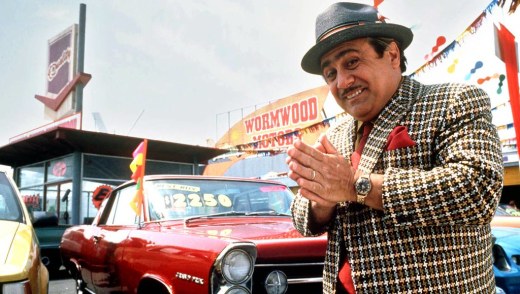
Photograph: Emmy Award-winning actor Danny DeVito (Taxi, 1978-1883 ABC-TV)  in Matilda (1996)

Make Your Next Impromptu Speech Great

Here is the scenario: You’re at the meeting of a local business organization, where you are well known. Forty-five minutes into the meeting, the organization Vice President sidles up to you and asks if you’d be willing to speak on a certain topic for 5 – 10 minutes, before the President delivers the closing remarks and adjourns.

You have just 30 minutes to prepare. How can you quickly organize your thoughts and create a concise and compelling speech that your audience will appreciate and that you’ll deliver like a pro? Here’s how you do it.

Attention

Every speaker must quickly capture audience attention. Open your speech with an attention-grabbing statement that expresses a point of view that you know most in the audience share.  Alternatively, you can surprise or even shock the audience with an unexpected fact or a provocative question.  When you open your talk, the goal is to draw  audience members in and persuade them to sit up and listen.

Credibility

Once you have their attention, you next show your audience that you deserve it. Earn their trust and respect when you reveal qualifications and experience that define you as an expert, or a person with special insights, who has timely and relevant information to share.

As a member of the host group you will automatically be given a measure of credibility, but you may have other qualifications that enhance your authority. The person who introduces you may share all, or part, of that background information. Stopping short of boasting, make known your claim to expertise.

Acknowledge success/ Identify problem

The organization leader who asked you to address the group will tell you what s/he would like you to achieve in your speech and if s/he neglects to do that, it is incumbent upon you to confirm the purpose of your talk.  Whether there is a recent victory to celebrate or a looming challenge to overcome, call it out and rally the support of audience members. Enthusiasm and passion, expressed in a way that your audience will expect and accept, is injected here.  Inspire unity for the cause.

Solution

Organization leaders may be planning to roll out an initiative and you may have been asked to speak to build member approval and solidarity around that solution. If there are good times ahead, the solution may be for members to continue their enthusiastic support of the organization and the cause. If turbulent times seem inevitable, the solution is the same. The purpose of your speech is to inspire loyalty to the organization and the cause.

Call to action

As your speech concludes you must give audience members an outlet and direction for their enthusiasm and commitment to the organization.  Should they sign up for a special committee that will implement the solution, be it celebration or problem? Or is this a fundraising initiative and you’d like to inspire commitment for contributions?  Give a deadline and urge immediate action.

Re-cap

End with a concise outline of the major points you made in the speech. Re-state the call to action and the deadline. Thank your audience.

Regarding general recommendations for public speaking, thank the person who introduced you when you take the podium. Keep your talking points simple and easy for the audience to remember. If you can weave into your speech a story that illustrates or summarizes an important point, so much the better.  As Travis Bernard, content marketing guru at TechCrunch, the thought-leader technology industry blog based in San Francisco, CA says, “What would be useful for my audience to learn and how can I package this lesson or bit of information in a compelling story format?”

Thanks for reading,

Kim

Image: Edgar Bundy (1862 – 1922, British) The Coffee House Orator, 1880.  Courtesy of Touchstones Rochdale Arts and Heritage Centre Museum, Greater Manchester, England

Ask Better Questions

“Be a good listener,” Dale Carnegie advised in his 1936 classic How to Win Friends and Influence People. “Ask questions the other person will enjoy answering.”  Effectively asking questions is a big part of a leader’s job. Good decision-making is based on information we obtain by asking the right questions. Making a sale, including handling objections, is also supported by effective questioning.

Many of us hesitate to ask questions, unfortunately. Sometimes it’s because we don’t want to be perceived as intrusive. Other times,  we worry that our questions may be viewed as silly and make us appear incompetent.  On the other hand, one might assume that more information is not necessary.  In every instance, an opportunity to obtain valuable information is lost.

Alison Woods Brooks, an Assistant Professor at the Harvard Business School who teaches Negotiation and is affiliated with the Behavioral Insights Group and Leslie K. John, Associate Professor of Business Administration at the Harvard Business School, understand that effective questioning is a skill that can be honed to make our conversations more productive.

The two offer guidance on the best type of questions to ask, tone of voice to use, the sequence of questions and how to frame the questions.  The best approach for a given situation depends on the goals of those in conversation.  Is the discussion  cooperative (e.g., relationship-building or accomplishing a task together) or  competitive (the parties seek to uncover sensitive information from each other or serve their own interests), or some combination of both? Brooks and her research team employed human coding and machine learning to identify four types of questions:

  • Introductory questions (“How are you?”)
  • Mirror questions (“I’m fine. How are you?”)
  • Full-switch questions (change the topic entirely)
  •  Follow-up questions (solicit more information)

Follow-up

Although each question type flows naturally in conversation, follow-up questions have special power. Follow-up questions signal to your conversation partner that you are listening, that you care and that you want to know more. People interacting with a conversation partner who asks lots of follow-up questions tend to feel respected and heard. According to Leslie K. John, “Most people don’t grasp that asking a lot of questions unlocks learning and improves interpersonal bonding.” Plus, follow-up questions don’t require much thought or preparation and usually come naturally to the questioner.

Yet be advised that no one likes to feel interrogated. Furthermore, closed-end questions tend to yield one-word answers. Open-ended questions counteract that effect and for that reason, they can be particularly useful in uncovering information or learning something new. In fact, they are wellsprings of innovation—which is often the result of finding the hidden, unexpected answer that no one has thought of before.

Sequencing

If the goal is to build relationships, opening with less sensitive questions and escalating slowly seems to be most effective.  In a set of studies (the results of which went viral following a write-up in the “Modern Love” column in the New York Times), psychologist Arthur Aron recruited strangers to come to the lab, paired them up and gave them a list of questions.  Participants were told to work their way through the list, starting with relatively shallow inquiries and progressing to more self-revelatory ones, such as “What is your biggest regret?”

Pairs in the control group were asked simply to interact with each other. The pairs who followed the prescribed structure liked each other more than the control pairs. This effect is so strong that it has been formalized in a task called “the relationship closeness induction,” a tool used by researchers to build a sense of connection among the participants.

Tone

People are more forthcoming when you ask questions in a casual way, rather than in a terse, official tone. In general, an overly formal tone is likely to inhibit people’s willingness to share information.

Group dynamics

Conversational dynamics can change profoundly depending on whether you’re chatting one-on-one with someone or talking in a group. Not only is the willingness to answer questions impacted by the presence of others, but members of a group tend to follow one anothers lead. In a meeting or group setting, it takes only a few closed-off people for questions to lose their probing power.  Conversely, if even one person starts to open up on a topic, the rest of the group is likely to follow suit.

Art of the response

Conversation is a dance, a mutual push-and-pull. Just as the way we ask questions can facilitate trust and the sharing of information so, too, can the way we answer them. Answering questions requires making a choice about where to fall on a continuum between privacy and transparency.  How should I answer this question? Assuming that I answer, how forthcoming can I afford to be? What should one do when asked a question that, if answered truthfully, might reveal a less-than-flattering information, or put one in a disadvantaged strategic position?

Each end of the spectrum—fully opaque and fully transparent—has benefits and pitfalls.  In negotiations, withholding sensitive information (e.g., that your alternatives are weak) can help you secure better outcomes. At the same time, transparency is an essential part of building meaningful connections. Even in a negotiation context, transparency can lead to value-creating deals; by sharing information, participants can identify elements that are relatively unimportant to one party but important to the other—the foundation of a win-win outcome.

Thanks for reading,

Kim

Photograph: The Dating Game, 1965- 1973 (ABC-TV)


Work Smart: Your New Year’s Resolution

Happy New Year! Thank you for starting the year with Freelance: The Consultant’s Diary.  This is the 10th Anniversary Year.  I am grateful for your support—subscribers, followers and occasional readers.

Let’s get the year off to a good start and talk about how to maximize the time and effort that you devote to operating your business.  Time is our most valuable resource because it’s irreplaceable.  Smart people are aware that if the goal is to build and sustain a successful venture, then one must formulate strategies designed to produce the best results ASAP.  Working hard is a given, but working smart will get you where you want to go, faster and easier.  The following are behaviors anyone can follow to support the competitive advantage of working smart.

Wake up early

Biologist Christoph Randler, Professor of Biology at the University of Tuebingen in Germany, recommends the early to bed, early to rise philosophy attributed to the American statesman Benjamin Franklin for those who want to become high achievers.

Dr. Randler says early risers are “better positioned for career success because they’re more proactive than people who are at their best in the evening.” Randler theorizes that their success stems from the discipline and conscientiousness associated with the preference for an early wake up call and the tendency of those individuals to make plans and to-do lists to ensure that tasks for the day ahead are completed.

Start your day with an early morning workout and give yourself a blast of energy that keeps you going all day long.  Numerous credible studies have demonstrated that moderate to vigorous exercise of 30-60 minutes duration performed at least three days each week makes us smarter, more resilient and healthier.

Never stop learning

Read books and other publications that address business topics relevant to your industry.  Attend workshops and conferences.  Join a professional association and/or your local chamber of commerce or local business association.

The SBA  and your local public library and/or adult learning center regularly sponsor workshops designed for independent business professionals.  Research the availability of courses that will upgrade your skills in any number of business sectors, from finance to Microsoft Excel, content marketing to selling skills.

In other words, if your goal is to become successful, or to sustain your success, then get some education.  Investigate also the dozens of free courses presented by top-ranked universities that are available on-line at sites such as Open Culture/Business and Coursera.

Ask for help

If you wonder how Freelancer colleagues have been able to build successful ventures that leave yours in the dust, the answer is that they most likely have highly marketable capabilities (perhaps only perceived) and relationships that you do not have.  When choosing to go into business, the smart thing to do is enter a field in which you have expert-level experience that you’ve earned at a company where you also had a job title that not only conveys leadership and but will also guarantee that you’ll know people who will become your first customers.

Along with skills and connections, your successful colleagues most likely had additional help that they hired. A graphic artist with website building talent may have created the beautiful website that navigates so well.  A marketing specialist could have shaped website text to inspire trust and convert visitors into prospects and prospects into customers.

If billable hours are sub par, get creative and consider how you can obtain some free or low-cost help that will guide and support your plan to expand your customer base and grow sales revenue.  Inquire at a local adult learning centers and your public library to investigate development programs.

As well, your local SBA will have retired executives happy to share useful marketing advice and even help you develop effective sales talking points.  In the process, you may refine your ability to recognize which demographic groups have the most potential to become your customers.  Insights into how to price your tangible or intangible services can be another valuable piece of advice you might seek out, since pricing is a cornerstone of a profitable enterprise.

Set boundaries

Sometimes it’s necessary to back away from certain people.  You know, those who seem to have many creative strategies designed to pull you away from that which you must or would like to do, either with finesse or the blunt force of badgering or guilting.  When you’ve made a plan for the day, the last thing you need is some controlling, manipulative person to burst into your life with a mission to upend it.

Pulling away from those who do not respect your boundaries will probably be difficult because boundary bandits are not afraid to make others feel uncomfortable.  They have entitlement issues and they are relentless about enforcing their agenda.  Some will wheedle and whine.  Others will arm-twist and put you up against the wall.  All are out to shake you down.  None is good for your life or your business.

Be strong, fight back and put them in their place.  You alone are authorized to control your time and priorities and not even your parents or siblings have the right to hijack you.  Some relationships may need to be significantly curtailed, if not severed.  It’s sad, but it’s on them and not you.  Your boundaries are nonnegotiable.

Thank you for reading. I wish you the best year ever!

Kim

Image: Hauling Nets on Skagens North Beach, 1883 by Peder Severin Kroyer (Denmark, 1851 – 1909) courtesy of Skagens Museum in Skagen, Denmark

Goal Setting Guidelines

Happy December! Here we are in the last month of the year and like the two-headed Janus, we’re simultaneously looking backward to count our successes and forward to finish the year strong and decide which goals appear to hold the most promise for seeding a successful 1Q2019 and beyond.

There is traditionally much talk about goal-setting at this time of year and many of us climb aboard the train out of a sense of obligation, or even guilt. But maybe we should first spend some time vetting the goals we choose to pursue? For starters, our goals should be tied to benefits that substantively improve our personal or professional lives.

SMART Goals—Specific, Measurable, Attainable, Relevant and Timely—are the accomplishments we’d be wise to pursue.  SMART Goals are worthy of the planning, money and other resources that we expend to achieve them. We owe it to ourselves to confirm that the goals we choose are within our capacity to reach them and that they will further our agenda to build a fulfilling professional and personal life.  Ensure that the goals you choose are right for you.

SPECIFIC   Increasing your client list is a worthwhile goal and you’ll have a better chance of achieving it if you define the industry, type, or size of the organizations you’d like to add to your roster.  For example, rather than randomly looking to work with larger not-for-profit organizations, specify your mission. You may elect to pursue not-for-profit organizations that have 100 or more employees and/or an annual operating budget of $1,000,000 – $5,000,000.

MEASURABLE   Identify metrics and milestones that will monitor your progress and inspire you to continue on your path.  The measurements need not be complicated. If you are able to meet with a coveted prospective client, that’s a milestone.  The size of your client list, the number of billable hours and the amount of sales revenue from quarter to quarter are also easy-to-follow and relevant metrics, if they document your progress.  Just be sure to measure that which demonstrates achievement. The last day of each quarter is a good time to examine and evaluate your milestones and metrics.

ATTAINABLE   If earning more money is your goal, give yourself a realistic figure to reach for.  If your average monthly sales revenue is $5000, think about how you can add $500 – $1000 /month.  Expecting to earn $10,000 /month is probably too steep, unless you have one heck of a competitive advantage or you’re about to sign a very big client who will give you game-changing billable hours.

You may be able to eventually earn an additional $500 – $1000/ month with a savvy new marketing plan that’s combined with other strategies, such as a new client acquisition plan, an exciting new product or service that seems to have good sales potential, or an initiative to win back certain lapsed clients.

RELEVANT   Your goals should make sense for your life and business. Keeping up with or surpassing your perceived rivals is not a valid reason to set a particular goal.  Acknowledge the objectives behind the goals and be honest about why you want to pursue them.

TIMELY   The desire to retire at age 50 is still in fashion, but it will be more realistic to start planning no later than age 40, to give yourself a decade to get in touch with what might make you feel fulfilled in your post-working life and understand how you’ll earn enough to make it possible.

What might retirement mean to you? Maybe it means you’ll leave your traditional job and start a home-based craft making business that will see you selling your wares on Etsy and at local Christmas Village markets. Or perhaps it means you’ll not work and instead devote yourself to volunteering and taking long winter vacations spent on the ski slopes? whatever your choice, you’ll need to plan your retirement money carefully. Should you buy investment property that will give you a steady stream of rental income, or invest more aggressively in the surging stock market?

The process of setting goals for yourself and/or your business enables you to define and recognize what success looks like and means to you.  You’ll learn to think strategically about how to grow your business and the resources needed to achieve that growth.  You’ll calculate the money needed for an expansion plan or new equipment, make notes for a first draft of the marketing plan you’ll need to devise, consider the relationships you may want to renew or develop and/or estimate the new staff you may need to hire.

“If you don’t know where you’re going, you’ll probably end up someplace else.”                   –Peter “Yogi” Berra, former NY Yankees catcher and Baseball Hall of Fame member

Thanks for reading,

Kim

Image: Academy Award winning actor (Best Actor El Cid, 1961) Charlton Heston (center) as Judah Ben-Hur in Ben-Hur (1959)

The Post-Speech Q & A

Everything has gone swimmingly with your presentation. The room is full, you held the attention of audience members and your timing was spot on. There are 10 minutes left for the question and answer session. You think you’ve won, but you have no idea how vulnerable you are.

Speakers often don’t realize it, but those brief minutes in the post-speech Q & A session have the potential to become your Achilles’ heel. The post-speech Q & A is un-mapped territory. You don’t know what’ll be thrown at you. The Q & A is a variable that few speakers prepare for, because they assume they can’t prepare for it and so they wing it and figure they’ll muddle through. Not!

As Tesla CEO Elon Musk now knows, winging the Q & A can be a grave mistake. At the conclusion of a May 2018 investor’s meeting speech, Musk had a heated exchange with a financial analyst who asked a couple of apparently incisive questions. Musk didn’t come out of it looking good. You may have heard that Musk has recently said “lack of sleep” and “stress” have been wearing him down. Sorry, it’s a weak excuse.

Executive Coach and speaker John Millen points out that when speakers mishandle post-speech or other questions, they can appear uninformed, hostile, or even dishonest. “How leaders answer questions is enormously important in building trust. If you come into a high-stakes situation talking to investors, employees, regulators (or a potential client) and you don’t communicate properly, there can be huge problems.” So let’s consider tactics that can bring you through your next post-speech Q & A with flying colors.

PREPARE

Take all precautions to avoid being perceived as clueless, shady, or defensive. If a question is posed for which you don’t have an answer, say “That issue is under review and I don’t yet have enough information to answer.” You can also turn it around and ask the questioner “Why is that important to you?” The answer may open your eyes to aspects of the subject that you had not previously considered and can be a teachable moment for you.

Start the process by thinking your subject through so that you can anticipate questions that could be asked. Next, do some audience research and ask the program organizer if there might be audience members who could oppose your goals or point of view, so you can rehearse answers designed to neutralize a campaign to undermine you.

CALL IT OUT

Be mindful of aspects of your speech that could potentially seem controversial to certain audience members. A good defensive tactic is to proactively address a possibly sensitive matter in your speech, preferably toward the end or in your concluding remarks. Acknowledge the elephant in the room.

“That way, when it comes up again from the audience you could say ‘Right. As I said earlier…,’ Millen advises. “Then you are reinforcing your answer and it feels more truthful and honest.” Also, you’ll avoid allowing an angry questioner to set the tone. “You can get it out there on your own terms,” Millen notes.

CHERRY PICKING

Sometimes a speaker is hit with a multi-part question and when that happens, the recommendation is to answer that part of the question you can answer most adroitly, the part that reinforces your viewpoint or supports your goal. Speakers can usually get away with this tactic because audience members may not remember the entire question and in fact, they may have little patience with a complicated question. So cherry pick those parts that you want to answer and slide away from what you are unable or unwilling to answer.

NEUTRALIZE OPPOSITION

Unfortunately, there could be an audience member who doesn’t so much have a question, but an axe to grind or s/he is in search of attention. Jo Miller, founder and CEO of Be Leaderly, a professional development training consultancy based in Cedar Rapids, IA, cautions speakers against getting defensive when encountering such a questioner. “The best way to deal with those questions is to maintain a confident and unapologetic posture,” she says. Miller suggests that adopting a tone of amusement can help get the audience on your side. She adds “Respond as if you are enjoying a game of intellectual ping-pong.”

EXPERT HELP

If you are a company leader who will speak to employees, investors, an important client, or others with whom you must build trust and meet or exceed expectations, bring along two or three ranking team members and have them ready to step in and answer questions aligned with their areas of expertise. In other words, defer to the experts, share the spotlight and promote leadership skills development as you do.

End the Q & A on an upbeat, positive note and if possible, after you’ve given a well-received response to a question. If you are asked two or more challenging questions, Millen recommends that you
“Tell them they’re asking the right questions, then bring it back to your overall message. They (the audience) shouldn’t leave with a bad taste in their mouths.”

Thanks for reading,
Kim

Image: Cesare Maccari 19th century fresco depicts statesman, lawyer and orator Cicero (January 3, 106 BC – December 7, 43 BC) as he excoriates Senator Lucius Sergius Catilina (108BC – 62 BC) in the Roman Senate for Catilina’s role in the conspiracy to overthrow the Republic and, in particular, the aristocratic Senate. Courtesy of the Palazzo Madama (Rome).

Knowing How to Delegate Is a Productivity Plus

Those of us who work alone frequently need to at least maximize, if not increase, our productivity and hiring part-time or temporary help may be what it takes to get us there.  Sometimes, you need to ramp up to take on a big project for which you’ll need specialized competencies that are not in your skill set, prompting you to hire subcontractors.  In that case, you’ll lead a team and coordinate numerous tasks that drive completion of the project deliverables.  In other cases, you need administrative help to free you from routine tasks like bookkeeping and invoicing, or following-up with customer service requests.

In each scenario, the ability to effectively delegate will be instrumental in creating a positive working environment, where your hired help will strive to do their best work, so that desired outcomes are achieved.

Delegating can be considered both an art and a science and with practice, it can be mastered.  An unwillingness or inability to delegate indicates poor leadership.  Leaders who insist upon having their hands tightly on the wheel of every initiative are often perceived as controlling micromanagers by those who work with them. Such behavior telegraphs a lack of trust or even respect.  It is demotivating and ultimately counterproductive.  Here’s a checklist to help you perfect your delegating skill.

  1. Learn and assess the skills and interests of team members/ employees                                                                                                                        Consult with and observe your team members or employees when putting together a working group or assigning tasks and accommodate, to the best of your ability, their strengths and preferences, according to the project needs.  This could be a skills development opportunity for some and the wise leader will enable that process whenever possible and reap the benefits.
  2. Choose the right tasks to delegate                                                                                     You, team leader, are responsible for understanding and communicating the strategic, big picture view of the work.  Subcontractors and part-time help are responsible for their area of specialized skills.  You coordinate all tasks and ensure that milestones are met and the deliverables are provided within the project deadline and budget.
  3.  Provide the tools and authority to do the work                                                    Ensure that your employees or team have the resources—information, time, budget, equipment— and the authority to do what you’ve asked of them.  Don’t make them run to you whenever they need to take action.  Rather, empower them and let them apply their intelligence and creativity to making you look good.
  4. Be clear about expectations                                                                                           Explain the goals of the project or tasks and how they support short or long-term plans.  Explain how results/ success will be measured. Confirm that those who work for or with you understand their individual responsibilities and the collective goal. Make sure that the goals are SMART: Specific, Measurable, Attainable, Relevant and Timely.
  5. Provide feedback, guidance and encouragement.  Acknowledge success.     Monitor performance and quickly correct any misunderstandings or problems. Find teachable moments and provide training or useful suggestions when needed.  Encourage and enable excellent work to keep people motivated and productivity high.  Team members and employees will appreciate that you recognize and diplomatically call out both superior and weak performances.


Thanks for reading,

Kim

Image: A Goldsmith in Baghdad (1901), Kamal al-Mulk (1847-1941) courtesy of the Islamic Consultative Assembly in Tehran, Iran

Win Every Negotiation With These Tactics

Chris Voss is a former FBI lead negotiator for international kidnapping cases, founder and CEO of The Black Swan Group, a firm that provides negotiation services to law enforcement, businesses and governments and author of Never Split the Difference (with Tahl Raz, 2016).  When you are faced with a very important negotiation that you’ve decided is a must-win, Voss offers these field-tested tactics:

  1. Mirror words selectively

Validate your negotiating counterpart’s perspective by repeating back four or five of his/her words when s/he expresses something that is apparently important to him/her.  Do this and without realizing it, your counterpart will become more trusting and candid because you will have shown that at least somewhat, you hear and understand his/her viewpoint.

Furthermore, it will be to your advantage to slow down the pace of the conversation, to give yourself more time to think and ideally, gain more control over the process. While negotiating, speak in a calm and comforting tone of voice and a measured pace. Chris Voss suggests that you take on the vocal tone and pace of a late night radio disc jockey.

2.  Practice tactical empathy

Show strategic empathy for your negotiating counterpart by helping him/her to own and label fears or reservations. “It sounds as if you’re afraid that…” and “You seem to be concerned about…” will be phrases that you’ll employ.  Everyone wants their feelings to be recognized and understood.  Communicate empathy to neutralize distrust and emotionally disarm your counterpart.

3.  Get to “no”

Being pushed to say yes can make some people feel trapped and they’re liable to become defensive.  Make your counterpart feel in control by creating opportunities for him/her to say no.  We feel safer when in control and the ability to refuse a request will support that.  The smart negotiator will selectively present questions that will likely cause your counterpart to say “no.”

Start by confirming the negotiation meeting, once you’re both in the room: “Is this a bad time to talk?” S/he is likely to say “No, this is a good time to talk,” since the meeting date and time were mutually agreed upon.  If the negotiation becomes tense, ask “Have you given up on reaching an agreement?” Again, the reply will likely be “no.” Your counterpart sees benefits in reaching an agreement because if s/he didn’t, there would be nothing to discuss and no meeting.

4.  “That’s right”

The beginning of a negotiation breakthrough is signaled when your counterpart feels that you respect his/her position, priorities, concerns, fears, or feelings.  Lead your counterpart to say “that’s right” by confirming his/her feelings and must-haves, remembering to underscore your appreciation of his/her point of view by repeating back four or five of his/her words.

5.  Resist compromise

Prepare exceptionally well for the negotiation by researching and anticipating the expected motivations, priorities, strengths, weaknesses, biases and company culture of your negotiation counterpart.  Develop a list of your competitive advantages and use them to prevail.

Pay attention to your counterparts facial expressions, tone of voice and body language and use that feedback to assess whether or not s/he is telling the truth.  Use a deal-making deadline to create a sense of urgency that will encourage your counterpart to accept your terms and get what seems to be the most s/he can get out of you by reaching an agreement.  Make your counterpart feel that if s/he declines to accept your offer, it will feel like a loss to him/her.  Play to win.

6.  Create the illusion of your adversary’s control

Use what Chris Voss calls “calibrated questions” that are designed to allow your counterpart to bring his/her must-haves, concerns and goals and perhaps also biases or world view, out into the open and make him/her feel good about having the opportunity.  Voss suggests that you pose questions that start with “what” or “how,” which will open the door to a candid conversation and not be perceived as demanding. The answers to these questions typically reveal lots of valuable information that you can use to your advantage later in the negotiation.

“What’s the biggest challenge you face?”; “What are you up against here?”; “What are we trying to accomplish?”; and “How is that worthwhile?” are phrases to remember.  Should your counterpart throw you a curve ball question, throw one back with “How am I supposed to answer that?”  Then shut up and listen to the answer, which will probably be some incoherent sputtering, or blurted information that gives you an unexpected advantage.

When your counterpart pushes back on something that you’ve proposed, ask “What about that doesn’t work for you?” or “What would you need to make this work?” When you need to throw off a refusal of your terms but still continue to move the ball down the court, rebound with “Let’s put price aside for now and talk about what would make this become a good deal?”

Finally, let your counterpart make the first offer, because that will reinforce his/her feeling of control and it might possibly exceed your expectations.

7.  Confirm the agreement

Validate that your counterpart’s “yes” is real by leading him/her to reconfirm what’s been agreed to at least three times.  To reveal behind-the-scenes deal killers, ask “How does this affect the rest of your team?” Get your negotiated agreement in writing ASAP.

Thanks for reading,

Kim

Photograph: The Basic Training of Pavlo Hummel by David Rabe, presented in New York City (l-r) Tisa Chang, Al Pacino, Anne Miyamato and Don Blakely (1976)                               © Afro Newspaper/Gado


The Smart, the Talented and the Lucky

The fickle randomness of the phenomenon called luck fascinates me.  I wonder why luck seems to so often reward people who don’t seem to deserve its favor and punish those who are good and hardworking people.  Luck is maddeningly capricious.  Who among us has not worked and planned and calculated the possibility for the success of a certain project, only to have it fall through and at another time, be amazed at the success of another project that has been given only casual thought and little effort?

I know quite a few people who’ve been very, very lucky in life.  Some have made the most of their good luck and others have squandered it (but they still do sort of OK, because they are lucky).  I’ve noticed that other than a man with whom I worked for a number of years, who was often very lucky and acknowledged his good fortune, people who are lucky do not believe in luck.  They actually believe that they can make all sorts of wonderful things happen all by their lonesome.  Some tell me that they pray and their chosen Deity answers their prayers.  Some tell me that they visualize what they want to happen and so it is given to them.  Still others claim that they always plan carefully and their plans yield the expected results, nearly always.  Riiiiight!

What my fortunate friends do not realize is that the answer to a prayer can be “No,” that plans can fall apart because they often depend upon certain critical factors falling into place, that is, good luck is an unacknowledged ingredient of the plan; and that one can visualize a future that seems fully attainable, not at all grandiose and yet the process can yield nothing but daydreams and disappointment.

My lucky pals are as clueless as The Fool pictured above, because they can afford to be.  I have seen certain of them (metaphorically) ready to step off a cliff when the ground somehow rises up to meet them so they do not stumble.  In my life, when in a similar circumstance, I’ve been thrilled to see a nice bridge appear to rescue me, only to be horrified when it turns out to have been built by the folks who engineered the amazing bridge at Florida International University.  Sigh.

In a 2017 study conducted at the University of Catania in Sicily (Sicilians absolutely believe in luck and if you are Sicilian or Italian—yes, they are different!— you will know this to be true).  Alessio Biondo, Alessandro Pluchino and Andrea Rapisarda created a computer model of 1000 virtual people.  Some of the virtual subjects were given more intelligence, talent, or money and others less, in an attempt to simulate real life.  During a 40-year “career,” certain virtual subjects received “lucky events,” i.e., opportunities to boost their careers that their intelligence or talent could help them exploit.  But some were made to suffer “unlucky events” that took away some of their career advancement and money.  At the end of the 40-year “career,” the scientists examined the characteristics of the wealthiest virtual people.

The results showed that while intelligence, talent and wealth play a role in the achievement of success, those who rose to the top were almost always the recipients of “lucky events.” Lead researcher Alessandro Pluchino wrote, ” It is evident that the most successful individuals are also the luckiest ones and the less successful individuals are also the unluckiest ones.” The study also reinforced the validity of the Pareto Principle, known as the 80/20 Rule, meaning that 80% of the wealth in the virtual society wound up in the hands of 20% of the population, as it does in real-world societies.

That 80/20 distribution does not correspond with the distribution of intelligence and talent. “The maximum success never coincides with the maximum talent and vice versa,” noted the researchers. “Our simulation clearly shows that such a factor is just pure luck.”  Pluchino and his team showed this by ranking the virtual subjects by the number of lucky and unlucky events each experienced in their simulated careers.  The most successful individuals had the most good luck and the least successful had the most bad luck.

So now what? Do those who are short-changed by good luck just roll with the punches? I mean, these findings, although most likely accurate, run counter to the American can-do, Horatio Alger spirit.  One must take charge of life and never knuckle under to unfortunate events or unsavory people.

I suggest that the best way to bring good luck, or at least minimize bad luck, is to introduce Feng Shui, the ancient Chinese system, into your home and office.  Eight years ago, I wrote about exploring Feng Shui.  You can play catch-up here.

In short, start by cleaning and organizing your home and office.  De-clutter and organize because qi, good energy, likes order.  Give yourself a harmonious environment and you are almost guaranteed to feel more relaxed, less frazzled and more confident.  Because you will become more calm and centered, you’ll function more effectively in your professional and personal lives.  I think it could be successfully argued that you’ll be positioned to more easily recognize both potentially good and bad events along your path.  You can then gravitate to the former and avoid, or at least mitigate, the latter.

Feng Shui will probably not replace an overabundance of bad luck with good fortune, but you’ll most likely be able to grab whatever good luck crumbs come your way and that’ll be about as good as it’s going to get.

Thanks for reading,

Kim

Image: The Fool, from the ancient tarot card deck. In a tarot card reading, The Fool represents one’s potential and abilities and also new beginnings.  He is young, lucky, light-hearted and blissfully unaware of potential limitations and danger.

Coaching Guide

Have you ever worked with a business or life coach? I worked with a business coach as I built the foundation of my consulting practice and the experience was useful.  When a significant life goal is on your agenda and you’re unsure how to achieve it, or you recognize that you’ll need some expert assistance to help you make a plan, consider checking in with a business coach.  Also, if you find yourself thwarted as you attempt to move forward in life and achieve goals that you find meaningful or essential, but now you’re stuck and at a loss for a remedy, seeing a skilled business or life coach may be beneficial.

If you’re not the type of person who feels comfortable sharing intimate information in a counseling situation, or if the necessary time or money are restricted, it’s possible to coach yourself.  The ability to coach (yourself or others) to success is a powerful professional development skill.  We’re all capable of giving ourselves and others a pep talk.  We’re all capable of creating a list of goals, with timetables for completion.  We are also capable of asking ourselves eight insightful questions that when we answer them truthfully can help propel us out of a rut and put us on the path to achieving our most treasured goals.

The Difficult and Troubling Situation Exercise questions below were developed by Jack Canfield, corporate trainer, motivational speaker and author of The 25 Principles of Success  (2007).  You can use the questions to either self-coach or partner with one or more friends or supportive colleagues and conduct a group coaching session.  When a question is asked, answer thoughtfully and honestly, but without elaborate explanations or equivocations.  Let the questions do their work.  What is the difficulty or troubling situation in your life?  How and when will you overcome it?

  1. What is the problem or troubling situation?
  2. How are you contributing to the problem, or allowing it to continue?
  3. What are you pretending not to know?
  4. What is the pay-off for maintaining the status quo, for keeping things as they are?
  5. What is the cost of not changing the situation or your behavior?
  6. What would you rather be experiencing in your life?
  7. What actions will you take and what requests will you make to bring the conditions or experiences that you want into your life?
  8. When will you take those actions and requests for guidance or support?

Question 1 asks you to state the problem, or if working alone, to write it down.  Admit the problem or obstacle out loud or in writing.  Acknowledge that you have a troubling situation on your hands—a roadblock or obstacle, a significant disappointment, or a run of bad luck that is thwarting your desire to attain certain goals and live a life that would make you happy and proud.

Question 2 asks you to accept responsibility for the existence of the problem, or  ignoring it, perhaps enabling it and at the very least, prolonging it, or allowing it to continue.  This question helps you pull the plug on playing the victim, poor pitiful me.  If the roadblock or bad luck in your life remains there for a while, it’s likely that you’ve played some role in bringing it there or keeping it there.  Here is your mindset switch.  Let yourself know that just like you’ve allowed this obstacle to appear or linger, you can remove out.  You have know-how and power.  You are not incompetent and helpless.

Question 3 shakes loose the denial that surrounds your difficult situation.  In every seemingly intractable problem, it’s likely that s/he who is mired in the mess is pretending not to know why the matter exists.  So if your daughter hasn’t spoken to you in 5 years, don’t pretend that you don’t know why she’s cut you out of her life.  It’s just that you find it inconvenient to admit to yourself that you know.  You find it easier to hide your head in the sand and deny what you know because if you admit to yourself that you know, then you’ll have to do something about it—and you’re probably afraid to do that.  There is some seemingly greater difficult situation that you’ll need to confront and resolve.  Oh, no!

Question 4 requires that you recognize and catalogue the benefits you receive from allowing the roadblock to remain in place, for the problem to fester.  Maybe you run from responsibility?  Do difficult conversations make your skin crawl? Might the probable solution to your obstacle cost more money and/or time and commitment than you think you can muster, or cause you to stand up and take charge of your life in a way you fear you cannot?

Returning to school to earn an advanced degree or certification is daunting.  There are classes to attend, exams to take, papers to write and all are uniquely costly, in some way.  Ugh, why do that when you can go shopping when you feel frustrated about not advancing in your career? Shopping is fun and so is going out drinking with your friends.  Many of us prefer to just settle in and become “comfortably uncomfortable,” as my late friend Chris Nieves used to say.

Question 5 compels you to calculate the losses that have piled up as you allow the problem to continue,  through your lack of action— a stunted career, diminished income, an apartment that’s not in the part of town that you’d rather live,  the inability to provide certain extras for your children, an estranged relationship?  Refusing to act has  consequences.

Question 6 urges you to love and respect yourself enough to envision the things in life that would satisfy you—a fulfilling relationship with a worthy significant other, a home that makes you feel comfortable, a healthy body, a business or employment that showcases your skills and pays you at a rate you find acceptable, the ability to travel.  What conditions or experiences do you want in your life? Verbally paint the picture.

Question 7 reminds you that the resolution to any problem or obstacle demands that you get out of your comfort zone and take action.  The action might require you to reach out and request physical help or advice.  It’s OK if you cannot take on the problem alone.

So if someone is violating your boundaries by doing any number of things that make you feel uncomfortable, then you must speak up and put a stop to that behavior and apply impactful consequences to those who disrespect you.

Question 8 requires you to establish reasonable target dates to move forward with your actions.  Develop a timetable, add milestones and chart your progress.  Success is waiting for you!

Thanks for reading,

Kim

Image: Telemachus (l) and Mentor (who in the coaching of Telemachus was actually the goddess Athena, who disguised herself as the wise old man). Illustration by Pablo E. Fabisch from Les Adventures de Telemaque (1699) a book based on Homer’s Odyssey by Francois de Salignac de La Mothe-Fenelon (France)