Survey Finds that Marketing Matters to Freelancers and SMB Owners

An insightful survey of 1000 small business owners and independently employed Freelance professionals sponsored by printing powerhouse VistaPrint and website builder Wix and conducted in March 2024 conclusively confirmed that effective marketing is as important to small business entities as it is to enterprise companies like Apple and General Motors. Despite the enormous difference in the size of marketing teams and budgets as compared to multinational corporations, Freelancers and SMB owners value the impact of marketing and they’re enthusiastic about leveraging its impact to benefit their companies. The survey findings deliver a persuasive vote of confidence for the power of marketing.

Reaching new customers drives the motivation to market for 46% of survey respondents. It was found that 71% of Freelancers and SMB owners do their own marketing, that 79% feel confident in their ability to function in the role of marketing manager for their company and 77% are satisfied with the results of their marketing strategies and campaigns. However, the majority of Freelancers and SMB owners are realistic about their marketing expertise and survey results indicated that the majority of respondents either have or plan to upskill and learn to market more effectively; 63% reported that they took steps to hone their marketing abilities in 2023; and 76% reported that they plan to do so in 2024.

Though Freelancer and SMBs are happy with the results they’ve achieved as marketers, they are aware that they face challenges. Standing out in a crowded marketplace is perceived as their biggest threat, with 53% worried about standing out vs. competitors. Furthermore, 47% of respondents are concerned about choosing effective marketing tactics to promote their business and 49% wonder if their budget can cover their marketing aspirations. Freelancers and SMBs see their greatest marketing opportunities in expanding their online presence (24%), increasing brand awareness (23%) and launching new products or services (22%).

Experimenting

The inevitability of digital marketing is understood by survey respondents but surprisingly, social media outreach and search engine optimization do not completely dominate their choices of marketing strategies and tactics. Survey results showed that while 78% of respondents experimented with “new” marketing tactics in 2023, achieving a balance between digital and traditional marketing tactics and identifying a mix of strategies and activities that work best for their business is the goal.

The importance of social media and search engines is obvious to them, but traditional marketing continues to resonate most likely because customers still value real-life and face2face interactions and physical touch points, as well as digital experiences. In 2024, 48% of Freelancers and SMB owners plan to increase their spend on newer (digital) marketing, while 30% will likewise increase marketing spend, but will continue with the same marketing mix. 

Balancing

Word-of-mouth will always be an asset to Freelancers and SMBs for promoting brand awareness, but a range of marketing touch points is often needed to raise awareness and persuade prospects to do business. For those reasons, achieving a balance between digital and traditional marketing activities is a goal for survey respondents: 28% allocated their marketing budgets 50-50 traditional and digital, while 40% invested more heavily in digital marketing activities and 32% chose to invest more in traditional marketing. The leading digital 
marketing tactics chosen in 2023 were an upgrade of the company website (60%), social media paid ads (60%), search engine optimization (50%) and email marketing (46%).

Traditional marketing continues to play a key role for Freelancers and SMB owners, with 71% reporting that physical marketing tactics are important because customers still value the experience. Regarding traditional marketing activities, 50% of respondents invested in business cards, attended trade shows and similar conferences, 31% invested in paid print ads and 29% used promotional items.

Locavore

It can feel intimidating to compete with major retailers and corporate giants when doing business, however small entities have one huge advantage—many customers want to feel connected to their local neighborhood when doing business and 78% of customers surveyed reported that it’s important to them to “shop local.” Marketing that emphasizes location, loyalty and community can help keep customers coming back, as reported by 1000 small business customers who also participated in the VistaPrint – Wix marketing survey.

Customers of SMB and Freelancers surveyed reported that marketing tactics that help them find SMBs and Freelancers to do business with include social media (54%), search engines (44%) and print ads (26%). Furthermore, 41% of small business customers reported that a primary reason they choose to shop small business over big is to support local business and 46% say they actively seek out such companies. These customers value knowing the owner and staff where they do business and those relationships are a motivation for shopping local. Click to read the full report. https://smb.vistaprint.com/_files/ugd/3121be_d99794458cee45079ba421dbb61ed1d2.pdf

Thanks for reading,

Kim

Image: © Santulan Architecture Denver, CO

Make Sure the Price is Right

If your goal is to build a thriving and sustainable business entity (and I know that it is), it’s imperative that you determine the right price point for the goods and services you sell. Establishing the most advantageous price range is an element of your marketing strategy. That means your pricing strategy must align with both the brand identity and market position occupied by your products and services and also be acceptable to target customers. Understand where your company is—and where you want it to be—in terms of perceived brand value. Do you consider your company to be a discount option, middle-road, or a luxury option?

Pricing is integral to business profitability and a cornerstone of business success. Experienced business owners and leaders agree that a pricing strategy can make or break a company—set prices higher than what customers care to spend and sales are lost; set prices too low and revenue potential is not achieved.

Surely, you’ve noticed that pricing has been a sensitive topic over the past few years, as inflation that (allegedly) topped out in 2022 caused the prices of numerous goods and services to rise as business owners sought to protect their profit margins from increases their organizations faced for the raw materials, acquisition costs, transportation and other expenses associated with bringing goods and services to market.

Unfortunately, readers of this post—mostly, Freelance consultants and SMB owners—often lack the financial cushion to withstand all but the briefest periods of economic adversity. Enterprise companies and other well-capitalized entities are better equipped to absorb both the rising costs of product production or acquisition and customer push-back associated with higher retail prices. Instead, the “little fish” are squeezed between inflated business costs and customer reluctance to accept price increases. Their reluctance may stem from budget cuts that inhibit B2B sales and in the B2C sector, the problem can stem from wages that may not have kept pace with inflation. Both scenarios can lead to prospects who second guess their need to spend and result in shrinking sales revenue.

As was discussed in last week’s post, being in business is all about solving problems, is it not? In order to survive, companies large and small must at least generate enough revenue to cover operating costs. Increasing the price of your goods and services might make you nervous; it may appear that you’ll lose a customer or two and that is worrisome. Keep in mind that customers are aware of inflation. They also understand that you are in business to make a profit. Optimizing your pricing strategy is the best defense. Offering a simplified version of your products or services can perhaps be an attractive option that may allow you to retain price-sensitive customers.

Calculate production/ acquisition costs

Let’s start with the math: (Price – cost) x quantity = profit. Before pricing your products or services, you must calculate the time and money you spend to obtain or create them. Tally the costs of each item purchased and each hour spent to produce, acquire, or create each product or service that you sell. So, if you purchase at wholesale products that you resell, calculate the costs of buying and shipping those items. If you manufacture the products yourself, or outsource the production/manufacturing, calculate the costs of the materials, manufacturing expenses, employee wages and the time you devote to production tasks.

Likewise, if your business is based in the knowledge economy—maybe you customize business strategies, or you create sales training workshops that you present in video classes—to the best of your ability, calculate the number of hours spent designing your intellectual property and assign an hourly rate to yourself so that you can determine the wholesale cost of your work (keep in mind that you’ll bill your clients at retail).

Once you’ve confirmed the amount spent on obtaining or creating your products or services, you will have discovered a vital piece of financial info—the break-even point, which represents the minimum selling price required to cover the costs you’ve invested to obtain your products and services. For info on pricing tools that might be useful for your business entity, click: https://www.symson.com/blog/best-competitive-pricing-tools

Benchmark against key competitors

Both industry statistics and the pricing habits of key competitors can provide guidance when evaluating potential pricing strategies. Within each industry, there are typical standard mark-ups and profit margins that are recognized as normal ranges. This info can help Freelancers and SMB owners to first, understand if their product/ service acquisition or development costs are too high or low relative to the typical selling price range and also where, or if, their selling prices fall within the typical price range for that product or service.

Further confirmation can be gained by investigating the pricing of two or three direct competitors, to discover an upper and lower price tolerance for your customers and identify a pricing sweet spot. In other words, for products similar to what you offer, if you discover that the most expensive competitive price in your market is $300 and the lowest is $100, that’s a convincing indication of the price range your customers accept and you can therefore confidently price your offerings somewhere between those values, guided by your production or acquisition costs and your company’s brand identity.

Emphasize value, not price

Benchmarking the pricing of certain competitors can be instructive but you should avoid copying what your competitors do. Competitive pricing intel is best utilized as guardrails that help you discover a price range that your customers can be expected to accept. Believe that your products and services can stand on their own merits—that is, the value your brand delivers. Your company and its products and/or services are more than just a price tag, more than a commodity.

Too many Freelancers and SMB owners attempt to win customers by being the cheapest game in town. This mindset nearly always leads to underpricing—undervaluing— your products and services and your company as well. When you choose to primarily compete on price, it is unlikely you’ll ever preside over a thriving entity. It’s much more likely that you’ll be trapped in a race to the bottom as you compete with those who are willing to undercut your price whenever necessary. According to spellbrand.com, “by being the cheapest or lower priced, you attract the wrong customers. You attract customers who make decisions based on price and not value.” Leave the price wars to Walmart and focus instead on how much customers might be willing to pay once they understand the value associated with your organization.

When you compete on value, you will attract and interact with prospects who respect you, your professionalism and abilities, and your company. The moment you decide to emphasize the value, you will attract those ready to invest at the level of service or product you can deliver. 

On that note, along with a thrifty vision of your product or service to attract price-sensitive prospects, develop also a VIP up-sell category in each product or service that you provide because there are always customers willing to invest in the very best you offer. Including a premium option of your products and services is a quick way to add even more revenue to your business income streams. When you are playing the long-term game as an entrepreneur, you want the best.

Thanks for reading,

Kim

Image: LazingBee

AI 2024: Freelancers and SMB Think Marketing

So much of operating a successful business centers on marketing. Generating revenue is about customers: bringing them in and keeping who you have, all the while doing what you can to outmaneuver competitors and work around business climate challenges. To slip through the obstacle course and achieve those objectives, you must think and execute strategically and that includes making use of resources available to you. Among the most powerful and most discussed resources can be found in the many groundbreaking technological developments that have so radically reshaped our lives over the past hundred years.

Some of these useful and exciting tools are capable of delivering significant advantages to your organization—quick access to relevant data, the analysis and interpretation of that data and automation of routine functions such as email marketing and social media posting among them—all can be yours with just a few taps on your keypad. Your task is to stay abreast of the fast pace of emerging technologies and recognize the tools that will give you operational efficiencies you need most at a price you can afford.

The tool that’s got everybody talking is, tah dah, Artificial Intelligence. Open AI/Microsoft (Chat GPT), Google AI, Nvidia AI and Amazon (AWS machine learning) are among the leaders in the race to dominate AI technology. It’s imperative to start your learning curve and figure out the right way to use AI in your business. Maybe you’ve already started and have a chat bot on your website? That’s a great tool to enhance customer service and there are more marketing functions that AI can successfully support.

More than a trend

AI’s gift to marketing rests on its data-driven insights that help you personalize the customer experiences your company provides. Freelancers and small business owners are able to affordably access AI generated data that is actionable, meaning you can convert whatever insights you’ve gleaned into marketing strategies that can be expected to move the needle and set your organization apart in a highly competitive marketplace.

Personalization builds relationships

Marketing thought leaders have already pointed out that the future of effective marketing is personalization. Creating a memorably satisfying customer experience has replaced the hard sell. Now, the task is to lead customers to develop a connection with your business and give them reasons to continue doing business with you. Promoting connection through the inclusion of personalized marketing tactics is how to build relationships now, as you discourage churn and encourage repeat business.

New technologies, AI and otherwise, enable you to precisely personalize your company’s marketing strategies and tactics. The data that AI et al. delivers enables you to deepen your understanding of the customer persona by amassing demographic info that, among other insights, gives you actionable data about their buying habits and preferred experiences that you can use to make them feel valued. You can use recently developed technological tools, including AI, to create a more trusting and mutually beneficial relationship between your company and customers that ultimately leads them to give your marketing content more responses and followers that result in more sales, donations and growth for your organization.

Personalize and optimize AI prompts to personalize and optimize marketing content

The good news about AI technology is that it enables users to create both text and visual content. The downside, if you want to call it that, is you must “tell” your AI tool the result you want; to make it happen, you must learn to write instructions known as prompts. AI prompts can be divided into two categories: text prompting and image prompting. The prompt is how users communicate with the chosen AI tool—think key words and long-tail phrases. With prompts, you “tell” the AI what you want and how you want it to be done. You must describe what you want to see as a result.  

In text prompting, you’re “talking” to a natural language processor like ChatGPT. If your prompt is a general query, e.g., “how do you bake bread?”, you’ll be given a generic answer. But if your prompt is a more specific query or statement, e.g., “explain in simple terms how to bake whole wheat bread”, then you’ll likely end up with an acceptable recipe. When your goal is to create an image, you’ll use image prompting words to describe that image. The AI image generator is a text-to-image tool that was designed to make it easier for digital marketers and content creators to create images online. The text-to-image models you’ll use will include DALL-E2, Google’s Deep Dream Generator, Jasper.ai, or Stable Diffusion.

Incidentally, know that while AI tools are designed to process language, they have a different way of understanding than your average human. When using a natural language text prompting tool, you may receive outcomes that are incorrect or downright nonsensical, so it may take several tries, using different phrases to develop the prompt, to arrive at the outcome that you want. 

A cheat sheet of prompts written by someone else most likely will not produce optimal results. Your own words, perfected through a process of trial and error, in the end will breed success. Before you get started with AI prompts, here are a few things to keep in mind:

  1. There’s no magic prompt. The Internet is flooded with AI prompts, but it might take some trial and error before you figure out which type is most effective for your particular use case. 
  2. Clarify your desired outcome. A good rule of thumb: the response will generally be as broad or specific as its prompt. In some cases, it might actually be preferable to skimp on the details—like if you’re brainstorming blog post topics and want more varied and diverse answers. Something more complex, like a sales playbook or chatbot script, will almost always require more details.
  3. Garbage in, garbage out. The quality of the output depends entirely on the input. AI enables teams to move a lot faster, but it’s still important to take the time to flesh out your prompts. Otherwise, you could find yourself drowning in responses that are unclear, inaccurate, irrelevant or just wildly off-base.  

Marketing copy text prompts

Ramp up your creativity with prompts like “craft a brief, captivating story of a summer trip” or “compose a social post introducing a new skincare product for winters.” The suggestions that you get for these prompts can inspire imaginative content. Another strategy is to tailor your content based on audience preferences — from short-form copy to artwork, music and videos. This can help generate more tailored, engaging content for social media posts or emails. 

Informational text prompts

Hone in on the most relevant metrics and other info that’s buried in big data by using prompts like “provide a brief overview of Adidas’ top-performing footwear collection.” This is perfect for informed decision-making and finding out what’s still trending. 

Reasoning text prompts  

These prompts go beyond facts. They help AI provide thoughtful conclusions about a subject, adding depth and insight to your content. This includes prompts like “what is the impact of sustainable practices on corporate profitability?” Such lines of questioning can go a long way in helping you with industry knowledge and competitive analysis questions. 

List text prompts

Compile lists effortlessly by using prompts like “create a list of engaging podcast topics in the realm of artificial intelligence.” They’re ideal for generating concise, bulleted options, be it for email subject lines or blog titles. These prompts help structure your thoughts in a more systematic way. 

Instructional text prompts  

Guide your content creation with prompts like “detail the process of setting up a home automation system from scratch.” Utilize them to provide step-by-step guidance, which is incredibly useful for creating how-to guides or informative content. 

Interactive text prompts  

Interactive prompts initiate conversations. This includes prompts like “imagine you’re a travel guide giving recommendations for a solo trip to an exotic destination.” They create engaging scenarios, which are ideal for training sessions or interactive content. 

Keyword text prompts  

Keyword prompts pinpoint words or phrases. They are used for tasks like drawing insights from data or aiding in image and video creation. Take the example of this prompt: “Generate creative ideas for nutritious meal options that are easy to prepare at home. Focus on incorporating fresh ingredients and simple cooking techniques.” This keyword prompt guides the AI by specifying terms like “nutritious,” “easy-to-make,” “fresh ingredients” and “simple cooking techniques,” providing a clear direction for content generation related to healthy and easy-to-make meals. 

Image prompts

Use a phrase to describe what you’re looking for. A few specific details about the object or character, including a description of the character or object that will be in the foreground or background and the setting you’d like to see in your preferred image design.

Thanks for reading,

Kim


Trending: Traditional Media Outlets

Freelancers and all business owners and leaders are well aware that promoting and enhancing their entity’s products, services and the company brand is a prime and ongoing responsibility. To accomplish that important objective, you’re always on the lookout for marketing opportunities and channels that are a good fit for your brand and also allow you to effectively broadcast your marketing message and/or brand story. As you consider which marketing channels are most appropriate, it would be no surprise that in addition to your company’s website social media, whose active users number in the billions, likely take precedence in your hierarchy of preferred marketing options.

But think for a minute. Facebook et al. do not completely dominate all influential marketing channels; your hometown newspapers and magazines still wield influence in the communities where you operate. Although their number and reach have probably diminished over the years and have never attained audience numbers that rival social media, you may nevertheless find it beneficial to periodically reach out to certain local media to share a newsworthy update about you and your business. Local media outlets and the stories they feature continue to get noticed and command respect. Their readers and listeners could easily include your customers and prospects. Getting yourself and your company featured (positively!) in traditional media outlets, however modest the audience reach, is a marketing win. Consider outreach to local media as part of your personalized marketing strategy.

Getting started

The various social media platforms, as you know, have made it possible for nearly anyone to build an audience if the topic is attractive to readers or viewers and they’re willing to create and post content. There’s no need for today’s aspiring Influencers to work toward a degree in journalism or media communications as a steppingstone to earning credibility and acceptance as a thought leader or style setter.

In stark contrast, traditional media outlets—print, radio, television—have gatekeepers, that is, publishers, editors, or reporters, who control all content that is featured. So, just because you call yourself an expert in your professional field, it will take some convincing to persuade the gatekeepers to quote or feature you in their publication, especially if you lack examples of previous media coverage to validate the expert status you claim. However, if you create an effective pitch in your press release https://freelancetheconsultantsdiary.wordpress.com/2020/02/25/press-release-to-send-or-not-to-send/ that concisely and enticingly explains how your topic (story) is relevant to the outlet’s audience and describe your professional experience and educational background in language that supports your position as an expert on the subject, you could receive a positive response to your media outreach and be on your way to being quoted as an expert source, if not a spotlighted subject of a feature article.

Build your media list

Before you can send a press release, you’ll need a current list of media contacts. Sending a well-crafted pitch that’s tailored to a small but select group of gatekeepers who may be interested in your story and have the power to green light it will always yield better results than sending a pitch to every email address you can find.

Begin building your media list with a visit to the mastheads or websites of media outlets you feel will be appropriate for your story; in many cases, the name and contact info of the editor who manages your story’s category, and/or reporters who cover your topic, will be listed there. You might also search back issues of your preferred publications to find and skim articles by reporters who cover topics relevant to your story and/or your business.

If there is insufficient info listed on the outlet’s website or masthead, search for reporters on X (Twitter), Facebook, or LinkedIn. You can direct message on those platforms, but it may be better to make your media pitch via email; it can be more effective to first telephone the reporter or editor and verify potential interest in your story before blindly sending a press release. Initiating a conversation with an editor or reporter is a better way to build a relationship. Be sure to mention that you’ve read one or two of that reporter’s articles if you get him/her on the phone.

Eye-catching subject line

Regardless of how you make initial contact, if you receive an invitation to provide some details in writing, the quality of your email subject line is the starting point of your media pitch. Whether you DM or chat on the phone, the email subject line will be the first (official) info the reporter or editor sees and even if interest in your story was expressed while on the phone, a riveting subject line will remind the journalist of your story’s relevance. Your subject line may determine whether or not your email gets opened. The viability of your story is at stake.

Devise an eye-catching subject line that contains maximum seven to nine words, if possible. Incorporating relevant current events, using an unexpected statistic or statement, or promising a unique solution to a common problem have been known to capture a journalist’s attention.

Surprisingly, it may be easier to create a good subject line after you’ve written the body of your pitch email. Reversing the usual custom will allow you to see your entire message and the big picture perspective may lead you to create a more powerful subject line. Finally, create a draft version of your pitch and open it on your mobile devices, to confirm that your subject line will always display fully.

An intriguing intro

Because you more than likely have had no previous contact with the journalist, there is no need for friendly overtures. Politely get down to business. If your subject line has held your journalist’s attention, you have just a second or two to keep that attention and a compelling intro is how you do it. You might repeat your subject line and add two or three additional sentences or bullet points to strengthen your case. The examples below may be helpful:

  • The Chief Information Officer at workwear manufacturer Carhartt reported that the company currently utilizes 121 software-as-a-service subscriptions, up from 59 subscriptions five years ago. The number of SaaS subscriptions now exceeds the number of IT employees at the company. “We don’t have enough resources to manage the administrative aspects of the platforms,” says company Chief Information Officer Katrina Agusti.
  • In response to a suit brought by the National Small Business Association against the Treasury Department, the U.S. Federal District Court for the District of Alabama ruled on March 1, 2024 that the Corporate Transparency Act is unconstitutional. More than 32 million U.S. business entities are estimated to be affected by CTA and were required to comply and submit company documentation. While it is likely that litigation will continue to play out in the federal court system, the initial victory has gone to small business and that means compliance with this now unconstitutional regulatory regime can be set aside for the time being.

Identify the problem and its impact on their audience

If the journalist is still reading at this point, congratulations, you’ve captured his/her interest in what you have to say, so it’s up to you to keep them interested with the pitch itself. Most stories in the media are based on some type of conflict—a problem that affects their audience in some significant way.

Succinctly describe the event or challenge and concisely explain how it impacts the media outlet’s audience. Avoid using technical jargon unless you’re pitching to an industry publication and you’re in the field. Your pitch will resonate with the journalist only if s/he feels it will resonate with the audience, so keep readers and/or viewers in mind as you craft your pitch. Keep it simple and clear, expressed in a few brief sentences or better yet, a few bullet points. Statistics and quantifiable data are especially powerful.

What makes you an expert

Compose a simple one or two sentence statement that establishes your expertise and authority to understand and address the topic, for example CPA, CFA, MD, or PhD. Trust and credibility are important to your clients and prospects and also important to journalists and editors. Even if the media outlets you approach are small and local, they must be confident that anyone interviewed is reputable and knowledgeable.

  • (you) are a serial entrepreneur turned investor in start-ups launched by retired professionals
  • (you) own the largest bridal shop in your state and have operated the business for 30 years
  • (you) are a Freelance cybersecurity expert who’s received extensive training in private industry and at government agencies including the U.S. Air Force

What makes you and your story of special interest?

Arbiters of the media are perpetually in search of what will stand out and grab the attention of their audience. Audiences are sometimes interested in what they feel is “better”, but they more often give their attention to what is different. Keep that truism in mind as you create your media pitch because you must possess one or more attributes that make you stand out and capture the interest of a media gatekeeper. Otherwise, journalists will just cite the already well-recognized experts instead of you. You may have a unique perspective on, or solution for, a particular challenge but what is it about you that gives you a special authority to present yourself as a thought leader or expert?

Sell you story by highlighting how you do things differently and why your approach is better for their audience. If you and your 11-year-old daughter have figured out how to sell 5,000 boxes a week of Girl Scout cookies, by all means send a press release to your local newspaper!

Close with a call-to-action

A well-worded call-to-action will serve as a bridge or a well-lit path that encourages the recipient of your media pitch to take action and contact you to learn more about you and your story. For that reason, it is in your interest to conclude your media pitch email by telling its recipient what you’d like him/her to do next—contact you by phone or email as soon as possible to discuss how your quote or story might be featured in his/her media outlet.

A polite, yet unambiguous call-to-action works best. A statement as simple as, “If this sounds like a story you may be interested in covering, please email or contact me directly at (your preferred phone number and email address). It’s been said that failing to request follow-up action on a press release decreases the likelihood of the story being featured.

Thanks for reading,

Kim

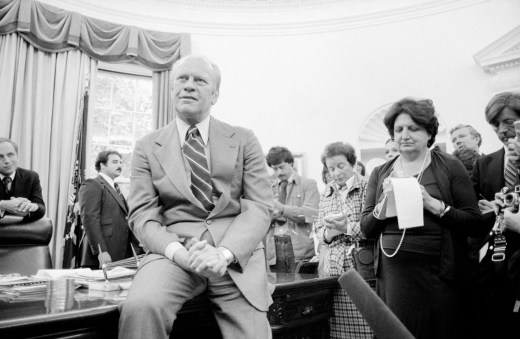
Image: Photo by Marion S. Trikosko (public domain). White House correspondent Helen Thomas (R) with President Gerald Ford and White House Chief of Staff Dick Cheney (far left) during a 1976 White House press conference.

Brand Building: Deliver the Promise

Can we agree that data driven decisions produce the most favorable outcomes? The mega database of customer info compiled by the World Advertising Research Centre of New York City, USA and London, UK has since 1985 provided powerful information to business leaders and enabled them to develop marketing strategies and campaigns that attract the attention prospective customers and persuade them to try a product or service or persuade existing customers to become frequent users, meaning repeat customers, of a product or service. WARC data points to a product’s brand promise as the definitive ingredient of successful marketing and brand-building campaigns. The right brand promise, one that target customers perceive as memorable, valuable and deliverable, has the power to influence the purchasing behavior of your target customers and convert them to buyers. WARC data also indicates that a well-crafted brand promise not only translates into purchases and sales revenue, but also provides a blueprint that can be used to devise successful marketing strategies and campaigns.

In other words, the key to successful brand-building is a clear and specific brand promise that target customers feel can be fulfilled. Such a brand promise has been shown to result in marketing campaigns that positively impact sales revenue and also help to shape effective marketing strategies and campaigns.

Commit to the brand promise

WARC research shows that brand promises that target customers trust and believe will be delivered result in sales of the product or service. Roger L. Martin, a former dean of the Rotman School of Management at the University of Toronto (Canada) and author of A New Way to Think (2022); Jann Martin Schwartz, founder and Senior Global Director at the LinkedIn B2B Institute and Mimi Turner, head of Europe, Middle East, Africa and Latin America operations at the LinkedIn B2B Institute teamed up to more closely examine the question of effective marketing—how can business owners and leaders make it happen?

Martin, Turner and Schwartz sought to understand the active ingredients, if you will, of a marketing campaign—what makes it successful? The team recognized the potential appeal of the brand promise and they began by classifying WARC marketing campaign data according to whether or not a verifiable brand promise was made to customers. They found that of 2,021 campaigns analyzed, 40% (808) included an obvious brand promise and 60% (1,213) did not.

The first noteworthy finding of their research was campaigns that included a verified brand promise were more persuasive than campaigns with no brand promise in nearly every instance. In measures of brand perception, brand preference and purchase intent, 56% of campaigns offering a brand promise reported improvement. Market penetration increased in 45% of brand promise campaigns and market share increased in 27% of brand promise campaigns. The only metric in which a brand promise did not triumph was in generating social media buzz, where 55% of successful marketing campaigns omitted a brand promise.

Anatomy of a brand promise

As noted above, Turner, Schwartz and Martin started out by confirming the presence of a brand promise the the marketing campaigns; next, they categorized the type of brand promise made in campaigns where one was present. Most (89%) brand promises fit their definition of one or more of the following categories:

  • Emotional.

The researchers were surprised that a feel-good brand promise was the most popular category, with 35% assigned to this type. An emotional brand promise communicates the good feelings that will be experienced by customers who buy and use the product or service. A highly successful example of an emotional brand promise is the famous De Beers “A diamond is forever” marketing campaign brand promise that since 1947 has promised that the endurance of a diamond confirms the permanency and satisfaction of the marriage.

  • Functional

In 32% of the research sample, the brand promise stressed the reliability and functionality of the product or service. The FedEx “When it absolutely, positively has to be there overnight” campaign brand promise of 1978 was so powerful that it resulted in the creation of a new verb—to FedEx. The campaign’s brand promise can also be said to convey an emotional brand promise as well: customers don’t have to worry, because it’s FedEx.

  • Enjoyable to buy

Some companies (22%) took the unusual stance of portraying the enjoyment customers will experience as they shop for and buy a product or service. A good example an enjoyment-based brand promise is provided by the paint maker Sherwin-Williams; the company won the 2022 B2B Grand Prix at the prestigious Cannes Film Festival for its campaign based on an artificial intelligence tool that allows customers to create and choose a paint color by using voice to describe it (“a turquoise like the sea in the Maldives,” for example). Designers and architects swooned and prospective customers were convinced.

After the research team categorized the types of brand promises companies tend to make, they examined factors that make a brand promise strongly appealing to customers. Again, three features dominated successful campaigns:

  • Memorable

Surprisingly, making it known that a company is not the top seller in the marketplace can be highly persuasive. “We’re Avis and we try harder” was the slogan of the second-largest car rental company (after Hertz).  Within a year of its launch, Avis went from losing $3.2 million a year to earning $1.2 million a year. Advertising executives called the campaign the most brilliant of the 20th century.

  • Valuable

Customers must want what the brand promise offers, especially when the promise is communicated and perceived as an upgrade from circumstances that are perceived as unsatisfactory or lackluster. Prospective customers must feel that the value is relevant.

Deliverable

A defining characteristic of a brand promise is that it represents a guarantee; the customer must be able to recognize that the brand promise can be fulfilled and the benefits from its fulfillment will meet expectations. For that reason, making a brand promise is a risk. The research team’s assumption was that brand promises made campaigns were generally fulfilled, based on the success of the marketing campaigns studied.

Brand promise becomes strategy

The insight that effective brand building is anchored in a promise to the customer can do more for a company than just help it invest wisely in marketing. The promise can serve as the guiding principle of the marketing strategy, able to inform all promotional activities. A well-crafted and communicated brand promise is your North Star; creating and executing a brand promise is, the foundation of a strategy. From that brand promise/ strategy, you can understand how the company will beat its competitors, the value that customers see in your products and services, understand how the company position itself in the marketplace.

Below, Martin, Schwartz and Turner leave you with a five-step template that your company can use—a go-to-market brand promise development guide that also functions as the foundation of your marketing strategy. Furthermore, the study provides guidance about resources the company should dedicate to the various aspects of brand building, including which information sheds the most light on customer preferences, how to ensure that the most highly preferred aspects of the brand promise are delivered and how to effectively and efficiently communicating your brand promise.

  1. Step One is to understand customers well enough to know what constitutes memorability and value for them.

2. That understanding leads to Step Two, the development of a brand promise, expressed in a simple but compelling and memorable statement.

 3. In Step Three, your company publicly commits to the brand promise by launching the marketing campaign.

4. In Step Four, your company must communicate the brand promise to the target audience: If it isn’t received by way of the right channels, it can’t be effective.

5. Finally, in Step Five your company must fulfill the brand promise, or the promise will be largely worthless.

This cycle provides guidance about the resources the company must dedicate to the various aspects of brand building. How much should it dedicate to understanding customers? How much to designing and issuing a brand promise? How much to broadcasting and communicating it? And how much to ensuring that the key aspects of the brand promise are delivered? As the company repeats the cycle, it learns more about its strategic challenges and how to account for customer and competitor shifts.

The ultimate goal of a marketing campaign should be to go through the brand promise cycle often enough that your customers stop wondering whether you’ll make good on your promises. Once they assume that you will, they purchase out of habit rather than choice.

Thanks for reading,

Kim

Image: Photographed by James D. Love April 2021. William Hunn’s proposal to Brittney Miller included a helicopter ride over their home city of Atlanta, GA and Ms. Miller choosing one of the five engagement rings presented to her when she accepted his offer of marriage.

Managing Your Digital Image

Because the internet plays such a dominant role in life, it’s crucial that you take steps to ensure what’s posted about you is both accurate and positive. Information that appears online and is associated with you—your published content and information that identifies you—is collectively known as your digital identity. This information functions as a virtual introduction to you and tells your online story. Your digital identity is the foundation of your digital image and intended to be an asset. Because what appears online is basically immortal, it’s imperative that your digital image, defined by the published content and other information attached to you and your business entity, is presented in a flattering, trust and confidence-building manner.

It is assumed that prospective clients or employers will search your name and business online before making any meaningful contact to discuss your products or services, so it makes sense to periodically monitor and curate your digital identity to ensure that information is current and represents you well. Your primary objective when editing your info is to corroborate your digital narrative and the talking points you commonly share when meeting with prospective clients or employers. The core function of your digital image and the narrative it communicates is to confirm your credibility and build trust.

According to “Assessing Web3’s Building Blocks,” an article recently published by financial services giant J.P. Morgan that explores digital identity, four factors contribute to the digital identity (listed below). It is incumbent upon you to proactively examine the information included in your digital identity so that your online image and narrative will support your professional experience, education, achievements and, by extension, your personal and business brand.

In addition to ensuring that information is accurate, decide how you want prospects to see you. Remove text and images that don’t reflect your goals or brand. If a friend has posted a not-so-flattering image on a social media site and tagged you, ask him/her to kindly delete it.

  1. Identifiers: Your name, email, addresses and social media handles.
  2. Identity Attributes: Information about you, including educational degrees and employment history.
  3. Reputation: Your online persona, contributions, affiliations and followings.
  4. Digital Collectibles & Assets: Anything you own in digital form, commonly non-fungible tokens.

Always professional

Be mindful to consistently adhere to professional standards whenever communicating electronically, ever aware that text and images posted can remain forever, whether intended for public consumption or personal texts and emails. Be vigilant and safeguard your reputation; avoid committing to writing your uncensored thoughts about potentially sensitive political or religious topics. It may, as well, be wise to avoid expressing your positions on current events. You don’t want to worry about being compromised by a leak and ending up being canceled and in need of expensive and rarely completely effective crisis or reputation management services.

Social media listening and digital presence

It’s important to know what appears in an online search of yourself and it’s a smart idea to periodically consult the major search engines—Google, Bing, AOL, Yahoo and also Yelp, Yellow Pages, or other industry-specific ranking sites that would apply to your entity—and search your name and your business entity to examine the results and assess the quality and reach of your digital presence. To avoid or correct misinformation, take control by claiming and updating an existing listing and, if you like, create a listing for your entity if none appears. Furthermore, make it a practice to regularly conduct a social media audit on yourself, so you can remove problematic content before prospects and competitors see it.

You may also be well-served by investing in a social media listening campaign, a marketing strategy that refers to researching whether positive or negative conversations regarding you, your entity, products and/or services currently appear in social media and other online platforms. Social media listening monitors online channels to detect mentions of your brand, competitive brands and related keywords.

The use of (paid) social media listening tools enables you to gain an accurate understanding of how customers and prospects feel about your products, services and company by discovering what they say on social media channels. Through social listening, you can track all mentions of your brand on social media in real-time and get not only valuable insights into how customers feel about your products or services, but also verify what their pain points are and learn what they’d like to see from you in the future. Social media listening is also an excellent source of competitive intel, as it can monitor competitive brands, trending content and sentiment analysis on topics related to your industry to obtain a comprehensive understanding of what customers and prospects think about your competition.

Social media listening has become a major marketing strategy at national and global brands. It was originally thought that marketers at smaller businesses would not benefit from the practice, mostly because the cost wouldn’t justify the ROI. Yet over the past few years, social media listening is now considered essential and an increasing number of mid-size and small business owners and marketers recognize its value. The biggest motivators are likely greater affordability offered by marketing companies and the explosive growth of online customer engagement fueled by the pandemic shutdown. social media listening data can be used to inform everything from marketing and product strategy to customer service and support, helping you make smarter, data-driven decisions that will have a positive impact on your business’s bottom line. To learn more about social media listening services click: https://www.webfx.com/blog/social-media/social-listening-tools/#:~:text=7%20best%20social%20listening%20tools%20in%202024%201,5.%20Mention%206%206.%20BuzzSumo%207%207.%20Keyhole.

Thanks for reading,

Kim

Image: ©The Bettman Archive. Gloria Swanson (center) as Norma Desmond in Sunset Boulevard (1950). Co-written and directed by Billy Wilder, the film received three Academy Awards, including Best Screenplay/Story.

Confronting the Competition—Do You Scrutinize Or Ignore?

Business owners and leaders expect that competition will be a factor in their marketplace. The most successful among them have learned to not fear competition but instead recognize the hide-in-plain-sight gift that competition reveals—we can make money here! In fact, experienced business owners can even rely on the presence of competitors to help them discover a potentially lucrative customer segment for their line of products and services. But the question remains—when confronting the competition, what course of action would a smart business owner be wise to follow? Does it make more sense to closely monitor the activities of key business rivals or is it smarter to be a contrarian and take scant notice of competitors’ activities?

No matter how you choose to look at it, you will look— competition demands your attention. Even declining to closely follow and respond to competitors is an action that requires both thought and decision-making. Some people say that competition will bring out either your best or your worse. Whether you go head-2-head with an ambitious competitor or avoid a showdown and decide to play to your strengths instead, competition will test your mettle. Information—your company’s Key Performance Indicators, the results of customer surveys, industry sales trends and even the appearance of a social media meme that somehow influences your marketplace—is your best ammunition but how you use that resource is your decision. Let’s look at both possible responses.

The benefits of monitoring the competition

  • You may need to stay on top of things When you plan to carry out a mission-critical initiative—expanding into a niche market or launching a new product or service, for instance—then any key moves made by either direct or indirect competitors will be of keen interest to you. Your launch timetable may need to be adjusted, for example. When there’s a lot on the line, it is imperative that you closely follow all significant competitors, so that you’ll be apprised of any activity that might impact your strategy. Take steps to gather the intel that will allow you to respond decisively to an unexpected challenge.
  • Identify key competitors Conduct enough research to determine your top four or five competitors. Visit their website and social media sites to learn how they communicate with customers and also to refine your thoughts about your organization’s ideal customer. You can also get insight into the depth of customer loyalty, the power of the customer experience they offer and the strength of their brand—all qualities that you may want to incorporate, or avoid, at your company. Keeping an eye on certain competitors can make doing business better for you.
  • Learn from competitors’ mistakes Even if your product or service is poised to rock the marketplace, it’s a good idea to remain humble and prepare for what might go wrong. Business history is filled with examples of products that were expected to become The Next Big Thing and instead, they tanked. Allow yourself to learn from the failures and successes of others (check out competitors that have something in common with your own entity, rather than a multinational). It would be a useful exercise to discover the keywords that propelled them to the top of an internet search (Google Alerts is a great tool for keeping on top of this) and the content they post that attracts sizeable traffic and shares?

Don’t stress out over the competition

It’s often a given that a business owners and Freelancers will to some extent follow the activities of one or more direct and/or indirect competitors. It’s usually considered good business to be somewhat familiar with the solutions that your prospects may have used to resolve their challenges and achieve objectives. With that competitive info in mind, you can create realistic and more effective talking points that can win new customers.

Still, close monitoring of your competition can potentially become too much of a good thing; the strategy may at some point result in diminishing returns. It’s useful to cultivate a certain awareness of what leading competitors are doing and who their clients are but ultimately, the type of products and services you provide, your method of delivering those products and services and the customer service and experience that your company presents are the value that personifies your brand and attracts loyal customers. When your response to the competitive landscape guides you to have confidence in your company’s vision and mission and perfect the delivery of what your customers value, you’ll always be positioned to rule the day. Find inspiration in the pointers below.

  • Optimize use of resources Obsessively researching and tracking competitors requires time and energy that may not produce a convincing return on investment. It is prudent to direct valuable (and often limited) resources to factors and events that you can control, rather than attempting to influence that which is beyond reach—that is, the behavior of your competitors. You may discover that adapting your products and/or services to better anticipate and meet the evolving preferences and priorities of your customers and prospects. As well, seek ways to improve your customer service protocols as you enhance your customer experience.
  • Focus on customers not competitors The majority of your marketing focus should be on your target customer groups. Conduct demographic and purchasing history research to update your basic customer knowledge and use the intel to ensure that your marketing tells the story that resonates with customers and prospects because it addresses what they value, want (or will want) and what they’ll pay to have it. Moreover, researching your target customers inadvertently reveals a lot about competitors and what it takes to stay ahead of them.

Taking a balanced approach

As with so much that we do in life, finding the middle ground and achieving balance proves to be the most pragmatic and successful approach. When you remember what is most important you can then set your priorities, direct your resources and become more efficient and successful when managing your business.

  • Your Brand Is Your Competitive Advantage Monitoring the competition should be the second priority behind promoting your brand and delivering what customers value. For service businesses, brand reputation and positive word-of-mouth are among the most powerful competitive advantages. That’s what drives referrals, good reviews and leads to more sales revenue. That’s what you want!
  • Competitive Intel Analyzing competitor’s is the core of competitive intelligence. While 99 % of your business’s day-to-day should be delegated on your own core business development, monthly or quarterly competitive intelligence sessions might be allotted to investigating what your significant competitors are doing. It will be your choice to either respond in kind, or emphasize your corresponding strengths and attempt to prevail that way.
  • Google Alerts You’ll cast a wide net and achieve operational efficiency in your competitive intel research when you automate the process and let the results come to you—and that means setting up Google Alerts as a component of your quest to monitor competitors. Set up by industry keywords, competitors’ names and business names or branded product or service and let Google serves up nearly all the info you’ll need. In the meantime, you can focus most of your time on nurturing and promoting your brand in ways drive home the core mission and positioning.
  • Segment Your Time 80/20 One way to keep the time you spend on each of these essential business functions that teach you how to better regard both customers and competitors is to recognize that once again, The 80/20 Rule, formally known as the Pareto Principle and developed in 1896, will guide the division of your attention and resources. From a pragmatic perspective, it will make sense to spend 80 % of your time working on expanding your brand and enhancing other aspects of your business—operational, financial, marketing, tech—and 20 % of your time researching competitors. Developing goals and an action plan for competitive intel could be very useful and will encourage you to focus and streamline your research efforts.

Thanks for reading,

Kim

Image: © Cary Chu Photography. Jousters at King Richards Faire in Carver, MA September 17. 2023

First Up for 2024: Get A Tagline!

As you brainstorm ways you might market your business in 2024—content you’ll produce, an updated list of keywords you’ll add to your website and social media, the panels, podcasts and webinars you’d like to appear on, the guerilla marketing campaign that might grow your customer list—you may eventually get the bright idea to create a tagline. A tagline, also known as a company slogan, may not receive priority status as you consider marketing strategies and tactics; however, you know that dozens of powerful taglines have figured prominently in the marketing campaigns of companies they represent, companies that billions of Americans and others have used for decades.

A clever and appealing tagline can become enormously popular and go on to play a role in popular culture, as it encourages current and prospective customers to use and refer the products or services it represents. Developing an effective tagline will strike a personal or even emotional chord in current and prospective customers that moves them to perceive your brand as more than just another provider of goods and services.

The tagline defined

So, what is a tagline? It’s a short, memorable phrase or sentence that sums up the essence of a company brand, products and/or services. A good tagline succinctly distills and communicates what the brand aspires to be known for and what differentiates it from competitors. It is influenced by the company vision and/or mission statement, as well as the value proposition and brand reputation but rather than presenting a lengthy and ponderous statement to describe the company, the tagline wraps those serious intentions in one brief and catchy phrase that keeps the company at top-of-mind mind for future buying decisions by reminding customers and prospects why they should choose to do business there.

A tagline can even become synonymous with the brand. Float like a butterfly, sting like a bee elegantly captured the strength, athletic prowess and engaging personality of boxer Muhammed Ali (ne Cassius Clay, 1942-2016) and stands as a brilliant example of an ideal tagline.

What makes a good tagline?

A tagline can be a powerful marketing tool and although it will most likely take time to create the right one for your entity, it could be well worth the effort. It would be best to use your tagline to identify what your business does and highlight its benefits to current and prospective customers. Why not create a rough draft and keep the following in mind as you brainstorm possibilities?

  • Brief: Your tagline doesn’t need to cover every aspect of the business or explain your company values. It should be brief, unambiguous in describing the essence of the business, likeable and easy to remember.
  • Clear: Creativity makes your tagline unique, but you don’t want to be so creative that the intended audience misses the point. The wording must be clear, concise and immediately understood.
  • Memorable: Since the best taglines have but a few words, make every word count. Your tagline should be memorable for its creativity, uniqueness, or other positive aspect that inclines customers and prospects to remember and like it.
  • Reps the brand: The tagline should communicate the core of the brand identity. It should succinctly convey the brand image and voice, whether that’s upscale and formal or frugal and casual.
  • Customer-centric: While the tagline refers to the company, its focus should be on the customer and what the company can do for them, for example, save time and/or money, be trustworthy and dependable, give great service, or be convenient. “Have it your way.” (Burger King)
  • Relatable: A successful tagline has a personal appeal and speaks to the customer on an emotional level as it expresses the benefits of what the company’s products and/or services can do for them.

Short and simple

An effective tagline is direct and to the point, brief, uncomplicated, engaging and easily remembered. Aim to use no more than 10 words. A good tagline rolls off the tongue, is properly descriptive of the company’s purpose or benefits and is easy to remember. A useful way to test your tagline in development is to ask your friends, family or even new acquaintances and ask whether they understand what your company does and their overall impression of its message. “I ❤️NY” (Empire State Development Services)

Relevant to customers and prospects

The best taglines are about the customer, not about the company. A tagline focused on your company could possibly cause customers to wonder how it relates to them. By focusing on current and would-be customers, you’ll more effectively promote brand recognition and loyalty. Be sure to incorporate your company’s brand voice and persona. Avoid making promises in their tagline, which will put the focus on the company, and emphasize benefits instead.Breakfast of champions” (Wheaties breakfast cereal)

Make your tagline match your brand

A tagline, like a logo, helps to define your brand. Ensure that the style, brand voice and other elements of your tagline match the style, voice and other aspects of your logo design. Because your tagline will be part of your overall branding, you’ll want the tagline to reflect your company’s personality. “Where’s the beef?” (Wendy’s)

Who’s your competition?

Knowing your competition is an important consideration of effective marketing. Study the marketing tactics used by your most prominent direct competitors and examine their taglines for both inspiration and to understand what not to do. Use the marketing of competitors to identify the elements of your company that differentiate it from the three or four who are closest. This could refer to the customer service, customer experience, and/or the comprehensiveness of your products and services (e.g., one-stop shopping) that differentiates and would be advantageous to convey in your tagline. Ensure your tagline sounds distinct from your competitors and larger brands around the country that your customers are likely to know as you communicate your competitive advantage and value proposition. “We try harder” (Avis Car Rental)

How you help customers

Think about how your company or products and services help your customers. How do your solutions solve or avoid problems, help achieve objectives, or make life easier and more enjoyable? Make a list of the ways you provide tangible and intangible benefits to customers, as well as any statements your business makes relating to them.

If your business is growing, consider your entire range of services or products. What value are you delivering to your customers? Think about what your products mean to people in their day-to-day lives, and list all the positive adjectives you can think of that relate to the core promise. “It keeps going and going and going…” (Energizer batteries)

Positive vibe

A considerable body of research shows that negative statements generally don’t sell well, whereas positive messages are conducive to brand building over the long term. Because taglines reflect the brand over time, keep your tagline positive and focused on benefits that customers seek out, depend on and appreciate. Avoid a vague reference to the good things that your company provides and make it unabashedly specific, descriptive of what drives your customers do business with you. “Yes we can” (2008 Barack Obama presidential campaign)

Thanks for reading,

Kim

“Upload Photo Here” B2B Gets Personal

Creating B2B marketing content that brings in leads and builds your brand is a real challenge! Bound by (real or imagined) expectations to appear “business-like,” B2B content creators are known to merely deliver the info that decision-makers need—the what, why, when, by whom and how a product or service is used, topped off with a serviceable call-to-action. The particulars will be in there but the end result is usually content that’s dry and impersonal. It doesn’t reach out and touch, it checks off the boxes.

If developing B2B marketing content is your responsibility, keep in mind that the decision-makers you aspire to influence are actually human. They laugh, they get bored, get frustrated, curious and (sometimes) inspired. They are busy, if not overwhelmed, and it takes something special to get their attention and win their trust. Your target audience responds best to content that is fresh, unexpected and shows that you understand what’s important to them.

Maybe you’re ahead of me and already have a guerilla marketing campaign in the works, as was discussed in last week’s post? But once the guerilla sizzle has grabbed audience attention, back it up and bring the steak. Your next move is to convert the buzz into confidence and trust that leads to loyal relationships. You achieve that by knowing your clients and using that knowledge to develop content and other means of communication that demonstrates you have their priorities and needs on your front burner. Below are factors to keep in mind and actions you may decide to take as you re-examine your B2B marketing strategy and prepare your organization for the start of a new year.

Personalized customer profiles

To figure out how to sell your products and/or services, you must know the goals and priorities of your prospects and have an idea of what might worry them, too. Accurate and updated client information is among your most valuable resources; data can be collected in quick-and-easy, nonthreatening ways, on your website or social media platforms. In exchange for a prospect’s name, contact info, business name and category, you may offer free 15 minute video consultations, free copies of your case study, or a free link to the webinar on which you made a guest appearance info. Inbound marketing tactics, spotlighted by a tempting call-to-action, not only moves prospects through the sales funnel, it also functions as a portal for client info.

Beyond basic contact info, a review of previous client or prospect interactions with your company will reveal more detailed info, including the purchasing history of current and lapsed clients, their buying preferences, concerns and the amount they spend. Get to know your target audience by understanding their unique preferences and help yourself to retain clients, make more sales and reduce churn rate. Clients and prospects are what a mailing list is all about; it’s members represent potential sales revenue for your company. Consider the following questions as you build customer profiles.

  • Who is a window shopper and who is researching with a goal of buying? Have you designed a “try before you buy” option available to undecideds, or is it effective to initiate a face2face or video meeting to show undecideds how your solution will solve problems and achieve objectives that matter to them?
  • Who are they buying for? Is the prospect an end-user and stakeholder, who influences the purchasing decision, or is the decision-maker, who may not directly use the product or service, doing the shopping?
  • After they complete a purchase, what kind of follow-up support, including info on the optimal use of the product or implementation of a service, would the new client appreciate?

Purpose-driven content

Companies are re-evaluating how they deliver their marketing messages and many now feel that creating purpose-driven marketing content is integral to being seen as relevant to potential buyers. The more you know about the goals and buying behaviors of your prospects, the more successful you’ll become in selling to them. You want information that guides you to describe, price, deliver and provide after-sale support for your product or service in words and actions that are quickly understood and strike the right chords with the target audience and in so doing, earn their trust and confidence. Consider the three phases of the buyer’s journey:

  • Discovery phase: What do prospects see when they conduct a Google search of your entity? What links appear in the results and what story is told about your products/ services and brand?
  • Consideration phase: How is your company represented when a prospect or client engages with your social media and other content? What platform links, articles, images and websites appear?
  • Conversion phase: How does your brand show up when a client transacts business on your website? What action do you want your client to take beyond making a one-time purchase?

Thanks for reading,

Kim

Image: © The Richard Avedon Foundation. Supermodel China Machado (born Noelie da Souza,1929-2016), photographed by Richard Avedon in New York, NY for the November 6, 1958 cover of Time Magazine’s 100 Women of the Year issue.

Guerilla Marketing Playbook

Have your marketing strategies and tactics become stale and predictable? Do you tell yourself not to rock the boat because what you’re doing seems to be OK, even though you get a nagging “been there, done that” feeling when you click and post marketing content? Listen to your inner voice! It’s telling you that outdated marketing tactics will not deliver the results your organization needs. While there’s no shame if the menu at your restaurant features a couple of grandma’s recipes from World War II because customers love them, the ways you communicate with those nostalgic customers must be in step with the here and now. You may have gotten comfortable with the marketing tactics you’ve been using for the past few years and your customers may be comfortable, too—and that’s exactly why it’s time to stir the pot and shake things up!

Even before the pandemic shutdown pulled the rug out from under us, companies large and small, local and global, B2B and B2C, have experienced intense competition, mixed with political, economic and social instability. Forbes Magazine recently introduced the acronym VUCA—Volatile, Uncertain, Complex, Ambiguous—to describe the current economic landscape. Freelancers and small business owners are especially vulnerable to unstable circumstances. Well-chosen marketing strategies, executed proactively, are integral to your company’s survival.

Guerilla marketing playbook

Like grandma’s century old recipes that are still beloved by many, another 20th century throwback that can be adapted to the 21st is Guerilla Marketing, a term coined by the business writer and advertising executive Jay Conrad Levinson in 1984. Guerilla Marketing borrows the mindset of guerrilla warfare, the Spanish term for a band of soldiers who wage war not as part of the regular troops but as an independent unit that makes surprise raids behind enemy lines and attacks larger, better-funded forces.

Guerilla marketing campaigns use innovative, unconventional promotional marketing tactics whose goal is to shock, surprise and ultimately delight the audience. When at their best, guerilla marketing campaigns are memorable and known to drive (good) publicity and brand awareness. Guerilla-style campaigns are often relatively low-cost and have been used successfully by Freelancers and neighborhood businesses, as well as multinational conglomerates. Below are suggestions for guerilla marketing tactics you may want to consider:

  • Grassroots Marketing A marketing approach that relies on modest resources. Companies that utilize grassroots marketing strategies typically rely on frugal tactics that depend on people’s time. Recruiting friends and family to hand out flyers that announce the opening of a new business in the neighborhood is a classic example of this type of guerilla marketing. The technique is marketing at its most simplistic.
  • Viral or Buzz Marketing A strategy based partly or entirely on word-of-mouth publicity. The word spreads by way of social media, as this guerilla tactic relies on one user sharing a company’s content with those in his/her social network. Instead of trying to generate excitement by itself, viral/ buzz guerrilla marketing relies on enthusiastic fans or customers to organically raise awareness of a product or service, entertainer or business.
  • Projection advertising This guerilla tactic refers to the big-screen projection of large, captivating advertising images onto the sides of buildings or other walls. This style of guerrilla marketing allows companies to personalize promotions, especially for events. Instead of presenting a more permanent form of advertising that requires capital investments or long-term agreements, projection advertising is highly visible, unconventional and unexpected and may be less costly than marketing techniques that would otherwise be used.
  • Ambush Marketing Large sporting events and concerts are favorite locations for unauthorized guerilla marketing “ambush” campaigns. Companies that use this strategy, also known as coat-tail marketing, and are sometimes assumed to be official event sponsors although they are not. Popular within event sponsorships, ambush marketing may be employed as a guerrilla marketing strategy by companies looking to save money as they capitalize on a well-attended event that is occurring.

Solutions that matter 

Regardless of how you shape your company’s marketing campaigns, it’s essential that you understand what customers are looking to achieve or resolve when they do business with you (or others like you). With the knowledge of what customers prioritize and value, you’ll know what creates demand—and that means half of your marketing job is done. You can then create a theme with talking points and images that communicate the solution your audience wants. If you can also place your marketing text and images in an unexpected location (maybe outdoors) that your audience frequents, and keep the costs down as you do, you will have realized the essence of guerilla marketing.

What’s in it for the customer?

Unexpected turns of phrase or doubles-entendres may stroke your sense of creativity, but remember that the purpose of marketing messages, whether you go guerilla or conventional, is to inform (and reassure and reinforce) your audience that your product or service will solve a problem and achieve the objective, whether you’re selling gardening gloves or cashmere sweaters. Your text must succinctly, clearly and perhaps also cleverly, answer the question that customers and prospects silently ask—“What’s in it for me if I buy this”?

Make sure they get the message.

It’s been said that one picture is worth 1,000 words and there’s no doubt that the image(s) used in your campaign can get attention—but don’t let images overwhelm the message you intend to communicate. All marketing thrives on creativity, but don’t allow the artwork to over-shadow the product. The marketer’s goal is to persuade the audience to feel that the product or service being showcased so interesting that s/he desires to buy it.

 Thanks for reading,

Kim

Image: The Richard Oscar Burgess House in Providence, RI is best known for its head-turning design created in 1984 by The Armory Revival Company. By leaving a section of the house only partially painted and attaching large simulations of Crayola crayons on the wall, the house is both a marvelous spoof of the obsession about paint color that not infrequently preoccupies new owners of Victorian-era homes and a celebration of mid-1980s urban revitalization.