Getting PR: On-Message Expert Source

Not every Freelancer enjoys selling, but every Freelancer knows that selling is the name of the game. You may have a kickin’ inbound marketing strategy that keeps your pipeline filled with good prospects but if you want to close deals, you’ll have to sell. It’s a fact of life—-Freelancers and all business owners are more or less forever in selling mode, always on and ready to promote the brand.

Then again, there are times when it pays to shut off your sales spiel because it won’t work. Social events are the usual no-fly zone for a sales pitch but there is another, less obvious, scenario where a sales pitch is a faux-pas—when speaking with a journalist. Surprise! It may feel counterintuitive, but it is a fact. When you’re lucky enough to win the PR jackpot that a conversation with a journalist brings, anything beyond your short form elevator pitch, presented as self-introduction, is inappropriate. What sounds like a sales pitch is a turn-off to reporters. Here’s why.

One, the journalist is not your prospect. S/he is not interested in buying your product or service. Resist the temptation to sell someone. Two, it’s not the journalist’s job to sell your product or service, so why would you waste time explaining features and benefits and how your offerings are so much better than the competition’s? Don’t go there.

A journalist’s purpose in life is to tell stories that interest and inform readers. To do that, they must identify compelling topics. They also need facts and expert opinions to convince readers of the relevance of the stories. When an invitation to speak with a journalist arrives, a media savvy Freelancer knows to present yourself as a successful entrepreneur and expert, a qualified source who will be on-message and make the reporter look good.

Be the expert source

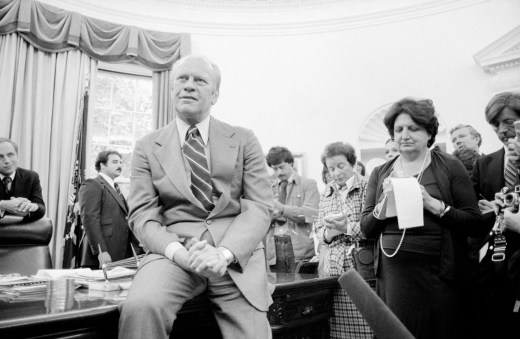
When a journalist puts out a request for contributors on whatever topic, as is done at Help A Reporter Out http:// http://HelpAReporter.com , it’s your chance to pitch yourself first and foremost as an industry expert. The reporter is searching for a source, a credible expert who can produce a few good bullet points on the topic before deadline. Your products or services take a backseat.

If you are chosen for follow-up, prepare ahead of your interview and be ready with three or four succinct and punchy, memorable quotes. If one or more of your quotes is included in the article, even if the publication is small and local, you’ll reap the benefits that earned media, PR, can bring—-credibility, trust and exposure to new prospects. That’s a lot more impactful than any sales pitch you can make.

If the reporter has in mind a profile that spotlights one or more entrepreneurs, discussion of your product or service may be integral to the story. If that’s the case, avoid the technical, in-the-weeds aspects and instead, focus on the benefits and value-added that clients receive from your product or service. Use the five W’s of journalism to create bullet points for a product or service overview:

  • Who does your product or service help?
  • What is unique about your product or service?
  • Why should readers care?
  • Where is this being used?
  • When should someone use your product?

Credentials have clout

Before reaching out, a reporter in search of a good source will probably tour your social media accounts to see the content you’ve posted. If you’ve built up a significant following, so much the better, but the size of your following may not be the most important factor when evaluating a potential expert source.

Journalists trust academic and professional credentials and that trust can outweigh even a sizable social media following. While social media might help journalists discover you, they’re looking for someone who can truly educate their audience. Emphasize your degrees, certifications, experience and awards to establish credibility when introducing yourself as an expert source to the media. If your social media following is impressive, by all mean include it.

  • Education (PhD., MD, CPA, MBA)
  • Professional (university professor, partner at a law firm)
  • Achievements (published a book, awards and citations received)
  • Media exposure (copies of articles in which you’ve been quoted)

Thanks for reading,

Kim

Image: Ukrainian President Volodymyr Zelensky (R) is in uniform and on-message at a joint press conference with Canadian Prime Minister Justin Trudeau in Kyiv.

Which Marketing Channels Are Doing the Job Now?

The platforms and media outlets you use to transmit promotional messages to your target audience, also known as marketing channels, play a role in your marketing campaigns that is nearly as influential as the messages they carry. Each channel has a persona and target audience of its own and appeals to that demographic in a unique way. It should be no surprise that certain channels are more suitable for certain types of content, or are more popular in certain demographics and are less so in others. When you have a story to tell, it’s critical that the marketing channels used are appropriate for the content and appeal to your customers. You need to know which channels deliver the desired ROI, so you’ll know where to focus your resources and attention.

It’s important to customize marketing activity to resonate with your target audience and brand. It’s also incumbent upon marketers to understand that it is almost inevitable that at some point, fluctuations in the global or national zeitgeist might impact customer perceptions of the marketing channels you typically use. So much of marketing is about being in the moment and able to read the mood of your customers and prospects.

As we learned early in 2020-2021, a health crisis, political instability, wars and the resulting economic fallout can cause a seismic shift in customer priorities, budgets and preferences. In a 2022 survey of over 1,200 marketers conducted by the Cambridge, MA inbound marketing company Hubspot, more than 80% of respondents said that marketing has changed more in the last three years than in the last 50 years. Effective marketing means that Freelancers and their corporate counterparts must be vigilant and willing to revisit the matter of which marketing channels win the loyalty and trust of customers in the here and now and ensure that your channel strategy fits your audience.

The Hubspot survey reported that the leading channels used by B2B marketers are social media platforms, company websites, blogs and email marketing and the trend is expected to continue throughout 2023. Also, 61% of companies plan to increase the number of marketing channels of all kinds and they anticipate that the necessary increases of time and money will be budgeted.

Social media use is expanding

The HubSpot survey also found that 45% of B2B companies and 61.5% of B2C companies use social media channels to promote products and services. That customers appreciate the convenience of social messaging allows marketers to engage in real time with customers to answer questions, resolve customer service issues and provide insightful feedback about the product or service. In 2022, more than half of U.S. adults purchased something through a social media channel, according to a 2023 survey of 750 marketers conducted by Sprout Social, the Chicago, IL based social media management platform, and 98% expected to use that channel to make another purchase in the future.

Investing in relationships with customers directly impacts business revenue and strengthens customer loyalty. When customers feel connected to brands, 57% will increase spending with that brand and 76% will buy from that brand over a competitor. B2C brands are more likely to sell products and services on social channels (58%) compared to B2B brands (37%). Still, Sprout Social reported that 89% of B2B marketers rely on LinkedIn to generate leads.

When you reevaluate the validity of your usual marketing channels, whether you’re thinking it might be the time to either add or to subtract, you’ll improve your calculus by addressing the following questions:

  • Do the new marketing channels align from a brand and customer experience perspective?
  • Do the touch points on the new and original channels align around and emphasize the same benefits and brand image?
  • How will new marketing channels attract new customers, lure customers away from competitors, or persuade current customers to do more business with you?
  • Do customers understand and appreciate the value they acquire by using new channels?

Thanks for reading,

Kim

Image: Italian Air Force fighter planes in an airshow celebrating Frecce Tricolori in Rivolto, Italy on September 11 & 12, 2010

Customer Loyalty = Competitive Advantage

No doubt about it, being in business is about the customers and nearly all of your important functions as a business leader are customer-driven. Customers are the fuel that sustains your enterprise and they are worth their weight in gold. In exchange for just a few basic necessities that your organization provides—high-quality products and services, pleasant and efficient service end to end and prompt follow-up to whatever questions or problems, chief among them—your customers will be pleased. They’ll reward you by doing more business with you.

Some will become your cheerleaders and happily spread the good news of their positive experience with you. They’ll write glowing reviews and award your company five stars. Not only will they give you repeat business, they’ll also refer their colleagues and grow your list of customers. Good customers are the foundation of a successful enterprise and in particular for small and midsize businesses they are one of your most impactful competitive advantages.

Now, you may have built a strong brand that within your target market commands admirable brand awareness, but it is undeniable that small and midsize entities do not have the powerful brand influence wielded by even regional companies, let alone the multinationals. Furthermore, in the big picture, the products and services offered by Freelancers and other small entities are seldom perceived as unique. For the most part, small and midsize companies are all-too-often uncomfortably close to being considered a mere commodity and more or less interchangeable with competitors. Ouch.

So how can Freelancers and other owner – operators of small entities distinguish themselves and get positioned to thrive in an increasingly globalized marketplace? Fortunately, one of the most attainable and effective competitive advantages you can bring to your brand to rescue it from the taint of mediocrity is the loyalty of your customers. You nurture and sustain that powerful competitive advantage by the customer experience that you (and your team) present. When your organization gives the gift of a first-rate customer experience to those who do business with you, that happy feeling will become the defining memory that customers have of your organization.

A strategy, not an afterthought

You can showcase as competitive advantages any attributes or resources that your business holds, but the particulars of the customer service and experience your organization offers are personally and uniquely yours. What you do, how you do it and how your customers feel as a result will distinguish you from all competitors.

The customer experience you present is an extension of your company values and culture. When your guiding principles direct you to place the customer at the center of how you interpret best practices, you’ll incorporate that perspective into your business decisions, strategic directions and every customer touch-point. The customer service training you provide to customer-facing employees will reflect your standards of customer service best practices. The desired result is a rewarding customer experience that encourages customer loyalty and customer retention.

Products and services that consistently deliver

It is a given that the quality of your products and services is the leading factor in creating customer loyalty. Excellence is the expectation and customers will quickly abandon your organization if its solutions do not meet that standard.

If for some reason a product or service fails (as the customer defines it), your best defense is to respond quickly, deliver an apology that expresses genuine empathy for the inconvenience and provide a well-delivered correction that exceeds customer expectations.

Surprise and delight

It is always good business to thank your customers for their business and show them that you appreciate their confidence in you and your organization. That they choose to do business with you is the most sincere compliment. A thoughtful gesture costs very little and has the power to repay you many times over with customer loyalty, retention and referrals made.

Providing perks or VIP status is one way you can show gratitude to your best customers and it’s known to encourage repeat purchases and create enthusiastic brand advocates. Depending on your product or service line, consider inviting certain customers to have pre-release access to a new product or service. You might offer those customers a small discount in exchange for their inclusion in a case study that you’ll publish or appearing in a social media campaign.

Another way to show gratitude to customers is by sending a hand written note to thank them for their business. A short, simply written thank you note is an elegant and powerful way to express your appreciation for the opportunity to work with them. At the December holidays, remember to send a (secular) holiday card to customers you’ve worked with over the past four or five years.

The little extras you provide are an expression of your guiding principles, an extension of the memorable customer experience that your organization presents and a welcome change of pace from the digital realm, where most business interactions now take place.

Enable community

When your company’s guiding principles point you toward a customer engagement focus that is centered on customers, you won’t limit yourself to one-way broadcasting of company updates. Instead, you’ll spark conversations that have the potential to inspire your customers and motivate them to interact with each other, along with you and your customer-facing employees. Engagement means that customers feel that they’re part of a community, one that welcomes them with bonding activities that can include interesting conversations, receiving cards and personal notes, or gaining access to special product or service offerings.

Because your customers will find it most convenient to have these types of conversations online, take care to participate in social media platforms that first, make this type of communication accessible in terms of text and images, as does Instagram, Facebook, or TikTok and second, that your platform is one that customers are comfortable using.

When you take steps to build and nurture a satisfying and memorable customer experience, you can be certain that your brand will be recognized and appreciated by customers and prospects alike, who will be delighted to do business with your entity again again. Their loyalty will become one of your most powerful competitive advantages.

Thanks for reading,

Kim

Getting Serious About Social Media

What criteria guide your approach to social media? With few exceptions, your marketing strategy can’t be called comprehensive unless at least one social media platform is in the mix. It’s a highly effective tool and not only that— using social media doesn’t cost money (it does require time) and it has the power to amplify your traditional marketing tactics by re-posting text, audio and image content onto your chosen platforms. But like all marketing initiatives, social media requires thought and planning. To make success possible you must develop a credible strategy, starting with choosing (maybe three or four?) objectives you’d like to achieve.

Along with your objectives, you’ll also want to be mindful that certain audiences have an affinity for certain platforms and certain platforms are more suitable for some types of products or services and not so much for others. Moreover, it makes sense to assess the amount of time you can reasonably expect to devote to your social media updates, because fresh and relevant content are key. It will be much more favorable to establish a presence on one or two platforms and make it all pop with engaging and timely content instead of wading into multiple platforms on which you post only sporadically.

Once you launch your campaign, it’s advisable to continually monitor your performance analytics and watch for feedback. Be certain to respond quickly to customer service needs or comments and second, you want to measure visitor response to your content. Both metrics can inform your content topics, plus encourage customer engagement and feelings of loyalty. Focus your efforts where they’ll reap the greatest return on investment (ROI).

Finally, social media audiences on every platform are viewing content creators with increasing skepticism. Content consumers now demand authenticity from the influencers and brands they follow. Be genuine in your approach to social media (and all) marketing so that you’ll earn the trust, respect, loyalty—and business!— of your target audience. Below are common drivers of B2B social media objectives:

  • Website traffic
  • Brand awareness
  • Lead generation
  • PR mentions

Strategy

Devise an overall strategy that keeps your social media presence on-message and active. Establish your brand on platforms whose audience demographics and content style best showcases the products or services you promote. Every few months, you might want to color outside the lines, maybe with a fun collaboration with a complementary (and never competing) brand, a contest, or a (non-controversial) social or health awareness initiative that can stimulate positive customer engagement and even expand your audience.

Brand identity

A strong brand identity provides a consistent, dependable and ultimately reassuring experience for your social media audience. By establishing a recognizable brand identity, (you and) your business will be positioned to cultivate a loyal following that remains engaged across your selected platforms. Your unique brand voice, image style and relatable, consistent messaging across all social media platforms will enhance your authenticity and build the respect and trust of your audience.

Relevant content

Focus on creating meaningful and high quality content that resonates with your target audience. Authentic and relevant content helps the audience feel connected to your brand, encouraging engagement and promoting brand loyalty. 

Personal communication

Facilitating direct communication between you/ the brand and your target audience is the great advantage of social media. The communication is personal and unfiltered, allowing you to learn a great deal about how those who do business with you feel about doing business with you. Social media helps you learn fast about what works and what doesn’t, giving you the luxury of responding personally and quickly and making a timely course correction if necessary.

Focus On Your Audience/ Build A Community

Social media isn’t just a method that lets you speak to your audience in a monologue that promotes your business. It’s about building a community. When you introduce practices that enable a community—meaningful content, regular updates, responding to questions, complaints and compliments and keeping it authentic (real) you will over time build and sustain an engaged audience that’s truly interested in your brand (and you).

Thanks for reading,

Kim

Image: Jean Arthur in Easy Living, written by Preston Sturges. Paramount Pictures (1937)

Survey Results: The B2B Content Your Customers Want

Netline, a lead generation company headquartered in Campbell, CA whose client list includes software giant Cisco Systems and other enterprise companies, has published its seventh annual landmark survey that investigates the link between B2B marketing content and the intent to make a purchase. Based on data collected from 38,000 B2B professionals during 2022 and published in March 2023, the survey (again) confirms that those who purchase B2B products and services rely on marketing content to provide information that will successfully guide them through the buyer’s journey.

The survey authors noted that in the seven years since Netline has published the report, they’ve learned that “content consumption is directly correlated with future investment. [It] is directly driving investments within the next 12 months. The more your audience consumes, the more likely they are to be closing in on a purchase decision.” Furthermore, it was suggested that B2B businesses “take a look at their downloads” to discover which content has been viewed and analyze the impact that specific content has on purchasing.

Professionals in the following fields were the top 10 viewers of B2B content in 2022:

  • Information Technology
  • C-suite execs
  • Human Resources
  • Business (general)
  • Engineering
  • Education
  • Finance/Accounting
  • Marketing
  • Sales
  • Medical/ Health

Size matters

C-Suite execs at small and mid-sized businesses, that is, organizations with 100 or fewer employees, consumed 96% more marketing content in 2022 as compared to 2021. Conversely, C-Suite execs at companies employing 100 -1,000 and 1,000+ saw declines in content marketing readership of -23.5% and -56.7%, respectively. The question was not specifically asked, but survey administrators theorize that because inflation and economic instability can impact small businesses earlier and more severely than national and multinational companies, leaders and owners of smaller entities are taking action to improve the ROI of major purchasing decisions as a way to shield their organization from adverse financial conditions. Making good use of relevant marketing content seems to be part of their strategy.

The top 10 most popular B2B content topics in 2022:

  • Information Technology
  • Marketing
  • Human Resources
  • Finance
  • Operations
  • Management
  • Sales
  • Manufacturing
  • Healthcare & Medical
  • Engineering

B2B content consumption predicts buying decisions

The confidence that B2B buyers place in marketing content has influenced its popularity and likely fueled the 18.8% year-over-year surge in readership that occurred in 2022. Some formats are considered more impactful than others by decision-makers and are therefore more closely linked to the buying decision. For example, readership of white papers is correlated with an upcoming B2B purchase. Readers of white papers consider the format to be the content marketing version of scientific studies. By contrast, e-books are less rigorous and more utilitarian, designed to present actionable information about products and services as transparently as possible.

C-suite executives are 20.7% more likely to request white papers than the overall population of B2B professionals and white paper consumption increased 21% in 2022. White papers are usually regarded a bottom-of-funnel resource and closely related to the purchasing decision, while e-books are closer to the top-of-funnel and considered a more utilitarian format that has many uses, from a perk awarded in exchange for obtaining a prospect’s email address (list building) to an example of thought leadership.

Registering for a webinar is another clear indicator of a prospect’s intent to purchase. Also, as you’d probably guess, discussing your product or service with C-Suite execs, Senior or Executive VPs, or the company owner predicts a purchase decision within 3 months.

  • Pre-recorded (on-demand) webinars 50% more likely to buy within 6 months than consumers of other content
  • Live webinars 25.4 % more likely to buy within 3 months than consumers of other content
  • E-books 10.4% more likely to buy within 3 months than consumers of other content
  • Software trials, best practices guides, executive briefs and how-to guides also associated with a purchase within 3 months

No one knows what the economic picture will look like at the end of 2023. Despite the uncertainty, the survey demonstrates that there are still plenty of B2B professionals who will be looking to pay for a solution that best suits their needs. When Freelancers and other business owners create and post content marketing information, in particular formats that signal an imminent buying decision, they’ll be in a much more favorable position to engage with the right prospects at the right times.

A welcome bright spot revealed by the survey is that 33.4% of survey respondents planned to make a B2B purchase decisions within the next 12 months, representing a year-over-year increase of 8.8%. In other words, statistically speaking, there is money to be made this year. While several worrisome factors cloud the economic predictions for 2023, and the survey data was collected in 2022, a cautiously optimistic view of the survey response appears to be reasonable.

Not so much

On a final note, newsletters remain a viable content marketing format. While not in the top 10 of most popular content marketing resources, survey respondents increased their subscriptions to newsletters by an eye-popping 307.2% year- over-year in 2022. Other top-of-funnel resources that are not closely linked to an immediate purchase are:

  • Courses
  • Tips and tricks
  • Reports
  • Guides
  • Checklists
  • Trend reports
  • Cheat sheets

Here’s the link to the full report: https://img.netline.com/images/netline/assets/2023-Content-Consumption-Demand-Report-NetLine-Final.pdf

Thanks for reading,

Kim

A Buyer Persona is Your Best Customer Intel

Because you understand that good outcomes derive from good decisions and good decisions flow from good information, I wonder if you’ve thought of tapping the customer data you already have and using it to create a most useful document known as a Buyer Persona? You’re likely familiar with the term, but do you know why they’re useful, how and why a Buyer Persona helps your business?

In short, a Buyer Persona is the ultimate customer profile. It describes a company’s ideal customers and the motivations that bring those customers to your door. The Buyer Persona confirms the business solutions your customers and prospects seek, the goals they want to achieve and problems they want to solve or avoid when they contact your company. Smart marketers recognize that a Buyer Persona increases the effectiveness of their marketing strategies, improves the ability to develop and nurture brand loyalty and can positively impact sales revenue.

The simple and elegant logic behind the Buyer Persona is that it’s much easier to promote and sell your products and services and build a favorable brand when there’s a handy reference point to remind you of who the customer is and what s/he wants to achieve when doing business with you. Utilizing your in-house data to create a Buyer Persona is an act of resourcefulness. You create the profile by recycling and recombining data you already own to produce a new resource that you can use. A Buyer Persona is the delicious meal you can make from what’s already in the fridge.

Who Buys From You?

The better you know target customers, the easier it becomes to reach them. To market and sell effectively, it’s best to learn as much as possible about your prospects and structure marketing campaigns that directly speak to them. Collecting customer information and then distilling it to formulate a Buyer Persona will be useful in numerous ways, from the marketing strategies you devise to the marketing channels you choose, the content you create, the blog or newsletter topics you publish, the case studies you write, to the products and services your company offers.

The profile should contain information that reinforces the understanding of your ideal customer’s priorities, pain points and buying patterns. Another benefit is that the Buyer Persona keeps you focused on addressing customer priorities instead of your own. The Buyer Persona for your typical customer will include his/her job title, education level, age range, industry, desired outcomes for using your category of products and/or services, goals, fears, budget range and potential for repeat business.

Also include in the profile experiences that stood out when performing project work, insights you’ve learned when negotiating a sale, info from customer invoices and other data that adds to the understanding of your ideal customer. Other helpful details are the job title of the usual decision-maker for the sale, the end user of the product or service, the average length of the sales cycle and the busy and slow seasons.

For many companies, the sales process remains the same regardless of the customer’s industry. The industries are different, but they approach finding and evaluating B2B vendors in the same way. Keep in mind the buying style of your customers as you compile and organize the information to include in the Buyer Persona. It may, or may not, make sense to to align with job titles, rather than industries, when addressing your marketing approach and sales process.

Most frequent goals or problems

You want a clear understanding of the motivations of prospective customers when they find your website and accept your call-to-action to, for example, read your blog, listen to a webinar replay, or read a case study. When you’ve documented the usual customer pain points, goals and/or motivations, you can address them. Create a Buyer Persona that will guide your website messages, marketing content, upselling offers and after-sales support. The idea is to consistently showcase your company’s expertise in providing the solutions that target customers need, always demonstrating how your product or service can solve problems.

Top level priorities

The easiest way to guarantee a sale is when your prospect is shopping for a solution that’s needed to reach a time-sensitive goal or resolve a big problem. However, there will be members of your target audience that have a problem, but are not necessarily ready to pay for the solution. As you collect data for the Buyer Persona, it’s useful to consider the prospect’s organizational imperatives and the decision-maker’s take on circumstances that would make him/ her willing, or unwilling, to allocate the resources necessary to do business.

The subtle art of qualifying prospects, e.g., recognizing window shoppers from serious buyers or learning what may worry your prospect about moving forward with your product or service, might be addressed with a list of three or four questions that can be asked when a prospect requests a consultation to obtain more information about your solutions.

Cultivating a powerful ally who is an end-user of the product or service and/or developing a relationship with the decision- maker can also move a sale along but ultimately, timing, urgency and budget are the best enablers of a sale and they are factors beyond your control.

Most common objections

Are there concerns that make prospective buyers think your solutions are not the best fit for their problem or goal? Customers may become reluctant to buy as a result of discouraging feedback from a colleague or the memory of a negative experience with a similar solution.

Diplomatically move to uncover the source of that hesitation, which may be based on a misunderstanding of some sort. Way back in the 20th century, I learned the Feel, Felt, Found method of handling objections and found it to be effective.

  • “I understand how you feel.”
  • “There have been others who’ve felt that way also.”
  • “Let me share with you what those who’ve had good luck with this solution have found”.

From there, address how your product or service will deliver the desired solution and ensure that the goal will be achieved and problem solved.

Discover trusted information channels

When they expect to make an important purchase, from which information channels do the members of your target market get recommendations? There may be numerous channels consulted and it’s a given that you cannot have impact or a presence in all of them. Instead, establish a presence in those media outlets where you’ll get visibility and credibility at an affordable price.

Knowing the social media platforms that are trusted and utilized by your target market when they investigate your category of products or services is essential. Also essential is to SEO optimize your company website to ensure it contains popular search terms that help your company appear in searches. Your website is the primary source of information about your products and services. Make sure that you post and call attention to inbound marketing reources— e-books, case studies, white papers, blog archive, newsletter archive and earned articles in which you and the company have been featured.

 Identify their buying process

Also known as the buyer’s journey, in the Buyer Persona you can detail the steps that prospects take to evaluate product or service options as they decide what will be the best fit for their needs. So that you will maximize the power of your inbound marketing resources, that is, the case studies, links to a webinar in which you appeared and other relevant information, investigate which resources that prospective buyers require at every step of the evaluation process.

For example, newsletter and blog posts may be persuasive at the midpoint of the journey but a case study or an especially persuasive customer testimonial may be most helpful in the final stage of decision-making. To correctly identify your target customers and reach them with compelling messages and content, know the reasons why they choose your solution, the perceived barriers to purchase and how your solution will improve their lives.

 Craft Your Message

Once you can see in your mind’s eye your ideal target customer and therefore know who you’re talking to, you can align and personalize your company’s brand voice and marketing messages with that vision. Your marketing campaigns will feature content that feels authentic and will resonate. When you know who your Buyer Persona and understand your customer’s goals, organizational imperatives, priorities, worries, itrusted nformation channels and buying process, you can develop sales and marketing strategies tailored to just those people who you know are an excellent fit for your company.

Thanks for reading,

Kim

Image: Il viturno (The Vitruvian Man). Drawing by Leonardo da Vinci circa 1490.

More than Noise: PR Takes Your Brand to the Top

There are several ingredients in a recipe that results in the creation of a successful business and a good reputation is surely one of them. Reputation, more commonly known as the brand these days, is also comprised of several ingredients and a savvy public relations strategy is one way you can influence the perception of your entity’s brand reputation.

A well-conceived and executed public relations campaign has long been recognized as one of the most powerful strategies available for building a successful brand reputation. The goal of PR is to shape and manage a brand’s reputation and credibility by employing selected media outlets to reach target audiences and cultivate a favorable impression of the brand. Because the perception of a company’s brand influences the degree of success that it achieves, a favorable brand reputation will help position a company to grow and prosper.

Launch a PR campaign for yourself and/or your company by contacting selected media outlets and sending information about an activity in which you (and by extension the company) will participate, or another story line that may interest the outlet’s readers, viewers, or listeners. In a written document known as a press, or news, release, include the basic facts of your story, a brief bio of yourself and your company and a professional-looking photo of yourself. In a day or two, follow-up with the recipient of the press release to gauge the interest level in the story and the possibility of its inclusion in a future issue or broadcast.

An effective PR strategy

By using a strategy of targeted messaging campaigns designed for print media, digital outlets including webinars, videos, or podcasts, speaking engagements and other personal appearances, plus the interaction encouraged by social media engagement, companies and individuals have numerous options for enhancing the perception of their brand within the target audience. Effective and consistently orchestrated PR campaigns create conditions for brand awareness and loyalty to take root over time.

To structure an effective PR campaign specific objectives, messages that resonate and media outlets that are trusted by the target audience and appropriate for your campaign messages and objectives, are critical factors. Knowing target audience motivations for using your company’s products or services provides the campaign talking points. You can tailor PR messages around themes that align the brand narrative with important concerns of the audience. Make sure that your PR messages are clear, concise and consistent across all media outlets used.

A persuasive brand narrative

An important feature in a successful PR campaign is developing a brand narrative that engages your target audience while also differentiating your company (and you) from competitors. To be persuasive, the brand narrative must be perceived as authentic. Drafting a persuasive brand narrative requires that you first identify and define the core values, vision and mission of your organization and second, that you understand what target audience members expect to achieve or solve when they use your company’s products or services. Showcasing the unique qualities and value proposition that distinguish the company, individual, or product from competitors is also integral to developing a persuasive brand narrative.

Again, the brand narrative must feel authentic to the target audience. Authenticity in PR messages enables the development of lasting relationships by building trust through communications that reflect the individual’s or organization’s values. A consistently communicated brand narrative can eventually come to embody the brand reputation. In that way, effective PR becomes the secret sauce that enhances your company’s reputation and renown in a noise-filled, hyper-competitive business landscape.

What is newsworthy?

Regardless of the size of your business, obtaining (positive) media attention is possible and highly recommended. Editors, publishers and hosts choose the stories or guests they’ll spotlight based on who and what can be expected to generate an audience. The best way to determine newsworthiness is to consider the media outlet’s audience and what might be of interest to them. Will your story or information grab their attention? Below are typical factors that impact editorial decisions.

Impact. A story or person that appeals to many readers, viewers, or listeners and is therefore expected to attract a sizeable audience or many clicks is considered impactful. Estimate the impact that your story will have on the media outlet’s audience.

Human interest. Connecting with the audience emotionally is an effective way to bring attention to a story. A story or guest that is relatable has the power to attract a good audience.

Relevance. How important will your story be to the audience? In your press release and in the first sentence of your talk or article, can you share one or two surprising, if not shocking, facts that will grab audience attention?

Prominence. If prominent people or organizations do business with you and your company, media gatekeepers may assume that their audience wants to learn how you captured the attention of VIPs and that could lead them to include your story.

Timeliness. Your information or story will be more readily accepted if the action will either take place in the near future, or happened recently.

Scale PR for small business

The best PR can’t be bought (without a generous budget), but affordable and effective PR strategies and tactics can be designed to fit within most budgets. Social media has found a place in PR because the medium allows brands to interact directly with the target audience, encouraging an immediacy and relatability that audiences find authentic and conducive to building sustainable brand loyalty.

Be advised that incorporating social media into your PR campaigns is most effective when you follow regular posting schedules designed to keep fans and followers engaged and informed with meaningful content. Your postings may include updates on a talk you’ll give, a webinar you’ll host or participate in, best practices updates for your products or services, your most recent blog or newsletter post, or your thoughts or experiences about trends in your industry.

Thanks for reading,

Kim

Image: © Ron Galella. Jacqueline Kennedy Onassis and celebrity photographer Ron Galella on Madison Avenue in New York City (1971).

10 Tips to Energize Email Marketing

Email marketing remains an effective and valuable practice that deserves a place in the marketing strategy of Freelancers and other small business owners. If you haven’t explored email marketing as a way to promote your venture, read on and learn why you will reap benefits from developing email marketing campaigns and how to maximize their success.

Data supplied by Statista, the Germany-based marketing info giant, reports that an estimated 4.3+ billion citizens of planet Earth use email. Maybe that’s why email marketing continues to be central to our business and personal lives? Email marketing campaigns will help you to promote your products and services, acquire new customers or retain current customers, increase your venture’s annual revenue and position yourself as a thought leader and expert in your field.

Email marketing remains one of the most effective forms of outbound marketing, whether you send email appeals and announcements to prospects and current customers or publish a company blog or newsletter. According to data from the e-commerce company Oberlo, 81% of small business owners use email marketing as their primary method of customer acquisition and 80% use email marketing outreach to support customer retention. Marketing researchers have calculated that email marketing campaigns generate an average ROI of $43 for every $1.00 spent. In 2022, B2B and B2C email marketing campaigns combined generated $9.62B in sales revenues.

  1. Update your list. Review your address list each month and follow-up on all emails that “bounce,” that is, are returned. Verify and update the address or delete the name.
  2. Personalize greeting. Your readers likely have little use for a emails that are addressed to no one in particular and reek of spam. Impersonal mailings are not endearing and are usually deleted. Your email marketing distribution service has the capability to personally address the communications you send.
  3. Opt-in, opt-out, sign-up. To grow your database, make it easy for those who’d like to follow you and/or subscribe to your emails by making your sign-up/ opt-in link visible. On the other hand, those who’d rather not receive your mailings should be able to easily decline them. The unsubscribe/ opt-out link is usually placed at the end of the email.
  4. Customize templates. Represent and promote the value of your brand by having a custom template designed for your marketing communications. The cost is modest and will give your campaigns a professional look that is immediately recognizable to your audience. Choose a template design that is uncluttered and visually cohesive. Also, since more than half of the audience will view your emails on a mobile device, confirm that your marketing service uses responsive design.
  5. Relevant content. Know the topics that will interest your readers. Stay current in your knowledge of national and local developments by regularly reading nationally focused business publications and the business section of your local newspaper. Furthermore, it’s helpful to create a marketing calendar, because some topics are seasonal and your information should be timely so that it will be useful. In other words, if your email will discuss taxes, keep in mind the filing dates for quarterly and annual taxes. As well, keep in mind the Pareto principle, best known as the 80/20 rule, to keep audience engagement high. Make about 80% of your content educational and no more than 20% self-promotional. In time, your audience will come to trust you as a source of helpful information, which will keep them opening your emails. Your emails are about the reading audience and not about you.
  6. Tempting subject line. Give readers an incentive to open your emails by creating subject lines that command attention. The subject line is the most important element of a marketing email. If it’s not compelling, your email will be swiftly deleted. A good subject line often arouses curiosity or surprise. It may even shock recipients, or make them laugh. A well-crafted subject line makes recipients want to go further and find out what you have to say.
  7. Interactive extras. Every so often, give readers something unexpected and interesting to see or do as they skim through your content. Devise a one or two question survey to let them tell you how they feel about an issue. Not only will you get to know them better, they’ll appreciate that you value their opinions. A 60-90 second audio and/ or video clip that showcases something they’ll find useful is another good tactic. Including an image that ties into the message and purpose of the email is yet another good idea. Limiting extras to a maximum of two is suggested, to avoid clutter or sensory overload.
  8. Social media teasers. Before emails are sent, post a line or two of content on social media as a way to cross promote and expand the audience for your mailings. Let social media visitors know that the content is exclusive to your email list and use this incentive to increase sign-ups.
  9. One irresistible call-to-action. The purpose of your emails is to convince readers to do something—-hire you, watch your webinar, read your case study, come out to meet you and hear you speak. If email recipients don’t know what you want them to do within 20 seconds of opening your email, whether that’s visiting a page, calling a phone number, or completing a form, they will most likely click and delete.
  10. Consistent schedule. Whether you send a newsletter, blog post, or marketing letters once a quarter, once a month, or once a week—-every Tuesday at 11:00 AM Eastern or the 15th of every month—-be consistent. Predictability breeds trust.

FYI, as of March 5, 2023, data supplied by the email marketing company Constant Contact reported on email open rates in various industries and a sampling is below. As of January 2023, the combined B2B and B2C sales conversion rate of email marketing campaigns was 8.17%.

  • Administrative support—billing, phone answering—29.1%
  • Business consulting—marketing, advertising, management–28.3%
  • Financial services—accounting, bookkeeping, insurance–27.1%
  • Technology services–19.3%
  • Health & wellness–home care, nutrition, dental, medical–35.3%
  • Cleaning, contractors, landscaping–38.6%

Thanks for reading,

Kim

Image: Invented by Edward E. Kleinschmidt in 1914, the high speed teletype machine allowed users to both send and receive typed messages and was a major breakthrough in telecommunications technology. The picture shows teletype machines being used in England during WWII.

Outshine the Competition

Believe it or not, if your business has competitors, you can consider yourself lucky. Think about it—- the presence of competitors means that there are customers who have money and motive to buy what you sell. Competitors bring you another gift in that they encourage you to get better at doing business. Competitive forces of the marketplace push you to deliver the value that customers and prospects demand so that your organization will survive (or fail).

Incidentally, your most formidable competitor is not another Freelancer who offers products or services similar to your own, nor is it a bigger, better known and better-funded entity that comes along to eat your lunch. Your primary compeititor is inertia—doing nothing.

When the customer you expected to sign suddenly tells you, “we’ve decided to hold off and reassess our priorities,” inertia is probably a factor. As we discussed in a post a couple of weeks ago, rounding up the decision-makers can be time-consuming in a hybrid work environment. Add to the mix the headache of budgeting for inflation-impacted costs and a fear of recession and shifting projects to the back-burner can seem so much easier. There goes your contract, unfortunately.

Still, there are time-tested actions known to improve a company’s competitive postion. Let’s take a look at some things you can do.

Competitive intelligence

First up, identify your two or three principle competitors. Visit their websites and social media platforms and study their messages. How do they articulate and promote their products and services to prospects? Make it a point to read blog posts, newsletters and case studies as well. If a competitor gives a talk, make sure you attend and if s/he participates in a webinar and/or podcast, listen in. Figure out what motivates their customers to work with them. What do your competitors say and do that may apply to you?

SWOT Analysis

The Strengths, Weaknesses, Opportunities and Threats strategic planning matrix that dates from the 1960s remains useful in the 21st century. Savvy Freelancers and small business owners know that to maintain your competitive position, it is wise to take every opportunity to portray your company as the best alternative within your product or service category. To achieve that aim, promote the reasons that customers should choose you and continually reinforce those attributes.

Use the SWOT template to catalogue your company’s strengths and weaknesses (internal factors) and anticipate opportunities and/or threats (external factors) that may be on the horizon. Obviously, you want to capitalize on your company’s strengths to position yourself to capture opportunities. You also need to acknowledge and correct as many fixable weaknesses as possible, to minimize or avoid threats.

Focus on expert and dependable delivery of your services and functioning of your products. Don’t expect to be all things to all people. Survey your customers and research your marketplace to stay abreast re: industry developments (or the developments in the industries of your largest customers) and updates in customer priorities to give yourself advance knowledge of both potential business opportunities or threats.

Understand your value

It’s crucial that you clearly understand what your unique selling proposition, your value proposition, to know what motivates customers to do business with you instead of a competitor. What makes your business unique and desirable to a select group? From there, work on promotional actions to take and how to most effectively communicate talking points that resonate with your select target audience.

In other words, learn how to best position yourself against the primary competitors and explain to prospective customers why they should choose you over another entity?

Known in your niche

If you conclude that your marketplace is too competitive for you to combat, or you realize that you don’t have the resources, bandwidth, or inclination to offer a product or service line broad enough to satisfy marketplace demands, establish yourself within a niche. In other words, specialize and pivot into narrow and deep.

Again, check out your principle competitors and note the products and/or services that they offer and what don’t they offer. Are they targeting certain areas? How does that match up with what sells well in your organization? Can you specialize in areas that competitors overlook?

Broadcast your brand

Establish a great first impression. Refer again to your competitors’ websites and social media sites-– how do they present themselves? Does their style seem corporate or does it feel personalized?

In your research, be sure to seek out not only what could be appropriate for your brand but also note what doesn’t seem right. Your goal is to articulate your brand while taking your unique selling proposition into consideration. You want to express what your company stands for. Aim to incorporate the visual identity, tone, persona and language that your customers and prospects gravitate to and identify with.

Bring the good news about your brand to every platform that your customers and prospects encounter and trust. What print publications do (or might) they read and trust? When you have something to announce, send that outlet a press release and follow-up with a call to the editor. What philanthropy (that you support) would you like to publicly associate with your brand and do they hold an annual event that your brand can support with not only your presence but also branded giveaways like notepads or similar items?

Multi channel marketing

The coronavirus shutdown hastened a shift to doing business online that was already taking place since at least 2018. Make sure that your website and social media accounts are earning there keep. Establish a presence on platforms that your current and potential customers trust and follow. Design a solid sales/marketing funnel for online appeals that can beckon to prospective customers who are searching your product or service category.

Hint—-if you haven’t done so already, start a newsletter and announce its launch and post it on your website social media platforms. Cover topics that will be of interest of your customers and remember that content marketing is about educating and winning the confidence of your readers.

Customize the experience

Several large studies have indicated that current and potential customers prefer email and other direct communications to be personalized. Direct subscribers to your newsletter or blog should receive a personally addressed post. Announcements of special offers should incorporate info of prior sales history or inquiries whenever possible.

Furthermore, attach a short customer survey and send it out with your next invoice. Ask how you can improve your company’s products or services to ensure tht customers are satisfied with the results of the solutions they purchase.

Price right

Communicate the value of your products and services and justify the premium—but fair—prices that you charge. It’s usually not possible to know what B2B service competitors charge but avoid offering your services at bargain basement rates, Low prices tend to bring in the wrong kind of clients. You also don’t want to set too high of prices since you’ll be more expensive than the competition with a similar skillet as them. If you’re just starting out, do some price testing. As you establish yourself, you can adjust your rates with future clients.

Thanks for reading,

Kim

Image: Evonne Goolagong, winner of 14 Grand Slam singles and doubles titles, including four consecutive Australian Open singles championships between 1974 and 1977, former Number One female tennis player in the world (1976), inducted into the International Tennis Hall of Fame (1988) and native Wiradjuri Australian.