10 Under $40: Holiday Client Gifts in 2024

The December holidays are the Number One relationship-building bonanza of the year for the B2B sector. Whether you lead a multi-national enterprise company, operate a small business, or maintain a Freelance consultancy, December is the time to show appreciation for the opportunity to do business with your clients. Nurturing relationships is a crucial element of your strategy to cultivate repeat business by staying on the radar screens of those who can offer still more billable hours.

If you’ve been lax about reaching out to current and lapsed clients, now is the time to redeem yourself. Start by sending a (secular) holiday card to all clients you’ve worked with over the past five years. Current clients, in particular those you’ve billed $1000 or more, deserve a business-appropriate gift. FYI, Christmas falls on the fourth Wednesday of December this year and Hanukkah begins at sunset on the same day and will be observed until sunset on January 2, 2025.

In acknowledgement of inflation, I’ve raised the price threshold this year from $35 to $40, to maintain the quality of gift selections. My goal is to identify modestly priced, business-appropriate gifts that reflect well on your brand. To ensure that your card and/or gift arrives on time, I recommend that you mail or ship no later than December 10. Also, be aware that some offices, particularly in the not-for-profit sector, may close on the Friday before Christmas, to reopen on January 2, while Work From Home employees could be Missing in Action after December 13 until January 2. In no particular order, my list of gift choices is respectfully submitted.

  1. Clippable Card Pouch (Lulu Lemon) Zip, clip, go. Just clip to attach this stylish and durable little pouch onto your key chain, belt loop, or bag to have a hands-free and convenient way to keep IDs, cards and cash handy and secure. The zippered main compartment has interior slots that make it easy to organize and access what you need to carry. $34.00 USD

2. Winter Bloom Wreath (Uncommon Goods) Graceful grapevine 6″ diameter mini-wreath will brighten a desk, window, or door. The wreath is hand made and decorated with colorful live succulents, redwood and cedar foliage, sphagnum moss and fresh botanicals. This lovely wreath will stay vibrant throughout the holiday season and well beyond, with no misting needed. $35.00 USD

https://www.uncommongoods.com/product/winter-bloom-live-succulent-cedar-wreath/606280000001

3. ChargeCard (Aquavault Inc.) Featured on Shark Tank (ABC-TV) and backed by Daymond John, ChargeCard’s innovative design includes durable stainless steel construction and fast charging technology, making it a reliable source of power for your devices. ChargeCard comes with built-in cables for both iPhones and Android devices, including USB-C, Lightning and Micro USB. Visit the official website link to obtain more information and click here to order. ChargeCard | Order $39.99 USD

https://theaquavault.com/pages/pre-v1

4. Travel Mug (Zojirushi) Advanced engineering and superior materials result in a streamlined design and superior performance for this 20-ounce stainless steel, easy-to-carry container. Vacuum insulation makes sure that the hot soup or cold beverage you pour in and carry will stay that way. Microwavable inner bowl design ensures convenient use. The mug is crafted from quality 18/8 stainless steel and BPA free plastics and are designed for easy use and cleanup. $34.74 USD

https://www.homedepot.com/p/Zojirushi-SM-SHE60BZ-Matte-Black-Stainless-Steel-20-oz-Steel-Mug-SM-SHE60BZ/315359230


5. Winter Forest Guest Essentials Gift Set (Williams Sonoma) Includes 8-oz. bottles of hand soap and hand lotion, plus a votive candle in a reusable glass holder that features a festive winter fragrance that combines the uplifting aroma of freshly cut pine with subtle notes of cedar wood, citrus and sweet spice. The hand soap contains soothing olive oil, aloe vera and glycerin; the hand lotion nourishes skin with natural shea butter and vitamin-rich botanical oils. The eco-friendly candle is a beeswax and vegetable wax blend and is scented with natural essential oils. All products made without parabens and have not been tested on animals. $34.95 USD

Williams Sonoma Winter Forest Guest Essentials Gift Set | Williams Sonoma

6. Travel Bag/ Personals & Toiletries (L.L. Bean) A lightweight and sturdy hanging travel organizer is designed to hold all of your basic trip essentials. All travel organizers are not equal—this one is made with extra-tough fabric and technical details and has been extensively tested by L.L. Bean to prove it can hold up for the long haul. With over 9,000 5-star reviews, it’s no wonder customers rave about its unmatched quality. $34.95 USD

7. Dark Chocolate Sea Salt Caramels Gift Box (Crate & Barrel) Bite-size couture caramel candies are dipped in dark chocolate and sprinkled with sea salt. Ready for gift giving, the tin is tied with a festive bow. Sea salt caramels are a Crate & Barrel exclusive and made by Long Grove Confectionery since 1977. $29.95 USD

Dark Chocolate Sea Salt Caramels with Gift Box + Reviews | Crate & Barrel

8. Silver Chrome Rollerball Pen (Scriveiner) Beautifully crafted of brass and a silver chrome finish, with 24 karat gold appointments. The quality of craftsmanship and materials is usually found only in pens costing many times more. Scriveiner pens use the Schmidt liquid ink system that is superior to gel ink pens and combines the convenience of a ballpoint with the ink feel of a fountain pen. The client who receives this elegant gift will appreciate its smooth writing style. $32.99 USD

9. Oh Mega Earband (The North Face) Practical and stylish, this cozy ear band makes a gift that runners, bike riders and anyone who doesn’t love wearing hats during the winter will appreciate. Available in six colors, the earband has a soft fleece lining that keeps those who wear it toasty, plus a recycled polyester body. $35.00 USD

10. Burt’s Bees Essentials Kit Give your clients a cold weather skin survival solution with this collection of natural essentials. These five travel-size products are designed to gently and thoroughly cleanse, moisturize, soothe and smooth face, lips, body, hands or feet. The Burt’s Bees self-care set is a perfect go-to holiday, birthday, or other special occasion gift.

https://www.burtsbees.com/product/essential-burts-bees-kit/ $9.99 USD

Happy shopping and thanks for reading,

Kim

Image: © Aberdeen Art Gallery & Museums Collections, Scotland. Penelope and the Suitors, John William Waterhouse, 1912. 

Is Your Content Shareable?

Whatever format you use to create content intended to promote your business, your mission is to communicate the essence of your brand: the solution, purpose, value and benefits that persuade clients and prospects to trust your product or service and motivate them to take a positive action in response—give a like, comment, share or make a purchase. When content viewers demonstrate their approval by taking one or more positive actions, they become brand cheerleaders who amplify its power and influence. Needless to say, instilling a deep connection to your brand is highly desirable and it’s very much in your interest to produce marketing content that generates strong positive responses in your target audience viewers.

Effective marketing content is a carefully calibrated mix of text, still images and/or video, often presented in digital format but occasionally appearing in print, that collectively tell a story about your service or product. Your number one goal is to make the story compelling, memorable and also shareable—you want content that builds enthusiasm for your brand and the story and persuades viewers to become cheerleaders. When viewers feel that the story told in your content is so compelling and memorable that they feel they must send it to others, you’ll know that you’ve done your job. The content might even go viral, or at least greatly exceed the usual number of viewers, likes, comments, or shares. The question is, how can you hit a home run like this a lot more often? Well, like becoming a reliable home run hitter, good results are produced by discovering the right technique and getting lots of practice.

The best marketing and branding campaigns have as their foundation an essential human quality that inspires a connection with viewers. That behavior is familiar and relatable; it can be comforting or exciting. Its effect promotes engagement that can lead viewers to take an affirming action, such as responding with a like, share, or comment, and/ or purchasing the service or product. Producing content that contains text and images that reflect your brand promise and perceived value is foundational to motivating viewers to take one or more of those positive actions.

“How do I love thee, let me count the ways”

As poet Elizabeth Barrett Browning (1806-1861) wrote in Sonnet 43, it helps to understand the emotion that fuels your action. When building marketing content, it’s imperative that text and images used work hand in hand to address the client’s point of view—pain point or goal, possible solutions and outcomes. It’s also important to acknowledge the feelings that clients can expect to experience when doing business with you, such as relief and satisfaction, in contrast to doing business with a competitor.

This analysis supports development of a highly persuasive story that references the right behaviors and emotions and ensures that your content convincingly resonates with target viewers. By understanding the brand position occupied by your services and products, you can effectively differentiate from primary competitors by highlighting the strengths and other advantages that are highly valued by your audience. Your story is certain to stand out thanks to its emotional connection with viewers. Effective marketing is all about communicating unique differentiators that leave a meaningful, lasting impression that rises above the noise of a crowded market. Addressing the questions below should give a good start to your content creation:

  • What emotions do prospects experience before they use your product or service? What pain point drives them to consider your service or product?
  • How do clients feel after they’ve used your service or product?
  • How do you want prospects or referrers to feel after experiencing your marketing content?
  • Which values and behaviors most closely correspond with your brand promise and unique selling proposition?
  • How do behaviors associated with your brand compare with competitors’ brand positioning? (expressing differentiation is essential).

End with positive emotions

The final impressions expressed in the text and images of your content must leave viewers with a positive feeling toward your services, products and company.  That your product or service delivers an excellent solution can be considered a given; it’s the human connection that leads viewers to perceive your content as a compelling and memorable experience. When content resonates with the audience on a human level, it taps into feelings, values, or aspirations that often surpass the functional aspects of products and services.  

A truly successful branding campaign needs more than clever text and eye-candy images. Effective marketing is about presenting messages and a story that resonates with viewers and generates an emotional connection with them. While many brands obsess about going viral, sustainable success comes from creating stories that are worth sharing because they tap into human behavior and stir viewer emotions. The best content becomes memorable and inspires the viewer to take action. When you present content that accurately represents human behavior, viewers cannot help but identify with your story. Then, you go beyond merely selling a product or service; you create an experience and a valuable, long-lasting connection.

Thanks for reading,

Kim

Image: © Philadelphia Museum of Art. Mary Cassatt Maternal Caress (1896)

What’s Your LinkedIn SSI Score?

Since its launch in 2003, LinkedIn has become the go-to social media platform for professionals, hosting 900 million members worldwide as of 2024, about half of whom log on at least once a month. Joining and being active on LinkedIn is now a commonplace strategy, used by Freelance and traditionally employed professionals to enhance personal brand and advance business or career ambitions. Establishing connections with peers, potential mentors, prospective clients, or possible employers whom you’ve had the savvy and good fortune to meet and interact with, is the primary benefit of the LinkedIn experience.

Connections are not the only factor that pay dividends to those who actively participate on the platform. Nearly as powerful is the content posted, that usually consists of articles or blog posts you’ve written, announcement of awards you’ve won or professional development seminars you’ve attended, and/or insights you’ve shared when commenting on content posted by others. Content posted on LinkedIn contributes to establishing, and often enhancing, your professional and personal brand and expands your credibility beyond the orbit of first degree and other connections and into the broader LinkedIn community.

So, if you’re not active on LinkedIn, you may risk leaving brand-building and business or career growth opportunities on the table. But beyond receiving likes, the social media equivalent of air kisses, how do you know if your target audience feels your posts and comments are meaningful? Moreover, how do you stack up against industry peers and other connections in your network? Those questions can be answered in a LinkedIn user metric you may not know exists—the Social Selling Index (SSI) Score.

The SSI Score defined

The LinkedIn Social Selling Index Score was developed in 2014, after LinkedIn honchos decided to identify members who seemed to be killing it on the platform and figuring out how they did it. In 2015, SSI became part of LinkedIn Sales Navigator, a paid feature, but SSI is now available to all with a LinkedIn account. The SSI is a formula that evaluates social selling performance and measures mastery of what LinkedIn considers the core competencies of social selling on the platform.

The SSI gauges member success in demonstrating four social selling core competencies: establishing a professional brand, initiating communication with prospective connections and collaborators, engaging in valuable conversations and building high-quality relationships. For each competency, members are awarded between 0 and 25 points; the SSI Score is the sum of the individual scores from each core competency. The sum total of the core competency scores is also compared to the scores of others in your industry—and LinkedIn always assumes you’re in sales. That said, the higher your SSI Score, the more influential your LinkedIn profile becomes.

  • Establishing professional brand. This competency consists of two elements—the completeness of your LinkedIn profile and the quality of your posted content. The more detailed your profile and the more valuable your content, the higher your SSI Score.
    • LinkedIn confirms the presence of a profile photo, detailed job history and educational background, plus the number of recommendations you’ve made and received.
    • LinkedIn calculates the number of posts you publish and how many likes and comments your posts receive.
  • Connecting with the right people. This metric is connected to Sales Navigator and it may be challenging for members of free LinkedIn to obtain a good score in this component. It’s no surprise that LinkedIn prefers members to use the paid tools when searching for new connections.
    • When members connect with or contact the right person—for example, someone with a C-Suite job title that usually indicates a decision-maker—it is assumed that the member is now better positioned to make a sale, win a client, or otherwise make a tangible improvement to one’s business or career.
  • Engaging by sharing insights. Sharing valuable content increases the SSI Score awarded in this category. The more valuable content that’s posted and the more comments and likes that shared content receives, the better the score awarded and the closer a member becomes to earning Thought Leader status.
  • Building relationships. This metric evaluates a member’s motivation to stay in touch with connections. It reflects how often members reach out to connections and other contacts and measures how effective that outreach is—meaning, if the message does not receive a reply, the LinkedIn SSI Score will be negatively impacted.

Benefits of a high SSI Score

The SSI Score is considered to be a comprehensive measure of social selling prowess, meaning that a high score is considered demonstration of a member’s understanding and optimal utilization of the platform. LinkedIn views a high SSI Score in the way airlines view frequent flier miles, as a gateway to desirable perks. A high SSI Score can enhance your online reputation with the gift of increased visibility, a powerful benefit that drives name recognition and brand awareness as it promotes trust and credibility. The halo of credibility can lead to more positive responses to your networking inquiries and, theoretically, result in more and higher-quality opportunities for collaborations or exploring business ventures.

But does the SSI Score actually translate into tangible business results? Maybe—you’d expect LinkedIn to claim that a high SSI Score correlates with business success. LinkedIn reports that the higher your SSI Score, the more likely you are to achieve your sales targets, for example. LinkedIn says that an analysis of platform members who’ve received a high SSI Score will on average receive 45% more sales opportunities than those with lower scores and they’ll win 78% more sales deals than peers who are not active on social media. According to a joint study by LinkedIn and Richard Edelman, CEO of the global communications firm Edelman, 58% of business leaders are willing to buy from an industry expert and/or thought leader and they are willing to pay more, as they feel they’ll receive premium service.

  1. Lead generation. Allegedly, those who’ve earned a high SSI Score are 45% more likely to exceed their sales quota because they are adept at identifying and engaging with, the right contacts. The strategy is known to result in more productive leadgen.
  2. Sales. According to LinkedIn, those with an SSI Score above 70 outperform their peers and achieve 45% more sales opportunities than those with low scores.
  3. Brand awareness. A high SSI Score typically results in the reward of increased visibility for your content, leading to increased brand awareness and recognition in your industry.
  4. Trust-building. A high SSI Score enhances credibility, a trust-building factor that can make a difference for B2B professionals, where relationships and reputations play a significant role in decision-making.
  5. Optimized visibility. LinkedIn’s algorithm favors those who utilize its platform effectively. A higher SSI Score usually results in enhanced visibility for your posted content, opening the door to increased engagement with your connections and other contacts.

Monitoring your SSI Score is likely to motivate you to make the most of platform benefits—seeking strategically savvy connection requests as a way to maximize leadgen or business collaborations, positioning yourself as an industry Thought Leader and building your brand and credibility and working to increase your exposure by verifying that your content is relevant to your target audience. To learn your SSI Score, log onto LinkedIn and then click on this link. If you’re part of Sales Navigator, go to “Admin and click “User Report.”

While you’re logged onto LinkedIn, review your profile and consider what you might add—do you have a profile picture? Have you earned a professional certificate, or taken a skills-building course, that you never acknowledged in your profile? If so, add that accomplishment to the Licenses & Certifications section of your profile; if you received a certificate, scan and upload. Oh, and if you serve on a board or participate in other volunteer work, include your philanthropic and social responsibility commitments as well. Whether or not boosting your SSI Score is meaningful to you, remember that the purpose of joining LinkedIn is to display your professional bona fides.

Also, when’s the last time you made or received a recommendation? You can get the ball rolling by making a recommendation for a colleague and asking for the favor to be returned with a recommendation for yourself. While we’re on the subject of colleagues, take a tour through the extensive list of LinkedIn groups and figure out if there’s a new one you might join; if you’re already listed in a group or two, scroll through the content to get an update on the threads and see where you might be able to make a relevant comment, or ask a question. Giving a boost to your SSI Score is not labor intensive, but it does require some strategic thinking. It’s time to get busy!

Thanks for reading,

Kim

Image: © Susan Walsh/Associated Press. The co-champions of the 2019 Scripps National Spelling Bee.

Help Customers Trust Subscription Pricing

The mere thought of guaranteed revenue arriving each month like clockwork will bring a smile to the face of every business owner. Recurring revenue is a dream come true; now you’ve got the cash-flow to pay expenses on time and in full. You can replace or upgrade business equipment when necessary. You can invest in professional development that makes you more knowledgeable, and therefore more useful to customers, and more respected in your professional community as well. Recurring revenue enables you to plan for the future of your business with confidence—and sleep well at night.

The leading way to generate recurring revenue is by introducing a subscription payment option to your business. Savvy Freelancers and SMBs are reviewing the buying habits of their best customers to determine if converting certain of their products or services to the subscription model can be successful. In the B2B sector, subscription pricing is a payment option where customers pay a recurring fee, typically monthly or annually, to receive access to a product or service, most often cloud-based software or storage, i.e., software as a service (SaaS). Freelancers and SMBs might offer subscription pricing for coaching, marketing, network and website management, or bookkeeping services.  

Thoughts of a subscription payment plan may make business owners salivate, but the process requires careful thought and planning. You’ve got to get things right from Day One and that is especially true for service-based businesses where value is not always immediately recognized. SaaS subscriptions, network and/or website management and bookkeeping services, on the other hand, have a readily apparent value that customers and prospects can picture themselves needing on a regular basis. For this reason, non-IT related service-based subscriptions may face challenges.

  • Value perception: To establish trust in a subscription payment plan, the business must demonstrate unambiguous value to prospective customers. If the customer begins to feel that s/he is not getting their money’s worth, there will be a risk of service cancellation. 
  • Service enhancements: There’s an ongoing customer expectation to continually sweeten the pot with (free) service upgrades. Global enterprise companies (like credit card companies and banks) can afford this strategy and the expectation has been set. SMBs and Freelancers may struggle to fulfill this wish, however.

Talk up value

Your subscription pricing model and everything related to it must align with the perceived value of what customers get in return. Customers must be able to see and/or believe the value of your product or service, consistently and at every touch point. Your job, Freelancer or SMB owner, is to continuously communicate that value, so customers will understand the benefits they’ll receive when opting-in to the subscription. Only when that is achieved will customer concerns fade and trust in your subscription grow.

Communicating value begins at the introduction of the subscription model sales process; the offer of a free trial will play a pivotal role in building the value you want to demonstrate. A short free trial invites prospective subscription customers to test the product or service, if it is new to them, or experience how subscription pricing can work to their benefit. Businesses acquired 50.0% of subscribers through trials, making it one of the most effective customer acquisition strategies. Additionally, as customization has become a growing preference, add-ons have become an essential part of personalized offers and 28.1% of customers offered add-on options to allow customers to tailor the subscription to their needs.

Prioritize quality control

The engine of a successful subscription-based payment model is customers who feel confident and happy to use and pay for your service or product. Your quality control procedures will play an integral part of making that possible. You must be forever vigilant and closely monitor the quality of your product or service performance and delivery, customer service/customer experience and the payment process.

Embed quality control into your workflow by making it part of someone’s job description (yours, Freelancer friend!) to confirm that customer expectations are met, respond to and document glitches and monitor the turnaround time for resolving issues. BTW, attentive quality control will make you quickly aware of brewing customer concerns, knowledge that can, for example, reveal service enhancements that customers may appreciate. You may discover another way to instill trust and value in your company. 

Expectations and the customer experience

Begin setting expectations when prospective customers first interact with your subscription sales funnel. Life is about managing expectations and it’s in your interest that every customer understands what is (and is not) included in the subscription you want them to buy—e.g., accessible services, products, tools, supporting technologies, change orders and how to reach customer service on the phone. In order to make an informed decision, subscription prospects must understand and accept what the service offers, channels for contact and the level of support offered by your organization.

Be advised that available payment methods are now an essential part of the customer experience. Economic uncertainty has made customers exceptionally price-sensitive and potentially influenced by their satisfaction, or disappointment, with the payment options you make available, along with the add-ons or upgrade options and other customization features. Debit cards remain the most popular payment method (68.6%), but the desire for access to alternative payment methods is now undeniable. Including subscription payment methods that were once seldom available can address the growing preference for a convenient, seamless payment experience that recognizes customer needs.  Alternative payment methods have been proven to generate more revenue (5.0% renewal invoice decline rate) and help prevent fraud (0.9% of failed fraud transactions). 

Customer retention

The smartest business owners will implement customer retention strategies designed to discourage customer churn and grow the subscriber base. The customer experience presents numerous opportunities to appeal to customers by offering potent sweeteners that may include loyalty rewards, product or service bundling, hybrid models, subscription pausing options, or other special offers designed to promote customer satisfaction and loyalty. In 2023, the average consumer churn rate was 4.1%, staying consistent year-over-year. As customers become more particular with spending, their purchases become more intentional, making them less likely to churn once a decision to buy has been made.

BTW, subscription pauses are a convenient alternative to sidestep cancellation when a customer needs relief from monthly payments or product deliveries. 39.7% of merchant sites enabled the pause functionality and prevented over 400,000 plan cancellations.

Thanks for reading,

Kim

Image: © Lucy Lambriex /Getty Images 2015

Online Search: Every Generation Does It Different

Eye openers:

  • 71% of Generation Z prefer mobile when shopping online.
  • 21% of 18-to 24-year-olds start informational quests with TikTok, while 5% start on YouTube.
  • Gen Z (62.7%) and Millennials (64.6%) are twice as likely as Baby Boomers (32.9%) to use multiple channels in their purchase journey.
  • On average, GenZ uses Google for searches 25% less than Generation X.
  • 30% of internet users aged 16-64 use voice assistants weekly.
  • 94% of GenZ trusts influencers over traditional ads for product recommendations.

Business directories are good business. Way back in the 19th century, the groundbreaking publication that became the Yellow Pages began in Cheyenne, WY and eventually became a national, then global, business resource. The Yellow Pages was available free of charge and was delivered to your door. Everyone in the US had access to the Yellow Pages, either combined with the (residential) white pages, or available separately. The original Yellow Pages still exists and remains a leading business directory, but how business customers search for information to start their buyer’s journey has undergone a radical reset. The Yellow Pages has joined the other global search platforms and has gone digital; the print version is now delivered to your door by request only.

Because you are a business owner or leader, you are intensely interested in the buyer’s journey that your prospective customers launch and experience. You know that the platform used when prospects search for information about your products, services and/or company can potentially impact how they discover and interact with your company. It’s likely you also know that the appeal of social media platforms and other digital resources is influenced by the age of the user and the appeal and influence carries over to shopping—i.e., buyer’s journey searches.

In other words, you can add another dimension to how you use customer demographic info and incorporate the age range/ generational cohort of target customers when creating your buyer’s journey. Do that and you’ll give yourself an important competitive advantage because every generation’s idiosyncratic search habits show you how to win them over. By aligning your marketing strategies and tactics to synch with generational preferences, you can enhance company visibility, promote customer engagement, build trust and, ultimately, generate sales revenue. Ignoring the search trend preferences of your target audience means you could be losing opportunities to cultivate potential customers.

Generational search trends and business strategies

A comprehensive understanding of how the generational groups prefer to search will enhance the power of your marketing strategies and ensure that your content reaches and resonates with the intended audience. Business owners and leaders can then, for example, create detailed content for Baby Boomers, showcase social media for GenZ and optimize mobile for Millennials. Below are insights that describe the search tendencies of different generations search and suggestions of tactics likely to appeal to them. The info was provided by Azira, a data intelligence platform that focuses on marketing and operations, in its consumer behavior report The Great Generational Shopping Divide, that surveyed 2,048 respondents in the U.S., United Kingdom and Australia in July 2023.

Generation Z (Born 1997-2012, age 12-27 years)

According to Hubspot, the inbound marketing and customer relations management platform, GenZ uses mobile phones more than any other device for online shopping and searching for information online. Optimizing the shopping experience for mobile is a must; and as noted above, 74% of GenZ shoppers use a mobile phone to do business, while just 16% use a computer. Of Gen Z, 28% have found new products by searching the web in the past few months.

Search Preferences: Short, fragmented queries on social media platforms like TikTok and Instagram.
Typical Search: GenZ users looking for pasta recipes might search “best easy Italian pasta recipes” on TikTok and watch influencer videos.
Preferred Content: Favors audiovisual, especially short videos.
Strategy: Utilize social media platforms and influencers. Create engaging, brief and visually appealing content to capture their attention.

.

Millennials (Born 1981-1996, age 28-43 years)

Azira data found that 52% of Millennial customers engage in omnichannel shopping, meaning they use two or more online channels to conduct their buyer’s journey. GenZ and Millennial buyers are nearly twice as likely to engage in omnichannel shopping than Baby Boomers (63% and 65% vs. 33%, respectively). 70% use their mobile phones most often, compared to just 20% who prefer to use a computer, highlighting the importance of optimizing your site to be mobile-first. Millennials’ preferred channels for discovering new products are YouTube, Instagram and Facebook and 32% say they discover new products most often by searching the internet.

Search Preferences: Short, conversational queries; mobile devices and voice search integrated with social media are prominently used.
Typical Search: Millennials searching for a travel destination might use voice search to ask, “What are the top travel destinations for 2024?” and look for recommendations on Instagram.
Preferred Content: Prefer visual and audiovisual content; they trust peer reviews/opinions and want social proof.
Strategy: Optimize for mobile and voice search. Leverage visual content and social proof to build authenticity and trust.

Generation X (Born 1965-1980, age 59-44 years)

One in three GenX’ers say they prefer to discover new products through social media and 28% say that social media is how they discover new products most often. Additionally, 35% of GenX have discovered new products through online search in the past three months, placing it among the top discovery channels. Two-thirds of GenXers say they use their mobile phones most for online shopping, while 16% are on a computer and 11% use a tablet most frequently.

Search Preferences: Mix of specific and general queries using both search engines and social media.
Typical Search: A GenX consumer looking for a fitness tracker might search “best fitness trackers 2024 comparison” on Google and check reviews on Yelp.
Preferred Content: Seek quick access to practical information, relying on review sites.
Business Strategy: Provide efficient, practical insights and reviews. Balance traditional and modern search methods to cater to their adaptable nature.

Baby Boomers (Born 1946-1964, age 60-78 years)

Baby Boomer shopping habits stand out the most of any generation. For example, more than half of Baby Boomers have discovered new products through television advertisements in the past three months and 40% say their TV set is where they discover products most often. Baby Boomers are comfortable searching the internet, with 46% of them having discovered a new product through online search in the past three months. Additionally, 33% of Baby Boomers prefer discovering new products in online stores over any other channel. When asked about their preferred way to discover new products, just 17% say through social media; in fact, social media and ranks behind all the channels mentioned in the Hubspot survey, as well as word of mouth and direct mail (snail mail). Moreover, just 20% of Boomers have discovered a product on social media in the past three months and only 8% have purchased a product on a social media platform.

Search Preferences: Prefer detailed, specific queries on traditional search engines like Google and Bing.
Typical Search: A Baby Boomer looking to buy a new refrigerator might search “best energy-efficient refrigerators 2024 reviews” on Google.
Preferred Content: Favor comprehensive, well-researched articles from trusted sources.
Strategy: Create detailed, authoritative content that addresses their specific needs and concerns. Focus on building trust through thoroughness and reliability.

Thanks for reading,

Kim

Image: © Kyonntra for Getty Images

Design Social Media Content to Fit Your Goals

News flash—creating social media content that advances your company marketing goals may demand more attention than you might’ve guessed. Checking social media accounts might be something you do while having lunch—why not log into Facebook to see what’s up?—but the “free” resource known as social media works best when you are strategic when using it. Effective marketing in any format demands precise planning.

Keeping a strategy in mind as you develop social media marketing content means that all posts—text, images, audio, video—will be designed to work in concert. That’s your recipe for social media that clearly communicates talking points, tells the story, follows the strategy and delivers the desired return on investment. So whether the plan is to promote brand awareness, cultivate customer relationships, or facilitate customer service, for example, there is documented evidence that well-executed social media campaigns are able to deliver the results you want. Your job is to create the right content and post on platforms your audience trusts and follows.

If your company maintains a presence on more than one site, keep in mind that content posted on multiple channels may be tailored to fit the unique strengths of each platform used, but content will be most effective when aligned across channels. You want to ensure that you communicate a unified message to the audience on all platforms used. Unaligned, inconsistent messaging can confuse audiences and undermine brand credibility.

Budget

Let’s start with money, the ultimate commitment. A financial investment is worthwhile for companies that are serious about social media marketing because a well-developed strategy that has the potential to achieve marketing (think revenue) goals can be realized only if all aspects of the content match your aspirations. If your marketing goals require a high-performing social media campaign, the strategies that get you there must be enabled by the right budget. Can you strike a balance between the funding needed to support the campaign you want and a financial commitment you can tolerate?

If the money is there, you might decide to hire a social media specialist to produce all text and image content. If your budget is modest, or you prefer to copywrite the text yourself, you could focus your spend on audiovisual elements and invite a pro to shoot and edit the visual elements.

Authentic

Today, “raw,” unscripted content sets the standard for what’s considered authentic and credible—i.e., trustworthy. Cinema verite is where it’s at and conversations and actions that feel scripted and rehearsed are a turn-off. Your followers want to see a slice of life—tear off the band aid, peek behind the curtain, get the view from backstage.

So, if you’re scheduled give a talk at a business association program, your social media audience may find it interesting to watch you getting ready to take the stage. Recruit a friend or ask your social media specialist, if you’ve hired one, to video you en route to the venue. Your commute to the venue can be filmed and you can supply background info about the organization during the ride. If the sponsoring organization allows, you can also be shown meeting the host, being introduced and walking to the podium to launch your presentation. If allowed, your talk can be filmed in its entirety and short clips can be edited to use in future marketing collaterals.

Interactive

Rather than waiting for your social media audience to make the first move, recognize that they will probably need a compelling invitation from you as motivation to engage with your content. The good news is that invitations to interact with your audience are not difficult to design.

For example, some of your viewers may agree to take a quick survey or poll that gauges their feelings about a particular topic (which may not directly involve your products or services). Social media users often enjoy opportunities to connect with the brands they follow. From time to time, just be sure to include a question or two about what they’d like to see added to your line, or what might make a useful upgrade for your product or service. Your audience will feel more connected to your brand if they feel as if they’ve contributed to your company’s product development.

Soft sell

The hard sell no longer works. The soft sell, like soft skills, is the new champion of today’s marketplace. Instead of coming on like a carnival barker on the midway and shouting “Step right up, folks!” the preferred approach employs social media platforms as a conduit to current and prospective customers who would like information about your products, services and you and your company. Customers, prospects (and influencers, if you’ve caught the eye of one) would like to get to know you. They often don’t trust or respond to aggressive sales tactics. A smart sales strategy is designed to cultivate a steady stream of customers and prospects who engage with your content and then make purchases and referrals, give testimonials and become brand cheerleaders, too.

Avoid over-sharing

It is true that being reliable and predictable—consistent—is reassuring and you should keep that in mind as you post content to your chosen platforms. But how do you know how often to post? Two posts a month is probably too little; two posts every day of the week is definitely overkill. You want site visitors to see worthwhile information—not always serious, sometimes amusing, always interesting and never a waste of time.

You don’t want your content (and company) to be perceived as annoying and irrelevant, a burden that clogs their feed with filler. Working with a good social media professional can help you determine how often you should post and how you might diversify your content to enhance interest and keep viewers coming back.

Call-to-Action

Remember to include a call-to-action in your social media content. It’s a feel-good to see great numbers when reading the statistics of your site’s impressions and views, but you won’t get your full reward unless followers are asked to do something—take an action—so you’ll receive a tangible result of some sort.

Your CTA completes the social media experience by inviting your audience to click a link and—-watch a video, request a free 30-minute consultation, register for a webinar or course. The CTA allows you to both collect and measure the ROI of your social media marketing campaign. You’ll be certain that your campaign goal is reached—brand awareness and brand loyalty enhanced, customer relationships nurtured, names added to your customer list (through the sign-up), warm leads created.

Thanks for reading,

Kim

Image: © Rex Features. British actor Sean Connery (August 1930 – October 2020) with Anthony Sinclair of Anthony Sinclair Suits, his Savile Row tailor in London, during the 1960s James Bond movie era.

Marketing Enters the Echoverse

In the 21st century, savvy business owners and leaders must be aware of developing trends and determine which behave like a passing fad and which seem capable of delivering value that make it worthwhile to get on board. One such trend— that looks more like an inflection point than a trend—was documented in 2016 by researchers from the University of Maryland Robert H. Smith School of Business, the University of Tennessee and the University of New Zealand and it’s a must-do. It’s been impacting your business for five years or more, but you may not have figured out the big picture and didn’t know that it has a name.

Introducing the echoverse, a communications phenomenon that describes where digital communication is now and will be for the yet-to-be-determined future. The echoverse was born of cross-channel marketing messages that are initiated by brands, customers, influencers, media outlets, investors and anyone else with a keyboard and bounce and reverberate in feedback loops. These simultaneously independent and co-dependent parties continually add their responses to posted content, chattering on as they follow and listen to each other across all available digital platforms. The outcome of the call and response is the echoverse, a communications environment that enables content to circulate, amplify, morph and echo.

Understanding the echoverse

As you continue adjusting to early 21st century marketing communication practices, keep in mind that the echoverse is controlled by a hyperconnected, 24/7 environment that’s touched by many players—brands, customers, media, AI-powered artificial agents—who contribute to and echo each other’s messages, as summarized below:

  • Communication is omnidirectional. Messages flow in all directions, they may originate from any source and they are subject to reinterpretation through interaction with multiple participants.
  • Influence is communal. Traditional roles of message sender and receiver are waning. Any interested party may initiate conversations and modify, contradict, or reinforce whatever messages are sent in response. Every participant is both a creator and a consumer of content and empowered to impact, contradict, or verify fellow participants.
  • Messages evolve. Messages are impacted, influenced, or amplified by feedback loops and participants whose participation is continually and simultaneously changing.
  • Value creation is shared. What is considered valuable is not necessarily created by a single, all-powerful taste-making source. What’s accepted as worthwhile is co-created and co-owned by all participants, with each one adding unique context, interpretation and/or resources.

Marketing in the echoverse

In traditional marketing communication, the brand drove the bus—defined marketing goals, created all content and chose how messages were sent to customers and prospects. Echoverse marketing has introduced a new playbook. The influence once held by brands has diminished because that entity is now just one agent in a cast of characters who develop and disseminate their own spin as they follow, listen and act upon the official brand messages. Meaning, successful navigation of the echoverse requires brands to pivot from leading to guiding, persuading and encouraging self-appointed and vocal stakeholders through (ideally) well thought-out and presented opportunities to contribute to a process of value co-creation and strategies for promotional communications.

  • Echoverse marketing for Freelancers and SMB

No doubt you understand that both challenges and opportunities are associated with the echoverse. To develop effective and responsive marketing strategies and tactics, marketing managers in companies of every size must embrace its omnidirectional, feedback loop reverberations and prepare for the possible influence of self-appointed stakeholders who thrive in the echoverse.

Like their counterparts in enterprise companies, Freelancers and SMB owners must adopt big-picture thinking and manage all marketing communication channels as an integrated, holistic, interdependent system—a compartmentalized, silo approach will not achieve goals. A cohesive strategy that considers the interactions between various media is essential—an integration of traditional media outlets, social media, your company website, email marketing and other brand promotional activities to create a unified brand message that is consistent and compelling at every touch point.

  • Proactive Customer Engagement

Social media is ideal for allowing brands to engage with customers and curious prospects in a personal and immediate manner. Engaging with customers on social media allows you to hear and quickly respond to compliments, comments, suggestions and complaints. It is the best defense against negative talk that may be expressed by competitors and haters whose agenda is to attack and subject your brand to reverberating echoverse slander.  Brands should focus on consistent, authentic communication that addresses customer concerns and other feedback promptly and effectively.

  • Leveraging Predictive Analytics

If you can budget the expense, investing in social media listening can provide valuable insights into emerging trends and potential problem (or helpful) issues or developments. Being proactive enables brands to anticipate and respond to changes in customer priorities, preferences, or concerns before things get ugly. Tools that analyze data generated by various platforms can help brands identify patterns and adjust their marketing /branding strategies accordingly.

  • Utilizing AI and Internet Technologies

AI tools and other internet based technologies are transforming marketing communications within our complex, interactive communication landscape. In this environment, a diverse network of human and nonhuman participants—including customers, brands, AI agents, traditional and digital media outlets and platforms—continually interact, influence and reshape messages across platforms. Traditional one-way and two-way communication models have given way to omnidirectional communication for the foreseeable future.

Thanks for reading,

Kim

Image: © Swiss Yodeling Association. Alpshorn players create echoes in the Swiss Alps.

Thoughts on B2B Pricing

The prices assigned to a company’s products and services are an important element of the company’s marketing strategy. Pricing strategy plays a key role in determining a company’s revenue and overall financial picture and cannot be treated as an afterthought. Those of you operating in the B2B sector especially will note the codependent relationship between product and service pricing and the ability to attract and retain customers. B2B purchases are complex, involving multiple stakeholders, an extended sales cycle and high-value contracts. According to Marketing Chart, 63% of B2B buying committees consist of at least three decision-makers.

Identifying the optimal price range is critical business intel. If prices are too low, it becomes difficult to attain the sales revenue goal; there will be extra work and worry caused by the need to fill the sales pipeline with evermore prospects and hope to convert enough of them into paying customers. Price at a level that prospects find excessive may alienate them and possibly drive them instead to do business with a lower priced competitor. So your mission here is to find a sweet spot price range that prospects will tolerate and become your loyal paying customers.

Evaluate your industry and competition

As you contemplate pricing you will benefit by first identifying benchmarks by investigating pricing norms, in particular, standard mark-ups and the typical profit margin range in your industry. Next, check out the prices of a few competitors. Evaluating these numbers will also reveal whether or not your product and/or service production or acquisition costs are reasonable relative to the typical selling price range found in your industry and used by competitors.

Be advised that while knowledge of competitive pricing will help you determine an acceptable price range for your products and services, it would be ill-advised to merely apply a competitors’ prices for similar items to your line. Let factors that are unique to your situation guide your finalized pricing strategy.

Determine your pricing potential

It’s critical to identify a price range for your products and/or services that aligns with your brand and market position and is also accepted by your target customers. Knowing where on the value spectrum customers classify your products and services is essential information for every business and that knowledge is particularly important for pricing. You’ll confirm pricing potential when you understand customer perceptions of your company value and brand position. You may decide against pricing at either the upper or lower extremes of customer price tolerance but by considering key factors, including acquisition or production costs, competitive pricing intel and knowing the price tolerance of target customers, you can determine which end of the pricing spectrum will be most advantageous for your line.

Remember also that Freelancers and business owners in nearly every industry continue to grapple with the unfortunate effects of depressed wages, which for many have not kept pace with inflated prices that were declared “over” in 2022 but that we can’t seem to outrun. Customers remain cautious with their spending and most companies realize that pricing competitively to attract and retain customers is a must. Here are some common B2B pricing strategies that may help you find your sweet spot.

Cost-plus pricing

This strategy employs an uncomplicated mark-up formula. The business owner calculates the acquisition or production costs of the product or service, adds a certain sum for overhead expenses such as rent, payroll and utilities and arrives, tacks on the desired profit margin and arrives at a price that will cover all costs and deliver the margin. Also called mark-up pricing, this strategy focuses on internal factors like production or acquisition costs rather than external factors like brand reputation and competitive prices. 

Premium pricing

A premium pricing strategy aims for the maximum amount a customer is willing to pay for a product or service, rather than focusing on production/acquisition costs, competitive pricing, or other factors. Selling your product or service at a premium can mean deliberately pricing higher than competitors, as a way of demonstrating to your target market that your product or service is of a higher quality and more desirable than what’s sold by competitors and is therefore worth the additional cost. If marketing and branding activities convey high-end status and particularly when customers and influencers provide good word of mouth, a premium pricing strategy will be a brand-building asset and fulfill customer expectations.

Loss leader pricing

AKA penetration pricing, this strategy is enacted when a business assigns an irresistibly low price to a high-volume product or service with the intent of enticing customers to abandon competitors who sell a similar product or service at a noticeably higher price. The hope is that customers drawn to the loss leader will be motivated by the availability of other desirable items, and already happy with their bargain-priced item, will purchase those products or services that bring in a higher profit margin and make up for the low, or nonexistent, profit margin of the loss leader. Some B2B companies use a “freemium” version of loss leader pricing and allow new users to access a limited version of a product or service at no cost in the hope they’ll convert to paying customers. The strategy can also be effective for lead generation.

Trader Joe’s customers will be familiar with the chain’s quite successful use of loss leader pricing. For 20+ years, bananas at Trader Joe’s were priced at 19 cents each (increased in March 2024 to 23 cents each, as a result of rising transportation and farming expenses). The price of an organic banana was returned to 29 cents each, after being priced at 25 cents each for a few years. Trader Joe’s Markets is a privately held company and does not publicly report income, but it is believed that annual earnings are about 13 billion annually—so loss leader pricing appears to work for them.

Competitive pricing

Monitoring competitive pricing is time-honored business strategy. When the pricing strategy is influenced by a close competitor, prices are set relative to rivals and follow the going market rate for similar products and services. Prices may be set slightly lower or higher depending on factors such as product quality, target market and the marketing strategy. Proprietors of relatively new B2B companies often benefit from using this strategy because existing brands have already determined what customers will pay for similar products and services.

Tiered pricing

Most businesses serve a wide range of customers who have different business needs and operate under different financial conditions. Tiered pricing addresses the diversity of customers by offering price points for products and services that reflect the addition of features included at each level. Lowest cost versions include only basic features and highest price versions offer the most, and most desirable, features. Tiered pricing can increase revenue by enabling the business to sell to a wider range of customers.

Tiered pricing can also support the pricing strategy known as price anchoring. By offering three or more pricing tiers, the business can position its premium option as a psychological reference point as the best value for the money and use this story to encourage customers to accept up-sells.

Subscription pricing

With a product or service that requires repeated sales, e.g., access to software as a service (SaaS) or attending a monthly networking meeting, Freelancers and other business owners will turn to the subscription pricing model. Subscription pricing is usually a win-win for both customer and business owner because monthly costs are locked in with (typically) an annual contract. Both parties know the amount of money that will be paid or received each month or quarter. Subscription pricing delivers the advantage of expense (the customer) and revenue (the business) predictability that will encompass a predetermined length of time that also supports business planning for both the customer and the Freelancer or business owner.

Thanks for reading,

Kim

Image: ©TK Kurikawa for Shutterstock 1457812421

Social Media Marketing: Hacks that Help

There are now more than 5 billion social media users worldwide who participate on several platforms, making the practice a marketing juggernaut that provides countless opportunities for B2B and B2C businesses in every industry to connect with customers and prospects. Once limited to developing brand awareness primarily in B2C industries, the influence of social media on businesses global and local now impacts customer experience, sales strategy, product development, content marketing strategy, competitive intelligence and more.

Because time means money where business is concerned it should come as no surprise that the timing of social media posting is sufficiently consequential to have piqued the interest of marketing researchers. Think about it—when planning to contact a customer or prospect, do you not consider what might be the best time to reach out? You probably avoid making important phone calls, or perhaps even sending an email, on Monday mornings or Friday afternoons. It’s a guessing game, but you aim to reach out when you expect your customer or prospect to be in a receptive mood, so your message will receive the consideration you feel it deserves. A similar approach to timing applies to social media posting. I first reported the best times to post on five platforms in June 2020. https://freelancetheconsultantsdiary.wordpress.com/wp-admin/post.php?post=20744&action=edit

When posting content on social media, the most important goal of marketers is to maximize the number of viewers who see their content. Platform algorithms prioritize engagement and posts that quickly attract attention are typically shown to more users, giving high engagement content an algorithmic boost that helps it to be seen by even more viewers.

A study of the Best Times to Post on Social Media in 2024 conducted by the social media marketing entity Sprout Social examined six platforms—Facebook, Instagram, LinkedIn, Pinterest, TikTok and X (Twitter)—to measure the influence of time on the potential reach of posts. Posting content on days and times shown to be popular with viewers may help increase the audience for that content and amplify the clout of your social media marketing campaigns.

But a word of caution—before scheduling posts to reflect your platform’s peak engagement times as identified below, compare Sprout Social results with your company’s social media data analyses. You may discover that your target audience is not uniformly aligned with the data presented here.

Best Times to Post on Facebook

  • Mondays from 9 a.m. to 12 noon
  • Tuesdays from 9 a.m. to 2 p.m., also at 5 p.m.
  • Wednesdays from 9 a.m. to 3 p.m., also at 5 p.m.
  • Thursdays from 8 a.m. to 2 p.m., also at 5 p.m.
  • Fridays from 9 a.m. to 11 a.m.
  • Best days to post on Facebook: Mondays through Thursdays
  • Worst days to post on Facebook: Sundays

With 3.05 billion active members per month, Facebook is the most widely used social media platform in the world and utilized by 89% of marketers worldwide. Facebook ties with Instagram for the distinction of social media platform that generates the highest marketing ROI, at 29%. The platform is an excellent showcase for online content of every type, from images and videos to live streams and audio content.

Best Times to Post on Instagram

  • Mondays from 11 a.m. to 2 p.m.
  • Tuesdays from 10 a.m. to 4 p.m.
  • Wednesdays from 9 a.m. to 4 p.m.
  • Thursdays from 9 a.m. to 1 p.m., also at 2 p.m.
  • Fridays at 11 a.m.
  • Best days to post on Instagram: Tuesdays, Wednesdays and Thursdays
  • Worst days to post on Instagram: Sundays

Instagram is a free photo and video-sharing app and social media platform that now has 2 billion monthly active users. Owned by Facebook (Meta) since 2012, Instagram is the place to share images, videos, reels and live streams. Instagram ties with Facebook for the distinction of social media platform that generates the highest marketing ROI at 29%.

The key to Instagram is that it is based on visual content. The photos and videos you upload will appear in your followers’ feeds, where they can like, comment, or share your visual post. The more likes or comments you get, the more “relevant” your post becomes and the higher it is placed in followers’ feeds.

Best Times to Post on LinkedIn

  • Tuesdays and Wednesdays from 10 a.m. to noon
  • Thursdays at 10 a.m.
  • Fridays 9 a.m. to 12 noon
  • Best days to post on LinkedIn: Tuesdays through Thursdays
  • Worst days to post on LinkedIn: Weekends

With over 1 billion members in 200 countries and regions, LinkedIn is the Mount Olympus of B2B communication for both the 1099 and W2 sets, who can share their expertise as they generate warm leads, announce new products and services, find co-marketing partners, investigate new employment opportunities, or attract talent to hire. Furthermore, users have found an ideal environment for professional storytelling, facilitated by LinkedIn Videos, and professional development at LinkedIn Learning.

Best Times to Post on Pinterest

  • Mondays: 2 p.m to 4:00 p.m and 8:00 p.m. to 9:00 p.m.
  • Tuesdays: 2 p.m. to 4 p.m. and 8:00 p.m. to 9:00 p.m.
  • Thursdays at 3 a.m.
  • Fridays: 3:00 p.m.
  • Best days to post on Pinterest: Weekdays
  • Worst days to post on Pinterest: Weekends

As of April 2024,  Pinterest has 89 million users in the United States and generated a a 7.5 % growth in users between 2022 and 2023, putting its growth rate ahead of Facebook, YouTube and Instagram. Pinterest is known as the platform where users research and discover DIY projects and inspiration products often focused around lifestyle ideas, home décor and recipes.

Women aged 25 to 34 years comprise the largest share of Pinterest’s global audience and the platform presents companies with creative opportunities to expand their community and build brand awareness. Brands that use the platform appreciate Pinterest’s benefits, in particular spotting emerging trends, building brand recognition and authority and driving website traffic. Pinners, as platform users are called, search for inspiration on this virtual mood board and curate their space.

Best Times to Post on TikTok

  • Tuesdays from 4 p.m. to 6 p.m.
  • Wednesdays from 9 a.m. to 11 a.m., noon, and 2 to 6 p.m.
  • Thursdays from 9 a.m. to 11 a.m. and 2 to 6 p.m.
  • Fridays from 4 p.m. to 6 p.m.
  • Best days to post on TikTok: Wednesdays and Thursdays
  • Worst days to post on TikTok: Sundays

With TikTok comes a whole new playbook for B2B social media marketing. Today, you can’t develop a social media strategy without considering TikTok. B2C brands led the way but as the platform has matured, it’s been recognized as a desirable resource for B2B marketers as well. Keep the following suggestions in mind when formulating your TikTok B2B marketing campaigns:

  1. Be authentic: Authenticity matters on TikTok. B2B brands will do well to showcase their unique personality, culture, guiding values and expertise. Share behind-the-scenes peeks, stories of the company founder(s) and employees and other relatable content.
  2. Find your niche: Identify your target audience and create content that resonates with them. Whether it’s tech enthusiasts, entrepreneurs, or industry professionals, tailor your content to their interests.
  3. Interact with the community: Engage with other TikTok users by participating in challenges, responding to comments and collaborating with influencers. Building a community around your brand is essential.
  4. Educational content: B2B companies can benefit from posting educational content. Share product demos, explain complex concepts, or provide industry insights. Remember that authenticity matters more than polished video production values.

Best Times to Post on X (Twitter)

  • Mondays from 10 a.m. to 12 noon
  • Tuesdays from 9 a.m. to 3 p.m.
  • Wednesdays from 9 a.m. to 3 p.m.
  • Thursdays from 9 a.m. to 3 p.m.
  • Fridays 10 a.m. to 12 noon
  • Best days to post on X: Tuesdays through Thursdays
  • Worst days to post on X: Sundays

X (Twitter) is the platform to monitor breaking news and trending topics and voice your opinions in up-to-the-minute conversations that align with your brand values and show customers and prospects what matters to you. X doesn’t offer the array of posting options that build engagement as do Instagram or Facebook. Rather, X focuses on conversation threads, replies, mentions, microblogging and enticing readers with eye-catching results from a survey you’ve conducted.

Twitter has a new name, but it’s still the place to express uncensored opinions. To increase audience engagement consider Twitter polls, which allow you to pose a question in a tweet, invite respondents to choose one of four possible answers to the question and will send the poll results to you, to announce and invite discussion. Polls are a great way to stimulate audience engagement because they’re quick and fun.

Polls are also a mechanism to invite uncensored feedback from customers about their preferences and therefore augmenting the validity of your market research—in the development phase of new products and services or customer service protocols for example. Polls are not a substitute for traditional market research, but they’ll provide quick and useful insights.

Thanks for reading,

Kim

Image: © Gala-Salvador Dalí Foundation. The Persistence of Memory “Melting Clocks” (1931) Salvador Dali, courtesy of The Museum of Modern Art, New York, NY. Dali portrait by Lies Wiegman (1961), retroactively colorized, courtesy of The Dali Museum, St. Petersburg, FL © Gala-Salvador Dalí Foundation

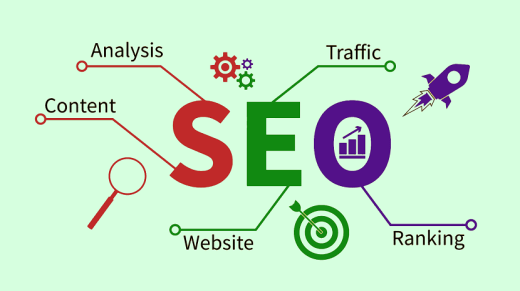
SEO 2024 and the Core Update

On April 19, 2024, Google went live with its March 2024 core update, a process the company calls “more complex” than what was done previously and brought changes to numerous core systems. Google also rolled out its spam update, completed on March 20.  An approximately 45% reduction in low quality and spam content was the primary outcome of the updates, as confirmed by a Google spokesperson, “The updates led to larger quality improvements than we originally thought – you’ll now see 45% less low quality, unoriginal content in search results, versus the 40% improvement we expected across this work.”

It is popular in America to say that change is good but unfortunately, the core update has left many small business owners grappling with declining search rankings and softening website traffic and uncertain of how to respond. Google says the remedy is to create higher-quality content, with a company spokesperson explaining, “As the web and spam tactics continue to evolve, we’ll continue to work to reduce low quality, unoriginal content in Search. As always, we appreciate and encourage feedback from users and site owners alike.”

Well, what did you think they’d say? Look at it this way—if you haven’t examined your SEO strategy lately, you now have motivation to take a comprehensive look at how you’ve managed this essential business function so far and decide how you can effectively respond to the search engine update. SEO is about maximizing your company’s online visibility, the gateway to appearing more credible and receiving more website traffic. Below are suggestions of SEO tactics that are mostly DIY and free—and most of all, deliver an effective response to updates made by the search engine that according to StatCounter GlobalStats as of February 2024 controls 91.62 % of the global search queries market.

The purpose of SEO

It’s not an option, but a given and the purpose is straightforward. Effective Search Engine Optimization requires an holistic approach that combines multiple strategies that work in tandem to improve your website’s visibility in search engines, chiefly Bing, Google and Yahoo.

  • Improve online visibility: to power-up your website ranking on search engines and enable more prospective customers to learn about your brand.
  • Drive organic traffic: to attract prospective customers to your website, those genuinely interested in your content, products, or services.
  • Establish authority: through your website and overall online presence—social media, published articles, your published quotes in media outlets—present yourself as a trustworthy and authoritative source of valuable information.

SEO impact is typically organized into segments—on-page SEO, off-page SEO and technical SEO—that describe how the process influences your website to amplify its visibility to search engines. As you contemplate your SEO strategy, which is a component of your inbound marketing success, be certain to develop and implement strategies and action plans designed to address each SEO category.

ON-PAGE STRATEGY

Google and other search engines look for sites that are trustworthy places for visitors and also provide content that’s useful to those in need of information. On-page SEO is the process of tailoring your website to maximize its visibility to search engines by demonstrating the availability of worthwhile content that can be found in a trusted source. Effective on-page SEO positions your website to attract new visitors who are potentially prospective customers. By taking specific actions, such as including certain keywords in your content and by adding internal links and optimizing URLs within your content, you might boost the assigned ranking of your website in the list of search results.

1. Post relevant long-form content

Posting relevant long-form content is a pathway to increased search visibility and Google’s core update has just made the presence of good content still more impactful. The process starts by writing about topics for which there is an audience—discover the topics that people want to learn more about. To enhance the authority of your posts, keep the following in mind:

  • E-E-A-T (Expertise, Experience, Authoritativeness, Trustworthiness): The 2024 core update reinforces Google’s commitment to the E-E-A-T principles introduced in 2018. Websites that feature expertise and experience in the chosen field, authoritative content and trustworthiness will receive higher search ranking
  • Use of credible data, statistics and case studies to support your points and provide evidence for your claims
  • Include your byline in all articles that you’ve authored and also identify your guest posters. Industry experts should be credited with a brief bio, to highlight their credentials, expertise and authority
  • Use headings and subheadings to present content in an organized fashion, to improve readability
  • Include engaging and relevant visual content, including videos, photos, charts and/or graphs
  • Address all aspects of the topic thoroughly to create a comprehensive resource on the subject
  • Regularly update your articles to reflect new research, perspectives and information

2. Keyword research

Keywords are the words or phrases typed or spoken into search engines by visitors looking for information. By using keywords in your content, search engines will include that content or website in a list of sources that include the cited key words, therefore making it possible that you’ll receive a high page rank in results for those search terms. It makes sense to identify as many keywords as possible, including long-tail phrases, so that you’ll maximize your options when creating content that will capture the attention of search engines.

Be aware that simply packing posts with keywords in every sentence is not effective. Search engines seek out content that’s well-written. Place keywords naturally in target areas, including your headers, intro and metadata.

3. Keywords locations

While keyword density is not a viable strategy for improving search ranking, placing keywords strategically throughout your content is important for SEO. The trick is to use keywords organically and in the right places to show search engines that your content is relevant. Drop keywords here:

  • Introduction: to set the context for readers and search engines
  • URL: to help search engines understand the topic
  • Title: to improve your click-through rates and rankings
  • Body: copy to support topical relevance
  • Headers: to structure your content and signal importance to search engines
  • Metadata: description to improve click-through rates

4. Interlink your pages and blogs

Internal linking means creating hyperlinks in your content, so that website and blog readers can click as they read and check out your other posts or website pages. Internal linking supports on-page SEO because the availability of internal links invites readers to other pages within your website, or to other blog posts, and keeps visitors around longer, demonstrating to search engines that your website is valuable and useful. Also, the longer visitors are on your website, the more time search engines have to crawl and index website pages, helping Google et al. to obtain more information about your site and potentially rank it higher in search engine results. If you’ve got the techie gene you may want to take this on as a DIY project. Click to understand how internal linking is done (most may want to contact a professional). https://www.linkedin.com/pulse/best-practices-internal-linking-structure-2024-m-a-mamun-bhk0c

OFF-PAGE SEO STRATEGY

Off-page SEO refers to actions taken to impact your search engine ranking that are outside of your website. In other words, off-page SEO is how you manage external factors, for example, guest posting, social media activity and the presence of online reviews. While off-page activities do not directly involve your website, their effects can potentially increase website traffic and support your inbound marketing in the process.

  1. Social Media Presence

Active engagement: Consistently post relevant content and engage with your audience platforms such as Facebook, X (Twitter), Instagram and LinkedIn. An engaged social media audience that regularly interacts with your brand demonstrates brand authority and trust and therefore gives a vote of confidence to search engines.

2. Content marketing

  • Content: Create and share high-quality, relevant and valuable content that includes backlinks to credible websites
  • Infographics and visuals: Appealing visual content increases viewer engagement and content sharing
  • Document Sharing: Share presentations, webinars, or documents such as white papers, brochures that showcase your products and/or services, or training materials on platforms like SlideShare and Scribd to expand your audience

3. Press releases

When you have a newsworthy announcement to make, e.g., to broadcast a talk you’ll give at a business association or chamber of commerce, or your participation in a popular local charity or community event, write a press release and post it on distribution sites such as EIN Presswire or eReleases . Not only will you take an important step to get your story out to your audience and your local community, online press release distribution is a great way to generate organic backlinks, since many online publications will automatically pick up relevant press releases. Within each press release, be sure to include one to two links to your website.

4. HARO requests

Help a Reporter Out (HARO) is a website that connects journalists and bloggers with expert sources—you!—for articles they’re writing. Journalists submit a query for expert quotes and will choose the top responses to include in their content. Oftentimes, the journalist will provide a backlink to your website as attribution for the quote. To increase the chance of being quoted, respond quickly and provide a complete and soundbite punchy answer.

5. Influencer marketing

Influencer marketing is an effective way to increase brand mentions and social media interactions, both of which are positive off-page ranking signals for search engines. If you can get onto the radar screen of a social media influencer who has a relevant audience for your brand, you can partner with that person to create an influencer marketing campaign that promotes your brand and its value proposition along with providing links to your website or social media profiles where applicable.

6. Backlinks

Building backlinks is important for SEO because it signals to search engines that your content is trustworthy and valuable. The more high-quality backlinks you have, the better your chances of ranking higher in search results.

While backlinks remain crucial for SEO, recent algorithm updates have shifted towards needing fewer but higher-quality backlinks. Earned links, in which editorial publishers or consumers mention your brand organically, are most highly favored. Built links, however, require some effort on your end, such as reaching out to content publishers for link attribution or mention. You can acquire backlinks through these common link-building strategies:

  • Guest posting
  • Link insertions
  • Creating link-worthy content
  • Building relationships with bloggers and website owners
  • Using social media

7. Online Reviews

Online reviews provide a strong signal that’s taken into account when ranking your content online. They can build a lot of credibility and trust since they’re submitted by third parties who’ve interacted with your brand. Focusing on generating positive five-star reviews from legitimate customers can help your off-page SEO tremendously. You can generate these reviews on third-party review sites such as G2 as well as your local Yelp page.

TECHNICAL SEO

Technical SEO refers to how you can best optimize the technical elements of your website—primarily speed, security, user-friendliness and site structure. Technical SEO is about improving your website to make it easier for search engines to find, understand and store your content. Technical SEO focuses on user experience factors, such as making your website faster and fully visible and navigable on mobile devices. Do it right and technical SEO can enhance visibility in search results.

  1. User experience (UX)

The UX provided by your website is a concern to search engines. If your website offers an intuitive browsing experience, quick loading times and is mobile-friendly, you will be positioned to receive higher page rankings. Google now uses mobile-first indexing to determine search rankings. Ensure that every page of your site is mobile optimized, ideally using responsive design, and that all content is the same between the desktop and mobile versions.

2. Site security
Security plays a huge role in how people experience your website. When people feel that your website is secure, they interact more freely (and longer) with it. Google penalizes sites that do not secure their traffic with an SSL certificate and modern browsers mark them with an insecure site warning. SSL certificates are obtained through site your hosting provider. Click here for more information: https://www.linkedin.com/pulse/5-top-ssl-certificate-providers-2024-digital-expert-online-aezde

3. Index site

Indexing means adding a website and its pages to search engine databases so that the site can appear in search results. Indexing is pivotal in how Google and all search engines work. The presence of a “noindex” tag on your website or blog pages will cause search engines to ignore your content and prevent your site from being recognized and ranked—a situation that you want to avoid.

Noindex tags can be removed and this is another DIY project that I relegate to those born with the techie gene; I recommend that everyone else would be wise to consult a professional to do the work. FYI, here are remedies: https://www.linkedin.com/pulse/how-fix-google-indexing-issues-2024-md-belal-hossain-0cszc

Thanks for reading,

Kim

Image: © diki_pt at Freepik