LinkedIn Special Report: B2B Selling in the COVID era

In our uncertain times, for-profit organizations have elevated selling, the means by which revenue is generated, to the highest priority. Sales revenues are the life blood of a business and enable its survival. As a result, sales professionals are under significant pressure to identify, connect with, engage and bring in new clients, as well as obtaining additional business from existing clients.

No surprises there. Making sales is the role of sales reps. It’s just that thanks to COVID, the playing field has undergone a seismic shift. Once-thriving industries, most notably restaurants, hotels and fitness, have been greatly diminished. Commercial real estate sales and leasings are staggering, as legions of white collar professionals cobble together DIY offices and work from home. How can sales representatives reach prospects when they’re usually no longer in the office? How can they introduce themselves and their products and services when they can no longer meet prospects face2face?

Virtual technology has solved most of the communication problem, but virtually enabled conversations do not make it easy for sales reps to meet and lay the groundwork for building new relationships. Furthermore current or previous clients, who now work from home, are often overwhelmed as they strive to meet the new and growing expectations of their jobs. Receiving a request from a sales rep to schedule yet another videoconference call does not spark joy.

LinkedIn has issued its fourth annual State of Sales Report after interviewing some 1,000 B2B buyers and sellers in several countries, including Brazil, Canada, France, the UK and the US. Here are some key takeaways.

Good data matters

To clarify and justify their buying decisions, the report found that 49 % of prospective B2B buyers feel that objective data is a required element of a sale and data- driven decisions have grown in popularity in the COVID era. Data adds value. Sales professionals need only to determine which metrics matter to the prospect?

Doing some homework and asking a few questions is the way to learn what information will persuade your prospect. Now when you send an email to request a videoconference call, you can tempt your prospect with a couple of data tidbits that signal you understand what matters. Now you present yourself as being a problem-solver. Present some data and ask what other information will be useful.

Getting to know your prospect as you get to know their business challenges and objectives is part of engagement. Demonstrate that you’re not just trying to make a sale, you’re trying to help the prospect do solve, or avoid, a problem.

Be a problem-solver

Problem-solving emerged as an attribute that 47% of B2B buyers value highly. As always, effective selling means knowing the customer. One way to engage prospects is to ask about their business and learn as much as politely possible about why and how your product or service could help the organization achieve important objectives. In short, what do they really need to do and how can you help them get there?

Furthermore, you might ask prospects how they did what they need to do before you and your product or service came along? Now you’ll pick up some useful intel on competitors and know how to position your offering as superior, as you assume the role of problem- solver.

When sellers focus on client objectives and provide meaningful data it’s possible to position oneself as a problem-solver, if not as a trusted adviser and collaborator for the prospect. In this way B2B sellers earn trust. For 75% of B2B buying decision-makers, the amount of trust that they have for a seller is the number one factor that leads a buyer to do business with a particular company.

Expect change

In sum, 70 % of survey respondents feel that leading through change is now a required competency for sales managers and is more important than it was five years ago. Sales leaders are wrestling with the question of what the change in the business environment means for their organization and their team. In a separate LinkedIn survey of sales managers conducted in March 2020, 55 percent of the 200 respondents feared that a decrease in their sales pipeline is inevitable.

Thanks for reading,

Kim

Image: Over tea, Moroccan Berbers (Amazigh) build a relationship and discuss the potential sale of a rug.


Strategy: Win a Business Award

One often-overlooked business strategy that brings many benefits to a company is competing for (and winning!) a business award. Competing for a business award and being named a finalist, that is, eligible to win first, second, or third prize, is a big vote of confidence for the chosen organizations. The recognition sets your business apart from competitors, implies credibility and expertise, enhances your company’s brand and stature and is almost certain to increase the number and quality of prospects, clients and referral sources your business receives.

There are more ways to win than you might think. Sponsoring organizations are typically generous with the number of awards and categories they choose to honor. More awards and more categories are an incentive for business owners and leaders to become contestants because there will be more opportunities to win. More contestants means more entry applications received by the sponsor and more tickets sold to the awards banquet (when those activities resume), since every finalist will buy at least one ticket and some will buy a table.

In addition to its role as a revenue enhancer, sponsoring awards is good PR for the organization, which could include the bank where you keep your business account. The awards not only distinguish the group as a prominent member of the business community, but also attract and help to retain members (or customers). In the best of American traditions, business awards are a way for many to make money. That could mean you, too.

Full disclosure—-as a result of the destabilizing impact of the coronavirus shutdown, I declined to accept an invitation to return as a preliminary round judge in The Stevie Awards/ Women in Business category (there are eight in all), an honor I’ve been happy to receive for six of the past eight years. Judges are neither paid, nor do we pay to participate. I do it because I enjoy experience and it looks good in my bio. https://stevieawards.com

Be advised that as with any marketing campaign, there are expenses involved. You’ll be required to join the sponsoring organization. You must pay the award entry fee for every award category that your company pursues—-best new product launch, business of the year, best workplace, social responsibility award and so on. You must buy one or more tickets to the ceremony (even when it’s virtual). The awards process could represent the entirety of your outfit’s annual marketing budget.

The time needed to prepare your award entry and determine which supporting documents will best communicate who you, your team (if applicable) and your company is another cost. Creating an impressive and persuasive entry application can be a laborious and time-consuming undertaking.

Furthermore, an assessment of your company’s readiness to pursue an award may reveal that it would be advantageous to build for 12-24 months before your organization is prepared to compete for an award. But that’s OK. Taking steps to analyze the strengths, weaknesses, opportunities and threats of your organization (are not most of us facing the threat of the COVID economy?) will pay dividends in and of itself. Just be objective about your company’s chance of winning and understand the time and money likely to be involved.

Choose a target award

Potential contestants are advised to do some homework and discover awards that are sponsored by local, regional and national organizations, whether business networking organizations (chambers of commerce), industry-specific associations (such as the Bar Association for attorneys), or your business bank. I recommend that your initial forays into awards campaigns focus on local sponsors, particularly for those of you who are Freelance consultants and small business owners generating less than $500,000 in annual gross revenue.

After compiling a draft list of possibilities, check the award entry criteria. It’s likely that candidates must join the organization in order to compete for an award and that will be your first expense. Annual dues may run from a few hundred dollars to $1000 or more, depending on the sponsor. Confirm also when new members will be eligible to compete for an award. Next, investigate other entry facts—-the entry application deadline, the fees and whether candidates must be nominated to compete for the award.

Read the specs and select the categories in which you can expect to do well—-excellence in your field, customer service, new product or service launch, community outreach, environmentally-friendly, for example. Within the categories offered, where might your company step to the front of the pack?

Finalize your choices and prepare to compete, being sure to give yourself ample time to collect, evaluate, or create the supporting resources you’ll need to enter. The good news is that if you plan to enter more than one category, most of the content developed can be used in multiple entry forms.

Tell a compelling story

On nearly every award entry, there’s a section that asks for more details about your business, your team and you. Be sure to provide all of the information that is requested and as well, tell a story beyond the statistics. Let the judges feel your personality and understand what makes your business stand out. Here, you can share unique information that might not fit elsewhere in the entry application. Customize your message by sharing relevant success stories and achievements that address the award category you are entering.

Construct a strong beginning, middle and end for your story. Reveal how you overcame challenges to reach new heights and back up your claims with hard evidence. Feel welcome to include good visuals like charts and graphs, or the persuasive appeal of client testimonials. Keep your application punchy and concise, using short sentences and statistics to underline key points. Bullet points are an effective way to ensure that judges can absorb your performance metrics quickly.

Describe what motivated you to launch the company. Detail the company’s vision, mission, guiding principles and values and what you and your team are passionate about and which accomplishments make you most proud. Tell your story from your heart. Before hitting the send button, or sealing the envelope for a hard-copy mailing if required, add a personal note and thank the sponsoring organization and the judges for their consideration of your entry. Then conjure up some positive thoughts!

Thanks for reading,

Kim

Image: The inimitable Academy Award, Golden Globe Award and Grammy Award winning actress-singer-dancer Judy Garland in A Star is Born (1954), for which she won the 1955 Golden Globe Award for Best Actress in a Musical

Clubhouse: A Social Media Platform for the Beautiful People

Trending

The newest entry to the social media scene is Clubhouse, an invitation-only platform built around what is called “drop-in audio chat”. Call it an audio chat social network. Users download the platform app and are welcomed to drop into real time, voice only chat room conversations that they may participate in, or decide to just sit back and listen to. Or, one might request to “own” a room, choose a format and topic and invite folks to drop in and chat. Clubhouse conversations are ephemeral—when the chatting stops, what was said disappears forever. Nothing is recorded.

Created by Paul Davison and Rohan Seth, reportedly seeded with $12 million by venture capital firm Andreessen Horowitz and officially launched about when the coronavirus entered the U.S. in First Quarter 2020, Clubhouse has attracted a swath of high-profile member users that now number about two million. The app can only be downloaded on an iPhone, at least for now. Android downloads will be available soon. The service is not optimized for iPad.

The velvet rope

You have to know someone to get in. Clubhouse is a gated community. Access is available by personal invitation only. Members can invite just two people to join, but will earn more invitation credits as they use the app.

Any iPhone user can download the app and reserve a username, but will be placed on the waiting list. It is allegedly possible that a current member could be notified that someone s/he knows would like to join and would appreciate an invitation. Otherwise, aspiring members who lack the right connections will twist in the wind.

Clubhouse has quickly built up considerable social cachet, most likely the result of its exclusivity business model. Having the app on your phone is like getting into Studio 54, the 1970s Manhattan disco where everybody who was anybody went to party hard. The platform has become the darling of A-List entertainers and the tech entrepreneur crowd. Oprah Winfrey, Elon Musk, R & B superstar Drake, Chris Rock and Mark Cuban are members.

Another factor that may enhance its popularity is that Clubhouse users speak to each another in real time. People can talk and it all feels more intimate than other forms of online conversation. People tend to prefer the natural rhythms of speaking that we use when talking face2face, rather than typing back and forth on a keyboard.

Format

Members can follow their fellow members and also topics of interest, as they do on other social media platforms, and also join themed “clubs.” They have access to a selection of chat rooms that focus on different subjects, many of which are attuned to what is currently trending.

Some rooms will have just a few people chatting informally. Others might contain hundreds or even thousands of people listening to a panel of experts discuss a national or international issue, or a top-selling author, or a well-known entrepreneur. If someone in the room would like to contribute to the conversation or ask a question, a hand raise signal is given and the room’s “owner” can give speaking privileges.

Chat rooms visitors are identified by their profile photo, which is required for each user. Those in the room can browse the profiles of others in the room, which also includes a list of whom everyone follows. The Clubhouse algorithm takes all this into account when offering content choices to members.

Why you want in

Clubhouse members are able to hear, and even participate in, the often relaxed and sometimes very candid conversations of famous and powerful people. You may hear a political debate, a comedy routine, a book club discussion, or billionaires talking business. Uber-famous music producer and performer Kanye West is scheduled to appear in a Clubhouse chat room. Mark Zuckerberg and Elon Musk have already done so.

But what will being there do for your business? It depends on the ecosystem in which you operate. If you feel that prospective clients will be impressed when you casually name-drop a celebrity or some other nationality known high roller, then consult your Rolodex and devise a strategy to get past the door man.

Voice is the future

It’s been said that imitation is the sincerest form of flattery and Clubhouse will soon face direct competitors. A powerful vote of confidence for the rising appeal of audio social networking platforms is coming from Facebook, who recently announced that the company is in the early stages of experimenting with social audio features. Entrepreneur and venture capitalist Mark Cuban, a Clubhouse member, has announced that he is involved with building an audio-focused social platform called Fireside, which will compete with Clubhouse and he plans to launch this year.

Twitter added a voice feature for tweeting in June 2020 and is testing a separate audio chat-room product called Spaces, according to a company spokeswoman. LinkedIn was ahead of the curve on the chat trend when it added voice messaging in July 2018.

Thanks for reading,

Kim

Photograph: Kim Kardashian (left) with a Sidekick and Paris Hilton checks her Blackberry circa 2003.

Meeting New Clients When They’re Virtual

As we journey through the COVID business landscape, B2B product and service providers have mostly found that the process of selling to their current clients has successfully been transferred to virtual methods, that is, videoconferencing and the telephone. But the biggest shortcoming of virtual communication is revealed when the goal is to meet and cultivate new clients.

As business (and education, government, fitness, worship, et al.) has transitioned to remote functioning one glaring truth has emerged— it’s much easier to shift existing relationships into virtual mode than it is to create new relationships, business or personal, by way of Zoom. That’s especially true in B2B sales. While many Freelancers and other business owners and leaders have directed resources toward strengthening existing client relationships, facilitating new client acquisition has folks wringing their hands.

It’s been conclusively demonstrated that it costs at least five times more time and money to acquire a new client than it costs to maintain a current client, but it remains a fact that every business must put into motion a client acquisition strategy. New clients represent the potential for future growth and they are an essential component of a healthy business ecosystem.

The problem is, relationships are more easily created during face2face interactions and we’re just not able to meet people anymore! The lockdown has either closed or severely restricted nearly all public gathering spaces. Video and voice calls keep us connected, albeit at a distance, but those relationships are in many cases already established.

So our question of the day is—-how can a business effectively grow its client list when access to new prospects is unexpectedly limited? Let’s consider some alternatives to the once customary networking formulas.

Low hanging fruit and a system reboot

Mine your client data, knowledge and relationships to discover how you might persuade those with whom you’ve been doing business to do more business. Find the low hanging fruit on a tree familiar to you. In some instances, it may be necessary to reboot certain relationships if clients were forced to cease or curtail operations due to the shutdown and its aftershocks.

Create reasons to contact clients whose organizations were adversely but not fatally impacted, perhaps by emailing COVID business resource information as a conversation starter. While trading emails or calls, you’ll be able to inquire about the location of where business is now conducted—in the office or from home.

Ask those clients how they’re responding to the COVID environment and listen carefully for a way, however small, you can help get his/her company up and rolling again. You may rewarded with a handful of billable hours as conditions improve. This strategy is working for me, BTW.

Conversely, some businesses are experiencing growth during the pandemic and you should make it a point to identify those organizations and include those for whom your products or services can be a fit in your marketing efforts. Maybe you can get a referral from a friend, family member, or client?

Encourage referrals

Referrals confer to you the golden status of being considered a known and trusted quantity. Other than a Super Bowl ad, there is no better endorsement for your business than a referral. People who read reviews of books, movies, restaurants, or hotels are in reality searching for a business whose customers give it good referrals.

Create the conditions for good word-of-mouth about your service by excelling at superior customer service at every client touch point. Present a 360 degree pleasant and efficient experience from the intuitive navigation of your website, the relevance of your content marketing posts, to your follow-up and willingness to go the extra mile to provide the necessary solution, to your project proposals and invoicing.

Give your clients lots of good things to say about doing business with your organization. Ask them to spread the word. On client invoices, offer a 15% or so discount on their next invoice if a referral is made and a sale results.

Case studies and testimonials showcase how clients feel about your finest work. They are a form of referrals and business owners and leaders are advised to include such valuable endorsements on the company website and on social media platforms.

Get found with Inbound Marketing

Revisit your understanding of the ideal clients for your company’s products or services. Do you know who the decision-makers is? Do you know who is likely to influence the decision-maker and other important stakeholders? When writing your content, it’s imperative to know to whom you are speaking.

With a heightened sense of your ideal client in mind, evaluate, refine and expand your company’s online presence and popularity with content designed to fill the sales funnel with prospects who have authority, who make decisions, who have influence. Create email marketing subject lines that catch the eye and resonate with those prospects. Align your white papers, blog, newsletter and case studies to address goals and questions that are meaningful to your prospects. Appeal to what motivates prospects to take the leap and do business with you. Post content to Twitter, LinkedIn, Instagram and Facebook to expand your reach.

Finally, why not experiment with developing relationships through online communities? Investigate LinkedIn groups, for example, and search for one or two that seem like a good fit. Follow conversations and learn what active members discuss. When you feel ready, pose a question or respond to one. Whenever you participate, your LinkedIn contact info is accessible to interested parties and the seeds of follow- up are planted.

The sales landscape has changed for the time being, but the fundamentals of selling remain. If your product or service solves a problem, provides a solution, for a potential buyer, if a price can be agreed upon a sale will be made. Pursuing introductions and attempting to build relationships with new prospects in the virtual space is not without challenges but it also brings certain advantages. Geography is no longer a barrier.

Moreover, most prospects begin the buying journey online, searching Yelp and other rating sites to find out who can and cannot be trusted, cruising through social media and visiting websites that appear in the top 10 of their text or voice searches (those would mostly be big companies, for those wondering why there is no mention of SEO here).

Buyers are acclimating to the virtual space, becoming more accepting of the new normal and what it entails. The scope of relationships hatched in the virtual space may not be quite what we’re accustomed to, but I predict that both buyers and sellers will adapt as necessary to do business.

Thanks for reading,

Kim

Image: Athena, a special guest character on Lost in Space (CBS-TV 1965-1968) appeared in season 2, episode 16, of the series on January 4, 1967.

Build Your Email Contact List

Despite numerous predictions of its imminent demise that have splashed across the headlines of business publications for several years now email marketing, in various formats, continues to march forward in vigorous health because it works. If email marketing didn’t produce quantifiable ROI we would have abandoned it years ago. Nope. Email marketing remains an efficient communication pathway that allows companies to announce a product launch, register attendees for a podcast or webinar, deliver to subscribers this week’s installment of your blog, entice mailing list members with an invitation to your virtual book launch, or inspire potential students with news of the debut of your online course.

Despite the popularity of half a dozen social media platforms that are experiencing an upward trend that shows no sign of slowing down, email marketing continues to be accepted by those on the receiving end, so long as the number from any one source does not overwhelm. When email list members value the sender, they seem to like updates delivered to their inbox.

So building a quality email list that’s populated with prospects who are interested in you and your company is good business. Today, we can identify a few smart, simple tactics that are fast-acting, free and can potentially create for your organization a brand building, money making email list.

  1. Social media

An effective and obvious way to quickly and organically build a robust email contact list at no cost is to post content on social media platforms and the more platforms you post content to, the faster you’ll collect names and email addresses. How so, you ask? Because sooner or later, readers of your content will respond to what you’ve written and when they do, you’ll capture their name and email address. It’s likely that those willing to give a like to your posts or make a comment will also be willing to join your email contact list.

Another easy email capture tactic can be done on your Facebook page, by way of the Call to Action button. Hover your cursor on the CTA and select the “Edit Button” option, then change the text to read “sign up” or “join” so that you can invite Facebook Fans to your email contact list.

LinkedIn users are able to send emails to all of their primary connections but to quickly grow your email list, you’ll want to reach out to your second degree (the connections of primary connections) and third degree connections (secondary connections, once removed). There is a free service called Snovio that allows account holders to install an email finder extension which, by way of a gmail account, allows LinkedIn users to find the email addresses of those distant cousins. Click to learn more. https://app.snov.io/register?lang=en&signup_source=blog&signup_page=snov.io%2Fblog%2Fhow-to-get-the-contact-details-of-your-2nd-and-3rd-connections-on-linkedin-in-two-easy-steps&cta_type=link

2. Website sign-ups

Upload to your website reasons to collect names and email addresses. For some, that will be the “Contact us” form—website visitors who have questions or want more information about the company’s products or services are required to fill out a contact form and provide their name and email address. Other common website signup tactics are surveys, free telephone (video call) consultations, registrations for webinars and requests for free special publications—-your e-book, case studies, or white papers, for example. All are effective conduits for collecting names and email addresses that grow a viable email contact list.

3. Call to action

On your website landing page, on your white papers, blog, or newsletter, invite people to connect. You may be pleasantly surprised with the positive results of a straightforward appeal for email contact info. The share button and invitation to subscribe to or follow your blog and/ or newsletter will also bring in names and email addresses if your content is well- written and relevant.

Add a chat bot plug-in to your WordPress hosted website so that visitors can quickly obtain answers to basic questions about your products and services. Bot analytics will reveal the names and email addresses of your chat bot users, who are all set to join your growing email list.

Finally, get more mileage from your email signature block and invite recipients of your emails to opt-in and subscribe to your blog, newsletter and notices about other interesting things you’re doing.

4. YouTube videos

YouTube is the second- largest search engine in the world and about six billion videos are viewed on the site every day. People like visuals and videos are the favorite visual. Production value matters, so ask around to find out who you know with equipment that’s a level or two more advanced than your cell phone. Your public library may have equipment to use and a quiet room that will be all yours for an hour or two.

What story can you tell? You’ll have a few and you can make one or two of them sound appealing with a little thought and some rehearsal time. Providers of B2B services don’t have a product to show but we can do a convincing 5 minute promo on a course we’re set to teach, or a virtual talk we’ll give, or panel we’ll participate on.

If you’re rolling out a new service, pivoting your business, or embarking on a collaboration with colleagues that you and your partners can make sound exciting and useful to certain of your clients and prospects, include a video pitch in the launch campaign.

Remember to conclude your videos with both a verbal and text Call to Action. Ask for the business and direct viewers to click a button and be directed to your squeeze page, a landing page you can create that collects the names and email addresses of those who want to know more about your topic (i.e., what you’re selling). Learn to create a Wordstream squeeze page here. https://www.wordstream.com/features/cro-toolkithttps://www.wordstream.com/features/cro-toolkit

After posting your pithy little video promo to YouTube, also get it onto Instagram stories, Twitter, LinkedIn, Facebook and your website. Write a short teaser sentence to accompany a link to your video and include them in your email signature block.

5. Join business groups

All meetings are virtual and will remain so for the time being, but by attending events hosted by the group you join—-the chamber of commerce, a neighborhood business group, the local alumni chapter of your school, or other professional development and networking associations—-the benefits of membership include access to the member directory.

I don’t recommend that you import the directory and spam fellow members by sending your content without permission, because that will do you no favors. But one easy way to obtain the names and email addresses of desirable contacts is to attend virtual programs and make a pitch through the chat function.

During the final 15 minutes or so of the program send an all-person chat message to briefly introduce yourself and offer to send your blog, newsletter, e-book, or other content to anyone who’ll (privately) provide their name and address.

Attend one or two virtual events each month and you’ll be almost guaranteed to add 4-5 worthwhile names each month from this one source. This type of ask was originally done during the face2face conversations that took place during pre- event meet & greets (remember those?), but they can migrate to a virtual format without feeling awkward.

Building a robust email marketing prospect list is one of the best growth strategies business owners and leaders can do. If you’re able to add 10-20 contacts each month, declare victory. List building is an ongoing process—- it never stops. I’ve personally witnessed Freelancers who have 5000+ names on their list politely, skillfully, relentlessly, invite every potentially good contact to join their email list.

Thanks for reading,

Kim

Image: Replica of a vintage mailbox

Quick Tips: Increase Traffic to Your Website in 30 Days

“I know I could bring in lots more business if only I could get people to my website!” Do you hear the sound of your own voice in this lament? There may be more than a grain of truth in that statement. I’ll wager that at least 20% of those who visit a B2B website are doing research in advance of making a buying decision (according to the 80/20 Rule, that says on average a bus gets 80% of its sales from 20% of its customers).

When you greet site visitors with compelling content that supports decision-making, along with a respectable number of site visitors, a typical B2B Freelance service provider should be able convert window shoppers into paying customers about once or twice a year. That would be a victory for many Freelancers and small business B2B entities. But first, you’ve got to persuade prospects to come and look at the display window that is your website.

The first quick and overall most effective website enhancement strategy to put in motion is to create a compelling landing page that attracts and holds the attention of, in particular, self-identified prospects who are looking to buy what your company sells. Links to content marketing posts, videos and relevant updates are how your intriguing and persuasive content is brought to site visitors’ attention.

When site visitors are greeted with content that entices them to read posts and page through the site, the behavior nurtures the buying process. On your landing page, provide links to your blog, newsletter, case studies and/ or white papers. If you have video testimonials from happy clients, include a landing page link. If you have speaking engagements, list those as well on the landing page.

Your next fast-acting and free site traffic enhancement strategy is to maximize the visibility of the content you’ve posted there. If you know that your target clients trust and visit certain social media platforms, then establish a presence on those platforms. From time to time, do join conversations on trending topics to which you can speak intelligently (say, the PPP loans) but primarily, you’ll cross-promote selected content marketing posts and videos from your website onto social media and extend your reach.

Facebook, Instagram, LinkedIn, Twitter and YouTube are the usual suspects but if some of your content seems appropriate for the ephemeral, one day only lifespan featured on SnapChat (and your target clients include Millennials/ Gen Z), then upload and monitor the results.

If readers and viewers appreciate your content, they’ll visit your website at some point. This is a great way to continually fill the top of your sales funnel (TOFU) and ease a few into the middle (MOFU) as well.

Serious shoppers do online searches from their keyboard and voice searches on mobile phones through Siri and Alexa. While single keywords get all the attention in SEO, descriptive phrases used by those looking for information about your business category, known as long- tail keywords, are far more effective in putting your company into search results than single keywords.

The goal is to get your company into the top 10 (page 1) of search results and increase the chance that a prospect will see your website and click. It’s worth a try, but be advised that smaller companies rarely get page 1 placement.

Start by brainstorming possible search phrases that a prospect might use when looking for your service and make a list. Next, go to Google and type those long- tail keywords into the search box and examine the search results. Which phrases are relevant for your business? Try also your long- tail keywords on http://Soovle.com and http://ubersuggest.org which open the door to search engine results other than Google.

When you discover which phrases bring up companies that match with yours, ease them into your content (three long- tail keywords in one 1000 word post max). Overuse of keyword phrases will help neither your content nor your credibility.

Finally, installing an AI-powered chat bot is another great website enhancement that you can use to increase website traffic, indirectly. Chat bots encourage and enable website visitors to ask questions and almost immediately receive answers through Natural Language Processing, that simulates a Live (but limited) conversation. Chat bots help visitors save time, so benefit derived is that bots combat website abandonment as they assist the decision-making process.

A web developer can install your chat bot but you can DIY if so inclined. Omnichat, The WordPress chat bot is a plug-in option available for owners of WordPress websites. Chat bot analytics will tell you who has used the bot and delivers a second ROI by allowing you to harvest emails to build your contact list. You’ll also learn the most frequently asked questions that will guide you to expand or refine the answers provided.

Thanks for reading,

Kim

Image:

2021 Financial Tune-up

We’re at the top of the year, after closing out a particularly trying nine months of the previous. It seems that rough sailing will continue but we know what to expect now, more or less, and our experiences will enable us to brainstorm and identify strategies to help ride out the storm.

Whatever you’d like to achieve this year, money is likely to be necessary. In fact managing money may be the singular focus of your plan for the new year. For example, a practical goal for your business enterprise may be to conserve cash as a risk management strategy as the pandemic economy grinds on and on. Alternatively, saving money that will make it possible to take aim at your personal bucket list, which may include buying a home or trading up, or becoming more diligent about retirement savings, are or her motivators for managing and saving money.

Create a budget

The ultimate money-tracking and management tool is the budget. A budget accounts for anticipated revenue, which Freelancers are advised to conservatively estimate, and balances that amount against expenses that will be due, be they predetermined obligations such as rent or mortgage, transportation and groceries or discretionary expenses, such as new clothing purchases.

It’s also necessary to factor into your budget room for mundane expenses such as routine or emergency auto maintenance, technology needs and occasional home repairs and accessories, as well as allowances for fun expenses such as holiday and birthday gifts, occasional dinners out, or a weekend trip.

If one is both prudent and fortunate, revenue will exceed expenses most of the time and you’ll be able to save a few dollars every month. So budgeting should not be viewed as punishment; to the contrary, your budget is your friend. Why wouldn’t you want to know how much money you can expect to earn in a month or quarter and compare that amount to the typical expenses you expect to pay in that time period?

We all need to keep close tabs on cash-flow. The idea is to make money and avoid deficit spending. Budgets can be monthly, quarterly, or annual but a personal budget probably works best on a monthly cycle.

Get started by finding your 1099s and adding them up to identify the previous year’s gross revenue. Because 2020 was a year of diminished revenue for most Freelancers and we don’t know how much of a bounce forward 2021 will bring, income averaging 2019 and 2020 revenue could be a reasonable predictor of 2021. If you have dividend paying investments or interest bearing accounts that actually amount to something, be sure to include that income as well. Who knows, maybe you have a modest trust fund to include as well (it must be nice!).

Next, document 2020 expenses. Consult credit card statements, ATM withdrawals, mobile payment apps and checking account statements. Be honest with yourself about all the little ways that you spent money, from impulse purchases in the grocery store check-out line to chocolate therapy ice cream emergencies.

You will soon need to consider how to format your budget. Some will like an Excel spreadsheet and others will download a budgeting app such as what’s shown here. https://www.nerdwallet.com/blog/finance/budgeting-saving-tools/ I find The Balance website to be very helpful. https://www.thebalance.com/how-to-make-a-budget-1289587

Watch your caffeine

In life, so often it’s the little things that matter. Small expenses can easily add up to a bigger drain on your income than you realize. In other words, beware the $5.00 caffeine drinks. The most frugal option is to buy a good coffee maker or tea kettle + accessories and make your own brew. However, if stepping out for a break helps you to be a more effective work from home professional, find a local restaurant to visit. You may be able to save money as you have the pleasure of supporting a local business.

Monitor other expenditures as well. Not all of your small but life-enhancing pleasures will have to end, but making note of their impact on your finances may change your mind about a few things. If possible, maintain a couple of indulgences that mean the most and let the rest go.

Pay on time

Late fees for many bills are $25.00 or more and some companies consider them to be a line of business. You don’t want to go there. Late paying clients can force a Freelancer into that trap and I’ve been there. Help yourself by invoicing on time and finding the courage to send a gently worded reminder email to collect unpaid receivables that are approaching 60 days.

Moreover, when discussing a project with a client, ask for 20% – 25% of the total fee before you commence work. Tie subsequent payments to successfully completed project milestones. Avoid leaving more than 30% due at the project’s completion and therefore leaving yourself vulnerable to an unscrupulous operator who decides not to pay the full amount, now that s/he has want they want.

Finally, you may notice that planning to save money may inspire you, Freelancer Friend, to become more ambitious and disciplined about keeping your sales pipeline filled, enacting client retention strategies and even devising a campaign pitch to move regular clients to retainer agreements. When you make a commitment to yourself to manage money, you’ll want to be able to predict, and ideally increase, your revenue in order to achieve the savings target.

Thanks for reading,

Kim


Form 1099 Changes for Tax Year 2020

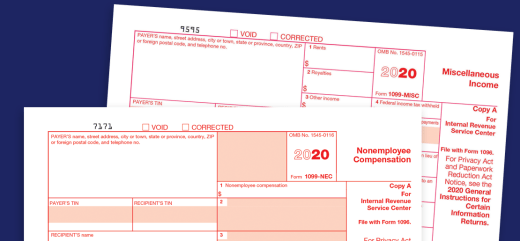
Freelance Consultants will soon receive from clients who were billed $600 or more in tax year 2020 the IRS Form 1099 and as many of you may have heard, changes were made. The general rules concerning who must file the form remain the same, but there are now two versions —-the 1099–NEC and a recalibrated 1099–MISC. Freelancers must receive their appropriate Form 1099 no later than February 1, 2021. The 1099–NEC cannot be downloaded online, but must be ordered from the IRS website.

1099–NEC (non-employee compensation) will be filed by Freelancers and that includes attorneys. Clients must send out this version of the 1099 when:

1. Payments of at least $600 were made during tax year 2020 to an individual (or company) who provided services to the client company but who is not formally employed by the client company.

2. Payment was made for services rendered and not for products or merchandise.

3. Payment was made to an individual, partnership, or other unincorporated entity. With the exception of attorneys or law firms, payments to either C or S corporations are not recorded on Form 1099–NEC or 1099–MISC.

Freelancers who file 1099–NEC will report their income on IRS Schedule C (Profit or Loss from Business), a supporting document of Form 1040. Your client should ask you to complete IRS Form W-9 if you bill, or expect to bill, $600 or more in the year.

Clients would traditionally mail to the Freelancer a hard copy of 1099-NEC (copy B), but the client may ask, or Freelancers can request, that an electronic copy be sent instead. Email correspondence between client and Freelancer, in which the Freelancer consents to receiving an electronic 1099–NEC from the client, is all that’s required to authorize the electronic format.

1099–MISC will be filed by recipients, including Limited Liability Companies (LLC), of $600 or more in rent payments (landlords), plus prize and award winners who receive $600 or more and recipients of royalties in excess of $10.

Other types of 1099–MISC income includes payments to an attorney or law firm for fees other than legal services, payment received from a legal settlement, fishing boat proceeds and non-qualified deferred compensation.

Freelancers and merchants who accept credit and debit card payments (maybe on Square, Stripe, or PayPal) will receive Form 1099–K from payment processors if those payments amounted to $20,000 or more and 200 or more transactions took place during calendar year 2020.

The card transaction income reported on 1099–K confirms for both the business and the IRS that income reported on 1099–K and Schedule C aligns. However, the business may also receive checks or even cash, so Schedule C income may be greater than 1099–K income.

The 1099 is part of federal taxes, but 39 states also require it to be filed with annual taxes. States that do not require the 1099 to be filed at that time are: Alaska, Florida, Illinois, Nevada, New Hampshire, New York, South Dakota, Tennessee, Texas, Washington and Wyoming.

Did I mention that 4Q2020 taxes are due on Friday January 15? Just saying.

Thanks for reading,

Kim

2021: The Comeback

It’s a New Year and now is the time to engineer a fresh start for you and your business. Take a few deep cleansing breaths to clear your mind and allow the big picture of your business, competencies, clients and relationships to come into view. Now you’ll be able to pull up the strategic insights and resourcefulness you’ve honed over the years and brainstorm how you can reposition your company to outwit the COVID-created obstacles that have hemmed all of us in over the past nine months. If the virus can adapt and retrench, so can you!

Predictions for the viability of several once thriving industries is less than optimistic, I’m sorry to say, but some Freelancers and business owners will be buoyed by other industries that flourished during the pandemic and can be expected to continue to do so. Among those fortunate few are:

All aspects of healthcare, from Freelance grant writers who work to obtain funding for life sciences research, which includes the development of vaccines, to start-up entrepreneurs who seek to patent and sell medical devices, to owners of medical billing services.

All aspects of technology, from Bitcoin entrepreneurs, to experts in cloud computing solutions, including digital data storage, to those who provide Artificial Intelligence solutions.

Prepared meals, available for curbside pick-up or delivery, were already trending upward and sales have skyrocketed since the advent of pandemic quarantining. While some who got an early start in the marketplace are succeeding by offering meat-potatoes-and gravy American standard menus, recent successful home meal caterers seem to be following the advice of 1930s burlesque queen Gypsy Rose Lee—-you’ve gotta have a gimmick. The popularity of Keto, vegan, organic, vegetarian, gluten-free and Paleo menus are claiming an increased market share.

Because so many of us are at home all day, unemployed, underemployed, working from home, overseeing children’s online schooling and unable to access our usual social outlets and networks, the cocktail hour has taken on a renewed luster. In other words, business is brisk at wine and liquor stores.

If you’re not a good cook, not a techie, you’re not an engineer who can develop a product, you have no interest in writing grants and could never raise the start-up capital needed to open a liquor store, all is not lost. The second-oldest Freelance career, real estate, is still going strong, particularly in the residential sector.

Condominium and co-op sales at the 8-figure top of the market in big cities have been softening for about two years now, but sales in sun belt states and suburban communities are doing very well. COVID has caused all of us to spend much more time at home and families require more living space now that the adults are often working from home and both need a home office. Children need not just a playroom, but also an in-home classroom for virtual school.

Furthermore, many who now work from home are looking to get out of small and expensive city apartments and move to the suburbs. Now that there is no more commute to the office or access to the entertainment, culture and networking opportunities that once justified the price of urban life, why continue to feed your greedy landlord?

Freelancers who have at least mid-level sales skills and are curious about entering the real estate field should first explore the trends in their locale. Finding a friend who is a licensed agent to tutor you in the ins & outs of the business would be a useful step two. Next, obtain a real estate license and try your luck with rental property to start. Maybe your real estate mentor will recommend you to a company who’ll bring you in as an agent.

Expect and prepare for change

Have you noticed that those who so cavalierly lecture others to welcome and embrace change are nearly always untouched by the change they tell the rest of us to welcome? Change may be inevitable but it is nevertheless unsettling and is sometimes destructive. We have good reason to fear change because the outcome can be ruinous. That said, life is all about managing risk, avoiding or overcoming obstacles and recognizing and pursuing opportunities.

We must all prepare for change, whether we see it approaching or get blind-sided by its sudden impact. Create your ongoing risk management strategy by keeping up with professional development. Regularly read up on developments in your industry so that you’re not caught unawares by policy or customer preference changes. Investigate technologies that will make your company more appealing and responsive to clients and make doing business with your organization more efficient. Always, look for ways to conserve cash.

Stay abreast of customer priorities

Understanding the needs and emerging priorities of clients enables you to recognize future business opportunities for your company and that information will be a crucial component of your nimble response to change and crafting a successful comeback. Including a short customer survey with an invoice will give clients a chance to voice how they feel about your products and services, tell you how your organization can improve and might even give you early warning on the next big thing.

Talk to your clients and learn what you can, politely and over time, to learn what keeps them awake at night and what they’re prioritizing now, or may prioritize in the near term.

Expand your client list, even if you’ve been lucky enough to work with an organization that has prospered during the pandemic and is giving you generous billable hours or sales. As we know, things can change. Back up, back up, back up.

Work smart

I don’t care what anyone says, I still feel that good luck, good timing and knowing influential people are the determining factors in building a successful business enterprise. Hard work matters, too, but billions of people on planet earth work hard every day and starve as they do. Working smart is the better choice, even if your luck and timing aren’t so great and no one’s looking out for you.

Meeting the right people is helpful, but it’s always been random and is difficult to do by way of videoconference, a method of communication that is not conducive to bonding with new colleagues and friends. It’s probably best to look for ways to refresh relationships with strategically placed friends and colleagues who you feel may be inclined to help you. You should also consider ways that you might help them as well and make that known, to get the reciprocity rolling.

Be ready for whatever good luck or timing might come your way by being visible and looking viable. Participate in virtual business or social events so that you’ll see and be seen. Use the chat function to message colleagues and privately say hello and potentially suggest a socially distanced coffee or drinks meet-up.

There are no guarantees but taking steps to package and present yourself and your company as prepared, proactive, nimble and viable is the surest route to your successful comeback.

Thanks for reading,

Kim

Image: Sylvester Stallone (L) and Burgess Meredith in the Academy Award winning movie Rocky (Best Picture, 1977)

Pandemic Sales Tactics

The New World Order ushered in by the coronavirus has forced all Freelancers and business owners and leaders to learn to be resilient and to steward our organizations in ways that are forward-thinking and flexible. Selling the company’s products and services to generate revenue has taken on an even more central role. There is heightened recognition that the roles of marketing, branding, public relations, advertising, networking and social media are to encourage sales, to attract qualified prospects and convert them to customers.

Now that the COVID era is here, whatever your company previously did to promote sales must be adjusted to get in step with the new reality. As of this writing it appears that we won’t return to “business as usual” anytime soon, if ever. Consider this the wake-up call to update the selling protocols at your organization and prepare to compete more effectively in today’s marketplace.

Selling is the purpose

As noted, it is no longer possible to put the components of a company’s sales process on automatic pilot. Nurturing the brand, revving up the social media presence, strategic networking, targeting of content marketing posts and the like are all relevant but bear in mind that those activities are the “way to the way.” The way a company survives is by making sales. The purpose of a company’s sales process is winning business and that function is the real-time measure of all your imaginatively conceived business strategies.

It’s vital that the sales team (that means you, Freelancer Friend and small business owner) the information and other resources needed to sell effectively, because there’s less business available now.

Start by learning what your clients fear and what they’re prioritizing, in response to how COVID has impacted their organizations. You have likely been in touch with your current clients at least once or twice since the shutdown and subsequent (partial) reopening but if you haven’t done so, send a New Year’s card and follow it up with an outreach themed phone call or email—you’re just checking in to see how the client is doing. How’s business? How are they managing? Listen well and empathize.

Deliver what customers value now

Dive into the social media accounts of past, current and prospective clients to get intel on how they’re communicating with their customers and discover what is being promoted now. The goal is to obtain insights into as many specific reasons as possible that might incline clients and prospects to do business with your company rather than the competition.

You want to understand the issues that may drive customer decisions. This is also your method to discover any obstacles that could potentially impact the use of your products and services, for better or worse. Remember that COVID has collapsed some industries and revitalized others.

Based on what your investigation shows, forecast the perhaps now revised client needs that your organization can address, what new (or ongoing) problems you can help clients resolve. Then, build a strategy to capitalize on what you’ve learned and repackage your offerings.

Map the new sales process

Get used to it, your sale will most likely take place by videoconference. You’ll be at an advantage when sales calls are with clients you already know. When meeting with new prospects you’ll have to work a little harder, but that is always the case. Regardless, do yourself a favor and hire a videoconference tech for three hours to set up your call and monitor it in progress, and allow yourself to focus on how to use your platform’s technology to communicate and connect with your prospect and sell.

Consider presenting a (video) show and tell for a product sale or a pre-taped video testimonial featuring a happy client who’s had a good experience with the product or service you’ll discuss (client success story/ verbal case study). Call in a guest speaker on your team who is an expert on using the product (engineer or the product manager) to provide additional information, take questions and reassure the prospect. If selling a B2B service, a few slides that show the ROI would also help the sale.

Perfect the sales experience

If the prospect is working at the office, or if you happen to know his/ home address, why not add a flourish and have lunch or coffee and pastry simultaneously delivered to the prospect and yourself? You and your prospect can still enjoy a meal together, relax and begin to bond, even if remotely. Morning meetings could benefit when coffee + is delivered at the start, but lunchtime and other afternoon meetings will probably be best served when food is delivered at around the half way point.

Thoughtful planning that keeps the client at the center of the sales process will guide your organization to refocus its sales process in ways that benefit client expectations and the experience. Relationships and referrals that will set your venture on an upward trajectory begin here, with how you manage the sale.

Thanks to all of you for reading my posts! YourHappy New Year,

Kim

Image: Actress Myrna Loy (R) sells cigarettes to actor William Powell (L) and his wife Diana Lewis at a 1940 Franco-British War Relief charity event held at the Cocoanut Grove supper club in Hollywood.