Survey: Freelancing in America 2020-2021

Upwork, the largest online marketplace for connecting Freelance workers with those who might hire us, continues to examine the state of Freelancing in America, a project the company began in 2014. I last reported on the survey in 2017.

As you probably guessed, the number of Freelancers, and clients willing to hire independent workers, continues to grow. To study the current state of Freelancing, Upwork’s 7th annual report, researchers surveyed 6,000 Freelance workers in the U.S. Survey respondents covered the spectrum—full-time, part-time, the side hustle (formerly known as moonlighting) and occasional workers. The data revealed that 59 million Americans performed Freelance work of some sort during the previous 12 months, an increase of 2 million Freelancers since 2019 and representing 36% of the U.S. workforce.

The response of businesses to the coronavirus shutdown that began in March 2020 caused seismic changes in the workplace. Impacting mostly white collar office workers, the Work From Home revolution would become a turning point for employees and their employers. By spring – summer 2021, COVID-19 vaccinations were well underway and many employers began to ask their employees to return to the office, but there was sometimes pushback. As children returned to school, working parents found it easier to WFH when the burden of toggling between paid work and supervising classroom lessons had ended. According to researchers at Upwork, it is anticipated that 40 million or more employees will work from home at least one day/ week by 2026.

WFH had more reach than could have been imagined, giving rise to the unprecedented Great Resignation. The U.S. Department of Labor reported that from April – June 2021, 11.5 million workers quit their jobs; in September, another 4.4 million left their places of employment. It appears that employees are done with office politics, done with endless meetings that have no purpose and done with bosses who withhold pay raises and promotions because they enjoy controlling people’s lives.

As you might expect, the Great Resignation impacts Freelancers because they have to make a living somehow. Furthermore, the WFH phenomenon has speeded up a growing acceptance among managers of hiring Freelance workers. Upwork in August 2021 reported that 53% of managers are now more willing than pre-pandemic to hire Freelancers for selected projects and tasks, as a result of their experience with remote workers in their own organizations.

See the full Upwork report for more details. https://www.upwork.com/i/freelance-forward

  • As of July 1, 2021, 59 million workers in the U.S. performed Freelance labor over the past 12 months, an increase of 2 million workers since 2019 and representing 36% of the workforce
  • Freelancers annual earnings in aggregate were $1.2 Trillion, an increase of 22% since 2019 and representing 5% of the country’s Gross Domestic Product
  • 36% of Freelancers now consider themselves full-time, an 8% increase since 2019
  • The number of Freelancers in the United States has increased by almost 12% between 2014 and 2021
  • 75% of workers who quit their jobs to become Freelancers report that they earn the same income, or greater
  • Freelancers earn, on average, $28 an hour for performing skilled services
  • Young professionals have embraced Freelancing and half of the Generation Z workforce has done Freelance work
  • Freelancers age 55 + comprise 26% of the Freelance workforce and they primarily do skilled and project-based work
  • 50% of Freelancers provide professional level services such as computer programming, software development, marketing, social media, translation and business consulting, an increase of 45% since 2019
  • 51% of Freelancers have participated in skills development training in the past 6 months, as compared to 36% of traditional employees
  • 19% of Freelancers earn $75,000 to $99,999 per year, 12% earn $100,000 to $149,000 per year and 5% earn $150,000 or more per year
  • 58% of freelance workers in the United States have worked with more than 5 clients in the past 6 months
  • 58% of traditional employees who are WFH due to the pandemic are now considering Freelancing in the future

Thanks for reading,

Kim

Image: A Freelancer in America at work

Client Testimonials: Cheerleaders for Your Business

As you ambitiously devise and implement leadgen campaigns and branding strategies designed to keep your sales pipeline filled with prospects that you hope to convert into a few sales, it is easy to lose sight of a basic fact of marketing—your clients are the best promotional resource you’ll ever have. Satisfied clients can become your cheerleading squad and they have more credibility with prospects than any marketing tactic you could ever devise.

Today, there is so much sensory overload noise in the marketplace that Freelancers and other business owners are often best served by peer-2-peer testimonials to persuade prospects that doing business with your company is a safe bet. Unless you can afford to buy an ad during the Super Bowl, nothing has more credibility than from the trenches client testimonials, referrals, or case studies.

So how can you recruit a client to publicly recommend your products or services without seeming to overstep a boundary? Basically, you ask the right clients, you make it easy to say yes, you make the ask at the right time and you make sure that the end result makes the client and his/her organization look good.

Ask the right client

Obviously, your first job is to know which of your clients would make a good recruit for a testimonial ask. Recall clients with whom you worked over the past 2-3 years and for whom you’ve done an exceptional job in terms of beginning to end customer experience, delivering the solution and meeting, if not exceeding, all expectations. Most of all, the client has to recognize and value what you did on his/her behalf. In other words, ask clients who have plenty of good things to say about your company and the work you do or the products you sell.

Timing

Timing takes more than one form. One factor is, how far into the past can you reach to make an ask? Will it be awkward to ask a client with whom you worked, say, four years ago? The answer, I think, is that it depends. If you maintain contact with past clients, e.g., sending December holiday cards and perhaps also sending announcements about your appearances on webinars or podcasts, it will be easier to reach out and ask for a testimonial.

Another timing issue is to avoid the client’s busy season, or the end of the fiscal year, when the client may have deadlines to meet. To the best of your ability, avoid making the ask when your client faces time-sensitive, pressing work responsibilities.

The ask

The window between your last interaction with the client and when you plan to ask for a testimonial will impact your choice of communication. If it seems right to approach a client soon after the work is completed or the product purchased, including your testimonial ask in a post-sale client satisfaction survey will be perceived as a natural progression. Email the survey and encourage your client to share feelings about working with your organization, the products that were purchased, or the services provided.

Invite the client to provide more specific, detailed comments in the Testimonial Template that you embed in the survey. Note that comments may appear on your company website and social media sites.

To approach a client with whom you worked a year or more ago, it may be more appropriate to first call and discuss the testimonial ask and then follow-up with an email to confirm, with your Testimonial Template attached.

If your client prefers to make a video testimonial and you have the skills to record and edit the video, which should probably be no longer than 6-8 minutes, arrange to meet for the shoot. Alternatively, you might set up a videoconference call and record an interview with the client as s/he discusses the positive experience and great results obtained from working with you. Audio-only testimonials can also be recorded and they are likewise compelling. When using the audio or video options, send the Testimonial Template a week in advance and send it again 48 hours ahead of the recording session.

Questions and quotes

Help clients to endorse your products and services by including a few open-ended questions in your Testimonial Template to get the ball rolling. Devise simple, direct questions that put the client in story-telling mode and will yield good quotes.

Ask the client to briefly detail the goal that had to be achieved or problem solved and why there was a need for the products or services that were purchased. Also ask the client to divulge if s/he previously used another company to obtain similar products or services and to provide insight into what motivated him/her to explore your company. Remember to ask the client to share reasons why your organization was chosen and not another. Finally, urge the client to discuss the experience of working with your organization, with an emphasis on expectations and benefits derived.

Client benefit

Your testimonial will be posted on your company website and on one or more social media channels—-remember to link the text, audio, or video back to your client’s website. Let the client know that you’ve provided these valuable back links by sending links to all platforms on which the testimonial appears. Informing clients whom you approach for a testimonial that you’ll provide this sort of publicity may yield a “yes” for your ask and put your venture on the road to obtaining the best endorsements available.

Thanks for reading,

Kim

Image: Cheerleaders in 1920s America

Clubhouse: It’s About Networking

As you know by now Clubhouse, the newest social media platform, is a live audio-only service that’s accessed through an app and was launched in October 2019. Clubhouse facilitates candid and compelling conversations between smart and interesting people and those conversations are intended for members only and are never recorded.

In keeping with its audio format, Clubhouse operates as an endless series of talk radio interviews (or podcasts, if you prefer) and group meetings that invite members to create virtual audio “rooms” and “clubs.” Clubs function to build communities within the platform—-audience development, in other words. Rooms are where audio chats take place and there are three types: Open, Social and Closed. Chats in the Social and Closed rooms are available only to members of the sponsoring club and Open rooms accept all parties.

Rooms are sometimes hosted by those with a following—thought leaders and opinion-makers, celebrities, venture capitalists, journalists and so on, but regular folks are also able to host a room. Each room offers its own format, an audio happening that may primarily attract devoted listeners or might bring in those who look forward to joining a lively discussion. Room events can be either pre-scheduled or surprise pop-ups. Rooms might hold just a small group, perhaps hosted by someone not well-known, while other rooms are led by marquee name players and draw dozens or even hundreds of listeners.

Clubhouse quickly grew in popularity during the early weeks of the coronavirus shutdown. Initially, the app could be downloaded only on Apple phones and membership could be obtained only by an invitation from a current user. The velvet rope policies proved to be a brilliant marketing tactic. Clubhouse became the darling of the A-list elite. Elon Musk and Mark Zuckerberg were guest speakers. Oprah Winfrey, Mark Cuban, R & B superstar Drake and comedian Chris Rock were said to be members. I first wrote about Clubhouse in February 2021. https://lionessmagazine.com/clubhouse-an-audio-chat-platform-for-beautiful-people/

Clubhouse continues its upward trajectory, especially since Android downloads became possible in May 2021 and invitations to join are no longer needed. According to Quantummarketer.com, there are 10+ million users globally mostly located in the U.S., western Europe, Japan, South Korea and Australia.

Now I’m certain that you find all of this quite fascinating but you may wonder, is this new social media player worth your time? I think yes—-that for B2B service providers and start-up entrepreneurs, Clubhouse has the potential to be useful in your Next Normal networking strategy.

Because interactions are about listening and talking live and IRT, communication is enhanced. Furthermore, the profiles of all room and club participants are available, making the experience feel sort of like a big conference call, where everyone on the phone is vetted and circumstances confer a degree of credibility and trust. At least some people may feel comfortable enough to chance off-line conversations and open the door to building a relationship.

Time must be invested and goals defined, as is true with other marketing activities. Key word searches that describe your goals will help to locate clubs and rooms to visit. Develop a good profile (because it matters) and step in.

Look for room topics that will expose you to recognized experts in your field, to help yourself deepen and expand your knowledge and therefore enhance your credibility. Get the heads-up on developing trends on the horizon in your field. Raise your hand, ask questions and share experiences or insights that are relevant to the discussion. Become a regular, get known and facilitate relationship building. Popular clubs that might appeal to Freelancers and others in business are listed below.

But remember that Clubhouse is not about making sales, but about listening to insightful conversations and contributing to the discussion by sharing your own wisdom. By being an active, friendly, generous participant your networking can take you to any number of paths and can yield many tangible and intangible benefits. You can even choose an appealing topic yourself and host a room every now and again, to work on building a following of your own. You might even find a mentor or be inspired to become one.

Community Club’s main purpose is make Clubhouse a welcoming place for everyone. It’s the best club for growing a Clubhouse community. Members mainly talk about Clubhouse features, support topics and onboarding newbies.

Bitcoin is the biggest club about cryptocurrency on Clubhouse. Some members who are real professionals on Bitcoin, heavy hitters. Visitors will find open, friendly and enlightening conversations about Bitcoin technology, markets, culture and the ecosystem.

Creative Executive Officers is a guide to the business of creativity for artists and entrepreneurs. Topics are mainly about business advice, entrepreneurship and education. 

Future of Work is where to discuss earning a living—entrepreneurship, creator economy, gig economy, freelancing, creatives, startups, venture capital, business, tech, AI, health, wellness, personal development, the hustle and the self-employed.

The Hustler Club “Your daily dose of motivation” is where hard-charging entrepreneurs, hustlers and creatives discuss ideas and have from-the-trenches style conversations.

Marketing Club features conversations about marketing, advertising and making the most of Instagram. Group members are marketers, creators and verified experts. 

Start-up Club is the largest of the clubs and introduces impressive and successful start-up stars who share their secrets. You’ll meet founders, entrepreneurs, angel and VC investors.

Stock Market Moves welcomes experienced, successful stock traders and those who want to become just that.

Tech Talks. is said to not be your normal tech community. It is group for diverse individuals from all walks of life, diverse backgrounds, industries and departments. Their main purpose is bringing together a group of people to talk about the good, the bad, the technical and business side of tech.

Women in Business is the largest women’s club and they are committed to empowering women in all sectors of business. and entrepreneurship.

Happy Thanksgiving and thank you for reading,

Kim

Image: © Keystone-France/Gamma Rapho. Pirate radio hosts on the ship Caroline were rescued and brought to at the police station after the ship ran aground at Frinton-on-Sea, UK on January 20, 1966.

10 Under $30: Holiday 2021 Client Gifts

The holidays are knocking on the door and savvy Freelancers know to respond with a client outreach strategy that could generate referrals and repeat business. December is your big chance to demonstrate to clients past and present that you value them and would be happy to work with them again. Before November slips away, create a plan to send holiday cards to clients with whom you’ve done business over the past 4 or 5 years and as well to send a gift to those who’ve been active over the past 12 – 18 months.

Clients will be delighted to hear from you and flattery might get you somewhere! Your thoughtfulness is also a brand-enhancing, relationship-building strategy that sets you apart in the best way and can place you at top-of-mind when clients plan the logistics of future projects.

Start today and search for holiday cards that celebrate “the season” and will be appropriate both for business and for those who do not celebrate a holiday on December 25th. I highly recommend that you send a physical card, unless on your list there are those who work from home and may not receive forwarded mail from the office. You may want to design your own card through Uprinting, the UPSstore, Vista Print, Sir Speedy, or another reliable service.

Re: your client gift list, I suggest that you match billable hours to the amount you spend on the gift; you may choose to gift only those who’ve invoiced $1000 or so. No matter how modest the amount of money you spend, understand that the gift is an investment. Your card and/ or gift communicate to clients that you consider them important and that you are a consummate professional.

Amplify audio

You don’t have to be a video gamer to appreciate the benefits of having a sound bar mounted to a desk top monitor. Whether your client streams music or movies, attends or leads videoconference meetings, or occasionally appears as a podcast or webinar guest, s/he will want to clearly hear and be heard. $24.99 https://www.dell.com/en-us/shop/cyber-acoustics-ca-2890-sound-bar-for-monitor-usb-2-watt/apd/ab768633/monitors-monitor-accessoriesFounder of FY #tabs_section.

Yummy honey

A flight of three two-ounce jars are the perfect introduction to this delicious, premium-grade, raw, artisanal honey. Add a teaspoon or two to a favorite tea. Include a dish on a cheese board spread and surprise guests with a tasty and unexpected condiment. The bees and the antioxidant rich honey that they produce are sourced from hives in Jamaica and other Caribbean islands. $14.99 for the box of three

https://www.ivyees.com/product/ivyees-honey-minis

Umbrella and art

Those who live in America east of the Mississippi River and have been deluged by more than their fair share of rainy days will appreciate an umbrella. This sturdy mini umbrella displays an eye-catching image of Vincent Van Gogh’s iconic painting The Starry Night (1889) and measures 48 inches across. It is auto open & close, includes a matching carrier and is delivered in a gift box. $30.00

https://mfashop.com/fashion/umbrellas

Bath and body basket

Whether your client WFH, has returned to the office, or does some of both, the intense focus required to effectively function in the pandemic business environment can be exhausting. Do your him/her a favor and enable a luxurious bath or shower ritual that promotes relaxation and even a good night’s sleep. This lovely gift basket contains 8 products that are delicately scented with white orchid fragrance and includes a shower gel, bath salts, body lotion and a loofah back scrubber. $27.99

https://lovery.com/collections/20-30/products/white-orchid-spa-bath-and-body-set-in-gold-basket?variant=12601117474870

Wine rack

An elegant, pyramid shaped countertop wine rack that harmonizes with nearly any kitchen or dining room decor. This compact and sturdy wine storage solution holds bottles in the horizontal position and discourages both the collection of wine sediment at the bottom of bottles and dry corks that may crumble when bottles are opened. $20.99

https://www.wayfair.com/kitchen-tabletop/pdp/mind-reader-pyramid-6-bottle-tabletop-wine-bottle-rack-mndr1563.html

Classy note cards

Sometimes the best way to communicate is to go old-school and send a hand-written note. Give your clients the means to gracefully communicate with their own important prospects and clients and they’ll be forever grateful. This elegant, high-quality folded note card features a bold yet classic calligraphic initial embossed in metallic gold ink. The card is made of all-cotton ecru paper and is partnered with a matching striped metallic lined envelope. $26 for 10 cards and matching envelopes

https://www.crane.com/hand-engraved-script-initial-note

Panettone holiday

Celebrating the December holiday in Italy often means indulging in this popular dessert that originated in Milan. The exquisites cake is studded with raisins and candied orange peel and it pairs well with a dollop of whipped cream or a scoop of vanilla gelato (Italian ice cream). Suggest serving a cup of espresso for an afternoon pick-me-up, or aan after-dinner dessert with a glass of vin santo wine. $29.90

https://www.eataly.com/us_en/christmas-holiday-gifts/panettone-pandoro/classic-panettone-26-46-oz

Patchwork scarf

Take the edge off the winter wind with a warm, soft scarf that features a mix of muted pastel colors and a quilt-inspired design. Made of polyester-cotton-acrylic blend of recycled materials, it’s a cruelty-free alternative to cashmere that feels like the real thing.

https://www.uncommongoods.com/product/recycled-patchwork-scarf

Out to lunch

Make lunch time fun whether eaten at the office or on a quiet bench in a pretty park. Your client will be thrilled to grab this stylish and practical little lunch carrier from Kate Spade even if it’s packed with a peanut butter and jelly sandwich on Wonder Bread. A coated linen exterior makes the tote easy to clean. The insulated interior protects the food. The gold top zipper pull is a flirty bow, the finishing touch of a pretty package. $30

https://www.katespade.com/products/out-to-lunch-tote/825466939622.html?

Giving good

GlobalGiving makes it easy and safe to support local projects anywhere in the world, while providing nonprofits with the tools, training and support they need to thrive. Inspiring and enabling your clients to give back may be the best holiday gift.

https://www.globalgiving.org/gifts/?gclid=EAIaIQobChMIsrCjm4WP9AIVNG5vBB1KQgIvEAMYAyAAEgJOGvD_BwE

Thanks for reading,

Kim

Image: Holiday lights at Boothbay Harbor, Maine

AI, Your Data and the Big Reveal

Under no circumstances would you call me a technophile true believer. I still roll with an iPhone X and there’s no immediate plan to trade up. That said, I believe in keeping eyes and ears open to tech advancements that are potentially useful and also affordable, to figure out what I might want to integrate into my life or business at some point.

In February 2018, I wrote about how Machine Learning and AI could eventually be useful to Freelancers and small business owners, even though the technology was impractical for small operators to adopt at the time. In October 2018, I wrote about how Freelancers who win a complex, big money contract may want to suggest to the client that a Blockchain Smart Contract be created, to both guarantee transparency and ensure that all expectations will be satisfied.

As those and other tech developments have taken hold, I think we all might benefit from taking another look at how one can improve operational efficiencies in a business and consider what tools might be successfully incorporated into your organization to achieve those goal, even if you’re a one-person shop. Having the ability to interpret and use actionable data is worth money.

No need to code

No code (and low-code) platforms are replacing programming languages that you (honestly!) may not want to learn with simple drag and drop processes. In other words, where not long ago it required a team of engineers to build whatever software you needed, civilians with home computers and mid-level tech skills can now essentially create and customize software to support their cross-functional objectives—-sales, marketing, operations, finance, HR, administrative.

With off-the-rack widgets available on website building and hosting platforms such as WordPress, you can upload a chat bot to your site and thereby make it fast and easy for prospects to obtain basic info about your company that might lead to a sale. I call that worthwhile.

Experts recommend that Freelancers and other small businesses approach AI and other cutting edge tech resources as potential solutions for small, time-saving and data- analyzing tasks and projects such as, for example, intelligent lead scoring. Because leads can be generated from multiple channels—-website or social media, blog or newsletter, webinar or podcast, or business cards handed out. But when you’ve received numerous leads, the challenge is deciding which ones have the greatest potential to produce a sale?

The right tech capability will reveal behavioral patterns in your various lead sources and rank them according to their probability of turning into sales. A spreadsheet is created with your leads sorted, from the hottest to the coldest, revealing which prospects to focus on because they’re most likely to buy. Big businesses have used AI to do just that for several years and proved that AI can increase sales revenue.

Best platform easy integration

First, find a platform that syncs with the Customer Relationship Management software you use, if you use it. Easy integration with popular spreadsheet software, such as Excel, is another important consideration. If leadgen data will be sourced from multiple places, your chosen platform should be able to merge it.

Second, your platform should have a search mechanism that will identify the best analytics model to use based on the data and the prediction required. You should not need to know their way around data science to run your model. The platform should just deliver what works best.

Finally, the platform should be able to monitor model performance over time and adapt as the business environment shifts and new data becomes available.

Not all no-code AI platforms are made the same, and the right tool depends on a company’s business needs. Solutions range from just a few dollars a month, affordable for many Freelancers and small business owners.

Finding the right one for a particular company may require some trial and error. The good news is that the best platforms are open, which means that anyone can try them to see how they work. In other words, users can take the platforms for test drives on relevant tasks and see how they perform.

Verify that the AI software is so simple to use that non-technical people will be able to adopt it into their workflows. Check the onboarding processes of various platforms. If working with AI software requires anything beyond basic tech skills, move on to another option.

Thanks for reading,

Kim

Image: Robots C-3PO (l) and R2D2 from the Star Wars movie franchise (created, produced and directed by George Lucas)

On Becoming an Expert

Can we agree that competition for the eyeballs, ears and wallets of prospective customers in both the B2B and B2C sectors has resulted in near-intolerable noise in the marketplace? As a result, the 70% or so of Americans who are Freelance solopreneurs or small business operators face an uphill battle to get noticed by those who might become your customers. So the big question is—-what strategies might you employ to persuade prospects that you are The One? In the B2B sector, perhaps the most effective way to gain trust and sign contracts is to present yourself as an expert throughout the buyer’s journey and particularly in decision-making conversations.

To win clients, Freelance consultants have to be the smartest ones in the room, or at least make everyone think they are. On the other hand, you can’t look like a smart-aleck know- it-all because diplomacy matters. Just keep in mind that successful Freelancing is about inspiring trust and confidence and building relationships. Everything you do must support those objectives, which are the pillars of your business. Let’s look at some pivotal moments in a sales conversation where you can reveal your expertise and win over prospects.

Problem-solver not sales rep

Rule #1 of sales is to sell the customer how s/he wants to be sold. The way that prospective customers, especially in B2B, want to be sold is to first, connect with a problem-solving expert who’ll listen and learn what s/he needs to achieve and then recommend potential solutions that are tailored to the prospect’s objectives. High pressure sales pitches have no place in the scenario and are best left in scary memories of the 20th century.

Question, listen, diagnose

Think like a doctor and listen well to accurately diagnose the problem or objective the prospect must resolve or achieve. Ask open-ended questions that encourage the prospect to open up and talk. Your questions should aim to uncover the frustrations associated with the problem, the importance of achieving the objective and the impact of either on the prospect’s business. Ask questions to also discover if the customer has attempted to “self-treat” and attempt to solve the problem in-house. As the prospect tells the story, you’ll envision potential solutions that your organization can provide.

BTW, if you realize that you’re not a fit, it will reflect well on you to make a referral to a colleague or even acompetitor. Do that and you’ll enhance your credibility and brand. You might even get some business from this prospect in the future, either directly or through a referral.

Share experiences, show empathy

Let the prospect know that you are an seasoned problem-solver who has successfully resolved knotty problems before and helped customers achieve mission-critical, high profile goals. As an expert, you have valuable industry experience that prospective customers will be reassured to hear. A short, well-told war story or two will increase your perceived value. Moreover, your anecdotes will help the customer to feel more comfortable to spill the tea and tell you what’s really going on. Plus, it’s a great relationship- building technique.

Talk just enough

Another sales rule is that the seller talks just 15% of the time. In a sales meeting, the floor belongs to the prospect. You’re there to ask the right questions, share a good war story or two to give the prospect confidence in your abilities and judgment and then suggest a couple of possible solutions.

Through your questions, you will control the conversation and the sale. Follow this rule and prospects will respect you as a trusted expert, one with whom they’d be happy to do business.

Thanks for reading,

Kim

Online Reputation Management and Your Brand

A business owner’s work is never done, it seems. Along with recruiting customers in an increasingly challenging business climate, fulfilling customer expectations, providing excellent customer experiences and instituting procedures that ensure pleasant and efficient after sale support when needed there is, as well, the responsibility to monitor and manage the online reputation of your brand, your business and you. Creating, enhancing and perhaps also defending the online reputation of your brand must be an ongoing component of your company’s PR and SEO marketing strategies.

Developing and nurturing an appealing and trustworthy brand for your enterprise has always been the cornerstone of comprehensive and effective marketing campaigns and strategies. The pandemic-induced acceleration of numerous online communication formats has compelled business owners and leaders to amplify the online presence of their brands in order to effectively compete.

As a result, it is more necessary than ever to carefully curate, align and script all marketing themes and messages used to promote your brands along with the associated image, audio or video content posted to an array of platforms. Business owners and leaders would be wise to actively shape and manage the online image and reputation of their brands to continually reinforce brand narratives and positive perceptions.

Online Reputation Management is now an ever more critical branding function, essential as you develop marketing and branding strategies that build name recognition with the power to attract customers. A trusted brand is a valuable resource and can create for your business a loyal troop of boots-on-the-ground influencers who are motivated to write positive reviews in online rating sites and dispense word-of-mouth endorsements that can make or brake your business. From the online content that communicates relatable brand stories that build trust and loyalty within your target market to search-friendly platforms and key words that promote your brand’s online visibility, you can create an electronic architecture that supports and sustains an appealing and confidence-inspiring brand.

To help your business overcome the multi-year impact of the coronavirus pandemic, do what you can to allocate resources to create and implement a robust Online Reputation Management strategy. For best results, assess the efficacy of your online branding strategies by employing the tactic of social listening.

The act of monitoring social media and other online platforms helps track mentions and notifications about your brands and facilitates quick responses to customer compliments or complaints, which are the building blocks of an effective engagement strategy. Social listening means discovering patterns and connecting the dots in the comments or questions heard in monitoring. Social listening reveals to you the big picture—not just the trees, but the forest—and encourages you to analyze the context and larger trends that surround those (online) conversations, so that you might discover opportunities to act that enable you to better speak to and serve your market.

The customer data and marketing platform Clutch.com recently reported the following:

  • 54% of digital marketers consider Online Reputation management necessary for the success of their company
  • Brands frequently utilize social listening, following the social media outlets favored by their customers, to gain insights into what is trending or waning in customer preferences and priorities
  • The primary benefit that companies gain from investing in Online Reputation management is growth in sales
  • 35% of businesses queried plan to allot more time and money to Online Reputation management

Thanks for reading,

Kim

Image: Fredric March as Dr. Henry Jekyll in Dr. Jekyll and Mr. Hyde (1931) directed by Rouben Mamoulian

Moving the Needle on B2B Sales Deals

Selling B2B professional services is no day at the beach, as you’ve probably deduced by now. Getting B2B sales deals across the finish line can be an uphill marathon that leaves you face down on Heartbreak Hill. Unlike your B2C colleagues, you can’t ride the wave of multi-million dollar product launches or other advertising campaigns to convince prospects of the amazing benefits that your product or service delivers.

Moreover, there are no impulse buys in B2B, no equivalent of customers adding candy to their shopping basket while waiting in the check-out line. Your marketing campaigns and sales pitches speak to business goals with a deadline and problems that must be resolved.

On top of that many, if not most, B2B services that Freelancers provide are unlike the various software as a service products that can be easily compared and evaluated, feature by feature. Once a prospect has found you, it’s necessary to pitch your solution in a narrative mix of hard facts and soft skill intangibles that portray you and your capabilities as an effective and trustworthy choice.

In some instances, you may even work to convince a prospect that there actually is a problem to solve, that something can be done in a faster or easier way. As a result, the sales cycle of the typical Freelance consultant is long. So what can you do to keep the pipeline filled and your cash-flow positive now and into 2022? There are some cultural shifts to keep in mind as you consider strategies that you might implement.

The Great Resignation factor

In the early 2000s, I started to notice that important contacts at companies with whom I worked regularly disappeared in about two years. Not good! So much of obtaining repeat business depends on relationships. It costs you money when an ally leaves a prospect’s decision team. You may not know where they’re going next and they usually don’t take you with them by introducing you and your services at their next assignment

This phenomenon is detrimental to the future of your business. The Great Resignation factor (addressed in the September 7, 2021 post) has heightened this trend. Freelancers are advised to include this reality in client pursuit and post-project client retention strategies. You can’t control what will happen, but knowing that a change is brewing gives you the opportunity to ask who will join the project discussions, so you’ll have a chance to begin building a new relationship, starting with an email introduction.

The 2021 LinkedIn Global State of Sales Report, which surveyed 7,500 B2B buyers and sellers in 11 countries, advises sellers to stay current with intel about project decision-makers and stakeholders. The survey found that 25% of decision-makers either change roles or leave the company in a given year. The survey also found that unfortunately, 85% of sellers reported that they lost at least one sales deal, or that a deal was delayed, because a key stakeholder left his/ her job. Of the many advantages acquired by tactfully remaining in touch with the primary decision-maker and influential stakeholders of every potential sales deal is receiving updates regarding who’s on and who’s off the team.

The Work From Home factor

Some companies have at least temporarily continued the work from home protocol for their employees when possible, but many have begun asking staff to work on-site at least 2 – 3 days/week. Still, the practice throws cold water on face2face sales meetings. The 2021 State of Sales Report indicates that B2B virtual selling gives the advantage to buyers, however McKinsey reports that 76% of B2B buyers prefer in-person sales meetings, or at least a telephone meeting. when evaluating a product or service that they’ve not used before. Zoom is convenient but apparently not considered ideal for first time meetings.

When appropriate, McKinsey found that 46% of B2B buyers say they’ll make purchases online online, but only 10% do so. Notably, 46% of B2B buyers feel it’s too difficult to compare the available products online. These buyers also are dissatisfied by the frequently slow responses to their inquiries.

The Digital transformation factor

Warning: 70% of digital transformation initiatives fall short of expectations. McKinsey reported that companies achieve the best results when a combination of human and digital interactions create a hybrid buyer’s journey. Because prospective buyers appreciate fast answers to their basic questions about your products and services, installing a chat bot and adding a FAQ tab to your website will expedite the delivery of information and facilitate a satisfying buyer’s journey that instills trust in your company and its solutions.

If you are tech savvy, explore and evaluate UX (user experience) and UI (user interface) digital tools. The free Adobe XD starter plan lets you design digital features that maximize the impact of touch points along the buyer’s journey, after-sale service experience and other customer service experiences that you’d like to enhance. Think carefully about how much digital interaction your prospects and clients will appreciate and strike a balance between digital and human communication.

Thanks for reading,

Kim

Image: Commodities traders at the Chicago Mercantile Exchange (founded in 1874)

Cash-Flow Cures

Cash-flow is the beating heart of every for-profit (and also not-for-profit) enterprise and it is imperative that business owners keep a finger on the pulse of revenues that flow in and expenses that flow out of the coffers and constantly monitor the venture’s fiscal health. Your ability to pay recurring bills, invest in the business and maintain operations depend on it.

There are several Key Performance Indicator metrics that reveal the strength (or weakness) of aspects of the business—the number of active clients, the number of subscribers to your blog and/or newsletter, the conversion rate of sales leads and the percentage of clients who give you repeat business, for example, and each tells an important story. But in the end it’s about the money, how much comes into the business (accounts receivable and whatever additional income) and how much goes out (accounts payable, plus interest payments and taxes).

Follow your cash-flow

If you send only a few invoices each month and generate them yourself, why not create an Excel spreadsheet and enter your receivables and payables data there, at no charge? You can monitor invoices (accounts receivable) and update as payments are received. Each month, you can easily calculate revenue. Monthly bank and credit card statements, PayPal emails and updates from online payments, made or received, will verify your accounts payable activity and confirm receiveables that are paid.

You can record it all in Excel (and label it your Profit & Lost Statement) and understand whether you’re making money, breaking even, or losing money when you view the bottom line. With that knowledge, you can create strategies to capitalize on your financial situation or correct it.

If you’d rather pay for an invoicing and accounting service, there are several good options available, including Fresh Books, HoneyBook, Invoice2Go, Oracle’s NetSuite, QuickBooks, VCita, ZarMoney and Zoho Books. The platforms make it easier to send invoices, reconcile accounts, generate reports , track time spent on project work and more.

Evaluate expenses

Examine your company’s recurring monthly, quarterly, or annual expenses. Can you trim the cost of utilities, renegotiate commercial space rent or insurance payments? Why not terminate premium services or other subscriptions that don’t deliver as you anticipated? Ditto for organization memberships that you can’t find the time to utilize.

The work from home phenomenon should help you lower your rent for office or other commercial space. If your landlord balks at dropping the price, consider asking for more space, if you’ll find it helpful, or ask for perks such as a discounted maintenance fee.

If you have a history of paying bills on time, call your insurance, credit card and loan companies and ask for a lower interest or premium rate.

Demand a deposit

When a project fee reaches a mid 4-figure sum, request a 10% – 20% up-front payment at the contract signing. Link subsequent payments to the completion of project milestones. Aim to leave no more than 25% of the fee payable at project completion. In other words, help your monthly cash-flow and revenue by scheduling most payments before the client has what s/he wants. If the client is unethical and “forgets” to make the final payment, you’ll have most of the money in your pocket.

Invoice on time

The thing about being a Freelance consultant is that unless you are a big-league player, invoicing, proposal preparation and other administrative tasks are done on your time. Remember that when negotiating project fees and try to roll it in.

I find invoicing to be a chore, but that’s how I get paid. Within two weeks of the completion of whatever client work you’ve done, train yourself to invoice. On your invoice, state that payment is due upon its receipt.

No-problem payments

If you sell products or provide services at your clients’ homes or offices, enable on-the-spot invoice payments with mobile apps that use your smartphone or tablet to accept credit or debit cards. Investigate mobile payment platforms such as Helcim, Payment Depot, Square, Stax and Stripe.

Credit cushion

A business line of credit is a good insurance policy against cash-flow droughts. Talk to the manager at your bank and s/he will be happy to discuss options with you. Most likely, you’ll receive a business credit card, which will be very helpful as you track business expenses, whether you take a prospect out to breakfast, attend a professional development or networking event, or buy a new computer.

As well, if your credit score is good you may be able to more quickly collect receivables from good clients who are, unfortunately, slow payers, by applying for a NOWaccount. Both your company and the client’s company must be approved. You invoice the client as usual and NOWaccount pays you within 30 days, minus a fee. Client checks are made out to you, but mailed to a post office box belonging to NOWaccount. If you have a good client who is a 60 + day payer, you can be well-served with this option.

Thanks for reading,

Kim

Image: Leonardo DiCaprio in Catch Me if You Can (2002) directed by Stephen Spielberg

Why Are Clients Ghosting You?

It’s difficult to accept that a potential sale can disintegrate at any point in the sales funnel. Most potential sales unravel eventually, as confused or unsure prospects investigate which products or services might best address their needs and what that solution could cost.

I’ll wager that you don’t take personally the rejection of the TOFU group, early-stage browsers who wander into the top of the sales funnel. It is not until the prospect demonstrates real interest and reaches the BOFU, bottom of the sales funnel, that things get serious. Prospects who reach that stage have real potential to become a client. It’s disappointing when a sale doesn’t happen.

You’ve invested time in your advanced-stage prospects as they’ve traveled through the MOFU, middle of the funnel. You were pleased to learn that an e-book or case study was downloaded; you may have followed-up on that action with an emailed note of thanks and an offer to provide more details on request, or schedule a no-cost half hour phone consultation.

You may be daydreaming about writing a proposal and how wonderful it will feel to add this company to the client roster. So if the prospect abruptly goes silent, ghosting you, it’s rather a painful blow. Why is this happening and how can you fix it?

Let’s figure this out. Prospects can ghost you at any point, although disappearing acts usually occur after the first meeting or phone call, or after a proposal has been received. In the first instance, it’s probably the case that the prospect merely wanted to find out what’s available in terms of products or services and to get ballpark pricing info. These people are fishing, evaluating possible solutions for the problem and they’re not ready to commit to taking action. Let it go.

To separate genuine prospects, who are thinking seriously about doing business, from pie-in-the-sky window shoppers, the best tactic is to ask a couple of direct questions about the problem or goal for which the possible prospect wonders if your organization might provide the solution. If possible prospect is unable to articulate a specific problem that motivates his/her curiosity about your products or services, assume the need is not urgent. Accept that it may be impossible to convert this prospect in the near term, if at all.

If you have information that speaks to some aspect of what the individual is interested in—an issue of your newsletter, a case study, white paper, or even an article by another author, offer to send the information to your inquirer. If you’re able to assist the decision-making process you never know, it may be pay off for you somewhere down the line. You might become the recipient of a referral as repayment of your courtesy.

In the second instance, if your prospect ghosts you after a proposal has been requested and sent, the matter is much more serious. The three most likely obstacles are:

  • Your price is too high
  • Your solution doesn’t seem to address the problem
  • They were talking with a competitor all along and went with the other company

Both pricing and the solution that you put forth in your proposal are best discussed before you commit anything to writing. Whether you discuss these critical issues on the telephone, in a video meeting, or face2face (I wouldn’t recommend emails for matters so important), you must understand what the prospect needs to achieve and when the deliverables must be in hand. You must know that you can provide what is needed, when it is needed and at a price that the prospect will accept.

A proposal answers three questions —1). What will the prospect receive? It should be made clear in your proposal how the strategies and actions that you propose will achieve the goals; 2.) When will the project be completed? It should be made clear that the project deadline can be met; and 3.) How much will it cost? You should have a very good idea of what the client is willing to pay for the product or service you will provide.

A good proposal presents a narrative, with strategies and data and timelines, that helps the prospect understand what s/he will receive, when it will ready and the price.

Regarding price, it is advisable to inquire about the budget as the project specs are being discussed. As the prospect describes what’s on the wish list, start thinking about how much it might cost your organization to deliver. You can mention a ballpark figure and ask the prospect if that is within the budget. Hint: give a high estimate. If the prospect doesn’t flinch, that’s great! If body language and facial expressions indicate that your off-the-cuff price is too rich for their blood, downshift and let the prospect know that you’re confident you can customize a solution that will provide the must-haves and remain within their budget.

Finally, if all seems to have gone well and yet the prospect goes silent, experience tells me that the most common reason for ghosting after a proposal has been sent is that they’ve signed with someone else and they don’t want to hurt your feelings.

Still, it’s not professional behavior, inconsiderate of the time and effort you’ve invested in helping the prospect solve a challenge or reach a goal. You owe it to yourself to follow-up by phone or email and ask for an update, “Are you still interested in our services/product? When would you like to move forward?” You’ve most likely lost the sale, but nudging the prospect to face up to his/her decision allows closure and helps you to move on to greener pastures.

Thanks for reading,

Kim

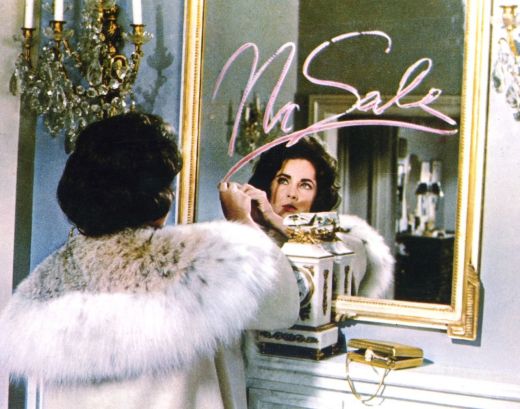
Image: Elizabeth Taylor won the Best Actress Academy Award for her performance in Butterfield 8. (1960), directed by Daniel Mann