Be the Leader Who Gets Results

Freelancers and other business owners step into leadership from the moment you begin operating as a self-employed professional who provides products or services to customers. You are motivated by the desire to advance the long-term success of your organization. You understand that you must be an effective, and perhaps also an inspiring, leader who provides a clear vision of your organization’s mission, values and goals.

The method that you perhaps instinctively choose to express your leadership role is known as your leadership style. Your style defines how you guide, motivate, manage, or collaborate with your team to implement strategies and execute tactics that achieve the goals, objectives, or deadlines for which you are responsible. Your go-to leadership style is based on your personality and life experiences and may be influenced by your organizational culture and the goals you will achieve.

While there are several commonly used leadership styles Daniel Goleman, a psychologist renowned for his work on Emotional Intelligence, notes that, “Being a great leader means recognizing that different circumstances may call for different approaches.” Research supports his opinion, indicating that highly effective leaders recognize that circumstances may compel them to adapt their leadership style in response, be it changes within the team, a shift in organizational dynamics, or fluctuations in the business environment. Leaders who know how to get the best results understand that they must be sensitive to the composition of their team, understand the relevance of the goal that must be achieved and, most of all, they possess the agility to adjust their leadership style as needed.

As Goleman emphasized, “The most effective leaders switch flexibly among the leadership styles as needed…[They] don’t mechanically match their style to fit a checklist of situations — they are far more fluid. They are exquisitely sensitive to the impact they are having on others and seamlessly adjust their style to get the best results.” Below are leadership styles that may be useful for you.

Charismatic Leadership

The leaders of this style are expert communicators and possess a level of personal magnetism that inspires trust and loyalty and enables them to persuade others to follow their lead. They radiate warmth, sincerity, intelligence and authenticity; they inspire, excite and spark loyalty among team members. Well-known charismatic leaders include the Dalai Lama, the late Queen Elizabeth II of Great Britain and former President Barack Obama. For those who have that irresistible aura, this style is associated with social activists, motivational speakers and religious or political figures—leaders who need to inspire and gain the devotion of their followers.

Key characteristics

  • Charismatic leaders are very confident in their approach. They have a very influential personality and are not known to harbor self-doubt or second-guess their decisions.
  • They embody the values, beliefs and motives of their team and they believe deeply in the abilities of team members.
  • They have high expectations, are often highly competent and become a role model for team members.
  • Creates a sense of positive change.
  • Motivates and inspires the team.
  • Encourages teamwork and collaboration.

Coaching Leadership

This style of leadership believes in teaching and mentoring team members, to put them on their path to excellence. They are usually experts in their field of interest and are great communicators. This type of leadership is most effective with younger, inexperienced teams. By providing constructive feedback, setting clear goals and offering guidance, coaching leaders aim to empower their teams to overcome challenges and excel in their roles. This approach is particularly beneficial for long-term organizational growth, as it invests in individual team members’ skill development and career advancement.

While coaching management can bring substantial benefits to an organization, notably increased team member satisfaction and improved performance, it may pose challenges in situations where
immediate business needs demand swift and decisive actions. Moreover, the necessity of mentoring and professional development require a leader with patience. Works best for teams whose members need to be trained thoroughly to achieve peak performance.

Key characteristics

  • Coaching leadership works best with people who appreciate guidance and mentoring and are willing to learn from their leader.
  • Leaders should be ready to spend time and energy coaching and grooming team members to develop their competencies and improve their performance.
  • Empathy and trust are the pillars of this style of leadership.
  • Encourages innovation.
  • Gives team members constructive criticism.
  • Gives team members opportunities to become future leaders.

Autocratic Leadership

Autocratic leadership is the boss-centered approach to leadership. This leader controls the show. S/he follows a top-down approach to communication and it can be said that s/he doesn’t so much communicate as issue commands. Autocratic leaders make all decisions and expect team members to comply. They don’t collaborate because they are not seeking input from the team. Instead, they evaluate matters from their own perspective.

Autocratic leaders are often not interested in team bonding that begins with socializing and may include team-building activities. This leadership style typically exists when there is considerable lack of trust within the organization, which may explain why the leader, or those whom s/he represents, has the power to make all the decisions. This style may be the most pragmatic approach when consensus is not possible and the leader is required to make judgment calls.

Key Characteristics

  • Highly structured environment.
  • Facilitates quick-decision making.
  • May be useful where conflict is present.
  • Restricts creativity and innovation.
  • Can lead to low morale within the team.
  • Not suitable for companies that promote a collaborative culture.
  • Leaders may lack agility, or the ability to adapt or pivot.

Laissez-faire Leadership

Laissez-faire is a French term that in English means allow to do and the core of laissez-faire leadership is non-interference. Also known as Delegative Leadership, practitioners of this style adopt rather a hands-off approach. Laissez-faire leaders provide minimal direction and allow team members to work independently and without much oversight.

These leaders are likely to delegate much of the decision-making responsibility to the team, enabling them to take ownership of their work and make decisions independently. The laissez-faire leader is likely to spend most of the time focused on his/her own work rather than monitoring the team and in so doing cultivates trust and empowers team members to take control of their own tasks and projects.

This leadership style can be particularly effective in situations where team members are highly skilled, experienced and self-motivated and require minimal supervision. Works best if the leader has a group of people who already excel at their skills and team members thrive in an environment of independence, where they can hone their own leadership skills. 

Key characteristics

  • Considerable trust is given to team members.
  • Team members have great autonomy, which promotes creativity and innovation.
  • Employees get ample room for personal growth
  • Learning and professional development are encouraged.
  • Team members have the freedom to work in their own way.
  • There is no micromanagement
  • Faster decision-making.
  • Constructive feedback is a vital component of this leadership style.

Servant Leadership

The servant leader operates on the idea of service as the defining ingredient of leadership. The needs of team members are prioritized over his/her own and the focus is on supporting and empowering them so that they can achieve professional growth and development. Servant leaders provide guidance and support and actively seek out opportunities to help team members to succeed.

This style can lead to higher employee engagement, better job satisfaction and employee retention and an improved organizational culture and sense of community. Servant leadership is particularly effective in environments where team members have felt unsupported or undervalued. By putting their needs first, servant leaders can help build trust and respect and create a positive work environment.

At its core, servant leadership promotes ethical decision making by creating a culture and encouraging values where all participants will be inclined to make decisions based on what is right for everyone involved, rather than what will benefit a select few. This leadership style fosters an environment where creativity and problem-solving thrive as team members feel empowered to suggest new solutions and build upon each other’s ideas. Use this style when you lead a diverse team, where personalized management for team members is necessary.

Key Characteristics

  • This style has a high degree of awareness toward the team. Leaders of this category are great listeners. It gives them a better understanding of the team’s strengths and weaknesses.
  • Great for building respect, trust and loyalty.
  • Helpful in building a solid company culture.
  • Promotes ownership and responsibility.
  • Increases employee morale and confidence.
  • Builds trust and loyalty within the team.
  • Team members feel valued.

Transformational Leadership

Transformational leadership theory emphasizes the leader’s ability to inspire and motivate their team members and incite them to put aside their own self-interests for the greater good of the organization. Transformational leaders inspire team members by way of their vision, charisma and intellect, as they promote innovation. These leaders aim to motivate their team to transform systems, processes, or products and build a more successful and sustainable future for the organization.

This leader makes the team feel that all are fully on board with the cause of promoting the innovate vision and mission and will work hard to bring excellence. This feeling brings purpose that encourages bonding, loyalty to the organization, fellow team members, the leader and creates a sense of belonging. Transformational leaders give team members opportunities to explore different ideas and approaches and encourage them to let their creative juices flow.

The relationship between leaders and staff can help the organization, according to those who incline toward this style. As they see it, effective leaders inspire workers to go above and beyond what they believe they are capable of. Leaders develop a vision for their team members and motivate them to realize it.

Employee morale is raised and inspired by transformational leaders, which helps them perform better at work. These managers encourage staff members by their deeds rather than their words because they specialize in setting an example. Use this style in rapidly growing companies and in fast-paced or ever-evolving industries when business requires constant innovation and moving ahead of the crowd, from high fashion to high tech.

Key characteristics

  • The leader must set the example.
  • Give interaction a high priority.
  • Encourages team to self-manage and be proactive in their work.
  • Be open to new approaches and concepts.
  • Take chances and make difficult choices.
  • Works well when a new approach and fresh ideas are needed.
  • Can take the leader and team members outside of their comfort zone.
  • Encourages professional and personal growth of the leader and team members.
  • Encourages creativity.
  • Encourages change.
  • Maintains a focus on the big picture.
  • Regular feedback is essential.

Thanks for reading,

Kim

Image: Courtesy of the Neues Museum in Berlin, Germany. Nefertiti (1370 – 1330 BC), reigned as Queen Consort of Egypt 1353-1336 BC. She was the Great Royal Wife of Pharoah Akhenaton (born Amenhotep IV, 1379- 1336) who reigned in the 18th Dynasty of Egypt circa 1353 – 1336 BC.

Crash-Proof Your Business

If there’s anything Freelancers and other business owners and leaders have learned over the past year is that positioning your company to survive adversity is high priority. Baking in stewardship policies that include risk management strategies designed to shield the company from the effects of marketplace instability (or maybe just a tough competitor) is a must-do.

Maintain the business in the way you maintain your home—painting the deck, caulking bathroom tiles, checking the foundation for cracks, putting a sealant on the driveway. When the inevitable blizzards and hurricanes arrive, you’ll weather the storms (earthquakes and tornadoes are something else again, of course).

There is no precise formula for the process. I recommend that business owners and leaders focus on the reliable benefits derived from this short list of basic resources: human capital, operational capabilities, a healthy culture and cash reserves.

Whether a solopreneur Freelancer or leader of a team of 100 or more, know that good leadership yields the best business results, in good times and bad. Those at the top of the organizational pyramid are the responsible party and have great influence on whether the venture finds success or failure. Creating a sustainable business model and obtaining sufficient start-up and working capital are how a good business is born. But there is more.

Company culture

Creating a healthy company culture is a business-sustaining strategy. Business owners and leaders should understand that when top-down and bottom- up communication is the norm, when leaders model a strong work ethic, when transparency and best practices are followed both internally and externally in customer relationships and when respect, coupled with a degree of autonomy, is given to employees at every level, a winning strategy, expressed through a healthy company culture, takes hold. Good company culture results in employees who are happy, productive and loyal to the organization.

Human capital

Providing skills-building training and coaching is an investment that also encourages employee loyalty and enables company leaders to maximize their productivity. Such policies and practices nurture company loyalty and come as close as possible to ensuring that when the going gets rough, the company will have a team dedicated to the organization and willing to work hard and smart to support a turnaround. This strategy also gives companies a reputation as a good place to work and acts as a magnet for top talent.

Strategy

The most effective business strategies are uncomplicated. Learn to distill yours down to one page. When speaking to your banker or potential investors, potential strategic partners, or high-level talent you’d like to hire, the ability to articulate a readily understandable and relatable business strategy will build confidence in you and the company you lead. Start clarifying and simplifying the strategy that guides your venture:

Vision for the future

Big picture goals (short-term, mid-range and long-term)

Key Performance Indicators and the department responsible for each

Top line revenue and market share, two metrics that indicate the quality of the business strategy.

Execution

Strategy is nothing without execution. An effective leader gets the plane into the air and flying at cruising altitude. To achieve that aim, properly trained staff, effective and intuitive workflow protocols, IT hardware and software that create operational efficiencies, quality control and an end-to-end positive customer experience are required. Errors, confusion and duplication of work undermine productivity, erode employee morale and result in weakened revenue and profit.

Defining the intended outcomes, practicing good communication, establishing efficient workflow organization, the required technology and the appropriate staffing level and expertise will likely repair obstacles to proper execution. Action plans, complete with departmental responsibility and due dates that the team consents to, ensure accountability and optimal results.

Cash

Small to mid-size companies would be wise to hold in reserve three to six months of projected operating expenses. That sum is meant to carry your company through a difficult time or allow you to take advantage of a business opportunity.

Bear in mind that every business is different. The amount of your company’s cash reserve will depend on where the company is. Start-up, new product launch, capital improvements campaign, or growth-expansion-scaling periods are not the time to build the reserve because available cash must be used to support those important initiatives. Discuss with your accountant about when it will make sense to start a capital reserve fund and how much it should hold.

It is also possible to use financing to build your company’s cash reserve and now may be the time to act. The SBA’s Paycheck Protection Program (PPP) Loan on March 30 was extended until May 31, 2021. The PPP Loan can be forgiven and essentially become a grant, but not every loan recipient is able to fulfill the qualifiers. Worse case scenario, the PPP must be repaid within two years at a 1% interest rate.

Thanks for reading,

Kim

Image: The Indy 500

Collaborating in the Digital Realm and IRT

Collaboration is a soft skill that in the COVID era rapidly acquired big implications. Even more than in the recent past, the ability to achieve efficient and effective collaboration within work teams, and in fact within organizations, is recognized as a fundamental leadership skill. Collaboration today plays a defining role in driving successful business outcomes.

Because it is now common practice for team members to work from either home or office and to be scattered across city, state, national or even international borders, in addition to occupying various time zones, it is critical to ensure that all players are on the same page. Freelance consultants would do well to diplomatically encourage a collaborative environment on every project in which they participate. A project that yields less than stellar results will weigh most heavily on the Freelancers’, and not the employees’, reputation. The opportunity to receive referrals and repeat business sometimes rests on making one or politically savvy suggestions.

Collaboration is born of trust, respect, communication and, ultimately, sharing information and responsibility. These attributes and actions promote both camaraderie and good decision-making. Teamwork begins when team members understand their project mission; understand how their project supports organizational objectives; have the data, tools and authority to carry out their work; and know whom to consult when questions arise. Think about how you can advance those ideals on your next project.

Digital workflow systems such as Asana, Slack, Trello, or Microsoft Teams are excellent tools that provide access to all relevant documents, support continuity, allow all team members to view and contribute information as work progresses and document progress. Study the project specs. Visit the websites of the digital workflow systems mentioned here or recall your experience with other systems. In the kick-off team meeting, raise your hand (virtually or In Real Time) and suggest a workflow system that will both expedite the work and promote transparency and collaboration.

Virtual check-in meetings may find some team members in a makeshift home office, on a park bench surrounded by greenery, or in their familiar workplace office but nevertheless, if trust and respect have been properly seeded and nurtured, open communication that also allows for differing perspectives, will support candid assessments of project progress, about what may not be working and enable the wisdom of the team to devise solutions that all will support.

Follow-up is where the team pulls together to implement whatever useful suggestions for improvement that surfaces at check-in progress meetings. It is often said that half of life is about showing up. Surely, the other half is follow-up.

Follow-up moves the team and the outcome they produce from good to great. Top teams never assume that someone else took care of an important detail— they make sure it’s been done, the right way. Dot the i’s, cross the t’s and deliver excellence.

Thanks for reading,

Kim

Photograph: Kim Clark. Nursery school students collaborate on their project (the morning walk).

Knowing How to Delegate Is a Productivity Plus

Those of us who work alone frequently need to at least maximize, if not increase, our productivity and hiring part-time or temporary help may be what it takes to get us there.  Sometimes, you need to ramp up to take on a big project for which you’ll need specialized competencies that are not in your skill set, prompting you to hire subcontractors.  In that case, you’ll lead a team and coordinate numerous tasks that drive completion of the project deliverables.  In other cases, you need administrative help to free you from routine tasks like bookkeeping and invoicing, or following-up with customer service requests.

In each scenario, the ability to effectively delegate will be instrumental in creating a positive working environment, where your hired help will strive to do their best work, so that desired outcomes are achieved.

Delegating can be considered both an art and a science and with practice, it can be mastered.  An unwillingness or inability to delegate indicates poor leadership.  Leaders who insist upon having their hands tightly on the wheel of every initiative are often perceived as controlling micromanagers by those who work with them. Such behavior telegraphs a lack of trust or even respect.  It is demotivating and ultimately counterproductive.  Here’s a checklist to help you perfect your delegating skill.

  1. Learn and assess the skills and interests of team members/ employees                                                                                                                        Consult with and observe your team members or employees when putting together a working group or assigning tasks and accommodate, to the best of your ability, their strengths and preferences, according to the project needs.  This could be a skills development opportunity for some and the wise leader will enable that process whenever possible and reap the benefits.
  2. Choose the right tasks to delegate                                                                                     You, team leader, are responsible for understanding and communicating the strategic, big picture view of the work.  Subcontractors and part-time help are responsible for their area of specialized skills.  You coordinate all tasks and ensure that milestones are met and the deliverables are provided within the project deadline and budget.
  3.  Provide the tools and authority to do the work                                                    Ensure that your employees or team have the resources—information, time, budget, equipment— and the authority to do what you’ve asked of them.  Don’t make them run to you whenever they need to take action.  Rather, empower them and let them apply their intelligence and creativity to making you look good.
  4. Be clear about expectations                                                                                           Explain the goals of the project or tasks and how they support short or long-term plans.  Explain how results/ success will be measured. Confirm that those who work for or with you understand their individual responsibilities and the collective goal. Make sure that the goals are SMART: Specific, Measurable, Attainable, Relevant and Timely.
  5. Provide feedback, guidance and encouragement.  Acknowledge success.     Monitor performance and quickly correct any misunderstandings or problems. Find teachable moments and provide training or useful suggestions when needed.  Encourage and enable excellent work to keep people motivated and productivity high.  Team members and employees will appreciate that you recognize and diplomatically call out both superior and weak performances.


Thanks for reading,

Kim

Image: A Goldsmith in Baghdad (1901), Kamal al-Mulk (1847-1941) courtesy of the Islamic Consultative Assembly in Tehran, Iran

Freelancers Hiring Freelancers

Are you preparing to submit a proposal for a big assignment you hope to win and know that the project specifications will cause you to subcontract some of the work? Congratulations! You will have the pleasure of hiring one or more of your Freelancer peers. Together, you will become a team whose mission will be to produce the client’s deliverables by achieving outcomes of the highest quality, on or in advance of the project deadline and on budget.

You, the external team leader, must understand the skills that the project requires, know how much it will cost to secure the services of your Freelancer team and write a winning proposal.  Project management is an everyday reality for Freelance consultants and the bigger the project, the more planning is involved. Your reputation is forever on the line and when subcontracted work is involved, you must be diligent in your search to identify the best talent to bring on board.  Read on and get some helpful advice on how to assemble a winning team that will enhance your brand and your billable hours, current and future.

Get budget estimate

Get a reliable project budget estimate from your client, if possible.  If the client prefers playing possum with that amount, then make sure you are able to accurately estimate both the quantity and quality of work the project requires so that you can first, calculate your own labor cost and target profit margin and next, understand what you must budget to pay your subcontractors.

Hire specialists

Directly ask candidates you interview and confirm that the skill you need is a competency in which that candidate excels and that s/he has performed often enough to claim deep experience.  You are in no position to train someone on the job.  You must guarantee superior results.

Pay well

Why not ask candidates what they want to make as a subcontractor on the project? Start by researching the going rate range for that specialty, so that you’ll know what to expect to pay and you can rule out those who attempt to take advantage of you.  People will do their best work when they feel valued. They’ll be happy to give extra to make you look good and make themselves shine along with you.  They’ll go above and beyond because they’ll want to be hired to work with you again since you value their capabilities.

If you encounter someone who seems a perfect fit for the project but his/her subcontracting fee is somewhat beyond what you planned to offer, then ask what perks might make that person happy, in addition to money.  You may be able to get who you want for a little less money if you give a little more in another area that demonstrates how you value the skill set.

Set clear expectations

If the project is on a tight time frame and in order to meet the deadline long hours and a seven-days-a-week schedule will be needed then you, the external team leader, must present this schedule information to your candidates in the interview.  You need team members who are able to block out the necessary time and are willing to work hard.  If time is an issue, expect to pay a premium to your subcontractors and add a premium to your own fee as well. Develop a contract for your subcontractors, so that all responsibilities, relevant milestones, the project deadline and the rate of pay are in writing.

Communicate often

Request weekly or bi-weekly written progress reports from your subcontractors and send similar updates to your client.  Announce to the client and your subcontractors whenever a project milestone has been met.  Interim victories will give you an opportunity to thank and congratulate your subcontractors and inspire them as you do.  Learning that you and your team have reached a milestone gives your client confidence in you.

View work samples

In the subcontractor interviews, be sure that work samples provided correspond with the project specs, to confirm that you are evaluating what is relevant.

Check references

Ask to speak with two of your candidate’s clients.  Confirm the type of work that the candidate has done for each reference.  Inquire about the quality of that work and the candidate’s willingness to do what was needed to get the job done.  Ask what it’s like to work with the candidate—is s/he positive and upbeat, or a constant complainer? Finally, ask if there’s anything else you should know about the experience of working with the candidate.

Paperwork

Once you understand the project specs, the role that your subcontractors will play and what you will pay for their services, you can then write a draft contract.  Also, download from the IRS website tax form W-9 for your subcontractors to complete and return to you. You’ll retain the W-9 and use it to prepare and mail to subcontractors IRS form 1099 before January 31 of the following year if payments to any subcontractor reach $600.

Finally, set up an accounting method that will allow you to easily and accurately calculate hours worked and dollars earned for each subcontractor.  If you’ve seldom worked with subcontractors, then speak with a bookkeeper or accountant for more information.

Thanks for reading,

Kim

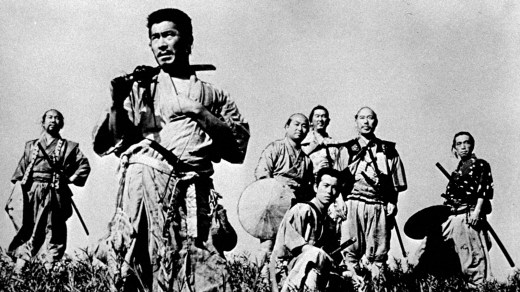
Photograph: Seven Samurai (Japan, 1954) Directed by Akira Kurosawa and starring Toshiro Mifune (foreground)


The Classic 6 Leadership Styles

The effective leader is flexible.  S/he is possessed of self-awareness and knows that the style of leadership must fit the demands of the circumstances. What methods can a leader use to persuade team members to give their best performance? How can a leader inspire trust and confidence, obtain buy-in on a vision and goals, encourage bonding and build a cohesive team, build skills where necessary, acknowledge and respect skills where present, create loyalty and produce extraordinary results? The leader must assess the staff with whom s/he will work and employ the most effective leadership style.

I.      Directive

No-questions-asked coercive style that demands compliance. “Do as I say” and controlling.  Motivation is “encouraged” via threats and discipline. Are you looking for a way to kill motivation, persuade the staff to lose commitment and enthusiasm and squelch any respect the staff may have had for you? Look no further.

Most effective:       In a crisis when decisive action must be taken ASAP and there is no room for deviation from a tightly prescribed rescue strategy.

Least effective:       With highly skilled team members, who will quickly resent micro-management and the disrespect of an authoritarian culture.

II.    Visionary 

Inspires the team. Employees come to feel that they are a team and understand how and why their work contributes to the realization of the vision. Moves people toward shared goals/outcomes through empathy and clarity.  This leader states the vision clearly and compellingly, gets buy-in and then steps back and allows the team to work, stepping in from time to time to reiterate the vision and reinforce commitment and enthusiasm.

Most effective:     When seeking to help the team create and achieve goals for the long-term.

Least effective:    The leader is not credible and employees do not trust the vision and goals proposed.

III.   Affiliative 

Creates harmony that boosts morale and resolves conflict.  Builds trust between the leader/manager and employees. People first, task second. The focus is on helping the team to bond, but there may be hesitation when it’s time to take charge and get down to business.

Most effective:     When stepping into an environment where conflict has damaged commitment and morale.

Least effective:     When producing results is imperative and where clear direction, strategies and action plans are needed.

IV.   Participative 

Superb listener, team builder, collaborator and influencer.  A primary objective is to build commitment through consensus. Employees know that their input is valued and this generates commitment.  However, constantly seeking consensus can impede progress toward completing projects.

Most effective:     The staff are highly competent and mutually respectful. Turnover is low and the team is cohesive.

Least effective:     Close supervision is required for the inexperienced. There is no time to build commitment and consensus.

V.    Pacesetter  

Leads through example, has great initiative and a strong drive to achieve through his/her own efforts.  This leader has high personals standards and high energy,  but little patience and can become a micro-manager.  The team is a meritocracy and only A + results are acceptable.  Anything less and the under-performing employee will be pulled off the project.  Nevertheless, team members are inspired and remain engaged and motivated by a leader who “walks the talk”.

Most effective:    Managing highly motivated experts.

Least effective:   When skills development,  coordination and coaching are necessary.

VI.  Coaching 

Good listener who helps employees identify their strengths and weaknesses.  Knows how to delegate,  which provides skills training for staff members.  Encourages peak performance by providing opportunities for professional development and building the employee’s long-term capabilities.

Most effective:     When professional development is needed and employees are motivated to achieve.

Least effective:    The leader lacks expertise and/or the ability to teach or coach. Results produced by highly skilled employees are immediately needed.

Thanks for reading,

Kim

Business Meeting Etiquette

We are now on the other side of Memorial Day Weekend.  For many Freelance consultants,  the start of Summer means that work assignments wrap up and one wonders not only how to make good use of time,  but also how to create the conditions for a profitable September and fourth quarter.  Over the years,  I’ve found that a surprising number of decision-makers are also less busy in Summer and are therefore more amenable to scheduling a meeting with me.

On the other hand,  you may be very busy working with a client who must have a certain initiative up and running right after Labor Day.  You may be leading a team and thus responsible for achieving milestones,  disseminating information and maintaining team member enthusiasm and focus during steamy Summer days,  all of which will cause you to occasionally schedule meetings.

Regardless of your motive,  take steps to ensure that your meetings are perceived as worthwhile by those who attend.  Define a clear purpose and use that to create an agenda.  If you are a project leader,  you must identify questions that need answers,  confront current or potential roadblocks,  or possibly evaluate the need to make adjustments to the project scope or its time-table.  Next,  decide who should attend and begin the scheduling process.  Invite only the stakeholders: those who are carrying out the project,  the project sponsor and those who will be directly impacted by its outcomes.

To win a client meeting,  your agenda is to articulate the value of what you propose and convince the prospect to meet with you and ultimately,  offer you a contract.  A telephone call in which you propose a meeting is the simplest approach,  unless you can arrange to  “accidentally” encounter him/her at some location and  make an in-person request.

When bringing together your team,  a group email is the preferred method of contact and within it state the purpose of the meeting;  who will be asked to present;  any materials that team members should bring along;  and the expected length of the meeting.  In both scenarios,  offer two or three possible date/time options.  When a date has been chosen,  immediately send a confirmation email and reconfirm 24-48 hours before the meeting date,  with an agenda and relevant reports attached for the team meeting.

Set a good tone by opening your meeting no more than 5 minutes after the official start-time and by warmly greeting participants and thanking them for attending.  Remember at the start to properly introduce any guests or anyone who is new to the team,  stating proper names,  job titles and role on the project.  Have hard copies of the agenda and any meeting materials available for each attendee,  no matter that those were sent with the confirmation email.

Move through the agenda items and get resolution on each one,  even if that means follow-up is needed.  Encourage attendees to participate and enforce good manners.   Make certain that no one gets shouted down and that everyone who would like to contribute gets a respectful hearing.  Ask that only one person speak at a time and that those who would like to speak first raise their hand to be recognized by you,  the presider.   End the meeting on time,  unless participants agree to stay longer to complete unfinished items.

If the meeting is held in a restaurant,   you called the meeting and you pay the bill.  If you are a consulting project team leader,  confirm reimbursement procedures with your company contact in advance.  If you meet with a client,  arrive at the restaurant 15 minutes early and arrange a discreet payment protocol with the host,  so that an awkward moment is avoided.

Enlist a meeting note taker,  or take them yourself.   Within 72 hours after the meeting,  send to all participants a draft copy of the notes and invite corrections.  When corrections have been made,  send the final copy to all who attended and also to the project sponsor,   whether or not s/he attended.  If meeting with a client,  send a thank you letter that is hard copy or an email,   in which you document any agreements and action items.  Make sure that all meeting participants carry through with their follow-up commitments in a timely fashion.

Happy Summer and thanks for reading,

Kim

Leadership Starter Kit

Christmas Season notwithstanding,  I am busy this December and it feels so good! Catch my act on Wednesday December 4,  when Dalya Massachi of  “Writing Wednesdays” and I talk about the benefits derived when nonprofit leaders write a business plan for their organization.  3:00 PM EST,  2:00 PM CST,  1:00 PM MST,  12:00 PST. FREE! Register at http://www.writingtomakeadifference.com/writing-wednesdays

Readers in the Boston area may want to direct clients who are leaders at nonprofit organizations to get essential how-to information on business plan writing at my popular workshop “Become Your Own Boss: Effective Business Plan Writing”.  We’ll meet on three consecutive Wednesdays,  December 4, 11 & 18  5:30 PM – 7:30 PM at Boston Center for Adult Education 122 Arlington Street Boston 02116. Register at  http://bit.ly/1bP4uw9  or call 617.267.4430 class ID# 10190.

Congratulations,  you have been named project leader of a prestigious assignment.  You are thrilled to the gills,  but also apprehensive.  You have practical experience,  creativity and enthusiasm,  but you are not quite accustomed to such a front-and-center role.

You’ve scheduled a meeting to bring everyone together for the project kick-off,  where roles and responsibilities will be discussed,  timelines established,  milestones identified and important success factors and potential stumbling blocks will be acknowledged.  You know this is where you establish your bona fides and stake out your claim as the leader.  You are in charge and ideally you will project good natured authority and not arrogance or insecurity.  You are 20 years younger than several project team members.  How do you get this right ?

Introduce yourself

Welcome the team and thank them for participating on the project.  Express that you are very happy to work with such a talented and experienced group of professionals.  Without bragging,  state your professional experience as it relates to the project,  to let the group know that you are qualified and that they have every reason to trust your judgment and expertise.

Team introductions

Invite team members to participate in the standard round robin of introductions.

Confirm the project deliverables and due dates

Establish the expectations and begin to assign roles and responsibilities,  milestones and timelines.  Encourage team members to have a say in this process,  as they know more than you about how departments interact,  unspoken protocols and overall how to get things done.  Be secure enough to accept their suggestions,  as it will promote your credibility and earn you respect.

Ask questions

Pose questions that allow team members to contribute to the decision-making process and telegraph that you value their expertise.  Let team members share their knowledge.  Avoid being a know-it-all.

Listen carefully

Make team members feel heard and you will earn their confidence,  respect and loyalty.

Be humble

Team members must believe that you are qualified to lead the project,  but take care to portray yourself as a team player and a leader who wants to make everyone involved look successful.

Be empowering

Champion good ideas that are presented by team members,  and not just your own perspectives,  and you will build the team’s enthusiasm for and commitment to the project.  Respect and value the perspectives and recommendations that deep experience and long tenure bring.  Some ideas may fall by the wayside when explored in detail and others may turn out to be brilliant. Your tenured team members have the ability to make the project successful. Whatever happens,  empowering team members builds respect and loyalty and makes you look like (and be) a good leader. Remember also to be publicly generous with compliments.

Thanks for reading and Happy Thanksgiving,

Kim

Intermediate Expert  Ezine Articles

Ezine Articles Intermediate Expert