
The Story of Your Presentation

Human beings love a good story. Almost any topic will do. If the teller of the story communicates well, s/he will find an attentive audience, eager to be informed or entertained, shocked, surprised, moved by sentimental emotion and perhaps stirred to action. Our attraction to stories fuels our appetite for movies, plays and television shows.

Throughout history our leaders—kings, generals, politicians— have often been masterful storytellers. Thousands of years after the lives of game-changing leaders such as the Roman Emperor Julius Caesar and the Athenian statesman Pericles, we are still in awe of their bold, insightful and inspiring speeches. In fact, we consider exceptional public speaking ability—-storytelling—-to be a sign of capable leadership and a brand-enhancing skill. The ability to tell a story well, if only simply, is a proficiency that Freelancers and business leaders would be wise to develop.

The secret to becoming an effective public speaker is understanding the subtle but profound differences between delivering a presentation and telling a story. Maintaining awareness of those distinctions as you prepare to address your audience will help you connect with them and make them inclined to feel that your talk was relevant and memorable. Your audience may even be inspired to take action (if that is your purpose). Almost anyone can give a presentation but the most effective communicators are also storytellers and that’s what we’ll learn to do today.

Stories humanize and energize

Bullet points and logic are how you present facts and give a recognizable beginning, middle and end timeline arc to a presentation. A story is a connected series of events told in words and/or pictures. A story has a theme, attention-grabbing moments, a challenge, heroes, villains and a resolution. The content of a presentation, no matter how ably delivered is, sadly, often forgotten. The memory of a good story, however, can be long-lasting.

To be blunt, most business presentations are torture and we all know it. They rely heavily on slides filled with bullet points and numbers that make our eyes glaze over. The presenter reads the slides. The effect is brain-numbing.

The problem is that business executives don’t get that delivering a presentation is not only public speaking, but also a performance. A truly skilled speaker is also a storyteller and is not shy about looking to the entertainment world to level up public speaking skills.

To inject meaning and energy into your presentation, you must reveal to the audience its underlying message—-the story—-that the bullet points and numbers exist to communicate. In many cases, the story behind those terse statements you’ve bulleted (ouch!) and the intimidating Excel spreadsheet of numbers you copy/pasted to create your slides can be translated into a story that your audience wants to hear in three or four sentences, tops.

Telling that story is worth the effort. Telling the story is why you’ve been invited to speak. No one needs you to read slides to them, we can do that on our own. To become a first class public speaker, focus on crafting and communicating the story behind the slides, in words and pictures.

Every picture sells the story

Researchers have found that listeners typically remember about 10% of the points made in a talk if the information is presented with words alone but when images accompany words, listeners will retain 65% of the information. Therefore, including a selection of images to visually communicate pivotal aspects of your story is a must-do.

Directors of the television, plays and movies that we watch first read the script to find the story line they’ll tell. Next, they identify action and other key scenes and then they literally sketch those scenes on paper, mount them onto what are called storyboards and document the scenes they plan to show in the performance. You can do something similar as you prepare for your next talk. Public speaking pros who know there is a story to tell make sure to think through the elements of their content and put together an engrossing narrative to communicate that story.

  • Review the information that is necessary to share with the audience.
  • Decide what information should be included on the slides, as a bare bones framework of the story.
  • Choose images — graphs, charts, other images—- that visually communicate the story.
  • Write story notes, the narrative that will become your script, to link and integrate the three components of your talk. Edit well and get very familiar with your talking points.

Practice makes perfect

Most business execs merely page through their slides and pass it off as a presentation rehearsal. It’s common and I’ve often done it, but it’s not enough. Real storytellers rehearse out loud. They practice vocal delivery and experiment to find the right tone of voice, figure out the timing of pauses and modulate the pace of their speech, all to perfect the delivery and power of their story. They want the audience at the edge of their seats, anticipating what will happen next. Block out three days and devote at least two hours a day to rehearsing.

Finally, public speaking pros who appreciate the difference between a rote presentation and a riveting story will also conduct a walk-through rehearsal at the venue and will rehearse while using the delivery platform of their talk. If you’ll stand in front of an audience, rehearse standing up and anticipate your approach to audience eye contact. If you’ll deliver the talk virtually, rehearse sitting down and figure out how to position your device and the lighting. Public speaking stars are usually made and not born!

Thanks for reading,

Kim

Image: Kenneth Branagh (center) as Henry V (September 16, 1386 – August 31, 1422, monarch of England 1413-1422). Branagh directed and starred in the 1989 film based on the Shakespeare play written circa 1599.

Ride the Speaker Circuit

In-person happenings are once again a thing and audiences are turning out in response. Now is the time for Freelancers to research business and professional association websites to figure out where and how to get on a couple of calendars, whether 4th quarter or first half 2022. You know that speaking is a time-tested way to demonstrate your expertise, enhance your brand and meet the right people, colleagues or potential clients, along the way.

There are several ways to get in front of an audience. Whatever public speaking opportunities are open to you and fit your agenda and style, you”l be wise to polish your presentation skills before taking the mic. Even top-tier speakers regularly work with coach. Listed below are public speaking formats you might pursue as well as suggestions, aimed at featured speakers, to help you level up your in-person event speaking technique.

  • Moderator or speaker on a panel
  • Podcast or webinar guest
  • Introducing the speaker
  • Featured speaker

Frame your story

We all have stories to share and some are quite entertaining or even inspiring. To turn your story into a memorable communication vehicle, you must learn how to find and present a story arc that appeals to your audience. The best speakers are persuasive storytellers who learn how to shape a beginning. middle and end of their topic that fits both the audience mind-set and also their purpose —-agenda, if you will—-for the talk. Learn what interests or matters to your audience to help yourself gauge what they likely already know about your topic and what new information or perspective they’ll probably appreciate.

Balancing act

Limit the scope of your talk. Avoid trying to address every element. The kiss of death for a speech is giving Too Much Information, in particular if it’s irrelevant to the audience. When you know, or inquire about, who’ll be in the room for your talk, you’ll have a good idea of how to not only frame the narrative but also, how technical (or basic) the information you present should be.

In most cases, a speaker can feel confident to concisely introduce his/her topic, give two or three reasons why s/he finds the subject important and provide three or four reasons why listeners should also care about the topic. In so doing the speaker can describe the problem, describe the search for a solution and celebrate the discovery of the winning formula as a victory by listing benefits that resonate with the audience. People like a hero’s journey story, that is, a tale of solving a vexing problem, the struggle to rectify it and applauding the good things that happen as a result.

Media support

Power Point slides are the go-to presentation visual, but you may want to include a video or audio clip as well. You might choose to forego slides altogether and use one or two video or audio clips. The sweet spot for a clip is 60 – 120 seconds, which is the length that audiences prefer, according to the experts.

If you use slides, presentation experts advise that you refrain from listing on the slides the bullet points of what you’ll discuss; put those on note cards instead. Also, it’s recommended that you avoid the temptation of reading from slides. The experts recommend that slides should ideally be used for images—- charts and graphs, photos, or other illustrations.

Stand and deliver

Most of all, one must rehearse and rehearse some more. Use bullet point notes to map out what you’ll say. Rehearse until you can deliver the talk with confidence, but attempting to memorize your talk word for word may not be possible. You can also work on the physical and vocal aspects of presenting your talk.

In a famous 2011 TED Talk, Harvard University professor Amy Cuddy modeled what may actually be the ideal stance for public speakers. Cuddy recommended that speakers stand up straight, relax their shoulders and knees and keep their feet shoulder distance apart.

Finally, develop your vocal technique. Keep your tone of voice conversational, rather than attempting to sound authoritative or forceful. Make eye contact with a few members of the audience to help both them and you feel connected.

In 1992, a speech coach working with Bill Clinton when he campaigned for the presidency devised methods that solved the riddle of what to do with ones’ hands while speaking. The advice was to pretend that you’re holding a basketball in front of your ribs, palms facing in, to project truthfulness and trustworthiness. Through the talk, the speaker can also bring the fingertips into a pyramid in front of the ribs to project calm and self-assurance.

Thanks for reading,

Kim

Image: Gloria Steinem, women’s rights advocate, speaks in New York City in 2017.

A Call to Action

Content creators—-producers of marketing, sales, or advertising content and sometimes speeches, too, must remember that at the conclusion of the artfully told story that’s been delivered in words and/or pictures, it is imperative that you tell the viewer what to do next. Content creators must remember to include an irresistible, inevitable, Call to Action. Fail to do so and the content creator hasn’t done the job.

A Call to Action beckons a potential prospect to do something—-learn more, get this, click here—-that will bring him/her into deeper engagement with the product, service, or idea that’s being promoted. Once the content has made the case, demonstrated the desirable characteristics and therefore the value of what is being promoted, the Call to Action functions to reel in the convinced and the curious.

Step this way, sir! Websites, content marketing posts, videos, television commercials, movie trailers and those postcards that fall out of magazines are but a few examples of where viewers and listeners will encounter a Call to Action designed to entice.

A political action group may write an article on the importance of voting in the next election. The article will likely close with an inspiring CTA message about the privilege of voting and include a link to a voter registration site. A company website may contain two or more CTAs, perhaps appeals to opt-in and receive a weekly blog, RSVP for a webinar, or request a free 30-minute consultation.

Getting started

Before writing your CTA, decide what action you’d like potential prospects to take and what they’ll gain by doing so. Once you know what you want them to do, you can think about how to say it. The best CTAs are short, encouraging and use active verbs that speak directly to the viewer. Remember that the CTA is your closer, the culmination, the purpose, of the pitch you’ve made.

Write your CTA in a font that’s somewhat larger than the other text and use a bold color to make it eye-catching. Lead in with a brief but tempting phrase that persuades viewers to click and subscribe, browse products, opt-in to receive information, attend an event, or take any number of actions.

The next step

CTA buttons are available on Google My Business and the Facebook business page. Most, if not all, email marketing, i. e. blog and newsletter hosting platforms, have always contained opt- in capability to follow or subscribe and an opt-out to unsubscribe. Content creators can easily embed CTA buttons or hyperlinks into a website, blog post, social media site, newsletter, or marketing email. Visibility will be key, so along with bigger and brighter text, place the CTA at eye-level and in most cases, on the landing page. Viewers should not need to scroll to find it.

The CTA should feel like a natural progression of what the prospect has just seen, heard, or read. Whether s/he will be able to obtain more information about using a product or service, listen to a webinar, or attend an event, ensure that your CTA is consistent with the message in your content. A benefit that conveys value, the appearance of low-risk and a sense of urgency are standard ingredients of the well-crafted CTA.

  • Schedule my free consultation
  • Click and get a 30 day free trial
  • Download my free ebook
  • Renew now and save $10
  • Contact us
  • Take the Pepsi Challenge

Thanks for reading,

Kim

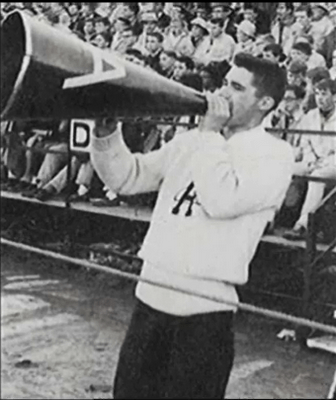
Image: Before he became the 43rd President of the United States (2001-2009), George W. Bush was head cheerleader at the exclusive prep school Phillips Academy in Andover, MA (senior year 1963-64).

Make Your Next Impromptu Speech Great

Here is the scenario: You’re at the meeting of a local business organization, where you are well known. Forty-five minutes into the meeting, the organization Vice President sidles up to you and asks if you’d be willing to speak on a certain topic for 5 – 10 minutes, before the President delivers the closing remarks and adjourns.

You have just 30 minutes to prepare. How can you quickly organize your thoughts and create a concise and compelling speech that your audience will appreciate and that you’ll deliver like a pro? Here’s how you do it.

Attention

Every speaker must quickly capture audience attention. Open your speech with an attention-grabbing statement that expresses a point of view that you know most in the audience share.  Alternatively, you can surprise or even shock the audience with an unexpected fact or a provocative question.  When you open your talk, the goal is to draw  audience members in and persuade them to sit up and listen.

Credibility

Once you have their attention, you next show your audience that you deserve it. Earn their trust and respect when you reveal qualifications and experience that define you as an expert, or a person with special insights, who has timely and relevant information to share.

As a member of the host group you will automatically be given a measure of credibility, but you may have other qualifications that enhance your authority. The person who introduces you may share all, or part, of that background information. Stopping short of boasting, make known your claim to expertise.

Acknowledge success/ Identify problem

The organization leader who asked you to address the group will tell you what s/he would like you to achieve in your speech and if s/he neglects to do that, it is incumbent upon you to confirm the purpose of your talk.  Whether there is a recent victory to celebrate or a looming challenge to overcome, call it out and rally the support of audience members. Enthusiasm and passion, expressed in a way that your audience will expect and accept, is injected here.  Inspire unity for the cause.

Solution

Organization leaders may be planning to roll out an initiative and you may have been asked to speak to build member approval and solidarity around that solution. If there are good times ahead, the solution may be for members to continue their enthusiastic support of the organization and the cause. If turbulent times seem inevitable, the solution is the same. The purpose of your speech is to inspire loyalty to the organization and the cause.

Call to action

As your speech concludes you must give audience members an outlet and direction for their enthusiasm and commitment to the organization.  Should they sign up for a special committee that will implement the solution, be it celebration or problem? Or is this a fundraising initiative and you’d like to inspire commitment for contributions?  Give a deadline and urge immediate action.

Re-cap

End with a concise outline of the major points you made in the speech. Re-state the call to action and the deadline. Thank your audience.

Regarding general recommendations for public speaking, thank the person who introduced you when you take the podium. Keep your talking points simple and easy for the audience to remember. If you can weave into your speech a story that illustrates or summarizes an important point, so much the better.  As Travis Bernard, content marketing guru at TechCrunch, the thought-leader technology industry blog based in San Francisco, CA says, “What would be useful for my audience to learn and how can I package this lesson or bit of information in a compelling story format?”

Thanks for reading,

Kim

Image: Edgar Bundy (1862 – 1922, British) The Coffee House Orator, 1880.  Courtesy of Touchstones Rochdale Arts and Heritage Centre Museum, Greater Manchester, England

The Post-Speech Q & A

Everything has gone swimmingly with your presentation. The room is full, you held the attention of audience members and your timing was spot on. There are 10 minutes left for the question and answer session. You think you’ve won, but you have no idea how vulnerable you are.

Speakers often don’t realize it, but those brief minutes in the post-speech Q & A session have the potential to become your Achilles’ heel. The post-speech Q & A is un-mapped territory. You don’t know what’ll be thrown at you. The Q & A is a variable that few speakers prepare for, because they assume they can’t prepare for it and so they wing it and figure they’ll muddle through. Not!

As Tesla CEO Elon Musk now knows, winging the Q & A can be a grave mistake. At the conclusion of a May 2018 investor’s meeting speech, Musk had a heated exchange with a financial analyst who asked a couple of apparently incisive questions. Musk didn’t come out of it looking good. You may have heard that Musk has recently said “lack of sleep” and “stress” have been wearing him down. Sorry, it’s a weak excuse.

Executive Coach and speaker John Millen points out that when speakers mishandle post-speech or other questions, they can appear uninformed, hostile, or even dishonest. “How leaders answer questions is enormously important in building trust. If you come into a high-stakes situation talking to investors, employees, regulators (or a potential client) and you don’t communicate properly, there can be huge problems.” So let’s consider tactics that can bring you through your next post-speech Q & A with flying colors.

PREPARE

Take all precautions to avoid being perceived as clueless, shady, or defensive. If a question is posed for which you don’t have an answer, say “That issue is under review and I don’t yet have enough information to answer.” You can also turn it around and ask the questioner “Why is that important to you?” The answer may open your eyes to aspects of the subject that you had not previously considered and can be a teachable moment for you.

Start the process by thinking your subject through so that you can anticipate questions that could be asked. Next, do some audience research and ask the program organizer if there might be audience members who could oppose your goals or point of view, so you can rehearse answers designed to neutralize a campaign to undermine you.

CALL IT OUT

Be mindful of aspects of your speech that could potentially seem controversial to certain audience members. A good defensive tactic is to proactively address a possibly sensitive matter in your speech, preferably toward the end or in your concluding remarks. Acknowledge the elephant in the room.

“That way, when it comes up again from the audience you could say ‘Right. As I said earlier…,’ Millen advises. “Then you are reinforcing your answer and it feels more truthful and honest.” Also, you’ll avoid allowing an angry questioner to set the tone. “You can get it out there on your own terms,” Millen notes.

CHERRY PICKING

Sometimes a speaker is hit with a multi-part question and when that happens, the recommendation is to answer that part of the question you can answer most adroitly, the part that reinforces your viewpoint or supports your goal. Speakers can usually get away with this tactic because audience members may not remember the entire question and in fact, they may have little patience with a complicated question. So cherry pick those parts that you want to answer and slide away from what you are unable or unwilling to answer.

NEUTRALIZE OPPOSITION

Unfortunately, there could be an audience member who doesn’t so much have a question, but an axe to grind or s/he is in search of attention. Jo Miller, founder and CEO of Be Leaderly, a professional development training consultancy based in Cedar Rapids, IA, cautions speakers against getting defensive when encountering such a questioner. “The best way to deal with those questions is to maintain a confident and unapologetic posture,” she says. Miller suggests that adopting a tone of amusement can help get the audience on your side. She adds “Respond as if you are enjoying a game of intellectual ping-pong.”

EXPERT HELP

If you are a company leader who will speak to employees, investors, an important client, or others with whom you must build trust and meet or exceed expectations, bring along two or three ranking team members and have them ready to step in and answer questions aligned with their areas of expertise. In other words, defer to the experts, share the spotlight and promote leadership skills development as you do.

End the Q & A on an upbeat, positive note and if possible, after you’ve given a well-received response to a question. If you are asked two or more challenging questions, Millen recommends that you
“Tell them they’re asking the right questions, then bring it back to your overall message. They (the audience) shouldn’t leave with a bad taste in their mouths.”

Thanks for reading,
Kim

Image: Cesare Maccari 19th century fresco depicts statesman, lawyer and orator Cicero (January 3, 106 BC – December 7, 43 BC) as he excoriates Senator Lucius Sergius Catilina (108BC – 62 BC) in the Roman Senate for Catilina’s role in the conspiracy to overthrow the Republic and, in particular, the aristocratic Senate. Courtesy of the Palazzo Madama (Rome).

Presentations: Impromptu and Prepared

In June of this year,   I became president of a local membership organization that is primarily social.  I’ve been a member for 12 years and a board member for 8 or 9 years.  I find the experience to be very gratifying.  I’ve made friends.  I’ve continued to develop and refine leadership skills.  I am fortunate to preside over a board that is comprised of top drawer members who are committed to the organization and who work diligently to develop strategies and plans that will sustain the organization over the short- and long-term.  I do whatever I can to create conditions that enable board and committee members to do their best work and then get out of the way and let them do it.

To become an organization leader is to become its public face and unifying symbol to its members.  Public speaking is part of the job.  It is often necessary to offer words of inspiration and encouragement and verbally demonstrate that you embody the vision,  mission and values of the organization.  There are impromptu speaking  “opportunities”  that arise when you are half way through a second glass of wine and surprise! someone asks you to say a few words.  How do you successfully make an unrehearsed speech and manage to sound reasonably eloquent (and sober)?

There are also impromptu speaking opportunities that are professional in nature,  where one must speak ex tempore about business.  These speaking obligations are unscheduled but they are not completely unexpected,  since one attends certain events with the desire to meet and greet peers and prospects and talk business.  Finally,  there are scheduled speaking opportunities,  when one presents information to prospective clients.  Three types of speaking opportunities:  how can you stand and successfully deliver?

I.  Let’s start with the easiest,  the business meet and greet.  This is where your elevator speech is delivered.   You must decide which version you will roll out.   Are you being introduced to someone and asked what you do?  Keep your elevator speech conversational and limited to what the business provides,  your role or title and the name of the organization.  If someone asks what you do while in conversation,  give a vague but accurate description of the outcomes or benefits of the service you provide or products you sell.  Formulate a sentence that describes the business function and your role,  with a focus on benefits and outcomes.  In either scenario,  provide more information only if the person seeks more information.  Make the encounter a dialogue by asking questions of your own,  to establish whether this individual has a need for your products and services,  or is just making conversation.

2.  Twice,  I have been unexpectedly asked to address members of the organization for which I serve as president and twice I did a good job.  How did I do it?  Primarily,  I was fortunate to have a very good set-up introduction and I was smart enough to listen and pick out a phrase on which I could launch a quick little speech.  In the first,  I found a good tag line that I still occasionally use.  In the second,  I was able to find a theme and spin it into a good three-minute talk.  The moral of the story is,  a leader must anticipate public speaking obligations.  Keep your antennae tuned for anecdotes or observations made by organization members or others that can be used to develop an inspirational mini-speech.

3.  I pass along to you my interpretation of a Power Point presentation template developed by Bahar Martonosi of Princeton University.  You may find this template useful when auditioning for a prospective client or delivering a report of findings during a consulting assignment:

Your name and business name   (1 slide)

Project outline: work that the prospect would like performed   (1 slide)

Rationale: why is the project or problem important to the organization    ( 1 – 2 slides)

History: what has been done before   (0- 2 slides)

Method: your firm’s approach to the project or problem   (1 – 3 slides)

Results: this is the body of the talk.  Present the key results and findings. Do not present all results or findings.  (2 – 6 slides)

Summary:   (1 – 2 slides)

Back-up:  prepare slides that answer expected questions   (1 – 3 slides)

Keep things simple and focus on a few key points.

Repeat the key insights.

Know your audience and adjust the presentation as needed.

The post-presentation informal Q & A is very important.

Make eye contact,  be approachable and it’s OK to smile  (but this is business, not social, so know your role).

Make your audience want to learn more.

Thanks for reading,

Kim

Charisma and the Way You Say What You Say

Is it my imagination,  or are people called upon to do much more public speaking now as compared to 20 years ago? I had a 15+ year career in sales and that kept me talking all day.   In addition to sales calls,  there were company meetings and I was frequently called upon to give presentations and participate in the whole give and take.   But  there was no need to be  “on”  and repping a brand 24/7.   In fact,  human beings didn’t consider themselves a  “brand”—we had reputations.   We had off hours, during which time we could relax without feeling anxious about it.   That was then.

Now I’ve got the Freelance consulting thing going on and demands to stand and deliver have about doubled.   Networking plays a major role in business development for the self-employed and business owners.   I do some teaching and occasionally speak to a local business group,  to demonstrate my credibility and promote visibility.

These days,  we’re all out there self-promoting and doing all that we can to attract new customers,  retain current clients,  obtain venture capital,  get a job or a promotion,  get our child into the  “right”  school and generally look like we are a valuable asset to those who are holding the goodies we desire.   For obvious reasons,  the ability to communicate well has never been more essential.  We need to learn how to inject some charisma into our presentations.

Charisma means a special gift in Greek and charismatic speakers have the unique and valuable gift of connecting with their audience and persuading them to grant the speaker their trust and loyalty.   Charismatic speakers are able to make their audience understand,  buy in to,  identify with,  get excited about and remember the cause and message that they addresses.   Charismatic speakers are adept at painting vivid word pictures by judiciously weaving stories and anecdotes,  humor and metaphors into their presentation in a way that causes the audience to align with them and their goals and opinions.

We all come by at least some of this naturally.   We all use metaphors,  rhetorical questions and other turns of phrase on a regular basis.  We can learn to become more conscious of our natural speaking style and ability by practicing speaking techniques when chatting with friends and family.   In time,  you’ll be able to comfortably inject some charisma when called upon to speak to a group.

Metaphors  are an excellent way to explain and illustrate a message and can persuade a skeptical audience to understand and embrace a new concept.   Martin Luther King, Jr.  displayed his mastery of the use of metaphor in his 1963  “I Have a Dream”  speech,  when he likened the US constitution to a  “promissory note”  that guaranteed the inalienable rights of life,  liberty and the pursuit of happiness.

 Contrasts  often combine reason and passion.  They clarify the speaker’s position on the subject by comparing it to its opposite.  In his 1961 inaugural address,   President John F. Kennedy spoke the immortal words,  “Ask not what your country can do for you—ask what you can do for your country.”  Benjamin Franklin noted that  “Content makes poor men rich;  discontent makes rich men poor.”  Similes  also compare and contrast,  as Muhammad Ali did when he famously announced that  “I’ll be  floating like a butterfly and stinging  like a bee.”

Then there is the use of story telling.   Stories can be where to use Analogy,  which points to the similarities between two things and on which a comparison can be based.   For example,  if your purpose is to build confidence and loyalty in a group and rally the members to face a difficult challenge,  the story you present may summarize when yourself or a group of people  (e.g. Londoners during the bombing in World War II)  pulled together,  kept their spirits up and faced the challenge with courage and resolve,  eventually prevailing.

Charismatic speakers are compelling and memorable.  Their skill is formidable,  but not entirely unattainable.   With practice,   we can learn to paint the picture for the audience,  frame the message,  influence priorities,  win confidence and portray ourselves as a leader.

Thanks for reading,

KIm