How a Social Media Strategy Can Power Up Your Brand

The old saying is still correct—clients (and those who might become clients) do business with those they know and like and do more business with those they know and trust. If you operate in the Freelance B2B consulting sector, you know it’s vital to continually demonstrate your expertise because that’s one of the best ways to win the respect and trust of prospects who might hire you. It’s imperative to make it clear to those motivated to become paying clients that you’ve got the right stuff, that you can be a trusted resource, that you have the capability to resolve their pain points by recommending the right business solution.

Your mission is to get the word out about your insights and abilities and showcase a brand that inspires trust. Bring to audience attention your relevant and timely info that’s delivered in the form of perspectives and insights that resonate. Seeing is believing and becoming a familiar presence in media outlets that your target prospects visit and trust will pay big dividends.

In the B2B sector credibility, relevance and trust are the building blocks of a winning brand reputation and are the foundation of a successful business venture. You access those building blocks by demonstrating value to prospects and peers. One of the most reliable strategies you can enact when your goal is to demonstrate value to prospective clients is to position yourself as a trustworthy thought leader who provides relevant, timely and actionable information. Among the most efficient channels to broadcast information to your target audiences is social media.

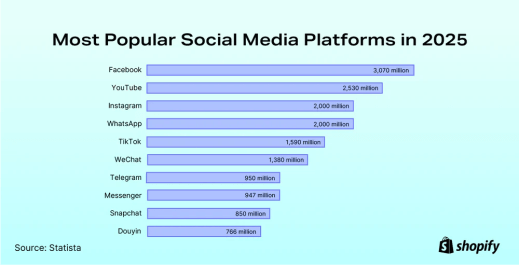
Social media has become a cornerstone of the B2B product and services buying journey. Prospects typically view up to 12 types of content, with 40% of B2B buyers including social media in their purchase research. As your prospects search for info, the right SEO search terms could call up your content and make your thought leadership info available to impact a purchase. Remember also that social media platforms are a two-way street and equally useful for not only broadcasting information, but also for listening and learning by starting and contributing to conversations. By becoming active on LinkedIn, which is the preferred B2B platform, and also X, YouTube and/or Instagram, for example, you’ll not only have a presence on platforms your prospects follow, but you’ll also get confirmation of their topics of interest in the moment, plus a heads-up on what may capture their interest in 2026. Below are four strategies for using social media to enhance your brand and grow your client list.

  1. Provide informative and timely content

By positioning yourself as a go-to source of useful insights and info, you’ll win audience trust—and that is vital. The quality and timeliness of the information you deliver, whether by text, video, or audio, will enhance your value. Distributing your thought leader content on social media platforms favored by your target audience maximize distribution and help you build a following. You’ll benefit from increased name recognition, eventually acquire trust and influence and, ultimately, you’ll create for yourself a solid brand reputation. Insider’s tip: linking your blog and/or newsletter to one or more social media platforms when you publish is a great way to share your compelling content with a wide audience (readers will find my weekly blog at LinkedIn activity/posts.

Video is a growing medium in the B2B sector because social media audiences find it easy to digest and, apparently for that reason, an attractive format. While YouTube is the platform of choice, all major platforms host video/audio content, that runs the gamut from short-form clips to long-form videos and live streams. Posting a webinar in which you took part or the podcast on which you made a guest appearance are excellent video opportunities for B2B Freelance professionals.

Case studies and client testimonials likewise make compelling video content. In fact, it may be easier to recruit your satisfied clients to sing your praises in a video rather than providing a written narrative of the process. Furthermore, if you’d like to present a show-and-tell tutorial that explains the rationale for using your product or service and quickly break down how users can benefit, a video interview in which you take center stage may be easier for prospects to visualize how your solution can be implemented for their needs. BTW, video/audio content, plus any noteworthy information you post to social media platforms, such as a case study, should also be posted on the only platform you own and control—your website.


2. Share client success stories

Nothing succeeds like success and sharing the occasional client success story (maintaining the client’s confidentiality, when requested) helps prospects envision the effective solutions that you might create for them. Examples of your willingness to personalize your solutions by, for example, simplifying your solution or providing an upgrade, or facilitating post-sale training or other supportive services—without violating your competitive advantages—are persuasive and make for memorable brand-building content for your organization.

3. Be authentic and consistent

X and LinkedIn are the usual go-to platforms for serious conversations. When you have something relevant to contribute, whether you make a thoughtful reply to a comment or offer a new perspective that you expect to generate comments from other readers, you demonstrate your authenticity, as well as your expertise and maybe out-of-the-box creativity. Joining one or more LinkedIn professional groups that are related to your industry or subject expertise can introduce you to a good forum, where you can contribute insights and learn new perspectives from thought leader peers.

4. Be transparent about values and culture

A growing number of consumers, B2B and B2C, are interested in the values and culture of companies with whom they do business. Storytelling is a relatable format and social media is an ideal platform for you to demonstrate and express what your company stands for and how your values impact your business practices. Your clients and prospects are not dismissive of a company’s purpose, vision, mission and guiding principles and may be very pleased that you’ve shared this foundational information.

Moreover, don’t hesitate to show behind-the-scenes evidence that shows you immersed in community work, be it a corporate social responsibility initiative, board service, or other volunteer participation. If you participate in a charity event, such as a holiday toy drive for local children, or sponsorship of your neighborhood Christmas tree lighting and party, consider documenting portions of the proceedings and, better still, invite top organizers to contribute a short interview to describe the goals for the event and the constituency it benefits in a video (be sure to respect the privacy of other participants). Clients and prospects like to know that you’re giving back or paying it forward.

Thanks for reading,

Kim

Image: © Statista May 2025

Research Says Soft Skills Outshine AI Expertise

New research published in February 2025 gives an unexpected vote of confidence to a group of skills that don’t always get headlines—so-called soft skills, behaviors and competencies associated with Emotional Intelligence (EQ) and often ranked by hiring managers and those who report on hiring trends in lucrative professions as second tier and less desirable than the hard skills that dominate the STEM professions, including the golden child knowledge base that comprises Artificial Intelligence. Study authors Moh Hosseinioun, Frank Neffke, Hyejin Youn and Letian Zhang say their data suggests that while proficiency in the use of AI-centric technologies and other hard skills usually has a positive impact on employment prospects, soft skills are more important to cultivate, for both workers and the companies that hire them.

Researcher Hosseinioun is an Alfred P. Sloan Foundation Postdoctoral Fellow in Management & Organizations at Kellogg School of Management; Neffke leads the Science of Cities and Transforming Economies research programs at the Complexity Science Hub in Vienna, Austria; Youn is an Associate Professor at Seoul National University and she’s a former associate professor at the Kellogg School of Management /Northwestern University; and Zhang is an Associate Professor at the Kellogg School of Management. The team analyzed millions of data points associated with U.S. job skills from 2005-2019—1000+ occupations, hundreds of skill sets and 70 million job transitions—and came to one elegant conclusion. When comparing how people’s skills changed over time during their careers, they found that having better “foundational” skills—soft skills, e.g., the ability and willingness to collaborate with team members, problem-solving ability and being highly adaptable — is considerably more impactful on one’s career than technical competence in AI models, coding, or other hard skills.

Contrary to the prevailing opinion that assumes developing technical skills is the gateway to steady, lucrative employment, the researchers instead concluded that employers would be wise to recognize the value of EQ-defined skills in addition to hard skills capabilities. The study data revealed that basic logic, big-picture thinking, analytical ability and follow-through are more important for individuals and employers/business owners and that soft skills are likely to become even more relevant as AI becomes more entrenched in the workplace, creating questions around not only the technology’s potential and limitations, but also the ethical and privacy questions it raises.

In the study, the researchers organized job-related competencies into soft skills (including reading comprehension, basic math skills and the ability to work well in teams) and specialized, advanced hard skills (e.g., competency in Blockchain). Then, they examined how people’s skills developed over the course of their careers; they found that those who scored highly on basic skills are more likely to earn higher wages throughout their careers, move into more advanced roles, learn complex, specialized skills more quickly and are more resilient to industry changes.

The development of soft skills enhances the ability to not only make job candidates more competitive for entry level employment, but also determines how far up the career ladder they’ll climb. When Hosseinioun et al. examined how soft skills can impact long-term job performance, adaptability and career advancement, they found that workers who acquire an array of soft skills, including reading comprehension, communication skills and also basic math, tend to learn faster and master more complex capabilities over time.

In other words, business owners and leaders whose growth and expansion strategies have a long-term trajectory and will rely on a solid team to help them build toward their preferred vision of the future, should take notice. When in hiring mode, keep at top of mind that soft skills matter as much as technical skills and sometimes more. Soft skills shape the worker’s skills development path, boost their long-term value to your organization and also enhance their own career advancement potential.

Flexible, adaptable, agile

The study found that workers with a broad range of soft skills are more adaptable to industry changes. This adaptability is especially useful in a volatile marketplace, when demand for highly specialized skills might quickly wax and wane. For example, Adobe Flash was once the gold standard for interactive web content and supported a whole generation of developers. But when Flash was discontinued and browsers phased it out, only those who could pivot to HTML5 and JavaScript remained in demand.  HackerRank’s 2025 Developer Skills Report lists the fastest-declining skills and LinkedIn data shows that once red-hot Blockchain-related job postings and developer activity have dropped by 40+% in just one year as investment and interest shifts toward AI technology.

The findings in this study, however, suggest that survivors of volatility possess soft skills competencies—strong abilities to problem-solve, clear communication styles and the ability to collaborate and work well with teams. These core strengths help workers relearn faster and allow companies to redeploy their current talent without significant rehiring to stabilize operations.

Play nice with others

Hosseinioun also found that one subset of soft skills in particular helped workers to achieve the highest levels of professional attainment—social skills. The rise of cross-functional projects, remote working and corporate mergers and acquisitions makes it imperative for organizations to quickly rally and persuade team members to communicate, share knowledge and collaborate, to keep productivity high and conflicts low.

Previous research reveals why social skills are particularly important today. David Deming’s landmark study of U.S. jobs shows that positions requiring a high level of social interaction grew by almost 12% between 1980 and 2012, while math-intensive, low-interaction roles shrank. Wages followed the same pattern—jobs that blend cognitive ability and social skill pay the highest premiums, according to his study.

The Amazon Upskilling 2025 initiative has invested over a billion dollars to help thousands of their employees attain new skills, from technical training to attaining clearer and stronger language and communication skills, and confirming that soft skills are as integral to professional advancement as technical expertise. Google reached the same conclusion in its Project Oxygen study After analyzing thousands of performance reviews, their study team found that its best managers excel at coaching, communication and collaboration across teams; company leaders now use soft skills competencies as must-haves for promotion eligibility.

Leaders in both of those famously tech-centered organizations eventually realized that as job complexity rises, it is social skills—communication, empathy, conflict resolution and the ability to coordinate diverse expertise—that enhances team work and builds a work force that is resilient and quick to adapt to a constantly evolving business environment. Soft skills are integral components of a dynamic and collaborative work environment that is the engine of business today.

Soft skills are foundational

Hosseinioun and his research team conclusively found that workers who “scored highly on basic skills were more likely to earn higher wages throughout their careers,” and to also “move into more advanced roles, learn specialized skills more quickly, and were more resilient to industry changes.” Those who have a broad base of soft skills, as opposed to a few highly specialized skills like coding, learn new things faster, earn more money, move into more advanced positions and are more resilient despite episodes of uncertainty throughout their careers. Amid massive technological changes, like the arrival of gen AI and its estimated impacts on jobs, the study makes a strong case for the continued development of soft skills—for self-employed professionals, traditional W-2 employees and the organizations with whom they work.

Thanks for reading,

Kim

Image: © iStock/stockbyte (1950-1959)

Public Speaking: A Competitive Advantage You Can Attain

Communication is essential to professional success and the quality of your communication skills can directly impact the trajectory of your career, whether you occupy a high or humble station on your employer’s organizational chart, or you own and lead a business entity, large or small. Regardless of your status or stature, well-honed communication skills can bring significant benefits to your professional fortunes, whether you’re attempting to network your way into a new employment opportunity, pitching potential investors needed to launch a start-up venture, trying to attract capital to fund the expansion of an existing venture, or searching for future clients. All communication formats, from personal conversations to videoconference meetings, telephone calls to email correspondence and even online social media chats, can help to polish your communication ability and contribute to your advancement in the professional sphere.

There is another communication format that delivers significant benefits and you should not ignore it—public speaking. If you aim to raise your profile in your business community, position yourself as an expert and thought leader and expand your professional network, recognize that public speaking will not only contribute substantively to your business agenda, but also showcase you as a leader. Public speaking enhances professional credibility and trust as it increases business growth potential. Public speaking is a competitive advantage that you can attain.

Step up to the podium

Public speaking is a valuable soft skill that you can make one of our strengths. In the public imagination, public speaking is associated with standing on a big stage and facing an audience of hundreds—a sometimes frightening prospect for many of us. However, public speaking is more often the domain of mere mortals—classroom teachers, speakers or moderators on panels, podcast guests and featured speakers at conferences and other events—and those who introduce those speakers. You can build your public speaking proficiency by taking on any of those public speaking roles.

Strong communication skills build networks and reputations that attract prospective clients, potential business investors or partners and may bring other business opportunities to your door as well. The key to public speaking is to clearly and confidently communicate your vision, value and unique offer to people who matter and whose support and cooperation you need— your team, investors, clients, or community. Developing your public speaking chops can be a game changer. While many skills matter in business, this one may be the most influential.

Public speaking skills suggest leadership ability

Engaging public speakers are perceived as more competent, likable and persuasive by their audiences; exceptional verbal communicators are likely to be perceived as experts and an authority in their field. According to a 2017 study published by the University of St. Thomas, Minnesota, public speaking skills are associated with leadership ability, credibility and influence in professional settings.

Once you’ve demonstrated the ability, and the courage, to stand in front of a group of people and clearly and convincingly present relevant information, that is, tell your story, your plan and your track record, with confidence and passion, you will likely gain the respect and trust of audience members. That respect and trust will establish you as an authority and has the power to persuade many of your audience members to follow your call to action and hire, buy, invest, partner, or support you or your concept. Even now in the age of virtual meetings, to mount the stage and communicate your ideas, thoughts and unique offer in a relatable manner will set you apart from others.

When you speak engagingly and confidently, you naturally attract people. You become memorable and people want to connect with you. A reliable and supportive business network isn’t built by handing out business cards — it’s built by making connections and bringing value. When you speak at conferences or other meetings, the value you deliver to audience members is amplified and you are able to create connections at scale. Each public speaking venture results in a growing network of people who trust you and want to work with you.

Know Your Audience

Enable yourself to deliver clear, valuable and relatable information by ensuring that you are apprised of the audience’s understanding of your topic and what it means to them. For example, avoid using niche acronyms that are acceptable when speaking to those who are highly engaged or have deep knowledge of the subject, but are largely not in the lexicon of those who are interested observers, but not experts. Understanding the perspective of whom you’re speaking to helps you communicate your talking points more effectively.

Furthermore, be mindful that your body language and other forms of non-verbal communication can say more than words. Pay attention to your posture, facial expressions and tone of voice. Refrain from frowning, maintain a pleasant facial expression that communicates your engagement with the topic and the audience and keep good eye contact by looking at audience members seated in different parts of the room. Let your posture communicate your confidence by straightening your spine, relaxing your shoulders and standing with your feet at about hip distance apart, to take on the so-called power stance that radiates both authority and comfort, without appearing aggressive.

Prepare for your speech

Some of you are “natural” public speakers, but most need lots of practice to attain the confidence that makes one effective. Here are some tips to improve your public speaking skills:

  • Be confident – Confidence makes you appear more credible and likable.
  • Be authentic – Speak naturally, don’t over-rehearse or memorize and let the real you be present.
  • Use voice modulation – Vary your tone and pace to stay engaging.
  • Keep it short and digestible – Attention spans drop after 20 minutes.
  • Tell stories – Storytelling creates an emotional connection and makes messages memorable.
  • Use repetition – Reinforce key ideas by repeating them clearly—tell your audience what you’ll say. Tell them what you have to say. Conclude by summing up what you told them.
  • Practice with intention – Rehearse like you’re live to build confidence and flow but do not try to memorize.

Thanks for reading,

Kim

Image: © freepik.com. University of Maryland Global Campus

What Can You Do to Cultivate Customer Loyalty?

Recruiting a new customer is a victory, the goal of every business owner and Freelance professional—but you can’t exhale yet. When it comes to making money it’s not only what you make, it’s what you keep, and that folk wisdom applies not only to sales revenue, but also to customers. The real genius of being in business is learning how to retain customers.

Building a thriving community of customers is foundational to sustaining a business entity; strategies dedicated to nurturing customer loyalty by persuading them to continually do business with you is an important part of a comprehensive marketing plan. Loyal customers are repeat customers; they also refer new customers and that makes it imperative to develop strategies that generate and encourage customer loyalty. Neglecting this function can easily result in customers you worked so hard to attract eventually moving on, perhaps to do business with a competitor.

Unfortunately, many businesses struggle to retain customers, a consequence that can diminish sales revenue and weaken the ability to survive. It has long been known that implementing strategies designed to retain customers is fundamental; customer acquisition cost has increased by nearly 50% since 2013, making it so much more expensive to acquire a new customer, as compared to the cost associated with retaining an existing one, further proving the value of repeat customers and promoting the loyalty that stimulates repeat business.

Customer loyalty is the happy result of the relationship between satisfied customers and the businesses they know and trust. Building a loyal customer base for your entity brings benefits in at least two ways—it discourages customer churn and therefore limits the marketing dollars you’d need to spend trying to retain them and second, loyalty helps you grow and preserve your current group of customers. Not only that, promoting loyalty can also convince customers to become cheerleading advocates for your brand.

In other words, encouraging customer loyalty can do wonders for your business, like enhancing sales revenue, strengthening customer relationships and brand building. You just need to work at it consistently! Below is a list of customer loyalty strategies, one or more that’s sure to be useful for you.

Exceed expectations

Customer expectations are feelings, actions and outcomes that customers anticipate will result from their experience with your brand, from first impressions to final purchase and on to using the service or product that was purchased. You’ve probably heard the oft-repeated advice that urges businesses should “under promise and over deliver”—you do that by exceeding customer expectations. So, if you promise a customer that you’ll follow-up to answer a question or resolve a problem within 24 hours and you contact the customer within six hours, you’ve exceeded customer expectations and planted the seeds of loyalty. Common customer expectations include:

  • Quality product. Product quality is at the top of most customer checklists. They want a product that meets their needs and delivers on the promises of its description, photos and reviews. 
  • Great customer service. Customers expect businesses to provide friendly and knowledgeable customer service before, during and after they make their purchases.
  • Value for price. Value is represented by the satisfaction customers feel when the price of the product or service seems appropriate (or like a good deal). Perceived value for money spent is subjective, but customers want a price they believe is justified.
  • Personalized interactions. Customers want to feel like the company values them by providing an efficient, pleasant and personalized buyer’s experience.  

Exceptional customer experience

Promoting customer loyalty involves more than offering products and services that satisfy the needs, goals, or problems of customers. To truly win over a customer and create loyalty, you must persuade them to become your cheerleaders. An exceptional customer experience is the true foundation of customer loyalty. Superior service is integral to encouraging customer loyalty and promoting positive word-of-mouth that differentiates you from competitors.

Customers who are pleased with the experience your brand provides, and also trust the reliability and quality of your products and services, are positioned to become loyal customers. They’ll usually be happy to share their favorable experiences with friends, family and colleagues and give your brand enthusiastic endorsements that commonly result in referrals of new customers and repeat business. These demonstrations of customer loyalty are a powerful, and inexpensive, way to reach new customers and build your customer base, sales revenue and brand.

  • Surprise and delight. To create a positive, memorable experience for your customers, remember that it’s the small and unexpected things that keep them coming back.

Expertise

Because your goal is to attract and retain customers, generate referrals and recruit brand cheerleaders, know that you’ll promote those aims by demonstrating that you are a reputable and trustworthy expert in your field. You’ll build credibility and customer loyalty by sharing your professional know-how with customers and prospects.

  • Educate customers. Content marketing is all about educating customers and it is now the marketing strategy that most customers prefer. The purpose of marketing is to persuade prospects to do business with you. For example, if you are a Freelance gardening and landscape specialist, you would do well to create videos, and/or publish a monthly newsletter or blog that focuses on helping plants survive winter and how to prepare a garden for spring plantings. Throughout the seasons, new posts will address how your readers can create a beautiful garden. Distribute your customer/ follower education info to your email list and encourage list members to subscribe to regularly receive the info.

Reliable

Conscientiously build a reputation for being consistent and dependable to further support customer loyalty for your brand. For example, if you promise that a product will be delivered within 48 hours after purchase, take steps to ensure delivery occurs within that time frame. Or if the graphics for the marketing campaign brochure you’re creating for a client must be ready for a 10:00 AM meeting that your client has scheduled with his client, be prepared to work as long as it takes to produce a perfectly designed and edited deliverable at the agreed-upon time and place, to make both your client and yourself look good.

Flexible

While it’s important to have policy and procedure guidelines in place, it is smart to remember that customers have circumstances and problems they grapple with. So, if you’ve established a 14-day return policy, but a customer wasn’t able to return the product within that window, perhaps because of a business or family emergency, graciously accepting the return and offering either the usual refund or store credit may be the best course of action. It’s likely that you’ll gain much more than you’ll lose and it will be an effective way to encourage customer loyalty.

Communicate

One of the easiest ways to keep in touch with customers is through email. Ask for customer email contact info after completing purchases, or while they explore your sales/marketing funnel during the buyer’s journey, so you can send information that a prospect would like to see, or keep existing customers updated on new products, or perhaps follow-up with them after a sale to inquire about their perception of their customer experience. This information can be used to improve customer satisfaction.

Studies have proven that personalized emails have a transaction rate 6 times higher than impersonal emails. Addressing recipients of your marketing emails by name, sending birthday or holiday greetings to existing customers, or thanking a customer for a recent purchase are the types of outreach that customers appreciate. Personalized messages can help create an emotional bond between your brand and your customers that promotes customer loyalty.

Social media platforms will help to bring your customers into a community. Communities are an effective way to start conversations with your customers and also encourage user-generated content. You might start by inviting customers to share pictures of themselves using your product for posting on Facebook, Instagram, or Pinterest, for example.

Feedback

Whenever a customer makes a purchase, request their feedback with an email questionnaire or online survey link sent to their email (you can also place that link on your company website). It’s important that you know what customers like or dislike about your products and/or services and how they feel about your customer service and experience. If you aren’t aware of this information, you will be unable to make changes that will make your customers happy. Always be ready to listen to customers and address their concerns a timely manner. Make it easy for them to get in touch with your company by clearly displaying the email address, phone number and social media links on your website and in emails.

  • Make it easy to communicate with a real person. While technology has made it easy for customers to find information regarding your product or service, it’s a mistake for business owners to hide behind a wall of tech. There’s going to be an event that causes a customer to feel the need to speak with a real-life person. Make sure that your contact information is easily located on your website and in your emails and follow-up on inquiries in a timely fashion.
  • Spend time with customers. Speaking with customers is good business—they’ll immediately recognize that you care about them as individuals and want to provide a pleasing customer experience for them. It’s Relationship Building 101. Furthermore, you can learn a few things, such as what motivates them become, and remain, your customers. What you learn in conversations with customers is invaluable—the intel can be used to generate more specifically useful content and support the development of more effective marketing campaigns. Moreover, you might even be able to recruit customers who are especially happy with your brand to share their experiences in testimonials or case studies.

Transparency and integrity

There will be days when things fall apart. Rather than retreating into excuses and denial, put your big boy/big girl pants on and be honest with customers about the bad news. Mistakes happen; customers know this and when you face up to the problem, customers will respect and appreciate your honesty. Don’t get defensive or over-sensitive if you get called out on something that was your fault. Instead, use emails and social platforms to take responsibility and resolve the issue.

Train employees

Employees are part of your team and they are capable of generating customer loyalty—or destroying it. Employees who buy into your brand promise and culture are more likely to themselves feel loyal toward your company and inclined to share their enthusiasm with friends, family and the customers they assist. Make sure your employees have the proper training and tools to enhance the customer experience and keep them updated about company developments that will support their work. Always treat employees with respect and listen to insights and suggestions they have to streamline procedures, sharpen your marketing campaigns and pay special attention to any rumblings of customer discontent.

Incentives

You want to give customers reasons to keep coming back and that’s when incentives can be helpful. Your give-away could be as simple as a 10% discount on their next purchase that is at least $50 or giving them a free (relatively inexpensive) branded item after their tenth purchase. Instituting a loyalty program might include the following.

  • Points System – Customers earn points which can be used for a reward.
  • Tier system – Provide a small reward and increase the reward over time.
  • Support programs around your customer’s values – Customers aren’t just concerned with monetary rewards, show your support for programs that they support.
  • Coalition programs – Team up with a related company for deals outside of your company

Happy New Year!

Kim

Image: © The Next Crossing. Marrakesh, Morocco 2017

Brand Building: Deliver the Promise

Can we agree that data driven decisions produce the most favorable outcomes? The mega database of customer info compiled by the World Advertising Research Centre of New York City, USA and London, UK has since 1985 provided powerful information to business leaders and enabled them to develop marketing strategies and campaigns that attract the attention prospective customers and persuade them to try a product or service or persuade existing customers to become frequent users, meaning repeat customers, of a product or service. WARC data points to a product’s brand promise as the definitive ingredient of successful marketing and brand-building campaigns. The right brand promise, one that target customers perceive as memorable, valuable and deliverable, has the power to influence the purchasing behavior of your target customers and convert them to buyers. WARC data also indicates that a well-crafted brand promise not only translates into purchases and sales revenue, but also provides a blueprint that can be used to devise successful marketing strategies and campaigns.

In other words, the key to successful brand-building is a clear and specific brand promise that target customers feel can be fulfilled. Such a brand promise has been shown to result in marketing campaigns that positively impact sales revenue and also help to shape effective marketing strategies and campaigns.

Commit to the brand promise

WARC research shows that brand promises that target customers trust and believe will be delivered result in sales of the product or service. Roger L. Martin, a former dean of the Rotman School of Management at the University of Toronto (Canada) and author of A New Way to Think (2022); Jann Martin Schwartz, founder and Senior Global Director at the LinkedIn B2B Institute and Mimi Turner, head of Europe, Middle East, Africa and Latin America operations at the LinkedIn B2B Institute teamed up to more closely examine the question of effective marketing—how can business owners and leaders make it happen?

Martin, Turner and Schwartz sought to understand the active ingredients, if you will, of a marketing campaign—what makes it successful? The team recognized the potential appeal of the brand promise and they began by classifying WARC marketing campaign data according to whether or not a verifiable brand promise was made to customers. They found that of 2,021 campaigns analyzed, 40% (808) included an obvious brand promise and 60% (1,213) did not.

The first noteworthy finding of their research was campaigns that included a verified brand promise were more persuasive than campaigns with no brand promise in nearly every instance. In measures of brand perception, brand preference and purchase intent, 56% of campaigns offering a brand promise reported improvement. Market penetration increased in 45% of brand promise campaigns and market share increased in 27% of brand promise campaigns. The only metric in which a brand promise did not triumph was in generating social media buzz, where 55% of successful marketing campaigns omitted a brand promise.

Anatomy of a brand promise

As noted above, Turner, Schwartz and Martin started out by confirming the presence of a brand promise the the marketing campaigns; next, they categorized the type of brand promise made in campaigns where one was present. Most (89%) brand promises fit their definition of one or more of the following categories:

  • Emotional.

The researchers were surprised that a feel-good brand promise was the most popular category, with 35% assigned to this type. An emotional brand promise communicates the good feelings that will be experienced by customers who buy and use the product or service. A highly successful example of an emotional brand promise is the famous De Beers “A diamond is forever” marketing campaign brand promise that since 1947 has promised that the endurance of a diamond confirms the permanency and satisfaction of the marriage.

  • Functional

In 32% of the research sample, the brand promise stressed the reliability and functionality of the product or service. The FedEx “When it absolutely, positively has to be there overnight” campaign brand promise of 1978 was so powerful that it resulted in the creation of a new verb—to FedEx. The campaign’s brand promise can also be said to convey an emotional brand promise as well: customers don’t have to worry, because it’s FedEx.

  • Enjoyable to buy

Some companies (22%) took the unusual stance of portraying the enjoyment customers will experience as they shop for and buy a product or service. A good example an enjoyment-based brand promise is provided by the paint maker Sherwin-Williams; the company won the 2022 B2B Grand Prix at the prestigious Cannes Film Festival for its campaign based on an artificial intelligence tool that allows customers to create and choose a paint color by using voice to describe it (“a turquoise like the sea in the Maldives,” for example). Designers and architects swooned and prospective customers were convinced.

After the research team categorized the types of brand promises companies tend to make, they examined factors that make a brand promise strongly appealing to customers. Again, three features dominated successful campaigns:

  • Memorable

Surprisingly, making it known that a company is not the top seller in the marketplace can be highly persuasive. “We’re Avis and we try harder” was the slogan of the second-largest car rental company (after Hertz).  Within a year of its launch, Avis went from losing $3.2 million a year to earning $1.2 million a year. Advertising executives called the campaign the most brilliant of the 20th century.

  • Valuable

Customers must want what the brand promise offers, especially when the promise is communicated and perceived as an upgrade from circumstances that are perceived as unsatisfactory or lackluster. Prospective customers must feel that the value is relevant.

Deliverable

A defining characteristic of a brand promise is that it represents a guarantee; the customer must be able to recognize that the brand promise can be fulfilled and the benefits from its fulfillment will meet expectations. For that reason, making a brand promise is a risk. The research team’s assumption was that brand promises made campaigns were generally fulfilled, based on the success of the marketing campaigns studied.

Brand promise becomes strategy

The insight that effective brand building is anchored in a promise to the customer can do more for a company than just help it invest wisely in marketing. The promise can serve as the guiding principle of the marketing strategy, able to inform all promotional activities. A well-crafted and communicated brand promise is your North Star; creating and executing a brand promise is, the foundation of a strategy. From that brand promise/ strategy, you can understand how the company will beat its competitors, the value that customers see in your products and services, understand how the company position itself in the marketplace.

Below, Martin, Schwartz and Turner leave you with a five-step template that your company can use—a go-to-market brand promise development guide that also functions as the foundation of your marketing strategy. Furthermore, the study provides guidance about resources the company should dedicate to the various aspects of brand building, including which information sheds the most light on customer preferences, how to ensure that the most highly preferred aspects of the brand promise are delivered and how to effectively and efficiently communicating your brand promise.

  1. Step One is to understand customers well enough to know what constitutes memorability and value for them.

2. That understanding leads to Step Two, the development of a brand promise, expressed in a simple but compelling and memorable statement.

 3. In Step Three, your company publicly commits to the brand promise by launching the marketing campaign.

4. In Step Four, your company must communicate the brand promise to the target audience: If it isn’t received by way of the right channels, it can’t be effective.

5. Finally, in Step Five your company must fulfill the brand promise, or the promise will be largely worthless.

This cycle provides guidance about the resources the company must dedicate to the various aspects of brand building. How much should it dedicate to understanding customers? How much to designing and issuing a brand promise? How much to broadcasting and communicating it? And how much to ensuring that the key aspects of the brand promise are delivered? As the company repeats the cycle, it learns more about its strategic challenges and how to account for customer and competitor shifts.

The ultimate goal of a marketing campaign should be to go through the brand promise cycle often enough that your customers stop wondering whether you’ll make good on your promises. Once they assume that you will, they purchase out of habit rather than choice.

Thanks for reading,

Kim

Image: Photographed by James D. Love April 2021. William Hunn’s proposal to Brittney Miller included a helicopter ride over their home city of Atlanta, GA and Ms. Miller choosing one of the five engagement rings presented to her when she accepted his offer of marriage.

Emotional Intelligence: The Foundation of Leadership Ability

Emotional Intelligence is the capacity to recognize and respect not only how you feel, but also how those with whom you interact feel. Emotional Intelligence also helps you to manage your emotions effectively, both in your inner life and in your relationshipsAlternately known as EQ and often portrayed as a qualitative, subjective yin (female) counterpart to the data-driven, measurable and objective yang (masculine) IQ, EI entails more than displaying empathy and being kind, or “sensitive.”

Ongoing research has presented credible evidence that supports EI as a different, but nevertheless valid and beneficial, form of human intelligence. Psychologists, organizational development specialists and leadership development coaches recognize EI as a core life skill that promotes one’s ability to deliver excellent performances, particularly in the domain of leadership. There is no absolutist blueprint, or model, that codifies EI, but there are variations on a standard theme that have been developed primarily by psychologists and organizational behavior specialists. I recently discovered the work of Emotional Intelligence researchers Daniel Goleman and Richard Boyatzis.

Goleman has written extensively on the topic of EI. He is co-director of the Consortium for Research on Emotional Intelligence in Organizations at Rutgers University in Newark, NJ and he is the author of Building Blocks of Emotional Intelligence (2017) a 12-primer set on each of the EI competencies that he co-discovered. He also offers training on those competencies through an online learning platform. Boyatzis is a professor in the departments of Organizational Behavior, Psychology and Cognitive Science at the Weatherhead School of Management at Case Western Reserve University in Cleveland, OH and he’s been recognized as a Distinguished University Professor there. He is a co-founder of the Coaching Research Lab and co-author of Helping People Change (2019). According to Goleman and Boyatzis those who aspire to become exceptional leaders will need to develop a balance of strengths across the suite of EI competencies. When that is achieved, outstanding business results will follow.

Goleman and Boyatzis see as EI consisting of four domains—Self-Awareness, Self-Management, Social Awareness and Relationship Management—and connected to each domain are 12 EI competencies. When you’ve mastered the domains and the competencies associated with each category, you will possess capabilities that allow you to be an adept at team player or a practitioner of inspirational leadership, as the situation requires. Below is a capsule view of the domains and the related competencies.

Self-Awareness

This domain refers to the ability to read and understand your emotions as well as recognize their impact on others. In short, self-awareness is a basic understanding of how we feel and why we feel that way. The more we are aware of our feelings, the easier it becomes to manage our feelings and control how we might respond to others.

Those who have nurtured their EI capabilities achieve objectivity through the self-awareness that this form of intelligence develops. Leaders who have developed a high level of EI promote productive and motivated workplaces that give all workers equal opportunities to shine.

  • Emotional self-awareness: I know what I am doing and why
  • Accurate self-assessment: I am cognizant of my beliefs and mental models
  • Self-confidence: I am aware of my abilities, including strengths and weaknesses. I trust my judgment and have a sense of control in my life. I set realistic expectations and goals, communicate assertively and can handle criticism.

Self-management

Also known as self-regulation, this domain can be defined as the ability to manage one’s actions, thoughts and feelings in flexible way, in order to produce the desired results. Optimal self-management contributes to a sense of well-being, a sense of self-efficacy or confidence and a sense of connection to others. You are able to control impulsive feelings and behaviors, express your emotions in healthy ways, take initiative, follow through on commitments and adapt to changing circumstances.

  • Emotional Self-Control: You are able to keep potentially disruptive emotions and impulses in check and maintain your effectiveness under stressful or hostile conditions.
  • Achievement Orientation: You intend to meet or exceed a standard of excellence. You seek ways to do things better and improve outcome. You reasonably challenging goals and take calculated risks.
  • Positive Outlook: You are able to see the positive qualities and characteristics in people, situations, and events. You persist in pursuing goals, despite obstacles and setbacks.
  • Adaptability: You have the flexibility to handle change and juggle multiple demands, as you adapt your ideas or approaches to new and unexpected circumstances.

Social Awareness

Social Awareness is the ability to accurately notice the emotions of others and “read” situations appropriately. It is about sensing what other people are thinking and feeling, to be able to take their perspective using your capacity for empathy. Those adept in the qualities of this domain are able to read another person’s face, voice, body language and other verbal or nonverbal cues that communicate emotion and help direct us as to how we should speak and otherwise interact with that individual.

  • Empathy: The ability to sense others’ feelings and perspectives, take an active interest in their concerns and recognize cues about what others may feel and think. Goleman further describes empathy as the cognitive and emotional processes that bind people together in various kinds of relationships that permit sharing experiences as well as understanding of others.
  • Organizational Awareness: The ability to read a group’s emotional currents and power relationships, identifying influencers, networks, and organizational dynamics.

Relationship Management

This domain pulls together and integrates the other three domains and creates the final product, relationship management. Relationship management can be used to influence those around us and guide or encourage them to make good decisions. You can sense other’s reactions to situations and then fine-tune a response to move the interaction in a positive direction.

Relationship management proficiency also addresses teamwork and other collaborations.
You’ve learned to use the skills acquired in the other domains to steer the group toward
the goal. Furthermore, proficiency in relationship management promotes the ability to effectively manage conflict. Those who become particularly adept in this area can see that conflict is forming and take steps to move others away from this and toward more positive interactions. Effective Listening skills and empathy are essential to deal with these difficult conversations.

  • Influence: The ability to have a positive impact on others, to persuade and convince others in order to gain their support.
  • Coach and Mentor: The ability to foster the long-term learning or development of others by giving feedback, guidance, and support.
  • Conflict Management: The ability to help others through emotional or tense situations, tactfully bringing disagreements into the open and finding solutions all can endorse.
  • Inspirational Leadership: The ability to inspire and guide individuals and groups towards a meaningful vision of excellence, and to bring out the best in others.
  • Teamwork: The ability to work with others towards a shared goal; participating actively, sharing responsibility and rewards, and contributing to the capability of the team.

You can evaluate and improve your EI skills. Goleman and Boyatzkis recommend a 360-degree assessment, to receive systematic, objective observations of your behavior by people who work with you. Incidentally, EI has been found to not correlate well with IQ or personality traits, but the two values are the best predictors of a leader’s effectiveness, actual business performance, engagement, professional and personal satisfaction. A 360-degree assessment tool that uses ratings generated by you and those who know you well can reveal your EI current strengths and suggest where your EI needs improvement. To best improve your weak spots, find a leadership development expert to coach you.

Thanks for reading,

Kim

Image: Philadelphia Flyers coach John Tortorella

Speed Date: How to Connect With Clients Faster

Time is money and relationships matter. Those sometimes conflicting realities must be confronted when, for example, you meet someone who may become a prospective client by chance, maybe at a business association meeting or even at a backyard barbecue. Somehow you two start talking and along with names and what brought each of you to the event, what each of you does for a living is revealed and it’s an aha! moment. As luck would have it, your new acquaintance is looking for a talented Freelancer with your kind of expertise to get an upcoming project done. Excellent!—now how do you connect quickly and start the process of establishing trust and rapport with someone you’ve only just met?

Building a relationship that you’d like to expand to include business requires finesse. It may be off-putting to appear to rush things but if you don’t move it along, your opportunity to do business may stall out.

Because you’ve only just met, each of you is an unknown quantity to the other. You’ve shared only cursory information but a spark has been ignited. The next step a successful Freelancer takes is to swiftly move to build a connection with this intriguing person. Happily, there are a few effective and easily executed hacks that in short order can help you steer the relationship in the right direction and avoid a cringeworthy scene as you do.

1. Repeat after me

Your prospect wants to know that you understand what s/he needs your product or service to deliver. There are simple and intuitive ways to convey that you “get it” as you and your prospect discuss the possibility of doing business.

One good way is to confirm that you’re on the same wavelength is to incorporate, that is, repeat, a few key words or short phrases that your prospect uses to describe what s/he wants to achieve. Do that and you’ll communicate to the prospect that you two literally speak the same language.

2. Feel their pain

Empathy is an essential component of every healthy relationship. When your goal is to fast- track a serendipitous meeting and build it into a mutually beneficial experience, acknowledge the urgency, excitement, importance, concern and/ or stress that motivates your prospect to seek a solution and demonstrate that you not only understand what s/he wants to achieve, and why, but you also validate his/her reasoning and judgment.

What motivates your prospect to obtain a solution and address the matter may be a problem to solve or a success to celebrate. While in conversation, your job is to affirm good news or encourage a prospect who faces a challenge. Either way, describe how your product or service can expertly and efficiently either save the day or maximize a happy occasion.

3. Sum it up

Confirm your understanding of what your prospect would like to achieve with the assistance of your products or services and you’ll boost the prospect’s confidence as you do. The budding relationship will strengthen as your prospect’s confidence, trust and comfort level grows. Sum up the points made by yourself and the prospect, distilling and paraphrasing what each of you has said, and confirm that you see the big picture of what your prospect has in mind and your capability to fulfill the objectives.

If for some reason either of you has misinterpreted or omitted some relevant information, a correction and reconfirmation can be quickly made. Showing the prospect that you’ve listened and understand his/ her priorities, concerns and goals is, BTW, a compliment and a sign of respect. Your prospect will know that s/he has been heard and that his/her feelings, judgment, priorities and goals are valued.

4. Next steps

While your prospect is basking in the glow of having found a capable, trustworthy, good-natured problem-solver who appears to be someone with whom s/ he can connect and work successfully, suggest that the two of you schedule a face2face or video meeting. It is in your interest to move the process steadily forward and into substantive talks. You have business to discuss!

Thanks for reading,

Kim

Image: In 1977, actress Marlo Thomas was invited to be interviewed on The Phil Donahue (talk) Show. I watched the episode and it was something to see! No doubt about it, Phil and Marlo connected in a live broadcast from Chicago. The couple married in 1980. They live in Manhattan.

Analytics Data: Your Content Marketing Navigator

So, how are you doing with content marketing? Are you seeing the hoped- for results? Do you have it clear in your mind the reasons for launching whatever content marketing activity you do—blog? podcast? behind-the-scenes videos of your team in action?—-beyond some half-formed idea about how everybody’s doing it, it’s probably good for business, so get busy? I don’t want to be judge-y but if that is your reality, I encourage you to tighten up your game.

Whatever content marketing you’re into, it will all go down much better when you think about it in big picture mode. Content marketing starts with figuring out the purpose, what you want it to do, the end result you’d like to achieve. We know it’s about creating business, but you’ll help yourself by being more specific and thinking about how content marketing works.

Content marketing is premised on the soft sell approach, expressed by educating prospective clients about the performance, quality, cost-effectiveness and user-friendliness of your products and services. Supporting that primary message, you may also use this style of marketing to communicate the expertise of you and your team and portray your company as dependable and trustworthy. You might also send out the message that you are socially responsible, practice environmental sustainability (“green”) and believe in Diversity, Equity and Inclusion.

If you are put off or intimidated by the very thought of thinking this stuff through, I’ve given you a cheat sheet, shown below. Oh, and remember to invite website and social media visitors to dip into your marketing content by writing a good Call-to-Action that entices them to take a chance—do the survey, download the case study, join the webinar, opt-in and get the newsletter.

But the moral of this story is that you are advised to follow, weekly or monthly, certain key metrics that document how prospects interact with or respond to your content. That reported data becomes your recipe and roadmap for content marketing that works. The data also shows you what doesn’t work, by reporting lackluster numbers.

Follow the open rates, shares and likes of your blog or newsletter and discover which topics mean the most to your readers. You’ll also realize the topics readers don’t love, when your open rate tanks. Data is the navigator for your content. Follow it and find the road to achieving your content marketing and sales goals. Explore free and paid data analytics services and register your website and social media accounts to get started: https://bloggingwizard.com/social-media-analytics-and-reporting-tools/

Common content marketing goals:

  • LeadGen—bring potential buyers to your website and social media accounts, from new or established markets
  • Increasing Google EAT ranking—Expertise, Authoritativeness, Trustworthiness
  • Brand loyalty—-enhance company reputation, build trust, signal dependability, to know you is to love you

Track metrics that matter:

  • Lead metrics—how many leads does your content generate through email opt-ins, call-to-action appeals, or blog and newsletter subscribers?
  • User metrics—how many page views does your content draw? How many downloads, visits, shares and likes does your content receive? Which content format and topics get the most positive responses from readers and viewers, as indicated by high open rates?
  • Sales metrics—how many of the leads that you generate from your content become paying customers? What is your sales conversion rate?
  • Time metrics—how long do viewers spend engaging with your content, where do they stay longest and which pages do they visit?

Thanks for reading,

Kim

Image: Crunching the numbers that guided decisions made by the Oakland Athletics baseball team and resulted in big wins. The story was told in Moneyball (2011, directed by Bennett Miller) starring Brad Pitt (l) and Jonah Hill.

The Story of Your Presentation

Human beings love a good story. Almost any topic will do. If the teller of the story communicates well, s/he will find an attentive audience, eager to be informed or entertained, shocked, surprised, moved by sentimental emotion and perhaps stirred to action. Our attraction to stories fuels our appetite for movies, plays and television shows.

Throughout history our leaders—kings, generals, politicians— have often been masterful storytellers. Thousands of years after the lives of game-changing leaders such as the Roman Emperor Julius Caesar and the Athenian statesman Pericles, we are still in awe of their bold, insightful and inspiring speeches. In fact, we consider exceptional public speaking ability—-storytelling—-to be a sign of capable leadership and a brand-enhancing skill. The ability to tell a story well, if only simply, is a proficiency that Freelancers and business leaders would be wise to develop.

The secret to becoming an effective public speaker is understanding the subtle but profound differences between delivering a presentation and telling a story. Maintaining awareness of those distinctions as you prepare to address your audience will help you connect with them and make them inclined to feel that your talk was relevant and memorable. Your audience may even be inspired to take action (if that is your purpose). Almost anyone can give a presentation but the most effective communicators are also storytellers and that’s what we’ll learn to do today.

Stories humanize and energize

Bullet points and logic are how you present facts and give a recognizable beginning, middle and end timeline arc to a presentation. A story is a connected series of events told in words and/or pictures. A story has a theme, attention-grabbing moments, a challenge, heroes, villains and a resolution. The content of a presentation, no matter how ably delivered is, sadly, often forgotten. The memory of a good story, however, can be long-lasting.

To be blunt, most business presentations are torture and we all know it. They rely heavily on slides filled with bullet points and numbers that make our eyes glaze over. The presenter reads the slides. The effect is brain-numbing.

The problem is that business executives don’t get that delivering a presentation is not only public speaking, but also a performance. A truly skilled speaker is also a storyteller and is not shy about looking to the entertainment world to level up public speaking skills.

To inject meaning and energy into your presentation, you must reveal to the audience its underlying message—-the story—-that the bullet points and numbers exist to communicate. In many cases, the story behind those terse statements you’ve bulleted (ouch!) and the intimidating Excel spreadsheet of numbers you copy/pasted to create your slides can be translated into a story that your audience wants to hear in three or four sentences, tops.

Telling that story is worth the effort. Telling the story is why you’ve been invited to speak. No one needs you to read slides to them, we can do that on our own. To become a first class public speaker, focus on crafting and communicating the story behind the slides, in words and pictures.

Every picture sells the story

Researchers have found that listeners typically remember about 10% of the points made in a talk if the information is presented with words alone but when images accompany words, listeners will retain 65% of the information. Therefore, including a selection of images to visually communicate pivotal aspects of your story is a must-do.

Directors of the television, plays and movies that we watch first read the script to find the story line they’ll tell. Next, they identify action and other key scenes and then they literally sketch those scenes on paper, mount them onto what are called storyboards and document the scenes they plan to show in the performance. You can do something similar as you prepare for your next talk. Public speaking pros who know there is a story to tell make sure to think through the elements of their content and put together an engrossing narrative to communicate that story.

  • Review the information that is necessary to share with the audience.
  • Decide what information should be included on the slides, as a bare bones framework of the story.
  • Choose images — graphs, charts, other images—- that visually communicate the story.
  • Write story notes, the narrative that will become your script, to link and integrate the three components of your talk. Edit well and get very familiar with your talking points.

Practice makes perfect

Most business execs merely page through their slides and pass it off as a presentation rehearsal. It’s common and I’ve often done it, but it’s not enough. Real storytellers rehearse out loud. They practice vocal delivery and experiment to find the right tone of voice, figure out the timing of pauses and modulate the pace of their speech, all to perfect the delivery and power of their story. They want the audience at the edge of their seats, anticipating what will happen next. Block out three days and devote at least two hours a day to rehearsing.

Finally, public speaking pros who appreciate the difference between a rote presentation and a riveting story will also conduct a walk-through rehearsal at the venue and will rehearse while using the delivery platform of their talk. If you’ll stand in front of an audience, rehearse standing up and anticipate your approach to audience eye contact. If you’ll deliver the talk virtually, rehearse sitting down and figure out how to position your device and the lighting. Public speaking stars are usually made and not born!

Thanks for reading,

Kim

Image: Kenneth Branagh (center) as Henry V (September 16, 1386 – August 31, 1422, monarch of England 1413-1422). Branagh directed and starred in the 1989 film based on the Shakespeare play written circa 1599.

On Being Persuasive

According to Carmine Gallo, Instructor at the Harvard University Graduate School of Design’s Executive Education Department and author Five Stars: Communication Secrets to Get from Good to Great (2018), the ability to persuade, to change hearts and minds, is perhaps the one skill that can be depended on to confer a competitive edge in the knowledge economy. Successful people in nearly every profession are typically those capable of convincing others to take action on plans and ideas. If you want to achieve anything of substance in life, learn to be persuasive.

Aspiring entrepreneurs persuade venture capitalists to provide financial backing for their new ventures.  Salespeople persuade customers to buy products. Freelance consultants persuade clients to hire them to provide professional services. In short, persuasion is no longer considered merely a “soft skill,” but rather a leadership skill, that enables those who’ve mastered it to attract investors, sell products, build brands, inspire teams and activate social or political movements.

More than 2,000 years ago, the Greek philosopher Aristotle outlined a formula on how to master the art of persuasion in his work Rhetoric.  Throughout history, statesmen and salesmen have used Aristotle’s guidelines when preparing speeches or talking points that brought history-shaping ideas and ground-breaking products to the world.

Your words and ideas have the potential to make you a star in your field, if you can persuade others to join you and act on them. To become a master of persuasion and successfully sell your ideas, use these five rhetorical devices (as interpreted by Mr. Gallo) that Aristotle identified in your next client meeting or sales presentation:

ETHOS (Character)

Gallo feels that ethos represents that part of a speech or presentation where listeners take the measure of the speaker’s credibility. Aristotle believed that if a speaker’s actions don’t reflect his/her words, that speaker would lose credibility and ultimately weaken the argument.  As humans, we are hardwired to search for reasons to trust another person. A simple statement that you are committed to the welfare of others before you introduce your argument or selling points will enhance your credibility.  Show your prospect that you understand and appreciate his/her situation.

LOGOS (Reason)

Once ethos is established, it’s time to make a logical appeal to reason. Why should your listener care about your product or idea? If it will save the listener money, for example, s/he will want to know how much it will save them and how the savings will be accomplished. The same reasoning applies to making money. How will your idea help the listener earn a profit? What steps must s/he take next?  These are all logical appeals that will help you gain support. Use data, evidence and facts to form a rational argument.

PATHOS (Emotion)

According to Aristotle, persuasion cannot occur in the absence of emotion. People are moved to action by how a speaker makes them feel. Aristotle believed the best way to transfer emotion from one person to another is through the rhetorical device of storytelling. More than 2,000 years later, neuroscientists have found his thesis to be accurate. Research has demonstrated that narratives trigger a rush of neurochemicals in the brain, notably oxytocin, called the “the moral molecule” that connects people on a deeper, emotional level.

In his analysis of the top 500 TED Talks of all time, Gallo found that stories made up 65% of the average speaker’s talk, whereas 25% went to logos and 10% went to ethos. In other words, the winning formula for a popular TED Talk is to wrap the big idea in a story.

What kind of story? TED Talks curator Chris Anderson explained, “The stories that can generate the best connection are stories about you personally or about people close to you. Tales of failure, awkwardness, misfortune, danger or disaster, told authentically, hasten deep engagement.” The most personal content is the most relatable, in other words.

METAPHOR (Comparison)

Gallo reminds us that Aristotle believed that metaphor gives language its beauty. “To be a master of metaphor is the greatest thing by far,” Aristotle wrote. Gallo follows-up, “When you use a metaphor or analogy to compare a new idea to something that is familiar to your audience, it clarifies your idea by turning the abstract into something concrete.” Those who master the metaphor have the ability to turn words into images that help others gain a clearer understanding of  their ideas and more importantly, remember and share them. It is a powerful tool to have.

BREVITY

Brevity is a crucial element in making a persuasive speech. An argument, Aristotle said, should be expressed “as compactly and in as few words as possible.” He also observed that the opening of a person’s speech is the most important since “attention slackens everywhere else rather than at the beginning.” The lesson here is: start with your strongest point.

The good news for communicators is that Aristotle believed that persuasion can be learned.  According to Edith Hall, author of Aristotle’s Way, the political class in ancient Greece wanted Aristotle to keep his tactics for persuasion a closely held secret.  But Aristotle disagreed and wanted everyone to have access to it. Hall’s research showed that he instead championed the idea that a person’s ability to speak and write well, and to use rhetorical devices to change another’s perspective, could unleash human potential and maximize happiness.

Thanks for reading,

Kim

Photograph: Emmy Award-winning actor Danny DeVito (Taxi, 1978-1883 ABC-TV)  in Matilda (1996)