Optimize Social Media Campaigns

When you’re on a mission to reach the target audience for your products and or services, develop and strengthen relationships with clients, make your case with prospects, or build and promote your brand, the most powerful tool at your disposal is, overall, social media. By using one (or more) of the several free platforms, Freelancers and others with a product or service to sell, or reputation to enhance, can easily broadcast relevant information and persuasive messages to those who might buy, or buy- in.

Utilizers of social media will also receive credible feedback from those who engage with your company (or you), delivered in unfiltered first-person comments (user-generated content) and the platform’s user activity metrics. That means you’ll get timely and accurate insights—-actionable intel—-that reveals what clients and prospects respond to or reject. That’s tremendously valuable information that can guides your marketing strategy and even the development of your product or service. Use social media to reach deep into your preferred client demographic to expand the reach and influence of a company, product or service launch or rebranding campaign, or support the pivot you’ve decided to execute.

However, for best results, you must consider the capabilities and user demographics of the platforms on which you post. To which platforms do your clients and prospects gravitate? Their age range is a reliable indicator.

Choose the platform

There are several options available and each has a particular style. The age range of your target market is a primary determinant of your chosen platform, as is the category of product or service that you’ll promote. Below is an overview of the most popular and how each might enable the marketing outreach that you need.

  • Facebook has 2+ billion active users and 79% of Americans age 18 – 49 are regular users. 58% of Americans age 50 – 64 are regular users. Ecommerce integretion allows you to sell your products and services directly from the platform which supports your do-it-now Call- to-Action. Moreover, the advertising feature is a reliable way to brings in more potential buyers.
  • Instagram has 1+ billion users and especially if your target audience skews younger and visuals are an important communication tool, this platform is where you want to be. 67% of young adults <30 years are regular users and nearly 50% of adults age 50 or younger are regular users. Tell your brand story, chock full of videos and photos, on this platform.
  • LinkedIn is B2B county. 37% of its 300+ million regular users are age 30-49 and 50% of those who earn $75,000/ year or more are regular users. Plus, 51% of regualr users have earned at least a bachelor’s degree. The platform provides your best opportunity to connect with business decision-makers who might green light the sale of your B2B products or services. Furthermore, LinkedIn features hundreds of industry-specific networking groups that members can join and trade information with colleagues based on their industry, job function or career interests.
  • Twitter is a real-time social media platform that functions like a global text messaging service. Come here to make big announcements on this platform—- your new venture, new service, the workshop you’ll teach, the panel you’ll moderate. Tweets can be maximum 280 characters, which will inspire you to craft a short, sharp , concise message that gets your point across. With about 330 million users worldwide, Twitter is much more about text than images. It’s biggest demographic consists of people between the ages of 18-29, with 38% of people in this cohort actively using the platform.
  • TikTok quickly became a social media juggernaut and its eye-candy 60 second videos became all the rage. Just walking down the street can cause you to witness a teen with a smartphone, recording a dance clip to upload to the platform. TikTok is a darling of B2C marketers, but B2B is figuring out the terrain. If your clients and prospects skew to age 35 or younger, TikTok videos are a useful way to run your brand awareness campaigns. The platform is also effective for building and solidifying a community of brand fans. The platform is too big to ignore. Globally, there are 1+ billion users monthly.
  • YouTube is arguably the best social media platform that exists. For one, 1.9 + billion people use YouTube on a regular basis and it is also the 2nd largest search engine, after Google. There is a downside, however— you’ll have to learn how to create videos and production can be costly if you want to make a video that stands out. You may want a more polished product than your point & shoot TikTok videos. So not only will you need good content, but you’ll also need an entire video setup with a camera, lighting, microphones and editing software. Option 2 is to hire a professional but, again, it will cost you. On the plus side, the video content can also be uploaded to your website and/or shared on other social media platforms and that will increase your reach. Whatever story you’d like to tell, podcast or webinar you host or guest on, or (recorded) online interview that you give should be posted here.

Brand is the focus

In your posts, write about your business and things that relate to it. Social media is a relatable and personal way to make you and your company visible to your target audience. Limit your posts, text and images, to your products and services and avoid personal and polite opinions (which can haunt you).

Original content

Every day, companies upload new content, trying to outdo their competitors and bring more attraction to their business. This can be anything from a picture to a (short) video to a podcast. There are countless ways to produce appealing content that’s relevant to your business. Making sure your page is filled with original writing and images will make you and your organization more recognizable and memorable.

Organic growth

It is far better to slowly gain an audience of visitors, followers and subscribers for your social media audience, instead of chasing hits and likes from those who have no interest whatsoever in doing business with you. Building a real community of loyal fans takes work and takes time (and I know from personal experience!). You will get discouraged when the numbers climb oh-so-slowly, but the more genuine your presence is online, the more attractive it is for real users to engage. With social media, slow and steady wins the race.

Thanks for reading,

Kim

The Story of Your Presentation

Human beings love a good story. Almost any topic will do. If the teller of the story communicates well, s/he will find an attentive audience, eager to be informed or entertained, shocked, surprised, moved by sentimental emotion and perhaps stirred to action. Our attraction to stories fuels our appetite for movies, plays and television shows.

Throughout history our leaders—kings, generals, politicians— have often been masterful storytellers. Thousands of years after the lives of game-changing leaders such as the Roman Emperor Julius Caesar and the Athenian statesman Pericles, we are still in awe of their bold, insightful and inspiring speeches. In fact, we consider exceptional public speaking ability—-storytelling—-to be a sign of capable leadership and a brand-enhancing skill. The ability to tell a story well, if only simply, is a proficiency that Freelancers and business leaders would be wise to develop.

The secret to becoming an effective public speaker is understanding the subtle but profound differences between delivering a presentation and telling a story. Maintaining awareness of those distinctions as you prepare to address your audience will help you connect with them and make them inclined to feel that your talk was relevant and memorable. Your audience may even be inspired to take action (if that is your purpose). Almost anyone can give a presentation but the most effective communicators are also storytellers and that’s what we’ll learn to do today.

Stories humanize and energize

Bullet points and logic are how you present facts and give a recognizable beginning, middle and end timeline arc to a presentation. A story is a connected series of events told in words and/or pictures. A story has a theme, attention-grabbing moments, a challenge, heroes, villains and a resolution. The content of a presentation, no matter how ably delivered is, sadly, often forgotten. The memory of a good story, however, can be long-lasting.

To be blunt, most business presentations are torture and we all know it. They rely heavily on slides filled with bullet points and numbers that make our eyes glaze over. The presenter reads the slides. The effect is brain-numbing.

The problem is that business executives don’t get that delivering a presentation is not only public speaking, but also a performance. A truly skilled speaker is also a storyteller and is not shy about looking to the entertainment world to level up public speaking skills.

To inject meaning and energy into your presentation, you must reveal to the audience its underlying message—-the story—-that the bullet points and numbers exist to communicate. In many cases, the story behind those terse statements you’ve bulleted (ouch!) and the intimidating Excel spreadsheet of numbers you copy/pasted to create your slides can be translated into a story that your audience wants to hear in three or four sentences, tops.

Telling that story is worth the effort. Telling the story is why you’ve been invited to speak. No one needs you to read slides to them, we can do that on our own. To become a first class public speaker, focus on crafting and communicating the story behind the slides, in words and pictures.

Every picture sells the story

Researchers have found that listeners typically remember about 10% of the points made in a talk if the information is presented with words alone but when images accompany words, listeners will retain 65% of the information. Therefore, including a selection of images to visually communicate pivotal aspects of your story is a must-do.

Directors of the television, plays and movies that we watch first read the script to find the story line they’ll tell. Next, they identify action and other key scenes and then they literally sketch those scenes on paper, mount them onto what are called storyboards and document the scenes they plan to show in the performance. You can do something similar as you prepare for your next talk. Public speaking pros who know there is a story to tell make sure to think through the elements of their content and put together an engrossing narrative to communicate that story.

  • Review the information that is necessary to share with the audience.
  • Decide what information should be included on the slides, as a bare bones framework of the story.
  • Choose images — graphs, charts, other images—- that visually communicate the story.
  • Write story notes, the narrative that will become your script, to link and integrate the three components of your talk. Edit well and get very familiar with your talking points.

Practice makes perfect

Most business execs merely page through their slides and pass it off as a presentation rehearsal. It’s common and I’ve often done it, but it’s not enough. Real storytellers rehearse out loud. They practice vocal delivery and experiment to find the right tone of voice, figure out the timing of pauses and modulate the pace of their speech, all to perfect the delivery and power of their story. They want the audience at the edge of their seats, anticipating what will happen next. Block out three days and devote at least two hours a day to rehearsing.

Finally, public speaking pros who appreciate the difference between a rote presentation and a riveting story will also conduct a walk-through rehearsal at the venue and will rehearse while using the delivery platform of their talk. If you’ll stand in front of an audience, rehearse standing up and anticipate your approach to audience eye contact. If you’ll deliver the talk virtually, rehearse sitting down and figure out how to position your device and the lighting. Public speaking stars are usually made and not born!

Thanks for reading,

Kim

Image: Kenneth Branagh (center) as Henry V (September 16, 1386 – August 31, 1422, monarch of England 1413-1422). Branagh directed and starred in the 1989 film based on the Shakespeare play written circa 1599.

Ride the Speaker Circuit

In-person happenings are once again a thing and audiences are turning out in response. Now is the time for Freelancers to research business and professional association websites to figure out where and how to get on a couple of calendars, whether 4th quarter or first half 2022. You know that speaking is a time-tested way to demonstrate your expertise, enhance your brand and meet the right people, colleagues or potential clients, along the way.

There are several ways to get in front of an audience. Whatever public speaking opportunities are open to you and fit your agenda and style, you”l be wise to polish your presentation skills before taking the mic. Even top-tier speakers regularly work with coach. Listed below are public speaking formats you might pursue as well as suggestions, aimed at featured speakers, to help you level up your in-person event speaking technique.

  • Moderator or speaker on a panel
  • Podcast or webinar guest
  • Introducing the speaker
  • Featured speaker

Frame your story

We all have stories to share and some are quite entertaining or even inspiring. To turn your story into a memorable communication vehicle, you must learn how to find and present a story arc that appeals to your audience. The best speakers are persuasive storytellers who learn how to shape a beginning. middle and end of their topic that fits both the audience mind-set and also their purpose —-agenda, if you will—-for the talk. Learn what interests or matters to your audience to help yourself gauge what they likely already know about your topic and what new information or perspective they’ll probably appreciate.

Balancing act

Limit the scope of your talk. Avoid trying to address every element. The kiss of death for a speech is giving Too Much Information, in particular if it’s irrelevant to the audience. When you know, or inquire about, who’ll be in the room for your talk, you’ll have a good idea of how to not only frame the narrative but also, how technical (or basic) the information you present should be.

In most cases, a speaker can feel confident to concisely introduce his/her topic, give two or three reasons why s/he finds the subject important and provide three or four reasons why listeners should also care about the topic. In so doing the speaker can describe the problem, describe the search for a solution and celebrate the discovery of the winning formula as a victory by listing benefits that resonate with the audience. People like a hero’s journey story, that is, a tale of solving a vexing problem, the struggle to rectify it and applauding the good things that happen as a result.

Media support

Power Point slides are the go-to presentation visual, but you may want to include a video or audio clip as well. You might choose to forego slides altogether and use one or two video or audio clips. The sweet spot for a clip is 60 – 120 seconds, which is the length that audiences prefer, according to the experts.

If you use slides, presentation experts advise that you refrain from listing on the slides the bullet points of what you’ll discuss; put those on note cards instead. Also, it’s recommended that you avoid the temptation of reading from slides. The experts recommend that slides should ideally be used for images—- charts and graphs, photos, or other illustrations.

Stand and deliver

Most of all, one must rehearse and rehearse some more. Use bullet point notes to map out what you’ll say. Rehearse until you can deliver the talk with confidence, but attempting to memorize your talk word for word may not be possible. You can also work on the physical and vocal aspects of presenting your talk.

In a famous 2011 TED Talk, Harvard University professor Amy Cuddy modeled what may actually be the ideal stance for public speakers. Cuddy recommended that speakers stand up straight, relax their shoulders and knees and keep their feet shoulder distance apart.

Finally, develop your vocal technique. Keep your tone of voice conversational, rather than attempting to sound authoritative or forceful. Make eye contact with a few members of the audience to help both them and you feel connected.

In 1992, a speech coach working with Bill Clinton when he campaigned for the presidency devised methods that solved the riddle of what to do with ones’ hands while speaking. The advice was to pretend that you’re holding a basketball in front of your ribs, palms facing in, to project truthfulness and trustworthiness. Through the talk, the speaker can also bring the fingertips into a pyramid in front of the ribs to project calm and self-assurance.

Thanks for reading,

Kim

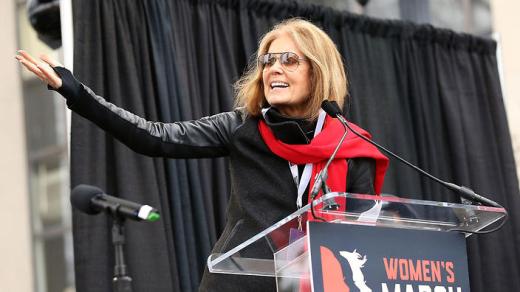
Image: Gloria Steinem, women’s rights advocate, speaks in New York City in 2017.

Mastering Virtual Presentations: Feel Connected, not Remote

Virtual meetings are here to stay and at some point you, Freelancer friend, will be asked to give a presentation on a virtual platform—so you may as well make it your business to learn how to do it right. Plan well and you’ll be able to give a talk that is delivered remotely but still connects you to your audience. The trick is to think of your talk as a TV show or movie, divide it into segments and assign them a role to play in the audience experience.

Obstacles

Talking to a webcam is probably not your idea of a satisfying communication process. You’re in a room intended for another purpose—-cooking? sleeping?—-but is now your stage and the audience can see you. You can see them, too, but only as a row of small images aligned along the perimeter of your screen. Everyone is together, except that you’re not.

In fact, you’re all isolated and some may be in another time zone or even another country. Still, through the miracle of technology, you’ve come together to share this experience. The speaker has the responsibility to make that experience rewarding.

Unfortunately, the speaker’s experience may not feel rewarding. Delivering a speech of some sort when using a virtual platform can be disorienting, whether one will discuss a committee report at a board meeting, teach a class, or give a quarterly earnings report to investors. The usual sensory cues are missing. The presenter can see everyone’s eyes, but is unable to make eye contact.

It is sometimes apparent whether or not audience members are paying attention, but feeling their presence and energy, which signal to an astute speaker when the audience is with you and when you are losing them, is not possible. In virtual communication there is no feedback, no way to confirm that the audience understands or agrees with the points you’re making. The presenter is hanging out there alone, sort of in a black hole. There are no familiar landmarks on the trip.

Solution 1: The voice

Presenting on a virtual medium is like being a television newscaster, talking to the red light and with no studio audience to interact with. Nevertheless, speakers working in a virtual medium must remain acutely aware that there is a listening audience that needs him/her perhaps more than does a face2face audience. The online audience urgently needs a responsive connection to the speaker, on whom they depend to lead them into the topic, earn their respect by sharing relevant and timely information and hold their attention so that they won’t be tempted to sign out of the event.

When talking to a webcam, there is often a tendency to speak in a monotone. Some may speak too fast, others will ramble on and on. It’s because talking to a webcam and a row of tiny pictures feels off-kilter. The normal exchange of communication between a speaker and audience, subtle but powerful, is missing.

The overall most effective solution is for virtual format presenters to rehearse the talk thoroughly, to ensure that the tone of voice is strong and confident and the pace of speaking is neither rushed nor slow. Diction should be crisp and the vocal expression pleasantly enthusiastic.

Solution 2: Technology —polls

The drop-off rate of virtual presentations is high. It’s easy for audience members to leave when the talk begins to seem boring. To combat the problem, speakers must prepare to work with the platform technology, rather than allow themselves to become lost and flailing within it. Speakers must always maintain control and this is especially true when the format is virtual and the ability to read the audience mood is severely restricted.

Presenters are advised to quickly capture audience attention and establish their control by engaging them at the start of the talk, perhaps with a fun activity that employs the platform’s polling function. When the speaker invites the audience to respond to him/her they’ll give back a helpful dose of positive energy, precisely what is needed to not just deliver a talk, but to communicate and connect with the audience.

Asking a question is a tried-and-true audience “warm up” technique, but your question must be more specific than “How’s everybody doing today?” The virtual presentation opening question should be devised along the lines of a survey question, to make taking a poll feel appropriate.

Presenters can create a question that’s related to the talk, or even ask about the weather. Since most of the audience may be working from home, staying indoors is easy. If local temperatures have been unusually cold or warm, a creative speaker might want to ask when’s the last time audience members have ventured outdoors? The question and answers received could be good for a chuckle and will pave the way to finding common ground between speaker and audience and also between audience members.

You may be able to take another poll or two later in the talk by asking a question about the topic and challenging the audience to predict what your data show. Once you’ve displayed the audience answers, then present your data. (“96% of you predicted that our customers would like this new product feature. Let’s bring up the official statistics now and see how customers responded.”

Solution 3: Technology chat

Chat is tailor-made for Q & A and it’s the go- to virtual audience engagement tool. Every presentation includes time for Q & A, often structured as a forum at the talk’s conclusion. Some presenters will also take a question or two earlier in the talk and then address the rest in the Q & A forum.

Whichever format you feel will work best for you and your topic, the chat function will be useful. Presenters can invite audience members to type questions into chat throughout the talk, which may cause certain of them to be addressed during the talk. It will be wise for presenters to discreetly check into chat periodically during the talk because audience members could be trying to signal that something is amiss—-maybe a sound or lighting problem.

Thanks for reading,

Kim

Image: Walter Cronkite (1916 – 2009), lead anchorman for CBS-TV Evening News 1962 – 1981. During the 1960s and 70s, Cronkite was regularly named as “ the most trusted man in America.”

Optimize Your Virtual Events

Videoconference technology has emerged as the savior of the pandemic era. In the midst of the disruption, if not near destruction, of numerous formerly multi-billion dollar industries, notably restaurant, hotel, wedding, airline and fitness, virtual communication has helped all of us to function and survive. I suspect we’ll all agree that face2face interaction is preferable, but videoconferencing has done an admirable job of helping us weather the storm.

Videoconferencing has greatly expanded online distance learning and allowed schools to continue educating students. Wedding planners are helping couples stage small ceremonies that allow potentially hundreds of guests to witness and virtually join the festivities. Fitness instructors and trainers are coaching their devotees via laptop webcams in living rooms and kitchens and ballet instructors are doing the same for their students.

Managers are holding video meetings for their teams. B2B sales professionals are introducing new products and services to prospects by way of video sales calls. Conference planners are scheduling and producing everything from panel discussions to district meetings. It’s all good, but it’s time to pay attention to videoconference production values and the viewer / participant experience. Things can go wrong and the program can go down in flames. As with face2face events, an action plan is needed to optimize your virtual event so that objectives will be realized.

Let’s start with the basic technical set-up. Virtual events are nearly always viewed on a small screen—tablet or laptop–and for that reason virtual event content planners, producers and speakers would be wise to think of television. Whatever the purpose of your program, be it a classroom lecture, B2B sales call, music lesson, or company meeting, content planners and producers should visualize a small screen perspective as their guide.

If the budget allows, hiring an event technology manager will be money well spent. Event tech managers will ensure that the sound, lights and background set are appropriate for the occasion. Placement of the laptop is integral to locating the most flattering camera angle for the speaker. Two or possibly three microphones may be used to adequately capture the speaker voices. Lighting is everything in show business and the event tech will position the lighting so that the set is neither too dim or too bright and speakers are not in shadows. The set background must also be considered. Having a bookcase in view is always a plus, as are a couple of healthy plants or modest floral arrangements. The company name and logo should also be visible, but its presence need not overwhelm.

Regarding the presenters, panel discussion participants are typically seated, whether all are in a room together and socially distanced or reporting in from remote locations. It is usually preferable for featured speakers to stand while delivering their presentation, since standing telegraphs energy and allows the speaker to use body language that is more communicative and engaging.

Next, think of shaping and delivering program content in a way that will connect with and hold the attention of its virtual audience. Psychologists have documented that virtual events tax our attention span because they’re literally difficult to watch for extended periods of time. Experienced producers of virtual events recommend building in some sort of a diversion about every 20 minutes, to keep everyone’s brain comfortable during the proceedings. Explore the options and learn to use the special features available on your videoconferencing platform. Polls, yes/no questions and small group chatrooms (breakouts) make the viewing experience more enjoyable for audience members. An event tech manager can be helpful with this process as well.

Pace the event content flow by breaking it down into 20 or so minute chunks and interspersing the text with interactive activities that draw in audience members and make them part of the show. Speakers and other performers have always used certain tactics to engage live audiences and now in the 21st century, speakers, event content planners and producers are discovering new, tech-based tactics to win over virtual audiences. It’s show business history in the making, folks.

Finally, there is the increasingly common hybrid classroom or special event to master, where part of the audience is live and the rest are viewing the proceedings virtually. Hybrid events pose a challenge, but they are not insurmountable. If it’s in the budget, renting or buying one or more big screens will create a more immersive and rewarding experience for both virtual viewers and the on-site audience. Interaction between face2face and virtual participants could create exciting possibilities. Q & A, simultaneous polls, contests and games can get them talking to each other as they watch the action happen live. Confer with your event tech manager and find out how to optimize the experience.

Thanks for reading,

Kim

Photograph: Kim Clark

Make Your Next Impromptu Speech Great

Here is the scenario: You’re at the meeting of a local business organization, where you are well known. Forty-five minutes into the meeting, the organization Vice President sidles up to you and asks if you’d be willing to speak on a certain topic for 5 – 10 minutes, before the President delivers the closing remarks and adjourns.

You have just 30 minutes to prepare. How can you quickly organize your thoughts and create a concise and compelling speech that your audience will appreciate and that you’ll deliver like a pro? Here’s how you do it.

Attention

Every speaker must quickly capture audience attention. Open your speech with an attention-grabbing statement that expresses a point of view that you know most in the audience share.  Alternatively, you can surprise or even shock the audience with an unexpected fact or a provocative question.  When you open your talk, the goal is to draw  audience members in and persuade them to sit up and listen.

Credibility

Once you have their attention, you next show your audience that you deserve it. Earn their trust and respect when you reveal qualifications and experience that define you as an expert, or a person with special insights, who has timely and relevant information to share.

As a member of the host group you will automatically be given a measure of credibility, but you may have other qualifications that enhance your authority. The person who introduces you may share all, or part, of that background information. Stopping short of boasting, make known your claim to expertise.

Acknowledge success/ Identify problem

The organization leader who asked you to address the group will tell you what s/he would like you to achieve in your speech and if s/he neglects to do that, it is incumbent upon you to confirm the purpose of your talk.  Whether there is a recent victory to celebrate or a looming challenge to overcome, call it out and rally the support of audience members. Enthusiasm and passion, expressed in a way that your audience will expect and accept, is injected here.  Inspire unity for the cause.

Solution

Organization leaders may be planning to roll out an initiative and you may have been asked to speak to build member approval and solidarity around that solution. If there are good times ahead, the solution may be for members to continue their enthusiastic support of the organization and the cause. If turbulent times seem inevitable, the solution is the same. The purpose of your speech is to inspire loyalty to the organization and the cause.

Call to action

As your speech concludes you must give audience members an outlet and direction for their enthusiasm and commitment to the organization.  Should they sign up for a special committee that will implement the solution, be it celebration or problem? Or is this a fundraising initiative and you’d like to inspire commitment for contributions?  Give a deadline and urge immediate action.

Re-cap

End with a concise outline of the major points you made in the speech. Re-state the call to action and the deadline. Thank your audience.

Regarding general recommendations for public speaking, thank the person who introduced you when you take the podium. Keep your talking points simple and easy for the audience to remember. If you can weave into your speech a story that illustrates or summarizes an important point, so much the better.  As Travis Bernard, content marketing guru at TechCrunch, the thought-leader technology industry blog based in San Francisco, CA says, “What would be useful for my audience to learn and how can I package this lesson or bit of information in a compelling story format?”

Thanks for reading,

Kim

Image: Edgar Bundy (1862 – 1922, British) The Coffee House Orator, 1880.  Courtesy of Touchstones Rochdale Arts and Heritage Centre Museum, Greater Manchester, England

On Conducting an Interview

Because you are an ambitious Freelance consultant, you regularly provide content marketing that showcases your expertise and reinforces your brand with current and potential clients and, when good fortune intervenes, motivates them to give you some much-needed billable hours.  As you plan your activities, you may at some point reach out to a fellow Freelancer, a good client, or another expert and ask to include that individual in your content marketing by way of an interview.  Featuring another perspective every once in a while keeps your marketing content fresh and more interesting to the audience.  I’m thinking of doing exactly that sometime soon, if my target interview guest is willing to speak with me on the record.  Stay tuned.

At some point in your professional life it is likely that you may decide, or be asked, to interview someone, so you would be wise to learn the process.  Successfully conducted interviews hinge on good preparation.  While some of us may feel that interviewing is an intuitive skill and that we should be able to manage the process spontaneously, that will not be the case.  You could probably muddle through, but why not take a couple of hours and learn how to get it right?

Think first of an interview guest to invite.  Who do you know who might tell a good story, or share some useful information that will be appreciated by your audience and does it seem possible that you’ll be able to convince that person to speak with you? 

Second, consider the basic interview format. Will your guest agree to a face-to-face Q & A that will be required for a video, or will it be a phone interview that is suitable for your podcast, blog, or newsletter? Email interviews often do not produce the best results according to many journalists. 

Third, brainstorm questions or topics that might be interesting to your audience and play to your guests’ strengths. You may want to write up a list of potential questions, or make note of possible topics. Visit the Twitter feed, Facebook page, LinkedIn profile and conduct an internet search to find out what may have been written by or about your proposed guest.

Invite your potential interview guests in a phone call. Some requests require a more personal approach than email.  Immediately upon reaching an agreement with your guest, send a confirmation email.  Two or three days in advance of the interview, send a second email to confirm the interview time and place and specify whether a phone call or in-person meeting will take place.

In all formats, introduce the guest to your audience and give a brief bio. If your interview will be video or podcast (audio), welcome your guest warmly and thank him/her for agreeing to appear. Your audience needs to hear, and see, this greeting. If the interview will appear in text you will still give a warm welcome and thanks and that exchange will appear in print.  

As you ask questions be friendly and upbeat, to help your guest to feel comfortable and safe.  Avoid “gotcha” questions designed to make the guest feel judged. Keep your mouth shut and practice active listening as you take notes as the guest speaks  (you can record as well and if you plan to do that, ask permission).  If you hear a particular word, phrase, or aspect of the topic that piques your curiosity or seems to give unexpected insight into the question, enter it into your notes and then ask a follow-up question. In this way, your interview will become a conversation, rather than a stilted Q & A session.  The best interviews are what seem to be a relaxed and intelligent conversation between the host and guest.

FYI, it is sometimes necessary to ask the same question two or even three times, in different ways, to persuade your guest to give a complete answer. It’s important to build rapport throughout the interview to make the subject feel comfortable sharing information.

You may need to nudge the interview back on track if your subject goes off on a tangent, in particular if this is a video or podcast conversation.  A useful phrase could be, “How does that relate to the big picture”? Conversely, you might draw out more information from a reticent guest when you ask, “Do you have a story that will illustrate your point”? At the end of the interview, thank your guest for participating and enlightening the audience.

If the interview will appear as a podcast or video, your guest may appear for 15 – 20 minutes, unless his/her topic is especially compelling.  If you are interviewing for your blog or newsletter, 15-20 minutes is probably still a good time limit for the conversation. Overwhelming your guest or audience is to be avoided.

Interviewing a guest for your chosen content marketing platform will build your audience and enhance the brand of your guest as well.  Create a win-win situation for you and the guest by carefully considering the benefits that will accrue to each of you through the proposed interview and be sensitive also to the interests of the audience.

Thanks for reading,

Kim


A Superb Speaker Introduction

Excellent public speaking makes those who have it appear both credible and smart and those who wish to obtain or maintain the appearance of authority and expertise are advised to cultivate the art.  Public speaking not only refers to s/he who makes a featured presentation—keynote speakers, guest lecturers, panelists, moderators, or the toastmaster at a social function—but also includes s/he who introduces a speaker.

An invitation to introduce a speaker is an honor and a vote of confidence and you would be wise to prepare for the occasion.  The introducer bears the responsibility of preparing the audience to respect the speaker and trust his/her information or story line.  If you receive an opportunity to introduce a speaker, keep the following suggestions in mind:

Show that you have the credentials to make the introduction

S/he who introduces a speaker must earn the confidence of the audience.  The leader or some other high-ranking member of the sponsoring organization usually introduces speakers, and earns that confidence by way of the authority vested in his/her position. Alternatively, a VIP speaker may be introduced by a similarly ranked colleague or guest VIP, who earns the confidence of the audience and as well conveys the importance of the speaker.  The guest VIP who introduces the high profile featured speaker will merit his/her own introduction and that will be given by a member of the sponsoring group.

Direct audience attention to the speaker

A speaker introduction is in reality a sales presentation and obtaining audience buy-in for the speaker and topic is your mission.  Your first order of business is to persuade the audience to be fully present in the moment. Typically, audience members are engaged in other activities in the intervening moments between speaker presentations, or as they await for the program to begin.

Some will be in conversation with those nearby, perhaps discussing the previous speaker or the program agenda.  Others will be focused on electronic devices, checking email, sending texts, or posting social media updates.  Your introduction must provide a bridge that transports the audience away from distractions and leads them to the subject of your introduction, the speaker.

A clever way to gain audience attention is to capture their imaginations with a rhetorical question related to the topic.  Consider opening your introduction with “What if…?“, “What is it about…?“,  or “Have you ever wondered how…?” The question will allow you to segue into the topic, which ideally will be perceived as compelling, to validate the audience member’s decision to attend.

Endorse the speaker

Now that you have the audience’s attention and confidence, it’s time to portray the speaker as an expert who is deserving of the audience’s time, attention and money (if admission was paid).  Put them in the mood to hear the talk by saying something like… “I first heard (the speaker) about three years ago, at a reading s/he gave soon after his/her book (title) was published.  I’ve been anticipating the release of this new book (title).” “I’ve heard more than one expert address our topic this afternoon, but I believe that (the speaker) gives the most comprehensive and clear representation of the facts…”

You may in addition give a build-up that precedes the above by listing awards and honors that the speaker has received, if applicable, or reading quotes about the speaker that have appeared in important publications.

Create intrigue and excitement about the topic

Tempt the audience with a smidgen of how the speaker will meet or surpass their expectations for the talk.  Read a sentence or two of an early review of the book that will be discussed.  Describe a useful piece of information that audience members will receive as they listen to the presentation.  Make them know that a worthwhile pay-off awaits.

The introduction

Continue to demonstrate that you make excellent speaker introductions by weaving the sense of anticipation into your actual introduction, perhaps in this way… “Let’s all welcome (the speaker) and let him/her give us the real story about what’s going on.” “Let’s invite (the speaker) to tell us what happens next in the ongoing saga of this character. Please join me and give him/her a warm welcome.

Thanks for reading,

Kim


Approach the Podium: How To Get Speaking Engagements

One of the best ways for a Freelance consultant to demonstrate and validate our bona fides as an expert in our chosen field is to get in front of an audience and deliver a talk to peers and prospects. As we all know, billable hours and referrals are built on confidence and trust and we must do everything possible to encourage and sustain their growth. If you would like to get on the speaker’s circuit but have not yet done so, begin by acquiring some public speaking experience and as you do, think about topics that you can convincingly address.

I’ve been teaching since 2006 and I’ve found it to be a learning experience for me, as well as for my students. Teaching is a wonderful place to start building your public speaking resume and you will be (modestly) paid as you and your students learn.  Absolute beginners are advised to approach an adult learning center to explore opportunities to teach a workshop that you propose.

As your teaching skills become more proficient, browse the catalogues of community colleges and four-year institutions and contact department heads to inquire about teaching for a semester. BTW, the workshop that you proposed and taught at the adult learning center represents curriculum development and in the world of teaching, that is a plus. You could be asked to expand your workshop into a semester-long course.

Step up your activity in local business or social organizations that offer professional development or even current affairs programs. Attend a program or two, get to know and build relationships with the program organizers and make it known that you are able to serve on a panel that will address a subject in which you have special knowledge.

Speaking on a panel is a great way to let program organizers see you in front of an audience. Do well and you may next be invited to moderate a panel and eventually, receive an offer to be a keynote speaker. If you know of a potential speaker, moderator or panelist who program organizers may want to feature, do not hesitate to make the referral. That will be a feather in your cap and increase your value to the organizers.

Give careful consideration to the topics you can speak to and the corresponding prime audience demographics. Should you approach organizations where you are not known, it will be very important to help program organizers understand where your topics and their audience needs intersect. Create a one page document for each of your talk titles.

List the your name and company name at the top, followed by your talk title in a bold and larger font. In five or six bullet points, describe the primary content of your talk and the benefits that audiences gain by attending. It is also useful to write a 60 second pitch for the talk that you personally make to program organizers and to those who can make referrals for you. Add your talk titles and those descriptive bullet points to your website, LinkedIn, Twitter and Facebook pages.

If you have presented a webinar, or recorded a podcast or video, upload these to your website and social media accounts, so that program organizers can see and hear you in action. Larger organizations may request that you send in a few of your Power Point slides for review.

Speaking of Power Point, if you are fortunate enough to land a speaking gig that gets you in front of potential clients, strongly consider paying an experienced graphics specialist to customize slides for you. it is so in your interest to present high-quality slides that represent you and your brand well. While you’re at it, have your graphics person embed your photo into your “one sheet” talk info documents,  so that they can be used by you and program organizers to promote your talk.

To make your goal to obtain speaking engagements a true marketing plan, commit your proposed actions to writing and make a list of organizations where your speaking talents as keynote, moderator and panelist are best suited. Ask clients and colleagues which conferences they attend as you make your choices. Then, visit the program websites and find out about previous speakers and topics.

Finally, be aware that the vast majority of speaking engagements are considered opportunities for exposure and are unpaid, but that should not discourage you from selectively and tactfully asking for an honorarium.  If you speak in a location that is more than an hour away, or where the parking cost is large, ask if expenses related to getting you to the venue will be covered. If you must take a hotel room, ask if the program organizers will reimburse the cost.

Generally speaking, lining up teaching or speaking engagements is a long-term project, since schedules and course catalogues are determined far in advance. Consider it something useful to do when business is slow.

Thanks for reading,

Kim

Master Moderator: Run A Panel Like A Pro

Speaking opportunities are a time-tested way to position oneself as an expert. Speaking engagements are often gateways to connecting with prospective clients, strategic partners and referral sources. Being showcased as the keynote speaker is the most coveted role at the conference, but an invitation to join a panel is highly desirable as well. Should you be asked to moderate, you may work with the conference organizer to select the panel speakers.

When considering speakers, remember that the goal of every panel discussion is to bring together three to five smart and witty people to have a dynamic discussion about an intriguing topic. A group of highly regarded, yet boring, experts will not do. The best panel discussions are lively. The moderator and speakers will enlighten and entertain the audience and draw them into the discussion with questions and comments.

Panel preparation Invite experts who communicate well and have the ability to engage the audience. Research the panelists and their work and let that guide questions that you will ask, in addition to questions on any big developments that the audience will want addressed (like the Supreme Court ruling on the Affordable Care Act if health care is the topic).

Experienced moderators suggest that you send panelists a group email that lists three questions that you will pose and ask them to suggest other issues/questions that they feel should be addressed as well. At the conference, introduce the panelists to one another and suggest that all of you sit together while whatever meal is served or as the keynote speaker is on, so that everyone can get somewhat acquainted before the panel goes on.

Panel discussion objectives At the start of the panel, thank the audience for attending and introduce yourself. State the title and purpose of the discussion. Three sentences should be sufficient to describe why the topic is relevant to the audience and the community (professional peers or the public).

Introduce the panelists The moderator always introduces the panelist and the introduction should be brief and to the point, letting the audience know why they’ve been invited to discuss the subject. Smart panelists will give you their own introduction for you to read.

Layer the questions A-List moderators know that there is a sequence to follow when posing questions to the panel. The opening question is the “view from 30,000 feet”, an overview that allows panelists to give their perspectives of the big picture regarding the topic. The next couple of questions become more specific, boots on the ground. Once everyone is warmed up, throw in a curve ball with a tough question.

You the moderator are looking to elicit from the panelists concrete examples, war stories, amusing anecdotes, the outrageous truth and provocative or controversial opinions. It’s OK for panelists to pose a question to another, as well. Panelists may ask questions that are sharper and more provocative than those you’ve prepared and the answers may be more candid.

Keep the energy flowing and resist the predictability of going down the line of panelists every time, to allow each to answer your question. If the first three give a similar answer, give another question to the next two, transitioning by saying “The question seems to be answered…” as you pose another to the next panelist(s).

The wrap-up question don’t bother to ask for a closing thought, that’s been done all too often. Instead, ask panelists what they think might be an important trend that we’ll be talking about next year at this time, or to make some counterintuitive out-of-the-box prediction about what the industry will look like in five years.

Audience questions To the best of your ability, allow 5 – 7 minutes for audience questions. Following the audience questions, give a brief closing wrap-up and thank the audience for their attendance and participation.

End on time The panel discussion will likely be 45 – 60 minutes long and it is the responsibility of the moderator to facilitate an engaging and informative discussion that makes the panelists (and you) look good by posing questions that will quickly get the relevant information onto the table and make the audience value the experience. Make the organizer happy by staying on schedule. Ask the organizer for 10 minute and 5 minute warning signs.

Thanks for reading,

Kim