New Year’s Resolutions for 2022

Happy New Year! I’m psyched to welcome you to 2022 and thank you for stopping by to read. There can be no party without you and together, we are going to make this a very good year. Because we’re at the top of the year, capodanno, as the Italians so eloquently say, I’ve decided to revive my New Year’s Resolutions tradition, something I haven’t done since January 2019. Considering what the entire world has been slogging through since 2020, you may appreciate some inspiration to get yourself in racing form.

Join a business group

Freelancers and other business leaders need community. It can be lonely at the top. You need a way to meet and interact with peers, whether or not they become your besties. Business organizations and professional associations provide forums where Freelancers and (small or mid-size) business owners can talk to colleagues who understand your challenges and motivations. Along the way, you’ll build personal connections and you may also find your way to business opportunities.

If you’re not sure where to start, visit the website of your local chamber of commerce; the chambers are great resources for B2B, B2C and B2G facing business owners and leaders. Another useful organization is The Freelancers Union, an online national group that is a good resource for all types of information, from professional development workshops designed for self-employed professionals to medical, dental and other types of insurance coverage. https://www.freelancersunion.org/

Analyze your website and social media data

Fully leveraging the potential of the digital presence of your company is unquestionably a must. Whether selling to B2B, B2C, or B2G clients, the winners are those who are guided by actionable data when making decisions and developing business strategies. If you haven’t done so already investigate Google Analytics, a free and powerful online tool that helps you discover the right approach to the customer journey and customer experience that your company offers, supplies e-commerce, call-to-action and landing page insights, plus more. https://analytics.withgoogle.com/?utm_source=google-growth&utm_medium=cpc&utm_campaign=2019-q4-amer-all-gafree-analytics&utm_content=analytics&gclid=EAIaIQobChMIsILp4eCW9QIVDovICh2FKAT0EAAYASAAEgJPJPD_BwE&gclsrc=aw.ds
If you can budget about $25-$50/month, invest in a social media analytics service such as Zoho Social, Hootsuite, Buffer Analyze, or HubSpot to further enhance and refine your strategies and campaigns and measure ROI.

Become a better leader

There are multiple paths that one might take to developing and enhancing leadership skills and it can begin with reading. Reading one or more leadership themed books each year will open your mind and make you rethink your usual approaches to problem-solving, decision-making, negotiation and communication, for example. I’m a regular reader of the Corner Office column that appears in the Sunday New York Times.

You may be inspired by this tale of entrepreneurship The Unfair Advantage (2020) by Ash Ali and Hasan Kubba https://www.goodreads.com/en/book/show/50714359-the-unfair-advantage

You may be shocked but intrigued by this tale of commodities trading The World for Sale: Money, Power and the Traders (2020) by Javier Blas and Jack Farchy. https://www.goodreads.com/en/book/show/52199304-the-world-for-sale

When you join a business or professional group, you’re also likely to be introduced to leadership roles in the group (on the membership committee, for example). The chambers and also Rotary Clubs can introduce you to local not- for-profit organization leaders, who can show you how you might contribute your time and talent to a philanthropic cause that resonates and further expand your network, enhance your brand and maybe add to your skill set as well.

Prioritize revenue generating activities

Decide which of your revenue-generating activities could pay off if you plan well— then follow through and execute! Depending on your business and target clients, it could be email marketing outreach to potential prospects, attending certain conferences or trade shows, sending hard copy direct mail appeals, or running FaceBook ads. Once you know what your revenue-generating strategy will be, calculate about how much time you’ll need each week or month to gain traction and meet your financial goal. Then, get to work.

Communicate with clients

Staying in contact with clients throughout the year is good business, even when you reach out to those you haven’t worked with for a few years. Through your outreach, you remind clients past and present that 1.) you’re still in business and 2.) you may be able to help them with achieve a goal or solve a problem. A few years ago, a study by the uber-consulting firm Bain & Company confirmed what decades of anecdotal evidence shows —- that it’s easier to keep an existing customer than to find a new one.

So send a copy of your newsletter, blog, case study or white paper to clients, attached to a quick and friendly email that mentions a couple of reasons why they’ll find the read worthwhile. Also update clients when you give a talk, moderate a panel, or appear on a podcast. Pick up the phone and invite your most important clients to lunch.

Delegate or outsource

Delegating, or outsourcing if you work alone or with a small team, is essential for you to be able to have time to yourself and think about how to find innovative ways to expand your business. If you want your business to thrive and grow, you need to start trusting the people on your team, or identify other talented and trustworthy Freelancers, to take over certain tasks.

Upgrade your skills

The world keeps turning, expectations evolve and what we need to know to maintain the trust and respect of current and future clients shifts with the times, along with how we package and deliver the services we offer. What expertise do you need to own to better reach or more effectively serve your clients? What do you need to know to more efficiently run your business?

Help yourself to figure things out by reading articles that address your industry and niche within it—-what new technologies are gaining traction or what are new uses of existing technologies? What are the thought leaders in your industry and niche predicting? What are your clients doing to position themselves for future demands?

With that information in hand, you’ll understand how to upgrade your skill set. Maybe you’ll finally become truly proficient in using Excel, or learn to become more comfortable giving virtual presentations.

Nurture your health

Unless you’re up against a big project deadline, structure your time to allow yourself to have a day or two off once a week. Burnout is bad for business. Allow yourself to sleep the number of hours your body needs (adults usually need 7-9 hours daily). Eat a balanced diet that contains the basic food groups. Give yourself a daily intake of water that approximately equals one-half of your body weight in ounces. Participate in moderate to vigorous exercise at least three hours each week. Maintain your social connections by staying in touch with friends and family.

Thanks for reading,

Kim

Image: © William Stephen. Thoroughbreds racing at the Saratoga Race Course in Saratoga Springs, NY

Making Sense of Your Data

When you think about it for a minute, you might agree that basically every aspect of your business can benefit from relevant and timely information—-i.e., data. However, your potentially helpful data can leave you with a puzzle to put together, unfamiliar terrain to navigate, before you can make sense of the information and understand the picture it’s trying to show you.

The puzzle pieces that contain your data could be expressed in various formats, e.g., columns of numbers, pie charts, bar graphs, or the written opinions of researchers and thought leaders. Furthermore, the data sources often use different benchmarks and measuring standards and make getting a sense of things sort of a wrestling match.

Analyzing data reminds me of buying produce at Trader Joe’s and Whole Foods. At Trader Joe’s, the bananas are 19 cents each and there are no scales. At Whole Foods, bananas are 49 cents a pound. How can I calculate what I’m paying for the fruit or the other produce that I buy at each market and compare prices?

Data analysts and other experts say that for much of the information we access, tools that cut through the maze and bring focus to the picture, such as identifying patterns and trends for you to consider, are a must. Otherwise, you’ll be unable to fully comprehend the data’s story, unable to make good use of the information and enable it do what you need it to do, which is to support good decision-making. Micrsoft Excel or Power BI, Python, Jupyter and Apache Spark are among the most highly rated data analytics tools.

Among the most common functions that data analysis is called upon to provide insight are:

Marketing teams use data to examine website visits, often by way of Google Analytics and social media stats, by way of services such as BuzzSumo, Sprout Social, or HubSpot. Understanding what’s happening in the company’s marketplace and revealing customer behavior by analyzing Descriptive Analytic data is a typical goal.

Sales teams use data to understand the customer buying journey and learn what motivates a sale, along with revealing customer buying patterns. With access to unlimited online information, prospective customers are better informed about potential purchases than they’ve ever been. B2B sales researchers have documented that prospects are usually 80% of the way through the buying cycle before making contact with a sales team. Customers are in the driver’s seat.

Finance/ Accounting teams have always had access to the reams of data that’s attached to invoices, accounts payable and receivable transactions, sales revenue, inventory counts and other movements of money and resources.

Operations teams are charged with continually reviewing any number of business processes, from how to source or manufacture the products and services that a company sells, to recommending the most optimal methods to connect those products to customers, to ensuring that company offices are equipped with effective HVAC systems. Obtaining data that reveals operational efficiencies and enables business functions to be executed in the easiest, fastest and least costly or risky methods is the eternal goal.


Yet the question has always been, how can anyone—-multinational conglomerate or Freelance solopreneur—-maximize the value of your data?

  • Put data to work Your data is wasted unless you examine it, interpret it and let it guide your actions and decision-making.
  • Sort and analyze Appropriately grouping, categorizing and analyzing your data makes business intelligence tools necessary when working with large amounts of data. Today, data analysis means Artificial Intelligence. AI-powered systems will in mere seconds collect, sort, analyze and make meaningful recommendations for you and your team to review and evaluate. If that’s not enough, your AI tool will ”learn” from the data you feed it and the recommendations it makes to continually refine and improve the outcomes.
  • Strengths into opportunities Let your data show you where you shine. Maybe it’s your amazing referral rate or customer retention rate. Maybe it’s the memorable customer experience that you create or the loyal followers who’ve turned into brand cheerleaders for your company.
  • Prioritize Get clear and pragmatic about goals and objectives the organization would be wise to pursue over the long and short terms. Your customers and their emerging preferences and priorities are certain to influence the strategies and actions that emerge at the head of the line. Let the marketplace guide you.

Thanks for reading,

Kim

Image: © Warner Brothers Pictures. Malcolm McDowell in A Clockwork Orange (1971), directed by Stanley Kubrick 

Pro Bono Quid Pro Quo

I’ve often recommended that Freelancers seek out speaking opportunities as a way to meet potential clients or referral sources, enhance your brand, add names to your mailing list to support leadgen activities and to generally build name recognition and expand your influence. Speaking before an audience, in-person or virtual, is a golden opportunity and, as noted, confers many tangible and intangible benefits. But the cold fact is, speaking engagements often do not pay, or pay only a modest amount.

As a seasoned professional with wisdom to share, you deserve to be paid for speaking engagements but unfortunately, that is not always the case. While occasional pro bono speaking engagements might be building blocks for your brand, it nevertheless makes sense to get some quid pro quo. Use some creativity and moxie to first, think about acceptable substitutes for money and then ask the organizer what can be done for you. In other words, redefine what it means to get paid and negotiate for an alternative form of payment that will compensate you for the value you’ll deliver. The alternative payment might be tangible or intangible. The idea is to not walk away empty-handed and create a win for yourself and the organizer.

As you consider what you may be willing to accept in place of monetary compensation, remember what is required to prepare a talk. Typically, a one hour program consists of about 45 minutes for the presentation plus 10-15 minutes allotted for your introduction and Q & A. Presentations require numerous hours to prepare—slides must be designed and created and maybe handouts, too. Practicing your delivery and figuring out how to best integrate the visuals can take three hours or more. You’ll want to negotiate for a fee alternative that for you will be a high-value commodity, even if it’s not money. Here are seven possibilities to consider:

Networking opportunities

There is value in relationship-building conversations with leaders. Request an introduction and 30 meeting with a leader or decision-maker within the organization to build broader deeper networks. This creates long lasting connections after your talk. Research the organization to help you prepare a list of questions you can ask and to also help you understand how you can be a resource to the organization and vice versa.

Testimonials

Ask an organizer in a leadership role to provide a flattering quote or endorsement that can be uploaded to your website or LinkedIn profile. If there is a heavy-hitter in the audience, ask the organizer to introduce you and ask if the VIP would be willing to supply a quote that you can record as a video.

Referrals

Request that if your talk receives positive feedback from the audience, you’ll be invited to speak again in 24-36 months. Or, if the organizing body happens to be the local chapter of a regional or national organization, ask your local contact to recommend you as a speaker at the regional or even national level. You can also ask to be referred and recommended to speak at a related organization or conference. The goal is to use this first opportunity as a stepping stone for upward mobility.

Discounted memberships and dues 

Many speaker series programs are hosted by organizations whose members and programs can provide networking and professional development opportunities for you. Consider asking to receive a waived or discounted one-year membership, to help expand your network, upgrade your skills and save money as you do. Or you might request comped admission to certain upcoming programs that you’d like to attend.  

A public speaking coach to build your skills

Ask your con if the organization has affiliations with professional storytellers or public speaking coaches. If so, request that the coach meet with you for an hour or two, to give feedback in advance of your talk. Or, ask for the coach to attend your presentation to evaluate you and provide verbal or written feedback. Using your talks as opportunities to improve your speaking skills is always a good strategy.

High-resolution event photos

Some speaking engagements are still virtual, but if your talk will be in-person , request that a photographer, if available, takes action shots of you at work, speaking at the podium and interacting with the audience. You might also request that the photographer take a headshot of you. High-quality photos are an important resource and images of you in action are especially valuable, but may be difficult to obtain. High quality, recent photos are guaranteed to be excellent additions to your print or online promotional materials, from website to media kit.

Social media boost

Ask the organizer to record the presentation, whether virtual or IRT, and send three of four five-minute highlight video clips for you to upload to social media. Teaser videos can also be used to promote your content and speaking style. Use the material as a demo reel to help solicit further speaking opportunities.

Thanks for reading,

Kim

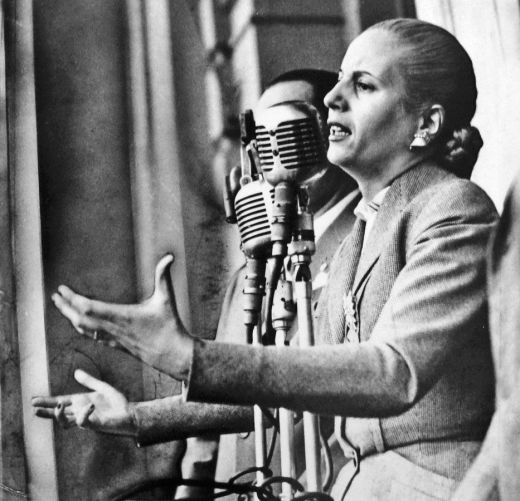
Image: Former first lady of Argentina (June 1946 – July 1952), Eva Peron electrifies a crowd

So What’s Your Lead Magnet?

As Freelance consultants and owners /leaders of businesses of every size work to attract and retain customers and convert leads into sales obtaining contact information, particularly email addresses, is of paramount importance. Email addresses are a foundational resource and govern your ability to communicate with current and prospective clients. A healthy email list is remarkably valuable and building and maintaining a good list is something you want to do.

The challenge is, how can you obtain email addresses quickly and efficiently? You can buy email lists; you can use online services such as Contactout, Clearbit connect, Finder.io, Discoverly, or even Google, to help you find the email addresses of decision-makers you’d like to reach. The problem is that contacting those individuals would constitute spamming because they have not agreed to share contact information with you. Blindly sending promotional emails, or even your newsletter, to those who you assume are prospects, but who have never engaged with your company in any way, is a turn-off. Delete.

Building a money-making email list takes time, effort and ingenuity. To successfully obtain email addresses, it is necessary to create conditions that motivate potential prospects to surrender them. The original method by which email lists were built was through teaching or other speaking engagements. If pre-registration was required, voila, you harvest email addresses. Sign-in sheets that request emails were/ are another harvesting method. It’s a slow process, but the leads are authentic.

More common now and in theory, a faster and easier leadgen method, is to somehow attract prospects to your website and social media platforms. Bringing inbound leads to one of your sites is a victory, but you still need a hook to persuade visitors to remain onsite and engage. To create that bit of magic, you need an appealing offer, a lead magnet. You also need to call attention to and sell your lead magnet with a persuasive call-to-action. See the link to review our CTA conversation.

. https://wordpress.com/post/freelancetheconsultantsdiary.wordpress.com/21655

A lead magnet is often content given away to someone in exchange for their email address. Instead of asking website visitors to buy your e-book, for example, tell them they can have it at no charge, if they kindly provide their name, email address and maybe also the name of the company for whom they work (or own) and their job title. You can do the same with other resources that may be considered valuable and desirable.

You must give customers a compelling reason to provide you with their contact information. Most people today are inundated with emails, so your lead magnet and CTA must be stellar to convince people to add yet another email to their inbox. Simply inviting people to add their names to your mailing list no longer generates the results it once did. You must give something of value in order to receive something of value.

What type of lead magnet should you create? Other than an e-book, you might also offer the results of a comprehensive survey that examined a hot topic, or a live taping of a webinar or podcast in which an interesting subject was discussed (and perhaps in which you participated). Other possibilities include:

  • A content marketing calendar
  • Your newsletter
  • A case study
  • You invite a client to tell the story of how you solved a problem and provided a solution that worked especially well
  • A white paper
  • The purpose of a white paper is to promote a certain product, service, technology or process that your company offers or plans to offer soon. The writer aims to (you) discuss and in so doing persuade current and prospective clients that the solution is highly effective and may be useful for their organization when certain circumstances, problems, or goals exist. A white paper is intended to provide compelling and factual or technical evidence that your offering (the product or service) is a superior method of achieving the goal or solving the problem. In general, white papers are written in an academic style and they’re often about 2,500 words in length.

Just remember that you’ll have to do more than dangle an alluring treat before your visitor’s eyes. it’s not just about the lead magnet. You’ll want to create a persuasive, come-hither CTA pitch that motivates readers to covet your lead magnet and hand over some personal information to posses it.

Thanks for reading,

Kim

Image: The magic hand of Steve Spangler, the Science Guy on KUSA-9News in Denver, CO on February 25, 2019

Survey: Freelancing in America 2020-2021

Upwork, the largest online marketplace for connecting Freelance workers with those who might hire us, continues to examine the state of Freelancing in America, a project the company began in 2014. I last reported on the survey in 2017.

As you probably guessed, the number of Freelancers, and clients willing to hire independent workers, continues to grow. To study the current state of Freelancing, Upwork’s 7th annual report, researchers surveyed 6,000 Freelance workers in the U.S. Survey respondents covered the spectrum—full-time, part-time, the side hustle (formerly known as moonlighting) and occasional workers. The data revealed that 59 million Americans performed Freelance work of some sort during the previous 12 months, an increase of 2 million Freelancers since 2019 and representing 36% of the U.S. workforce.

The response of businesses to the coronavirus shutdown that began in March 2020 caused seismic changes in the workplace. Impacting mostly white collar office workers, the Work From Home revolution would become a turning point for employees and their employers. By spring – summer 2021, COVID-19 vaccinations were well underway and many employers began to ask their employees to return to the office, but there was sometimes pushback. As children returned to school, working parents found it easier to WFH when the burden of toggling between paid work and supervising classroom lessons had ended. According to researchers at Upwork, it is anticipated that 40 million or more employees will work from home at least one day/ week by 2026.

WFH had more reach than could have been imagined, giving rise to the unprecedented Great Resignation. The U.S. Department of Labor reported that from April – June 2021, 11.5 million workers quit their jobs; in September, another 4.4 million left their places of employment. It appears that employees are done with office politics, done with endless meetings that have no purpose and done with bosses who withhold pay raises and promotions because they enjoy controlling people’s lives.

As you might expect, the Great Resignation impacts Freelancers because they have to make a living somehow. Furthermore, the WFH phenomenon has speeded up a growing acceptance among managers of hiring Freelance workers. Upwork in August 2021 reported that 53% of managers are now more willing than pre-pandemic to hire Freelancers for selected projects and tasks, as a result of their experience with remote workers in their own organizations.

See the full Upwork report for more details. https://www.upwork.com/i/freelance-forward

  • As of July 1, 2021, 59 million workers in the U.S. performed Freelance labor over the past 12 months, an increase of 2 million workers since 2019 and representing 36% of the workforce
  • Freelancers annual earnings in aggregate were $1.2 Trillion, an increase of 22% since 2019 and representing 5% of the country’s Gross Domestic Product
  • 36% of Freelancers now consider themselves full-time, an 8% increase since 2019
  • The number of Freelancers in the United States has increased by almost 12% between 2014 and 2021
  • 75% of workers who quit their jobs to become Freelancers report that they earn the same income, or greater
  • Freelancers earn, on average, $28 an hour for performing skilled services
  • Young professionals have embraced Freelancing and half of the Generation Z workforce has done Freelance work
  • Freelancers age 55 + comprise 26% of the Freelance workforce and they primarily do skilled and project-based work
  • 50% of Freelancers provide professional level services such as computer programming, software development, marketing, social media, translation and business consulting, an increase of 45% since 2019
  • 51% of Freelancers have participated in skills development training in the past 6 months, as compared to 36% of traditional employees
  • 19% of Freelancers earn $75,000 to $99,999 per year, 12% earn $100,000 to $149,000 per year and 5% earn $150,000 or more per year
  • 58% of freelance workers in the United States have worked with more than 5 clients in the past 6 months
  • 58% of traditional employees who are WFH due to the pandemic are now considering Freelancing in the future

Thanks for reading,

Kim

Image: A Freelancer in America at work

Client Testimonials: Cheerleaders for Your Business

As you ambitiously devise and implement leadgen campaigns and branding strategies designed to keep your sales pipeline filled with prospects that you hope to convert into a few sales, it is easy to lose sight of a basic fact of marketing—your clients are the best promotional resource you’ll ever have. Satisfied clients can become your cheerleading squad and they have more credibility with prospects than any marketing tactic you could ever devise.

Today, there is so much sensory overload noise in the marketplace that Freelancers and other business owners are often best served by peer-2-peer testimonials to persuade prospects that doing business with your company is a safe bet. Unless you can afford to buy an ad during the Super Bowl, nothing has more credibility than from the trenches client testimonials, referrals, or case studies.

So how can you recruit a client to publicly recommend your products or services without seeming to overstep a boundary? Basically, you ask the right clients, you make it easy to say yes, you make the ask at the right time and you make sure that the end result makes the client and his/her organization look good.

Ask the right client

Obviously, your first job is to know which of your clients would make a good recruit for a testimonial ask. Recall clients with whom you worked over the past 2-3 years and for whom you’ve done an exceptional job in terms of beginning to end customer experience, delivering the solution and meeting, if not exceeding, all expectations. Most of all, the client has to recognize and value what you did on his/her behalf. In other words, ask clients who have plenty of good things to say about your company and the work you do or the products you sell.

Timing

Timing takes more than one form. One factor is, how far into the past can you reach to make an ask? Will it be awkward to ask a client with whom you worked, say, four years ago? The answer, I think, is that it depends. If you maintain contact with past clients, e.g., sending December holiday cards and perhaps also sending announcements about your appearances on webinars or podcasts, it will be easier to reach out and ask for a testimonial.

Another timing issue is to avoid the client’s busy season, or the end of the fiscal year, when the client may have deadlines to meet. To the best of your ability, avoid making the ask when your client faces time-sensitive, pressing work responsibilities.

The ask

The window between your last interaction with the client and when you plan to ask for a testimonial will impact your choice of communication. If it seems right to approach a client soon after the work is completed or the product purchased, including your testimonial ask in a post-sale client satisfaction survey will be perceived as a natural progression. Email the survey and encourage your client to share feelings about working with your organization, the products that were purchased, or the services provided.

Invite the client to provide more specific, detailed comments in the Testimonial Template that you embed in the survey. Note that comments may appear on your company website and social media sites.

To approach a client with whom you worked a year or more ago, it may be more appropriate to first call and discuss the testimonial ask and then follow-up with an email to confirm, with your Testimonial Template attached.

If your client prefers to make a video testimonial and you have the skills to record and edit the video, which should probably be no longer than 6-8 minutes, arrange to meet for the shoot. Alternatively, you might set up a videoconference call and record an interview with the client as s/he discusses the positive experience and great results obtained from working with you. Audio-only testimonials can also be recorded and they are likewise compelling. When using the audio or video options, send the Testimonial Template a week in advance and send it again 48 hours ahead of the recording session.

Questions and quotes

Help clients to endorse your products and services by including a few open-ended questions in your Testimonial Template to get the ball rolling. Devise simple, direct questions that put the client in story-telling mode and will yield good quotes.

Ask the client to briefly detail the goal that had to be achieved or problem solved and why there was a need for the products or services that were purchased. Also ask the client to divulge if s/he previously used another company to obtain similar products or services and to provide insight into what motivated him/her to explore your company. Remember to ask the client to share reasons why your organization was chosen and not another. Finally, urge the client to discuss the experience of working with your organization, with an emphasis on expectations and benefits derived.

Client benefit

Your testimonial will be posted on your company website and on one or more social media channels—-remember to link the text, audio, or video back to your client’s website. Let the client know that you’ve provided these valuable back links by sending links to all platforms on which the testimonial appears. Informing clients whom you approach for a testimonial that you’ll provide this sort of publicity may yield a “yes” for your ask and put your venture on the road to obtaining the best endorsements available.

Thanks for reading,

Kim

Image: Cheerleaders in 1920s America

Clubhouse: It’s About Networking

As you know by now Clubhouse, the newest social media platform, is a live audio-only service that’s accessed through an app and was launched in October 2019. Clubhouse facilitates candid and compelling conversations between smart and interesting people and those conversations are intended for members only and are never recorded.

In keeping with its audio format, Clubhouse operates as an endless series of talk radio interviews (or podcasts, if you prefer) and group meetings that invite members to create virtual audio “rooms” and “clubs.” Clubs function to build communities within the platform—-audience development, in other words. Rooms are where audio chats take place and there are three types: Open, Social and Closed. Chats in the Social and Closed rooms are available only to members of the sponsoring club and Open rooms accept all parties.

Rooms are sometimes hosted by those with a following—thought leaders and opinion-makers, celebrities, venture capitalists, journalists and so on, but regular folks are also able to host a room. Each room offers its own format, an audio happening that may primarily attract devoted listeners or might bring in those who look forward to joining a lively discussion. Room events can be either pre-scheduled or surprise pop-ups. Rooms might hold just a small group, perhaps hosted by someone not well-known, while other rooms are led by marquee name players and draw dozens or even hundreds of listeners.

Clubhouse quickly grew in popularity during the early weeks of the coronavirus shutdown. Initially, the app could be downloaded only on Apple phones and membership could be obtained only by an invitation from a current user. The velvet rope policies proved to be a brilliant marketing tactic. Clubhouse became the darling of the A-list elite. Elon Musk and Mark Zuckerberg were guest speakers. Oprah Winfrey, Mark Cuban, R & B superstar Drake and comedian Chris Rock were said to be members. I first wrote about Clubhouse in February 2021. https://lionessmagazine.com/clubhouse-an-audio-chat-platform-for-beautiful-people/

Clubhouse continues its upward trajectory, especially since Android downloads became possible in May 2021 and invitations to join are no longer needed. According to Quantummarketer.com, there are 10+ million users globally mostly located in the U.S., western Europe, Japan, South Korea and Australia.

Now I’m certain that you find all of this quite fascinating but you may wonder, is this new social media player worth your time? I think yes—-that for B2B service providers and start-up entrepreneurs, Clubhouse has the potential to be useful in your Next Normal networking strategy.

Because interactions are about listening and talking live and IRT, communication is enhanced. Furthermore, the profiles of all room and club participants are available, making the experience feel sort of like a big conference call, where everyone on the phone is vetted and circumstances confer a degree of credibility and trust. At least some people may feel comfortable enough to chance off-line conversations and open the door to building a relationship.

Time must be invested and goals defined, as is true with other marketing activities. Key word searches that describe your goals will help to locate clubs and rooms to visit. Develop a good profile (because it matters) and step in.

Look for room topics that will expose you to recognized experts in your field, to help yourself deepen and expand your knowledge and therefore enhance your credibility. Get the heads-up on developing trends on the horizon in your field. Raise your hand, ask questions and share experiences or insights that are relevant to the discussion. Become a regular, get known and facilitate relationship building. Popular clubs that might appeal to Freelancers and others in business are listed below.

But remember that Clubhouse is not about making sales, but about listening to insightful conversations and contributing to the discussion by sharing your own wisdom. By being an active, friendly, generous participant your networking can take you to any number of paths and can yield many tangible and intangible benefits. You can even choose an appealing topic yourself and host a room every now and again, to work on building a following of your own. You might even find a mentor or be inspired to become one.

Community Club’s main purpose is make Clubhouse a welcoming place for everyone. It’s the best club for growing a Clubhouse community. Members mainly talk about Clubhouse features, support topics and onboarding newbies.

Bitcoin is the biggest club about cryptocurrency on Clubhouse. Some members who are real professionals on Bitcoin, heavy hitters. Visitors will find open, friendly and enlightening conversations about Bitcoin technology, markets, culture and the ecosystem.

Creative Executive Officers is a guide to the business of creativity for artists and entrepreneurs. Topics are mainly about business advice, entrepreneurship and education. 

Future of Work is where to discuss earning a living—entrepreneurship, creator economy, gig economy, freelancing, creatives, startups, venture capital, business, tech, AI, health, wellness, personal development, the hustle and the self-employed.

The Hustler Club “Your daily dose of motivation” is where hard-charging entrepreneurs, hustlers and creatives discuss ideas and have from-the-trenches style conversations.

Marketing Club features conversations about marketing, advertising and making the most of Instagram. Group members are marketers, creators and verified experts. 

Start-up Club is the largest of the clubs and introduces impressive and successful start-up stars who share their secrets. You’ll meet founders, entrepreneurs, angel and VC investors.

Stock Market Moves welcomes experienced, successful stock traders and those who want to become just that.

Tech Talks. is said to not be your normal tech community. It is group for diverse individuals from all walks of life, diverse backgrounds, industries and departments. Their main purpose is bringing together a group of people to talk about the good, the bad, the technical and business side of tech.

Women in Business is the largest women’s club and they are committed to empowering women in all sectors of business. and entrepreneurship.

Happy Thanksgiving and thank you for reading,

Kim

Image: © Keystone-France/Gamma Rapho. Pirate radio hosts on the ship Caroline were rescued and brought to at the police station after the ship ran aground at Frinton-on-Sea, UK on January 20, 1966.

10 Under $30: Holiday 2021 Client Gifts

The holidays are knocking on the door and savvy Freelancers know to respond with a client outreach strategy that could generate referrals and repeat business. December is your big chance to demonstrate to clients past and present that you value them and would be happy to work with them again. Before November slips away, create a plan to send holiday cards to clients with whom you’ve done business over the past 4 or 5 years and as well to send a gift to those who’ve been active over the past 12 – 18 months.

Clients will be delighted to hear from you and flattery might get you somewhere! Your thoughtfulness is also a brand-enhancing, relationship-building strategy that sets you apart in the best way and can place you at top-of-mind when clients plan the logistics of future projects.

Start today and search for holiday cards that celebrate “the season” and will be appropriate both for business and for those who do not celebrate a holiday on December 25th. I highly recommend that you send a physical card, unless on your list there are those who work from home and may not receive forwarded mail from the office. You may want to design your own card through Uprinting, the UPSstore, Vista Print, Sir Speedy, or another reliable service.

Re: your client gift list, I suggest that you match billable hours to the amount you spend on the gift; you may choose to gift only those who’ve invoiced $1000 or so. No matter how modest the amount of money you spend, understand that the gift is an investment. Your card and/ or gift communicate to clients that you consider them important and that you are a consummate professional.

Amplify audio

You don’t have to be a video gamer to appreciate the benefits of having a sound bar mounted to a desk top monitor. Whether your client streams music or movies, attends or leads videoconference meetings, or occasionally appears as a podcast or webinar guest, s/he will want to clearly hear and be heard. $24.99 https://www.dell.com/en-us/shop/cyber-acoustics-ca-2890-sound-bar-for-monitor-usb-2-watt/apd/ab768633/monitors-monitor-accessoriesFounder of FY #tabs_section.

Yummy honey

A flight of three two-ounce jars are the perfect introduction to this delicious, premium-grade, raw, artisanal honey. Add a teaspoon or two to a favorite tea. Include a dish on a cheese board spread and surprise guests with a tasty and unexpected condiment. The bees and the antioxidant rich honey that they produce are sourced from hives in Jamaica and other Caribbean islands. $14.99 for the box of three

https://www.ivyees.com/product/ivyees-honey-minis

Umbrella and art

Those who live in America east of the Mississippi River and have been deluged by more than their fair share of rainy days will appreciate an umbrella. This sturdy mini umbrella displays an eye-catching image of Vincent Van Gogh’s iconic painting The Starry Night (1889) and measures 48 inches across. It is auto open & close, includes a matching carrier and is delivered in a gift box. $30.00

https://mfashop.com/fashion/umbrellas

Bath and body basket

Whether your client WFH, has returned to the office, or does some of both, the intense focus required to effectively function in the pandemic business environment can be exhausting. Do your him/her a favor and enable a luxurious bath or shower ritual that promotes relaxation and even a good night’s sleep. This lovely gift basket contains 8 products that are delicately scented with white orchid fragrance and includes a shower gel, bath salts, body lotion and a loofah back scrubber. $27.99

https://lovery.com/collections/20-30/products/white-orchid-spa-bath-and-body-set-in-gold-basket?variant=12601117474870

Wine rack

An elegant, pyramid shaped countertop wine rack that harmonizes with nearly any kitchen or dining room decor. This compact and sturdy wine storage solution holds bottles in the horizontal position and discourages both the collection of wine sediment at the bottom of bottles and dry corks that may crumble when bottles are opened. $20.99

https://www.wayfair.com/kitchen-tabletop/pdp/mind-reader-pyramid-6-bottle-tabletop-wine-bottle-rack-mndr1563.html

Classy note cards

Sometimes the best way to communicate is to go old-school and send a hand-written note. Give your clients the means to gracefully communicate with their own important prospects and clients and they’ll be forever grateful. This elegant, high-quality folded note card features a bold yet classic calligraphic initial embossed in metallic gold ink. The card is made of all-cotton ecru paper and is partnered with a matching striped metallic lined envelope. $26 for 10 cards and matching envelopes

https://www.crane.com/hand-engraved-script-initial-note

Panettone holiday

Celebrating the December holiday in Italy often means indulging in this popular dessert that originated in Milan. The exquisites cake is studded with raisins and candied orange peel and it pairs well with a dollop of whipped cream or a scoop of vanilla gelato (Italian ice cream). Suggest serving a cup of espresso for an afternoon pick-me-up, or aan after-dinner dessert with a glass of vin santo wine. $29.90

https://www.eataly.com/us_en/christmas-holiday-gifts/panettone-pandoro/classic-panettone-26-46-oz

Patchwork scarf

Take the edge off the winter wind with a warm, soft scarf that features a mix of muted pastel colors and a quilt-inspired design. Made of polyester-cotton-acrylic blend of recycled materials, it’s a cruelty-free alternative to cashmere that feels like the real thing.

https://www.uncommongoods.com/product/recycled-patchwork-scarf

Out to lunch

Make lunch time fun whether eaten at the office or on a quiet bench in a pretty park. Your client will be thrilled to grab this stylish and practical little lunch carrier from Kate Spade even if it’s packed with a peanut butter and jelly sandwich on Wonder Bread. A coated linen exterior makes the tote easy to clean. The insulated interior protects the food. The gold top zipper pull is a flirty bow, the finishing touch of a pretty package. $30

https://www.katespade.com/products/out-to-lunch-tote/825466939622.html?

Giving good

GlobalGiving makes it easy and safe to support local projects anywhere in the world, while providing nonprofits with the tools, training and support they need to thrive. Inspiring and enabling your clients to give back may be the best holiday gift.

https://www.globalgiving.org/gifts/?gclid=EAIaIQobChMIsrCjm4WP9AIVNG5vBB1KQgIvEAMYAyAAEgJOGvD_BwE

Thanks for reading,

Kim

Image: Holiday lights at Boothbay Harbor, Maine

AI, Your Data and the Big Reveal

Under no circumstances would you call me a technophile true believer. I still roll with an iPhone X and there’s no immediate plan to trade up. That said, I believe in keeping eyes and ears open to tech advancements that are potentially useful and also affordable, to figure out what I might want to integrate into my life or business at some point.

In February 2018, I wrote about how Machine Learning and AI could eventually be useful to Freelancers and small business owners, even though the technology was impractical for small operators to adopt at the time. In October 2018, I wrote about how Freelancers who win a complex, big money contract may want to suggest to the client that a Blockchain Smart Contract be created, to both guarantee transparency and ensure that all expectations will be satisfied.

As those and other tech developments have taken hold, I think we all might benefit from taking another look at how one can improve operational efficiencies in a business and consider what tools might be successfully incorporated into your organization to achieve those goal, even if you’re a one-person shop. Having the ability to interpret and use actionable data is worth money.

No need to code

No code (and low-code) platforms are replacing programming languages that you (honestly!) may not want to learn with simple drag and drop processes. In other words, where not long ago it required a team of engineers to build whatever software you needed, civilians with home computers and mid-level tech skills can now essentially create and customize software to support their cross-functional objectives—-sales, marketing, operations, finance, HR, administrative.

With off-the-rack widgets available on website building and hosting platforms such as WordPress, you can upload a chat bot to your site and thereby make it fast and easy for prospects to obtain basic info about your company that might lead to a sale. I call that worthwhile.

Experts recommend that Freelancers and other small businesses approach AI and other cutting edge tech resources as potential solutions for small, time-saving and data- analyzing tasks and projects such as, for example, intelligent lead scoring. Because leads can be generated from multiple channels—-website or social media, blog or newsletter, webinar or podcast, or business cards handed out. But when you’ve received numerous leads, the challenge is deciding which ones have the greatest potential to produce a sale?

The right tech capability will reveal behavioral patterns in your various lead sources and rank them according to their probability of turning into sales. A spreadsheet is created with your leads sorted, from the hottest to the coldest, revealing which prospects to focus on because they’re most likely to buy. Big businesses have used AI to do just that for several years and proved that AI can increase sales revenue.

Best platform easy integration

First, find a platform that syncs with the Customer Relationship Management software you use, if you use it. Easy integration with popular spreadsheet software, such as Excel, is another important consideration. If leadgen data will be sourced from multiple places, your chosen platform should be able to merge it.

Second, your platform should have a search mechanism that will identify the best analytics model to use based on the data and the prediction required. You should not need to know their way around data science to run your model. The platform should just deliver what works best.

Finally, the platform should be able to monitor model performance over time and adapt as the business environment shifts and new data becomes available.

Not all no-code AI platforms are made the same, and the right tool depends on a company’s business needs. Solutions range from just a few dollars a month, affordable for many Freelancers and small business owners.

Finding the right one for a particular company may require some trial and error. The good news is that the best platforms are open, which means that anyone can try them to see how they work. In other words, users can take the platforms for test drives on relevant tasks and see how they perform.

Verify that the AI software is so simple to use that non-technical people will be able to adopt it into their workflows. Check the onboarding processes of various platforms. If working with AI software requires anything beyond basic tech skills, move on to another option.

Thanks for reading,

Kim

Image: Robots C-3PO (l) and R2D2 from the Star Wars movie franchise (created, produced and directed by George Lucas)

On Becoming an Expert

Can we agree that competition for the eyeballs, ears and wallets of prospective customers in both the B2B and B2C sectors has resulted in near-intolerable noise in the marketplace? As a result, the 70% or so of Americans who are Freelance solopreneurs or small business operators face an uphill battle to get noticed by those who might become your customers. So the big question is—-what strategies might you employ to persuade prospects that you are The One? In the B2B sector, perhaps the most effective way to gain trust and sign contracts is to present yourself as an expert throughout the buyer’s journey and particularly in decision-making conversations.

To win clients, Freelance consultants have to be the smartest ones in the room, or at least make everyone think they are. On the other hand, you can’t look like a smart-aleck know- it-all because diplomacy matters. Just keep in mind that successful Freelancing is about inspiring trust and confidence and building relationships. Everything you do must support those objectives, which are the pillars of your business. Let’s look at some pivotal moments in a sales conversation where you can reveal your expertise and win over prospects.

Problem-solver not sales rep

Rule #1 of sales is to sell the customer how s/he wants to be sold. The way that prospective customers, especially in B2B, want to be sold is to first, connect with a problem-solving expert who’ll listen and learn what s/he needs to achieve and then recommend potential solutions that are tailored to the prospect’s objectives. High pressure sales pitches have no place in the scenario and are best left in scary memories of the 20th century.

Question, listen, diagnose

Think like a doctor and listen well to accurately diagnose the problem or objective the prospect must resolve or achieve. Ask open-ended questions that encourage the prospect to open up and talk. Your questions should aim to uncover the frustrations associated with the problem, the importance of achieving the objective and the impact of either on the prospect’s business. Ask questions to also discover if the customer has attempted to “self-treat” and attempt to solve the problem in-house. As the prospect tells the story, you’ll envision potential solutions that your organization can provide.

BTW, if you realize that you’re not a fit, it will reflect well on you to make a referral to a colleague or even acompetitor. Do that and you’ll enhance your credibility and brand. You might even get some business from this prospect in the future, either directly or through a referral.

Share experiences, show empathy

Let the prospect know that you are an seasoned problem-solver who has successfully resolved knotty problems before and helped customers achieve mission-critical, high profile goals. As an expert, you have valuable industry experience that prospective customers will be reassured to hear. A short, well-told war story or two will increase your perceived value. Moreover, your anecdotes will help the customer to feel more comfortable to spill the tea and tell you what’s really going on. Plus, it’s a great relationship- building technique.

Talk just enough

Another sales rule is that the seller talks just 15% of the time. In a sales meeting, the floor belongs to the prospect. You’re there to ask the right questions, share a good war story or two to give the prospect confidence in your abilities and judgment and then suggest a couple of possible solutions.

Through your questions, you will control the conversation and the sale. Follow this rule and prospects will respect you as a trusted expert, one with whom they’d be happy to do business.

Thanks for reading,

Kim