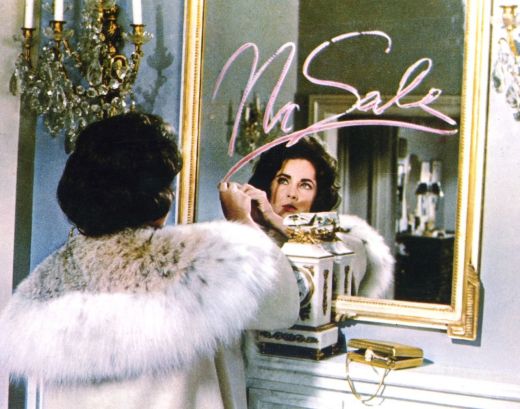
Why Are Clients Ghosting You?

It’s difficult to accept that a potential sale can disintegrate at any point in the sales funnel. Most potential sales unravel eventually, as confused or unsure prospects investigate which products or services might best address their needs and what that solution could cost.

I’ll wager that you don’t take personally the rejection of the TOFU group, early-stage browsers who wander into the top of the sales funnel. It is not until the prospect demonstrates real interest and reaches the BOFU, bottom of the sales funnel, that things get serious. Prospects who reach that stage have real potential to become a client. It’s disappointing when a sale doesn’t happen.

You’ve invested time in your advanced-stage prospects as they’ve traveled through the MOFU, middle of the funnel. You were pleased to learn that an e-book or case study was downloaded; you may have followed-up on that action with an emailed note of thanks and an offer to provide more details on request, or schedule a no-cost half hour phone consultation.

You may be daydreaming about writing a proposal and how wonderful it will feel to add this company to the client roster. So if the prospect abruptly goes silent, ghosting you, it’s rather a painful blow. Why is this happening and how can you fix it?

Let’s figure this out. Prospects can ghost you at any point, although disappearing acts usually occur after the first meeting or phone call, or after a proposal has been received. In the first instance, it’s probably the case that the prospect merely wanted to find out what’s available in terms of products or services and to get ballpark pricing info. These people are fishing, evaluating possible solutions for the problem and they’re not ready to commit to taking action. Let it go.

To separate genuine prospects, who are thinking seriously about doing business, from pie-in-the-sky window shoppers, the best tactic is to ask a couple of direct questions about the problem or goal for which the possible prospect wonders if your organization might provide the solution. If possible prospect is unable to articulate a specific problem that motivates his/her curiosity about your products or services, assume the need is not urgent. Accept that it may be impossible to convert this prospect in the near term, if at all.

If you have information that speaks to some aspect of what the individual is interested in—an issue of your newsletter, a case study, white paper, or even an article by another author, offer to send the information to your inquirer. If you’re able to assist the decision-making process you never know, it may be pay off for you somewhere down the line. You might become the recipient of a referral as repayment of your courtesy.

In the second instance, if your prospect ghosts you after a proposal has been requested and sent, the matter is much more serious. The three most likely obstacles are:

  • Your price is too high
  • Your solution doesn’t seem to address the problem
  • They were talking with a competitor all along and went with the other company

Both pricing and the solution that you put forth in your proposal are best discussed before you commit anything to writing. Whether you discuss these critical issues on the telephone, in a video meeting, or face2face (I wouldn’t recommend emails for matters so important), you must understand what the prospect needs to achieve and when the deliverables must be in hand. You must know that you can provide what is needed, when it is needed and at a price that the prospect will accept.

A proposal answers three questions —1). What will the prospect receive? It should be made clear in your proposal how the strategies and actions that you propose will achieve the goals; 2.) When will the project be completed? It should be made clear that the project deadline can be met; and 3.) How much will it cost? You should have a very good idea of what the client is willing to pay for the product or service you will provide.

A good proposal presents a narrative, with strategies and data and timelines, that helps the prospect understand what s/he will receive, when it will ready and the price.

Regarding price, it is advisable to inquire about the budget as the project specs are being discussed. As the prospect describes what’s on the wish list, start thinking about how much it might cost your organization to deliver. You can mention a ballpark figure and ask the prospect if that is within the budget. Hint: give a high estimate. If the prospect doesn’t flinch, that’s great! If body language and facial expressions indicate that your off-the-cuff price is too rich for their blood, downshift and let the prospect know that you’re confident you can customize a solution that will provide the must-haves and remain within their budget.

Finally, if all seems to have gone well and yet the prospect goes silent, experience tells me that the most common reason for ghosting after a proposal has been sent is that they’ve signed with someone else and they don’t want to hurt your feelings.

Still, it’s not professional behavior, inconsiderate of the time and effort you’ve invested in helping the prospect solve a challenge or reach a goal. You owe it to yourself to follow-up by phone or email and ask for an update, “Are you still interested in our services/product? When would you like to move forward?” You’ve most likely lost the sale, but nudging the prospect to face up to his/her decision allows closure and helps you to move on to greener pastures.

Thanks for reading,

Kim

Image: Elizabeth Taylor won the Best Actress Academy Award for her performance in Butterfield 8. (1960), directed by Daniel Mann

Support Customers After the Sale

Now that you’ve signed the contract and brought a new customer to your business, you may feel a mixture of pride and relief. You’re thrilled that your marketing tactics and sales talking points were persuasive. The customer is in-house and you’re ready to exhale.

But not yet. In fact, the real work is just beginning. Whether you’ve sold a product or a service, the smooth execution of project work or the product performance and ease of use are only part of the story. To declare a sustainable victory, you must ensure that the customer is pleased with the decision to do business with your organization. You and your team must enable the feel-good with a series of actions collectively known as after sales service.

The customer experience operates on several levels, including what is traditionally called customer service. In our increasingly competitive business environment, business owners and leaders are now motivated to also manage what happens after the sale because it has impact. The facet of customer service known as after-sales service is the follow-up support that customers receive after they’ve bought your product or contracted to receive your services.

Business owners and leaders typically focus attention on filling the sales pipeline and strive to convert prospects into customers. That approach makes lots of sense, but it is to your advantage to devote a portion of your resources to what happens after the ink dries and payment is received. After-sales service is an important aspect of your customer retention strategy. It is a principal factor in cultivating repeat business, generating positive word-of-mouth that leads to referrals and enhancing the company brand.

Abandon customers once you have their money and it’s highly likely that they won’t return. It’s well-known that dissatisfied customers are bad for future sales, to say nothing of your brand’s reputation. But happy customers are your friends, the most valuable asset in your sales funnel.

The after-sales service your company provides might include advice on how to properly use the product or suggestions on how to get started with implementing the service. After-sales service often amounts to listening to customer feedback and being available to answer questions or give encouragement. In short, it’s a check-in to find out if the customer is satisfied with the purchase and helping to correct any glitches. After-sales service can make the difference between a happy customer who loves doing business with your organization, or one who is underwhelmed or even frustrated.

Customers who appreciate the way you and your team treat them are more likely to share their positive experience with your company and refer you to friends and associates. A 2016 survey conducted by The New York Times revealed that 65% of new business leads come from referrals. A 2011 study of 10,000 customers of a German bank found that customers who were referred to the bank by someone they know had a 16% higher lifetime revenue value than those who were not referred.

So how can you and your team build a winning after-sale service experience for your customers?Depending on your business, you can start the good vibes by sending business-appropriate thank you notes (paper or electronic) to express how much you appreciate that the customer chose to work with your organization.

Create a responsive new customer onboarding system, in which you welcome the customer, as discussed above, confirm customer priorities or must-haves, and also verify time table deadlines (if applicable) and project milestones. Do whatever is possible to make working with your organization easy. Encourage client feedback and listen to identify the onboarding experiences and information that your customers value. Standardize the process and use it consistently to set the stage for a positive working relationship.

Whether or not you send a note, your customer may be very happy to receive a follow-up call or email to get feedback on how, or if, the product or service is delivering and if expectations are being met. When performing project work, communicating progress, with a quick email or phone call on a weekly or bi-weekly basis, demonstrates your professionalism and commitment to excellence.

If the experience is a little bumpy, be ready to make suggestions, offer coaching or training, or even make an exchange. What surfaces in these conversations can be used to evaluate and, if necessary, to build or tweak more responsive after-sale service protocols.

Thanks for reading,

Kim

Image: In Barcelona, Spain a flamenco instructor coaches students

Whenever You Call

If half of what we do to find success is about showing up, the other half is surely about follow-up. Money is regularly left on the table because the person who was awarded the golden key couldn’t make him/herself go to the post office to pick it up.

A handful of hustle and a drop of two of discipline are required for this recipe. When your marketing tactics actually work—-you meet a potential prospect while networking and s/he hands you a card and asks to continue the conversation—-you must respond. Or maybe you want to drum up some business and feel that making a few cold calls will be worth the effort. The operative word is call.

Despite the technological advances that have been made over the years the telephone, patented in the U.S. by Alexander Graham Bell in 1876, has demonstrated staying power. Videoconferencing makes electronic communication more personal but it must be scheduled. Also, WiFi access is needed. The telephone’s audio-only format nevertheless enables good communication and it’s easier to use than Zoom. Plus, it never crashes.

According to a 2021 survey by Indeed, the best time to call a prospect, especially when you’re cold calling, that is, attempting to make your first contact, is between 4:00 – 5:00 PM. At the. end of the day, the prospect is often more inclined to not just take the call and more likely to your pitch. At the end of the day, the prospect is more likely to be at his/her desk, is unlikely to start a new task and is perhaps wrapping something up and is perhaps also more inclined to listen to your offer.

If you’d like to try a morning call, late morning is preferable. Calling during the approach to lunch time, 11:00 – 11:45 AM, is the best time for morning calls to prospects, whether cold calls or warm (meaning the prospect has requested a call).

The best days to call prospects are, you guessed it, Wednesday and Thursday. Monday and Friday are likely to yield less than stellar results for obvious reasons. Tuesday isn’t so bad, but apparently there can be spillover from the Monday rush that takes away some of its appeal.

Script your pitch

It will be very helpful to create a cold call and a warm call script. You want your delivery to be smooth, your language concise, your tone upbeat and, of course, your pitch airtight. You do not want to forget to say something important and you don’t want to be at a loss for words. Neither do you want to sound like a robot who’s memorized the words. Write a script to ensure that you’ll sound confident, conversions, knowledgeable and in control.

Helpful hints

  • Should the prospect take your call, ask if you’ve called at a good time and next, ask if s/he has five minutes to talk.
  • Present your call-to-action not as an urgent push to make an immediate decision but rather to persuade the prospect to commit to follow-up action, as a way to continue the conversation. S/he will likely want to discuss your offer with the team.
  • If a prospect contacts your company by phone or email for any reason, respond within an hour.
  • If you meet a prospect while networking and s/he has questions about your products or services, call or email the next day.

Thanks for reading,

Kim

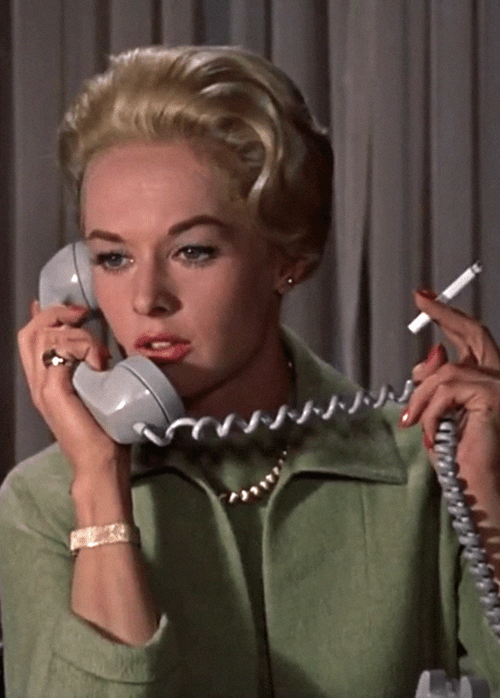
Image: Tippi Hedren, the original Cool Blonde, in The Birds (1963), directed by Alfred Hitchcock

Marketing and the B2B Buyer’s Journey

A few years ago numerous authorities who research and report on the habits of those who purchase B2B products or services for their organizations noted that B2B buyers do a significant amount of online research to improve their understanding about the products or services they intend to buy before speaking with potential vendors. As prospective buyers move through the journey there are a series of touch points, that is, encounters with B2B product and service providers (you).

Opportunities to influence and shape the perceptions that prospective buyers form while they investigate your company and its offerings are strewn along the Buyer’s Journey path like Hansel and Gretel breadcrumbs. The point of this exercise is to remind Freelance consultants where and how in the journey your marketing tactics have the power to persuade (or discourage) a few to do business with your organization. The steps that B2B buyers take can be broadly categorized as follows:

I. Identify a need

The initial stage opens the opportunity for B2B companies to introduce themselves to potential buyers and position their organization as a credible provider of B2B solutions. Cultivating a positive impression and trust in their products, services and brand is the goal of the Freelancer (the seller).

  • Recognizing that a problem or pain must be resolved, or an objective achieved

Creating awareness of your company’s product and/or service-based solutions is your objective during the first stage of the Buyer’s Journey. Providing examples of the challenges or problems that your products and services might solve, or examples of goals or objectives that can be advanced, can be effectively discussed in your website, newsletter, email marketing campaigns, blog, webinar and podcast appearances and social media posts, serving to help prospects understand what your company is all about and whether your organization has the right stuff to deliver what is needed.

  • Research

Your potential buyer now investigate solutions that appear capable of providing a remedy for the problem, or could advance the objective or goal. Most will conduct online searches and 70% will use Google, according to Salesforce. The B2B Freelance consultant is advised to provide the potential buyer with information that is typically expected and appreciated, is considered relevant—yet another reason to know your customer. User reviews from a site like Yelp, statistics, facts and other hard numbers could be in order.

Focus your content around the buyer’s most likely goal, challenge, or pain. A white paper to inform and persuade potential buyers that your company’s products or services, expertise or technology, for example, is superior for solving a particular business problem or addressing a certain goal. A free 30-minute consultation with your prospective buyer will also be helpful as you’ll be able to propose customized solutions and discuss how they might be implemented and delivered in a way that the buyer prefers.

II. Evaluate and compare available options

Be advised that the potential buyer will also investigate at least a couple of your competitors—and who could blame them? The decision-maker or his/her appointed representative will at this point start talking to colleagues about what is “out there” in terms of services, products, pricing, add-ons, upgrades, delivery date, free trials and anything else that will matter in the comparison. Case studies tell a story that illustrate precisely how, in real time, your organization is able to expertly deliver a customized solution and create an experience that meets or exceeds customer expectations.

  • Prioritizing

At this point in the buyer’s journey, the term prospective customer can be used with confidence, as s/he has clearly defined the problem or goal, has confirmed who will be the end user for the product or service and is fully committed to choosing and paying for what is perceived to be the most appropriate solution. An opportunity to develop a relationship with prospective buyers who are interested in your company at this stage of the journey may present itself because you could receive a call or email.

III. Decision and contract

Are you still in the game? Hope so! Prospective customers at this juncture have consulted with the project stakeholders at his/her company and are looking to get a deal that pleases as many as possible. This could be the time to tempt your prospect with deal clinching sweeteners—options, pricing, add-ons or (apparently) gratis upgrades that s/he and the influencers and end-users will appreciate and that cost you next to nothing. You want wrap this thing up and motivate your prospect to sign with your team. Surprise and delight.

Thanks for reading,

Kim

Image: The kids are alright. Goat farmers in Champaign, IL supply artisanal cheese to Chicago restaurants and gourmet shops

Make Email Subject Lines Pop

Email marketing is an all-star player in your outbound marketing lineup. During the 15 month pandemic shutdown email marketing which, BTW, includes your blog posts and newsletters, became even more important as business leaders struggled to maintain communication with clients and prospects.

Think about it—-before you can schedule a video call to launch a full-on sales presentation, you need to establish contact with would-be prospects and open the door to the buyer’s journey. LeadGen is how to keep your sales pipeline filled and the process deserves a comprehensive inbound and outbound approach.

The challenge with email marketing is getting your message opened and read, even when the recipient knows your company. The powerful decision-makers you need to reach are pummeled with dozens of emails every day, Monday to Friday (and sometimes on the weekend). To manage the inflow, your decision-maker prospects are constantly prioritizing their inbox, often setting up filters and other gateways to organize messages that help them respond to important and urgent notes as efficiently as possible.

If you expect to persuade your intended prospect to click on your email in the midst of a typical deluge, it’s imperative that your email stand out in the best way. The way to do that is to create a stop-and-read subject line, an irresistible headline, that acts like a magnet. The subject line is the single most important part of an email because the opportunity to tell your story is lost if your email is sent to trash. The success of your marketing strategy is tied to the open rate of your sales/ marketing emails.

So, how does one create an intriguing, arresting, read-me email subject line? While every subject line is unique, there are guidelines to keep in mind as you write. In short, your subject line must tell recipients that your email contains information they’ll consider valuable, or somehow interesting, maybe a tad controversial or unexpected.

Eye-catching

Words such as free, limited offer and new are among those that can potentially make your subject line grab the reader. Providing a contrarian or surprising fact or statistic that challenges a common belief can likewise be compelling. Info that concerns a recent change in the industry is an update that many clients and prospects will appreciate.

Call-to-action

A call-to-action asks the reader to do something — learn, win, sign up, give feedback, for example. Many emails that drop into the average inbox lack an interesting, appealing subject line. It’s so easy for the eye to slide over much that is sent.

Devise an amusing, novel, or practical call-to-action that will both grab attention and either inspire or dare your intended reader to read on.

What’s in it for the reader?

Do you sell a product or service that can help your email recipients make money, save money, or save time? Can you help the reader’s organization achieve a mission-critical goal faster, more easily and maybe at a lower than expected cost? All of these scenarios offer value to your recipient and are enticing benefits to include in your subject line.

Be concise

Your subject line must do a lot of work in a small space. It must grab attention with a call to action, tempt the recipient with what could be in it for him/her and concisely getting to the point.The ideal length of an email subject line varies between mobile, desktop, and tablet devices, so keep this in mind as you craft the perfect one-liner for your sales email. On average, the maximum subject line is about 40 characters so that it can be seen in its entirety on phone, tablet, laptop, or desk model devices.

Thanks for reading,

Kim

Image: Attention grabbing front page headline in the Roswell (NM) Daily Record July 8, 1947 issue

5 Smart Sales Questions

“To get the right answers, you have to ask the right questions,” said business strategy and management expert Peter F. Drucker (1909-2005), author of pioneering management insights and founder of the Drucker Graduate School of Management at Claremont College in California. When your goal is to sell a product or service to a prospective client, knowing which questions to ask and when to ask them can make a big difference in your ability to make sales and generate revenue that keeps your company alive. Actionable information is worth money, even when you learn that who you hoped would be a prospect is not. Knowing when to cut bait and pursue other avenues is a good thing.

Ask a handful of questions that first, confirm that your prospect is ready to do business and next, guides the prospect through the sales (buying) journey is a pillar of the thriving company you want to build.

“How long have you been in business? Who are/ what kind of customers do you serve? What big plans are in the works now?”

Set the stage for your sales conversation by obtaining background info that gives context to why there is a need for your product or service and the role it would play in achieving company objectives, or solving/ avoiding a problem.

“You appear to have steered your company successfully through the pandemic troubles. Was there a big change, or two, that you decided had to be made to adjust to the new business reality?”

The coronavirus pandemic left no business unscathed, not even those that saw a big increase in profits, like liquor stores and delivery services. That you’ve thought to ask this question and the preceding demonstrates to the prospect that you’re interested in the business and that it’s success means something to you. Successful sales professionals, including business owners and Freelance consultants, usually aim to become a collaborative partner, a reliable and trusted resource, for the client.

“Did anything fall through the cracks as you shifted gears during the pandemic? Is there anything that was not previously a worry now emerging as a challenge?”

Here is the question where the pain is revealed. Now you’ll learn what’s keeping your prospect awake at night and what your solution must address. You continue to earn your prospect’s trust, which is invaluable. You are closing in on the sale because you’ve shown that you care enough to want to understand company leaders are grappling with and are trying to do.

“So, what will success look like?”

This question helps the prospect to define the desired outcomes and deliverables of the project, something that, surprisingly, the prospective client and his/ her team may be a little fuzzy on, Maybe the decision to ask for a meeting with you was to find out what you, and perhaps a competitor or two, can offer in terms of helping the company achieve necessary outcomes?

“What’s new? What’s next? What help might you need to make it happen?”

A question designed to do more business with clients you’ve worked before, that is, repeat business. It really is easier in terms of time and money spent to do more business with clients who know you than to bring in new clients (but a business needs both types of clients).

“What’s new?” lets the client update you on what’s been happening with the business since the last time you’ve worked together. “What’s next?” opens the door to the future—- what initiatives are on the drawing board? “What help might you need to make it happen?” is, you guessed it, a way to help the client envision a role for you as plans for a sustainably profitable future are made.

Whether you’ll speak with your prospect on line or face2face, the questions presented here will politely and unambiguously get the sales process flowing in the right direction. Your prospect will be called upon to reveal his/ her intentions about doing business. In an always-appreciated show of empathy, your questions will invite the prospect to acknowledge the impact of the pandemic on his/ her organization.

Describing the pain point that (could be) a factor driving the necessity of the project you’re there to discuss and clarifying the expected outcomes (success) and the deliverables of the project will be confirmed. If you’re trying to get back in the door and get repeat business, the final 3-part question will help you and the client to segue into that possibility. You can continue on with question two and address the impact of the pandemic or question three and get an understanding of pain points that may be driving factors. You’ll have a good chance of making a sale!

Thanks for reading,

Kim

Image: Spices and rice bring women to the market.

Make Doing Business Easy

Do you know what business you’re really in? I have asked this question of readers before. It remains a question that every Freelance professional or business owner should periodically explore and confirm the answer. The unspoken motives that bring clients to your door (or website) are powerful. They will evolve and adapt to the times. In order to maximize the success of your venture, those motives must be understood in the present. The drivers that brought in clients five years ago may not be persuasive today.

Add to the mix that attention spans are short and seem to be getting shorter. We are used to 140 character tweets, sent by everyone from middle school teens to captains of industry. On August 25, 2020, it was announced that there were 100 million active TikTok users each month in the U.S, uploading and viewing 60 second cell phone videos.

Everyone wants what they want now, bring it to me fast and make the way to get it easy. Instant gratification. Folks have been working from home for more than a year and they’ve come to enjoy sitting at home in their jammies, only reaching for a professional-grade shirt when a video meeting demands their presence.

Online ordering and home delivery of everything imaginable rules the day. Despite the gradual lifting of pandemic restrictions across the states, it appears that many pandemic-driven customs will remain. Whatever is fast and easy-peasy —-convenient—-is now an expectation and that’s what it takes to win the hearts and wallets of customers. Anazon CEO Jeff Bezos is well on the way toward reaching his stated goal of becoming a trillionaire.

In other words, no matter what business you determine that you’re in, the operational aspects of the buying process must be easy, seamless and convenient as customers perceive it. Let’s look at how you and your team can set that into motion.

Technology to the rescue

The right tech solutions are your ticket to making it easy and convenient for prospects and current customers to do business with your organization. The right tech solutions can also make it easy and convenient for you, Freelancer or business owner, to more efficiently manage your company by utilizing targeted software, if you will, for certain routine tasks. You and your team can then apply the time saved to working on the business—-analyzing Key Performance Index data and using the findings to develop strategies and action plans that will most likely be effective, for example.

Bring convenience to your website visitors by installing a chat bot, programmed with a half-dozen concise answers to common questions that prospects ask, that make it easy and convenient to find what’s important while in the initial stage of their decision-making process. Add links written in a bold font and brightly colored lettering that call attention to links for company contact info, the blog or newsletter, case studies or white papers and your upcoming podcast or webinar appearances. Devise an appealing Call to Action and you’ll persuade visitors to learn more about your products, your services and you.

Check website tabs to make sure that visitors can intuitively find company press releases, articles published by you or about the company, customer testimonials and any business awards, nominations, or recognition your company has received. Get site visitors to decision-influencing information quickly and easily.

Enable the sale by installing e-commerce software that you’ve determined is a good fit to make ordering, shipping and paying easy to navigate and secure with encryption.

Thanks for reading,

Kim

Image: Hugh Laurie (l) as Bertie Wooster, British gentleman and member of the Idle Rich, with Stephen Fry as Jeeves, his sardonic but loyal butler, in the BBC-TV adaptation of the P.G. Wodehouse Jeeves stories.

The 7 Best Words in Sales

Because when we log into our email accounts to check inboxes, or go online to find out what’s happening in the world, we are not so much reading as scanning. We scan for what catches the eye and captures attention. What words might make us stop and click?

Determined marketers have gone to work on this question and come up with a list of words that open rate and click-through statistics verify have the power to grab the most blasé of us.

Keep these words in mind as you attempt to dream up catchy subject lines or titles for content you post—-marketing/ sales emails, titles for videos you’ll upload to your website and social media, article headlines for white papers, blog, or newsletter articles, calls to action.

Free

Who can resist something that’s free? Even if it refers to a product you’ll never use, the word free has the power to stop the scanning and make you read an email, article, or advertisement, if only a few words. When an email subject line or a CTA contains this word, particularly when written in bold or brightly colored script, the open rate will increase significantly.

Easy

The great philosophers and observers of human behavior centuries ago recognized that humans will nearly always gravitate to what we perceive as easy and avoid what appears to be difficult. More recently, behavioral scientists reconfirmed those observations.

As a Christmas gift when I was maybe five years old, Santa gave me an Easy Bake Oven, an irresistible product that was sold to me by way of numerous television commercials featured during programs known to be popular with my demographic cohort. It was an easy sell.

I was thrilled to pieces to find it under our tree on Christmas morning. I had the greatest time as I poured the cake flour that came with my oven into a bowl, added a small amount of liquid (milk? water?) and then stirred it up and poured the batter into the tiny cake pan that also came with the oven. My little cake was baked with heat supplied by two 100 watt light bulbs.

I remember whipping up little cakes on Saturday afternoons to serve to girlfriends at our tea parties, or to Mom and Dad. Kenner brought out the Easy Bake Oven in 1963 and in the first year sold 500,000 units. By 1997, more than 16 million ovens had been sold.

Best

Quality counts for many of us. When hunting for a product or service, you may as well check out the item that’s better than the rest. Best is a filter. It cuts through the clutter of what could be a waste of time.

Magazines and newspapers often publish a “Best of” list annually—schools, restaurants, dry cleaners, hardware stores, you name it. Invariably, “Best of” issues sell considerably more than others (with the possible exception of a Christmas issue, if that is published).

Limited

Fear of Missing Out is real, as documented by behavioral scientists and marketers. Making a sale is often assisted by creating both exclusivity and a sense of urgency. This item is special and its ownership confers a coveted status. Buy it now.

You

When creating written content meant to persuade, whether it’s a political speech, a marketing/ sales email, or a television commercial, using the second-person pronoun when communicating with readers shifts the tone to one that is conversational, relatable, friendly and quite effective. You understand, don’t you?

Because

The thing to remember is that the human brain appreciates an explanation. We like to know why something is the way it is, the backstory of a certain condition or set of circumstances.

When selling, addressing the question of why the prospect needs the product, service, or feature being sold is most effectively addressed with the associated benefits and benefits are where the word because comes in.

This product or service is the best available to fit your needs because it will help you to fulfill your need, achieve your objective. Tie your product, features and the actions you want people to take in with a rationale or explanation and prospects will be more inclined to take action.

Numbers

From the Three Musketeers to the 12 Days of Christmas, people like to see a lust that suggests or ranks something that they find valuable—-100 easy dessert recipes, 10 free golf courses in Michigan, the 7 best words in sales. Curiosity is aroused and the click is made.

Thanks for reading,

Kim

Image: Scrabble tiles

LinkedIn Special Report: B2B Selling in the COVID era

In our uncertain times, for-profit organizations have elevated selling, the means by which revenue is generated, to the highest priority. Sales revenues are the life blood of a business and enable its survival. As a result, sales professionals are under significant pressure to identify, connect with, engage and bring in new clients, as well as obtaining additional business from existing clients.

No surprises there. Making sales is the role of sales reps. It’s just that thanks to COVID, the playing field has undergone a seismic shift. Once-thriving industries, most notably restaurants, hotels and fitness, have been greatly diminished. Commercial real estate sales and leasings are staggering, as legions of white collar professionals cobble together DIY offices and work from home. How can sales representatives reach prospects when they’re usually no longer in the office? How can they introduce themselves and their products and services when they can no longer meet prospects face2face?

Virtual technology has solved most of the communication problem, but virtually enabled conversations do not make it easy for sales reps to meet and lay the groundwork for building new relationships. Furthermore current or previous clients, who now work from home, are often overwhelmed as they strive to meet the new and growing expectations of their jobs. Receiving a request from a sales rep to schedule yet another videoconference call does not spark joy.

LinkedIn has issued its fourth annual State of Sales Report after interviewing some 1,000 B2B buyers and sellers in several countries, including Brazil, Canada, France, the UK and the US. Here are some key takeaways.

Good data matters

To clarify and justify their buying decisions, the report found that 49 % of prospective B2B buyers feel that objective data is a required element of a sale and data- driven decisions have grown in popularity in the COVID era. Data adds value. Sales professionals need only to determine which metrics matter to the prospect?

Doing some homework and asking a few questions is the way to learn what information will persuade your prospect. Now when you send an email to request a videoconference call, you can tempt your prospect with a couple of data tidbits that signal you understand what matters. Now you present yourself as being a problem-solver. Present some data and ask what other information will be useful.

Getting to know your prospect as you get to know their business challenges and objectives is part of engagement. Demonstrate that you’re not just trying to make a sale, you’re trying to help the prospect do solve, or avoid, a problem.

Be a problem-solver

Problem-solving emerged as an attribute that 47% of B2B buyers value highly. As always, effective selling means knowing the customer. One way to engage prospects is to ask about their business and learn as much as politely possible about why and how your product or service could help the organization achieve important objectives. In short, what do they really need to do and how can you help them get there?

Furthermore, you might ask prospects how they did what they need to do before you and your product or service came along? Now you’ll pick up some useful intel on competitors and know how to position your offering as superior, as you assume the role of problem- solver.

When sellers focus on client objectives and provide meaningful data it’s possible to position oneself as a problem-solver, if not as a trusted adviser and collaborator for the prospect. In this way B2B sellers earn trust. For 75% of B2B buying decision-makers, the amount of trust that they have for a seller is the number one factor that leads a buyer to do business with a particular company.

Expect change

In sum, 70 % of survey respondents feel that leading through change is now a required competency for sales managers and is more important than it was five years ago. Sales leaders are wrestling with the question of what the change in the business environment means for their organization and their team. In a separate LinkedIn survey of sales managers conducted in March 2020, 55 percent of the 200 respondents feared that a decrease in their sales pipeline is inevitable.

Thanks for reading,

Kim

Image: Over tea, Moroccan Berbers (Amazigh) build a relationship and discuss the potential sale of a rug.

Meeting New Clients When They’re Virtual

As we journey through the COVID business landscape, B2B product and service providers have mostly found that the process of selling to their current clients has successfully been transferred to virtual methods, that is, videoconferencing and the telephone. But the biggest shortcoming of virtual communication is revealed when the goal is to meet and cultivate new clients.

As business (and education, government, fitness, worship, et al.) has transitioned to remote functioning one glaring truth has emerged— it’s much easier to shift existing relationships into virtual mode than it is to create new relationships, business or personal, by way of Zoom. That’s especially true in B2B sales. While many Freelancers and other business owners and leaders have directed resources toward strengthening existing client relationships, facilitating new client acquisition has folks wringing their hands.

It’s been conclusively demonstrated that it costs at least five times more time and money to acquire a new client than it costs to maintain a current client, but it remains a fact that every business must put into motion a client acquisition strategy. New clients represent the potential for future growth and they are an essential component of a healthy business ecosystem.

The problem is, relationships are more easily created during face2face interactions and we’re just not able to meet people anymore! The lockdown has either closed or severely restricted nearly all public gathering spaces. Video and voice calls keep us connected, albeit at a distance, but those relationships are in many cases already established.

So our question of the day is—-how can a business effectively grow its client list when access to new prospects is unexpectedly limited? Let’s consider some alternatives to the once customary networking formulas.

Low hanging fruit and a system reboot

Mine your client data, knowledge and relationships to discover how you might persuade those with whom you’ve been doing business to do more business. Find the low hanging fruit on a tree familiar to you. In some instances, it may be necessary to reboot certain relationships if clients were forced to cease or curtail operations due to the shutdown and its aftershocks.

Create reasons to contact clients whose organizations were adversely but not fatally impacted, perhaps by emailing COVID business resource information as a conversation starter. While trading emails or calls, you’ll be able to inquire about the location of where business is now conducted—in the office or from home.

Ask those clients how they’re responding to the COVID environment and listen carefully for a way, however small, you can help get his/her company up and rolling again. You may rewarded with a handful of billable hours as conditions improve. This strategy is working for me, BTW.

Conversely, some businesses are experiencing growth during the pandemic and you should make it a point to identify those organizations and include those for whom your products or services can be a fit in your marketing efforts. Maybe you can get a referral from a friend, family member, or client?

Encourage referrals

Referrals confer to you the golden status of being considered a known and trusted quantity. Other than a Super Bowl ad, there is no better endorsement for your business than a referral. People who read reviews of books, movies, restaurants, or hotels are in reality searching for a business whose customers give it good referrals.

Create the conditions for good word-of-mouth about your service by excelling at superior customer service at every client touch point. Present a 360 degree pleasant and efficient experience from the intuitive navigation of your website, the relevance of your content marketing posts, to your follow-up and willingness to go the extra mile to provide the necessary solution, to your project proposals and invoicing.

Give your clients lots of good things to say about doing business with your organization. Ask them to spread the word. On client invoices, offer a 15% or so discount on their next invoice if a referral is made and a sale results.

Case studies and testimonials showcase how clients feel about your finest work. They are a form of referrals and business owners and leaders are advised to include such valuable endorsements on the company website and on social media platforms.

Get found with Inbound Marketing

Revisit your understanding of the ideal clients for your company’s products or services. Do you know who the decision-makers is? Do you know who is likely to influence the decision-maker and other important stakeholders? When writing your content, it’s imperative to know to whom you are speaking.

With a heightened sense of your ideal client in mind, evaluate, refine and expand your company’s online presence and popularity with content designed to fill the sales funnel with prospects who have authority, who make decisions, who have influence. Create email marketing subject lines that catch the eye and resonate with those prospects. Align your white papers, blog, newsletter and case studies to address goals and questions that are meaningful to your prospects. Appeal to what motivates prospects to take the leap and do business with you. Post content to Twitter, LinkedIn, Instagram and Facebook to expand your reach.

Finally, why not experiment with developing relationships through online communities? Investigate LinkedIn groups, for example, and search for one or two that seem like a good fit. Follow conversations and learn what active members discuss. When you feel ready, pose a question or respond to one. Whenever you participate, your LinkedIn contact info is accessible to interested parties and the seeds of follow- up are planted.

The sales landscape has changed for the time being, but the fundamentals of selling remain. If your product or service solves a problem, provides a solution, for a potential buyer, if a price can be agreed upon a sale will be made. Pursuing introductions and attempting to build relationships with new prospects in the virtual space is not without challenges but it also brings certain advantages. Geography is no longer a barrier.

Moreover, most prospects begin the buying journey online, searching Yelp and other rating sites to find out who can and cannot be trusted, cruising through social media and visiting websites that appear in the top 10 of their text or voice searches (those would mostly be big companies, for those wondering why there is no mention of SEO here).

Buyers are acclimating to the virtual space, becoming more accepting of the new normal and what it entails. The scope of relationships hatched in the virtual space may not be quite what we’re accustomed to, but I predict that both buyers and sellers will adapt as necessary to do business.

Thanks for reading,

Kim

Image: Athena, a special guest character on Lost in Space (CBS-TV 1965-1968) appeared in season 2, episode 16, of the series on January 4, 1967.