Make Email Subject Lines Pop

Email marketing is an all-star player in your outbound marketing lineup. During the 15 month pandemic shutdown email marketing which, BTW, includes your blog posts and newsletters, became even more important as business leaders struggled to maintain communication with clients and prospects.

Think about it—-before you can schedule a video call to launch a full-on sales presentation, you need to establish contact with would-be prospects and open the door to the buyer’s journey. LeadGen is how to keep your sales pipeline filled and the process deserves a comprehensive inbound and outbound approach.

The challenge with email marketing is getting your message opened and read, even when the recipient knows your company. The powerful decision-makers you need to reach are pummeled with dozens of emails every day, Monday to Friday (and sometimes on the weekend). To manage the inflow, your decision-maker prospects are constantly prioritizing their inbox, often setting up filters and other gateways to organize messages that help them respond to important and urgent notes as efficiently as possible.

If you expect to persuade your intended prospect to click on your email in the midst of a typical deluge, it’s imperative that your email stand out in the best way. The way to do that is to create a stop-and-read subject line, an irresistible headline, that acts like a magnet. The subject line is the single most important part of an email because the opportunity to tell your story is lost if your email is sent to trash. The success of your marketing strategy is tied to the open rate of your sales/ marketing emails.

So, how does one create an intriguing, arresting, read-me email subject line? While every subject line is unique, there are guidelines to keep in mind as you write. In short, your subject line must tell recipients that your email contains information they’ll consider valuable, or somehow interesting, maybe a tad controversial or unexpected.

Eye-catching

Words such as free, limited offer and new are among those that can potentially make your subject line grab the reader. Providing a contrarian or surprising fact or statistic that challenges a common belief can likewise be compelling. Info that concerns a recent change in the industry is an update that many clients and prospects will appreciate.

Call-to-action

A call-to-action asks the reader to do something — learn, win, sign up, give feedback, for example. Many emails that drop into the average inbox lack an interesting, appealing subject line. It’s so easy for the eye to slide over much that is sent.

Devise an amusing, novel, or practical call-to-action that will both grab attention and either inspire or dare your intended reader to read on.

What’s in it for the reader?

Do you sell a product or service that can help your email recipients make money, save money, or save time? Can you help the reader’s organization achieve a mission-critical goal faster, more easily and maybe at a lower than expected cost? All of these scenarios offer value to your recipient and are enticing benefits to include in your subject line.

Be concise

Your subject line must do a lot of work in a small space. It must grab attention with a call to action, tempt the recipient with what could be in it for him/her and concisely getting to the point.The ideal length of an email subject line varies between mobile, desktop, and tablet devices, so keep this in mind as you craft the perfect one-liner for your sales email. On average, the maximum subject line is about 40 characters so that it can be seen in its entirety on phone, tablet, laptop, or desk model devices.

Thanks for reading,

Kim

Image: Attention grabbing front page headline in the Roswell (NM) Daily Record July 8, 1947 issue

5 Smart Sales Questions

“To get the right answers, you have to ask the right questions,” said business strategy and management expert Peter F. Drucker (1909-2005), author of pioneering management insights and founder of the Drucker Graduate School of Management at Claremont College in California. When your goal is to sell a product or service to a prospective client, knowing which questions to ask and when to ask them can make a big difference in your ability to make sales and generate revenue that keeps your company alive. Actionable information is worth money, even when you learn that who you hoped would be a prospect is not. Knowing when to cut bait and pursue other avenues is a good thing.

Ask a handful of questions that first, confirm that your prospect is ready to do business and next, guides the prospect through the sales (buying) journey is a pillar of the thriving company you want to build.

“How long have you been in business? Who are/ what kind of customers do you serve? What big plans are in the works now?”

Set the stage for your sales conversation by obtaining background info that gives context to why there is a need for your product or service and the role it would play in achieving company objectives, or solving/ avoiding a problem.

“You appear to have steered your company successfully through the pandemic troubles. Was there a big change, or two, that you decided had to be made to adjust to the new business reality?”

The coronavirus pandemic left no business unscathed, not even those that saw a big increase in profits, like liquor stores and delivery services. That you’ve thought to ask this question and the preceding demonstrates to the prospect that you’re interested in the business and that it’s success means something to you. Successful sales professionals, including business owners and Freelance consultants, usually aim to become a collaborative partner, a reliable and trusted resource, for the client.

“Did anything fall through the cracks as you shifted gears during the pandemic? Is there anything that was not previously a worry now emerging as a challenge?”

Here is the question where the pain is revealed. Now you’ll learn what’s keeping your prospect awake at night and what your solution must address. You continue to earn your prospect’s trust, which is invaluable. You are closing in on the sale because you’ve shown that you care enough to want to understand company leaders are grappling with and are trying to do.

“So, what will success look like?”

This question helps the prospect to define the desired outcomes and deliverables of the project, something that, surprisingly, the prospective client and his/ her team may be a little fuzzy on, Maybe the decision to ask for a meeting with you was to find out what you, and perhaps a competitor or two, can offer in terms of helping the company achieve necessary outcomes?

“What’s new? What’s next? What help might you need to make it happen?”

A question designed to do more business with clients you’ve worked before, that is, repeat business. It really is easier in terms of time and money spent to do more business with clients who know you than to bring in new clients (but a business needs both types of clients).

“What’s new?” lets the client update you on what’s been happening with the business since the last time you’ve worked together. “What’s next?” opens the door to the future—- what initiatives are on the drawing board? “What help might you need to make it happen?” is, you guessed it, a way to help the client envision a role for you as plans for a sustainably profitable future are made.

Whether you’ll speak with your prospect on line or face2face, the questions presented here will politely and unambiguously get the sales process flowing in the right direction. Your prospect will be called upon to reveal his/ her intentions about doing business. In an always-appreciated show of empathy, your questions will invite the prospect to acknowledge the impact of the pandemic on his/ her organization.

Describing the pain point that (could be) a factor driving the necessity of the project you’re there to discuss and clarifying the expected outcomes (success) and the deliverables of the project will be confirmed. If you’re trying to get back in the door and get repeat business, the final 3-part question will help you and the client to segue into that possibility. You can continue on with question two and address the impact of the pandemic or question three and get an understanding of pain points that may be driving factors. You’ll have a good chance of making a sale!

Thanks for reading,

Kim

Image: Spices and rice bring women to the market.

Make Doing Business Easy

Do you know what business you’re really in? I have asked this question of readers before. It remains a question that every Freelance professional or business owner should periodically explore and confirm the answer. The unspoken motives that bring clients to your door (or website) are powerful. They will evolve and adapt to the times. In order to maximize the success of your venture, those motives must be understood in the present. The drivers that brought in clients five years ago may not be persuasive today.

Add to the mix that attention spans are short and seem to be getting shorter. We are used to 140 character tweets, sent by everyone from middle school teens to captains of industry. On August 25, 2020, it was announced that there were 100 million active TikTok users each month in the U.S, uploading and viewing 60 second cell phone videos.

Everyone wants what they want now, bring it to me fast and make the way to get it easy. Instant gratification. Folks have been working from home for more than a year and they’ve come to enjoy sitting at home in their jammies, only reaching for a professional-grade shirt when a video meeting demands their presence.

Online ordering and home delivery of everything imaginable rules the day. Despite the gradual lifting of pandemic restrictions across the states, it appears that many pandemic-driven customs will remain. Whatever is fast and easy-peasy —-convenient—-is now an expectation and that’s what it takes to win the hearts and wallets of customers. Anazon CEO Jeff Bezos is well on the way toward reaching his stated goal of becoming a trillionaire.

In other words, no matter what business you determine that you’re in, the operational aspects of the buying process must be easy, seamless and convenient as customers perceive it. Let’s look at how you and your team can set that into motion.

Technology to the rescue

The right tech solutions are your ticket to making it easy and convenient for prospects and current customers to do business with your organization. The right tech solutions can also make it easy and convenient for you, Freelancer or business owner, to more efficiently manage your company by utilizing targeted software, if you will, for certain routine tasks. You and your team can then apply the time saved to working on the business—-analyzing Key Performance Index data and using the findings to develop strategies and action plans that will most likely be effective, for example.

Bring convenience to your website visitors by installing a chat bot, programmed with a half-dozen concise answers to common questions that prospects ask, that make it easy and convenient to find what’s important while in the initial stage of their decision-making process. Add links written in a bold font and brightly colored lettering that call attention to links for company contact info, the blog or newsletter, case studies or white papers and your upcoming podcast or webinar appearances. Devise an appealing Call to Action and you’ll persuade visitors to learn more about your products, your services and you.

Check website tabs to make sure that visitors can intuitively find company press releases, articles published by you or about the company, customer testimonials and any business awards, nominations, or recognition your company has received. Get site visitors to decision-influencing information quickly and easily.

Enable the sale by installing e-commerce software that you’ve determined is a good fit to make ordering, shipping and paying easy to navigate and secure with encryption.

Thanks for reading,

Kim

Image: Hugh Laurie (l) as Bertie Wooster, British gentleman and member of the Idle Rich, with Stephen Fry as Jeeves, his sardonic but loyal butler, in the BBC-TV adaptation of the P.G. Wodehouse Jeeves stories.

The 7 Best Words in Sales

Because when we log into our email accounts to check inboxes, or go online to find out what’s happening in the world, we are not so much reading as scanning. We scan for what catches the eye and captures attention. What words might make us stop and click?

Determined marketers have gone to work on this question and come up with a list of words that open rate and click-through statistics verify have the power to grab the most blasé of us.

Keep these words in mind as you attempt to dream up catchy subject lines or titles for content you post—-marketing/ sales emails, titles for videos you’ll upload to your website and social media, article headlines for white papers, blog, or newsletter articles, calls to action.

Free

Who can resist something that’s free? Even if it refers to a product you’ll never use, the word free has the power to stop the scanning and make you read an email, article, or advertisement, if only a few words. When an email subject line or a CTA contains this word, particularly when written in bold or brightly colored script, the open rate will increase significantly.

Easy

The great philosophers and observers of human behavior centuries ago recognized that humans will nearly always gravitate to what we perceive as easy and avoid what appears to be difficult. More recently, behavioral scientists reconfirmed those observations.

As a Christmas gift when I was maybe five years old, Santa gave me an Easy Bake Oven, an irresistible product that was sold to me by way of numerous television commercials featured during programs known to be popular with my demographic cohort. It was an easy sell.

I was thrilled to pieces to find it under our tree on Christmas morning. I had the greatest time as I poured the cake flour that came with my oven into a bowl, added a small amount of liquid (milk? water?) and then stirred it up and poured the batter into the tiny cake pan that also came with the oven. My little cake was baked with heat supplied by two 100 watt light bulbs.

I remember whipping up little cakes on Saturday afternoons to serve to girlfriends at our tea parties, or to Mom and Dad. Kenner brought out the Easy Bake Oven in 1963 and in the first year sold 500,000 units. By 1997, more than 16 million ovens had been sold.

Best

Quality counts for many of us. When hunting for a product or service, you may as well check out the item that’s better than the rest. Best is a filter. It cuts through the clutter of what could be a waste of time.

Magazines and newspapers often publish a “Best of” list annually—schools, restaurants, dry cleaners, hardware stores, you name it. Invariably, “Best of” issues sell considerably more than others (with the possible exception of a Christmas issue, if that is published).

Limited

Fear of Missing Out is real, as documented by behavioral scientists and marketers. Making a sale is often assisted by creating both exclusivity and a sense of urgency. This item is special and its ownership confers a coveted status. Buy it now.

You

When creating written content meant to persuade, whether it’s a political speech, a marketing/ sales email, or a television commercial, using the second-person pronoun when communicating with readers shifts the tone to one that is conversational, relatable, friendly and quite effective. You understand, don’t you?

Because

The thing to remember is that the human brain appreciates an explanation. We like to know why something is the way it is, the backstory of a certain condition or set of circumstances.

When selling, addressing the question of why the prospect needs the product, service, or feature being sold is most effectively addressed with the associated benefits and benefits are where the word because comes in.

This product or service is the best available to fit your needs because it will help you to fulfill your need, achieve your objective. Tie your product, features and the actions you want people to take in with a rationale or explanation and prospects will be more inclined to take action.

Numbers

From the Three Musketeers to the 12 Days of Christmas, people like to see a lust that suggests or ranks something that they find valuable—-100 easy dessert recipes, 10 free golf courses in Michigan, the 7 best words in sales. Curiosity is aroused and the click is made.

Thanks for reading,

Kim

Image: Scrabble tiles

LinkedIn Special Report: B2B Selling in the COVID era

In our uncertain times, for-profit organizations have elevated selling, the means by which revenue is generated, to the highest priority. Sales revenues are the life blood of a business and enable its survival. As a result, sales professionals are under significant pressure to identify, connect with, engage and bring in new clients, as well as obtaining additional business from existing clients.

No surprises there. Making sales is the role of sales reps. It’s just that thanks to COVID, the playing field has undergone a seismic shift. Once-thriving industries, most notably restaurants, hotels and fitness, have been greatly diminished. Commercial real estate sales and leasings are staggering, as legions of white collar professionals cobble together DIY offices and work from home. How can sales representatives reach prospects when they’re usually no longer in the office? How can they introduce themselves and their products and services when they can no longer meet prospects face2face?

Virtual technology has solved most of the communication problem, but virtually enabled conversations do not make it easy for sales reps to meet and lay the groundwork for building new relationships. Furthermore current or previous clients, who now work from home, are often overwhelmed as they strive to meet the new and growing expectations of their jobs. Receiving a request from a sales rep to schedule yet another videoconference call does not spark joy.

LinkedIn has issued its fourth annual State of Sales Report after interviewing some 1,000 B2B buyers and sellers in several countries, including Brazil, Canada, France, the UK and the US. Here are some key takeaways.

Good data matters

To clarify and justify their buying decisions, the report found that 49 % of prospective B2B buyers feel that objective data is a required element of a sale and data- driven decisions have grown in popularity in the COVID era. Data adds value. Sales professionals need only to determine which metrics matter to the prospect?

Doing some homework and asking a few questions is the way to learn what information will persuade your prospect. Now when you send an email to request a videoconference call, you can tempt your prospect with a couple of data tidbits that signal you understand what matters. Now you present yourself as being a problem-solver. Present some data and ask what other information will be useful.

Getting to know your prospect as you get to know their business challenges and objectives is part of engagement. Demonstrate that you’re not just trying to make a sale, you’re trying to help the prospect do solve, or avoid, a problem.

Be a problem-solver

Problem-solving emerged as an attribute that 47% of B2B buyers value highly. As always, effective selling means knowing the customer. One way to engage prospects is to ask about their business and learn as much as politely possible about why and how your product or service could help the organization achieve important objectives. In short, what do they really need to do and how can you help them get there?

Furthermore, you might ask prospects how they did what they need to do before you and your product or service came along? Now you’ll pick up some useful intel on competitors and know how to position your offering as superior, as you assume the role of problem- solver.

When sellers focus on client objectives and provide meaningful data it’s possible to position oneself as a problem-solver, if not as a trusted adviser and collaborator for the prospect. In this way B2B sellers earn trust. For 75% of B2B buying decision-makers, the amount of trust that they have for a seller is the number one factor that leads a buyer to do business with a particular company.

Expect change

In sum, 70 % of survey respondents feel that leading through change is now a required competency for sales managers and is more important than it was five years ago. Sales leaders are wrestling with the question of what the change in the business environment means for their organization and their team. In a separate LinkedIn survey of sales managers conducted in March 2020, 55 percent of the 200 respondents feared that a decrease in their sales pipeline is inevitable.

Thanks for reading,

Kim

Image: Over tea, Moroccan Berbers (Amazigh) build a relationship and discuss the potential sale of a rug.

Meeting New Clients When They’re Virtual

As we journey through the COVID business landscape, B2B product and service providers have mostly found that the process of selling to their current clients has successfully been transferred to virtual methods, that is, videoconferencing and the telephone. But the biggest shortcoming of virtual communication is revealed when the goal is to meet and cultivate new clients.

As business (and education, government, fitness, worship, et al.) has transitioned to remote functioning one glaring truth has emerged— it’s much easier to shift existing relationships into virtual mode than it is to create new relationships, business or personal, by way of Zoom. That’s especially true in B2B sales. While many Freelancers and other business owners and leaders have directed resources toward strengthening existing client relationships, facilitating new client acquisition has folks wringing their hands.

It’s been conclusively demonstrated that it costs at least five times more time and money to acquire a new client than it costs to maintain a current client, but it remains a fact that every business must put into motion a client acquisition strategy. New clients represent the potential for future growth and they are an essential component of a healthy business ecosystem.

The problem is, relationships are more easily created during face2face interactions and we’re just not able to meet people anymore! The lockdown has either closed or severely restricted nearly all public gathering spaces. Video and voice calls keep us connected, albeit at a distance, but those relationships are in many cases already established.

So our question of the day is—-how can a business effectively grow its client list when access to new prospects is unexpectedly limited? Let’s consider some alternatives to the once customary networking formulas.

Low hanging fruit and a system reboot

Mine your client data, knowledge and relationships to discover how you might persuade those with whom you’ve been doing business to do more business. Find the low hanging fruit on a tree familiar to you. In some instances, it may be necessary to reboot certain relationships if clients were forced to cease or curtail operations due to the shutdown and its aftershocks.

Create reasons to contact clients whose organizations were adversely but not fatally impacted, perhaps by emailing COVID business resource information as a conversation starter. While trading emails or calls, you’ll be able to inquire about the location of where business is now conducted—in the office or from home.

Ask those clients how they’re responding to the COVID environment and listen carefully for a way, however small, you can help get his/her company up and rolling again. You may rewarded with a handful of billable hours as conditions improve. This strategy is working for me, BTW.

Conversely, some businesses are experiencing growth during the pandemic and you should make it a point to identify those organizations and include those for whom your products or services can be a fit in your marketing efforts. Maybe you can get a referral from a friend, family member, or client?

Encourage referrals

Referrals confer to you the golden status of being considered a known and trusted quantity. Other than a Super Bowl ad, there is no better endorsement for your business than a referral. People who read reviews of books, movies, restaurants, or hotels are in reality searching for a business whose customers give it good referrals.

Create the conditions for good word-of-mouth about your service by excelling at superior customer service at every client touch point. Present a 360 degree pleasant and efficient experience from the intuitive navigation of your website, the relevance of your content marketing posts, to your follow-up and willingness to go the extra mile to provide the necessary solution, to your project proposals and invoicing.

Give your clients lots of good things to say about doing business with your organization. Ask them to spread the word. On client invoices, offer a 15% or so discount on their next invoice if a referral is made and a sale results.

Case studies and testimonials showcase how clients feel about your finest work. They are a form of referrals and business owners and leaders are advised to include such valuable endorsements on the company website and on social media platforms.

Get found with Inbound Marketing

Revisit your understanding of the ideal clients for your company’s products or services. Do you know who the decision-makers is? Do you know who is likely to influence the decision-maker and other important stakeholders? When writing your content, it’s imperative to know to whom you are speaking.

With a heightened sense of your ideal client in mind, evaluate, refine and expand your company’s online presence and popularity with content designed to fill the sales funnel with prospects who have authority, who make decisions, who have influence. Create email marketing subject lines that catch the eye and resonate with those prospects. Align your white papers, blog, newsletter and case studies to address goals and questions that are meaningful to your prospects. Appeal to what motivates prospects to take the leap and do business with you. Post content to Twitter, LinkedIn, Instagram and Facebook to expand your reach.

Finally, why not experiment with developing relationships through online communities? Investigate LinkedIn groups, for example, and search for one or two that seem like a good fit. Follow conversations and learn what active members discuss. When you feel ready, pose a question or respond to one. Whenever you participate, your LinkedIn contact info is accessible to interested parties and the seeds of follow- up are planted.

The sales landscape has changed for the time being, but the fundamentals of selling remain. If your product or service solves a problem, provides a solution, for a potential buyer, if a price can be agreed upon a sale will be made. Pursuing introductions and attempting to build relationships with new prospects in the virtual space is not without challenges but it also brings certain advantages. Geography is no longer a barrier.

Moreover, most prospects begin the buying journey online, searching Yelp and other rating sites to find out who can and cannot be trusted, cruising through social media and visiting websites that appear in the top 10 of their text or voice searches (those would mostly be big companies, for those wondering why there is no mention of SEO here).

Buyers are acclimating to the virtual space, becoming more accepting of the new normal and what it entails. The scope of relationships hatched in the virtual space may not be quite what we’re accustomed to, but I predict that both buyers and sellers will adapt as necessary to do business.

Thanks for reading,

Kim

Image: Athena, a special guest character on Lost in Space (CBS-TV 1965-1968) appeared in season 2, episode 16, of the series on January 4, 1967.

Pandemic Sales Tactics

The New World Order ushered in by the coronavirus has forced all Freelancers and business owners and leaders to learn to be resilient and to steward our organizations in ways that are forward-thinking and flexible. Selling the company’s products and services to generate revenue has taken on an even more central role. There is heightened recognition that the roles of marketing, branding, public relations, advertising, networking and social media are to encourage sales, to attract qualified prospects and convert them to customers.

Now that the COVID era is here, whatever your company previously did to promote sales must be adjusted to get in step with the new reality. As of this writing it appears that we won’t return to “business as usual” anytime soon, if ever. Consider this the wake-up call to update the selling protocols at your organization and prepare to compete more effectively in today’s marketplace.

Selling is the purpose

As noted, it is no longer possible to put the components of a company’s sales process on automatic pilot. Nurturing the brand, revving up the social media presence, strategic networking, targeting of content marketing posts and the like are all relevant but bear in mind that those activities are the “way to the way.” The way a company survives is by making sales. The purpose of a company’s sales process is winning business and that function is the real-time measure of all your imaginatively conceived business strategies.

It’s vital that the sales team (that means you, Freelancer Friend and small business owner) the information and other resources needed to sell effectively, because there’s less business available now.

Start by learning what your clients fear and what they’re prioritizing, in response to how COVID has impacted their organizations. You have likely been in touch with your current clients at least once or twice since the shutdown and subsequent (partial) reopening but if you haven’t done so, send a New Year’s card and follow it up with an outreach themed phone call or email—you’re just checking in to see how the client is doing. How’s business? How are they managing? Listen well and empathize.

Deliver what customers value now

Dive into the social media accounts of past, current and prospective clients to get intel on how they’re communicating with their customers and discover what is being promoted now. The goal is to obtain insights into as many specific reasons as possible that might incline clients and prospects to do business with your company rather than the competition.

You want to understand the issues that may drive customer decisions. This is also your method to discover any obstacles that could potentially impact the use of your products and services, for better or worse. Remember that COVID has collapsed some industries and revitalized others.

Based on what your investigation shows, forecast the perhaps now revised client needs that your organization can address, what new (or ongoing) problems you can help clients resolve. Then, build a strategy to capitalize on what you’ve learned and repackage your offerings.

Map the new sales process

Get used to it, your sale will most likely take place by videoconference. You’ll be at an advantage when sales calls are with clients you already know. When meeting with new prospects you’ll have to work a little harder, but that is always the case. Regardless, do yourself a favor and hire a videoconference tech for three hours to set up your call and monitor it in progress, and allow yourself to focus on how to use your platform’s technology to communicate and connect with your prospect and sell.

Consider presenting a (video) show and tell for a product sale or a pre-taped video testimonial featuring a happy client who’s had a good experience with the product or service you’ll discuss (client success story/ verbal case study). Call in a guest speaker on your team who is an expert on using the product (engineer or the product manager) to provide additional information, take questions and reassure the prospect. If selling a B2B service, a few slides that show the ROI would also help the sale.

Perfect the sales experience

If the prospect is working at the office, or if you happen to know his/ home address, why not add a flourish and have lunch or coffee and pastry simultaneously delivered to the prospect and yourself? You and your prospect can still enjoy a meal together, relax and begin to bond, even if remotely. Morning meetings could benefit when coffee + is delivered at the start, but lunchtime and other afternoon meetings will probably be best served when food is delivered at around the half way point.

Thoughtful planning that keeps the client at the center of the sales process will guide your organization to refocus its sales process in ways that benefit client expectations and the experience. Relationships and referrals that will set your venture on an upward trajectory begin here, with how you manage the sale.

Thanks to all of you for reading my posts! YourHappy New Year,

Kim

Image: Actress Myrna Loy (R) sells cigarettes to actor William Powell (L) and his wife Diana Lewis at a 1940 Franco-British War Relief charity event held at the Cocoanut Grove supper club in Hollywood.

5 Business KPI Metrics to Follow

Success in business is a numbers game and every business owner and leader would be wise to pay attention to certain metrics, which are Key Performance Indicators. Depending on the business, owners and leaders may follow the daily sales receipts, weekly gross sales, monthly inventory purchases, monthly in-house projects and of course the big three monthly, quarterly and annual financial documents—-Income Statement (Profit & Loss), Cash Flow and Balance Sheet.

KPIs are like vital signs and lab tests; they indicate the health of the organization. Owners and leaders examine, analyze and confirm the venture’s health (read: profitability) or discover and diagnose a problem, for which a strategy is devised to provide the treatment.

Today, we’ll dive into sales and marketing KPI metrics that business owners and leaders would do well to monitor—-Lead Conversion Rate, Sales Cycle Length, Client Acquisition Cost, Churn Rate and Client Lifetime Value. When steps are taken to bring these KPIs into what represents an acceptable range for your industry, a tangible positive impact on the organization will result.

Lead Conversion Rate

Grab a spoon, Love, and get ready to taste test our flavors of the day—-TOFU, MOFU and BOFU. I promise that you’ll enjoy them all, most especially BOFU. Let us begin.

Marketing = Lead Generation, the fuel that feeds the sales engine that keeps the business moving forward. This KPI reveals the strength of the company’s marketing strategies and tactics. First, verify that the marketing mix is actually producing leads that convert to sales. Second, leads that converted to sales should be examined to discover which tactics enabled conversions. Bonus points will be awarded for discovering which marketing tactics bring in a particular type of client—-low or high dollar volume, repeat business or one-off, or a certain product or type of project.

Marketing announces the presence of a business to its target audience and it’s designed to both arouse curiosity and inspire confidence in the product, service, or company that is featured. The intent of marketing is to entice target audience members to linger and browse the marketing outreach. These early-stage browsers are leads at the top, the front door, of the marketing/ sales funnel. They are called TOFUs, Top of the Funnel. Most TOFUs are window shoppers.

Now let’s suppose a TOFU decides to follow the company blog, or interact with the business on Instagram or Facebook. Or maybe the TOFU finds an e-book and after reading the promo, requests a copy. TOFU will then advance through the marketing/ sales funnel and enter the Middle of the Funnel. TOFU will become a MOFU.

MOFU is where lead conversion really begins. MOFU is a fish on the line. To become a client, MOFU must be skillfully led into the VIP Room at the Bottom of the Funnel, BOFU, where intentions are revealed, needs are discussed and commitments are confirmed.

How to do it? If MOFU is in deal-making mode, those who subscribe to the blog or newsletter, or especially those who request an e-book, white paper, or case study, will contact the company to ask for additional information. MOFU will ask to schedule a 15- minute free consultation. If you meet MOFU at the virtual workshop you presented, there will be a request for follow-up. “Can we Skype?”

A well thought-out marketing/ sales funnel draws in TOFUs that sometimes become MOFUs who have reason to turn themselves into BOFUs. That is effective lead generation.

Business owners and leaders must continually review the operation of the marketing/ sales funnel to ensure that a good number of prospective clients are entering at TOFU. They will monitor the percentage of MOFUs who advance to BOFU and the percentage of BOFUs who become clients.

Sales Cycle Length

Determining how long on average it takes for TOFUs to become MOFUs, then BOFUs and finally paying customers, is useful for cash-flow planning. There may be no way to shorten the marketing/ sales funnel journey and speed up the sale, but getting an idea of when money will arrive, or will not, is essential.

If there are recognizable points in the funnel when it may be possible to speed up the sale, that will be money in the bank. When a prospect reaches MOFU, demonstrations of the company’s expertise, VIP clients, superb customer service, or sterling reputation can be presented to convince the prospect to continue the sales journey. BOFU is the time to make tempting deals—-a desirable upgrade that costs little to deliver, for example. Get the deal done as quickly as possible.

Client Acquisition Cost

It is worthwhile for every business owner, business leader and Freelance consult to ascertain the ballpark cost of the time and money associated with bringing in new clients.

After calculating the time spent writing a newsletter and/ or blog; the time devoted to perfecting social media posts and uploading, to say nothing of creating, videos and photos that support the company’s brand story; the time needed to create a presentation that will be delivered at the chamber of commerce or other venue, along with the Power Point slides and hard copy hand-outs that are typed up—-what dollar value should be attached to the labor devoted to promoting the company, its products and services, and yourself as its public face? Get your arms around that one, will you!

I estimate that I spend 10 -15 hours/ week on marketing activities (mostly this blog) and I’ve allowed myself to claim $35/hour as the wholesale value of my labor (because creating content, taking blog photos and typing are not all billed at the same rate). I’ve decided it’s fair market value to claim that I spend 50 hours/ month, $1,750/ month, on marketing. Wow!! Am I getting the right ROI on client acquisition? Maybe I can learn to type faster? It would help.

I am not signing a new client every month. However, I do get repeat business, plus the occasional referral, and that lowers my customer acquisition cost significantly. This is yet another reason to exceed client expectations and provide superb customer service, so that repeat business and referrals are more likely to be received and marketing dollars will produce a greater ROI. Furthermore, if it’s possible to determine which marketing activities attract high dollar volume projects, prioritize those tactics.

Client Churn Rate

Business experts often warn that it costs at least five times more to acquire a new client than it does to retain a current client. Surprisingly, many, if not most, companies lack a client retention strategy and action plan. The rate at which clients stop doing business with an organization is called the churn rate.

Churn rate is calculated by counting the number of clients that no longer use company products or services, expressed as a percentage of the total client list. % churn rate = # Defections / # Retained If there are 50 clients on the company roster and 5 haven’t made purchases in 12 months, then the churn rate is 5/50 = 0.1 x 100, a 10 % churn rate.

If the company churn ratio creeps up through the year, the culprit could be inadequate customer service. Include a short survey with your invoice to encourage clients to tell you how to improve their customer experience.

Client Lifetime Value

Unless the company has history with a client, lifetime value is a projection, an educated guess. Nevertheless, it is important to think strategically about every prospect, since some are worth pursuing and others, not so much.

When evaluating marketing activities, Freelance consultants, business owners and leaders will examine the revenue potential of the target audience and decide the level of resources that should be devoted to the client acquisition process. This KPI, actual or projected, reveals the amount of revenue that can be generated, in a year, or perhaps a quarter, by way of a particular (or the average) client.

When considering prospects who could become clients, prioritize and invest marketing resources only in those with high revenue and/or repeat business potential. Don’t waste resources on low dollar volume clients. Follow the money.

Thanks for reading,

Kim

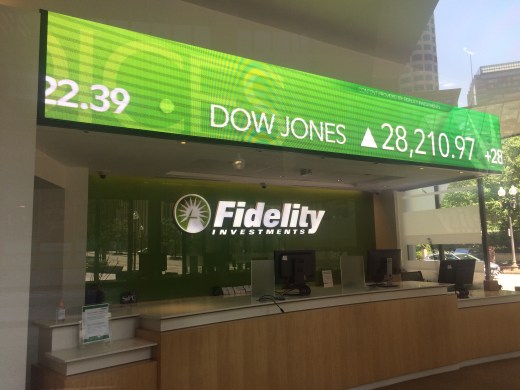
Photograph: Kim Clark. Trading prices are the KPIs of the New York Stock Exchange.

Questions that Move a Sale Forward

Well cha-cha-cha! You were able to resurrect a pre-COVID conversation you were having with a potentially good prospect and not for anything, you need to consummate this sale. Selling a prospect is like a dance and s/he who is selling must learn to lead with style and grace.

Step 1 is to understand what the prospect needs and the job specs, the specific work that must be done. Step 2 is to confirm that you’re able to do the work within the requested timeframe and allotted budget. Step 3 is to convince the prospect that you have mastered Step 1 and can achieve Step 2.

Since the shutdown, the ground has been quaking beneath our feet. Business owners and leaders are in various shades of panic, searching for answers and in need of reliability and support from their Freelancer colleagues. The need to establish trust cannot be overestimated. Your prospect must believe that you will not disappoint.

If you have not worked with the prospect before and the discussion will take place over Skype or other video platform, establishing the familiarity and comfort level that are the ingredients of trust will be more of a challenge. Turn up your listening skills and empathy because you’ll need those qualities more than usual. See my post https://freelancetheconsultantsdiary.wordpress.com/2020/07/14/what-scientists-know-about-virtual-meetings/

The 12 questions below are designed to 1. Display your empathy and ability to become a trusted resource; 2. Confirm the prospect’s intentions; 3. Specify the work you would perform; 4. Learn if your prospect is the decision-maker; and 5. Get an estimated starting date. At the conclusion of the conversation, the prospect should invite you to submit a proposal. If that does not occur, I would follow-up with a thank you email and then put this company on the back burner.

“In light of the new business environment, how has your process changed?”

“What are you doing that’s working well right now?”

“What’s hardest for you now?”

“What can you still do that you were doing before the shutdown?”

“Do you see what seem like good opportunities on the horizon?”

“Are there plans or intended projects that have been cancelled or put on hold?”

“Confucius said that a journey of 10,000 miles begins with the first step. What first step can I help your organization take?”

“Is the project we’re about discuss today something you planned to do before the shutdown, or is this a new initiative?”

“Is there something that is blocking you from taking the next step forward, or causing you to hesitate ?”

“What is the solution that would give the most impactful long-term benefits to the company?”

“How can I be a good resource to you and help you move forward?”

“If you were the only decision-maker, what would be your preferred start and completion dates?”

Thanks for reading,

Kim

Photograph: Kim Clark. Dancing to the music at the 2019 Tito Puente Latin Music Series at Villa Victoria in Boston’s South End neighborhood.

# Red Light

So off you go, on a mission to reconnect with clients you haven’t worked with since the four month long COVID-19 shutdown began. You gracefully maneuver to position yourself to grab some billable hours before all of your Paycheck Protection Plan money runs out. You’re also on the hunt for new clients, maybe picking up the thread on leads you were checking out in the first quarter, before the rug was pulled out from under.

If good fortune prevails, you’ll bag a live one and generate some much-needed revenue. But do keep your senses tuned to any “off notes” while you and the prospect discuss the project specs. You are trying to work with this person, or someone on his/her team, and by no means do you want to walk into a toxic environment because you will fall. You will not be able to perform at your best. You will not be able to use that client as a reference.

it is important to notice and acknowledge the behavioral cues displayed and statements made by every prospective client. Do not get carried away by a seductive mix of need and excitement. Yes, making money is the point and you may also crave a project that you find not just lucrative, but also exciting. There may be a special skill that you own but rarely have the opportunity to display and at last you could be able to flaunt it.

But if the prospect makes you feel uncomfortable before the project work has begun, the smart Freelancer must find the strength to stop and walk away from someone who is already telling you that they’re a jerk who is out to hurt you. Assuming that this individual even pays the full amount of your invoice, in the end you will have to admit that the money earned from working with this guy or gal was not work the aggravation.

The best damage control that a Freelancer can take is to stop the process and walk away. Let’s examine a few examples of bad guy/ gal behavior:

“I’ve tried working with Freelancers before. I never get what I want.”

This prospect either doesn’t understand how to write and explain the project specs; doesn’t know what actions will achieve company goals; doesn’t understand and refuses to provide the support or authority a Freelancer needs to successfully complete the task; is a rabid micro-manager who is never satisfied by any work other than his/ her own; or cannot/ will not allocate the budget to hire a Freelancer who is able to do the work.

Do you see yourself swallowed by a giant whirlpool? You should. Stop. Turn around. Walk away.

Prospect don’t trust your references

You’ve supplied two or three solid references, clients for whom you’ve done work similar to what the prospect is looking to get done and the clients were very pleased. You exceeded expectations and created a positive experience. But the prospect is not convinced. Your references are not good enough, as far as s/he is concerned.

A dear friend of mine has often said that there are some people who will not take Yes for an answer. This prospect is not ready to become your client, for whatever reason. Maybe the prospect now feels uncomfortable with outsourcing this project to any outside expert?

Whatever. You cannot satisfy this individual. Shake hands and say goodbye, while you can still pretend to smile.

Prospect questions your fee and the value you’ll bring

The shutdown caused most businesses to take a significant financial hit and the impulse to keep all costs low is in the air. Freelancers are wise to be flexible about balancing their project fee against the work that clients need to do to get their ventures moving forward and the lower budgets that clients now live with. However, exploitation is never acceptable and must never be tolerated by a Freelancer.

Before your proposal is in writing, project specs should be discussed, including a ball park budget figure. Using that information, Freelancers can with confidence draw up a proposal with budget and submit it to the prospect. In this way, there will be no surprises. When the prospect shares some indication of the earmarked project budget along with the project specs, the Freelancer will quickly know whether or not s/he can do the job for that price.

But when the prospect wants to be secretive, it’s a bad sign. People need to be transparent and if they don’t want to do that, it will be unpleasant to work with them. Moreover, if the prospect alludes to the fact that his/ her team has the ability to do the job themselves, you may need to diplomatically hint that they might need to do just that because the work to be done demands a certain amount of time and skill.

You are willing to be flexible, you are willing to do a smaller piece of the job for the money that the client has suggested for the entire project, but you cannot give your work away. Then shut up and hear what s/he says in response. The specs will either shrink or you’ll walk.

Project timetable and other guarantees are unrealistic

Timetables and deadlines may require some help from the client if they are to be met and the smart Freelancer will put into writing the kind of resources that the client will provide and by what date. Furthermore, in certain cases the full scope of the project cannot be known until the work has been started. Obtain as much information as possible about the project specs to minimize risks and promote client satisfaction.

If you’re having trouble either reconnecting with current clients or signing new ones, you may need to tweak your pre-COVID-19 business model. Things have changed. No one has a written-in-stone game plan. Pivot has become the word of the month, if not the word of the year. Your first assignment may be to get a fix on what services are in demand now and how you can package and promote your entity to be considered a trustworthy and reliable purveyor of those services.

When speaking with current clients, even if you send out an email to say hello and get the ball rolling, ask how doing business has changed and make it known that your goal is to help them cross the river without taking any more of a bath than they may have already done.

When approaching a prospect, a version of the previous question can be asked, perhaps as a statement, “As you and your team work to help the organization regain its bearings and serve your customers in the way they now want, or legally must be, served, I’d love to talk to you about how I can help you do that efficiently and cost- effectively.”

Thanks for reading,

Kim

Photograph: Kim Clark. Massachusetts Avenue leaves the Back Bay and enters the South End.