Map Your Customer Journey

By analyzing your customers’ behavior, Freelancers and other business owners and marketers come to understand their needs, priorities and concerns, a point that’s often noted in these posts, as regular readers know. When those responsible for marketing understand those factors, you are then able to create marketing and sales messages that speak with authority to your intended audience and also broadcast those messages through marketing channels that your typical buyers trust and follow.

Plus, an accurate understanding of customer behavior helps you to anticipate and deliver customer service and other post-sale needs more effectively, giving you a third benefit to take to the bank. The more familiar you become with the behaviors of your typical customers as they engage with your organization, the more business you will do with them.

Several metrics can give reliable insights into customer behavior and it’s a smart idea to examine all aspects that your data tracks. Today, we’ll examine what you’ll learn when you analyze how visitors to your website or social media accounts react to the customer journey you present to them. The point of this exercise is to figure out how to persuade more prospects to become customers.

From the first encounter with your organization, to digging in to research and compare your product or service to the competition and finally to making a decision to give you the sale, or not—-are you answering prospects’ questions or do they lose interest and abandon you? Where in the customer journey are the biggest drop-offs? How might you coax prospective customers to return to your site to research and evaluate your company’s products and services, so that they’ll realize your organization is capable, trustworthy and prepared to deliver solutions that solve problems and achieve goals?

The function we’ll study today is known as mapping the customer journey and it will be instructive. First, break down the steps that customers in decision-making mode will take, the through-line that begins with their first encounter with your organization and all the way to the sale. Every touch-point, or interaction, that happens along the way makes up the customer journey. There is a beginning, middle and end and interesting tidbits of information will be available for prospective customers at every stage.

Next, evaluate the persuasiveness of the information offered. Information at each stage must be chosen strategically, to help prospects trust and recognize the value of what they read, hear and see. You want them to buy, to become customers. Mapping your customer journey reveals how customers engage—or not—-with the content you’ve made available to them, as documented by your website analytics.

BTW, you’ll probably notice that the customer journey closely resembles a sales (or marketing) funnel. First encounters with your company correspond with the top of the funnel (TOFU). Visitors who are increasingly curious about your products or services will stick around to enter the middle stage, the mid-funnel (MOFU), as they venture beyond landing page info. Maybe they’ll read your blog or newsletter, or accept your offer of a free e-book? The most serious prospects, those who are finalizing their choice, are with you until the final stage of the customer journey, which is comparable to the bottom of the funnel (BOFU).

Early stage

As you’d guess, initial encounters with your organization are mostly filled with non-committal window-shoppers. Early stage potential prospects often cast a wide net. They may be in the process of confirming and defining the challenge or problem that must be resolved and they’re usually compiling a list of companies that offer what appears to be the most effective product or service at the best price. Maybe they’ll check you out on social media, too, and read the About Us page on your website.

Early Stage prospects may have discovered your organization through one of your marketing channels, by referral, or maybe in a personal encounter with you when you taught a class or participated in a webinar. Most early stage encounters do not lead to a sale. Some potential customers may not be certain that they’ll commit to a solution in the near term.

Middle stage

Expect window-shoppers to abandon here. This stage is a natural turning point in the customer journey because it’s moving toward commitment. Those who seriously research and evaluate your product or service advance to the Middle Stage of the customer journey because they have a goal or problem in front of them and they have to do something.

These folks are real prospects. They have a good idea of what they want and how they want it. They demonstrate their resolve by remaining on the customer journey, in search of detailed specifics that will rule you in, or out.

That means you have an excellent opportunity to demonstrate the unique, defining attributes of your product or service and communicate where using your offering is especially well-suited. Here is where you can really shine and build credibility and trust and convince prospects that you are The One. Your e-book, podcast or webinar appearance link, and/ or customer reviews can demonstrate your expertise, convey the respect that industry colleagues and customers have for you and build a strong case for your organization.

Final stage

Ideally, the customer journey you present will get you on the short list of companies that might effectively address your prospects’ needs and goals. You either inch closer to the sale and eventually win, or the prospect steps away to pursue another solution. Prospects in the Final Stage of the customer journey will either fish or cut bait, commit to a purchase and become your customer or tell you goodbye (or go silent).

Your task here is to make a very compelling and appealing last ditch pitch to win the sale. A powerful case study could be an effective deal-closer, as could a free upgrade (that costs little to provide) or, perhaps most of all, a personal appeal from you, in a telephone or videoconference call or a face2face meeting. Do whatever seems reasonable to cross the finish line and win your sale.

The moral of this story is, the more you know about the typical challenges and goals of your most frequent customers, the more adept you will become in developing content to communicate that your solutions are effective and your organization is dependable.

Your customer journey doesn’t end once you’ve welcomed and onboarded your new customer! After-sale and other types of customer service are, collectively, the communication that is essential to building and nurturing the best customer relationships. You will be wise to design an experience that encourages still more purchases, plus referrals, positive reviews and good word of mouth advertising.

Thanks for reading,

Kim

Image: Hannibal’s map to victory in the 2nd Punic War. Hannibal’s crossing of the Alps in 218 BC was one of the major events of the war and one of the most celebrated achievements of any military force in ancient warfare.

5-Star Client Onboarding Leads to Smooth Sailing

Hallelujah, you’ve just brought in a client, and a good one. You and the team are psyched to start working and prove your bona fides but may I suggest that you slow down and present what might be called a “soft opening” for your new client? While you want to honor deadlines, it’s good business to first give new clients a proper introduction to your company, an opportunity to understand how his/her team and yours will pleasantly and efficiently get the job done.

This first order of business is a powerful move purposed to set the stage for a mutually satisfying working partnership. As it is for so many important goals, when your intention is to develop positive and long-lasting client relationships, it makes sense to begin with the end in mind. When you consider the big picture you’ll realize that an effective client retention strategy actually starts with good onboarding.

Onboarding is a series of choreographed actions that introduce new clients to your company and show them how to access and utilize the value in your products, services and organization—-everything that made them recognize you as The One. Your onboarding program sets the tone for productive client-company relationships, signaling that client expectations will be met and reconfirming that selecting you to do business with was a wise choice. Ideally, the onboarding experience you present will amplify your clients’ trust and confidence in you and your organization, resulting in referrals, recommendations and repeat business.

Onboarding is integral to client retention and limiting client churn, meaning one-and-done assignments. I don’t have to remind you that it costs at least five times the resources— your time and money—- to land a new client than it does to keep those you have. There will always be one-off projects but continually starting at zero and chasing prospects is expensive in terms of time, money and energy.

The top two reasons for client churn are 1) the client doesn’t understand your product; and 2) the client doesn’t know how to obtain the expected value from the product. Your thoughtfully designed and well-presented 5-star onboarding protocols can solve both problems. Here’s how you can greet new clients and start persuading them to become long-time fans and devotees of your organization.

Onboarding building blocks

Along with a welcome email, in which you thank the client for choosing your company over the other potential options and letting the client know how excited you are to work together, a 5-star onboarding recipe can include all or some of the following. Making the client and his/ her team feel confident in and comfortable with you and your team is the onboarding purpose.

  • Video tutorial
  • Live online or in-person product training
  • Follow-up video or phone call to confirm that the client is properly using the product or service purchased and is satisfied with the results and outcomes (and to troubleshoot where necessary)
  • In- person or videoconference meeting to introduce your project team and the client’s team, to discuss roles, milestones, invoicing schedules, reporting updates and the like
  • Company logo swag items and/ or a gift basket delivered to the client

The good news is that your new client already likes and trusts you and believes in your product or service and that’s why the decision to work with your organization was made. Build on these front-loaded advantages by creating an onboarding method that shows clients how to have positive experiences when using your product or service and working with your team. Your onboarding process is a follow-up step of the promises made in your sales talking points.

The onboarding process has lasting benefits for your clients and your business. Onboarding makes clients’ lives easy. It is vital to lowering client acquisition costs, increasing client retention, increasing the average lifetime value of clients and supports business growth.

Thanks for reading,

Kim

Image: Super yacht Saint Nicolas (230′ 4″/ 70.2 m) at the 2018 Cannes Film Festival

Next Up: Generation Z

Do you hear the footsteps? Generation Z is at the door. They were born between 1997 and 2012, they number about 72 million and they have an estimated annual buying power of nearly $300 billion. Perhaps most notably, they’re the first generation to never know a world without the internet; they grew up with cellphones and their virtual lives seem as real as IRL. The oldest of them are about 25 and getting ready to enter jobs where they might be able to influence decision-makers. So maybe it’s time for Freelancers to get to know Generation Z?

They’re not the same as their predecessors, the Millennials, who grew up in more stable financial times and have a different outlook on life and different spending habits. Defining memories of particularly the older Gen Z cohort members were formed during the Great Recession of the 2000s and it wasn’t pretty.

Tough times were waiting for us when the new millennium arrived, bringing the one-two punch of the market-crashing dot-com sell-off that was soon followed by the September 11, 2001 attack on the World Trade towers. A few years later, the subprime mortgage scam and real estate market collapse in 2007 caused thousands to lose their homes and their money. Remember also the the demise of the Bear Stearns and Lehman Brothers investment houses in 2008 and a few months later, the exposing of Bernie Madoff’s Ponzi scheme, when even Stephen Spielberg took a hit.

Many Gen Z members were raised in families that had financial worries, if not hardship, and they’re made of different stuff than Millennials who, on average, experienced a more supportive economy. Experience seems to have given Gen Z a practical, cautious and even skeptical bent. For example, they are often concerned about the values and beliefs of those they do business with. They are also price conscious.

Affinity for small business

Since January 2020, Gen Z increased its small business spending by more than 260% according to Afterpay, an Australia-based payment platform that’s designed to be supportive of the credit-building needs of its users (and seems so totally aligned with the Gen Z style). Afterpay reports that Gen Z small business purchases were 80% higher than Millennials. This is being interpreted as a response to the pandemic, since it was well known that thousands of small businesses were struggling or going under.

Gen Z prefers online shopping and not only for the convenience. Marketing survey results show that most were driven by the ability to contribute to the local economy, with 77% of Gen Z customers reporting that online shopping allows them to discover products from new or small companies they wouldn’t be able to find in person. Only 38% say they prefer in-store shopping. A June 2021 survey conducted by the France-based marketing company Sendinblue and CITE Research, the survey and research marketing firm, found that 46% of Gen Z shoppers had purchased more items from small businesses than they had before the pandemic.

Another interesting insight is that Gen Z customers are more willing to share their data with small businesses that they frequent, in exchange for discounts and deals. However, they insist that the business inform them of how the information will be used. That’s great news for Freelancers and small business owners and leaders who are figuring out how to reach and persuade Gen Z prospects to become customers.

Finally (and no surprise), a 2021 Consumer Culture Report compiled by PR and marketing firm 5W Public Relations showed that Gen Z gravitates to electronics and technology. Health and wellness emerged as their second favorite category. While the Zs are financially cautious and love a bargain, they can be persuaded to make larger purchases that offer fun experiences or improve their daily lives. They like video games.

It’s important for Freelancers and marketers in general who want to reach Gen Z to create content that demonstrates usefulness to cohort members. Make clear why they might need the product or service by communicating how it will improve their life, for example, improve health or promote fun, and also explain why your product or service is better than what competitors offer.

Thanks for reading,

Kim

Image: Fortnite™, the video game favored by Generation Z

10 Tips to Create Repeat Business

A well-known study conducted by Frederick Reichheld of Bain & Company in 2010 confirmed what has been well-known anecdotally by business owners and leaders for decades—that it costs (at least) 5 times more to bring in a new customer than it does to keep the customer you already have. Decreasing churn, that is, the phenomenon of one-off customers who are never seen again, is not the way to build a sustainably profitable venture. You don’t want to run a business that behaves like a revolving door.

Your repeat customers are loyal to your brand because they have had good experiences with you. Due to this, repeat customers are highly likely to promote your brand through word of mouth or social media and on review sites such as Yelp and Trip Advisor. In other words, your repeat customers pay you with referrals and testimonials that bring more new customers to your door. It doesn’t get better than that!

As you build your business and go about refining and strengthening your brand, you should strive to cultivate a community that believes in your brand, that is loyal and is invested in seeing you succeed. One of the best ways to ensure customer loyalty is to make your customers feel that they’re a part of something rewarding when they engage and do business with your brand. Below are a few low-cost, no-cost actions you can take to promote customer loyalty, which usually translate into customer retention, I.e. repeat business and referrals, too.

Surprise and delight

Pleasant surprises are always a good thing during the course of a customer relationship. Introducing a nice surprise, typically in the form of an unexpected little perk for the customer and in particular at the beginning of the interaction, is a great strategy to differentiate yourself from competitors. It’s good business to show customers and serious prospects that you’re a cut above.

Customer experience, customer service

According to a 2018 survey of US consumers released by the multinational professional services company Price Waterhouse Coopers (PwC), which happens to be the second-largest professional services firm in the world, consumers rank price and quality at top-of-mind when buying decisions are made. But when they think about interacting with companies they buy from, 73% of survey respondents reported that positive experiences influence their purchasing decisions and 65% feel that a positive buying experience is more influential than great advertising.

You basically have only one chance to get your customer experience and service right. 32% of customers surveyed reported that they’d stop doing business with a brand they loved after even
one bad experience.

Make an effort to structure the experience your business provides to reflect what matters most to the customers. When customers feel appreciated the company benefits, primarily from customer retention and referrals. 86% of survey respondents indicated that they’re willing to pay more for a good end-to-end customer experience and 80% say their reason for switching to another company was poor customer service.

Email marketing, social media, blog, newsletter

Update your customers by way of your website and social media accounts about what’s new—-special offers, new products or services or special pricing and be certain to include those who have not purchased in a while. If you publish a newsletter and/ or blog, include your product and service special offers, special pricing or new product or service announcement. Get your community excited about what’s happening and they may share the good news with those who could become your future customers and loyal fans.

Retain on your mailing list all customers with whom you’ve worked over the past five years, including those who’ve been inactive, and also retain on your mailing list prospects who have had some level of engagement with your organization. Always position yourself to win over a prospect or win back an inactive customer. Until someone clicks the opt-out button, continue to send marketing emails, your newsletter and/or your blog. You never know when lightening will strike.

Payment made easy

Make paying for your products and services easy. By adding digital payment options such as Square, Paypal, Bill.com, or Stripe and facilitating direct deposit payments to your bank or debit card and/or accepting online check payments, you’ll encourage customers to do business with you more often because you’ll make paying invoices a convenient process. Easy payment is an element of a pleasant customer experience.

Website and social media

Merely having an “online presence” is no longer enough. The internet is over-saturated and short attention spans are the norm. To maintain the appeal of your social media accounts and website, make your content—text, audio and video–relevant and timely. Constantly confirm that your posts and images resonate. Update regularly with fresh images, blog posts and and other text, audio and/or video.

Thank you card

The survey revealed that human interaction matters now—and 82% of U.S.
consumers want more of it in the future. With that in mind, a small personal gesture, such as sending a thank you card (or note) to a new customer, or one who has spent a certain threshold amount is a powerful statement. Your card or note can create or enhance the feeling of community and build loyalty for your brand.

Special occasions

The PwC survey found that when customers feel appreciated, they are more likely to recommend or endorse a brand on social media or review sites, subscribe to a brand’s newsletter, sign up for special promotions and make repeat purchases. Sending cards to mark occasions such as customer birthdays, if that is appropriate for your industry, or holiday cards in December is a predictable but usually much-appreciated way to communicate to customers your thoughtfulness.

Showcase testimonials

If visitors to your website and social media accounts see your customers and colleagues singing your praises, in text, audio, or video, then chances are they’ll be more likely to take a chance and buy from you themselves. User-generated content in the form of reviews is a powerful way to win customer loyalty. Case studies in text or video format, are also quite compelling since the story of how you and your team assess and resolve a problem is told.

After sale service

After-sales service often amounts to listening to customer feedback and being available to answer questions or give encouragement. After-sales service can make the difference between a happy customer who loves doing business with your organization, or one who is underwhelmed or even frustrated. A follow-up call to a customer, especially a new customer, will 1). Show your empathy—you care about the customer’s pain point or goal; and 2). Ensure that the customer is achieving objectives. If the solution isn’t working as expected, you can quickly diagnose the glitch and fix it. If a training will help, deliver it, on the spot or by appointment. You want to create a cadre of satisfied customers who will become your loyal cheerleaders.

Do the math

While at the University of Lausanne in Switzerland, the Italian economist Vilfredo Pareto (1848-1923) in 1896 demonstrated that on average, a business will derive 80% of its revenue from 20% of its customers. Further research has demonstrated that the likelihood of selling to an existing customer is 60% – 70% and repeat customers will on average spend 31% more than your new customers. Just a 5% increase your company’s customer retention rate will reward you with a 25% increase in profits. Are you convinced yet?

Thanks for reading,

Kim

Image: © WalterFilm. Marilyn Monroe in a publicity photo for How to Marry a Millionaire (1953, 20th Century Fox Studios)

B2B Selling: Virtual or Face2Face?

Hand-wringing regularly ensues when business owners and their sales teams discuss the subject of B2B selling in the pandemic era of the digital age. Gaining access to prospective customers, especially, has never been more challenging. Work From Home has sharply limited personal contact between buyers and sellers and impeded the development of a mutually beneficial relationship that the standard face2face sales call enables.

I spent about a dozen years selling at a Fortune 100 company and built a 7-figure sales territory by driving around to meet customers and prospects face2face, developing and nurturing relationships and creating business. There’s lots of evidence to prove that the ideal sales call takes place In Real Time. However, there are exceptions. Much depends on the product or service being sold as well as the industry tradition.

Office-based sales reps at one time earned a nice living by using the telephone, the original virtual communication tool, to sell ad placements for magazines and newspapers. Sellers and buyers often developed cozy relationships that over time led to regularly appearing ads and excellent life time customer value for many accounts.

Telephone sales of ad placements in print and online publications continues, but customer lists and revenues have withered. Advertising on social media platforms, especially Facebook and LinkedIn, plus Google, Bing and Yahoo are robust and growing. With the exception of Google, which employs telemarketers to call prospects, email appeals and pop-up ads on the sites are the sales strategies. Other than a record of prior sales, customer knowledge and relationship development have been shunted aside. No one is complaining, so the practice continues.

Despite the new normal sales landscape, every business will eventually need B2B products or services of some sort. The traditional role of the sales professional—sharing anecdotal user experience data, recommending solutions that could potentially deliver the desired result, earning trust and building relationships—-is even more valuable in our prolonged state of uncertainty. The customer and the type of product or service being sold will guide you to the most effective sales approach, face2face or virtual, if you have the luxury of making a choice.

When face2face is best

New customer acquisition is more difficult in the virtual realm, whether telephone or videoconferencing. Many subtleties of voice, body language, or facial expression could be unnoticed by the seller or go unexpressed by the buyer in a medium that some consider to be unnatural or inscrutable.

Whenever possible, arrange a face2face sales meeting with prospects. You want to enable good communication so that the prospective customer will be relaxed enough to tell his/her story—- the problem or goal, the purpose, the deadline, the budget and the decision-maker.

You don’t want clunky technology inadvertently putting up a barrier. There’s just no substitute for the reassuring presence of a friendly, efficient and knowledgeable sales professional to encourage the customer’s confidence and trust in your organization and its products and services.

Especially in complex sales situations, virtual connections alone can’t match the ability of a sales professional on the scene, to draw out of the prospect the kind of full disclosure that puts all the cards on the table and allows for the best solution to be proposed.

When phone calls work


Cross-selling, up-selling, add-ons and renewals can usually be successfully achieved by way of a digital medium, including the phone. Many are weary of videoconferencing and will be relieved to work things out on the telephone.

The WFH environment presents a credible excuse to call customers to initiate a check-in to verify that they’re fully realizing the purpose and value of the solution that’s been purchased. The phone call can also open the door to a cross-selling/ up-selling pitch. Phone follow-up is especially useful when products or services are bought as a subscription (e.g., SaaS) or consumption-based (e.g., cloud services).

Usage by customers is the key to repeat business (and sales revenue growth) and usage is ruled by value. Technology companies have customer success managers who work mostly by phone and videoconferencing to help existing customers maximize the ongoing benefits of their purchase.

Leverage the virtual advantage

B2B sales execs are learning that effective virtual selling requires more than just shifting their usual face2face script to a videoconference or phone call. It’s much easier to make a call than to take a plane and for that obvious reason, virtual meetings make sense for customers located in geographies not easy to reach.

But the real power of virtual selling is realized by leveraging its unique advantages. Consider this—both buyers and sellers can easily pull into a sales meeting key stakeholders and experts from multiple locations—corporate HQ, region office, or WFH. Meetings can be recorded. Participants can quickly look up or verify information and share it on the screen. AI-driven prompts can be activated(e.g., about the preferences of similar customers) to guide the discussion.

Find the balance

Tailoring your product or service talking points to customer needs has always been a cornerstone of successful selling. Now, successful selling also includes tailoring your communication modes (when possible), employing the right mix of face2face and virtual selling, supported with email marketing outreach and online customer self-service, as appropriate.

Making a sale has always required fine-tuning the sales process to match the purpose, experiences, priorities and expectations of buyers. The question is no longer whether online digital tools will overtake traditional selling methods. Now the question is, how can sales professionals best integrate digital technology with traditional sales techniques to create value and trust and generate sales?

Thanks for reading,

Kim

Image: In 2020, Los Angeles filmmaker Jesse Orrall showed how he one-upped a few virtual meetings by creating a pre-recorded image of himself to substitute for his actual presence at the meetings.

On Becoming an Expert

Can we agree that competition for the eyeballs, ears and wallets of prospective customers in both the B2B and B2C sectors has resulted in near-intolerable noise in the marketplace? As a result, the 70% or so of Americans who are Freelance solopreneurs or small business operators face an uphill battle to get noticed by those who might become your customers. So the big question is—-what strategies might you employ to persuade prospects that you are The One? In the B2B sector, perhaps the most effective way to gain trust and sign contracts is to present yourself as an expert throughout the buyer’s journey and particularly in decision-making conversations.

To win clients, Freelance consultants have to be the smartest ones in the room, or at least make everyone think they are. On the other hand, you can’t look like a smart-aleck know- it-all because diplomacy matters. Just keep in mind that successful Freelancing is about inspiring trust and confidence and building relationships. Everything you do must support those objectives, which are the pillars of your business. Let’s look at some pivotal moments in a sales conversation where you can reveal your expertise and win over prospects.

Problem-solver not sales rep

Rule #1 of sales is to sell the customer how s/he wants to be sold. The way that prospective customers, especially in B2B, want to be sold is to first, connect with a problem-solving expert who’ll listen and learn what s/he needs to achieve and then recommend potential solutions that are tailored to the prospect’s objectives. High pressure sales pitches have no place in the scenario and are best left in scary memories of the 20th century.

Question, listen, diagnose

Think like a doctor and listen well to accurately diagnose the problem or objective the prospect must resolve or achieve. Ask open-ended questions that encourage the prospect to open up and talk. Your questions should aim to uncover the frustrations associated with the problem, the importance of achieving the objective and the impact of either on the prospect’s business. Ask questions to also discover if the customer has attempted to “self-treat” and attempt to solve the problem in-house. As the prospect tells the story, you’ll envision potential solutions that your organization can provide.

BTW, if you realize that you’re not a fit, it will reflect well on you to make a referral to a colleague or even acompetitor. Do that and you’ll enhance your credibility and brand. You might even get some business from this prospect in the future, either directly or through a referral.

Share experiences, show empathy

Let the prospect know that you are an seasoned problem-solver who has successfully resolved knotty problems before and helped customers achieve mission-critical, high profile goals. As an expert, you have valuable industry experience that prospective customers will be reassured to hear. A short, well-told war story or two will increase your perceived value. Moreover, your anecdotes will help the customer to feel more comfortable to spill the tea and tell you what’s really going on. Plus, it’s a great relationship- building technique.

Talk just enough

Another sales rule is that the seller talks just 15% of the time. In a sales meeting, the floor belongs to the prospect. You’re there to ask the right questions, share a good war story or two to give the prospect confidence in your abilities and judgment and then suggest a couple of possible solutions.

Through your questions, you will control the conversation and the sale. Follow this rule and prospects will respect you as a trusted expert, one with whom they’d be happy to do business.

Thanks for reading,

Kim

Why Are Clients Ghosting You?

It’s difficult to accept that a potential sale can disintegrate at any point in the sales funnel. Most potential sales unravel eventually, as confused or unsure prospects investigate which products or services might best address their needs and what that solution could cost.

I’ll wager that you don’t take personally the rejection of the TOFU group, early-stage browsers who wander into the top of the sales funnel. It is not until the prospect demonstrates real interest and reaches the BOFU, bottom of the sales funnel, that things get serious. Prospects who reach that stage have real potential to become a client. It’s disappointing when a sale doesn’t happen.

You’ve invested time in your advanced-stage prospects as they’ve traveled through the MOFU, middle of the funnel. You were pleased to learn that an e-book or case study was downloaded; you may have followed-up on that action with an emailed note of thanks and an offer to provide more details on request, or schedule a no-cost half hour phone consultation.

You may be daydreaming about writing a proposal and how wonderful it will feel to add this company to the client roster. So if the prospect abruptly goes silent, ghosting you, it’s rather a painful blow. Why is this happening and how can you fix it?

Let’s figure this out. Prospects can ghost you at any point, although disappearing acts usually occur after the first meeting or phone call, or after a proposal has been received. In the first instance, it’s probably the case that the prospect merely wanted to find out what’s available in terms of products or services and to get ballpark pricing info. These people are fishing, evaluating possible solutions for the problem and they’re not ready to commit to taking action. Let it go.

To separate genuine prospects, who are thinking seriously about doing business, from pie-in-the-sky window shoppers, the best tactic is to ask a couple of direct questions about the problem or goal for which the possible prospect wonders if your organization might provide the solution. If possible prospect is unable to articulate a specific problem that motivates his/her curiosity about your products or services, assume the need is not urgent. Accept that it may be impossible to convert this prospect in the near term, if at all.

If you have information that speaks to some aspect of what the individual is interested in—an issue of your newsletter, a case study, white paper, or even an article by another author, offer to send the information to your inquirer. If you’re able to assist the decision-making process you never know, it may be pay off for you somewhere down the line. You might become the recipient of a referral as repayment of your courtesy.

In the second instance, if your prospect ghosts you after a proposal has been requested and sent, the matter is much more serious. The three most likely obstacles are:

  • Your price is too high
  • Your solution doesn’t seem to address the problem
  • They were talking with a competitor all along and went with the other company

Both pricing and the solution that you put forth in your proposal are best discussed before you commit anything to writing. Whether you discuss these critical issues on the telephone, in a video meeting, or face2face (I wouldn’t recommend emails for matters so important), you must understand what the prospect needs to achieve and when the deliverables must be in hand. You must know that you can provide what is needed, when it is needed and at a price that the prospect will accept.

A proposal answers three questions —1). What will the prospect receive? It should be made clear in your proposal how the strategies and actions that you propose will achieve the goals; 2.) When will the project be completed? It should be made clear that the project deadline can be met; and 3.) How much will it cost? You should have a very good idea of what the client is willing to pay for the product or service you will provide.

A good proposal presents a narrative, with strategies and data and timelines, that helps the prospect understand what s/he will receive, when it will ready and the price.

Regarding price, it is advisable to inquire about the budget as the project specs are being discussed. As the prospect describes what’s on the wish list, start thinking about how much it might cost your organization to deliver. You can mention a ballpark figure and ask the prospect if that is within the budget. Hint: give a high estimate. If the prospect doesn’t flinch, that’s great! If body language and facial expressions indicate that your off-the-cuff price is too rich for their blood, downshift and let the prospect know that you’re confident you can customize a solution that will provide the must-haves and remain within their budget.

Finally, if all seems to have gone well and yet the prospect goes silent, experience tells me that the most common reason for ghosting after a proposal has been sent is that they’ve signed with someone else and they don’t want to hurt your feelings.

Still, it’s not professional behavior, inconsiderate of the time and effort you’ve invested in helping the prospect solve a challenge or reach a goal. You owe it to yourself to follow-up by phone or email and ask for an update, “Are you still interested in our services/product? When would you like to move forward?” You’ve most likely lost the sale, but nudging the prospect to face up to his/her decision allows closure and helps you to move on to greener pastures.

Thanks for reading,

Kim

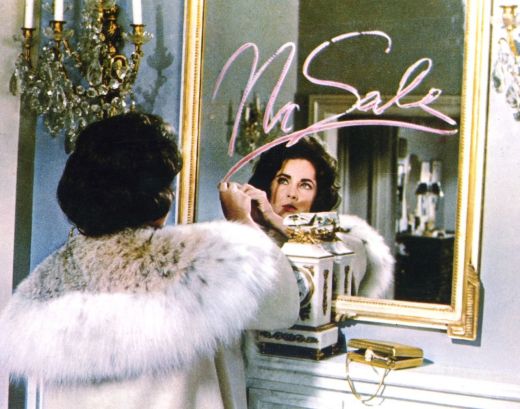
Image: Elizabeth Taylor won the Best Actress Academy Award for her performance in Butterfield 8. (1960), directed by Daniel Mann

Support Customers After the Sale

Now that you’ve signed the contract and brought a new customer to your business, you may feel a mixture of pride and relief. You’re thrilled that your marketing tactics and sales talking points were persuasive. The customer is in-house and you’re ready to exhale.

But not yet. In fact, the real work is just beginning. Whether you’ve sold a product or a service, the smooth execution of project work or the product performance and ease of use are only part of the story. To declare a sustainable victory, you must ensure that the customer is pleased with the decision to do business with your organization. You and your team must enable the feel-good with a series of actions collectively known as after sales service.

The customer experience operates on several levels, including what is traditionally called customer service. In our increasingly competitive business environment, business owners and leaders are now motivated to also manage what happens after the sale because it has impact. The facet of customer service known as after-sales service is the follow-up support that customers receive after they’ve bought your product or contracted to receive your services.

Business owners and leaders typically focus attention on filling the sales pipeline and strive to convert prospects into customers. That approach makes lots of sense, but it is to your advantage to devote a portion of your resources to what happens after the ink dries and payment is received. After-sales service is an important aspect of your customer retention strategy. It is a principal factor in cultivating repeat business, generating positive word-of-mouth that leads to referrals and enhancing the company brand.

Abandon customers once you have their money and it’s highly likely that they won’t return. It’s well-known that dissatisfied customers are bad for future sales, to say nothing of your brand’s reputation. But happy customers are your friends, the most valuable asset in your sales funnel.

The after-sales service your company provides might include advice on how to properly use the product or suggestions on how to get started with implementing the service. After-sales service often amounts to listening to customer feedback and being available to answer questions or give encouragement. In short, it’s a check-in to find out if the customer is satisfied with the purchase and helping to correct any glitches. After-sales service can make the difference between a happy customer who loves doing business with your organization, or one who is underwhelmed or even frustrated.

Customers who appreciate the way you and your team treat them are more likely to share their positive experience with your company and refer you to friends and associates. A 2016 survey conducted by The New York Times revealed that 65% of new business leads come from referrals. A 2011 study of 10,000 customers of a German bank found that customers who were referred to the bank by someone they know had a 16% higher lifetime revenue value than those who were not referred.

So how can you and your team build a winning after-sale service experience for your customers?Depending on your business, you can start the good vibes by sending business-appropriate thank you notes (paper or electronic) to express how much you appreciate that the customer chose to work with your organization.

Create a responsive new customer onboarding system, in which you welcome the customer, as discussed above, confirm customer priorities or must-haves, and also verify time table deadlines (if applicable) and project milestones. Do whatever is possible to make working with your organization easy. Encourage client feedback and listen to identify the onboarding experiences and information that your customers value. Standardize the process and use it consistently to set the stage for a positive working relationship.

Whether or not you send a note, your customer may be very happy to receive a follow-up call or email to get feedback on how, or if, the product or service is delivering and if expectations are being met. When performing project work, communicating progress, with a quick email or phone call on a weekly or bi-weekly basis, demonstrates your professionalism and commitment to excellence.

If the experience is a little bumpy, be ready to make suggestions, offer coaching or training, or even make an exchange. What surfaces in these conversations can be used to evaluate and, if necessary, to build or tweak more responsive after-sale service protocols.

Thanks for reading,

Kim

Image: In Barcelona, Spain a flamenco instructor coaches students

Whenever You Call

If half of what we do to find success is about showing up, the other half is surely about follow-up. Money is regularly left on the table because the person who was awarded the golden key couldn’t make him/herself go to the post office to pick it up.

A handful of hustle and a drop of two of discipline are required for this recipe. When your marketing tactics actually work—-you meet a potential prospect while networking and s/he hands you a card and asks to continue the conversation—-you must respond. Or maybe you want to drum up some business and feel that making a few cold calls will be worth the effort. The operative word is call.

Despite the technological advances that have been made over the years the telephone, patented in the U.S. by Alexander Graham Bell in 1876, has demonstrated staying power. Videoconferencing makes electronic communication more personal but it must be scheduled. Also, WiFi access is needed. The telephone’s audio-only format nevertheless enables good communication and it’s easier to use than Zoom. Plus, it never crashes.

According to a 2021 survey by Indeed, the best time to call a prospect, especially when you’re cold calling, that is, attempting to make your first contact, is between 4:00 – 5:00 PM. At the. end of the day, the prospect is often more inclined to not just take the call and more likely to your pitch. At the end of the day, the prospect is more likely to be at his/her desk, is unlikely to start a new task and is perhaps wrapping something up and is perhaps also more inclined to listen to your offer.

If you’d like to try a morning call, late morning is preferable. Calling during the approach to lunch time, 11:00 – 11:45 AM, is the best time for morning calls to prospects, whether cold calls or warm (meaning the prospect has requested a call).

The best days to call prospects are, you guessed it, Wednesday and Thursday. Monday and Friday are likely to yield less than stellar results for obvious reasons. Tuesday isn’t so bad, but apparently there can be spillover from the Monday rush that takes away some of its appeal.

Script your pitch

It will be very helpful to create a cold call and a warm call script. You want your delivery to be smooth, your language concise, your tone upbeat and, of course, your pitch airtight. You do not want to forget to say something important and you don’t want to be at a loss for words. Neither do you want to sound like a robot who’s memorized the words. Write a script to ensure that you’ll sound confident, conversions, knowledgeable and in control.

Helpful hints

  • Should the prospect take your call, ask if you’ve called at a good time and next, ask if s/he has five minutes to talk.
  • Present your call-to-action not as an urgent push to make an immediate decision but rather to persuade the prospect to commit to follow-up action, as a way to continue the conversation. S/he will likely want to discuss your offer with the team.
  • If a prospect contacts your company by phone or email for any reason, respond within an hour.
  • If you meet a prospect while networking and s/he has questions about your products or services, call or email the next day.

Thanks for reading,

Kim

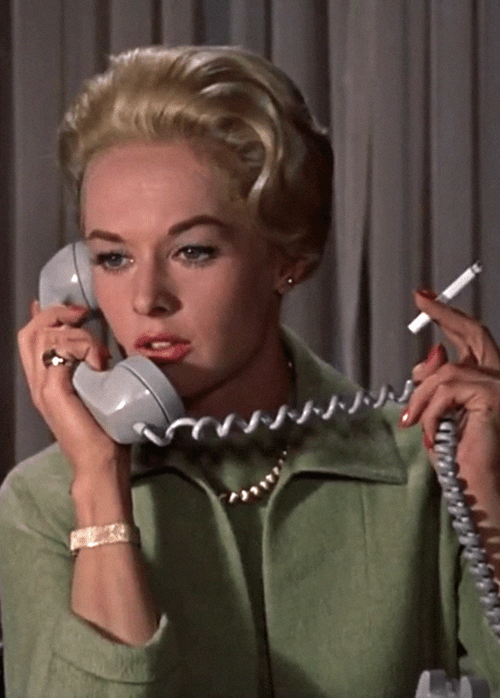
Image: Tippi Hedren, the original Cool Blonde, in The Birds (1963), directed by Alfred Hitchcock

Marketing and the B2B Buyer’s Journey

A few years ago numerous authorities who research and report on the habits of those who purchase B2B products or services for their organizations noted that B2B buyers do a significant amount of online research to improve their understanding about the products or services they intend to buy before speaking with potential vendors. As prospective buyers move through the journey there are a series of touch points, that is, encounters with B2B product and service providers (you).

Opportunities to influence and shape the perceptions that prospective buyers form while they investigate your company and its offerings are strewn along the Buyer’s Journey path like Hansel and Gretel breadcrumbs. The point of this exercise is to remind Freelance consultants where and how in the journey your marketing tactics have the power to persuade (or discourage) a few to do business with your organization. The steps that B2B buyers take can be broadly categorized as follows:

I. Identify a need

The initial stage opens the opportunity for B2B companies to introduce themselves to potential buyers and position their organization as a credible provider of B2B solutions. Cultivating a positive impression and trust in their products, services and brand is the goal of the Freelancer (the seller).

  • Recognizing that a problem or pain must be resolved, or an objective achieved

Creating awareness of your company’s product and/or service-based solutions is your objective during the first stage of the Buyer’s Journey. Providing examples of the challenges or problems that your products and services might solve, or examples of goals or objectives that can be advanced, can be effectively discussed in your website, newsletter, email marketing campaigns, blog, webinar and podcast appearances and social media posts, serving to help prospects understand what your company is all about and whether your organization has the right stuff to deliver what is needed.

  • Research

Your potential buyer now investigate solutions that appear capable of providing a remedy for the problem, or could advance the objective or goal. Most will conduct online searches and 70% will use Google, according to Salesforce. The B2B Freelance consultant is advised to provide the potential buyer with information that is typically expected and appreciated, is considered relevant—yet another reason to know your customer. User reviews from a site like Yelp, statistics, facts and other hard numbers could be in order.

Focus your content around the buyer’s most likely goal, challenge, or pain. A white paper to inform and persuade potential buyers that your company’s products or services, expertise or technology, for example, is superior for solving a particular business problem or addressing a certain goal. A free 30-minute consultation with your prospective buyer will also be helpful as you’ll be able to propose customized solutions and discuss how they might be implemented and delivered in a way that the buyer prefers.

II. Evaluate and compare available options

Be advised that the potential buyer will also investigate at least a couple of your competitors—and who could blame them? The decision-maker or his/her appointed representative will at this point start talking to colleagues about what is “out there” in terms of services, products, pricing, add-ons, upgrades, delivery date, free trials and anything else that will matter in the comparison. Case studies tell a story that illustrate precisely how, in real time, your organization is able to expertly deliver a customized solution and create an experience that meets or exceeds customer expectations.

  • Prioritizing

At this point in the buyer’s journey, the term prospective customer can be used with confidence, as s/he has clearly defined the problem or goal, has confirmed who will be the end user for the product or service and is fully committed to choosing and paying for what is perceived to be the most appropriate solution. An opportunity to develop a relationship with prospective buyers who are interested in your company at this stage of the journey may present itself because you could receive a call or email.

III. Decision and contract

Are you still in the game? Hope so! Prospective customers at this juncture have consulted with the project stakeholders at his/her company and are looking to get a deal that pleases as many as possible. This could be the time to tempt your prospect with deal clinching sweeteners—options, pricing, add-ons or (apparently) gratis upgrades that s/he and the influencers and end-users will appreciate and that cost you next to nothing. You want wrap this thing up and motivate your prospect to sign with your team. Surprise and delight.

Thanks for reading,

Kim

Image: The kids are alright. Goat farmers in Champaign, IL supply artisanal cheese to Chicago restaurants and gourmet shops