The Captain and the Team

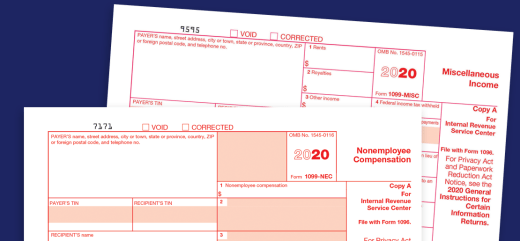
According to a U.S. Census Bureau report that documented business activity through the first 37 weeks of 2020 (i.e., 3Q2020), COVID-19 related business closures, some temporary and some permanent, have resulted in an unexpected outcome. Counterintuitively, there have been relatively few personal bankruptcies but rather a surge of legal entity applications filed by Freelancers and entrepreneurs who will likely to hire employees. It is clear that lay-offs and furloughs have convinced many former American workers to trust their own skills and ambition more than the uncertainty of being rehired.

Applications to obtain limited liability company or corporation status by Freelancers increased 16% over the same period last year, according to Census Bureau data. Might the urge to become one’s own boss be fueled not only by doubts about re-employment, but also the infusion of stimulus money? The price of entry into self-employment is low for B2B service providers and stimulus money is a natural for bankrolling start-up costs.

Still, self-employment as either a Freelancer or business owner and employer is no cakewalk. The biggest challenge to self-employment success will be acquiring clients; savvy and consistent marketing and your relationships will go a long way to help the business, but selling a product or service that has an adequate customer base is the deciding factor.

2019 Bureau of Labor Statistics data show that 20% of small businesses fail in the first year of operation and only 50% or so will survive into year five (there is no data collected for Freelancers, sole proprietors or those with a legal entity). There is a lot to plan for when launching a business, plus Key Performance Index metrics to monitor, interpret and act upon (or not).

First, know there is a sufficiently deep market for the products or services. Second, know how to access the customers. Third, devise a sustainable and appealing business model. Fourth, secure adequate funds to provide working capital that allows the operation to cover expenses and otherwise function.

Another important resource for Freelancers and business owners is a team of experts from whom you can seek advice and guidance. Freelance consultants and even small business owners are responsible for all decisions. The stress can be overwhelming. It’s impossible to be highly knowledgeable in several fields simultaneously and qualified to make wise decisions all or most of the time. It is very helpful to put together a stable of specialists on whom you can rely when important decisions must be made. Below are professionals whose guidance and advice nearly every Freelance consultant or business owner will need from time to time.

Accountant

An accountant will make sure that the business quarterly estimated taxes are acceptable and filed on time, so that the annual April 15 filing will not result in a surprisingly expensive tax bill due. A good business accountant will also review the financial statements and can make useful fiscal management suggestions. An accountant will also advise you on whether to incorporate the business or form a limited liability company. Finally, if obtaining a loan or taking on investors or partners is a possibility, your accountant will provide invaluable advice. Yes, a business attorney can advise you well on the choice of legal entity for the business and also the matter of taking on partners or investors, but will not prepare tax forms.

Graphic Design

Maybe you’d like to update your business cards or some other marketing collaterals, such as a stand-out Capability Statement that makes the company appear highly reliable and trustworthy, a real asset when approaching a prospective client. Or maybe updating the look of the company newsletter or blog is the goal. Knowing a good graphic design specialist is always useful.

Human Resource

Have you read your medical or dental insurance policy lately? Hire an H.R. benefits specialist to look it over and verify that you’re covered in the way you intended. You might also speak to an H.R. guide about your retirement plan or employee retirement plan options you offer. If outsourcing a function or hiring an employee are decisions you are pondering, an H.R. job analyst and design specialist will figure out the type of employee you and the organization need. An H.R. compensation specialist will help you set the pay scale.

Insurance

If you had met with an insurance agent 12 months ago, perhaps you would have known to purchase business interruption insurance for your organization and the COVID-19 shutdown would have been less financially damaging. The type of business you operate will determine the type of insurance it would be wise to buy. Be advised that the business legal entity does not protect a company from every type of liability.

Mentor

Whether things are going swimmingly or the world feels as if it’s crashing in, having a trusted peer to talk things over with is so reassuring. Strictly speaking, a mentor is someone who is more experienced than you and is positioned to make beneficial recommendations and introductions. In practice, you may find a mentor (or two) who is likewise in business, is successful and is your peer and good buddy. If your mentor can make a good client referral every once in a while, it’s a special blessing. If you can return the favor, so much the better.

Technology

If the business has employees, it is almost guaranteed that several computers will be used and that requires a professional to install and program the computers and also ongoing network support. Disaster recovery services to save company data in the event of a system crash, data breach, or other type of hacking incident is another necessity. Maintaining website functionality is yet another requirement. If the company plans a virtual webinar or meeting of some type, bringing in a specialist to do the technical set-up and keep it operating is more important than you may know.

Thanks for reading,

Kim

Photograph: Kim Clark

Forget About Bouncing Back—Bounce Forward!

A pandemic viral infection stalking the earth is not the only beast that can give any business a deadly wallop. An aggressive competitor, economic instability, technological advances that makes your biggest product obsolete, or the bankruptcy of an important client can take a business under like a riptide.

It’s a scary moment and no business is immune to a set-back. How can the business founders or leaders right the ship and head for calmer waters? Let’s take a couple of deep cleansing breaths, tap into your storehouse of resilience and figure out how to not just bounce back from business troubles, but bounce forward and stage a re-entry on higher ground.

When the realization sets in that the business is in a perhaps irreversible tailspin, the most common emotions the business founders/ leaders will ordinarily feel are fear and panic, followed closely by sadness and feeling like a failure. The enterprise that once made them so proud has been wrenched away. The body and soul ache.

You are encouraged to own your feelings. Denial, as revealed by a “take it in stride, carry on as usual” attitude is not recommended, but it is inadvisable to wallow in sorrow for an extended period. Recovery, personal and professional, lie in a rational examination of what went wrong and an informed decision about what to do next.

Start with SWOT

The old chestnut strategic planning technique that was first popularized in the early 1970s is still relevant today. Use SWOT to tally and measure the value of resources available to the company, assess current and projected business conditions and decide how to rebuild. A well-chosen and executed pivot or strengthening of the original business model, perhaps with the addition of an untapped niche market or infusion of capital, may be the healing recipe.

Strengths are valuable resources that can be leveraged—-still popular products or services; skills held by the founder and team members; the company brand/ reputation; strategic relationships; the client list; the email list; well-developed social media networks; cash reserves. Bundle the right set of strengths and propel your enterprise toward a profitable bounce forward.

Weaknesses are gaps and shortcomings that put the company at a disadvantage relative to competitors. Some organizational weaknesses cannot be eliminated because attempting to do so would not be practical. Instead, do what is possible in the near term to shore up, minimize, spin, or work around them. Primarily, it’s important to honestly and fully take stock of and plan around what has the potential to derail a forward bounce.

Opportunities are developments or circumstances in the environment that the company may be able to use to its advantage. Pursuing an opportunity is an offensive strategy that facilitates a bounce forward. However, one may search the horizon and find not a single lifeboat in sight. It may be necessary to pause and figure out how to create an opportunity, or wait for one to arrive.

While in limbo, finding a part-time j.o.b. may be the stopgap solution you need. I’ve been there and can testify that the strategy can aid a bounce forward. Search for a low-visibility gig that offers a desirable benefit in addition to money (which is probably inadequate). The idea is to get paid to discover and learn something that can contribute to the relaunch of the business and your professional life.

At my low-paid, part-time j.o.b., I eventually realized that my public speaking skills were greatly improving. That led me to search for and obtain a teaching position that continues to provide an intermittent but helpful revenue stream. Teaching enhances the brand and the cash-flow of Freelancers and business owners. That same j.o.b. required me to work with groups and I also came to realize that I could lead mastermind groups, where non-competing business owners and independent consultants meet each week or month to share experiences and insights that serve to support and inspire one other to achieve goals and become more effective leaders.

Threats are obstacles, challenges, or other developments in the environment that stand to undermine a company’s profitability and survival. Changing demographics, tornadoes and earthquakes, political or economic developments, computer hacking or data breach and the coronavirus pandemic are examples of threats. A company typically has little or no control over these events, which are external.

Guarding against threats is a risk management, defensive strategy. The best offense is a good defense. Keeping an eye on technology developments that may impact the desirability of the company’s products and services as well as being aware of potentially influential direct or indirect competitors who could cut into the client list are essential defensive actions. The idea is to limit or avoid the impact of harmful business conditions.

Market research

When you’ve discovered what appears to be the best direction for the company, curb your enthusiasm and take time to investigate the most advantageous business strategy before taking action. You owe it to yourself to lay the groundwork for sustainable success.

Research the market size, target market purchasing habits, the competitive landscape and your ability to access customers. Confirm that demand for your products or services is growing and not flat or shrinking. Consider business model possibilities that could work well. Talk to someone at the Small Business Association’s (free) SCORE business development mentoring program and discuss your restart plan with experienced business leaders before investing time and money.

Market strategy

Articulate an appealing marketing message and pencil in the olaunch campaign. Will the business have a new name? How will you introduce this newly configured venture? How will you describe and explain your pivot or redesign to current customers? A from the ground up marketing plan must expertly package, explain, persuade and promote to enable the bounce forward.

Budget

Whether it becomes necessary to build a new website, order new business cards, or take a workshop that will enhance your credentials and perceived credibility in the minds of new and original customers, it’s important to project business start- up costs.

Develop a 24-36 month financial plan and ensure that working capital will be available. Plan to have income as the new business ramps up. This could mean remaining employed in the j.o.b. for another year. When escaping a set-back, one must do what one must do to nail a successful bounce forward.

Thanks for reading,

Kim

Photograph: Kim Clark

Strategies to Manage Stress

The American Psychological Association defines stress as “any uncomfortable emotional experience accompanied by predictable biochemical, physiological and behavioral reactions.” Stress is part of daily life, as we know. Not all stress is bad and in fact, stress that induces the “fight or flight” response to a potentially dangerous situation is necessary for survival.

But chronic stress that results from an inability to eliminate or control an overwhelming or upsetting set of circumstances may precipitate serious health and behavioral complications, including hypertension, obesity, drug or alcohol abuse and depression.

Self Care

Busy people, whether highly stressed or not, are wise to set aside special time several days each week to devote to self-care. The activities can take the form of cross-training—-kick-off Monday with a run, swim, bike ride, or power walk, Tuesday for yoga or tai chi, Wednesday weightlifting at the gym, Thursday at home for prayer or meditation and Friday can belong to boxing or ballet.

Exercise, meditation and prayer have been confirmed through scientific research to deliver more benefits than I can remember, but among them are improved energy/ stamina, improved self-esteem, lower blood pressure, improved joint mobility, enhanced mood, improved cardiac functioning and a decreased incidence of stress. In other words, everything we need in the physical, cognitive and psychological realms gets better when we move our body and nurture our soul.

Eat well

Good nutrition supports one’s physical health. Maintaining a balanced diet enhances energy, stamina, cognitive functioning, the immune system response and helps the body defend itself against toxic stress. There will be times when deadlines or other intense situations might derail healthy eating habits and fried food bingeing rules.

Refuse to succumb to that temptation over the long- term. Get back on track ASAP and eat simply prepared fresh food, homemade or takeout, to feel, work and even sleep better. When faced with high-level physical, cognitive, or psychological demands, overdosing on sugar, salt and fat could leave one vulnerable to a crash of some sort, because unhealthy food does not adequately nourish.

Caffeine and alcohol are also not your friends when their intake surpasses a certain threshold. Listen to your body. A 20 ounce coffee or tea may get you going in the morning and a glass or two of wine, or a couple of cocktails, may help you to relax in the evening. Jittery feelings, heart palpitations and inebriation are warning signs and if they appear, dial back.

Sleep well

When starting or leading a business, there will be times when burning the midnight oil, if not burning the candle at both ends, will be the story of life. The opportunity and ability to sleep could easily be diminished. Yet it is advisable to guard against long-term sleep deprivation.

Arm yourself to take on difficult challenges by keeping your diet healthy and continuing with exercise and other forms of self-care (e.g., massage or energy work) that provide the stamina, cognitive functioning and decision-making ability that enable peak performance. Getting the work done makes it a lot easier to sleep and maintain a defense against the harmful effects of stress on the body and the psyche.

Medical and psychological researchers have published dozens, if not hundreds, of studies that document the relationship between inadequate sleep and stress. Sleep, like food and drink, is a biological need and we cannot survive without it (but the precise reason is unknown). The National Sleep Foundation has confirmed the long-held consensus that the average adult requires about eight hours of sleep/day. Teens may need 10 hours/ day. Some adults can perform well on just six hours/ day.

If sleep difficulties are the result of the stress related to getting things done, an executive coach may be able to identify ways to resolve workflow and time management issues that will make the to-do list more manageable, improve productivity and make falling asleep and sleeping through the night possible.

While you’re working on rectifying conditions that may be causing toxic amounts of stress, I recommend what I call The 90 Minute Rule, that pulls together a few NSF recommendations: 1) Evening workouts should conclude at least 90 minutes before bedtime, to allow the body to relax. 2). Dinner should be consumed at least 90 minutes before bedtime, to allow the body to digest. 3). Take a bath or shower 90 minutes before bedtime to promote the release of melatonin, a hormone that encourages sleep.

Delegate/ outsource

The struggle to get the work done is sometimes stress-producing, as noted in the preceding paragraphs. Learning to prioritize is integral to time management. An examination of projects and tasks that only the business founder/ leader is equipped to do is Step 1 of time management. The founder/ leader can then delegate other tasks to team members, if employees have been hired, or outsource to Freelancers or other business specialists, in the absence of staff.

Just say no

Saying no is occasionally necessary, even when it disappoints someone. Saying no may enable you to better manage time, energy, or other resources and become more productive.

Say no to enforce your boundaries. Say no to what you feel is unacceptable. Say no to honor your values, self-respect, or priorities. Say no to stress.

Thanks for reading,

Kim

Photograph: Kim Clark. Practitioners of Falun Gong, a spiritual philosophy with roots in China and derived from Buddhism, meditate on Boston Common.

Collaborating in the Digital Realm and IRT

Collaboration is a soft skill that in the COVID era rapidly acquired big implications. Even more than in the recent past, the ability to achieve efficient and effective collaboration within work teams, and in fact within organizations, is recognized as a fundamental leadership skill. Collaboration today plays a defining role in driving successful business outcomes.

Because it is now common practice for team members to work from either home or office and to be scattered across city, state, national or even international borders, in addition to occupying various time zones, it is critical to ensure that all players are on the same page. Freelance consultants would do well to diplomatically encourage a collaborative environment on every project in which they participate. A project that yields less than stellar results will weigh most heavily on the Freelancers’, and not the employees’, reputation. The opportunity to receive referrals and repeat business sometimes rests on making one or politically savvy suggestions.

Collaboration is born of trust, respect, communication and, ultimately, sharing information and responsibility. These attributes and actions promote both camaraderie and good decision-making. Teamwork begins when team members understand their project mission; understand how their project supports organizational objectives; have the data, tools and authority to carry out their work; and know whom to consult when questions arise. Think about how you can advance those ideals on your next project.

Digital workflow systems such as Asana, Slack, Trello, or Microsoft Teams are excellent tools that provide access to all relevant documents, support continuity, allow all team members to view and contribute information as work progresses and document progress. Study the project specs. Visit the websites of the digital workflow systems mentioned here or recall your experience with other systems. In the kick-off team meeting, raise your hand (virtually or In Real Time) and suggest a workflow system that will both expedite the work and promote transparency and collaboration.

Virtual check-in meetings may find some team members in a makeshift home office, on a park bench surrounded by greenery, or in their familiar workplace office but nevertheless, if trust and respect have been properly seeded and nurtured, open communication that also allows for differing perspectives, will support candid assessments of project progress, about what may not be working and enable the wisdom of the team to devise solutions that all will support.

Follow-up is where the team pulls together to implement whatever useful suggestions for improvement that surfaces at check-in progress meetings. It is often said that half of life is about showing up. Surely, the other half is follow-up.

Follow-up moves the team and the outcome they produce from good to great. Top teams never assume that someone else took care of an important detail— they make sure it’s been done, the right way. Dot the i’s, cross the t’s and deliver excellence.

Thanks for reading,

Kim

Photograph: Kim Clark. Nursery school students collaborate on their project (the morning walk).

SnapChat and the Power of Ephemeral Content

SnapChat, still a rising star among social media platforms, burst onto the scene in 2011 with an innovative feature that was catnip to the under 35 age cohort. Skillfully catering to the fickle attention span of its target audience, SnapChat allowed uploaded photos and videos just a 24 hour lifespan before disappearing them, bringing the Fear of Missing Out to a fever pitch.

Rumors of the platform’s death have been greatly exaggerated. The market research firm Statista predicted that in 2020, SnapChat will be used by 101.4 million visitors in the U.S. alone, a 20.5 % increase over 2019 (55 % of users live outside the U.S.).

The marketing analytics firm Hootsuite data revealed that the concept pioneered by SnapChat, allowing access to content for a limited time only and known as Ephemeral Content, continues to be a growing phenomenon among the target audience. 62 % of SnapChat Stories viewers reported that their interest in a product or service is intensified by the Ephemeral Content tactic.

The prevalence of mobile devices also plays a role in popularizing Ephemeral Content. First, mobile capability stokes the appetite for online everything, from ordering groceries to reading news articles to sending texts to keeping up with social media.

Second, FOMO mixed with mobile devices adds up to an audience that is often online and searching for something that will entertain or inform. Holders of mobile devices will anticipate Ephemeral Content if it’s known to be posted on a regular basis. When it comes to posting, people want predictability. When it comes to content, they want to be surprised.

So now you know what younger audiences (24% of SnapChat users are young adults) and mobile device owners respond to and your current and prospective clients are members of one or both of those cohorts, whoever they are. Now—-what 4 or 5 photo spread or 2-3 minute video can you and your team conjure up to tell a little story, or give a back stage look, into you company, its products, or services?

It will probably take a healthy dose of creativity to pull off in the B2B sector, but maybe you can put something interesting together once a quarter to include on your favorite social media platforms for a week—or SnapChat for just one day? When the second or third round of Ephemeral Content is posted and creates a little champagne fizz for your company, you’ll be on your way to cultivating followers who will be positioned to become paying customers. This is about LeadGen.

To get going on SnapChat, set up a business account. Encourage followers with your unique Add Me URL, that is accessed through the Settings icon, which brings users to the Username tab and then to the URL that’s already been created. Also at Settings and waiting for you to access will be your unique SnapCode badge that functions like a QR code to carry users directly to your content when the SnapCode is scanned with a mobile device. From Settings, click SnapCodes, then My SnapCodes. Finally, make use of SnapChat Insights, the free analytic tool that breaks down who your visitors are and the type of content that brings in good leads.

But—-but—-what if your clients and prospects are older than 40? What about maintaining content for a week? Then post your Ephemeral Content to Instagram, Twitter and/or your Facebook Fan (business) page. Just remember to delete your little teaser before a week goes by and keep your followers hungry for more.

Thanks for reading,

Kim

Photograph: Kim Clark, February 2019. Your diarist gets ephemeral in Nowhere and Everywhere at the Same Time, installation at the Institute of Contemporary Art/ Boston by William Forsythe (choreographer who works with world-class ballet companies)

8 Skills Everybody Needs

Whatever work one does, from start -up founder to pastry chef, automotive mechanic to chief financial officer, it is interesting that we all need the same short list of skills to become successful.

Consultants are often advised to hone and promote fluency in the skills listed here but everyone who works—-business owner, Freelancer, or employee—-taps into these skills on a regular basis. Your hair stylist and the guys who do your yard work use the same skills as your bookkeeper and your periodontist and if they didn’t, you wouldn’t have hired them. Let’s remind ourselves of what we really need to know in life.

Adaptability

Because when we wake up in the morning, we never know what the day will bring. One may learn, for example, that a potentially lethal and highly contagious virus, for which there is no reliable antidote, has entered our country by way of a meeting of executives employed by a prestigious biotechnology company.

When those who attended the meeting returned home and went about their daily lives, some of them infected people with whom they interacted. Very quickly first hundreds, then thousands, of citizens contracted the virus and many died. In an attempt to block the spread of the virus, governors in all 50 states ordered nearly half of commercial enterprises, plus all schools, government offices, libraries, museums and other public spaces, closed. So what did we citizens do?

We adapted as much as possible, that’s what. Grocery stores, the post office and other entities deemed essential were allowed to remain open. Many business owners and leaders found ways to keep their ventures functioning, with revisions.

Millions of knowledge economy workers used their personal computers to work from home, as department heads kept their teams united with videoconference meetings. Schools quickly switched from classroom to online learning (many colleges long ago added online courses).

Retail stores sold merchandise through their already robust e-commerce websites. Personal trainers and fitness instructors contacted their clients and followers and invited them to participate in outdoor workouts. We did what we had to do and we got by.

Creative thinking

Whether or not an out-of- the-box solution is needed, every once in a while it’s fun to bring innovative flair to a plain vanilla task. Whatever the motivation, resourcefulness and creative thinking are appreciated, because the need for an end run or a work-around can be part of daily life. Sometimes, one needs all of that just to get through the morning commute!

Creative thinking is often associated with the arts or architectural design. But during the COVID shutdown wedding planners, who were watching the ground give way beneath their feet, flexed their creative genius to reimagine weddings for panicked brides and grooms. That often meant broadcasting the ceremony virtually and rescheduling the reception for the following year.

Creative thinking can also reach back into the past for an innovative solution. This year, the New York Film Festival, barred from using shuttered movie theaters, will debut its contenders at drive-in theaters in the Brooklyn and Queens boroughs.

Credibility

Dependability, judgment and expertise are the three pillars of professional credibility. These attributes add up to trust and trust is what gets one hired and motivates customers to give referrals. People do business with people they like. They do more business with people they trust.

Communication

As it is often said, it’s not necessarily what you say, but how you say it. You’ve got to know how to talk to people.

One of the best ways to communicate with someone is to not talk (much), but tlisten. Use nonverbal cues to demonstrate that you are following the narrative. Ask questions to clarify or confirm what you think you’ve heard. Pay attention and let others know that you value them and their opinions (even when you see things differently).

Decision-making

Here’s the reality—-when a big decision is on the table, we seldom have access to as much information as we feel would be helpful as we weigh the possibilities. It is frustrating, to be sure, and we’ve all been there. The thought of taking the wrong path makes the stomach queasy.

But at some point, one must make a move and travel to the left or right, say yes or no, or leave well enough alone. Or, one can elect to put the matter aside and revisit it within a certain period of time.

If a decision carries impact, it cannot be ignored. The fear inspired tactic known as analysis- paralysis, where information is considered and reconsidered ad nauseum, is counterproductive. The best way to improve the quality of information to use as a guide for wise decision-making is to ask the right questions.

Problem-solving

Nearly every purchase one makes is intended to solve a problem, from a bottle of juice (thirst) to calling Lyft (door2door, on-time transportation). Whether the items your company sells are products or services, you’ll make more money when you 1.) understand the business you are really in, by thinking through the underlying motive for the purchase, beyond the obvious, and 2.) design your marketing strategies and sales pitch to reflect item #1.

Teamwork

Many hands make for light work. Too many cooks spoil the broth. Teamwork and collaboration lie between those warring poles and a real professional will persuade others to join him/her in the sweet spot.

Someone must step up and take the lead on a project of any magnitude. Those responsible can draw up an action plan, complete with due dates. Milestones or a mid-point check-in will help to keep everyone on schedule and ensure that mistakes have not been made.

If everyone holds up their end and the project is completed on time, you’ve got a team. If a mistake is discovered and corrected in a timely fashion with the help of your colleagues then congratulations, you’ve got a high-functioning team.

Time management

The ability to prioritize and organize, enabled by an action plan that includes target completion dates, are the three pillars of time management. Understand and get agreement from stakeholders and decision-makers regarding mission- critical tasks. Confirm that team members and other collaborators have the time to produce what has been asked of them within the desired time frame.

Thanks for reading,

Kim

Photograph: Kim Clark, February 2019. Choreographic Objects, installation at the Institute of Contemporary Art/ Boston by William Forsythe (a choreographer who works with world- class ballet companies)

Return to the Office, Safely

Happy September everyone! We are on our way to Labor Day Weekend, the symbolic end of summer. This year, Labor Day Weekend is also our cue to move beyond the pandemic pause that in mid-March disrupted the operations of nearly half of the nation’s businesses. Enough is enough. Business owners and leaders must prepare to tackle the COVID workplace logistics at their organizations and settle into the new normal.

The sorting out process of who will work from home and for how many days per week is underway. Office hours and days of operation are under review. Whether or not the organization needs the same amount of office space, which inevitably leads to a discussion of a possible move, is being considered. Everything is potentially up for grabs, including the products and services that are sold.

After following hastily devised processes that were enacted in the early days of the shutdown, the vital matter of how forward-facing team members will engage with prospective customers in a way that makes all parties feel comfortable must be resolved. Is it smart or risky at this point to invite customers to the office for socially distanced face2face meetings? Will prospects respond to a video sales pitch? So much is unknown.

Then there is the matter of what the safely reopened office will look like and what it will feel like to work there. How will your organization incorporate social distancing guidelines, infection control protocols, personal protective equipment and new normal staff and customer interactions?

What other changes can workers expect when they get back to the office? Will the kitchen be open and can coffee or tea be made? Can lunches still be stored in the fridge? Can we microwave?

The Centers for Disease Control and state public health commissions have established guidelines for places of business. Your insurance company can help your company to interpret the regulations that now apply. Click here for the CDC office building guidelines. https://www.cdc.gov/coronavirus/2019-ncov/community/organizations/businesses-employers.html

To move forward with your office reopening, promote staff buy-in of the anticipated changes by inviting the team, or representatives from each department, to assist in planning and executing the new office lay-out and infection control procedures.

Create a sign-up sheet that lists categories such as office entry/ lobby, conference room. photocopy room, restroom, workstations and kitchen and ask team members to volunteer to suggest the lay-out of the office sectors with the new regulations in mind. Members of each team can be responsible for the ongoing maintenance of the space they volunteered to manage.

But the best solution will be to apply whatever available funds to hiring a space planning firm that specializes in helping companies institute COVID practices as mandated. Let the experts design a space and suggest office furniture that will enhance traffic flow, protect privacy, be attractive and make the best use of available space.

Health screening

Large office buildings have tasked their building entry concierge team to first conduct a quick health screening of all who enter, in addition to the usual ID check, appointment confirmation and badge ritual. Those running a fever are denied entry.

Smaller office buildings may leave health screenings to each tenant and perform only the ID protocol. Regardless of your building’s protocol, be sure to post a sign at the office entrance to announce that masks will be required. A basket of free surgical masks to offer will be a nice touch.

Disinfecting

Lysol, Clorox and 70% alcohol solutions are known to kill the coronavirus, according to the Environmental Protection Agency. Daily wipe downs are a must for items such as shared desks, conference tables, chairs, computer keyboards and nearly all surfaces in the en suite kitchen and restroom. Providing a bottle of hand sanitizer in high traffic areas will be helpful.

Door knobs, counter tops, microwave oven doors and handles. water faucets, remote control devices, light switches, heat or air conditioning knobs, product displays, telephones and cash registers/ point of sale devices are likewise virus (and bacteria) breeding grounds and in need of one or more disinfecting wipe downs every day.

Speaking of hand sanitizer, the pandemic has shown us that Mom was right about keeping our hands clean, whether with hand sanitizer or soap and water. We must also learn how to wash our hands. First. remember to wash the area between the thumb and the other fingers. Second, when performing a soap and water scrub, lather up for 20 seconds —-the time it takes to sing the Happy Birthday song—before rinsing.

Social distancing

We all know the drill by now—-6 feet of separation, as per CDC recommendations. We want to do whatever is possible and practical to retard the spread of the air-borne coronavirus. Most offices already have at least 6 feet between desks, but some work stations will need an adjustment.

Computers and keypads placed at common work stations will need a re-thinking. Conference tables will likely need several chairs removed. There may be limits on the number of people who may occupy the office kitchen or restroom or photocopy room at any one time.

Working from home

Many white collar workers can simply turn on their personal laptop, desktop, or tablet and commence office hours. A daily videoconference meeting or two is usually sufficient to keep team members on their paths, supplemented by brief phone calls when useful. Videoconferences can also be used to promote staff camaraderie.

A survey of 25,000 workers that was conducted by IBM in April 2020 showed that 75% of respondents hope to continue working from home at least partially after the pandemic. Millions of white collar workers apparently expect the work from home trend to continue and as a result, home sales in the suburbs and exurbs that border big cities have increased dramatically, as people search for living quarters that allow more space for a home office (or two). Space for at-home schooling is another consideration.

PPE

While in the office workers will be masked at all times, except when on the telephone, eating, or drinking. Masks, surgical gloves and hand sanitizer should be made available to as a courtesy to all who enter the premises. Some workers may prefer to wear a face shield. It is constricting but for the time being, it’s what we do.

Thanks for reading,

Kim

Photograph: Kim Clark. The health screening checkpoint at the Prudential Tower in Boston. The concierge conducts a body temperature reading using the laptop computer shown. If the computer reads an individual as afebrile, s/he is next invited to approach the ID checkpoint.

5 Business KPI Metrics to Follow

Success in business is a numbers game and every business owner and leader would be wise to pay attention to certain metrics, which are Key Performance Indicators. Depending on the business, owners and leaders may follow the daily sales receipts, weekly gross sales, monthly inventory purchases, monthly in-house projects and of course the big three monthly, quarterly and annual financial documents—-Income Statement (Profit & Loss), Cash Flow and Balance Sheet.

KPIs are like vital signs and lab tests; they indicate the health of the organization. Owners and leaders examine, analyze and confirm the venture’s health (read: profitability) or discover and diagnose a problem, for which a strategy is devised to provide the treatment.

Today, we’ll dive into sales and marketing KPI metrics that business owners and leaders would do well to monitor—-Lead Conversion Rate, Sales Cycle Length, Client Acquisition Cost, Churn Rate and Client Lifetime Value. When steps are taken to bring these KPIs into what represents an acceptable range for your industry, a tangible positive impact on the organization will result.

Lead Conversion Rate

Grab a spoon, Love, and get ready to taste test our flavors of the day—-TOFU, MOFU and BOFU. I promise that you’ll enjoy them all, most especially BOFU. Let us begin.

Marketing = Lead Generation, the fuel that feeds the sales engine that keeps the business moving forward. This KPI reveals the strength of the company’s marketing strategies and tactics. First, verify that the marketing mix is actually producing leads that convert to sales. Second, leads that converted to sales should be examined to discover which tactics enabled conversions. Bonus points will be awarded for discovering which marketing tactics bring in a particular type of client—-low or high dollar volume, repeat business or one-off, or a certain product or type of project.

Marketing announces the presence of a business to its target audience and it’s designed to both arouse curiosity and inspire confidence in the product, service, or company that is featured. The intent of marketing is to entice target audience members to linger and browse the marketing outreach. These early-stage browsers are leads at the top, the front door, of the marketing/ sales funnel. They are called TOFUs, Top of the Funnel. Most TOFUs are window shoppers.

Now let’s suppose a TOFU decides to follow the company blog, or interact with the business on Instagram or Facebook. Or maybe the TOFU finds an e-book and after reading the promo, requests a copy. TOFU will then advance through the marketing/ sales funnel and enter the Middle of the Funnel. TOFU will become a MOFU.

MOFU is where lead conversion really begins. MOFU is a fish on the line. To become a client, MOFU must be skillfully led into the VIP Room at the Bottom of the Funnel, BOFU, where intentions are revealed, needs are discussed and commitments are confirmed.

How to do it? If MOFU is in deal-making mode, those who subscribe to the blog or newsletter, or especially those who request an e-book, white paper, or case study, will contact the company to ask for additional information. MOFU will ask to schedule a 15- minute free consultation. If you meet MOFU at the virtual workshop you presented, there will be a request for follow-up. “Can we Skype?”

A well thought-out marketing/ sales funnel draws in TOFUs that sometimes become MOFUs who have reason to turn themselves into BOFUs. That is effective lead generation.

Business owners and leaders must continually review the operation of the marketing/ sales funnel to ensure that a good number of prospective clients are entering at TOFU. They will monitor the percentage of MOFUs who advance to BOFU and the percentage of BOFUs who become clients.

Sales Cycle Length

Determining how long on average it takes for TOFUs to become MOFUs, then BOFUs and finally paying customers, is useful for cash-flow planning. There may be no way to shorten the marketing/ sales funnel journey and speed up the sale, but getting an idea of when money will arrive, or will not, is essential.

If there are recognizable points in the funnel when it may be possible to speed up the sale, that will be money in the bank. When a prospect reaches MOFU, demonstrations of the company’s expertise, VIP clients, superb customer service, or sterling reputation can be presented to convince the prospect to continue the sales journey. BOFU is the time to make tempting deals—-a desirable upgrade that costs little to deliver, for example. Get the deal done as quickly as possible.

Client Acquisition Cost

It is worthwhile for every business owner, business leader and Freelance consult to ascertain the ballpark cost of the time and money associated with bringing in new clients.

After calculating the time spent writing a newsletter and/ or blog; the time devoted to perfecting social media posts and uploading, to say nothing of creating, videos and photos that support the company’s brand story; the time needed to create a presentation that will be delivered at the chamber of commerce or other venue, along with the Power Point slides and hard copy hand-outs that are typed up—-what dollar value should be attached to the labor devoted to promoting the company, its products and services, and yourself as its public face? Get your arms around that one, will you!

I estimate that I spend 10 -15 hours/ week on marketing activities (mostly this blog) and I’ve allowed myself to claim $35/hour as the wholesale value of my labor (because creating content, taking blog photos and typing are not all billed at the same rate). I’ve decided it’s fair market value to claim that I spend 50 hours/ month, $1,750/ month, on marketing. Wow!! Am I getting the right ROI on client acquisition? Maybe I can learn to type faster? It would help.

I am not signing a new client every month. However, I do get repeat business, plus the occasional referral, and that lowers my customer acquisition cost significantly. This is yet another reason to exceed client expectations and provide superb customer service, so that repeat business and referrals are more likely to be received and marketing dollars will produce a greater ROI. Furthermore, if it’s possible to determine which marketing activities attract high dollar volume projects, prioritize those tactics.

Client Churn Rate

Business experts often warn that it costs at least five times more to acquire a new client than it does to retain a current client. Surprisingly, many, if not most, companies lack a client retention strategy and action plan. The rate at which clients stop doing business with an organization is called the churn rate.

Churn rate is calculated by counting the number of clients that no longer use company products or services, expressed as a percentage of the total client list. % churn rate = # Defections / # Retained If there are 50 clients on the company roster and 5 haven’t made purchases in 12 months, then the churn rate is 5/50 = 0.1 x 100, a 10 % churn rate.

If the company churn ratio creeps up through the year, the culprit could be inadequate customer service. Include a short survey with your invoice to encourage clients to tell you how to improve their customer experience.

Client Lifetime Value

Unless the company has history with a client, lifetime value is a projection, an educated guess. Nevertheless, it is important to think strategically about every prospect, since some are worth pursuing and others, not so much.

When evaluating marketing activities, Freelance consultants, business owners and leaders will examine the revenue potential of the target audience and decide the level of resources that should be devoted to the client acquisition process. This KPI, actual or projected, reveals the amount of revenue that can be generated, in a year, or perhaps a quarter, by way of a particular (or the average) client.

When considering prospects who could become clients, prioritize and invest marketing resources only in those with high revenue and/or repeat business potential. Don’t waste resources on low dollar volume clients. Follow the money.

Thanks for reading,

Kim

Photograph: Kim Clark. Trading prices are the KPIs of the New York Stock Exchange.

Pandemic Era Businesses to Launch in 2020 – 2021

It appears that the pandemic era is settling in to become our nightmare new normal. Working from home will continue in many companies. Public schools and universities will not open their classrooms and will offer virtual instruction once again. Musicians, dancers, actors and singers cannot take to the stage and perform. Baseball teams are competing in empty stadiums, with no fans to cheer them on.

Billions of dollars have been lost and there’s no end in sight. Yet parallel to the turmoil, business continues to be done where permitted and plenty of money is being made, admittedly by a much smaller cohort than in pre- pandemic times. Whether the economy is expanding or shrinking; whether the stock market is up or the bond market is down; no matter if war breaks out or peace reigns, someone will make money. Maybe this time it will be you?

Please look over the short list of new business opportunities that I’ve put together. Business experts have identified these ventures as being able to either largely escape losses associated with the pandemic or directly benefit from its presence. The barriers to entry for these businesses are comparatively low, aside from the time and money invested to attain the necessary educational and certification requirements. Just one option requires a significant financial outlay to start the business.

Should you decide to open a business or become a Freelance independent expert, make the most of your entrepreneurial aspirations by writing a business plan. Include in your plan a business model, to give yourself hyper-focus on how to find customers and make sales.

The U.S. Bureau of Labor Statistics reports that when a business fails, 82% of the time it is because of inadequate financial resources. Examine your expenses and spending habits and take steps to pay off debts and accumulate savings, to prepare for either self-financing or bank financing. Be advised that customer acquisition and pricing are the top two elements a business owner or Freelancer must get right. Making sales and pricing correctly are the principal money-making enablers. Create a thorough and realistic financial plan for your business, with the guidance of a business accountant.

Skilled trades

The skilled trades have long been a professional path that paid off, in particular if there are a good deal of building and infrastructure projects planned in your area. Home renovations can also be a very lucrative avenue, spurred on by popular television shows.

Most college educated people are unfamiliar with the depth of training that blue collar tradesmen must earn. They may earn a 2-year degree in mechanical, electrical, or civil engineering, for example, in addition to completing the intensive training/ apprenticeship and certification/ licensing required to enter their particular field.

Many in the trades will eventually launch a business that may be small or grow to employ dozens. Other tradesmen prefer to be Freelance solopreneurs. Start-up costs are relatively low: the tools of the trade, business cards, website and a small truck or van.

Among the lucrative specialties are plumbing, welding, carpentry/ general construction (the profession of both of my grandfathers), electrician, masonry, HVACR (heating, ventilation, air conditioning, refrigeration) and steel working.

Bicycle sales, services, rental

The League of American Bicyclists reported that in the period 2010-2017, commuting by bicycle grew by 43%. The health benefits derived from the vigorous exercise involved, the incremental lowering of air pollution and the modest easing of rush hour traffic has inspired numerous city and state officials to invest in bike lanes to make the practice safer for peddlers, pedestrians and drivers.

If you, or you and a friend or two, are cycling enthusiasts and at least one of you knows bike repair basics and maintenance servicing, then owning a bike shop will allow you to monetize your passion. Online bike sales are robust, so be sure to budget for a well-designed and high- functioning e-commerce website.

In terms of product diversification, there is a niche market for electronic bikes (good for those who live in a hilly geography), which have a small battery powered motor that makes pedaling much easier. E-bikes are also useful for those who’d like to bike to work but face a long commute. Bike rentals are also popular.

Self storage units

As real estate prices escalated, the ability to afford a home that could house all of our treasured possessions became a challenge, if not impossible. In the mid-1980s, the basement storage space that nearly every apartment building provided as a standard benefit disappeared, as landlords began to create basement apartments. With increasing frequency, people who lose a job also, tragically, lose their home. They may be forced to give up their apartment and move in with family.

The growing demand for storage space has outstripped supply in some locations and prices per square foot are rising in many metro areas. The start-up costs for this venture are hefty because storage space entrepreneurs must either construct a new building or rehab an existing structure, and parking is a must (except in very high- density cities). But there is money to be made.

If the high-end appeals to you, then build a high-security, climate controlled facility that customers will use for fine furniture and art. Otherwise, minimal temperature control and a bring your own padlock system will suffice (and that is the norm). Commercial enterprises also rent storage units to hold merchandise and supplies. Tradesmen sometimes keep their tools in a self-storage unit. Whatever you can afford to invest, the rental income you’ll be able to command will quickly guide this enterprise to break-even and into robust profitability.

Videoconference and webinar tech support

The newest tech support career has arrived, born of the COVID-19 work from home craze. Many thousands of organizations have switched over to virtual communication to maintain contact with their team and with their clients. Videoconferences are mostly straightforward, but webinars and classroom instruction are more complicated.

Organization leaders, including school administrators, are mostly out of their depth with the technology and know that they have only one chance to make a good first impression now that they’ve persuaded a client or prospect to participate in a video sales call. A knowledgeable video tech support professional can be much in demand.

IT pros who pursue this avenue must be proficient in cloud computing, Windows (including Power Point), IoT and Linux (CentOS).

Videoconference and webinar support is part technology, part show biz. In advance, an assessment of the client’s tech equipment, including the webcam, audio quality (headset mic, or lavalier [mini-mic] could be needed). Identifying flattering lighting for the speaker’s face is another critical duty, as is recommending the right visual scene behind the speaker: the company logo or a bookcase are good choices. The lighting behind the speaker is another important aspect when setting the webinar or videoconference stage.

Private Tutor

If you are a certified teacher with classroom experience and hold at least a master’s degree in the subject that you’d like to teach, your services will be much in demand right now in the affluent communities of America for the duration of pandemic-related school closings and perhaps beyond. Zoom may be helpful to keep education going in a crisis, but it is not equivalent to face2face instruction.

There is at present a free-for-all patchwork of teaching solutions that worried parents are exploring, including home schooling and “pods,” which are small group training. Parents may hire a tutor to buttress the child’s understanding of what the school lessons cover, or add subjects that have been dropped in the transition from classroom to video.

Tutoring can cover any subject taught in a classroom—-geometry, English grammar, American history, biology—-and enrichment subjects—-music lessons, physical fitness, art, foreign language. There are tutors for special needs children as well.

Requests for tutors are trending on social media and educators will find many opportunities to evaluate, from becoming part of a pandemic pod teaching team to traditional private tutoring.

Thanks for reading,

Kim

Photograph: Kim Clark. Bike shop on Tremont Street in Boston’s South End neighborhood.

New Normal Marketing Strategies

We are all painfully aware that business and life are different now that the ambitious coronavirus has burst into the scene and shows no inclination to leave center stage. Adaptions and workarounds are our new normal; creativity, resilience and perseverance have been shifted into overdrive.

What Freelancers and business owners who are determined to win are doing is continually surveying and assessing their business conditions so that they might reasonably predict what things might look like in 6-12 months and prepare accordingly. These folks have set aside for now any products or services that are no longer viable and have honed in on how they can best accommodate the needs of clients now and into the next year or two.

Virtual communication looks as though it will be with us for a while, regardless of when a coronavirus vaccine is approved in the U.S. or other countries. Our clients have transitioned to virtual quite comfortably and until the appetite for face2face interaction reappears (prediction: 3 years), smart Freelancers and business owners are ramping up their online capabilities in every way.

Website

Update your company website to showcase those products and services that can be sold with a new normal message. What have you provided that can be sold online or reconfigured and carried out virtually? If you can add text that communicates your company’s response to your clients’ potential concerns, do so. If you can communicate how your company can help clients better serve their clients, be sure to include those reassurances.

Do you have Call to Action buttons on your website? If you’ve ever needed a way to encourage clients to ask questions and engage and build a relationship with your organization, it is now. On your website landing page and on any pages that describe products or services, a Call to Action come-on should be available to bring visitors to an online chat, telephone number that allows a click to dial, or a pre-addressed email that encourages website visitors to type a question and hit send.

Good Call to Action phrases include “Click here for more information,“ “Click here to speak with a customer service rep “ “Click here to receive our monthly newsletter,” “Click here to register for our free training course,” or “Click here to place your order.”

Content marketing

Show your empathy and understanding of the predicament that many of your clients find themselves in through the topics you address in your content marketing posts—-like what I’ve been doing in this column since the shutdown. My goal is to help you stay motivated, stay resilient, get creative and remain in business. How am I doing?

Social media

Social media is micro, it’s personal. designed for you to promote interactive communication with clients and build a community. Social media is visual and tailor-made for behind-the-scenes looks at your organization.

Draw in your clients and other followers with a few still photos or a 5-minute video of you and your team preparing for a podcast guest spot or an online course that you’ll deliver. Do you have some new, or newly reconfigured, product or service to announce? Speak to the camera and tell your fans personally.

Your clients can even get to know one another as they get to know you and your business. Demonstrating that you understand their new concerns and responsibilities gives your company credibility and that equals trust.

Marketing and more marketing

Just keep promoting yourself and your business capabilities. Can you get an article published in a business newspaper or magazine? Can you get a quote in an article? Can you be a guest on a podcast? Are you sharing and reposting your content marketing posts—-newsletter, blog, case studies, white papers—-on LinkedIn, Twitter, Facebook or other outlets?

Marketing will help you get to know your clients and prospects, allow them to get to know you and gives your organization the something extra that gets you ahead of the competition. Marketing always pays off. Make the effort, reap the rewards.

Thanks for reading,

Kim

Photograph: Kim Clark. Social Justice Warriors deliver a message that promotes their cause in a live taping at the steps of the MA State House in Boston on August 11, 2020.