Congratulations Freelancer colleague, as summer ends and the fourth quarter approaches, you’ve landed a client and have been asked to sign a contract. You are well aware that receiving a contract is the road to revenue but that’s only part of its power. When a contract and the arc of its lifecycle are recognized and utilized, you can initiate a mutually agreeable working relationship with your client and make the possibility of repeat business amenable to the client.
To the best of your ability you, Freelancer friend, should ensure that all contracts you sign advance and protect your interests, as well as the client’s. Keep at top-of-mind that expectations are foundational to contracts. A well-written contract defines and describes what the client expects of you—primarily, to produce the desired outcome or deliverable that also meets the client’s quality control standard and is completed and available by a specified date.
At its core, a contract is a commitment whose purpose is to guarantee that client expectations and your responsibilities are defined and achieved. When you think about it, a contract is potentially more than a method to certify a working agreement. In particular, contracts that pertain to B2B services or products can be considered strategic tools that provide risk management for both you and the client, in addition to revenue generation for you.
Contract management is the process of creating an official document that identifies client expectations and defines the responsibilities of the party that produces the outcome or deliverable and meets the deadlines. Contract management also includes the discussion and negotiation of factors such as payment for work performed and contingencies that, when agreement is reached, are written into the document. Contract management is considered completed after the outcome or deliverable are produced and the document is reviewed and analyzed to assess the execution of the work performed against the terms of the contract. This final step of contract management is of particular interest to B2B service providers, whether the deliverable is a one-off project or an ongoing subscription, as it may reveal where and how you could have utilized your company’s operational processes more efficiently to reduce monetary expenses or time associated with producing the deliverable.
A written agreement
Contracts typically begin with discussion and a verbal agreement, but that process should be viewed as only the first step of new client engagement. It is in the interest of both parties to commit all major business agreements to writing by creating a contract after first discussing client goals and expectations, timeline and budget to attain understanding and mutual agreement and then following-up with the development of a written document that will be signed by the parties involved.
The author of the contract will depend on the client. Corporate and not-for-profit organizations typically have a standard contract that is used for Freelance talent. Small businesses and organizations that engage with few Freelancers may be happy to allow you to author the document. Over time, many Freelancers develop a standard B2B professional services contract template; however, it will be worth your while to investigate contract templates that can streamline and speed up the contract management process, from creating the document, to negotiating terms and facilitating online docu-signing. You will find contract management software available on several platforms.
Regardless of its author, know that you owe it to yourself to carefully review all contracts that you intend to sign, to ensure that both signers will be able to meet the terms. Put questions and answers in writing (email), to provide documentation. When you are not the contract author, diplomatically suggest that you and the prospective client collaborate and negotiate when you find it necessary, to ensure that you can fulfill your responsibilities and please the client. All changes to the agreement should be in the form of written amendments, or at a minimum, an email that documents the changes.
Finally, caveat emptor—a contract is only as good as your ability to enforce it. A written agreement is nearly always useful, but if one of the parties fails to fulfill the agreed-upon terms, the other will be stuck. Even a contract written to anticipate nearly every contingency is only as good as the behavior of the signers. Integrity and trust matter and maintaining complete records is a must.
- Document changes: If changes are made to the original contract, write them down. Make sure everyone signs off on all changes and attach amendments and signatory approval to the original agreement.
- Keep original copies: Keep signed copies of all contracts safe and organized, whether they are in hard copy or digital format.
- Track communications: Keep a record that includes notes and the dates of all contract discussions. This includes emails, letters, meeting notes and phone logs.
Payments
Let your contract specify when, how much and by what payment method you’ll be paid. While W-2 employees receive regular weekly or bi-weekly paychecks, that is not the scenario for Freelance consulting talent. At some organizations, we are the last to get paid and late, sometimes scandalously late, payments can be distressingly common.
Defend yourself by making it clear to the client that you expect to be paid according to the timeline that was discussed and agreed upon. In fact, once you and the client have committed to the amount of your project fee and scheduled the initial payment that you require before commencing work, as well as the milestone or other interim payments, if applicable, plus the timing of the final project payment, be certain to specify the amount and schedule of those payments in the contract. Furthermore, you might also note that all payment amounts and associated dates are non-negotiable. Trust is central to every contract and committing the agreement to writing encourages trustworthy behavior.
Along with a dispute resolution clause in your agreement, also specify how you will handle non-payment. You shouldn’t be expected to continue work if you aren’t getting paid but collecting unpaid debt can be a real challenge. Include a clause about debt collection, either through an agency or a lawyer— and that cost should be on the client, not on you.
Client expectations
Before you enter into a working agreement, you and your client must have similar expectations of one another’s roles. Assume nothing and in particular, ask questions to confirm the project deliverables and timeline—milestones and deadline. Ask also for your client’s description of a successfully achieved milestone and a successfully completed project.
In a Freelance B2B contract for professional services rendered, outline what you agree to do and how it will be done. There must be no ambiguity about the desired outcome or deliverable, or the quality of the work that the client expects. It’s also helpful to make clear what happens if you do not meet the agreed-upon deliverable deadline; usually, it means some portion of your payment is withheld until both parties are satisfied with the progress of the project.
Ensure that the client knows the full spectrum of services you’ll provide to satisfactorily produce the outcome or deliverable and the amount of time you expect will be needed. If there are complicated elements to the project, make sure the client comprehends what is needed to achieve the that vision.
Milestones
Milestones are essential for independent projects, as well as for organizations that hire Freelance talent. By detailing a project’s milestones, you can ensure that you and the client know when to expect key deliverables. If no milestones have been discussed and agreed upon before your hire, you might raise the issue yourself, in order to keep your client apprised of the project’s progress and document your intention and ability to satisfactorily complete all work by the deadline.
Intellectual property
If the assignment you’re hired to complete involves intellectual property of some sort, the contract should describe and define who owns what. Do you exclusively own the intellectual property, or does your client have some rights to it? Be sure that you understand precisely what you’re handing over and what rights you retain to make sure that you identify which party owns what rights and royalties for each product or service made available. It’s a good idea for both parties involved to have their IP attorney review a Freelance contract before signing on. The last thing either of you wants is a misunderstanding over ownership to break out after a project has been completed, especially if a significant amount of money is at stake.
Confidentiality
It is assumed that you will not share any information about your client’s business without written consent. You may be asked to sign a Non Disclosure Agreement and if so, maintain a copy in your records, along with the contract.
Confidentiality includes financial data, proprietary information and other protected details. There should be a clause that prohibits you from releasing any of your client’s personal information without permission. If you feel it necessary to disclose confidential or protected information for legal reasons, make sure that you obtain your client’s explicit permission before doing so.
Support and resources supplied by the client
Identify your client contact either in the contract or in an email and confirm that person’s availability to you and the type of support that will be provided. If on-site access to company resources, equipment, or materials is needed to execute the work you are hired to do, specify in writing what you’ll need to use and document your intention to return it and to whom it will be returned when your work is completed.
An out clause
It can be frustrating if you’ve been led to believe that signing a new client is imminent, only to have the agreement unexpectedly fall apart. In the Freelancing universe, it’s anticipated that some projects might end prematurely, whether the result of an unexpected hire of a W-2 employee or a sudden funding loss. Alternatively, you may face a health crisis or family emergency that will make it extremely difficult to fulfill the contract and forces you to terminate the agreement.
Regardless of the determining factors, a termination for convenience clause allows either party to unilaterally end a B2B contract without cause and without engaging in litigation. The client can simply provide notice that s/he must end the agreement and pay you for any work that’s been done, or you can inform the client in writing, in accordance to a predetermined specific termination notice period (14 to 30 days is common), and agree to certain post-termination obligations.
Effective communication will be critical to soften negative perceptions and sustain future collaboration. A transparent explanation of the reason for termination is essential to preserving credibility and trust.
Next steps
Once the contract is signed, be certain to send your new client a welcome letter and schedule a face2face or videoconference meeting to begin onboarding and officially inaugurate your new client engagement!
Thanks for reading,
Kim
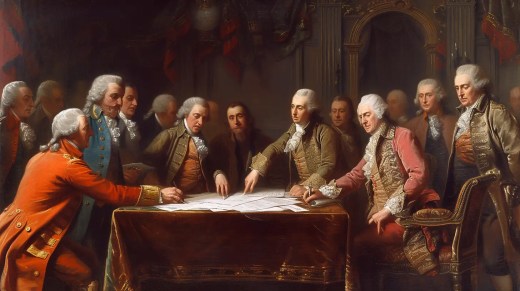
Image: Treaty of Paris, More Than Meets the Eye, 1783 (Benjamin West, 1738-1820) courtesy of The Winterthur Museum, Garden and Library, Winterthur, DE. The treaty officially ended the American Revolutionary War (1775-1783) and marked England’s acknowledgement of the U.S. as an independent sovereign entity with defined borders.
 Freelancetheconsultantsdiary's Blog