Build A Budget, Build A Business

Fact of life—if you run a company, even as a Freelance solopreneur, you’re going to have to suck it up and put together a business budget every year. If you fall into avoidance behavior and tell yourself that you’ll do it “next month,” it is almost certain that 1) you won’t do the budget anytime soon; and 2) your business could eventually slide into financial chaos, taking with it the money and time you invested. Failure to mind business finances is business sabotage.

For many people the mere thought of budgeting brings a sour feeling to their stomach, but the fact remains—budgeting supports business success and your organization is unlikely to thrive, and may not survive, unless you do it. You may find budgeting to be an onerous task, but there is a silver lining—a budget is empowering!

Budgeting is integral to effective financial management and allows you to make informed decisions and take calculated risks that can move your company into a stronger position. Budgeting brings to light the reality of your company’s fiscal health and performance. Problem areas will be recognized and you’ll be able to propose and implement remedies designed to rectify the lapse. You will be positioned to develop reasonable, reachable, goals.

The budget is your buddy

While budgeting often brings to mind thoughts of scarcity and sacrifice, saying no when you want to say yes, you’ll feel much better when you reframe your thinking about budgets; budgeting need not always result in cutbacks. Instead of focusing on limitations, why not flip the script and think about growth? It is reasonable to view budgeting as a pathway to business success, a tactic that enables your entrepreneurial ambitions. Rather than obsessing over cutting expenses, utilize your budget as an element of your strategy to manage expenses and drive growth and profitability.

In fact, only when finances are in order can you operate from a position of strength and make good decisions. When the cash-flow and business reserve fund are healthy, you can demonstrate business savvy—you might hire one or more employees, whose productivity will positively impact sales revenue; you might move the company into a larger space; you might upgrade office or manufacturing equipment that introduce operational efficiencies that benefit anything from your marketing campaigns to the customer service and customer experience your company offers, enhancements that reward your business with loyalty, good word of mouth and returning customers.

Build the budget

Your primary goal will be to ensure that there will be enough money to operate the business, from covering selling and marketing expenses that generate revenue to meeting fixed expenses such as payroll, rent, utilities and insurance. Among the projected expenses you’ll calculate will be those specific to acquiring or creating your product or service, that is, the cost of materials or the time involved in crafting what you sell. You’ll budget for the year, so it will be necessary to make reasonable projections of future expenses and sales revenue. You also want to set aside funds you can invest in business growth, whether to carry out specific initiatives or maybe take advantage of an unexpected opportunity as well.

You will be wise to structure your budget to predict somewhat modest sales revenue and anticipate expenses that are somewhat higher than the previous year. Planning for a less than rosy scenario is the safest strategy, giving budgetary wiggle room by encouraging you to trim expenses where possible to help you build up the business growth fund.

Once you make revenue and expense projections, you can run different potential scenarios and refine your estimates of likely cash-flow and sales revenue income, to enhance your trust in your estimate of how much will be available to finance marketing and business growth.

Create a spreadsheet

A spreadsheet is one of the most powerful tools available to create a budget, not only to make it easy to view and analyze your data, but also to make it easy to change your projected data and evaluate different business scenarios. You can do the same when reviewing projected costs and sales revenue associated with carrying out a proposed business goal.

Get comfortable with the Microsoft Excel spreadsheet and learn to call up different combinations of projected revenues and fixed and variable expenses that will enable prudent decisions in every aspect of your business, from pricing to hiring additional employees. Take a Microsoft Excel for Beginners tutorial .

Monthly budget reviews

Your budget will be useful only if you review it regularly, to assess your company’s performance. Get ready for the big reveal when you discover whether (or not) actual spending aligns with the amount budgeted. If certain expenses are consistently higher than anticipated, you may need to revise the budget to reflect reality, or find ways to reduce those costs. Likewise, your budget will also reveal if sales revenue projections are either too optimistic or too conservative.

Responding to changes in your business environment ensures that your budget functions as a useful tool for financial planning. Finally, the budgeting process will, over time, become a repository of company performance data and provide an important historical overview that could be useful when anticipating seasonal fluctuations or other patterns that support your projections of future business performance.

Thanks for reading,

Kim

Image: © Mee Ko Dong for Shutterstock

Social Media Marketing: Hacks that Help

There are now more than 5 billion social media users worldwide who participate on several platforms, making the practice a marketing juggernaut that provides countless opportunities for B2B and B2C businesses in every industry to connect with customers and prospects. Once limited to developing brand awareness primarily in B2C industries, the influence of social media on businesses global and local now impacts customer experience, sales strategy, product development, content marketing strategy, competitive intelligence and more.

Because time means money where business is concerned it should come as no surprise that the timing of social media posting is sufficiently consequential to have piqued the interest of marketing researchers. Think about it—when planning to contact a customer or prospect, do you not consider what might be the best time to reach out? You probably avoid making important phone calls, or perhaps even sending an email, on Monday mornings or Friday afternoons. It’s a guessing game, but you aim to reach out when you expect your customer or prospect to be in a receptive mood, so your message will receive the consideration you feel it deserves. A similar approach to timing applies to social media posting. I first reported the best times to post on five platforms in June 2020. https://freelancetheconsultantsdiary.wordpress.com/wp-admin/post.php?post=20744&action=edit

When posting content on social media, the most important goal of marketers is to maximize the number of viewers who see their content. Platform algorithms prioritize engagement and posts that quickly attract attention are typically shown to more users, giving high engagement content an algorithmic boost that helps it to be seen by even more viewers.

A study of the Best Times to Post on Social Media in 2024 conducted by the social media marketing entity Sprout Social examined six platforms—Facebook, Instagram, LinkedIn, Pinterest, TikTok and X (Twitter)—to measure the influence of time on the potential reach of posts. Posting content on days and times shown to be popular with viewers may help increase the audience for that content and amplify the clout of your social media marketing campaigns.

But a word of caution—before scheduling posts to reflect your platform’s peak engagement times as identified below, compare Sprout Social results with your company’s social media data analyses. You may discover that your target audience is not uniformly aligned with the data presented here.

Best Times to Post on Facebook

  • Mondays from 9 a.m. to 12 noon
  • Tuesdays from 9 a.m. to 2 p.m., also at 5 p.m.
  • Wednesdays from 9 a.m. to 3 p.m., also at 5 p.m.
  • Thursdays from 8 a.m. to 2 p.m., also at 5 p.m.
  • Fridays from 9 a.m. to 11 a.m.
  • Best days to post on Facebook: Mondays through Thursdays
  • Worst days to post on Facebook: Sundays

With 3.05 billion active members per month, Facebook is the most widely used social media platform in the world and utilized by 89% of marketers worldwide. Facebook ties with Instagram for the distinction of social media platform that generates the highest marketing ROI, at 29%. The platform is an excellent showcase for online content of every type, from images and videos to live streams and audio content.

Best Times to Post on Instagram

  • Mondays from 11 a.m. to 2 p.m.
  • Tuesdays from 10 a.m. to 4 p.m.
  • Wednesdays from 9 a.m. to 4 p.m.
  • Thursdays from 9 a.m. to 1 p.m., also at 2 p.m.
  • Fridays at 11 a.m.
  • Best days to post on Instagram: Tuesdays, Wednesdays and Thursdays
  • Worst days to post on Instagram: Sundays

Instagram is a free photo and video-sharing app and social media platform that now has 2 billion monthly active users. Owned by Facebook (Meta) since 2012, Instagram is the place to share images, videos, reels and live streams. Instagram ties with Facebook for the distinction of social media platform that generates the highest marketing ROI at 29%.

The key to Instagram is that it is based on visual content. The photos and videos you upload will appear in your followers’ feeds, where they can like, comment, or share your visual post. The more likes or comments you get, the more “relevant” your post becomes and the higher it is placed in followers’ feeds.

Best Times to Post on LinkedIn

  • Tuesdays and Wednesdays from 10 a.m. to noon
  • Thursdays at 10 a.m.
  • Fridays 9 a.m. to 12 noon
  • Best days to post on LinkedIn: Tuesdays through Thursdays
  • Worst days to post on LinkedIn: Weekends

With over 1 billion members in 200 countries and regions, LinkedIn is the Mount Olympus of B2B communication for both the 1099 and W2 sets, who can share their expertise as they generate warm leads, announce new products and services, find co-marketing partners, investigate new employment opportunities, or attract talent to hire. Furthermore, users have found an ideal environment for professional storytelling, facilitated by LinkedIn Videos, and professional development at LinkedIn Learning.

Best Times to Post on Pinterest

  • Mondays: 2 p.m to 4:00 p.m and 8:00 p.m. to 9:00 p.m.
  • Tuesdays: 2 p.m. to 4 p.m. and 8:00 p.m. to 9:00 p.m.
  • Thursdays at 3 a.m.
  • Fridays: 3:00 p.m.
  • Best days to post on Pinterest: Weekdays
  • Worst days to post on Pinterest: Weekends

As of April 2024,  Pinterest has 89 million users in the United States and generated a a 7.5 % growth in users between 2022 and 2023, putting its growth rate ahead of Facebook, YouTube and Instagram. Pinterest is known as the platform where users research and discover DIY projects and inspiration products often focused around lifestyle ideas, home décor and recipes.

Women aged 25 to 34 years comprise the largest share of Pinterest’s global audience and the platform presents companies with creative opportunities to expand their community and build brand awareness. Brands that use the platform appreciate Pinterest’s benefits, in particular spotting emerging trends, building brand recognition and authority and driving website traffic. Pinners, as platform users are called, search for inspiration on this virtual mood board and curate their space.

Best Times to Post on TikTok

  • Tuesdays from 4 p.m. to 6 p.m.
  • Wednesdays from 9 a.m. to 11 a.m., noon, and 2 to 6 p.m.
  • Thursdays from 9 a.m. to 11 a.m. and 2 to 6 p.m.
  • Fridays from 4 p.m. to 6 p.m.
  • Best days to post on TikTok: Wednesdays and Thursdays
  • Worst days to post on TikTok: Sundays

With TikTok comes a whole new playbook for B2B social media marketing. Today, you can’t develop a social media strategy without considering TikTok. B2C brands led the way but as the platform has matured, it’s been recognized as a desirable resource for B2B marketers as well. Keep the following suggestions in mind when formulating your TikTok B2B marketing campaigns:

  1. Be authentic: Authenticity matters on TikTok. B2B brands will do well to showcase their unique personality, culture, guiding values and expertise. Share behind-the-scenes peeks, stories of the company founder(s) and employees and other relatable content.
  2. Find your niche: Identify your target audience and create content that resonates with them. Whether it’s tech enthusiasts, entrepreneurs, or industry professionals, tailor your content to their interests.
  3. Interact with the community: Engage with other TikTok users by participating in challenges, responding to comments and collaborating with influencers. Building a community around your brand is essential.
  4. Educational content: B2B companies can benefit from posting educational content. Share product demos, explain complex concepts, or provide industry insights. Remember that authenticity matters more than polished video production values.

Best Times to Post on X (Twitter)

  • Mondays from 10 a.m. to 12 noon
  • Tuesdays from 9 a.m. to 3 p.m.
  • Wednesdays from 9 a.m. to 3 p.m.
  • Thursdays from 9 a.m. to 3 p.m.
  • Fridays 10 a.m. to 12 noon
  • Best days to post on X: Tuesdays through Thursdays
  • Worst days to post on X: Sundays

X (Twitter) is the platform to monitor breaking news and trending topics and voice your opinions in up-to-the-minute conversations that align with your brand values and show customers and prospects what matters to you. X doesn’t offer the array of posting options that build engagement as do Instagram or Facebook. Rather, X focuses on conversation threads, replies, mentions, microblogging and enticing readers with eye-catching results from a survey you’ve conducted.

Twitter has a new name, but it’s still the place to express uncensored opinions. To increase audience engagement consider Twitter polls, which allow you to pose a question in a tweet, invite respondents to choose one of four possible answers to the question and will send the poll results to you, to announce and invite discussion. Polls are a great way to stimulate audience engagement because they’re quick and fun.

Polls are also a mechanism to invite uncensored feedback from customers about their preferences and therefore augmenting the validity of your market research—in the development phase of new products and services or customer service protocols for example. Polls are not a substitute for traditional market research, but they’ll provide quick and useful insights.

Thanks for reading,

Kim

Image: © Gala-Salvador Dalí Foundation. The Persistence of Memory “Melting Clocks” (1931) Salvador Dali, courtesy of The Museum of Modern Art, New York, NY. Dali portrait by Lies Wiegman (1961), retroactively colorized, courtesy of The Dali Museum, St. Petersburg, FL © Gala-Salvador Dalí Foundation

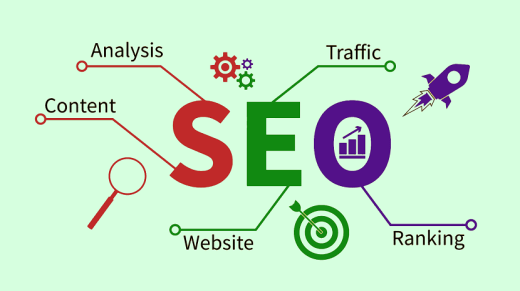
SEO 2024 and the Core Update

On April 19, 2024, Google went live with its March 2024 core update, a process the company calls “more complex” than what was done previously and brought changes to numerous core systems. Google also rolled out its spam update, completed on March 20.  An approximately 45% reduction in low quality and spam content was the primary outcome of the updates, as confirmed by a Google spokesperson, “The updates led to larger quality improvements than we originally thought – you’ll now see 45% less low quality, unoriginal content in search results, versus the 40% improvement we expected across this work.”

It is popular in America to say that change is good but unfortunately, the core update has left many small business owners grappling with declining search rankings and softening website traffic and uncertain of how to respond. Google says the remedy is to create higher-quality content, with a company spokesperson explaining, “As the web and spam tactics continue to evolve, we’ll continue to work to reduce low quality, unoriginal content in Search. As always, we appreciate and encourage feedback from users and site owners alike.”

Well, what did you think they’d say? Look at it this way—if you haven’t examined your SEO strategy lately, you now have motivation to take a comprehensive look at how you’ve managed this essential business function so far and decide how you can effectively respond to the search engine update. SEO is about maximizing your company’s online visibility, the gateway to appearing more credible and receiving more website traffic. Below are suggestions of SEO tactics that are mostly DIY and free—and most of all, deliver an effective response to updates made by the search engine that according to StatCounter GlobalStats as of February 2024 controls 91.62 % of the global search queries market.

The purpose of SEO

It’s not an option, but a given and the purpose is straightforward. Effective Search Engine Optimization requires an holistic approach that combines multiple strategies that work in tandem to improve your website’s visibility in search engines, chiefly Bing, Google and Yahoo.

  • Improve online visibility: to power-up your website ranking on search engines and enable more prospective customers to learn about your brand.
  • Drive organic traffic: to attract prospective customers to your website, those genuinely interested in your content, products, or services.
  • Establish authority: through your website and overall online presence—social media, published articles, your published quotes in media outlets—present yourself as a trustworthy and authoritative source of valuable information.

SEO impact is typically organized into segments—on-page SEO, off-page SEO and technical SEO—that describe how the process influences your website to amplify its visibility to search engines. As you contemplate your SEO strategy, which is a component of your inbound marketing success, be certain to develop and implement strategies and action plans designed to address each SEO category.

ON-PAGE STRATEGY

Google and other search engines look for sites that are trustworthy places for visitors and also provide content that’s useful to those in need of information. On-page SEO is the process of tailoring your website to maximize its visibility to search engines by demonstrating the availability of worthwhile content that can be found in a trusted source. Effective on-page SEO positions your website to attract new visitors who are potentially prospective customers. By taking specific actions, such as including certain keywords in your content and by adding internal links and optimizing URLs within your content, you might boost the assigned ranking of your website in the list of search results.

1. Post relevant long-form content

Posting relevant long-form content is a pathway to increased search visibility and Google’s core update has just made the presence of good content still more impactful. The process starts by writing about topics for which there is an audience—discover the topics that people want to learn more about. To enhance the authority of your posts, keep the following in mind:

  • E-E-A-T (Expertise, Experience, Authoritativeness, Trustworthiness): The 2024 core update reinforces Google’s commitment to the E-E-A-T principles introduced in 2018. Websites that feature expertise and experience in the chosen field, authoritative content and trustworthiness will receive higher search ranking
  • Use of credible data, statistics and case studies to support your points and provide evidence for your claims
  • Include your byline in all articles that you’ve authored and also identify your guest posters. Industry experts should be credited with a brief bio, to highlight their credentials, expertise and authority
  • Use headings and subheadings to present content in an organized fashion, to improve readability
  • Include engaging and relevant visual content, including videos, photos, charts and/or graphs
  • Address all aspects of the topic thoroughly to create a comprehensive resource on the subject
  • Regularly update your articles to reflect new research, perspectives and information

2. Keyword research

Keywords are the words or phrases typed or spoken into search engines by visitors looking for information. By using keywords in your content, search engines will include that content or website in a list of sources that include the cited key words, therefore making it possible that you’ll receive a high page rank in results for those search terms. It makes sense to identify as many keywords as possible, including long-tail phrases, so that you’ll maximize your options when creating content that will capture the attention of search engines.

Be aware that simply packing posts with keywords in every sentence is not effective. Search engines seek out content that’s well-written. Place keywords naturally in target areas, including your headers, intro and metadata.

3. Keywords locations

While keyword density is not a viable strategy for improving search ranking, placing keywords strategically throughout your content is important for SEO. The trick is to use keywords organically and in the right places to show search engines that your content is relevant. Drop keywords here:

  • Introduction: to set the context for readers and search engines
  • URL: to help search engines understand the topic
  • Title: to improve your click-through rates and rankings
  • Body: copy to support topical relevance
  • Headers: to structure your content and signal importance to search engines
  • Metadata: description to improve click-through rates

4. Interlink your pages and blogs

Internal linking means creating hyperlinks in your content, so that website and blog readers can click as they read and check out your other posts or website pages. Internal linking supports on-page SEO because the availability of internal links invites readers to other pages within your website, or to other blog posts, and keeps visitors around longer, demonstrating to search engines that your website is valuable and useful. Also, the longer visitors are on your website, the more time search engines have to crawl and index website pages, helping Google et al. to obtain more information about your site and potentially rank it higher in search engine results. If you’ve got the techie gene you may want to take this on as a DIY project. Click to understand how internal linking is done (most may want to contact a professional). https://www.linkedin.com/pulse/best-practices-internal-linking-structure-2024-m-a-mamun-bhk0c

OFF-PAGE SEO STRATEGY

Off-page SEO refers to actions taken to impact your search engine ranking that are outside of your website. In other words, off-page SEO is how you manage external factors, for example, guest posting, social media activity and the presence of online reviews. While off-page activities do not directly involve your website, their effects can potentially increase website traffic and support your inbound marketing in the process.

  1. Social Media Presence

Active engagement: Consistently post relevant content and engage with your audience platforms such as Facebook, X (Twitter), Instagram and LinkedIn. An engaged social media audience that regularly interacts with your brand demonstrates brand authority and trust and therefore gives a vote of confidence to search engines.

2. Content marketing

  • Content: Create and share high-quality, relevant and valuable content that includes backlinks to credible websites
  • Infographics and visuals: Appealing visual content increases viewer engagement and content sharing
  • Document Sharing: Share presentations, webinars, or documents such as white papers, brochures that showcase your products and/or services, or training materials on platforms like SlideShare and Scribd to expand your audience

3. Press releases

When you have a newsworthy announcement to make, e.g., to broadcast a talk you’ll give at a business association or chamber of commerce, or your participation in a popular local charity or community event, write a press release and post it on distribution sites such as EIN Presswire or eReleases . Not only will you take an important step to get your story out to your audience and your local community, online press release distribution is a great way to generate organic backlinks, since many online publications will automatically pick up relevant press releases. Within each press release, be sure to include one to two links to your website.

4. HARO requests

Help a Reporter Out (HARO) is a website that connects journalists and bloggers with expert sources—you!—for articles they’re writing. Journalists submit a query for expert quotes and will choose the top responses to include in their content. Oftentimes, the journalist will provide a backlink to your website as attribution for the quote. To increase the chance of being quoted, respond quickly and provide a complete and soundbite punchy answer.

5. Influencer marketing

Influencer marketing is an effective way to increase brand mentions and social media interactions, both of which are positive off-page ranking signals for search engines. If you can get onto the radar screen of a social media influencer who has a relevant audience for your brand, you can partner with that person to create an influencer marketing campaign that promotes your brand and its value proposition along with providing links to your website or social media profiles where applicable.

6. Backlinks

Building backlinks is important for SEO because it signals to search engines that your content is trustworthy and valuable. The more high-quality backlinks you have, the better your chances of ranking higher in search results.

While backlinks remain crucial for SEO, recent algorithm updates have shifted towards needing fewer but higher-quality backlinks. Earned links, in which editorial publishers or consumers mention your brand organically, are most highly favored. Built links, however, require some effort on your end, such as reaching out to content publishers for link attribution or mention. You can acquire backlinks through these common link-building strategies:

  • Guest posting
  • Link insertions
  • Creating link-worthy content
  • Building relationships with bloggers and website owners
  • Using social media

7. Online Reviews

Online reviews provide a strong signal that’s taken into account when ranking your content online. They can build a lot of credibility and trust since they’re submitted by third parties who’ve interacted with your brand. Focusing on generating positive five-star reviews from legitimate customers can help your off-page SEO tremendously. You can generate these reviews on third-party review sites such as G2 as well as your local Yelp page.

TECHNICAL SEO

Technical SEO refers to how you can best optimize the technical elements of your website—primarily speed, security, user-friendliness and site structure. Technical SEO is about improving your website to make it easier for search engines to find, understand and store your content. Technical SEO focuses on user experience factors, such as making your website faster and fully visible and navigable on mobile devices. Do it right and technical SEO can enhance visibility in search results.

  1. User experience (UX)

The UX provided by your website is a concern to search engines. If your website offers an intuitive browsing experience, quick loading times and is mobile-friendly, you will be positioned to receive higher page rankings. Google now uses mobile-first indexing to determine search rankings. Ensure that every page of your site is mobile optimized, ideally using responsive design, and that all content is the same between the desktop and mobile versions.

2. Site security
Security plays a huge role in how people experience your website. When people feel that your website is secure, they interact more freely (and longer) with it. Google penalizes sites that do not secure their traffic with an SSL certificate and modern browsers mark them with an insecure site warning. SSL certificates are obtained through site your hosting provider. Click here for more information: https://www.linkedin.com/pulse/5-top-ssl-certificate-providers-2024-digital-expert-online-aezde

3. Index site

Indexing means adding a website and its pages to search engine databases so that the site can appear in search results. Indexing is pivotal in how Google and all search engines work. The presence of a “noindex” tag on your website or blog pages will cause search engines to ignore your content and prevent your site from being recognized and ranked—a situation that you want to avoid.

Noindex tags can be removed and this is another DIY project that I relegate to those born with the techie gene; I recommend that everyone else would be wise to consult a professional to do the work. FYI, here are remedies: https://www.linkedin.com/pulse/how-fix-google-indexing-issues-2024-md-belal-hossain-0cszc

Thanks for reading,

Kim

Image: © diki_pt at Freepik

Content That Captivates

It is said that content is king—agree? I’ll bet you do. But are you aware that not all content is equally able to move viewers to respond to its verbal or visual messages? Most content does its job, which is to increase awareness of the brand within the target audience. But certain marketing content has a heightened impact on viewers; that content is perceived as uniquely relatable, credible, or even inspiring— it captivates. Captivating content has been known to persuade some who experience it to step into the buyer’s journey of the product or service it promotes. Content that captivates can motivate your prospects to actively explore the possibility of doing business with you.

Content strategy

Are you motivated to actively explore how to create content that captivates your customers and prospects? Then devise a content strategy, a plan that functions as a road map to guide the creation, delivery and management of marketing content that promotes your company’s sales and branding goals. A content strategy is the most important element of your content marketing campaigns. Without a strategy, you’re vulnerable to losing your way and becoming overwhelmed by the dizzying array of content possibilities that are available. While almost any form of content may be persuasive and also captivating, but not every format will effectively advance your sales and branding goals.

A content strategy is essential to the process of defining basic who, what, when, where and why questions that refine your understanding of marketing activities and distribution channels that your customers and prospects will gravitate toward. A well thought-out strategy will provide focus and direction to your content marketing activities and how and where you deliver your message. The questions below will help you identify content that will resonate with your target audience.

  • Who will view your content?
  • What solutions do content readers/viewers need, what goals must they achieve?
  • What types of content and which channels can be expected to attract readers/viewers?
  • What brand voice (tone and personality) can be expected to facilitate communication with your audience?
  • What goals do you want to achieve with your content?

Email marketing

Email marketing continues its reign as one of the most effective marketing tools available to transmit marketing messages and build trust in your products, services and brand. Moreover, email marketing campaigns are excellent generators of qualified leads and enable ongoing communication with customers, existing and lapsed, allowing you to nurture relationships and encourage repeat business.

Marketing emails are more likely to be read than other types of content and their average return on investment triumphs over other types of content. According to the Cambridge, MA inbound marketing giant HubSpot, email marketing communications are more likely to be read than all other types of content and have an average open rate of 46-50% and click-through rate of 2.6-3% — metrics that surpass the appeal of social media and all other forms of digital content.

Furthermore, because email marketing lists are opt-in and consist of those who want to hear from you, the email list itself is a valuable marketing tool that you can use to distribute additional communications, such as your blog or newsletter. For that reason, email list-building is an ongoing activity practiced by savvy marketers. Make a plan to grow your email list with these tactics:

  • Create a premium library: Promote your expertise and build your email list with a special offer that’s available only to those who sign up to receive a link—to a webinar or podcast you’ve participated in, a case study or e-book you’ve written, for example—sent in exchange for a name and email address.
  • Online subscriber forms: Your blog, website and social media accounts have a mechanism for visitors to add contact info and receive your published content or follow you.
  • Invite subscribers in-person: Whether you are on a sales call or, as discussed in the previous post, you attend a trade show or other in-person event, as you meet and greet you may find colleagues who would appreciate being added to your email list—subject to an opt-in, because you want their permission. If you teach or speak somewhere, make an attendee sign-up sheet available so that you can collect more contact info to grow your list.
  • Call-to-action: Invite those on your inbound marketing buyer’s journey to receive a free 30-minute consultation with you, to discuss their needs and goals and your company’s solutions. Invite those who would like to attend a workshop you’re scheduled to teach or panel you’ll moderate to RSVP by way of your CTA. When you decide to hold your own MeetUp, also discussed in the previous post, ask those who plan to attend to sign-up. All CTA responses can deliver contact info.

Webinars and podcasts

More than simply marketing content, these formats can be classified as professional development. With an engaging topic and a skilled presenter or host, these formats can generate a substantial audience. When the webinar or podcast topic relates to solutions your company offers, you can create a seamless transition into how viewers/listeners can solve their most pressing problems.

Webinars and podcasts can be even more effective when cross-promoted with other content, such as an e-book. Furthermore, webinar registrations are an excellent method of collecting email addresses and other information from qualified leads who are genuinely interested in not only the topic, but potentially your category of products or services. Webinars continue to be a popular digital content option and when promoted to the right audience, they can become far more engaging and attractive to qualified leads than a blog post covering the same topic would be.

Social media

By adding relevant, authoritative content, including videos, surveys, blogs and user-generated content such as customer reviews and testimonials to this very personalized content resource, you can effectively leverage social media to attract qualified leads.

According to a March 2024 report released by Forbes Magazine Advisor, 78% of prospects and customers research social media platforms first when seeking information about brands, a trend that demonstrates social media’s pivotal role as a leading source of brand-related content. Social media’s interactive nature allows prospective customers to get behind the scenes and learn backstories that provide an informative and intimate experience that can foster a deep connection with a brand.

Social media promotes community-building, a bonding among customer peer groups whose members participate in discussions, post product reviews and happily share their brand experiences. Social media platforms are where brands can interact with customers in real time, to foster a sense of community around their products or services with a goal of building and nurturing relationships.

Marketers join in and participate in groups and conversations, responding to comments and messages they receive and facilitating meaningful communication with their target audience. By enhancing the influence of this highly personalized format by posting content that engages and captivates, you can leverage your brand’s social media presence to deliver qualified leads.

Video

Video has emerged as a leader among content marketing formats. The power of video marketing reflects a growing customer preference for visual and auditory storytelling that gives the format great influence in capturing audience engagement. When marketing video is used in tandem with other digital marketing formats—marketing emails and social media posts, for example—their sales conversion rate is substantively enhanced. Product demos and explainer videos, case studios, testimonials and videos of your previous podcasts and webinars provide opportunities to enhance the inbound marketing power of your company website.

Video marketing has proven to be highly effective and 95% of marketers observed an increase in brand awareness when using the format. As a result, 90% of marketers credit their successful lead generation campaigns to video content and 87% link the format to sales revenue growth. The viewer engagement rate for marketing videos posted to YouTube in 2024 is 5.91%.

In particular, short-form video content is especially adept at gaining audience attention—attention spans are brief and viewers don’t always have the time or patience needed to watch longer videos. It’s been shown that marketers have 2.7 seconds to capture audience attention with your video. While engagement is valued and viewers want to learn about your company, they want to learn fast. BTW, 75% of video views occur on mobile devices, so optimizing for mobile viewing is crucial.

Within its abbreviated time frame, video content can deliver enticing visual options that captivate your audience and keep them coming back for more. You can record yourself in an explainer video or product demo discussing how your solution solves problems and supports the achievement of customer objectives. Or you may want to record customer testimonials or even record a case study, podcast or webinar—content you can upload to your website and social media accounts or invite browsers to request in exchange for contact info that builds your email list. You can also film a live event.

Live videos are in-the-moment exciting and authentic and especially well-suited for generating engagement in the viewing audience, creating relationships and building the brand. You can use the live video tool available on your social media apps to announce a new product or service or show viewers new items from your product line. Because there is little to no editing done, live videos often have a raw and edgy look; however, you’ll need a space that you can keep quiet and private as you record your live video. Furthermore, if live streaming is your intention, you’ll also need the right technology.

Now here’s a surprise—the arrival of silent videos. When you think about it, you’ll realize that many people watch videos in public spaces: waiting in line at the bank or grocery store, taking public transportation, or even while in a company meeting. Earbuds may not be handy or politically correct; it’s been reported that 92% of users watch videos with the sound off. Silent videos solve the problem so you can communicate your message without audio and make the visual component of the video the main focus. Close caption text (subtitles) allows you to make the most of the visuals and incorporate on-screen captions for necessary text info.

If your budget allows, speak with a marketing company to discuss your goals and the type of video that can be expected to deliver your desired ROI. Remember that your video can be posted to multiple platforms, from your website to email marketing communications, your newsletter, blog and social media accounts. If budget is an issue, or if you’re confident of your creativity, by all means grab your smartphone or tablet and experiment with making a video in-house. Taking an online tutorial is sure to be helpful and there are dozens to choose from. Here’s one you might like.

Thanks for reading,

Kim

Image: © The Richard Avedon Foundation. Model Stephanie Seymour wears Chanel in a 1990 photo by Richard Avedon (1923-2004)