There are several ingredients in a recipe that results in the creation of a successful business and a good reputation is surely one of them. Reputation, more commonly known as the brand these days, is also comprised of several ingredients and a savvy public relations strategy is one way you can influence the perception of your entity’s brand reputation.
A well-conceived and executed public relations campaign has long been recognized as one of the most powerful strategies available for building a successful brand reputation. The goal of PR is to shape and manage a brand’s reputation and credibility by employing selected media outlets to reach target audiences and cultivate a favorable impression of the brand. Because the perception of a company’s brand influences the degree of success that it achieves, a favorable brand reputation will help position a company to grow and prosper.
Launch a PR campaign for yourself and/or your company by contacting selected media outlets and sending information about an activity in which you (and by extension the company) will participate, or another story line that may interest the outlet’s readers, viewers, or listeners. In a written document known as a press, or news, release, include the basic facts of your story, a brief bio of yourself and your company and a professional-looking photo of yourself. In a day or two, follow-up with the recipient of the press release to gauge the interest level in the story and the possibility of its inclusion in a future issue or broadcast.
An effective PR strategy
By using a strategy of targeted messaging campaigns designed for print media, digital outlets including webinars, videos, or podcasts, speaking engagements and other personal appearances, plus the interaction encouraged by social media engagement, companies and individuals have numerous options for enhancing the perception of their brand within the target audience. Effective and consistently orchestrated PR campaigns create conditions for brand awareness and loyalty to take root over time.
To structure an effective PR campaign specific objectives, messages that resonate and media outlets that are trusted by the target audience and appropriate for your campaign messages and objectives, are critical factors. Knowing target audience motivations for using your company’s products or services provides the campaign talking points. You can tailor PR messages around themes that align the brand narrative with important concerns of the audience. Make sure that your PR messages are clear, concise and consistent across all media outlets used.
A persuasive brand narrative
An important feature in a successful PR campaign is developing a brand narrative that engages your target audience while also differentiating your company (and you) from competitors. To be persuasive, the brand narrative must be perceived as authentic. Drafting a persuasive brand narrative requires that you first identify and define the core values, vision and mission of your organization and second, that you understand what target audience members expect to achieve or solve when they use your company’s products or services. Showcasing the unique qualities and value proposition that distinguish the company, individual, or product from competitors is also integral to developing a persuasive brand narrative.
Again, the brand narrative must feel authentic to the target audience. Authenticity in PR messages enables the development of lasting relationships by building trust through communications that reflect the individual’s or organization’s values. A consistently communicated brand narrative can eventually come to embody the brand reputation. In that way, effective PR becomes the secret sauce that enhances your company’s reputation and renown in a noise-filled, hyper-competitive business landscape.
What is newsworthy?
Regardless of the size of your business, obtaining (positive) media attention is possible and highly recommended. Editors, publishers and hosts choose the stories or guests they’ll spotlight based on who and what can be expected to generate an audience. The best way to determine newsworthiness is to consider the media outlet’s audience and what might be of interest to them. Will your story or information grab their attention? Below are typical factors that impact editorial decisions.
Impact. A story or person that appeals to many readers, viewers, or listeners and is therefore expected to attract a sizeable audience or many clicks is considered impactful. Estimate the impact that your story will have on the media outlet’s audience.
Human interest. Connecting with the audience emotionally is an effective way to bring attention to a story. A story or guest that is relatable has the power to attract a good audience.
Relevance. How important will your story be to the audience? In your press release and in the first sentence of your talk or article, can you share one or two surprising, if not shocking, facts that will grab audience attention?
Prominence. If prominent people or organizations do business with you and your company, media gatekeepers may assume that their audience wants to learn how you captured the attention of VIPs and that could lead them to include your story.
Timeliness. Your information or story will be more readily accepted if the action will either take place in the near future, or happened recently.
Scale PR for small business
The best PR can’t be bought (without a generous budget), but affordable and effective PR strategies and tactics can be designed to fit within most budgets. Social media has found a place in PR because the medium allows brands to interact directly with the target audience, encouraging an immediacy and relatability that audiences find authentic and conducive to building sustainable brand loyalty.
Be advised that incorporating social media into your PR campaigns is most effective when you follow regular posting schedules designed to keep fans and followers engaged and informed with meaningful content. Your postings may include updates on a talk you’ll give, a webinar you’ll host or participate in, best practices updates for your products or services, your most recent blog or newsletter post, or your thoughts or experiences about trends in your industry.
Thanks for reading,
Kim
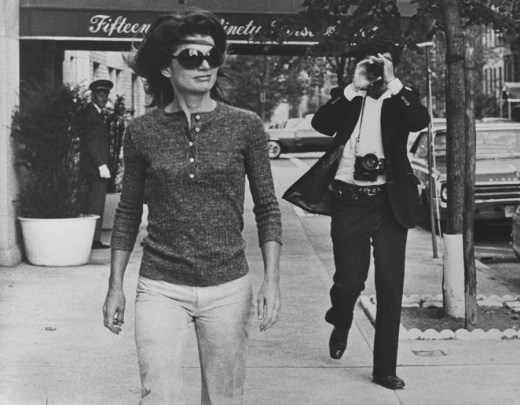
Image: © Ron Galella. Jacqueline Kennedy Onassis and celebrity photographer Ron Galella on Madison Avenue in New York City (1971).
 Freelancetheconsultantsdiary's Blog