Summer Reading List 2019

It’s been a few years since I’ve compiled a suggested list of business books to read over the summer (and beyond). Professional development need not always require enrolling in a semester-long course or workshop. Reading is a gateway to so many positive experiences, from learning to pleasure. If you don’t want to buy books, visit your local library and check one out, at no charge. A library card is a good investment.

  1. How to Fail at Almost Everything and Still Win Big (Scott Adams)

For Scott Adams, creator of the world-famous Dilbert cartoons, life’s path wound through many jobs, failed startups, useless patents he applied for and countless other indignities. In his memoir, Adams shares lessons learned about keeping himself motivated, healthy and happy while racking up all the failures that ultimately led to his success. Dilbert, a clever gallows humor cartoon that allowed him to share his failures and frustrations with the world, has been in circulation for nearly 30 years. https://www.goodreads.com/book/show/17859574-how-to-fail-at-almost-everything-and-still-win-big?ac=1&from_search=true

  1. Million Dollar Consulting: The Professional’s Guide to Building a Practice (Alan Weiss)

Having now written 49 books on the subject, it is reasonable to regard Alan Weiss, Ph.D. as a consulting guru. If you are consulting, or thinking about packaging yourself as such and searching for clients, Weiss is recommended reading. His insights and recommendations are based on lived experiences of starting and operating an international management and organizational development firm.

As the book’s title implies, Weiss claims that he has consistently produced over $1 million/year in revenues. Although his background is in management consulting, his practical advice applies to all types of consulting. The book contains an abundance of ideas. The focus is on helping existing consultants take their practice to the next level, but he includes advice for beginners as well. https://www.goodreads.com/book/show/27289607-million-dollar-consulting

 3. Dare to Lead (Brene Brown)

Brown is an Oprah-endorsed author who gets invited to participate on the global mega-speaker circuit, TED Talks included. In the book, she dispels common myths about modern-day workplace culture and shows us that true leadership requires vulnerability, values, trust and resilience.

Brown asks the reader to think back to the most important leadership role one has had. Were you the captain of your high school football team or cheer leading squad? Or did you take on a leadership role only as an adult, such as overseeing a business unit with dozens, or maybe hundreds of employees? Whatever it may have been, there’s a high probability that you fell into one of the many leadership traps laid out in modern culture.

You may have thought you had to look strong and could never admit to a failure. You may have avoided telling the truth because you didn’t want to hurt someone’s feelings. These things often happen, especially in the office, because that’s how leadership is portrayed in our society. However, we usually figure out later, when it’s too late to make amends, that the exact opposite behavior would have yielded the best result. https://www.goodreads.com/book/show/40109367-dare-to-lead

  1. The Breakthrough Speaker: How to Build a Public Speaking Career(Smiley Poswolski)

“If you want to get paid to speak, you have to speak about something that matters and something that other people are passionate about. You need to speak about something that other people (specifically people that are in a position to book you to speak) are obsessed with. This is the single most important lesson to keep in mind when building a paid speaking business.”  —Smiley Poswolski https://www.goodreads.com/book/show/42039637-the-breakthrough-speaker?from_search=true

  1. Start with Why: How Great Leaders Inspire Everyone to Take Action (Simon Sinek)

“The limbic brain is responsible for all our feelings, such as trust and loyalty. It is responsible for all human behavior and all of our decision-making. It has no capacity for language.”  —Simon Sinek

When we communicate starting with the why, we speak directly to the section of the brain that controls decision-making and we use our limbic brain. In contrast the language center of the brain, the neocortex, allows one to rationalize those decisions. The limbic brain has no capacity for language and that is why it is so often difficult to explain one’s true feelings. When we make a decision that feels right, we frequently have a difficult time explaining why we did what we did. https://www.goodreads.com/book/show/7108725-start-with-why

  1. The E-Myth Revisited: Why Most Small Businesses Don’t Work and What To Do About It (Michael E. Gerber)

The book explains why 80% of small businesses fail and details how to ensure that your venture doesn’t wind up in that group. Gerber says that building a company based on systems and not just on the skill set and labor of a single individual is the secret because having great technical skills does not mean you know how to run a business. Gerber points to this misconception as the entrepreneurial original sin. Being a great baker, graphic artist, or writer does not necessarily make you an expert at running a business in that industry.

Once you start a business, you’re not just the person doing the technical work; you’re also the CEO, CFO, CTO, CMO and a whole bunch of other things. You must bring in customers, track and manage finances, create advertising material, answer customer requests, set a strategy and, and, and… https://www.goodreads.com/book/show/81948.The_E_Myth_Revisited

  1. Blue Ocean Strategy: How to Create Uncontested Market Space and Make the Competition Irrelevant (W. Chan Kim and Renee Mauborgne)

Are you tired of competing head-to-head with other companies? Do you feel like your strategy differs little from the competition surrounding you? You may need to redefine the rules of competition by defining a new strategy. The book describes two types of playing fields:

  • Red oceans, where competition is fierce in bloody waters, strategy centers around beating rivals, and wins are often zero-sum.
  • Blue oceans, where a market space is new and uncontested, and strategy centers around value innovation.Blue ocean strategy pushes company leaders to create new industries (well…!) and break away from the competition. In short, you create a blue ocean by focusing on the factors that customers really care about and discarding factors they don’t appreciate. This often attracts a new type of customer the industry hadn’t previously encountered and so the market grows.
  • The hard part is actually finding a reasonable strategy and executing it successfully. This book contains plenty of examples of successful blue ocean strategies, and it teaches you how to discover and execute them. https://www.goodreads.com/book/show/4898.Blue_Ocean_Strategy
  1. The Non-Obvious Guide to Emotional Intelligence (Kerry Goyette)

Being in touch with the emotions of those around you is key to developing strong, reliable relationships. Kerry Goyette’s guide to upping your EQ is a powerful tool for understanding how you can trnslate emotional skills into valuable business practices. The techniques included show you how to navigate change, find the root causes of problems and make better decisions.  https://www.goodreads.com/book/show/46681827-the-non-obvious-guide-to-emotional-intelligence?ac=1&from_search=true

9. The 7 Habits of Highly Effective People (Stephen Covey)

Increasingly, people look for quick fixes. They see a successful person, team, or organization and ask, “How do you do it? Teach me your techniques!” But these “shortcuts” that we look for, hoping to save time and effort and still achieve the desired result, are simply band-aids that will yield short-term solutions. They don’t address the underlying condition.

Covey advises us to allow ourselves to undergo paradigm shifts, to change ourselves fundamentally and not just alter our attitudes and behaviors on the surface level so that we can achieve true change. Start with a clear destination in mind. Covey says we can use our imagination to develop a vision of what we want to become and use our conscience to decide what values will guide us. More than 15 million copies of this classic have been sold.  https://www.goodreads.com/book/show/35895321-the-7-habits-of-highly-effective-people?from_search=true

  1. How to Win Friends and Influence People (Dale Carnegie)

Since it first appeared in 1936, this beloved book has sold more than 15 million copies. Dale Carnegie developed courses that became famous in the disciplines of sales, corporate training, public speaking and interpersonal skills, from networking to business best practices to Emotional Intelligence. Carnegie will teach you actionable skills such as six ways to make people like you, twelve ways to win people over to your way of thinking, nine ways to change people without arousing resentment and much more. https://www.goodreads.com/book/show/4865.How_to_Win_Friends_and_Influence_People?ac=1&from_search=true


Thanks for reading (and read a book very soon, please!),

Kim

Image: The Bibliophiles, 1879 Luis Jimenez y Aranda (Spain, 1845 – 1928), Private collection
On Being Persuasive

According to Carmine Gallo, Instructor at the Harvard University Graduate School of Design’s Executive Education Department and author Five Stars: Communication Secrets to Get from Good to Great (2018), the ability to persuade, to change hearts and minds, is perhaps the one skill that can be depended on to confer a competitive edge in the knowledge economy. Successful people in nearly every profession are typically those capable of convincing others to take action on plans and ideas. If you want to achieve anything of substance in life, learn to be persuasive.

Aspiring entrepreneurs persuade venture capitalists to provide financial backing for their new ventures.  Salespeople persuade customers to buy products. Freelance consultants persuade clients to hire them to provide professional services. In short, persuasion is no longer considered merely a “soft skill,” but rather a leadership skill, that enables those who’ve mastered it to attract investors, sell products, build brands, inspire teams and activate social or political movements.

More than 2,000 years ago, the Greek philosopher Aristotle outlined a formula on how to master the art of persuasion in his work Rhetoric.  Throughout history, statesmen and salesmen have used Aristotle’s guidelines when preparing speeches or talking points that brought history-shaping ideas and ground-breaking products to the world.

Your words and ideas have the potential to make you a star in your field, if you can persuade others to join you and act on them. To become a master of persuasion and successfully sell your ideas, use these five rhetorical devices (as interpreted by Mr. Gallo) that Aristotle identified in your next client meeting or sales presentation:

ETHOS (Character)

Gallo feels that ethos represents that part of a speech or presentation where listeners take the measure of the speaker’s credibility. Aristotle believed that if a speaker’s actions don’t reflect his/her words, that speaker would lose credibility and ultimately weaken the argument.  As humans, we are hardwired to search for reasons to trust another person. A simple statement that you are committed to the welfare of others before you introduce your argument or selling points will enhance your credibility.  Show your prospect that you understand and appreciate his/her situation.

LOGOS (Reason)

Once ethos is established, it’s time to make a logical appeal to reason. Why should your listener care about your product or idea? If it will save the listener money, for example, s/he will want to know how much it will save them and how the savings will be accomplished. The same reasoning applies to making money. How will your idea help the listener earn a profit? What steps must s/he take next?  These are all logical appeals that will help you gain support. Use data, evidence and facts to form a rational argument.

PATHOS (Emotion)

According to Aristotle, persuasion cannot occur in the absence of emotion. People are moved to action by how a speaker makes them feel. Aristotle believed the best way to transfer emotion from one person to another is through the rhetorical device of storytelling. More than 2,000 years later, neuroscientists have found his thesis to be accurate. Research has demonstrated that narratives trigger a rush of neurochemicals in the brain, notably oxytocin, called the “the moral molecule” that connects people on a deeper, emotional level.

In his analysis of the top 500 TED Talks of all time, Gallo found that stories made up 65% of the average speaker’s talk, whereas 25% went to logos and 10% went to ethos. In other words, the winning formula for a popular TED Talk is to wrap the big idea in a story.

What kind of story? TED Talks curator Chris Anderson explained, “The stories that can generate the best connection are stories about you personally or about people close to you. Tales of failure, awkwardness, misfortune, danger or disaster, told authentically, hasten deep engagement.” The most personal content is the most relatable, in other words.

METAPHOR (Comparison)

Gallo reminds us that Aristotle believed that metaphor gives language its beauty. “To be a master of metaphor is the greatest thing by far,” Aristotle wrote. Gallo follows-up, “When you use a metaphor or analogy to compare a new idea to something that is familiar to your audience, it clarifies your idea by turning the abstract into something concrete.” Those who master the metaphor have the ability to turn words into images that help others gain a clearer understanding of  their ideas and more importantly, remember and share them. It is a powerful tool to have.

BREVITY

Brevity is a crucial element in making a persuasive speech. An argument, Aristotle said, should be expressed “as compactly and in as few words as possible.” He also observed that the opening of a person’s speech is the most important since “attention slackens everywhere else rather than at the beginning.” The lesson here is: start with your strongest point.

The good news for communicators is that Aristotle believed that persuasion can be learned.  According to Edith Hall, author of Aristotle’s Way, the political class in ancient Greece wanted Aristotle to keep his tactics for persuasion a closely held secret.  But Aristotle disagreed and wanted everyone to have access to it. Hall’s research showed that he instead championed the idea that a person’s ability to speak and write well, and to use rhetorical devices to change another’s perspective, could unleash human potential and maximize happiness.

Thanks for reading,

Kim

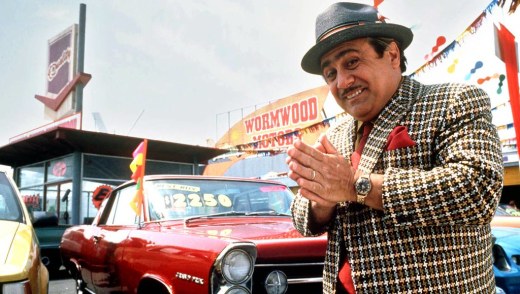
Photograph: Emmy Award-winning actor Danny DeVito (Taxi, 1978-1883 ABC-TV)  in Matilda (1996)

Free Media Exposure

Media exposure can be difficult to come by for Freelancers and small business owners. In particular, “earned” media mentions,” i.e., publicity obtained through promotional efforts rather than publicity obtained by way of paid advertising, is usually the most effective form of media exposure and can go a long way toward enhancing a Freelancer’s brand.  A well-expressed quote in a respected publication can make a Freelance consultant or business owner look like an expert that smart people want to do business with.  Earned media exposure can be instrumental in helping a business to establish name recognition and respect among its target customers.

The best tactic to use when looking to attract the interest of reporters and editors is to position oneself as an expert. The good news for Freelancers is that everyone who provides professional services to paying clients is considered to be an expert in his/her field. The public welcomes and trusts tax tips recommended by an accountant and legal advice offered by an attorney. In addition, those who’ve authored a (nonfiction) book, whether traditionally published or self-published, that addresses a topic that editors feel would interest their readers can also be chosen to receive valuable earned media.

When you’ve made the decision to pursue earned media exposure for your organization, Step One is to decide where you’d like your story or quotes of your expert advice to appear. Research local online or print publications and assess the stories that are featured. You might start with your neighborhood newspaper or a publication that specializes in business topics. If you belong to a business or professional association, by all means look into contributing an article to the newsletter, getting your book reviewed or mentioned, or getting yourself quoted. Hint: active members always get publicity.

Step Two is to learn the identity of the reporter or editor who covers your topic. The easiest thing to do is call the publication and inquire. While you’re on the phone, find out when the publication is on deadline and avoid calling the reporter or editor at that time.

Step Three is to write a press release that makes editors and reporters want to follow-up on your story. Make your press release attention-getting with a good headline. Instead of trying to be witty, just give the facts. A good headline might be: “XYZ Biz wins Chamber of Commerce award.”

In the first paragraph, introduce one key newsworthy fact or piece of information in a single sentence, such as “XYZ Group today announced plans to open a solar-powered restaurant by late 2019.”

A common mistake in writing press releases is using it to tell the entire story.  “People write way too much. Tell them what the story is about and why it would be good for their audience,” advises Paul Krupin, former attorney and founder of iMediaFax.com, a media advisory service in Washington state. The press release should not be the first draft of a reporter’s article.  The purpose of your press release is to entice a reporter to contact you and write your story, or persuade an editor to assign your story to a staff reporter.

Furthermore, don’t make the mistake of trying to sell your product or service in the press release. “The media is adverse to anything that looks like advertising,” Krupin warns. “They want to educate, entertain, stimulate, or provoke their audience.”

BTW, there are subtle yet substantive differences between the journalistic needs of print, radio and TV media outlets that reflect audience expectations and preferences.

  • “Print media focus on facts and figures. They talk about strategies,” Krupin advises.
  • “Radio and television don’t lend themselves to detailed information. It’s about sound bites, tone and excitement. For radio and TV producers, you want to tell them why their audience is going to love what you’re going to say, or hate what you’re going to say. The focus is on the emotional reaction: Why am I going to be entertaining?”

Be advised that media outlets are not interested in helping to publicize the products and services that Freelancers and other business leaders are trying to sell. Krupin, who is also the author of Trash Proof News Releases (2001), works closely with his clients to tease out a story angle that could interest readers or viewers of the target media outlets. “What do you know that people don’t know, but they would like to know?” he asks.

For example, Krupin recommended that a photographer discuss how to hang pictures, rather than discuss the technical aspects of how to take pictures. The two created a press release that led to a number of print articles that featured his photographer client as the expert.

Finally, be patient as you wait for the ROI from your earned media. A customer may contact you months or even years after reading about you and your business. A reporter could contact you several months later to get insights on another aspect of your topic, which would result in still more earned media exposure.  Concentrate on developing an earned media strategy by identifying a story angle that would interest readers as you build relationships with reporters and editors who can give you the desired media exposure.

Thanks for reading,

Kim

Photograph: By Andrew Laszlo. Entertainment columnist and host of television’s longest-running variety show (CBS-TV) Ed Sullivan (l) interviews Fidel Castro in Mantanzas, Cuba in January 1959.

10 Steps to Fortify Your Business

Here come the lazy, hazy days of summer. The sun is warm and days are long, but billable hours can be short, the result of vacation schedules at client workplaces. For that reason, Freelancers may often find it convenient to vacation in July or August. But those who prefer a winter vacation, whether on ski slopes or in warm surf, might long for a worthy assignment to get their arms around. I’ll suggest that Freelancers, as well as small business owners, look no further than our own organization for a project that can generate billable hours.

During the summer slowdown, ambitious Freelancers and business owners will use the available time to build a more efficiently run and profitable business. We’ll reconfirm our customer knowledge, examine our product and service lines, analyze our financial statements, review operations processes, evaluate customer service protocols, update competitive intelligence and refine marketing tactics.

Smart Freelancers will look inward to shore up our businesses internally. We’ll also look outward, ready to pounce on intriguing opportunities that become available. If you’re not doing so already, here are 10 smart business planning steps you should take this season.

  1. Analyze your financials

Examine your Profit & Loss and Cash-flow Statements and make note of the top line, that is, Gross Sales on the Cash-flow statement and Gross Revenue on the P & L Statement. That number (they are the same) reflects the amount of all billable hours and other income you generated in a particular month (or quarter, or year). In a potential business slow-down, it’s essential to confirm that you’ll have the funds to cover all accounts payable, including payroll, if you have employees or outsourced help.

Next, take a look at your Balance Sheet and make note of the total Accounts Payable figure. that number represents monthly business debts (e.g. office space rent and insurance premiums). If a shortfall looks like a possibility, you’ll need to find a way to either negotiate with creditors to ask for an extension, or find a way to generate money quickly. Maybe you can find a part-time under-the-radar job?

  1. Conduct SWOT Analysis

The acronym known as SWOT you may know stands for Strengths, Weaknesses, Opportunities and Threats. Strengths and Weaknesses are internal (personal) attributes and can be impacted by you. Your strengths may include an exceptional client list, fortunate business and personal relationships that you can leverage, relevant educational or professional qualifications, and/or a product or service line that clients value and support. Brainstorm new ways to capitalize your company strengths. Acknowledge also company Weaknesses and find ways to eliminate, minimize and/or camouflage.

Research happenings that may potentially impact your organization to manage the external factors of Opportunities and Threats. Approach all potential Opportunities with forethought, so that you will remember to apply the most appropriate of your Strengths to effectively laying claim to the good. Take steps to sidestep or soften the blow of potential Threats.

  1. Rank clients

Determine who’s profitable, and who’s not. If some clients are a drain on resources, perhaps because they give few billable hours and the rate is low, either raise the price or “fire” them. You can’t afford to carry unprofitable clients.  Aim to work lean and mean. right now.

  1. Network

There will be a handful of conferences held in July and August and some may be worthwhile. If you become aware of a conference where the topics will be relevant to you, the speakers interesting and the attendees people who you may want to meet, try to find the money to attend. You may find your next client or referral partner (and remember to reciprocate).

  1. Streamline work processes

Time is the resource that those who work in the Knowledge Economy, i.e., the intangible services business, value most.  How can you provide your services faster and still maintain the high quality of deliverables for your clients? The objective is to create time to pursue more clients, analyze your business and clients, network, or simply rest and recharge your batteries.

  1. Create strategic alliances

Forming simple partnerships can make or save you money.  One of your clients could be an excellent referral source for your business and you may be able to return the favor for your client’s organization.

  1. Reduce expenses

Do you rent office space? If so and especially if your lease will expire in less than a year, why not call your landlord and suggest that the two of you negotiate a longer-term lease in return for cost concessions?  Or, if you’ve been able to pay all insurance policies on time for the past 12 – 18 months, inquire about a lower annual premium? Do the same for your credit cards regarding interest rates.

  1. Refine marketing strategies

Assess the impact and ROI of your marketing efforts and then ensure that your marketing goals make sense for your business.  What exactly do you want your content marketing, marketing and advertising and social media postings to accomplish?

  1. Target competitors’ clients

If learn that a competitor is struggling, reach out to any of his/her clients whom you know or feel comfortable approaching to discuss the advantages of doing business with your organization. If your competitor’s clients sense a possible decline in quality or fear a service disruption, they may be receptive to your pitch.

  1. Eyes and ears open

Be on the lookout for fresh ideas and opportunities. Stay abreast of news and trends in your industry and also in your clients’ industries. Interact with other Freelancers and business owners to see what they’re doing. Learn from them what’s going on around you and be prepared to explore promising opportunities that come your way.

Thanks for reading,

Kim

Image: The Second Crop (Le Regain), 1880  Julien Dupre (France, 1851 – 1910)

The Do’s and Don’ts of Email Sign-offs

As often noted by myself and countless other bloggers and journalists, the care and feeding of one’s brand is forever at top of mind.  Every touch point with a client, prospect, potential referral source, the public, or the media and every form of communication, whether verbal, visual, or print, must present a flattering portrayal of the brand. Even our ubiquitous, plebeian emails are now brand ambassadors.

Remember that admonition when you next compose an important email to a current or prospective client.  As you carefully evaluate the potential impact of every word, ensure that your valuable brand carries through to the sign-off. The brand is always on the line and it must be curated, even in emails, from the salutation to the sign-off.

For guidance in the matter of etiquette and branding I’ve consulted the writings of Suzanne Bates, executive coach, President and CEO of Bates Communication in Wellesley, MA (just west of Boston) and author of Speak Like a CEO: Secrets for Commanding Attention and Getting Results (2005).

Regarding written communications remember that as always, context is everything.  What is the purpose of your email and with whom are you corresponding? Are you and a client with whom you work regularly discussing a project or are you writing to a business colleague whom you’ve recently met? Then again, are replying with a proposal that a prospective client has invited you to submit? Each of these circumstances will impact the style of your email sign-off.  Let’s look at a few common closing words and phrases and examine their potential impact on the recipient.

Thanks

Use this term when you are actually thanking the person you’ve written, or asked for something to be done or said on your behalf. Thanks as a sign-off is business-like, but casual. Thank you is a better choice if you don’t have a familiar relationship with the other party.

Best

A borderline casual sign-off, but acceptable to use for a business associate whom you know.  BTW, I use this closing most of the time (I may need to re-think this choice).

Regards

Somewhat perfunctory and a little distant, but this closing generally works well.

Cordially

An old-fashioned sign-off that portrays the writer as well-mannered and formal, perhaps too formal. Nevertheless, this choice is safe and pleasant.

Sincerely

Here’s a tried and true business attire sign-off that will offend no one. However, this closing is more appropriate for a letter, rather than an email.

Cheers

You can use this to close an email with someone you know well, but if you’re trying to make a good impression in a business setting, it’s not a wise choice. Save this breezy term for after a bond has been established, for friends and colleagues you sometimes meet for coffee.

Talk soon

This term is usually used among friends and familiar business associates. The intention of quick follow-up is communicated clearly and that may be desirable. I like to use “To be continued.”

Yours truly

We’re a little too formal for an email here, as this term is closely associated with closing a letter. If your email is written for a very important person, you may use this sign-off with confidence.

Kind regards

Here is my favorite business sign-off and when I need to present my self and my brand in the best light, this is my go-to salutation. This term is warm, friendly and professional.

Thanks for reading,

Kim

Image: Artist unknown. Courtesy of the British Library, London.                                      Born in Venice and educated at the University of Bologna (Italy), Christine de Pizan (1364 – 1430) was among the best known writers in medieval Europe, in spite of her gender.  A prominent political thinker, novelist and poet, she authored the feminist treatise The Book of the City of Ladies, among other works. Pizan was the wife of Etienne du Castel and a mother of three.