Pro Bono Quid Pro Quo

I’ve often recommended that Freelancers seek out speaking opportunities as a way to meet potential clients or referral sources, enhance your brand, add names to your mailing list to support leadgen activities and to generally build name recognition and expand your influence. Speaking before an audience, in-person or virtual, is a golden opportunity and, as noted, confers many tangible and intangible benefits. But the cold fact is, speaking engagements often do not pay, or pay only a modest amount.

As a seasoned professional with wisdom to share, you deserve to be paid for speaking engagements but unfortunately, that is not always the case. While occasional pro bono speaking engagements might be building blocks for your brand, it nevertheless makes sense to get some quid pro quo. Use some creativity and moxie to first, think about acceptable substitutes for money and then ask the organizer what can be done for you. In other words, redefine what it means to get paid and negotiate for an alternative form of payment that will compensate you for the value you’ll deliver. The alternative payment might be tangible or intangible. The idea is to not walk away empty-handed and create a win for yourself and the organizer.

As you consider what you may be willing to accept in place of monetary compensation, remember what is required to prepare a talk. Typically, a one hour program consists of about 45 minutes for the presentation plus 10-15 minutes allotted for your introduction and Q & A. Presentations require numerous hours to prepare—slides must be designed and created and maybe handouts, too. Practicing your delivery and figuring out how to best integrate the visuals can take three hours or more. You’ll want to negotiate for a fee alternative that for you will be a high-value commodity, even if it’s not money. Here are seven possibilities to consider:

Networking opportunities

There is value in relationship-building conversations with leaders. Request an introduction and 30 meeting with a leader or decision-maker within the organization to build broader deeper networks. This creates long lasting connections after your talk. Research the organization to help you prepare a list of questions you can ask and to also help you understand how you can be a resource to the organization and vice versa.

Testimonials

Ask an organizer in a leadership role to provide a flattering quote or endorsement that can be uploaded to your website or LinkedIn profile. If there is a heavy-hitter in the audience, ask the organizer to introduce you and ask if the VIP would be willing to supply a quote that you can record as a video.

Referrals

Request that if your talk receives positive feedback from the audience, you’ll be invited to speak again in 24-36 months. Or, if the organizing body happens to be the local chapter of a regional or national organization, ask your local contact to recommend you as a speaker at the regional or even national level. You can also ask to be referred and recommended to speak at a related organization or conference. The goal is to use this first opportunity as a stepping stone for upward mobility.

Discounted memberships and dues 

Many speaker series programs are hosted by organizations whose members and programs can provide networking and professional development opportunities for you. Consider asking to receive a waived or discounted one-year membership, to help expand your network, upgrade your skills and save money as you do. Or you might request comped admission to certain upcoming programs that you’d like to attend.  

A public speaking coach to build your skills

Ask your con if the organization has affiliations with professional storytellers or public speaking coaches. If so, request that the coach meet with you for an hour or two, to give feedback in advance of your talk. Or, ask for the coach to attend your presentation to evaluate you and provide verbal or written feedback. Using your talks as opportunities to improve your speaking skills is always a good strategy.

High-resolution event photos

Some speaking engagements are still virtual, but if your talk will be in-person , request that a photographer, if available, takes action shots of you at work, speaking at the podium and interacting with the audience. You might also request that the photographer take a headshot of you. High-quality photos are an important resource and images of you in action are especially valuable, but may be difficult to obtain. High quality, recent photos are guaranteed to be excellent additions to your print or online promotional materials, from website to media kit.

Social media boost

Ask the organizer to record the presentation, whether virtual or IRT, and send three of four five-minute highlight video clips for you to upload to social media. Teaser videos can also be used to promote your content and speaking style. Use the material as a demo reel to help solicit further speaking opportunities.

Thanks for reading,

Kim

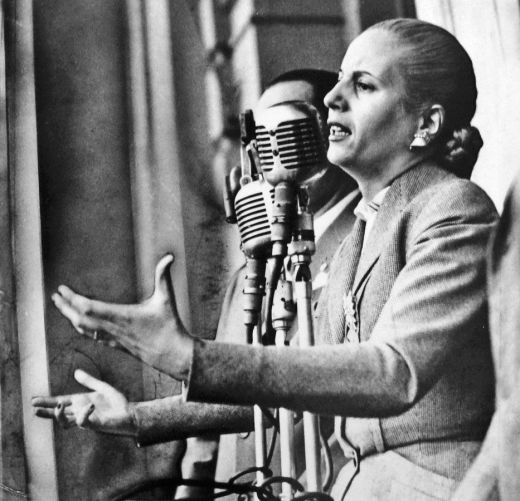
Image: Former first lady of Argentina (June 1946 – July 1952), Eva Peron electrifies a crowd

The Post-Speech Q & A

Everything has gone swimmingly with your presentation. The room is full, you held the attention of audience members and your timing was spot on. There are 10 minutes left for the question and answer session. You think you’ve won, but you have no idea how vulnerable you are.

Speakers often don’t realize it, but those brief minutes in the post-speech Q & A session have the potential to become your Achilles’ heel. The post-speech Q & A is un-mapped territory. You don’t know what’ll be thrown at you. The Q & A is a variable that few speakers prepare for, because they assume they can’t prepare for it and so they wing it and figure they’ll muddle through. Not!

As Tesla CEO Elon Musk now knows, winging the Q & A can be a grave mistake. At the conclusion of a May 2018 investor’s meeting speech, Musk had a heated exchange with a financial analyst who asked a couple of apparently incisive questions. Musk didn’t come out of it looking good. You may have heard that Musk has recently said “lack of sleep” and “stress” have been wearing him down. Sorry, it’s a weak excuse.

Executive Coach and speaker John Millen points out that when speakers mishandle post-speech or other questions, they can appear uninformed, hostile, or even dishonest. “How leaders answer questions is enormously important in building trust. If you come into a high-stakes situation talking to investors, employees, regulators (or a potential client) and you don’t communicate properly, there can be huge problems.” So let’s consider tactics that can bring you through your next post-speech Q & A with flying colors.

PREPARE

Take all precautions to avoid being perceived as clueless, shady, or defensive. If a question is posed for which you don’t have an answer, say “That issue is under review and I don’t yet have enough information to answer.” You can also turn it around and ask the questioner “Why is that important to you?” The answer may open your eyes to aspects of the subject that you had not previously considered and can be a teachable moment for you.

Start the process by thinking your subject through so that you can anticipate questions that could be asked. Next, do some audience research and ask the program organizer if there might be audience members who could oppose your goals or point of view, so you can rehearse answers designed to neutralize a campaign to undermine you.

CALL IT OUT

Be mindful of aspects of your speech that could potentially seem controversial to certain audience members. A good defensive tactic is to proactively address a possibly sensitive matter in your speech, preferably toward the end or in your concluding remarks. Acknowledge the elephant in the room.

“That way, when it comes up again from the audience you could say ‘Right. As I said earlier…,’ Millen advises. “Then you are reinforcing your answer and it feels more truthful and honest.” Also, you’ll avoid allowing an angry questioner to set the tone. “You can get it out there on your own terms,” Millen notes.

CHERRY PICKING

Sometimes a speaker is hit with a multi-part question and when that happens, the recommendation is to answer that part of the question you can answer most adroitly, the part that reinforces your viewpoint or supports your goal. Speakers can usually get away with this tactic because audience members may not remember the entire question and in fact, they may have little patience with a complicated question. So cherry pick those parts that you want to answer and slide away from what you are unable or unwilling to answer.

NEUTRALIZE OPPOSITION

Unfortunately, there could be an audience member who doesn’t so much have a question, but an axe to grind or s/he is in search of attention. Jo Miller, founder and CEO of Be Leaderly, a professional development training consultancy based in Cedar Rapids, IA, cautions speakers against getting defensive when encountering such a questioner. “The best way to deal with those questions is to maintain a confident and unapologetic posture,” she says. Miller suggests that adopting a tone of amusement can help get the audience on your side. She adds “Respond as if you are enjoying a game of intellectual ping-pong.”

EXPERT HELP

If you are a company leader who will speak to employees, investors, an important client, or others with whom you must build trust and meet or exceed expectations, bring along two or three ranking team members and have them ready to step in and answer questions aligned with their areas of expertise. In other words, defer to the experts, share the spotlight and promote leadership skills development as you do.

End the Q & A on an upbeat, positive note and if possible, after you’ve given a well-received response to a question. If you are asked two or more challenging questions, Millen recommends that you
“Tell them they’re asking the right questions, then bring it back to your overall message. They (the audience) shouldn’t leave with a bad taste in their mouths.”

Thanks for reading,
Kim

Image: Cesare Maccari 19th century fresco depicts statesman, lawyer and orator Cicero (January 3, 106 BC – December 7, 43 BC) as he excoriates Senator Lucius Sergius Catilina (108BC – 62 BC) in the Roman Senate for Catilina’s role in the conspiracy to overthrow the Republic and, in particular, the aristocratic Senate. Courtesy of the Palazzo Madama (Rome).

A Superb Speaker Introduction

Excellent public speaking makes those who have it appear both credible and smart and those who wish to obtain or maintain the appearance of authority and expertise are advised to cultivate the art.  Public speaking not only refers to s/he who makes a featured presentation—keynote speakers, guest lecturers, panelists, moderators, or the toastmaster at a social function—but also includes s/he who introduces a speaker.

An invitation to introduce a speaker is an honor and a vote of confidence and you would be wise to prepare for the occasion.  The introducer bears the responsibility of preparing the audience to respect the speaker and trust his/her information or story line.  If you receive an opportunity to introduce a speaker, keep the following suggestions in mind:

Show that you have the credentials to make the introduction

S/he who introduces a speaker must earn the confidence of the audience.  The leader or some other high-ranking member of the sponsoring organization usually introduces speakers, and earns that confidence by way of the authority vested in his/her position. Alternatively, a VIP speaker may be introduced by a similarly ranked colleague or guest VIP, who earns the confidence of the audience and as well conveys the importance of the speaker.  The guest VIP who introduces the high profile featured speaker will merit his/her own introduction and that will be given by a member of the sponsoring group.

Direct audience attention to the speaker

A speaker introduction is in reality a sales presentation and obtaining audience buy-in for the speaker and topic is your mission.  Your first order of business is to persuade the audience to be fully present in the moment. Typically, audience members are engaged in other activities in the intervening moments between speaker presentations, or as they await for the program to begin.

Some will be in conversation with those nearby, perhaps discussing the previous speaker or the program agenda.  Others will be focused on electronic devices, checking email, sending texts, or posting social media updates.  Your introduction must provide a bridge that transports the audience away from distractions and leads them to the subject of your introduction, the speaker.

A clever way to gain audience attention is to capture their imaginations with a rhetorical question related to the topic.  Consider opening your introduction with “What if…?“, “What is it about…?“,  or “Have you ever wondered how…?” The question will allow you to segue into the topic, which ideally will be perceived as compelling, to validate the audience member’s decision to attend.

Endorse the speaker

Now that you have the audience’s attention and confidence, it’s time to portray the speaker as an expert who is deserving of the audience’s time, attention and money (if admission was paid).  Put them in the mood to hear the talk by saying something like… “I first heard (the speaker) about three years ago, at a reading s/he gave soon after his/her book (title) was published.  I’ve been anticipating the release of this new book (title).” “I’ve heard more than one expert address our topic this afternoon, but I believe that (the speaker) gives the most comprehensive and clear representation of the facts…”

You may in addition give a build-up that precedes the above by listing awards and honors that the speaker has received, if applicable, or reading quotes about the speaker that have appeared in important publications.

Create intrigue and excitement about the topic

Tempt the audience with a smidgen of how the speaker will meet or surpass their expectations for the talk.  Read a sentence or two of an early review of the book that will be discussed.  Describe a useful piece of information that audience members will receive as they listen to the presentation.  Make them know that a worthwhile pay-off awaits.

The introduction

Continue to demonstrate that you make excellent speaker introductions by weaving the sense of anticipation into your actual introduction, perhaps in this way… “Let’s all welcome (the speaker) and let him/her give us the real story about what’s going on.” “Let’s invite (the speaker) to tell us what happens next in the ongoing saga of this character. Please join me and give him/her a warm welcome.

Thanks for reading,

Kim


The 7 Minute Presentation Rule

Freelance consultants are often called upon to make business presentations, at a client meeting or even a board meeting. Getting one’s point across clearly, succinctly and convincingly is an all-important component of one’s success as a leader or manager. Droning on in an unfocused way is not desirable, but communicating the required amount of information is paramount.

“Anything you have to say in a business setting should fit into a seven minute window”, says the computer technology, writing and presentation expert John Brandon. Brandon is a speaking coach and frequent presenter; experience has taught him that in seven minutes, it is generally possible to deliver your important message and maintain audience attention as you do. Like a stage play, he has blocked out a diagram of the action that will teach us his presentation method.

First, write a draft presentation and design your Power Points, if you elect to use slides. Confirm that all necessary information will about fit into seven minutes, perhaps with some judicious editing. Do an initial run-through and check your time. If the talk exceeds the seven minute window by a few minutes, further rehearsing may allow you to bring the delivery time down to the target time limit. You can also take another look at your material to consider what might be edited out. Here is Brandon’s presentation roadmap:

Minute  1: Grab audience attention

Brandon urges you to open your talk with a “bang”. You might begin with a surprising statistic or provocative point, verbally or depicted on a slide. The “bang” must persuade the audience to want to hear what you have to say. The opening is NOT where you deliver your main message. The “bang” whets audience appetite for your knowledge and perspective on the topic. Achieving the “bang” in 60 seconds requires discipline, editing and creativity. You can do it.

Minute  2: Summarize in one minute

The right “bang” will be the perfect entrée to the heart of your talk. There will be no need for a transition statement—the audience will be more than ready to hear you. Brandon says that in this segment, you tell the audience why you are standing before them today. Give a 60 second overview of what you are selling, recommending or explaining.

Minutes 3-6: Present the main message

Your audience is keen to hear what you have to say. You have earned their respect and undivided attention. In this segment you deliver the goods, the heart of the talk, in four minutes. You will defend and explain your quirky or provocative “bang” with charts, graphs, non-text-heavy Power Point slides, or maybe just your silvery spoken words, perhaps with an anecdote of two sprinkled in. You may do and say whatever you feel will be most effective to win over your audience. It’s your talk!

Minute  7: Summarize the main message and conclude

Use the final minute to debrief the crowd. Close the deal by summarizing your main points, to help the audience retain the information. Do you have a call-to-action—do you want the audience to advocate for your idea or buy your product? Tell them in this segment. Leave the audience with an idea and information that they will savor and remember. That’s it!

Thanks for reading,

Kim

Approach the Podium: How To Get Speaking Engagements

One of the best ways for a Freelance consultant to demonstrate and validate our bona fides as an expert in our chosen field is to get in front of an audience and deliver a talk to peers and prospects. As we all know, billable hours and referrals are built on confidence and trust and we must do everything possible to encourage and sustain their growth. If you would like to get on the speaker’s circuit but have not yet done so, begin by acquiring some public speaking experience and as you do, think about topics that you can convincingly address.

I’ve been teaching since 2006 and I’ve found it to be a learning experience for me, as well as for my students. Teaching is a wonderful place to start building your public speaking resume and you will be (modestly) paid as you and your students learn.  Absolute beginners are advised to approach an adult learning center to explore opportunities to teach a workshop that you propose.

As your teaching skills become more proficient, browse the catalogues of community colleges and four-year institutions and contact department heads to inquire about teaching for a semester. BTW, the workshop that you proposed and taught at the adult learning center represents curriculum development and in the world of teaching, that is a plus. You could be asked to expand your workshop into a semester-long course.

Step up your activity in local business or social organizations that offer professional development or even current affairs programs. Attend a program or two, get to know and build relationships with the program organizers and make it known that you are able to serve on a panel that will address a subject in which you have special knowledge.

Speaking on a panel is a great way to let program organizers see you in front of an audience. Do well and you may next be invited to moderate a panel and eventually, receive an offer to be a keynote speaker. If you know of a potential speaker, moderator or panelist who program organizers may want to feature, do not hesitate to make the referral. That will be a feather in your cap and increase your value to the organizers.

Give careful consideration to the topics you can speak to and the corresponding prime audience demographics. Should you approach organizations where you are not known, it will be very important to help program organizers understand where your topics and their audience needs intersect. Create a one page document for each of your talk titles.

List the your name and company name at the top, followed by your talk title in a bold and larger font. In five or six bullet points, describe the primary content of your talk and the benefits that audiences gain by attending. It is also useful to write a 60 second pitch for the talk that you personally make to program organizers and to those who can make referrals for you. Add your talk titles and those descriptive bullet points to your website, LinkedIn, Twitter and Facebook pages.

If you have presented a webinar, or recorded a podcast or video, upload these to your website and social media accounts, so that program organizers can see and hear you in action. Larger organizations may request that you send in a few of your Power Point slides for review.

Speaking of Power Point, if you are fortunate enough to land a speaking gig that gets you in front of potential clients, strongly consider paying an experienced graphics specialist to customize slides for you. it is so in your interest to present high-quality slides that represent you and your brand well. While you’re at it, have your graphics person embed your photo into your “one sheet” talk info documents,  so that they can be used by you and program organizers to promote your talk.

To make your goal to obtain speaking engagements a true marketing plan, commit your proposed actions to writing and make a list of organizations where your speaking talents as keynote, moderator and panelist are best suited. Ask clients and colleagues which conferences they attend as you make your choices. Then, visit the program websites and find out about previous speakers and topics.

Finally, be aware that the vast majority of speaking engagements are considered opportunities for exposure and are unpaid, but that should not discourage you from selectively and tactfully asking for an honorarium.  If you speak in a location that is more than an hour away, or where the parking cost is large, ask if expenses related to getting you to the venue will be covered. If you must take a hotel room, ask if the program organizers will reimburse the cost.

Generally speaking, lining up teaching or speaking engagements is a long-term project, since schedules and course catalogues are determined far in advance. Consider it something useful to do when business is slow.

Thanks for reading,

Kim

Present With Pizzazz

In this column I have often urged those who want to establish themselves as experts in their chosen field to find speaking and teaching opportunities.  Getting out in front of an audience is a time-tested way to identify and impress potential clients and referral sources,  a good way to drum up business.  So maybe it’s time to review a few useful presentation techniques that will make you feel more confident and therefore more likely to pursue this strategy.

Keep it simple and tell a story

The best speakers know that the more complex the topic,  the more important to make it easy for the audience to understand.  Distill a complicated message into fewer words.  Include a personal anecdote or story that illustrates a key point you’re trying to make.  A story makes your presentation more compelling by placing the message into a context that is relevant to the audience.  A story paints a picture and helps the audience make sense of the topic.

You are the star

You are the speaker and the stage belongs to you.  Do not allow slides to upstage your talk.  How do you do that?  By not using your slides as a crutch.  By not posting your entire talk onto slides.  Avoid presenting a boat load of text-heavy slides that you read from,  instead of speaking to and connecting with those who came out for you.  

On your slides include important charts and graphs,  key statistics,  major talking points and relevant visuals that support and advance your message.  Practice your presentation often and get to know your material,  so you won’t be overly dependent on slides.

Engage and involve your audience

Most of all,  give the right talk.  Know what the audience expects you to address.  The person who schedules your talk can help you choose a topic and give you the heads-up re: big questions that audience members may want answered.  To keep your audience engaged,  pose a question or two at some point in your presentation.  Also,  be willing to answer questions as you go along and make your presentation more of a conversation with the audience.

We deliver

While good content is essential,  that alone will not win over an audience.  Body language and delivery also matter.  Audiences size up and judge a speaker within the first three minutes of a presentation.  Be sure to project confidence,  expertise,  good humor and approachability.  Smile,  make eye contact and use a pleasant,  yet authoritative,  tone of voice.  Show appropriate enthusiasm and passion for your subject matter.  Let the audience know that you like being up there speaking.  

How to get to Carnegie Hall

Practice and practice some more.  It takes a lot of work to make a presentation look effortless.  Skilled presenters give the impression that their clever ad libs and convincing responses to questions are all ex tempore,  but nothing could be further from the truth.  The fact is,  successful presentations are built on lots of preparation and rehearsal time: wordsmithing what may sound too complex or unclear,  deciding what text and visuals to include on slides,  how to integrate the slides with the talk,  anticipating questions and formulating good answers.  Read your talk out loud and record your voice,  to make sure that you pace your delivery appropriately.

An effective presentation should inform, educate and entertain.  Make that happen when you simplify your message and de-clutter your slides,  interact with the audience by asking and answering questions throughout your talk and practice a lot.  Hit your mark and the audience will regard you as an expert.  Mission accomplished.

Thanks for reading,

Kim