Get Noticed: Tactics to Spotlight Your Brand

If you’ve been trying to increase the visibility (and in the process, credibility) of your brand and Freelance consulting business, you’ve probably realized that standing out against competitors is difficult to achieve. The noise level in the marketplace is deafening and big fish grab nearly all the PR. But all is not lost. There are a few smart moves that will help us little fish to make a splash. Below are a half-dozen mostly low-cost and often successful marketing tactics that you can consider and maybe enact over the next four quarters.

Get On a “Best of” list

PR pros love the fast pay-off and long-tail benefits that getting added to a “best of” list brings. Every business that’s won a “best-of” award over the last 5 years (or more) shouts it to the rooftops. The citation is placed above the fold on website and social media landing pages.

Investigate local or regional “best of” lists, especially those featured in popular or prestigious publications. Some choose candidates by an open nomination process. Touting your inclusion on a “best of” list is cat nip when promoting any other of your marketing tactics—-speaking at a business or professional associations, teaching a class, appearing as a panel speaker or moderator, becoming a guest blogger or a guest spot in a webinar or podcast.

A “best of” list is a great opportunity to be discovered by people who’ve probably never heard of you and your business. Receiving a “best of” award allows you to reach and attain instant credibility among a whole new group of potential customers. “Best of” list readers customarily browse list categories when they’re looking to do business, from finding the best ice cream parlor to the best five best business blogs in your area.

Now listen to this— if you are a contributor to a particular publication, with your publisher’s or editor’s approval, you can launch your own annual “best of” list! While you’re at it, you can also create an advertising campaign around it and make your editor or publisher twice as happy. Creating a “best of” list has the potential to facilitate building and sustaining relationships with ambitious movers and shakers and greatly expand your influence and credibility.

Enter a business award competition

This tactic has a not insignificant cost of time and money, but it’s often a reasonable avenue to pursue because there are more ways to win than you might think. Sponsoring organizations are typically generous with the number of awards and categories they choose to honor. More awards and more categories are an incentive for business owners and leaders to become contestants because there will be more opportunities to win.

Be advised that as with any marketing campaign, there are expenses involved. You’ll be required to join the sponsoring organization. You must pay the award entry fee for every award category that your company pursues—-best new product launch, business of the year, best workplace, social responsibility award and so on. You must buy one or more tickets to the ceremony (even when it’s virtual). The awards process could represent the entirety of your outfit’s annual marketing budget.

After compiling a draft list of possibilities, check the award entry criteria. It’s likely that candidates must join the organization in order to compete for an award and that will be your first expense. Annual dues may run from a few hundred dollars to $1000 or more, depending on the sponsor. Confirm also when new members will be eligible to compete for an award. Next, investigate other entry facts—-the entry application deadline, the fees and whether candidates must be nominated to compete for the award.

Be a podcast guest

There are dozens of podcasts popping up like wildflowers after a summer rain and every host is on the lookout for smart, savvy and entertaining guests. That can be you!

So how can you make that happen? Keyword search podcasters that cover topics you can address. Listen to a few episodes to get a feel for the host’s interview style, listening audience and guests. Instead of sending an email to make your pitch to the host, devise a personal and impactful appeal by creating a video or audio clip to present your proposal. Tell the host:

  • Topics you’d like to cover
  • Why you think podcast listeners will find the information relevant and the insights and benefits that will be derived
  • Elevator Pitch-style info about you to communicate your credibility—-expertise, experience, noteworthy clients and popularity—- you’ve written a book, your blog has 5000 followers, you’re a contributing writer for a respected publication, you’ve won a business award

Identify podcasts that maintain an online archive of episodes, to increase the long term accessibility of your appearance. As well, you should post the link of your podcast guest appearance on your website landing page and on the landing pages of your social media accounts. Because you’ll have the program link, you’ll add to some impressive, trust-building audio content that you can edit or serve up in its entirety.

Podcasts, whether you are the host or the guest, deliver numerous benefits to your brand and business. On the most basic level, it’s a networking and relationship opportunity for you and your host. As you negotiate your way through scheduling and topic selection, to say nothing of the interview itself, you and your host get to know one another and learn about one another’s capabilities. Potentially, a mutual referral source can ensue.

During the interview, podcast guests speak in depth about the product or service you provide, without becoming sales- y. You also describe the customers you usually sell to or work with and explain what motivates prospects to come to you and present a broad-brush overview of how you provide the solutions your customers need.

Communicate the story well and you’ll establish yourself as an industry expert, a thought leader who’s a cut above competitors. You’ll position yourself as a highly capable and dependable professional. You’ll build both brand awareness and brand trust.

Two final preparation steps for your podcast (or webinar) guest appearance will ensure communications. First, be certain that helpful technical equipment is in hand— you’ll need a decent microphone and headphones so that host, you and audience members can clearly hear one another.

Second, you’ll be expected to promote your guest spot and help your host to do so as well. Four weeks ahead of your appearance, post the podcast notice on your website and social media accounts. Help the host to promote and also introduce you to the listening audience and send a media kit three to six weeks in advance of the show.

Contribute articles

Since 2014, I’ve been a staff writer at Lioness Magazine , an online publication whose primarily female target readers (75%) are entrepreneurs, self- employed professionals and corporate or not-for-profit sector executives. How did I do it?

Starting in about 2012, once a week I posted a business how- to article on a large self- publishing website Ezine Articles. As luck would have it, the co- founder and Managing Editor of Lioness Magazine was using the site as a place to buy good content for the new magazine. There are perhaps 100,000 articles posted in the business category and by some miracle, my articles were discovered. After purchasing several of my articles from Ezine, the Managing Editor contacted me and asked to buy articles directly.

Building a solid online reputation is essential for your business (unless you are very well connected and don’t need it. I know such people). First, when prospective clients search you online, you want them to find good content. You present yourself to prospective clients as an expert and your articles are one persuasive way to back up that claim.

Second, the Google EAT algorithm (expertise, authority, trustworthiness) still impacts our SEO ranking in 2022. When you publish presumably useful, accurate articles on a regular basis, it’s a favorable act in the eyes of powerful opinion maKer Google.

Do you read business publications— local, regional , or national? If not, I recommend that you do. There is sometimes an appeal to recruit aspiring contributors. If you’re a reasonably competent writer, give it a try.

Speak (or moderate) on a panel

Appearing on a panel as either a speaker or moderator is a golden opportunity, a wonderful way to demonstrate your expertise and ability to think on your feet. Appearing on a panel is also a gateway to receiving featured and keynote speaking engagements. Seeking out programs where panel discussions are regularly featured is an excellent marketing strategy.

There is an art to panel discussions, whether you are the moderator or a speaker and if you want to be invited to participate a second time, make sure that you perform well the first time.

Make sure that you know the subject. You’re invited to join the panel to share your deep knowledge and experience and/or your intriguing and compelling perspectives regarding the subject matter. You are there to inform and enlighten the audience.

Donate to a charity auction

Many charitable organizations auction off products and services donated by local businesses to raise money at their annual fundraiser, which in most cases will draw a minimum of 100 supporters. If I might, I’ll apply the surprisingly accurate Pareto’s Principle here, commonly known as the 80/20 Rule, and predict that for every 100 guests at the charity’s fundraiser, 20 will be your prospects.

Much will depend upon your product or service line and B2C goods and services have the advantage. Research the online auction items available at any 501(C)3 fundraiser and get an idea of what bidders find interesting and what Development Directors tend to accept. You may be able to create a special service that you only offer through your charity auction marketing campaigns.

Contact the Development Office after you’ve checked the organization website to learn the approximate date of the next fundraiser and ensure that its mission aligns with your brand and values. If your in-kind donation receives a couple of auction bids, the organization may contact you to donate again next year.

Thanks for reading,

Kim

Image: © Slim Aarons/ Hulton Archive (1955) Paintings on sale at the Portobello Road Market, London
Pro Bono Quid Pro Quo

I’ve often recommended that Freelancers seek out speaking opportunities as a way to meet potential clients or referral sources, enhance your brand, add names to your mailing list to support leadgen activities and to generally build name recognition and expand your influence. Speaking before an audience, in-person or virtual, is a golden opportunity and, as noted, confers many tangible and intangible benefits. But the cold fact is, speaking engagements often do not pay, or pay only a modest amount.

As a seasoned professional with wisdom to share, you deserve to be paid for speaking engagements but unfortunately, that is not always the case. While occasional pro bono speaking engagements might be building blocks for your brand, it nevertheless makes sense to get some quid pro quo. Use some creativity and moxie to first, think about acceptable substitutes for money and then ask the organizer what can be done for you. In other words, redefine what it means to get paid and negotiate for an alternative form of payment that will compensate you for the value you’ll deliver. The alternative payment might be tangible or intangible. The idea is to not walk away empty-handed and create a win for yourself and the organizer.

As you consider what you may be willing to accept in place of monetary compensation, remember what is required to prepare a talk. Typically, a one hour program consists of about 45 minutes for the presentation plus 10-15 minutes allotted for your introduction and Q & A. Presentations require numerous hours to prepare—slides must be designed and created and maybe handouts, too. Practicing your delivery and figuring out how to best integrate the visuals can take three hours or more. You’ll want to negotiate for a fee alternative that for you will be a high-value commodity, even if it’s not money. Here are seven possibilities to consider:

Networking opportunities

There is value in relationship-building conversations with leaders. Request an introduction and 30 meeting with a leader or decision-maker within the organization to build broader deeper networks. This creates long lasting connections after your talk. Research the organization to help you prepare a list of questions you can ask and to also help you understand how you can be a resource to the organization and vice versa.

Testimonials

Ask an organizer in a leadership role to provide a flattering quote or endorsement that can be uploaded to your website or LinkedIn profile. If there is a heavy-hitter in the audience, ask the organizer to introduce you and ask if the VIP would be willing to supply a quote that you can record as a video.

Referrals

Request that if your talk receives positive feedback from the audience, you’ll be invited to speak again in 24-36 months. Or, if the organizing body happens to be the local chapter of a regional or national organization, ask your local contact to recommend you as a speaker at the regional or even national level. You can also ask to be referred and recommended to speak at a related organization or conference. The goal is to use this first opportunity as a stepping stone for upward mobility.

Discounted memberships and dues 

Many speaker series programs are hosted by organizations whose members and programs can provide networking and professional development opportunities for you. Consider asking to receive a waived or discounted one-year membership, to help expand your network, upgrade your skills and save money as you do. Or you might request comped admission to certain upcoming programs that you’d like to attend.  

A public speaking coach to build your skills

Ask your con if the organization has affiliations with professional storytellers or public speaking coaches. If so, request that the coach meet with you for an hour or two, to give feedback in advance of your talk. Or, ask for the coach to attend your presentation to evaluate you and provide verbal or written feedback. Using your talks as opportunities to improve your speaking skills is always a good strategy.

High-resolution event photos

Some speaking engagements are still virtual, but if your talk will be in-person , request that a photographer, if available, takes action shots of you at work, speaking at the podium and interacting with the audience. You might also request that the photographer take a headshot of you. High-quality photos are an important resource and images of you in action are especially valuable, but may be difficult to obtain. High quality, recent photos are guaranteed to be excellent additions to your print or online promotional materials, from website to media kit.

Social media boost

Ask the organizer to record the presentation, whether virtual or IRT, and send three of four five-minute highlight video clips for you to upload to social media. Teaser videos can also be used to promote your content and speaking style. Use the material as a demo reel to help solicit further speaking opportunities.

Thanks for reading,

Kim

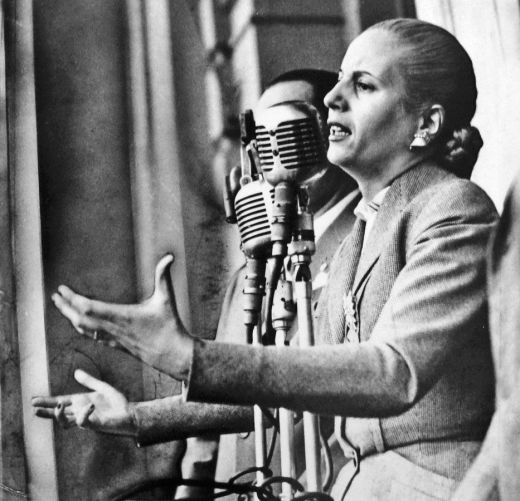
Image: Former first lady of Argentina (June 1946 – July 1952), Eva Peron electrifies a crowd

Mastering Virtual Presentations: Feel Connected, not Remote

Virtual meetings are here to stay and at some point you, Freelancer friend, will be asked to give a presentation on a virtual platform—so you may as well make it your business to learn how to do it right. Plan well and you’ll be able to give a talk that is delivered remotely but still connects you to your audience. The trick is to think of your talk as a TV show or movie, divide it into segments and assign them a role to play in the audience experience.

Obstacles

Talking to a webcam is probably not your idea of a satisfying communication process. You’re in a room intended for another purpose—-cooking? sleeping?—-but is now your stage and the audience can see you. You can see them, too, but only as a row of small images aligned along the perimeter of your screen. Everyone is together, except that you’re not.

In fact, you’re all isolated and some may be in another time zone or even another country. Still, through the miracle of technology, you’ve come together to share this experience. The speaker has the responsibility to make that experience rewarding.

Unfortunately, the speaker’s experience may not feel rewarding. Delivering a speech of some sort when using a virtual platform can be disorienting, whether one will discuss a committee report at a board meeting, teach a class, or give a quarterly earnings report to investors. The usual sensory cues are missing. The presenter can see everyone’s eyes, but is unable to make eye contact.

It is sometimes apparent whether or not audience members are paying attention, but feeling their presence and energy, which signal to an astute speaker when the audience is with you and when you are losing them, is not possible. In virtual communication there is no feedback, no way to confirm that the audience understands or agrees with the points you’re making. The presenter is hanging out there alone, sort of in a black hole. There are no familiar landmarks on the trip.

Solution 1: The voice

Presenting on a virtual medium is like being a television newscaster, talking to the red light and with no studio audience to interact with. Nevertheless, speakers working in a virtual medium must remain acutely aware that there is a listening audience that needs him/her perhaps more than does a face2face audience. The online audience urgently needs a responsive connection to the speaker, on whom they depend to lead them into the topic, earn their respect by sharing relevant and timely information and hold their attention so that they won’t be tempted to sign out of the event.

When talking to a webcam, there is often a tendency to speak in a monotone. Some may speak too fast, others will ramble on and on. It’s because talking to a webcam and a row of tiny pictures feels off-kilter. The normal exchange of communication between a speaker and audience, subtle but powerful, is missing.

The overall most effective solution is for virtual format presenters to rehearse the talk thoroughly, to ensure that the tone of voice is strong and confident and the pace of speaking is neither rushed nor slow. Diction should be crisp and the vocal expression pleasantly enthusiastic.

Solution 2: Technology —polls

The drop-off rate of virtual presentations is high. It’s easy for audience members to leave when the talk begins to seem boring. To combat the problem, speakers must prepare to work with the platform technology, rather than allow themselves to become lost and flailing within it. Speakers must always maintain control and this is especially true when the format is virtual and the ability to read the audience mood is severely restricted.

Presenters are advised to quickly capture audience attention and establish their control by engaging them at the start of the talk, perhaps with a fun activity that employs the platform’s polling function. When the speaker invites the audience to respond to him/her they’ll give back a helpful dose of positive energy, precisely what is needed to not just deliver a talk, but to communicate and connect with the audience.

Asking a question is a tried-and-true audience “warm up” technique, but your question must be more specific than “How’s everybody doing today?” The virtual presentation opening question should be devised along the lines of a survey question, to make taking a poll feel appropriate.

Presenters can create a question that’s related to the talk, or even ask about the weather. Since most of the audience may be working from home, staying indoors is easy. If local temperatures have been unusually cold or warm, a creative speaker might want to ask when’s the last time audience members have ventured outdoors? The question and answers received could be good for a chuckle and will pave the way to finding common ground between speaker and audience and also between audience members.

You may be able to take another poll or two later in the talk by asking a question about the topic and challenging the audience to predict what your data show. Once you’ve displayed the audience answers, then present your data. (“96% of you predicted that our customers would like this new product feature. Let’s bring up the official statistics now and see how customers responded.”

Solution 3: Technology chat

Chat is tailor-made for Q & A and it’s the go- to virtual audience engagement tool. Every presentation includes time for Q & A, often structured as a forum at the talk’s conclusion. Some presenters will also take a question or two earlier in the talk and then address the rest in the Q & A forum.

Whichever format you feel will work best for you and your topic, the chat function will be useful. Presenters can invite audience members to type questions into chat throughout the talk, which may cause certain of them to be addressed during the talk. It will be wise for presenters to discreetly check into chat periodically during the talk because audience members could be trying to signal that something is amiss—-maybe a sound or lighting problem.

Thanks for reading,

Kim

Image: Walter Cronkite (1916 – 2009), lead anchorman for CBS-TV Evening News 1962 – 1981. During the 1960s and 70s, Cronkite was regularly named as “ the most trusted man in America.”

Optimize Your Virtual Events

Videoconference technology has emerged as the savior of the pandemic era. In the midst of the disruption, if not near destruction, of numerous formerly multi-billion dollar industries, notably restaurant, hotel, wedding, airline and fitness, virtual communication has helped all of us to function and survive. I suspect we’ll all agree that face2face interaction is preferable, but videoconferencing has done an admirable job of helping us weather the storm.

Videoconferencing has greatly expanded online distance learning and allowed schools to continue educating students. Wedding planners are helping couples stage small ceremonies that allow potentially hundreds of guests to witness and virtually join the festivities. Fitness instructors and trainers are coaching their devotees via laptop webcams in living rooms and kitchens and ballet instructors are doing the same for their students.

Managers are holding video meetings for their teams. B2B sales professionals are introducing new products and services to prospects by way of video sales calls. Conference planners are scheduling and producing everything from panel discussions to district meetings. It’s all good, but it’s time to pay attention to videoconference production values and the viewer / participant experience. Things can go wrong and the program can go down in flames. As with face2face events, an action plan is needed to optimize your virtual event so that objectives will be realized.

Let’s start with the basic technical set-up. Virtual events are nearly always viewed on a small screen—tablet or laptop–and for that reason virtual event content planners, producers and speakers would be wise to think of television. Whatever the purpose of your program, be it a classroom lecture, B2B sales call, music lesson, or company meeting, content planners and producers should visualize a small screen perspective as their guide.

If the budget allows, hiring an event technology manager will be money well spent. Event tech managers will ensure that the sound, lights and background set are appropriate for the occasion. Placement of the laptop is integral to locating the most flattering camera angle for the speaker. Two or possibly three microphones may be used to adequately capture the speaker voices. Lighting is everything in show business and the event tech will position the lighting so that the set is neither too dim or too bright and speakers are not in shadows. The set background must also be considered. Having a bookcase in view is always a plus, as are a couple of healthy plants or modest floral arrangements. The company name and logo should also be visible, but its presence need not overwhelm.

Regarding the presenters, panel discussion participants are typically seated, whether all are in a room together and socially distanced or reporting in from remote locations. It is usually preferable for featured speakers to stand while delivering their presentation, since standing telegraphs energy and allows the speaker to use body language that is more communicative and engaging.

Next, think of shaping and delivering program content in a way that will connect with and hold the attention of its virtual audience. Psychologists have documented that virtual events tax our attention span because they’re literally difficult to watch for extended periods of time. Experienced producers of virtual events recommend building in some sort of a diversion about every 20 minutes, to keep everyone’s brain comfortable during the proceedings. Explore the options and learn to use the special features available on your videoconferencing platform. Polls, yes/no questions and small group chatrooms (breakouts) make the viewing experience more enjoyable for audience members. An event tech manager can be helpful with this process as well.

Pace the event content flow by breaking it down into 20 or so minute chunks and interspersing the text with interactive activities that draw in audience members and make them part of the show. Speakers and other performers have always used certain tactics to engage live audiences and now in the 21st century, speakers, event content planners and producers are discovering new, tech-based tactics to win over virtual audiences. It’s show business history in the making, folks.

Finally, there is the increasingly common hybrid classroom or special event to master, where part of the audience is live and the rest are viewing the proceedings virtually. Hybrid events pose a challenge, but they are not insurmountable. If it’s in the budget, renting or buying one or more big screens will create a more immersive and rewarding experience for both virtual viewers and the on-site audience. Interaction between face2face and virtual participants could create exciting possibilities. Q & A, simultaneous polls, contests and games can get them talking to each other as they watch the action happen live. Confer with your event tech manager and find out how to optimize the experience.

Thanks for reading,

Kim

Photograph: Kim Clark

A Superb Speaker Introduction

Excellent public speaking makes those who have it appear both credible and smart and those who wish to obtain or maintain the appearance of authority and expertise are advised to cultivate the art.  Public speaking not only refers to s/he who makes a featured presentation—keynote speakers, guest lecturers, panelists, moderators, or the toastmaster at a social function—but also includes s/he who introduces a speaker.

An invitation to introduce a speaker is an honor and a vote of confidence and you would be wise to prepare for the occasion.  The introducer bears the responsibility of preparing the audience to respect the speaker and trust his/her information or story line.  If you receive an opportunity to introduce a speaker, keep the following suggestions in mind:

Show that you have the credentials to make the introduction

S/he who introduces a speaker must earn the confidence of the audience.  The leader or some other high-ranking member of the sponsoring organization usually introduces speakers, and earns that confidence by way of the authority vested in his/her position. Alternatively, a VIP speaker may be introduced by a similarly ranked colleague or guest VIP, who earns the confidence of the audience and as well conveys the importance of the speaker.  The guest VIP who introduces the high profile featured speaker will merit his/her own introduction and that will be given by a member of the sponsoring group.

Direct audience attention to the speaker

A speaker introduction is in reality a sales presentation and obtaining audience buy-in for the speaker and topic is your mission.  Your first order of business is to persuade the audience to be fully present in the moment. Typically, audience members are engaged in other activities in the intervening moments between speaker presentations, or as they await for the program to begin.

Some will be in conversation with those nearby, perhaps discussing the previous speaker or the program agenda.  Others will be focused on electronic devices, checking email, sending texts, or posting social media updates.  Your introduction must provide a bridge that transports the audience away from distractions and leads them to the subject of your introduction, the speaker.

A clever way to gain audience attention is to capture their imaginations with a rhetorical question related to the topic.  Consider opening your introduction with “What if…?“, “What is it about…?“,  or “Have you ever wondered how…?” The question will allow you to segue into the topic, which ideally will be perceived as compelling, to validate the audience member’s decision to attend.

Endorse the speaker

Now that you have the audience’s attention and confidence, it’s time to portray the speaker as an expert who is deserving of the audience’s time, attention and money (if admission was paid).  Put them in the mood to hear the talk by saying something like… “I first heard (the speaker) about three years ago, at a reading s/he gave soon after his/her book (title) was published.  I’ve been anticipating the release of this new book (title).” “I’ve heard more than one expert address our topic this afternoon, but I believe that (the speaker) gives the most comprehensive and clear representation of the facts…”

You may in addition give a build-up that precedes the above by listing awards and honors that the speaker has received, if applicable, or reading quotes about the speaker that have appeared in important publications.

Create intrigue and excitement about the topic

Tempt the audience with a smidgen of how the speaker will meet or surpass their expectations for the talk.  Read a sentence or two of an early review of the book that will be discussed.  Describe a useful piece of information that audience members will receive as they listen to the presentation.  Make them know that a worthwhile pay-off awaits.

The introduction

Continue to demonstrate that you make excellent speaker introductions by weaving the sense of anticipation into your actual introduction, perhaps in this way… “Let’s all welcome (the speaker) and let him/her give us the real story about what’s going on.” “Let’s invite (the speaker) to tell us what happens next in the ongoing saga of this character. Please join me and give him/her a warm welcome.

Thanks for reading,

Kim


Approach the Podium: How To Get Speaking Engagements

One of the best ways for a Freelance consultant to demonstrate and validate our bona fides as an expert in our chosen field is to get in front of an audience and deliver a talk to peers and prospects. As we all know, billable hours and referrals are built on confidence and trust and we must do everything possible to encourage and sustain their growth. If you would like to get on the speaker’s circuit but have not yet done so, begin by acquiring some public speaking experience and as you do, think about topics that you can convincingly address.

I’ve been teaching since 2006 and I’ve found it to be a learning experience for me, as well as for my students. Teaching is a wonderful place to start building your public speaking resume and you will be (modestly) paid as you and your students learn.  Absolute beginners are advised to approach an adult learning center to explore opportunities to teach a workshop that you propose.

As your teaching skills become more proficient, browse the catalogues of community colleges and four-year institutions and contact department heads to inquire about teaching for a semester. BTW, the workshop that you proposed and taught at the adult learning center represents curriculum development and in the world of teaching, that is a plus. You could be asked to expand your workshop into a semester-long course.

Step up your activity in local business or social organizations that offer professional development or even current affairs programs. Attend a program or two, get to know and build relationships with the program organizers and make it known that you are able to serve on a panel that will address a subject in which you have special knowledge.

Speaking on a panel is a great way to let program organizers see you in front of an audience. Do well and you may next be invited to moderate a panel and eventually, receive an offer to be a keynote speaker. If you know of a potential speaker, moderator or panelist who program organizers may want to feature, do not hesitate to make the referral. That will be a feather in your cap and increase your value to the organizers.

Give careful consideration to the topics you can speak to and the corresponding prime audience demographics. Should you approach organizations where you are not known, it will be very important to help program organizers understand where your topics and their audience needs intersect. Create a one page document for each of your talk titles.

List the your name and company name at the top, followed by your talk title in a bold and larger font. In five or six bullet points, describe the primary content of your talk and the benefits that audiences gain by attending. It is also useful to write a 60 second pitch for the talk that you personally make to program organizers and to those who can make referrals for you. Add your talk titles and those descriptive bullet points to your website, LinkedIn, Twitter and Facebook pages.

If you have presented a webinar, or recorded a podcast or video, upload these to your website and social media accounts, so that program organizers can see and hear you in action. Larger organizations may request that you send in a few of your Power Point slides for review.

Speaking of Power Point, if you are fortunate enough to land a speaking gig that gets you in front of potential clients, strongly consider paying an experienced graphics specialist to customize slides for you. it is so in your interest to present high-quality slides that represent you and your brand well. While you’re at it, have your graphics person embed your photo into your “one sheet” talk info documents,  so that they can be used by you and program organizers to promote your talk.

To make your goal to obtain speaking engagements a true marketing plan, commit your proposed actions to writing and make a list of organizations where your speaking talents as keynote, moderator and panelist are best suited. Ask clients and colleagues which conferences they attend as you make your choices. Then, visit the program websites and find out about previous speakers and topics.

Finally, be aware that the vast majority of speaking engagements are considered opportunities for exposure and are unpaid, but that should not discourage you from selectively and tactfully asking for an honorarium.  If you speak in a location that is more than an hour away, or where the parking cost is large, ask if expenses related to getting you to the venue will be covered. If you must take a hotel room, ask if the program organizers will reimburse the cost.

Generally speaking, lining up teaching or speaking engagements is a long-term project, since schedules and course catalogues are determined far in advance. Consider it something useful to do when business is slow.

Thanks for reading,

Kim

Master Moderator: Run A Panel Like A Pro

Speaking opportunities are a time-tested way to position oneself as an expert. Speaking engagements are often gateways to connecting with prospective clients, strategic partners and referral sources. Being showcased as the keynote speaker is the most coveted role at the conference, but an invitation to join a panel is highly desirable as well. Should you be asked to moderate, you may work with the conference organizer to select the panel speakers.

When considering speakers, remember that the goal of every panel discussion is to bring together three to five smart and witty people to have a dynamic discussion about an intriguing topic. A group of highly regarded, yet boring, experts will not do. The best panel discussions are lively. The moderator and speakers will enlighten and entertain the audience and draw them into the discussion with questions and comments.

Panel preparation Invite experts who communicate well and have the ability to engage the audience. Research the panelists and their work and let that guide questions that you will ask, in addition to questions on any big developments that the audience will want addressed (like the Supreme Court ruling on the Affordable Care Act if health care is the topic).

Experienced moderators suggest that you send panelists a group email that lists three questions that you will pose and ask them to suggest other issues/questions that they feel should be addressed as well. At the conference, introduce the panelists to one another and suggest that all of you sit together while whatever meal is served or as the keynote speaker is on, so that everyone can get somewhat acquainted before the panel goes on.

Panel discussion objectives At the start of the panel, thank the audience for attending and introduce yourself. State the title and purpose of the discussion. Three sentences should be sufficient to describe why the topic is relevant to the audience and the community (professional peers or the public).

Introduce the panelists The moderator always introduces the panelist and the introduction should be brief and to the point, letting the audience know why they’ve been invited to discuss the subject. Smart panelists will give you their own introduction for you to read.

Layer the questions A-List moderators know that there is a sequence to follow when posing questions to the panel. The opening question is the “view from 30,000 feet”, an overview that allows panelists to give their perspectives of the big picture regarding the topic. The next couple of questions become more specific, boots on the ground. Once everyone is warmed up, throw in a curve ball with a tough question.

You the moderator are looking to elicit from the panelists concrete examples, war stories, amusing anecdotes, the outrageous truth and provocative or controversial opinions. It’s OK for panelists to pose a question to another, as well. Panelists may ask questions that are sharper and more provocative than those you’ve prepared and the answers may be more candid.

Keep the energy flowing and resist the predictability of going down the line of panelists every time, to allow each to answer your question. If the first three give a similar answer, give another question to the next two, transitioning by saying “The question seems to be answered…” as you pose another to the next panelist(s).

The wrap-up question don’t bother to ask for a closing thought, that’s been done all too often. Instead, ask panelists what they think might be an important trend that we’ll be talking about next year at this time, or to make some counterintuitive out-of-the-box prediction about what the industry will look like in five years.

Audience questions To the best of your ability, allow 5 – 7 minutes for audience questions. Following the audience questions, give a brief closing wrap-up and thank the audience for their attendance and participation.

End on time The panel discussion will likely be 45 – 60 minutes long and it is the responsibility of the moderator to facilitate an engaging and informative discussion that makes the panelists (and you) look good by posing questions that will quickly get the relevant information onto the table and make the audience value the experience. Make the organizer happy by staying on schedule. Ask the organizer for 10 minute and 5 minute warning signs.

Thanks for reading,

Kim

Be A Rock Star Panelist

Being invited to speak on a panel is a golden opportunity, a wonderful way to demonstrate your expertise and ability to think on your feet. Being on a panel is an excellent marketing technique and it can also be fun. There is an art to it though and if you want to be invited to participate a second time, make sure that you look good the first time.

1.   Know the subject

You’ve been invited to join the panel to share your deep knowledge and experience and/or your intriguing and compelling perspectives regarding the subject matter. You are there to inform and enlighten the audience. Do not disappoint. If you do not possess the expertise, then you must decline the invitation, regardless of how wonderful the opportunity is.

2.   Control your introduction

One week before your appearance, confirm details with the program organizer and send a three sentence bio that should be forwarded to the panel moderator. As a precaution, print out a copy and hand it to the moderator before taking your seat.

3.   Speak up and speak clearly

Veteran speakers say that the optimal distance between your lips and the microphone is one inch. Lean in (but don’t hunch over) and speak clearly.

4.   Entertain and inform

As with a program keynote speaker, a panelist is there not only to inform, but also entertain. A bored audience tunes out. Witty sound-bytes work wonders. Sprinkling in a few makes you look smart and you will be remembered by those in the audience.

5.   Tell the outrageous truth

Prepare yourself for a tough, possibly embarrassing, question form the moderator. Fear not, because this is a good thing. You will then have the opportunity to be gutsy and funny, and show the audience that you are a straight shooter. Tell the outrageous truth, especially when it’s obvious. If the question is that scary, plead the fifth amendment and let the audience laugh with you.

6.   KISS—Keep it short and simple

Real experts know how to boil complex issues down to their essence and give answers and explanations that can be readily understood by non-experts. Avoid tossing around technical jargon and you’ll look like the smartest person in the room and win the admiration of the audience.

7.   Answer the question that you want to answer

Unless you feel that you must take the fifth, answer the question that was asked, but do not hesitate to take the discussion in a direction that lets you express your unique perspective, or demonstrate your expertise and experience. Give your answer and segue with “… but the real issue is…”

8.   Face the audience and not the moderator

It is tempting to face the person who asks the questions, but be mindful that s/he is not the audience, but the vehicle for posing questions that tease out information that audience members are presumed to want.

9.   Never look bored.

Active listening will help with this one. Looking engaged while another panelist is droning on, or resisting the reflexive action of making a face if someone says something that you find inaccurate or ridiculous, is perhaps the hardest part of being a panelist.

10. Listen to the other panelists

Being able to refer to something said by another panelist adds to the value of the information shared. If you want to politely refute a previous panelist, or add more information to a point that has been made (“…I think the real issue is…”), you’ll need to listen carefully. Jotting down a couple of notes is a good idea as well, to help you remember what was said and/or formulate your rebuttal.

11. Never agree with the other panelists (much)

Moderators frequently put the same question to every panelist, so that different perspectives on the question can be brought forth. The last speaker often will have nothing to add. Rather than stating that you agree with the previous panelists, with a smile, say “I believe the question has been answered…”

12. Know the other panelists

The organizer should tell you who else is on the panel. Internet search and find out their area of expertise and what they may have written or said about the subject. You do not want any surprises and honestly, you want information that will help you look smarter.

Thanks for reading,

Kim

Pictures Spice Your Presentations

When it comes to Power Point presentations,  a good picture really is worth 1,000 words.  The importance of the images that accompany your presentation is not to be underestimated.  Images help tell your story by highlighting key concepts that complement your topic and helping to maintain audience attention.   Additionally,  a good structure is elemental to your presentation.  The architecture of the talk aids audience understanding and has the added benefit of leading you from point to point,  helping you remember what you want to say.

Construct your talk

Your presentation is shaped by what you must communicate and achieve.  You may be asked to inspire a group to support a particular cause and call to action.  When in a sales process,  your job is to persuade the prospective client of the value of your product or service.  Storytelling is appropriate in both scenarios.  Your story will help the audience connect to you and the goal you aim to achieve and portray you as authentic and trustworthy.  The story will fit within your presentation and both will have a beginning,  middle and end and will be easy to follow and concise.

Motivational talks fit easily into a Past – Present – Future  structure which is ideal for allowing the speaker to first provide the history of the situation,  then describe the current state of affairs and finally culminate with a rally of enthusiasm and support for the call to action that will bring about the preferred future  (outcome).  A Compare – Contrast  structure works well for sales presentations,  as it allows the speaker to communicate the advantages of the products or services as compared to competitors’.   A Cause – Effect  structure is useful in either scenario,  as it allows the speaker to describe the underlying logic of his/her position.

Speak,  do not read

Text-heavy slides cause audience members to instinctively read the text and tune out the speaker,  a detriment to the talk.  Master presenter Steve Jobs was famous for the one word slide.  It is a daring act.  I tried it once,  found it effective and I will do it again.  In order to make the tactic work,  rehearse the talk and rehearse some more,  until you know your material cold.  Too much text on the slides,  even bullet points,  draws attention away from you,  the star of the show.   Yet a few well-chosen words serve to focus audience attention and draw them into the subject.  Think large font and few words.Success Starts Here Freeway Style Desert Landscape

Quality images complement your talk

Images used in your presentation should complement your topic and be of good quality.  There are websites that have thousands of free images available for upload.  The free images used here are from MorgueFile  http://morguefile.com.  Attractive images help to maintain audience interest and illustrate relevant themes.


Charts and graphs

Charts,  graphs and diagrams are an excellent way to illustrate statistical and financial data and demonstrate trends that occur over a period of time.   A colorful bar graph,  pie chart or flow chart helps the audience grasp information that may otherwise seem too complex.  A visual interpretation can be very helpful and,  as noted above,  help to maintain audience interest as it facilitates comprehension.

8-03-2Start with an eye-opener

Grab audience attention when you open the presentation with an unexpected fact that speaks to their priorities,  values or concerns and advances your purpose.  The speaker must quickly lead the audience to focus on the topic because time is finite.   You may want to open your talk with a one-word slide  (it worked for me).  Build the rest of your presentation to answer and address that fact,  following your chosen structure.

People attending a Congress


End with an ask

At the conclusion of your presentation,  give a brief summary to tie together your main points and help the audience remember what is important.   Next,  make your call to action and ask the audience to do something.  In a motivational talk,  you may ask the audience to support a certain strategy or vote in a certain way.   In a sales presentation,  you will ask the prospective client to hire you or purchase your product or service and to do so now,  rather than later.

OLYMPUS DIGITAL CAMERAThanks for reading,

Kim