Still known for the impressive return on investment (ROI) it delivers to users, evidenced by its ability to deliver personalized content that’s tailored to customer preferences as well as the ability to drive conversions, including customer purchases, more effectively than just about any other marketing channel, including social media. The evergreen marketing tool that is email marketing is the gift that keeps on giving. The strategy is a multi-purpose marketing tool that business owners and marketing managers are known to rely on when the goal is to develop and nurture customer relationships and initiate engagement that promotes brand loyalty, repeat business and customer referrals.
Email marketing is expressed in more formats than may immediately come to mind—it can be more than the basic email letter that clutters an inbox and is often deleted. Email marketing also refers to blogs and newsletters that recipients opt-in to receive, plus a range of other communications intended to deliver all manner of business information, such as service or product updates or special offers and personalized greetings, from holidays to customer birthdays. Not only that, marketing emails are also a convenient and effective way to invite customer feedback that gives business owners and marketers insights into what they’d like to see more of, or less of, in your products, services and operational practices. So—how does your company use emailing to carry out your marketing strategies?
Email is a familiar and well-accepted method of communication—in fact, your customers compose and send emails themselves. To maximize the effect of email marketing campaigns, marketers are recommended to create emails that amplify the message and persuade recipients to open, read and in some instances, save your emails—but never delete without reading. Because most people receive many emails every day, the first order of business is to make your emails stand out in a crowded inbox.
To grab customer attention and entice recipients to open and read your email, attach a subject line that recipients will find irresistible. You can also decide to shock or amuse recipients by crafting a provocative or unexpected subject line that promises to deliver surprising information. Subject lines that contain a relevant statistic, whether predictable or shocking, also make particularly alluring email subject lines.
Ideally, the email subject line functions as a “hook” that causes the recipient to linger for a few brief seconds and wonder—Is reading this email worth my time? Smart marketers have discovered that they can further enhance the perceived value of their emails by including a follow-up line of preview text that can further arouse curiosity or confirm that the topic is a priority for the recipient. Below are four components that build an outline for your emails and organizes the presentation of your content in a way that helps recipients quickly understand the purpose and relevance of your information:
- The subject line is crafted to grab recipient attention. The right subject line substantially improves the success of email open rates. Research shows that recipients open emails featuring a subject line perceived as relevant. Almost half of all email opens rely on that first impression.
- Hold your recipient’s attention with a preview text teaser that contains approximately 10 words. Subject lines matter when you want your email recipients to notice, value and read your message. The The second line preview text will appear immediately beneath the main subject line in the email inbox. Do not ignore the importance of the preview text; it is an extra hook, especially for users checking email on mobile devices (and about 50% will do exactly that).
- The message content should maintain the recipient’s enthusiasm. Compose your information to communicate relevance and trust as it guides the recipient through your content’s message. Be sure to compose message content to convey your marketing strategy by aligning the themes presented in your blogs, newsletters, informational and relationship building emails.
- CTAs are crafted to persuade email recipients to take action on an offer by responding to your call to action. The CTA literally shows readers of your content what they should do next. In return, the reader will receive a benefit, which might be a free 30-minute consultation with you or one of your team members to clarify how your products or services can provide solutions they need, or maybe an opt-in to subscribe to your blog or newsletter, or maybe to receive a free e-book. Whatever the purpose of your CTA, make the benefit that recipients will receive one that is likely to be considered worthwhile. BTW, you will grow your mailing list when there is a response to your CTA because responding entails providing contact info, at minimum, recipient name and email.
Now—in addition to the marketing emails that you currently send, what other kinds of emails might you send to communicate marketing messages that can make your marketing campaigns more effective? Below are email strategies that might enhance your marketing goals.
A/B testing
How can you learn which subject line works best with your customers? Or do certain subsets of your target audience respond differently depending on how your subject line or other aspects of your message are phrased? You can find out who’s who by sending out two variations of an email to different segments of your audience to see which performs better. By testing elements such as subject lines, email layouts and call-to-action buttons, you can continually refine your approach to improve response and results.
Test two different subject lines to see which one yields a higher open rate and/or compare the response generated by two different email layouts in terms of click-through rates.
Automated campaigns
Marketing automation ensures that your marketing emails are actually sent at your preferred time. For certain messages, notably blogs and emails, you want recipients to look forward to hearing you at a certain time (like Tuesdays at 11:00 AM Eastern!). Further, a marketing automation system will ensure, for example, that welcome emails are sent in a timely fashion to new or returning customers. You also want to guarantee that emails sent as part of customer onboarding, special occasion or holiday greetings are likewise sent within your preferred timeframe—and you don’t necessarily want to rely on your memory to manually perform these functions yourself. Instead, setting up automated marketing campaigns to ensure that you maintain a consistent communication with subscribers, nurture leadgen and customer relationships without manual effort as you reinforce the dependability and professionalism of your brand.
Drip campaigns
Drip campaigns involve sending a series of emails automatically, based on pre-determined timelines of your choosing or they are triggered by certain user actions. Have you ever searched a certain business or category and then received an email a few minutes later from the very business you searched, or from a local business within that search category? If so, you’ve experienced a drip marketing campaign. Drip marketing campaigns are excellent for encouraging leads because they respond to your immediate need or inquiry with the siren song of instant gratification.
Interactive emails
Incorporating interactive elements such as polls, surveys, or clickable content can increase user engagement. Interactive emails are more likely to captivate subscribers, encouraging them to interact with your content and brand—for a minute or two. for example, you might a three or four question survey to learn of or confirm what your customers find most appealing about your organization, or learn what they’d like to see more, or less, of to gauge customer satisfaction and preferences.
Integrating with social media
Enhance your email marketing by integrating it with your social media strategy. Encourage your email subscribers to follow you on one or more of your social media platforms, and vice versa, to create a cohesive brand experience. This strategy can expand your reach and strengthen your online presence.
Foe example, you might include in social media posts a line or two of an upcoming blog or newsletter post, as a teaser.
Re-engagement campaigns
Aimed at lapsed subscribers, that is, previously active subsrcibers who are now inactive, these campaigns are designed to recapture their interest and where possible, to also learn the cause of the disengagement. This could involve sending special offers, updates about new services and/ or products, or simply asking for feedback on why they are no longer active customers. Their responses can offer valuable insights for future improvements. Devising a concise survey email that asks open-ended questions that give lapsed customers or subscribers the opportunity to give feedback that expresses what for them what was lacking or unsatisfactory, whether content to which they subscribed, as in a newsletter or blog, or an aspect of doing business with your organization.
User-Generated Content: reviews and testimonials
Showcasing content created by your customers, for example, reviews or testimonials, can significantly enhance the credibility of your brand. When you include UGC in certain of your promotional marketing emails, that can not only engage readers, but also provide social proof that encourages them to try your products or services and as well, enhance your brand’s authenticity.
Thanks for reading,
Kim
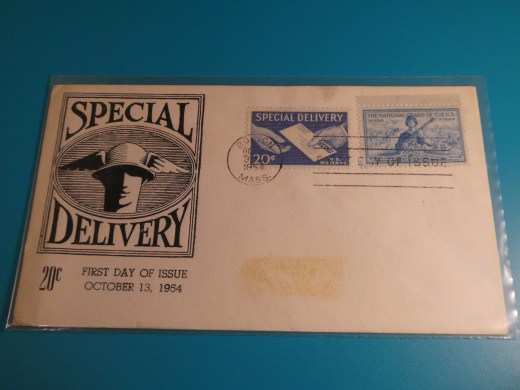
Image: Winged Mercury special delivery stamp issued in 1954.

 Freelancetheconsultantsdiary's Blog