The Road to Freelance

Many established professionals consider leaving the world of traditional employment and launching a Freelance consulting career.  The growing lack of job security,  as evidenced by the unemployment rate,  along with the increasing occurrence of toxic work environments endured by those who are working,  have caused many people to give serious thought to self-employment.

I’ve found much personal and professional satisfaction in Freelance nation but there are challenges.  Preparation is key and if you’re still on the job,  begin now to build the infrastructure that will support your transition.   Take the steps while on the corporate dime to sock away some cash and learn how to approach your business clients and contacts as an independent professional.  Learn how to package and sell your services and determine and negotiate fees for the scope of work you will perform.  Visit professional associations and meet Freelancers who do what you aspire to do and ask some questions,  especially on how to build visibility and credibility as an independent consultant in your industry.

Build your savings account

Aim to have savings that will allow you to cover your living expenses for 12 months.  You don’t know how long it will take to sign your first client,  or the one after that.  Freelancers,  especially in the beginning,  will need cash to float themselves,  especially if one is the sole or primary breadwinner.  Furthermore,  scheduled  projects have a nasty habit of being delayed or even canceled.

Start saving money now by eliminating those $5.00 coffee drinks.  Brown bag your lunch whenever possible and cut back on nights out eating and drinking by 75%.  Do not buy any clothing you don’t absolutely need and cancel any vacation plans.  Remember that in addition to paying for living expenses,  you may need to buy or upgrade technology hardware and/or software and will also need to pay for marketing materials  (business cards, website, etc.)  so that you can effectively operate and promote your business.

Business plan and business model

You must figure out how you will get clients,  select the services you will offer and how to determine your fees.  You must choose the marketing materials you will use and decide what they will look like.  You must define the best target client groups and know how to approach them and convince them to hire you for Freelance work—even if you’ve worked with them as an employee of you current organization.  Do you need to be accepted onto an approved vendor list in order to be considered for hire?  Discreetly ask questions of those you can trust to not rat you out to your boss.   Also get an understanding of the typical length of the sales cycle.

Additionally,  it is necessary that you assess the competitive landscape.  The presence of competition is good,  as it demonstrates the need for services you provide and shows that Freelancers are hired to fulfill those needs.  However,  you don’t want to be in an over-crowded marketplace,  unless you are a very heavy-hitter.

Finally,  summon the discipline to write a business plan.  A mission statement,  comprehensive marketing plan and basic cash flow and profit and loss statements will provide a useful road map to get you started and encourage you to examine what will be required to make your Freelance venture successful.  I wish you the best of luck.

Thanks for reading,

Kim
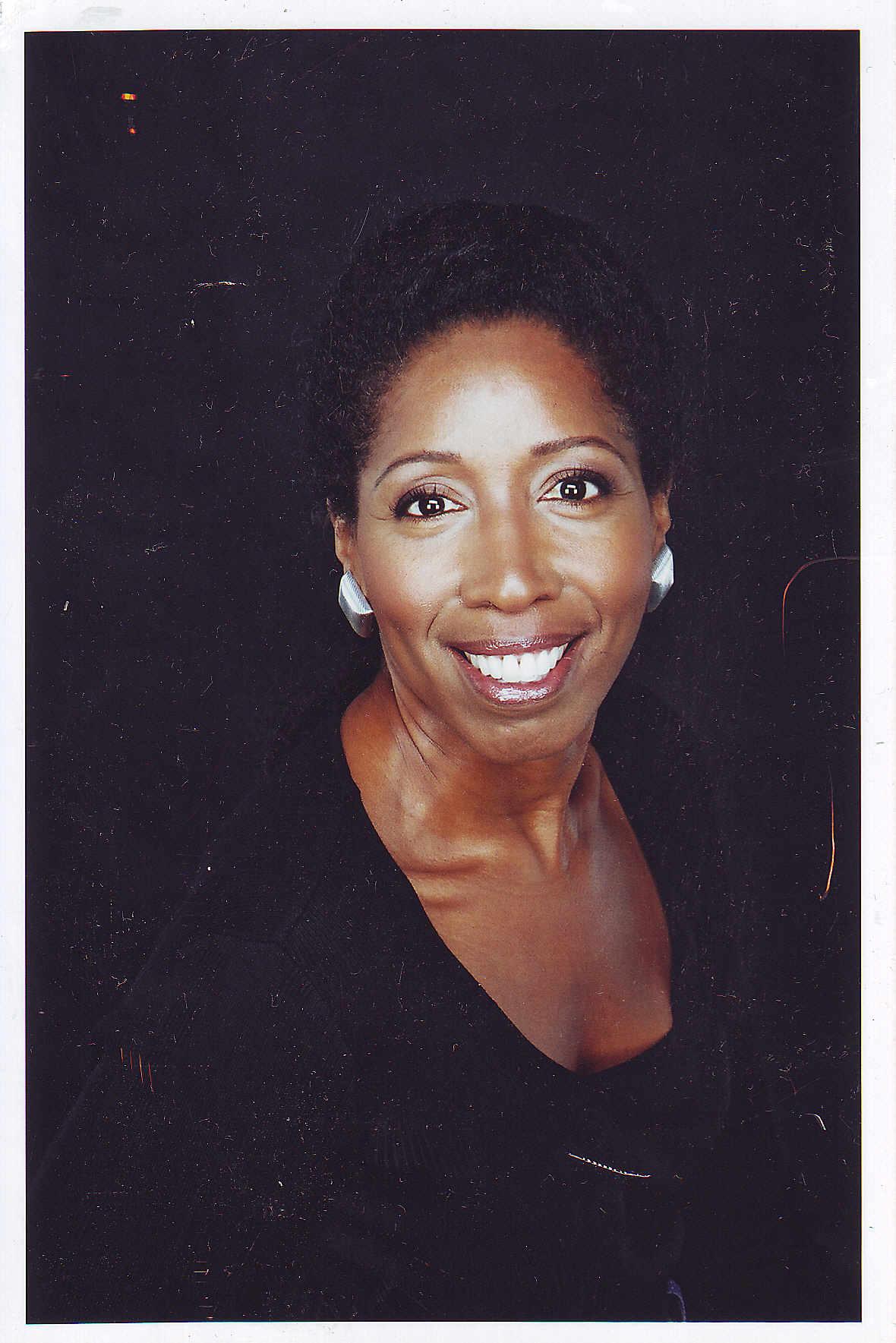
From Employee to Freelancer

Perhaps the handwriting is on the wall?  Is your intuition talking to you?  Anyway,  rumor has it that a few jobs will be eliminated and you suspect that your head may eventually be on the chopping block.  In addition to sprucing up your resume and LinkedIn page,  you wonder if perhaps you might go out on your own?  If you must face insecurity,  why not have it on your own terms?  You may be right.  Millions of Americans have done exactly that,  including your humble diarist.

If you’re still collecting a check consider yourself fortunate,  as tense as things may be at the office.  Having a job gives you two enormous luxuries: time and money.  I was not so lucky.  I tried for many months to get a job after losing my long-held corporate gig.  I knew nothing about how to Freelance,  although I had long harbored the desire to strike out on my own.  Unfortunately,  I had to learn the hard way.  It was an expensive lesson that continues to reverberate.  On the other hand,  I am in business and somehow manage to support myself.

Self-employment is difficult in any economy.  It’s necessary to work hard and work smart,  plus be resourceful,  resilient and rather lucky.  I know a few people who are making good money,  but I’ve read that a 30%  decrease in income is typical.  Freelancers must campaign and compete for assignments and there will be gaps. 

Clients are known to pay when they feel like it and collecting in 15 – 30 days is not always possible.  Furthermore,  there are many expenses that we must shoulder:  professional training seminars,  technology and office supplies,  retirement plan,  health insurance,  life insurance  (yes, we do need it,  even if unmarried and childless).  On top of that,  we have no paid sick days,  vacation time or holidays.

But if you’re trying to explore all income generating options because unemployment checks do not last forever and you wonder if your next employer might be you,  here are a few Freelancer start-up guidelines for you to follow:

Expand your network

It’s almost impossible to secure work assignments when you’re not well-known to potential clients and there are few who can give testimonials that will vouch for your expertise.  Growing your network is the most important step you can take in preparing to become a Freelance consultant.  Ideally,  you will consult in a field and specialty where you have deep expertise and credibility. 

Immediately begin to cultivate and solidify client relationships with those who can green-light projects you would want.  Identify professional associations that cater to consultants in your industry and also seminars that clients attend and get on mailing lists,  so you’ll know where to network.  Read industry blogs and other publications,  so you will be up-to-date with important issues.

Check your credentials

Be sure that whatever competencies and qualifications,  degrees,  certificates,  licenses and/or  insurance necessary to do business are in hand.  Whatever you don’t have and can get on your employer’s dime,  take steps to do so ASAP.   Otherwise,  consider professional development expenses as a 2012 tax write-off.  If nothing else,  the improved credentials might help you get your next job if you decide to hold off going out on your own.

More next week,

Kim

Pick the Right Clients

As a coda to last week’s post about understanding,  communicating and being rewarded with money and respect for your value, I add thoughts about how to recognize good and bad prospective clients so that you will be positioned to sell on value and avoid being treated as a mere commodity.

As mentioned last week,  it’s important to develop the confidence to understand and accept that your services are not meant for every possible prospect.  Those who intend to exploit and devalue Freelancers will get us nothing but a knot in the stomach and lousy pay.

I know all too well,  however,  that sometimes it’s about paying the rent and keeping the phone on.  Who among us has not worked with a client who was a complete jerk early in the game,  but we kept telling ourselves that we’re pros,  we’ll make it work,  just get the frigging money and pay the g-d bills?

Other times,  it’s about getting the right name on the client list and catapulting yourself to the next level.  So you roll with the punches and vow never to work with the SOB ever again.  Even billionaires wind up doing business with those they’d rather not, so they can stay billionaires.  Business is like that.

Yet we do have some measure of control over the clients we work with,  no matter how dismal the economy.  It starts with our very own business model and whom we envision as our target clients: Fortune 1000s and large not-for-profits,  arts or social service organizations,  medical device and biotech.  Perhaps you decline to pursue chemical companies that create seeds for genetically engineered crops,  or tobacco companies,  or start-ups of any kind.

Whoever your target clients,  you must avoid like the plague those who display disrespectful or unethical behavior.  The sorting process takes place in the initial meetings.  First,  pay attention to how the particulars of the project and its scope are presented.  There should be attainable goals,  specific deliverables,  a clear idea of what your role will be and a reasonable project time-table.

The client should probably do 70% of the talking in your first meeting,  but there should be space for you to add your insights to the discussion as well.  Your second clue is,  have you been invited to add your thoughts about possible solutions and strategies,  or is your prospective client the supreme expert who casts you in the role of supplicant?

Several months ago,  I spoke with a prospect who had one set of goals during a phone meeting and our first face to face and a rather different set of goals in our second meeting.  Our first meeting was great,  our second meeting was revealing.  The prospect did all the talking and blocked a true dialogue.  Goals had changed and they seemed unattainable to me.  My perspective was not sought and my value seemed unappreciated.  Further talks were postponed as the prospect decided to take a vacation.  Eventually,  she opted to shelve the project. I was furious at the time but  now realize that she did me a favor.

As you get to know your prospective client do not ignore how he/she speaks in reference to other Freelancers with whom he/she may have worked.  Very early in Freelancing,  I met a prospect who was oh,  so charming in meeting #1.  But in the second meeting,  he showed his true colors by making frequent references to how he was reliably able to hire Freelancers to work  “cheap”.  Also,  as he described the project,  my role and the deliverable,  he stipulated ridiculously scant hours and short time frame for project completion.

Definitely,  I should have walked right out of that clown’s office after politely suggesting that it might be best if he contacted one of his  “cheap”  Freelancers for that assignment  (I wanted to, believe me).  But I was needy and desperate for both money and a better client list,  so I meekly sat there and sucked up the attack on my professional value,  signed the contract and began work.

The whole impossible task was going nowhere and I was not even close to producing the deliverable as scheduled when lucky for me,  a ranking staff member realized the whole thing was untenable and stepped in to work with me.  That staff member understood my value and appreciated the contributions that I made to setting the stage for the project’s eventual successful completion (and also ensured that I was paid on time).

So what is the moral of this story?  As always,  learn to appreciate and communicate your value as a competent professional and insist that all who aspire to work with you do so as well.  It’s the only way to be a successful Freelancer.

Thanks for reading,

Kim

Tweet to Build Buzz for Your Business

Because the February-March session sold out,  I have been invited to reprise my three-part workshop  “Become Your Own Boss: Effective Business Plan Writing”  at Boston Center for Adult Education 122 Arlington Street Boston MA on three Mondays,  May 9, 16 & 23 from 5:30 PM – 7:30 PM.  For more information or to register please visit http://bit.ly/becomeyourown59  or call 617.267.4430.

As you develop strategies to promote your services,  be mindful that the goal is to package yourself in a way that makes clients feel that hiring you is a smart move.  Keeping your name visible by publishing good content across various media outlets and platforms is a strategy that will support your goal. 

When under consideration for an assignment,  you want to be certain that an internet search of your name brings up links to postings that demonstrate your bona fides.  The savvy Freelancer creates an online footprint that portrays a knowledgeable and capable professional,  one worthy of trust and lucrative contracts. 

Today,  we’ll take a closer look at how Twitter can support your online presence and brand,  help you build relationships,  connect with peers and portray yourself as a familiar and trusted source of useful information.  Let’s start the process by considering these three questions:

  • Who do you want to reach?

Since your tweets will focus on business,  it’s  safe to say that you’re looking to connect with current and potential clients and perhaps also peers with whom you do not directly compete.

  • Will your tweets be interactive?

Will your stream be public  and will you allow followers to post comments?  I suggest that you say yes to both and post comments to other’s tweets as well.

  • Do you have time to create good content?

In the allotted 140 characters,  it’s important that your tweets be relevant and timely and a conversation,  not a one-way sales pitch.

In the beginning,  try spending a few days  following the stream of someone whose tweets you find relevant,  then join conversations and answer questions.  When you feel ready,  start tweeting. 

Give updates on conferences you’ll attend,  on items in your newsletter,  on the workshop you’ll conduct.  So that your stream is not just all about you,  share links to articles you think your group might like to read and re-tweet interesting updates that you’ve received.

When it comes to followers,  focus on quality over quantity.  Your objective is to connect with key influencers and not everyone.  Share relevant stories that highlight your expertise.  Be helpful and informative.  Make a point of commenting on what others are doing.  Give your brand a voice and personality.

Tweeting is an ideal way for in-the-moment info sharing and that also includes listening.  In other words,  Twitter can play a role in market research and competitive intelligence.  Use Twitter to learn what your clients say about services they find useful and are willing to pay for;  about new trends and priorities that may help you identify potential business opportunities;  and to learn what competitors are doing and saying. 

Visit http://search.twitter.com to find out what’s being said about topics in your industry.  Add the Company Buzz app to your LinkedIn profile and find out what’s being said about your business.  You’ll be able to view tweets and learn the top key words associated with searches of your company.  Use what you learn to refine your brand and sharpen your sales pitch.

While you’re on LinkedIn you can also add the Tweets app to your profile.  This app will allow you to tweet,  reply and re-tweet all from LinkedIn and will also display your latest tweets on your page.

Along the way you’ll no doubt make some Twitter friends,  but remember that true relationship building requires personal contact and virtual connections are not necessarily reliable.  So use Twitter to encourage face-to-face activities. 

Invite your group to networking meet-ups and to your workshops and other speaking engagements.  In return,  be sure that you likewise support the activities of those in your group.

Social media platforms can make your name and business activities familiar to many and might even lead you to discover new business opportunities.  Consider it “free” advertising,  as you let the online community know of your capabilities.  Just remember to factor in the cost of your time.

Thanks for reading,

Kim

Twitter for Your Freelance Practice

Because the February-March session sold out,  I have been invited to reprise my three-part workshop  “Become Your Own Boss: Effective Business Plan Writing”  at Boston Center for Adult Education 122 Arlington Street Boston MA on Mondays May 9, 16 & 23 from 5:30 PM – 7:30 PM.  For more information or to register please visit http://bit.ly/becomeyourown59  or call 617.267.4430.

I don’t know about you,  but I’ve made a point of avoiding Twitter.  It appeared to be a total waste of time,  unless you plan to either start a revolution or take your band on tour.  Tweeting on subjects like what I decide to have for lunch is way too much information sharing.

Although it’s been easy to dismiss Twitter as just so much noise,  the microblogging platform is nevertheless rapidly gaining traction among businesses.  A convincing case can possibly be made for using Twitter to benefit a Freelance consulting practice.  So maybe I should reconsider?

Twitter is now five years old and growth trends for both business and personal use are upward, despite a reported 60%  dropout rate among users.  According to the tech marketing research firms BIA/Kelsey and ConStat,  nearly 20%  of businesses currently include Twitter in online marketing strategies and nearly 50%  indicate that in 2011 they plan to increase the use of online social media as a means to connect with current and potential customers.

Data from both research firms show that newer businesses and younger business owners are more likely to embrace online social media,  rather than traditional print media,  and to incorporate its use in marketing and customer outreach.  Businesses less than seven years old are more likely to use Twitter and less likely to advertise in the Yellow Pages,  for example.  Money is also a determining factor,  since other than time spent updating content (and time is money),  online social marketing is free.

But how effective is Twitter and the other social media platforms in helping to spin straw into gold and generate billable hours?  I’ve read a handful of anecdotal success stories,  but in my experience LinkedIn has not brought me a single contract in four years of active membership.  Come to think of it,  two years of blogging hasn’t brought me any money,  either (but hope springs eternal).  However,  there is a prospective client who follows my posts and has complimented me on what I produce.  There’s  no contract yet,  though (hint, hint!).

One thing I do know is that it’s entirely possible to build a lucrative consulting practice without either ad budget or Twitter,  LinkedIn,  blog or newsletter.  The most successful Freelance consultants with whom I’m acquainted—client lists to die for!—spend no money on promoting their services and have no social media presence.  An internet search of their names yields nothing.  That’s because in our business,  it’s not only who you know,  but also who knows you.  The highest paid Freelancers are known by the right people and they’ve successfully monetized those relationships.

Most of us will never dwell in that Valhalla,  but we know that Freelance consulting is a referral business.  We know that  to keep the cash flowing,  we must continually demonstrate to those who matter that we are capable,  reliable experts who will get the job done every time.  To be successful,  we must create and sustain positive word-of-mouth  (always the best form of advertising),  primarily by doing a first-rate job for our clients.

Beyond that,  we must establish good relationships with those who possess the money and motive to contract for our services.  The smartest Freelancers know to build relationships  before  they are needed. 

In theory,  social media help narrow the gap between the regular folks and the fortunate few by allowing us to share expertise and information,  announce our successes,  learn what is being said about the types of services that we provide and learn how to effectively communicate our value.  We have a forum in which to portray ourselves as  a knowledgeable,  trustworthy,  familiar known quantity,  which is precisely what our highest paid colleagues have done.  We also learn to get smarter about how we do business overall.

So maybe tweeting might be worth your time?  Next week,  we’ll discuss practical tips for how to create buzz for your business by way of Twitter. 

Thanks for reading,

Kim

Year End Tax Reducing Strategies

President Obama’s tax plan will probably pass before Congress recesses for Christmas. The $250K + crowd can once again relax as they glide by in their Lincoln Navigators,  splashing mud on the hoi polloi.  Nevertheless,  those of us who are somewhat closer to the earth (flat on our backs financially speaking, perhaps?) still have a few defensive measures to take,  regardless of whether Bush’s tax cuts get extended by Obama and Congress.

Get the money now

In addition to giving a nice boost to your cash flow to help with Christmas shopping,  this is also a most clever way to approach clients and entice them to either pay on time,  finally make good on a late payment or even request payment a couple of weeks early.  You are not chasing money,  this is all about tax planning… Your accountant would like you to show X dollars in 2010,  for tax purposes.  The client will benefit by cleaning up accounts payable as the year ends.  That’s how you’ll phrase it when you speak to the finance director and ask that your outstanding invoices,  late or early,  get paid by 31 December.

Or, take the money later

Did you buck the trend and have an extraordinary year in 2010,  but expect less than thrilling billables in 2011?  In that case,  income deferral is your best strategy.  Mail invoices in January and sign contracts that require an up-front payment after the calendar turns.

Pump up the write-offs

If you have a few dollars available,  then stock up on office supplies before 31 December.  If you have more money,  then take advantage of the sales and purchase big-ticket items such as office furniture,  a more powerful computer,  a good camera,  or software that will help you manage business more effectively.  For example,  the right accounting software will make tax planning and business financial analysis easier.  Evaluate whether what you’re using now is sufficient for the needs of your business.

You get to choose how and when the expensive purchases will be written off,  either slowly over a period of years as depreciated assets or immediately,  by using the Section 179 deduction.  You can make that decision at the April 2011 filing.  Conversely,  if you suspect that you will come up short on deductions next year,  shop after the new year.

Review your retirement plan

If you’ve thought about establishing a Solo 401K,  do it by 31 December.  Add extra dollars to your pre-tax funded and tax-deductible SEP IRA or Solo 401K (if you’re age 50 +,  remember the catch-up contribution feature of the latter).  Exercise the profit sharing or salary deferral benefits of your Solo 401K if you’ve had a lucrative year and would like to keep some money away from the tax man for a few years.

Review your choice of business entity

Especially if you operate as a Sole Proprietor,  try to squeeze in an appointment with a business tax attorney or an accountant,  so that your financials can be reviewed and you can talk about where your business is now and what you’d like it to become in the future.  Do you envision selling your business,  or passing it to a family member? Perhaps you would be better served if you changed your business entity to either an LLC or S  Corporation.

2010 Tax Tactics

  • The health insurance deduction for Freelancers,  including Sole Proprietors,  LLC members (single or group),  general partners and S  Corporations (single or group and owning 2% or more of the stock),  will reduce taxes owed on income generated by self-employment and also the amount of self-employment tax owed.  Health insurance premiums are 100%  tax deductible if one is self-employed and does not participate in  a group health insurance plan.  Health plan premiums to insure your spouse and dependent children are also fully deductible.  However,  your business must show a Schedule C profit in order to claim this tax benefit.  Businesses that show a loss will not be eligible for this deduction.
  • Those launching a new business venture in 2010 will have a more generous start-up expense deduction of $10,000.00 ($5,000.00 is the usual limit).  File your registration paperwork toute de suite.
  • The Section 179 deduction has been increased to $500K for 2010 (and 2011).  Maybe you need commercial property for your business,  or a company vehicle or two?
  • If you’ve been thinking about hiring an employee and can find someone good within two weeks,  a one-time hiring credit can be taken in 2011 for an employee hired by 31 December, 2010.  The tax credit will equal 6.2%  of wages paid,  not to exceed $1000.00,  for each employee who is retained for one full year.  Your new employee(s) must have been either unemployed for the 60 days that preceded the hire or underemployed,  having worked a maximum of 40 hours in the 60 days preceding the hire.  Family members hired are ineligible for the new hire tax credit.

Thanks for reading,

Kim


To Be, or Not To Be

I was surprised to learn that the number of Freelancers in the US has dropped to the lowest level in eight years,  down 13%  from a record high of 9.98 million in 2006.  The Department of Labor recently reported that as of August 2010,  there are now 8.68 million of us.

Because full time employment is not materializing for many citizens,  I assumed that the survival instinct would kick in and induce laid off salary men/women to assess their skill sets and figure out a way to package and promote their acts.  That’s what brought me to Freelance Nation.  But the stats have proved me wrong.

It is true that self-employment typically increases in the aftermath of a recession,  when laid off workers are unable to get rehired and thus venture out on their own.  But in this recession,  a variety of factors have weakened the demand for Freelance services,  causing many to choose alternate paths.

Some are maxing out their unemployment benefits as they sign up for temp work or settle for low end hourly wage jobs,  seeing those roads as their best,  albeit unsatisfactory,  survival options.  They don’t see much financial potential in either Freelancing or setting up a small business.

Diminished credit and poor sales are stifling the growth of small businesses.  A recent report issued by the National Federation of Independent Business Owners shows that 31%  of small business owners say that poor sales is their company’s single most important problem.

This news is interpreted by economists and labor experts as a sign that economic recovery is not just around the bend.  There is evidently not enough money being spent by consumers to sustain the survival of many small businesses.

However,  easier lending terms could encourage small business owners to make capital improvements and staff additions that will help to improve competitive positioning and perhaps attract more customers.  The Federal Reserve recently confirmed that about 20%  of banks are making commercial and industrial loans more available to small businesses for the first time since 2006.

Unfortunately,  large and mid-size companies prefer to play the wait and see game.  They are waiting for the outcome of the mid-term elections,  wonder what the newly reconfigured Congress will do about economic  initiatives (will the Stimulus Bill be extended?),  they wonder about taxes and wonder what the new health insurance regulations will mean to their bottom line. 

The big boys do have money to spend.  They slashed payrolls by laying off workers whether or not that strategy was necessary for the organization’s survival.  They limited hours worked per week,  limited or eliminated raises and off-shored as many functions as possible.  Paradoxically,  productivity remains high and continues to increase,  as businesses get more work out of their leaner and meaner staff.

There is precious little incentive to hire under these conditions.  Why bother? Those at the top of the pyramid are free to put still more money into their bulging wallets.  That explains why the only healthy segment of the real estate market consists of 7 figure properties.

These practices have left many current and aspiring Freelancers in the lurch.  Although the Fed states that lending to mid-sized and larger firms has over the past six months begun to ease,  there remains a marked resistance to green lighting the projects that Freelancers depend on.  A hard freeze is in full effect and it shows no sign of abating.

According to Scott Shane,  professor of economics at Case Western Reserve University in Cleveland,  the failure rate of self-employment is significant during this recession and economic  indicators do not point toward a quick recovery.  Only when larger companies,  those considered bell weathers and thought leaders,  begin to hire again will demand for Freelancers increase.

That said,  not all Freelancers are suffering.  A fortunate few are having their best year ever.  Recently,  I was chatting with a friend who makes and restores fine string instruments.  He does not lack for work.  I am also aquainted with a market researcher, with  someone who arranges and supervises the relocation of scientific laboratories and with someone who helps manufacturing facilities comply with environmental regualtions.  All of them are enjoying very healthy billable hours.

It just goes to show you,  in every kind of economy, there are always those who make money.  I just wonder when it will be my turn?

Thanks for reading,

Kim

How to Hire a Freelancer

 This week,  we flip the script and examine the thought processes and procedures that ought to be followed when we are hired for a project.  How do ya  like them apples?

1.)  Determine what work needs to be done.  This  should be obvious,  but a surprising percentage of  project managers do not have a clear idea of the scope of the job.  They may furthermore have an unrealistic  view of the time,  resources and information needed for successful project completion.  These are the managers who hire a Freelancer to work 10 hours /week for 4 weeks,  when 20 hours /week  for 8 weeks is what the project requires.  This information is imperative for accurate project budget development.

2.)  Determine the relevant qualifications most likely needed to successfully perform tasks associated with the project.  Resist the temptation to gratuitously demand degrees and certifications  simply because in a tight economy it is possible to do so,  under the mistaken notion that this will ensure that the best candidate will be hired.  Pieces of paper are not necessarily an indicator of ability.  Experience is  a  much more reliable indicator of competence and therefore should be the primary qualification sought.

3.)  Research the price range for consultants within the  specialty.  This information is also necessary for accurate budget development.  Verify that adequate funds will be in hand,  so that Freelancer invoices can be paid on time.

4.)  Interview three or four candidates if  this project has not been outsourced previously.  First,  gauge what level of talent is available.  Second,  learn to recognize candidates who are  able to do the job.  In this economy,  there is  a large pool of  high quality talent available within most specialties.  These  individuals can bring skills and insight to a  project that  a  hiring manager may not have considered and they may be able to effect a better outcome than was originally envisioned.  Some candidates  may have a better understanding of what is needed to successfully complete the project than the manager.

5.)  Clearly describe the project scope to those who are interviewing and review again for the Freelancer who is ultimately hired.  Again,  this seems obvious,  but a disappointing number of project managers fail to disclose certain specifics of the project.  Inevitably,  this results in disappointment and frustration for all concerned.  Failure to accurately describe project specs is most unfair,  because whose   “fault”  is  it when expectations are not met?

6.)  Confirm the availability of the Freelancer most likely to be hired and speak with one or two of his/her clients as  a  reference check.

7.)  Develop a written contract/proposal  that clearly details project specifications and expected outcomes or delieverables,  hours /week,  project start and end dates and pay scale.  In some situations,  the Freelancer hired will provide this document.  Both the project  manager (or responsible organization representative) and the Freelancer should sign the contract/proposal,  with a photocopy given to the Freelancer.

8.)  Require that the Freelancer hired signs a confidentiality/nondisclosure agreement.  This will allow staff to feel comfortable to candidly discuss pertinent business matters in the presence of the Freelancer.  Find a template online or ask an attorney to prepare a standard template that can be generally used for consulting needs.

9.)  Introduce the Freelancer to staff,  starting with those with whom he/she will regularly work or encounter.  It is  a  good idea to inform staff that  a  Freelancer will  be hired for the project.  It is a better idea to verify whether there are staff  in-house who have both the ability and time to take on the project,  if only the  manager was smart enough to ask! 

Thanks for reading,

Kim

The Doctor Will See You: Whatz Up With Health Insurance

At last,  health insurance will soon become more easily accessible to those who live in the US.  Belatedly,  we have joined the ranks of  industrialized nations by taking important steps toward providing access to health insurance for almost everyone.

The health care bill,  which was signed into law on my birthday,  is far from perfect but it is a start.  Unfortunately,  we will continue to pay too much for health plans that may not cover enough—like mammograms,  Pap smears,  prostate exams or periodontal care.  If  you should find a plan that will cover those necessities of health maintenance,  the deductible is likely to be exorbitant.

My guess is that in most instances,  we will be forced to pay more out of pocket than we would like and that we’ll pay more for our monthly premiums than we would like.  Same old story,  pay more to get less.

The insurance  companies have already begun to petition state regulators for rate increases.  Several states are bound to let them have their way because they own our political representatives—which is how we got stuck with a raw deal on health insurance in the first place (but you know that).

FYI,  here is what the health insurance roll-out will look like for Freelancers and small business owners:

2010

Freelancers with pre-existing medical conditions will be  eligible to buy health insurance at reduced rates.  By October,  insurance companies will no longer be allowed to place lifetime benefit limits on insurance coverage for those with pre-existing conditions.

Businesses with fewer than 26 employees and average annual wages of $50,000 or less will receive a 35%  tax credit  IF  the business pays more than half of its employees’  health benefits.

2011

Businesses with fewer than 100 employees will be eligible to set up employee wellness programs and offer either bonuses or a maximum 30%  health insurance rate discount to employees who join the wellness program.

Employers will be required to disclose the value of employee health care benefits on form W-2.  Beginning in 2018,  holders of health insurance plans deemed  “expensive”  will pay federal taxes on their value.

2013

Tax exempt contributions to health care accounts for medical expenses will be limited to $2500/ year.  Medicare taxes will rise to 2.35%  on earnings over $200,000 for unmarrieds and earnings over $250,000/ year for married couples  (from the current 1.4%).  Employer tax deductions for the cost of retiree Medicare drug benefits will be eliminated.

2014

All citizens and legal residents of the US will be required to purchase/possess health insurance.  Freelancers and small businesses with maximum 100 employees will be able to obtain health insurance through health care exchanges that states will be required to establish.

Small Business Health Options Programs,  called SHOP Exchanges,  will allow Freelancers and small businesses with maximum 100 employees to band together and purchase health insurance as a group to (presumably) save money.  States,  however,  will be allowed to throw a curve ball and temporarily redefine a small business as one having maximum 50 employees  (through 2016 only).

Insurers will be unable to deny health insurance to anyone with a  pre-existing medical condition.  Businesses with 50+  employees that fail to offer health benefits to employees may face penalties of up to $2000/ uninsured employee.

In the meantime,  venture capitalists are looking to fund start-ups that can streamline and improve upon health care delivery systems,  especially for chronic disease management, physician/medical practice profitability tools and patient (customer) relations management.  A woman in my CEO forum operates an employee wellness program business.  She has just hired two part time staff members and is developing a sales pitch for investors.

A votre sante (to your health),
Kim

The Subtle Art of Self-Promotion

There was a time,  not terribly long ago,

The Diarist

when one’s accomplishments pretty much spoke for themselves. If you performed well in your chosen profession and discreetly let a few of the right people know, you were often rewarded with the promotion you deserved or the clients you coveted.

The pay-off sometimes took longer than anticipated, but eventually many of us got there, or at least reasonably close. The adage about the rewards of hard work offered numerous confirming examples to back it up. But that was then, my Freelancer friend, and this is now.

Today, the sizzle is worth more than the steak and appearances count more than capability. Exposure is no longer something that you die of, but will die without. Everyone is out there putting on a show, from politicians to athletes, corporate leaders and entertainers, Supreme Court justices, organized crime figures and a platoon of self-created “celebrities” like Paris Hilton and her BFFs and frenemies.

Shameless and relentless self-promotion in the pursuit of visibility/attention/ branding and image enhancement is rampant and sadly, has become an expectation. Average citizens are not immune and have been dragged into the fray by MTV Real World, FaceBook and Twitter, enticed to divulge and disseminate personal information such as who one drank with on Thursday night.

The advent of first websites and then social media platforms have forced Freelancers and business owners to establish brands for our products that are as strong as those created for Proctor and Gamble soaps. The choice and management of promotional strategies can be exhausting and bewildering. Several of the typical options can also be a waste of time, because visibility and noise level do not necessarily yield billable hours.

“What, you don’t have a ‘call to action’ on your website?” “You really should write a blog. And a newsletter.” “I have 500 + LinkedIn connections!” “I have over 2000 names on my mailing list.” “Absolutely, you should be tweeting about your business and letting people know what you’re up to.” “I go to at least one networking event every day. It’s what I do.” Aaarrgghh!

I propose that it has become necessary for the savvy Freelancer to devise a self- promotion strategy that achieves the following:

1.) Showcases one’s expertise

2.) Resonates with clients and referral sources

3.) Delivers desirable tangible results

4.) Does not consume an inordinate amount of time

5.) Preserves one’s self-respect

Next week, I’ll suggest tactics that you may find useful to include in your self-promotion strategy.

Thanks for reading,
Kim