Social Media Marketing: Hacks that Help

There are now more than 5 billion social media users worldwide who participate on several platforms, making the practice a marketing juggernaut that provides countless opportunities for B2B and B2C businesses in every industry to connect with customers and prospects. Once limited to developing brand awareness primarily in B2C industries, the influence of social media on businesses global and local now impacts customer experience, sales strategy, product development, content marketing strategy, competitive intelligence and more.

Because time means money where business is concerned it should come as no surprise that the timing of social media posting is sufficiently consequential to have piqued the interest of marketing researchers. Think about it—when planning to contact a customer or prospect, do you not consider what might be the best time to reach out? You probably avoid making important phone calls, or perhaps even sending an email, on Monday mornings or Friday afternoons. It’s a guessing game, but you aim to reach out when you expect your customer or prospect to be in a receptive mood, so your message will receive the consideration you feel it deserves. A similar approach to timing applies to social media posting. I first reported the best times to post on five platforms in June 2020. https://freelancetheconsultantsdiary.wordpress.com/wp-admin/post.php?post=20744&action=edit

When posting content on social media, the most important goal of marketers is to maximize the number of viewers who see their content. Platform algorithms prioritize engagement and posts that quickly attract attention are typically shown to more users, giving high engagement content an algorithmic boost that helps it to be seen by even more viewers.

A study of the Best Times to Post on Social Media in 2024 conducted by the social media marketing entity Sprout Social examined six platforms—Facebook, Instagram, LinkedIn, Pinterest, TikTok and X (Twitter)—to measure the influence of time on the potential reach of posts. Posting content on days and times shown to be popular with viewers may help increase the audience for that content and amplify the clout of your social media marketing campaigns.

But a word of caution—before scheduling posts to reflect your platform’s peak engagement times as identified below, compare Sprout Social results with your company’s social media data analyses. You may discover that your target audience is not uniformly aligned with the data presented here.

Best Times to Post on Facebook

  • Mondays from 9 a.m. to 12 noon
  • Tuesdays from 9 a.m. to 2 p.m., also at 5 p.m.
  • Wednesdays from 9 a.m. to 3 p.m., also at 5 p.m.
  • Thursdays from 8 a.m. to 2 p.m., also at 5 p.m.
  • Fridays from 9 a.m. to 11 a.m.
  • Best days to post on Facebook: Mondays through Thursdays
  • Worst days to post on Facebook: Sundays

With 3.05 billion active members per month, Facebook is the most widely used social media platform in the world and utilized by 89% of marketers worldwide. Facebook ties with Instagram for the distinction of social media platform that generates the highest marketing ROI, at 29%. The platform is an excellent showcase for online content of every type, from images and videos to live streams and audio content.

Best Times to Post on Instagram

  • Mondays from 11 a.m. to 2 p.m.
  • Tuesdays from 10 a.m. to 4 p.m.
  • Wednesdays from 9 a.m. to 4 p.m.
  • Thursdays from 9 a.m. to 1 p.m., also at 2 p.m.
  • Fridays at 11 a.m.
  • Best days to post on Instagram: Tuesdays, Wednesdays and Thursdays
  • Worst days to post on Instagram: Sundays

Instagram is a free photo and video-sharing app and social media platform that now has 2 billion monthly active users. Owned by Facebook (Meta) since 2012, Instagram is the place to share images, videos, reels and live streams. Instagram ties with Facebook for the distinction of social media platform that generates the highest marketing ROI at 29%.

The key to Instagram is that it is based on visual content. The photos and videos you upload will appear in your followers’ feeds, where they can like, comment, or share your visual post. The more likes or comments you get, the more “relevant” your post becomes and the higher it is placed in followers’ feeds.

Best Times to Post on LinkedIn

  • Tuesdays and Wednesdays from 10 a.m. to noon
  • Thursdays at 10 a.m.
  • Fridays 9 a.m. to 12 noon
  • Best days to post on LinkedIn: Tuesdays through Thursdays
  • Worst days to post on LinkedIn: Weekends

With over 1 billion members in 200 countries and regions, LinkedIn is the Mount Olympus of B2B communication for both the 1099 and W2 sets, who can share their expertise as they generate warm leads, announce new products and services, find co-marketing partners, investigate new employment opportunities, or attract talent to hire. Furthermore, users have found an ideal environment for professional storytelling, facilitated by LinkedIn Videos, and professional development at LinkedIn Learning.

Best Times to Post on Pinterest

  • Mondays: 2 p.m to 4:00 p.m and 8:00 p.m. to 9:00 p.m.
  • Tuesdays: 2 p.m. to 4 p.m. and 8:00 p.m. to 9:00 p.m.
  • Thursdays at 3 a.m.
  • Fridays: 3:00 p.m.
  • Best days to post on Pinterest: Weekdays
  • Worst days to post on Pinterest: Weekends

As of April 2024,  Pinterest has 89 million users in the United States and generated a a 7.5 % growth in users between 2022 and 2023, putting its growth rate ahead of Facebook, YouTube and Instagram. Pinterest is known as the platform where users research and discover DIY projects and inspiration products often focused around lifestyle ideas, home décor and recipes.

Women aged 25 to 34 years comprise the largest share of Pinterest’s global audience and the platform presents companies with creative opportunities to expand their community and build brand awareness. Brands that use the platform appreciate Pinterest’s benefits, in particular spotting emerging trends, building brand recognition and authority and driving website traffic. Pinners, as platform users are called, search for inspiration on this virtual mood board and curate their space.

Best Times to Post on TikTok

  • Tuesdays from 4 p.m. to 6 p.m.
  • Wednesdays from 9 a.m. to 11 a.m., noon, and 2 to 6 p.m.
  • Thursdays from 9 a.m. to 11 a.m. and 2 to 6 p.m.
  • Fridays from 4 p.m. to 6 p.m.
  • Best days to post on TikTok: Wednesdays and Thursdays
  • Worst days to post on TikTok: Sundays

With TikTok comes a whole new playbook for B2B social media marketing. Today, you can’t develop a social media strategy without considering TikTok. B2C brands led the way but as the platform has matured, it’s been recognized as a desirable resource for B2B marketers as well. Keep the following suggestions in mind when formulating your TikTok B2B marketing campaigns:

  1. Be authentic: Authenticity matters on TikTok. B2B brands will do well to showcase their unique personality, culture, guiding values and expertise. Share behind-the-scenes peeks, stories of the company founder(s) and employees and other relatable content.
  2. Find your niche: Identify your target audience and create content that resonates with them. Whether it’s tech enthusiasts, entrepreneurs, or industry professionals, tailor your content to their interests.
  3. Interact with the community: Engage with other TikTok users by participating in challenges, responding to comments and collaborating with influencers. Building a community around your brand is essential.
  4. Educational content: B2B companies can benefit from posting educational content. Share product demos, explain complex concepts, or provide industry insights. Remember that authenticity matters more than polished video production values.

Best Times to Post on X (Twitter)

  • Mondays from 10 a.m. to 12 noon
  • Tuesdays from 9 a.m. to 3 p.m.
  • Wednesdays from 9 a.m. to 3 p.m.
  • Thursdays from 9 a.m. to 3 p.m.
  • Fridays 10 a.m. to 12 noon
  • Best days to post on X: Tuesdays through Thursdays
  • Worst days to post on X: Sundays

X (Twitter) is the platform to monitor breaking news and trending topics and voice your opinions in up-to-the-minute conversations that align with your brand values and show customers and prospects what matters to you. X doesn’t offer the array of posting options that build engagement as do Instagram or Facebook. Rather, X focuses on conversation threads, replies, mentions, microblogging and enticing readers with eye-catching results from a survey you’ve conducted.

Twitter has a new name, but it’s still the place to express uncensored opinions. To increase audience engagement consider Twitter polls, which allow you to pose a question in a tweet, invite respondents to choose one of four possible answers to the question and will send the poll results to you, to announce and invite discussion. Polls are a great way to stimulate audience engagement because they’re quick and fun.

Polls are also a mechanism to invite uncensored feedback from customers about their preferences and therefore augmenting the validity of your market research—in the development phase of new products and services or customer service protocols for example. Polls are not a substitute for traditional market research, but they’ll provide quick and useful insights.

Thanks for reading,

Kim

Image: © Gala-Salvador Dalí Foundation. The Persistence of Memory “Melting Clocks” (1931) Salvador Dali, courtesy of The Museum of Modern Art, New York, NY. Dali portrait by Lies Wiegman (1961), retroactively colorized, courtesy of The Dali Museum, St. Petersburg, FL © Gala-Salvador Dalí Foundation

Build Your Email Contact List

Despite numerous predictions of its imminent demise that have splashed across the headlines of business publications for several years now email marketing, in various formats, continues to march forward in vigorous health because it works. If email marketing didn’t produce quantifiable ROI we would have abandoned it years ago. Nope. Email marketing remains an efficient communication pathway that allows companies to announce a product launch, register attendees for a podcast or webinar, deliver to subscribers this week’s installment of your blog, entice mailing list members with an invitation to your virtual book launch, or inspire potential students with news of the debut of your online course.

Despite the popularity of half a dozen social media platforms that are experiencing an upward trend that shows no sign of slowing down, email marketing continues to be accepted by those on the receiving end, so long as the number from any one source does not overwhelm. When email list members value the sender, they seem to like updates delivered to their inbox.

So building a quality email list that’s populated with prospects who are interested in you and your company is good business. Today, we can identify a few smart, simple tactics that are fast-acting, free and can potentially create for your organization a brand building, money making email list.

  1. Social media

An effective and obvious way to quickly and organically build a robust email contact list at no cost is to post content on social media platforms and the more platforms you post content to, the faster you’ll collect names and email addresses. How so, you ask? Because sooner or later, readers of your content will respond to what you’ve written and when they do, you’ll capture their name and email address. It’s likely that those willing to give a like to your posts or make a comment will also be willing to join your email contact list.

Another easy email capture tactic can be done on your Facebook page, by way of the Call to Action button. Hover your cursor on the CTA and select the “Edit Button” option, then change the text to read “sign up” or “join” so that you can invite Facebook Fans to your email contact list.

LinkedIn users are able to send emails to all of their primary connections but to quickly grow your email list, you’ll want to reach out to your second degree (the connections of primary connections) and third degree connections (secondary connections, once removed). There is a free service called Snovio that allows account holders to install an email finder extension which, by way of a gmail account, allows LinkedIn users to find the email addresses of those distant cousins. Click to learn more. https://app.snov.io/register?lang=en&signup_source=blog&signup_page=snov.io%2Fblog%2Fhow-to-get-the-contact-details-of-your-2nd-and-3rd-connections-on-linkedin-in-two-easy-steps&cta_type=link

2. Website sign-ups

Upload to your website reasons to collect names and email addresses. For some, that will be the “Contact us” form—website visitors who have questions or want more information about the company’s products or services are required to fill out a contact form and provide their name and email address. Other common website signup tactics are surveys, free telephone (video call) consultations, registrations for webinars and requests for free special publications—-your e-book, case studies, or white papers, for example. All are effective conduits for collecting names and email addresses that grow a viable email contact list.

3. Call to action

On your website landing page, on your white papers, blog, or newsletter, invite people to connect. You may be pleasantly surprised with the positive results of a straightforward appeal for email contact info. The share button and invitation to subscribe to or follow your blog and/ or newsletter will also bring in names and email addresses if your content is well- written and relevant.

Add a chat bot plug-in to your WordPress hosted website so that visitors can quickly obtain answers to basic questions about your products and services. Bot analytics will reveal the names and email addresses of your chat bot users, who are all set to join your growing email list.

Finally, get more mileage from your email signature block and invite recipients of your emails to opt-in and subscribe to your blog, newsletter and notices about other interesting things you’re doing.

4. YouTube videos

YouTube is the second- largest search engine in the world and about six billion videos are viewed on the site every day. People like visuals and videos are the favorite visual. Production value matters, so ask around to find out who you know with equipment that’s a level or two more advanced than your cell phone. Your public library may have equipment to use and a quiet room that will be all yours for an hour or two.

What story can you tell? You’ll have a few and you can make one or two of them sound appealing with a little thought and some rehearsal time. Providers of B2B services don’t have a product to show but we can do a convincing 5 minute promo on a course we’re set to teach, or a virtual talk we’ll give, or panel we’ll participate on.

If you’re rolling out a new service, pivoting your business, or embarking on a collaboration with colleagues that you and your partners can make sound exciting and useful to certain of your clients and prospects, include a video pitch in the launch campaign.

Remember to conclude your videos with both a verbal and text Call to Action. Ask for the business and direct viewers to click a button and be directed to your squeeze page, a landing page you can create that collects the names and email addresses of those who want to know more about your topic (i.e., what you’re selling). Learn to create a Wordstream squeeze page here. https://www.wordstream.com/features/cro-toolkithttps://www.wordstream.com/features/cro-toolkit

After posting your pithy little video promo to YouTube, also get it onto Instagram stories, Twitter, LinkedIn, Facebook and your website. Write a short teaser sentence to accompany a link to your video and include them in your email signature block.

5. Join business groups

All meetings are virtual and will remain so for the time being, but by attending events hosted by the group you join—-the chamber of commerce, a neighborhood business group, the local alumni chapter of your school, or other professional development and networking associations—-the benefits of membership include access to the member directory.

I don’t recommend that you import the directory and spam fellow members by sending your content without permission, because that will do you no favors. But one easy way to obtain the names and email addresses of desirable contacts is to attend virtual programs and make a pitch through the chat function.

During the final 15 minutes or so of the program send an all-person chat message to briefly introduce yourself and offer to send your blog, newsletter, e-book, or other content to anyone who’ll (privately) provide their name and address.

Attend one or two virtual events each month and you’ll be almost guaranteed to add 4-5 worthwhile names each month from this one source. This type of ask was originally done during the face2face conversations that took place during pre- event meet & greets (remember those?), but they can migrate to a virtual format without feeling awkward.

Building a robust email marketing prospect list is one of the best growth strategies business owners and leaders can do. If you’re able to add 10-20 contacts each month, declare victory. List building is an ongoing process—- it never stops. I’ve personally witnessed Freelancers who have 5000+ names on their list politely, skillfully, relentlessly, invite every potentially good contact to join their email list.

Thanks for reading,

Kim

Image: Replica of a vintage mailbox

Social Media —-Best Time to Post

You already know that timing is everything in business and life and that calculation also applies to when one should ideally post content on the social media platforms of choice. According to social media content marketing experts, there are days and times when your audience will either be more likely to login and read posts on a particular platform or will be in a receptive frame of mind when they do check in.

Social media management sites, including Buffer, Hootsuite, Hubspot and SproutSocial, have studied the potential best timing for publishing and sharing posts and published those results, but the most exhaustive research seems to have been done by the Bismarck, ND digital marketing management company CoSchedule. Highlights of the company’s research are cited in this post and in its entirety at this link. https://coschedule.com/blog/best-times-to-post-on-social-media/

Still, I suggest that you experiment with your own study and look for indications that your posts perform better or worse on certain days and times. Because I had a long career in B2B face2face sales, I knew to avoid posting on Monday (too busy) or Friday (livin’ for the weekend). Tuesday seemed like a good day to publish, so I went with it. LinkedIn is my social media platform and I’ve shared my posts there each week for the 11 years that I’ve published.

Here’s a rundown of platforms that appeal most to B2B marketers and the suggested prime times to publish content, according to a review of 20 studies that was conducted by CoSchedule. To dig more deeply into this topic, click the link to the study. B2B, B2C and age will potentially impact your prime publishing times.

Facebook

The evaluation of 20 studies revealed that the overall best time frame to post on Facebook is Thursday to Sunday from 1:00 – 3:00 PM. However, users can quickly and accurately identify their individual prime posting times by opening the Insight tab at the top of the page and inspecting the tracking graph.

Google Plus

What users really want to do to find out what’s going on is to use the Steady Demand tool, that reports out not only what your business, but also competitive businesses, are doing. You’ll have to pay, though. Otherwise, Wednesday mornings at 9:00-ish reportedly yields the best results when publishing. https://www.steadydemand.com/services.php

Instagram

Users who have a business account with the platform should head straight to Instagram Analytics to receive customized performance results. Those who do not have a business account are recommended to investigate a free tool that is known to provide reliable data, such as Union Metrics. https://unionmetrics.com/free-tools/instagram-account-checkup/

LinkedIn

The platform is all business and users are in a business frame of mind when they check in, but according to statistics, Tuesday through Thursday 8:00 AM – 5:00 PM wins by a nose (hey, that’s when I publish!). My LinkedIn connections will know that I’ve shared a blog post via a message that appears at their Notifications tab.

TikTok

These 500 million active monthly users, heavily represented by the highly coveted Generation Z demographic, continue to fascinate nearly every marketer, especially in the B2C space. Business owners and leaders want to recruit them as customers now and work on cultivating a longstanding relationship that will yield millions of dollars in sales.

Marketers dream of their company’s videos being seen by a large segment of a GenZ audience that will become loyal to their company and who will comment on and give likes and shares to company posts. Some clever and lucky posters, they imagine, will attract devoted followers who like their videos enough to click the icon that includes the video creator’s profile to find the heart ♥️ and ask to be a follower.

What may not have been considered is that this group is not known for long term loyalty. They are known for skepticism and changing their minds. The best posting times have been difficult to pin down, but morning and evening commute, plus lunchtime, seem the best for publishing new content.

Twitter

Wednesdays and Thursdays have emerged as the preferred days for tweeting, but users can verify their power hours by way of Twitter Analytics. Click “tweets” Overall, the best time frame for publishing is 7:00 AM – 8:00 AM and 6:00 PM- ish.

Thanks for reading,

Kim

Photograph: Kim Clark

How B2Bs Use Social Media

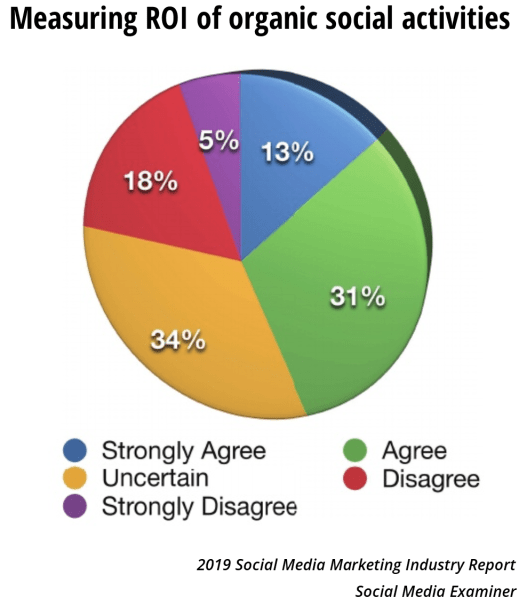
Take a look at the pie chart above. In response to the question, “I am able to measure the return on investment (ROI) for my organic social media activities,” only 44% of marketers in a recent survey that examined the use of social media in the B2B and B2C sectors agreed they were able to measure the performance of their organic social activities. This challenge has plagued marketers since the format appeared. Social media marketing is now included in most marketing strategies, yet a demonstrable ROI still eludes many. In my experience as a Freelance marketing professional, business owners and leaders still haven’t figured out how to effectively use the medium, measure its success or, for that matter, establish reasonable expectations for its benefits.

The wrong platforms are used. Content doesn’t fit platform. Investments are made in platforms that customers do not follow. Postings, after an initial burst of energy, appear only erratically after four or five months. Most of all, in an effort to both save money and simplify, social media all-too-often becomes  the company’s marketing strategy, rather than one component of the strategy.

The 2019 Social Media Marketing Industry Report, released by Social Media Examiner, surveyed more than 4,800 marketers with the goal of understanding how they use social media to grow and promote their organizations. for the past five years, the top benefits derived from social media are increased exposure in the marketplace and increased website traffic. Company exposure grew to 93% (from 87% in 2018) and website traffic improved to 87% ( up from 78% in 2018). Lead generation increased to 74% from 64% in 2018 and, most importantly, sales rose to 72% from 2018’s 53%, solidly demonstrating that B2B and B2C marketers see positive results derived from investment in social media. https://www.socialmediaexaminer.com/social-media-marketing-industry-report-2019/

Facebook remains the number one social media platform for both B2C and B2B marketers, who together account for 94% of business use on the platform. When B2C and B2B are examined separately, however, LinkedIn takes the number two spot for B2B, at 80%, while the number two B2C pick is Instagram, at 78%. Facebook and Instagram were the top two favorites of marketers overall in 2018.  

YouTube is still the number one video channel for marketers (57%) and Facebook’s native videos hold second place (50%). When the survey separated B2C and B2B responses, B2B marketers were found to choose LinkedIn native videos, while B2C marketers preferred Instagram stories and Facebook native videos. 

Of the platforms marketers regularly use for social media ads, Facebook is far and away the number one choice but once again, when separating B2B and B2C, the results show that B2B marketers use more LinkedIn ads while B2C marketers favor Facebook and Instagram ads.

Now, let’s look more deeply into 2020. A serious contender, at least in the B2C space, will be TikTok, an already massive platform beloved by Generation Z and Millennials. Launched in 2016, the site has more 500 million + active users worldwide; over one million of its 15 second videos are viewed every day. In January 2020, Statista reported that 37.2 % of TikTok users are age 10 -19, 26.3 % are age 20-29 and 16.7 % are age 30-39.

TikTok now has a shopping feature called “Hashtag Challenge Plus” that allows users to browse products that are associated with a sponsored Hashtag Challenge, all without leaving TikTok’s platform. Customers have now spent $50 million on TikTok purchases and 42% of all TikTok revenue now comes from the USA.

Did someone say influencer marketing? In 2020 and beyond, it’s safe to say that global brands whose customers skew to tweens and young adults will seize upon TikTok to spread their brand voice, engage with audiences and attract younger consumers, the golden key to future sales.

Thanks for reading,

Kim

Making Social Media Work for B2B Companies

Hello everyone, I’m happy to return to posting after an unexpected break! An important project demanded my full attention. Apologies.

When a prospective client speaks with me about developing a plan to optimize the use of B2B social media, I ask ask that s/he name a goal or two. Most say the goal is to increase sales. Next, we talk about the difference between goals and outcomes and I tend to consider generating revenue as an outcome and not a goal. I do consider nurturing a robust sales / marketing pipeline to be a goal and I’ve found that a reasonable approach to B2B social media is to use the resource for lead generation that continually fills the pipeline with prospects.

Other uses for B2B social media include new product or service announcements, brand awareness and enhancement and relationship- building that consists of inviting customers to take a behind-the-scenes look at your organization. YouTube, LinkedIn, Facebook and Twitter can play a role when your company launches a new product or service.  If you’re able, create a 5- 10 minute video so that you and key team members can personally introduce the product and make the case for why it’s useful and which customers will be the best fit.  Post your video to the company website plus social media accounts.

Instagram is ideal for brand enhancement and awareness if your business can be expressed well in visuals.  Through well-composed and lighted photos, business leaders can create a narrative that reinforces product positioning, supports the pricing strategy, touts competitive advantages, introduces a new product, or portrays the company’s commitment to corporate social responsibility through involvement in community or philanthropic events (that you’ve documented with three or four action shots).

Instagram and YouTube can support relationship-building by enabling behind-the-scenes looks into your organization, whether in still photos or videos. Maybe you might want to show how team members unwind on late Friday afternoons, or the celebration of a team member’s work anniversary or birthday?

In the meantime, we can revisit the sales/ marketing funnel that we discussed a few weeks ago and understand how to effectively measure the impact of your B2B social media strategies through easily accessed social media and website metrics.

ToFu: Top of Funnel

Awareness takes place at this stage and a reasonable goal for the business is to expand name recognition and reach. Your newsletter, blog, or social media platform presence will be the likely draws, but keyword and voice searches could also bring interested parties to your door. It’s useful to measure your company’s reach and a good KPI (Key Performance Index) is the number of readers or visitors to each platform plus your website.

MoFu: Middle of Funnel

Casual “day-trippers” to your website or social media accounts at this level have either dismissed you or begun to demonstrate trust and commitment.  Make your content click-bait with a provocative headline that makes readers want to know more and provide content that fulfills the promise. Engagement takes place here and I think it’s safe to call this group qualified leads. Visitors will step it up and follow your blog, subscribe to your newsletter or become a fan. Your ebook is downloaded and they’re reading your case studies.

Useful KPIs include website clicks, time visitors spend on pages, following of embedded links, the number of fans and followers, positive reviews, comments, shares and “likes.”

BoFu: Bottom of Funnel

Leads at this stage of the funnel are looking to confirm details and finalize the decision of whether to do business.  Your prospect is ready to buy, but there’s no guarantee that s/he will buy from you.  Grease the wheels and present an inviting call-to-action that encourages the next step.  A Contact Us form on your website or Facebook Fan page makes a good call-to-action, as it signals a prospect’s desire for more than general information.  The offer of a free 30 minute consultation that can be scheduled by way of a phone call, SMS, or email should appear on the landing page of your website.

A time-sensitive special offer can make a difference. Try offering a tantalizing (and inexpensive to provide) upgrade or add-on to what the prospect has indicated s/he would like to purchase.  Free or discounted installation or a free product trial are also effective. The number of inquiries initiated to discuss your products or services, as well as the conversion rate of those inquiries, are the most relevant KPIs.

It’s useful for company leaders to remember that relationship – building is an integral ingredient of the recipe to reap benefits from social media. Too many business leaders want to dive into lead-gen, but your audience will have no desire to download your ebook until they know who you are and feel they can trust your expertise. Social media success is not an overnight sensation, it is a process that takes some time.

Thanks for reading,

Kim

Photograph: Julia Child on the set of The French Chef  (PBS) in 1964

Finally, A Social Media Strategy for Your B2B Company

Social Media has a B2B image problem.  Business owners, Freelancers and owners / leaders of B2B companies are for the most part able to recognize the effectiveness of Social Media marketing in the B2C realm, but many still don’t see Social Media platforms as resonating with B2B buyers, despite its pervasive use across most customer demographic groups in the U.S.

Yet numerous studies have demonstrated that the various Social Media platforms can quickly and effectively increase brand awareness and generate leads for B2B and B2C companies.  Moreover, once a Social Media strategy is developed, it’s relatively easy to implement and monitor. Consider the following statistics, courtesy of the 2019 Global Digital Report prepared by We Are Social, a top-tier digital marketing firm:

  • 76% of Americans who are on the Internet use Social Media
  • Social Media (inbound marketing) has a 100% higher lead-to-close rate than traditional marketing (outbound marketing)
  • 45% of business owners/ marketers have acquired customers through LinkedIn
  • 43% of B2B companies on Facebook report generating leads as a result
  • Brands that are on Twitter generate 2x as many leads than those who are not
  • 66% of business owners/ marketers see lead generation benefits with Social Media by putting in as little as six hours/ week

Where to start

Perhaps the simplest way to generate B2B leads with Social Media is to optimize your business page profile on the platform you decide to use.  Your business must be visible. Include a link to the company website, along with links to your blog and/or newsletter. Make your value proposition obvious and devise a compelling call-to-action that indicates to prospective customers how they can learn more about your product or service.  “Enter your email here and receive a free ebook that teaches B2B leaders how to use five Social Media platforms.

Facebook

  • Call-to-Action Button: Facebook gives business pages the option to include a call-to-action button. The seven options include Book Now, Contact Us, Use App, Play Game, Shop Now, Sign Up and Watch Video. You can send the link to a page on your business website. Here’s how you can entice browsers to get familiar with your products or services with a free offer, such as a 30 minute consultation, or a free trial of an online service.
  • About Page: Facebook provides businesses a place to list their address, phone number, hours of operation and a brief summary of their business. Be sure to complete all this information. Not only is it helpful to visitors, but also boosts the pages SEO value.


Instagram

B2B leaders/ owners must first understand that marketing on Instagram is less about selling the benefits of your products and services and more about establishing deeper connections with people, including industry thought-leaders and prospective clients.

Instagram is a channel where building and maintaining awareness of your brand needs to come before lead generation.  Unlike Twitter, Facebook and LinkedIn, where you can drive traffic to your site, think of Instagram as a way to grab the attention of industry influencers and prospective clients at a time when they’re not really in ‘work mode’.  When they’re not in ‘work mode’ they’re not going to be clicking links, they’re not going to be interested in being ‘sold to’.  This is your chance to seamlessly inject your brand values into their Instagram feed so it doesn’t look out of place amongst the B2Cs, friends and co-workers they also follow on Instagram.

The key to leveraging Instagram as a marketing tool for B2B buyers is to not think of it as a marketing tool at all.  Instead, think about Instagram as a way to tell your story as part of a larger online marketing strategy.

Instagram will help you to demonstrate your company’s commitment to Corporate Social Responsibility when you include three or four photos of you and your team participating in spring clean-up, or fall planting of tulip bulbs, in a public park.  You can show the celebration of a team member’s baby shower. You can even show the team sharing beer and wine and celebrating that a big project deadline was successfully met.

LinkedIn:

  • Images: As with both Facebook and Twitter, your profile and banner images can have a big impact on the success of your page. Make your profile image some recognizable variation of your company logo and be sure to mirror your header image with current marketing initiatives.
  • SEO: LinkedIn company profiles are often indexed by search engines. Be sure that the first few lines of your company description are compelling and contain your target keywords, as this text will often be used as Google’s preview text. LinkedIn users can browse the platform using keywords, meaning that this optimization will help get more eyes on your profile within the platform.
  • Showcase Pages: LinkedIn offers the ability to create separate pages to showcase products or examples of your work, such as writing. These pages live at the top of your profile in prime page real estate. Use these to help out with your lead generation efforts.


Twitter

  • Bio: Twitter marketing expert, Madalyn Sklar recommends that “Your bio should be compelling and inviting. Don’t be cutesy or funny. Your profile should paint your story in 160 characters and encourage me to want to learn more about you.”
  • Profile/Header Images: For most B2B organizations, your Twitter profile image should be some variation of your logo — consider color, size, and how it will look on different devices. Your image, more than your handle, is what your followers will come to recognize you for, so it’s important to keep it consistent. Your header image, on the other hand, should be changed fairly regularly to match your marketing initiatives. Running an important event? Holding a webinar? Promoting a new product? This should be reflected in your banner image.
  • Pinned Tweet: Twitter allows you to pin important tweets to the top of your feed so they don’t get lost among your other tweets. If your goal is lead generation, this tweet should contain a call-to-action and a link to your website. Consider pinning a tweet about exclusive content, a free trial, or a special product discount.
  • Open Your DMs: Make sure your Direct Messages are open to the public. That way, if customers or prospects have questions, they can come to you directly. Prepare responses to common questions ahead of time.
  • Hashtags: Studies show that tweets with hashtags generate twice the engagement as tweets without. But be careful, because too many hashtags can resemble spam. Your marketing team should develop a strategy around which hashtags to use and how often. Soon your followers, customers and prospects will catch on and use these hashtags, too.

That’s all for today. Go to work on this and we’ll pick up the thread next week.

Thanks for reading,

Kim

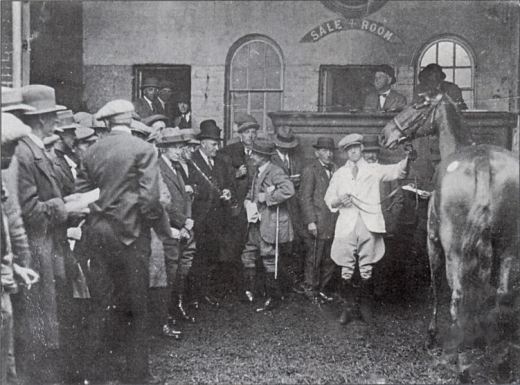
Photograph: Hussey’s Horse Auction (1926) at the Bonhay Cattle Market. Exeter, UK

Social Media Platform Review

Unless you are an incredibly well-connected Freelance consultant who is out there making a killing and maybe even turning business away (yes, I know a half-dozen people who fit that description but it ain’t me!), social media plays some role in your branding and marketing strategies.  Each platform has its uses and will be a good fit for some businesses and maybe not so much for others.  The platforms are all free, but remember that time is a valuable and limited asset.  No matter how responsive to social media marketing your venture is, Freelancers and small business owners cannot maintain a presence on every platform,  unless you outsource the function (but if the dollars are there, then it could be worth the investment).

As carefully as you manage your money, likewise manage the time you apply to the social media portion of your marketing strategy (and I mean portion, because social media is not the alpha and omega of marketing).  Get started by first asking yourself what you would like your broader marketing strategy to achieve and then what each platform can do to support that aim.

Everything always starts with your clients, your target markets.  Who are they and what kinds of social marketing might they respond to? B2B clients will require a different approach and will have different expectations than B2C customers, for example.  Next, think about what you would like social media outreach to do for you?

Is your objective to promote products or services, or promote awareness of your brand story (that is, who you are, what motivated you to go into business, what your venture sells and something of your values and priorities as regards the business)? Might you like to build relationships and a community of customers who will also talk to each other and you? Does supporting customer service have a place in your social media objectives?

Finally, how do you want to express your story narrative? You will notice that my blog content is exclusively text (but I did include images in two posts and a video in another, a couple of years ago).  I’d like to include photos sometimes, but I don’t have time to hunt down freebies online, so I chose to research, write and present topics that you might want to read about in text format.

Facebook

The biggest of the platforms with about 1.86 billion users (February 2017) around the world, who represent an all-encompassing demographic spectrum.  There are somewhat more women users than men and the bulk of the age demographic is 25-60 years.  47% of Americans say that Facebook is their primary influencer when it comes to making purchases (Forbes Magazine).

Especially those who are in B2C and for some in B2B, Facebook will bring excellent ROI.  In-store events and promotions, speaking engagements, your workshops and other events can be announced to Facebook Friends.  Content provided in text, photos, or video can be uploaded.  You can create groups and build communities, or post a customer survey.  Share behind-the-scenes information about your business and what it takes to do what you do and in the process engage with customers, strengthen your brand and build relationships.

Does that sound like too much work and too much sharing? Then create a Fan Page and limit your presence to basic info.  Be aware that your presentation of text, photos and other content should be relaxed and welcoming, to create a personal feel (but remember that business is nevertheless the context).

Instagram

You’ll find 500 million users around the world here and 80% are outside of the U.S. On average, 95 million photos and videos are shared every day, with many accessed on a mobile device (present your content accordingly).  At least 42% of teens in the U.S. follow Instagram, with the demographic sweet spot 14-35 years and slightly skewed to female.  Instagram is about photo sharing, very short video trailers and concise text posting that includes a hashtag # that helps to spread your content.  Add a link to your profile bio.  Decide if you want a public or members-only account. Links cannot be shared.

Visual storytelling, behind-the-scenes photo montages, social selling, brand awareness, engaging with customers and creating relationships are good uses of this platform. If you are in public relations or special event/conference planning, then you will find worthwhile B2B use, otherwise it’s B2C as far as I can tell.

LinkedIn

As of January 2017, LinkedIn has 467 million users globally and it’s considered the gold standard B2B social media platform, very effective for communicating one’s personal brand.  I think most users place it at the junction of free website and online curriculum vitae. Business ventures large and small,  Freelance consultants, corporate and nonprofit leaders,  physicians and dentists, any employee who harbors professional aspirations and most college students  have a LinkedIn profile page. Recruiters use of the platform as well, to identify potential candidates for job openings and their success has motivated  thousands of companies to post job openings on the site.

LinkedIn is an excellent platform on which to build a community of professional colleagues through your connections and share with them your professional story, successes, highlights and other updates. This blog posts to my LinkedIn page and my connections receive notice of its arrival.  Your connections will also share their stories and there is great opportunity to be in touch and nurture relationships.

Professional portfolios, videos, white papers, newsletters, blogs, infographics and SlideShare presentations can be added to your profile page to add depth to your brand story.  Links to articles or studies that could interest your connections can be posted. Recommendations and endorsements let others verify your professional bona fides and you can return the favor.

In the Groups section, you’ll engage with colleagues within your industry, or with alumni of your school. Topics of interest are explored through posted questions and group members can respond and in the process get to know one another and possibly, forge  relationships that lead to doing business.

We’ll continue next week with overviews of more commonly used social media platforms.

Thanks for reading,

Kim


Social Media Strategy for Solopreneurs

Participation in one or more social media platforms is now a given in both the professional and personal spheres.  Nearly every Freelance solopreneur has a presence on at least one social media platform,  even if participation is not active.  Social media have the potential to provide benefits to business owners,  the self-employed and the traditionally employed,  but in order to reap those benefits,  one needs to understand how social media can best function for you.

The first question to consider is,  who’s listening? Do those you want to reach participate in social media for their organization’s needs or just for their own career? That answer will determine which platform you choose.  The second question is,  what is your business?  The third question is,  will social media function for you as a sales tool,  a marketing tool,  or PR?

If you produce a product that potential customers want to see, e.g.,  landscaping,  photography or fancy cakes,  then Facebook Fan Page,  Google + Business and maybe Pinterest are your social media best bets.  These platforms give you a place to post photos of your lovely creations.  Musicians,  artists and dancers use these platforms to display performance photos and videos.  LinkedIn Professional Portfolio also allows photos,  slide shows  and videos to be posted to the profile.  However,  LinkedIn has a “corporate”  image and prospective customers will not automatically search that platform when checking you out.

Foursquare is ideal for a bricks and mortar business.  First,  the platform specializes in geolocation,  so you’ll ensure that potential customers will find your business and second,  you can initiate dialogue between your business and customers.  Your customers may have already entered your business and created a page for you.  Links to Facebook and Twitter are available.  To track your advertising reach and evaluate the platform’s ROI,  offer exclusive  Foursquare specials and product updates.

Regarding dialogue,  Twitter is the king of all social media when having conversations about your business or industry is the goal.  Tweet the announcement of the class you’ll teach,  the conference you’ll attend and your thoughts on the presentation you just heard at that conference.   Store owners tweet the arrival of new merchandise;  restaurant owners tweet the daily specials;  musicians tweet the dates of upcoming performances.

LinkedIn is the social media platform of choice for the traditionally employed and Freelancers who offer business services.  I think of LinkedIn as my adjunct website,  where I can announce professional victories,  post a Power Point presentation that gives an overview of my services on Slide Share and link this blog and supply updates of new posts to my connections.  LinkedIn Groups lets me interact with peers in my industry by reading and participating in discussion threads.  Recruiters looking to fill jobs troll this platform in search of qualified candidates to interview.

Finally,  define how social media can function for you,  based on the business you’re in and the way your customers use social media.  If prospective customers like the look of the landscapes you design or the sound of your jazz combo and feel comfortable judging the value you provide online,  then social media directly impacts the sales process and is for you a sales tool .

If potential customers use Twitter memes to discuss industry developments,  then marketing is your social media strategy.  Use the platform to establish your bona fides as an up-to-date,  in-the-know thought leader.  Promote your expertise and develop a following by sharing a steady stream of relevant information  (content)  that will benefit prospects.  Tell,  don’t sell.

Google + Business Hang Outs,  which allow you to conduct a video call with up to 10 customers who may be located anywhere in the world,  make it possible to have an online face-to-face meet-up or meeting,  depending on your agenda.  Marketing as expressed through customer engagement,  market research and customer service is the social media function.

Peer-to-peer PR is the function of LinkedIn.  Stay abreast with what colleagues are doing professionally and announce your achievements.  Make recommendations and endorsements for those with whom you’ve worked,  in either a paid or volunteer position and receive commendations in return.  Those looking to hire employees or Freelance consultants always peruse the LinkedIn profiles of candidates,  so keep your profile current and complete.

Thanks for reading,

Kim

New Facebook Ads Up the Social Ante

Recently,  I taught a business plan writing class and one of my students,  a talented home baker originally from Mexico who specializes in Latin American confections  (her pecan balls are wonderful!)  and wants to upgrade her hobby into a formal licensed pastry catering business,   spoke of her business promotion success with Facebook and Twitter.  On her personal Facebook page,  Mariela utilizes the Fan page for her cakes and other desserts,  featuring attractive photos of the goodies.  Additionally,  she tweets maybe three times a day about what she’s making for the parties she sometimes caters,  new recipes she’s trying out or other baking topics.

To her great surprise,  Mariela received a response to her tweets from an employee of a huge US sugar company,  who tweeted to ask whose sugar she uses when baking  (she does use that company’s sugar).  Also,  a popular local blog in her town tweeted to ask if they could write an article about her.  So maybe it’s time to take another look at your social media strategy and think about how the benefits of Facebook and Twitter might help you get on the radar screens of prospective clients who would ordinarily be beyond your reach?

To grease the wheels of that process,  Facebook will soon announce a new premium ad format that will radically transform traditional online banner advertising and replace it with ads that potentially will become  “conversations” about the advertised product or service.  According to sources with inside information,  Facebook will make the new ads social by allowing Friends of the advertiser to Like the ad and make comments. 

The new Facebook banner ads will not exclusively contain the usual content written by the business and reading like a commercial,  but also endorsements personally written by Friends of the business,  who know and trust the products or services being touted.  These exciting new ads promise to be personal and active,  not finite and static.

When page visitors view an ad and decide to click the Like button or enter a comment in response,  those actions will be added to both the advertiser’s page and to the News Feeds of the poster’s and advertiser’s Friends.  Pictures of Friends who have Liked the ad or have made a comment will also be incorporated into the ad.  The goal is to start a conversation between Friends and Friends of Friends,  with comments traded back and forth,  spreading credibility and brand visibility far beyond the advertiser’s usual reach.  As a result,  the whole advertising process will become organic and based on who knows and trusts the advertiser.

To verify the process,  Facebook tested the new ads and found they produced 40%  more engagement  (meaning clicks,  comments and Likes)  and are 80%  more likely to be remembered by viewers.  Best of all,  Facebook claims that viewers of the new ads are four times more likely to follow-up and/or purchase products / services when they see their Friends interacting with the ads. The new ads are set to promote the coveted  “word of mouth”  that is widely seen as the most effective form of advertising.

The data have convinced Facebook execs that the hyper-social ads will have a substantially better conversion rate for advertisers than traditional print or online ads.  The top brass believe that ads  “written”  by those who know the products and services best will convey trust and credibility in a way that traditional advertisements cannot.  The company is expected to discontinue its traditional banner ads and offer current advertisers replacement with the new format.

I was unable to find any cost data on the new interactive ads.  If even a couple of your business clients are inclined to follow Facebook,  the new ads could be a very savvy way of spreading the good word about your services and giving those who don’t know you well the confidence to hire you based on the endorsements of people they know and trust.  I’ve thus far avoided Facebook,  but I plan to pay attention to this new ad format.

Thanks for reading,

Kim

Heads-up: Google + Business Pages

At last it is here.  The business page option for Google Plus was rolled out in November of last year.  The early adapters are still figuring it out,  but the consensus is that Google + is an innovative and useful social marketing tool for Freelancers,  business owners and our customers.   Google + combines and enhances the business-friendly social networking features of Facebook,  LinkedIn and Twitter and presents it all in one platform.

You’ll be able to share links,  location data,  photos,  videos and have interactive two-way conversations on the Plus platform.  Ian Schafer,  founder of the Manhattan digital marketing agency Deep Focus,  says  “Integrating with Google + is essential right now,  because of its impact on Google search results.  Experimentation will give businesses  (especially small ones)  a leg up on their competition.”

But all is not rosy.  First of all,  you need a Gmail address to set up and access the service.  On top of that,  there is as yet no cross-platform integration with other Google services.  Plus doesn’t mesh with Analytics,  Blogger or YouTube.  The company vows that full integration is on the horizon,  but an arrival date has not been promised.

As with all social media,  you must sign up  (with Gmail)  and create a profile.  Like LinkedIn,  describing your services is the name of the game.  The  “About”  tab is especially important,  for this is how visitors to your page will elect to invite you to connect with them  (or not).  Present an informative,  compelling profile and tell the story of you and your products and services.  You may provide a link to your website.

Like Facebook,  photos figure prominently in you Plus profile.  Before you sign up,  create five photos of yourself in action as you provide different aspects of your services,  sit on a panel,  speak or teach,  take a meeting or whatever.  Those photos will be uploaded to the Photo Strip,  which is displayed beneath your business name and tag line on your home page.

Next you can populate the  “Circles”,  “Sparks” and  “Hangout”  sections.  Circles are grouping categories for your connections.  Hangout lets you set up various group events and invite contacts from your Circles and also the public to interact in useful and engaging ways.  Sparks is a streaming feature that lets you choose to receive info that keeps you updated on business issues of interest to you.

Invite clients and professional contacts to join Circles that you will designate.  You get to curate what information is shared with contacts based on the Circle you place them in and that decision will be determined by their relationship to you and your business.  You may designate Circles for clients,  peers and colleagues,  members of your business advisory board,  friends,  press updates,  or whatever categories seem appropriate.

Through interactions with those in your Circles,  you may refine your understanding of what contacts would like to know about your business,  how your services can be packaged and marketed and/or what clients value most about your services and how you can become even more valuable.

Like the LinkedIn Answers forum,  questions can be posted and Google+ members can offer answers.  It’s a great way to expand your connections and build relationships by sharing your expertise.  Visit http://findpeopleonplus.com to find professionals in your target markets and find out what’s on their mind,  how you can help and who you want to invite into a Circle.

Hangout is a very intriguing feature of Plus.  It one-ups Facebook and the Skype connection.  Real-time interactive communication is possible on Hangout and with a larger audience.  Reportedly,  the Dalai Lama recently hosted a Hangout with Anglican Archbishop Desmond Tutu with an audience of millions. 

 With Hangout,  those of us who teach now have a way to present our courses and workshops in a free online classroom that will host up to 10 students in a group class.  Private consulting sessions are also possible with clients who live anywhere there is internet access.

So check out Google+ and consider the benefits for your business.  49 million hits were made on Plus in December 2011 and analysts predict that Plus will have 400 million users by year-end 2012.  Google is the word’s biggest search engine and inbound links are increasingly important in search engine marketing.  A well-thought out and crafted Google+ page has the potential to draw in prospects with the money and motive to join your client roster,  the best Circle of all.

Thanks for reading,

Kim