Email Marketing is Evergreen

Still known for the impressive return on investment (ROI) it delivers to users, evidenced by its ability to deliver personalized content that’s tailored to customer preferences as well as the ability to drive conversions, including customer purchases, more effectively than just about any other marketing channel, including social media. The evergreen marketing tool that is email marketing is the gift that keeps on giving. The strategy is a multi-purpose marketing tool that business owners and marketing managers are known to rely on when the goal is to develop and nurture customer relationships and initiate engagement that promotes brand loyalty, repeat business and customer referrals.

Email marketing is expressed in more formats than may immediately come to mind—it can be more than the basic email letter that clutters an inbox and is often deleted. Email marketing also refers to blogs and newsletters that recipients opt-in to receive, plus a range of other communications intended to deliver all manner of business information, such as service or product updates or special offers and personalized greetings, from holidays to customer birthdays. Not only that, marketing emails are also a convenient and effective way to invite customer feedback that gives business owners and marketers insights into what they’d like to see more of, or less of, in your products, services and operational practices. So—how does your company use emailing to carry out your marketing strategies?

Email is a familiar and well-accepted method of communication—in fact, your customers compose and send emails themselves. To maximize the effect of email marketing campaigns, marketers are recommended to create emails that amplify the message and persuade recipients to open, read and in some instances, save your emails—but never delete without reading. Because most people receive many emails every day, the first order of business is to make your emails stand out in a crowded inbox.

To grab customer attention and entice recipients to open and read your email, attach a subject line that recipients will find irresistible. You can also decide to shock or amuse recipients by crafting a provocative or unexpected subject line that promises to deliver surprising information. Subject lines that contain a relevant statistic, whether predictable or shocking, also make particularly alluring email subject lines.

Ideally, the email subject line functions as a “hook” that causes the recipient to linger for a few brief seconds and wonder—Is reading this email worth my time? Smart marketers have discovered that they can further enhance the perceived value of their emails by including a follow-up line of preview text that can further arouse curiosity or confirm that the topic is a priority for the recipient. Below are four components that build an outline for your emails and organizes the presentation of your content in a way that helps recipients quickly understand the purpose and relevance of your information:

  1.  The subject line is crafted to grab recipient attention. The right subject line substantially improves the success of email open rates. Research shows that recipients open emails featuring a subject line perceived as relevant. Almost half of all email opens rely on that first impression.
  2. Hold your recipient’s attention with a preview text teaser that contains approximately 10 words. Subject lines matter when you want your email recipients to notice, value and read your message. The The second line preview text will appear immediately beneath the main subject line in the email inbox. Do not ignore the importance of the preview text; it is an extra hook, especially for users checking email on mobile devices (and about 50% will do exactly that).
  3. The message content should maintain the recipient’s enthusiasm. Compose your information to communicate relevance and trust as it guides the recipient through your content’s message. Be sure to compose message content to convey your marketing strategy by aligning the themes presented in your blogs, newsletters, informational and relationship building emails.
  4. CTAs are crafted to persuade email recipients to take action on an offer by responding to your call to action. The CTA literally shows readers of your content what they should do next. In return, the reader will receive a benefit, which might be a free 30-minute consultation with you or one of your team members to clarify how your products or services can provide solutions they need, or maybe an opt-in to subscribe to your blog or newsletter, or maybe to receive a free e-book. Whatever the purpose of your CTA, make the benefit that recipients will receive one that is likely to be considered worthwhile. BTW, you will grow your mailing list when there is a response to your CTA because responding entails providing contact info, at minimum, recipient name and email.

Now—in addition to the marketing emails that you currently send, what other kinds of emails might you send to communicate marketing messages that can make your marketing campaigns more effective? Below are email strategies that might enhance your marketing goals.

A/B testing

How can you learn which subject line works best with your customers? Or do certain subsets of your target audience respond differently depending on how your subject line or other aspects of your message are phrased? You can find out who’s who by sending out two variations of an email to different segments of your audience to see which performs better. By testing elements such as subject lines, email layouts and call-to-action buttons, you can continually refine your approach to improve response and results.
Test two different subject lines to see which one yields a higher open rate and/or compare the response generated by two different email layouts in terms of click-through rates.

Automated campaigns

Marketing automation ensures that your marketing emails are actually sent at your preferred time. For certain messages, notably blogs and emails, you want recipients to look forward to hearing you at a certain time (like Tuesdays at 11:00 AM Eastern!). Further, a marketing automation system will ensure, for example, that welcome emails are sent in a timely fashion to new or returning customers. You also want to guarantee that emails sent as part of customer onboarding, special occasion or holiday greetings are likewise sent within your preferred timeframe—and you don’t necessarily want to rely on your memory to manually perform these functions yourself. Instead, setting up automated marketing campaigns to ensure that you maintain a consistent communication with subscribers, nurture leadgen and customer relationships without manual effort as you reinforce the dependability and professionalism of your brand.

Drip campaigns

Drip campaigns involve sending a series of emails automatically, based on pre-determined timelines of your choosing or they are triggered by certain user actions. Have you ever searched a certain business or category and then received an email a few minutes later from the very business you searched, or from a local business within that search category? If so, you’ve experienced a drip marketing campaign. Drip marketing campaigns are excellent for encouraging leads because they respond to your immediate need or inquiry with the siren song of instant gratification.

Interactive emails

Incorporating interactive elements such as polls, surveys, or clickable content can increase user engagement. Interactive emails are more likely to captivate subscribers, encouraging them to interact with your content and brand—for a minute or two. for example, you might a three or four question survey to learn of or confirm what your customers find most appealing about your organization, or learn what they’d like to see more, or less, of to gauge customer satisfaction and preferences.

Integrating with social media

Enhance your email marketing by integrating it with your social media strategy. Encourage your email subscribers to follow you on one or more of your social media platforms, and vice versa, to create a cohesive brand experience. This strategy can expand your reach and strengthen your online presence.
Foe example, you might include in social media posts a line or two of an upcoming blog or newsletter post, as a teaser.

Re-engagement campaigns

Aimed at lapsed subscribers, that is, previously active subsrcibers who are now inactive, these campaigns are designed to recapture their interest and where possible, to also learn the cause of the disengagement. This could involve sending special offers, updates about new services and/ or products, or simply asking for feedback on why they are no longer active customers. Their responses can offer valuable insights for future improvements. Devising a concise survey email that asks open-ended questions that give lapsed customers or subscribers the opportunity to give feedback that expresses what for them what was lacking or unsatisfactory, whether content to which they subscribed, as in a newsletter or blog, or an aspect of doing business with your organization.

User-Generated Content: reviews and testimonials

Showcasing content created by your customers, for example, reviews or testimonials, can significantly enhance the credibility of your brand. When you include UGC in certain of your promotional marketing emails, that can not only engage readers, but also provide social proof that encourages them to try your products or services and as well, enhance your brand’s authenticity.

Thanks for reading,

Kim

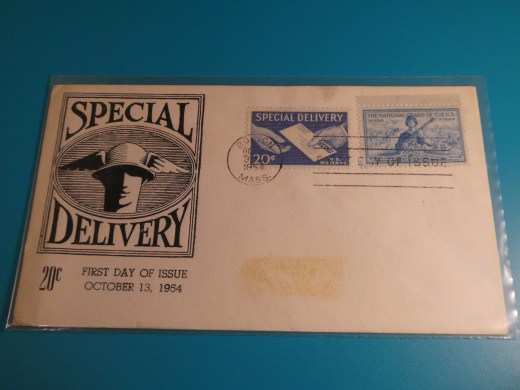
Image: Winged Mercury special delivery stamp issued in 1954.

Design Social Media Content to Fit Your Goals

News flash—creating social media content that advances your company marketing goals may demand more attention than you might’ve guessed. Checking social media accounts might be something you do while having lunch—why not log into Facebook to see what’s up?—but the “free” resource known as social media works best when you are strategic when using it. Effective marketing in any format demands precise planning.

Keeping a strategy in mind as you develop social media marketing content means that all posts—text, images, audio, video—will be designed to work in concert. That’s your recipe for social media that clearly communicates talking points, tells the story, follows the strategy and delivers the desired return on investment. So whether the plan is to promote brand awareness, cultivate customer relationships, or facilitate customer service, for example, there is documented evidence that well-executed social media campaigns are able to deliver the results you want. Your job is to create the right content and post on platforms your audience trusts and follows.

If your company maintains a presence on more than one site, keep in mind that content posted on multiple channels may be tailored to fit the unique strengths of each platform used, but content will be most effective when aligned across channels. You want to ensure that you communicate a unified message to the audience on all platforms used. Unaligned, inconsistent messaging can confuse audiences and undermine brand credibility.

Budget

Let’s start with money, the ultimate commitment. A financial investment is worthwhile for companies that are serious about social media marketing because a well-developed strategy that has the potential to achieve marketing (think revenue) goals can be realized only if all aspects of the content match your aspirations. If your marketing goals require a high-performing social media campaign, the strategies that get you there must be enabled by the right budget. Can you strike a balance between the funding needed to support the campaign you want and a financial commitment you can tolerate?

If the money is there, you might decide to hire a social media specialist to produce all text and image content. If your budget is modest, or you prefer to copywrite the text yourself, you could focus your spend on audiovisual elements and invite a pro to shoot and edit the visual elements.

Authentic

Today, “raw,” unscripted content sets the standard for what’s considered authentic and credible—i.e., trustworthy. Cinema verite is where it’s at and conversations and actions that feel scripted and rehearsed are a turn-off. Your followers want to see a slice of life—tear off the band aid, peek behind the curtain, get the view from backstage.

So, if you’re scheduled give a talk at a business association program, your social media audience may find it interesting to watch you getting ready to take the stage. Recruit a friend or ask your social media specialist, if you’ve hired one, to video you en route to the venue. Your commute to the venue can be filmed and you can supply background info about the organization during the ride. If the sponsoring organization allows, you can also be shown meeting the host, being introduced and walking to the podium to launch your presentation. If allowed, your talk can be filmed in its entirety and short clips can be edited to use in future marketing collaterals.

Interactive

Rather than waiting for your social media audience to make the first move, recognize that they will probably need a compelling invitation from you as motivation to engage with your content. The good news is that invitations to interact with your audience are not difficult to design.

For example, some of your viewers may agree to take a quick survey or poll that gauges their feelings about a particular topic (which may not directly involve your products or services). Social media users often enjoy opportunities to connect with the brands they follow. From time to time, just be sure to include a question or two about what they’d like to see added to your line, or what might make a useful upgrade for your product or service. Your audience will feel more connected to your brand if they feel as if they’ve contributed to your company’s product development.

Soft sell

The hard sell no longer works. The soft sell, like soft skills, is the new champion of today’s marketplace. Instead of coming on like a carnival barker on the midway and shouting “Step right up, folks!” the preferred approach employs social media platforms as a conduit to current and prospective customers who would like information about your products, services and you and your company. Customers, prospects (and influencers, if you’ve caught the eye of one) would like to get to know you. They often don’t trust or respond to aggressive sales tactics. A smart sales strategy is designed to cultivate a steady stream of customers and prospects who engage with your content and then make purchases and referrals, give testimonials and become brand cheerleaders, too.

Avoid over-sharing

It is true that being reliable and predictable—consistent—is reassuring and you should keep that in mind as you post content to your chosen platforms. But how do you know how often to post? Two posts a month is probably too little; two posts every day of the week is definitely overkill. You want site visitors to see worthwhile information—not always serious, sometimes amusing, always interesting and never a waste of time.

You don’t want your content (and company) to be perceived as annoying and irrelevant, a burden that clogs their feed with filler. Working with a good social media professional can help you determine how often you should post and how you might diversify your content to enhance interest and keep viewers coming back.

Call-to-Action

Remember to include a call-to-action in your social media content. It’s a feel-good to see great numbers when reading the statistics of your site’s impressions and views, but you won’t get your full reward unless followers are asked to do something—take an action—so you’ll receive a tangible result of some sort.

Your CTA completes the social media experience by inviting your audience to click a link and—-watch a video, request a free 30-minute consultation, register for a webinar or course. The CTA allows you to both collect and measure the ROI of your social media marketing campaign. You’ll be certain that your campaign goal is reached—brand awareness and brand loyalty enhanced, customer relationships nurtured, names added to your customer list (through the sign-up), warm leads created.

Thanks for reading,

Kim

Image: © Rex Features. British actor Sean Connery (August 1930 – October 2020) with Anthony Sinclair of Anthony Sinclair Suits, his Savile Row tailor in London, during the 1960s James Bond movie era.

Content That Captivates

It is said that content is king—agree? I’ll bet you do. But are you aware that not all content is equally able to move viewers to respond to its verbal or visual messages? Most content does its job, which is to increase awareness of the brand within the target audience. But certain marketing content has a heightened impact on viewers; that content is perceived as uniquely relatable, credible, or even inspiring— it captivates. Captivating content has been known to persuade some who experience it to step into the buyer’s journey of the product or service it promotes. Content that captivates can motivate your prospects to actively explore the possibility of doing business with you.

Content strategy

Are you motivated to actively explore how to create content that captivates your customers and prospects? Then devise a content strategy, a plan that functions as a road map to guide the creation, delivery and management of marketing content that promotes your company’s sales and branding goals. A content strategy is the most important element of your content marketing campaigns. Without a strategy, you’re vulnerable to losing your way and becoming overwhelmed by the dizzying array of content possibilities that are available. While almost any form of content may be persuasive and also captivating, but not every format will effectively advance your sales and branding goals.

A content strategy is essential to the process of defining basic who, what, when, where and why questions that refine your understanding of marketing activities and distribution channels that your customers and prospects will gravitate toward. A well thought-out strategy will provide focus and direction to your content marketing activities and how and where you deliver your message. The questions below will help you identify content that will resonate with your target audience.

  • Who will view your content?
  • What solutions do content readers/viewers need, what goals must they achieve?
  • What types of content and which channels can be expected to attract readers/viewers?
  • What brand voice (tone and personality) can be expected to facilitate communication with your audience?
  • What goals do you want to achieve with your content?

Email marketing

Email marketing continues its reign as one of the most effective marketing tools available to transmit marketing messages and build trust in your products, services and brand. Moreover, email marketing campaigns are excellent generators of qualified leads and enable ongoing communication with customers, existing and lapsed, allowing you to nurture relationships and encourage repeat business.

Marketing emails are more likely to be read than other types of content and their average return on investment triumphs over other types of content. According to the Cambridge, MA inbound marketing giant HubSpot, email marketing communications are more likely to be read than all other types of content and have an average open rate of 46-50% and click-through rate of 2.6-3% — metrics that surpass the appeal of social media and all other forms of digital content.

Furthermore, because email marketing lists are opt-in and consist of those who want to hear from you, the email list itself is a valuable marketing tool that you can use to distribute additional communications, such as your blog or newsletter. For that reason, email list-building is an ongoing activity practiced by savvy marketers. Make a plan to grow your email list with these tactics:

  • Create a premium library: Promote your expertise and build your email list with a special offer that’s available only to those who sign up to receive a link—to a webinar or podcast you’ve participated in, a case study or e-book you’ve written, for example—sent in exchange for a name and email address.
  • Online subscriber forms: Your blog, website and social media accounts have a mechanism for visitors to add contact info and receive your published content or follow you.
  • Invite subscribers in-person: Whether you are on a sales call or, as discussed in the previous post, you attend a trade show or other in-person event, as you meet and greet you may find colleagues who would appreciate being added to your email list—subject to an opt-in, because you want their permission. If you teach or speak somewhere, make an attendee sign-up sheet available so that you can collect more contact info to grow your list.
  • Call-to-action: Invite those on your inbound marketing buyer’s journey to receive a free 30-minute consultation with you, to discuss their needs and goals and your company’s solutions. Invite those who would like to attend a workshop you’re scheduled to teach or panel you’ll moderate to RSVP by way of your CTA. When you decide to hold your own MeetUp, also discussed in the previous post, ask those who plan to attend to sign-up. All CTA responses can deliver contact info.

Webinars and podcasts

More than simply marketing content, these formats can be classified as professional development. With an engaging topic and a skilled presenter or host, these formats can generate a substantial audience. When the webinar or podcast topic relates to solutions your company offers, you can create a seamless transition into how viewers/listeners can solve their most pressing problems.

Webinars and podcasts can be even more effective when cross-promoted with other content, such as an e-book. Furthermore, webinar registrations are an excellent method of collecting email addresses and other information from qualified leads who are genuinely interested in not only the topic, but potentially your category of products or services. Webinars continue to be a popular digital content option and when promoted to the right audience, they can become far more engaging and attractive to qualified leads than a blog post covering the same topic would be.

Social media

By adding relevant, authoritative content, including videos, surveys, blogs and user-generated content such as customer reviews and testimonials to this very personalized content resource, you can effectively leverage social media to attract qualified leads.

According to a March 2024 report released by Forbes Magazine Advisor, 78% of prospects and customers research social media platforms first when seeking information about brands, a trend that demonstrates social media’s pivotal role as a leading source of brand-related content. Social media’s interactive nature allows prospective customers to get behind the scenes and learn backstories that provide an informative and intimate experience that can foster a deep connection with a brand.

Social media promotes community-building, a bonding among customer peer groups whose members participate in discussions, post product reviews and happily share their brand experiences. Social media platforms are where brands can interact with customers in real time, to foster a sense of community around their products or services with a goal of building and nurturing relationships.

Marketers join in and participate in groups and conversations, responding to comments and messages they receive and facilitating meaningful communication with their target audience. By enhancing the influence of this highly personalized format by posting content that engages and captivates, you can leverage your brand’s social media presence to deliver qualified leads.

Video

Video has emerged as a leader among content marketing formats. The power of video marketing reflects a growing customer preference for visual and auditory storytelling that gives the format great influence in capturing audience engagement. When marketing video is used in tandem with other digital marketing formats—marketing emails and social media posts, for example—their sales conversion rate is substantively enhanced. Product demos and explainer videos, case studios, testimonials and videos of your previous podcasts and webinars provide opportunities to enhance the inbound marketing power of your company website.

Video marketing has proven to be highly effective and 95% of marketers observed an increase in brand awareness when using the format. As a result, 90% of marketers credit their successful lead generation campaigns to video content and 87% link the format to sales revenue growth. The viewer engagement rate for marketing videos posted to YouTube in 2024 is 5.91%.

In particular, short-form video content is especially adept at gaining audience attention—attention spans are brief and viewers don’t always have the time or patience needed to watch longer videos. It’s been shown that marketers have 2.7 seconds to capture audience attention with your video. While engagement is valued and viewers want to learn about your company, they want to learn fast. BTW, 75% of video views occur on mobile devices, so optimizing for mobile viewing is crucial.

Within its abbreviated time frame, video content can deliver enticing visual options that captivate your audience and keep them coming back for more. You can record yourself in an explainer video or product demo discussing how your solution solves problems and supports the achievement of customer objectives. Or you may want to record customer testimonials or even record a case study, podcast or webinar—content you can upload to your website and social media accounts or invite browsers to request in exchange for contact info that builds your email list. You can also film a live event.

Live videos are in-the-moment exciting and authentic and especially well-suited for generating engagement in the viewing audience, creating relationships and building the brand. You can use the live video tool available on your social media apps to announce a new product or service or show viewers new items from your product line. Because there is little to no editing done, live videos often have a raw and edgy look; however, you’ll need a space that you can keep quiet and private as you record your live video. Furthermore, if live streaming is your intention, you’ll also need the right technology.

Now here’s a surprise—the arrival of silent videos. When you think about it, you’ll realize that many people watch videos in public spaces: waiting in line at the bank or grocery store, taking public transportation, or even while in a company meeting. Earbuds may not be handy or politically correct; it’s been reported that 92% of users watch videos with the sound off. Silent videos solve the problem so you can communicate your message without audio and make the visual component of the video the main focus. Close caption text (subtitles) allows you to make the most of the visuals and incorporate on-screen captions for necessary text info.

If your budget allows, speak with a marketing company to discuss your goals and the type of video that can be expected to deliver your desired ROI. Remember that your video can be posted to multiple platforms, from your website to email marketing communications, your newsletter, blog and social media accounts. If budget is an issue, or if you’re confident of your creativity, by all means grab your smartphone or tablet and experiment with making a video in-house. Taking an online tutorial is sure to be helpful and there are dozens to choose from. Here’s one you might like.

Thanks for reading,

Kim

Image: © The Richard Avedon Foundation. Model Stephanie Seymour wears Chanel in a 1990 photo by Richard Avedon (1923-2004)

Maximize Email Marketing ROI

Email marketing campaigns continue to generate solid returns on the time and money spent to produce them and for that reason the format remains among the most effective marketing strategies one can undertake. Email itself is a tremendously popular communication tool as evidenced by a Statista report that shows as of August 2023, 4.73 billion people globally use email. Better still for marketers, 61% of consumers prefer to hear from companies they’re interested in by way of email.

The emails you compose for campaigns require thought, as does all of the marketing content you produce for publication. As always, your objective is to devise clear and concise messages that have an easily recognizable purpose that resonates with email recipients. Your core theme is the most important component of the email, but there are other factors that shape and influence its impact. Below are eight important actions you can take to enhance the success of your email marketing campaigns and improve the odds that your customer outreach will produce the results you need and, best of all, nurture relationships with your clients and prospects.

1. Irresistible subject line

It’s more than likely that those on your mailing list receive dozens of emails each day. How do you convince these busy people to click on your message? Seduce them with your subject line! Maybe it’s amusing or maybe it’s a tad outrageous, but it’s definitely an eye-catching hook that makes the recipient curious enough to click and read.

2. Concise compelling message

Be mindful of the length of your email. Convey your thoughts succinctly. Express your message in simple language and avoid business jargon. For in-depth discussion of a topic, write a short introductory blurb, an abstract, and link to the details.

3. Call-to-action

What would you like your email readers to do, now that you have their attention? Your email needs a purpose—otherwise, why are we having this conversation? You might ask recipients to click a link and leave their contact info, so that the reader can, e.g., RSVP to attend the workshop you’ll teach, schedule an appointment with you, receive the link to a podcast where you were a guest, buy your book, or vote on election day.

4. Image or video

Readers respond to images, whether still or video, that illustrate the purpose of your email campaign. If you include a video, three minutes is your target maximum length.

5. Easy-to-follow layout and graphics

Use spacing and images to break up big chunks of text and make longer emails less intimidating. Choose one font style and use it consistently throughout the email. The idea is to visually please the recipient and literally tempt the eye to linger, look— and read.

6. Cleaned up address list

Holding on to customer email addresses from years ago is understandable — growing an email list is challenging. However, email data becomes obsolete at an average pace of 23% annually, so it makes sense to regularly monitor the accuracy of your mailing list. Check the bounce rate and either delete or correct invalid addresses. When more than 2% of emails bounce back, your company begins to look like a spammer to inbox providers and your emails will be sent to spam files as a result.

7. Follow-up with customers

Getting a reply from one of your subscribers is email marketing gold. Whether they’re writing back to share feedback or ask a question, it shows they care and want to further communicate with you. What’s more, replies are good for email deliverability as inbox providers see them as a sign of trust. Ensure you respond to all emails. Ignoring a message from a customer is unacceptable.

8. Document results

Along with the overall bounce rate and the identity of undeliverable emails, study your campaign open rate and check to see who opens, or doesn’t open, your emails. Use your email analytics and tracking to measure the success of campaigns and make data-driven improvements. Hint: monitor the open rate to discover which topics have the largest percentage of recipient opens and let that guide your content choices.

Thanks for reading,

Kim

Image: © Keystone View Company (1902). A Letter from Pat in America Young Irish woman reading a letter from a relative in America to an older woman outside of a thatch-roofed stone cottage.