Email Writing Perfected

Now that you’ve completed your business plan, you’re ready to put it in motion. Here’s the guide that will make sure you know how to get your entrepreneurial groove on! In Be Your Own Boss, Part 2: The Implementation and Beyond, you’ll learn to recognize the strengths or weaknesses in your proposed business model and develop an effective customer acquisition plan. You’ll get insight into what you should consider when choosing the right legal entity for your venture. Learn to implement savvy marketing, branding and social media strategies, get real about business financing options and build a solid financial strategy that will sustain your dream. Thursdays April 18 & 25 6:00 PM – 9:00 PM. Register here.

Every day, the typical professionally employed adult sends and receives an avalanche of emails. In response, dozens of articles that address the challenge of email management have appeared in business targeted media outlets. Those articles are all somewhat helpful but my feeling is, when emails are effectively written fewer of them are written, because writers express themselves clearly and recipients understand how to respond.

As luck would have it, an amazing and highly organized polymath named Kabir Seghal, who is a U.S. Navy veteran, former Vice President at J.P. Morgan, Grammy Award-winning producer (Afro-Latin Jazz) and author of seven books in both the children and adult genres including Coined: The Rich Life of Money and How its History Has Shaped Us (2015) has stepped up to guide mere mortals in the fine art of email writing. Seghal applies lessons he learned while in the military when advising us on how to write the ideal email communication.

Subject line

Subject lines are crucial. They can determine when or even if your email is opened. The wrong subject line can result in your email being ignored or deleted. A powerful subject line communicates the purpose of the email and the action the writer would like the recipient to take. A sampling of subject line verbs include:

Action                                 Meet

Decision                             Request

FYI                                      Sign

ACTION:  The recipient must do something, usually within a certain time frame.                                                                                                                                                                                                                                                                                                         frame.

DECISION: A decision must be made by the recipient, or a decision that impacts the recipient has been made.

FYI: For Your Information messages keep the recipient in the loop. Action is not required (choice of the recipient).

MEET: Consult your calendar and reserve time.

REQUEST: The writer seeks approval or permission from the recipient.

SIGN: The recipient must read and sign a document and return it with a certain time frame.

Bottom line up front (BLUF)

Begin the body of the email with a short statement that concisely answers Who, What, When, Where and Why to explain the purpose of your email and what you’d like the recipient to do. The BLUF distills the message and allows the recipient to easily digest the information you share and how s/he will be impacted. Seghal suggests that the writer lead with the heading Bottom Line to call attention to your email’s core messages.

Active voice

Seghal recommends that we use the active, rather than passive, voice when composing emails. It’s important to be clear about who has or is taking action, or who will be required to take action (and when) and the impact of that action.

Cut to the chase

Short emails are preferred by military personnel, but sometimes longer communications are unavoidable. Should your email exceed three paragraphs, follow-up your Bottom Line (BLUF) statement with bullet points, so the recipient can quickly focus on critical information.  Rather than adding files as attachments to the email, embed hyperlinks to the files and enable faster access.

Thanks for reading,

Kim

Photograph: Typist, circa 1930s.

 

How to Target Content Marketing

Now that you’ve completed your business plan, you’re ready to put it in motion. Here’s the guide that will make sure you know how to get your entrepreneurial groove on! In Be Your Own Boss, Part 2: The Implementation and Beyond, you’ll learn to recognize the strengths or weaknesses in your proposed business model and develop an effective customer acquisition plan. You’ll get insight into what you should consider when choosing the right legal entity for your venture. Learn to implement savvy marketing, branding and social media strategies, get real about business financing options and build a solid financial strategy that will sustain your dream. Thursdays April 18 & 25 6:00 PM – 9:00 PM. Register here.

Content marketing continues to be an effective Inbound Marketing strategy for Freelancers and other business leaders who seek to interest and engage potential clients, nurture relationships with current clients, demonstrate an understanding of client concerns and generate leads that have a healthy possibility to convert to sales.

Yet according to sales and marketing experts, fewer than 50% of those who claim to be evaluating a product or service purchase are ready to buy. Therefore, the job of business leaders/ owners and Freelancers is to move prospects through the buyer’s journey, also known as the sales funnel, and toward the sale.

Recall if you will the shape of a funnel—wide at the top and narrow at the bottom. The shape of a funnel reflects to the buyer’s journey.  Early in the search for a solution, would-be clients search for information. Many are window shoppers. Others are more serious. They explore options, compare prices, clarify their needs and confirm their budgets. Eventually the most serious shoppers become fewer in number as they acknowledge their must-haves and narrow their choices down to a short list of sellers (i.e., businesses).  Only a relative handful buy make a purchase. 

Let’s examine the typical buyer’s journey and understand how inbound marketing can function to encourage the sale along the way.

Tofu: Top of Funnel 

This stage signals awareness and potential prospects are searching for information.  Content here will cast a wide net, to attract the attention of all those who are searching for insights, opinions, research and other data in their early stage and education process. Just as you may scan rating sites such as Yelp or Trip Advisor when searching for a hotel or restaurant, Tofu tier leads get familiar with your products and services through your blog, newsletter and social media postings.  It’s too early to present a call-to-action appeal, which could be a turn-off at this point. In general, the value of Tofu leads is low.

Nevertheless, your objective is to peel off the most promising leads and move them into the next tier.  Achieve this aim when you offer a 15 minute free consultation, announce a podcast or webinar in which you’ll be featured to discuss a topic relevant to your typical clients, or extend an invitation to download an e-book that you’ve written, gratis. Those who register for these extras are making a commitment, to an extent, to your business.  Furthermore, they must share their name and email contact as they register. They will progress to Mofu.

MoFu: Middle of Funnel 

You now have a qualified lead. The prospect is real and has acknowledged that a problem that must be solved in the near term.  Your prospect must evaluate  which of the available solutions might be the best fit?

Content at this tier must continue to educate, but the approach will become more specific, to position your company as capable and trustworthy, prepared to deliver the right solutions and solve problems.  Here, content explains why your solution and approach to problem-solving are the best fit. Examples of your ability to understand client concerns and priorities, as well as provide the best solution, can be illustrated in white papers, case studies, or (video) testimonials.

This tier is often considered the most critical because prospects will either agree to move forward and approve the sale or decide you’re not the one based on the information  presented.  Demonstrate expertise, establish trust and build relationships here.  Flash the power of your brand by dropping the names of a marquis client or two.

On the other hand, if it becomes apparent that you are not the best fit for a client, be upfront and make that known. You always want to provide the optimum customer experience that leads to good word of mouth and avoids churn (see last week’s post).

BoFu: Bottom of Funnel

Here is where the buyer confirms his/her decision to do business with your organization and the actual sales process can begin.  According to research featured in Forbes Magazine in 2013, many prospects get 60% – 70%  through the buyer’s journey before they care to speak with a sales representative.

There may be no content offered at this stage, but time-sensitive special offers can make a big difference.  Your prospect is ready to buy but there is still no guarantee that s/he will buy from you.  Here you give a little nudge, a sweetener, as you present your call-to-action, at last.

Depending on whether your business is B2B or B2C, tangible product or intangible service, you may offer a modest discount to buy now (or within 24 hours).  You might offer a tantalizing (and inexpensive to provide) upgrade or add-on to what the prospect has indicated s/he would like to purchase.  Free or discounted installation and a free trial are also effective.  Art galleries have been known to allow serious prospects to take an artwork home so that they can live with it for 10 days.

Inbound Marketing is lots more work than tried-and-true Outbound Marketing, where you scrape together some money and place an advertisement or two in target publications, or distribute flyers in certain zip codes, and hope for the best. Outbound Marketing still works, but Inbound Marketing is how to highly target your marketing campaigns and receive the highest ROI.

Thanks for reading,

Kim

Image: A 13th century Ottoman (Turkish) horseman draws his bow. Artist unknown.

Combat Customer Churn

If you’re ready to greenlight a business idea that you feel has money-making potential, then it’s time to create your road map to entrepreneurial success! Learn to build a Business Plan that will become both the foundation and launching pad for your exciting new venture. We’ll take a deep dive into all the ingredients of a basic Business Plan, including how to evaluate the profit-making potential of your business idea; define your ideal customer groups; evaluate competitors; develop a savvy marketing and social media plan; and build a solid financial strategy that will sustain your dream.  Thursdays March 28 & April 4 6:00 PM – 9:00 PM. Register here .

Every business owner works hard to add new customers to the company roster. Customer acquisition is a key component of an owner’s role, but attention must also be  paid to customer retention. It’s critical that business owners/ leaders develop a customer retention strategy for the organization—and implement it!

Depending on which study you believe and the industry you’re in, acquiring a new customer costs anywhere from 5 to 25 times more than the cost of retaining an existing customer.  Consider the time and resources utilized to recruit even one new customer, to say nothing of prospects whom you pursue and do not win.  It’s much more cost-effective and efficient to keep the customers you already have happy.

The phenomenon called churn refers to losing customers and the metric that measures the rate at which customers are lost, as compared to customers on the roster, is known as the customer churn rate. “Customer churn rate is a metric that measures the percentage of customers who end their relationship with a company in a particular period,” explains Jill Avery, senior lecturer at the Harvard Business School. The churn rate is measured during any month, quarter, or year, depending on the industry and the product or service that your company supplies.

In other words, if your business begins the quarter with 400 customers and ends with 380, the customer churn rate is 5%, since 20 of the 400 customers no longer do business with the company.  Avery goes on to say that many business owners/ leaders prefer to monitor and report churn rate’s opposite: customer retention rate, or how many customers remain. Both calculations tell the same story.

Changes in a company’s churn rate could signal that something is working well (if the number goes down) or needs addressing (if the number increases).  When you notice that an unexpected number (or percentage) of customers whom you’d expect to be more than just one-offs instead decline to do business at least intermittently, it’s time to take action and stanch the hemorrhage. The usual culprits are customer service failing,  products/ services that are not fulfilling customer expectations, or the presence of an aggressive competitor.

Churn is more than a metric to occasionally monitor. The future of your business depends on understanding why customers might leave and knowing what you can to do to retain those who may be ready to jump ship.  Avery advises that “Looking at churn rates by customer segment illuminates which types of customers are at risk and which types may need an intervention. It’s a nice simple metric that tells us a lot about when and how to interact with customers.”

Likewise, it’s important to study your customer acquisition channels. They don’t all yield equal results, so examine each to learn if customers coming through a specific channel have a higher churn rate than others.  Acquisition channels failing to deliver the best customers as you and your team define them will be discovered, so you can decide whether or not it’s worth continuing to fund that channel, or instead shift resources to channels that more consistently deliver the premium customers.

According to InsightSquared, a Boston marketing and sales analytics company, reducing customer churn by 5 % can increase profits by 25 % to 125 %. InsightSquared also found that 70 % of customers it polled leave not because of the product/ service purchased, but because of poor customer service. Further, 91 % of unhappy customers will not do business with your company again.

Other common issues to address include a lack of customer engagement or support, poor product-market fit and the user experience. It is essential to identify company weaknesses and shore up any products/ services that need to be better attuned to trends in market preferences, customer service protocols, or customer engagement that builds loyalty.

A mistake that business owners/ leaders make is to look at churn as simply a number, rather than as an indicator of customer behavior.  Questions to ask include:

  1. What is the company doing to cause customer turnover?
  2. What are customers doing or thinking that causes them to leave?
  3. How can we better manage customer relationships and diminish the churn?

That said, a high churn rate can be the result of poor customer acquisition efforts. “Many firms are attracting the wrong kinds of customers. We see this in industries that promote price heavily up front. They attract deal seekers who then leave quickly when they find a better deal with another company,” Avery says.

Finally, there is no standard acceptable churn metric. Avery cautions, “The truth is that what’s acceptable varies widely by business model and is largely dependent on how quickly and efficiently a company can acquire customers and how profitable customers are in the short and long-term. Some business models thrive despite high churn rates and others rely on low.”

Instead of fixating on a certain number, smart managers look at the churn rate of prior years and ask themselves what they might improve. “It’s really a metric that shows how well you’re managing your customer relationships, and you can usually always improve your performance in that area,” Avery says.

Before you assume you have a retention problem, consider whether the problem instead turns on customer acquisition.  Avery concludes, “Think about the customers you want to serve up front and focus on acquiring the right customers. The goal is to bring in and keep customers who you can provide value to and who are valuable to you.”

Thanks for reading,

Kim

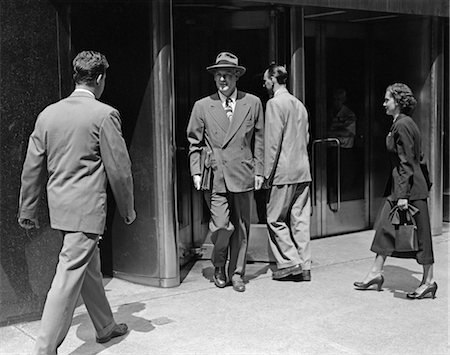
Photograph: 1950s, photographer and location unknown

More Sales Channels Means More $ales

If you’re ready to greenlight a business idea that you feel has money-making potential,  then it’s time to create your road map to entrepreneurial success! Learn to build a Business Plan that will become both the foundation and launching pad for your exciting new venture. We’ll take a deep dive into all the ingredients of a basic Business Plan, including how to evaluate the profit-making potential of your business idea; define your ideal customer groups; evaluate competitors; develop a savvy marketing and social media plan; and build a solid financial strategy that will sustain your dream.  Thursdays March 28 & April 4 6:00 PM – 9:00 PM. Register here.

The number one job of a business owner is to sell the company’s products and services (at a profit).  To achieve this goal, numerous activities are undertaken to promote, support and sustain the sales process and its co-dependent twin, the buying process.  The push-me, pull-you of businesses selling and customers buying rests on a vital and complex foundation.

The business model, i.e., the rationale for how a business will generate sales and make a profit, is the starting point.  In the business model, the products and services that will be sold and the target market(s) are identified.  The method(s) and location(s) by which customers will obtain the products and/or services and the payment protocols are also detailed (E.g., do customers pay in full in advance, or do they pay a deposit and then the balance when the product or service is delivered? Is this a bricks & mortar or e-commerce operation?).

The value proposition, perhaps the most important component of the business model, will describe why prospective customers are expected to value and purchase the products and/or services that the company plans to sell.  Estimating business start-up costs and preparing a credible Break-Even Analysis to provide a time line that predicts the expected pace of sales revenue growth that products/ services are expected to achieve, will determine when profits can be expected to accrue and is yet another purpose of the business model.

Business strategy rests on the business model and marketing strategies, campaigns and tactics lend still more support to driving the selling – buying process.  Yet after all is said and done, it’s imperative to get the products in front of potential buyers.

Savvy business owners know that those with motive and money to buy what your company sells need a little help.  Offer your products and services (where applicable) through different sales channels and make your products/ services easy for customers to buy.  Map the selling – buying process at your organization, talk to and survey your customers and then consider which sales channels, direct, indirect and hybrid, will make it more convenient for customers to do business with you.

Direct Channels: The selling – buying is done through channels, or might we say venues, that you control.  Customers may visit your office or store, or they may buy online through your website.  You might also offer certain of your products and services on your Facebook page.

According to 2018 research conducted by Hootsuite, there are 2.32 billion Facebook users globally, 1.1 billion speak English and about 10% live in the U.S., 232 million. 78% of American users have discovered retail products to buy on Facebook.  Customers will click your Facebook Store tab once you build it out and take it live. Payment processing and customer transaction history are handled by Shopify and Facebook does not take a commission on your sale.

Indirect Channels:  Have you ever booked a plane ride or hotel through Expedia, Hotels.com, Orbitz, or Travelocity? If so, you are comfortable buying through an Indirect Sales Channel and you could be ready to sell selected products and services through this method.  I’ve promoted and sold my P.R. and writing services on Upwork and LinkedIn ProFinder.  Self-published authors who produce books through Create Space have Amazon for an Indirect Sales Channel.

Tangible products have a much longer history with Indirect Sales Channels.  A company can investigate the possibility of selling products to a wholesale distributor, who in turn sells to retailers.  Freelance artisans often place their hand-crafted items into (typically locally owned) stores on consignment.  In both scenarios, products gain access to a significantly larger pool of target market customers than would be possible if the business only used Direct Sales Channels.

Hybrid Channels: Describes two or more sales channels utilized to provide a multi-channel product promotion and distribution system that will maximize product sales. Starbucks offers an easily visible example of Hybrid Sales Channel product distribution.

The primary sales channels are the free-standing Starbucks restaurants that are sprinkled throughout commercial and residential neighborhoods in countless cities and towns across the country.  Secondary Starbucks sales channels are found in many Barnes & Noble bookstores, chain grocery stores, hotel and hospital lobbies and airports.  By way of Hybrid Sales Channels, Starbucks successfully carpet bombs key shopping districts coast to coast.

Small and medium business owners cannot compete in this manner, but it may be possible to offer products and services through two or more sales channels to broaden product exposure and drive sales.

Thanks for reading,

Kim

Photograph: Leslie Jones (1886 – 1967) Pushcarts on Blackstone Street, circa 1940   Haymarket in Boston, MA. Courtesy of Boston Public Library.

The 10 Faces of Guerilla Marketing

If you’re ready to greenlight a business idea that you feel has money-making potential,  then it’s time to create your road map to entrepreneurial success! Learn to build a Business Plan that will become both the foundation and launching pad for your exciting new venture. We’ll take a deep dive into all the ingredients of a basic Business Plan, including how to evaluate the profit-making potential of your business idea; define your ideal customer groups; evaluate competitors; develop a savvy marketing and social media plan; and build a solid financial strategy that will sustain your dream.  Thursdays March 28 & April 4 6:00 PM – 9:00 PM. Register here .

In his 1984 book Guerilla Marketing, Jay Conrad Levinson (1933 – 2013), whose studies in psychology led him to advertising agencies, brought to the forefront a marketing strategy that has a long history in American business.  Levinson borrowed the term guerilla, “little war” in Spanish, that is, warfare waged in unexpected ways and usually using low-budget weapons, to describe disruptive marketing campaign tactics (that can be humorous as well).

Ho Chi Minh, the revolutionary leader who successfully fought superpowers France and America and who eventually became Prime Minister of Viet Nam, demonstrated that guerilla tactics can win a war.  Might you, Freelancer friend, be able to incorporate a guerilla tactic or two in your marketing mix?

When done correctly, Guerrilla Marketing associates your product or service (brand) with innovation and authenticity.  But to make your Guerrilla Marketing strategy effective, conduct thoughtful and comprehensive market research and confirm that you understand what is likely to resonate with, and not offend, your target customers.  Ask yourself  these questions:

1.  Who are my customers, i.e. my target audience, and what do they respond to?

Not knowing your target audience will result in misguided efforts that only serve to confuse. Marketing is all about communicating with an audience you understand.  Your current and potential consumers will know when you’ve failed to do your research.

2. Can we deliver this strategy as well as it needs to be delivered?

In other words, do we have the physical resources to make this happen the right way?

3. Is my brand right for this type of campaign (Guerilla Marketing or otherwise)?

It is important to consider how your unusual marketing tactics might be perceived. If it seems possible that a Guerilla Marketing campaign might seem irritating to the planned targets, it will create a negative impression for you and your company.  Take into account the opinions of those who matter most to your business.  For example, those under age 40 may love a Guerilla marketing campaign, but if they’re not your buyers, then don’t go there.

Finally, bear in mind that Guerrilla campaigns can’t be duplicated. If they are repeated too many times, they lose their effectiveness. So you must structure a strong follow up to your marketing efforts including more promotional acts and ways to convert the traction and interest into buyers. Leverage traction and convert to sales revenue.

Viral   Uses social media platforms to promote a product, service, or an event. Viral means the message is shared among users of the platform and the info spreads to many thousands online.

Undercover   Stealth marketing pitch that sometimes will feature a celebrity using the product in a public place while expressing his/her confidence in the product.  The expectation is that fans will buy the product or use the service, since viewers may not realize that they’re getting a sales pitch.

Alternative   Low-cost methods to target specific neighborhoods, usually by leafletting flyers and postcards on parked cars and doorways.

Presence   Keeps your product or service constantly visible, to raise and sustain public awareness of the company and its products. Sponsorship of a popular drive-time radio show, billboards in key locations, sponsorship of major festivals or concerts. Whatever it takes to keep the company and its products and services at top-of-mind.

Ambush   Promoting a product or service, often at a big event, where the company hasn’t paid to be an official sponsor. A surprise attack on a competitor’s marketing campaign. Guerrilla brand war. The ambusher uses creative methods to grab attention and steal the spotlight from a competitor.

Ambient   Think of the Red Bull car and marketing messages placed in other unexpected places. On staircase steps, wrapped on a bus, banners on street light poles and ads for Broadway shows on the tops of taxi cabs.

Presume   Often used for products sold online. Attention-getting visuals on high-traffic websites and also social media platforms direct prospective customers to the website, where the sales process begins. The purpose is to make prospective customers aware of the product or service. Product placement in films and TV is another form of this tactic.

Wild posting   Urban street marketing, usually consisting of many posters for a rock band, hip-hop singer, or products used by the young and urban posted on the exterior of abandoned buildings and near bus or subway stops.

Experiential   Grocery stores, malls, high foot traffic streets and special events are the usual venues. Prospective customers interact with the product or service directly and will associate their immediate reactions with the featured brand. Invite people to sample product after they’ve receive a pitch on why the product is beneficial and should be valued. Often a coupon is given to encourage a purchase.

Buzz   Uses high profile media (traditional and social) to stimulate talk about the product or service. Buzz marketing works best when customer responses and eventual endorsement of the product or service are genuine.  The ROI is amplified positive word of mouth.

Thanks for reading,

Kim

Photograph: Viet Cong soldiers in North Viet Nam in the 1960s.  #Metoo!

Keep it Going: Sustaining Your Success

OMG you did it!! The months and years of working hard and working smart, of knowing when to listen to your inner voice and when to listen to a good adviser, the months of living on four hours of sleep and no vacations for what seems like forever and—–your company grossed $1 million over four consecutive quarters! You’ve reached a milestone that defines success.

OK. So now that you’ve reached the mountaintop, you have to figure out how to keep your footing and stay up there.  In fact, because you are focused, ambitious and determined, you’re already thinking about climbing even higher.  But sustaining and growing your success might demand as much work and determination as you invested to attain it. Here are four commonsense choices that can help you hold on to your earnings and continue the positive slope of your company’s future.

Pay taxes

Meet with a business accountant and figure out how much money you should reserve each quarter for tax payments (usually 30% – 40%). You don’t want to wait until the annual tax time and realize that you owe big money to the IRS.  Before you spread money around, pay the quarterly tax bill and set aside enough to ensure that all remaining tax bills in the calendar year can be covered.

Smart celebration

When you hit the revenue milestone that you’ve defined as your “made it” metric, whether the amount is a net or gross figure, you owe it to yourself to celebrate. What’s important, though, is not only how you celebrate but also with whom.

First, don’t overspend.  If you want to take a week-long spa vacation then go for it, because that will dissolve your stress and prepare you for the work you’ll do to build on your new-found success.  Or maybe you’d like to visit a place you’ve always wanted to see, or return to?  A splurge that refreshes and replenishes your energy stores is likewise always worth it.

Where you want to be careful is the amount you spend on consumer goods.  You may need a new car and if you can afford it, then do so, but be careful about splurging on luxuries.  Buying a Saab or Volvo probably makes more sense than buying a BMW or Benz at this point.  Save real luxury purchases for when you’ve raised your net worth to a more substantial level.

Others may want to throw a party.  Caution is advised when developing the guest list.  The sad fact is that there will be certain individuals, including family members, who will feel more envy than happiness upon hearing news of your success.  If a party is a must-do (and why not?), invite only those who supported and believed in you.

Fair-weather friends, frenemies, passive-aggressives, or critical types who claim that they’re just playing “devil’s advocate” or being “objective” are mostly about undermining and sabotaging. They are not your friends, even if they’re family members.  Don’t invite them and don’t let your mother guilt you into including them.  They don’t belong.

Save money

After you’ve paid down or, ideally, paid off any significant debts, business and personal, it’s time to save money.  Start with your retirement fund. Research options available to you in accordance with the business you own and pay the maximum amount allowed by your age and income level.  Investigate opening a Roth retirement account as a place to hold after-tax money if you anticipate having surplus cash.

Once you’ve figured out your retirement fund strategy, focus on other long-term investments. By all means, invest in the equipment, staffing, technology and office or manufacturing space that will support operations (including customer service), generate ROI and advance the business. But what if the building where you lease space comes up for sale? It might be a good move to buy the building, so that you can control your costs more effectively and also collect some rents.  For that, you’ll need money and a good credit score.

You can give yourself a wish-list savings account to build up cash reserves. There are other investments that can be made as well and to learn about your options, ask people you trust to recommend an investment counselor.  If you’ve got even $5000 to invest, investigate certificates of deposit, online banks such as Everbank, index stock funds, or actively managed mutual funds.

Keep doing what it was that made you successful

Now that you have a blueprint for making lots of money, continue to follow the template and don’t slack off! Don’t think that once you reach a certain level of success that things will just cruise along on their own. You must continue to do those things that created the conditions for success.  You can, however, devise methods that help processes become more efficient—that comes from experience. Operational efficiencies make money.  Plan your work to give priority to income-generating activities, such as sales calls and networking, to conserve your energy and bolster your stamina and creativity.

Thanks for reading,

Kim

Image: Emanuel Leutze (1816 – 1868, Germany) Washington Crossing the Delaware (River) December 25- 26, 1776 (1851)

Figuring Out Your Brand

Recently, I presented a branding workshop for an SBA-affiliated business development organization that primarily assists women entrepreneurs to launch and build companies (of any size) that are groomed to succeed.  Identifying and communicating a company’s brand, that is reputation, is of critical importance because that is how customers current and potential connect with the company and its products and services.

But really, how do company founders figure out the brand? How much is determined by the company founder and how much by the customers? Consider the case of Timberland.

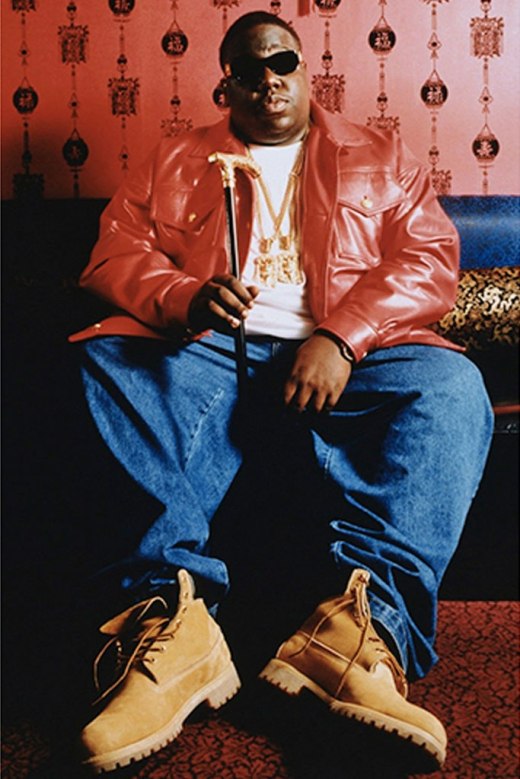
Timberland is the originator of those ubiquitous mustard pyellow boots that have been worn by men in the construction industry since about 1970.  But 20 years later, New York City hip-hop style icons became obsessed with the boots.

Well known rap music stars regularly appeared on stage and in videos  wearing a pair of humble, utilitarian Timberlands. The boots are the antithesis of chic and so they became chic.  A hip-hop performer named himself “Timbaland” and became one of the biggest names of the art form. Timberland boots now symbolized authentic urban cool.  Its brand identity changed forever.  The company recently launched a “Brooklyn Collection.”

I am writing this post just a week after the branding workshop that I presented and I regret that I didn’t have access to the information I share with you today.  Stephen Greyser, Professor Emeritus at the Harvard Business School and Matts Urde, Associate Professor at Lund University School of Economics and Management in Sweden, created what they named a Corporate Brand Identity Matrix, shown here, to help us identify and communicate our brand:

VALUE PROPOSITION
What are our key offerings, and how do we want them to appeal to customers and other stakeholders?
RELATIONSHIPS
What should be the nature of our relationships with key customers and other stakeholders?
POSITION
What is our intended position in the market and in the hearts and minds of key customers and other stakeholders?
EXPRESSION
What is distinctive about the way we communicate and express ourselves and makes it possible to recognize us at a distance?
BRAND CORE
What do we promise, and what are the core values that sum up what our brand stands for?
PERSONALITY
What combination of human characteristics or qualities forms our corporate character?
MISSION AND VISION
What engages us (mission)? What is our direction and inspiration (vision)?
CULTURE
What are our attitudes, and how do we work and behave?
COMPETENCES
What are we particularly good at, and what makes us better than the competition?

In addition, Greyser and Urde recommend five (5) guidelines as you conduct your brand identity process:

  1. Be concise

Use short phrases in your answers that can become headings, where you will later write more detailed descriptions that flesh out your brand identity and narrative.

2.  Be straightforward

Keep your answers clear and uncomplicated. Avoid jargon and industry-speak. Adopt a down-to-earth style that tells the story in just a few simple, well-chosen, words.

3.  Seek what is representative or characteristic

Use language or concepts that say “this is us.” Describe the essence of you, your products/ services, your company.

4.  Stay authentic

Be honest in your ownership and expression of the aspects of your company, products and/or services that are already firmly rooted in the minds of your customers and community in which your company operates.  In other words, if the company has always been known for traditional values and a conservative approach, don’t try to appear cutting edge.

5.  Seek what is timeless

Brand identity should be long-lasting. Despite validation by the hip-hop crowd, Timberland boots are still humble, practical footwear that can be worn in any weather.

Thanks for reading,

Kim

Photograph: Hip-hop legend Biggie Smalls (1972 – 1997) circa 1995

Shutting Down Toxic People

Today, I share with you insights about managing toxic people, a vexing class of individuals whom we all encounter from time to time.  The toxic types can infiltrate and poison our workplaces, schools, neighborhoods and volunteer service posts. They are even, I’m sorry to say, to be found in our religious institutions and our families. They are high-maintenance, manipulative and hurtful.

Those of us who are well-meaning and psychologically healthy are in need of polite and effective tactics that will keep the toxic at bay and prevent their calamities from spreading and tainting our experiences and opportunities, if not our lives. The ability to manage your emotions and remain calm under pressure has a direct link to your performance.

For help, I turn to a list of tactics developed by Travis Bradberry, PhD., clinical psychologist and expert on the subject of emotional intelligence.  Bradberry is the co- founder and CEO of Talentsmart, a consulting firm that provides training and coaching in emotional intelligence, a vital “soft skill” that impacts many aspects of relationship -building in our business and personal lives. Bradberry is also co-author (with Jean Greaves) of the best-seller Emotional Intelligence 2.0 (2009).

TalentSmart has conducted research reportedly with more than a million people and found that 90% of top performers are skilled at managing their emotions in times of stress in order to remain calm and in control. The ability to neutralize toxic people is a foundational competency for those who plan to become successful. Top performers have well-honed coping strategies that they employ to keep toxic people at bay.

Set limits

There is a fine line between lending a sympathetic ear to someone who is feeling disappointed or disrespected and feels the need to vent, as s/he seeks a way to cope.  It is quite another thing to be caught in the grip of a chronic malcontent for whom constant complaining seems to be the goal and to even entertain the thought of finding solutions to the problem are quickly dismissed.

Bradberry recommends that we ask the complainer how s/he intends to address the problem.  Be on guard for the malcontent to attempt to pull you into doing the repair work for them.  You may be met with a tirade (or a whine) about how “I thought I could depend on you to help me.” Gently point out that you are not the one who is upset. Sir/Madame Malcontent will be exposed as having no interest in solving any problems and that is your opportunity to politely distance yourself from this individual and refuse to remain a sounding board for ongoing complaints.

Rise above

Toxic people love to push buttons and generate conflict that inflates sometimes insignificant misunderstanding into a whirling tornado.  They are often irrational and thrive on arguments and power struggles; they have no filter and no off button. Whether their impulse is deliberate or unwitting matters little.

Instead, do what you can to remain calm.  Ignore any taunting and refuse to get drawn into debates and show downs, for you are too sane to prevail in such a fight.  Create distance and don’t engage.  If an individual persists in goading you into arguments, (including the arguments of third parties that do not involve you) it may be necessary to threaten and even pursue legal action, such as a restraining order, if you feel that the behavior has crossed the line into harassment (you cannot do this in the workplace, however).  You must stop cold behavior that you find unacceptably stressful or threatening.

Choose your battles

Understand that some battles are not worth the fight, even if you feel that you can win.  Do you want to die on this hill? Some battles are not worth the time and energy. Living well is the best revenge.

Aware of emotions

Bradberry points out that maintaining emotional distance from the toxic types requires emotional awareness.  Instead of allowing yourself to be manipulated emotionally and dragged into some irrational state of mind, calmly remind yourself that the toxic person is deliberately pressing your buttons (or perhaps inadvertently—who cares?) because s/he feels compelled to bully you into joining him/her in a rant, a whine, a shouting match, or some other counterproductive behavior.  Don’t go there.  Walk away, if possible, or change the subject.

Establish boundaries

The toxic are champion boundary busters. One of my mother’s sisters was very good to me but when it came to respecting boundaries, she could see no reason to do so (especially not those of a young person).  Whenever she saw me with food, she begged for a taste.  I would offer to make her a small plate and she would refuse, saying that she didn’t want that much, but only wanted “a taste of mine.”  She knew well that I didn’t like that behavior and I suppose I need to accept that disrespecting me was her goal.  She’s been gone for many decades, but the memory of her hurtful behavior will never leave me.  It poisons my memories of her.

I was a young adult when she died.  If she had lived longer, I would have become better at protecting my boundaries, despite the family pressure to give into her, an elder who had done me a big favor and always gave me nice gifts at birthdays and Christmas. I think I would have called her on it in a more forthright manner and if it meant that I saw a lot less of her, I would have done so and let her know the reason for my absence.

Now if your boss is the toxic person, it would stand to reason that the best thing would be to give him/her exactly what they ask for, on time and within budget.  But the problem is that toxic people love finding fault. They “move the goal posts” so that you can never succeed.  I suggest that whatever the boss wants from you, confirm it in email—all expectations, the budget and the deadline.

Forgive, don’t forget

There is lots of talk about forgiveness and I suppose some of it is useful.  Bradberry recommends it and I’ve come to the place in my life that I will concur, with limits. Forgive but do not forget.  Let the incident go, but do not give the wrongdoer another chance to violate you.  Or, hurt me once shame on you, hurt me twice, shame on me.

Thanks for reading,

Kim

Photograph: Anthony Perkins in Psycho (1960)

Highest Paying Freelance Gigs in 2019

According to the 2018 report Freelancing in America , a survey of 6000 U.S. workers conducted by Upwork and The Freelancer’s Union, there are 56.7 million self-employed workers in our country, from Lyft and Uber drivers to public relations specialists, ballet dancers to home organizers.  One in three (35%) workers in America participate in the Freelance gig economy either full-time or part-time.

As you might guess, not everyone is getting rich in the Freelance economy.  High tech workers have the most earning power, by far.  Fit Small Business, an online magazine that features articles targeted to small business owners and Freelancers, analyzed data from online job-finding sites including Upwork, Freelancer, Hubstaff and Guru to compile a list of what they predict will be the 10 highest-paying Freelance jobs of 2019.

  1.  Data Scientist/ Machine Learning EngineerDeep Learning  S115/hour       Deep learning is the specialty of these machine learning experts and it involves the development of neural networks that mimic the neural pathways in the human brain. These professionals possess advanced skills in algorithm and programming languages such as Tensorflow, Python, Java, Matlab and C++.
  2.  Digital Architect —Blockchain  $87/hour   The technology that powers cryptocurrencies such as Bitcoin, Ethereum and Monero is used to build new cryptocurrencies, cryptocurrency exchanges and helping businesses to set up cryptocurrency transactions for customers who want to buy in. Proficiency in C++, Python and Solidity is required.
  3.  Robotics Engineer—Robotics  $77/hour  These Freelancers design and build the mechanical elements and machinery used by advanced robots and automated technologies that companies use to make certain repetitive tasks more efficient and less expensive to perform. Robots have moved into stockrooms to fulfill orders, pharmacies to fill prescriptions, banks to serve as personal teller machines (and let’s not forget ATMs) and even, God save us, into certain bars on the Royal Caribbean Cruise line, where the robots can make two drinks a minute. Talk about a speed bartender! High-level skill in mechanical engineering software, including SolidWorks Professional, Simplify 3D and Photoview 360 are required.
  4.  Penetration Tester—Network Security  $66/hour  These professionals are good guy hackers. They investigate the potential vulnerability of a company’s computer network, so that the company will not fall prey to bad guy hackers who might infiltrate and sabotage its computer system. These Freelancers are certified systems security professionals.
  5.  Code Writer/ Amazon Web Service (AWS) Lambda  $50/hour   AWS is unique among computer servers in that it’s only “on” when it’s needed and the customer pays for hosting space only when applications supported are in use.  AWS runs code when an event triggers it (downloading the software program) and the customer pays only when the associated code runs.  Freelancers must know C #, Java, Node.js and Python.
  6.   VR Developer—Virtual Reality  $50/hour  Virtual reality experts develop algorithms that are mostly used in games like the blockbuster Angry Birds. Virtual Reality technology is increasingly used in healthcare and education. These professionals must be fluent in C++, C#, C, native iOS, Android and Java.  Be advised that the required skillset is unique to the platform used to build the VR app in development.
  7. Video Editor—Final Cut Pro X. $37/hour  Film studios, music video directors, wedding videographers and marketing/advertising companies are among the potential clients of these Freelancers. Freelancers who’d like to participate with the creative class must be able to not only cut video clips. but also use transitions, integrate music and edit scenes using multiple camera angles.
  8. Social Media Marketer/ Instagram  $30/hour   What a shame that jobs where creativity, judgment and the psychology of the end-user are so vital to the process of creating a memorable experience that builds brand loyalty and generates revenue, skills that cannot be learned in a series of online tutorials pay the lowest salaries? The automatons are making all the money, clicking away on their keyboards.  Instagram active users numbered a billion in June 2018 according to Statista and that’s a whole lot of campaigns to create and manage.  Freelance marketers must be able to create engaging content, build the brand voice, analyze performance metrics to monitor campaigns successfully, in consultation with the client.

Thanks for reading,

Kim

Photograph: Academy Award-winning actress Jane Fonda (Best Actress, Klute 1971 and Coming Home 1978) as Bree Daniels in Klute (1971)

Optimize Online Content for Voice Search

The thing about internet technology is that we’re always playing catch-up.  First, we researched and identified the best key words for our products and services as we introduced Search Engine Optimization to our websites and eventually, our social media postings.  Next, we hired a web developer to add the responsive design capability to our websites, so that they would download correctly into smartphones and tablets.

It appears that for our latest update, we must ensure that we’re using long-tailed key words, i.e. phrases, that will capture the voice activated searches of Siri and Alexa. Adweek reports that 67 million voice assisted devices will be in use in the U.S. before this year ends and that’s your motivation to seed your online content with phrases most likely to be recognized by A.I. enabled searches.

But let’s begin at the beginning—have you made any voice activated searches? If not, then try it out and make note of what you say.  The next time that you listen to iHeart Radio, grab your iPhone and ask “Siri, play Michael Jackson.” Or speak to your Android and ask, “Alexa, order us a half gallon of milk and a box of Fig Newtons.”

Notice that words such as where, find, order, how, who and where are often used in voice searches and you will be wise to include those words when you update your content for voice search optimization.  As well, keep in mind that voice searches are often used when the prospect is in motion and typing is inconvenient, for example, when walking or driving.

Voice search requires us to adjust our thinking (again!) to that of a potential customer and not of a business owner or marketer.  What questions might a prospect ask when looking for information about your particular expertise? “Siri, find me architects in Philadelphia that do over kitchens and baths.” “Alexa, who are web developers in Tulsa that can create a new website for me?” “Who can help me plan the company meeting we’ll hold in Milwaukee in October of this year?” “Where can I find a dog walker near me in Natchez?”

Voice search key word phrases are like a conversation and your online content should respond in kind.  Your newsletters, blog posts, FAQs page, white papers, case studies and descriptions of your products and services are ideal places to embed phrases that resemble prospect questions that are likely to be asked in voice searches.

Your prospective customers do not use industry-speak buzzwords such as leverage, growth hack, synergy, visionary, or disruptive.  Is it not time to purge those words anyway? Your prospects are looking for answers, so give them the answers in everyday words that everyone uses.  KISS–keep it simple, stupid—as you update your content to answer basic questions, including facts such as the products your organization sells, the services provided, the address of your business if customers can be expected to come in and the opening and closing times.

Thanks for reading,

Kim

Photograph: Taping Gang Busters, the “only national (radio) program that brings you authentic police case histories.” The program was broadcast from January 1936 – November 1957.