8 Great Business Reads for Summer 2021

This summer seems tailor-made for staying close to home. International travel remains a difficult proposition as COVID-19 rages on, causing the Tokyo Summer Olympics to ban the presence of a live audience. Weather across the U.S. has been a problem, with the East Coast repeatedly doused with heavy rain while western states suffer through dangerously dry conditions and temperatures ranging from the 90s to beyond 100F.

We cannot control the weather, but we can control our response to it. Whether summer finds you in your back yard or a park in the city, vacationing in the mountains or near the water, why not crack open a business book or two and pick up some pointers on how to grow your business skills? Please take a look at the recommendations below.

Rise and Grind (Daymond John with Daniel Paisner, 2018)

Shark Tank investor Daymond John reminds readers that anything worth having is worth working for. He tells the outrageous truth—if you want to create real success in business, then be prepared to out-think, out-hustle and out-perform the competition. In 1992, John and three friends in his hometown of Queens, NY founded FUBU, a casual apparel line that become must-have street style fashion.

In this New York Times and Wall Street Journal best-selling book, John shares behind-the-scenes stories of how he overcame adversity and went on to co-found and become CEO of a company that now generates nearly $6 billion in annual sales worldwide. https://www.goodreads.com/pl/book/show/35083562-rise-and-grind

The Art of the Start 2.0 (Guy Kawasaki, 2015)

Kawasaki made a name for himself in the 1980s, when he helped launch the Apple Macintosh computer. He’s an entertaining writer and presenter and his book is filled with practical advice, particularly for those who’ll need venture capital. Whether you’re leading an existing business or planning to launch a new venture, you’ll find Kawasaki’s cut-to-the-chase business building blueprint useful and inspiring.

https://www.barnesandnoble.com/w/the-art-of-the-start-20-guy-kawasaki/1120058655

Marketing Made Simple (Donald Miller, with Dr. J.J. Peterson, 2021)

New York Times best-selling author Donald Miller details how to create and implement a marketing plan that will bring qualified prospects to your door. Readers learn the fundamentals of lead generation, how to build a sales funnel, how to recognize and optimize key customer touch points and how to develop and communicate an authentic brand story that builds trust and loyalty.

https://www.barnesandnoble.com/w/marketing-made-simple-donald-miller/1132751806

Uplevel Your Business, Uplevel Your Life (Kristen S. David, 2020)

Discover the four pillars of successful business management. Ms. David gives Freelancers and small business owners a roadmap for scaling or growing your venture. Learn to recognize growth opportunities and push them forward with smart action plans. Learn to accurately monitor progress with relevant quarterly goals. Understand the types of operational support systems and processes that will enable you and your team to build and sustain a thriving, profitable venture.

https://www.goodreads.com/book/show/50390493-uplevel-your-business-uplevel-your-life

Eat What You Kill (Donald Williams, 2020)

In 2005, Williams launched the eponymous Williams Accounting and Consulting in New Orleans, LA and in 2006, he opened a second location in Atlanta, GA. Small business owners are the principal customer group served. Guiding clients as they grow their ventures is Williams’ mission and he provides for readers valuable money-saving and money-making strategies that will enhance your financial management and future.

Donald Williams’s “Eat What You Kill” Promotes Financial Empowerment

The E-Myth Revisited: Why Most Small Businesses Don’t Work (Michael E. Gerber, 2004)

The author is credited with revealing the distinct differences between working in and working on your business. Gerber has more revealing insights to share in this influential book, including the common fantasy that just because you enjoy and may even excel at doing something—cooking, for instance—does not mean you are prepared to operate even a modestly successful restaurant. Just because you are good at something doesn’t make you qualified to turn your hobby into a business.

https://www.goodreads.com/book/show/81948.The_E_Myth_Revisited

Your Next 5 Moves: Master the Art of Business Strategy (Patrick Bet-David, 2020)

At age 10, Bet-David and his parents escaped war in Iran. The family traveled to the U.S., earned citizenship and Bet-David eventually joined the Army and served in the 101st Airborne Division. After his tour of duty, he worked in the financial services industry. Before his 30th birthday, Bet-David successfully launched PHP Agency, Inc., an insurance sales, marketing and distribution company, which has become one of the fastest-growing ventures in the financial services sector.

But when Bet-David created the video The Life of an Entrepreneur in 90 Seconds, it went viral. The 30 million viewers his educational video received inspired Bet-David to found Valuetainment, which quickly became the #1 YouTube channel for entrepreneurs.

https://www.goodreads.com/book/show/50542735-your-next-five-moves

The Lean Startup (Eric Ries, 2011) Ries has a long history with start-up ventures, variously serving as a start-up employee, adviser and founder and this book is a long-time best seller. While a college student, he founded Catalyst Recruiting, a platform on which students could create and share their professional profiles that could bring them to the obtaining a job after graduation. The venture failed, because he didn’t understand the needs of his customers. Ries eventually learned that in order to build a great company, one must begin with addressing the needs of target customers.

Over time, Ries connected the dots on what he’d learned about launching a new company. The lean start-up methodology favors experimentation over writing the traditional, elaborate business plan, direct customer feedback and iterative design over traditional “big design up-front” development. Although the lean startup strategy is just a few years old, its concepts—such as “minimum viable product” and “pivoting”—have quickly taken root in the start-up world, and business schools have already begun adapting their courses to teach them.

https://www.barnesandnoble.com/w/lean-startup-eric-ries/1100642052

Thanks for reading,

Kim

Image: Books that beckon at The Last Bookstore, the largest independent bookstore in Los Angeles, CA https://www.lastbookstorela.com/about

Interns Go Virtual

As a result of the COVID-19 shutdown, organizations around the world quickly made changes to how business was done and in many companies, a support system for the usual summer internship program was part of the updates. Perhaps company leaders realized that virtual internships present a unique opportunity for their program to operate across geographical boundaries and greatly expand the pool of desirable candidates?

Academic institutions likewise pivoted to remote during the 2020 shutdown and readied to enable internship programs in the new normal work and education environment. In May 2020, the University of Wisconsin at Madison released a white paper that discussed virtual format internships, their benefits for both the student intern and the hiring company and how to make the experience successful and rewarding for both parties. http://ccwt.wceruw.org/documents/CCWT_Report%20%2310_Online_Internships_Lit_Review_May2020.pdf

Freelancers and small business owners and leaders will occasionally bring in an intern or two, typically as a way to gain a reasonably capable assistant who can be trained to handle uncomplicated professional level tasks for just a few hours per week, at a modest pay scale. Introducing to your business a young person who will bring fresh perspectives and a familiarity with recent technologies that you and your team may not possess stands to improve productivity, profitability and the customer experience at your organization. The internship experience that you initiate may become a way to move your company more decisively into the 21st century.

While the virtual format does have drawbacks—like the increased difficulty (or impossibility) of providing your intern with sufficient networking and relationship-building opportunities with colleagues, interns can still attain a variety of benefits in the remote workplace.

Finding interns

College career centers and academic departments are your source for obtaining information and resources about either hiring an intern or establishing a formal internship program at your organization. Share your business needs and expectations with school officials to determine whether undergraduate seniors or graduate students will be most appropriate. Because schools have a vested interest in workforce preparation and employment outcomes for their students, they can be trusted to help you make the right choice.

Choose the right projects

Social media is often a natural fit for interns because they grew up with social media and probably understands the subtle differences between SnapChat and TikTok, Instagram and Pinterest. Discuss the customer demographics and presumed social media strategy with your intern, who will be tasked with helping you realize objectives.

Your intern might also be asked to create a stock image library for posts, shoot videos on a cell phone and create text content as well, in accordance with the company brand story and target customers. You can also ask a social media intern to conduct a competitive audit to let you know what your 3-4 closest competitors are posting, specifically the platforms used and how they communicate with customers.

Bookkeeping interns could be asked to prepare quarterly taxes for customers. Web design interns can be asked to write code and assist with website updates. Graphic design interns can work on logos and draft marketing collaterals. IT interns can take help desk calls and set up the controls for videoconferences. Although it will be done virtually, always review your intern’s work and give praise where it is due and corrections with diplomacy.

Intern support system

Consider how you can create online support for your intern that will include your company needs, the school’s reporting and course credit requirements, plus intern guidance and mentoring. Your goal is to promote a successful and rewarding experience for the intern and yourself/ the business. 

Schedule daily videoconference 1:1s to discuss the intern’s projects and your expectations for performance milestones and completion dates. If you haven’t been using online communication tools beyond email and Skype, for example, encourage your intern to suggest his/her preferred messaging and workflow systems, such as Slack or Asana and give your intern professional validation when s/he gets to teach you something. Institute systems also to allow the intern to interact with other team members, if there are any and encourage relationship-building and networking.

On balance

So what does the Freelancer win when working with an intern? Useful work and good karma. You get some low level, but nevertheless professional grade, work done for not a lot of money. Plus, mentoring in the form of professional development that introduces a young person to the adult work environment, its expectations and responsibilities, is so nurturing and generous (although not everyone has the patience for it).

The downside is that interns need more supervision than working adults and they can be unavailable during final exams or spring break. But then again, who among us does not need occasional time off? Anyway, you never know— in a few years, your intern might flip the script and hire you for an assignment when s/he has gone on to a good corporate job.

Thanks for reading,

Kim

Image: © DanceParent101

Mastering Virtual Presentations: Feel Connected, not Remote

Virtual meetings are here to stay and at some point you, Freelancer friend, will be asked to give a presentation on a virtual platform—so you may as well make it your business to learn how to do it right. Plan well and you’ll be able to give a talk that is delivered remotely but still connects you to your audience. The trick is to think of your talk as a TV show or movie, divide it into segments and assign them a role to play in the audience experience.

Obstacles

Talking to a webcam is probably not your idea of a satisfying communication process. You’re in a room intended for another purpose—-cooking? sleeping?—-but is now your stage and the audience can see you. You can see them, too, but only as a row of small images aligned along the perimeter of your screen. Everyone is together, except that you’re not.

In fact, you’re all isolated and some may be in another time zone or even another country. Still, through the miracle of technology, you’ve come together to share this experience. The speaker has the responsibility to make that experience rewarding.

Unfortunately, the speaker’s experience may not feel rewarding. Delivering a speech of some sort when using a virtual platform can be disorienting, whether one will discuss a committee report at a board meeting, teach a class, or give a quarterly earnings report to investors. The usual sensory cues are missing. The presenter can see everyone’s eyes, but is unable to make eye contact.

It is sometimes apparent whether or not audience members are paying attention, but feeling their presence and energy, which signal to an astute speaker when the audience is with you and when you are losing them, is not possible. In virtual communication there is no feedback, no way to confirm that the audience understands or agrees with the points you’re making. The presenter is hanging out there alone, sort of in a black hole. There are no familiar landmarks on the trip.

Solution 1: The voice

Presenting on a virtual medium is like being a television newscaster, talking to the red light and with no studio audience to interact with. Nevertheless, speakers working in a virtual medium must remain acutely aware that there is a listening audience that needs him/her perhaps more than does a face2face audience. The online audience urgently needs a responsive connection to the speaker, on whom they depend to lead them into the topic, earn their respect by sharing relevant and timely information and hold their attention so that they won’t be tempted to sign out of the event.

When talking to a webcam, there is often a tendency to speak in a monotone. Some may speak too fast, others will ramble on and on. It’s because talking to a webcam and a row of tiny pictures feels off-kilter. The normal exchange of communication between a speaker and audience, subtle but powerful, is missing.

The overall most effective solution is for virtual format presenters to rehearse the talk thoroughly, to ensure that the tone of voice is strong and confident and the pace of speaking is neither rushed nor slow. Diction should be crisp and the vocal expression pleasantly enthusiastic.

Solution 2: Technology —polls

The drop-off rate of virtual presentations is high. It’s easy for audience members to leave when the talk begins to seem boring. To combat the problem, speakers must prepare to work with the platform technology, rather than allow themselves to become lost and flailing within it. Speakers must always maintain control and this is especially true when the format is virtual and the ability to read the audience mood is severely restricted.

Presenters are advised to quickly capture audience attention and establish their control by engaging them at the start of the talk, perhaps with a fun activity that employs the platform’s polling function. When the speaker invites the audience to respond to him/her they’ll give back a helpful dose of positive energy, precisely what is needed to not just deliver a talk, but to communicate and connect with the audience.

Asking a question is a tried-and-true audience “warm up” technique, but your question must be more specific than “How’s everybody doing today?” The virtual presentation opening question should be devised along the lines of a survey question, to make taking a poll feel appropriate.

Presenters can create a question that’s related to the talk, or even ask about the weather. Since most of the audience may be working from home, staying indoors is easy. If local temperatures have been unusually cold or warm, a creative speaker might want to ask when’s the last time audience members have ventured outdoors? The question and answers received could be good for a chuckle and will pave the way to finding common ground between speaker and audience and also between audience members.

You may be able to take another poll or two later in the talk by asking a question about the topic and challenging the audience to predict what your data show. Once you’ve displayed the audience answers, then present your data. (“96% of you predicted that our customers would like this new product feature. Let’s bring up the official statistics now and see how customers responded.”

Solution 3: Technology chat

Chat is tailor-made for Q & A and it’s the go- to virtual audience engagement tool. Every presentation includes time for Q & A, often structured as a forum at the talk’s conclusion. Some presenters will also take a question or two earlier in the talk and then address the rest in the Q & A forum.

Whichever format you feel will work best for you and your topic, the chat function will be useful. Presenters can invite audience members to type questions into chat throughout the talk, which may cause certain of them to be addressed during the talk. It will be wise for presenters to discreetly check into chat periodically during the talk because audience members could be trying to signal that something is amiss—-maybe a sound or lighting problem.

Thanks for reading,

Kim

Image: Walter Cronkite (1916 – 2009), lead anchorman for CBS-TV Evening News 1962 – 1981. During the 1960s and 70s, Cronkite was regularly named as “ the most trusted man in America.”

Upgrading Leadership Skills

As we approach the close of a difficult year, the first thing I’ll ask you to do is give yourself a pat on the back for making it through. Sure, you may have dropped a stitch or two as you struggled to find your footing as clients canceled jobs and the ground gave way beneath your feet.

This is a scary time for Freelance consultants and business owners, including those who steward multi-million dollar corporate enterprises. Those who’ve managed to hang on and find a way to either pivot or turn a corner and rebuild are to be congratulated.

Regardless of your circumstances, periodically assessing your leadership capabilities will always bring you to a better place, professionally and personally. One’s leadership ability is the foundation of not only decision-making that helps to successfully guide your business through the storm but also to rally the team to shore up confidence and productivity.

How you say what you say

Good communication is a hallmark of an effective leader. Knowing how to connect with, empathize and inspire the team are essential competencies. A leader depends on the team, because they are the folks needed to achieve the goals and support the leader’s, and the company’s, success.

Team members are highly attuned to their leader’s style of communication. It really is not so much what you say, as how you say it. We all have an inborn communication style and when we are mindful, we can refine that style and make it more effective. One method of communicating company goals is to use storytelling.

Express the goal and key elements involved in its achievement as a story, if not an adventure. Share with the team why the goal is important, what it means to the company’s survival and stature and how the company (and by extension its employees) will benefit. Communicate your excitement about being chosen to participate in achieving the goal. Emphasize your confidence in the ability of team members to take the ball and run with it.

As well, allow team members to add their viewpoints and give voice to their questions, doubts and/or what some may feel as innovative ways to get the job done. In other words, demonstrate your respect and reinforce mutual trust. Barking orders and demanding performance damages morale and is rarely effective in the long run.

Listen to the team

Team members should feel comfortable speaking with you, their leader, both on the record and off the record. What you hear may occasionally make you wince, but at the end of the day you’ll feel empowered because you are trusted and that means you are held in high esteem. There is no better compliment.

Share credit and be a cheerleader

If you want to get the most out of team members, be generous with your compliments and praise. Do that and they’ll go to the ends of the earth to make you proud of them. Remember that you stand on their shoulders. Be generous with your sincere appreciation and respect for their skills and dedication.

Be willing to learn

Learning how to learn will improve any aspect of life, professional or personal. Adapting to change and understanding whether it would be the best gamble to tweak, pivot, or batten down the hatches and stay the course requires an understanding of current and anticipated marketplace forces and that understanding is acquired through updated knowledge.

Successful leaders use their industry intel to anticipate strategies that may be needed to maintain market share and profitability. Read regularly about what products are on the horizon in your industry and their potential impact as a whole and your organization in particular. Do new products, or new policies or new companies, represent an opportunity or a challenge?

Coach and mentor

While on a path to increase your own learning, encourage team members to do the same and enable the process. At least twice a year, schedule a skills building workshop, preferably facilitated by an outside expert.

If you notice that there are areas of struggle, have a private nonjudgmental and encouraging talk to investigate the root of the problem and set up a confidential remedial plan. For those at the top of their game, privately discuss career goals and paths to promotions. Remember that those you promote will become your best allies at the organization.

Own your mistakes

When you drop the ball, acknowledge and apologize. Nothing quite undermines the reputation of a leader like dodging culpability and responsibility. It’s humbling and it doesn’t feel good, but owning up never fails to enhance a leader’s credibility—-and credibility is what leadership is all about.

Thanks for reading,

Kim

Photograph: Elizabeth II leaves Westminster Abbey after her coronation as queen of Great Britain and the British Empire on June 2, 1953.

8 Skills Everybody Needs

Whatever work one does, from start -up founder to pastry chef, automotive mechanic to chief financial officer, it is interesting that we all need the same short list of skills to become successful.

Consultants are often advised to hone and promote fluency in the skills listed here but everyone who works—-business owner, Freelancer, or employee—-taps into these skills on a regular basis. Your hair stylist and the guys who do your yard work use the same skills as your bookkeeper and your periodontist and if they didn’t, you wouldn’t have hired them. Let’s remind ourselves of what we really need to know in life.

Adaptability

Because when we wake up in the morning, we never know what the day will bring. One may learn, for example, that a potentially lethal and highly contagious virus, for which there is no reliable antidote, has entered our country by way of a meeting of executives employed by a prestigious biotechnology company.

When those who attended the meeting returned home and went about their daily lives, some of them infected people with whom they interacted. Very quickly first hundreds, then thousands, of citizens contracted the virus and many died. In an attempt to block the spread of the virus, governors in all 50 states ordered nearly half of commercial enterprises, plus all schools, government offices, libraries, museums and other public spaces, closed. So what did we citizens do?

We adapted as much as possible, that’s what. Grocery stores, the post office and other entities deemed essential were allowed to remain open. Many business owners and leaders found ways to keep their ventures functioning, with revisions.

Millions of knowledge economy workers used their personal computers to work from home, as department heads kept their teams united with videoconference meetings. Schools quickly switched from classroom to online learning (many colleges long ago added online courses).

Retail stores sold merchandise through their already robust e-commerce websites. Personal trainers and fitness instructors contacted their clients and followers and invited them to participate in outdoor workouts. We did what we had to do and we got by.

Creative thinking

Whether or not an out-of- the-box solution is needed, every once in a while it’s fun to bring innovative flair to a plain vanilla task. Whatever the motivation, resourcefulness and creative thinking are appreciated, because the need for an end run or a work-around can be part of daily life. Sometimes, one needs all of that just to get through the morning commute!

Creative thinking is often associated with the arts or architectural design. But during the COVID shutdown wedding planners, who were watching the ground give way beneath their feet, flexed their creative genius to reimagine weddings for panicked brides and grooms. That often meant broadcasting the ceremony virtually and rescheduling the reception for the following year.

Creative thinking can also reach back into the past for an innovative solution. This year, the New York Film Festival, barred from using shuttered movie theaters, will debut its contenders at drive-in theaters in the Brooklyn and Queens boroughs.

Credibility

Dependability, judgment and expertise are the three pillars of professional credibility. These attributes add up to trust and trust is what gets one hired and motivates customers to give referrals. People do business with people they like. They do more business with people they trust.

Communication

As it is often said, it’s not necessarily what you say, but how you say it. You’ve got to know how to talk to people.

One of the best ways to communicate with someone is to not talk (much), but tlisten. Use nonverbal cues to demonstrate that you are following the narrative. Ask questions to clarify or confirm what you think you’ve heard. Pay attention and let others know that you value them and their opinions (even when you see things differently).

Decision-making

Here’s the reality—-when a big decision is on the table, we seldom have access to as much information as we feel would be helpful as we weigh the possibilities. It is frustrating, to be sure, and we’ve all been there. The thought of taking the wrong path makes the stomach queasy.

But at some point, one must make a move and travel to the left or right, say yes or no, or leave well enough alone. Or, one can elect to put the matter aside and revisit it within a certain period of time.

If a decision carries impact, it cannot be ignored. The fear inspired tactic known as analysis- paralysis, where information is considered and reconsidered ad nauseum, is counterproductive. The best way to improve the quality of information to use as a guide for wise decision-making is to ask the right questions.

Problem-solving

Nearly every purchase one makes is intended to solve a problem, from a bottle of juice (thirst) to calling Lyft (door2door, on-time transportation). Whether the items your company sells are products or services, you’ll make more money when you 1.) understand the business you are really in, by thinking through the underlying motive for the purchase, beyond the obvious, and 2.) design your marketing strategies and sales pitch to reflect item #1.

Teamwork

Many hands make for light work. Too many cooks spoil the broth. Teamwork and collaboration lie between those warring poles and a real professional will persuade others to join him/her in the sweet spot.

Someone must step up and take the lead on a project of any magnitude. Those responsible can draw up an action plan, complete with due dates. Milestones or a mid-point check-in will help to keep everyone on schedule and ensure that mistakes have not been made.

If everyone holds up their end and the project is completed on time, you’ve got a team. If a mistake is discovered and corrected in a timely fashion with the help of your colleagues then congratulations, you’ve got a high-functioning team.

Time management

The ability to prioritize and organize, enabled by an action plan that includes target completion dates, are the three pillars of time management. Understand and get agreement from stakeholders and decision-makers regarding mission- critical tasks. Confirm that team members and other collaborators have the time to produce what has been asked of them within the desired time frame.

Thanks for reading,

Kim

Photograph: Kim Clark, February 2019. Choreographic Objects, installation at the Institute of Contemporary Art/ Boston by William Forsythe (a choreographer who works with world- class ballet companies)

The Hidden Codes of Body Language

On Monday February 10 at 6:00 PM I’ll give a 1-hour presentation on the basics of branding your business — or yourself! Find me at Staples/Government Center in Boston. Learn how to sharpen your image and tell your story in 2020. Please click the link and RSVP to attend. Free. (and I will work on my body language!) https://www.eventbrite.com/e/your-brandknow-it-own-it-work-it-tickets-92254605007

Kasia Wezowski, co-Founder (with husband Patryk Wezowski) of the Center for Body Language, a firm based in Antwerp, Belgium that teaches body language training and decoding to business executives and co-author (with her husband) of The Micro Expressions Book for Business (2012) says that non-verbal communication is powerful behavior that can accurately predict one’s success or failure. Wezowski claims her research has proven that decoding someone’s body language can predict the outcome of everything from presidential elections or one’s inborn potential to have an advantage when in negotiations.

The Wezowskis have studied successful leaders across a range of fields and they’ve identified several positions which their data indicates are effective and persuasive body language that will help you bring listeners around to your way of thinking. In 2013, they delivered a popular TEDx Talk How Microexpressions Predict Success.

The box—trustworthy and truthful

Early in the political career of former President Bill Clinton, he would often punctuate his speeches with big, wide arm gestures that had the boomerang effect of leading audiences to perceive him as untrustworthy. To help Clinton keep his body language under control, his public speaking coach taught him to imagine a box in front of his chest and mid-section that would contain his hand movements within it. Since then, “the Clinton box” has become a popular term in the public speaking field.

Hold the ball—commanding, dominant and in-charge

Gesturing as if one held a basketball between the hands helps the body signal confidence and control. Do this and the audience will feel that you, learned presenter, literally have the facts at your fingertips. The Apple Computers co-Founder Steve Jobs frequently used this hand position while delivering one of his legendary speeches.

Pyramid hands—calm and self-assured

When people are nervous, their hands often flit about and fidget. When one feels confident and in control, one is usually also calm and still. Help yourself to communicate this state of being by clasping both hands together in a relaxed pyramid. Many business executives employ this gesture, so beware of overuse or pairing this technique with facial expressions that may telegraph anger or contempt. The idea is to show that one is relaxed, not smug.

Wide stance—confident and in control

How people stand is a strong indicator of their mindset. When facing an audience, one does not want to slouch! Instead, stand in this strong and steady position. The feet are about shoulder width apart; knees are relaxed and not locked. The spine will be erect and the neck and shoulders will also be relaxed. Now the speaker signals that s/he has important information to share and that s/he feels confident. In a 2012 TEDGlobal talk Your Body Language Shapes Who Your Are, social psychologist Amy Cuddy sparked a sensation when she modeled this and other so-called “power poses.”

Palms up—honest and accepting

This gesture indicates openness and honesty.  Media impresario Oprah Winfrey makes frequent use of this tactic during her speeches. She is a powerful, influential figure who also appears willing to connect sincerely with audiences, be it one person or a crowd of thousands.

Palms down—strong and assertive, yet calming

The opposite movement can be viewed positively too—as a sign of strength, authority and assertiveness. Former President Barack Obama has often used this technique to calm a crowd right after moments of rousing applause in response to his speech.

Thanks for reading,

Kim

Photograph: © Christopher Simon Sykes/Hulton Archive. Ronnie Wood (L) and Mick Jagger of The Rolling Stones strike Gods of Rock n’ Roll power poses at Madison Square Garden in New York City (1975 on the Tour of the Americas)

10 Qualities Leaders Need to Succeed

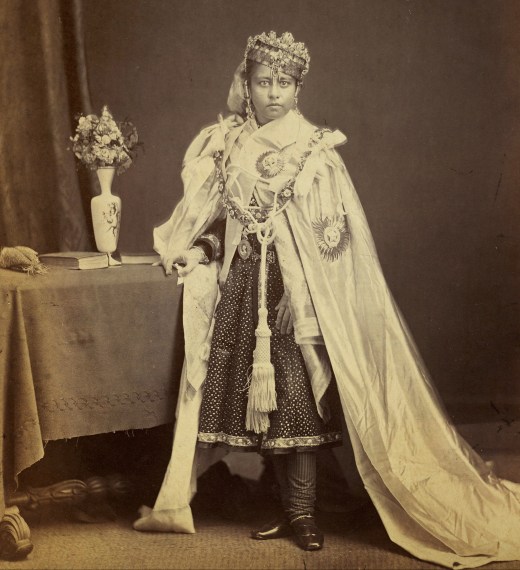
What makes a great leader? Possessing qualities such as confidence, vision, decisiveness, integrity and persistence are often cited. Pictured above is Shahjahan Begum (1838 – 1901), who was the popular and effective Nawab Begum of Bhopal, the princely state in central India, from 1868 – 1901. During her reign she achieved several noteworthy operational efficiencies, including conducting a census, modernizing the weaponry of her military troops, raising the salaries of her troops, improving the tax revenue system and issuing the first postage stamps of Bhopal. Listed below are 10 characteristics often attributed to great leaders.

Vision During the devastating 1974 famine that struck Bangladesh, the Bangladeshi economist, banker and social entrepreneur Muhammad Yunus was inspired to make a small start-up loan ($27 U.S.) to a group of 42 families, so that they could purchase materials and make items to sell without borrowing from a bank and paying a predatory interest rate. He discovered that even a very small loan could make a tangible difference to poor people but unfortunately, banks refused to lend to them at a reasonable interest rate due to a perceived high risk of default.

 To confirm his initial observation about the power of micro loans, Yunus launched a research project at Chittagong University, where he was on the faculty of the Economics Department, to design and study a credit delivery system that would provide banking services to the rural poor. In October 1983 his project was authorized by Bangladeshi national legislation to operate as Grameen Bank. In 2006, Yunus was awarded the Nobel Peace Prize for founding Grameen Bank and pioneering the concepts of microcredit and microfinance.

Authenticity Madam C.J. Walker, the orphaned daughter of freed slaves and a former laundress, in 1905 founded a hair care products company, the Madam C.J. Walker Manufacturing Company. That she was both female and African-American in a time of enormous discrimination and limitations placed on those of her gender and race was apparently beside the point. As all successful entrepreneurs do, Walker saw a problem, set about solving it and monetized the solution. She was not afraid to dream big and take action.

Initially, Walker made batches of hair care potions herself, in a washtub, and personally sold them door to door to friends and neighbors in Denver, CO, where she had moved to give herself a fresh start after marrying at age 14, becoming a mother at age 17 and widowed at 20 years old. To persuade women to try the products, she gave free demonstrations that created the necessary buzz.

By 1908, Walker had hired and trained a team of female sales representatives and by 1910 she employed 950 representatives who crisscrossed the country, making sales and creating loyal customers. The company expanded internationally, when her products became available in the Caribbean and South America. By 1917, Walker had become the nation’s first female self-made millionaire, founder and Chief Executive of the country’s most successful African-American and woman-owned business.

Integrity Honesty and integrity are foundational ingredients in developing trust and essential to establishing credibility. A leader’s credibility is central to his/her ability to influence others and provide strong leadership.

Warren Buffett, Chairman of Berkshire Hathaway, the multinational holding company that wholly owns Duracell Batteries, Geico Insurance, Netjets, Dairy Queen and other well-known companies, pays very strong attention to integrity and honesty both when evaluating potential investments and when selecting managers for his businesses. “You’re looking for three things, generally, in a person,” says Buffett, “intelligence, energy and integrity. If they don’t have the last one, don’t even bother with the first two.”

Passion Tony Hsieh, CEO of the online shoe sales giant Zappos, has made customer satisfaction and company culture his mission and he is passionate about both. Hsieh regularly states that money shouldn’t be the most important company goal and that passion has been a key element in the enormous success of Zappos. Hsieh’s book, Delivering Happiness: A Path to Profits, Passion, and Purpose (2013) was written with the intention of spreading the message of using passion to both find one’s purpose and turn a profit.

Innovation In a July 2019 interview for the influential business-themed podcast Masters of Scale, host Reid Hoffman, co-founder of LinkedIn, interviewed Tory Burch, co-founder of her eponymous women’s wear company, to share key insights about how Burch so effectively scaled her company, which now has more than 250 boutiques on five continents and the collection is carried in more than 3,000 department stores and specialty shops around the world.

“I’ve always been a risk-taker,” Burch confessed as she detailed a strategic decision that in 2005 saw her launch an e-commerce website to make her merchandise available online, a practice that was nearly unimaginable in high-end retail at the time. Along the way, she “did trunk shows in different cities across the country and got a feel for where it would make sense to open more boutiques.”

Patience As Burch and Hoffman spoke more specifically about the episode’s theory of how a company might successfully scale, Hoffman observed, “It’s this combination of patient watchfulness and explosive speed that lets companies grow fast and go the distance.” Hoffman said of Burch, “You may have noticed as she spoke that she has clarity. You have to know what you’re building and what you’re waiting for.” Patience takes courage and confidence and demonstrates the leader’s faith that worthwhile results will be achieved when the time is right.

Decisiveness Strategic decisiveness is among the most vital success attributes for leaders in every position and every industry. Indecisiveness can severely cripple both your business and your life, potentially stunting growth, limiting financial success and diminishing personal satisfaction.

In a 2010 study, Psychologist Georges Potworowski at the University of Michigan found that certain personality traits (e.g., emotional stability, social boldness and feeling in control) predict why some people are more decisive than others. Decisively gifted leaders make it clear from the beginning that while they will carefully consider the opinions of others, they will ultimately choose what they judge to be best for their team. These leaders make the decision early on and move quickly to enlist all parties to implement that decision. Some members of the team may not be thrilled with the choice but in the end, most are quietly pleased to have clarity of direction.

Persistence Jewelry designer Tal Man, cofounder of Talia Jewelry, initially opened a small workshop where she designed and sold custom-made fine jewelry. As her customer list grew, she transitioned from operating a small custom jewelry house to becoming the creative director of a much larger enterprise that has customers on every continent.

Man faced the challenges associated with rapid growth and expansion boldly as her company scaled. She is happy to inspire fellow entrepreneurs, advising, “Never take no for an answer. I don’t even hear the word ‘no.’ When someone closed the door in my face, I went in through the window.” Additionally she says, “Know who you are seeking business advice from. Know what that person’s fear is. Is that person afraid of trying new things or going in a new direction? Or is the person’s fear about losing money? Don’t listen to the fears of others. Ask the right person for advice, ask someone who doesn’t have fear.”

Communication It’s a two-way street if you’re doing right. Sir Richard Branson, founder of Virgin Atlantic Airways and (now defunct) Virgin Records says, “Listening is one of the most important skills that anyone can have. That’s a very Virgin trait. Listening enables us to learn from each other, from the marketplace and from the mistakes that must be made in order to get anywhere that is original and disruptive. I learn so much from guests and employees that way.”

“Researching the competition has never been the Virgin way. Many of our products and services come about because we pay attention to what the market is missing or what’s not being done well. The commitment is about doing things differently.”

Accountability “The buck stops here” is a phrase that was popularized by U.S. President Harry S. Truman, who kept a sign with that phrase on his desk in the Oval Office. The phrase refers to the notion that a leader has to make the decisions and accept the ultimate responsibility for those decisions.

Thanks for reading,

Kim

Photograph: Nawab Shahjahan Begum (1838 – 1901) has been credited with the authorship of several books, written in Urdu. One book discussed socio-political conditions that existed during her reign and another examined the customs of purdah and the hijab followed by women in Asia and Egypt.

Got Power? 6 Types You Should Recognize

“Nearly all men can stand adversity but if you want to test a man’s character, give him power.” Robert G. Ingersoll (1833 – 1899, NY), orator and author of Some Mistakes of Moses (1879) and known as The Great Agnostic

“Power tends to get to people’s heads. We’re not really trained to handle power well.” Nicole Lipkin, Ph.D., psychologist and author of What Keeps Leaders Up At Night (2013)

Power is sexy, seductive and sometimes addictive. Power is heady, power is magnetic, power brings perks—money and sex, fast cars and prime real estate, fame, prestige and respect. Perhaps it is evolutionary imperatives that drive certain personality types to seek out power more than others: males, alpha personalities and extroverts.

Powerful people, whether they obtained power through achievement, birthright, marriage, or fortunate friendships are favorably positioned to acquire leadership positions, through which they acquire still more power. Yet not everyone knows what to do with power once they have it. In 1959, psychologists John R.P. French and Bertram Raven identified sources of power that leaders commonly gain.

Formal Power

This power is derived from holding a leadership position in a hierarchical organization, e.g., Admiral or General in the military, Mayor or Senator in the political sector, CEO, Executive Director, or President in for-profit or not-for-profit sectors. Individuals who wield Formal Power have considerable control over the lives of others.

However, Formal Power is in reality transferred to the individual. Formal Power resides in the title and such power will be lost when the title is relinquished, whether by choice or by force. Only the organization’s founder(s) truly hold power (of the Expertise variety) because they’ve earned it by inventing or launching a significant, long-lasting product, service, or organization that has impact and influence. Earned power cannot be completely taken away by force, even if the organization ceases operations or is the target of a hostile takeover. The founder(s) will forever own the achievement.

Kingmaker Power

Powerful people who desire to prolong or amplify their power by installing allies into positions of power are known as Kingmakers. These individuals are power brokers who sponsor and groom favored candidates for leadership positions, through which they will ascend to Formal Power. Kingmakers arrange for their protoges to receive training, high-profile assignments and other types of support that enable the chosen ones to receive credientials, experience, visibility and ultimately, inevitability.

The Kingmaker’s goal is to persuade both key influencers and rank-and-file members of the organization that their preferred candidate is deserving of a top leadership position. Developing trust and confidence in the candidate is essential, so that decision-makers will accept and nominate him/her for leadership and power.

Oftentimes, Kingmakers are themselves unable to ascend to the highest rungs of leadership, but they wield enough power and respect to influence decision-makers when future leaders are chosen.

Expert Power

In the 1970s, western societies entered the Information Age and in the 1990s entered the Knowledge Economy, both fueled by expertise and information. Expert Power is derived from the belief that others, especially thought leaders and powerful people, have about the superiority of a person’s capabilities. If enough of the right people feel that an individual has clearly superior knowledge and proficiency in a subject that society has decided is high-value, that person is considered an expert and s/he earns power.

Expert Power is held by architect Frank Gehry, whose talent for creating distinctive designs, in particular museum designs, has enabled institutions to become world-renowned attractions that have had game-changing impact on the communities, local and regional, in which they were built (see the Guggenheim Museum in Bilbao, Spain). Bill Gates and the late Paul Allen, co-founders of Microsoft, are another example of Expert Power. Their development of Windows software helped spark the microcomputer revolution and Microsoft became the largest personal computer software company in the world.

Expert Power is the easiest power to acquire and because it is earned, it cannot be taken away. Study hard and it may be yours! However, its holders must continually study, do research, make process improvements, or operational efficiencies in order to stay ahead of the curve and maintain their power.

Charismatic Power

Here we have the cult of personality, rock star appeal. Their supporters are sometimes more akin to fans, if not disciples. Integrity, discipline, talent, trust and likability are its pillars. “People with high Referent (Charismatic) Power can highly influence anyone who admires and respects them,” Lipkin says.

Their associates/ followers are very loyal and happy to do their bidding. People believe in those with Charismatic Power and will strive, and sometimes compete, to please them, in order to win favor and approval. Charismatic Power holders are tremendously persuasive and they excel at rallying supporters around a cause. Mohandas K. Gandhi, Nelson Mandela, Martin Luther King and Ho Chi Minh used their Charismatic Power to launch successful civil rights movements on behalf of those who were systematically disenfranchised and abused (by those who held Formal Power that descended into Coercive Power).

Charismatic Power is self-generated and cannot be given, but the discovery of unethical behavior will break the spell and power will be lost forever.

Relationship Power

This person derives power from whom s/he knows and to whom s/he has access. Relationship Power can be acquired from the powerful family into which one was born, marriage, or a fortunate friendship. Those with Relationship Power are wise to carefully nurture the relationship, to ensure that the gravy train continues.

The holders of Relationship Power are positioned to receive many benefits through their relationship(s). They glide through doors that lead to coveted business or employment opportunities. Proprietary information helps them find the house of their dreams or make the right investments. Introductions to still more powerful people amplify their benefits. They may use their Relationship Power to leapfrog into a position that gives them Formal Power.

Coercive Power

This individual may have acquired power by any means, but s/he abuses that power. Unfortunately, we’ve all witnessed this type of scenario and it is enormously stressful for those who must live or labor in proximity to its toxic presence. Coercive power is harmful according to any metric. Abusive parenting is the most tragic example of Coercive Power.

This power is enforced and maintained with threats, intimidation, lies, manipulation and sometimes actual physical or sexual violence. Shockingly, those who elect to wield power in this fashion can become enormously successful and even admired by their peers (who sometimes know of their transgressions but find it convenient to ignore the problem).

A recent example of the long-term and highly rewarding use of Coercive Power can be found in reports about the now-disgraced and unemployed co-founder of Miramax Entertainment Harvey Weinstein, who became the prime focus of the #metoo movement. For 20 years Weinstein basked in the fawning favor of two U.S. Presidents, dozens of members of Congress, Hollywood and television stars and leaders of Fortune 500 companies, the result of sky-high box office grosses and robust profits earned by films and television programs produced by Miramax.

It’s all over now, though. Dr.Lipkin cautions, “There is not a time of day when you should use it. Ultimately, you can’t build credibility with coercive influence—you can think of it like bullying in the workplace.”

Happy Halloween and thanks for reading,

Kim

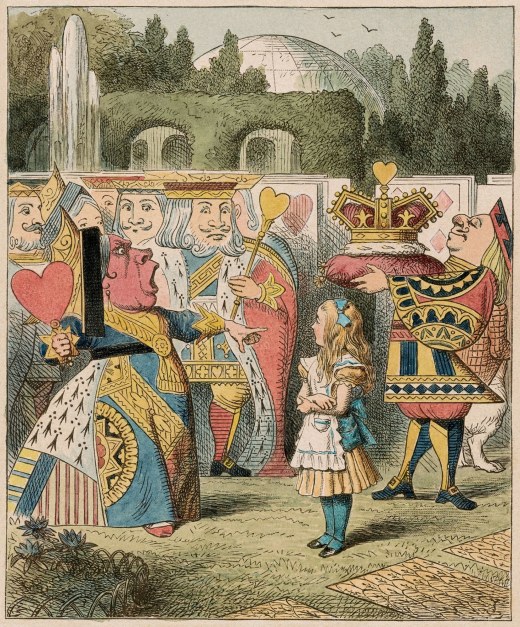
Image: “Off with her head!” The Queen of Hearts, here confronting Alice, embodies Coercive Power. Illustration by Sir John Tenniel (1820 – 1914, UK) for Alice’s Adventures in Wonderland (Lewis Carroll, 1865)

Bad Decisions: Or, Why We Screw Up

Research has shown that every day, we make 2000 decisions, i.e. choices, by another name. Most of our decisions are minor and we make them quickly, almost without thinking. We decide what to wear to work in the morning, we choose whether to eat lunch now or in 30 minutes.

But a select few of our decisions have serious consequences and for that reason they demand serious thought, if not actual research. The choices we make affect our health, safety, finances, relationships, our time and our reputation. Ultimately, our decisions define our lives. Consistently making good decisions can be considered among the best things we can do for ourselves, in both our personal and professional lives. 

Now when we make a decision, we do not always have all of the information that we’d like to have. Sometimes, what one could reasonably expect to be a sound decision turns out to be less than positive because of factors that were unknown when the decision was made.

According to Michael Erwin, CEO of the not-for-profit organization The Character & Leadership Center, U.S. Army Reserves Lt. Colonel, Asst. Professor in Leadership and Psychology at the U.S. Military Academy /West Point and author of Lead Yourself First (2006), those faced with an important decision should be mindful of the following conditions, which are capable of undermining good decision-making:

Decision fatigue

With so many decisions to make, especially those that will have a big impact on our own lives or the lives of others, it’s almost inevitable to avoid decision fatigue. To counter it, identify the most important decisions you need to make and arrange to make them when your energy levels are highest.

Social Psychologist Roy Bauminster studied mental discipline at Case Western Reserve University in Cleveland, OH and at Florida State University in Tallahassee.  His work indicates that it’s best to make important decisions in the morning after eating a light, nutritious breakfast. Our brains derive energy from healthy food and that helps us to comprehend and value long-term prospects and bolsters decision-making ability.  In the morning we have enough willpower to exercise the self-control needed for making important strategic or financial decisions.

Bauminster advises that we tackle big decisions first, before we have to make numerous smaller decisions that will sap energy and lead to decision fatigue.  So do your best to schedule client meetings for early in the day, before late afternoon, whenever possible. Write and pitch proposals early in the day as well.

According to the researcher Martin Hilbert, Professor of Communication at the University of California at Davis and instructor of the seminar Information and Communication Technology: A Venture into Applied Data Science, our brains process about five times the amount of information today as we processed in 1986. Consequently, many of us live in a continuous state of distraction and we struggle to focus. Ongoing distractions are detrimental to sleep, productivity, concentration and, yes, decision-making.

To counter this, schedule time each day to go offline and step away from email, social media, news and the onslaught of the Information Age. It’s easier said than done, but do-able if you make it a priority.

Insufficient information

Researchers at Northwestern University’s Kellogg School of Management in Evanston, IL found that in a typical meeting, an average of three people do 70% of the talking. As author Susan Cain describes in her book Quiet: The Power of Introverts (2012), many introverts are reluctant to speak up in meetings until they know precisely what they want to say. Unfortunately, introverts fairly often feel blocked by overly expressive extroverts and they keep their insights to themselves. As a result, decision-makers might ignore or gloss over certain possible answers or options, perhaps due to the bias of habit (“we’ve never done that before”).

Meeting conveners can temper this inclination by sending out a meeting agenda 24 hours in advance, to give everyone time to think about their questions and suggestions regarding the agenda items. Furthermore, it is incumbent upon the convener to create an environment that encourages all attendees (whether they participate physically or virtually) to contribute— i.e., speak up and share information and when necessary, persuade others to examine and question their assumptions.

Introverts often ask the right questions, or contribute great ideas and relevant information to their teams, because while the extroverts are busy talking over one another and doing whatever possible to monopolize the conversation, introverts are quietly listening and thinking, questioning and analyzing. Decision-makers can greatly benefit from input supplied by the quiet members of their team.

Multi-tasking

There are few jobs left in the world today that don’t require at least some multi-tasking. While that’s the reality, research pioneered in 2009 by Earl Miller, Professor of Neuroscience at the Massachusetts Institute of Technology, showed that performance, including productivity and effective decision-making, can be diminished by as much as 40% when we attempt to focus on two (or more) cognitive tasks simultaneously. When called to make an important decision, set aside a block of time so that you can devote the required thought and focus to the question (or task).

Analysis Paralysis

The Information Age has deluged us with an abundance of information—Big Data, algorithms and a vast array of metrics— and there’s almost no end to the amount of information one can access. However, more information doesn’t necessarily lead to the best result.

Information overload can hinder the decision-making process; the more information there is to consider, the longer it takes to make the decision. Which data thread should we follow? Analysis-Paralysis, which is an expression of confusion and fear, can set in.

Because time is often a factor in big decisions, knowing when to draw the line on data gathering and move forward to finalizing your decision is a valuable leadership skill. While the decision-making process should be thorough, the best way to make good decisions is not to continually search for more information but instead to understand what information will be useful, review the selected data, set a decision-making deadline and adhere to it.

Emotions

Strong emotions have the power to impair one’s ability to make sound decisions and it is advisable to delay important decisions when one is angry, frustrated, excited, or even very happy. May I also include fatigue, inebriation, illness, pain and hunger in this category?

During those times, one’s ability to reason and take a measured and balanced view of an important question or unfolding events usually disappears. When blood sugar drops, a trip to the grocery store often results in a shopping basket filled with the wrong foods. Sending an email when angry or frustrated can present a danger to one’s career or business, since the temptation to use provocative or even harsh language could be strong and the ability to self-censor may be low. Likewise, inebriation, fatigue, illness and pain may potentially diminish one’s ability to think clearly and reach a rational decision about anything of importance.

When faced with an important decision while in the grip of strong emotions or similar feelings, honor your emotional state and focus on self-control. Give yourself time to calm down and gain perspective on what is happening. Forgive yourself, postpone your response, breathe and take a time-out. Have a cup of tea. If possible, you might also take a nap or a shower. Resist the temptation to respond to people or make decisions while you’re flustered or agitated.

Thanks for reading,

Kim

Image: Sir Peter Paul Rubens (Belgium, June 1577 – May 1640) The Fall of Man, Adam and Eve 1628-1629, courtesy of The Prado Museum, Madrid

Summer Reading List 2019

It’s been a few years since I’ve compiled a suggested list of business books to read over the summer (and beyond). Professional development need not always require enrolling in a semester-long course or workshop. Reading is a gateway to so many positive experiences, from learning to pleasure. If you don’t want to buy books, visit your local library and check one out, at no charge. A library card is a good investment.

  1. How to Fail at Almost Everything and Still Win Big (Scott Adams)

For Scott Adams, creator of the world-famous Dilbert cartoons, life’s path wound through many jobs, failed startups, useless patents he applied for and countless other indignities. In his memoir, Adams shares lessons learned about keeping himself motivated, healthy and happy while racking up all the failures that ultimately led to his success. Dilbert, a clever gallows humor cartoon that allowed him to share his failures and frustrations with the world, has been in circulation for nearly 30 years. https://www.goodreads.com/book/show/17859574-how-to-fail-at-almost-everything-and-still-win-big?ac=1&from_search=true

  1. Million Dollar Consulting: The Professional’s Guide to Building a Practice (Alan Weiss)

Having now written 49 books on the subject, it is reasonable to regard Alan Weiss, Ph.D. as a consulting guru. If you are consulting, or thinking about packaging yourself as such and searching for clients, Weiss is recommended reading. His insights and recommendations are based on lived experiences of starting and operating an international management and organizational development firm.

As the book’s title implies, Weiss claims that he has consistently produced over $1 million/year in revenues. Although his background is in management consulting, his practical advice applies to all types of consulting. The book contains an abundance of ideas. The focus is on helping existing consultants take their practice to the next level, but he includes advice for beginners as well. https://www.goodreads.com/book/show/27289607-million-dollar-consulting

 3. Dare to Lead (Brene Brown)

Brown is an Oprah-endorsed author who gets invited to participate on the global mega-speaker circuit, TED Talks included. In the book, she dispels common myths about modern-day workplace culture and shows us that true leadership requires vulnerability, values, trust and resilience.

Brown asks the reader to think back to the most important leadership role one has had. Were you the captain of your high school football team or cheer leading squad? Or did you take on a leadership role only as an adult, such as overseeing a business unit with dozens, or maybe hundreds of employees? Whatever it may have been, there’s a high probability that you fell into one of the many leadership traps laid out in modern culture.

You may have thought you had to look strong and could never admit to a failure. You may have avoided telling the truth because you didn’t want to hurt someone’s feelings. These things often happen, especially in the office, because that’s how leadership is portrayed in our society. However, we usually figure out later, when it’s too late to make amends, that the exact opposite behavior would have yielded the best result. https://www.goodreads.com/book/show/40109367-dare-to-lead

  1. The Breakthrough Speaker: How to Build a Public Speaking Career(Smiley Poswolski)

“If you want to get paid to speak, you have to speak about something that matters and something that other people are passionate about. You need to speak about something that other people (specifically people that are in a position to book you to speak) are obsessed with. This is the single most important lesson to keep in mind when building a paid speaking business.”  —Smiley Poswolski https://www.goodreads.com/book/show/42039637-the-breakthrough-speaker?from_search=true

  1. Start with Why: How Great Leaders Inspire Everyone to Take Action (Simon Sinek)

“The limbic brain is responsible for all our feelings, such as trust and loyalty. It is responsible for all human behavior and all of our decision-making. It has no capacity for language.”  —Simon Sinek

When we communicate starting with the why, we speak directly to the section of the brain that controls decision-making and we use our limbic brain. In contrast the language center of the brain, the neocortex, allows one to rationalize those decisions. The limbic brain has no capacity for language and that is why it is so often difficult to explain one’s true feelings. When we make a decision that feels right, we frequently have a difficult time explaining why we did what we did. https://www.goodreads.com/book/show/7108725-start-with-why

  1. The E-Myth Revisited: Why Most Small Businesses Don’t Work and What To Do About It (Michael E. Gerber)

The book explains why 80% of small businesses fail and details how to ensure that your venture doesn’t wind up in that group. Gerber says that building a company based on systems and not just on the skill set and labor of a single individual is the secret because having great technical skills does not mean you know how to run a business. Gerber points to this misconception as the entrepreneurial original sin. Being a great baker, graphic artist, or writer does not necessarily make you an expert at running a business in that industry.

Once you start a business, you’re not just the person doing the technical work; you’re also the CEO, CFO, CTO, CMO and a whole bunch of other things. You must bring in customers, track and manage finances, create advertising material, answer customer requests, set a strategy and, and, and… https://www.goodreads.com/book/show/81948.The_E_Myth_Revisited

  1. Blue Ocean Strategy: How to Create Uncontested Market Space and Make the Competition Irrelevant (W. Chan Kim and Renee Mauborgne)

Are you tired of competing head-to-head with other companies? Do you feel like your strategy differs little from the competition surrounding you? You may need to redefine the rules of competition by defining a new strategy. The book describes two types of playing fields:

  • Red oceans, where competition is fierce in bloody waters, strategy centers around beating rivals, and wins are often zero-sum.
  • Blue oceans, where a market space is new and uncontested, and strategy centers around value innovation.Blue ocean strategy pushes company leaders to create new industries (well…!) and break away from the competition. In short, you create a blue ocean by focusing on the factors that customers really care about and discarding factors they don’t appreciate. This often attracts a new type of customer the industry hadn’t previously encountered and so the market grows.
  • The hard part is actually finding a reasonable strategy and executing it successfully. This book contains plenty of examples of successful blue ocean strategies, and it teaches you how to discover and execute them. https://www.goodreads.com/book/show/4898.Blue_Ocean_Strategy
  1. The Non-Obvious Guide to Emotional Intelligence (Kerry Goyette)

Being in touch with the emotions of those around you is key to developing strong, reliable relationships. Kerry Goyette’s guide to upping your EQ is a powerful tool for understanding how you can trnslate emotional skills into valuable business practices. The techniques included show you how to navigate change, find the root causes of problems and make better decisions.  https://www.goodreads.com/book/show/46681827-the-non-obvious-guide-to-emotional-intelligence?ac=1&from_search=true

9. The 7 Habits of Highly Effective People (Stephen Covey)

Increasingly, people look for quick fixes. They see a successful person, team, or organization and ask, “How do you do it? Teach me your techniques!” But these “shortcuts” that we look for, hoping to save time and effort and still achieve the desired result, are simply band-aids that will yield short-term solutions. They don’t address the underlying condition.

Covey advises us to allow ourselves to undergo paradigm shifts, to change ourselves fundamentally and not just alter our attitudes and behaviors on the surface level so that we can achieve true change. Start with a clear destination in mind. Covey says we can use our imagination to develop a vision of what we want to become and use our conscience to decide what values will guide us. More than 15 million copies of this classic have been sold.  https://www.goodreads.com/book/show/35895321-the-7-habits-of-highly-effective-people?from_search=true

  1. How to Win Friends and Influence People (Dale Carnegie)

Since it first appeared in 1936, this beloved book has sold more than 15 million copies. Dale Carnegie developed courses that became famous in the disciplines of sales, corporate training, public speaking and interpersonal skills, from networking to business best practices to Emotional Intelligence. Carnegie will teach you actionable skills such as six ways to make people like you, twelve ways to win people over to your way of thinking, nine ways to change people without arousing resentment and much more. https://www.goodreads.com/book/show/4865.How_to_Win_Friends_and_Influence_People?ac=1&from_search=true


Thanks for reading (and read a book very soon, please!),

Kim

Image: The Bibliophiles, 1879 Luis Jimenez y Aranda (Spain, 1845 – 1928), Private collection