The Case for Face2Face

Whether the topic is business or personal, most studies show that between 60 % – 90 % of communication is nonverbal and furthermore, nonverbal communication techniques, for example, tone of voice and physical distance between yourself and the person with whom you are speaking, are intuitively used by all humans. Moreover, within the first few minutes of meeting and speaking with someone, we begin to make decisions about what the other person’s intentions are and figure out if that person is trustworthy and safe to do business or socialize with.

Those study findings throw cold water on the 318.66 million U.S. citizens who in 2023, according to the German data research firm Statista, used the internet to send email and SMS (text) messages, follow social media and join videoconferences to communicate with colleagues, family and friends. Electronic communication platforms are quite convenient but numerous reliable studies show that nonverbal communication signals are challenged to cross the digital divide, causing unspoken but nevertheless relevant nuance to slip through the cracks.

Can any of us know how much of a story may have been lost when told through a digital method? If that’s not enough of a lapse, is a digitally transmitted story more vulnerable to misinterpretation? Nonverbal communication—facial expressions, posture, physical gestures and tone of voice, for example—is a vital component of human communication that can signal how you really feel, despite what you put into words. An awareness and ability to recognize and read the nonverbal communication signals transmitted to you and by you will greatly enhance your communication skills and relationships. In conversations both casual and critical, you want to understand the impact of verbal and nonverbal messages, what you send and what you receive. In their 1972 book Effective Business Communication, Herta A. Murphy, Herbert W. Hildebrandt and Jane P. Thomas noted, “Sometimes nonverbal messages contradict the verbal; often they express true feelings more accurately than the spoken or written language”.

There are three principal elements of nonverbal communication: facial expressions, body language and overall appearance. When speaking with someone it’s important that you are alert to his/her nonverbal gestures, because the story is being told on more than just the verbal channel. In fact, people are more likely to engage you in future conversations and consider having a social or business relationship with you when you recognize and act upon their nonverbal cues. Below are 12 nonverbal communication signals that you may observe, decode and respond to in your next conversation.

Cheerful face and voice

1. With appropriately displayed smiles and nods, you’ll communicate to your conversation counterpart that you are listening to his/her opinions and that you understand and agree with his/her story. Communication experts unanimously agree that listening is the most important communication skill; everyone wants to be heard.

2. Pulitzer Prize winning journalist Charles Duhigg, author of Supercommunicators: The Power of Conversation and the Hidden Language of Connection (February 2024), notes that talking and laughing together is a bonding experience that contributes to relationship-building. Laughing with (but not at) someone promotes a happy mood and is another way to signal that you’re listening to the story.

3. Maintain good eye contact by looking your conversation counterpart(s) in the eye as the two of you talk to, again, display your interest in their story. However, you must periodically pull back the eye contact by taking brief breaks, perhaps to contemplate your next answer, for example. You don’t want your eye contact to be perceived as staring (that is, aggressive).

4. Regulate your voice so that you speak in a pleasant and confident tone that is authoritative yet not intimidating and matches the purpose and topic of the conversation. Speak clearly, enunciate well and pace your speech so that it’s neither too fast nor too slow for the occasion. Avoid raising the pitch of your voice as you end a sentence, as if you are asking a question rather than making a statement.

5. Mirror the other person’s facial expressions to demonstrate that you agree with and like the other person. Mirroring validates the opinions, wants and needs of the person you’re speaking with.

Body talk

6. Align your posture by gently lifting your chest, lifting up from your lower back and straightening your spine. Then, pull your shoulders back but keep them relaxed, so that you don’t look (and feel) tense. Activate your core muscles to support your midsection and comfortably maintain posture. In other words, don’t slouch; instead, communicate that you are cognitively present and ready to communicate and connect.

7. Place your legs hip distance apart when sitting or standing. When sitting, cross your ankles, rather than your legs, to demonstrate that you are relaxed and listening.

8. Leaning in gently is yet another body language gesture that indicates you are listening. As noted above, listening is the most powerful confirmation that signals to the other person that you hear and respect him/her.

9. Mirror the body language that you observe in your counterpart, to signal that you relate to him/her and that you agree with his/her point of view. Smile when s/he smiles; become serious when his/her facial expressions and vocal tone reflects that emotion. You want to communicate that you are on the same wavelength and understand his/her opinion or purpose.

Arms and hands

10. When, for example, the conversation takes place with participants standing—maybe you’re attending an industry expo or maybe you’re at a party—keep arms relaxed at your sides as the other person speaks, to show that you are listening and open to hearing what s/he has to say. It’s often best to keep your arms uncrossed, so that you don’t appear confrontational or intimidating.

Whether sitting or standing, use your hands to gesture while you speak, to enhance your credibility and confirm your engagement with the listener and topic. There is also evidence that using hand gestures while speaking improves your thinking processes. However, take care that hand and arm movements are not overly expansive and distracting.

11. Greet others with a firm handshake–but not too firm. A firm handshake is one of the most important body language moves, because it sets the tone for the entire conversation. Who wants to shake hands and have a conversation with a wet noodle?

12. Be aware and respectful of different cultural greeting and departure practices prior to your meeting. For example, when you greet the person with whom you’ll speak, will you shake hands, bow, or air kiss both cheeks? End the meeting with a firm handshake (or bow, or air kiss on alternate cheeks) and eye contact, to signal that you enjoyed your time and hope to meet again.

Thanks for reading,

Kim

Image: © Erik Arazas. Meeting and greeting with a traditional handshake and nose kiss at the Zayed Grand Mosque in Abu Dhabi during Eid Al Fitr 2012, the festival that celebrates the conclusion of the month-long observance of Ramadan (Ramadan 2024 begins March 10, Eid Al Fitr 2024 is April 9).

Emotional Intelligence: The Foundation of Leadership Ability

Emotional Intelligence is the capacity to recognize and respect not only how you feel, but also how those with whom you interact feel. Emotional Intelligence also helps you to manage your emotions effectively, both in your inner life and in your relationshipsAlternately known as EQ and often portrayed as a qualitative, subjective yin (female) counterpart to the data-driven, measurable and objective yang (masculine) IQ, EI entails more than displaying empathy and being kind, or “sensitive.”

Ongoing research has presented credible evidence that supports EI as a different, but nevertheless valid and beneficial, form of human intelligence. Psychologists, organizational development specialists and leadership development coaches recognize EI as a core life skill that promotes one’s ability to deliver excellent performances, particularly in the domain of leadership. There is no absolutist blueprint, or model, that codifies EI, but there are variations on a standard theme that have been developed primarily by psychologists and organizational behavior specialists. I recently discovered the work of Emotional Intelligence researchers Daniel Goleman and Richard Boyatzis.

Goleman has written extensively on the topic of EI. He is co-director of the Consortium for Research on Emotional Intelligence in Organizations at Rutgers University in Newark, NJ and he is the author of Building Blocks of Emotional Intelligence (2017) a 12-primer set on each of the EI competencies that he co-discovered. He also offers training on those competencies through an online learning platform. Boyatzis is a professor in the departments of Organizational Behavior, Psychology and Cognitive Science at the Weatherhead School of Management at Case Western Reserve University in Cleveland, OH and he’s been recognized as a Distinguished University Professor there. He is a co-founder of the Coaching Research Lab and co-author of Helping People Change (2019). According to Goleman and Boyatzis those who aspire to become exceptional leaders will need to develop a balance of strengths across the suite of EI competencies. When that is achieved, outstanding business results will follow.

Goleman and Boyatzis see as EI consisting of four domains—Self-Awareness, Self-Management, Social Awareness and Relationship Management—and connected to each domain are 12 EI competencies. When you’ve mastered the domains and the competencies associated with each category, you will possess capabilities that allow you to be an adept at team player or a practitioner of inspirational leadership, as the situation requires. Below is a capsule view of the domains and the related competencies.

Self-Awareness

This domain refers to the ability to read and understand your emotions as well as recognize their impact on others. In short, self-awareness is a basic understanding of how we feel and why we feel that way. The more we are aware of our feelings, the easier it becomes to manage our feelings and control how we might respond to others.

Those who have nurtured their EI capabilities achieve objectivity through the self-awareness that this form of intelligence develops. Leaders who have developed a high level of EI promote productive and motivated workplaces that give all workers equal opportunities to shine.

  • Emotional self-awareness: I know what I am doing and why
  • Accurate self-assessment: I am cognizant of my beliefs and mental models
  • Self-confidence: I am aware of my abilities, including strengths and weaknesses. I trust my judgment and have a sense of control in my life. I set realistic expectations and goals, communicate assertively and can handle criticism.

Self-management

Also known as self-regulation, this domain can be defined as the ability to manage one’s actions, thoughts and feelings in flexible way, in order to produce the desired results. Optimal self-management contributes to a sense of well-being, a sense of self-efficacy or confidence and a sense of connection to others. You are able to control impulsive feelings and behaviors, express your emotions in healthy ways, take initiative, follow through on commitments and adapt to changing circumstances.

  • Emotional Self-Control: You are able to keep potentially disruptive emotions and impulses in check and maintain your effectiveness under stressful or hostile conditions.
  • Achievement Orientation: You intend to meet or exceed a standard of excellence. You seek ways to do things better and improve outcome. You reasonably challenging goals and take calculated risks.
  • Positive Outlook: You are able to see the positive qualities and characteristics in people, situations, and events. You persist in pursuing goals, despite obstacles and setbacks.
  • Adaptability: You have the flexibility to handle change and juggle multiple demands, as you adapt your ideas or approaches to new and unexpected circumstances.

Social Awareness

Social Awareness is the ability to accurately notice the emotions of others and “read” situations appropriately. It is about sensing what other people are thinking and feeling, to be able to take their perspective using your capacity for empathy. Those adept in the qualities of this domain are able to read another person’s face, voice, body language and other verbal or nonverbal cues that communicate emotion and help direct us as to how we should speak and otherwise interact with that individual.

  • Empathy: The ability to sense others’ feelings and perspectives, take an active interest in their concerns and recognize cues about what others may feel and think. Goleman further describes empathy as the cognitive and emotional processes that bind people together in various kinds of relationships that permit sharing experiences as well as understanding of others.
  • Organizational Awareness: The ability to read a group’s emotional currents and power relationships, identifying influencers, networks, and organizational dynamics.

Relationship Management

This domain pulls together and integrates the other three domains and creates the final product, relationship management. Relationship management can be used to influence those around us and guide or encourage them to make good decisions. You can sense other’s reactions to situations and then fine-tune a response to move the interaction in a positive direction.

Relationship management proficiency also addresses teamwork and other collaborations.
You’ve learned to use the skills acquired in the other domains to steer the group toward
the goal. Furthermore, proficiency in relationship management promotes the ability to effectively manage conflict. Those who become particularly adept in this area can see that conflict is forming and take steps to move others away from this and toward more positive interactions. Effective Listening skills and empathy are essential to deal with these difficult conversations.

  • Influence: The ability to have a positive impact on others, to persuade and convince others in order to gain their support.
  • Coach and Mentor: The ability to foster the long-term learning or development of others by giving feedback, guidance, and support.
  • Conflict Management: The ability to help others through emotional or tense situations, tactfully bringing disagreements into the open and finding solutions all can endorse.
  • Inspirational Leadership: The ability to inspire and guide individuals and groups towards a meaningful vision of excellence, and to bring out the best in others.
  • Teamwork: The ability to work with others towards a shared goal; participating actively, sharing responsibility and rewards, and contributing to the capability of the team.

You can evaluate and improve your EI skills. Goleman and Boyatzkis recommend a 360-degree assessment, to receive systematic, objective observations of your behavior by people who work with you. Incidentally, EI has been found to not correlate well with IQ or personality traits, but the two values are the best predictors of a leader’s effectiveness, actual business performance, engagement, professional and personal satisfaction. A 360-degree assessment tool that uses ratings generated by you and those who know you well can reveal your EI current strengths and suggest where your EI needs improvement. To best improve your weak spots, find a leadership development expert to coach you.

Thanks for reading,

Kim

Image: Philadelphia Flyers coach John Tortorella

Summer Reading List 2023

There are so many reasons for you to sit down and read a book. Reading is a pleasure, an adventure and an education. Books expand your horizons, awaken your creativity and stimulate your intellect. Reading shows you exciting possibilities, warns you with cautionary tales, challenges and enlightens you with new information and introduces you to alternative points of view. Books open whole new worlds for you.

Reading is also good business, whether you own the enterprise, preside in the C-Suite, or hustle in an entry level position, from barista to call center help desk. Reading is integral to building and maintaining the scope and value of your skill set and for that reason, reading books is integral to professional development. The books you read—in particular business books, but might include history, philosophy, psychology, semiotics, or other disciplines—can strengthen your analytical, problem-solving and creative outside-the-box thinking skills.

No matter how successful you’ve been in your business or career, no matter the educational degrees and professional certifications you’ve earned, regardless how amazing the team you collaborate with, you are destined to encounter challenges as you progress through your working life. You may find the answer to your dilemma while reading a book. Whether your book describes the grit and timing needed to launch a business, provides insight into how you can expand and grow your enterprise, or explores the art of leading or managing teams or organizations, there are books that will teach you to recognize and overcome obstacles and coax the best performance from your team and yourself.

The books included here are appropriate for every stage of your working life. The authors are people who’ve experienced obstacles in the business world and lived to tell the tales. Who better to learn from than someone who has already conquered the difficult predicament you’re facing now, or will encounter in the future?

Start With Why Simon Sinek (2009)

Sinek explores a way of thinking, acting and communicating that cultivates your ability to rally and inspire those with whom you work and interact. A defining behavior of that charismatic quality is demonstrated when you ask yourself (and your collaborators) why? When there are important choices or decisions to make, starting with the deceptively simple question why—-why is this matter important? why should we attempt to resolve the issue in this way?—-has the potential to put you on a path that will result in better answers, better strategies and, by extension, will allow you to achieve more fulfillment in your work and your life.

Leaders in organizations who have the courage to ask why—and question common assumptions, behaviors and practices—typically thrive even when others around them are failing. Often, their why is well articulated and forms part of their identity as it informs the reasons that people do the things that they do. Great leaders and visionaries have a powerful why and they invite others to explore it with them.

https://www.barnesandnoble.com/w/start-with-why-simon-sinek/1016513563

The Personal MBA Josh Kaufman (2010)

The Personal MBA delivers need-to-know information from that which MBA programs consider fundamental, from the five elements of business to the 10 ways to evaluate a potential target market and in the process, the book saves you the time and money involved in earning the formal degree. The Personal MBA breaks it down and helps you understand functions that are essential to business success—from finance to sales, marketing to operations, to the nuances of psychology, motivation and teamwork, to creating systems. Kaufman distills everything you need to know to transform your business, or your career.

https://www.barnesandnoble.com/w/personal-mba-josh-kaufman/1102823220

The Power of Geography Tim Marshall (2021)

Marshall explores 10 regions that are positioned to shape global politics in a new age of great-power rivalry—Australia, Iran, Saudi Arabia, the UK, Greece, Turkey, the Sahel, Ethiopia, Spain and (surprise!) Space. Learn why Europe’s next refugee crisis is perilously closer than it appears now. Examine the roots of the tragic instability that roils the Sahel; understand why Middle Eastern nations would be wise to look beyond oil to secure their future; explore why western Asia is one of the most volatile flashpoints of the 21st century; and contemplate why Earth’s atmosphere is set to become the world’s next battleground.

https://www.simonandschuster.com/books/The-Power-of-Geography/Tim-Marshall/9781982178635

Thinking the Future (2021) Clem Sunter and Mitch Ilbury

Think about it—every decision you make impacts the future! We constantly make choices that affect the next week, next year or upcoming decade. The problem is, you can be blinded by what you want or expect the future to be. Scenario planning experts Clem Sunter and Mitch Ilbury posit that the futurist’s art of decision-making, where the flexibility of thinking like a canny fox plays a key role, will be a deciding factor in successfully adapting to a complex and interconnected world.

https://www.penguinrandomhouse.co.za/book/thinking-future/9781776096299

How Big Things Get Done (2023) Bent Flyvbjerg and Dan Gardner

Understanding what distinguishes triumphs from failures has been the life’s work of Oxford professor Bent Flyvbjerg, who’s often called “the world’s leading mega-project expert.” In How Big Things Get Done, the author identifies common errors in judgment and decision-making that cause projects, big or small, to fail.

Happily, Flyvbjerg also shares research-based principles that will make your projects succeed. The book includes numerous helpful and vivid examples, ranging from the building of the Sydney Opera House, to a home renovation in Brooklyn gone awry.

https://www.barnesandnoble.com/w/how-big-things-get-done-bent-flyvbjerg/1141634446

Traction: Get a Grip on Your Business (2007) Gino Wickman
Don’t let common problems and frustrations overwhelm you and your business entity. In this book, you’ll learn the secrets of strengthening the Six Key Components of your business. You’ll discover simple yet powerful ways to run your company that will give you and your leadership team more focus, more growth, improved outcomes and more enjoyment.

https://books.google.com/books/about/Traction.html?id=VVDZCQAAQBAJ

Influence: The Psychology of Persuasion (1984) Robert Cialdini

The author cogently explains the psychology of why people say “yes”—and how to apply these understandings. You’ll learn the six universal principles, how to use them to become a skilled persuader and how to defend yourself against them. The principles apply to readers at every stage of your career journey. Influence will move you toward profound personal change and act as a catalyst for your success.

https://www.goodreads.com/book/show/28815.Influence

Your Next Five Moves: Master the Art of Business Strategy (2020) Patrick Bet-David

From the creator of Valuetainment, the #1 YouTube channel for entrepreneurs, is a practical and effective guide to thinking more clearly and achieving your most ambitious professional goals. Combining these principles and revelations drawn from Bet-David’s rise to successful CEO, the book is a must-read for any serious executive, strategist, or entrepreneur.

https://www.barnesandnoble.com/w/your-next-five-moves-patrick-bet-david/1136404932

Never Split the Difference: Negotiating As If Your Life Depended On It (2016) Chrisopher Vos, Tahl Raz

Negotiations take place in many different sectors of life, such as politics and business, and also in some critical events, most dramatically demonstrated by hostage situations. The book is a guide to the wisest behaviors to exhibit when stressful situations develop, whether that involves the need for negotiation techniques in hostage situations or in business. The authors describe what to do, questions to ask and how to react in situations that require negotiation.

Without question, Never Split the Difference can teach you a new and useful competency. Raz and Vos offer unique perspectives that will improve anyone’s negotiations skills, from novice to advanced.

https://www.barnesandnoble.com/w/never-split-the-difference-christopher-voss/1122714695

Freelance Your Way to Freedom (2022) Alexandra Fasulo

Freelancing phenomenon Alex Fasulo delivers a practical, step-by-step guide to navigating the potential and perils of launching your Solopreneur side hustle. The author draws on her experience of scaling a $36,000/year Fiverr gig into a million-dollar enterprise. She explains how to manage those critical moments in business when decisions need to be made quickly and without warning.

In the book, you’ll find actionable tips and hands-on examples to make the gig economy work for you. The book is a must-have for Freelancers, Solopreneurs and Entrepreneurs, as well as anyone who participates or is interested in the future of work.

https://www.barnesandnoble.com/w/freelance-your-way-to-freedom-alexandra-fasulo/1141301804

Happy 4th of July to my American readers! To all my readers, thanks for reading. I appreciate.

Kim

Image: Johann Hamza (1850-1927, Austria) A Gentleman Reading in the Library

Board Service Is A Win-Win

Creating and recognizing networking opportunities is a subject often addressed in this column, as regular readers know. One networking method that’s been less frequently discussed is serving on a not-for-profit organization board of directors or committee. I’ve served on half dozen boards over the years and have found the experiences to be rewarding, especially in terms of professional development and filling my network with smart, fun and interesting people. If time allows, I recommend that you consider serving on a board. To confirm that your role will be a good fit, you might first volunteer to provide day-of help at a special event sponsored by an organization whose mission is meaningful to you. If the volunteer experiment goes well, then inquire about joining a committee before making a commitment to join the board.

Serving on a not-for-profit board of directors or committee can potentially bring long-lasting personal and professional benefits. It’s a decision that you’re unlikely to regret. The ability to help an organization realize its vision and mission is tremendously rewarding. Service as a not-for-profit board or committee member inevitably involve responsibilities that teach you how other organizations operate. Board and committee service or other pro bono work can also enable you to develop or reclaim competencies either within or outside of your primary skill set. Board members are sure to learn more about marketing, governance, finance, branding, recruiting and managing volunteers. In some instances, your board or committee may embark on a project on behalf of the organization that calls for members to meet or collaborate with local politicians or community leaders.

Prospective clients, especially those who adhere to the growing corporate social responsibility movement, will be pleased to see your record of board service and other pro bono activities when they review your curriculum vitae, bio, or social media profiles. You may discover that you can “do well by doing good.”

When seriously considering board or committee service, remember to ask questions that clarify what will be expected of you. For example, ask how often, when and where board meetings are held and whether there will be business to conduct between meetings. You’ll also want to confirm the length of your term.

Since fundraising is a standard part of not-for-profit organizations, board members are almost always expected to participate in fundraising in some fashion. That often starts with a financial contribution that may have a suggested minimum amount.

Be aware that not-for-profit boards sometimes look for additional members because there are problems in the organization. Other motivating factors may be a pending major fundraising campaign or big project that’s on the horizon. Make it a point to have a frank discussion with a board member whom you trust about any current or past problems within the organization or with other board members. You’ll also want to know if the organization is financially healthy and whether there are any pending lawsuits.

There are caveats—-walk in with your eyes open. The benefits of board service typically include:

1. Exercise team working skills: Offer to chair a committee and you’ll quickly position yourself as a leader. Not only will fellow board and committee members appreciate your initiative, but you’ll also be able to fine-tune your group dynamics competencies as you work to motivate people who are not being paid to fulfill their roles so that your committee goals will be achieved. It’s called volunteer management and it is a subtle art!

2. Improve decision-making skills: It seems as though the appearance of the coronavirus and the subsequent year-long (or thereabouts) shutdown has caused nearly every organization to reassess and regroup because customers, donors and patrons have reevaluated their priorities. Inflation and the threat of recession have in some cases eroded the donor base and/or the patron or customer bases. Organizations must be nimble and resourceful. Leadership teams, staff and board, must understand risk management—risks to take and risks to avoid. Smart decision-making has never been more important.

3. Sharpen financial management skills: As a board member, you are responsible for the organization’s fiscal health. The ability to analyze the monthly financial documents and interpret the story that they reveal is a critical skill. Parsing the financials in board meetings, even if you are “only” listening to the board’s finance committee chair or treasurer giving reports, will improve your ability to understand and interpret your own businesses’ financial documents and improve the financial management and oversight at your own venture.

4. Gain the confidence to fund raise: In not-for-profit organizations, donor cultivation is a must. Many people, however, are uncomfortable with asking for money. Remember that recruiting donations is no different than asking for a customer’s business. It’s all about believing in your organization’s mission and relying on that trust and confidence to coax yourself into asking a donor to make a financial commitment to the cause.

5. Revitalize seldom used skills and develop new ones: Doing what you know is the most natural way to demonstrate your value to the board or committee, but it’s an exciting growth opportunity when you dare to try new things. Board or committee service is a safe place to take chances, something we cannot often do in our paid professions. Stepping into a role that requires you to reactivate a seldom-used skill or learn a new competency that you find interesting will enhance your commitment to and enjoyment of your board or committee service. Just do it!

6. Building relationships and networking

In your tenure as a board of directors or committee member you are almost guaranteed to meet successful and interesting professionals, some active and some retired. Your fellow board and committee members may hold, or have held, mid-level or senior positions in the for-profit or not-for-profit sectors. Others may be Freelance solopreneurs or entrepreneurs who launched and operate their own enterprise.

With your fellow board and committee members, you will discuss routine business, puzzle through decisions that solve problems, strategize to take advantage of opportunities and in general, work collaboratively to keep the organization relevant and preparing for the future. As this happens, you business acumen, judgment, resourcefulness, creativity, work ethic and EQ will be on display.

A fellow board or committee member may grow to trust you enough to introduce you to a colleague who is in need of your skill set, whether as a Freelance consultant or a full- time employee. You may do the same for another board or committee member. Boards are all about building relationships and that is the primary gateway to success.

Thanks for reading,

Kim

How to Dazzle at Your Next Speaking Gig

Getting out in front of an audience is one of the best and most efficient ways to network. Approach the podium and the spotlight will shine on you! Everyone in the room will want to meet you and exchange a few words. Inevitably, some will ask to exchange cards and request follow-up conversation.

Taking on a keynote speaking role instantly lends credibility, showcasing you as a an expert in your field and a trusted source of information. Freelancers, owners of business ventures of every size and corporate and not-for-profit organizaton leaders understand that speaking engagements introduce them and their organization to colleagues, potential clients or donors, influencers, referral sources, potential investors, or strategic partners.

Some are intimidated by the thought of speaking before a group of people, no matter how well-versed they are in the subject matter. Public speaking is not a natural activity for everyone. Nevertheless, for those who hold or aspire to a leadership role of some sort, public speaking comes with the territory.

The good news is that public speaking is skill that can be learned. Those who make the effort to develop the skill will be happy to realize that the more you do it, the more proficient and comfortable you’ll become. Consider it professional development. Also encouraging to know is that like learning any skill, breaking the components down into manageable “chunks” and tackling them one by one prevents you from feeling overwhelmed and helps you to learn.

Keep it simple

Be considerate to your audience by making your talk both informative and relatable. Let the audience govern the content of your talk. In particular, unless you’ll address an industry group, avoid technical jargon—it’s not the best way to show off what you know. Not only does high-falutin’ tech speak bore most listeners, it doesn’t convince anyone of your expertise or insights into the topic.

To make your subject engaging for an audience, using easily understood language is the most effective way to demonstrate your grasp of the subject . The most important thing about your talk is that the audience “gets it.” Keeping your things simple allows you to control the flow, no matter which way it goes,” says Maria Thimothy of Forbes Magazine Young Entrepreneur Council.

Shape the story

Rather than composing your entire speech ahead of time, write out key concepts you want to emphasize and then rehearse, using those key points as a focus. You’ll find that by allowing room for flexibility, it will be easier to adjust your talk to the mood of the room and your talk will be better received. For example, if you sense that you’ve lost the attention of some in the audience, you might pose a question or slip in a joke or reference to some happening in the news as a way to re-engage them.

Own the stage

A presentation is more than words. Audience members expect the speaker to be an expert in his/her field who possesses knowledge and experience that will inform and enlighten those who’ve come to listen. Additionally, the speaker’s intention may be to rally audience members with a compelling Call-to-Action that inspires them to demonstrate their support of a cause. To achieve these objectives, public speakers must be both highly competent and also confident.

The successful speaker makes it known that s/he is worthy of the audiences’ trust and respect not only by way of the content of the talk but also in body language and demeanor. It is important for a public speaker to develop stage presence.

  • Power stance

How one stands is a strong indicator of that person’s confidence and mindset. When facing an audience, the speaker should hold a strong and steady position. The feet will be shoulder width apart, with knees relaxed and not locked. The spine will be comfortably erect and the neck and shoulders will also be relaxed.

With this posture the speaker signals that s/he has important information to share and that s/he feels confident. In a 2012 TEDGlobal talk Your Body Language Shapes Who Your Are, social psychologist Amy Cuddy sparked a sensation when she modeled this and other so-called “power poses.”

In a 2013 Harvard Business Review article, TED Curator Chris Anderson seconded Cuddy when he noted that the most common mistake made by inexperienced or nervous speakers is the inability to maintain a solid, stationary posture. Swaying or fidgeting works against the ability to communicate confidence. Anderson noted that “Simply getting a person to keep his or her lower body motionless can dramatically improve stage presence.”

  • Eye contact

Making eye contact is important for maintaining dynamic interaction with the audience. It’s another reason to avoid memorizing your speech and instead focusing on the key points you want to emphasize

To incorporate good eye contact, Chris Anderson recommends finding five or six friendly-looking faces in different parts of an audience, then making eye contact with them as you speak. “Even if you don’t have time to prepare fully and have to read from a script, looking up and making eye contact will make a huge difference,” he advised.

  • Vocal power

When you think about it, the human voice is like a musical intrument. What is singing? You can learn to use your voice as if you are playing a musical instrument, to increase your vocal power and persuasiveness, whether you’re giving a speech or having a conversation.  You can learn to adjust your vocal pitch, volume and speed in a way that allows audience members to follow your talk and want to hear more.

The primary lessons are to keep your tone of voice conversational, enunciate your words clearly and speak somewhat more slowly. When you slow down your speech somewhat, your voice will take on more power and you’ll sound more authoritative. Another benefit of slowing down your speech is that it gives your listeners the opportunity to absorb and reflect on what you’re saying.

Another useful public speaking vocal technique is to include strategically placed pauses when you’ve made an especially salient point to let the information sink in and resonate. Tape your rehearsals and play back to assess your vocal delivery and make adjustments where necessary.

  • Dynamic opening

Attention spans and patience seem to get shorter every month. In the Twitter, TikTok, jump-cut to the chase media hyped world we inhabit, engaging an audience has become more challenging than it was even a few years ago. Those is search of an audience have had to become more inventive.

So try this tactic—rather than opening your talk with the usual trite and predictable ritual of thanking the person who introduced you and then greeting the audience and asking everyone how they’re doing, dare to do the unexpected. Why not simply take the stage and look at audience, as you pause for a beat to create a frisson of tension. Then, launch your talk with a fact or a story that is surprising, if not shocking. You might begin with a tale in which you or someone else is in a moment of crisis. Make a confession. Say something in that very first line that both demands attention and is entirely relevant to the rest of your speech.

Thanks for reading,

Kim

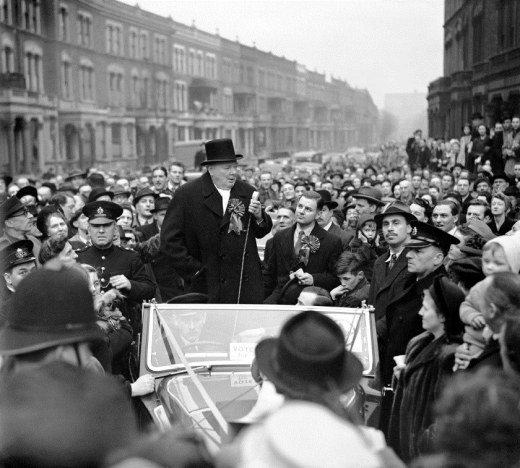
Image: ©  PA Archive/Press Association Images. Sir Winston Churchill (1874-1965) speaking at Blythe Road, Hammersmith, London February1949. Churchill served twice as UK Prime Minister, 1940-1945 and 1951-1955.

Freelancer = Team Leader

The observations and experiences of leadership gurus, whether academic or in the field (i.e., on the job), indicate that hiring the most talented and qualified candidates for a job or project is just half the story. Those who study performance in the workplace learned long ago that other than professional expertise, plus a basic ability to work cooperatively with others, the ingredients needed to cultivate and development a high-performance team that achieves excellent outcomes are psychological.

Decades of research has demonstrated that when workers and team members feel psychologically fulfilled, they tend to be happy and productive. Autonomy, competence and camaraderie lead the list of conditions and attributes known to give rise to the best teams, Respect (emanating from the team leader and fellow team members), trust and ____. These are the supporting pillars of team spirit that inspires cooperation, collaboration, creativity and enthusiasm for the project and realization of the full expression of goals.

Successful leaders create the conditions that beneficial relationships on the teams that they lead, using the usual resources available—communication style, showing appreciation, productive meetings, and deeper friendships, every workplace has the ability to fuel people’s basic psychological need for relatedness and lift team performance.

Leaders of high-performing teams hold productive meetings

It’s no secret that poorly run meetings contribute to are a waste of time. They are are also demoralizing, they sap enthusiasm and creativity and contribute to diminished outcomes, work ethic and worker satisfaction. Studies of workplaces indicate that the leaders of high-performing teams run good meetings. Smart leaders avoid the inadequate planning associated with poorly run meetings by incorporating practices shown to make meetings worthwhile.

Those leaders/ meeting conveners take the time to develop the the right agenda. Further, they invite only those who should to the meeting who should attend—-team members plus key stakeholders, as needed. Next, the team leader/ meeting convener will ask for reports to be sent out with the meeting agenda aand expect meeting attendees to read the reports and contribute information or ask questions. Finally, the team leader/meeting convener will open the proceedings with a round-robin progress check-in that invites team members to give a concise update on their work that creates the benefit of keepsing fellow team members apprised of the big picture of the team’s progress.

By ensuring that time together is both efficient and collaborative, leaders of high-performing teams don’t just make better use of their meetings, they also set the stage for more positive interactions, contributing to shared information, cooperation, group problem-solving where necessary and good relationships.

Leaders of high-performing teams pick up the phone

While telephone calls are, unfortunately, much less common in the workplace in general, that’s not the case with leaders of high-performing teams. Research has found that the best leaders communicate more frequently in general, and they are significantly more likely to communicate with colleagues using the telephone than their less successful peers (10.1 vs. 6.1 calls per day on average).

While studies have found that most people expect that telephone calls will be somehow awkward or uncomfortable, that’s a misperception. Not only are phone calls no more awkward in practice, they also tend to strengthen relationships and prevent misunderstanding, contributing to more fruitful interactions among teammates.

Leaders of high-performing teams show appreciation

A key reason the need for relatedness contributes to better performance at work is that it makes us feel valued, appreciated, and respected by those whose opinions we prize. It’s why recognition is often a more powerful motivating force than monetary incentives.

Within our study, members of high-performing teams reported receiving more frequent appreciation at work — both from their colleagues (72% more) as well their managers (79% more). Critically, they also reported expressing appreciation to their colleagues more frequently (44% more), suggesting that within the best teams, appreciation doesn’t flow from the top down. It’s a cultural norm that’s observable in peer-to-peer interactions.

Leaders of high-performing teams support authenticity

Members of high-performing teams are significantly more likely to express their thoughts, ideas and values with their fellow team members. In emails to the team, they use exclamation points and add a personal touch to messages by including emojis. They’re also more likely to compliment, joke with, and socialize outside of the office with their teammates.

Incidentally, members of high- performing teams also complain, when they feel the need and they’ll get sarcastic, too. They feel free to be themselves, while holding fast to respect and professional behavior.

By incorporating simple, evidence-based practices that yield better communication, more productive meetings and deeper friendships, Freelancer/ team leaders have the ability to fuel people’s basic psychological need for cooperation and camaraderie and support the achievement of excellent team performance.

Thanks for reading and Happy Thanksgiving,

Kim

Image: Mountain climbing on the Arctic Team challenge adventure race in East Greenland

One Sentence Team Building

The ability to harness the energy, creativity and productivity derived from group collaboration—-teamwork—-is a defining characteristic of good leadership. The best leaders have learned how to guide and inspire their teams, learned how to both challenge and support them. They know how to rally the team to deliver exceptional results and achieve mission critical goals that move organizations to greatness.

Effective leaders know that becoming a trusted and supportive resource for their teams is fundamental to achieving excellence. The best leaders demonstrate their commitment to the team by enabling the group to deliver results that meet or exceed expectations.. In their interactions with team members, the best leaders may make a simple but profound appeal to their team members with the question , “What can I do to help?”

This innocuous and disarming question is surprisingly powerful. When a leader asks this question, s/he opens the door to a teamwork culture that introduces a mentoring aspect to team building. With this question, the leader offers opportunities for confidence, trust and relationship-building that are often overlooked benefits of team building and often unacknowledged ingredients of a team’s success.

Unfortunately, the trite statements typically made by team leaders to express a willingness to advise team members who may be, at some point during the project assignment, uncertain about how best to proceed, often do not motivate team members to step forward with questions. How many times have you heard leaders insist that their “door is always open?” While no doubt spoken with good intentions, this statement often fails to encourage requests for help. Neither does it invite team member suggestions that may increase productivity or enhance results. Leaders who understand and fully inhabit their responsibility to the team know to be more emphatic in their outreach. They ask how they can help.

Communicate value, drive results

Ask the question during one2one meetings or project update check-ins. You’ll soon realize that knowing they are supported and valued greatly reassures your team members. You’ll be pleased to discover that members of your team will not only be comfortable discussing their questions, but might also share their thoughts on how to improve the results of project deliverables.

“Just ask” statements don’t feel real. A more direct and specific offer of assistance breaks down barriers and creates a safe space where team members can drop their guard. Team leaders may eventually realize that the silence that resulted when a general “just ask” offer didn’t mean that team members would not have welcomed opportunities to talk; it’s more likely that they weren’t sure how to ask for it, or worried that they might look less than smart if they did.

Asking “What can I do to help?” not only benefits team members lucky enough to be asked the question; leaders who are insightful enough to ask also benefit. Choose to extend yourself to your team and you’ll be rewarded with the recognition of the value you bring to your team and, by extension, your client. How powerfully affirming it is when the members of the client teams you expertly lead spread the word about how rewarding it was to work with you. Exceeding expectations and creating a satisfying project experience is everything you aspire to achieve.

Reward initiative

Be aware that more frequently than some realize, there may also be team member or two looking to receive support for contributing an outside-the-box idea to the project. Smart leaders are always willing to hear the ideas that team members would like to share. Some novel ideas may be feasible and others may not, but it’s important to welcome initiative and creativity.

Leaders who habitually refuse to consider unexpected methods or perspectives, who don’t reward a team member’s passion for giving the best of him/herself to the work, will eventually see that suggestions of useful ideas, along with the commitment and focus that created them, will cease. Team members who have no incentive to bring the best of themselves eventually pull back. They resign themselves to operate as mere functionaries, a waste of precious human capital.

By welcoming creativity, curiosity, diligence, attention to detail and basic pride in one’s work, high-functioning team leaders nurture an environment where useful ideas, perhaps unexpected, are allowed to surface and impact productivity and performance for the good.

Thanks for reading,

Kim

Image: The Bad News Bears (1976) starring Walter Matthau (center left) and Tatum O’Neal (#11)

The Story of Your Presentation

Human beings love a good story. Almost any topic will do. If the teller of the story communicates well, s/he will find an attentive audience, eager to be informed or entertained, shocked, surprised, moved by sentimental emotion and perhaps stirred to action. Our attraction to stories fuels our appetite for movies, plays and television shows.

Throughout history our leaders—kings, generals, politicians— have often been masterful storytellers. Thousands of years after the lives of game-changing leaders such as the Roman Emperor Julius Caesar and the Athenian statesman Pericles, we are still in awe of their bold, insightful and inspiring speeches. In fact, we consider exceptional public speaking ability—-storytelling—-to be a sign of capable leadership and a brand-enhancing skill. The ability to tell a story well, if only simply, is a proficiency that Freelancers and business leaders would be wise to develop.

The secret to becoming an effective public speaker is understanding the subtle but profound differences between delivering a presentation and telling a story. Maintaining awareness of those distinctions as you prepare to address your audience will help you connect with them and make them inclined to feel that your talk was relevant and memorable. Your audience may even be inspired to take action (if that is your purpose). Almost anyone can give a presentation but the most effective communicators are also storytellers and that’s what we’ll learn to do today.

Stories humanize and energize

Bullet points and logic are how you present facts and give a recognizable beginning, middle and end timeline arc to a presentation. A story is a connected series of events told in words and/or pictures. A story has a theme, attention-grabbing moments, a challenge, heroes, villains and a resolution. The content of a presentation, no matter how ably delivered is, sadly, often forgotten. The memory of a good story, however, can be long-lasting.

To be blunt, most business presentations are torture and we all know it. They rely heavily on slides filled with bullet points and numbers that make our eyes glaze over. The presenter reads the slides. The effect is brain-numbing.

The problem is that business executives don’t get that delivering a presentation is not only public speaking, but also a performance. A truly skilled speaker is also a storyteller and is not shy about looking to the entertainment world to level up public speaking skills.

To inject meaning and energy into your presentation, you must reveal to the audience its underlying message—-the story—-that the bullet points and numbers exist to communicate. In many cases, the story behind those terse statements you’ve bulleted (ouch!) and the intimidating Excel spreadsheet of numbers you copy/pasted to create your slides can be translated into a story that your audience wants to hear in three or four sentences, tops.

Telling that story is worth the effort. Telling the story is why you’ve been invited to speak. No one needs you to read slides to them, we can do that on our own. To become a first class public speaker, focus on crafting and communicating the story behind the slides, in words and pictures.

Every picture sells the story

Researchers have found that listeners typically remember about 10% of the points made in a talk if the information is presented with words alone but when images accompany words, listeners will retain 65% of the information. Therefore, including a selection of images to visually communicate pivotal aspects of your story is a must-do.

Directors of the television, plays and movies that we watch first read the script to find the story line they’ll tell. Next, they identify action and other key scenes and then they literally sketch those scenes on paper, mount them onto what are called storyboards and document the scenes they plan to show in the performance. You can do something similar as you prepare for your next talk. Public speaking pros who know there is a story to tell make sure to think through the elements of their content and put together an engrossing narrative to communicate that story.

  • Review the information that is necessary to share with the audience.
  • Decide what information should be included on the slides, as a bare bones framework of the story.
  • Choose images — graphs, charts, other images—- that visually communicate the story.
  • Write story notes, the narrative that will become your script, to link and integrate the three components of your talk. Edit well and get very familiar with your talking points.

Practice makes perfect

Most business execs merely page through their slides and pass it off as a presentation rehearsal. It’s common and I’ve often done it, but it’s not enough. Real storytellers rehearse out loud. They practice vocal delivery and experiment to find the right tone of voice, figure out the timing of pauses and modulate the pace of their speech, all to perfect the delivery and power of their story. They want the audience at the edge of their seats, anticipating what will happen next. Block out three days and devote at least two hours a day to rehearsing.

Finally, public speaking pros who appreciate the difference between a rote presentation and a riveting story will also conduct a walk-through rehearsal at the venue and will rehearse while using the delivery platform of their talk. If you’ll stand in front of an audience, rehearse standing up and anticipate your approach to audience eye contact. If you’ll deliver the talk virtually, rehearse sitting down and figure out how to position your device and the lighting. Public speaking stars are usually made and not born!

Thanks for reading,

Kim

Image: Kenneth Branagh (center) as Henry V (September 16, 1386 – August 31, 1422, monarch of England 1413-1422). Branagh directed and starred in the 1989 film based on the Shakespeare play written circa 1599.

Why Upskilling Matters

A study that polled more than 5,670 global executives in 48 countries and was published in September 2019 by the IBM Institute for Business Value (IBV) found that as many as 120 million workers in the world’s 12 largest economies may need to be either retrained or upskilled as a result of the increasing use of AI and intelligent automation in workplaces. No surprise, study respondents indicated that new skills requirements are rapidly emerging, as other skills become obsolete.

For example in the 2016 IBV study, participating executives ranked STEM technical core capabilities and basic computer and software/application competency as the top two most critical skills for employees. But in 2018, the most valued skills were behavioral, not technical– willingness to be flexible/ agile and adaptable to change, as well as time management skills and the ability to prioritize.

Because you are a small fish Freelance consultant or small business owner, it would be wise to acknowledge that in order to successfully compete and sustain your venture, the quality of the solutions and value your company delivers is intimately dependent on the quality of your expertise. To maintain the efficacy and viability of your skills, continuing education is required.

Sometimes, Freelancers aren’t sure of which new skills it makes sense to acquire, especially when looking ahead to emerging technologies and the evolving priorities of clients. What might be a passing fad and what will probably be a keeper that calls for a pivot or retooling? You may not subscribe to the (sometimes costly) data that provides insights and analyses of market trends.

The advantage gained through digital marketing techniques is but one example of where many small operations should strive to catch-up. Many Freelancers and small business owners and leaders are not fully aware that their marketing tactics are behind the curve. Marketers at small ventures often haven’t seen how bigger, better-funded companies use digital tools and tactics to generate leads and move prospects through the sales funnel by using social media. They haven’t seen the evidence that shows how SEO key words and phrases can drive traffic to websites and social media accounts.

Unfortunately, upskilling education can be expensive. The good news is that obtaining professional education has never been more accessible than it is today, thanks to the pandemic-fueled explosion of online learning. In September 2020, I used a federal stimulus check to finance a 2-day remotely presented workshop (total 14 hours) to improve my ability to present remote workshops (or run online meetings, for that matter) and optimize the experience for those who attend.

For 12+ years I’ve taught business plan writing courses and other business-themed workshops at an incubator that for 26 years has provided coaching and other assistance to aspiring and current female entrepreneurs. It was easy to see that if I wanted to continue working with the organization, I had to master the subtle differences between in-person and remote instruction and communication dynamics.

In January the incubator, which operates 5 locations in 4 New England states, offered the rare opportunity of providing teacher training (at no charge to affiliated instructors). Last week, I completed the second installment of a 3-part (total 9 hours) remote workshop that’s teaching my colleagues and I the rationale for and fundamentals of an innovative business model canvasing technique that borrows from the lean start-up method. In the third session, we’ll learn how to present the business modeling method in our classes.

How can you find upskilling education that will be useful and reasonably affordable, as well as convenient? Once again, I’ll recommend the usually well-designed and presented professional development programs and resources available at chambers of commerce and other business or professional associations. Explore community colleges as well; they’ll mostly offer semester long courses but many now also offer day-long and half-day workshops that appeal to business owners and leaders. The available courses seem to have become more sophisticated and varied over the years, apparently in response to demand.

Visit websites and join mailing lists to receive advance notice of what might benefit you. Also, pay attention to thought leaders and analysts by listening to business-themed podcasts every once in a while, and reading the business section of your local newspaper. Do a search to locate articles and even studies that address your industry and customer groups and please, keep reading my posts. I’m here for you.

Thanks for reading,

Kim

Image: John Houseman (1902-1988) as the redoubtable law professor Charles W. Kingsfield in The Paper Chase (1973, directed by James Bridges), for which he won the 1974 Academy Award for Best Supporting Actor. Houseman reprised the role in the television series that was inspired by the film and broadcast 1978-1979 on CBS-TV and then on Showtime 1983-1986.

Ride the Speaker Circuit

In-person happenings are once again a thing and audiences are turning out in response. Now is the time for Freelancers to research business and professional association websites to figure out where and how to get on a couple of calendars, whether 4th quarter or first half 2022. You know that speaking is a time-tested way to demonstrate your expertise, enhance your brand and meet the right people, colleagues or potential clients, along the way.

There are several ways to get in front of an audience. Whatever public speaking opportunities are open to you and fit your agenda and style, you”l be wise to polish your presentation skills before taking the mic. Even top-tier speakers regularly work with coach. Listed below are public speaking formats you might pursue as well as suggestions, aimed at featured speakers, to help you level up your in-person event speaking technique.

  • Moderator or speaker on a panel
  • Podcast or webinar guest
  • Introducing the speaker
  • Featured speaker

Frame your story

We all have stories to share and some are quite entertaining or even inspiring. To turn your story into a memorable communication vehicle, you must learn how to find and present a story arc that appeals to your audience. The best speakers are persuasive storytellers who learn how to shape a beginning. middle and end of their topic that fits both the audience mind-set and also their purpose —-agenda, if you will—-for the talk. Learn what interests or matters to your audience to help yourself gauge what they likely already know about your topic and what new information or perspective they’ll probably appreciate.

Balancing act

Limit the scope of your talk. Avoid trying to address every element. The kiss of death for a speech is giving Too Much Information, in particular if it’s irrelevant to the audience. When you know, or inquire about, who’ll be in the room for your talk, you’ll have a good idea of how to not only frame the narrative but also, how technical (or basic) the information you present should be.

In most cases, a speaker can feel confident to concisely introduce his/her topic, give two or three reasons why s/he finds the subject important and provide three or four reasons why listeners should also care about the topic. In so doing the speaker can describe the problem, describe the search for a solution and celebrate the discovery of the winning formula as a victory by listing benefits that resonate with the audience. People like a hero’s journey story, that is, a tale of solving a vexing problem, the struggle to rectify it and applauding the good things that happen as a result.

Media support

Power Point slides are the go-to presentation visual, but you may want to include a video or audio clip as well. You might choose to forego slides altogether and use one or two video or audio clips. The sweet spot for a clip is 60 – 120 seconds, which is the length that audiences prefer, according to the experts.

If you use slides, presentation experts advise that you refrain from listing on the slides the bullet points of what you’ll discuss; put those on note cards instead. Also, it’s recommended that you avoid the temptation of reading from slides. The experts recommend that slides should ideally be used for images—- charts and graphs, photos, or other illustrations.

Stand and deliver

Most of all, one must rehearse and rehearse some more. Use bullet point notes to map out what you’ll say. Rehearse until you can deliver the talk with confidence, but attempting to memorize your talk word for word may not be possible. You can also work on the physical and vocal aspects of presenting your talk.

In a famous 2011 TED Talk, Harvard University professor Amy Cuddy modeled what may actually be the ideal stance for public speakers. Cuddy recommended that speakers stand up straight, relax their shoulders and knees and keep their feet shoulder distance apart.

Finally, develop your vocal technique. Keep your tone of voice conversational, rather than attempting to sound authoritative or forceful. Make eye contact with a few members of the audience to help both them and you feel connected.

In 1992, a speech coach working with Bill Clinton when he campaigned for the presidency devised methods that solved the riddle of what to do with ones’ hands while speaking. The advice was to pretend that you’re holding a basketball in front of your ribs, palms facing in, to project truthfulness and trustworthiness. Through the talk, the speaker can also bring the fingertips into a pyramid in front of the ribs to project calm and self-assurance.

Thanks for reading,

Kim

Image: Gloria Steinem, women’s rights advocate, speaks in New York City in 2017.