Pro Bono Quid Pro Quo

I’ve often recommended that Freelancers seek out speaking opportunities as a way to meet potential clients or referral sources, enhance your brand, add names to your mailing list to support leadgen activities and to generally build name recognition and expand your influence. Speaking before an audience, in-person or virtual, is a golden opportunity and, as noted, confers many tangible and intangible benefits. But the cold fact is, speaking engagements often do not pay, or pay only a modest amount.

As a seasoned professional with wisdom to share, you deserve to be paid for speaking engagements but unfortunately, that is not always the case. While occasional pro bono speaking engagements might be building blocks for your brand, it nevertheless makes sense to get some quid pro quo. Use some creativity and moxie to first, think about acceptable substitutes for money and then ask the organizer what can be done for you. In other words, redefine what it means to get paid and negotiate for an alternative form of payment that will compensate you for the value you’ll deliver. The alternative payment might be tangible or intangible. The idea is to not walk away empty-handed and create a win for yourself and the organizer.

As you consider what you may be willing to accept in place of monetary compensation, remember what is required to prepare a talk. Typically, a one hour program consists of about 45 minutes for the presentation plus 10-15 minutes allotted for your introduction and Q & A. Presentations require numerous hours to prepare—slides must be designed and created and maybe handouts, too. Practicing your delivery and figuring out how to best integrate the visuals can take three hours or more. You’ll want to negotiate for a fee alternative that for you will be a high-value commodity, even if it’s not money. Here are seven possibilities to consider:

Networking opportunities

There is value in relationship-building conversations with leaders. Request an introduction and 30 meeting with a leader or decision-maker within the organization to build broader deeper networks. This creates long lasting connections after your talk. Research the organization to help you prepare a list of questions you can ask and to also help you understand how you can be a resource to the organization and vice versa.

Testimonials

Ask an organizer in a leadership role to provide a flattering quote or endorsement that can be uploaded to your website or LinkedIn profile. If there is a heavy-hitter in the audience, ask the organizer to introduce you and ask if the VIP would be willing to supply a quote that you can record as a video.

Referrals

Request that if your talk receives positive feedback from the audience, you’ll be invited to speak again in 24-36 months. Or, if the organizing body happens to be the local chapter of a regional or national organization, ask your local contact to recommend you as a speaker at the regional or even national level. You can also ask to be referred and recommended to speak at a related organization or conference. The goal is to use this first opportunity as a stepping stone for upward mobility.

Discounted memberships and dues 

Many speaker series programs are hosted by organizations whose members and programs can provide networking and professional development opportunities for you. Consider asking to receive a waived or discounted one-year membership, to help expand your network, upgrade your skills and save money as you do. Or you might request comped admission to certain upcoming programs that you’d like to attend.  

A public speaking coach to build your skills

Ask your con if the organization has affiliations with professional storytellers or public speaking coaches. If so, request that the coach meet with you for an hour or two, to give feedback in advance of your talk. Or, ask for the coach to attend your presentation to evaluate you and provide verbal or written feedback. Using your talks as opportunities to improve your speaking skills is always a good strategy.

High-resolution event photos

Some speaking engagements are still virtual, but if your talk will be in-person , request that a photographer, if available, takes action shots of you at work, speaking at the podium and interacting with the audience. You might also request that the photographer take a headshot of you. High-quality photos are an important resource and images of you in action are especially valuable, but may be difficult to obtain. High quality, recent photos are guaranteed to be excellent additions to your print or online promotional materials, from website to media kit.

Social media boost

Ask the organizer to record the presentation, whether virtual or IRT, and send three of four five-minute highlight video clips for you to upload to social media. Teaser videos can also be used to promote your content and speaking style. Use the material as a demo reel to help solicit further speaking opportunities.

Thanks for reading,

Kim

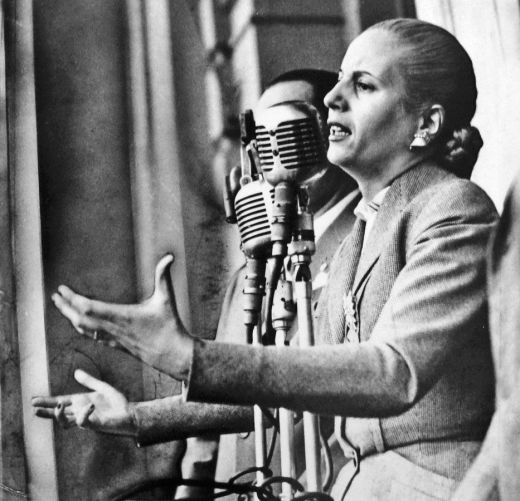
Image: Former first lady of Argentina (June 1946 – July 1952), Eva Peron electrifies a crowd

So What’s Your Lead Magnet?

As Freelance consultants and owners /leaders of businesses of every size work to attract and retain customers and convert leads into sales obtaining contact information, particularly email addresses, is of paramount importance. Email addresses are a foundational resource and govern your ability to communicate with current and prospective clients. A healthy email list is remarkably valuable and building and maintaining a good list is something you want to do.

The challenge is, how can you obtain email addresses quickly and efficiently? You can buy email lists; you can use online services such as Contactout, Clearbit connect, Finder.io, Discoverly, or even Google, to help you find the email addresses of decision-makers you’d like to reach. The problem is that contacting those individuals would constitute spamming because they have not agreed to share contact information with you. Blindly sending promotional emails, or even your newsletter, to those who you assume are prospects, but who have never engaged with your company in any way, is a turn-off. Delete.

Building a money-making email list takes time, effort and ingenuity. To successfully obtain email addresses, it is necessary to create conditions that motivate potential prospects to surrender them. The original method by which email lists were built was through teaching or other speaking engagements. If pre-registration was required, voila, you harvest email addresses. Sign-in sheets that request emails were/ are another harvesting method. It’s a slow process, but the leads are authentic.

More common now and in theory, a faster and easier leadgen method, is to somehow attract prospects to your website and social media platforms. Bringing inbound leads to one of your sites is a victory, but you still need a hook to persuade visitors to remain onsite and engage. To create that bit of magic, you need an appealing offer, a lead magnet. You also need to call attention to and sell your lead magnet with a persuasive call-to-action. See the link to review our CTA conversation.

. https://wordpress.com/post/freelancetheconsultantsdiary.wordpress.com/21655

A lead magnet is often content given away to someone in exchange for their email address. Instead of asking website visitors to buy your e-book, for example, tell them they can have it at no charge, if they kindly provide their name, email address and maybe also the name of the company for whom they work (or own) and their job title. You can do the same with other resources that may be considered valuable and desirable.

You must give customers a compelling reason to provide you with their contact information. Most people today are inundated with emails, so your lead magnet and CTA must be stellar to convince people to add yet another email to their inbox. Simply inviting people to add their names to your mailing list no longer generates the results it once did. You must give something of value in order to receive something of value.

What type of lead magnet should you create? Other than an e-book, you might also offer the results of a comprehensive survey that examined a hot topic, or a live taping of a webinar or podcast in which an interesting subject was discussed (and perhaps in which you participated). Other possibilities include:

  • A content marketing calendar
  • Your newsletter
  • A case study
  • You invite a client to tell the story of how you solved a problem and provided a solution that worked especially well
  • A white paper
  • The purpose of a white paper is to promote a certain product, service, technology or process that your company offers or plans to offer soon. The writer aims to (you) discuss and in so doing persuade current and prospective clients that the solution is highly effective and may be useful for their organization when certain circumstances, problems, or goals exist. A white paper is intended to provide compelling and factual or technical evidence that your offering (the product or service) is a superior method of achieving the goal or solving the problem. In general, white papers are written in an academic style and they’re often about 2,500 words in length.

Just remember that you’ll have to do more than dangle an alluring treat before your visitor’s eyes. it’s not just about the lead magnet. You’ll want to create a persuasive, come-hither CTA pitch that motivates readers to covet your lead magnet and hand over some personal information to posses it.

Thanks for reading,

Kim

Image: The magic hand of Steve Spangler, the Science Guy on KUSA-9News in Denver, CO on February 25, 2019

Client Testimonials: Cheerleaders for Your Business

As you ambitiously devise and implement leadgen campaigns and branding strategies designed to keep your sales pipeline filled with prospects that you hope to convert into a few sales, it is easy to lose sight of a basic fact of marketing—your clients are the best promotional resource you’ll ever have. Satisfied clients can become your cheerleading squad and they have more credibility with prospects than any marketing tactic you could ever devise.

Today, there is so much sensory overload noise in the marketplace that Freelancers and other business owners are often best served by peer-2-peer testimonials to persuade prospects that doing business with your company is a safe bet. Unless you can afford to buy an ad during the Super Bowl, nothing has more credibility than from the trenches client testimonials, referrals, or case studies.

So how can you recruit a client to publicly recommend your products or services without seeming to overstep a boundary? Basically, you ask the right clients, you make it easy to say yes, you make the ask at the right time and you make sure that the end result makes the client and his/her organization look good.

Ask the right client

Obviously, your first job is to know which of your clients would make a good recruit for a testimonial ask. Recall clients with whom you worked over the past 2-3 years and for whom you’ve done an exceptional job in terms of beginning to end customer experience, delivering the solution and meeting, if not exceeding, all expectations. Most of all, the client has to recognize and value what you did on his/her behalf. In other words, ask clients who have plenty of good things to say about your company and the work you do or the products you sell.

Timing

Timing takes more than one form. One factor is, how far into the past can you reach to make an ask? Will it be awkward to ask a client with whom you worked, say, four years ago? The answer, I think, is that it depends. If you maintain contact with past clients, e.g., sending December holiday cards and perhaps also sending announcements about your appearances on webinars or podcasts, it will be easier to reach out and ask for a testimonial.

Another timing issue is to avoid the client’s busy season, or the end of the fiscal year, when the client may have deadlines to meet. To the best of your ability, avoid making the ask when your client faces time-sensitive, pressing work responsibilities.

The ask

The window between your last interaction with the client and when you plan to ask for a testimonial will impact your choice of communication. If it seems right to approach a client soon after the work is completed or the product purchased, including your testimonial ask in a post-sale client satisfaction survey will be perceived as a natural progression. Email the survey and encourage your client to share feelings about working with your organization, the products that were purchased, or the services provided.

Invite the client to provide more specific, detailed comments in the Testimonial Template that you embed in the survey. Note that comments may appear on your company website and social media sites.

To approach a client with whom you worked a year or more ago, it may be more appropriate to first call and discuss the testimonial ask and then follow-up with an email to confirm, with your Testimonial Template attached.

If your client prefers to make a video testimonial and you have the skills to record and edit the video, which should probably be no longer than 6-8 minutes, arrange to meet for the shoot. Alternatively, you might set up a videoconference call and record an interview with the client as s/he discusses the positive experience and great results obtained from working with you. Audio-only testimonials can also be recorded and they are likewise compelling. When using the audio or video options, send the Testimonial Template a week in advance and send it again 48 hours ahead of the recording session.

Questions and quotes

Help clients to endorse your products and services by including a few open-ended questions in your Testimonial Template to get the ball rolling. Devise simple, direct questions that put the client in story-telling mode and will yield good quotes.

Ask the client to briefly detail the goal that had to be achieved or problem solved and why there was a need for the products or services that were purchased. Also ask the client to divulge if s/he previously used another company to obtain similar products or services and to provide insight into what motivated him/her to explore your company. Remember to ask the client to share reasons why your organization was chosen and not another. Finally, urge the client to discuss the experience of working with your organization, with an emphasis on expectations and benefits derived.

Client benefit

Your testimonial will be posted on your company website and on one or more social media channels—-remember to link the text, audio, or video back to your client’s website. Let the client know that you’ve provided these valuable back links by sending links to all platforms on which the testimonial appears. Informing clients whom you approach for a testimonial that you’ll provide this sort of publicity may yield a “yes” for your ask and put your venture on the road to obtaining the best endorsements available.

Thanks for reading,

Kim

Image: Cheerleaders in 1920s America

Clubhouse: It’s About Networking

As you know by now Clubhouse, the newest social media platform, is a live audio-only service that’s accessed through an app and was launched in October 2019. Clubhouse facilitates candid and compelling conversations between smart and interesting people and those conversations are intended for members only and are never recorded.

In keeping with its audio format, Clubhouse operates as an endless series of talk radio interviews (or podcasts, if you prefer) and group meetings that invite members to create virtual audio “rooms” and “clubs.” Clubs function to build communities within the platform—-audience development, in other words. Rooms are where audio chats take place and there are three types: Open, Social and Closed. Chats in the Social and Closed rooms are available only to members of the sponsoring club and Open rooms accept all parties.

Rooms are sometimes hosted by those with a following—thought leaders and opinion-makers, celebrities, venture capitalists, journalists and so on, but regular folks are also able to host a room. Each room offers its own format, an audio happening that may primarily attract devoted listeners or might bring in those who look forward to joining a lively discussion. Room events can be either pre-scheduled or surprise pop-ups. Rooms might hold just a small group, perhaps hosted by someone not well-known, while other rooms are led by marquee name players and draw dozens or even hundreds of listeners.

Clubhouse quickly grew in popularity during the early weeks of the coronavirus shutdown. Initially, the app could be downloaded only on Apple phones and membership could be obtained only by an invitation from a current user. The velvet rope policies proved to be a brilliant marketing tactic. Clubhouse became the darling of the A-list elite. Elon Musk and Mark Zuckerberg were guest speakers. Oprah Winfrey, Mark Cuban, R & B superstar Drake and comedian Chris Rock were said to be members. I first wrote about Clubhouse in February 2021. https://lionessmagazine.com/clubhouse-an-audio-chat-platform-for-beautiful-people/

Clubhouse continues its upward trajectory, especially since Android downloads became possible in May 2021 and invitations to join are no longer needed. According to Quantummarketer.com, there are 10+ million users globally mostly located in the U.S., western Europe, Japan, South Korea and Australia.

Now I’m certain that you find all of this quite fascinating but you may wonder, is this new social media player worth your time? I think yes—-that for B2B service providers and start-up entrepreneurs, Clubhouse has the potential to be useful in your Next Normal networking strategy.

Because interactions are about listening and talking live and IRT, communication is enhanced. Furthermore, the profiles of all room and club participants are available, making the experience feel sort of like a big conference call, where everyone on the phone is vetted and circumstances confer a degree of credibility and trust. At least some people may feel comfortable enough to chance off-line conversations and open the door to building a relationship.

Time must be invested and goals defined, as is true with other marketing activities. Key word searches that describe your goals will help to locate clubs and rooms to visit. Develop a good profile (because it matters) and step in.

Look for room topics that will expose you to recognized experts in your field, to help yourself deepen and expand your knowledge and therefore enhance your credibility. Get the heads-up on developing trends on the horizon in your field. Raise your hand, ask questions and share experiences or insights that are relevant to the discussion. Become a regular, get known and facilitate relationship building. Popular clubs that might appeal to Freelancers and others in business are listed below.

But remember that Clubhouse is not about making sales, but about listening to insightful conversations and contributing to the discussion by sharing your own wisdom. By being an active, friendly, generous participant your networking can take you to any number of paths and can yield many tangible and intangible benefits. You can even choose an appealing topic yourself and host a room every now and again, to work on building a following of your own. You might even find a mentor or be inspired to become one.

Community Club’s main purpose is make Clubhouse a welcoming place for everyone. It’s the best club for growing a Clubhouse community. Members mainly talk about Clubhouse features, support topics and onboarding newbies.

Bitcoin is the biggest club about cryptocurrency on Clubhouse. Some members who are real professionals on Bitcoin, heavy hitters. Visitors will find open, friendly and enlightening conversations about Bitcoin technology, markets, culture and the ecosystem.

Creative Executive Officers is a guide to the business of creativity for artists and entrepreneurs. Topics are mainly about business advice, entrepreneurship and education. 

Future of Work is where to discuss earning a living—entrepreneurship, creator economy, gig economy, freelancing, creatives, startups, venture capital, business, tech, AI, health, wellness, personal development, the hustle and the self-employed.

The Hustler Club “Your daily dose of motivation” is where hard-charging entrepreneurs, hustlers and creatives discuss ideas and have from-the-trenches style conversations.

Marketing Club features conversations about marketing, advertising and making the most of Instagram. Group members are marketers, creators and verified experts. 

Start-up Club is the largest of the clubs and introduces impressive and successful start-up stars who share their secrets. You’ll meet founders, entrepreneurs, angel and VC investors.

Stock Market Moves welcomes experienced, successful stock traders and those who want to become just that.

Tech Talks. is said to not be your normal tech community. It is group for diverse individuals from all walks of life, diverse backgrounds, industries and departments. Their main purpose is bringing together a group of people to talk about the good, the bad, the technical and business side of tech.

Women in Business is the largest women’s club and they are committed to empowering women in all sectors of business. and entrepreneurship.

Happy Thanksgiving and thank you for reading,

Kim

Image: © Keystone-France/Gamma Rapho. Pirate radio hosts on the ship Caroline were rescued and brought to at the police station after the ship ran aground at Frinton-on-Sea, UK on January 20, 1966.

10 Under $30: Holiday 2021 Client Gifts

The holidays are knocking on the door and savvy Freelancers know to respond with a client outreach strategy that could generate referrals and repeat business. December is your big chance to demonstrate to clients past and present that you value them and would be happy to work with them again. Before November slips away, create a plan to send holiday cards to clients with whom you’ve done business over the past 4 or 5 years and as well to send a gift to those who’ve been active over the past 12 – 18 months.

Clients will be delighted to hear from you and flattery might get you somewhere! Your thoughtfulness is also a brand-enhancing, relationship-building strategy that sets you apart in the best way and can place you at top-of-mind when clients plan the logistics of future projects.

Start today and search for holiday cards that celebrate “the season” and will be appropriate both for business and for those who do not celebrate a holiday on December 25th. I highly recommend that you send a physical card, unless on your list there are those who work from home and may not receive forwarded mail from the office. You may want to design your own card through Uprinting, the UPSstore, Vista Print, Sir Speedy, or another reliable service.

Re: your client gift list, I suggest that you match billable hours to the amount you spend on the gift; you may choose to gift only those who’ve invoiced $1000 or so. No matter how modest the amount of money you spend, understand that the gift is an investment. Your card and/ or gift communicate to clients that you consider them important and that you are a consummate professional.

Amplify audio

You don’t have to be a video gamer to appreciate the benefits of having a sound bar mounted to a desk top monitor. Whether your client streams music or movies, attends or leads videoconference meetings, or occasionally appears as a podcast or webinar guest, s/he will want to clearly hear and be heard. $24.99 https://www.dell.com/en-us/shop/cyber-acoustics-ca-2890-sound-bar-for-monitor-usb-2-watt/apd/ab768633/monitors-monitor-accessoriesFounder of FY #tabs_section.

Yummy honey

A flight of three two-ounce jars are the perfect introduction to this delicious, premium-grade, raw, artisanal honey. Add a teaspoon or two to a favorite tea. Include a dish on a cheese board spread and surprise guests with a tasty and unexpected condiment. The bees and the antioxidant rich honey that they produce are sourced from hives in Jamaica and other Caribbean islands. $14.99 for the box of three

https://www.ivyees.com/product/ivyees-honey-minis

Umbrella and art

Those who live in America east of the Mississippi River and have been deluged by more than their fair share of rainy days will appreciate an umbrella. This sturdy mini umbrella displays an eye-catching image of Vincent Van Gogh’s iconic painting The Starry Night (1889) and measures 48 inches across. It is auto open & close, includes a matching carrier and is delivered in a gift box. $30.00

https://mfashop.com/fashion/umbrellas

Bath and body basket

Whether your client WFH, has returned to the office, or does some of both, the intense focus required to effectively function in the pandemic business environment can be exhausting. Do your him/her a favor and enable a luxurious bath or shower ritual that promotes relaxation and even a good night’s sleep. This lovely gift basket contains 8 products that are delicately scented with white orchid fragrance and includes a shower gel, bath salts, body lotion and a loofah back scrubber. $27.99

https://lovery.com/collections/20-30/products/white-orchid-spa-bath-and-body-set-in-gold-basket?variant=12601117474870

Wine rack

An elegant, pyramid shaped countertop wine rack that harmonizes with nearly any kitchen or dining room decor. This compact and sturdy wine storage solution holds bottles in the horizontal position and discourages both the collection of wine sediment at the bottom of bottles and dry corks that may crumble when bottles are opened. $20.99

https://www.wayfair.com/kitchen-tabletop/pdp/mind-reader-pyramid-6-bottle-tabletop-wine-bottle-rack-mndr1563.html

Classy note cards

Sometimes the best way to communicate is to go old-school and send a hand-written note. Give your clients the means to gracefully communicate with their own important prospects and clients and they’ll be forever grateful. This elegant, high-quality folded note card features a bold yet classic calligraphic initial embossed in metallic gold ink. The card is made of all-cotton ecru paper and is partnered with a matching striped metallic lined envelope. $26 for 10 cards and matching envelopes

https://www.crane.com/hand-engraved-script-initial-note

Panettone holiday

Celebrating the December holiday in Italy often means indulging in this popular dessert that originated in Milan. The exquisites cake is studded with raisins and candied orange peel and it pairs well with a dollop of whipped cream or a scoop of vanilla gelato (Italian ice cream). Suggest serving a cup of espresso for an afternoon pick-me-up, or aan after-dinner dessert with a glass of vin santo wine. $29.90

https://www.eataly.com/us_en/christmas-holiday-gifts/panettone-pandoro/classic-panettone-26-46-oz

Patchwork scarf

Take the edge off the winter wind with a warm, soft scarf that features a mix of muted pastel colors and a quilt-inspired design. Made of polyester-cotton-acrylic blend of recycled materials, it’s a cruelty-free alternative to cashmere that feels like the real thing.

https://www.uncommongoods.com/product/recycled-patchwork-scarf

Out to lunch

Make lunch time fun whether eaten at the office or on a quiet bench in a pretty park. Your client will be thrilled to grab this stylish and practical little lunch carrier from Kate Spade even if it’s packed with a peanut butter and jelly sandwich on Wonder Bread. A coated linen exterior makes the tote easy to clean. The insulated interior protects the food. The gold top zipper pull is a flirty bow, the finishing touch of a pretty package. $30

https://www.katespade.com/products/out-to-lunch-tote/825466939622.html?

Giving good

GlobalGiving makes it easy and safe to support local projects anywhere in the world, while providing nonprofits with the tools, training and support they need to thrive. Inspiring and enabling your clients to give back may be the best holiday gift.

https://www.globalgiving.org/gifts/?gclid=EAIaIQobChMIsrCjm4WP9AIVNG5vBB1KQgIvEAMYAyAAEgJOGvD_BwE

Thanks for reading,

Kim

Image: Holiday lights at Boothbay Harbor, Maine

Online Reputation Management and Your Brand

A business owner’s work is never done, it seems. Along with recruiting customers in an increasingly challenging business climate, fulfilling customer expectations, providing excellent customer experiences and instituting procedures that ensure pleasant and efficient after sale support when needed there is, as well, the responsibility to monitor and manage the online reputation of your brand, your business and you. Creating, enhancing and perhaps also defending the online reputation of your brand must be an ongoing component of your company’s PR and SEO marketing strategies.

Developing and nurturing an appealing and trustworthy brand for your enterprise has always been the cornerstone of comprehensive and effective marketing campaigns and strategies. The pandemic-induced acceleration of numerous online communication formats has compelled business owners and leaders to amplify the online presence of their brands in order to effectively compete.

As a result, it is more necessary than ever to carefully curate, align and script all marketing themes and messages used to promote your brands along with the associated image, audio or video content posted to an array of platforms. Business owners and leaders would be wise to actively shape and manage the online image and reputation of their brands to continually reinforce brand narratives and positive perceptions.

Online Reputation Management is now an ever more critical branding function, essential as you develop marketing and branding strategies that build name recognition with the power to attract customers. A trusted brand is a valuable resource and can create for your business a loyal troop of boots-on-the-ground influencers who are motivated to write positive reviews in online rating sites and dispense word-of-mouth endorsements that can make or brake your business. From the online content that communicates relatable brand stories that build trust and loyalty within your target market to search-friendly platforms and key words that promote your brand’s online visibility, you can create an electronic architecture that supports and sustains an appealing and confidence-inspiring brand.

To help your business overcome the multi-year impact of the coronavirus pandemic, do what you can to allocate resources to create and implement a robust Online Reputation Management strategy. For best results, assess the efficacy of your online branding strategies by employing the tactic of social listening.

The act of monitoring social media and other online platforms helps track mentions and notifications about your brands and facilitates quick responses to customer compliments or complaints, which are the building blocks of an effective engagement strategy. Social listening means discovering patterns and connecting the dots in the comments or questions heard in monitoring. Social listening reveals to you the big picture—not just the trees, but the forest—and encourages you to analyze the context and larger trends that surround those (online) conversations, so that you might discover opportunities to act that enable you to better speak to and serve your market.

The customer data and marketing platform Clutch.com recently reported the following:

  • 54% of digital marketers consider Online Reputation management necessary for the success of their company
  • Brands frequently utilize social listening, following the social media outlets favored by their customers, to gain insights into what is trending or waning in customer preferences and priorities
  • The primary benefit that companies gain from investing in Online Reputation management is growth in sales
  • 35% of businesses queried plan to allot more time and money to Online Reputation management

Thanks for reading,

Kim

Image: Fredric March as Dr. Henry Jekyll in Dr. Jekyll and Mr. Hyde (1931) directed by Rouben Mamoulian

Will the “Great Resignation” be Great for Freelancers?

Americans are quitting their jobs. In behavior apparently ignited during the significant chunk of time spent away from offices as a result of the coronavirus shutdown, a surprising number of American workers have decided that they’re not going back to business as usual.

A LinkedIn survey revealed that 46 % of respondents felt that the time spent at home — either on lay-off or working remotely — during the pandemic shutdown led them to rethink their current work situation. The U.S. Department of Labor reported that during April, May and June 2021, 11.5 million workers gave notice. The February 2021 Microsoft Workplace Confidence Index survey of more than 30,000 workers showed that 41 % of American workers are considering quitting; that number increases to 54 % when looking solely at Gen-Z employees. If that’s not enough, a new Gallup survey found that 48 % of workers are actively job-hunting.

Upwork, the online marketplace for Freelance assignments, released a report in August 2021, “The Great Resignation: From Full-time to Freelance,” yet another examination of why American professionals are leaving, or seriously thinking of leaving, their current full-time employment. As many businesses anticipate a return of their employees to the office, sometimes on a limited basis, the survey of 4,000 workers showed that some professional-level employees are not willing to surrender their WFH work-life balance. Approximately 9 million pandemic WFH employees, 17% of professionals, apparently would consider looking for another job if forced to return to the office on a full-time, or even part-time, basis.

Needless to say the “Great Resignation,” as the phenomenon was named by Anthony Klotz, Associate Professor of Management at Texas A & M University, has the potential to create significant disruption for many organizations if it should come to pass in the way that several studies indicate. Already, workforce development experts are advising in particular mid-size organizations, who cannot compete for talent in the way that big businesses are able to do, to find an opportunity in the instability and tap the power of the growing on-demand workforce—Freelance consultants, that is.

Rather than scrambling to hire employees on short notice, company leaders would be better served by supplementing their teams with talented Freelancers—you and me, my friend—who own the skills needed to successfully tackle any project, from designing eye-catching websites, to managing a multi-platform social media campaign, to conducting comprehensive research projects. Instead of paying both high salaries and benefits for full-time employees, mid-size organizations can access top-drawer Freelance talent on a per project basis and keep overhead down as they achieve objectives.

No doubt many company leaders will first attempt to squeeze more work out of current employees, but that all-too-common default behavior probably won’t fly anymore. In fact, that habit could partly explain why valuable team members quit. The bosses will be nervous and may not know where to turn. Still, deciding to outsource and bring in Freelance talent may quickly be seen as inevitable.

So how might Freelancers cash in on the “Great Resignation?” Carpe diem—-you know how to do that! Start by putting yourself in the shoes of an employer who has a mission-critical project, a deadline and a team that’s down two key players. Below are sources that would be familiar to employers looking for Freelance talent so that an important job will get done. You’ll also find a credibility building resource that when you commit to using it will showcase you as a very attractive candidate to hire.

  • LinkedIn Populate as many categories of your profile as possible and be certain to include examples of your best work. If you haven’t participated in ProFinder, the service where employers solicit Freelancers for projects, create a profile and be prepared to quickly respond to employer requests. Only five Freelancers may bid on a project.
  • Upwork and Fiverr These gig worker marketplaces seem to be more welcoming to web designers and IT programmers, but I was hired for a writing project on Upwork three years ago. To get hired, you must search for and pursue assignments and at Upwork, you’ll wind up paying a small fee to bid on a job.
  • Help a Reporter Out. Prospective employers will surely type your company name into a search engine to see what comes up. In addition to great content that you’ve written and your social media sites, include as well your insightful quotes that have appeared in relevant publications. Quotes are an excellent way to demonstrate your know-how and convince prospects that you’re a good hire. https://www.helpareporter.com/sources/

Thanks for reading,

Kim

Image: An office in Palo Alto, CA circa 2000

Networking in the Next Normal

We are on the cusp of a new era (but you know that). Can we agree to name the period before COVID-19 normal, the business-as-usual drill with which we’re all familiar? Where we are now, the present, is commonly referred to as the new normal and maybe for you the term is already getting old. But time moves forward and we will soon enter the true post-COVID-19 era, the next normal. If you expect your business venture to survive and thrive in the fast-approaching future, the time to prepare for the next normal client is now.

Preparation begins with devising strategies to recover revenue lost to the 2020-2021 shutdown. Your plan to encourage and support client acquisition and increased revenue may include upgrades to the company’s digital presence, more sophisticated and targeted content marketing, greater use of marketing automation, greater attention devoted to financial management and post-pandemic next normal networking activities.

Networking is one of the most important business development activities that a Freelance consultant can perform. Networking can have a significant impact on your ability to meet potential prospects and build your client list. In the post-COVID environment, you would be wise to put your networking energy into building relationships and not blatantly hunting for a sale.

In your travels, where networking can organically happen anywhere and need not be limited to formal meetings or conferences, set your sights on meeting people who you find interesting and enjoy getting to know. Should the subject of business comes up, listen for ways that you can be helpful.

While conversing with a new colleague in person or online, you may eventually find an opening to talk turkey and slip into LeadGen. Whether you meet your new colleague in real time or by digital means, the smart networking strategy is to use finesse as you steer the conversation to the next level. Don’t risk undoing the effort you’ve invested with a clumsy approach.

  • Ask the right questions: Be politely curious and actively listen as you encourage your new colleague to talk about him/herself and their business. Focus on getting to know those whom you meet.
  • Be a resource: Marketing is the new sales. Offer insights based on your experiences and/or offer to send a link to additional info that spotlights your expertise and grasp of the goal or problem that a would-be prospect needs to address.
  • Don’t be afraid to play the long game: You’re not going to marry someone on the first date and you’re probably not going to reach your LeadGen goal in the first encounter. Start networking conversations by asking questions and actively listening, to learn more about the potential prospects. Build trust as you invite him/her to do what they like best—-talk about themselves! It can also be an excellent strategy for building relationships and finding clients.

Thanks for reading,

Kim

Image: The the networking is in full swing in a scene from an unidentified circa 1930s Hollywood movie.

Storytelling Basics

We all know that bringing to market a desirable product or service is the foundation of every successful business. It would seem that alone would guarantee the ongoing presence of loyal paying customers but we also know that other factors can influence business viability. Business location and pricing may immediately come to mind, but there are less obvious factors involved as well and those factors can potentially play a significant role in creating a successful enterprise. Their absence or mishandling can tank it.

One factor that can convert an occasional customer into a repeat customer is the right brand identity that is articulated by a brand story that resonates. When a business develops an appealing brand identity and delivers a brand story that seeds an emotional connection with target customers, brand loyalty will be the likely result. Feelings of empathy and belonging drive the process.

According to Gerald Zaltman, emeritus professor of business administration at the Harvard Business School, 95% of customer buying decisions emanate from the subconscious and are fueled by emotions, not logic. In 1997, he received a U.S. patent for the Zaltman Metaphor Elicitation Technique, which is used to explore the unconscious thinking that drives behavior. Based on Zaltman’s research-backed theories about what motivates customers to buy, or not, we might infer that an effective and accessible way to create an emotional connection that draws current and prospective customers to a company and its products and services is a good brand story.

Now like every other marketing strategy, a powerful and effective brand story requires research and planning. You have to figure out what to say and how to say it. Mostly, a compelling brand story will focus on the customer, s/he who makes the purchase. We’re talking B2B products and services here, something meant to benefit an organization, even if used by just one department. Still, it’s important to remember that the buyer is an individual (representing the company) and s/he is often (but not always) one of the users of your product or service.

Think P2P, person-to-person, and incorporate personal, individual benefits and user experiences as part of your storytelling—-brand narrative, buyer’s journey, or selling points—-that make the story relevant and memorable to potential buyers. Logic-based reasoning and key statistics are helpful but they’re not the story. Bullet points and numbers quickly fade from memory.

Remember as well that buyers today have a finely-tuned sense for authentic and inauthentic storytelling and authentic means that the brand story will validate what the listener already believes and also reflects your own values. Wrap your products and services in the context of a story and your narrative instantly becomes far more memorable and trustworthy than a digital banner listing your current sale prices and website address.

The emotional connection that leads prospective customers to identify with the hero of the story and root for his/her victory is a big part of why case studies and testimonials are such effective tools. Presenting a story that shows the personal benefits someone enjoyed through your brand helps potential customers to visualize how your products and services could help them, too. Real-life stories that are presented in a compelling manner will make your brand far more memorable and valuable in the minds of your customers.

Thanks for reading,

Kim

Image: Franklin Delano Roosevelt (January 1882 – April 1945) was elected President of the United Stares four times—1932, 1936, 1940 and 1944. His pioneering “ Fireside Chats,” broadcast on coast-to-coast radio, set a new standard in how political leaders communicate with the citizens.

Trendspotting: 5 Sales and Marketing Benchmarks

Your prospects are continuing to increase their control over the buyer’s journey, enabled by the internet and the work from home culture. That said, it makes sense for marketers to confirm our understanding of how buyers respond to your marketing activities. A few key data points, culled from a large and well-selected cohort, can provide to Freelancers and others who oversee marketing or sales functions valid insights into how buyers are responding to commonly used inbound and outbound marketing tactics in the post-COVID marketplace.

The content marketing company HubSpot, based near Boston, MA, began collecting marketing and sales outcomes data from its 100,000 + customers in January 2020 which was, as it turned out, a most interesting time to begin. Barely three months later the world would change radically. Billion dollar industries, most notably travel, hotel, restaurant and fitness, would crater. Those enterprises lucky enough to have survived, or thrived, have entered a changed business environment.

Benchmark data can provide guide posts that help you to get your bearings in the new business environment. The post-shutdown business climate demands a recalibrated understanding of customer expectations. How do prospects and customers want to experience the buyer’s journey now? How do they want to be sold? Find answers here in May 2021 data.

  • Sales meetings. The number of sales meetings in May 2021 (overwhelmingly made by videoconference call) was 21% higher than what was done last May and have risen 18% since March of this year. Knees were buckling in March 2020 and nearly every company was reeling, including those that were emerging as winners, such as grocery and liquor stores. Small business owners and leaders tended to reach out to customers sooner than larger companies. It is theorized that small business owners immediately realized that if they wanted their venture to survive, it was imperative that a plan to generate revenue had to be put into action, which usually meant figuring out a polite way to contact customers (I did the same). May 2020 was not the time to pursue new business, but rather to offer empathy and reinforce relationships that one hoped could be leveraged at some point, including relationships with those who cancelled contracts just 60 days previously.
  • Prospecting. Small business (1-25 employees) got busy prospecting at a frequency that was 31% higher in May 2021 compared to May 2020 and up 26% as compared to March 2021. Companies with 26-200 employees also saw an increase in prospecting activity of 18% as compared to May 2020, with a 17% increase as compared to March 2021.
  • Website traffic. Perfect your landing page! Website traffic was 34% higher in May 2021 than it was in May 2020. Further, website traffic increased by 25% between March and May 2021. Online shopping of various kinds, from home decor at Wayfair to the take-out dinner you’ll pick up in 20 minutes at a favorite local restaurant seems to have accounted for a big chunk of the increase. Software companies accounted for 51% of website traffic seen by HubSpot customers.
  • Chat bot. Speaking of your website’s landing page, a useful tool to add there would be a chat bot. Business moved online in a big way in March 2020, but the trend has been building for 20 years. Business owners and marketers are stepping up the functionality of company websites and adding a chat bot is a leading upgrade. Customers appreciate them because through chat, they’re able to get basic questions answered quickly and without paging through the website, which can be time-consuming. The volume of chat conversations rose 16% year-over-year May 2021 compared to May 2020.
  • Marketing emails. Reports of the death of email marketing have been greatly exaggerated and marketers are reinvesting in the genre (again!). Since the start of the pandemic shutdown in mid-March 2020, marketing email volume has increased 49% through May 2021 and is 52% higher pre-COVID volume. The open rate hovers at around 15% and that is 10% – 20% higher than April 2021.
  • Sales outcomes. U.S. Businesses adapted extremely well to the numerous protocols required by the shutdown, most dramatically demonstrated by the quick and often well- executed pivot to working from home. America means business! However, unreliable cash-flow prevented many customers from buying and that resulted in sluggish sales revenue in many organizations. In April 2020, sales outcomes bottomed out at 36% lower than 1Q20 benchmarks. Positive sales outcomes rose gradually throughout 2020 and May 2021 finished with a 10% increase in deals done (national or international companies). Deal creation (proposals) climbed 35% above benchmark.

So how do these statistics apply to you? They definitively show that the shutdown has ended, that money is being made agin and that you can make money again, too. Reboot your operation by using what have become standard marketing and sales strategies and actions.

Develop a powerful digital presence for your company. Employ Inbound and Outbound marketing and sales tactics. Optimize your website to help prospects easily find information about your products and services. Post and distribute relevant marketing content to confirm your expertise. Send emails to promote engagement with customers and prospects. Work hard, work smart.

Thanks for reading,

Kim

Image: A young lady gets serious about researching benchmark data.