Will the “Great Resignation” be Great for Freelancers?

Americans are quitting their jobs. In behavior apparently ignited during the significant chunk of time spent away from offices as a result of the coronavirus shutdown, a surprising number of American workers have decided that they’re not going back to business as usual.

A LinkedIn survey revealed that 46 % of respondents felt that the time spent at home — either on lay-off or working remotely — during the pandemic shutdown led them to rethink their current work situation. The U.S. Department of Labor reported that during April, May and June 2021, 11.5 million workers gave notice. The February 2021 Microsoft Workplace Confidence Index survey of more than 30,000 workers showed that 41 % of American workers are considering quitting; that number increases to 54 % when looking solely at Gen-Z employees. If that’s not enough, a new Gallup survey found that 48 % of workers are actively job-hunting.

Upwork, the online marketplace for Freelance assignments, released a report in August 2021, “The Great Resignation: From Full-time to Freelance,” yet another examination of why American professionals are leaving, or seriously thinking of leaving, their current full-time employment. As many businesses anticipate a return of their employees to the office, sometimes on a limited basis, the survey of 4,000 workers showed that some professional-level employees are not willing to surrender their WFH work-life balance. Approximately 9 million pandemic WFH employees, 17% of professionals, apparently would consider looking for another job if forced to return to the office on a full-time, or even part-time, basis.

Needless to say the “Great Resignation,” as the phenomenon was named by Anthony Klotz, Associate Professor of Management at Texas A & M University, has the potential to create significant disruption for many organizations if it should come to pass in the way that several studies indicate. Already, workforce development experts are advising in particular mid-size organizations, who cannot compete for talent in the way that big businesses are able to do, to find an opportunity in the instability and tap the power of the growing on-demand workforce—Freelance consultants, that is.

Rather than scrambling to hire employees on short notice, company leaders would be better served by supplementing their teams with talented Freelancers—you and me, my friend—who own the skills needed to successfully tackle any project, from designing eye-catching websites, to managing a multi-platform social media campaign, to conducting comprehensive research projects. Instead of paying both high salaries and benefits for full-time employees, mid-size organizations can access top-drawer Freelance talent on a per project basis and keep overhead down as they achieve objectives.

No doubt many company leaders will first attempt to squeeze more work out of current employees, but that all-too-common default behavior probably won’t fly anymore. In fact, that habit could partly explain why valuable team members quit. The bosses will be nervous and may not know where to turn. Still, deciding to outsource and bring in Freelance talent may quickly be seen as inevitable.

So how might Freelancers cash in on the “Great Resignation?” Carpe diem—-you know how to do that! Start by putting yourself in the shoes of an employer who has a mission-critical project, a deadline and a team that’s down two key players. Below are sources that would be familiar to employers looking for Freelance talent so that an important job will get done. You’ll also find a credibility building resource that when you commit to using it will showcase you as a very attractive candidate to hire.

  • LinkedIn Populate as many categories of your profile as possible and be certain to include examples of your best work. If you haven’t participated in ProFinder, the service where employers solicit Freelancers for projects, create a profile and be prepared to quickly respond to employer requests. Only five Freelancers may bid on a project.
  • Upwork and Fiverr These gig worker marketplaces seem to be more welcoming to web designers and IT programmers, but I was hired for a writing project on Upwork three years ago. To get hired, you must search for and pursue assignments and at Upwork, you’ll wind up paying a small fee to bid on a job.
  • Help a Reporter Out. Prospective employers will surely type your company name into a search engine to see what comes up. In addition to great content that you’ve written and your social media sites, include as well your insightful quotes that have appeared in relevant publications. Quotes are an excellent way to demonstrate your know-how and convince prospects that you’re a good hire. https://www.helpareporter.com/sources/

Thanks for reading,

Kim

Image: An office in Palo Alto, CA circa 2000

Networking in the Next Normal

We are on the cusp of a new era (but you know that). Can we agree to name the period before COVID-19 normal, the business-as-usual drill with which we’re all familiar? Where we are now, the present, is commonly referred to as the new normal and maybe for you the term is already getting old. But time moves forward and we will soon enter the true post-COVID-19 era, the next normal. If you expect your business venture to survive and thrive in the fast-approaching future, the time to prepare for the next normal client is now.

Preparation begins with devising strategies to recover revenue lost to the 2020-2021 shutdown. Your plan to encourage and support client acquisition and increased revenue may include upgrades to the company’s digital presence, more sophisticated and targeted content marketing, greater use of marketing automation, greater attention devoted to financial management and post-pandemic next normal networking activities.

Networking is one of the most important business development activities that a Freelance consultant can perform. Networking can have a significant impact on your ability to meet potential prospects and build your client list. In the post-COVID environment, you would be wise to put your networking energy into building relationships and not blatantly hunting for a sale.

In your travels, where networking can organically happen anywhere and need not be limited to formal meetings or conferences, set your sights on meeting people who you find interesting and enjoy getting to know. Should the subject of business comes up, listen for ways that you can be helpful.

While conversing with a new colleague in person or online, you may eventually find an opening to talk turkey and slip into LeadGen. Whether you meet your new colleague in real time or by digital means, the smart networking strategy is to use finesse as you steer the conversation to the next level. Don’t risk undoing the effort you’ve invested with a clumsy approach.

  • Ask the right questions: Be politely curious and actively listen as you encourage your new colleague to talk about him/herself and their business. Focus on getting to know those whom you meet.
  • Be a resource: Marketing is the new sales. Offer insights based on your experiences and/or offer to send a link to additional info that spotlights your expertise and grasp of the goal or problem that a would-be prospect needs to address.
  • Don’t be afraid to play the long game: You’re not going to marry someone on the first date and you’re probably not going to reach your LeadGen goal in the first encounter. Start networking conversations by asking questions and actively listening, to learn more about the potential prospects. Build trust as you invite him/her to do what they like best—-talk about themselves! It can also be an excellent strategy for building relationships and finding clients.

Thanks for reading,

Kim

Image: The the networking is in full swing in a scene from an unidentified circa 1930s Hollywood movie.

Storytelling Basics

We all know that bringing to market a desirable product or service is the foundation of every successful business. It would seem that alone would guarantee the ongoing presence of loyal paying customers but we also know that other factors can influence business viability. Business location and pricing may immediately come to mind, but there are less obvious factors involved as well and those factors can potentially play a significant role in creating a successful enterprise. Their absence or mishandling can tank it.

One factor that can convert an occasional customer into a repeat customer is the right brand identity that is articulated by a brand story that resonates. When a business develops an appealing brand identity and delivers a brand story that seeds an emotional connection with target customers, brand loyalty will be the likely result. Feelings of empathy and belonging drive the process.

According to Gerald Zaltman, emeritus professor of business administration at the Harvard Business School, 95% of customer buying decisions emanate from the subconscious and are fueled by emotions, not logic. In 1997, he received a U.S. patent for the Zaltman Metaphor Elicitation Technique, which is used to explore the unconscious thinking that drives behavior. Based on Zaltman’s research-backed theories about what motivates customers to buy, or not, we might infer that an effective and accessible way to create an emotional connection that draws current and prospective customers to a company and its products and services is a good brand story.

Now like every other marketing strategy, a powerful and effective brand story requires research and planning. You have to figure out what to say and how to say it. Mostly, a compelling brand story will focus on the customer, s/he who makes the purchase. We’re talking B2B products and services here, something meant to benefit an organization, even if used by just one department. Still, it’s important to remember that the buyer is an individual (representing the company) and s/he is often (but not always) one of the users of your product or service.

Think P2P, person-to-person, and incorporate personal, individual benefits and user experiences as part of your storytelling—-brand narrative, buyer’s journey, or selling points—-that make the story relevant and memorable to potential buyers. Logic-based reasoning and key statistics are helpful but they’re not the story. Bullet points and numbers quickly fade from memory.

Remember as well that buyers today have a finely-tuned sense for authentic and inauthentic storytelling and authentic means that the brand story will validate what the listener already believes and also reflects your own values. Wrap your products and services in the context of a story and your narrative instantly becomes far more memorable and trustworthy than a digital banner listing your current sale prices and website address.

The emotional connection that leads prospective customers to identify with the hero of the story and root for his/her victory is a big part of why case studies and testimonials are such effective tools. Presenting a story that shows the personal benefits someone enjoyed through your brand helps potential customers to visualize how your products and services could help them, too. Real-life stories that are presented in a compelling manner will make your brand far more memorable and valuable in the minds of your customers.

Thanks for reading,

Kim

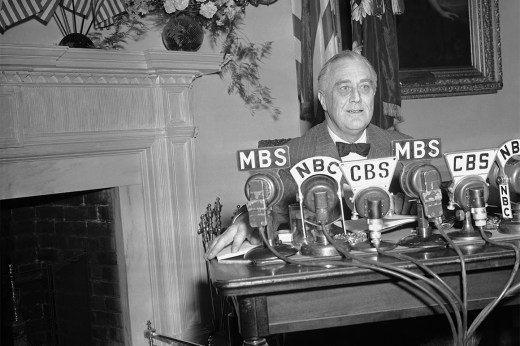
Image: Franklin Delano Roosevelt (January 1882 – April 1945) was elected President of the United Stares four times—1932, 1936, 1940 and 1944. His pioneering “ Fireside Chats,” broadcast on coast-to-coast radio, set a new standard in how political leaders communicate with the citizens.

Trendspotting: 5 Sales and Marketing Benchmarks

Your prospects are continuing to increase their control over the buyer’s journey, enabled by the internet and the work from home culture. That said, it makes sense for marketers to confirm our understanding of how buyers respond to your marketing activities. A few key data points, culled from a large and well-selected cohort, can provide to Freelancers and others who oversee marketing or sales functions valid insights into how buyers are responding to commonly used inbound and outbound marketing tactics in the post-COVID marketplace.

The content marketing company HubSpot, based near Boston, MA, began collecting marketing and sales outcomes data from its 100,000 + customers in January 2020 which was, as it turned out, a most interesting time to begin. Barely three months later the world would change radically. Billion dollar industries, most notably travel, hotel, restaurant and fitness, would crater. Those enterprises lucky enough to have survived, or thrived, have entered a changed business environment.

Benchmark data can provide guide posts that help you to get your bearings in the new business environment. The post-shutdown business climate demands a recalibrated understanding of customer expectations. How do prospects and customers want to experience the buyer’s journey now? How do they want to be sold? Find answers here in May 2021 data.

  • Sales meetings. The number of sales meetings in May 2021 (overwhelmingly made by videoconference call) was 21% higher than what was done last May and have risen 18% since March of this year. Knees were buckling in March 2020 and nearly every company was reeling, including those that were emerging as winners, such as grocery and liquor stores. Small business owners and leaders tended to reach out to customers sooner than larger companies. It is theorized that small business owners immediately realized that if they wanted their venture to survive, it was imperative that a plan to generate revenue had to be put into action, which usually meant figuring out a polite way to contact customers (I did the same). May 2020 was not the time to pursue new business, but rather to offer empathy and reinforce relationships that one hoped could be leveraged at some point, including relationships with those who cancelled contracts just 60 days previously.
  • Prospecting. Small business (1-25 employees) got busy prospecting at a frequency that was 31% higher in May 2021 compared to May 2020 and up 26% as compared to March 2021. Companies with 26-200 employees also saw an increase in prospecting activity of 18% as compared to May 2020, with a 17% increase as compared to March 2021.
  • Website traffic. Perfect your landing page! Website traffic was 34% higher in May 2021 than it was in May 2020. Further, website traffic increased by 25% between March and May 2021. Online shopping of various kinds, from home decor at Wayfair to the take-out dinner you’ll pick up in 20 minutes at a favorite local restaurant seems to have accounted for a big chunk of the increase. Software companies accounted for 51% of website traffic seen by HubSpot customers.
  • Chat bot. Speaking of your website’s landing page, a useful tool to add there would be a chat bot. Business moved online in a big way in March 2020, but the trend has been building for 20 years. Business owners and marketers are stepping up the functionality of company websites and adding a chat bot is a leading upgrade. Customers appreciate them because through chat, they’re able to get basic questions answered quickly and without paging through the website, which can be time-consuming. The volume of chat conversations rose 16% year-over-year May 2021 compared to May 2020.
  • Marketing emails. Reports of the death of email marketing have been greatly exaggerated and marketers are reinvesting in the genre (again!). Since the start of the pandemic shutdown in mid-March 2020, marketing email volume has increased 49% through May 2021 and is 52% higher pre-COVID volume. The open rate hovers at around 15% and that is 10% – 20% higher than April 2021.
  • Sales outcomes. U.S. Businesses adapted extremely well to the numerous protocols required by the shutdown, most dramatically demonstrated by the quick and often well- executed pivot to working from home. America means business! However, unreliable cash-flow prevented many customers from buying and that resulted in sluggish sales revenue in many organizations. In April 2020, sales outcomes bottomed out at 36% lower than 1Q20 benchmarks. Positive sales outcomes rose gradually throughout 2020 and May 2021 finished with a 10% increase in deals done (national or international companies). Deal creation (proposals) climbed 35% above benchmark.

So how do these statistics apply to you? They definitively show that the shutdown has ended, that money is being made agin and that you can make money again, too. Reboot your operation by using what have become standard marketing and sales strategies and actions.

Develop a powerful digital presence for your company. Employ Inbound and Outbound marketing and sales tactics. Optimize your website to help prospects easily find information about your products and services. Post and distribute relevant marketing content to confirm your expertise. Send emails to promote engagement with customers and prospects. Work hard, work smart.

Thanks for reading,

Kim

Image: A young lady gets serious about researching benchmark data.

Self-Promotion that’s Savvy, Not Shameless

If you do not put the word out about your talents, achievements and (perhaps discreetly) your ambitions, or if you do so ineptly, you are leaving money (and also a satisfying life, I think) on the table. Despite what some people would have you believe, no one finds success on their own. The self-made man is a myth. You are going to need some help along the way and to rally influential people to your side, you must let them know what you can do.

Bill Gates’ mother held a job at IBM that gave her access to a powerful person in the company, who agreed to meet with her son and his friend Paul Allen so that the two could explain the special project they were working on. As we know, their project eventually became Microsoft.

How to deliver your self-promotion

Effective self-promotion is a subtle and powerful communication skill. I consider it an art. It can be learned. Maybe we should start with what to avoid?

It’s frightfully easy to come off as obnoxious when telling others about how fabulous you are and the riveting details of your long list of magnificent, truly enviable, accomplishments. Most of us know that outright bragging is not cool, but we have also heard more than enough hyper-ambitious people pretending to be modest as they trot out a humble brag act at every opportunity.

Witnessing either spectacle usually induces an eye roll, if not a headache. But how can you show finesse and talk yourself up in a way that doesn’t turn off friends and colleagues?

A good Karma method is to be generous and share credit for your successes with those who helped you achieve them. There is a huge benefit associated with this generous act—- you gain allies. Your allies, because you’ve made it clear that you value them and their work, will be inclined to do you the enormous favor of promoting your magnificent achievements for you, which gives you much more credibility and influence than if you say it all yourself. So as you climb the ladder, not only will your allies help you, they’ll recruit more allies for the cause.

When to self-promote

Choose the politically correct time to self-promote. There are situations when one is expected to do so, but be aware that there are only so many opportunities available. Employees are invited to discuss their accomplishments at their annual performance review, when campaigning for a raise, or when seeking to interview for a promotion. Freelance consultants, when speaking with prospective clients or writing proposals with the aim of winning projects, are expected to spell out and sell their competencies, relevant experience and achievements.

What to promote

Make it known that you’ve earned a new educational degree or professional certification, the date, time and place of an important presentation you’ll deliver, or should you be invited to join a prestigious board.

Other self-promoting without penalty opps include announcing your appearance on a podcast, webinar, or panel. Announcing that you’ve written and published, or edited, a book is also a self-promoting bow you’re expected to take. Launching a workshop (that you must sell!) is another self-promotion gateway.

Where to self-promote

Especially since face2face events remain limited, savvy people know that social media is an acceptable self-promotion tool. Update your profiles as you upgrade your skills and announce your showcase events as appropriate.

Again, bring in some good Karma and acknowledge the achievements of your connections and contacts as they appear in your feed, so that your communication is not all outbound. Self-promotion, no matter how skillfully delivered, still requires good relationships in order to capitalize on your good work.

Thanks for reading,

Kim

Image: Steve Martin in The Jerk (1979) directed by Carl Reiner and written by Steve Martin

8 P’s of Marketing for the 21st Century

It was at The University of Notre Dame that Professor of Marketing E. Jerome McCarthy laid out the principles of the original four P’s of marketing, also known as the Marketing Mix, in his 1960 book Basic Marketing: A Managerial Approach. McCarthy and co-authors Joseph Cannon and William Perreault chose a hands-on, problem- solving approach to the challenges that marketing professionals face.

The boots-on- the-ground approach championed by the 4 P’s Marketing Mix was quickly recognized as foundational to the craft, the gold standard. The genius of the P’s is evidenced by their ability to address both the primary objectives of the marketing team and critical requirements of customers. The P’s relevance has continued into the 21st century and even inspired marketing researchers and thought leaders to expand the list.

As you build a marketing strategy for your products and services—-content and social media marketing, branding, advertising and PR, for starters—-you’ll find that the 4 P’s (+ more) Marketing Mix will guide you and your team to the most effective strategies and action plans every time. Here are the original four and four more that you may find useful.

Product: The solutions that a company sells—products or services, tangible or intangible, B2B or B2C.

Price: The value, in monetary terms, of what customers are willing to pay to obtain a company’s product or service. Company leaders are advised to fully account for the many factors involved in developing, manufacturing, or acquiring a product or service, in addition to the associated marketing, selling, distribution and overhead expenses when determining an appropriate Price. The prices of competitors will also influence your pricing.

Place: Where customers come into contact with and are able to buy the product or service—-in a bricks & mortar storefront, online, at a flea market, in a meeting after contract terms have been negotiated.

This component also refers to both which stores stock a product and the product’s location within a store. For example, certain breakfast cereals and other items targeted to children are found on shelves that are at a child’s eye level or in the children’s department.

Promotion: Strategies and tactics used by the company to persuade potential customers to buy its products or services.

Process: Where and how the customer receives the solution provided by the product or service and all that is entailed. Intangible services delivered by skilled practitioners are more obviously influenced by this component.

Will the solution be delivered in a classroom (education courses), a salon (hair styling or massage therapy), a health care facility (dentistry), or leak- proof cardboard containers (ice cream shop)? How the methods employed in the delivery or application of the solution significantly impacts both outcomes and the customer experience.

Position: The ranking or assessment that customers, prospects and sometimes even the public assigns to your product or service, as compared to similar offerings. To achieve the preferred Position for the product or service, a marketing team will through branding utilize distinctive messaging, packaging, advertising and product placement, sometimes through celebrity endorsement, to create and reinforce the desired image.

Packaging: Tangible products are more obviously influenced by this component. A product’s Price, Place, Promotion and Position are telegraphed in how a company “dresses” the product and presents it to target customers. Even the shopping bags and tissue wrapping paper (or their absence) support the story.

Intangibles are given a “verbal package” that will emphasize its most tangible advantages and benefits, which may include exclusivity (social media site Clubhouse) or rarity or other significant benefits.

People: One component of this factor refers to those who work in the business, in particular the customer-facing staff. Those who interact with customers usually have a profound impact on the all-important customer experience.

The second component in this category refers to the customers themselves, who have many opportunities to communicate to others both the perceived quality of the product or service that was purchased and the perceived quality of the customer experience. Online ranking and social media sites such as Trip Advisor, Yelp and Facebook empower people to either reward or punish a company.

Thanks for reading,

Kim

Image: © Harris Farm Markets Sydney, Australia

A Call to Action

Content creators—-producers of marketing, sales, or advertising content and sometimes speeches, too, must remember that at the conclusion of the artfully told story that’s been delivered in words and/or pictures, it is imperative that you tell the viewer what to do next. Content creators must remember to include an irresistible, inevitable, Call to Action. Fail to do so and the content creator hasn’t done the job.

A Call to Action beckons a potential prospect to do something—-learn more, get this, click here—-that will bring him/her into deeper engagement with the product, service, or idea that’s being promoted. Once the content has made the case, demonstrated the desirable characteristics and therefore the value of what is being promoted, the Call to Action functions to reel in the convinced and the curious.

Step this way, sir! Websites, content marketing posts, videos, television commercials, movie trailers and those postcards that fall out of magazines are but a few examples of where viewers and listeners will encounter a Call to Action designed to entice.

A political action group may write an article on the importance of voting in the next election. The article will likely close with an inspiring CTA message about the privilege of voting and include a link to a voter registration site. A company website may contain two or more CTAs, perhaps appeals to opt-in and receive a weekly blog, RSVP for a webinar, or request a free 30-minute consultation.

Getting started

Before writing your CTA, decide what action you’d like potential prospects to take and what they’ll gain by doing so. Once you know what you want them to do, you can think about how to say it. The best CTAs are short, encouraging and use active verbs that speak directly to the viewer. Remember that the CTA is your closer, the culmination, the purpose, of the pitch you’ve made.

Write your CTA in a font that’s somewhat larger than the other text and use a bold color to make it eye-catching. Lead in with a brief but tempting phrase that persuades viewers to click and subscribe, browse products, opt-in to receive information, attend an event, or take any number of actions.

The next step

CTA buttons are available on Google My Business and the Facebook business page. Most, if not all, email marketing, i. e. blog and newsletter hosting platforms, have always contained opt- in capability to follow or subscribe and an opt-out to unsubscribe. Content creators can easily embed CTA buttons or hyperlinks into a website, blog post, social media site, newsletter, or marketing email. Visibility will be key, so along with bigger and brighter text, place the CTA at eye-level and in most cases, on the landing page. Viewers should not need to scroll to find it.

The CTA should feel like a natural progression of what the prospect has just seen, heard, or read. Whether s/he will be able to obtain more information about using a product or service, listen to a webinar, or attend an event, ensure that your CTA is consistent with the message in your content. A benefit that conveys value, the appearance of low-risk and a sense of urgency are standard ingredients of the well-crafted CTA.

  • Schedule my free consultation
  • Click and get a 30 day free trial
  • Download my free ebook
  • Renew now and save $10
  • Contact us
  • Take the Pepsi Challenge

Thanks for reading,

Kim

Image: Before he became the 43rd President of the United States (2001-2009), George W. Bush was head cheerleader at the exclusive prep school Phillips Academy in Andover, MA (senior year 1963-64).

Notes on Branding

Hello there. It’s been quite a while since we’ve explored the topic of branding. Establishing and maintaining a reputable brand for your company has the power to generate significant financial rewards even for single owner Freelance entities. Let’s dive in.

What it is

A brand is the characteristics and attributes associated with a company. The company brand consists of the qualities for which the company and its products and services are best known, by its customers and by the public. The company brand defines and communicates the experience it provides for its customers. Especially for larger companies, the company brand is powerfully and memorably communicated by its logo symbol. Brand = Reputation.

Branding

The process of creating and communicating the benefits, characteristics and trustworthy reputation that company owners and leaders envision for the products and services that the company sells. The objective of branding is to persuade customers and prospects to associate those benefits, characteristics and positive reputation with the company, as demonstrated by its products and services, because it will resonate with, inspire trust in and appeal to current and potential customers. Branding gives a business an identity and distinguishes the company from its competitors.

Create and discover your brand

Brand development is a two- way street. Company leaders must understand what the most likely (that is, target) customers for the products and services will be. The brand within is what company leaders determine the brand should be, as represented by the market position, pricing, sales distribution and product placement sections, advertising and social media strategies, packaging and so on. But customers also have a say in a company brand. The brand without consists of how current and prospective customers perceive and respond to the company brand.

Building a brand starts with knowing the customer and the customer’s expectations for your company’s products and services, which are shaped and influenced by what competitors, those who’ve come before you, have done.

Nourish and promote the brand identity and voice

Believe it or not, a brand has a life of its own and a personality to go with it. Company owners and leaders must build a brand whose voice and identity convey trust, reliability and good value for the money spent to acquire the company’s products or services.

The brand identity may be cutting edge, solidly dependable, luxurious, user-friendly, inexpensive and practical, or any number of other qualities. The brand voice will convey brand identity attributes through the style of the website, the company logo, colors used for the website, email marketing templates, company business cards, product packaging and other marketing materials, social media platforms used and marketing messages. Increasingly, company values and guiding principles, from environmentalism to current interpretations of social justice, influence the the brand voice.

What impression do you want customers and prospects to come away with when encountering and interacting with your company? Who are the primary customers? What do they aspire to communicate about themselves when they use your products or services? Those are the guide posts used to create and sustain the brand identity and voice.

Manage the brand

Company leaders must vigorously and continually monitor the tangible and intangible elements of the brand and ensure their relevance to customers and prospective customers.

Advertising and sponsorship choices, marketing and PR campaigns, content marketing topics, social media posts, the company website, product packaging, or the verbal “packaging” of a service, i.e., its defining message and, ultimately, the customer experience, from the Top of the Funnel buying cycle through to actual usage of the product or service, must communicate all that is valuable and memorable about the brand.

Getting started

As always, everything begins with knowing your customer. What motivates them to seek out products or services like yours? How do they use those products or services? Where do they expect to buy your products or services and how much do they expect to pay to for them?

Define the qualities and benefits that customers and prospects value your products and services for. To make the most of that information, the Marketing 4 P’s could be helpful—-Product, Price, Place and Promotion. I like to add four more P’s: Position (luxury or low-cost?), Process (the customer experience, from visiting the website to making the purchase to speaking with customer support); People (all interactions with customer-facing staff, including the company owner, manifests the brand); and Packaging (especially for a tangible product, the style and quality of its packaging, its customer eye-appeal, conveys the brand).

Thanks for reading,

Kim

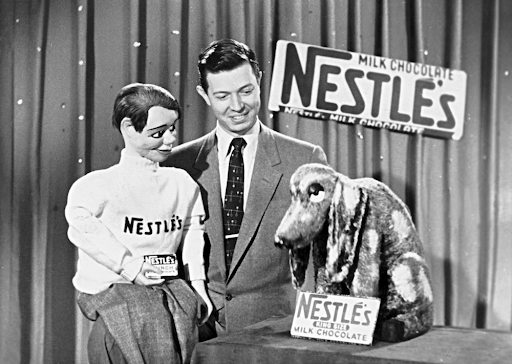
Image: Brand identity 1950s style as presented by still powerful Nestle. The character “Danny O’Day (L), ventriloquist Jimmy Nelson and the much loved Farfel

Strategy: Win a Business Award

One often-overlooked business strategy that brings many benefits to a company is competing for (and winning!) a business award. Competing for a business award and being named a finalist, that is, eligible to win first, second, or third prize, is a big vote of confidence for the chosen organizations. The recognition sets your business apart from competitors, implies credibility and expertise, enhances your company’s brand and stature and is almost certain to increase the number and quality of prospects, clients and referral sources your business receives.

There are more ways to win than you might think. Sponsoring organizations are typically generous with the number of awards and categories they choose to honor. More awards and more categories are an incentive for business owners and leaders to become contestants because there will be more opportunities to win. More contestants means more entry applications received by the sponsor and more tickets sold to the awards banquet (when those activities resume), since every finalist will buy at least one ticket and some will buy a table.

In addition to its role as a revenue enhancer, sponsoring awards is good PR for the organization, which could include the bank where you keep your business account. The awards not only distinguish the group as a prominent member of the business community, but also attract and help to retain members (or customers). In the best of American traditions, business awards are a way for many to make money. That could mean you, too.

Full disclosure—-as a result of the destabilizing impact of the coronavirus shutdown, I declined to accept an invitation to return as a preliminary round judge in The Stevie Awards/ Women in Business category (there are eight in all), an honor I’ve been happy to receive for six of the past eight years. Judges are neither paid, nor do we pay to participate. I do it because I enjoy experience and it looks good in my bio. https://stevieawards.com

Be advised that as with any marketing campaign, there are expenses involved. You’ll be required to join the sponsoring organization. You must pay the award entry fee for every award category that your company pursues—-best new product launch, business of the year, best workplace, social responsibility award and so on. You must buy one or more tickets to the ceremony (even when it’s virtual). The awards process could represent the entirety of your outfit’s annual marketing budget.

The time needed to prepare your award entry and determine which supporting documents will best communicate who you, your team (if applicable) and your company is another cost. Creating an impressive and persuasive entry application can be a laborious and time-consuming undertaking.

Furthermore, an assessment of your company’s readiness to pursue an award may reveal that it would be advantageous to build for 12-24 months before your organization is prepared to compete for an award. But that’s OK. Taking steps to analyze the strengths, weaknesses, opportunities and threats of your organization (are not most of us facing the threat of the COVID economy?) will pay dividends in and of itself. Just be objective about your company’s chance of winning and understand the time and money likely to be involved.

Choose a target award

Potential contestants are advised to do some homework and discover awards that are sponsored by local, regional and national organizations, whether business networking organizations (chambers of commerce), industry-specific associations (such as the Bar Association for attorneys), or your business bank. I recommend that your initial forays into awards campaigns focus on local sponsors, particularly for those of you who are Freelance consultants and small business owners generating less than $500,000 in annual gross revenue.

After compiling a draft list of possibilities, check the award entry criteria. It’s likely that candidates must join the organization in order to compete for an award and that will be your first expense. Annual dues may run from a few hundred dollars to $1000 or more, depending on the sponsor. Confirm also when new members will be eligible to compete for an award. Next, investigate other entry facts—-the entry application deadline, the fees and whether candidates must be nominated to compete for the award.

Read the specs and select the categories in which you can expect to do well—-excellence in your field, customer service, new product or service launch, community outreach, environmentally-friendly, for example. Within the categories offered, where might your company step to the front of the pack?

Finalize your choices and prepare to compete, being sure to give yourself ample time to collect, evaluate, or create the supporting resources you’ll need to enter. The good news is that if you plan to enter more than one category, most of the content developed can be used in multiple entry forms.

Tell a compelling story

On nearly every award entry, there’s a section that asks for more details about your business, your team and you. Be sure to provide all of the information that is requested and as well, tell a story beyond the statistics. Let the judges feel your personality and understand what makes your business stand out. Here, you can share unique information that might not fit elsewhere in the entry application. Customize your message by sharing relevant success stories and achievements that address the award category you are entering.

Construct a strong beginning, middle and end for your story. Reveal how you overcame challenges to reach new heights and back up your claims with hard evidence. Feel welcome to include good visuals like charts and graphs, or the persuasive appeal of client testimonials. Keep your application punchy and concise, using short sentences and statistics to underline key points. Bullet points are an effective way to ensure that judges can absorb your performance metrics quickly.

Describe what motivated you to launch the company. Detail the company’s vision, mission, guiding principles and values and what you and your team are passionate about and which accomplishments make you most proud. Tell your story from your heart. Before hitting the send button, or sealing the envelope for a hard-copy mailing if required, add a personal note and thank the sponsoring organization and the judges for their consideration of your entry. Then conjure up some positive thoughts!

Thanks for reading,

Kim

Image: The inimitable Academy Award, Golden Globe Award and Grammy Award winning actress-singer-dancer Judy Garland in A Star is Born (1954), for which she won the 1955 Golden Globe Award for Best Actress in a Musical

Build Your Email Contact List

Despite numerous predictions of its imminent demise that have splashed across the headlines of business publications for several years now email marketing, in various formats, continues to march forward in vigorous health because it works. If email marketing didn’t produce quantifiable ROI we would have abandoned it years ago. Nope. Email marketing remains an efficient communication pathway that allows companies to announce a product launch, register attendees for a podcast or webinar, deliver to subscribers this week’s installment of your blog, entice mailing list members with an invitation to your virtual book launch, or inspire potential students with news of the debut of your online course.

Despite the popularity of half a dozen social media platforms that are experiencing an upward trend that shows no sign of slowing down, email marketing continues to be accepted by those on the receiving end, so long as the number from any one source does not overwhelm. When email list members value the sender, they seem to like updates delivered to their inbox.

So building a quality email list that’s populated with prospects who are interested in you and your company is good business. Today, we can identify a few smart, simple tactics that are fast-acting, free and can potentially create for your organization a brand building, money making email list.

  1. Social media

An effective and obvious way to quickly and organically build a robust email contact list at no cost is to post content on social media platforms and the more platforms you post content to, the faster you’ll collect names and email addresses. How so, you ask? Because sooner or later, readers of your content will respond to what you’ve written and when they do, you’ll capture their name and email address. It’s likely that those willing to give a like to your posts or make a comment will also be willing to join your email contact list.

Another easy email capture tactic can be done on your Facebook page, by way of the Call to Action button. Hover your cursor on the CTA and select the “Edit Button” option, then change the text to read “sign up” or “join” so that you can invite Facebook Fans to your email contact list.

LinkedIn users are able to send emails to all of their primary connections but to quickly grow your email list, you’ll want to reach out to your second degree (the connections of primary connections) and third degree connections (secondary connections, once removed). There is a free service called Snovio that allows account holders to install an email finder extension which, by way of a gmail account, allows LinkedIn users to find the email addresses of those distant cousins. Click to learn more. https://app.snov.io/register?lang=en&signup_source=blog&signup_page=snov.io%2Fblog%2Fhow-to-get-the-contact-details-of-your-2nd-and-3rd-connections-on-linkedin-in-two-easy-steps&cta_type=link

2. Website sign-ups

Upload to your website reasons to collect names and email addresses. For some, that will be the “Contact us” form—website visitors who have questions or want more information about the company’s products or services are required to fill out a contact form and provide their name and email address. Other common website signup tactics are surveys, free telephone (video call) consultations, registrations for webinars and requests for free special publications—-your e-book, case studies, or white papers, for example. All are effective conduits for collecting names and email addresses that grow a viable email contact list.

3. Call to action

On your website landing page, on your white papers, blog, or newsletter, invite people to connect. You may be pleasantly surprised with the positive results of a straightforward appeal for email contact info. The share button and invitation to subscribe to or follow your blog and/ or newsletter will also bring in names and email addresses if your content is well- written and relevant.

Add a chat bot plug-in to your WordPress hosted website so that visitors can quickly obtain answers to basic questions about your products and services. Bot analytics will reveal the names and email addresses of your chat bot users, who are all set to join your growing email list.

Finally, get more mileage from your email signature block and invite recipients of your emails to opt-in and subscribe to your blog, newsletter and notices about other interesting things you’re doing.

4. YouTube videos

YouTube is the second- largest search engine in the world and about six billion videos are viewed on the site every day. People like visuals and videos are the favorite visual. Production value matters, so ask around to find out who you know with equipment that’s a level or two more advanced than your cell phone. Your public library may have equipment to use and a quiet room that will be all yours for an hour or two.

What story can you tell? You’ll have a few and you can make one or two of them sound appealing with a little thought and some rehearsal time. Providers of B2B services don’t have a product to show but we can do a convincing 5 minute promo on a course we’re set to teach, or a virtual talk we’ll give, or panel we’ll participate on.

If you’re rolling out a new service, pivoting your business, or embarking on a collaboration with colleagues that you and your partners can make sound exciting and useful to certain of your clients and prospects, include a video pitch in the launch campaign.

Remember to conclude your videos with both a verbal and text Call to Action. Ask for the business and direct viewers to click a button and be directed to your squeeze page, a landing page you can create that collects the names and email addresses of those who want to know more about your topic (i.e., what you’re selling). Learn to create a Wordstream squeeze page here. https://www.wordstream.com/features/cro-toolkithttps://www.wordstream.com/features/cro-toolkit

After posting your pithy little video promo to YouTube, also get it onto Instagram stories, Twitter, LinkedIn, Facebook and your website. Write a short teaser sentence to accompany a link to your video and include them in your email signature block.

5. Join business groups

All meetings are virtual and will remain so for the time being, but by attending events hosted by the group you join—-the chamber of commerce, a neighborhood business group, the local alumni chapter of your school, or other professional development and networking associations—-the benefits of membership include access to the member directory.

I don’t recommend that you import the directory and spam fellow members by sending your content without permission, because that will do you no favors. But one easy way to obtain the names and email addresses of desirable contacts is to attend virtual programs and make a pitch through the chat function.

During the final 15 minutes or so of the program send an all-person chat message to briefly introduce yourself and offer to send your blog, newsletter, e-book, or other content to anyone who’ll (privately) provide their name and address.

Attend one or two virtual events each month and you’ll be almost guaranteed to add 4-5 worthwhile names each month from this one source. This type of ask was originally done during the face2face conversations that took place during pre- event meet & greets (remember those?), but they can migrate to a virtual format without feeling awkward.

Building a robust email marketing prospect list is one of the best growth strategies business owners and leaders can do. If you’re able to add 10-20 contacts each month, declare victory. List building is an ongoing process—- it never stops. I’ve personally witnessed Freelancers who have 5000+ names on their list politely, skillfully, relentlessly, invite every potentially good contact to join their email list.

Thanks for reading,

Kim

Image: Replica of a vintage mailbox